Cold and unhomely, it was home to 2000 personnel

The admin blocks were designed to accommodate 1,845 men and 250 women, in a large area to the south of the airfield. Tuddenham had a total of 12 administration and technical areas spread across the entire site. Hurriedly built, the accommodation blocks were unheated, cold and un-homely“.

RAF Tuddenham, located in the western side of Suffolk, close by to RAF Mildenhall, one of the USAF’s busiest bases, was home to Stirlings and Lancasters of RAF Bomber command. They suffered heavy losses in the bombing campaign over europe.

Visit Tuddenham today in Trail 16.

DSC_0002

Tuddenham village sign depicts a Lancaster of 90 Squadron RAF flying overhead.

A Fire so Fierce it Took Four Hours to Extinguish

In November 1944, a Mosquito of 608 Squadron, RAF Downham Market, returned from a mission to Gelsenkirchen, Germany. A successful mission overall, but this was to be the last time Mosquito KB364 and its crew would fly.

The night was cold and possible icing may have prevented Pilot Officer James McLean and Sergeant Mervyn Tansley, from maintaining altitude. Their flight was about to end abruptly.

Bawdeswell, a small, quiet village in Norfolk, believed to be home to Geoffrey Chaucer’s uncle, was about to make history once more. Find out what happened that night over Norfolk.

Bawdeswell Village Sign Reflects the Incident that Night.

The Bawdeswell village sign reflects the incident of that fateful night.

One of the lowest loss records of the Mighty Eighth……

By the time the war had finished, the 490th had completed 158 missions losing only 22  aircraft in combat; one of the lowest records in the whole of the Eighth Airforce. Immediately after cessation of the conflict,  the 490th continued to fly, supplying food and supplies to the people in the Netherlands and other humanitarian operations involving allied POWs across Europe.

The 490th also had another less salubrious claim to fame…

Eye

RAF Eye, Suffolk


What’s the answer?

Whilst on my trails I find it disheartening to see so many of our former airfields disappear under builders machinery or industry looking for a cheap alternative to building their own premises. Using the guise of ‘recycling’ old sites, they fail to understand the history, importance or significance of these ‘brown field’ places.

These airfield were not simply a place where aircraft took off and landed a long time ago, but they are places where people died, suffered terrible injuries. were traumatised or lost loved ones and friends. It’s where young men, many away from their families for the first time, spent their last days on gods earth before giving themselves up in the name of peace.

Yes I see the relevance and difficult balance between the building infrastructure, jobs and housing needs against the desire to preserve small areas of heritage, history and desire to respect the need to preserve what are important marks that represent a major tuning point in the worlds development. It is hard, and not one that any political or historical follower takes lightly I’m sure. But if it were not for volunteers, people with a real understandings of the relevance of these matters, we would have very little to show for what was an incredible and turbulent time in world history.

Is there an answer? I don’t know, I wish I did. It would be easy to say “save every airfield” but for what? To rot, to be a time capsule soaking money form important public areas like health and education. Or is it dig them up, we don’t need them it was a long time ago, let’s move on!

All I know is, with each visit I make a little more of history disappears, a memory is lost and as the years roll on, a veteran passes away. Something needs doing and it needs doing soon.

IMG_1956.JPG

At 20 yrs old, this RAF Pilot fought his aircraft bravley.

On the morning of 30th, Manser and another pilot were instructed to collect two Manchesters from Coningsby, Lincolnshire. As many of these aircraft were drawn from reserves and training squadrons, it was inevitable that many would be in poor condition. Manser’s was no exception, it had no mid upper turret and a sealed escape hatch.

manserWhen the order came and Manser took off, his aircraft L7301 ‘D’ Dog, an Avro Manchester Mk1, with a full bomb load of incendiaries, was now difficult to manoeuvre and he was unable to reach an altitude of more than about 7,000 ft. Hoping the main bomber force would attract the greater concentration of  flak, he decided to continue on.

What happened to this young 20-year-old as he flew with his crew? find out…

Why I love Aviation – My Inspiration

As a young boy life was tough. His mother died when he was 6, his father when he was a young teen, he was brought up by his sisters and would watch the Luftwaffe bomb Glasgow using the Clyde as a guide. On joining up, he was posted to Egypt where he met first hand the brutality of war.

After serving 10 years in the RAF he would experience a wide range of aircraft in both the Middle East and here in his native Scotland and Lincolnshire. He tells his stories today with great detail and perhaps occasionally a little ’embellishment’.

But he is the man who gave me my love of aviation.

Who is he and what did he experience?

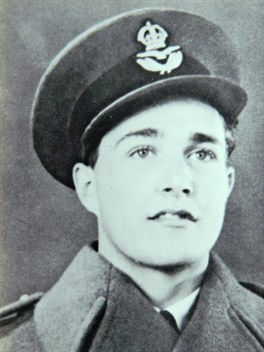
My father in his early days in the RAF

My father in his early days in the RAF