9th November 1943 – Loss of Stirling LK380 90 Squadron.

A guest post written by Dr. Donough Wilson to whom I owe my thanks for the write up and information about the tragic accident of Stirling LK380 ‘Y’, of 90 Squadron, RAF Tuddenham, 12:30, 9th November 1943, over 80 years ago.

Stirling III “Y” Yorker, 90 Squadron, Wratting Common and Tuddenham, July – November 1943

On Saturday 31 July 1943 a newly qualified crew were ‘posted in’ to ‘C’ Flight, 90 Squadron at RAF Wratting Common, Cambridgeshire. They comprised PO. Robert (Bob) Rodger [Pilot]; PO. Cliff Mitchell [Navigator]; Sgt. Robert (Tug) Wilson [Bomb aimer]; Sgt. Leslie Griffiths [Wireless Operator]; Sgt. Roy Child [Mid-Upper Gunner]; Sgt. Howell Jones [Rear Gunner (Australian)] and Sgt. Ed Daveny [Flight Engineer].

Six days later on the night of 6th/7th August, they completed their first mission, which was mine laying near Ile de Ré, La Rochelle, on the French west coast.

Their third mission on the night of the 23rd/24th August was to Berlin. What is significant about this raid is that they were caught and ‘coned’ by searchlights and then attacked by a JU.88 night fighter. As the crew called out information for Bob Rodger to act on, he threw the Stirling into a series of violent corkscrews in an attempt to evade their pursuer and stop themselves being shot down. This action luckily saved their lives and allowed them to fly again.

Between then and the end of September, further missions were flown to Nuremberg, Munchen Gladbach, Berlin again, Mannheim and Boulogne.

Prior to the second Berlin mission, a photographer from the national newspaper “The Daily Sketch” took a photograph of most of “Y” Yorker’s crew walking to their aircraft. Published on the front page of the newspaper, the caption read: ‘Sunset and zero hour before the great raid on Berlin. One of the crew is just aboard’

The photograph depicts from left to right Robert ‘Tug’ Wilson, Roy Child, Leslie Griffiths, Bob Roger, Arthur Stubbs the ground crew chief (nearest camera), Ed Daveny and bringing up the rear Howell Jones. Cliff Mitchell is missing from the photograph*1.

In the squadron records summary for September 1943, Pilot Officer Rodger was by then being listed as the second most experienced surviving pilot in ‘C’ Flight (behind Squadron Leader C. H. Wilson, who would go on to win the DFC and was shot down on 31 March 1944), and on October 1st,  was promoted to Flight Lieutenant.

In early October, they flew missions to Kassell, Frankfurt, and Bremen, it was on the Bremen raid that the crew flew a new aircraft, LK380 “Y” Yorker. After Bremen they carried out some training flights before going on leave. Whilst the crew were away, 90 Squadron moved to RAF Tuddenham.

On Tuesday 9th November 1943, Bob Rodgers, now Flight Commander of ‘C’ Flight,  took the pilot and two gunners of a new crew who were joining ‘C’ Flight, along with his own crew, on a training exercise in LK380 “Y” Yorker.

The task was to teach the new pilot and gunners the techniques of fighter evasion. The exercise would take place over the Shippea Hill area not far from RAF Mildenhall, which was not far outside of the Tuddenham circuit. The crew of “Y” Yorker were, by that time, considered an experienced crew having successfully completed ten missions over enemy territory, and successfully evading both ‘searchlight coning’, and attacking night fighters.

The three additional crew members joining Rodger’s crew for that exercise were Flight Sgt. Lees Smith [pilot], Flight Sgt. Morley Loyst [Mid-upper gunner (Canada)] and Sgt. Gordon Batten [Rear Gunner]. But missing from the flight was Roy Child, who was grounded with a medical condition.

That meant there were nine crew on board the Stirling that day, including British, Australian and Canadian airmen, a truly multinational mix.

They soon met-up with the training Hurricane IV, KW800*3, of the Air Fighting Development Unit, from RAF Wittering  piloted by Flight Sgt. Ronald Brown (a veteran of Malta with thirty operations under his belt already). Brown had already completed one exercise that day with another 90 Squadron Stirling III, “T” Tommy, On joining with the Hurricane “Y” Yorker’s training quickly began.

“Y” Yorker was observed to be heading south, as if returning to Tuddenham. On approaching the area of the railway line and Shippea Hill level crossing, the Hurricane was seen to dive in a simulated rear attack. It swooped under the belly of the Stirling and then pulled-up into a climbing turn to the right, but unfortunately the pilot misjudged the distance between them, and sliced into the right wing of the Stirling, cutting-off the starboard outer engine along with a four-foot section of wing.

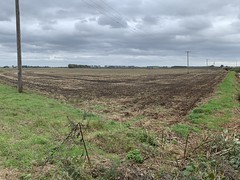
Both aircraft were mortally crippled. Flight Sgt. Brown baled out, but due to the low height he collided with telegraph wires and broke his legs. At 12:30 The Stirling reared up, rolled, and dived into the fen alongside the railway line, 150 yards from the Shippea Hill level crossing on the Mildenhall side. There were no survivors.

The crash site of 90 sqn 'Y' Yorker Shippea Hill

The crash site of 90 Sqn ‘Y’ Yorker. Shippea Hill level crossing is behind the photographer.

Although the bomber quickly sank in the boggy fen, unidentifiable partial remains of three crew were recovered immediately. A fourth body was recovered some days later, and a fifth was recovered in 1944. Four crew remain unaccounted for to this day.

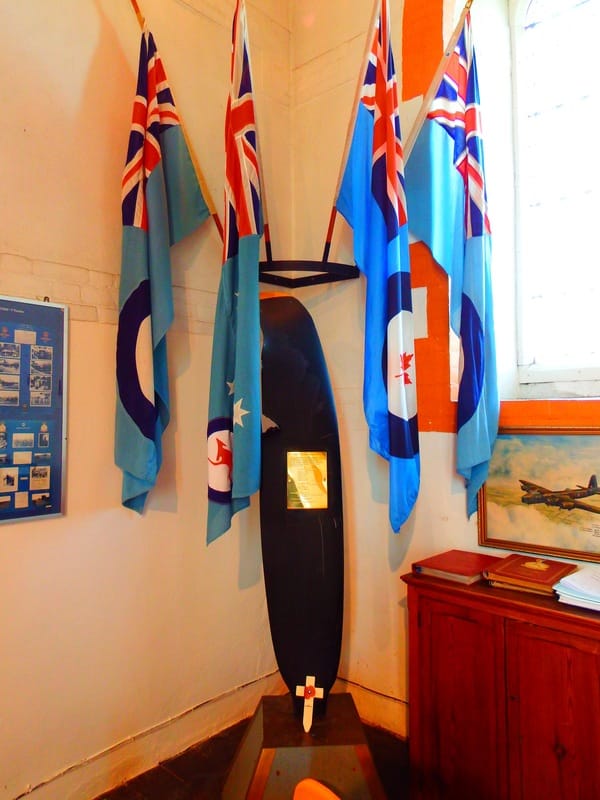
In St. John’s Church, Beck Row, alongside Mildenhall airfield, is a memorial in the form of a recovered propeller blade from “Y” Yorker to the nine crew that lost their lives that day.

The Propeller commemorating 90 Sqn’s “Y” Yorker that crashed 9th November 1943*2.

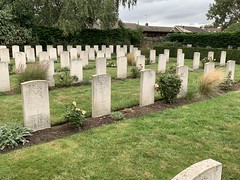
In the Commonwealth War Graves plot adjacent to the church, amongst the other war dead, are the five graves of the airmen who were recovered from “Y” Yorker, each marked ‘An Unknown Airman, 9th November 1943’.

5 Graves of the crew 90 Sqn 'Y' Torker - unknown airmen

(From front left)The five Graves of the crew 90 Sqn ‘Y’ Yorker – Marked “Unknown airmen”

All of the crew members including those never found, are commemorated on the Royal Air Forces Memorial at Runnymede.

Dr. Donough Wilson

My sincere thanks go to Dr. Wilson for writing the post. I myself tried to get to St. John’s Church but on the day I went it was sadly closed, I shall endeavour to return and locate the propeller.

Sources and additional information.

*1 The photograph was originally taken by, and published in, “The Sketch” newspaper, in 1943, but in the book “Final Flights” (1989) Ian McLachlan (Patrick Stephens publishers), it is credited to the late Jim Munro, secretary of the 90 Squadron Association. On the Wratting Common history website [www.wcnhistory.org.uk] it is credited to Ron Pearson.

*2 Photo from St. John’s Church website

*3 On March 13th 1984, the engine of the Hurricane was discovered in a carrot field and excavated by the Anglian Aeronautical Preservation Society. Its current whereabouts remain unknown.

The mission history is from J. Munro’s 90 Squadron history “Sing High” (1989).

Mosquito Crew – P.O. James McLean and Sgt. Mervyn Tansley, RAF(VR)

Bawdeswell Bawdeswell New Village Sign Reflects the Incident that Night

On 1 August 1944, No.608 Squadron (Code 6T) was reformed at RAF Downham Market (also known as Bexwell), initially flying Canadian built DH Mosquitoes Mk B.XXs as part of  No.8 (PFF) Group Light Night Striking Force. Their primary role was to carry out night strikes as part of the Pathfinder Operations in the  German heartland. Targets included: Berlin, Frankfurt, Hanover, Essen, Stuttgart, Nuremberg, Hamburg, Emden and Kiel. This was a role it carried out until disbanding on 28th August 1945. Their first operational sortie was on the night of 5th/6th August 1944, when a single Mosquito took off and bombed Wanne-Eickel.

Bawdeswell Chaucer House The Chaucer House partly damaged in the accident.

However, it was on the night of 6th November 1944 that 12 aircraft from 608 Squadron took off in a diversionary attack on targets at Gelsenkirchen. The idea was to draw defences away from a much larger force attacking both Gravenhorst and Koblenz. The plan was for 608 to begin their attack five minutes ahead of the other forces, a plan that went like clockwork.

For one particular aircraft, Mosquito KB364, piloted by Pilot Officer James McLean (26 year old),  and Sergeant Mervyn Lambert Tansley (21 year old), both of the RAF(VR), this was to be its final, fatal flight.

Bawdeswell The original cross that stood on the Church tower.

Flying in at 25,000 ft, 608 dropped both flares and high explosive bombs, but reported only light flak over the target area. The mission was a success and 11 of the 12 aircraft returned to Downham Market.

As it was a November night, the air was cold and it is believed that McLean’s aircraft suffered from icing up of the controls. For whatever reason, at 20.45hrs the aircraft lost height and hit some power cables near to Reepham Road, to the east of the village of Bawdeswell (Norfolk). It then careered into All Saints’ Church setting it alight. The impact was such that parts of the aircraft struck two other homes, including the Chaucer House*, opposite the church, causing extensive damage to both properties. The church was completely destroyed in the crash.  Sadly, both Pilot Officer McLean and Sergeant Tansley were killed, but there were no other casualties from the incident. The fire was so ferocious that it took four hours to extinguish, and required both local crews and those from the nearby American airbase at RAF Attlebridge.

Bawdeswell Church Bawdeswell Church today.

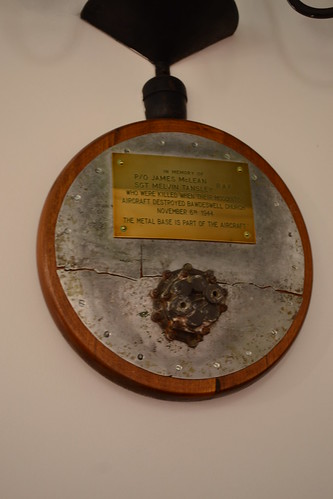
The church has since been completely rebuilt, and as a reminder, the original cross stands outside the entrance. This cross miraculously remained untouched by the fire. Inside the church, a remnant of Mosquito KB364, has been made into a memorial plaque in remembrance of the two courageous crew who died whilst carrying out their duties that night.

Pilot Officer James McLean was buried in Tranent New Cemetery, East Lothian, Scotland and Sergeant Mervyn Lambert Tansley was buried in Fulham Old Cemetery, City of London.

Bawdeswell The memorial plaque made from the Mosquito (Note Sgt. Tansley’s name appears as ‘Melvin’)

The Reeve’s Tale magazine website has eye-witness accounts, and further details of the incident.

* Geoffrey Chaucer’s (Canterbury Tales) uncle was believed to be the rector for Bawdeswell and the old timbered house opposite the church known as ‘Chaucer House’ may have been his rectory.

Is This the Final Nail in the Coffin for RAF Downham Market?

More than eighty years after RAF Downham Market opened, another chapter in the story of the former airfield may be about to begin. But this change could also mark the beginning of the end for the remaining evidence of its wartime past?

Recent groundworks and excavations on the eastern side of the A10, around the former technical area, have raised questions about what might happen next. Is this simply preparation for a new industrial development, or could it be the start of something much larger?

Downham Market

The trenches crossing the former main runway. The new memorial is off to the left.

We know from previous developments that these ‘archaeological trenches’ are the forerunner of new developments, designed to establish the presence of any historically important features that may lay buried beneath the surface. And whilst at present, there are no confirmed plans to redevelop the entire former technical area, the available planning information suggests that further change is a real possibility.

A new industrial landscape

The Borough Council of King’s Lynn & West Norfolk has allocated land at Bexwell Business Park for “employment and industrial use”. This is not a housing proposal. The Council’s adopted Local Plan identifies approximately 20 hectares of remaining land within the wider employment allocation.

Downham Market

The parachute room with heating vent.

In June 2026, planning permission was granted for 14 new industrial units on land west of Karoo Close. The development includes associated access and parking and is intended for industrial, storage and distribution uses.

That is the confirmed position. But the 14 units are only one scheme within a much larger area identified for employment development.

It would be wrong to suggest that permission has been granted to build across all the remaining land. Equally, it would be unwise to assume that the present development will be the last. The town itself has, like many towns across the country, been subjected to huge housing developments, and this is just another part of that process.

The question is now, whether or not these works are the first visible signs of a longer-term transformation of the former airfield.

Downham Market

More trenches. The buildings in the background are on the former technical site.

What will happen to the wartime buildings?

The long term concern is for the airfield, its remaining buildings and what will become of them.

The former technical area was an essential part of the wartime station. This was where aircraft equipment was stored, repairs and maintenance were carried out, and the ground organisation supported the aircrews and their operations.

Much has disappeared since the station closed in 1946, and many of those that are left are crumbling. In some cases walls are separating rendering them dangerous to the public. Yet a number of structures are still in reasonable condition. Of those that are left, they include the former Main Stores, Crew Locker and Drying Room, Link Trainer and transformer installation, together with other buildings associated with the technical site.

Downham Market

The crew locker room. The grassed area is where crews would wait, before a mission, ready to transfer to their respective aircraft.

Today, some stand within or alongside the modern business park. They may no longer look like parts of an RAF station, but their historical significance, design and shape has not disappeared.

There is currently no evidence that these surviving buildings are being cleared for demolition as part of the approved 14-unit scheme. Nor have I found an official proposal to demolish the technical area as a whole. However, there is also nothing to say they won’t.

Nevertheless, if further industrial development comes forward on adjoining land, the surviving buildings and other traces of the station could face increasing pressure. New buildings, roads, parking and infrastructure may change the setting of the old structures, even where the buildings themselves remain.

What are the excavations telling us?

The recent groundworks have also raised the question of archaeology.

Archaeological investigation is often required before major construction begins, particularly on land with a significant history. Excavations can identify buried foundations, concrete surfaces, drainage systems and other features that have survived beneath later development or agricultural use.

The former RAF station is certainly a site where such remains may exist. There may also be evidence of activity from much earlier periods. We know from previous excavations on other areas of the airfield that have now been developed, that Anglo Saxon and wartime artefacts, were discovered but were deemed as insignificant.

However, I have not been able to establish conclusively that the particular excavations currently visible are the archaeological work required for the new industrial units. Their appearance alone cannot prove that connection.

Downham Market

Inside the crew locker room. The far door is a modern addition.

It is reasonable to think that the work signals preparation for further development, but we must wait for documentary evidence before stating that this is what is happening.

The end of an era?

RAF Downham Market was an important part of Britain’s wartime air effort, later becoming associated with the Pathfinder Force and No. 635 Squadron. The station’s crews and ground personnel formed part of a much larger story of operations, sacrifice and service. Two airmen based at Downham were each awarded the Victoria Cross, almost unprecedented in wartime history.

Today, the landscape is very different. Fields, roads, businesses and modern development have replaced much of the airfield that wartime personnel would have recognised.

The surviving technical buildings are therefore more than old structures. They provide a physical link to the station’s working life and help us understand how the airfield operated.

Industrial development is not unusual on former RAF stations, and the needs of a modern community must be recognised. But there is also a responsibility to identify and record the historic remains before they are lost.

The current situation presents an opportunity to do that properly.

The wider allocation makes further development possible, but it does not establish exactly where or when it will happen, or which historic buildings might be affected.

So, is this the final nail in the coffin for Downham Market’s remaining wartime airfield?

It is too early to say. There is no evidence that the technical area is about to be demolished, but the landscape is changing and further industrial development remains a possibility.

For those of us who value the history of RAF Downham Market, the important thing is to watch what happens next, establish the facts and ensure that the remaining evidence of the station is properly recorded.

Once a wartime building or archaeological feature has been lost, it cannot simply be replaced.

Downham Market

Is the writing on the wall for these historic buildings?

The airfield has already surrendered much of its past to the passage of time. Whether the surviving remains can continue to tell their story alongside the new industrial landscape is a question that deserves attention.

Sources and further information

Borough Council of King’s Lynn & West Norfolk – Adopted Local Plan: https://www.west-norfolk.gov.uk/homepage/257/adopted_local_plan

Planning application 25/00262/FM – Land West of Karoo Close, Bexwell Business Park. Search for the application number through the Council’s official planning portal: https://www.west-norfolk.gov.uk/info/20077/planning_applications/111/view_and_track_planning_applications

Borough Council – Local Plan examination documents: https://www.west-norfolk.gov.uk/local-plan-review-examination

This article reflects the information available in October 2026.

B-17 Crash Beachamwell – January 2nd 1945

On January 2nd 1945, the skies over Norfolk resonated once again with the sound of a crashing aircraft, when B-17 42-32112 of the 337th BS/96th BG based at Snetterton Heath crashed whilst forming up over Beachamwell a stone’s throw east of RAF Downham Market and ten miles north of its base.

The aircraft, a Boeing B-17G-35-BO was delivered to Cheyenne Airport from Modification Centre 10 on 2th January 1944, and then passed to Hunter Air Force Base the following month. After passing through Presque Island on March 6th it was assigned to 337th BS, 96th BG as “AW-F” then based at Snetterton Heath (Station 138) England.*1

Its history was full of drama. On the 1st October 1944, it was carrying out a training operation with another B-17G 44-6137 ‘The Abortion Queen (AW-J) also of the 337th BS and a P-47D Thunderbolt 42-25690 (WZ-U) ‘Lady Helen’ of the 84th FS, 78th FG, RAF Duxford. During the manoeuvres, the P-47 would make mock attacks on the two aircraft allowing the gunners to train under simulated combat conditions. After completing the operation, the P-47 pulled alongside the two aircraft but misjudged his position and collided with  the two B-17s.

The P-47, severely damaged, crashed in a filed near to the church in Grinstead Green, Halstead, Essex, killing the pilot who reportedly veered away from the church at the last minute. The two B-17s both landed without injury to either crew.

Then later, on 2nd January 1945, the B-17 was was again in action, this time forming up over Norfolk as part of a massive 1,000 bomber raid consisting of B-24s and B17s from each of the 1st, 2nd and 3rd Air Divisions, escorted by 500 P-51s and P47s of the same Divisions. The 96th were ordered to attack Erhang, Germany.

As the 41 aircraft of the 96th gathered and jostled for position  in the Norfolk skies, B-17 42-32112 collided with another aircraft causing it to fall from the sky, crashing ten miles north of the base over Beachamwell, not far from Downham Market, Norfolk,  with the loss of all on board.

The nine crew that day were: Pilot: 2nd Lt. Joseph H. Miller, Co-pilot: James P. Thoeness, Navigator: Robert I. Drum, Togglier: Raymond F. Freidmann, Flight engineer/top turret gunner: Sgt. Stephen Duhon, Radio Operator: Tech. Sgt. Leon R. Grabill, Ball turret gunner: S. Sgt. James J. Flaherty, Waist gunner: S. Sgt. Donald E. Willgus, and Tail gunner: S.Sgt. William E. Parton*2.

It was the only aircraft lost by the squadron that day and was later salvaged.

The full story of RAF Downham Market appears in Trail 7, and the history of Snetterton Heath appears in Trail 27.

Sources:

*1 Freeman. R., The B-17 Flying Fortress Story. Arms and Armour, 1998

*2 American Air Museum website. accessed 4.6.2026

The 96th BG Association website accessed 10/6/2026

F/O. Edwin C. Gardner, RAF Hemswell, 61 Squadron

One of many young men killed in the Second World War whose stories deserve to be told.

Flying Officer E. Gardner, RAF(VR) Flying Officer Edwin Charles. Gardner (s/n 72558) was stationed at RAF Hemswell with 61 Squadron flying Hampden Mk.I bombers. He was part of the RAF(VR) and was killed 17th October 1940 age 24.

F/O E Gardner

Flying Officer E. Gardner, RAF(VR),

61 Sqn (RAF), a former World War I unit,  was re-formed on March 8th 1937 at RAF Hemswell as a bomber squadron flying Audax aircraft. Over the next two years they would transition through a number of makes – Anson Mk I and Blenheim Mk I eventually equipping with the Handley Page Hampden in February 1939. They were formed as part of No. 5 Group, Bomber Command, and would take part in several prestige operations. During the early part of the war they would carry out the very first attack on a German land target, (Hornum, 19th/20th March 1940), the first major bombing raid on the German mainland (Monchengladbach, 11th/12th May 1940), and take part in the first RAF bombing raid on Berlin on the night of August 25th/26th 1940.

It was two months after this, that Flying Officer Gardner would lose his life at the age of 24.

Gardner’s aircraft, X-2979, QR-? took off around 18:00 to attack the German city of Merseburg. They would form part of a 73 strong formation made up of both Wellington and Hampden aircraft, attacking a number of targets at: Bremen, Kiel, Bordeaux and the Harz Forest, intending to set it alight with incendiaries. The force included aircraft from a number of squadrons that night.

With F.O. Gardner were the Pilot – Pilot Officer William Herbert Clemenson (s/n 81027), Wireless Operator – Sgt William Hutchinson Hewitt (s/n 822581) and Sgt Dominick Flanagan (s/n 532927), the air gunner on board the aircraft.

The force attacked their designated targets successfully, returning home to their respective bases after having suffered very lightly (3 aircraft in total) over the target areas. On the return trip however, they encountered dense fog which, combined with technical problems with a number of aircraft, caused 10 Hampdens and 4 Wellingtons to crash, many with loss of life.

Reports show that Gardner’s aircraft contacted Hemswell twice in the early hours of the Thursday Morning to gain fixes on their positions. Possibly out of fuel, the aircraft finally came down at Sporle, a few miles west of Norwich, killing all four crew, members.

Flying Officer Gardner was laid to rest at All Saints Church Tacolneston, Norfolk a few miles west of Norwich. His companions were returned to their respective parishes. His grave stands alone in a quiet corner of this 13th Century church. May he rest in peace.

‘Death is Swallowed up in Victory’

Sources

Chorley. W.R., Bomber Command Losses Vol I, 1939-40, Classic Publication, 1992.

RAF Sutton Bridge Part 6 – The End of an Era.

Part 5 of this trail, we saw how Sutton Bridge grew into a bustling hub of Allied air training, hosting a mix of British, European, Commonwealth, and American pilots. How the airfield remained under constant threat from Luftwaffe raids, while crowded skies and inexperienced trainees made accidents a grim reality. In 1942, the focus shifted from front-line pilot training to advanced gunnery instruction with the arrival of the Central Gunnery School. Fighter and bomber crews honed their skills in Spitfires, Wellingtons, and Hampdens, while innovative experiments, including rocket-firing Hurricanes, highlighted Sutton Bridge’s role at the cutting edge of aerial warfare. Despite progress, the dangers were ever-present, with both trainees and experienced instructors paying the ultimate price.

In the final part, we witness the slow decline and eventual but inevitable closure of the airfield. How a once vibrant but small airfield became simply a part of history.

Arrival of WAAFs and Local Folklore

During May 1942, Sutton Bridge found itself with in excess of 180 WAAFs arriving, mainly to operate training turrets and to work in the photographic room developing cine reels. The WAAFs were billeted not on the airfield but in small Nissen huts located in various parts of the village. It was one of these WAAFs that added fuel to the story of a pilot flying under the bridge, by claiming she saw it happen, again whilst she was there. No other evidence is available and so, like the first account, it will unfortunately remain just an uncorroborated story passed from generation to generation.

Enemy Attacks and a Safe Haven.

The war was never far away, and once again was brought all that little bit closer on 24th July 1942, when a Dornier 217 dropped its payload on the airfield in the early hours of the morning whilst most were asleep. Several buildings were damaged including hangars, the cinema and the armoury which exploded when all the ammunition inside was hit. Several personnel were also injured mainly from flying debris, and several aircraft were also damaged. The attack certainly brought an early morning wake up call and the war very much closer to home.

Being so close to the Wash, Sutton Bridge was often a safe haven for damaged aircraft either returning from Germany or suffering mechanical difficulties whilst forming up over the Wash. One such incident involved B-17F #41-24460 “RD-A” of the 423BS, 306BG at Thurleigh. The aircraft had been part of ninety B-17s and B-24s sent to Lorient on October 21st 1942. Due to poor visibility, the operation was scrubbed and bombers were ordered to dispose of their bombs in the Wash – a common practice for damaged aircraft or scrubbed missions. During the process, the life-raft latch broke loose allowing the raft to escape and wrap itself around the elevator.

B-17 #41-24460 ‘RD-A’ of the 306th BG that made an emergency landing at RAF Sutton Bridge. (IWM FRE 4418)

After landing on the short space of Sutton Bridge, the problem was soon sorted allowing the B-17 to take off and return for further repairs at its base at Thurleigh. Crowds gathered to see the spectacle as the aircraft thundered along the grassed runway before rising into the air.

Earlier Emergency Landings

It was not the first bomber though, to use Sutton Bridge as safe haven. Prior to this, a Halifax (W1102) from 35 Sqn, also made an emergency landing after it suffered damage on the night of October 14th 1942. The bomber, taking part in operations over Kiel, was hit by flak rendering its starboard outer engine unserviceable and the fuel tank leaking. Despite its difficulties, the crew managed to reach Sutton Bridge with little fuel left to get them home to Gravely. The crew would experience something similar a matter of days later when they had to land another damaged Halifax, this time at RAF Martlesham Heath.

USAAF Arrivals and High-Profile Visits

Sutton Bridge had supported many US airmen in the lead up to their war, training pilots of the Eagle Squadrons. Following the Japanese attack on Pearl Harbour and America’s entry into the war, USAAF pilots began to arrive here for gunnery training bringing their own unique aircraft with them. Some of these included P-38 ‘Lightnings’, an aircraft unknown to the British airmen at Sutton Bridge. Other US visitors included Brigadier-General James Doolittle and an entourage of high ranking officials. Arriving on a Douglas C-47 ‘Skytrain’, they were here to inspect the training methods of the Gunnery School and try out the Spitfires for themselves.

Even with experienced pilots and gunners, mishaps continued to happen. As the summer of 1942 led into the autumn and eventually winter, so the cold, fog and frosts began to return too.

Accidents and Operational Hazards

But the cold weather was not the only problem pilots had to contend with. Even though, those who attended the gunnery school had already received operational experience, it didn’t stop them having accidents. Between August 1st 1942 and New Year 1943, there were no less than fourteen crashes on the airfield all relating to undercarriage issues; either a heavy landing, blown tyres or a pilot’s mishandling of the aircraft.

Winter Challenges, Early 1943

With heavy snows in January 1943, present aircraft had to be stored undercover, being pushed by hand, into the hangars. Waterlogged ground froze, and ice became the norm. What flying could be done could only be done in Magisters, the Spitfires flimsy flaps and undercarriages being too prone to damage in such appalling conditions. By the end of January and beginning of February, servicing also become an issue with around two-thirds of the sixty available aircraft requiring remedial attention.

Spring Accidents, more Losses and more Changes

As the winter changed to spring the weather turned, the ground thawed and flying took place once more. On 10th April, a Wellington of the CGS, Wellington IA N2865 piloted by Flt. Lt. Terence C. Stanbury, collided in mid air whilst undertaking a training exercise with Spitfire IIa (P7677) piloted by Flt. Lt. Ernest H. Griffith of the RAAF. The two aircraft were performing gunnery manoeuvres over Abbots Ripon not far from Alconbury in Huntingdon, when they accidentally collided sending both aircraft to the ground.

Flt. Lt. Griffith managed to bale out suffering minor injuries and was returned to Sutton Bridge where he was treated before returning to flying duties. The Wellington crew were not so fortunate however, and all six were killed. The crew was a truly multinational one consisting of a Scot, a Canadian, and two Australians.  The Pilot, Flt. Lt. Stanbury lies in Sutton Bridge churchyard.*18

Leadership within the CGS changed hands on numerous occasions during its wartime history; one of the more famous associated with it being New Zealander Wg. Cdr. Alan C. Deere, whose achievements overshadowed most who followed him. On appointment to lead the Pilot Gunnery Instructor Training Wing, (a part of the CGS) on October 21st 1943, he would have twenty-two kills to his name, an ideal candidate to lead such a school.

1944 – Departure of the Central Gunnery School

By February 1944, a further reorganisation occurred and it was decided that the Central Gunnery School (CGS) would move on from Sutton Bridge. After two productive years, the school had more than demonstrated its value, but its departure left a sense of uncertainty. With Wing Commander Alan Deere posted to a desk job and the demand for new aircrew beginning to decline, the future of the airfield seemed in doubt. A review, downgrading, or even closure suddenly appeared possible.

For a time, Sutton Bridge became ‘spare’ and was placed in a state of ‘care and maintenance’, administered by RAF Peterborough while its long-term role was considered. Yet its story was far from over. With Peterborough heavily committed, Sutton Bridge was soon called upon to take on new duties. When the runways at RAF Newton (Peterborough’s satellite) required reseeding, its resident 16 (Polish) Service Flying Training School was temporarily relocated to Sutton Bridge. From early 1944 until August, the Polish unit brought a new but temporary life to the airfield before eventually returning to Newton once more.

Although winding down, the summer months continued to bring further activity. Between May and November an American unit, the 1st Gunnery & Towed Target Flight (1 G&TTF), arrived to operate alongside No. 1 Combined Combat Gunnery School, then based at RAF Snettisham. Their task was to provide target-towing services, a role previously carried out at Sutton Bridge by RAF flights equipped with Vultee Vengeance aircraft. Surplus Vengeances were duly handed over to the Americans, who continued the work with their own crews.

Meanwhile, No. 7 (Pilot) Advanced Flying Unit (7 (P)AFU, officially based at Peterborough, made increasing use of Sutton Bridge as an overflow for both day and night flying. Among its pupils were French trainees, who formed a distinct French wing within the unit, flying Miles Masters and Airspeed Oxfords. For a time this group carried the informal title of “French SFTS,” although this was later dropped.

As 1944 progressed, training pressures shifted. After D-Day, the demand for new pilots eased, and courses at Sutton Bridge became more general in nature. In December, 7 (P)AFU was reorganised and re-designated No. 7 Flying Training School (FTS). Training was split between the two sites: single-engine work at Peterborough, twin-engine training at Sutton Bridge. At the helm was Wing Commander David Kinnear, AFC, AFM, whose leadership steered the school through this transitional period.

For Sutton Bridge, this change marked the final stage of its wartime flying role. With nearby Sibson closed for runway maintenance, 7 FTS continued to operate from Sutton Bridge into the post-war years. The school remained there until 1946, making it the last operational flying unit to be based at RAF Sutton Bridge. After its departure, the airfield’s role shifted once again, becoming a relief landing ground and maintenance site, closing this chapter on its remarkable contribution to the war effort.

1946 – The End of an era

After its inevitable closure to flying, the site became a storage facility utilised by 58 Maintenance Unit (MU), whose work included servicing Derwent 8 and 9 jet engines, powering the RAF’s latest front-line aircraft, the Vampire and Meteor. For four more years Sutton Bridge was at the heart of this vital engineering effort, before activity gradually wound down once again as the station moved towards demobilisation.

Now surplus to requirements, it closed for good. This marked the end of the line for Sutton Bridge; as a small grass airfield with basic facilities, it was no longer capable of providing a use to a modern Air Force who had moved from piston engined aircraft to fast jets and the nuclear age. With a reorganisation of the entire air force likely, this small but highly significant site was abandoned, and all remaining military personnel departed locking the gates behind them; thus ending three decades of aviation activity.

Post War Legacy

From the 1920s through its wartime years, Sutton Bridge was a hive of activity and purpose. From the 1920s to the Central Gunnery School, training instructors in fighter and bomber gunnery, to the Fleet Air Arm squadrons working up in Ospreys, Skuas, and Nimrods over the Wash, the airfield was a crucible where skill, courage, and determination were forged. Advanced pilot training by 7 (P)AFU and 7 FTS saw cadets mastering single – and twin-engined aircraft, including Wellingtons, Hampdens, Spitfires, and Mustangs. Visits by senior figures, such as Air Chief Marshal Ludlow-Hewitt, underscored the station’s strategic importance. Hundreds of pilots and aircrew honed their skills at this small but significant airfield, readying themselves to defend Britain’s skies during the darkest days of 1940–41.

Sutton Bridge Today

Today, Sutton Bridge airfield has largely returned to the rhythms of the countryside, its runways removed and its technical and accommodation areas absorbed into the Wingland Enterprise Park – home to a large power station and a vegetable processing facility where only one of the original Bellman hangars still stands – a quiet sentinel to the airfield’s former life.

Sutton Bridge was far more than an RAF outpost. Its runways and the associated gunnery ranges served both the RAF, the Fleet Air Arm and the USAAF, becoming a crucial hub in Britain’s pre-war and wartime training network. Here, generations of instructors and trainees honed their skills, learning the art of aerial combat, navigation, and gunnery in an environment that was both demanding and dangerous.

The graves in St. Matthew’s churchyard are a poignant reminder of the risks inherent in training pilots. For every life lost, many others went on to defend Britain during the Battle of Britain and beyond, their courage and commitment standing as a beacon when the nation’s fate seemed uncertain. Between the opening of Sutton Bridge and the official end of the Battle of Britain, 525 trainees passed through its gates, with 390 qualifying for the Battle of Britain Clasp, a testament to the station’s vital contribution to the war effort.*19

Today, only a handful of tracks and a solitary building, believed to be a former squadron office, mark the site. Amidst polytunnels and vast potato stores, the airfield’s presence is almost invisible.

A memorial, incorporating the bent propellor of Hurricane L2529 of 56 OTU that crashed in March 1941, was  erected in 1993, near to the swing bridge, and stands in quiet tribute, commemorating all nationalities who served at Sutton Bridge, ensuring that the sacrifices and achievements of those who trained and served here are not forgotten.

As for the range at Holbeach, the very reason for RAF Sutton Bridge’s origin, it remains a vital asset to both the Royal Air Force and the USAF, having regular visits from Typhoons, F-15s, Ospreys, Apache Helicopters and more recently F-35s. On retirement of the RAF’s Tornado in 2019, it was overflown by a formation of three from RAF Marham. It remains publicly accessible and provides an exciting reminder of the history of aviation in and around the area of Sutton Bridge.

The full story can be read in Trail 3 – Gone but not Forgotten.

Sources and Further Reading (Sutton Bridge)

*1 Francis, P. “British Airfield Architecture” Patrick Stephens Ltd. 1996

*2 Goodrum,, A., “School of Aces” Amberley Publishing 2019.

*3 Royal Air Force Quarterly Vol 16. No.1. December 1944 (via Google books)

*4 There is no official evidence to support this claim but ‘eye-witnesses’ claim to have seen it carried out (as mentioned in Goodrum, 2019)

*5. Air of Authority / RAFweb – No. 801 Squadron movements, listing Sutton Bridge visits in July 1933, May 1935 and January 1938.

*6. Air of Authority / RAFweb – No. 802 Squadron movements, listing Sutton Bridge visits in August 1934 and May 1935.

*7. Royal Navy Research Archive – RAF Worthy Down station history, noting 803 Squadron’s move to Sutton Bridge on 5 February 1939 and 800 Squadron’s linked ship-to-shore activity in spring 1939.

*8 BAE Systems Website accessed 30.3.25.

*9 National Archives AIR 27/1553/1; AIR 27/1558/1

*10 Verkaik, R., “Defiant“. Robinson. 2020

*11 The National Archives, AIR 33/10, “Report No. 11. Visit to Sutton Bridge on 3 May 1940. Notes by the Inspector General,” dated 14 May 1940, signed Air Chief Marshal Sir Edgar Ludlow-Hewitt.

*12 Hamilton-Paterson, J., “Empire of the Clouds” Faber & Faber 2011

*13 Waterton, William Arthur., “The Quick and the Dead“. Grubb Street. 2012

*14 Goodrum,, A., “School of Aces” Amberley Publishing 2019.

*15 Chorley,  W.R. “Bomber Command Losses of the Second World War – 1942.” 1994, Midland Counties.

*16 Goodrum,, A., “School of Aces” Amberley Publishing 2019.

*17 Commonwealth War Graves Commission website

*18  – Aircrew Remembered website. accessed 30/8/25

*19 Goodrum,, A., “School of Aces” Amberley Publishing 2019.

National Archives: AIR 27/1558/1; AIR 27/1553/1; AIR 27/1514/2; AIR 27/1514/1; AIR 27/589/1; AIR 27/379/41

Goodrum. Alastair, “Through adversity” 2020. Amberley Publishing Limited

Flight Safety Network website 

RAF Sutton Bridge Part 5 – The arrival of The CGS

In Part 4, the birth of 6 OTU turned Sutton Bridge into a fast-paced training hub turning skilled pilots into front-line fighters. Operating Hurricanes, Battles, and Gladiators despite shortages and harsh Fen weather, the unit trained British and foreign recruits under tight schedules and high pressure. Success came at a cost, with accidents and fatalities a constant reminder of the dangers faced even before reaching combat, underscoring Sutton Bridge’s vital role in preparing airmen for the Second World War.

In Part 5, the war expands, the need for pilots increases and the dangers become evermore present.

1941: The Expanding War

Whilst the threat of invasion had subsided by the end of 1941, attacks from German bombers were never far from the minds of those in command. With Sutton Bridge being one of the largest training airfields certainly in Lincolnshire and perhaps across England, it was rarely devoid of attention from the Luftwaffe.

As we have seen, few of these attacks caused little damage, the Q site taking more substantial hits than the airfield. However, attacks did occur, and the loss of a Hampden on 13th May 1941, was among one of the more serious ones.

On each of these bombing occasions fighters were scrambled from Sutton Bridge with little or no success in shooting down the enemy aircraft, but one, a JU 88 of 4./NJG 2, was brought down with the crew being killed. One of those onboard was recovered and it is he, Unteroffizier Heinz Schulz, who is laid to to rest among the sixty graves in St. Matthew’s. Some sources credit a Sutton Bridge Hurricane with the demise of the JU 88, whilst others say it was a night fighter from 25 Sqn at Wittering.

The Air Ministry then decided that with the threat of attack still  present, those airfields nearest the continent would have to be moved, and with enemy bomber formations attacking across East Anglia, Sutton Bridge was seen as one needing such a move.  As a result, contingency plans were put in place to accommodate this and 56 OTU was earmarked to move to Hawarden. However, the move never materialised, and the OTU remained firmly where they were – at least for now.

An International Gathering

The influx of American volunteers was only part of a much wider story as Sutton Bridge became a melting pot of Allied airmen. Norwegians, French, Polish, Canadians, Indians, New Zealanders and Australians all came here to learn the trade of aerial warfare. Many of the continental pilots had left their own homes when they fell to the Germans, escaping to England where they joined the RAF to fight another day. Others simply answered the call to join up and fight against the Nazis.

One such pilot was Indian born P.O. Mahinder Pujji who would go on to serve with great distinction after answering an advert in India, for recruits to join the Royal Air Force.

Mahinder arrived in the UK in August 1940, and by the October  he had received the King’s Commission. His journey to war was similar to many others, with his initial training being undertaken at RAF Uxbridge before he transferred to No. 9 Advanced Unit at RAF Hullavington. It was here that he joined the first group of Indian pilots selected for the Volunteer Reserve Commission. Out of twenty-four trainees, eighteen qualified, with six – including Pujji – going on to become fighter pilots.

After receiving his Wings on 16th April 1941 he was posted here to 56 OTU and Sutton Bridge. Training alongside other pilots he completed his course and was sent to RAF Martlesham Heath and his first frontline squadron 43 Sqn. After only a short period he transferred again, this time to RAF Kenley and 258 Sqn.

Despite suffering several crashes Mahinder would survive the war, achieving two ‘kills’ and three ‘damaged’, and rose to Squadron Leader. His career spanned three theatres of war – a remarkable journey that began on the flat fenland runways of Sutton Bridge.

P.O. Mahinder Pujji who trained at Sutton Bridge (Wikipedia)

Crowded Skies, Growing Dangers

This continual flow of airmen through the airfield meant that the numbers on roll were increasing steadily, and to match that, by May 1941, the number of aircraft available at Sutton Bridge had also steadily but substantially increased. 56 OTU now able to operate some seventy serviceable Hurricanes.

For some, the cold and damp British weather of 1941 was a far cry from home, and fog often caught the unwary out. The idiosyncrasies of the Hurricane also took a little getting use to. On October 20th 1941, P.O. Norman Choppen lost power and crashed into the ground after he had entered a shallow dive, possibly with the idea of bringing the Hurricane down to land.  Ten days later, three more aircraft were severely damaged when P.O. McKillop, Sgt. Zadworthy and Sgt. Johnson all landed breaking the undercarriages off of their Hurricanes. Along with four deaths and other accidents, the period from early October to mid November was the most costly in human terms.

1942: Transition and Advanced Training

The transition between 1941 and 1942 saw little change and little in the way of drama at Sutton Bridge. But the beginning of the new year was marred by yet another serious collision in which the crews of two aircraft were killed. However, these were not two fighters, but a Hurricane from Sutton Bridge and a Stirling based at Oakington and 7 Squadron.

On January 17th, 1942 Stirling W7467, piloted by Flt. Sgt. R.W. Taylor was out on a training mission when it was the recipient of an unauthorised ‘attack’ from Hurricane V6865 from the OTU at Sutton Bridge. In the attack, Pilot Officer Derek Browne, aged just 19, made several high speed passes at the Stirling as it headed home. On the last pass, Browne misjudged the distance between himself and the Stirling and rammed the bomber’s fuselage.

The eight crew of the bomber, had attempted to warn Browne off by firing their guns toward the Hurricane, but this failed to deter Browne from his dangerous activities and the ultimate and tragic sacrifice was paid.

The Stirling, being over the soft soil at Haddenham Drain (about 1.5 miles north of Earith Bridge in Cambridgeshire), plunged some 15 feet into the ground leaving a crater that burned for several days before finally filling with water. The condition of the ground meant that the task of recovering two of the crew’s remains, Sgt. McCarley and Sgt. Mankelow was impossible and they remain there to this day. *15

Stirling Memorial (RAF Oakington)

The Memorial to those lost on 17th January 1942. (Paul Cannon)

Changes were afoot – The Central Gunnery School arrives at Sutton Bridge

By March, further changes were afoot and 56 OTU was ordered north to RAF Tealing. Some estimates have the number of pilots passing through here at this point as high as 1,000, many of whom went on to fight in Britain’s darkest hour – the Battle of Britain.

The change of ownership at Sutton Bridge brought with it the Central Gunnery School (CGS), an organisation first established at RAF Warmwell on 6th November 1939. Its role was to provide advanced training for gunnery instructors, covering both fighter gunnery – through the Pilot Gunnery Instructor Wing – and bomber gunnery, via the Gunnery Leader Wing. In essence, the CGS was designed to “train the trainers”, developing specialists who would then return to operational units and pass on their expertise to their own gunners.

Just before the CGS arrived, Sutton Bridge had already experienced a brief period of instructor training with the arrival of No. 2 Flying Instructors’ School (Advanced). Re-formed at RAF Montrose in January 1942, No. 2 FIS (Advanced) provided advanced courses for experienced pilots preparing to become instructors. By March that year the unit had moved to Sutton Bridge, but its independent life was short-lived. On 28th March 1942 it was absorbed into the newly established CGS, which officially transferred from Chelveston to Sutton Bridge on 1st April 1942, the anniversary of the RAF’s formation.

From that point on, the CGS became synonymous with Sutton Bridge, remaining the station’s longest-serving wartime unit. Its dual structure meant that both fighter and bomber gunnery specialists were trained side by side, bringing a wide variety of aircraft to the airfield. Wellingtons, Hampdens, Spitfires and Mustangs all became familiar sights in the skies over the Wash as instructor after instructor refined their skills.

Gunnery Leaders’ Course, RAF Sutton Bridge, October 1942 (IBCC Digital Archive, CC BY-NC 4.0).

The CGS’s arrival also meant the departure of the longstanding 1489 Target Towing Flight (TT) who had used both the Henly and Lysander as target tugs. With the CGS utilising the range at Holbeach much more along with their own target tugs, the TT Flight were seen as surplus to requirements and transferred out to RAF Matlaske on the North Norfolk coast.

More changes at the Top

Taking up a new post at the CGS, Chief Instructor Sqn. Ldr. Allan Wright, arrived in a Hampden flown by Flt. Lt. Claude Mandeville. He would join Wing Commander Adolf ‘Sailor‘ Malan DSO. DFC. who between them would take charge of the unit  knocking it into shape as quickly as possible. Above them, was the newly appointed and formidable Station Commander Grp. Capt. Claud Hilton Keith who had been told by the AOC that this command was “dirty, unhappy and inefficient.”*16

Keith would run the CGS in a much more professional manner than had been done before, providing expert training to those who had already achieved operational experience and had proven themselves in air gunnery. To him, it was a privilege to attend the CGS, and standards were set very high.

With courses running for both bomber gunners and fighter pilots, one would be used to ‘attack’ the other whilst cine film recordings in both aircraft were made for later analysis. This proved a useful tool that kept pilots, gunners and much needed aircraft out of relative harm’s way.

The CGS’s ever increasing thirst for quality instructors led to the arrival of Flt. Lt. Richard A.D. Trevor-Roper DFC, DFM in August 1943. Roper was just short of two tours in bombers, when he was drafted into 617 Sqn and the tail end of Guy Gibson’s Lancaster on the famous Dams raid. He brought a wealth of experience and knowledge to the courses at Sutton Bridge which he shared with those he instructed before being eventually posted back to an operational unit.

When Arthur Harris ordered the first of the 1,000 bomber raids, it was an all out effort to get every bomber available in to the air and over Germany. Sutton Bridge and the CGS played their part getting three war-weary time-expired Wellingtons into the air. Each of these bombers flew to RAF Feltwell, where they joined the resident 75 Sqn for operations to Koln. Mainly crewed and maintained by CGS personnel, the Wellingtons included a MK.1A, an aircraft that had long since seen its day, and should have been scrapped, or at least reduced to lesser duties. But determined to do their part, the crew took off from Feltwell and set off toward Germany.

After departure at 23:57 on May 30th, the bomber was not heard from again, and was subsequently found to have been shot down by a night fighter over Klarenbeek in Holland. All but one of the crew on board were killed in the attack, the survivor, Flt. Sgt. G. J. Waddington-Allwright, being taken prisoner and incarcerated as a POW.

The two sections of the CGS (fighter and bomber wings) were initially operating separately, the fighter wing being brought down from Wittering to join the bomber wing at Sutton Bridge in April 1942. With them, came Spitfires, so many in fact, that they quickly lost their ‘head turning’ appeal to both pilots and locals alike. One of these aircraft, P7350, had served with 603 Sqn during the Battle of Britain. After being shot down, repaired and returned to service on more than one occasion, it ended up starring in the 1968 film “Battle of Britain” before heading off to the Battle of Britain Memorial Flight at RAF Coningsby where it continues to fly today. It remains the only air worthy example of its type that actually flew and fought in the Battle in 1940.

Spitfire

Spitfire P7350 formally of the CGS Sutton Bridge at Duxford September 2014

Rocket-Firing Hurricane Trials

Another important milestone in the history of Sutton Bridge was the testing of rocket firing Hurricanes as developed by the Aircraft and Armament Experimental Establishment at Boscombe Down. Hurricanes fitted with rocket projectiles used the range at Holbeach whilst being temporarily based at Sutton Bridge. One of these Hurricanes (of which there were initially two) was flown by Wg. Cdr. Albert F. Bennet. Bennet flew Z2415 to Sutton Bridge where he began trials firing the 3-inch projectiles at targets in the Wash. On his second day of flying, July 1st, 1942, the Hurricane, for unknown reasons, suddenly exploded over the village  killing 29 year-old Bennet in the process. Debris from the explosion was scatted over a wide area and two civilians on the ground were also injured. Bennet was later taken to Brookwood Cemetery where he is buried in plot 24. B. 13. *17

By 1941 Sutton Bridge had grown into a bustling hub of Allied air training, hosting a mix of British, European, Commonwealth, and American pilots. The airfield remained under constant threat from Luftwaffe raids, while crowded skies and inexperienced trainees made accidents a grim reality. In 1942, the focus shifted from front-line pilot training to advanced gunnery instruction with the arrival of the Central Gunnery School. Fighter and bomber crews honed their skills in Spitfires, Wellingtons, and Hampdens, while innovative experiments, including rocket-firing Hurricanes, highlighted Sutton Bridge’s role at the cutting edge of aerial warfare. Despite progress, the dangers were ever-present, with both trainees and experienced instructors paying the ultimate price.

Part 6 takes us to the end of the war and Sutton Bridge’s final days.

The full story can be read in Trail 3 – Gone but not Forgotten.

RAF Sutton Bridge Part 4 – Under the Spotlight

Part 3 took us through the 1920s and 1930s in the life of Sutton Bridge. As the war opened, the airfield swung between roles with remarkable speed. From a brief stint as a recruit training centre to hosting newly formed 264 and 266 Squadrons, the airfield grappled with scarce aircraft, harsh winter weather, and early operational mishaps. Defiants, Blenheims, and then Spitfires tested both pilots and crews, while accidents and maintenance challenges were constant. By early 1940, with the squadrons gone, Sutton Bridge pivoted once more, becoming a hub for new recruits and small training flights, laying the groundwork for its next vital role as 6 Operational Training Unit.

The Birth of 6 Operational Training Unit

6 OTU were created on March 10th, 1940 from the ashes of 11 Group Pilot Pool who were up until then based at RAF St. Athan. They had been established specifically to train front line fighter pilots who had already mastered the basics of flying and were to be ‘polished’ up before passing on to front line operational squadrons.

Following the initial administration and setting up of the unit, a small party of  four non-commissioned officers and twelve airmen, arrived here at Sutton Bridge. They were followed a few days later by the main party including six officers and ten further airmen. Once established, the unit would be commanded by Sqn. Ldr. Philip C. Pinkham, who led the first course for trainees beginning March 11th 1940.

Pinkham was responsible to the Station Commander, the recently promoted Wing Commander Philip R. Barwell, who had even as a Station Commander, remained a keen flyer. To meet his insatiable demand for flying, Barwell would take any opportunity to fly that passed his way, often pulling rank, he would fly in as many aircraft as he could, frequently in the guise of that common excuse an ‘air test’. The new OTU would offer a great opportunity for Barwell, operating a mix of aircraft types but mainly Hurricanes, Masters, Fairy Battles,  Battle trainers and a Gladiator.

The early days of the OTU here however, were not as grand as many would have hoped. Yet another lack of serviceable aircraft combined with the poor Fen weather of 1940, led to a  reduction of available flying days, and so one day a week the airfield would close with a ‘day off’ being given to those stationed here – hardly reflective of a war mentality.

Training for War: Sutton Bridge under the Spotlight

The part-time attitude to the job didn’t reduce the seriousness of their efforts though, and a visit by dignitaries including, as suggested in some sources, Hugh Dowding, the AOC Fighter Command, made sure they were aware of that.

On May 3rd 1940, Air Chief Marshal Sir Edgar Ludlow-Hewitt, the Inspector-General of the Royal Air Force, also paid a formal visit to Sutton Bridge. Crossing the airfield’s runways and observing the pilots in action, he took careful note of the station’s flying operations and training routines. His inspection combined a keen eye for detail with practical recommendations, aimed at refining instruction and ensuring operational readiness. The visit, recorded in Report No. 11, highlighted both the strengths of the airfield and the areas that required attention, underscoring Sutton Bridge’s vital role in Britain’s initial wartime training programme.*11

Hewitt’s inspection highlighted significant challenges at the OTU. Gunnery practice for visiting units relied on firing at four 20-foot target drogues, towed from the beam by the OTU’s four Henley aircraft. The training, however, was severely limited by the condition of the Henleys; a shortage of spare parts often meant that only one or two aircraft could operate at any time. Accurate gunnery depended heavily on the steady towing of the targets. Additionally, Hewitt was sceptical of the OTU’s claim that the large, slowly moving targets “get shot to bits at once.” His observations highlighting how mechanical constraints could, and did, directly impact the effectiveness of instructor and trainee practice.

Despite all these challenges though, courses rapidly progressed, and soon foreign nationals who had joined the RAF, began to arrive. These included those not only those from the Commonwealth but the  European countries invaded by the Nazis along with a handful from the United States: all eager to join up before the US officially joined the war.

There would of course be many casualties during these courses, some due to mechanical issues, many due to pilot error, learning to fly a combat aircraft under combat conditions being a very risky business indeed. Many of these casualties form the sixty – joined by a single Luftwaffe airman – graves less than a mile away in the St. Matthew’s Church yard in Sutton Bridge.

A change in fortune meant that the increase in trainees also meant an increase in aircraft. By the middle of the year 6 OTU were operating thirty-four Hurricanes in addition to the odd twenty or so other types present here although they were still classed as ‘unserviceable’. Combine these with visiting detachments and the sky over Sutton Bridge soon became an incredibly busy airspace.

The ever increasing numbers of aircraft using the site inevitably led to a demand for more hangar space, and in May 1940, the first of two Bellman hangars were erected on the site, thus extending its ability to service damaged aircraft.

Following the fall of France, Britain stood alone, and many of the front line pilots at her disposal were either tired veterans or recently qualified and inexperienced, and so more crews were needed if they were to stand any chance of repelling the Germans, who so far, had rolled virtually unopposed across Europe. Many of these veterans of France, were now being posted into the training stations to train new pilots in the tactics and airman-ship that would hopefully save their lives. Sutton Bridge was no different, the record books for this period list endless postings in of these front line pilots as instructors, many holding DFCs or DFMs in reward for their action over France. One of those to arrive here was F. Off. Derek Dowding the son of Air Chief Marshal Hugh Dowding, the recruits were indeed in the company of the noble, Derek having the title ‘Honourable.’

F.O. Derek H.T. Dowding (right) with his father Hugh Dowding. (Battle of Britain Monument archive)

Training at a Cost: Accidents and Fatalities at 6 OTU

Life at Sutton Bridge was not without risk, even for the instructors. Sergeant Charles Cotton being the first from 6 OTU to suffer. On 25th June 1940, he sadly crashed after having only arrived about three weeks earlier at the airfield. Cotton was performing low level aerobatics near to the village of Upwell, not far from Sutton Bridge, when the Hurricane he was flying was seen to climb from low level, possibly stall and then dive nose first into the boggy Fen ground. The aircraft buried itself deep in the soil, leaving little trace on the surface of its demise.

The next day a recovery truck tried to remove the wreckage, but the boggy ground combined with limited access, made recovery difficult. With perseverance though, Sgt. Cotton’s remains were eventually removed from the aircraft whereupon he was taken to his home town in Essex and laid to rest.

To meet pilot demand, courses were cut from six weeks to two, increasing the already immense pressure on trainees to complete their flying training. This pressure often led to mistakes being made. Between June and November there were no less than eleven fatalities, six of which were involved in airborne collisions.

One such incident occurred on August 18th, when Sgt. Dudley McGee and Sqn. Ldr.  Kazimierz Niedwiecki were involved in a collision in the skies to the east of Sutton Bridge. The pair were performing aerial combat techniques when the collision happened causing the death of both pilots. Niedwiecki, a Polish airman, had only just arrived at the airfield from 15 Elementary Flying Training School (EFTS) in Carlisle, a grading school for Polish pilots; whilst McGee had arrived two days after Niedwiecki from Ternhill’s 10 Flying Training School (FTS). Both airmen were experienced flyers, and so it is feasible that the pressure of getting through the course and onto active duty was a factor in their demise.

After colliding, Niedwiecki’s Hurricane came down on farmland near Terrington St. Clements whilst McGee’s fell near to Walpole Cross Keys a few miles away. Once recovered, both the pilots were buried in St. Matthews Church Yard in Sutton Bridge.

Instructors of Note: The Arrival of Bill Waterton

Dowding’s son was not the only notable person to instruct at Sutton Bridge. During the late autumn of 1940, one William ‘Bill’ Waterton was posted in to Sutton Bridge by his Squadron Commander Douglas Bader of 242 Squadron RAF Coltishall. Waterton had been in hospital for three months following a head injury suffered in a crash whilst providing cover over Dunkirk. He came to Sutton Bridge as an instructor and proved to be an exceptionally good one. It was a move that kick started a change in career for him that would change his life forever. However, at Sutton Bridge, providing instruction to other pilots was not enough for Waterton, and he yearned for a return to front line operations.

Waterton never got this move, instead he was sent to Canada, returning to the UK in 1943 on a posting to RAF Fighter Command and the Air Fighting Development Unit (AFDU) at RAF Wittering. Here he tested many captured German aircraft, pitting them against RAF fighters to see how they performed. Post war, he would fly a Gloster Meteor in an attempted world speed record achieving speeds in excess of 600mph. Speaking frankly and to the point, he would leave the RAF to fly for Gloster, the makers of the Meteor, and become a very successful test pilot pushing aircraft to their limits and nudging the much sought after sound barrier.

Being known for his ‘forthright’ attitude, Waterton  achieved great things in aviation research, an achievement that was kick-started by his duties at RAF Sutton Bridge. *12 *13

Foreign Trainees and the Cost of Speed

As summer turned to Autumn and August to September, the RAF were losing pilots at an unsustainable rate, and Dowding needed many more and quickly. With many trainee pilots in the OTUs being foreign, and with poor English, he had little choice but to rush them through courses and get them into front-line units. The first Czech course consisted of some twenty airmen and lasted from 17th August to 11th September 1940. Virtually all of these went on to serve in the Battle of Britain, many being killed or posted as ‘Missing in Action’.

To expedite their movements, courses were refined further, and many trainees were sent up in pairs to practice combat manoeuvres on their own. One British pilot, Sgt. Frederick Howarth in L1658 and Czech pilot Sgt. Karel Stibor, collided in one such activity resulting in the death of both airmen. The two sites were cleared of immediate debris but the aircraft remained buried until the 1970s and mid 80s, when major parts were found and removed. These two men join the many others in St. Matthew’s.  Such was the demand for new pilots that at Sutton Bridge alone, 525 pilots were posted in from, or out to, front line squadron between March and October 1940; only one-quarter of them not having fought in either the Battle of France or the Battle of Britain; most (345) having seen action in just the Battle of Britain. *14

The attack on Britain’s airfields was by now subsiding, but that didn’t stop the occasional bomb from dropping on Sutton Bridge, nor its ‘Q’ decoy site at nearby Terrington some 4 miles north-east. The first attack came in the night of August 30th-31st, in which bombs were dropped harmlessly on the dummy airfield. It was Terrington again at the end of September that would get another rogue bomber dropping its payload. By now the locals were getting worried and annoyed, and requested the site be moved. The RAF’s reply was not favourable nor was it what they wanted to hear. With yet another attack at the end of October, it was becoming clear why the RAF wasn’t going to play ball, a few dead horses and damage to walls was a small price to pay for keeping the training camp clear and operational.

Handcraft Hut

‘Handcraft hut’ now a private building.

During the whole of the war, the ‘Q’ site took no less than six German attacks,  whilst the airfield at Sutton Bridge received only three, a comprehensive reason for the use of such areas at this crucial time.

From 6 OTU to 56 OTU: A New Chapter

By the end of the Battle of Britain, the various OTUs had shown their true capability, fuelling the front line squadrons that would protect the UK from German invasion and sweeping the enemy from the sky. But changes were now afoot, and in November 1940, 6 OTU was disbanded immediately being renumbered as 56 OTU; the change coming through as a result of the reshuffle of the training units – ’50’ being added as a prefix to all OTUs.

56 OTU continued to fly the Hurricane using the squadron code ‘FE’. In fact, little changed and everything carried on as usual with little immediate evidence of the new change. The new,  recently appointed station commander, Group Captain Bruce Caswell, continued his reign over both the airfield and the daily goings on at the site.

The new unit would form the main squadron at Sutton Bridge for the next two years continuing to train pilots in the art of dog-fighting and air gunnery; the renumbered 56 OTU carrying on pretty much where 6 OTU had left off. New pilots arrived and were pushed through the various courses; the RAF still desperate to get new pilots into front line squadrons as soon as possible.

The challenge of getting pilots through the courses was still a great one, and with so many trainees coming and going, errors, accidents and fatalities remained a common occurrence.

A New Spirit: The RAF and Its American Volunteers

The end of 1940 and the success of the Battle of Britain gave renewed hope and boosted morale for both aircrew and civilians alike. Now, and even though the United States was still out of the war, the RAF found itself being bolstered by a small number of American airmen wanting to join the fight and stand by Britain’s side. Some of these joined as early as 1939 as volunteer reserves, going on to fly during the Battle of Britain. Whilst there are records of US airmen flying in the battle, most went on to join the famed ‘Eagle‘ Squadrons joining names like Don Gentile, Don Blakeslee and Johnny Godfrey, many of whom have become household names in Second World War terms, with historical stories to match.

As a way to retain US neutrality, the airmen made their way through training schools in Canada to the UK, arriving by ship as civilians. Many were sent to 3 Personnel Reception at Bournemouth and then onto 57 OTU or the new 56 OTU here at Sutton Bridge to complete their training before passing over to RAF units.

The First American Loss: Pilot Officer William Davis

One of these pilots arrived in March 1941, P.O. William Davis, a twenty-five year old trainee from St. Louis. He found himself sent to Sutton Bridge, preparing to take on the Hurricane. With twenty-five flying hours under his belt already, he made his first solo less than two weeks after his arrival, managing a successful flight but suffering a problematic landing. The next day, he departed the airfield again, this time to carryout a map reading exercise over the Lincolnshire Fens. Unfortunately, the weather closed in and with a featureless landscape to navigate by, he eventually ran out of fuel and opted for a landing in one of the many expanses of Fen fields.

Unfortunately, as he landed, the undercarriage dug into the soft mud, flipping the Hurricane (P5195) onto its back breaking Davis’s neck, killing him outright. Davis was the first American to die at Sutton Bridge, this tragic accident cutting his war very short. He remains a long way from home, buried not far from the airfield in the local church yard at Sutton Bridge. His full story can be read in Heroic Tales.

Pilot Officer William Lee Davis

Pilot Officer W. Davis, killed March 1941.

The Eagles Gather

His was the first of a run of several accidents. Later in the summer of that year, Sgt Bidgood and Flt. Sgt. John Craig, who both veterans of the Battle of Britain, collided over the nearby village of Terrington St. John, killing both airmen. Being experienced airmen and valued pilots, their loss was a tragic one that cost the RAF dearly.

The Americans however, kept on coming. During 1941 alone they accounted for twenty-six accidents at Sutton Bridge. By the end of the year, 144 US airmen had passed through the airfield, 87 of whom went on to fly with the famed ‘Eagle Squadrons’ before they were officially transferred to the USAAF in 1942.

March 1940 saw the birth of 6 OTU at Sutton Bridge, a fast-paced training hub turning skilled pilots into front-line fighters. Operating Hurricanes, Battles, and Gladiators despite shortages and harsh Fen weather, the unit trained British and foreign recruits under tight schedules and high pressure. Success came at a cost, with accidents and fatalities a constant reminder of the dangers faced even before reaching combat, underscoring Sutton Bridge’s vital role in preparing airmen for the Second World War.

The full story can be read in Trail 3 – Gone but not Forgotten.

RAF Sutton Bridge Part 3 – Defiants and Battles

In Part 2, we saw how Sutton Bridge grew from a temporary summer camp into a fully operational RAF station, shaped by innovation, spectacle, and the relentless demands of training aircrew. The lessons learned here – from aerobatic displays and night-firing trials to early experiments with new aircraft – prepared both pilots and the airfield itself for the pressures of wartime service. As Europe edged closer to conflict, Sutton Bridge stood ready, its evolving infrastructure and experienced personnel poised to meet the coming challenges of the Second World War.

In the tense early months of the Second World War, Sutton Bridge briefly served a crucial administrative and training role. On 14th September 1939, the airfield was designated a Recruit Sub-Receiving Centre, and within a week – on 22nd September – it was formally redesignated No. 3 Recruit Training Pool (RTP). The purpose was straightforward: to process and provide initial instruction for newly enlisted airmen as they entered RAF service. However, this function was short-lived – in what was typical of the rapidly evolving war-time organisational changes, No. 3 RTP at Sutton Bridge was disbanded on 29th October 1939, and the training process was relocated elsewhere.

Immediately, orders came through from 12 Group Fighter Command ordering the formation of two new squadrons: 264 Sqn and 266 Sqn, both to be stationed at Sutton Bridge. For a brief moment it appeared that this basic grass airfield would become a front line fighter station, propelling it into the limelight of Fighter Command, operating both single and twin engined aircraft. In charge of the two new squadrons and the airfield as a whole, was the new station commander, one Sqn. Ldr. Philip R. Barwell.

Barwell had previously been stationed at RAF Digby, in Lincolnshire, with 46 Sqn. and had himself trained here at Sutton Bridge no less than a decade earlier. He was famed for heading off the first enemy air attack on a convoy in British waters near to Spurn Head. In the attack he shot down one enemy aircraft and shared in the destruction of another, action which led him to receive the DFC followed by a rapid promotion to Wing Commander.

Barwell would oversee the organising and training of both these new squadrons. 264 Squadron, who adopted  the name “Madras Presidency Squadron” after a financial donation to the squadron from the then President of Madras, and was led by Sqn. Ldr. S. H. Hardy; 266 Squadron, on the other hand, was led by Sqn. Ldr. John W. A. Hunnard. To fulfil the squadron’s obligations, Sutton Bridge would see a huge influx of men, all being posted in from various Training Schools, who over the next few weeks, would train to fly in the two new units.

The influx of men was not matched by the influx of machines for them to fly however. With continued delays in the arrival of the aircraft, crews were temporarily posted to other airfields to train and gain the vital experience they needed. On the ground, lectures filled many days, whilst some airmen were given temporary leave and others used the Link trainer to gain what basic experience they could.

Desperate to get started, pressure was put on those above, and on November 8th, the order was given for pilots of 264 Sqn to collect three Magisters (N3867, N3857 and N3868) from RAF Hullavington. These were  followed three days later, by a further  three for 266 Sqn. *9

Defiants, Battles, and the Harsh Winter of 1939

With little in the way of equipment, or even direction from the Ministry, 264 Sqn would very soon learn that they were to receive the new Defiant, a fighter built by Boulton Paul, and one which caused a major split in the ranks of the High Command. Being the first Defiant unit, it would be dogged by many issues including both political wrangling and production problems.

The Defiant, a much despised aircraft by both Dowding and Parks – due to their dislike of the idea of a free turning turret on a two seat fighter – came up against incredible opposition within the government bodies, but after much pressure from those higher up, Dowding succumbed and reluctantly accepted the squadron for the defence of the UK.

The political infighting and excessive demands put on Boulton Paul, led to delay after delay of its arrival at front line stations. Indeed, only at the end of the year, after 264 Squadron had moved to Martlesham Heath, did they receive any aircraft at all. The Defiants would go on though, to perform far better initially than Dowding could have hoped for, but its success was marred by poor management leading to huge losses and a reputation that soon saw it labelled unfairly as an utter failure.

The Defiant and its crews performed admirably during the early months of the war, particularly over Dunkirk, where 264 became the first ‘Ace in a day’*10 squadron. The crew, Flt. Lt. Nicholas Cooke and Cpl. Albert Lippett of 264 Sqn, shot down five enemy aircraft whilst patrolling over Dunkirk achieving the much sought after status that many young pilots would crave.

Sadly, the successes didn’t continue though, the Germans soon realising the aircraft’s poor performance, and the limitations of the turreted four Browning machine guns,  it quickly became prey to the hungry Luftwaffe airmen especially during the Battle of Britain where it often flew without a much needed escort.

The Defiant was designed as a bomber destroyer, not a fighter, the idea being to attack and destroy bombers by flying along side or underneath, then rotating its turret and guns accordingly. However, on many occasions they flew alone and ended up taking on the Me 109s which were far superior in what became almost suicidal missions.

The crews that flew the Defiants, spoke very highly of the aircraft, and although many would lose their lives, they would defend the aircraft saying it was not used as it was intended and subsequently, as a fish out of water, it didn’t perform as well as they knew it could. Dogged by political infighting, the Defiant never achieved full status, instead being forced into a role it was never designed to perform, and so, naturally, it met with devastating results.

264’s departure from Sutton Bridge on December 7th, coincided with the arrival of the main party of 254 Sqn from Stradishall, who were in the process of receiving Blenheim IFs. Like the Defiants though, the Blenheim Squadron was having considerable problems, not with the supply of aircraft but with serviceability, many requiring oxygen systems, radios, guns or even complete overhauls due to their expired flying hours.

Mishaps and poor weather then began to play their part causing further issues with flying. A serious accident in which one aircraft (K7132), piloted by Sgt. T.K. Rees, suffered extreme air frame stresses in a vertical dive, led to considerable damage. Rees however, using all his skill and know how,  managed to land the aircraft at the airfield where it was found many of the flying controls were badly damaged.

Meanwhile 266 Squadron, the second front line unit formed at Sutton Bridge, fared slightly better, receiving their first three Fairey Battles (L5348, L5350 and L5374) in early December 1939. They were soon followed by three more which led to the whole of the month being used for formation flying and training in the new aircraft for all crews. As a training unit, the inevitable accident would soon happen. On December 9th, one of these aircraft was forced into a wheels up landing, in which luckily, the two crewmen, Flt. Lt. Coward and Plt. Off. James L. Wilkie, were unhurt but the Battle had been badly damaged during the belly landing on the airfield.

With further aircraft arriving during that December, Sutton Bridge became increasingly busier, and with fifteen aircraft by the end of  the month, 266 became a well established squadron. The weather of course, played its part, cancelling flying activities on a regular basis, and so this, combined with continuous minor accidents, led to an increasing shortage of spares.

As a result, 266 would also soon be dogged by serviceability issues, having to take their Battles to RAF Upwood for servicing, causing severe issues for those crews trying to increase their hours in the air. Combine that with the poor weather, snow by now having fallen, and temperatures dropping to below freezing, the winter months did not look promising for anyone stationed here at Sutton Bridge.

From Battles to Spitfires: The Transformation of 266 Squadron

The initial idea of 266 Sqn being an all two-seater squadron soon changed though. On the 10th January1940, news of their immediate change to Spitfire MK.Is came through, and keen to get into the air in one, pilots took every chance they could to get airborne – even flying in poor weather. But the weather can be a formidable enemy, and before long, all aircraft were grounded, as heavy and thick snow lay on the frozen ground for almost a month. Sutton Bridge was essentially closed in.

entrance to bombs store 2

Entrance to bomb store 2.

The gradual change in status from a ‘two-seat’ squadron to a ‘single seat’ one, would also mean a change in personnel, as a single seat fighter unit, the Battle’s gunners were now surplus to requirements and so were posted out to other units where gunners were in much needed demand.

Eventually, as it usually does, the weather broke and the early spring temperatures began to slowly rise. The melting snow and frozen ground led to waterlogged runways as a thaw set in. Being low lying, water took a long time to drain away, and the runways quickly became bogs. The hopes of getting airborne were dashed as quickly as they were raised. With little flying happening, and new aircraft arriving (by early February the squadron had received nineteen Spitfires) pilots were soon queuing up to get a flight.

One notable incident during this time, led to the demise of Spitfire N3120 piloted by Flt. Lt. Ian Gleed. When testing the aircraft at 18,000 ft, for some reason, it disintegrated throwing Gleed from the cockpit. After the aircraft wreckage crashed into the Fen soil, the various parts were collected and taken to the Woolwich Arsenal, presumably for analysis, eventually ending up at the Kent Battle of Britain Museum on the former RAF Hawkinge airfield. Gleed was relatively unhurt after his accident, and was eventually passed fit for flying going on to continue his career in the RAF before being killed in 1943 in North Africa.

An Airfield Without a Squadron: Sutton Bridge in Transition

Another change for the squadron would come in February 1940, when they received the order to prepare to move and join 264 Sqn, at RAF Martlesham Heath taking their Spitfires with them. 254 Sqn, for whom serviceability had also continued to be an issue, also received their departure orders leaving for Bircham Newton in mid January joining Coastal Command, meaning that all three initial units under Fighter Command had now left Sutton Bridge for pastures new.

However, what the RAF really needed, were new aircrew and the training stations to create those pilots, gunners and Navigators. To cope with the massed intake of new recruits that would hopefully come, a series of Recruiting Centres were set up all over the country. Sutton Bridge suddenly, and once again, changed its status becoming a training centre for new recruits in RAF discipline, preparing them for the rigours of day-to-day life in the Royal Air Force. But this initiative was also short lived as Sutton Bridge was soon to become a Flying Training airfield once more, training these new pilots in the art of flight techniques and gunnery.

The station flight, which had been continuously based at the airfield, had been the primary reason for Sutton Bridge. It remained active throughout all these recent changes, towing drogues for air-to-air gunnery practise, but with the poor weather they had had little to do. With no flying, the ill-prepared aircraft that had landed at their feet were soon worked on and missing components quickly fitted. With the departure of the three main resident squadrons, it meant that new visitors could be no more than ‘entertained’ until flying could once again start to take place.

With the airfield now devoid of any major unit other than small training units like the Henley Target Towing flight, it was an ideal opportunity to open a new training unit specifically for fighter pilots, and so 6 Operational Training Unit (OTU) was born.

In the opening months of the Second World War, Sutton Bridge swung between roles with remarkable speed. From a brief stint as a recruit training centre to hosting newly formed 264 and 266 Squadrons, the airfield grappled with scarce aircraft, harsh winter weather, and early operational mishaps. Defiants, Blenheims, and then Spitfires tested both pilots and crews, while accidents and maintenance challenges were constant. By early 1940, with the squadrons gone, Sutton Bridge pivoted once more, becoming a hub for new recruits and small training flights, laying the groundwork for its next vital role as 6 Operational Training Unit.

The full story can be read in Trail 3 – Gone but not Forgotten.

RAF Sutton Bridge Part 2 – Flying Circuses and Fatal Risks.

Part 1, gave us an insight into the reason for Sutton Bridge’s origin and how it developed into a more recognisable and efficient airfield.

The 1920s and 1930s, then saw Sutton Bridge develop further becoming a hub of daring displays, training activities, and aviation firsts. From thrilling aerobatics over the Fens to early bombing and gunnery trials, pilots and crews developed both skill and courage, often at deadly risk. As biplanes gave way to faster monoplanes and the Fleet Air Arm joined in, the airfield transformed from a seasonal training camp into a fully established RAF station, laying the foundations for its crucial role in the Second World War.

Flying Circuses and Fatal Risks: The 1920s at Sutton Bridge

The 1920s saw a  range of squadrons use the site for short, week long stays, each flying in, completing practise days and then departing back to their home airfield. Many of the early users of the range and Sutton Bridge arrived in Leyland 3-ton trucks, a 1918 model with hard tyres. These advanced party trucks were packed with additional equipment: Bowsers, tail-trolleys, chocks and extra tool kits; all of which had to be unloaded before anyone could find themselves a bed for the night. The main party usually arrived shortly after, using the more comfortable train whilst the pilots took a leisurely flight bringing their aircraft in later on. *3

The number and range of aircraft that attended Sutton Bridge is far too many to list at this time, but records show the presence of some fifteen squadrons in one year alone, bringing a wide range of models and personnel. Such aircraft included: Hawker Woodcocks, Gloster Gamecocks, Bristol F2B Fighters, A.W. Siskins, Hawker Furys and Bristol Bulldogs to name but a few.

Interspersed with these flying activities, aircrew would put on displays for the locals who readily accepted them into their homes, pubs and dance halls. Dramatic flying completing loops and almost zero feet aerobatics amazed the gathered crowds, and the local swing-bridge became a ‘target’ to buzz and even fly underneath!*4 With all this daring activity, there was as a result, accidents both in the air and on the ground. Many of those lost were seasoned pilots from the First World War, and it would become a trend rather than a short lived phase in the airfield’s life.

The routine of bombing, air firing and displays would continue on until the weather began to close in, around about October. With that, the site would then shut with the tents and temporary accommodation taken away until the following spring.

From Experiment to Establishment: Sutton Bridge in the 1930s

The 1930s saw a global recession along with an increasing interest in Hitler’s activities in Germany. The British were beginning to think ahead, and Sutton Bridge quickly became a hive of activity, with wave after wave of dignitaries presenting themselves at the airfield to see the activities occurring at the site. Out on the ranges however, all was not going well. Biplanes of the 1930s launched bombs from carriers fitted beneath the fuselage, close to where the undercarriage was fixed, and on several occasions, the bombs caught the axle detonating in mid air. On more than one occasion, the aircraft was destroyed and the pilot killed by this very issue. Eventually, the Air Ministry called a halt to dive bombing, particularly at steep angles, but it had taken an airman’s death to trigger the move – at least until a better way of fixing the bombs could be found.

During these early years, the Fleet Air Arm (FAA) began to join the RAF in using Sutton Bridge, several Flights came and went enjoying the benefits of the nearby range. For the naval squadrons, Sutton Bridge offered an ideal shore base from where gunnery practice could be carried out over the Wash, away from the constraints of crowded airfields or carrier decks.

Among the earliest visitors was 801 Squadron, which detached to Sutton Bridge on a number of occasions – first recorded in July 1933, and again in May 1935 and January 1938. These short stays were typical of the Fleet Air Arm’s use of practice camps, allowing pilots and air gunners to sharpen their skills before re-joining their carriers. 802 Squadron followed a similar pattern, making use of Sutton Bridge in August 1934 and again in May 1935, its aircraft temporarily filling the skies over Lincolnshire before returning to front-line duties.*5*6

As the decade drew to a close, Fleet Air Arm activity at the airfield increased. In February 1939, 803 Squadron moved from Worthy Down to Sutton Bridge, settling in for a period of flying and training ashore. Not long afterwards, 800 Squadron, newly disembarked from HMS Ark Royal, also linked into this circuit of shore training, taking advantage of Sutton Bridge’s ranges as part of its spring 1939 programme.*7

Outside of the FAA’s activities, things at the airfield began to move forward. In 1933, prior to the winter closing in October, 23 Squadron took part in night firing trials using tracers being fired at drogues illuminated by searchlights on the ground. The first event witnessed by Group Captain Tedder, would eventually open a new chapter in the life of the airfield, allowing aircraft to fly from Sutton Bridge over the range to carry out night firing activities, something that continues on the range today.

Sutton Bridge officially became an airfield on March 1st, 1936, as a result of the reorganisation of the RAF commands. No longer a Summer Armament Training Camp, it received the status it needed – RAF Station Sutton Bridge – although it continued to  remain under the control of the Air Armament School.

Pageantry and Public Spectacle

Sutton Bridge’s elevation to official RAF station status in that year brought little immediate operational change, but one development was significant: the construction of married quarters along Chalk Lane. These quarters still stand today but now as private housing. When built, they would accommodate married couples providing a comfortable alternative to those supplied to single men.

Peri track west Side

Perimeter track west side.

As a way of show-casing the RAF, many air pageants sprouted up around the country during this time, with military stations opening their doors to the general public. Sutton Bridge was no exception, with some 3,000 people attending its first on 23rd May 1936. A grand display of aerobatics and formation flying, was supported by open hangars and pilots keen to provide information and encouragement to those wanting to know more.

During these shows, pilots would fly along the adjacent River Nene, which being banked by high flood banks, could approach unseen by those waiting on the other side. As they neared the swing bridge they would rise up and over the bank in dramatic style surprising the waiting audience. A feat of daring that was repeated regularly up until a year later in the 1937 Empire Day at the airfield. This final event, was a dismal day, with very poor weather and low visibility, little flying took place, and whilst it would have been hoped to have continued on, it would unfortunately be the end for Sutton Bridge, as it was to never take part in public days again. With war now inevitable, preparations began to be made that would supersede any public engagements.

From Biplanes to Monoplanes: Trials at Sutton Bridge

The looming war accelerated change. Outdated biplanes, long  being the backbone of the RAF, began to give way to sleek new monoplanes. Hurricanes, Spitfires and Blenheims were soon seen at Sutton Bridge, foreshadowing the modern era of aerial warfare, though training still relied heavily on older aircraft. The introduction of the Henley, Hawker’s own monoplane bomber designed to a specification for a light day-bomber that was capable of providing close air-support, was tried and tested with 350 initially ordered by the government. However, after a change in policy, this was reduced to 200 and even these being demoted to second line duties.

The promising aircraft, the younger brother of the Hurricane, never reached its potential, cut short before it had time to prove itself; many ended up as engine test beds or more likely, target tugs which caused many to have engine problems due to the low speeds it had to maintain with its high powered Merlin engine.

The second Henley prototype, K7554, fitted with a windmill-driven target winch (@BAE Systems.)*8

It was four of these Henleys that found themselves at Sutton Bridge where they were ‘downgraded’ and used as a Target Towing aircraft under 3 ATS between 1936 and 1939.

The Shadow of War: Sutton Bridge in 1939

1939 saw Europe heading catastrophically toward conflict, and this conflict was the reason for the reduced stay of 64 Sqn in August that year. On the 12th, they were ordered from their base at Church Fenton to Sutton Bridge for an armament training period, but owing to the worsening situation on the continent, this was cut short, and on the 24th, they were recalled. Within a week, like many other squadrons, they were ordered to mobilise.

Just before the outbreak of war, a sudden posting of the Training School from Sutton Bridge signalled what may have been its demise. But, the next day, one of the world’s most famous speeches was given, and Britain entered the war with Germany.

By the end of the 1930s, Sutton Bridge had grown from a temporary summer camp into a fully operational RAF station, shaped by innovation, spectacle, and the relentless demands of training aircrew. The lessons learned here – from aerobatic displays and night-firing trials to early experiments with new aircraft – prepared both pilots and the airfield itself for the pressures of wartime service. As Europe edged closer to conflict, Sutton Bridge stood ready, its evolving infrastructure and experienced personnel poised to meet the coming challenges of the Second World War.

The full story can be read in Trail 3 – Gone but not Forgotten.