The Development of Britain’s Airfields (Part 5).

Once the airfield had been built (Part 4), it was occupied by ground and later air forces, and became operational. However, the process by which it was developed, was not haphazard, nor was the architecture of its buildings. Designed to meet specific needs, the airfields of Britain were built using local knowledge, materials and in many cases architectural design.

Airfield Architecture

Any of these airfield developments had to be in line with guidelines laid down by both the Royal Fine Arts Commission and the Society for the Preservation of Rural England, hardly what you’d want in such difficult times! These restrictions however, would initiate a building design that would initially be both functional and aesthetically pleasing, with standard designs varying only through local conditions (suppliers of local brick for example). In the early schemes a ‘Georgian’ style of architecture was chosen for all permanent brick buildings, distinguished by their pillars and ornate archways, often seen on the entrances to Officers Quarters.
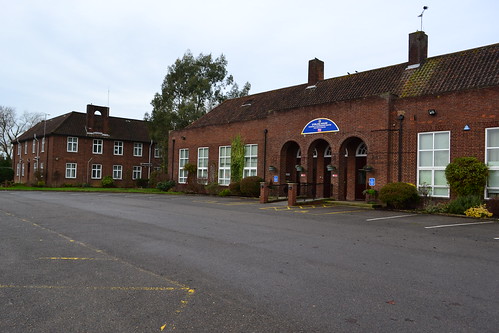
RAF Stradishall

The Officers Quarters at RAF Stradishall were reflective of the types built during war-time under Scheme A
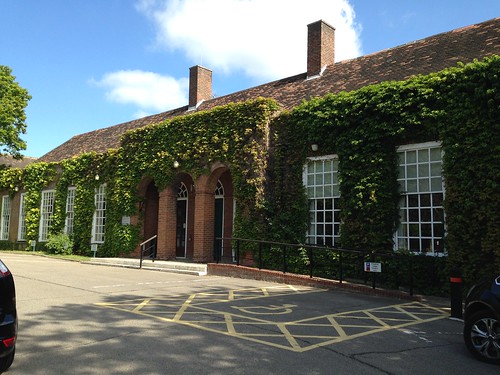
Officer's Quarters now called 'The Gibson Building'.

Standard designs allowed for replication across numerous airfields, the idea being an officer could lift his room from one site and drop it directly on another. RAF West Malling, (built under Scheme M), reflecting this with Stradishall, (Scheme A), above.

All buildings were constructed from brick with roofing tiles chosen accordingly for the local conditions. As the schemes progressed and brick became scarce, concrete was used as a cheap and strong substitute, certainly for technical buildings but less so for administration and domestic structures.

As each scheme was replaced, any previous buildings would have remained (some modified to the new standard), thus some sites will have had a range of building types, often leading to confusion and a mix of architectural styles. The accommodation areas themselves changed too. In the early war years and as the awareness of air attack increased, accommodation was built away from the main airfield site and outside of the airfield perimeter. Classed as either ‘dispersed’ or ‘non-dispersed’, they were identified by the location of these domestic sites, where ‘non-dispersed’ were within the perimeter, and dispersed were beyond the main perimeter area of the airfield.
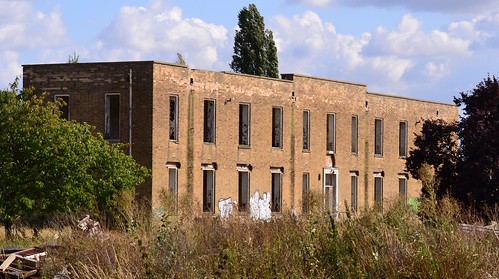
Barrack block Type Q (RAF Upwood)

The changing face of Barrack Blocks. A Type Q Barrack block at RAF Upwood, built to design 444/36, to accommodate 3 NCOs and 68 aircraftsmen. Compare this flat-roofed, expansion period building to the later Nissen hut.

In these early stages little consideration was given to air attack, and so ‘non-dispersed’ sites were still being constructed at the beginning of the war. The benefit of these sites being that all personnel were in close proximity, general accommodation buildings often being built around the parade ground, and with all the amenities under one roof. These sites also saw the segregation between officers, sergeants and other ranks along with separate married (many with servants quarters) and single quarters. However, with the outbreak of war and as a result of austerity measures, the building of separate married quarters ceased. Examples of these early non-dispersed designs include: Stradishall, Marham, Tern Hill, Waddington and Feltwell.
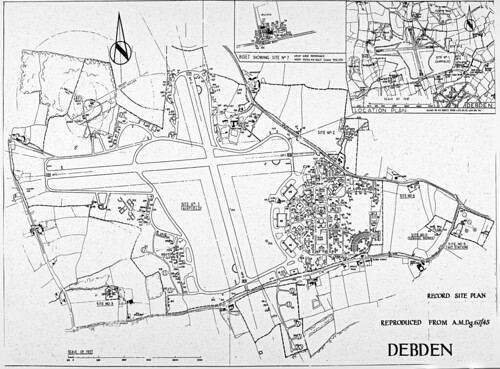
RAF Debden

RAF Debden, a non-dispersed site where accommodation and administrative areas were collectively close to the main airfield site within the outer perimeter (IWM17560).

The layout of these barrack blocks, took on the familiar ‘H’ shape, a design that replaced the initial ‘T’ shape of the post First World War and inter-war years. The ‘H’ Block became the standard design and gave a distinct shape to accommodation blocks on these prewar non dispersed airfields.

As the awareness of the dangers of non-dispersed designs became all too apparent, dispersed sites became the norm, where domestic areas were located a good distance from the main airfield site. Dispersed accommodation could have many sites, depending largely upon the nature of the airfield (Bomber, Fighter etc), when it  was built and whether it was operated by the RAF or USAAF. In these later dispersed schemes, domestic sites became more temporary in nature, whilst some remained as brick, many were built as prefabricated units often as Nissen or Quonset style huts, often due in part to the shortage of brick for building and the speed at which they could be erected.

With the changes in dispersing accommodation blocks away from the main airfield, safety increased but both administrative and operational effectiveness noticeably dropped. It was going to be a fine balance between keeping a safe distance and achieving maximum effectiveness.
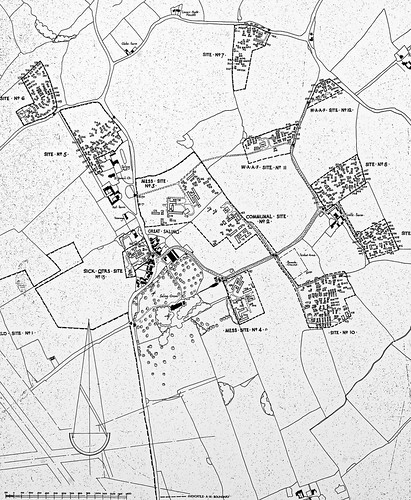
Andrewsfield Accommodation site

A typical dispersed site showing the accommodation areas dispersed well away from the main airfield (bottom left). RAF Andrews Field (IWM UPL17532)

Depending upon local topography, these domestic areas could be situated as much as two miles from the airfield site, wooded areas being utilised where possible to hide the location of huts; blocks were randomised in their position to break up the appearance of housing, and pathways weaved their way round the sites to reduce their visual impact. In most later airfields, a public road would separate the technical and accommodation sites, with as many as thirteen or fourteen sites becoming common place.

The separation of WAAFs from RAF communal quarters also ceased, men and women now allowed to mix rather than having the separate sites for each. As a result many post 1942 sites had fewer dispersed sites then those of pre 1942.

The design of the technical areas also took on a new look. The prewar practice of squadrons offices being attached to the hangar was dropped, these also being placed away from the main technical site, dispersals for ground crew or waiting pilots were spread about the perimeter so airmen could be closer to the aircraft but far away enough to be safe in the case of attack. This led to a number of buildings appearing on the outer reaches of the airfield, along perimeter tracks and near to hardstands, often these were brick, small and square, others more temporary.

Further changes occurred with the reduction in available materials. These changes have given rise to a wide variation in building design, again many airfields having a variety of buildings using different materials.

Initially, buildings built of brick were strong and commonplace, but as this became both scarce and time-consuming to build, alternative forms were found. Timber followed on, but it too proved to be time-consuming to manufacture, and by 1940 acutely rare also.

A range of materials were looked into, using a mix of timber and concrete, plasterboard and concrete, but they were all below the Air Ministry standard. Even so, many were accepted as design alternatives and used in temporary building construction.

1940 saw the return of the 1916 designed Nissen hut, a curved hut that bolted together in widths of 16, 24 or 30 feet. A cold but effective hut it was commonplace on many airfields as both accommodation huts and technical huts, many being sold post war, and ending up in farmer’s fields many miles from the nearest airfield. With the arrival of the USAAF in 1942-3, they brought with them the Quonset hut, bigger in design than the Nissen, they are mainly distinguishable by their curvatures, the Quonset being semi-circular to the ground whilst the Nissen gave a 210o curvature. This extra curvature gave greater use of ground space, but lacked in overall space compared to it US counterpart.
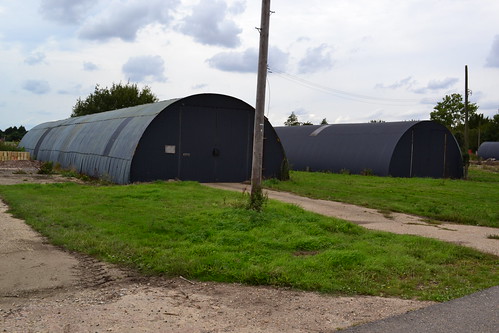
RAF Matching Green

A Quonset hut at Matching Green. Note the curvature at ground level.

Nissen Hut on Acc. Site

The Nissen hut had a larger curvature giving greater ground space – RAF Fersfield.

Even this material became in short supply, metal being scare and urgently required for the building of military hardware. In 1942 the Ministry of Works took over control of hut design, manufacture and supply, and various new designs were brought into play. Asbestos became popular again, with the US being able to supply large quantities of the material. Uni-Seco Ltd, Turners Asbestos and Universal Handcraft being examples introduced at this time.

The final design to be used, was that of the Orlit, a reinforced concrete panel and post design that slots together to form the walls and roof. Also know as the British Concrete Federation (BCF) design they were quick to erect and lasted from many years. This type of design was used for emergency housing in the post war period and has since proven to be degrading to the point that some of these properties have been condemned.

Thus the architecture of airfield buildings took on many guises, from permanent brick designs, through timber, timber and plasterboard mixes, various metal design, asbestos and finally concrete, all of which gave a change in shape and design examples of which could appear on many airfields. The most common surviving examples today being the Nissen hut.

In the next section we shall look at the runway, the very heart of the airfield and often the defining factor in its designation.

Warning over Airfield Closures.

A recent report on the BBC has highlighted a number of military airfields that are set to close over the next six years, with the potential loss of thousands of jobs. However, the threat is much wider than that, and an all-party group have now highlighted the issue, putting pressure on the Government to take action before the situation becomes extremely serious.

In the report, the BBC say that the all-party group on general aviation, labels airfields as “national assets“, and that once closed they “will never be replaced” – a statement primarily based on the complex planning system currently operating in the UK.

Many of the sites identified by the BBC have already been reduced to a holding status, or with minimal military activity anyway. In most cases military flying has already ceased and in some cases, has been so for a number of years. So why are the all party group so concerned?

As highlighted previously, this is all part of a massive cost cutting exercise and streamlining of Britain’s armed forces, a move that will not only save money for the Ministry of Defence, but provide valuable space for much-needed new housing projects across the UK.

Military airfields not only employ armed forces personnel but they also employ a large number of civilians.  Many of these people live locally, and provide a great deal of income to the local economy. As such, many small towns, for example Mildenhall, could be seriously affected by any such closure of its military base. In the event that a new airfield be required, the cost of it would, even if possible, run into millions of pounds, and would take a considerable time to complete. At a time when Britain and her allies were facing increased threats from foreign nationals, is this not perhaps a dangerous policy to be considering at this particular moment in time?

Furthermore, the issue here is not just military airfields, but Britain’s airfields in general. The all-party group, led by the Right Honourable Grant Shapps MP, aims to promote jobs and growth throughout General Aviation in the UK. The group currently (April 2018) contains 150 parliamentary members, which is a record number of members, and one that highlights the depth of feeling amongst its associates.  The group’s primary aim, which covers four areas of aviation: Airfield, Airspace, Tax and Regulations and Heritage, is to safeguard Britain’s network of airfields regardless of their size or status.

The BBC report states that many of those airfields highlighted are also used by both private pilots and particularly flight training firms, who are having to move their operations abroad due to lack of suitable airfields in the UK. Along with other ‘non-commercial’ flying activities (general aviation), these account for “£3bn a year to the UK economy“, the BBC says citing Government figures.

Whilst both military and general aviation airfields are the focus of this report, there are also wider issues at stake here. Figures quoted by the group show that the closure of Britain’s (civilian) General Aviation airfields not only affects the £3bn Gross Value Added (GVA), but directly affects over 38,000 people employed largely in the Science, Technology, Engineering and Mathematics (STEM) roles. These activities they say, “provide the foundation for the much broader £60.6bn UK aviation sector“.

The general aviation situation at the moment, according to the all-party group, shows that in Surrey for example, every licensed airfield is under threat, whilst in Hertfordshire there is only one remaining licensed airfield, and in twenty-two counties across the whole of the UK, there are no licensed airfields whatsoever.

In terms of heritage, many of these airfields, and those that have closed already, are former World War Two sites, and as such have an immense  historical value to them. As we have seen many times already, many of these airfields are no longer in existence and many have been reduced to mere shells of buildings with no memorial, or little recognition of the human sacrifice made from them.

With the closure of airfields comes the knock on effect of air displays, which since the tragic events at Shoreham, have become prohibitively expensive. Owners of historic jet aircraft for example, are having to sell them abroad as they can no longer afford to fly them in this country. The drain on flying examples could, they say, lead to there being no examples of post war models left flying in this country at all. Even military supported fleets e.g the Battle of Britain Memorial Flight, the Royal Navy Historic Flight and the Army’s Historic Aircraft Flight, are having their ability to perform at airshows reduced by Government cutbacks. This is particularly worrying they say, as evidence shows that a considerably large number of armed forces recruits are gained through airshow attendance.

Promoting general aviation, and particularly Britain’s rich and diverse aviation heritage across the UK, also falls to the numerous museums located around the country.  The majority of people they say, are within an hours drive of at least one aviation museum, and whilst the majority are on former wartime sites in the east and south of the country, this figure broadly applies to the whole of the UK; one I think you’ll agree is both astonishing and reflective of the general interest in aviation in this country.

The national interest in aviation has also been heightened by the current anniversary of the founding of the Royal Air Force on April 1st 1918, but notwithstanding this, visits to these museums accounts for an estimated 2.5 million visits a year, generating over £40 million of heritage tourism revenue – a very significant figure indeed.

The purchase and storage of static aircraft for these museums is also a costly one, rents, hangar space and ground running costs are ever-increasing. Aircraft themselves are not cheap, and few museums can ill-afford to update ‘stock’ with models that are becoming more rare with each passing day. New or more recent examples are also at the base of the argument; with the forthcoming withdrawal of the Tornado for example, how many will be ‘offered’ to local small-scale museums at a reasonable price rather than dealers who will pass them on to foreign or large-scale buyers.

Furthermore, many of these museums, house archives and personal records of those who served during many of the conflicts this country and her allies have been involved in over the last 100 years. Allowing these organisations to prosper, enables future generations to access records, photographs and information, not only about world history, but in many cases family histories too.

The closure of Britain’s airfields has not just a localised impact, it has a national impact that long-term, could have serious affects not only on the aviation and tourist economy as a whole, but science and technology, the armed forces and historical sources too. Whilst the need for housing must be met, a balance must also be sought where these valuable assets are not simply stripped away and forgotten, but consideration is given to their historical and economic contributions too. We can ill-afford to let our aviation heritage be simply removed without due consideration of the financial, economic and historical consequences.

Some of the airfields currently listed as ‘under threat’ include:

Andrewsfield
Blackpool
Bourn
Deenethorpe
Dunsfold
Elvington
Halfpenny Green
Kemble
Long Marston
Manston
Alconbury
Molesworth
Mildenhall
Chalgrove
Colerne
RAF Henlow
RAF Hullavington
RAF Wyton
RAF Wethersfield
RMB Chivenor
Linton-on-Ouse
RAF Topcliffe
Nottingham City
Old Sarum
Panshanger
Peterborough
Plymouth
Redhill
Rochester
Wellesbourne
Wycombe Air Park
Fairoaks
North Danes
Tollerton
+ 30 other MOD sites

The BBC highlighted the story on April 21st 2018 via their website. (this may not be accessible outside of the UK).

The General Aviation All-Party Parliamentary Group has a website detailing its aims and policies. It also encourages lobbying of MPs for improvements to the planning process and in particular the protection of Britain’s aviation heritage.


The Development of Britain’s Airfields (Part 3).

In Part 3 of this series, we turn from the political scene of Part 2 and look at how airfields were identified, The process and methodology of airfield selection.

Choosing a site.

Choosing an airfield site during these prewar periods was especially difficult as there were many ‘unknown’ factors to predict, a factor in itself that helped determine the needs of each of the various schemes mentioned previously. However, there were a number of airfields already in situ, some used by the military and some used by civilian aviation. As remnants of the First World War, many military sites were inadequate or inappropriate for the growing future needs of the RAF, but with some work, they could be developed into workable sites as the basic infrastructure was already there in place.

As well as these RAF sites, there were also civilian airfields, which the Government considered as potential military airfields. Because civil aviation had grown amongst the wealthier members of society, although not exclusively, this meant that in the pre-war period, there were some 90 airfields*4 owned either by local councils or under private ownership. Many of these were requisitioned by the authorities, but because many were small or located very close to built-up areas, (in 1928 the Air Ministry ‘encouraged’ towns of 20,000+ inhabitants to have a municipal airport), they were not suitable for modern fighter or bomber aircraft. As a result, many of these became training or maintenance sites, some linked to aircraft production facilities, but none were ‘operational’ for fighting units.

A further group of airfields in use at this time, were those of the AA (Automobile Association – better known as a motoring organisation). The AA Landing Grounds were often ex First World War sites located near to hotels and other places of interest to the motorist. Fuel was usually supplied at, or near to, each site, and each one was ‘tested’ by an aircraft on behalf of the AA before it was granted AA status. As these sites were registered, their locations were readily available to the Germans and so they were closed and rendered unsuitable for aircraft. However, land in close proximity was occasionally used, and so a new site would be created in a similar location.

With all these sites available, one would imagine choosing a site and developing it, would be relatively straight forward, but this is far from the truth. Many of these sites were inadequate, and the process of repairing/upgrading or rectifying it was simply not going to be sufficient. Therefore, many new sites were going to be required and the process by which a site was identified, acquired and then subsequently developed was not at all straightforward. In each case the Air Ministry Directorate (AMDGW) and Air Ministries Aerodromes Board would work in very close conjunction with numerous other Government departments and interested public bodies. These would include local Electricity Boards, Drainage Boards, the Geological Survey Department and the local War Agricultural Committee, who were concerned about flooding caused by run-off from the sudden building of large expanses of concrete.

In the first instance, using an ordnance survey map, areas that were below 50 feet above sea level or above 650 feet were generally ignored, the former being prone to flooding whilst the latter suffering high levels of low cloud or hill fog. Next a circle with a radius of 1,100 yards was marked off, this had to be flat with minimal rise in the ground layer. It also had to be free from obstructions and ideally at least three miles away from any other flying location. Next officers from the Air Ministries Aerodromes Board would walk the site, field by field, recording maximum landing distances, and noting any unidentified obstacles, trees, hedges, ditches or more permanent structures that would need removal.

By September 1939, board officials had identified, examined and recorded around 4,000 possible sites in the U.K. Many would be simply filed away never to see aviation of any kind, whilst others would become famous for years to come.

Once a suitable site had been identified and examined, the local geology had to be established where possible. In the pre-war years, no consideration was given to hard runways, they didn’t exist in any real form and were not seen as needed as any aircraft of that time could happily take off from a grass strip. However, in order to prevent aircraft wheels from bogging down, or flooding closing an airfield, well-drained soils were absolutely paramount.

Once the site had been accepted, the land was requisitioned, forcibly purchased using new powers created under the Emergency Powers (Defence) Act 1939. This gave virtually immediate access and ownership of the land – with little notice to the land owner – to the Government. These powers also saw their way to reducing the ‘NIMBY*5 effect, protests against developments being side-lined through political clout.

The next stage in the process was to put the job out to tender. The difficulty here was that secrecy was of the utmost importance, and so little of the detail was released other than an approximate location. As the war progressed, the number of construction companies involved became fewer, and those that were involved more established, prime contractors being Wimpey, Laing, Taylor-Woodrow and McAlpine – all of whom went on to be major construction companies post war. That said, no major airfield would generally be completed by one single contractor, as the whole process required a wide range of skills based operations. As one completed their task, another would come in, sometimes dual operations would be carried out simultaneously. For example taxiways and access roads may have been built by Tarmac, whereas the runway may have been built by McAlpine. Accommodation areas often used ‘Nissen’, or in many USAAF cases, ‘Quonset’ huts, many of these and other ‘standard’ buildings were erected by buildings contractors whereas other more substantial buildings may have been built by John Laing and Co.

By the outbreak of war, 100 sites had been purchased, as the number was relatively small, the board were able to be ‘particular’ in their choice, something that was quickly disregarded as the war progressed.

Airfields are highly labour intensive projects requiring an enormous workforce and extensive heavy machinery, little of which were available in the early 1940s. Irish labour provided the backbone of the initial workforce, whilst heavy plant came in from the United States. At its peak there were some 60,000 men employed on airfield construction, all of whom were unable to spend their time rebuilding the devastated towns and cities of the UK.

As the war progressed, the Royal Air Force Airfield Construction Service began taking a greater role in airfield construction, diversifying away from their original role as repairers of damaged airfields sites. There would be an initial 20 squadrons created to carry out these tasks, with a further 6 being formed later in the war. With squadron numbers ranging from 5001 to 5026, they would be initially involved in the updating of older sites and the creation of ALGs, eventually taking on a much greater responsibility of airfield construction. These squadrons, were of course given great assistance by the well established Royal Engineers.

In 1942, the United States joined the European theatre sending their own Engineer Aviation Battalions to the U.K. Their task was to support these British squadrons by building their own airfields ready for the huge influx of men and machines that was about to arrive. The first site completed by the Americans and opened in 1943, was Great Saling (later renamed Andrews Field) by the 819th engineer Aviation Battalion. Not being experienced in U.K. soils, it was a steep learning curve fraught with a number of initial problems.

Former RAF Andrewsfield

RAF Andrews Field memorial to the 819th Engineer Aviation Battalion.

In 1939 there were only 60 military airfields in the UK, by 1940 this had increased to 280, almost tripling to over 720 by 1945. Between 1939 and 1945 444 airfields*2,4 new airfields were built by these organisations – an amazing feat by any standard. Using almost a third of Britain’s total construction labour force, they were often open and manned within a matter of months rather than years. Building Britain’s wartime airfields was not cheap. Many, like Debach the last USAAF airfield to be constructed, cost almost £1,000,000 to construct.  A small amount compared to the £645, 000,000 it cost to build all 250 US airfields in the UK*5a

This whole process however was not fool-proof. In a number of situations sites were identified and requisitioned, but not developed. In several cases they were partly built, and in others like RAF Cottam, they were completely built but then never occupied. Some airfields were identified for USAAF use, only to be declined and then handed over to their RAF counterparts. Some US bases were never actually started but remained named and therefore official sites even though they remained as farmers fields!

The lead up to war led to a massive change in the British landscape. Keeping airfields secret led to many being built in remote areas and away from major towns. Little did the inhabitants of these quiet little villages know, but their population was about to increase, in some cases by thousands.

In the next section we look at how the airfield was built, the process of construction and the difficulties faced during this phase.

Sources and further reading. 

*2 Smith, D.J., “Britain’s Military Airfields 1939-1945“, Patrick Stephens Limited, 1989

*4 Francis, P., et al, “Nine Thousand Miles of Concrete“, Historic England in Conjunction with the Airfield Research Group (ARG). pdf document Published 15/1/16 via website accessed 2/1/18

*5 NIMBY – Acronym used to describe the objections of local planning projects. (Not In My Back Yard).

*5a Wilson. K., “Blood and Fears – How America’s Bomber Boys and Girls in England Won Their War.”, Weiden & Nicolson. (2016)

50 Aviation Trails Reached!

I am pleased to announce that since starting Aviation Trails four years ago, I have now reached that magic number of 50 Trails around Britain’s wartime airfields, a feat I never thought would happen.

Each Trail covers two or more sites, in some cases six, many three, covering in total, over 100 former RAF and USAAF airfields and museums around Britain.

I can honestly say its been a terrific four years, in which I have learnt a lot about Britain’s wartime past, the men and machines that flew from these places and the tragedies that occurred at so many. The development of these airfields was staggering, the process of construction, and the subsequent decay just as eye-opening. These sites and the people who used them, have changed both the British and world landscape, leaving in many cases scars that may never heal. The buildings and stretches of concrete that remain are monuments to human endurance and sacrifice, a sacrifice that we hope may never have to be repeated.

RAF Tibenham Perimeter track

The perimeter track at the former RAF Tibbenham.

During these four years there have been several changes at many of these sites, hangars and other buildings have gone, runways are continuing to be dug up as they become prime land for development. As we speak there are numerous sites under planning proposals, whilst others are waiting in the wings to hear what their fate will be.

To compile these trails I have personally visited each and every one of these sites, even a field has a certain something when you know who stood there before you.

To all those who have visited, commented and followed me on this journey, I thank you, I hope you have enjoyed the journey back in time as much as I have writing it. I hope that through these trails, the memories of those who gave their all may live on so that future generations may know who they were and what they did, so that we may enjoy the peace we do today.

Here’s to the next 50!

Andy.

RAF Andrews Field – (Great Saling/Station 485) – Trail 33: Essex Part 1.

RAF Attlebridge  (Station 120) – Trail 7: Northwest Norfolk.

RAF Barton Bendish – Trail 7: Northwest Norfolk.

RAF Biggin Hill (Westersham) (Station 343) – Trail 4: Kent Part 1.

RAF Bircham Newton – Trail 20: North Norfolk (Part 1).

RAF Bodney (Station 141) – Trail 8: Swaffham and Her Neighbours (Part 1 of 3).

RAF Bourn – Trail 31: Southern Cambridgeshire (Part 2).

RAF Brenzett (ALG) – Trail 18: Kent Part 2.

RAF Brunton – Trail 47: Northumberland.

RAF Bungay (Flixton) (Station 125) – Trail 14:  Central Suffolk (Part 1).

RAF Bury St. Edmunds (Rougham) (Station 468) – Trail 16: West Suffolk (part 1).

RAF Castle Camps – Trail 45: Essex (Part 2).

RAF Caxton Gibbet – Trail 29: Southern Cambridge (Part 1).

RAF Charterhall – Trail 41: The Borders of Scotland and England.

RAF Chedburgh – Trail 49: Bomber Command – Bury St. Edmunds to Haverhill

RAF Collyweston – Trail 37: The Northern Reaches of Cambridgeshire.

RAF Coltishall – Trail 7: Northwest Norfolk.

RAF Coningsby – Trail 1: Lower Lincolnshire.

RAF Cottam – Trail 40: Yorkshire (East Riding).

RAF Cranwell – Trail 2: Lincoln Borders and Newark.

RAF Debach (Station 152) – Trail 39: Suffolk around Ipswich (Part 1).

RAF Debden (Station 356) – Trail 46: Essex Part 3,

RAF Deenethorpe (Station 128) – Trail 6: American Ghosts.

RAF Deopham Green (Station 142) – Trail 27: Southern Norfolk (Part 3).

RAF Digby (Scopwick) – Trail 1: Lower Lincolnshire.

RAF Docking – Trail 20: North Norfolk (Part 1).

RAF Downham Market (Bexwell) – Trail 7: Northwest Norfolk.

RAF Drem – Trail 42: Edinburgh’s Neighbours.

RAF East Fortune – Trail 42: Edinburgh’s Neighbours.

RAF East Kirkby – Trail 1: Lower Lincolnshire.

RAF East Wretham (Station 133) – Trail 13: Southern Norfolk around Diss (Part 2).

RAF Eye (Brome) (Station 134) – Trail 14: Central Suffolk (Part 1).

RAF Fersfield – (Station 130) – Trail 28: Southern Norfolk (Part 4).

RAF Foulsham – Trail 22: North Norfolk (Part 3).

RAF Fowlmere – Trail 32: Southern Cambridgeshire (Part 3).

RAF Framlingham (Parham) (Station 153) – Trail 39: Suffolk around Ipswich (Part 1).

RAF Glatton (Station 130) – Trail 6: American Ghosts.

RAF Gransden Lodge – Trail 31: Southern Cambridgeshire (Part 2).

RAF Graveley – Trail 29: Southern Cambridge (Part 1).

RAF Grafton Underwood (Station 106) – Trail 6: American Ghosts.

RAF Great Dunmow (Station 164)- Trail 33: Essex (Part 1).

RAF Great Massingham – Trail 21: North Norfolk (Part 2).

RAF Great Sampford (Station 359) – Trail 50: Haverhill’s neighbours – Wratting Common and Great Sampford.

RAF Hardwick (Station 104) – Trail 12: Southern Norfolk around Diss (Part 1).

RAF Hawkinge – Trail 18: Kent Part 2.

RAF Hethel – Trail 38: To the West of Norwich.

RFC Hingham – Trail 38: To the West of Norwich.

RAF Hunsdon – Trail 25: Hertfordshire.

RAF Kimbolton (Station 117) – Trail 6: American Ghosts.

RAF King’s Cliffe (Station 367) – Trail 6: American Ghosts.

RAF Langham – Trail 23: North Norfolk (Part 4).

RAF Lashenden (Headcorn) – Trail 18: Kent Part 2.

RAF Lavenham (Station 137) – Trail coming soon.

RAF Little Snoring – – Trail 22: North Norfolk (Part 3).

RAF Marham – Trail 7: Northwest Norfolk.

RAF Martlesham Heath – Trail 48: Suffolk around Ipswich (Part 2).

RAF Matching (Station 166) – Trail 33: Essex Part 1.

RAF Matlask (Station 178) – Trail 34: North Norfolk (Part 5).

RAF Mattishall – Trail 36: North Norfolk (Part 6).

RAF Mendlesham (Station 156) – Trail 15: Central Suffolk (Part 2).

RAF Mepal– Trail 11: Around Ely.

RAF Methwold – Trail 8: Swaffham and Her Neighbours (Part 1).

RAF Millfield –  Trail 47: Northumberland.

RAF Narborough (Narborough Aerodrome)- Trail 7: Northwest Norfolk.

RAF North Creake – Trail 23: North Norfolk (Part 4).

RAF North Pickenham (Station 143) – Trail 9: Swaffham and Her Neighbours (Part 2).

RAF North Weald – Trail 25: Hertfordshire.

RAF North Witham (Station 479) – Trail 3: Gone But Not Forgotten.

RAF Old Buckenham (Station 144) – Trail 13: Southern Norfolk around Diss (Part 2).

RAF Oulton – Trail 34: North Norfolk (Part 5).

RAF Polebrook (Station 110) – Trail 19: Northamptonshire American Ghosts II.

RAF Rattlesden (Station 126) – Trail 15: (Central Suffolk (Part 2).

RAF Sawbridgeworth – Trail 25: Hertfordshire.

RAF Scampton – Trail 30: Scampton and the Heritage Centre.

RAF Sculthorpe – Trail 21: North Norfolk Part 2.

RAF Shipdham (Station 115) – Trail 10: Swaffham and Her Neighbours (Part 3).

RAF Snetterton Heath – (Station 138) – Trail 27: Southern Norfolk (Part 3).

RAF Spanhoe Lodge (Station 493) – Trail 6: American Ghosts.

RAF Steeple Morden – Trail 32: Southern Cambridgeshire (Part 3).

RAF Stoke Orchard – Trail 24: Gloucestershire.

RAF Stradishall- Trail 49: Bomber Command – Bury St. Edmunds to Haverhill

RAF Sutton Bridge – Trail 3: Gone But Not Forgotten.

RAF Swannington – Trail 36: North Norfolk (Part 6) 

RAF Swanton Morley – Trail 38: To the West of Norwich.

RAF Thorpe Abbotts (Station 139) – Trail 12: Southern Norfolk around Diss (Part 1).

RAF Tibenham (Station 124) – Trail 13: Southern Norfolk around Diss (Part 2).

RAF Tuddenham – Trail 16: West Suffolk (Part 1).

RAF Tydd St. Mary – Trail 37: The Northern Reaches of Cambridgeshire.

RAF Upwood – Trail 17: The Pathfinders.

RAF Warboys – Trail 17: The Pathfinders.

RAF Watton (Station 376/Station 505) – Trail 9: Swaffham & Her Neighbours (Part 2).

RAF Wendling (Station 118) – Trail 10: Swaffham and Her Neighbours (Part 3).

RAF West Malling – Trail 4: Kent Part 1.

RAF West Raynham – Trail 21: North Norfolk Part 2.

RAF Wethersfield – Trail 45: Essex (Part 2).

RAF Westley – Trail 16: West Suffolk (part 1).

RAF Winfield – Trail 41: The Borders of Scotland and England.

RAF Winthorpe – Trail 2: Lincoln Borders and Newark.

RAF Witchford – Trail 11: Around Ely.

RAF Wittering  – Trail 37: The Northern Reaches of Cambridgeshire.

RAF Woodall Spa – Trail 1: Lower Lincolnshire.

RAF Wratting Common – Trail 50 – Haverhill’s neighbours – Wratting Common and Great Sampford.


RAF Waterbeach Museum.

Earlier this year I was able to visit the Waterbeach Military Heritage Museum located on the former RAF Waterbeach airfield; creating the museum has been quite an achievement and a very worthy cause. The museum contains many interesting photographs and artefacts relating to life at “the ‘Beach”, from its inception in 1940 right through to its final closure in 2013.

The current Museum was opened after the Army’s departure and the subsequent closure of the barracks. It is currently housed in Building 3 just inside the main entrance next to the former guard-house, and access is strictly controlled, and by prior arrangement only. It was created by the then curator, Oliver Merrington, along with a handful of local people who wanted to secure the future of the museum and keep the memories of Waterbeach alive for future generations. Mr. Merrington has since sadly passed away, but the volunteers continue the good work he put in place.

Whilst the museum is currently small, it holds a tremendous amount of information, all  of which is neatly displayed in cabinets and on the walls. Many original photographs are supplemented with official documents, personal stories, newspaper cuttings and artefacts, some of which relate to specific aircraft from Waterbeach’s history.

RAF Waterbeach Museum

Part of one of the many displays in the museum.

Whilst most of the displays reflect life at Waterbeach during the Second World War, various aspects reflect its post war life, both with the RAF and with the Army’s Engineer Regiment – the founders of the original Waterbeach Museum in 1984.

The two rooms of the museum are dedicated to all these people, taking you on a journey through the life of Waterbeach, starting with the sad First World War story of three brothers: Sgt. Jack Day, (1st July 1916), Private Walter Day (1st July 1916) and Private Clifford Day (13th August 1918). Like so many families of the war, their lives were all taken prematurely, two of which occurred on the first day of the first Battle of the Somme. The three brothers, whose ages ranged from 19 to 22 years old, were all local boys to Waterbeach, and like so many, left a family devastated by their loss. Two of the boys remain buried abroad but Walter, like so many other young men, has no known grave and remains missing.

From here the display takes us to Waterbeach in the 1940s, the story of its construction and design are told using photographs taken at that time. Representations of the various bomber squadrons who used the airfield are supported with operational details, personal stories and artefacts relating to individual aircraft that flew from Waterbeach during these early war years.

In the post-war period Waterbeach was transferred to the Transport Command and again photographs and documents show the range of aircraft that flew from here: Liberators, Dakotas, Lancastrians and Avro Yorks.

Into the jet age and we see a flying suit, and a canopy from Gloster Javelin XH871, which ended its days at Bovingdon as a fire fighting air frame. It is particularity significant as it previously served here at RAF Waterbeach in the late 1950s.

RAF Waterbeach Museum

One of the many exhibits on display at the Museum.

After the Royal Air Force departed the base was handed over to the Army, and a small number of exhibits represent their presence here at Waterbeach. The Royal Engineers finally departed the barracks themselves in March 2013.

Other exhibits on display here include: the weather vane from the station church (now demolished), the operations boards, astro-compasses, radios and telephone equipment, all neatly arranged inside glass cabinets. A detailed history of one of the former gate guards, Spitfire LF MK.XIVe ‘TE392’ which now flies with the Lone Star Flight Museum, Galveston, Texas, is also on view.

This is a delightful little museum that has been put together to pay homage to those who served at Waterbeach, either under RAF command or with the Royal Engineers. It is run by volunteers and relies on charitable donations to keep it running. Like many museums, it has limited opening hours, but the range of material is fabulous and it deserves a great deal of public support.

On a final note, my personal thanks go out to Adrian Wright who gave up his own time to open up and show me around the museum.

For details of opening times and other information the curator can be contacted via email at:  waterbeachmilitarymuseum@waterbeach.org

or via Facebook at: https://en-gb.facebook.com/waterbeachmilitaryheritagemuseum/


389th BG Exhibition at Hethel.

Whilst visiting RAF Hethel (Trail 38), we drop into the exhibition of the of the 389th BG who were stationed here during World War II.

The exhibition is small but it has a lot to offer. Located in the former Chapel/Gymnasium, it has been carefully restored and filled with information and artefacts pertaining to the former airfield and U.S Air Force during the Second World War.  There are also articles from the 466th Bomb Group who were based at nearby RAF Attlebridge, the RAF and stories from local people who befriended the Americans whilst they were here.

The exhibition is located on a working poultry farm and so access is limited, open every second Sunday of each month between April and October, from 10:00 am to 4:00 pm.

The buildings have been painstakingly restored by volunteers, some of whom have had connections with the airfield or Lotus cars, the current owner of the airfield itself. In 2001 the museum opened its doors to the public, after moving a collection of memorabilia from the Lotus site over to their new home here at the 389th exhibition.

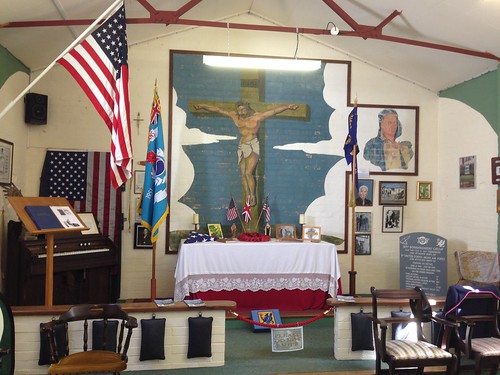
It was during the restoration that two murals were discovered, these are perhaps one of the more stunning aspects of the exhibition. Painted in 1943 by Sgt. Bud Doyle, the then Chaplin’s driver, they are located on one of the walls of the Chapel. One is of Christ on a cross, whilst the other is a portrait of a pilot, both have been restored and remain on display where they were originally painted all those years ago..

389th BG Exhibition Hethel

The restored murals in the Chapel.

Located here, are a number of items many with stories attached. In the Chaplin’s quarters next door, are maps and other documents relating to the groups activities.

Two new Nissen huts have also been built, opened and dedicated in 2014 and 2017, they extend the exhibition further to include uniforms, service records, numerous photographs and more memorabilia.

RAF Hethel, 389th BG Museum

The dedication plaque.

There is also a refreshments bar offering the usual tea and snacks, along with a toilet facilities.

From the museum there are public footpaths into what was one of the accommodation areas of RAF Hethel, here are some of the remains of buildings, shelters primarily, hidden amongst the undergrowth. The footpaths are mainly concrete once you get onto the site.

RAF Hethel, 389th BG Museum

Part of the exhibition inside the former Chapel at RAF Hethel.

A nice little museum it has free entry and welcomes donations to help with the upkeep and maintenance of the site, if in the area, it is well worth a visit and your support .

The 389th website has further details and opening times and information of forthcoming events.

1945 World Air Speed Record – Herne Bay.

Before leaving Herne Bay in Trail 44, take a look out to sea and imagine yourself watching a Gloster Meteor flash by. On November 7th 1945, this very event occurred during which a new World Air Speed record was set.

On that day, two Meteor aircraft were prepared in which two pilots, both flying for different groups, would attempt to set a new World Air Speed record over a set course along Herne Bay’s seafront. The first aircraft was piloted by Group Captain Hugh Joseph Wilson, CBE, AFC (the Commandant of the Empire Test Pilots’ School, Cranfield); and the second by Mr. Eric Stanley Greenwood O.B.E., Gloster’s own chief test pilot. In a few hours time both men would have the chance to have their names entered in the history books of aviation by breaking through the 600mph air speed barrier.

The event was run in line with the Fédération Aéronautique Internationale‘s rules, covering in total, an 8 mile course flown at, or below, 250 feet. For the attempt, there would be four runs in total by each pilot, two east-to-west and two west-to-east.

With good but not ideal weather, Wilson’s aircraft took off from the former RAF Manston, circling over Thanet before lining his aircraft up for the run in. Following red balloon markers along the shoreline, Wilson flew along the 8 mile course at 250 feet between Reculver Point and  Herne Bay Pier toward the Isle of Sheppey. Above Sheppey, (and below 1,300 ft) Wilson would turn his aircraft and line up for the next run, again at 250ft.

Initial results showed Greenwood achieving the higher speeds, and these were eagerly flashed around the world. However, after confirmation from more sophisticated timing equipment, it was later confirmed that the higher speed was in fact achieved by Wilson, whose recorded speeds were: 604mph, 608mph, 602mph and 611mph, giving an average speed of just over 606mph. Eric Greenwood’s flights were also confirmed, but slightly slower at:  599mph, 608mph, 598mph and 607mph, giving an overall average speed of 603mph. The actual confirmed and awarded speed over the four runs was 606.38mph by Wilson*1.

The event was big news around the world, a reporter for ‘The Argus*2‘ – a Melbourne newspaper – described how both pilots used only two-thirds of their permitted power, and how they both wanted permission to push the air speed even higher, but both were denied at the time.

In the following day’s report*3, Greenwood described what it was like flying at over 600 mph for the very first time.

As I shot across the course of three kilometres (one mile seven furlongs), my principal  worry was to keep my eye on the light on the pier, for it was the best guiding beacon there was. On my first run I hit a bump, got a wing down, and my nose slewed off a bit, but I got back on the course. Below the sea appeared to be rushing past like an out-of-focus picture.

I could not see the Isle of Sheppey, toward which I was heading, because visibility was not all that I wanted.

At 600mph it is a matter of seconds before you are there. It came up just where I  expected it. In the cockpit I was wearing a tropical helmet, grey flannel bags, a white silk shirt, and ordinary shoes. The ride was quite comfortable, and not as bumpy as some practice runs. I did not have time to pay much attention to the gauges and meters, but I could see that my air speed indicator was bobbing round the 600mph mark.

On the first run I only glanced at the altimeter on the turns, so that I should not go too high. My right hand was kept pretty busy on the stick (control column), and my left hand was. throbbing on the two throttle levers.

Greenwood went on to describe how it took four attempts to start the upgraded engines, delaying his attempt by an hour…

I had to get in and out of the cockpit four times before the engines finally started. A technical hitch delayed me for about an hour, and all the time I was getting colder and colder. At last I got away round about 11.30am. 

He described in some detail the first and second runs…

On the first run I had a fleeting glance at the blurred coast, and saw quite a crowd of onlookers on the cliffs. I remembered that my wife was watching me, and I found that there was time to wonder what she was thinking. I knew that she would be more worried than I was, and it struck me that the sooner I could get the thing over the sooner her fears would be put at rest.

On my first turn toward the Isle of Sheppey I was well lined up for passing over the Eastchurch airfield, where visibility was poor for this high-speed type of flying. The horizon had completely disappeared, and I turned by looking down at the ground and hoping that, on coming out of the bank, I would be pointing at two balloons on the pier 12 miles ahead. They were not visible at first.

All this time my air speed indicator had not dropped below 560 mph, in spite of my back-throttling slightly. Then the guiding light flashed from the pier, and in a moment I saw the balloons, so I knew that I was all right for that.

On the return run of my first circuit the cockpit began to get hot. It was for all the world like a tropical-summer day. Perspiration began to collect on my forehead. I did not want it to cloud my eyes, so for the fraction of a second I took my hands off the controls and wiped the sweat off with the back of my gloved hand. I had decided not to wear goggles, as the cockpit was completely sealed. I had taken the precaution, however, of leaving my oxygen turned on, because I thought that it was just that little extra care that might prevent my getting the feeling of “Don’t fence me in.”

Normally I don’t suffer from a feeling of being cooked up in an aircraft, but the Meteor’s cockpit was so completely sealed up that I was not certain how I should feel. As all had gone well, and I had got half-way through the course I checked up my fuel content gauges to be sure that I had plenty of paraffin to complete the job.

I passed over Manston airfield on the second run rather farther east than I had hoped, so my turn took me farther out to sea than I had budgeted for. But I managed to line up again quite satisfactorily, and I opened up just as I was approaching Margate pier at a height of 800 feet. My speed was then 560 mph.

Whilst the first run was smooth, the second he said, “Shook the base of his spine”.

This second run was not so smooth, for I hit a few bumps, which shook the base of my spine. Hitting air bumps at 600 mph is like falling down stone steps—a series of nasty jars. But the biffs were not bad enough to make me back-throttle, and I passed over the line without incident, except that I felt extremely hot and clammy.

After he had completed his four attempts, Greenwood described how he had difficulty in lowering his airspeed to enable him to land safely…

At the end of my effort I came to one of the most difficult jobs of the lot. It was to lose speed after having travelled at 600 mph. I started back-throttling immediately after I had finished my final run, but I had to circuit Manston airfield three times before I got my speed down to 200mph.

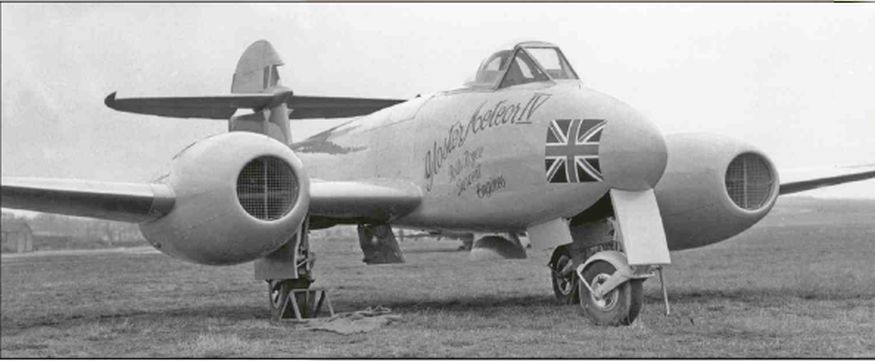
The two Meteor aircraft were especially modified for the event. Both originally built as MK.III aircraft – ‘EE454’ (Britannia ) and ‘EE455’ (Yellow Peril) – they had the original engines replaced with Derwent Mk.V turbojets (a scaled-down version of the RB.41 Nene) increasing the thrust to a maximum of 4,000 lbs at sea level – for the runs though, this would be limited to 3,600 lbs each. Other modifications included: reducing and strengthening the canopy; lightening the air frames by removal of all weaponry; smoothing of all flying surfaces; sealing of trim tabs, along with shortening and reshaping of the wings – all of which would go toward making the aircraft as streamlined as possible.

Related image

EE455 ‘Yellow Peril’ was painted in an all yellow scheme (with silver outer wings) to make itself more visible for recording cameras.*4

An official application for the record was submitted to the International Aeronautical Federation for world recognition. As it was announced, Air-Marshal Sir William Coryton (former commander of 5 Group) said that: “Britain had hoped to go farther, but minor defects had developed in ‘Britannia’. There was no sign of damage to the other machine“, he went on to say.

Wilson, born at Westminster, London, England, 28th May 1908, initially received a short service commission, after which he rose through the ranks of the Royal Air Force eventually being placed on the Reserves Officers list. With the outbreak of war, Flt. Lt. Wilson was recalled and assigned as Commanding Officer to the Aerodynamic Flight, R.A.E. Farnborough. A year after promotion to the rank of Squadron Leader in 1940, he was appointed chief test pilot at the Royal Aircraft Establishment (R.A.E.) who were then testing captured enemy aircraft. He was promoted to Wing Commander, 20th August 1945, retiring on 20th June 1948 as a Group Captain.

Eric Greenwood, Gloster’s Chief Test Pilot, was credited with the first pilot to exceed 600 miles per hour in level flight, and was awarded the O.B.E. on 13th June 1946.

His career started straight from school, learning to fly at No. 5 F.T.S. at Sealand in 1928. He was then posted to 3 Sqn. at Upavon flying Hawker Woodcocks and Bristol Bulldogs before taking an instructors course, a role he continued in until the end of his commission. After leaving the R.A.F., Greenwood joined up with Lord Malcolm Douglas Hamilton (later Group Captain), performing barnstorming flying and private charter flights in Scotland.

Greenwood then flew to the far East to help set up the Malayan Air Force under the guise of the Penang Flying Club. His time here was adventurous, flying some 2,000 hours in adapted Tiger Moths. His eventual return to England saw him flying for the Armstrong Whitworth, Hawker and Gloster companies, before being sent as chief test pilot to the Air Service Training (A.S.T.) at Hamble in 1941. Here he would test modified U.S. built aircraft such as the Airocobra, until the summer of 1944 when he moved back to Gloster’s – again as test pilot.

It was whilst here at Gloster’s that Greenwood would break two world air speed records, both within two weeks of each other. Pushing a Meteor passed both the 500mph and 600mph barriers meant that the R.A.F. had a fighter that could not only match many of its counterparts but one that had taken aviation to new record speeds.

During the trials for the Meteor, Greenwood and Wilson were joined by Captain Eric ‘Winkle’ Brown, who between them tested the slimmed-down and ‘lacquered until it shone’ machine, comparing  drag coefficients with standard machines. Every inch of power had to be squeezed from the engine as reheats were still in their infancy and much too dangerous to use in such trials.

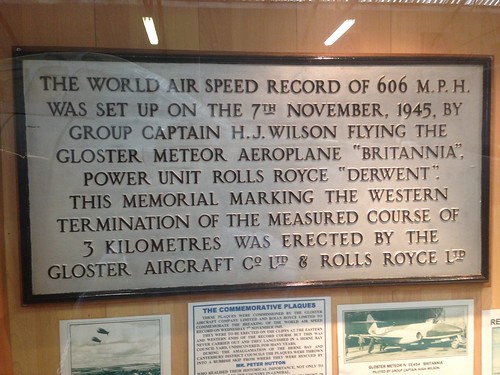
To mark this historic event, two plaques were made, but never, it would seem, displayed. Reputed to have been saved from a council skip, they were initially thought to have been placed in a local cafe, after the cliffs – where they were meant to be displayed – collapsed. The plaques were however left in the council’s possession, until saved by an eagle-eyed employee. Today, they are located in the RAF Manston History Museum where they remain on public display.

RAF Manston History Museum

One of the two plaques now on display at the RAF Manston History Museum.

To mark the place in Herne Bay where this historic event took place, an information board has been added, going some small way to paying tribute to the men and machines who set the world alight with a new World Air Speed record only a few hundred feet from where it stands.

Part of the Herne Bay Tribute to the World Air Speed Record set by Group Captain H.J. Wilson (note the incorrect speed given).

From Herne Bay, we continue on to another trail of aviation history, eastward toward the coastal towns of Margate and Ramsgate, to the now closed Manston airport. Formerly RAF Manston, it is another airfield that is rich in aviation history, and one that closed with huge controversy causing a great deal of ill feeling amongst many people in both the local area and the aviation fraternity.

Sources and Further Reading.

*1 Guinness World Records website accessed 22/8/17.

*2 The Argus News report, Thursday November 8th 1945 (website) (Recorded readings quoted in this issue were incorrect, the correct records were given in the following day’s issue).

*3 The Argus News report, Thursday November 9th 1945 (website)

*4 Photo from Special Hobby website.

The RAF Manston History Museum website has details of opening times and location.

The Manston Spitfire and Hurricane Memorial museum website has details of opening times and location.

Scotland’s National Museum of Flight – East Fortune (Part 3).

The final public hangar at East Fortune holds what is perhaps its pièce de résistance, an aircraft so ahead of its time that it has never been successfully matched. An aircraft that became simply too expensive to operate but was withdrawn under a cloak of darkness and sadness. In the third public hangar is the story of the Jet Age, a story that tells of the development of the modern jet air liner, from the post war development through to the classics of today. A story that is set around the beautiful aircraft that is of course the B.A.C. Concorde.

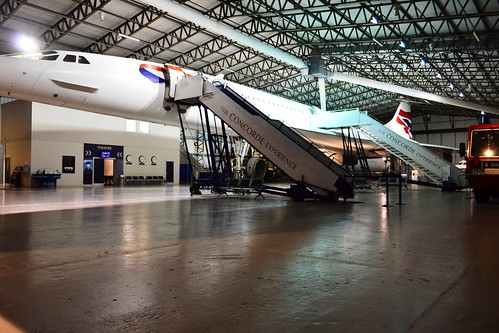
The Jet Age Hangar.

The Concorde at the National Museum of Flight (G-BOAA) was the first model Concorde to go into active service in 1976. After flying for a total of 22,768 hours and 56 minutes, in almost 25 years of service, she finally came to rest after what was possibly the most ambitious transportation project ever undertaken. In all her flying time she has visited cities right across the world including: New York, Paris, Bahrain, Miami, Calcutta, Auckland and Barbados. In her life time, G-BOAA has landed over 8,000 times and has flown through almost 7,000 supersonic cycles. She has become an icon, a reflection of what is achievable in civil aviation development.

Concorde was designed and built in agreement between the French Sud Aviation (later Aérospatiale) and Britain’s British Aircraft Corporation (later B.A.E.). Each would make their own prototype, the French (001) flying first on 2nd March 1969, with the British model (002) flying from Fliton a month later on April 9th 1969. At the Paris airshow prospects looked good and over the next few years 65 initial orders were placed by 17 countries with options for many more. However, growing concerns over manufacturing costs, noise, environmental pollution and running costs eventually reduced the orders to just a handful from both British Airways and Air France.

With the price of a return ticket London to New York in excess of £6,500 in 2003, it certainly wasn’t cheap, nor affordable for the average man in the street (but where else can you watch the Mach Meter climb through Mach 2). It was however, a head turner. Wherever Concorde flew crowds gathered to watch in awe of her grace and technological advancement.

Concorde

Concorde G-BOAA stands proudly as the centre piece of the Concorde Experience.

Sadly, on July 25th 2000, it all went terribly wrong when taking off from Charles de Gaulle airport, Concorde  F-BTSC ran over a small piece of debris causing the tyre to burst sending shards of rubber at high-speed into the wing of the aircraft. An internal fuel tank ruptured and high-octane fuel poured from the wing igniting as it left. With too little runway to land and insufficient power to fly, it couldn’t fail to miss the Hôtelissimo Les Relais Bleus Hotel and crashed. A terrible tragedy that began the rapid rundown and retirement of the entire Concorde fleet.

Following a slump in air travel due to terrorist activities, rising costs of Concorde and the urgent need for upgrades, by 2003 all Concordes had ceased flying, and the disposal of the air-frames began.

G-BOAA was delivered to East Fortune following a major operation that involved taking it by road to the River Thames, along the Thames by specialist barge and out to sea, around the coast of England and Scotland, and then by road to East Fortune. Roads had to be purposely made cutting through a number of fields in order to get the aircraft to its new home. An operation that took over a week was supported by members of 39 Engineer Regiment’s 53 Field Squadron (Air Support) with a helicopter assistance.

Today Concorde G-BOAA stands as the centre piece of the Jet Age and Concorde Experience Hangar, a proud and open monument to the collaboration and development of the Supersonic passenger age.

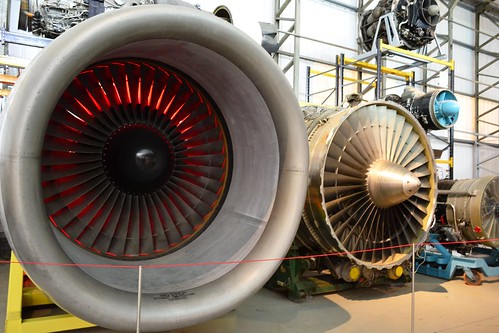
But this hangar is not just about Concorde. A cockpit and front cabin portion from a Boeing 707-436 (G-APFJ), and Hawker Siddeley Trident 1C (G-ARPH) cockpit, gives the visitor another insight into life inside another 1960s long haul passenger jet. Outside another two classic passenger aircraft, de Havilland’s Comet 4C (G-BDIX) and the BAC 111-510ED (G-AVMO) further give the visitor an insight into these classic times. A range of jet engines allow you to compare sizes and features, and stories from those who were involved in flying these masters of the sky bring the ‘Golden age of air travel’ to life once more.

East Fortune

Some of the engines on view at East Fortune.

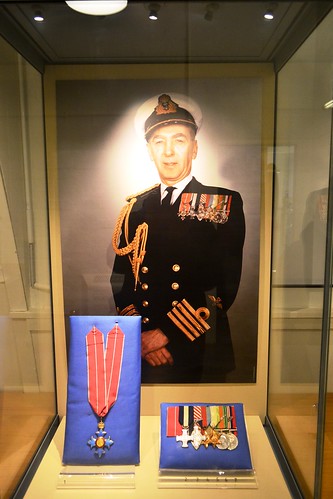
The remainder of the museum is displays and hands on activities. The history of East Fortune, is well portrayed as are the medals of Captain Eric Melrose “Winkle” Brown, CBE, DSC, AFC, Hon FRAeS, RN., and the flying jacket and personal artefacts of Rolf Niehoff, the navigator of the Humbie Heinkel.

East Fortune

Portrait and medals of Captain Eric Melrose “Winkle” Brown, CBE, DSC, AFC, Hon FRAeS, RN

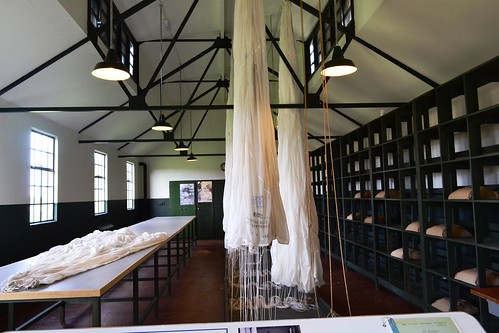
As mentioned earlier, in Post 1 the parachute store has been fully refurbished and is displayed in the way it would have been used during the war years. A unique building, they are easily recognisable by their higher central roof section, or as in some models, offset sloping roofs. Designed to hang and dry parachutes, they are kept at a constant temperature, ideally between 550F and 650F. Wartime parachute stores were built with 4.5 inch thick walls, early designs having a symmetrical two-stage pitched roof as is here at East Fortune. The parachutes were hung from the highest point on a pulley system, so that the silk was kept away from the floor and allowed to dry evenly and cleanly. Once dry, they were lowered to a packing table, inspected, packed away and stored in the store on racks. Each pack was labelled with an inspection date and the person to whom it belonged – each crewman having earlier being measured for his own parachute.

This is possibly the only original parachute store remaining in this condition in the UK and shows the method of drying, packing and storing these vital pieces of equipment extremely well.

East Fortune

The inside of the parachute store clearly shows how they parachutes were dried, packed and stored.

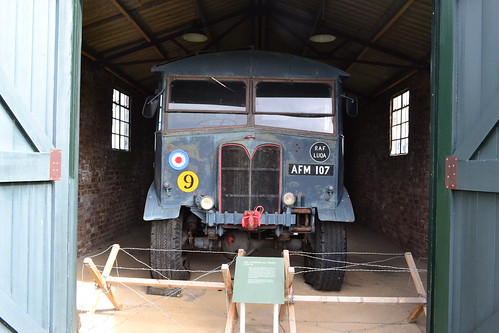
Other exhibits include the RAF’s Matador lorry and a ‘Green Goddess’ fire engine. Made more famous perhaps by the firemen’s strikes of 2002, they were built in the 1950s, and were designed to be used in the event of a nuclear attack. Operated by civilian personnel of the Auxiliary Fire Service (AFS) they would be rushed into cities to extinguish fires and repair water systems. Thankfully, they were never used in this particular role.

East Fortune National Museum of Flight

The RAF’s Matador truck.

The range of exhibits at East Fortune is fabulous. The history of aviation, both civil and military is shown through a range of rare examples, that are restored and maintained in original buildings, purposely restored in line with their original designs and construction. For anyone wanting to see original airfield buildings and beautifully restored aircraft, it is certainly worthy of a trip and is time very well spent.

Sources and Further Reading.

The National Museum of Flight Website has details of tickets, events and features on the various exhibits there.

A list of the aircraft locations at East Fortune.

Scotland’s National Museum of Flight – East Fortune (Part 2).

In the second part of this visit we look into the current display of military aircraft at East Fortune. A collection that ranges from the Second World War through to the end of the Cold War, it is a glimpse into the history and development of fighter aircraft over the last half of the 1900s.

The Military Hangar.

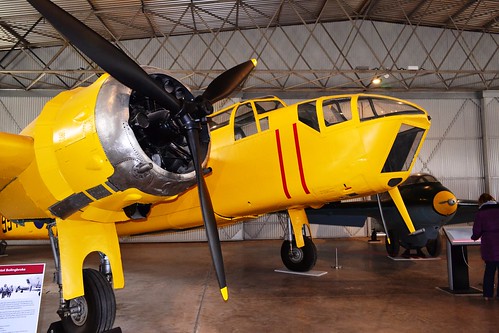
Early examples include the Bristol Bolingbroke IV-T, the Canadian built Blenheim that was used to train air gunners, navigators and bomb aimers.

Bristol Bolingbroke

The Bristol Bolingbroke, an ex Strathallan collection model that served with the R.C.A.F.

The Bolingbroke had a crew of three, with a top speed of 266 mph. It was initially a Blenheim MKI (designated Bristol Type 142M) and was first flown at Filton on 24th September 1937.

Morphing into the Blenheim, the Bolingbroke soon passed into obscurity, however, it did catch the eye of the Canadian Government, who applied to build it under licence at the Fairchild Aircraft Company in Quebec.

The original prototype model was sent to Canada and used as a pattern for subsequent designs, the first model entering Royal Canadian Air Force (R.C.A.F.) service in November 1939. For the first few years, Bolingbrokes were used in the anti-submarine role, initially along the eastern coast of Canada and then later on, after the Japanese attack on Pearl Harbour, along the western coast .

The Canadians made a number of changes to the original design, installing U.S. dials and instruments in a modified cockpit for one, and also making room to store a dingy should the aircraft come down in the icy waters around Canada.

Then as part of the agreement made between the Canadians and British for Canada to supply trained crews as part of their support for the war effort, Bolingbrokes were used as training aircraft, and so were supplied to various Gunnery and Flying Training Schools across Canada.

This particular example ‘9940’, is painted in a yellow colour scheme, it flew as part of this British Commonwealth Air Training Plan. It is an ex Strathallan collection aircraft previously used by the R.C.A.F. No. 5 Bomber and Gunnery School, Dafoe, Saskatchewan in Canada.

Another wartime example in the military hangar is the Supermarine Spitfire  LF.XVIe. Built in July 1945, TE462 never saw active war service, instead flew with one of the five Flying Refresher Schools to retrain pilots after the Second World War. Post service, it was used as a gate guard at RAF Ouston, Northumberland, in a time when the R.A.F. flew D.H. Vampires from the airfield. In 1968 TE462 was removed from Oulton to be used in the highly acclaimed film the ‘Battle of Britain’. Being  a much later model to those classic 1940 examples, extensive modifications would have been needed if it were to appear in any flying roles on camera.

In 1971, TE462 was donated by the Ministry of Defence to the now National Museum of Scotland, who were then, due to lack of space in Edinburgh, allowed to use one of the hangars at East Fortune for her storage.  It was this move that helped generate the ideas and movements that created the museum as it is today. Spitfire ‘TE462’ stands proudly as the centre piece of the military exhibition.

Supermarine Spitfire LF.XVIe

Spitfire LF.XVIe ‘TE462’ now stands on a plinth as the centre piece of the East Fortune Military Hangar.

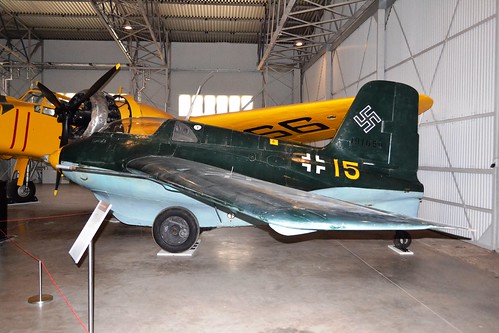
Another Second World War Example is the German Messerschmitt Komet Me 163B-1a. Another 1945 example, this model (s/n 191659) is unique in that it was flown by R.A.F. pilot Captain Eric ‘Winkle’ Brown. The Komet, built by various manufactures using slave labour, was the only rocket-powered aircraft ever to enter combat. A very dangerous aircraft to fly because of its mixture of explosive fuels, Brown described its handling to 32,000 ft as “Fantastic!”.

Messerschmitt Komet 163

The Messerschmitt Komet 163 flown by Captain Eric ‘Winkle’ Brown

Post war and Cold War examples make up for most of the exhibits in this hangar at East Fortune. The nose section of Canberra B.8 reported to be VX185, is an ex Wroughton exhibit, the original of which flew a return flight to Canada in 10 hours 3 minutes and 29.28 seconds, setting a new transatlantic record at that time. The Canberra being a revolution in aircraft design in the early post war era, was used to fly long-range reconnaissance missions and proved its worth for many years to come.

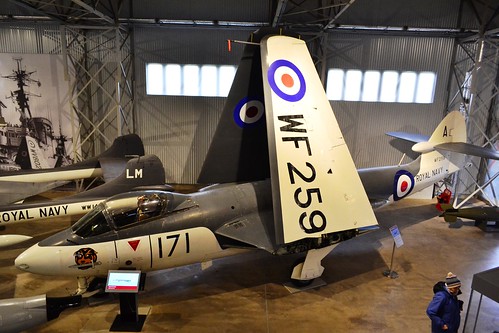
Hawker Sea Hawk

WF259 Hawker Sea Hawk of the Royal Navy.

Two Royal Navy aircraft examples are found in this hangar, the Hawker Sea Hawk and the D.H. Sea Venom.

The Sea Hawk ‘WF259’ (171) is an F.2 model and a Lossiemouth veteran. Designed around a Rolls-Royce Nene 101 and latterly 103 engine, they were single seat fighters that first flew as a prototype on 2nd September 1947. Whilst not seen as a major step forward from the RAF’s Vampires and Meteors, it was successful with the Navy, proving its worth in the ground attack role. The Sea Hawk, a thoroughbred from the Sir Sydney Camm stables, formed the backbone of the Fleet Air Arm during the 1950s and was exported to various European countries and India, where many still survive as museum pieces today.

The D.H. Sea Venom, an FAW.22, WW145 ‘680’, is also an ex Lossiemouth veteran. Serving with both 891 and 750 Naval Air Squadrons of the Fleet Air Arm. It was a naval development of the RAF’s 2-seater Venom NF3 Night Fighter, with numerous modifications to enable it to operate from carrier decks.

de Havilland Sea Venom

The D.H. Sea Venom operated with both 891 and 750 Naval Air Squadrons of the Fleet Air Arm.

A Meteor NF.14 of The Ferranti Flying Unit based at Edinburgh’s Turnhouse Airport, is painted in white and red giving it a distinctive paint scheme. The unit was set up in 1949 to test distance measuring equipment for the Ferranti group whilst based at the airport. Between its inception and disbandment in 1973, it flew twenty-five different models of aircraft, the long-nosed NF.14 being just one of them.

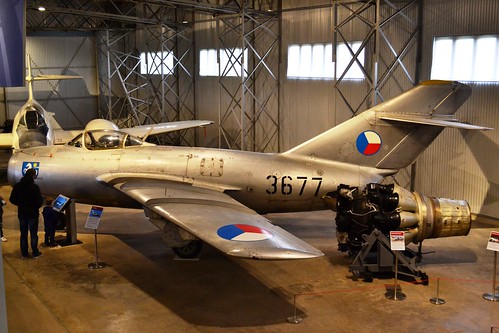
Aero S-103

Czechoslovakian marked Aero S-103. A Mig 15 built under licence.

International Cold War aircraft are represented with the Czechoslovakian marked Aero S-103. A Soviet MiG-15bis, it was built under licence by the Aero Vodochody aircraft company in 1956. The Mig proved itself as a very potent fighter during the Korean War, attacking U.S. bombers from beyond their defensive gun range. Whilst it did have its flying limitations, it was quickly realised as a close match for the American F-86 Sabres.

This particular model, ‘3677’ is an ex Caslav, Ostravian Air Regt. c/n 613677 of the Czechoslovakian Air Force, the badge just visible on the nose is that of the City of Ostrava.

Moving toward more modern eras, we see the E.E. Lightning, SEPECAT Jaguar, Hawker Siddeley Harrier, and the Panavia Tornado.

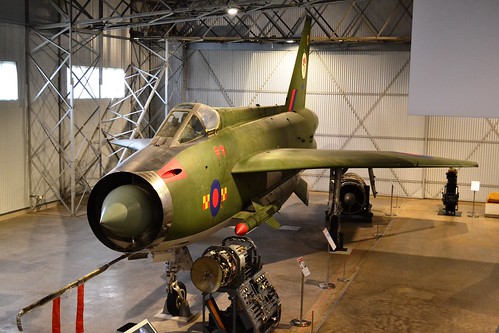
English Electric Lightning

XN776 served with 92 Squadron.

The Lightning, F.2A ‘XN776’, built by English Electric (B.A.C./B.A.) served with 92 Squadron, and was the only Mach 2 all British aircraft to serve with the R.A.F. Lightning XN776 first flew (as an F.2) on 18th October 1962 subsequently being delivered to 19 Squadron. After seven years, she was returned to Warton for conversion work to upgrade her to an F.2A model, and then delivered to 19 squadron at Gutersloh a few months later. Her last operational flight was on 3rd March 1977, being flown to Leuchars on April 5th that year. She displays on her tail, the blue diamonds that represent the Blue Diamond Aerobatic team that previously used Hunters with 92 Squadron. With a maximum speed of 1,500 mph (Mach 2.3) and a service ceiling in excess of 60,000 ft, she was a potent and deadly weapon restricted only by her high usage of fuel.

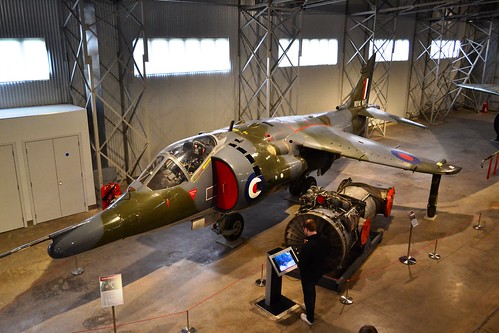
The Harrier, a GR.1, is the reputed to be the oldest surviving Harrier example, a unique design it is famous for its Vertical or Short Take-Off and Landing (V/STOL) capabilities, now taken on by the F.35 Lightning. This particular model (XV277) was only used for test purposes and never saw operational service. During its life it has taken on many changes and modifications, but it still remains the much-loved Harrier.

Hawker Siddeley Harrier GR.1

The oldest surviving Harrier GR.1

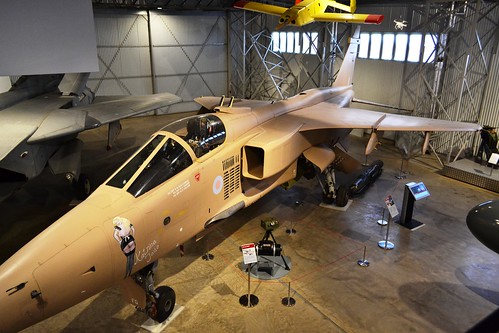
The remaining aircraft here, the Jaguar and Tornado, did however see operational service. The Jaguar ‘XZ119’ (with nose art Katrina Jane), flew 40 operational sorties during the first Gulf War in 1990 / 1991, her nose-art bomb-tally testament to her successes; whilst the Tornado ‘ZE934’ also flew during the first Gulf War, performing air defence patrols from Saudi Arabia. Other than this it operated primarily at RAF Leuchars in Fife with 111 squadron.

SEPECAT Jaguar GR.1A

Jaguar GR.1A ‘XZ119’ carried out 40 successful bombing missions during the first Gulf War.

Outside the military hangar is Vulcan B.2 XM597, the mighty ‘V’ bomber designed as Britain’s nuclear deterrent until the role was taken on by the Royal Navy in 1969.  XM597, an ex Waddington aircraft, entered service with 12 squadron on the 27th of August 1963, going on to serve with 35, 50, 9, and 101 squadrons. She also saw service in the Falklands in three of the Black Buck missions.

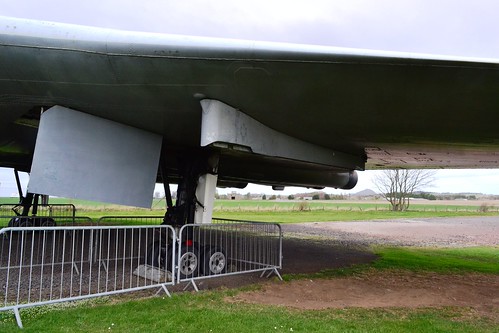
XM597 was different to other Vulcans in that she had wing pylons fitted. These carried up to four Shrike anti-radar missiles (previously for Skybolt) and were used during these missions.

Avro Vulcan XM597

XM597 next to a Blue Steel Stand off missile

Her first mission, Black Buck 4, was cancelled due to a faulty refuelling drogue on a Victor tanker. On the Black Buck 5 mission, on 31st May 1982, the Vulcan took off once again, over the target she fired two missiles causing some minor damage to an Argentinian Radar installation.

On mission six, XM597 returned to the Falklands again armed with more Shrike anti-radar missiles. Two missiles were launched and the enemy ground-based radar was destroyed. On the return leg of the mission though, a planned rendezvous with a Victor tanker went wrong when the refuelling probe on the Vulcan became damaged. With too little fuel to get home to Ascension Island, the Pilot, Squadron Leader Neil McDougall, diverted  to the only airfield he could possibly reach before running out of fuel. Climbing high and jettisoning the remaining two weapons (one failed to release and remained on the pylon), he carefully nursed the Vulcan to Rio de Janeiro where he landed safely and where the aircraft, her crew, and the remaining missile were impounded for nine days before being released.

One of the conditions of the release however, was that XM597 took no further part in the conflict with Argentina and that the rogue missile stayed in Brazil. XM597 later retired to the East Fortune collection in 1984, with her two missile strikes painted on her nose*3.

Avro Vulcan XM597

The under wing pylons that carried the Shrike Anti Radar missiles.

The military collection at East Fortune is, like the civil collection, filled with unique and historically important aircraft. A range that stems from the Second World War through the Cold War and on to modern conflicts and models, it is a dynamic collection of aircraft that just cannot fail to impress.

Sources and Further Reading.

*3 Royal Air Force Website – Operation ‘Black Buck’.

Scotland’s National Museum of Flight – East Fortune (Part 1).

In the third part of Trail 42, we take a closer look at Scotland’s National Museum of Flight based on the former East Fortune airfield.

Located east of Edinburgh, not far from the main A1 road, between East Linton and Athelstaneford, East Fortune is an airfield with its roots set in the First World War. A former Airship station, it went on to house various training flights, and host a wide range of aircraft. Post war, it was adapted for possible U.S.A.F. use, then used to store food stuffs, and East Fortune stepped in to accommodate flights when Edinburgh’s Turnhouse airport was closed for maintenance and upgrading.

Since 1975 it has housed one of the best collections of aircraft in the country (many from the former Strathallan collection) along with a number of well-preserved airfield buildings. This site is so historically important that it is now a Scheduled Monument, the terms of which are set out in the Ancient Monuments and Archaeological Areas Act 1979*1. Whilst not graded, East Fortune is, by definition, considered to be of national importance, and any such alterations or work done to it, has to have consent granted from Historic England who manages the process of scheduled monument consent on behalf of the Secretary of State.

To help preserve these buildings, several projects have been undertaken to restore them keeping as much as possible to the original war-time designs, with the work being undertaken by Smith Scott Mullan Associates of Edinburgh.*2

The National Museum of Flight has its aircraft stored in three hangars arranged by theme: civilian, military, and along with the Concorde Experience the Jet Age hangar. A fourth hangar is used for restoration and is closed to the public although tours can be arranged by appointment. The three main hangars are themselves historical pieces, each being a World War two Callender-Hamilton hangar.

Originally designed in the late 1930s, by Callender Cable and Construction, they were initially designed with canvas doors, but later models, built in 1940, were constructed with metal doors. Whist being more secure, and no doubt warmer, they reduced the clear door height from 25 feet to 17 feet. The overall length of 185 feet and door openings of 90 feet remained the same however. These examples at East Fortune were recently restored, again by Smith Scott Mullan Associates, using funds in the region of £3.6m awarded mainly by the Scottish Government but also the National Heritage Lottery Fund.

A number of the smaller technical buildings on the site were also targeted for restoration. After finding sagging roofs, penetrating damp, cracked or damaged rendering and distorted windows; five of the site’s buildings were earmarked for restoration and a five-year programme put in place to restore and preserve them, again keeping as close to the original designs as possible.

These buildings are now in full-time use, used for exhibitions, artefact storage and as an education centre.

In the first hangar, the Civilian Aviation Hangar, you can explore a range of civilian aircraft types, one notable model being the DH80 – de Havilland Puss Moth. A relatively unique aircraft, it was designed so that its wings could be folded back for easier storage. The undercarriage, an innovative feature in itself, could be turned through ninety degrees to act as air brakes thus allowing the pilot to land at a much steeper approach. Very popular, these models were often flown long distances with notable pilots including the long distance flyer Amy Johnson. Whilst primarily civilian, some models were used by the Royal Air Force, both 24 Squadron (Oct – Dec 1939) and 510 Squadron (delivered May 1941 on its formation). This particular model (ex G-ABDW) was the first Puss Moth to fly to Australia.

East Fortune National Museum of Flight The de Havilland Puss Moth VH-UQB (ex Strathallan G-ABDW), the first Puss Moth to fly to Australia.

Another notable aircraft here at East Fortune is the Miles M18 MKII Prototype. Built as a private venture it was intended to replace the Miles Magister. During test flights it was noted that the aircraft could not be put into a spin by the pilot. However, sadly lacking in what the Air Ministry described as ‘robustness’, it was not put into full production and so only three models were ever built; the MKI, MKII and MKIII. The last remaining example here at East Fortune, G-AHKY, ‘HM545’, is the MKII and had a Certificate of Airworthiness up until September 1989, it was delivered to East Fortune four years later in 1993. It has a notable history in that it was sent to the Royal Navy on short loan, this may have been for service trials and was with 759 squadron in January 1941. In 1956 it won the Goodyear Trophy Air Race and in 1961, the Kings Cup Air Race reaching a speed of 142 mph.

The three M18s operated with two engine types, the D.H. Gipsy Major engine (MKI) and the Blackburn Cirrus Major engine (MKII/III), giving a maximum speed of 142 mph and a ceiling height of 12,800 feet. It had a cruising speed of 130 mph. This particular example remains the only one left in existence.

East Fortune National Museum of Flight The Miles M18 MKII Prototype, the only remaining example of its type.

Also at East Fortune is a General Aircraft Cygnet. Designed in 1936, it was first flown in May 1937, and was at that time, the first all-metal stressed-skin light plane to be both constructed and flown in the U.K. This particular model, was a later modified model having a nose wheel as opposed to a tail wheel and designated the GAL.42 Cygnet II. After the initial prototype, only ten production models were ever built with five going to the Royal Air Force (24 and 510 Squadron, 51 and 52 O.T.U.). This and one other (reported to be in very poor condition in Argentina) are the only surviving examples in the world.

G-AGBN is currently exhibited in military colours, an ex Strathallan example, it served as ES915 with both 51 and 52 O.T.U. preparing pilots for the Boston, another tricycle carriage aircraft of the Second World War. It is also reported that the Cygnet was flown by Guy Gibson, adding further historical interest to this model.

East Fortune National Museum of Flight The General Aircraft L.42 Cygnet II – adapted as a trainer for pilots of RAF Boston aircraft.

Other civilian examples found here include: an Avro Anson in part construction form, a de Havilland Dove 6, G-ANOV (ex SAFU Stansted), a Jetstream 3100 (G-JSSD) and a BAC 111-510ED located outside the hangar.

East Fortune Ex Prestwick Jetstream 3100 (G-JSSD)

The civilian hangar at East Fortune holds many rare and interesting examples from aviation’s history. Each one worthy of saving and viewing. In the next part, we look into the military examples at East Fortune, with aircraft ranging from the Second World War through the Cold war to the modern fighters of the Royal Air Force.

Sources and Further Reading:

*1The National Archives

*2 Smith Scott Mullan Associates website