1st Lt. E.S. Michael MOH – RAF Chelveston

Every airfield has its heroes, and RAF Chelveston was no exception. Among the men who flew from the Northamptonshire base was 1st Lt. Edward Stanley Michael of the 364th Bomb Squadron. In April 1944, while flying a mission deep into Germany, he found himself at the centre of one of the most remarkable survival stories of the American air war. Wounded, outnumbered and flying a crippled aircraft, Michael’s determination to bring his crew home would earn him the Medal of Honour and secure his place in the history of RAF Chelveston.
Edward Stanley Michael was born on 2 May 1918 in Chicago to Stanley William Michael and Lillian Harriet Konior. He grew up in an industrial city defined by machinery, manufacturing and hard-edged practicality – an environment that perhaps influenced his early move into skilled technical work. He attended Chicago High School, graduating in 1936, and by 1940, was working as a machinist, a trade that demanded precision and patience in equal measure.

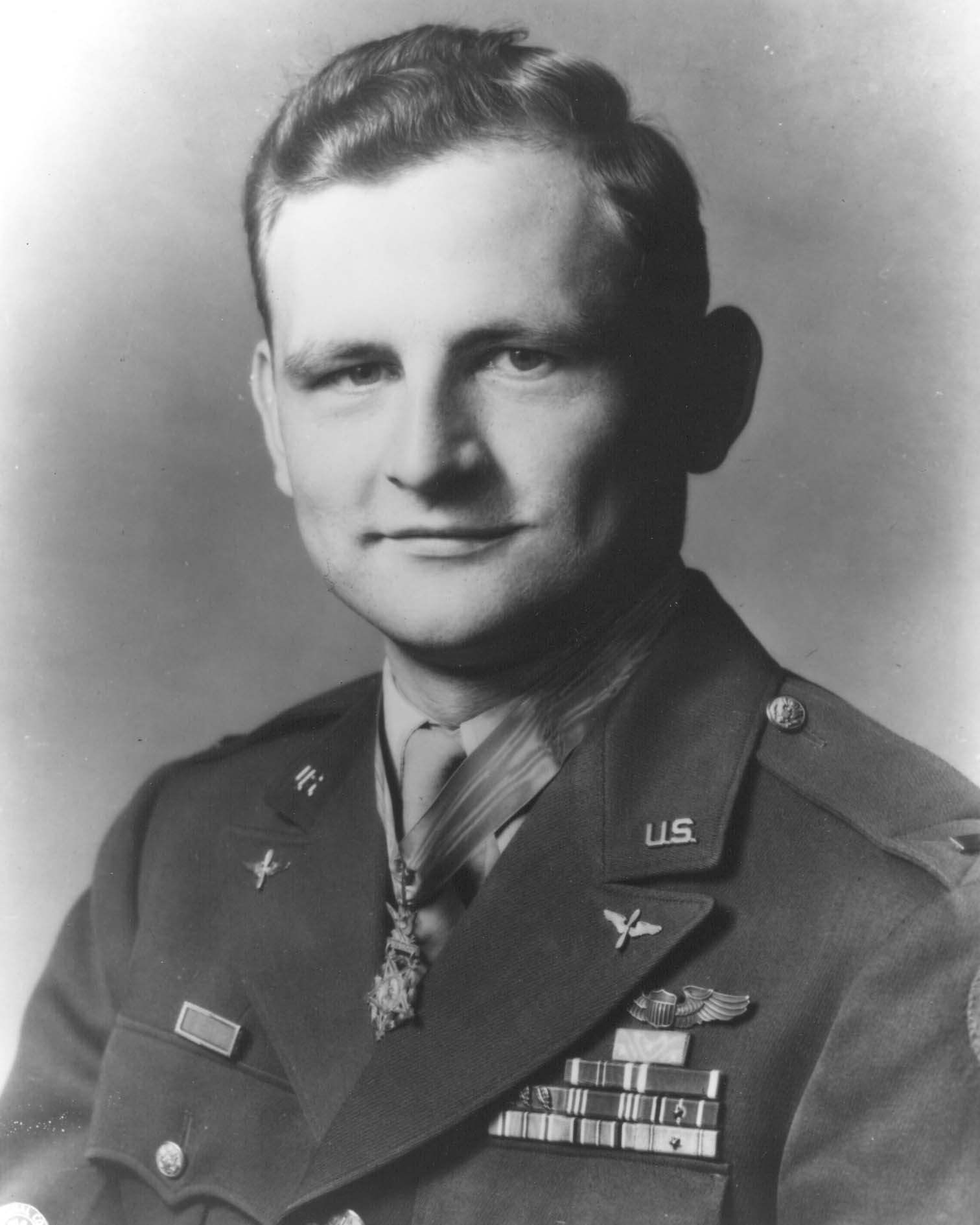
1st Lt. Michael (Wikipedia)

That practical grounding was interrupted by the growing pressures of global conflict. On 2 November 1940, he enlisted as a private in the United States Army Air Corps and was posted to Wheeler Field, Hawaii, where he was present during the Japanese attack of 7 December 1941. In 1942 he was selected for flight training, entering the demanding programme that transformed enlisted airmen into officers and pilots. By April 1943 he had earned his commission as a second lieutenant and completed both multi-engine and B-17 Flying Fortress training in Arizona and Washington State. It was during this period of intense preparation that he married Bertie Lee Parks in October 1943, later naming his B-17 Bertie Lee in her honour.

Serving with the 364th Bomb Squadron of the 305th Bomb Group at RAF Chelveston, Michael took part in numerous combat operations over occupied Europe and Germany. On 11 April 1944, he was piloting the B-17G Bertie Lee (42-37931) as part of a major bombing operation against targets in Germany, including the Focke-Wulf aircraft factory at Sorau. Other objectives for the 341 B-17s of the 1st Bomb Division included Cottbus, Dobberphul, Stettin and Trechel.

As the formation approached its target area, German fighters launched another ferocious frontal assault, a tactic that had proved highly effective against American bomber formations earlier in the air war. Michael’s aircraft, a Douglas-Long Beach B-17G-20-DL Flying Fortress (WF-D), soon became the focus of a determined enemy attack. To the crew, it appeared that the German fighters had singled them out, pressing home repeated assaults despite the presence of Allied escort fighters and the heavy defensive fire from the bomber formation.

The attack devastated the cockpit. Both Michael and his co-pilot, 2nd Lt. Franklin Westberg, were wounded, vital instruments were destroyed, oil coated the windscreen and the aircraft entered a 3,000-foot dive from which survival appeared impossible. With remarkable determination, Michael managed to regain control, only to discover that the bomb bay, still loaded with incendiaries, was on fire. Damage to the release mechanism meant the bombs could not be jettisoned, and the danger of an explosion increased with every passing moment.

The only apparent chance of survival was to bail out, so Michael gave the order. As the crew prepared to leave the aircraft, he was confronted by a horrific sight. Top turret gunner Jewel Philips was holding his injured eye in his hand while blood poured from a severe head wound. Despite his own injuries, Michael administered what aid he could before helping the gunner to the escape hatch. Philips was one of seven crewmen who managed to leave the aircraft.

With the co-pilot and the injured bombardier, Lt. Leiber, still on board, Michael decided that a crash landing offered their only realistic hope. While the crew fought to save the aircraft, the bombardier eventually succeeded in releasing the burning incendiaries. Through a series of violent evasive manoeuvres, Michael shook off the pursuing fighters and finally reached the relative safety of cloud cover.

Emerging from the clouds, the aircraft came under renewed attack from German flak. Michael brought the Fortress down to almost treetop height and headed towards England. Remarkably, the aircraft continued to respond despite the extensive damage it had suffered. They flew on for as long and as far as possible. Miraculously, they reached the English coast, but by now Michael was exhausted from his prolonged efforts and a severe thigh wound. The co-pilot took over, circling the aircraft while Michael recovered enough strength to attempt the landing himself.

With no hydraulics, the ball turret jammed in the lowered position, the undercarriage locked up and the bomb bay doors stuck open, the odds of survival remained heavily stacked against them. Against all odds, Michael retook control and brought Bertie Lee down at RAF Waltham near Grimsby in Lincolnshire, the damaged aircraft crunching and groaning across the grass before finally coming to a halt.

For his extraordinary actions and determination to save both his crew and aircraft, Michael received the Medal of Honour, the second such award made to a member of the 305th Bomb Group.
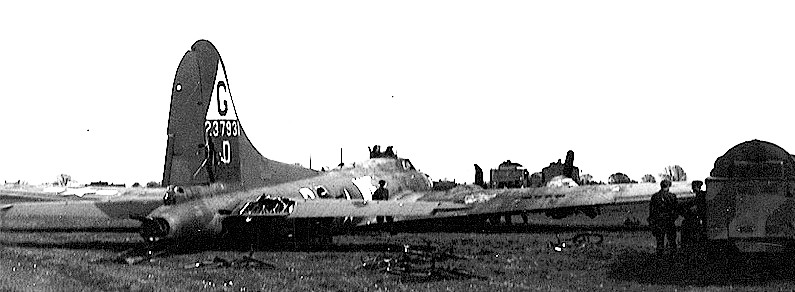
Bertie Lee after crash-landing at RAF Waltham (IWM UPL 40113)

1st Lt. Michael’s citation read*1:

For conspicuous gallantry and intrepidity above and beyond the call of duty while serving as pilot of a B-17 aircraft on a heavy-bombardment mission to Germany, 11 April 1944.

The group in which 1st Lt. Michael was flying was attacked by a swarm of fighters. His plane was singled out and the fighters pressed their attacks home recklessly, completely disregarding the Allied fighter escort and their own intensive flak. His plane was riddled from nose to tail with exploding cannon shells and knocked out of formation, with a large number of fighters following it down, blasting it with cannon fire as it descended.

A cannon shell exploded in the cockpit, wounded the co-pilot, wrecked the instruments, and blew out the side window. First Lt. Michael was seriously and painfully wounded in the right thigh. Hydraulic fluid filmed over the windshield making visibility impossible, and smoke filled the cockpit. The controls failed to respond and 3,000 feet were lost before he succeeded in levelling off.

The radio operator informed him that the whole bomb bay was in flames as a result of the explosion of three cannon shells, which had ignited the incendiaries. With a full load of incendiaries in the bomb bay and a considerable gas load in the tanks, the danger of fire enveloping the plane and the tanks exploding seemed imminent. When the emergency release lever failed to function, 1st Lt. Michael at once gave the order to bail out and seven of the crew left the plane.

Seeing the bombardier firing the navigator’s gun at the enemy planes, 1st Lt. Michael ordered him to bail out as the plane was liable to explode any minute. When the bombardier looked for his parachute he found that it had been riddled with 20-mm fragments and was useless. First Lt. Michael, seeing the ruined parachute, realized that if the plane was abandoned the bombardier would perish and decided that the only chance would be a crash landing.

Completely disregarding his own painful and profusely bleeding wounds, but thinking only of the safety of the remaining crewmembers, he gallantly evaded the enemy using violent evasive action despite the battered condition of his plane. After the plane had been under sustained enemy attack for fully 45 minutes, 1st Lt. Michael finally lost the persistent fighters in a cloud bank.

Upon emerging, an accurate barrage of flak caused him to come down to treetop level where flak towers poured a continuous rain of fire on the plane. He continued into France, realizing that at any moment a crash landing might have to be attempted, but trying to get as far as possible to increase the escape possibilities if a safe landing could be achieved.

First Lt. Michael flew the plane until he became exhausted from loss of blood, which had formed on the floor in pools, and he lost consciousness. The co-pilot succeeded in reaching England and sighted an RAF field near the coast. First Lt. Michael finally regained consciousness and insisted upon taking over the controls to land the plane.

The undercarriage was useless; the bomb bay doors were jammed open; the hydraulic system and altimeter were shot out. In addition, there was no airspeed indicator, the ball turret was jammed with the guns pointing downward, and the flaps would not respond. Despite these apparently insurmountable obstacles, he landed the plane without mishap.

After the war, Michael remained in military service, transitioning through the post-war restructuring of American air power and into the newly established United States Air Force. He served in both air transport and operational roles across the United States and the Pacific, attended Air University, and later trained on the B-47 Stratojet during the early Cold War period—an aircraft type that would also become familiar at RAF Chelveston.

Among his many decorations were the Distinguished Flying Cross, Purple Heart and Air Medal with four oak leaf clusters. These, together with a long list of campaign and service awards, reflected a military career that spanned three decades, multiple theatres of operation and the transformation of American air power from the Second World War into the Cold War era. His service ultimately took him to the rank of lieutenant colonel before he retired in 1971 after 30 years in uniform.

Michael later married Louise Erdmann and remained active in military service until his retirement. He died on 19 May 1994 and is buried in Evergreen Cemetery, Springville, Utah County, Utah.
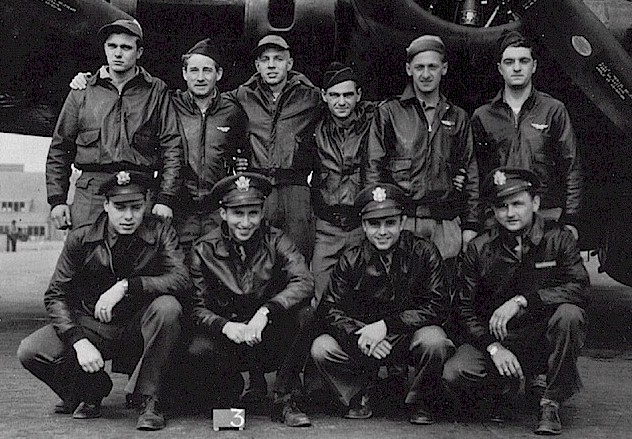
1st Lt. E Michael (kneeling right) with his crew 1943.(US Air Force)

Sources

*1 Congressional Medal of Honour website.  Accessed 5 August 2025

The full story of RAF Chelveston can be read in Trail 66.
Trail 66 – RAF Chelveston – Part 7 – 2 Medals of Honour

In Part 6, the 305th Bomb Group faced some of the most intense and costly operations of the war, including record-setting large formations and the brutal Schweinfurt raids, which inflicted heavy losses on the group. Crews endured extreme physical and mental strain, yet displayed remarkable heroism, earning multiple medals and citations while innovating new tactics and night operations. By late 1943 and early 1944, the group began to benefit from improved technology, navigation systems, and experience, setting the stage for record-breaking missions that would push both men and machines to their limits.

The formation was to cross to the continent where it would  split, each branch finding their predetermined targets, bomb and then reform for the long journey home. Although the weather was poor, fighter escorts did get airborne and they managed to stave off many of the attacks aimed at the bomber stream. For one 305th aircraft though, it would be a major struggle and an heroic one.

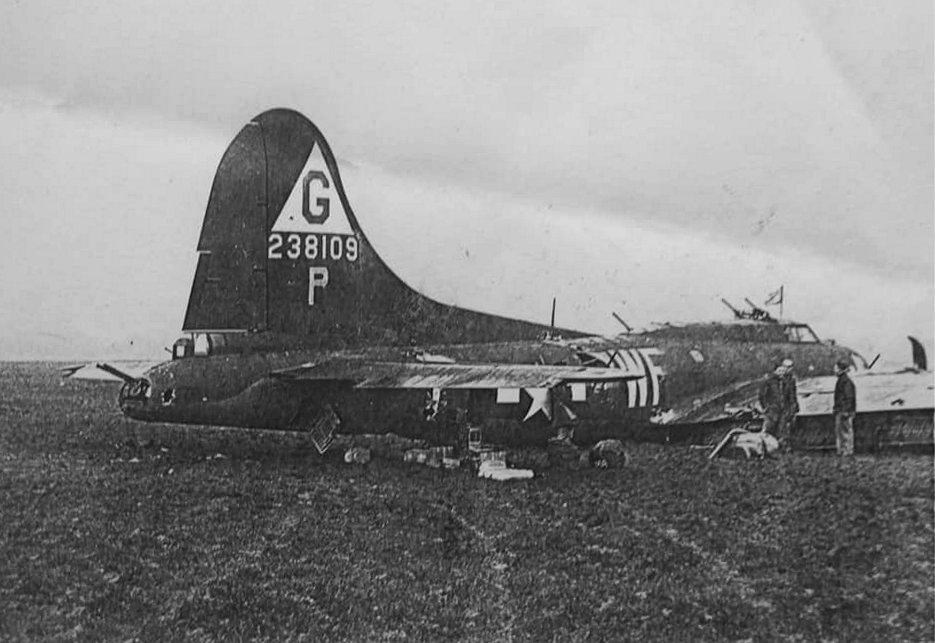
In B-17 42-38109 – ‘Cabin in the Sky’ – was pilot 1st Lt. William Robert Lawley Jr, flying only his tenth mission since joining the 364th BS, less than a year previously.

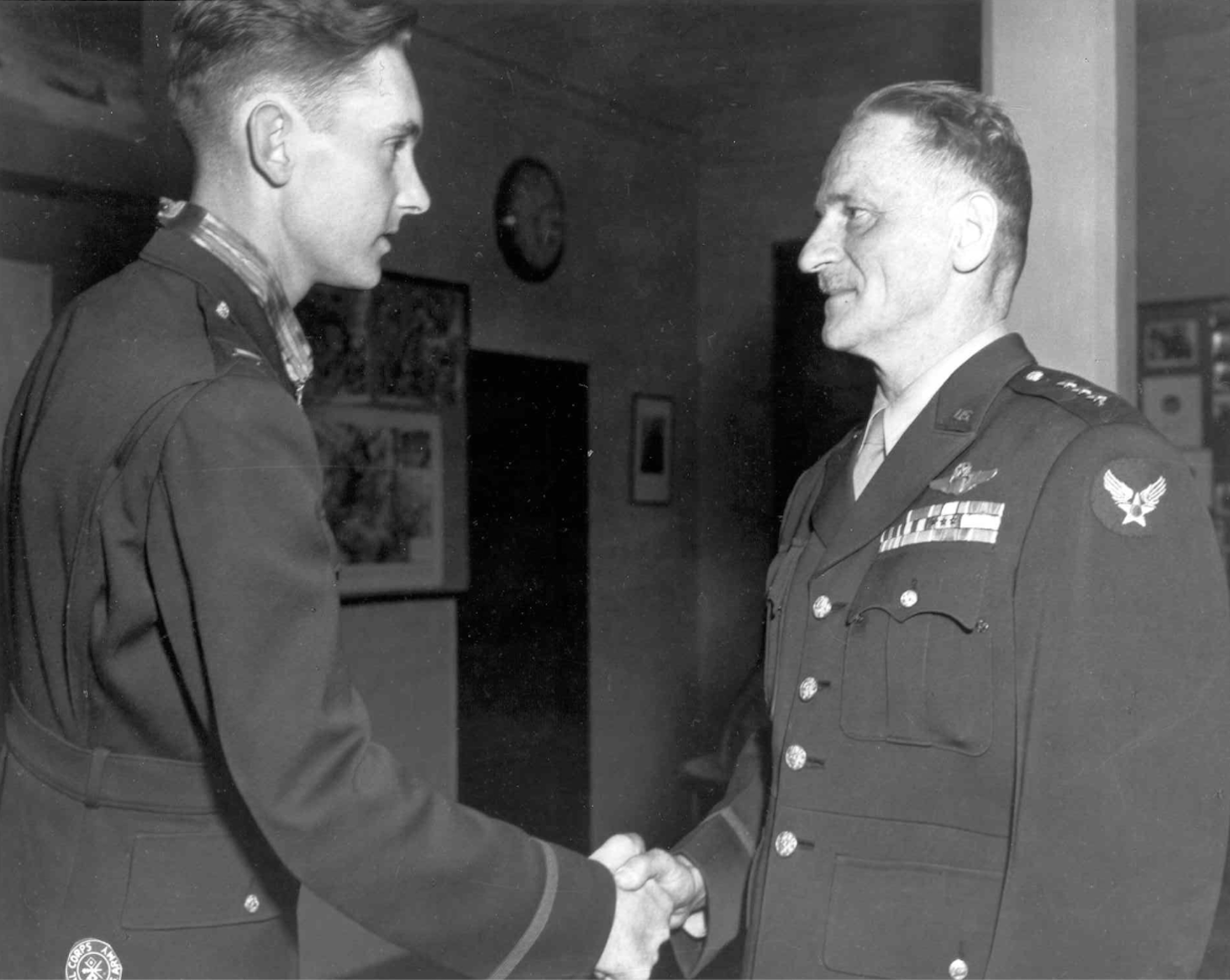
First Lieutenant William R. Lawley, Jr., is congratulated by Lieutenant General Carl Spaatz on the award of the Medal of Honour, 8th August 1944. (IWM UPL 55737)

The aircraft, a B-17G-30-DL (WF-P) was departing the target area with its bomb load intact due to a frozen mechanism, when it suffered a full frontal attack by enemy fighters. Suddenly, a canon shell ripped into the cockpit  killing the co-pilot, Paul Murphy, and striking Lawley in the face severely wounding him.

The attack by around twenty enemy fighters, also wounded every other crewman, in addition to setting an engine on fire. The attack caused the B-17 to enter a dive which could well have been uncontrollable had Lawley not fought back the pain and forced the co-pilot’s hands off the controls with one hand, whilst fighting the aircraft with the other. With a hole in the blood soaked windscreen, cold air forced its way in, adding to the cockpit’s terrible conditions and to the extreme pain Lawley was already feeling.

In fear of an explosion, resulting in total destruction of the aircraft and its crew, Lawley gave the order to bale out, but no one did. Some were simply too injured to do so, and those that were able to, did not want to leave their buddies behind to what must have seemed to be an inevitable fate.

Even whilst enduring further attacks, the engine fire was somehow extinguished, only to be replaced by another in a different engine. Then, a glimmer of hope came over the intercom, the bombardier had managed to free the bombs, thus lightening the load. This allowed the badly injured Lawley to perform incredible evasive action.

But by now, Lawley was exhausted, and was suffering from huge blood loss. Acutely aware of the situation, Mason, the bombardier, took over until Lawley was able to regain his strength and take back the B-17’s controls. With two engines out, a new threat appeared – lack of fuel. Another engine suddenly stopped running, leaving just one to keep the heavy bomber aloft. Somehow, the aircraft managed to not only reach England, but pass over its coastline. Feeling somewhat relieved, but acutely aware of the ever present danger, the crew scoured the horizon for a safe place to land. Redhill suddenly came into view, and just in time, as the B-17 was now losing height, and fire was spreading across the wings.

In great pain, Lawley managed to bring the aircraft down to Earth, performing an amazingly controlled crash landing. Nine of the ten onboard survived to return to duty, Paul Murphy being the only casualty. For his determination to get home, Lawley was awarded the Medal of Honour, the US’s highest award for bravery.

This dramatic event was mirrored by a B-17 of the 351st, then based at  RAF Polebrook. Sadly though, this one ended in the loss of the three crewmen left on board, after the aircraft crashed in a field. For his action, Sgt. Archibald Mathies also received the Medal of Honour.

B-17 42-38109 ‘Cabin in the Sky‘, after crash landing at RAF Redhill. (IWM UPL 55733)

This would not be a solitary awarding of the prestigious Medal of Honour, for it would be repeated just two months later, highlighting the bravery shown by many crewmen during those dark days of World War II.

On April 11th 1944, the Germans yet again made a ferocious attack from the front, a tactic they had devised early on in the American’s war in Europe.

In this instance, 1st Lt. Edward S. Michael was piloting B-17G  ‘Bertie Lee’ 42-37931, as part of the 364th BS on operations to bomb various  targets in Germany, including the Focke-Wulf plant at Sorau. Other targets for the 341 B-17s of the 1st BD, included Cottbus, Dobberphel, Stettin and Trechel.

The aircraft, a Douglas-Long Beach B-17G-20-DL Fortress (WF*D), was flying in formation toward Stettin when it became the focus of a determined enemy attack. To the crew, German fighters appeared to single them out, pressing home repeated assaults, despite escorting fighters and heavy defensive fire from the bomber.

The ferocious attack shattered the cockpit, both pilot and co-pilot (2nd Lt. Franklin Westberg) were wounded, instruments failed, oil covered the windscreen and the aircraft fell into a 3,000 foot spin from which survival seemed over. With skill and strength however, 1st Lt. Michael managed to pull the aircraft out of the dive, only to discover that the bomb bay, still full of incendiaries, was on fire – the result of yet another attack. With damage to the release equipment, the crew were unable to jettison  the bombs – the situation was getting worse.
The only way they could survive now was to bale out, and so Michael gave the order. On doing so, he was greeted by the horrendous sight of the top turret gunner, Jewel Philips, holding his eye in his hand and blood gushing from a severe head wound.

Giving initial aid to the gunner, Michael, himself injured, helped him to the door and out of the aircraft, He was one of seven who made it away.

With the co-pilot and injured bombardier, Lt. Leiber,  still on board, Michael decided he was going to try a crash landing.  Working hard to save the ship for as long as they could, the bombardier managed to finally free the burning incendiaries, and by performing dramatic evasive manoeuvres, Michael managed to  shake off pursuing enemy aircraft; eventually reaching the relative safety of cloud cover.

Now being targeted by flak, he decided to get the aircraft down as low as he could, and flying at almost treetop level, he headed towards England. The aircraft continued to respond well considering the extensive damage it had received, and so they flew on for as long and as far as they could. Miraculously, they reached the English coast, but Michael was exhausted from both his continued efforts and a severe thigh wound, The bombardier took over, circling the aircraft in a holding pattern until Michael had the strength to bring the stricken aircraft down. With no hydraulics, the ball turret jammed down, the undercarriage locked up and the bomb bay doors locked open, it was not going to be an easy ride and the odds of survival were stacked heavily against them.

As if the gods were on their side though, Michael retook control and brought ‘Bertie Lee’ down, its metalwork crunching and groaning as it careered along the grass at RAF Waltham near to Grimsby in Lincolnshire.

For his incredible actions and determination to get home, 1st Lt. Michael received the unit’s second, highest level award, the Medal of Honour.

Extensively damaged, ‘Bertie Lee’ after crash landing at RAF Waltham (IWM UPL 40113).

1st. Lt. Michael’s citation*15 read:

For conspicuous gallantry and intrepidity above and beyond the call of duty while serving as pilot of a B-17 aircraft on a heavy-bombardment mission to Germany, 11 April 1944.

The group in which 1st Lt. Michael was flying was attacked by a swarm of fighters. His plane was singled out and the fighters pressed their attacks home recklessly, completely disregarding the Allied fighter escort and their own intensive flak. His plane was riddled from nose to tail with exploding cannon shells and knocked out of formation, with a large number of fighters following it down, blasting it with cannon fire as it descended.

A cannon shell exploded in the cockpit, wounded the co-pilot, wrecked the instruments, and blew out the side window. First Lt. Michael was seriously and painfully wounded in the right thigh. Hydraulic fluid filmed over the windshield making visibility impossible, and smoke filled the cockpit. The controls failed to respond and 3,000 feet were lost before he succeeded in levelling off.

The radio operator informed him that the whole bomb bay was in flames as a result of the explosion of three cannon shells, which had ignited the incendiaries. With a full load of incendiaries in the bomb bay and a considerable gas load in the tanks, the danger of fire enveloping the plane and the tanks exploding seemed imminent. When the emergency release lever failed to function, 1st Lt. Michael at once gave the order to bail out and seven of the crew left the plane.

Seeing the bombardier firing the navigator’s gun at the enemy planes, 1st Lt. Michael ordered him to bail out as the plane was liable to explode any minute. When the bombardier looked for his parachute he found that it had been riddled with 20-mm fragments and was useless. First Lt. Michael, seeing the ruined parachute, realized that if the plane was abandoned the bombardier would perish and decided that the only chance would be a crash landing.

Completely disregarding his own painful and profusely bleeding wounds, but thinking only of the safety of the remaining crewmembers, he gallantly evaded the enemy using violent evasive action despite the battered condition of his plane. After the plane had been under sustained enemy attack for fully 45 minutes, 1st Lt. Michael finally lost the persistent fighters in a cloud bank.

Upon emerging, an accurate barrage of flak caused him to come down to treetop level where flak towers poured a continuous rain of fire on the plane. He continued into France, realizing that at any moment a crash landing might have to be attempted, but trying to get as far as possible to increase the escape possibilities if a safe landing could be achieved.

First Lt. Michael flew the plane until he became exhausted from loss of blood, which had formed on the floor in pools, and he lost consciousness. The co-pilot succeeded in reaching England and sighted an RAF field near the coast. First Lt. Michael finally regained consciousness and insisted upon taking over the controls to land the plane.

The undercarriage was useless; the bomb bay doors were jammed open; the hydraulic system and altimeter were shot out. In addition, there was no airspeed indicator, the ball turret was jammed with the guns pointing downward, and the flaps would not respond. Despite these apparently insurmountable obstacles, he landed the plane without mishap.

Heroic actions like this, were widely mirrored across the beaches, seas and skies of Normandy that June, when vast numbers of ground, naval and air force personnel combined to carryout the greatest invasion ever known. With operations beginning in the early hours of June 6th 1944, Chelveston’s aircraft would again be involved, dropping leaflets to the French people warning them of the impending allied invasion. It would be a day that would go down in history.

Many of those involved in D-day looked forward to the day they would return home, but returning home was never a guarantee of safety. In December whilst on a mission to bomb the railway marshalling yards at Kassel in Germany, B-17 43-38973 received extensive damage with one engine put out of action. As the aircraft made its way home, it began to lose height and to make matters worse, England was shrouded in fog cutting visibility to near zero.

In an attempt to find a landmark, the pilot took the aircraft lower and lower, a risk that ended in tragedy when it struck a Gee mast at Borough Hill in Northamptonshire. All nine on board were killed in the collision.

337 Missions to Victory: The 305th’s Final Campaigns

The winter of 1944–45 descended with a familiar severity. Snow and ice gripped the airfields, while dense fog rolled across much of Europe, grounding aircraft and testing the endurance of even the most seasoned crews. Yet amid the bitter cold came decisive movement on the ground. Following the Allied breakthrough in the Ardennes, advancing forces pressed steadily into Germany itself. The war’s end was now clearly in sight, but its closing chapter would be anything but quiet. The months that followed brought an intense tempo of operations, as bomber formations crossed the Rhine with increasing confidence. With the Luftwaffe offering only sporadic and weakening resistance, B-17s and B-24s were able to penetrate deep into German territory with far less opposition than in previous years. Mission counts climbed rapidly. Many groups reached the formidable milestone of one hundred operations, and several of the original contingents went well beyond it, their longevity a testament to both endurance and experience.

Gradually, as allied forces made their way across Europe,  the heavy bombers of the allied forces pounded German cities. By March, the 305th had completed its 300th operation, having endured a long and demanding campaign since being amongst one of the first groups to deploy to the UK. In celebration, they were once again given the lead position in an attack on Böhlen-Rötha, Leipzig. Thirty-six aircraft set off that day to find near perfect weather over the target and so bombing was considered highly accurate despite heavy and accurate flak. Of the thirty-six, aircraft despatched, two B-17s were lost from the 305th, one of which carried the command crew – led by Lt. Col. Howell G. Crank in 44-8141. The aircraft was hit by flak and one of its engines knocked out. It then turned over and dived into the ground killing ten of those on board with one taken as a prisoner of war.

A month later on April 25th, 1945, shortly before the war’s end, the 305th would make their final bombing flight bringing Chelveston’s war in Europe to an end. The 305th had achieved an eye-watering 337 combat missions (480 including other types), dropping over 22,000 tons of bombs and over 70 tons of propaganda leaflets. During their time in Britain they had lost in the region of 154 aircraft, received two Distinguished Unit Citations and two airmen had both been awarded a Medal of Honour. In just three short months, on July 25th, they would leave England, heading for a new base at  St. Trond, Belgium (Army Airfield A-92). Their final departure leaving no operational front line units at Chelveston and little prospect of any arriving in the future.

After the defeat of Japan and the formal declaration of world peace in September 1945, the group was posted to Germany where the four squadrons were dispersed to various airfields, prior to their deactivation in the following December. The reason for the move was – and included the 306th from Thurleigh – to photograph two million square miles of land, ranging from Iceland in the north, through Europe to the Soviet frontier in the east, and on to north and west Africa in the south. By splitting the groups, it meant that flying time was reduced and coverage increased.*16

Following that, the 305th Bombardment Group returned to the United States. Crews were demobilised and dispersed, and the aircraft that had endured the rigours of combat over Europe were largely scrapped. The group would then briefly re-emerge in 1947 and again in 1951, each time for only a short period. After another short reprieve in 1994, it was reborn as the 305th Air Mobility Wing, a title under which it continues to operate today. The wartime service of the 305th at RAF Chelveston remains a key part of this lineage; the group’s achievements with the Eighth Air Force between 1942 and 1945 established the reputation of what became known as the “Can-Do Wing.” Chelveston is still recorded in U.S. Air Force historical archives as one of the stations from which the unit first earned its combat distinction, and with it, the legacy of the 305th  continues on.

As peace settled over Europe, Britain faced a daunting challenge: what to do with nearly 700 surplus wartime airfields, many hastily built and suddenly redundant. While some were dismantled or repurposed for civilian use, others – including Chelveston – were quietly retained, waiting for a world that was rapidly becoming uncertain once more. By the early 1950s, the rise of the Cold War, nuclear weapons, and jet bombers would transform these dormant relics into strategic strongholds, setting the stage for a dramatic new chapter in both British and American air power.

The whole story of Chelveston can be read in Trail 66. Northants and Bedfordshire (Part 2)
Trail 66 – RAF Chelveston – Part 6 – Records, Heroism and Morale

In Part 5, the 305th endured some of the harshest early missions of 1943, suffering heavy losses over the U-boat pens and German targets while crews faced flak, fighters, and extreme winter conditions. Individual acts of courage and ingenuity, from surviving ditchings to improving bomber defences, highlighted both the bravery and inexperience of the fledgling unit. By April, Chelveston was officially transferred to full American control, and the 305th began taking the lead in major operations, earning their first Distinguished Unit Citation for precision bombing and determined action under fire.

April–May 1943: Record Flights, Heroism, and Morale Boosts

Being so new to the war, and with only the four B-17 groups still forming the bulk of the air force, operational records were regularly set and broken. The month of April saw another such record set, with the largest formation of US aircraft taking part. The flight, consisting of 115 B-17s from the four Groups, flew in a new configuration. The 305th formed the rear box, in a new arrangement that only permitted 3,000 ft separation between the low and high boxes.

The four groups from Thurleigh, Bassingbourn, Molesworth and Chelveston had led the way for the 8th Air Force, and by April  they were all becoming very tired and fatigued, and in desperate need of replacements. Although short in coming, replacements and new squadrons were eventually to arrive, helping to bolster both the strength and size of the still small but determined Air Force.

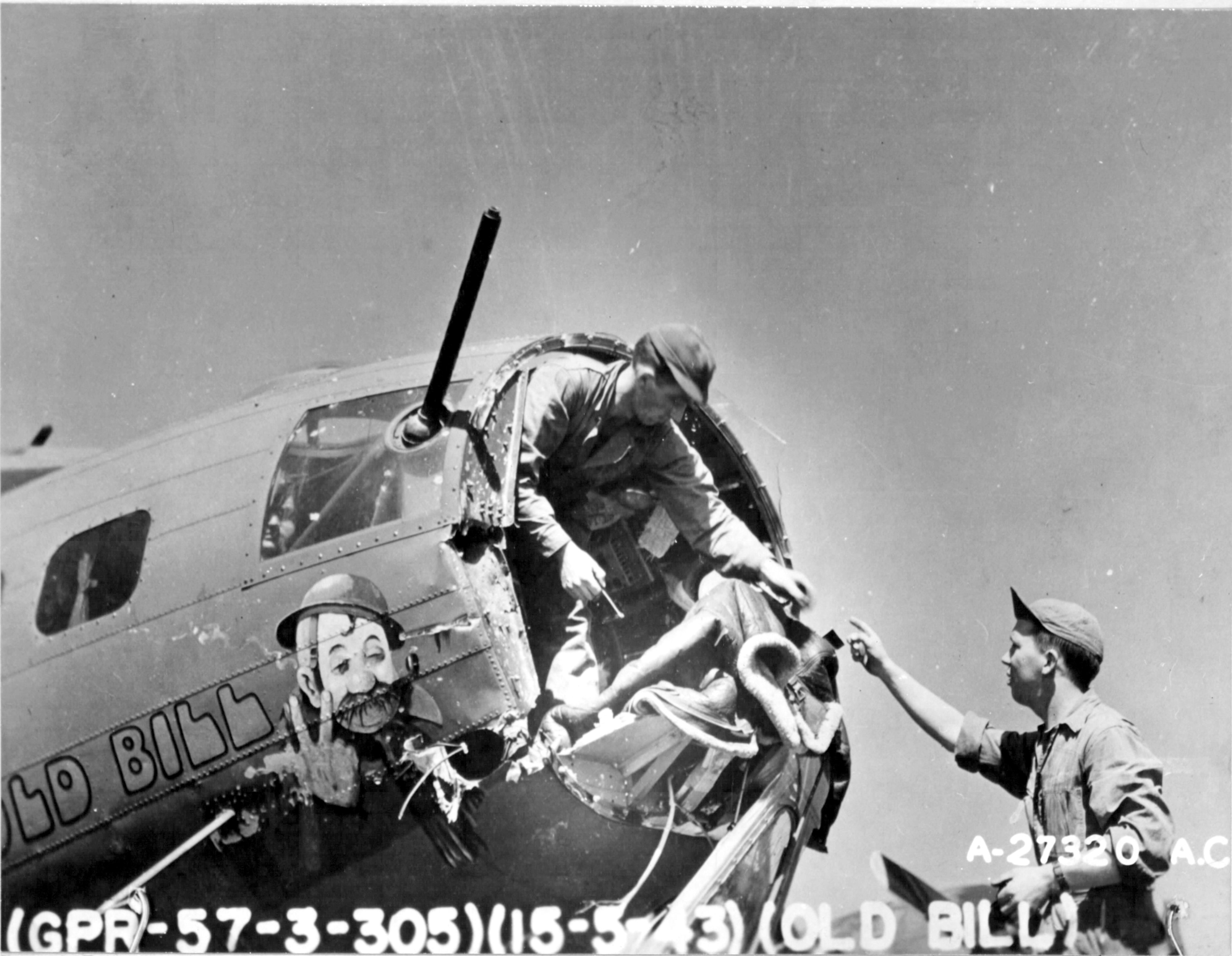
This newly reinforced air force was employed for the first time on 13th May 1943, and again on the 14th and 15th. On this last mission, the 305th were again on the receiving end of the Luftwaffe’s fury, as they hit hard head-on to the formation. In one of these B-17s, every member of the crew, except the tail and right-waist gunner, suffered severe injuries. Such was the crew’s  determination in getting back to Chelveston though, that two DSCs, eight Silver Stars and seven Purple Hearts were awarded to them that day. Those on-board ‘Old Bill’ being the most decorated crew of the 305th by the war’s end.

B-17 42-29673 ‘Old Bill’ 422nd BS, damaged on Wangerooge 15th May 1943.  Featured ground crew: Cpl Willis Todd (inside) and Cpl Zimmerman (outside), (IWM UPL 30085).

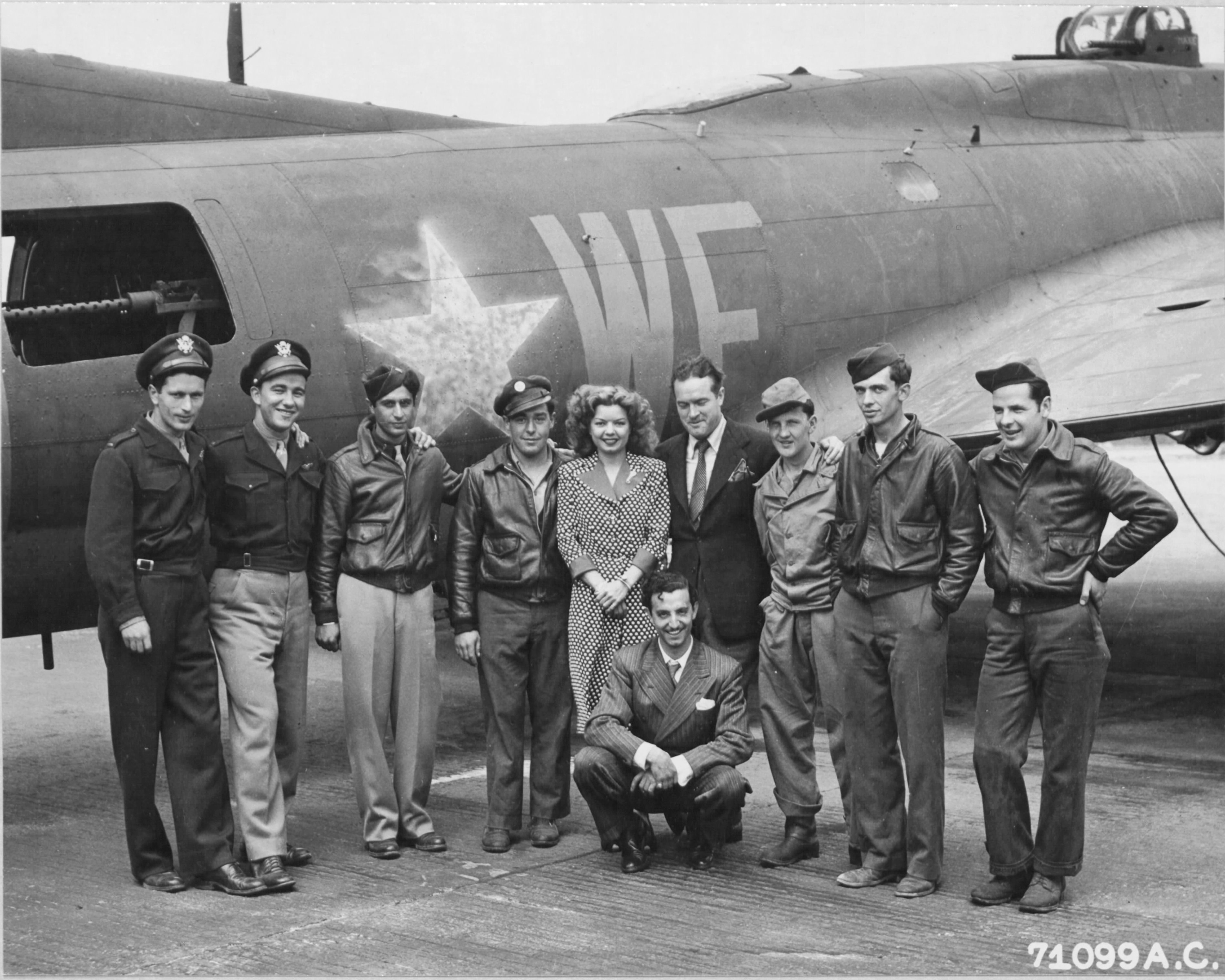
The morale of airmen, who faced death on an almost daily basis, was always a problem. To keep spirits up, various visits were arranged, some of which included top entertainers from ‘back home,’ who toured the various airfields and bases in Britain. On July 5th 1943, Frances Langford, Bob Hope and Tony Romano all arrived at Chelveston. Posing for photo shoots, meeting the crews and performing for the personnel were just one way of keeping spirits high.

“Frances Langford, Bob Hope and Tony Romano pose with the crew of the Boeing B-17 ‘Lallah VIII‘ (A/C 242) 5th July 1943. L to R: (P) Lt. Sam Johnstone, (CP) Lt. Elsworth Kenyon, (N) Lt. Martin Licursi, (B/T) Sgt. Arthur Englehardt, Frances Langford, Tony Romano, Bob Hope, (E) Sgt. Donald Baer, (WG) Sgt Richard Lewis, (TG) Sgt. Homer Bagby.(IWM UPL 35399).

August 1943: Schweinfurt, Night Raids, and the Toll of War

But amid these rare glimpses of happiness and momentary reprieves from fear, the war would endure, and the ever-present face of death would soon turn toward them once more.

Whilst Berlin became a name to dread, one other target drove an even sharper stake into the hearts of US airmen, that of Schweinfurt.

Schweinfurt, was a major centre for ball-bearing production. Located north-west of Nuremberg, it was one of Germany’s most prolific suppliers of this vital component. Although it did not produce all of the ball-bearings required by the German war economy, allied strategists believed that by destroying the Schweinfurt plants, they would severely disrupt supplies. By doing so, they would undermine Germany’s ability to sustain the war and bring it to a rapid conclusion.

The first attack, on 1st August 1943, saw the 1st Bombardment Wing (BW) send out 230 bombers in two waves; one of 116 aircraft and the second 114. Of these, thirty-six were lost in the battle; the 382nd and the lead Group the 91st BG, taking the brunt of the attack. The 305th from Chelveston lost ‘only’ two, but a further fourteen were classed as damaged but fortunately  repairable. The initial figures for the overall losses would soon grow though as the full extent of the damage became apparent. The final count neared sixty-three aircraft that were deemed  irreparable and lost. The total loss of aircraft from the operation, rose to in excess of 90, an unsustainable loss for any raid and one that brought home the severity of what the American airmen were facing.

Despite these losses, the raid was considered a success. In Schweinfurt itself, as the last B-17 left the target, a cloud of smoke and fire could be seen, its ferocity engulfing the town. What had been a two hundred year old conurbation of peace and serenity burned ferociously after receiving in excess of 400 tons of bombs – a mix of high explosives, incendiaries and general purpose types. The tranquil, but productive coastal town was in ruins – but the cost in American airman had been high. *11,*12

That same day, the 4th BW sent another 146 of their heavy bombers to Regensburg. Like the Schweinfurt mission, it suffered heavy casualties, with the loss of twenty-four aircraft. All-in-all, August 1st had been a terrible day for the Americans, and despite delivering a devastating blow, the war was clearly far from over.

During September and into October 1943, the 422nd Bomb Squadron of the 305th Bomb Group was withdrawn from daylight flights and retrained for night bombing operations, becoming the first US Army Air Force unit to undertake such activities. During this period, the squadron flew eight night sorties, dropping approximately sixty-eight tons of bombs, along with the unit’s first ‘Nickel’ mission on the night of 7th/8th  October 1943.

‘Nickel’ operations were carried out in cooperation with the RAF, and involved the dropping of propaganda leaflets over occupied Europe. In total, the squadron dispersed around seventy-three tons of leaflets, many of these being thrown out by hand, a slow and exhausting process. To speed things up, crews soon began to push entire boxes from the aircraft in the hope they would burst open in mid-air. A relatively unsuccessful method, it was eventually replaced by an ingenious purpose-built ‘leaflet bomb’. This aerial device was designed to open at a set altitude – often around 1,500 feet – scattering more than 80,000 leaflets in a single drop.

During these operations the squadron worked alongside Radio Counter Measure units as well as the ‘Carpetbaggers’ who were based at RAF Harrington. A common feature of these clandestine organisations was their use of black-painted, often war-weary B-24 Liberators, each one especially adapted for night operations and special duties.*13

Return to Schweinfurt: Catastrophe in the Autumn Skies

The disaster of Schweinfurt would never be far away though. In October, the city would raise its head once more, and once again losses for the Eighth would be high.

The morning of the 14th was cold and foggy, and many hoped that the day’s mission would be cancelled. Unfortunately, no such call came, and as crews sat in their briefing rooms, a hush fell as the curtain was drawn all the way back to reveal Schweinfurt. Gasps and groans filled the various briefing rooms as the details of the operation were read out.

At take off, the 305th were late, by about six minutes, meaning  that they had to catch up with the formation who were gradually pulling away from them. As a result, they were out of their place as they left the English coast, and desperate to catchup for the protection that the formation gave. After flying around trying to locate their place, the lead pilot Major Charles Normand, decided to slot in to the 1st Combat Wing’s low position, replacing the also late 381st.

Shortly after 13:00 hrs, the fighter escort withdrew, leaving the bombers to fend for themselves and allowing the waiting Luftwaffe to make their move. Single and twin-engined fighters now attacked the formation from every direction. Stukas, dropped timed bombs from above, and from around the sides rockets, canons and machine guns were emptied into the formation. The 305th in the vulnerable low position, took the initial brunt. Gunners were frantic in their attempts to defend themselves, using up ammunition at an incredible rate.

As the formation approached Duren, a number of B-17s began to smoke and fall back. Single-engined fighters attacked head on, diving away at the last minute whilst twin-engined aircraft fired rockets from the rear. One of the 305th’s B-17s was hit by one of these rockets, its wing folding and the fuselage opening up revealing badly injured crewmen inside. With no parachutes they simply fell from the sky. The Pilot fought to keep what little of the B-17 was left together, a fruitless task that ended in an dramatic and final fireball.

Further attacks continued to focus on those aircraft of the 305th, the 92nd and Kimbolton’s 379th. Aircraft after aircraft began smoking, slowly falling out of formation with cut engines or damaged control surfaces. No longer able to keep up, they became sitting ducks.

Over the target, Luftwaffe fighters were joined by flak. A barrage of accurate and intense 88mm bursts welcomed the bombers whose numbers were by now depleted.

Still in the low squadron position, the 305th’s Major Normand now led only three aircraft, twelve of the original fifteen sent out had gone –  shot down by enemy fighters. Determined to do their job, they declined a move to a safer position and made their own bomb run into the target.

The mayhem wreaked havoc on the formation. By the time they reached the target the 305th were further out of position, and the lead bombardier requested a second try. Knowing how dangerous that would be and how it would put them in a lonely situation, Normand refused and told Lt. Pellegrini to ‘do his best’. As they left the city, another B-17 from Chelveston went down, and after 100 minutes of continuous attack, the 305th were down to just two aircraft.

On return to England, many aircraft became lost in thick cloud and were abandoned, left to fall out of the sky as crews parachuted out. Those that did find land tried to locate any airfield they could and get down whilst they still had fuel in their tanks. It had been a costly operation. 600 airmen were lost that day, 130 of them from Chelveston. The Mighty Eighth had taken another beating and it would almost end their aerial warfare campaign. The only saving grace being that one of the crews who went down, had manged to get to Switzerland where they were interned.*14

The losses suffered by the 305th that day were the highest of all groups who took part. It had been a devastating blow leaving Chelveston depleted of many young airmen who were by now experienced and battle hardened veterans – many still in their twenties. As a consolation for the group, when allied troops overran the city in April 1945, the captured Nazi flag that proudly flew for so long over the city, was handed to the 305th as a souvenir.

As for Schweinfurt, 500 tons of bombs had dealt another devastating blow to the historic town. Flak batteries had decimated the American formation, and fighters had given their all, but still the American’s determination got them through. Schweinfurt would go down in history. It would forever be remembered on American bases as the battle that took so many lives and the one that nearly killed off the Eighth Air Force.

The terrible losses that day would never be repeated by the Chelveston crews. As they approached the year’s end, they hoped for better and they got it. Unbeknown to them at the time, December 20th 1943, would be the start of a record fifty-six missions without loss for the 365th BS of the Chelveston group. – a run that took them almost to D-Day, 6th June 1944.

Against All Odds: Two Medals of Honour in the Winter of 1944

The early months of 1944, saw the first use of ‘Gee’ by American Pathfinders. A pioneering system that used radio navigation to significantly improve bombing accuracy by timing the gap between two radio signals from ground stations. Hardwick’s 329th, who were part of the 93rd BG, had been trialling the new system since 1942, and it was finally deemed ready for operations. In these early stages, missions focussed on ‘No ball’ targets – V1 launch sites – where Gee could be tested to the limit. Such was the desire to perfect the system that almost half of the 29 missions carried out in January and February, used it.

January would also see another major award for the Chelveston Group. On the 11th following a raid on the aircraft factory at Halberstadt, the 1st Bomb Division, (formerly 1st Bomb Wing), were awarded the Distinguished Unit Citation; for the 305th, it was their second of two such awards.

A month later, on 20th February 1944, a combined force of over one thousand American aircraft of the 1st, 2nd and 3rd Bomb Divisions (BD) took part in operations. The 305th, as part of the 1st BD, were ordered to hit targets at Leipzig, Heiterblick, Abtnaundorf, Bernburg, Oschersleben. Failing that, they were to hit any target that presented itself as an opportunity.

The sky over Europe had become a crucible, where bravery, skill, and sheer willpower were tested to their absolute limits. For the crews of the 305th, every mission brought them face-to-face with death, yet time and again they defied the odds, fighting through blazing cockpits, flaming engines, and relentless enemy attacks. As they pushed ever deeper into the heart of Nazi territory, every flight carried the weight of a nation – and the question hung in the air: who would make it home, and who would not?

The whole story of Chelveston can be read in Trail 66. Northants and Bedfordshire (Part 2)

Brigadier General Frederick W. Castle – Heartbreak on Christmas Eve, 1944

On the morning of December 24th, 1944, Brigadier General  Frederick W. Castle (s/n 0-319375), woke to the greet the day, and like most pilots facing perilous missions, he probably wondered if it would be his last. However, knowing what I know about Castle from my research, he was a calm, confident and highly competent pilot, so most likely he had every reason to believe in the success of his next mission. Sadly though, that was not to be the case. Castle never made it back that night. On Christmas Eve of 1944, this brave pilot lost his 30th and final battle.

Lieutenant Colonel Elliott Vandevanter of the 385th Bomb Group with Colonel Frederick W Castle (centre) of the 487th Bomb Group and Brigadier General Curtis A LeMay. *1

Frederick W. Castle was born on October 14th, 1908 at Fort McKinley in Manila, the Philippines. He came from an active military family and was the son of Col. Benjamin Frederick Castle. Following the end of World War 1, he was to settle in the United States in Mountain Lakes, New Jersey.

From a young age, Castle was destined to follow in his fathers footsteps, groomed for a life of military service. He attended Boonton High School and Storm King Military Academy before moving on to the US Military Academy from where he graduated in June 1930.

His first service was with the New Jersey National Guard, where he stayed for two years  transferring to the Air Corps, March Field, California, then onto Kelly Field in Texas. Castle gaining his wings in October 1931.

Serving as a pilot with the 17th Pursuit Squadron for 3 years, he eventually left the forces returning to civilian life but holding a reserve status. With the entry of the United States into the Second World War, Castle would be called upon by his good Friend Ira Eaker, returning to the fold in January 1942, and being promoted within two months to Major. By the following September, Castle had been promoted yet again, he was now a Lieutenant Colonel.

With the forming of the Eighth Air Force in England, headed by General Ira Eaker, Castle was one of seven high-ranking officers selected to fly with him on the dangerous route over the Bay of Biscay, eventually arriving at Hendon wearing their civilian clothes. Joining Eaker on February 20th 1943 in the DC-3 from Lisbon were: Lt Colonel Frank Armstrong Jnr, Major Peter Beasley, Captain Beirne Lay Jnr, Lt. Harris Hull and Lt. William Cowart Jnr.

Castle desired a combat role, and this desire would lead to him taking over the command of the ailing 94th Bomb Group. His methods of command were initially considered weak, but in the face of low morale and apprehension, he personally took the 94th to some of the furthest targets yet, his first being Oschersleben in the heart of Germany; a mission that went on to inspire the film “12 o’clock High“.  Castle went on to fly in many combat missions including numerous high prestige targets, a role that took him on to Brigadier General and command of 4th Combat Wing.

On Christmas Eve 1944, following a week of poor weather, orders came though for a maximum effort mission, involving every available B-17 and B-24 in support of the troops in the Ardennes. Airfields, supply lines and troop movements were to be attacked, and following weeks of poor weather, a break was at last predicted.

As a joint effort, this would be the largest single attack to date involving 500 RAF and Ninth Air force bombers, 800 fighters and just short of 2,050 Eighth Air Force bombers. Such was the demand for aircraft, that even ‘war weary’ examples, were hastily armed and prepared, many unfit for more than assembly or training duties. Truly an armada of incredible proportions.

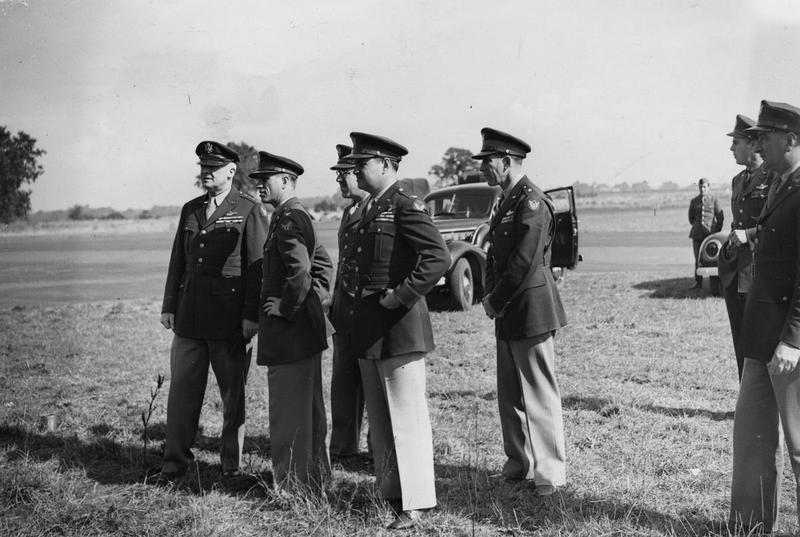
General Arnold with Colonel Frederick W Castle, Brigadier General Curtis LeMay, General Williams and General Anderson during a visit to RAF Rougham, home of the 379th BG. *2

Taking lead position, Frederick Castle, was in B-17G-VE, ’44-8444′ “Treble Four“, an aircraft that had itself seen battle experience. Assigned to the 836BS, 487BG, and at RAF Lavenham, it was previously damaged in a raid over Darmstadt. The aircraft was  later salvaged in January 1945.

A veteran of 29 missions, Castle was a more than a competent leader. They set off, the weather was as predicted but with a haze that restricted ground level visibility. It was this haze prevented the fighters from leaving causing an all important delay in the escorts. This delay was not considered a major problem at the time however, as the escorts being faster, would soon catchup and overtake the heavily laden bombers. The Luftwaffe, in an unprecedented move, brought forward fighters into the Liege area to meet the oncoming bombers before any escorts could reach them. In the first few minutes of the battle, four of the 487th BG’s aircraft were downed and a further five forced to land in Belgium.

Castle’s lead plane, suffering problems with one of its engines (possibly due to previous battle damage) was attacked by the first wave of fighters, action was taken to leave the flight and join a formation further back. It was then attacked again, the aircraft catching fire, and the navigator being wounded.

Castle took control, and even though still being attacked, refused to jettison the bombs for fear of killing civilians or allied troops below. Further attacks led to both engines on the starboard wing catching fire, which ultimately led to the fuel tank exploding sending the aircraft into an uncontrollable spin.

Through Castle’s actions, seven of the crewmen were able to leave the aircraft, sadly  though not all survived.

Frederick Castle died in the crash, his body is now buried in Henri-Chapelle American Cemetery, Liege, Belgium, Plot D, Row 13, Grave 53.

His citation reads:

“He was air commander and leader of more than 2,000 heavy bombers in a strike against German airfields on 24 December 1944. En route to the target, the failure of 1 engine forced him to relinquish his place at the head of the formation. In order not to endanger friendly troops on the ground below, he refused to jettison his bombs to gain speed maneuverability. His lagging, unescorted aircraft became the target of numerous enemy fighters which ripped the left wing with cannon shells. set the oxygen system afire, and wounded 2 members of the crew. Repeated attacks started fires in 2 engines, leaving the Flying Fortress in imminent danger of exploding. Realizing the hopelessness of the situation, the bail-out order was given. Without regard for his personal safety he gallantly remained alone at the controls to afford all other crewmembers an opportunity to escape. Still another attack exploded gasoline tanks in the right wing, and the bomber plunged earthward. carrying Gen. Castle to his death. His intrepidity and willing sacrifice of his life to save members of the crew were in keeping with the highest traditions of the military service*3.”

For his action, Frederick W. Castle was awarded the Medal of Honour posthumously. In 1946, the Castle Air Force Base, in the heart of California’s San Joaquin Valley, was dedicated in his name, and on June 20th, 1981, the Castle Air Museum was officially opened on the now closed base, for the purpose of preserving the Air Force and Castle heritage. Museum details can be found on their website. His  name is also on a plaque in the Memorial Park, in Mountain Lakes, New Jersey.

The awarding of the Medal of Honour, reflected the determination and personality of one of Eakers “Original Seven”, who chose to leave a safe position for a combat role, taking on the demoralised 94th, and leading them into some of the Second World War’s most ferocious air battles.

Sources and further reading.

*1 Photo from Roger Freeman Collection, IWM, FRE9833

*2 Photo from Roger Freeman Collection, IWM, FRE9879

*3 Congregational Medal of Honour SocietyWebsite, accessed 22/12/15

Mountain Lakes Library, Website, accessed 22/12/15

“The B-17 Flying Fortress Story”, Roger A Freeman, Arms and Armour, 1997.

Air Forces Historical Support, Division,  Website, accessed 22/12/15

“The Mighty Eighth”, Roger Freeman, Arms and Armour, 1986.