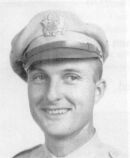
Sqn. Ldr. Ian Willoughby Bazalgette (RAFVR) VC

RAF Downham Market was one of a small number of airfields that were home to the RAF’s Pathfinder Squadrons. Elite airmen who would lead formations of heavy bombers into some of the most heavily defended areas of the Reich, often against insurmountable odds and always at great risk to themselves. The Pathfinders produced some remarkable flyers and many, many heroes. Of all the crews who flew with 8 Group PFF, only three were rewarded for their valour and gallantry with the highest possible accolade, the Victoria Cross. One of those went Posthumously to Sqn. Ldr. I. W. Bazalgette, whose long and distinguished career led him to achieving 58 missions before his death. Based at RAF Downham Market, Bazalgette, would become legendary, flying his Lancaster bomber in pursuit of victory against a tyranny beyond all evil.

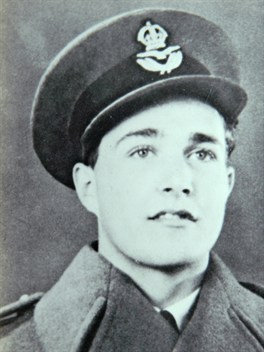
Ian Willoughby Bazalgette.jpg

Sqn Leader Ian Bazalgette (RAFVR) died August 4th 1944, a few days before his 26th Birthday.*1

Squadron Leader Ian Willoughby “Baz” Bazalgette was born on October 19th 1918 in Calgary, Canada and was the youngest of three children. His parents decided to move to England in 1924 when he was six, settling in New Malden, Surrey on the outskirts of London.

During his school life he developed a passion for music, and in particular Classical Music, which he immersed himself in spending hours listening to and writing about.

As a teenager, he would have his first real battle, that of tuberculosis, which meant he would have to undergo four long months of hospital treatment. Bazalgette’s strength and determination would see him pull though this, a strength and determination that would go on to show itself on a number of occasions later on during his RAF career. 

Prior to the outbreak of war, Bazalgette decided to enlist, applying to, and being accepted by, the Royal Artillery; achieving a commission as Second Lieutenant within a year. This new role took him to the outskirts of Edinburgh operating a radar searchlight, protecting both the city, and the Forth Estuary from Luftwaffe bombers. Dissatisfied with the routine of searchlight activities, he decided to give up this role, and whilst on a trip into nearby Edinburgh in March 1941, he applied to the Royal Air Force Volunteer Reserves. His application was accepted and in the following July, he received his first posting to a training unit – 22 Elementary Flying Training School at Cambridge.

Throughout his training Bazalgette showed great tenacity and promise, quickly passing  a number of stringent and difficult flying tests. Flying solo for the first time during August, gave him the opportunity he had been longing for. His flying skills impressed his seniors so much that on the 28th, he passed the C.O.s test taking just 30 minutes to complete the flight. Upon passing, he was graded as an ‘above average’ pilot by his examiners.

Bazalgette was then transferred to Cranwell where he trained on Airspeed Oxfords. At Cranwell he achieved his wings, and after a short break, he was sent to Scampton and 18 Beam Approach School. Bazalgette eventually left Scampton, heading towards his first operational unit, 25 Operational Training Unit, where he would form his first crew.

Informal crewing up was very much encouraged by the RAF, but those that didn’t manage the task were allocated crew members by the relevant staff at the various bases; Bazalgette had no problems in finding his own.

Whilst at the OTU, Bazalgette would have his first experience of heavy bombers flying the Vickers Wellington; a remarkable aircraft that used Barnes Wallis’ geodesic construction in Rex Pierson’s design.  Bazalgette and his crew competed a range of training flights whilst at 25 OTU, including air gunnery and bombing practice, all of which they passed. On September 18th 1942, after accumulating some 223 hours as a pilot, Bazalgette received his first posting to a fully operational Squadron, 115 Squadron at RAF Marham, Norfolk, he was off to war.

The very next day he flew “Second Dickie” assisting an experienced crew tackling the rigours of an operational sortie to Saarbrucken. Two days later he was back out, but this time laying mines on a ‘Gardening’ mission shortly before the squadron moved to nearby RAF Mildenhall in Suffolk. It was here that Bazalgette would fly his first operational mission as a pilot leading his own crew.

After moving to East Wretham, 115 squadron then began the task of replacing their Wellingtons with Stirlings, and Bazalgette was sent to 1567 Operational Conversion Unit (OCU) to convert to the big heavy four-engined aircraft. Between him completing the course and returning to East Wretham though the Stirling had been superseded, proving to be a poor performer in conflict zones. Bazalgette would now get his chance to fly the legendary Lancaster.

On the 3rd April 1943, Bazalgette was awarded the DFC, and the same strength and determination that had got him though tuberculosis would get him through his tour of 30 missions. On completion, as was customary at this point, he and his crew were separated and scattered across a range of new squadrons within the Air Force.

Bazalgette was sent back to Scotland and RAF Lossiemouth where he reluctantly trained new bomber pilots, a position he disliked immensely. He pleaded for postings to an operational unit, a plea that was eventually granted in April 1944, and a posting to RAF Warboys and the Pathfinder Conversion Unit.

From here he transferred with a new crew to 635 Squadron at RAF Downham Market, in Norfolk, a few miles west of Marham the very station he had spent his early days at with 115 Sqn.

As a model crew, he was looked up to by others at Downham Market. He would go on to fly 58 missions in total, two off his score of two tours of duty.

However, his 58th mission would be his last. On August 4th 1944, Lancaster ‘M’ for Mother would not be listed for duty, but an absent crew left an opening that Bazalgette and his crew jumped at. It was a decision that would change their lives forever.

On that day, Bazalgette would fly Lancaster Mk III, F2-‘T’ for Tommy, not their usual aircraft but it was ready, fuelled and bombed up. The aircraft was known for a history of mechanical problems, its usual pilot tending to work the engines much harder than necessary, but it was a choice of stay on the ground or fly the mission: for Bazalgette and the crew of ‘M’ for Mother it was an easy choice.

The mission for the day was as Master Bomber of the Pathfinder squadron to identify and mark a V1 storage site at Trossy St. Maximin, a heavily defended area to the north of Paris. Take off was set for 11:00, over the next fifteen minutes at five-minute intervals, 14 Lancasters of 635 Sqn would leave Downham Market heading for France. The weather was less than 3/10 cloud over the target, excellent for the determined and accurate anti-aircraft gunners below. On the second run in to the target, the Master Bomber and Deputy Master bomber were both hit, one being downed (PA983 F2-A piloted by F/L. R. W. Beveridge) and the second forced to return home, leaving Bazalgette as the lead aircraft.

Flak was incredibly intense and his aircraft repeatedly hit. The starboard wing was struck causing damage to both engines, subsequently putting them both out of action. In the wing the fuel tanks caught fire, fuel poured into the rear of the fuselage and the situation becomes desperate. The bomb aimer was mortally wounded, his arm barely recognisable due to his injuries, but Bazalgette managed to reach the target, drop both his markers and his bombs, whereupon the aircraft began a steep spin toward the ground below. As the situation worsened, he gave the order to bail out, all but three; Bazalgette, F/Lt. I. A. Hibbert and F/Sgt. V. V. R. Leader are left.

Bazalgette continued to fight with the controls and quite remarkably managed to keep the stricken bomber flying long enough to avoid the French village of Senantes. Unable to maintain height, the aircraft finally hit the ground, resting momentarily before exploding in a massive fireball killing all those remaining on board.

Once the ferocious fire subsided, locals were able to reach the wreck and remove the bodies of both Leeder and Hibbert. Bazalgette’s remains were not found until the air frame was removed, some days later.

For his bravery and sacrifice, Ian Bazalgette was awarded the V.C., the highest honour for military personnel. The London Gazette, of 14th August 1945, published the following:

On 4th August 1944 Squadron Leader Bazalgette was “Master bomber” of a Pathfinder Squadron detailed to mark an important target for the main bomber force. When nearing the target his Lancaster was seriously damaged and set on fire by anti-aircraft fire; the bomb aimer was badly wounded. As the deputy “Master bomber” had already been shot down, the success of the attack depended on Squadron Leader Bazalgette who despite appalling conditions in his burning aircraft pressed on gallantly, bombed, and marked the target accurately. That the attack was successful was due to his magnificent effort. The condition of the aircraft had by now become so bad that Squadron Leader Bazalgette ordered his crew to leave the aircraft by parachute. He attempted the almost hopeless task of landing the crippled and blazing aircraft to save the wounded bomb aimer, and one air-gunner, who had been overcome by fumes. With superb skill and taking great care to avoid a French village, be brought the aircraft safely down. Unfortunately it then exploded and this gallant officer and his two comrades perished. His heroic sacrifice marked the climax of a long career of operations against the enemy. He always chose the more dangerous and exacting roles. His courage and devotion to duty were beyond praise.

Ian Bazalgette’s sacrifice marked the end of a career covering an incredible 58 operational missions. His courage, determination and devotion to duty going way beyond those expected of any serving officer. With him that day on ‘T’ for Tommy were: Sgt. G. R. Turner; F/L. G. Goddard; F/L. I. A. Hibbert DFC; F/O. C. R. Godfrey DFC; F/S. V. V. R. Leeder (RAAF) and F/O. D. Cameron DFM. Of the four men who manged to get out of the aircraft: Turner, Goddard, Godfrey and Cameron, all managed to evade capture*2.

In his honour, Bazalgette has a Garden in New Malden, Surrey named after him, a school in Calgary, the ‘Ian Bazalgette Junior High School’, and at the Bomber Command Museum of Canada, an Avro Lancaster, FM159, was painted in the markings of his aircraft; the Lancaster was dedicated in 1990. At the ceremony, Bazalgette’s sister, Mrs. E. Broderick, unveiled a commemorative plaque whilst the aircraft itself was unveiled by two of Bazalgette’s former crew members, Chuck Godfrey DFC and George Turner, both of whom were with him of that fateful night.

Outside the church of St. Mary’s at Bexwell close to the accommodation sites of Downham airfield, stands a new memorial in his name. Laying beside him is the memorial of another V.C. winner Arthur Aaron, who was also based at RAF Downham Market during the Second World War.

Ian Bazalgette was one of those many young men who sacrificed their lives in the hope of saving others. He dedication to duty, determination to win and above all, his value of other’s led to a tragic and sad end, that shall forever be remembered in the hearts and minds of those who lived through those terrible years 1939-45.
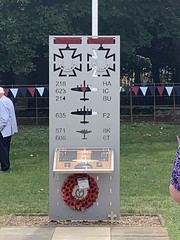
Downham Market updated memorial

The new memorial at St. Mary’s Church Bexwell.

There is a book written listing every operation of 635 Sqn whilst at RAF Downham Market, with crew details, aircraft profiles and mission aerial photographs. It is an amazing record and the result of three years work. The author Christopher Coverdale, is also on the committee aiming to construct the new memorial at RAF Downham Market.

Downham Market appears in Trail 7.

Notes and Further Reading.

Coverdale C. ‘Pathfinders 635 Squadron – definitive history March 1944 – September 1945‘ Published by Pathfinder Publishing, 2009. ISBN: 978-0-9561145-0-1

The Bomber Command Museum of Canada website has a detailed account of the restoration of Lancaster FM159.

*1 Photo IWM – CH 15911 in the public domain.

*2 Chorley, W. R. ‘Bomber Command Losses of the Second World War‘ Vol 5, 1944, 1997
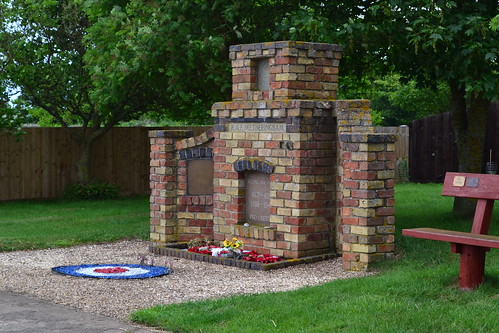
July 30th 1944 – Loss of Lancaster PB304 – 106 Squadron.

On Sunday July 30th 1944, Lancaster PB304 from 106 Squadron RAF Metheringham in Lincolnshire, crashed with the loss of all on board, along with two civilians, in Salford Greater Manchester.

Lancaster PB304, was a MK.III Lancaster based at RAF Metheringham in Lincolnshire, flying under the squadron code ZN-S. It was tasked to attack enemy strong points at Cahagnes in the Normandy battle zone following the Allied invasion in June.

The early briefing at 04:00 was not a welcome one, many men having been out the night before following a stand down order due to bad weather and heavy rain over the last two days. On board that day was: F/L. Peter Lines (Pilot); Sgt. Raymond Barnes (Flt. Eng.); F/O. Harry Reid RCAF (Nav.); F/O. John Harvey Steel (Air Bomber); Sgt. Arthur William Young (W.O/Gunner); Sgt. John Bruce Thornley Davenport (Mid-Upper Gunner) and Sgt. Mohand Singh (Rear Gunner)*1.

The operation, code-named Operation Bluecoat, would involve attacking six specific targets, each one identified to assist a forthcoming offensive by British land forces in the Normandy area.

After all the ground checks were completed and the signal given to depart, PB304 began the long taxi to the runway, take off was recorded as 05:55, but it is thought that this was ten minutes early with the first aircraft (ND682) departing at 06:05. Once in the air, the aircraft formed up alongside twenty other 106 Sqn aircraft,  meeting with a smaller formation from 83 Sqn at Coningsby before joining the main formation.

The weather remained poor with heavy cloud blanketing the sky between 5,000 and 10,000 feet, as the 183 Lancasters from No. 5 Group and one Mosquito headed south toward the Normandy coast.

With further poor weather ahead, signals were beginning to come through to abandon the mission and return to base, but communication between aircraft was garbled and difficult to understand, it may have been as a result of German interference broadcasting messages over that of the master bomber. The order to abort finally came through just after 08:00 even though some of the formation had released bombs on target indicators (TI) dropped by the Pathfinders. Smoke was by now mixing with the low cloud causing more confusion and difficulty in identifying the primary targets. Not all aircraft understood the message however, and many continued circling in the skies above Cahagnes. To make a difficult situation even worse, there was by now, an  approaching formation of over 450 American A-20s and B-26s along with just short of 260 P-51 and P-47 escorts on their way to France; the sky was full of aircraft in thick cloud and was an accident waiting to happen.

Difficult communication continued, some aircraft were seen disposing of their bomb loads over the Channel, whilst others retained them. Various courses were set for home, but with many airfields closed in by low cloud, alternatives were gong to be needed and alternative courses were issued to the returning bombers of each squadron.

106 Sqn were ordered to fly north along the western coast, passing over Pershore and on to Harwarden near Chester, before turning for home. The messages coming through continued to be misheard or misunderstood with several aircraft landing at either Pershore, Harwarden or Squires Gate at Blackpool. Gradually all aircraft managed to land, whether at home at Metheringham or at away airfields. Patiently the Metheringham staff waited, nothing had been heard from PB304 and they could not be contacted on the radio, something was wrong.

Precise details of the accident are sketchy, but an aircraft was seen flying low and in some difficulty. It passed low over Prestwich on the northern edges of Manchester, where it was later seen engulfed in flames. It twice passed over a playing field, where some suspect F/L. Lines was trying to make a crash landing, but this has not been confirmed. At some time around 10:10 -10:15 the aircraft came down resulting in a massive explosion, a full bomb load and fuel reserves igniting on impact. Many houses were damaged in the explosion with one being completely demolished.

As a result of the accident, all seven of the crew were killed along with two civilians, Lucy Bamford and George Morris, as well as, what is believed to be, over 100 others being injured all to varying degrees.

PB304 was the only aircraft lost that night, in a mission that perhaps with hindsight, should not have taken place. The poor weather and difficult communication playing their own part in the terrible accident in Salford on July 30th 1944.

RAF Metheringham

The Memorial at Metheringham pays tribute to all those who flew with 106 Sqn.

Notes and Further Reading.

*1 Operational Record Book AIR 27/834/14 notes Sgt. Young as Sgt. A.L. Young.

A book written by Joseph Bamford the Grandson of Lucy who was killed that night, was published in 1996. “The Salford Lancaster” gives excellent details of the crew, the mission and the aftermath of the accident, published by Pen and Sword, it is certainly worth a read for those interested in knowing more about the incident.

Carter. K.C., & Mueller. R., “Combat Chronology 1941-1945“, Centre for Air Force History, Washington D.C.

Freeman. R., “Mighty Eighth War Diary“, Jane’s Publishing. 1980

Downham Market VC Memorial Updated.

The memorial, located outside of Bexwell church, opposite what was the entrance to RAF Downham Market (Bexwell) was updated and officially rededicated on Sunday 8th July 2023.

It commemorates two pilots who were posthumously awarded the VC  both whilst serving at the airfield during the Second World War.

Both Flt. Sgt. Arthur Louis Aaron, (218 Squadron) and Sqn. Ldr. Ian Willoughby Bazalgette (635 Squadron) lost their lives in heroic attempts to save not only their injured crew but also the aircraft in which they were flying. The awards were given posthumously following their deaths, a year apart, on 12th August 1943 and August 4th, 1944 respectively.

Up until now, a small memorial has been on the site commemorating the heroic action of both men, but on Sunday, a new memorial was unveiled which is far more befitting not only of the two men, but all those who served at the airfield during those dark days of World War II.

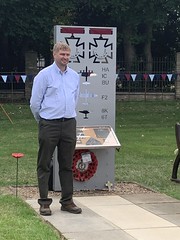
The memorial, in steel, stands at around six feet in height and shows not only the two VCs but the types of aircraft flown (Stirling, Lancaster and Mosquito) by the six squadrons who operated from RAF Downham Market along with their relative squadron codes.

Each symbol is cut out of the steel which (intentionally or not) allows the sun to shine through casting an image on the ground. The creator, Jonathan Horton, also made a series of steel silhouettes of the different aircraft, these were placed in the ground to appear as if flying toward the memorial.

Downham Market updated memorial

Designer Johnathon Horton with the memorial.

The service opened at 02:30hrs, and was well attended by various military dignitaries from nearby RAF Marham, and the RAAF, also with representatives from the Royal Air Force Association, a local village spokeswomen and members of the community who helped organise the memorial as well as a former Mosquito pilot Flt. Lt. Colin Bell DFC, AE now 102 years old.

Downham Market updated memorial

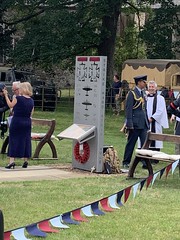
The new memorial with Station Commander Grp. Cpn. Frederick Wigglesworth (right) and Colin Bell DFC AE (left)

Words of prayer were said by Reverend (Wg CDR) Eddie Wynn, the blessing by Reverend Nigel Moat, words from Grp. Cpn. Frederick Wigglesworth (station Commander RAF Marham) and a bible reading from Air Commodore Steve Thornber CBE RAFR. Sadly a fly past by the BBMF Spitfire didn’t happen.

Two hymns were sung: O God, our help in ages past and The Airman’s hymn,  with the National Anthem closing the ceremony.

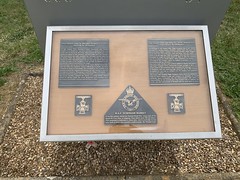
The new memorial uses the original memorial rearranged in a new setting and attached to the new memorial rather than on a pedestal as before. The Pathfinder Moto ‘Strike Hard Strike Sure’ is also cut down the flanks of the sheet, further reflecting the work carried at Downham Market.

Downham Market updated memorial

The updated board from the original memorial.

The memorial can be found outside of Bexwell Church opposite what is the former technical area of RAF Downham Market. Grid Reference TF 63142 03460, Post Code PE38 9LZ

Robert C Frascotti, USAAF, 352nd FG, 486th FS. RAF Bodney (Trail 8)

D-Day began many months if not years ahead of June 6th 1944. That day was to become famous as the biggest, most important day in the Second World War.

As the world’s largest amphibious assault force assembled along the South Coast of England, thousands of aircrew prepared for what was to be the most incredible night of their lives.

Across the Midland Counties, American ground crews prepared their fighters and paratrooper aircraft. Along southern England, the same scene was being played out. RAF crews too prepared Stirlings, Lancasters and Horsa gliders; fighter groups were briefed and paratroopers readied their gear. The invasion was on!

Flying an operation of this magnitude was going to require guts, daring and precision flying. There was little room for error.

In the lead up to June 6th, the RAF and USAAF had been bombing prime targets across Northern France to soften up the defending Germans. Supply lines were severed and gun emplacements destroyed. Beachhead bunkers had been heavily targeted, and supporting artillery further inland, hit hard.

In the air, fighters had been downing the Luftwaffe in an effort to gain vital air superiority over the drop zones.

At home, huge attempts were made to keep the plans and preparations as secret as possible. An intricate operation of deception was being played out; dummy airfields were built, camps and troop movements were hidden under cover and concealed in forests.

At an airfield in Norfolk, the day was to begin very badly for one particular young pilot. He was 1st Lt. Robert C. Frascotti of Milford, Massachusetts.

In the days leading up to D-Day at RAF Bodney (USAAF Station 141), the 352nd FG had been flying intruder missions over France, attacking ground targets and completing air superiority missions. P-51s were rapidly being prepared, and the growth of black and white stripes adorning aircraft, hinted of an imminent invasion.

In the late hours of June 5th, the P-51s were being fueled up and armed, ready for an early morning takeoff.  The weather was not at its best and a low mist shrouded the airfield reducing visibility. The mission ahead was to support the troops landing on the Normandy beaches.

At 02:30, the pilots climbed in, fastened their belts and awaited the signal to launch D-Day. First to leave were the 486th FS. To help with the takeoff, temporary lights were placed along the runway, guiding the aircraft safely out of harm’s way into the night sky. One of these aircraft, unfortunately struck the lights knocking them out and plunging the airfield into darkness once more. Lining up behind them were the second flight of the 486th, including Frascotti’s P-51.

When lining up, the flight were unaware that they were off centre. Frascotti and his wingman, Lt. Carlton “Bud” Fuhrman, accelerated away and raced down the runway. Fuhrman watched Frascotti to his left when suddenly there was a massive fireball. Thinking someone had dropped their external fuel tanks, Fuhrman pulled up sharply and pushed on through the flames hoping his engine would not falter resulting in him crashing into the raging fire below. Momentarily blinded by the now total darkness, Fuhrman, pushed the stick forward and fought against the impending stall. Eventually his sight returned and he was able to read his instruments once more. Looking back, he could see Frascotti’s fully fueled plane engulfed in fire with no hope of an escape. Frascotti died instantly. The accident report filed after Frascotti’s death stated that an inadequately lit tower along with poor weather and high levels of traffic had caused him to inadvertently strike the unfinished new control tower at Bodney resulting in the ignition of his fuel. Tragically, Frascotti died instantly, and the aircraft was a total loss.

Frascotti’s plane, a blue nosed P-51B-5 Mustang, 43-6685 was named ‘Umbriago‘. In Italian, ‘umbriago’ means ‘drunk’. Frascotti could have named his plane for that reason, but it could also be he was referring to the World War II-era song of 1944, “Umbriago”by Jimmy Durante about a fabled friend of the same name. The song lyrics end with, “So when you feel low, better send for my friend, Umbriago.”

At a mere 21 years of age, 1st Lt. Robert C. Frascotti had many tributes written about him. There was one benefit of his tragic accident: the following aircraft now had a ‘guiding light’ by which they could safely takeoff and leave for Normandy.

Frascotti was born on February 13, 1923 into a very close-knit and patriotic family in Milford, Massachusetts. (His father fought in World War I where he was gassed). Frascotti was awarded his pilot wings in Marianna, Florida on March 25, 1943, then completed advanced fighter training before deploying to England in March 1944. He joined the 486th FS of the 352nd FG, otherwise known as ‘The Blue Nosed Bastards of Bodney”.

1st Lt. Donald “Red” Whinnem of Hartford, Connecticut, was best friends with Frascotti since the early days of flight school. On D-Day at Bodney, “Red” took off without incident and flew for sixteen hours, returning to discover the tragedy that had occurred. “Red” says of his friend, “Bob was the nicest guy you would ever want to know, and a great athlete as well. He could stir up laughter anywhere he went, and he was great fun to be with. Bob would sing a song or tell a story and cheer everyone up. You couldn’t ask for a better friend, and he was closer than a brother to me.”

During his service, Frascotti was credited with the destruction of two enemy aircraft on the ground whilst strafing enemy airfields. On D-Day, he departed for his 89th mission. This was to be his last mission of the war as he was due to return to the States leaving conflict behind him. Sadly, he never made that journey home to Massachusetts until many years later.

Initially, Frascotti was buried in England. His remains were eventually taken back to Massachusetts in 1948 after his next of kin had his body exhumed, and he now lies in the Sacred Heart Cemetery, in Milford. Lt. Robert C. Frascotti VFW Post 1544 in his hometown, now bears his name, and on December 6, 2013, as part of the annual “Wreaths Across the Worcester and Norfolk District”, a group of local veterans, families and friends, laid a holiday wreath at Calzone Park in Milford to remember the fallen veterans of the area, including Frascotti. Since the war, every year until his death in 1998, 1st Lt. Donald “Red” Whinnem travelled to Frascotti’s grave in Milford to pay his respects and remember his wartime friend.

Fly-pasts and tributes continue to be paid for Frascotti, in both the United States and here at RAF Bodney, Norfolk. 1st Lt. Robert C. Frascotti will long be remembered for his brave sacrifice, and we that are here, are honored to continue to tell his story.

As for RAF Bodney, the airfield is now an Army training camp and part of the Stanford Training Area (STANTA) in Thetford Forest. Little remains of the airfield today but the history held within its decaying walls will long live on.

RAF Bodney can be visited in Trail 8 – Swaffham and her Neighbours (Part 1).

IMG_2210

Robert Frascotti next to his P-51B, 43-6685, named ‘Umbriago’ . At 21 years of age he was killed on his final mission before returning home. (Photo – Marc Hamel)

Leslie Manser VC. (RAFVR) 50 Squadron – Royal Air Force

Born in New Delhi in 1922, Flying Officer Leslie Thomas Manser, (66542) posthumously earned himself the Victoria Cross for an act of bravery in his Avro Manchester, over Cologne on the night of May 30th, 1942.

manser

Flying Officer Leslie Manser VC. (RAFVR) 50 Squadron – Royal Air Force

As a young child, he moved with his family to Radlett, Hertfordshire, England, was educated at St. Faith’s, Cambridge and Cox’s House Aldenham, Hertfordshire. Following this, he decided to join the Armed Forces. Attempts to enlist in both the Army and Royal Navy were unsuccessful, however, in August 1940, he approached the Royal Air Force and was quickly accepted.

Manser was commissioned as a pilot officer in May the following year and after further training, was posted on 27th August to 50 Sqn at RAF Swinderby, Lincolnshire, operating Hampdens.

His first experience of war, came very quickly. As a copilot, he was to join over 100 other aircraft in the Frankfurt raid only two days after his arrival. Further action saw him fly over prestigious targets such as Berlin, Hamburg and Karlsruhe before being posted twice to Finningly and then back to Swinderby, this time as an instructor.

Following a brief service with No. 420 (R.C.A.F.) Sqn, again on Hampdens,  Manser returned to 50 Sqn, this time operating from Skellingthorpe, Lincolnshire. It was here that he experienced for the first time, the ill-liked Heavy Bomber, the Avro Manchester. Manser flew a number of missions on this type including a leaflet drop over occupied Paris on April 8th. His skill as a pilot soon earned him promotion to the rank of Flying Officer just five days before his 20th birthday on May 6th 1944.

With high losses and increasing ‘failures’, bomber command was coming in for its own criticism and despite some success, Harris was making enemies at home as well as overseas. It was now that he created his master plan “The Thousand Plan” code named ‘Operation Millennium’. This would involve over 1,000 British bombers, attacking one major German city in a single night. Churchill, impressed with the idea, gave Harris full support and the wheels of Operation Millennium were put in motion. Aircraft and crews were pulled from every available source, many being taken from training units where crews were only partially trained and inexperienced.

Orders were finalised on 26th May, and an initial date for the attack set for the night of the 27/28th May, the target would be Bremen. However, continued unfavourable weather conditions made Harris’s first choice unsuitable and then at midday on the 30th May, 1942, Harris issued the order to strike, that night, against his second choice of target – Cologne.

The immense armada, which consisted of: Whitleys, Wellingtons and Hampdens, Stirlings, Halifaxes, Manchesters and Lancasters made up a force of 1,046 bomber aircraft along with an assortment of night fighters in support.

On the morning of 30th, Manser and another pilot were instructed to collect two Manchesters from Coningsby, Lincolnshire. As many of these aircraft were drawn from reserves and training squadrons, it was inevitable that many would be in poor condition. Manser’s was no exception, it had no mid upper turret and a sealed escape hatch.

50 sqnWhen the order came and Manser took off, his aircraft L7301 ‘D’ Dog, an Avro Manchester Mk1, with a full bomb load of incendiaries, was now difficult to manoeuvre and he was unable to reach an altitude of more than about 7,000 ft. Hoping the main bomber force would attract the greater concentration of  flak, he decided to continue on.

They soon arrived over the target area and being lower, they were subjected to an immense barrage of anti-aircraft fire. Many of these shells struck the aircraft causing fires within the fuselage and the port engine. Careful nursing and a cool head by Manser, enabled them to eventually extinguish the fire which had now spread along the entire wing.

Struggling to maintain any height and keep the aircraft airborne, the crew threw out whatever they could to lighten the load. with little power, the aircraft lost considerable height and Manser finally ordered the crew to bail out. Knowing his crew would not survive jumping as the aircraft swung and moved awkwardly, he fought to maintain level flight for as long as possible. Refusing his own parachute over his crew’s safety, he held it just long enough for them to get out. The bomber finally crashed a few miles from the Dutch border near to Bree 13 mi (21 km) north-east of Genk in Belgium and burst into flames with Manser at the controls, he was just 20 years old. Manser’s bravery came out following debriefing of the crew members, five of the six having made it home through the resistance network.

Manser’s crew on that flight were:

Sergeant Baveystock (2nd Pilot)
Pilot Officer Horsley (Wireless Operator)
Sergeant Naylor (Rear Gunner)
Flying Officer ‘Bang On’ Barnes (Navigator / Bomb Aimer – Captured following jumping at low-level)
Sergeant King (Second Wireless Operator)
Sergeant Mills (Front Gunner)

Leslie Manser’s courage and self-sacrifice led to him being posthumously awarded the Victoria Cross. On 23rd October 1942. The citation for the VC read:

“In pressing home his attack in the face of strong opposition, in striving, against heavy odds, to bring back his aircraft and crew and, finally, when in extreme peril, thinking only of the safety of his comrades, Flying Officer Manser displayed determination and valour of the highest order.”

Other members of the crew:  Barnes, Horsley,  Baveystock, Mills and Naylor all received immediate awards of the Distinguished Flying Cross or Distinguished Flying Medal.

Today Manser’s memory lives on. A primary School (The Leslie Manser Primary School) was opened in 1981 on what was the old RAF Skellingthorpe airfield. On 31st June 2004, a Memorial to F/Off. Leslie Manser was unveiled in  Stamprooierbroek near Molenbeersel, Kinrooi in the north-east of Belgium. He is buried at Heverlee War Cemetery Leuven, Flemish Brabant (Vlaams-Brabant), Belgium. Plot: 7.G.1.

Manser’s VC is on display in the Lord Ashcroft Gallery at the Imperial War Museum, London.

The following personal message from Sir Arthur Harris was sent to Leslie Manser’s Father:

“Sir,

Accept from me personally and on behalf of my Command and my Service, Salutations upon the signal honour, so well indeed merited, which his Majesty the King has seen fit to confer upon your gallant son. No Victoria Cross has been more gallantly earned. I cannot offer you and yours condolence in personal loss in circumstances wherein your son’s death and the manner of his passing must so far surmount, by reason of the great services he rendered this country and the last service to his crew, all considerations of personal grief. His shining example of unsurpassed courage and staunchness to death will remain an inspiration to his Service and to him an imperishable memorial.

Arthur T. Harris Air Marshal R.A.F.”

Loss of Mosquito FBVI ‘NS828’ RAF Swanton Morley.

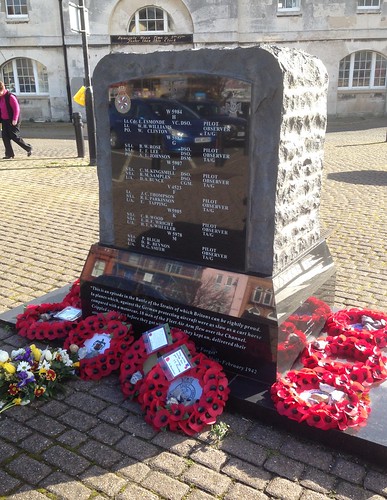
Memorial to Fl. Lt. J Paterson and Fl. Lt J. Mellar

On April 25/26th 1944, 487 Sqn (RNZAF) moved from RAF Gravesend to RAF Swanton Morley in Norfolk, taking with them D.H. Mosquitoes. They had only been at Gravesend a few days when news of the new move came through.

487 Sqn had previously been involved in ground attacks on German airfields across the occupied countries, and in several high profile missions. In particular, during the previous February, they had been involved in Operation ‘Jericho‘, the attack on the Amiens Jail, in France. It was also a Methwold based Ventura piloted by Squadron Leader Leonard H. Trent, who, on 3rd May 1943, had led the Squadron in a disastrous daylight attack on the power station at Amsterdam. As a result of his actions that day, Sqn. Ldr. Trent received the V.C., the highest honour bestowed on personnel of the armed forces.

On their arrival at Swanton Morley, 487 Sqn would immediately begin training for new air operations, their part in the forthcoming D-day invasion at Normandy, with the first flights taking off the following day.

On April 27th three ‘targets’ were chosen, the Grimston Range not far away from Swanton Morley, the Bradenham Range in the Chilterns, and lastly the Army Gunnery School site at Stiffkey, on the North Norfolk coast. Each of these were to be ‘attacked’ in cross country sorties by the Mosquitoes.

In one of those Mosquitoes ‘EG-A’ was Pilot Flight Lieutenant John Charles Paterson (NZ/2150), and his Navigator Flight Lieutenant John James Spencer Mellar (s/n: 49175) both of the R.N.Z.A.F.

The day’s sortie went well, until the return flight home was made. It was on this leg of the flight that the port engine of the Mosquito, a Hatfield built FBVI ‘NS828’ under contract 555/C.23(a), began to overheat.

Immediately Flt. Lt. Paterson feathered the engine – now flying on just one. The Mosquito was lined up on approach to Swanton Morley for a single-engined landing, but all did not go well. Unfortunately,  instead of putting the aircraft down on the runway, the aircraft overshot the airfield crashing into a field beyond, the resultant accident killing both pilot and navigator instantly.

The Operational Record Book (AIR 27/1935/31) for April 27th states:

“Formation dive bombing on Grimstone [sic] range. Low level bombing on Bradenham Range. Formation cross country with air to sea firing practice off the coast at Wells. In the evening six aircraft carried out formation attacks on gun positions at an army Gunnery School at Stiffkey. Returning from this ‘A’, F/Lt. Paterson developed engine trouble and feathered the airscrew.  In attempting to land, he overshot and crashed. F.Lt. Paterson and his navigator F. Lt. Mellar, were both killed.”

Since then, a memorial has been erected in memory of the two men, located on the side of the B1110 Dereham Road just outside the village of North Elmham in Norfolk, it stands not far from the site of the crash site, west of Swanton Morley airfield. After the crash, Flt. Lt. Paterson’s body was buried at Shepperton Church Cemetery, whilst Flt. Lt. Mellar was buried at Brookwood Military Cemetery plot 24. D. 20.

Flight Lieutenant Mellar was 29 on the date of his passing, he was the son of William Edward and Eleanor Mellar; and husband of Dorothy Freda Mellar. Flight Lieutenant Paterson was 24 years of age, he was the son of John Alexander and Alice Louise Paterson, of Papakura, Auckland, New Zealand, and husband of Doris Josephine Paterson, of Shepperton.

Operation ‘Fuller’ – “The Channel Dash”.

The Second World War was full of extraordinary operations many of which succeeded in their aim resulting in great jubilation on home shores, whilst others will always be remembered for their catastrophic fail and loss of life. In these operations, and even though the mission may have failed, those who took part went far beyond the ‘call of duty’, showing incredible bravery and self sacrifice for the better good.

One such operation took place on February 12th 1942.

Up until now, German warships had been causing havoc in the waters around Britain, sinking in excess of 100,000 tons of allied shipping since the opening days of the war; their ‘trophies’ including the aircraft carrier HMS Glorious and the battleship HMS Hood. In January 1942, three of those German warships responsible the Gneisenau, Scharnhorst (Gluckstein and Salmon as the ships were known by bomber command crews) and Prinz Eugen, all heavily armed and battle hardened, were laying in the port of Brest. Even by remaining there, they were causing the Royal Navy an immense headache, as they were diverted from other important tasks, including operations in the Middle East against German supply ships supplying Rommel, and the valuable protection of allied shipping crossing the Atlantic. The small fleet were a major thorn in the Royal Navy’s side and had to be dealt with.

Coastal Command had been closely monitoring the vessels over a period of months, but information had led to little more than that. With the aim of sinking these ships, the RAF became involved undertaking a total of 299 attacks against them whilst docked in the port. During these attacks, 43 aircraft were lost along with 247 brave airmen. The ships were indeed hit though, and in the case of Scharnhorst, damaged badly, but none ever badly enough not to be beyond repair.

The decision was eventually made to move the ships, Hitler’s fear of a second front being opened in Scandinavia proving to be the deciding factor. On that decision two routes were considered, the northern route around Scotland which would take the small, but powerful fleet in range of British carriers and warships at Scapa Flow, a fight the Germans did not want to engage in. Alternatively, they could attempt a daring dash through the narrow and well defended English Channel. It was a difficult decision to make.

Following a meeting on January 12th, 1942 between many top ranking German officials including Hitler, Raeder (the C In C of the Navy), Vice-Admiral Ciliax and Adolf Galland as commander of the Luftwaffe in the Channel area, a decision was finally made, the shorter English Channel route would be the one to take.

The decision raised great concerns though. Both Galland and other Luftwaffe officials knew that there were too few available fighters in the region – just some two groups and a few training units – to be able to provide the 24 hour protection the ships needed as they dashed through the straits. Night fighters were especially needed, a decision which was affirmed and granted by Major General Jeschonnek, the Luftwaffe Chief of Staff; but the numbers of aircraft available to Galland would still remain greatly inferior to those on British soil ready to attack.

So, Operation Thunderbolt was born with February 11th chosen as ‘X’ day, and a sailing time set at 8:00pm. In the weeks leading up to the ‘dash’, German transmitting stations based at both Calais and Cherbourg, began a cat and mouse game transmitting a series of elaborate but false messages to interfere with British radar stations along the south coast. They provided a cover story, suggesting that the fleet would set sail but head toward the Pacific in support of the Japanese and not north to Scandinavia. In preparation, trial runs were made to test engines, guns and communications. The British, still monitoring their actions, began a series of raids on the port, none of which achieved any great success.

During these attacks, which had been occurring regularly since early January, several aircraft were lost including: three Manchesters from 61 Squadron; two Hampdens from 144 Sqn; three Wellingtons, one each from 12, 142 and 300 Sqns and on the 10th February, another Manchester from 61 Sqn.

To meet the anticipated challenge, Galland had some 252 fighters, including a mix of 109s, 190s and some thirty 110 night fighters at his disposal, but he argued, it was still not enough to provide the cover he wanted.

As ‘X’ day approached, the radars went wild with false readings and interference. But the British, now aware of an impending escape, were on high alert, additional Motor Torpedo Boats (MTBs) were docked at Dover and Swordfish aircraft were drafted in to RAF Manston in Kent. Some 1,100 magnetic mines were laid along the projected route and Dover command was put on standby. At 8:00pm on February 11th,  the flotilla began to assemble outside of Brest harbour, just as a routine air raid was launched, and so the port was shut down. Although only one aircraft was lost, a Wellington from 150 Sqn, the raid proved no more than a nuisance, only delaying the fleet’s departure by two hours.

Now temporarily blinded by false radio measures, the British were unable to ‘see’ the mighty armada as it finally slipped out into the open waters of the Channel. Their escape had been a success.

During the night, good progress was made by the fleet and the lost time was made up quickly. Meanwhile, the skies remained quiet, the British not yet realising the ruse. The early morning remained dark, night fighters patrolled along side the fleet at wave top level, thus avoiding detection by British radar. Day fighters joined them in a relay operation that would be held below the cloud ceiling of 1,500 feet.

At 11:00 am on the 12th, the Germans intercepted a British message signalling that the fleet had been spotted. But it remained another hour before further RAF aircraft were seen, the British being wary and unsure of the message’s accuracy. Even though for months the British Command had been monitoring the fleet, those in command failed to act on valuable information, a mistake that led to a vital delay in operations.

Then, in the early hours of the afternoon, as the fleet approached the narrowest point of the Channel, British defences at Dover opened fire. A sea battle then raged between German warships and British MTBs, but for all their valiant efforts they failed to achieve their goal.

At 13:20 A group of sixteen Spitfires took off from Kenley on a Beaufort escort mission that were sent out to search for, and attack the fleet. They initially  rendezvoused with twelve more Spitfires from 602 Sqn, but then failed to meet the Beauforts over Manston. The formation then continued on to the target area looking for the convoy and its escort. Soon after arriving over the Channel, 485 (NZ) Sqn’s leader, Group Captain, Francis V. Beamish DSO and Bar, DFC, AFC, spotted six destroyers, two E-Boats and two German Battle cruisers. At his altitude there was no fighter escort, the mix of Bf109s and FW190s remaining firmly below radar level at 600ft.

Seizing his chance, Beamish then attacked one of the destroyers raking it with gunfire along the length of its deck, a Spitfire’s guns were no match for the destroyer though and little damage was done. The remaining aircraft of the two squadrons then took on the enemy who were forming a low level protectiove umbrella, achieving a greater rate of success with several ‘kills’ being reported back at kenley.

Now fully aware of the situation, the RAF and Navy were called into action. At RAF Manston, eighteen young men began to prepare for take off, their target, the escaping German fleet of some sixty-six surface vessels including the warships Gneisenau, Scharnhorst and Prinz Eugen, now sailing almost unopposed through the English Channel.

The six Fairy Swordfish of 825 Naval Air Squadron were ageing biplanes, they were no match for Galland’s fast and more dominant fighters, nor the defensive guns of the mighty German fleet they were hoping to attack. To pitch a handful of biplanes with torpedoes against such a heavily armed and well prepared armada, turned out to be no less than suicide.

In front of their Swordfish, Lieut Cdr E Esmonde, RN, (2nd Left) on board HMS Ark Royal, October 1941. This photo was taken after the attack on the Bismark, and includes the various aircrew who received decorations as a result of that daring attack. (Left to right: Lieut P D Gick, RN, awarded DSC; Lieut Cdr E Esmonde, RN, awarded DSO; Sub Lieut V K Norfolk, RN, awarded DSC; A/PO Air L D Sayer. awarded DSM; A/ Ldg Air A L Johnson, awarded DSM). (© IWM A 5828)

The winter of 1942 was very cold, but the Swordfish were kept ready, engines warmed and torpedoes armed, now they could no longer wait, and instead of attacking as planned at night, they would have to attack during the day, and so the order to go was given. The crews started their engines and set off on their daring mission in what was appalling weather.

Shortly after take off, the escort arrived, merely ten Spitfires from No. 72 Squadron RAF, led by Squadron Leader Brian Kingcombe, and not the five Spitfire squadrons promised. The six Swordfish, led by  Lt. Cdr. Eugene Esmonde, dived down to 50 feet and began their attack. Hoping to fly below the level of the anti-aircraft guns each of the six Swordfish flew gallantly toward their targets. Eventually, and even though they were hit and badly damaged, they pressed home their attacks, but they were out-gunned, and out performed, and just twenty minutes after the attack began, all six had fallen victim to the German guns. No torpedoes had struck home.

Of the eighteen men who took off that day, only five were to survive.

Leading the attack, Lt. Cdr. Esmonde (an ex-Imperial Airways captain) was warded the V.C. Posthumously, he had previously been awarded the Distinguished Service Order for his part in the attack on the Battleship Bismark; an award that also went to: S/Lt. B Rose, S/Lt. E Lee, S/Lt. C Kingsmill, and S/Lt. R Samples. Flying with them, L/A. D. Bunce was awarded the Conspicuous Gallantry Medal and twelve of the airmen were mentioned in dispatches.

The attack became known as ‘The Channel dash’ officially called operation Fuller, and in honour of the brave attempt to hit the German fleet that day, a memorial was erected in Ramsgate Harbour, the names of the eighteen Swordfish crew are listed where their story is inscribed for eternity.

Operation Fuller was a disaster not only for the Royal Navy and Coastal Command who had been monitoring the fleet for many months, but also for the Royal Air Force. A force of some 100 aircraft made up from almost every Group of Bomber Command had made its way to the Channel. By the time evening had dawned, it had become clear that some sixteen aircraft from the force had been lost. The loss of life from those sixteen aircraft totalled sixty-four, with a further five being captured and incarcerated as prisoners of war.*1

Bomber Command were not without their terrible stories either. The sad loss of W/C. R MacFadden DFC and his six crew who remained in their dingy after their Wellington from 214 Sqn ditched in the cold waters of the Channel. Over a period of 72 hours all but Sgt. Murray, slowly died from the cold, he being rescued at the last minute and incarcerated by the Germans. Of all the RAF squadrons that took part that day, their losses amounted to: 49 Sqn (4 x Hampdens); 50 Sqn (1 x Hampden); 103 Sqn (1 x Wellington);  110 Sqn (1 x Blenheim); 114 Sqn (1 x Blenheim); 144 Sqn (2 x Hampdens); 214 Sqn (1 x Wellington); 419 Sqn (2 x Wellingtons); 420 Sqn (2 x Hampdens) and 455 Sqn (1 x Hampden)*2

February 12th had been a disaster, so bad that The Daily Mirror reported on February 16th 1942 under the headline “9 Lost Hours in the Channel“,  that a demand had been put forward to Parliament for a complete statement on Naval strategy during the event. It also questioned the “suitability of Admiral Sir Dudley Pound”, in fulfilling his role. The paper goes onto say that a lag of some nine hours had largely been ignored by officials, that being the time between the first notice and when action was finally taken against the fleet. It also says that although the initial sighting was no earlier than 10:42 am, it took another hour before it too was responded to.  The public had been mislead it believed.

The entire operation has been badly organised by those in command, with little or no cohesion nor coordination between this various forces involved. As a result, the entire operation was a catastrophe with a major loss of life and no real result. The entire operation was seen by some as akin to a “Gilbert and Sullivan” comedy*3.

However, from that disaster came stories of untold heroism, bravery and self sacrifice by a group of men that have turned this event into one of Britain’s most remarkable and incredible stories of the war.

Operation 'Fuller' The memorial stands in Ramsgate Harbour.
Operation 'Fuller' The names of the 18 airmen and the Swordfish they flew.

Sources and Further reading

*1 To read more about Bomber Commands part in operation Fuller and a German film of the event, see the Pathfinders Website.

*2 Chorley, W.R., “Bomber Command Losses of the Second World War – 1942” 1994, Midland Counties publications.

*3 Bennet, D “Pathfinder“, Goodall, 1998

National Archives AIR 27/1933/20, AIR 27/1933/21

A German account of the ‘dash’ is given in “The First and the Last” by Adolf Galland published in 1955 by Meuthuen & Co.. Ltd.

Remembrance Sunday November 2022

At the eleventh hour on the eleventh day of the eleventh month 1918, the guns on the western front fell silent. Four years of war in which millions were either killed or wounded, towns and villages wiped from the map and the environment changed forever, had finally come to an end. All along the front line, men were soon to put down their arms and leave their trenches for home.

The war to end all wars had finally come to an end. During the last four years some 40 million people had been killed or wounded, many simply disappeared in the mud that bore no preference to consuming man or machine.

Back home, virtually no city, town, village or hamlet was left unscathed by the loss of those four years. Many who returned home were changed, psychologically many were wounded beyond repair.

Sadly, twenty years later, the world slipped into the abyss of war once more. A war that saw some of the most incredible horrors, one that saw the extreme capabilities of what man can do to his fellow-man. Across the world millions of innocent people were slaughtered under the guise of an ideology. An ideology that was determined to rid the world of anyone who was willing to speak out against that very same ideology.

Young men were transported thousands of miles to fight in environments completely alien to them. Many had never been beyond their own home town and yet here they were in foreign lands fighting a foe they had never even met.

The bravery and self-sacrifice of those young men  on the seas, on the land and in the air, go beyond anything we can offer as repayment today.

For nearly 80 years, the world has been at an uneasy rest, Korea, Vietnam, the Falklands, the Middle East, and the Far East, in almost every corner of the globe there has been a war in which our service men and women have been involved. The war to end all wars failed in its aim to bring peace to the world.

In this year, 104 years after the end of the First World War, we remember those who laid down their lives in the fight for freedom. We remember those who fought for the right to free speech, for the right to be who you are and the right to live our lives in peace.

We will remember them…

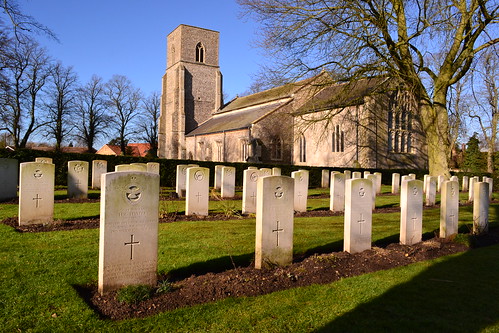
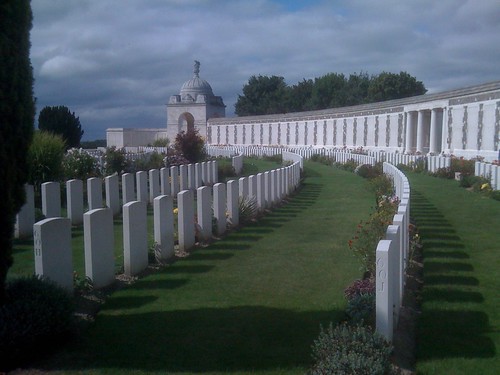
War Graves Cemetery - St Mary's Great Bircham

St Mary’s Great Bircham

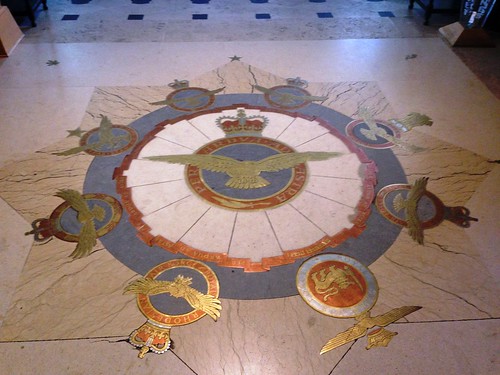
St. Clement Danes - Church of the RAF

The rosette of the Commonwealth Air Forces – St. Clement Danes

Ypres 007

Tyne Cot, Ypres

DSC_0587

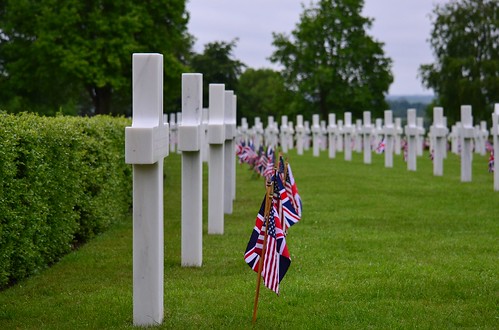
The American Cemetery Madingley

Anthem for Doomed Youth

What passing-bells for these who die as cattle?
Only the monstrous anger of the guns.
Only the stuttering rifles’ rapid rattle
Can patter out their hasty orisons.
No mockeries now for them; no prayers nor bells,
Nor any voice of mourning save the choirs,
The shrill, demented choirs of wailing shells;
And bugles calling for them from sad shires.

What candles may be held to speed them all?
Not in the hands of boys, but in their eyes
Shall shine the holy glimmers of goodbyes.
The pallor of girls’ brows shall be their pall;
Their flowers the tenderness of patient minds,
And each slow dusk a drawing down of blinds.

Wilfred Owen (18/3/1893 – 4/11/1914)

Lt. Col. Leon Vance 489th BG – Medal of Honour.

Leon vance.jpgThe story of Leon Vance is one of  the saddest stories to emerge from the Second World War. He was a young American, who through his bravery and dedication, saved the lives of his colleagues and prevented their heavily stricken aircraft from crashing into populated areas of southern England. Following a mission over France, his was very severely injured, but miraculously fought on.

Leon Robert Vance, Jr. known as ‘Bob’ to his family and friends, was born in Enid, Oklahoma, on August 11th, 1916. He graduated from high school in 1933 after receiving many honours and being singled out as a high performing athlete. He went on, after University, to the prestigious Training College at West Point in 1935, staying until his graduation four years later in 1939. It was here, at West Point, he would meet and marry his wife Georgette Brown. He and Georgette would later have a daughter, after whom Vance would name his own aircraft ‘The Sharon D’.

Vance would become an aircrew instructor, and would have various postings around the United States. He became great friends with a Texan, Lieutenant Horace S. Carswell, with whom he would leave the Air Corps training program to fly combat missions in B-24 Liberators. They became great friends but would go on to fight in different theatres.

Prior to receiving his posting, Vance undertook training on Consolidated B-24s. Then, in October 1943, as a Lieutenant Colonel, he was posted to Europe with the newly formed 489th Bombardment Group (Heavy), as the Deputy Group Commander. One of the last groups to be assigned to the European theatre, they formed part of the 95th Combat Bombardment Wing (2nd Bomb Division),  Eighth Air Force, and were sent to RAF Halesworth (RAF Holton) designated Station 365 by the USAAF.

The group left their initial base at Wendover Field, Utah in April / May 1944 and their first mission would be that same month on May 30th, 1944, as part of a combined attack on communication sites, rail yards and airfields. A total of 364 B-24s were to attack the Luftwaffe bases at Oldenburg, Rotenburg and Zwischenahn, along with other targets of opportunity far to the north in the German homeland. With only 1 aircraft lost and 38 damaged, it was considered a success and a good start to the 489th’s campaign.

As the build up to Normandy developed, Vance and the 489th would be assigned to bombing targets in northern France in support of the Normandy invasion about to take place further to the south. An area the unit would concentrate on, prior to the Allied beach invasion on June 6th that year.

The day before D-day, the 489th would fly to Wimereaux, in the Pas-de-Calais region of northern France. This would be Leon Vance’s final mission.

File:846bs-b24-42-94860--halesworth.jpg

B-24H Liberator of the 489thBG, RAF Halesworth*2

The group, (Mission 392),  consisted of 423 B-17s and 203 B-24s and were to hit German coastal defences including: Le Havre, Caen, Boulogne and Cherbourg areas as  a precursor to the Normandy invasion. Some 127 P-47s and 245 P-51s would support the attacks. The 489th would assemble at 22,500 feet on the morning of June 5th, proceed to the south of Wimereaux, fly over dropping their payload, and then return to England. On the run in to the target, Vance was stationed behind the pilot and copilot.  The lead plane encountered a problem and bombs failed to jettison. Vance ordered a second run, and it was on this run that his plane, Missouri Sue, took several devastating hits.

Four of the crew members, including the pilot were killed and Vance himself was severely injured. His foot became lodged in the metal work behind the co-pilots seat. There were frantic calls over the intercom and the situation looked bad for those remaining on board. To further exacerbate the problems, one of the 500lb bombs had remained inside the bomb bay armed and in a deadly state, three of the four engines were disabled, and fuel spewed from ruptured lines inside the fuselage.

Losing height rapidly, the co-pilot put the aircraft into a dive to increase airspeed. The radio operator, placed a makeshift tourniquet around Vance’s leg, and the fourth engine was feathered.  They would then glide toward the English coast.

The aircraft was too damaged to control safely, so once over English soil, Vance ordered those who could, to bail out. He then turned the aircraft himself out to the English Channel to attempt a belly landing on the water. A dangerous operation in any aircraft, let alone a heavy bomber with an armed bomb and no power.

Still trapped by the remains of his foot, laying on the floor and using only aileron and elevators, he ensured the remaining crew left before the aircraft struck the sea. The impact caused the upper turret to collapse, effectively trapping Vance inside the cockpit. By sheer luck, an explosion occurred that threw Vance out of the sinking wreckage,  his foot now severed.  He remained in the sea searching for whom he believed to be the radio operator, until picked up by the RAF’s Air Sea Rescue units.

Vance was alive, but severely injured. He would spend a number of weeks, recuperating in hospital, writing home and gradually regaining his strength. Disappointed that his flying career was over, he looked forward to seeing his wife and young child once more. However, on a recuperation trip to London, Vance met a young boy, who innocently, and without thought, told him he wouldn’t miss his foot. The emotional, impact of this comment was devastating to Vance and he fell into depression. Then, news of his father’s death pushed him down even further.

Eventually, on July 26th, 1944 Vance was given the all clear to return home and he joined other wounded troops on-board a C-54, bound for the US. It was never to arrive there.

The aircraft disappeared somewhere between Iceland and Newfoundland. It has never been found nor has the body of Leon Vance or any of the others on board that day. Vance’s recommendations for the Medal of Honour came through in the following  January (4th), but at the request of his wife, was delayed until October 11th 1946, so his daughter could be presented the medal in her father’s name.

The citation for Leon Vance reads:

“For conspicuous gallantry and intrepidity above and beyond the call of duty on 5 June 1944, when he led a Heavy Bombardment Group, in an attack against defended enemy coastal positions in the vicinity of Wimereaux, France. Approaching the target, his aircraft was hit repeatedly by antiaircraft fire which seriously crippled the ship, killed the pilot, and wounded several members of the crew, including Lt. Col. Vance, whose right foot was practically severed. In spite of his injury, and with 3 engines lost to the flak, he led his formation over the target, bombing it successfully. After applying a tourniquet to his leg with the aid of the radar operator, Lt. Col. Vance, realizing that the ship was approaching a stall altitude with the 1 remaining engine failing, struggled to a semi-upright position beside the copilot and took over control of the ship. Cutting the power and feathering the last engine he put the aircraft in glide sufficiently steep to maintain his airspeed. Gradually losing altitude, he at last reached the English coast, whereupon he ordered all members of the crew to bail out as he knew they would all safely make land. But he received a message over the interphone system which led him to believe 1 of the crew members was unable to jump due to injuries; so he made the decision to ditch the ship in the channel, thereby giving this man a chance for life. To add further to the danger of ditching the ship in his crippled condition, there was a 500-pound bomb hung up in the bomb bay. Unable to climb into the seat vacated by the copilot, since his foot, hanging on to his leg by a few tendons, had become lodged behind the copilot’s seat, he nevertheless made a successful ditching while lying on the floor using only aileron and elevators for control and the side window of the cockpit for visual reference. On coming to rest in the water the aircraft commenced to sink rapidly with Lt. Col. Vance pinned in the cockpit by the upper turret which had crashed in during the landing. As it was settling beneath the waves an explosion occurred which threw Lt. Col. Vance clear of the wreckage. After clinging to a piece of floating wreckage until he could muster enough strength to inflate his life vest he began searching for the crew member whom he believed to be aboard. Failing to find anyone he began swimming and was found approximately 50 minutes later by an Air-Sea Rescue craft. By his extraordinary flying skill and gallant leadership, despite his grave injury, Lt. Col. Vance led his formation to a successful bombing of the assigned target and returned the crew to a point where they could bail out with safety. His gallant and valorous decision to ditch the aircraft in order to give the crew member he believed to be aboard a chance for life exemplifies the highest traditions of the U.S. Armed Forces”*2

Leon Vance’s actions would be remembered. His local base in Oklahoma was renamed ‘Vance Air Force Base’ on July 9th, 1949. The gate at Tinker Air Force Base, Oklahoma was also later named after him on May 9th, 1997, and his name appears on the ‘Wall of the Missing’ at Madingley American War Cemetery in Cambridge, England.

DSC_0582

The American War Cemetery, Madingley. Leon Vance’s Name Appears on the wall of the missing (to the left of the picture).

Leon Robert Vance, Jr. (August 11th, 1916 – July 26th, 1944)

For other personal tales, see the Heroic Tales Page.

Sources.

* Photo public domain via Wikipedia

*1 “Medal of Honor recipients – website World War II”.

*2 Photo Public Domain via Wikipedia.

Remembrance Day 2021 – At the going down of the sun…

At the eleventh hour on the eleventh day of the eleventh month 1918, the guns on the western front fell silent. Four years of war in which millions were either killed or wounded, towns and villages wiped from the map and the environment changed forever, had finally come to an end. All along the front line, men were soon to put down their arms and leave their trenches for home.

The war to end all wars had finally come to an end. During the last four years some 40 million people had been killed or wounded, many simply disappeared in the mud that bore no preference to consuming man or machine.

Back home, virtually no city, town, village or hamlet was left unscathed by the loss of those four years. Many who returned home were changed, psychologically many were wounded beyond repair.

Sadly, twenty years later, the world slipped into the abyss of war once more. A war that saw some of the most incredible horrors, one that saw the extreme capabilities of what man can do to his fellow-man. Across the world millions of innocent people were slaughtered under the guise of an ideology. An ideology that was determined to rid the world of anyone who was willing to speak out against that very same ideology.

Young men were transported thousands of miles to fight in environments completely alien to them. Many had never been beyond their own home town and yet here they were in foreign lands fighting a foe they had never even met.

The bravery and self-sacrifice of those young men  on the seas, on the land and in the air, go beyond anything we can offer as repayment today.

For nearly 80 years, the world has been at an uneasy rest, Korea, Vietnam, the Falklands, the Middle East, and the Far East, in almost every corner of the globe there has been a war in which our service men and women have been involved. The war to end all wars failed in its aim to bring peace to the world.

In this year, we remember those who laid down their lives in the fight for freedom. We remember those who fought for the right to free speech, for the right to be who you are and the right to live our lives in peace.

We will remember them…

War Graves Cemetery - St Mary's Great Bircham

St Mary’s Great Bircham

St. Clement Danes - Church of the RAF

The rosette of the Commonwealth Air Forces – St. Clement Danes

Ypres 007

Tyne Cot, Ypres

DSC_0587

The American Cemetery Madingley

Anthem for Doomed Youth

What passing-bells for these who die as cattle?
Only the monstrous anger of the guns.
Only the stuttering rifles’ rapid rattle
Can patter out their hasty orisons.
No mockeries now for them; no prayers nor bells,
Nor any voice of mourning save the choirs,
The shrill, demented choirs of wailing shells;
And bugles calling for them from sad shires.

What candles may be held to speed them all?
Not in the hands of boys, but in their eyes
Shall shine the holy glimmers of goodbyes.
The pallor of girls’ brows shall be their pall;
Their flowers the tenderness of patient minds,
And each slow dusk a drawing down of blinds.

Wilfred Owen (18/3/1893 – 4/11/1914)