1st Lt. E.S. Michael MOH – RAF Chelveston

Every airfield has its heroes, and RAF Chelveston was no exception. Among the men who flew from the Northamptonshire base was 1st Lt. Edward Stanley Michael of the 364th Bomb Squadron. In April 1944, while flying a mission deep into Germany, he found himself at the centre of one of the most remarkable survival stories of the American air war. Wounded, outnumbered and flying a crippled aircraft, Michael’s determination to bring his crew home would earn him the Medal of Honour and secure his place in the history of RAF Chelveston.
Edward Stanley Michael was born on 2 May 1918 in Chicago to Stanley William Michael and Lillian Harriet Konior. He grew up in an industrial city defined by machinery, manufacturing and hard-edged practicality – an environment that perhaps influenced his early move into skilled technical work. He attended Chicago High School, graduating in 1936, and by 1940, was working as a machinist, a trade that demanded precision and patience in equal measure.

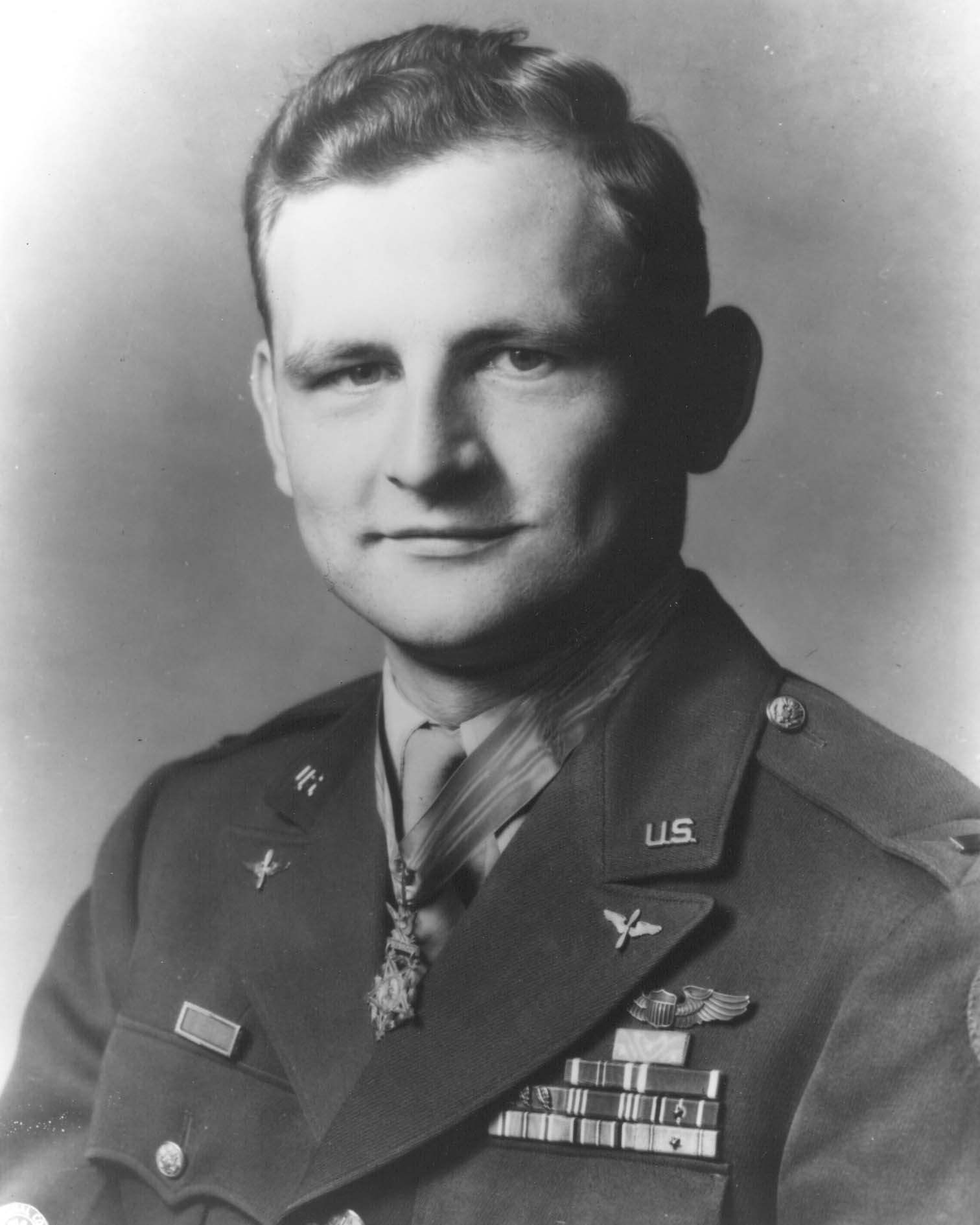
1st Lt. Michael (Wikipedia)

That practical grounding was interrupted by the growing pressures of global conflict. On 2 November 1940, he enlisted as a private in the United States Army Air Corps and was posted to Wheeler Field, Hawaii, where he was present during the Japanese attack of 7 December 1941. In 1942 he was selected for flight training, entering the demanding programme that transformed enlisted airmen into officers and pilots. By April 1943 he had earned his commission as a second lieutenant and completed both multi-engine and B-17 Flying Fortress training in Arizona and Washington State. It was during this period of intense preparation that he married Bertie Lee Parks in October 1943, later naming his B-17 Bertie Lee in her honour.

Serving with the 364th Bomb Squadron of the 305th Bomb Group at RAF Chelveston, Michael took part in numerous combat operations over occupied Europe and Germany. On 11 April 1944, he was piloting the B-17G Bertie Lee (42-37931) as part of a major bombing operation against targets in Germany, including the Focke-Wulf aircraft factory at Sorau. Other objectives for the 341 B-17s of the 1st Bomb Division included Cottbus, Dobberphul, Stettin and Trechel.

As the formation approached its target area, German fighters launched another ferocious frontal assault, a tactic that had proved highly effective against American bomber formations earlier in the air war. Michael’s aircraft, a Douglas-Long Beach B-17G-20-DL Flying Fortress (WF-D), soon became the focus of a determined enemy attack. To the crew, it appeared that the German fighters had singled them out, pressing home repeated assaults despite the presence of Allied escort fighters and the heavy defensive fire from the bomber formation.

The attack devastated the cockpit. Both Michael and his co-pilot, 2nd Lt. Franklin Westberg, were wounded, vital instruments were destroyed, oil coated the windscreen and the aircraft entered a 3,000-foot dive from which survival appeared impossible. With remarkable determination, Michael managed to regain control, only to discover that the bomb bay, still loaded with incendiaries, was on fire. Damage to the release mechanism meant the bombs could not be jettisoned, and the danger of an explosion increased with every passing moment.

The only apparent chance of survival was to bail out, so Michael gave the order. As the crew prepared to leave the aircraft, he was confronted by a horrific sight. Top turret gunner Jewel Philips was holding his injured eye in his hand while blood poured from a severe head wound. Despite his own injuries, Michael administered what aid he could before helping the gunner to the escape hatch. Philips was one of seven crewmen who managed to leave the aircraft.

With the co-pilot and the injured bombardier, Lt. Leiber, still on board, Michael decided that a crash landing offered their only realistic hope. While the crew fought to save the aircraft, the bombardier eventually succeeded in releasing the burning incendiaries. Through a series of violent evasive manoeuvres, Michael shook off the pursuing fighters and finally reached the relative safety of cloud cover.

Emerging from the clouds, the aircraft came under renewed attack from German flak. Michael brought the Fortress down to almost treetop height and headed towards England. Remarkably, the aircraft continued to respond despite the extensive damage it had suffered. They flew on for as long and as far as possible. Miraculously, they reached the English coast, but by now Michael was exhausted from his prolonged efforts and a severe thigh wound. The co-pilot took over, circling the aircraft while Michael recovered enough strength to attempt the landing himself.

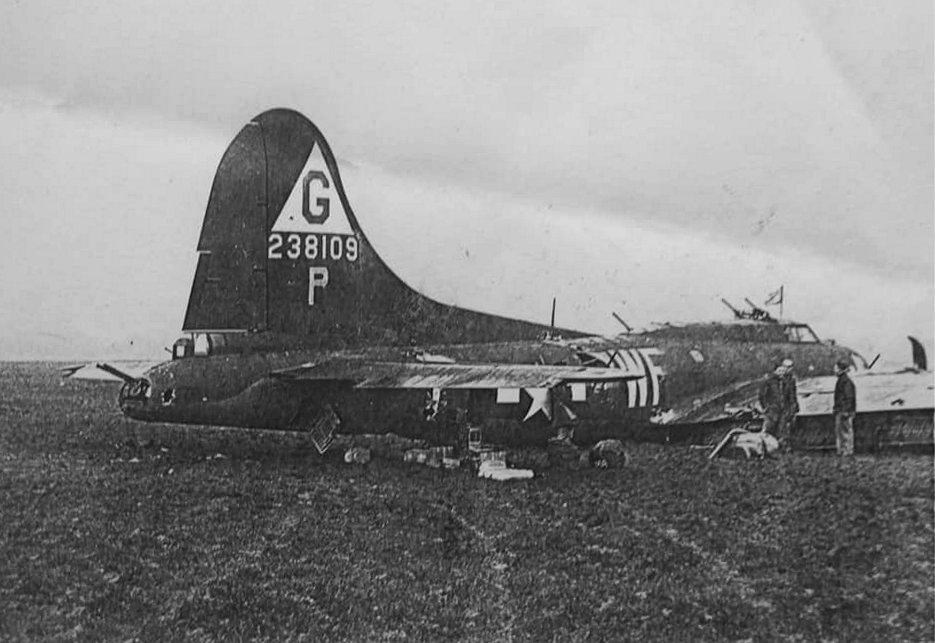
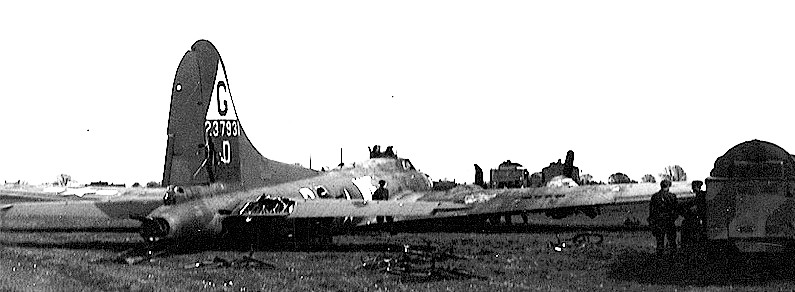
With no hydraulics, the ball turret jammed in the lowered position, the undercarriage locked up and the bomb bay doors stuck open, the odds of survival remained heavily stacked against them. Against all odds, Michael retook control and brought Bertie Lee down at RAF Waltham near Grimsby in Lincolnshire, the damaged aircraft crunching and groaning across the grass before finally coming to a halt.

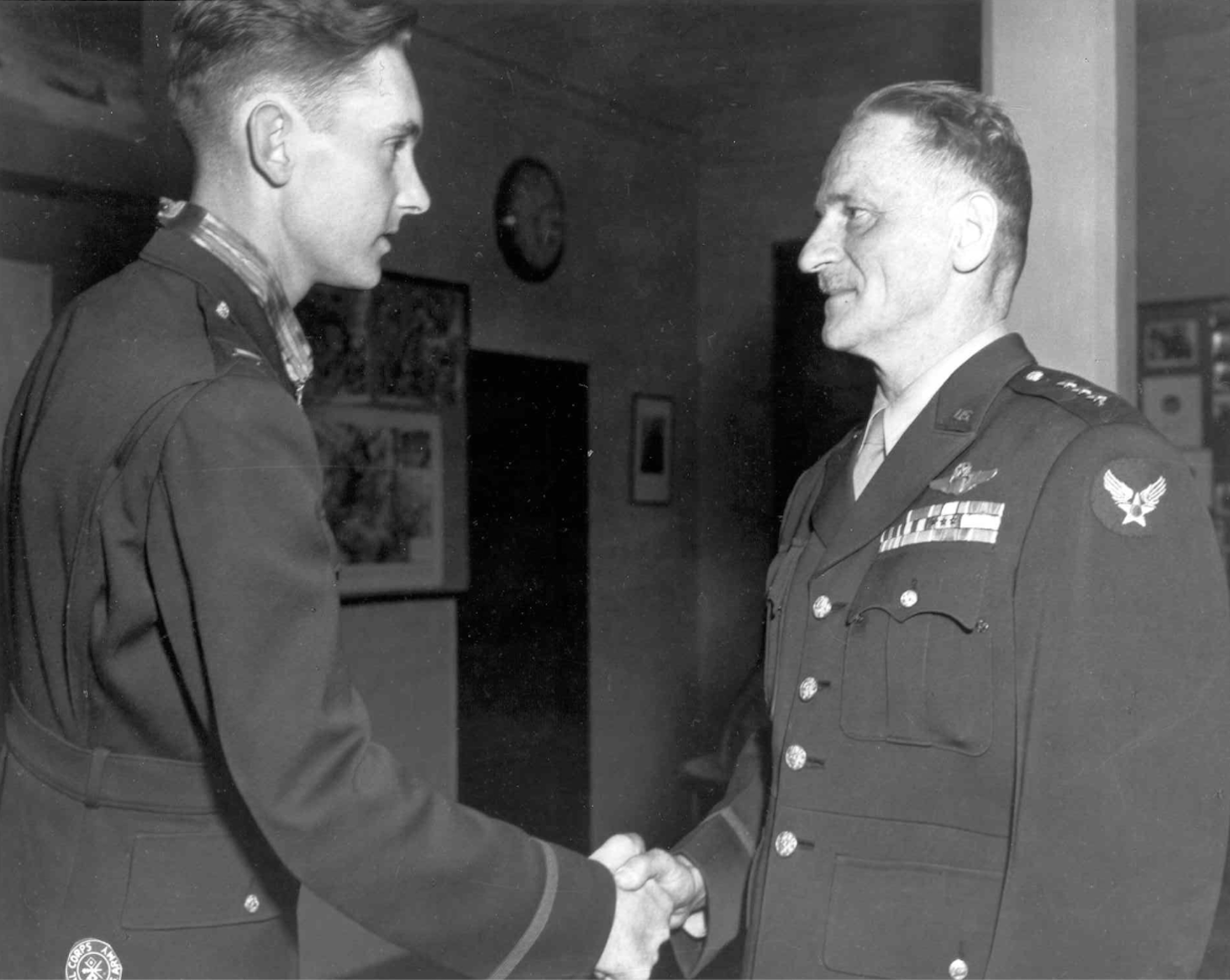
For his extraordinary actions and determination to save both his crew and aircraft, Michael received the Medal of Honour, the second such award made to a member of the 305th Bomb Group.

Bertie Lee after crash-landing at RAF Waltham (IWM UPL 40113)

1st Lt. Michael’s citation read*1:

For conspicuous gallantry and intrepidity above and beyond the call of duty while serving as pilot of a B-17 aircraft on a heavy-bombardment mission to Germany, 11 April 1944.

The group in which 1st Lt. Michael was flying was attacked by a swarm of fighters. His plane was singled out and the fighters pressed their attacks home recklessly, completely disregarding the Allied fighter escort and their own intensive flak. His plane was riddled from nose to tail with exploding cannon shells and knocked out of formation, with a large number of fighters following it down, blasting it with cannon fire as it descended.

A cannon shell exploded in the cockpit, wounded the co-pilot, wrecked the instruments, and blew out the side window. First Lt. Michael was seriously and painfully wounded in the right thigh. Hydraulic fluid filmed over the windshield making visibility impossible, and smoke filled the cockpit. The controls failed to respond and 3,000 feet were lost before he succeeded in levelling off.

The radio operator informed him that the whole bomb bay was in flames as a result of the explosion of three cannon shells, which had ignited the incendiaries. With a full load of incendiaries in the bomb bay and a considerable gas load in the tanks, the danger of fire enveloping the plane and the tanks exploding seemed imminent. When the emergency release lever failed to function, 1st Lt. Michael at once gave the order to bail out and seven of the crew left the plane.

Seeing the bombardier firing the navigator’s gun at the enemy planes, 1st Lt. Michael ordered him to bail out as the plane was liable to explode any minute. When the bombardier looked for his parachute he found that it had been riddled with 20-mm fragments and was useless. First Lt. Michael, seeing the ruined parachute, realized that if the plane was abandoned the bombardier would perish and decided that the only chance would be a crash landing.

Completely disregarding his own painful and profusely bleeding wounds, but thinking only of the safety of the remaining crewmembers, he gallantly evaded the enemy using violent evasive action despite the battered condition of his plane. After the plane had been under sustained enemy attack for fully 45 minutes, 1st Lt. Michael finally lost the persistent fighters in a cloud bank.

Upon emerging, an accurate barrage of flak caused him to come down to treetop level where flak towers poured a continuous rain of fire on the plane. He continued into France, realizing that at any moment a crash landing might have to be attempted, but trying to get as far as possible to increase the escape possibilities if a safe landing could be achieved.

First Lt. Michael flew the plane until he became exhausted from loss of blood, which had formed on the floor in pools, and he lost consciousness. The co-pilot succeeded in reaching England and sighted an RAF field near the coast. First Lt. Michael finally regained consciousness and insisted upon taking over the controls to land the plane.

The undercarriage was useless; the bomb bay doors were jammed open; the hydraulic system and altimeter were shot out. In addition, there was no airspeed indicator, the ball turret was jammed with the guns pointing downward, and the flaps would not respond. Despite these apparently insurmountable obstacles, he landed the plane without mishap.

After the war, Michael remained in military service, transitioning through the post-war restructuring of American air power and into the newly established United States Air Force. He served in both air transport and operational roles across the United States and the Pacific, attended Air University, and later trained on the B-47 Stratojet during the early Cold War period—an aircraft type that would also become familiar at RAF Chelveston.

Among his many decorations were the Distinguished Flying Cross, Purple Heart and Air Medal with four oak leaf clusters. These, together with a long list of campaign and service awards, reflected a military career that spanned three decades, multiple theatres of operation and the transformation of American air power from the Second World War into the Cold War era. His service ultimately took him to the rank of lieutenant colonel before he retired in 1971 after 30 years in uniform.

Michael later married Louise Erdmann and remained active in military service until his retirement. He died on 19 May 1994 and is buried in Evergreen Cemetery, Springville, Utah County, Utah.

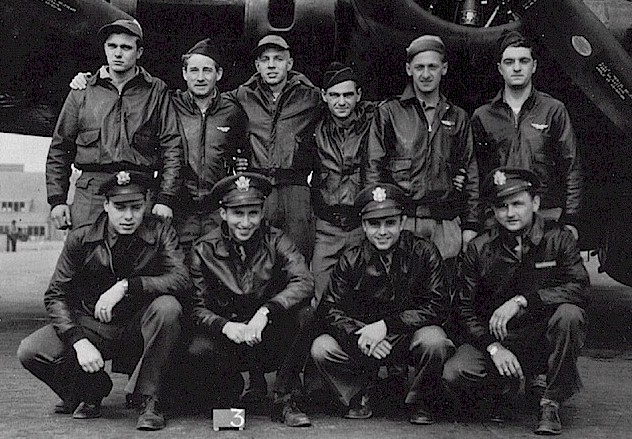
1st Lt. E Michael (kneeling right) with his crew 1943.(US Air Force)

Sources

*1 Congressional Medal of Honour website.  Accessed 5 August 2025

The full story of RAF Chelveston can be read in Trail 66.

Trail 66 – RAF Chelveston – Part 9 – The End of an Era

Part 8 saw Chelveston at the crossroads of history. From the heroism of B-17 crews braving ferocious Luftwaffe attacks to the tense vigilance of Strategic Air Command jets in the early Cold War, the station had witnessed courage, innovation, and loss. Yet as international tensions shifted and technology advanced, even its longest runways and fortified hangars could not guarantee a future.

By the late 1950s, Chelveston faced an uncertain fate. What would become of a place that had once been alive with the roar of engines and the courage of men? Its final chapter was about to be written – but the outcome was far from certain.

During the late 1950s and early 60s, the world’s political landscape was shifting constantly and rapidly. France’s president, Charles de Gaulle, saw his country as a strong, independent nuclear power, wanting full control over its own defence. That vision did not accommodate large numbers of foreign – particularly American – forces on French soil. As a result, 1959 saw the start of a reduction in military numbers with strict limits being placed on the number of American forces allowed in France. Any personnel or equipment beyond this ceiling were required to leave immediately. This decision triggered a massive redeployment of forces, with many units being reassigned to Germany or Belgium, and others returning to the United Kingdom where they were accommodated at the so-called ‘Red Richard bases, of which Chelveston was one.*20

Over the next several years, France saw a steady reduction in American personnel and units, a process that would culminate in 1966 with President Charles de Gaulle’s announcement of France’s withdrawal from NATO’s integrated military command. The decision required the removal of all foreign forces from French soil by April 1967, bringing an end to more than a decade of a large-scale American presence.

To accommodate the early relocations from the continent, a number of Britain’s newly modernised airfields were selected – Chelveston among them. Alongside RAF Alconbury and RAF Bruntingthorpe, each station received elements of the 10th Tactical Reconnaissance Wing (TRW), the 42nd Tactical Reconnaissance Squadron, of the 10th TRW, arriving at Chelveston in August 1959. Operating the twin-engined Douglas RB-66C Destroyer – electronic reconnaissance aircraft, eighteen of these machines, together with their crews and ground personnel, quickly took up residence. Shortly after their arrival, the aircraft were modified with updated electronic counter-measures equipment, reflecting the increasingly technical nature of Cold War aerial reconnaissance.

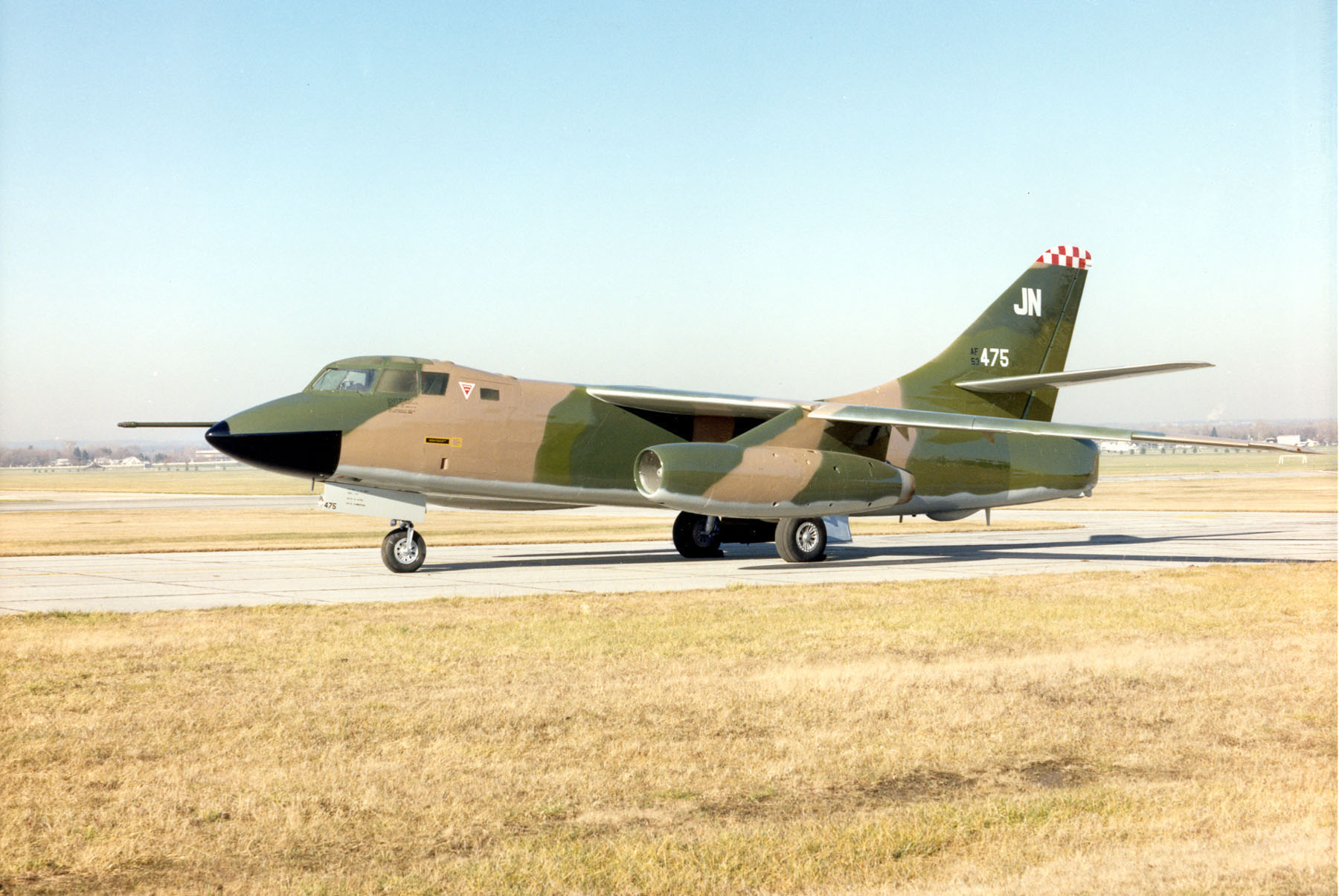
Douglas RB-66B Destroyer (U.S. Air Force photo)

The squadron remained at Chelveston for almost three years. Then, in the summer of 1962, both the 42nd Tactical Reconnaissance Squadron and the 19th Tactical Reconnaissance Squadron departed their respective Midlands stations for deployment to Toul-Rosières Air Base in eastern France. The move placed the wing’s reconnaissance assets closer to the Central European front line at a time when aerial reconnaissance was increasing. For Chelveston, however, it marked the effective end of its active flying role. With the Americans steadily reducing their UK footprint and Bruntingthorpe facing closure, the departure of the RB-66s signalled the beginning of the station’s final chapter.

Project Clearwater and the End of the Reflex Era

So, once again, Chelveston was left devoid of all main front line squadrons. Facing a reduction in demand for Cold War bases –  combined with both long expensive runways and a shift towards a more logistical, support and storage use – Chelveston’s runway was closed to all but infrequent, small aircraft – examples that could operate on shorter runways.

Before long, the airfield being used less and less, Chelveston closed to flying altogether, and it quickly reverted back to a reserve airfield status.

This shift in wider policy soon became formalised. On 26th July 1963, the United States Department of Defence announced ‘Project Clearwater’, the final phase in the reduction of American forces stationed on British soil.*21 Although Chelveston had already fallen largely silent, the base remained nominally under United States control while residual activities continued. That position ended on 19th June 1964, when Chelveston – together with RAF Fairford, RAF Greenham Common and RAF Sculthorpe was formally closed and handed back to the Royal Air Force.

By 1st April 1965, Project Clearwater had effectively brought an end to Strategic Air Command’s Reflex bomber deployments in Britain, terminating large-scale rotational operations and leading to the inactivation of the 7th Air Division*22 Chelveston, retained by the RAF on a care-and-maintenance basis for a further period, would briefly assume a less glamorous role as a storage location for American equipment being withdrawn from the continent. The age of regular transatlantic bomber and reconnaissance operations from Northamptonshire had quietly drawn to a close.

From Runways to Renewables: The Final Transformation of Chelveston

With no flying units now operating from Chelveston, the runways and associated tracks began to deteriorate and break up. With the increasing demand for housing and the nearby new town of Milton Keynes expanding, hardcore was needed and Chelveston had a good supply just waiting to be quarried. The runways and perimeter tracks were all removed thus ending any chance of a reprieve for flying in the future. But it wasn’t to be the end of its military association just yet.

In 1977, Chelveston became home to a key part of the Royal Air Force’s Strike Command Integrated Communications System (STCICS). The site, equipped with a large array of antennas, formed an essential link in the RAF’s network, transmitting voice, data, and weather information to aircraft, and connecting military stations across the UK and beyond. For decades, it played a vital role in maintaining operational communications for Strike Command.

As technology and operational requirements evolved however, the Ministry of Defence upgraded the system, leading to the creation of the Defence High Frequency Communications Service (DHFCS). This new network integrated both air and naval communications into a single nationwide system, capable of maintaining secure links over long distances, and routing messages through a central control centre. By December 2003, with the network increasingly managed by civilian contractors,  Chelveston was vacated once more, thus marking the end of its role in the UK’s high-frequency military communications infrastructure.*23 *24

With their departure, the site became surplus to military requirements, and it was sold off in 2005, as a going concern. New businesses seeing it as a development opportunity, bought it up turning it into a diverse renewable energy park that is known today as Chelveston Renewable Energy Ltd.

A number of wind turbines have since been erected, all linked by  the remaining remnants of the perimeter track.  A solar farm has also been added, and the site has evolved into a major energy supplier utilising renewable energy sources.

Today, the former Chelveston airfield  continues in this state, and little evidence exists of its previous life; the runways, perimeter tracks and buildings all having been removed. Dotted about, within the confines of the private area, a small number of  temporary buildings are known to remain (as surveyed by Northamptonshire Archaeology in conjunction with West Northamptonshire Council) including one of the nuclear bomb stores, – the ‘igloo’. Because, of its excellent condition and rarity value, the structure has been put forward for long-term protection through the Scheduling process of West Northampton Council.  The store is considered to be ‘well-preserved and a relatively unaltered example of a distinctive 1950s USAF munitions storage area’ which ‘comprises characteristic storage bunkers or “Igloos” inspection buildings, and perimeter fencing.’ *25

Although largely privately owned, there is a footpath across the site running perpendicular to the post war runway. In addition, the Cold War accommodation blocks are still present adjacent to the site, and a small section is used by the Northamptonshire Fire and Rescue Service as a training centre, training fire-fighters.

On the ground little remains to be seen, and access to that is restricted. The concrete foundations used by the post war communications centre are visible, but otherwise, Chelveston, and its history, are merely records longing to be opened and read.

During its short wartime life, Chelveston witnessed many acts of great heroism. It bore heavy losses, saw significant developments in aerial warfare, and its crews endured sustained enemy attacks. Those who served here are now honoured by a memorial in the nearby village, a quiet reminder of the station’s wartime sacrifice. Yet the story of Chelveston did not end in 1945; for many years after the war, the airfield continued to play a major role in Europe’s front-line operations, a legacy that is not suitably acknowledged.

Now a thriving energy park its future has been sealed, The military have departed and private enterprise has taken over what little remains of its once glorious but reserved history.

The whole story of Chelveston can be read in Trail 66. Northants and Bedfordshire (Part 2)

Sources and Further Reading (RAF Chelveston)

*1 Chelveston renewable Energy Park website. Accessed 24 June 2025

*2 Chelveston Parish / Local history website. Accessed 24 June 2025

*3 Commonwealth War Graves Commission website. Accessed 5 July 2025

*4 The Airborne Assault Paradata website. Accessed 16 July 2025

*5 Air Force Historical research Agency Website. Accessed 18 August 2025

*6, *7 Vlahos, M. C., and Kehler, B., Leading the Way to Victory: A History of the 60th Troop Carrier Group 1940–1945. Woodbridge, CT: Knox Press, 2023.

*8 Wilhelm, D., ‘The flight of the bomber Phyllis’, Liberty, 5 December 1942, Imperial War Museums, document 50898.

*9 Missing Air Crew Report (MACR) 15501.

*10 Hamilton, J., The Writing 69th. Green Harbour Publications, 1999.

*11 Coffey, T. M., Decision Over Schweinfurt. Magnum Books, 1978.

*12 Freeman, R. A., Mighty Eighth War Diary. Jane’s Publishing Co., 1981.

*13 Bowman, M., The Bedford Triangle. Pen & Sword, 1989.

*14 Coffey, T. M., Decision Over Schweinfurt. Magnum Books, 1978.

*15 Congressional Medal of Honour website.  Accessed 5 August 2025

*16 Boyd, R. J., ‘Project Casey Jones 1945’, Penn State Hazleton Campus Library.

*17 United States Air Forces in Europe – Air Forces Africa – Third Air Force, website. Accessed 3 October 2025.

*18 West Northamptonshire Council, website. Accessed 27 September 2025.

*19 Rushden Research Group, website. Accessed 11 September 2025.

*20 West Northamptonshire Council, website. Accessed 27 September 2025.

*21 RAF Mildenhall, website. Accessed 17 September 2025.

*22 RAF Mildenhall, website. Accessed 17 September 2025.

*23 Everything Explained Today, website. Accessed 15 February 2026.

*24 Everything Explained Today, website. Accessed 15 February 2026.

*25 West Northamptonshire Council, Northamptonshire Historic Environment Record, website. Accessed 15 February 2026.

Additional references

National Museum of the United States Air Force Website accessed 2 March 2026

The Airborne Assault Paradata website. This provides a wealth of information about the AFEE and airborne operations. It is well worth a read.

Air mobility Command US Air Force, Website Accessed 12 October 2025

Chelveston-cum-Caldecott Parish Council website accessed 20 September 2025

Airfields of Britain Conservation Trust Website.

Rushden “Hearts & Soles” website accessed 20 September 2025

Trail 66 – RAF Chelveston – Part 8 – A new Chapter Begins

Throughout Part 7 the 305th Bomb Group continued to demonstrate extraordinary courage, with crews surviving horrific damage to their B-17s and earning multiple Medals of Honour for their heroism. By the final months of the war in Europe, they had flown 337 combat missions, dropped over 22,000 tons of bombs, and contributed to both strategic bombing and propaganda efforts. After Germany’s defeat, the group returned to the United States, later reactivating briefly in 1947, 1951, and 1994, leaving a lasting legacy as the “Can-Do Wing.”

From Wartime Urgency to Cold War Necessity

The immediate post-war years then presented the Government with a formidable practical and financial problem. At the end of 1945 there were close to 700 surplus military airfields scattered across the United Kingdom, many of them constructed hurriedly for a wartime need that now suddenly became redundant. Pressure for their disposal came swiftly. Farmers demanded the return of requisitioned land, local authorities saw opportunities for civil airports or industrial development, and the Treasury was keen to reduce the heavy burden of maintenance costs. At the same time, the Air Ministry argued that a proportion should be retained against future uncertainty, either as reserves or for storage and technical purposes.

Across the country the fate of these sites varied. On some airfields, huts and temporary accommodation sites were converted into short-term housing for displaced families during the acute post-war shortage. Elsewhere, hardstands and runways were broken up to provide much-needed hardcore for reconstruction projects. Yet a minority of airfields were kept within the RAF’s control, Chelveston being one of them. Returned to the RAF after the war, it passed to Maintenance Command and was designated as a satellite of No. 25 Maintenance Unit, although this arrangement remained brief. Thereafter, the station entered a period of care and maintenance, a quiet, role that lasted until September 1952.

Despite a rapid post war airfield closure programme, by the early 1950s the pace of reductions had slowed as the international climate dramatically shifted. The emerging Cold War, marked by the formation of the North Atlantic Treaty Organisation (NATO) in 1949 and intensified by conflicts such as the Korean War, prompted a reassessment of Britain’s defensive position. Air power, particularly with the advent of jets and the nuclear dimension, regained its strategic significance. Selected airfields  across Britain saw their runways lengthened, surfaces strengthened, and dispersal areas improved to accommodate modern aircraft. The 1956 Suez Crisis further strengthened the need for an operational readiness and an overseas capability.

Domestic policy was also playing its part. The National Service Act 1948, which introduced peacetime conscription, kick-started a steady flow of manpower into the armed forces throughout the 1950s. Although costly, and partly due to massed post war demobilisation, National Service enabled the RAF to sustain a larger trained strength than would otherwise have been possible; this made it important to retain, and in some cases reactivate, selected stations for training, reserve or operational activities.

On a wider scale, Anglo-American defence cooperation deepened. Several East Anglian airfields – including RAF Lakenheath, RAF Woodbridge, and RAF Bentwaters – were all developed or upgraded for US Air Force use, while strategic bomber bases such as RAF Wittering were adapted to meet the RAF’s demands in the nuclear era. Disposal of wartime airfields therefore continued, but more selectively: stations once considered redundant suddenly acquired a renewed military value, serving as insurance against an increasingly uncertain international environment.

From Wartime Relic to Strategic Stronghold

In light of these changes, in 1952, a detachment of the 7503rd Air Support Wing (later redesignated the 7253rd ASW) arrived at Chelveston to assess and prepare the station for reactivation, laying the groundwork for construction teams from the 817th Engineer Aviation Battalion (EAB), who began major redevelopment work just two months later. This followed the February 1951 launch of a major US construction programme across twenty-six UK airfields, driven by rising Cold War tensions.

The deployment of American aircraft on British soil was a direct response to the growing Soviet threat seen in both Korea and Eastern Europe. Stationing bombers in the UK significantly reduced flight times to potential targets, thus enhancing both rapid strike capability and strengthening the credibility of Western deterrence. Wartime stations that had lain largely dormant since 1945 were once again recognised as strategically valuable, reflecting the pressures of the emerging jet age and the rapidly evolving political-military situation in Europe.

These physical upgrades coincided with a decisive reorganisation of American air power in the UK. On 20th March 1951, the Strategic Air Command (SAC) activated the 7th Air Division to assume direct control of its strategic bomber forces in Britain; a move that separated nuclear strike responsibilities from the broader command. Weeks later, on 1st May 1951, the Third Air Division was replaced by the Third Air Force, which under NATO, managed tactical air operations, logistics, and support for U.S. units stationed in the UK.

Expanded, modernised, and re-equipped, these airfields were adapted to accommodate the new generation of SAC jet bombers – larger, faster, and more capable than any that had previously operated from British soil. Together, the redevelopment of Britain’s wartime airfields and the restructuring of command reflected the growing permanence of the United States’ commitment to Western Europe’s defence – a position that would endure throughout the Cold War.

This extensive refurbishment work would include new runways, updated or replacement accommodation blocks, secure nuclear-capable bomb stores (or ‘igloos’), larger fuel stores, and a range of technical buildings – and all rapidly constructed.

Chelveston, already being a large site with a long runway, was earmarked for such development. However, its wartime runway had deteriorated and was too short for the new jets. A new, longer, and stronger runway – 12,000 ft in length, among the longest in the UK – was therefore constructed, a task undertaken by the 817th Engineer Aviation Battalion.*17

From Stratojets to Silence

After nearly four years of development that saw the construction of not only the new runway, but additional hardstands, servicing platforms and a technically superior watch office (Type 5589/58 Tower with a visual control room mounted on top of a skeletal frame)*18, the site was transformed. It was then that the 3914th Air Base Squadron (ABS) of the 7th Air Division, SAC, took up residence.

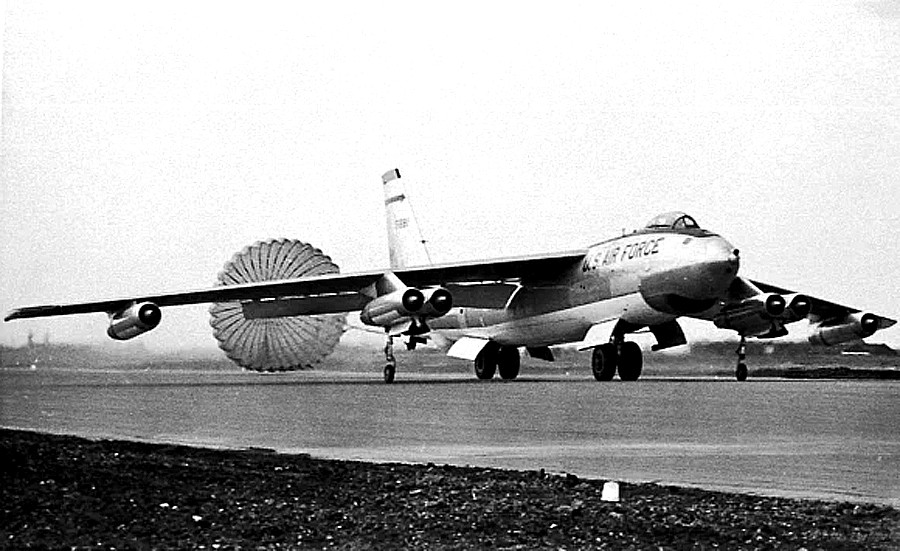
As operators of the airfield, the 3914th ABS would complete any further modifications needed allowing for, in May 1956, the first jet bomber’s arrival. Boeing B-47E-65-LM Stratojet, 53-1881 was flown in by the base Commander Colonel Maynard E. White. On arrival, he was greeted by his deputy commander along with local civic leaders and American families who were now living on the new base. This moment marked the beginning of a new era in Chelveston’s history.*19

Believed to be the first B-47 Stratojet 53-1881 landing at Chelveston. (Public domain via Chelveston-cum-Caldecott Parish Council).

For a the next three years or so, Chelveston would house a small number of B-47s, all nuclear capable. But continual economic changes in the US defence network, meant that many were now placed on ninety day rotations instead of permanent postings.

The airfield became part of a chain of bases housing large bombers of the Strategic Air Command as part of a ‘Reflex Alert’ force. Kept armed and ready, they remained manned on a permanent 15 minute alert basis ready to respond to any Soviet threat that may have come.

With these rotas changing approximately every three months, families were moved about from base to base, a process that carried on for almost eighteen months until mid 1959.

A further change in the global political and strategic field in the last few months of this period, saw a change in aircraft too. The bomber era was now drawing to a close, and at Chelveston, this led to the arrival of the 301st Reconnaissance Wing (RW) equipped with RB-47s – a reconnaissance version of the B-47.

By now, intermediate-range ballistic missiles (IRBM) were being increasingly used more, and several UK bases now had them deployed as an alternative to the heavy bombers.  With ranges of up to 5,500km, they were the catalyst for an arms race, one that would see newer and more powerful weapons propel the world toward the edge of destruction.

As the story of Chelveston draws to a close IRBMs take centre stage, reshaping the balance of power and casting a long shadow over airfield. As these new weapons promise unprecedented reach and destructive potential, the once-bustling bomber base faces an uncertain future. What would become of Chelveston in this rapidly changing landscape – an abandoned relic, secret stronghold, or something else entirely? The final chapter will reveal a story few could have predicted.

The whole story of Chelveston can be read in Trail 66. Northants and Bedfordshire (Part 2)

Trail 66 – RAF Chelveston – Part 1 – Important Beginnings.

In Trail 66, we return to the Bedfordshire and Northamptonshire borderlands to visit the site of another former bomber airfield that has been almost entirely erased from the landscape. Although its wartime service was relatively brief, it was defined by intense operational pressures, loss, and remarkable acts of heroism.

Despite continuing in use well into the Cold War and beyond, the airfield failed to leave the regional mark it deserved. Over time, its purpose changed and its structures were gradually removed, the land being adapted to modern energy use, leaving little visible evidence of its former importance. This transformation stands in contrast to the role the station once played and the legacy it holds today.

Home to a small number of RAF units, it was predominately an American base during the Second World War, and remained with them into the depths of the Cold War. Although flying activity ceased in 1962 with the departure of the modern United States Air Force, a military presence remained there until the Ministry Of Defence (MOD) sold the site as recently as 2005.

Whilst some aspects of the original airfield do remain, the vast majority has been decommissioned and removed, including the runways, works buildings and training facilities, leaving little more than ghostly evidence behind.

In this part of our trip to Northants and Bedfordshire, we visit the former RAF Chelveston.

RAF Chelveston (Station 105).

RAF Chelveston (Station 105) lies across the two counties of  Bedfordshire and Northamptonshire, and although the border crosses roughly through the centre, the majority of the site lies in Northampton. Like many wartime airfields it went through a series of name changes depending upon who owned  it at the time. Today it is known as Chelveston Renewable Energy Park, reflecting its modern use as the ‘centre of technological innovation’ capable of producing enough electricity, to power 60,000 properties.*1

During the planning stages in 1940 the aerodrome site was briefly referred to as Shelton, after the nearby village to the east. Before the station officially opened in 1941, however, the name was changed and it entered service as RAF Chelveston, the official British designation. Later in the war the airfield passed into American control and was designated Station 105 by the United States Army Air Force. Over the years though, it was also referred to as RAF Station Chelveston, and simply Chelveston Aerodrome, reflecting both its early planning name and the variety of roles it fulfilled throughout its operational history.

The land upon which the airfield sits, lies approximately four miles to the east of Rushden and about twenty-seven miles south-west of Peterborough. It shares a region – designated by a Peterborough, Northampton and Bedford triangle – with a number of other former bomber airfields including Kimbolton, Thurleigh and Molesworth.

The land for Chelveston (a name derived from a Norman family) was acquired by the Air Ministry in 1940, with construction beginning shortly afterwards. The airfield was initially intended for the RAF and the reformed 8 Group, with Taylor-Woodrow Ltd serving as the main contractor. At first, it had grass runways and minimal storage, consisting of a single ‘J’-type brick-and-metal hangar measuring 300 ft by 151 ft. Later, two ‘T2’-type metal hangars were added, each 240 ft long, 115 ft wide, and 29 ft high. The original design fell under development scheme ‘M’ of the Government’s expansion programme, which essentially replaced the earlier ‘C’-type hangars with the newer ‘J’-type. Since construction began during the war rather than before it, accommodation sites were dispersed away from the main airfield site – unlike pre-war designs, where living quarters were typically located on-site.

At Chelveston, these accommodation sites were positioned to the south-west of the airfield, unusually close to the main runway’s flightpath – in-fact within just a few hundred feet of its threshold. In all there were twelve accommodation sites, supplemented by two sewerage sites, giving a total of fourteen in all. These accommodation areas included: two communal sites, officers’ quarters, enlisted men’s quarters, sick quarters, and a large WAAF area with its own sewerage facilities.

The all important technical area, lay directly across the dividing public road from here; a little further north than the accommodation area and on the western side of the main airfield. It included a wide range of buildings including: MT (motor transport) sheds, operations blocks, briefing rooms, link trainers, stores, flight offices, works offices and the like.

Typical of the range of buildings found on any wartime airfield, they were a mix of both temporary and permanent construction. The manufacturers involved were also typical of those pertaining to wartime airfields: Laing, Romney, SECO, Ministry of Works and Nissen, who used a variety of construction materials including timber, iron, plasterboard, brick and concrete to create these various standard design structures.

On the main airfield itself, No. 1 runway ran north-east to south-west, whilst No. 2 dissected it in a north-west to south-east direction. The third runway, No.3, ran just off north to south. The classic ‘A’ frame was created by the crossing of all three in the centre of the airfield with the runways extending extensively beyond this point. As in all cases, the three runways were linked by a circular perimeter track, around which eventually, some fifty-five hardstands were built; both a mix of ‘spectacle’ and ‘frying-pan’ types.

As with all airfields of its kind, a bomb store would be incorporated well away from the accommodation and technical areas, and in Chelveston’s case this was just off to the north-east. Here, a number of hardened shelters were interlinked by small tracks along which the bombs were transported to the various aircraft dispersals.

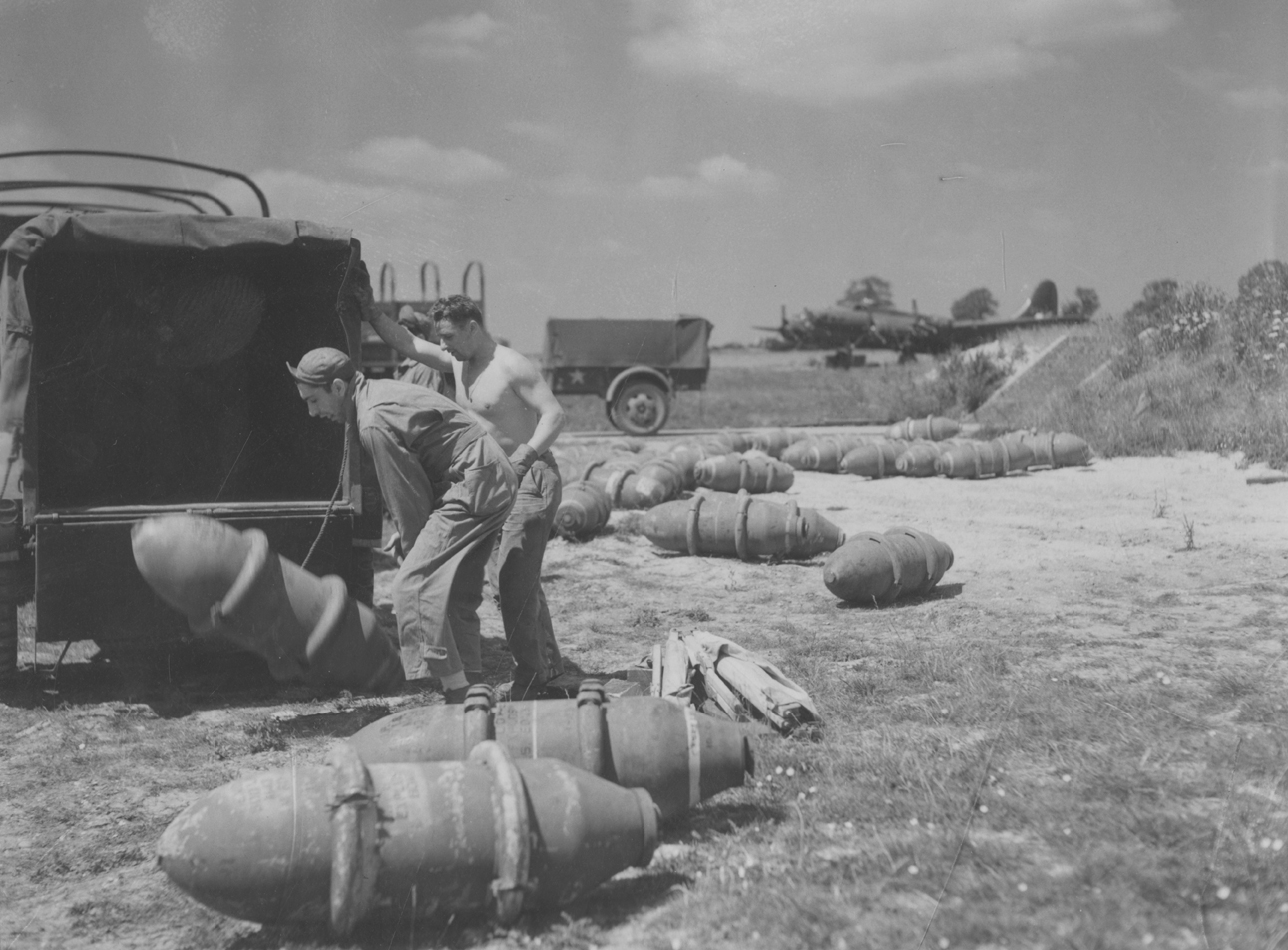
Bombs being man-handled at Chelveston. (IWM FRE10440).

Overseeing movements in and out of the airfield was the watch office, which stood proud with clear views across the airfield. Located to the western side of the site, the office was built to drawing 518/40 – the largest and most common wartime design. This particular build evolved from the 1939 drawing, number 5845/39, and incorporated the meteorological office within its layout. By combining both functions into a single structure, it enabled the rapid exchange of vital weather information.

Chelveston’s construction began in 1940 on land straddling the Bedfordshire-Northamptonshire border. A basic airfield to start with, it soon began to develop and grow, all part of Britain’s rapid wartime airfield expansion programme. Over the next few months it would grow and develop into a standard three-runway bomber airfield complete with dispersals, technical buildings, bomb stores and extensive accommodation sites. Though the landscape has since been transformed into the modern Chelveston Renewable Energy Park, the wartime layout still hints at the scale and ambition of the original station.

The story of how this quiet stretch of countryside evolved from construction site to operational wartime airfield begins in Part 2, as RAF Chelveston opens its runways and the station starts its journey toward becoming an important Allied base.

The whole story of Chelveston can be read in Trail 66. Northants and Bedfordshire (Part 2)