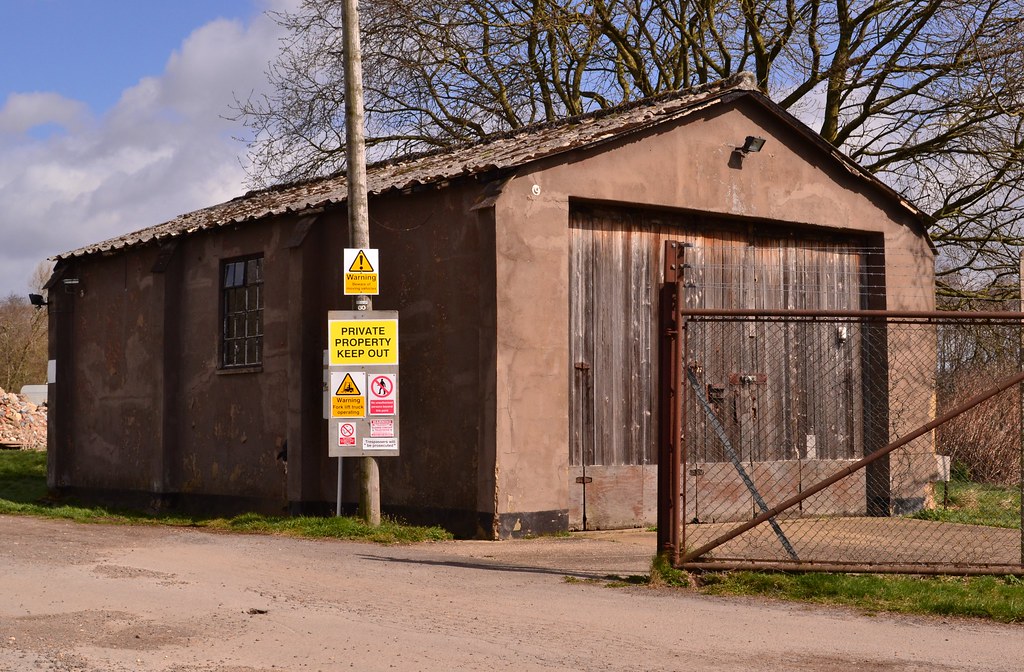
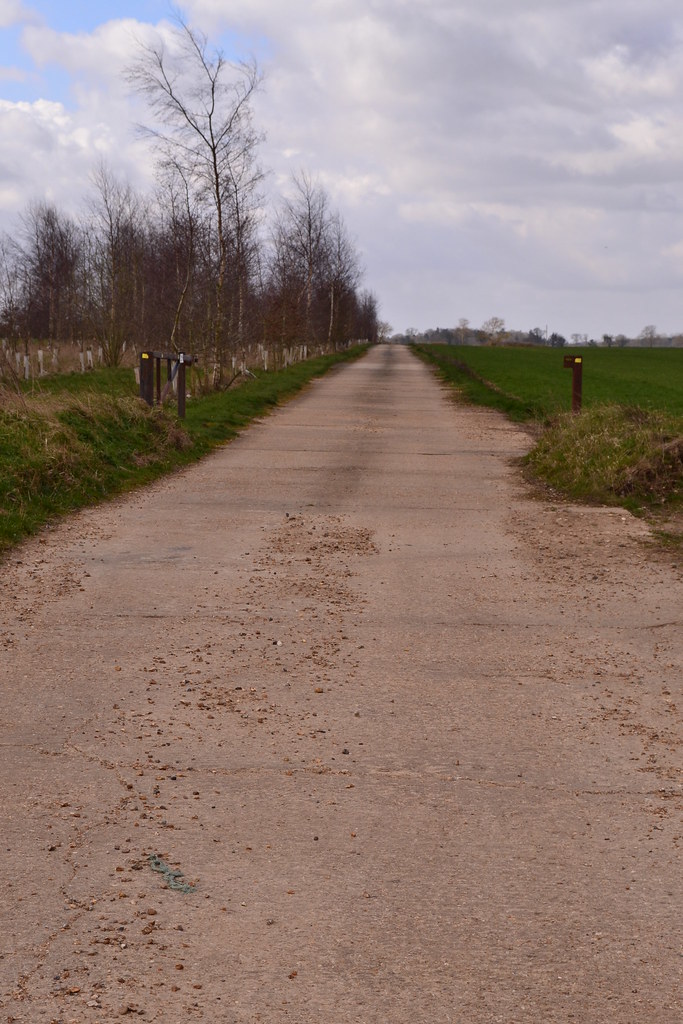
RAF Sculthorpe – a relic of the Cold War.

In this second part of the Norfolk Trails, we visit three more of Norfolk’s treasures. Deep in the heart of Norfolk, two of them are very much complete, but the third is all but gone. However, all is not lost as it still an active private airfield, and some of its features have luckily survived.

The first of these three jewels on this trail is RAF Sculthorpe.

RAF Sculthorpe 

Located to the west of Norwich, Sculthorpe has its origins in the Second World War, but it has a larger claim to fame that it still retains to this day.

A once busy shop

A once busy shop now derelict and forgotten.

Designed initially as a heavy bomber site, and satellite to RAF West Raynham, Sculthorpe now has three runways one of 12,000ft and two of 6,000ft, all concrete. With its enormous technical and administration sites that housed up to 10,000 personnel, Sculthorpe was one of the biggest bases in Europe, an honour it retains to this day.

Sculthorpe had a limited Second World War life, being opened quite late in the war in January 1943. Following a years development and growth, it initially housed Mosquitos of 464 (RAAF) and 487 (RNZAF) squadrons.  Originally based at Methwold, the Mosquito FB.VIs replaced the earlier and slower twin-engined Venturas. At Sculthorpe, these two units were joined by 21 Sqn who stayed until the following December, before moving on. Then the much heavier B-17s of 214 sqn moved in thus changing the role of RAF Sculthorpe. The B-17s were redesigned and adapted to assist in radio jamming trials, the early form of Electronic Counter Measures (ECM), the B-17 crews would also be joined by other personnel from the United States, who stayed carrying out this role, until just prior to the end of hostilities.

Accomodation Block

Barrack Block

It was really at this time that Sculthorpe came into its own. With the influx of crews from the States, more accommodation would be needed and quickly. A sustained period of redevelopment, improving of runways and hardstandings, saw Sculthorpe gain the designation of Very Heavy Bomber base. It was anticipated that the enormous Boeing B-29s would be stationed here, but when the war in Europe came to an end, further deployment at Sculthorpe ceased and the B29s never arrived. However, the rise in ‘Soviet Aggression’ and post conflict tensions during the Cold War and Berlin airlift, secured the immediate future of Sculthorpe. Atomic weapons were stored here ready, when the North American B-45 Tornado found itself becoming the front-line four engined bomber designed to attack Soviet targets from the UK. During 1952, the 47th Bomb Wing of the Strategic Air Command were redeployed here from the United States. This wing consisted of the 84th, 85th, and 86th BS, along with the 420th Refueling Sqn and the 19th Tactical Reconnaissance sqn. These units operated a number of types including the: B-45, B-66, KB-29, KB-50, and RB-45C aircraft.

Control Tower

The Control Tower in a setting sun.

Ninety day duty rotations saw aircraft like the mighty B-36 ‘Peacemaker’ fill the skies over Sculthorpe, until finally, political agreements and imposed de-escalation strategies between the Cold War factions, prevented further deployment of large-scale US bombers on European soil.

Gradually, as nuclear deterrents turned to missiles and naval based platforms, Sculthorpe’s activity began to slow. Being returned to RAF ownership in 1964, it was placed in care and maintenance, and held by only a small detachment of support staff. Then in the late 60s, the USAF returned once more, needing a base from which to operate its aircraft whilst other airfields were redeveloped and runways resurfaced. This brought new life to Sculthorpe, American F-4 Phantoms and C-130s were based here, along with other aircraft types from the RAF operating under similar circumstances. This process went on well into the late 1980s and Sculthorpe became a mecca for plane spotters for at least another few years.

Airmens huts

‘Hut 380’, a Second World War remnant.

This was not to last however, and Sculthorpe finally closed its doors in 1992, the enormous accommodation blocks and technical sites were sold off. Both these and many of the remaining buildings were left to decay, whilst planners gae thought to what they should be used for. However, like a phoenix, Sculthorpe returned from the dead yet again. The RAF, Army Air Corps and USAF using it for manoeuvres, with tilt wing aircraft, paratroops and rehearsals of supply drops over its enormous runways; much of this activity taking place at night. Even up until recently, C-130s have also been seen landing here, again rehearsing quick ‘stop-‘n’-go’ drops.

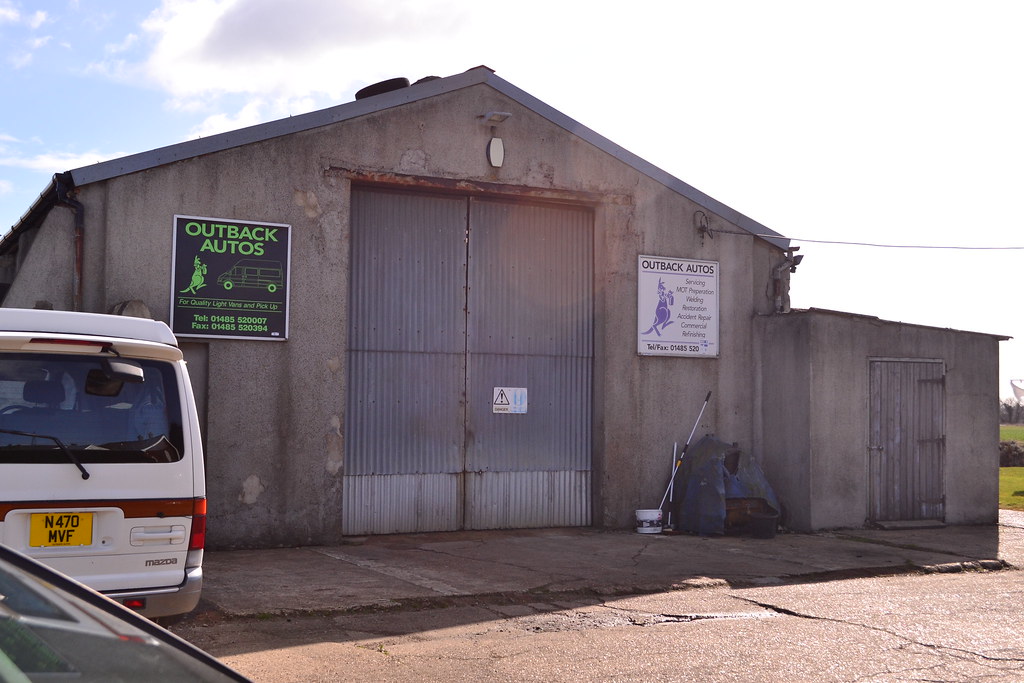
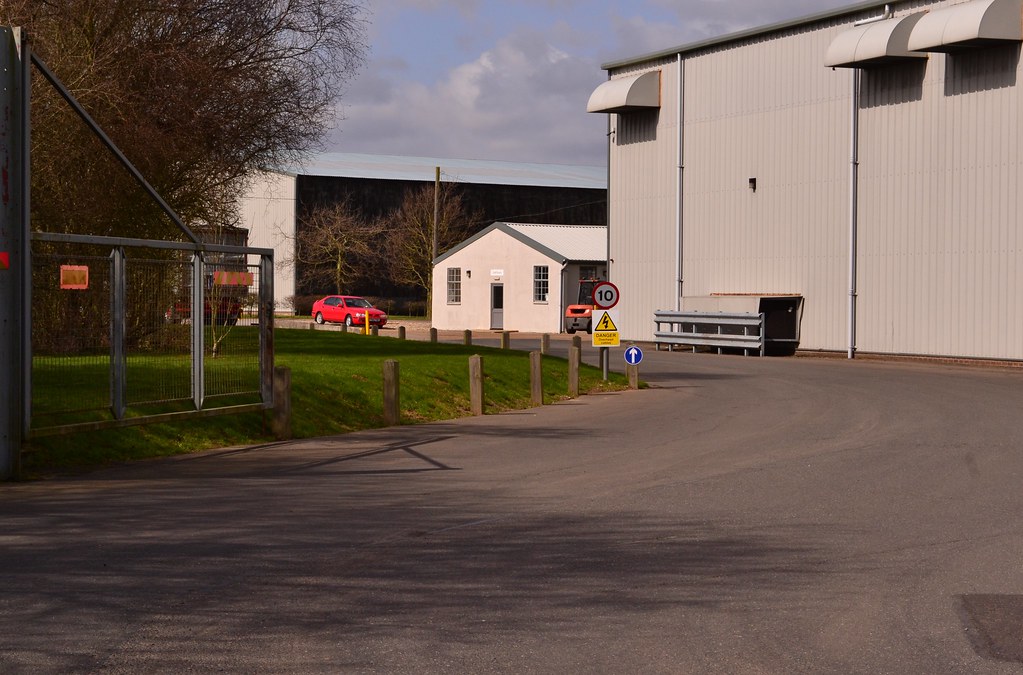
Looking at Sculthorpe, it is hard to believe its origins were in the Second World War. Being a real monster of the Cold War, Sculthorpe is clinging on by the skin of its teeth. The accommodation blocks that once housed 10,000 personnel are decaying and vandalised, refurbished areas are now sold off and accommodating local families. A small industrial area has been developed from the technical area, and the local farmer grazes his cows on the far reaches of the site. Many of the older orignal buildings have been left to rot and fall down. The American authorities still retain some ownership of the site, whilst a large part of it is in private hands.

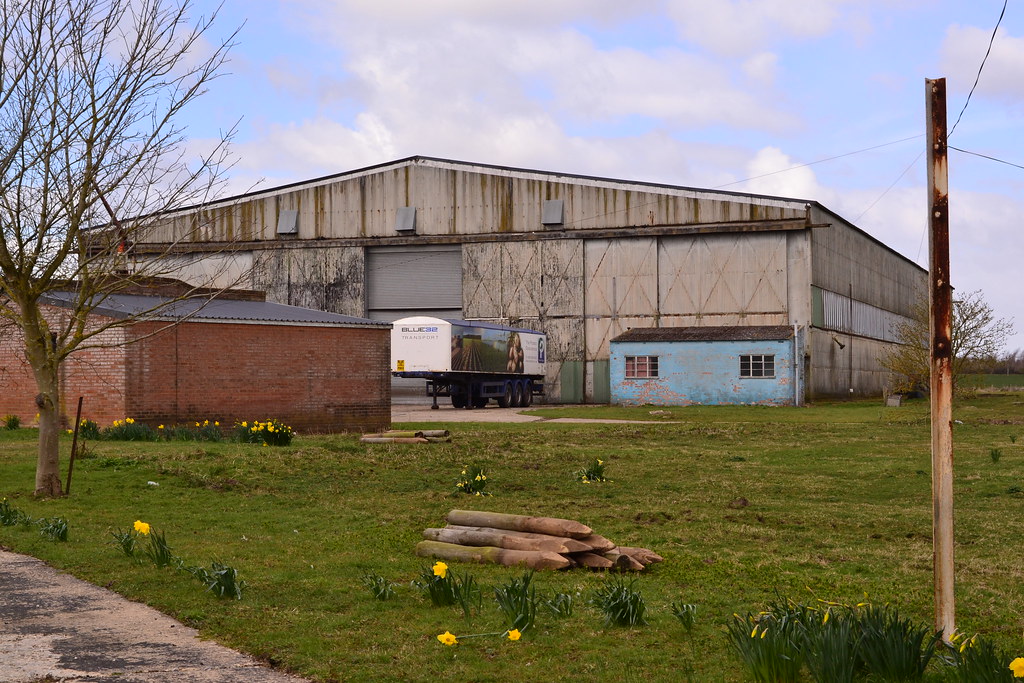
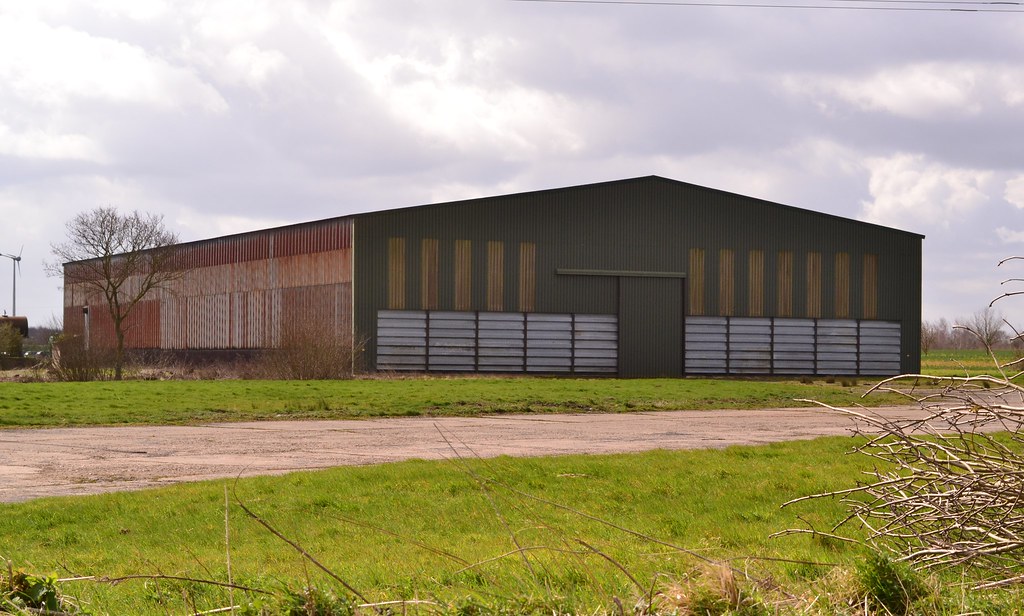
Technical site buildings

A large part of Sculthorpe has been left to rot, piece by piece.

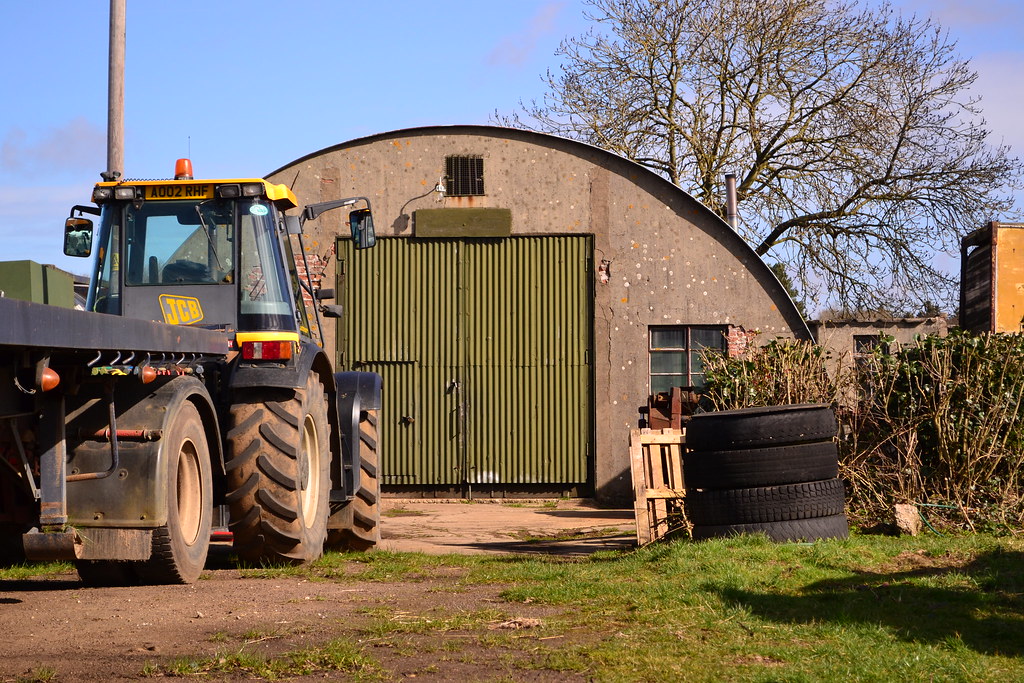
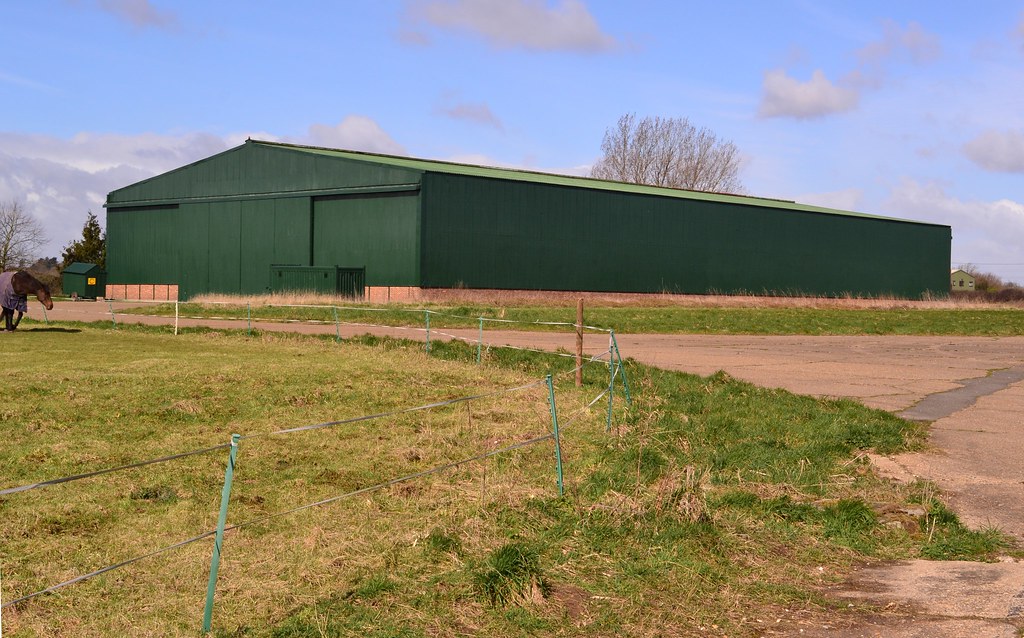
The original guard-house is no longer manned, and a number of other buildings close by are also empty. A small public track that once took eager plane spotters to the rear of the airfield, still allows views across the north of the now quiet site where a blister hangar continues to stand alone. The control tower is still intact visible in the distance from this point, as are a number of original Nissan huts and Second World War buildings hidden amongst new buildings and old developments.

Reunion 'memorial'

In remembrance of the 47th BW, 50th anniversary reunion, 2002.

Sculthorpe was once a bustling airfield, home to some of the world’s heaviest bombers, a mecca for aviation enthusiasts and plane spotters alike. Today, it is a decaying industrial site, a mix of old buildings and new developments, a remnant of the Cold War, it clings on to life by the skin of its teeth, maybe, just maybe, the Phoenix will rise up once more and spring into life again.

Blister Hangar

Sculthorpe’s remaining Blister hangar in a low setting sun.

From Sculthorpe, we travel a few miles south, a stones throw, to its sister station and another post war relic – RAF West Raynham.

Gloucester – RAF Stoke Orchard

DSC_0014

An original Bellman Hangar, rusty but in use.

It’s always good to receive comments and have interaction with readers on trails. Contact from such a reader promoted a good discussion around the state of many of these airfield and the changes seen in relatively short periods of time. It surprised both of us how much had changed and not for the better!

A fellow enthusiast and reader, Steve Darnell, kindly offered to share his photos with me and take me to a local but little known about airfield within a few minutes of his home near Gloucester – RAF Stoke Orchard.

RAF Stoke Orchard

There is little information available about Stoke Orchard, but it is known that a small number of units were based here between September 1941 and January 1945: No 3 GTS, (Glider Training School), No 5 MU, (Maintenance Unit) , No 10 EFTS, (Elementary Flying Training School)  along with a WAAF Officers’ School all utilised the site during this time.

Having a relief landing ground at Northleach, Stoke Orchard airfield was built with four grass runways: N/S – 1,090 yds, NE/SW – 1,160 yds, E/W – 1,160 yds, and NW/SE – 1,125 yds. It had a number of hangars: 4 Bellman, 8 double Blisters, 1 treble Blister and four single blisters. Accommodation was provided for 645 RAF personnel and 201 WAAFs. Other buildings on the site included the accommodation blocks, technical buildings, hospital, AA defences and a wooden Control Tower.

As a training station, there were around 50 Tiger Moths based here, which were later replaced by gliders.

DSC_0015

Bellman Hangar door runners.

After the war, the site quickly closed, and Stoke Orchard fell into disrepair. However, the Gloster run factory across the road at the northern side of the site, continued to use the airfield to ferry aircraft away from the site. The aircraft were maneuvered over the road and through a gate onto the airfield; the gate now a gap in the hedge and the factory used for research into coal.

Several parts of the perimeter track still remain today, now used by farmers, they mark the extent of the site which for its origin and purpose, is quite large. The four Bellman hangars are also still in situ, three of them having been substantially reinforced and refurbished, the fourth being in its original shell. Even with the refurbished covers, the internal structures are evident as are racking points, evidence of additional work being carried out on them during their original use.

The Hangar door rails can also be seen embedded in the concrete floor, and a large concrete area, to the front of the sites is where the control tower stood along with other technical buildings.

DSC_0017

Part of the Perimeter Track.

Part of the site is now a waste disposal site and along this road can be found examples of both a Cold War relic, the Royal Observer Post, and a bunker, a rare type called a ‘Seagull Trench’ due to its shape. These trenches were used for airfield defence in the case of attack or invasion. Both are intact, but the bunker has had several fires lit inside it severely damaging the internal structures.

A number of brick mounds are also embedded in the hedgerows, bits of pottery and other remnants can also be found for those wishing to get in amongst the thorns and delve deeply.

Little else survives of the airfield, and little is known or recorded about its activities. There are mentions of ex-POWs using it as a ‘squat’ post war and families living in its accommodation blocks, but it appears that Stoke Orchard is another site that has quietly disappeared leaving only small relics behind to remind us of this once active airfield.

My sincerest gratitude goes to Steve and Michelle for their generous hospitality, and for opening their home up to me. I would also like to thank Steve for the loan of the books, CDs and for giving me the many photos for safe keeping.  A real gent.

Stoke Orchard is also very close to the Jet Age Museum based in the corner of Gloucester Airport, formally Staverton, and is open on certain days in the summer.

DSC_0005

A Seagull trench used for Airfield defence.


Death of a Ball Turret Gunner – Randall Jarrell.

ball

A Ball Turret, the home to many young men.1

There have been many poems written around the theme of death and dying in the line of duty. Some have become ‘classics’ known and used world-wide. Others have remained unknown but to those who wrote them.

Often written by young men, they reflect the horror of war , the conditions in which they served and lived , the sense of hopelessness and never-ending feeling of not knowing if today would be your last. Written in the latter stages of the Second World War and published in 1945, ‘The Death of the Ball Turret Gunner‘ is a short poem by Randall Jarrell. Jarrell, too old to serve as a Combat Pilot himself, served as an instructor and wrote many works around the theme of war. He reflects in this piece about the ‘matter-of-factness’ of war and death and how men (or boys) are slaughtered with little thought or remorse.

‘Death of a Ball Turret Gunner’ is about the death of a gunner in the underbelly of an American bomber.

“From my mother’s sleep I fell into the State,
And I hunched in its belly till my wet fur froze.
Six miles from earth, loosed from its dream of life,
I woke to black flak and the nightmare fighters.
When I died they washed me out of the turret with a hose.”

Jarrell, added his own explanation, describing how the ball turret resembled a mother’s womb and the “short small man”, the gunner within, a foetus.

As a ball gunner, you were exposed to exploding cannon shells. Spinning round and round contoured into all sorts of positions. Your only companion being the two .50 calibre machine guns that rattled their violent disgust. Many have analysed the work, it has been the inspiration for a play, published with illustrations and referred to in many literature works.

To me. It’s more simple. The work of a young man whose life was turned upside down, taken from the safety of his home, put into a killing machine and then discarded with little thought when life is extinguished.

The poem appears in many publications and websites, I found this copy on Wikipedia at:

http://en.m.wikipedia.org/wiki/The_Death_of_the_Ball_Turret_Gunner

A biographical account of Jarrell can be found here.

1 Photo courtesy of Marcella.

Other poems can be found here.

Fleet Air Arm Memorial, London

The Fleet Air Arm memorial, on the banks of the Thames, is one of many that stand together at this spot. The Battle of Britain, the Korean War and Royal Air Force memorials all being in very close proximity, outside the Ministry of Defence building in Victoria Embankment Gardens.

Forming one of many Fleet Air Arm memorials across the country, it joins others such as those at that the National Memorial Arboretum and Lee on Solent.

A more modest memorial, this one was designed by the architect James Butler RA, who has created a number of other statues and monuments in and around London. 

Initially, the figure looks like an angel, but is thought to resemble Daedalus, the Greek inventor –  father to Icarus, who flew too close to the sun and fell to his death.

The statue, which was unveiled on the 1st of June 2000 by his Royal Highness The Prince of Wales, stands looking down, perhaps Daedalus watching his son fall from the skies. Crafted with a pilot’s body and flying suit, but with the bare arms of a ‘God’, it wears a fallen oxygen mask that reveals a face with a look of horror, as if witnessing some awful event beneath.

The winged guardian stands on a single stone column that protrudes from a boat-like base, around which are engraved the names of the many conflicts and battles that the Fleet Air Arm have been involved in. Ranging from 1914 right up to modern conflicts such as the Falklands and the Gulf War, it shows how important the Fleet Air Arm has been to both the safety of this nation and world peace in general.

There are further inscriptions around the other sides of the base. On the front, in gilded letters, are the words ‘Fleet Air Arm’, with the crested insignia, and to the side the words:

‘To the everlasting memory of all the men and women from the United Kingdom the British Commonwealth and the many Allied Nations who have given their lives whilst serving in the Royal Naval Air Service and the Fleet Air Arm’.

Also on the base is a quote from Psalm 18:10, “He rode upon a cherub and did fly yea he did fly upon the wings of the wind”.

One of many memorials standing at this location, the Fleet Air Arm winged  guardian, watches closely over the crowds below, standing as a tribute to those who gave their lives and whose bodies now rest in the deep waters of the worlds oceans.

London Feb 2015 026

The Fleet Air Arm Memorial on a wet and windy day in February.

Other ‘major’ memorials can be found here, with specific airfield memorials here.

RAF Bircham Newton.

Trail 20 is a Trail that takes us round northern Norfolk. Our first stop is RAF Docking. After Docking, we travel to Bircham Newton.

Bircham Newton has it origins in the First World War prior to the birth of the Royal Air Force. Its distinguished career, saw action in both World Wars and post war right up to 1965 when it finally closed.

Guard House

The former Guard House now stands as a shop.

Opened in 1916, its first operational use was as a fighter gunnery School in 1918. Its runways were grass and early residents included: DH4, DH5 and the DH9, amongst others. There then followed a period of expansion and development where larger buildings and accommodation blocks were built. Its first and possibly its most significant early aircraft, were the Handley Page V/1500 bombers. An enormous 4 engined aircraft, it was designed to hit Germany hard, targeting Berlin from airfields in East Anglia.

During expansion, a number of squadrons were based here: 7, 11, 166, 167 and 274 to name but a few. Primarily a bomber base during this period, it was soon passed to Coastal Command, who would also take charge of a number of other airfields around this area, including both satellites at RAF Docking and RAF Langham. Many of the original buildings were demolished and those we see today built instead.

Armoury and Photographic building

Former armoury and photographic building.

New residents for Bircham featured heavier twin-engined aircraft such as the Lockheed Hudson, Bristol Beaufighter and Vickers Wellington, for which steel matting was laid to prevent sinking in the soft earth.

The majority of missions from here were anti-shipping activities, mine laying and Air-Sea rescue. Like its satellite, Docking, it saw a large number of squadrons pass through it gates, too many to give the required credit to here.

As the second World War drew to a close, Bircham’s activity began to dwindle and its role lessened. From Anti Shipping activities to Flying Training, Transport Command and finally to a Technical Training unit, training the Officers of the future. Flying reduced, and Chipmunks became the order of the day. The most notable ‘resident’ of Bircham being HRH The Duke of Edinburgh, who made several landings here as part of his flying training in the early 1950s.

DSC_0242

One of the former technical buildings no longer used.

Finally, in 1962, Bircham Newton closed its doors to aviation, but it was not to be the end of the story. In 1965, with the development of the Kestrel, Hawker Siddeley’s VTOL baby, Bircham came to life once more, albeit briefly, with the sound of the jet engine.

A year later, Bircham was sold to the National Construction College and the pathways are adorned with young building apprentices, diggers and cranes of varying sizes. Being a busy building college, many of the original buildings hae been restored but the runways, flying areas and sadly the Control Tower, removed. Whilst private, the airfield retains that particular feel associated with an airfield.

Main Stores

The main stores with two of the C-type hangars in the background.

Luckily, the main road passes through the centre of Bircham. A memorial project has been set up to remember those that served at the airfield with photos and exhibits from days long gone. A memorial has also been erected and stands outside the original Station Commanders house, just off the main road and is well sign posted. The original accommodation blocks, technical buildings and supporting blocks are still visible even from the road. The 1923 guard-house, is now a shop and the operations block, the reception centre.

Squash courts

The original squash courts are still used as they were intended.

Reputedly haunted, the squash courts (built-in 1918) continue to serve their original purpose, and most significantly, the three large C-type hangers and 2 Bellman sheds are still there – all visible from the public highway.

RAF Bircham Newton, stands as a well-preserved model one of Britain’s wartime airfields. Although Private now, the buildings reflect the once time bustling activities of a busy centre of aviation.

RAF Memorial and Station Commanders house

The recently added RAF Memorial and behind, the Station Commanders house

The memorial project at RAF Bircham Newton has a website and can be found here. Norfolk Heritage Explorer also has more details here.

Finally – recognition for Britain’s airfields and the sacrifice made by so many. 

The government recently announced their final budget before the forthcoming general election. Amongst the tax hype, vote buying and pre-election promises we have come so accustomed to, was a small recognition to those who gave their all for the security of Britain. 

Recognition has finally been given to the deterioration of Britain’s wartime airfields. In particular Stow Maries that dates back for the First World War, the museum at Hendon and the chapel at the former RAF base at Biggin Hill, have all been the subject of grants to improve and update them. 

This does not in itself signify a dramatic change in heart of the upkeep or a reduction in planning and development of Britain’s wartime airfields, but it does show a change in attitude toward those that flew from them and the memories we hold of them. 

Any small recognition of the sacrifice made by these people, and the fading historical aspect of these now decaying sites has to be good. Maybe just maybe, somewhere along the line planning regulations may change to allow for preservation of some small part of these sites before they are all gone forever. 

This has to be a positive step forward, let’s hope so!

An interesting article relating to this appeared in the “Telegraph” newspaper on May 21st. It’s well worth a read and can be found here 

Leslie Howard Pilot Officer 77sqn. RAF(VR) RAF Elvington

As a teacher, I often try to squeeze in a little bit of modern history. I feel it’s important that the younger generations know and understand what sacrifices were made during both the First and Second World Wars (not to mention the many others) so that they realise lives are lost and that war is not a game of ‘Call Of Duty’.

To my surprise one of the girls brought in some papers and explained how it was a relation of hers on her mother’s side, but she knew nothing about him. The gauntlet was thrown, eager to know more, I took copies of the relevant documents and brought them home.

After some considerable searching I came up with some interesting facts about this man.

His name was Leslie Howard (s/n: 168652), he was originally a policeman, and came from the Sheffield area (Birklands Road). He was married to ‘Gladys’ and on joining the RAF was posted to 77 Squadron who were based Elvington at the time of his death. He was a sergeant and received training on Wellington bombers. After promotion, he became and Pilot Officer and flew Halifax (V) bombers from Elvington with 77 Sqn, RAF(VR).

On the night of 20th /21st December 1943, he was on a mission to bomb Frankfurt. With him on board were: Sgt. E Dickman, F/sgt. C. Quine (DFM), F/Sgt. J. Waterston, Sgt. N.H.C. Short, Sgt. W.C. Wight and Sgt. A.P.H. Restarick. His Halifax, S/N LL121, “KN-G” was attacked by what is believed to be by either JU88 or B110 of 8./NJG3 night fighter squadron, piloted by, again not confirmed, Oblt. Paul Zorner, from Hintermellingen, near Frankfurt.

The aircraft was severely damaged and crashed. Both P.O. Howard and Sgt. E.W.Dickman were killed, whilst the others survived being taken prisoners of war.

Sgt. Dickman was buried in Runnymeade, whilst P.O. Howard was buried in the cemetery at Hintermellingen. His remains are now in the Hanover War Cemetery, block 16, row A, number 18.

I informed the father of the young child who was more than interested as they knew little of him. He told me that the family on the mother’s side, still resided in the Yorkshire area and were visiting in the next week or two. He would pass this information on.

I shall continue digging, to find more and confirm the details I’ve already found, but you get a real sense of achievement and satisfaction to know that a little bit of history has been uncovered for this family.

If you know of, or have any further information about this operation or crews, I would love to hear from you.

scan0001

Do you recognise anyone in these photos? Particularly the bottom left.

scan0002

The telegram sent to Mrs Howard.

scan0011

Leslie Howard’s grave is 16.A.18 to the top of the diagram (created by the War Graves Commision).


Trail 20 – RAF Docking, a satellite that became an airfield in its own right.

RAF Docking

RAF Docking (also known as RAF Sunderland after the farm it took over) was originally built as a satellite for nearby RAF Bircham Newton. As one of many dummy airfields in this area, it saw an unusually high level of activity.

Looking across and along what would have been runway 3 at Docking.

Looking across and along what would have been runway 3 at Docking.

Docking had 3 grass runways one each of 1,730 yds, 1,400 yds and 1,100 yds (all extendable) it also had 8 blister hangars, 1 x A1 hangar and accommodation for 789 RAF personnel and 92 WAAFs.

Located to the East of Docking village, it was a ‘K’ site during the day and a ‘Q’ site at night. Dummy aircraft and false buildings would be used along with flarepath lighting to guide enemy bombers away from major nearby targets; it was quite successful in this role being bombed on a number of occasions.

Northern Peri Track

The northern side of the peri track. The bomb store is behind and slightly to the south.

Docking became a dispersal site for RAF Bircham Newton, and often took aircraft returning during the hours of darkness. They would remain here and then be transferred home the following day. As it grew, it took more and more aircraft, eventually becoming an airfield in its own right to the point that it had its own satellite which became RAF North Creake.

Many of the airfields in this area, participated in the anti-shipping role under the control of Coastal Command.  A small number of larger aircraft based with RAF squadrons, having with their longer range and larger bomb loads, were also based here and used to attack targets in Holland. A wide range of aircraft both visited and were stationed here at Docking, Avro Ansons, Lockheed Hudson and even Gloster’s Gladiators graced the grass field. In fact the range was so vast, (ranging from the iconic biplanes, Swordfish and Albacore to the larger Wellingtons, Whitley and Hampdens to the more modern Spitfire and Mosquito) that there are simply too many to mention with any real accuracy.

Movements in and out of Docking were frequent, but, many units were here at some point officially, these included: 53, 143, 221, 235, 241, 254, 268, 288, 304, 407, 415, 502, 521 and 524 RAF squadrons. With so many movements, it is hard to believe so little exists about its history or photographs of its activity.

Crew quarters

One of the crew huts now a storage unit, once housed pilots and latterly, local families.

Undoubtedly, the most significant contribution by Docking was that of meteorological reconnaissance, preparing weather reports for returning bombers and reports for forthcoming mission and the like. Many of these operations involved flying up to altitudes as high as 40,000 ft, taking measurements every 5,000 ft and reporting back. They would fly in set zones around the UK, Docking’s aircraft focussing on an area between Norfolk and Wick in Scotland. These sorties were codenamed ‘RHOMBUS‘, some from the west coast flying out deep into the Atlantic and some as far north as Iceland. Later on, these flights codenamed ‘PAMPA’ would involve flying deep into enemy territory to ascertain weather conditions over the target area in advance of a forthcoming bombing raid. Performed by Spitfires and latterly Mosquitos, these were often very dangerous with many crews failing to return.

Docking had its fair share of accidents. One such unfortunate incident on 10th october 1943, saw a Docking based Handley Page Hampden crash on take off, three of the crew members being killed in the ensuing fireball, whilst two others escaped – Sgt. J. Alloway and Flying Officer J. Maxwell. Alloway was severely burned and became one of ‘McIndoe’s’ army later known as the ‘Guinea Pig Club‘.

feathestone cropped

F.O. H Featherstone was killed when the HP Hampden he was in crashed.

A number of other crashes, many in extremely poor weather, paid a toll on the crews, these are all talked about in detail in David Jacklin’s book so I won’t dwell here. One that is worth a mention is that of Flying Officer H.E.M. Featherstone (41275), 206 Sqdn., Royal Air Force who died on 1st January 1941, Age 27 when the aircraft he was in crashed killing him and seven other crew members. Featherstone’s grave is found in the nearby war cemetery at Great Bircham.

Another ‘noteworthy’ mention is that of Pilot Officer A.L. Kippen (407 Sqn RCAF) who was killed on 16th May 1942. Kippen, (J/7208), an Air observer, was killed when the badly damaged Lockheed Hudson he was in, crashed on its approach to Docking hitting an anti-aircraft gun pit killing the occupants. He too is buried in the nearby church. What makes Kippen’s death so significant, is that just eight days earlier, his sister had sent him a poem, this poem now stands beside the headstone on a plaque.

PO Kippen killed at RAF Docking

P/O A Kippen, Whose Poem from his sister sits at the foot of his headstone.

Meteorological reconnaissance was not the only role played by Docking. Air Sea rescue were responsible for saving a number of downed crews, mine laying, anti-submarine missions and attacks by the Polish 304 Sqn RAF in the ‘1000 Bomber’ raid on Breman all form part of its rich tapestry. Even though it was a grass airfield, it became a refuge for many returning ‘heavies’, Lancasters, Halifaxes and even Stirlings found Docking a safe haven. On one day alone, 17th January 1944, a total of five Lancasters who had run out of fuel managed to land safely on its grass tracks. A number of B-17s also tried to land at Docking, but believing it to be a much longer runway, they ran off the end forcing their undercarriage to collapse in an adjacent ploughed field.

Toward the end of the war, Docking was used less and less operationally and eventually became a ‘demob’ centre for crews. Many faces were to pass through, including Richard Burton and Mick Misell (aka Warren Mitchell/Alf Garnet for those who watched British TV!). Robert Hardy (All Creatures Great and Small) another British TV actor was also here with Burton, as was Danny Blanchflower (Tottenham and Norther Ireland footballer). With little to do, these particular crew members were often in trouble, fights, vandalism and fraternization with the locals led to many a run in with the law.

Gas Decontimination building

A gas decontamination building.

After the war had ended, Docking was used as emergency housing for the locals, many stories are told by David in his book and indeed he was one of those souls who had to brave the cold and ‘misery’ of a Nissan hut in winter.

With such a ‘distinguished’ history, RAF Docking is one of those airfields that has managed to fade into the past. Little now remains of its existence. Being grass, there are no runway remains or even an indication of a runway. The perimeters being concrete now form the eastern road that pass along side the site, being single track it is considerably smaller today then it was in the 1940s. At the top of this road, where the track swings west, is the former bomb site. Now a ploughed field, its wartime existence totally masked.

The new Docking memorial.

The new Docking memorial.

To the West of the site, the main road (B1154) passes through what was the admin and technical sites. A single crew hut stands in a field marking the location of the airmen barracks. Further along, the road forks, and to the left would be a further domestic site housing crews in more Nissan huts. The triangular coppice that stands in the middle of this fork, still retains, in a very dilapidated state, the gas decontamination centre and the emergency electrical supply, the stand-by set house. Both these are in a very poor state and now house disused agricultural machinery. Careful observations amongst the bracken and undergrowth reveals entrances to underground shelters, four entrances in total. These have been blocked and partially filled by the farmer to prevent access. Further along the right fork, would have been to the left, the WAAF site, to the right, the water tower along with further domestic units. All traces of these are now sadly gone.

Original watch tower

The original watch tower watches over crops rather than departing aircraft.

Newly created on this fork, is a memorial to those who flew from Docking, beautifully crafted in black, it over looks the airfield to the east. From here, a small pill-box can be seen amongst the hedgerow, and with permission, it may be accessible and could be one that was damaged when hit by an HP Hampden.

The entrance to the rebuilt Sunderland farm is also along here. This led to the A1 hangar, again now gone, and on through to the centre of the airfield to where the watch office still sits. Used for storage, again with permission it may be accessible. A number of smaller buildings are still evident here too and many can just be seen between the hedgerows, from the public highway.

pill box

A Pill Box remains hidden in the hedgerow.

When visiting Docking, it is strongly recommended that you visit the War Cemetery at St. Mary’s Church, Great Bircham, which includes 11 German war graves and a Cross of Sacrifice unveiled by King George VI on the 14th July 1946. These graves highlight the sacrifice of these men who flew in poor weather for the benefit of their more famous counterparts, the bomber crews. The high number of graves here and the stories that can be told, all reveal a rich tapestry of valour, bravery, sadness and loss that for a decoy station certainly earned its place in history.

War Graves Cemetery - St Mary's Great Bircham

War Graves Cemetery – St Mary’s Church, Great Bircham, includes 12 german graves.

Trail 20, takes a tour round North Norfolk, an area of natural beauty, where many of its airfields are remain intact, but are slowly succumbing to the bulldozer.

Please see Trail 20 for further reading and references.

Luftwaffe diaries – Big Week

Following on from the earlier diaries of Luftwaffe pilots during the Battle of Britain, I have found other examples, worth sharing.

These examples, were written as the Allies launched the ‘Big Week’ campaign against heavily defended German targets. In defence, the Luftwaffe were operating a wide range of aircraft, heavily armed, they were designed to destroy the big heavy bombers, both quickly and easily. The US Eighth and Fifteenth Airforces were bombing during daylight whilst the RAF were bombing at night. As a result, brutal dogfights were common place between escorting P-51s, P-47s and P-38s and the German aircraft.

Based at Wunstorf near Hanover, was III Gruppe Zerstorergeschwader 26, (part of Luftflotte 2) whose primary role was defence of the North Western Sector of Europe, Belgium and the Netherlands. Formed along with I. and II. Gruppe; III. Gruppe were to suffer badly at the hands of their superior American counterparts. During 1940, they had a total fo 33 aircraft, by the time ‘Big Week’ had come in 1944, this number was significantly lower.

The entry starts in the middle of February, with visits from Generalmajor Ibel1, re-equiping of machines and flight training. Prior to Big week, the Gruppe were also operating in support of land forces. However, as the allied forces began their operations, this role changed.

20.2.44 – At 12:03 hours the Gruppe received orders from 2. Jagddivision to take off and engage reported enemy bomber formation. At 12:13 hours, Bf 110s were airborne and assembled at radio beacon Marie, after new orders re-assembled overhead base. The Kommandeur, Major Kogler, took off late with three more BF 110s at 12.19 hours but failed to meet up with the aircraft which had taken off at 12.13. At 4,000m the first formation was surprised by enemy fighters attacking out of the sun and as a result 11 Bf 110s were shot down2. During the incursion two enemy fighters carried out a low-level attack on the airfield. As a result nine aircraft were hit and suffered up to 30% damage.3

21.2.44 – At 12:41 hours the group received orders to engage incoming enemy formations. At 12:45 ten BF 110s were airborne; assembly over radio beacon Marie.
At 13:15 hours these aircraft joined up with the escort a friendly fighters in the Rottenburg area. Our formation made contact with the enemy force, but due to poor direction failed to reach a favourable position from which to attack.4

22.2.44 – The Gruppe was ordered to take off at 12:22 hours to engage incoming enemy formations. The Gruppe scrambled eight BF 110s at 12:28 hours. Weather at take-off: Fair weather, 50km visibility, cloud base 1,000m, 2–3/10 cover. At 12:55 to 13:00 hours joined own fighter escort at 7,000m above Lake Steinhude. The Gruppe joined up behind I./ZG 26 which was operating under the control of the 2. Jagddivision. At 13:35 hours three formations of Fortress IIs were sighted. The leader of our formation (I./ZG 26) closed on the enemy formation to attack from head-on. III./ZG 26, following, was too close behind for a head-on attack, and had to turn an attack from the rear. While closing in to attack, fire was opened from about 400m. The enemy machine flying on the left outside of the formation burst into flames along its right side. It began to curve away to the left and the second attack was carried out from above and to the left, from behind. This Fortress dropped away from the formation well ablaze. There was strong defensive fire from the enemy rear gun positions. Each enemy formation numbered about 60 aircraft, flying in arrow. Weather in operational area: about 3/10 cloud cover, cloud base 500m tops 2,000m. Visability above cloud more than 50km.

During the head-on attack, the formation leader turned in too soon, so that the aircraft coming behind were unable to get into an attacking position.

Landing: Two BF 110s landed at Wunstorf, at 13:58 and at 14:10 hours. Four BF 110s made belly-landings. No landing reports received so far from two BF 110s. 5

Successes: One Fortress II shot down by Oblt. Bley.

23.2.44 – No operations. The Gruppe carried out instrument flying training missions as planned. The 7th Staffel is in the process of receiving replacement aircraft.

24.2.44 – Operational report.
Take off: Four BF 110s from Wunstorf at 12:01 hours. Order: Scramble take-off to engage incoming enemy formations. The Gruppe assembled at 7,000m over Brunswick with ten BF 110s of I./ZG 26. II./JG 11 joined up to provide the escort at 12:15 hours. Instructions received from JaFue6 during the assembly. At 13:15 hours eight formations each of about 15 liberators were seen in the area of Nordhausen, stepped up from 4,000m to 7,000m and flying on the south-easterly heading. It was noticeable that the enemy aircraft were wavering about. On the approach of our Gruppe the enemy force turned south and later south-west. Attack was carried out at 13:00 hours in the area of Holzminden, from the left and above. III./ZG 26 scored one victory7 and one Herausschuss (bomber leaving formation after attack by Major Kogler). Several liberators were observed to be on fire; others were seen to crash8. The claims of I./ZG 26 are not to hand. Landing: Two BF 110s landed at Wunstorf at 14:08 and 14:14 hours. One BF 110 suffered damage to the cabin and turned back. One BF 110: no landing report received (Gern’s aircraft).

Supplement: the enemy bombers were escorted by Thunderbolts, which flew above the formation. It was ascertained that the leading formation, which I tried to attack, always went into a turn to the right when I was in front shortly before I turned in to make my attack. It is possible that this forced the bombers away from their target.

Diary written by Major (Gruppe Kommandeur) Kogler, 1944

On February 24th 1944, there were several missions flown by the USAAF: Mission 233, (to attack targets at: Gotha, Rostock, Poznan and Schweinfurt) and 234 which occurred at night.  Mission 233 was the second largest operation to take place during ‘Big Week’ and involved 809 bombers with 767 fighters as escort.

Mission 233 took place in 3 Waves, Wave 1 – 239 B-24s were sent to Gotha; Wave 2 – 266 B-17s were sent to Schweinfurt and Wave 3, 304 B-17s were dispatched to the primary target of Poznan.

A fatal mistake by the lead aircraft in the first Wave (due to a faulty oxygen mask) led to Eisenach being bombed by mistake. The following formation also bombed by mistake, following his mark.  These are the only B-24s that flew on that day and as a result, it is probable (but not certain) that these are the Liberators mentioned in Kogler’s diary for that day. Casualties reported by the USAAF for that mission were: 3 KIA, 6 WIA and 324 MIA9.

Liberators of the 392nd BG from RAF Wendling were involed in this mission, an account is available here along with MACRs and statements from those involved.

It has been interesting to compare explantions from both sides, with limited resources, any connection is only presumed, but it does give an interesting perspective to the bomber war over Europe.

Sources:

1 – Generalmajor Ibel was the Commander of 2. Jagddivision

2 – Six pilots and five radio operators were killed in the attack. Two pilots and four radio operators were wounded.

3 – One armourer was killed along with one Radio operator and one mechanic wounded.

4 – Combat report D1

5 – Later found to have been shot down, their crews were killed.

6 – JaFue – Fighter Controller.

7 – Oblt Meltz.

8 – Lt. Gern, who was shot down during the action but bailed out of his aircraft, logged a claim for one Fortress shot down when he returned to his unit.

9 – 8th Airforce Operations, http://8thafhs.com/missions.php

The full diary entry appeared in The Luftwaffe Data Book, by Dr. Alfred Price, Published by Greenhill Books, 1936, 1977, 1997. pg197-200