RAF Upwood (Trail 17) – The Graveyard of RAF Squadrons (Part 1)

In the second part of Trail 17 we visit a station  with a history going back to World War One. This airfield saw a spy caught and hanged; the making of a film using Lancaster bombers, and more recently the site of a hospital for the treatment of victims of a nuclear war. Ever since its closure it has been the subject of numerous failed planning applications, and seems to have hung on by the skin of its teeth – perhaps until now.

This site must rank as one of Britain’s largest collection of ex military buildings (albeit subjected to the usual vandalism) for its collection is huge, and its a collection that includes wartime hangars. We of course go to RAF Upwood near Huntingdon.

RAF Upwood

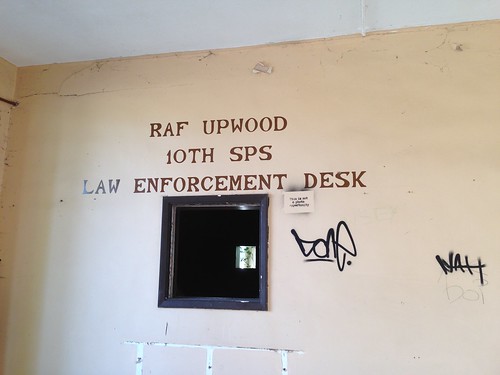
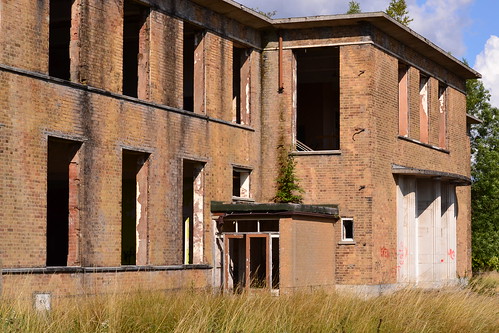
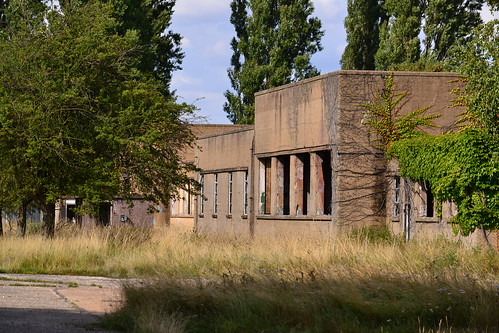
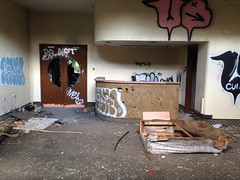
RAF Upwood is a remarkable site to visit. Its buildings remain very empty stripped of their dignity and daubed with a wide range of graffiti, yet within its boundaries lay many years of history.

Located in the south-western corner of Cambridgeshire, not far from both RAF Alconbury and RAF Warboys, Upwood is possibly one of the countries most photographed aviation sites.

RAF Upwood has seen no less than twenty-two different RAF flying units grace its runways, the majority of these being post war operational units, many coming here prior to their disbandment – it is perhaps the graveyard of RAF squadrons.

However, whilst the latter part of the 20th Century saw it gain its recognition, its origins lay way back in the First World War.

Originally opened in September 1917, as Bury (Ramsey) after the adjacent village, it had no permanent buildings and was merely a grassed airfield with no fixed squadrons of its own. Towards the end of the war though, in 1918, five hangars and a small number of huts had been built, and it was at this time that it became officially known as ‘Upwood’.

RAF Upwood

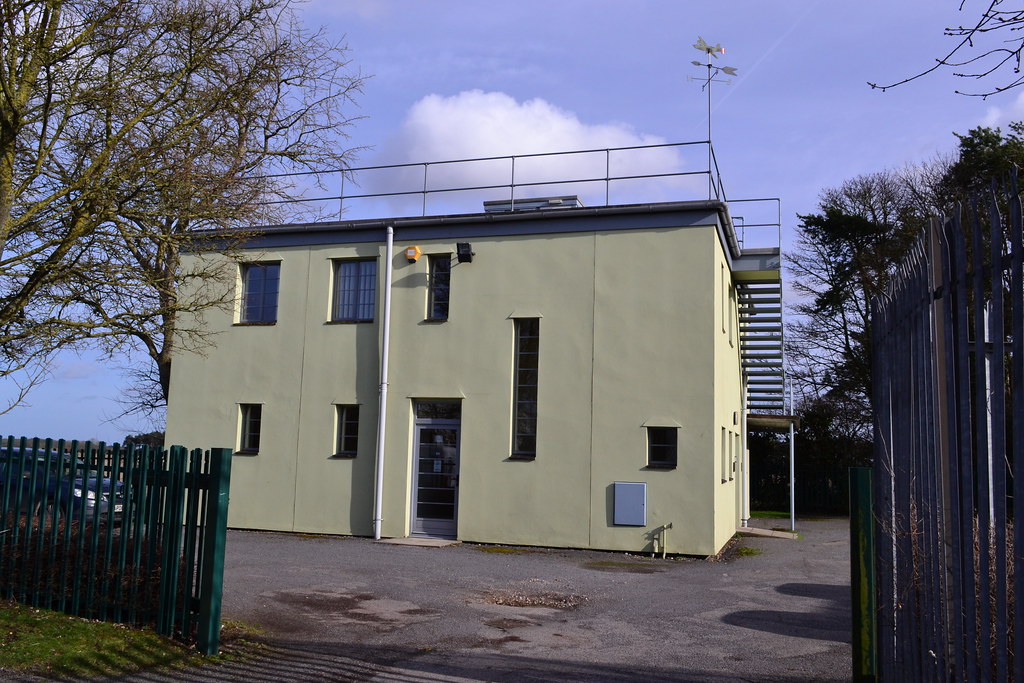
Post war, Upwood served as a hospital and most of the buildings survive.

Then, when the war ended, the personnel departed and the site was cleared of all military related artefacts, the site being returned to the local community once more.

However, the impending conflict in the late 1930s, required a massive rethinking into Britain’s defences and the need for greater air power. A number of locations were earmarked for opening, and as a former airfield, Upwood was one of them. Designed as a medium bomber station, plans were put in place for as many as five large hangars, although only four were ever completed.

Opened in early 1937, during the expansion period of pre-war Britain, it was home to both 52 and 63 Squadrons Royal Air Force. In March the two newly formed squadrons arrived, 52 Sqn from Abingdon, No. 1. Bomber Group, and 63 Sqn from Andover, No. 2 Bomber Group. At the time of opening conditions were far from ideal, only half of the total number of hangars had been built, and more importantly, there was no provision for permanent accommodation; instead, crews were faced with a rushed collection of inadequate, temporary blocks. 52 Sqn were first, followed two days later by 63 Sqn, by which time conditions had changed marginally for the better, the officers mess being one such building to open as a permanent structure – clearly rank was to have its privileges.

For 52 Sqn it was a complete change, the move being managed over just two days, which also saw them transfer to No. 2 Bomber Group bringing them in line with 63 Sqn. Initially, 52 Sqn brought with them seven Hawker Hinds, then four more on the 8th and a further two on the 10th, bringing the total number of aircraft on role to thirteen. Six of these Hinds were immediately put into reserve saved for the formation of a ‘B’ Flight.

Meanwhile, 63 Sqn began to upgrade their aircraft taking on four replacement Audaxes, each being delivered straight from the A.V. Roe factory (Woodford Aerodrome)  in Manchester. With a further three and then two more being delivered from A.V. Roe’s on the 17th and 18th respectively, the number of aircraft at Upwood now amounted to twenty-two.

This was a busy time for Upwood, with personnel coming and going, new postings arriving and staff being posted out, there was considerable movement before things finally began to settle down and operations bed in.

On the 22nd and 24th, both squadrons took turns to carry out search operations over the local countryside looking for the remains of a DH Moth belonging to Mary Russell, the Duchess of Bedford, which disappeared on the evening of the 22nd during a snowstorm. Both searches proved unsuccessful, with no sightings been made. It later transpired that the Duchess had crashed into the North Sea, her body never being found.

With 52 Sqn’s ‘B’ Flight being formed on April 6th and 63’s on the 12th, the scene was almost set, and with visits by both Air Chief Marshall Sir John Steel KCB, KBE, CMG (Air Officer Commanding in Chief of Bomber Command), and then the Under Secretary State for Air a few days later; Upwood was finally on the map and making progress toward being both operational and fighting fit.

63 Squadron would then take a step forward, having the honour of being the first operational unit to receive the new Fairey Battle, K7559 landing at Upwood on May 20th 1937, some 6 months before 52 Sqn received theirs.

Throughout the summer of 1937, the number of delivered Battles gradually increased, each one coming directly from Ringway Aerodrome, one of Fairey’s main sites. For 63 Sqn, the following months would be a busy time ‘showing off’ their new aircraft to various dignitaries from around the globe. A massive PR stunt, it started with the Gaumont British Film Company, who filmed nine of the aircraft taking off, landing and flying in formation, scenes being recorded for the film “Under the Shadow of the Wing“.

During this period, Upwood would be inundated with visitors; his Highness the Duke of Aosta along with Italian representatives started the ball rolling, followed by: Major Woutieres of Belgium; Lt. Lim Weir K’nei of the Chinese Air Force; Air Chief Marshal Sir E. Ludlow-Hewitt KCB, CMG, DSO, MC; Air Commodore S. Goble CBE, DSO, DSC. and even a consortium from Germany – General der Flieger Milch, General Lieutenant Stumpff, General Major Udet along with their entourage. These three high ranking officials were, from the 1930s onward, key to the development, build up and use of Germany’s illegal Luftwaffe. Accompanying them, were a number of high ranking British Air Force personnel, who openly guided the party through a range of inspections of the Battles, a programme of events that included a flying display at RAF Mildenhall.

Generalfeldmarschall
Erhard Milch March 1942 (Source: Wikipedia)

By the end of 1937, 63 Sqn had flown 2,256 hours, many of these to show off their aircraft. With little else to do at this time, a range of pageants and shows kept the crews busy in between the obligatory gunnery and navigation training sessions.

1938 would be filled with similar such undertakings, but as the year drew on training  would take on a more serious and predominant role, mock bombing attacks being regularly practised by the squadron on various sites including Upwood itself.

After a short period away training at West Freugh, the squadron was placed in a ‘precautionary’ state, in readiness for immediate mobilisation – the threat of war in Europe now growing ever stronger. This period was short lived however, and the squadron temporarily returned to normal duties, with yet more visits from both high ranking officials and royal dignitaries from overseas.

November 25th 1938, would be a sad day for Upwood crews, training flights proving to be hazardous, and even fatal.

New Zealander P.O. K Vare, managed to land and walk away from Battle K7603 as it burned on a nearby railway line, whilst 63 Sqn Battle K7567 crashed in poor weather whilst undertaking a navigation exercise over Hampshire. The aircraft, piloted by P.O. J Ellis (killed), collided with trees severely injuring Cpl. A Thoroughgood and ejecting AC2 V. Rawlings. Being thrown from the aircraft was possibly Rawlings’s saviour, the likely hood of being killed himself higher had he not been.

Fairey Battle Mk.I (K7602) of 52 Squadron, at RAF Upwood.© IWM H(am) 179

On the 16th December, in a ceremony attended by the station staff, P.O. Ellis’s ashes were scattered over the airfield, the procedure being carried out from another Fairy Battle from the squadron.

After a short Christmas break, 63 Sqn returned to their duties once more, training flights, many of which were in conjunction with squadrons from other airfields, increasing in frequency as events across the Channel took on an even more sinister turn.

In mid March, a new policy was issued that would affect the operation of both the Upwood squadrons. This policy turned both 52 and 63 into ‘non mobilising’ units, meaning that the more senior officers would remain on site as instructors, whilst the ‘regular’ crews would be posted to operational units. The spaces left by these vacating staff being filled by Volunteer Reserves from the various Flying Schools. After a period of some months, these trained staff would revert to civilian status, but as reserves, they could be called upon if, or more likely when, war was declared – the war machine was again stepping up a gear. A further element of this change was the allocation of 10 new Avro Anson aircraft, each of these twin-engined training aircraft arriving over the next few weeks direct from Woodford.

This period would see world tensions rise even further, and as war looked even more likely, changes were again made to Upwood’s staff. Rehearsals in dispersing aircraft were carried out, passes were restricted to ensure sufficient numbers were always on hand in case of war being declared, and mock attacks on the airfield were carried out. During these mock attacks ‘Gas’ was sprayed by both ‘attacking’ aircraft and from a ground based “High Pressure Jenny”, a devise developed in America to spray water and steam over the outside of aircraft.

Upwood then experienced a second fatal accident, which occurred on the night of 25th July 1939, the crash involving Fairy Battle K9412 of 63 Sqn with the loss of all on board: Sgt. Albert Shepherd, Sgt. Aubrey Sherriff and AC2 William Murphy. The aircraft struck the ground and caught fire whilst taking part in one of these preparatory exercises.

The end of August saw a further ramping up of the gears with the implementation of the Bomber Command War Order (Readiness ‘D’). Aircraft of both squadrons were now restricted to essential tests and practises only, being dispersed across the airfield, bombed up but without fuses, ready for flight. Personnel were also put on high alert, anyone on leave was recalled and had to return back to the station.

As September dawned, the full readiness ‘D’ plan was brought into full force. 52 Sqn were ordered to disperse aircraft at nearby Alconbury, with twenty-four Battles and five Ansons being flown across, along with a small guard and a selection of maintenance personnel. The Royal Air Force as a body was mobilised by Royal Proclamation, and preparations were made for war, the entry in the Operations Record Book for 63 Sqn simply stating:

3rd Sept. 11:00 “A state of war is declared between Great Britain and the German Reich

In Part 2, Upwood goes to war, major changes come in terms of both aircraft and infrastructure. New squadrons arrive and an unwelcome visitor is caught.

The entire text can be read in Trail 17 – The Pathfinders.

RAF Warboys – Home to the Pathfinders (Part 1)

In the south-western corner of Cambridgeshire, are a group of airfields that are synonymous with the Second World War’s target marking units, the Pathfinders. This is an area rich in aviation history, and an area that played a major part in not only the European Theatre of Operations of World War Two, but military operations long into the Cold war and beyond. Within a short distance of each other are the airfields at Wyton, Warboys, Upwood and Alconbury to name but a few, and it is two of these we visit in Trail 17.

Our first stop is the former RAF Warboys, once home to the Pathfinders.

RAF Warboys.

Warboys village is an ancient village with records of inhabitants going back to 7,000BC, it also has links to the Bronze age, the Romans, Vikings and the Doomsday book. Even further back, some 350 million years, there was an active volcano in the area, not far from where we start today.

RAF Warboys

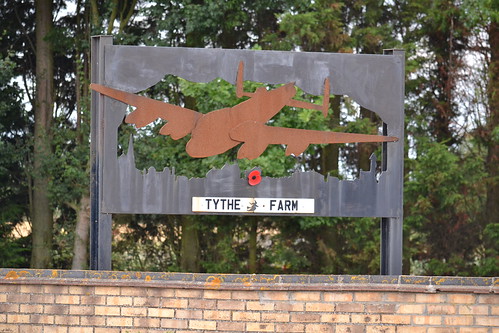
The farm sign reminds us of the aviation link (it would appear that this sign may have recently been removed).

The airfield itself was initially constructed as a satellite for RAF Upwood, with a requirement for three 50 yards wide tarmac runways; one of 2,000 yards, another measuring 1,400 yards and the last 1,350 yards. There were initially twenty-four frying pan hardstands, two of which were then used as hangar bases, with a further eighteen loop style hardstands added after. This gave a total of forty dispersal points available for aircraft, and they would certainly be needed.

As with many airfields of this time there were two type ‘T2’ hangars, one each side of the airfield, supplemented with a ‘B1’ hangar. A well developed bomb store lay to the west of the airfield, and eleven domestic sites lay to the eastern side of the A141 to the south of the main airfield. These would accommodate up to 1,959 men and 291 women. Even before its completion, Warboys would undergo further development, an order coming through to extend two of the runways to 2,097 yards and 1,447 yards, its was a sign perhaps, of things to come. This extension work meant altering the perimeter track layout and diverting the main road around the airfield as it would be dissected by the new extension (the original road was reinstated post war, the end of the main runway being cut off as a result).

Construction began in 1940 with the airfield opening in September 1941, initially as a satellite bomber station. Whilst intended for Upwood, it was first of all used by Short Stirling’s from XV Squadron as an overflow from nearby RAF Wyton. As a satellite, Warboys was never far from the war when not long after the first Wyton aircraft landed, the Commanding officer of XV Squadron,  Wing Commander P. Ogilvie, crashed the Stirling he was piloting (W7439) here in bad weather. Luckily he and his crew escaped major injury but unfortunately the aircraft was written off completely. This crash would signify a run of accidents occurring at the airfield whilst XV squadron used Warboys.

However, XV Sqn’s stay was short-lived, and they soon departed the site their vacant place being taken by the Blenheims of ‘D’ Flight, 17 OTU (Operational Training Unit).*1

The Training unit was expanding, and their base at RAF Upwood was becoming crowded. Their move over to Warboys on 15th December 1941, was a part of this expansion, and led to four flights being created, each with a range of aircraft including: Lysanders, Ansons, Blenheims and even the odd Hurricane and Spitfire.

In August 1942, the OTU would receive orders moving the unit elsewhere, whilst over at RAF Alconbury, a few miles to the south-west, instructions came through to 156 Squadron to relocate here to RAF Warboys. The instruction specified that the move was to take place on the 5th and be completed by the 7th, it would involve the ferrying of large numbers of crews and their aircraft. On the 5th the first aircraft was brought across, and then on the 6th a further six aircraft were transferred. This was followed by another seven on the 7th.

Following the move the squadron was put straight onto operations, but many of these were cancelled because of the poor autumn weather. One of the first, occurring on August 11th, saw ten aircraft detailed for operations, and whilst all of them managed to take off,  three of them X37998 (Flt.Sgt. F. Harker); Z1595 (Sqn. Ldr. J. Beavis) and BJ603 (P/O. C. Taylor) would fail to return. All but three of the sixteen aircrew onboard would perish – the squadron’s first fatalities whilst at Warboys.

RAF Warboys

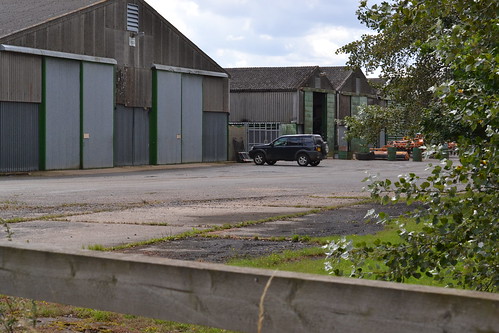
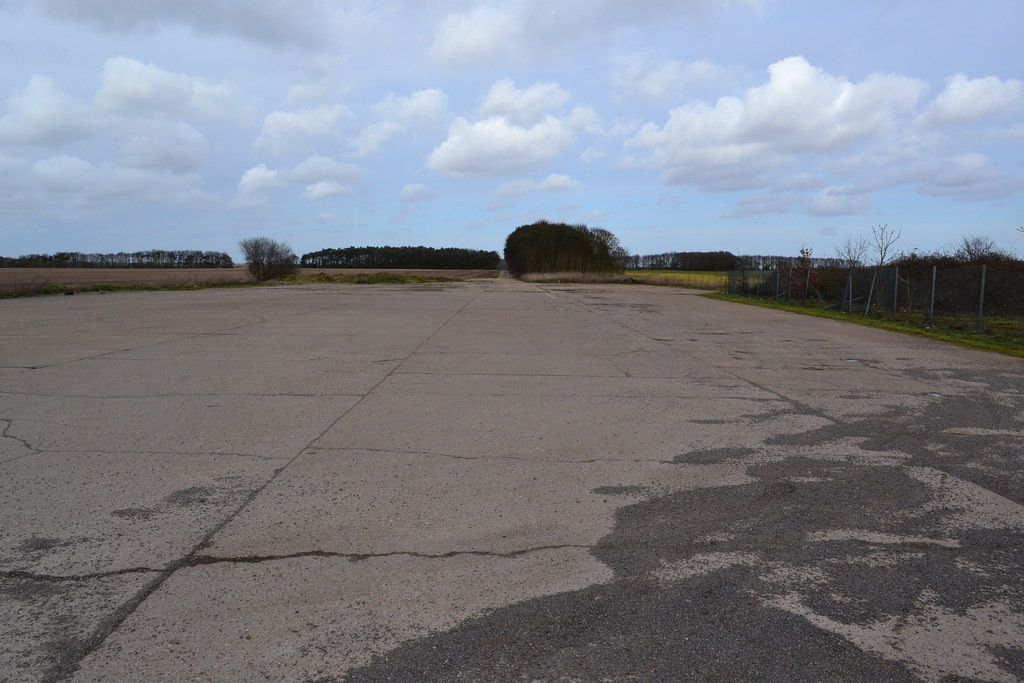
The remnants of the main runway are used for buildings.

On the night of 15th August 1942, eight more Wellingtons took off from Warboys for Dusseldorf, of these, three returned early with a forth being lost. The Operational Record Book simply stating “This aircraft failed to return” – a rather unembellished statement that became so common in operational records. Reports about the raid later highlighted the poor visibility and scattered bombing, with little or no industrial damage being done as a result.

Whilst August 1942 was not proving to be in anyway remarkable for 156 Sqn, it would prove to be a very historic month for Bomber Command. On the same day as the Dusseldorf raid, the Pathfinders – an elite force designed to locate and mark targets for the main bomber stream –  officially came into being. This idea had long been on the minds of the Air Ministry, causing a prolonged and difficult relationship between Sir Arthur Harris and Group Captain Sidney Bufton (Director of Bomber Operations at the Air Ministry). The fallout culminated in the intervention of the Chief of Air Staff, Sir Charles Portal, who came down on the side of Group Captain Bufton. He disagreed with Harris’s arguments, announcing that the Pathfinders were going to go ahead as planned.

This did not meet with Harris’s approval, he feared the Pathfinders would ‘skim off’ the cream of his bomber force, creating a corps d’elite, whilst Bufton was adamant it would vastly improve Bomber Commands accuracy, something that desperately needed to be done.

Harris gained the backing of his Group Commanders, explaining that removing individual crews from squadrons would be bad for morale within the groups and be divisive amongst the squadrons. He and his Commanders preferred a target marking unit within each Group, thus retaining these elite crews keeping the unity of the squadrons and the skills they possessed together. However, the long fight between Harris and Bufton came to a climax with the intervention of Sir Charles Portal, and an ultimatum was given to Harris, ‘accept the new Pathfinders or leave’.

The job of organising this new command fell to the then Group Captain Don Bennett D.S.O., an experienced pilot himself who advocated the use of target marking to improve bombing accuracy; something Bennett had indeed tried himself. However, it was not going to be an easy ride for the Group Captain, for the squadrons chosen all operated different aircraft types: Wellingtons, Stirlings, Halifaxes and Lancasters. The Wellingtons were becoming outdated and the Stirlings, whilst liked, had their own set of problems. Added to the mix the fact that German defences were improving and electronic counter measures (ECM) were on the increase, difficult times were definitely ahead.

RAF Warboys

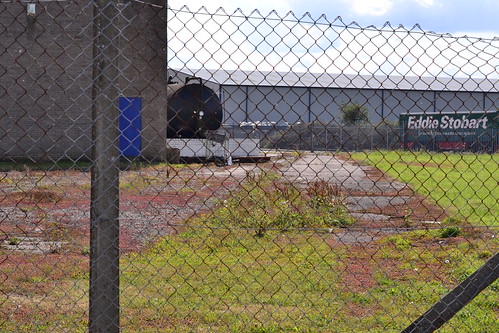
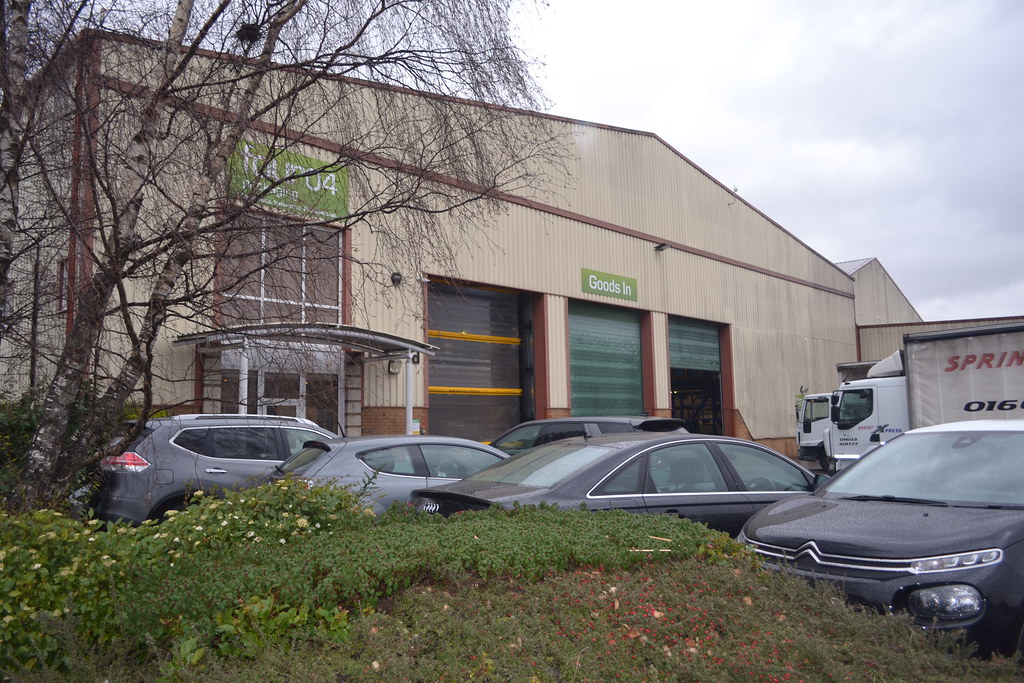
Industry marks the south-western perimeter.

As a new force, only four squadrons were initially used, although more were considered and earmarked: 7 (No. 3 Group), 35 (No. 4 Group), 83 (No. 5 Group) and 156 (No. 1 Group), but it would take time for the new crews to settle and for improvements in bombing accuracy to shine through. All the while Pathfinder crews were operating, the remainder of the squadrons continued in their normal duties, this would allow the Pathfinder force to steadily grow.

For the large part, target marking in the latter part of 1942 would be by visual means only – a ‘Finder‘ and an ‘Illuminator‘ using flares and incendiaries respectively. This would prove to be an unsatisfactory method, the markers often being ‘lost’ amongst the fires that followed, or they were simply too difficult to see. However, photos taken after these early bombing raids showed that the number of bombs falling within 3 miles of the aiming point, post August, had in fact risen to 37% from 32%; those falling within 3 miles of the centre of concentration rising to 50% from 35%.*2 Whilst these figures were quite small, and bombing was still relatively inaccurate, it was at least a step in the right direction, and a boost to those who supported both Bufton and Bennett.

So, on the 15th August 1942, Bomber Command operations changed for good, the four squadrons moved to their respective airfields and the Pathfinders began preparations for a new battle. 156 Sqn at Warboys, would be a major part of this. Being one of the four pioneering airfields, Warboys would be joined by Graveley, Oakington and Wyton, as initial homes for the new force.

On the night of the 18th -19th August 1942, the Pathfinders would be put to the test for the first time, and two Wellingtons from 156 squadron were to be a part of it. The raid to Flensburg would not be successful though, one aircraft having great difficulty in locating the target through the haze, and the second having to ditch its flares five miles from the airfield after one ignited inside the aircraft. Of those that did get to mark, it proved to be inaccurate, and one Pathfinder aircraft, from 35 Sqn, was lost.

RAF Warboys

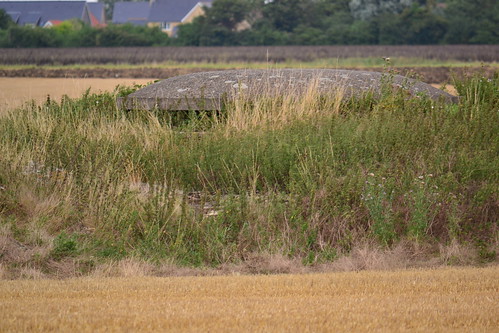
Airfield defence in the form of an ‘Oakington’ pill box.

The day after this, Group Captain Bennett visited Warboys to give a lecture on the Pathfinder Force and to promote its use; he must have made a good impression for after the lecture six Warboy’s crews volunteered for Pathfinder duties.

Further operations were carried out on the night of  27th – 28th August to Kassel. A good night for visual marking meant that bombing was accurate, and as a result all of the Henschel factories were damaged. However, the cost to the Pathfinders was very high. It was on this operation that the Pathfinders suffered one of their greatest losses. Thirty-one aircraft were missing of which fourteen were Wellingtons and three were from 156 Sqn. The next day, the mess hall was devoid of three crews, those from: ‘X3367’, ‘Z1613’ and ‘DF667’, and unbeknown to those sitting around the mess, there were no survivors. A fourth bomber (BJ883) returned to Warboys after the pilot, Sgt. E. Bowker, suffered severe head pains and was unable to carry on.

Not all operations were as bad. On the night of 19th – 20th September following action over Saarbrucken, a flare became lodged in the bomb bay of one of the 156 Sqn Wellingtons. Whilst sitting there it ignited causing a fire in the aircraft’s belly. The Pilot,  New Zealander Sqn. Ldr. A. Ashworth, instructed his crew to bail out, after which the fire extinguished itself allowing him to fly the aircraft back single-handedly, landing at the fighter station RAF West Malling in Kent. The operation itself, undertaken by 118 aircraft, was otherwise uneventful, although haze proved to be an obstacle for the markers.

The last 156 Sqn Wellington raid for 1942 occurred on December 21st and took the squadron to Munich as part of a force of 137 aircraft. The loss of ‘BK386’ crewed entirely by Canadians brought 1942 to a close, and a loss of 15 aircraft this year. To add insult to injury, whilst the majority of the bombers claimed to have hit the city starting large fires, photographs showed that in fact most bombs had fallen outside of the city in open countryside, possibly as a result of a successful decoy employed by the Germans. It had not been the most auspicious of starts for the Pathfinders, nor 156 Squadron at Warboys.

However, by early January, a new aircraft type was starting to arrive at Warboys – Avro’s mighty four engined heavy, the Lancaster MK.I. Created out of the under-performing Manchester, the Lancaster would go on to be one of the most iconic aircraft of the Second World War. Perhaps now the tide of misery would turn and Warboys crews would begin a new era in aviation history.

RAF Warboys

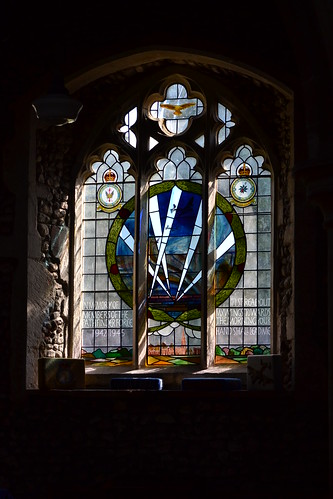
The beautiful Memorial window dedicated to the Pathfinders.

The full trail appears in Trail 17

Spitfires Galore! – RAF Ludham (Part 3)

In the previous parts of RAF Ludham, we have see how it got off to a slow start and how Spitfire squadrons used Ludham for off shore patrols. We saw how the airfield was handed over to the Americans and redeveloped with concrete runways and a new watch office. Now it was the turn of the Royal Navy to use Ludham, an experience they would rather have not had.

Being only four miles from the Norfolk coast, Ludham (or HMS Flycatcher, RNAS Ludham as it was now known) would have normally been ideal for the Royal Navy, however, this was not the case. The RN had recently set up the Mobile Naval Airfields Organisation, (MNAO) and was looking for a suitable location for its headquarters. The RN had considered locations as far away as the Far East, but in desperation had turned to the RAF for help with a suitable site. The RAF offered Ludham which the Royal Navy reluctantly accepted.

A small party arrived at Ludham and took charge, led by Commander (A) J.B. Wilson and Captain L.J.S. Edes. The airfield still being closed to flying, was commissioned for use by the RN on September 4th.

The purpose of the MNAO, which had by now changed names to Mobile Naval Air Base (MONAB), was as a facility providing airfield facilities working in conjunction with the Fleet as they progress across the Pacific toward Japan. They would take control of captured airfields or otherwise construct their own, thus providing air support and maintenance work for Royal Naval aircraft*1. The range of aircraft that Ludham would cater for included: the Avenger; Corsair; Expeditor; Firefly and Hellcat.

The creation and structure of MONAB is complex, each unit consisting upward (and sometimes in excess) of 1,000 personnel a number that would cause great problems for those at Ludham. With new personnel coming in, the numbers would exceed those that Ludham could realistically cater for and so many were put up in tents or other temporary accommodation. The winter of 1944 – 45 being one of the worst, eventually turned Ludham into a bog, cold, wet and very muddy! Ludham soon became a terrible place to work, let alone live! The RN decided to split the MONAB so that only the Receipt & Dispatch Unit was based at Ludham, which in itself led to more complications. As time went on, the RN began searching for a more suitable location, one with good road and rail connections as well as better accommodation facilities.

The whole saga ended up being so poor, that by January the RN were almost as desperate for a new location as they were before being offered Ludham. In February, the Air Ministry offered Middle Wallop, an airfield under the control of 7 Group RAF. On the 16th, the transfer occurred and RNAS Ludham ceased to be, Middle Wallop taking on the both the role and the name HMS Flycatcher.

After the Fleet Air Arm vacated Ludham, the airfield was handed back to RAF control, although many of the functions continued to be carried out by the remaining Naval personnel. In mid February, the former Station Commander of Matlask Sqn. Ldr. P. G. Ottewill (previously awarded the George Medal) arrived to formally take over control of Ludham. His arrival would signify the definitive end of the Navy’s links, and the last Naval personnel finally moved out on the 24th.

Ludham wouldn’t stay quiet for long though. Within days of the Navy’s departure two new squadrons would arrive bringing back the old favourite, the Spitfire, with the arrival of both 602 and 603 Sqns.

Armourers set the tail fuses on a clutch of 500lb bombs in front of a Spitfire XVI, 603 Squadron, Ludham, March 1945. The bombs were destined for V-2 sites in the Netherlands (© IWM CH 14808).

Both 602 (City of Glasgow) Squadron and 603 (City of Edinburgh) Squadron were Auxiliary Air Force (AAF) Squadrons, devised out of the remnants of the First World War, and led by Sir Hugh Trenchard. Post war apathy however, prevented the official formation of this force until 1924 when a Bill was passed in Government making them both legal and official. Initially designed to be ‘reservists’ they were to be located near to the city of their name and would be called upon to protect that region in the event of an attack. Manned by a cadre of regulars and non-regulars, the Auxiliary Air Force officially came into being on January 17th, 1939. Throughout the war the AAF, sometimes seen as ‘part-timers’, were responsible for a number of both high ranking officials and remarkable feats. Indeed, the AAF were a force to be reckoned with, the first Luftwaffe aircraft shot down over Britain*2 (the ‘Humbie Heinkel) going jointly to both 602 and 603 Sqns in an attack over Edinburgh.

602 (City of Glasgow) Sqn had the honour of being the first of these AAF units to emerge from this Bill, being formed on 12th September 1925 at Renfrew, Glasgow. 603 (City of Edinburgh) Sqn joining them not long after on 14th October 1925 at Turnhouse. Throughout the war years both units would move around covering the length and breadth of Britain (603 even having postings to Egypt) before reuniting here at Ludham in February 1945.

February 1945 had been a wintery month, the poor weather causing several missions to be postponed, with all commands of the Allied forces suffering. 602 Sqn returned from France to Coltishall, after which they moved between Matlask, Swannington and back to Coltishall before arriving here at Ludham on February 23rd 1945. The following day, their sister squadron 603 Sqn, arrived having been abroad operating with Beaufighters. Their arrival here at Ludham meant that 12 Group would have six operational squadrons in the vicinity, all dedicated to defeating the V2 rocket menace that was plaguing London and the south east. Upon moving in, neither squadron took long to settle, and the general consensus was that Ludham was a ‘good airfield’ to be based at, especially compared to Matlask and Swannington!

By this time 602 would have the Spitfire XVI which allowed for a 1,000lb bomb-load. This would be used not only against ‘Big Ben‘ (V2) sites, but bridges, railways and other communication lines across Holland and western Germany. 603 Sqn had the LF XVIE Spitfire, capable of carrying a more modest 500lb bomb load (either as 2 x 250lb or 1 x 500lb bomb) as a dive bomber, a role that the Spitfire was not designed for. As might be expected, a friendly rivalry had grown between the two squadrons resulting in a competition to see who could hit the most locomotives or other vehicles. This resulted in numerous ground attacks being carried out, some 1,008 hours being flown by 603 Sqn alone.

The daily routine continued with the bombing of sites in Holland as ‘Ramrod‘ missions. Crews from Matlask, Swannington and Coltishall all joining the Ludham crews. These sorties focusing on the V2 rocket sites, the Haagsche Bosch taking a particular pasting  in these last few cold days of February 1945.

Following information provided by the Dutch resistance, these Spitfires would patrol, with, pretty much, ‘free-reign’ over the Dutch countryside concentrating on areas around The Hague. Woodland became a source for many attacks, the Germans being particularly clever at hiding mobile V2 sites in such areas. Pilots, being acutely aware of Dutch civilians, would look for any traffic movement on roads around these areas and these were to be ‘fair game’, civilian traffic unlikely to be roaming so freely at this time.

Pilots of No. 602 Squadron study targets in Holland, with the aid of a large-scale map and target photographs in the Operations Room at RAF Ludham (possibly March 1945). This was part of a series of ‘posed’ photographs. Note the pilots names on the lockers and the seat-type parachute on the top of one. The pilots are (left to right): P.O. W. J. Robert, F.O. R. F. Baxter (the famous TV presenter, Raymond Baxter), Sgt. S. Gomm, W.Off. L. T. Menzies, W. Off. Crossland, Sgt. T. L. Love, W. Off. J. Toone and W. Off S. Sollitt. (© IWM CH 14810)

Attacks would normally come in from between 6,000 and 8,000 ft, diving down at about 70o, letting bombs go at around 3,000 ft. It was a difficult attack, keeping the target in the sights whilst avoiding flak and keeping the aircraft together. On one occasion, a Spitfire was seen to lose its wings pulling out of a dive too quickly, the bombs still attached to their mounts.

The whole of March saw similar patterns, attacks on railway yards, locomotives, transport facilities, trucks and V2 sites.

By April,  the war was all but over, with which came a final move for both 602 Sqn and 603 Sqns to Coltishall. Prior to this, on the 3rd, the two squadrons were given an ‘Easter gift’ in the form of a day out on the Norfolk Broads. For 603 breakfast finished at 10:30 at which point the bar opened for Guinness, providing a liquid recreation for those who wished it. Other 603 Sqn crews took boats up to the Broads where they joined with 602 crews spending the day relaxing on its quiet waterways.

On the 4th the order to vacate Ludham came through, the airfield was busied, sorting and packing equipment and tools, and on the 5th all aircraft, ground staff and equipment of both squadrons departed in shuttle flights for Coltishall – another link had been broken.

However, this was not to be the end of Ludham. Even as the Nazi war machine ground to a halt, Ludham would continue on, with two more squadrons arriving. Throughout the war the Spitfire in its various marks had been the main type to use Ludham, this was no different, 91 Sqn bringing the Spitfire XXI (8th April), and 1 Sqn the F.21.

There time here at Ludham was filled with mass formation flying, cross-country flights, dive bombing practise and regular parties. The crews even enjoying time fishing and boating on the Broads. Events were becoming so predictable that almost anything different was news, on August 1st Fl. Lt.R. (Tac) Brown became a father, a baby son being recorded in the ORB for that day!

Both units would stay until mid / late July 1945, at which point they departed, 1 Squadron heading to Hutton Cranswick, the Spitfire being the last piston-engined fighter aircraft to fly with this prestigious unit before taking on jets; and 91 Sqn to Fairwood Common, again the Spitfire seeing the end of piston engined aircraft before the dawn of the jet age. With their departure, the end had now come for Ludham as an active military airfield. The site was closed, put into care and maintenance and eventually sold off for agriculture.

By the time it closed Ludham had developed from a basic satellite station to an airfield in its own right, with the addition of three hard runways, twelve pens, nine hardstands and the addition of (US type) single and double hardstands. It also had one type T2 hangar and four blister hangars – one of which survives today although not in its original location.

As with many of Britain’s wartime airfields, Ludham returned to agriculture, the runways were dug up and many of the buildings pulled down. Some remained used for agricultural purposes and part of one runway was left, used for crop sprayers and private light aircraft, one of the blister hangars was uprooted and placed on the end of the runway. Those buildings that were left decayed, including the two watch offices. In 2000 – 01, they were restored, and in 2005, Historic England (entry No: 1393540) designated both buildings as Grade II listed, as an “exceptionally well-preserved example of a Second World War control tower.” However, they were both left empty and the inevitable happened again, they began to decay and fall into disrepair once more a state they exist in today*3.

Dotted around the perimeter (a mere track) are a handful of buildings, defensive posts and firing butts, all remnants of Ludham’s once chaotic but meaningful past.

Ludham airfield rests between the villages of Ludham (to the south west) and Potter Higham (to the south east). The main A149 passes to the eastern side and the entire site is circumnavigated by a minor road. From this road, the majority of remnants can be seen, with good views across the entire site. A small private road leads up to the watch offices, and parts of the peri track and runways are still in evidence. Various buildings and structures can be found around this track too, some hidden in private gardens and utilised for storage.

Ludham started out as a satellite airfield, its future seemingly never intending to be major. But, circumstances dictated otherwise, eventually becoming a major player in the front line against enemy shipping, the V2 menace and as a safe haven for returning aircraft, limping home from battles over occupied Europe. If that isn’t sufficient for an entry in the history books, then what is?

The full story of RAF Ludham appears in Trail 58.

Sources and further reading.

National Archives: AIR 27/253/24 
National Archives:AIR 27/2107/15
National Archives: AIR 27/2107/19
National Archives: AIR 27/1164/17
National Archives: AIR 27/1164/14
National Archives: AIR 27/2078/31
National Archives: AIR 27/2080/29
National Archives: AIR 27/4/33

*1 For further information and a detailed explanation of MONAB, including photographs and history, see The MONAB Story – A history of the mobile airfields of the Royal Navy website.

*2 The shooting down of the ‘Humbie Heinkel‘ can be read in Trail 42 – East Lothian, Edinburgh’s Neighbours. 

*3 Historic England Website Listing 1393540

Simpson, B., “Spitfire Dive-Bombers versus the V2” Pen and Sword (2007) – for further information about Spitfires used against the V2 rockets.

RAF Rackheath – The 467th BG, the highest bombing accuracy (pt2).

In Part 1 we saw how Rackheath had been developed, and how the 467th BG, the resident group had been subjected to a fierce introduction to the war.

Now, in part 2, we continue our visit to Rackheath and the bizarre event of December 1944.

On December 24th,  B-24 #42-50675 “Bold Venture III” piloted by 1st. Lt. P. Ehrlich, was one of sixty-two B-24s from the 467th taking part in a maximum effort attack on a range of targets in Germany. Hit by flak over the target, five of the  crew, including the pilot, bailed out fearing the aircraft was lost. All five were subsequently captured and incarcerated as prisoners of war. The fires in the engines then extinguished themselves allowing the remaining crew to engage the auto-pilot, taking the aircraft homeward and over allied territory. Once over France, they too bailed out as they were unable to land the heavy bomber, each of these men being safely picked up by allied forces. The plane then continued on, unmanned across the Channel, until it ran out of fuel.

RAF Rackheath

The former hangar has been completely refurbished.

At this point, the story becomes confused. Some say it landed / crashed  in a field near to  Lower House Farm, Vowchurch Common in Herefordshire. The wreck being salvaged the following day. However, there is little evidence of this event, and other sources (Freeman “The Mighty Eighth“) have it landing in a Welsh marsh a little further west. Whatever the truth is, its a remarkable, but not unique, story of  a crewless bomber flying ‘home’ coming to rest safely on British soil.

Also on that Christmas Eve, another Rackheath B-24, #42-95220, piloted by First Lieutenant William W. Truxes Jr , was hit over Pruen. The aircraft then exploded over Rettigny in Belgium, killing Sgt. Walter Walinski (TG); Sgt. Stanley P. Koly (LWG); Fl. Off. David J. Countey (Nav); Sgt. Roland L. Morehouse (BA); St. Sgt. Peter Hardick Jr (TTG); St. Sgt. John N. Ellefson (Radio Op) and Sgt. Alek Onischuk (RWG). Only the Nose Gunner St. Sgt. Robert J. Ball Jr. returned to duty the remainder being taken prisoners of war.

On the 29th the continuing appalling weather caused the loss of two more B-24s, both crashing attempting to take off from a foggy Rackheath (#42- 95115 and #42-51572). A third (#42-94881) was then abandoned over the sea, and a forth (#44- 10607) crashed at Attlebridge also after sustaining damage on its take off. The  visibility was so poor that day that the crews couldn’t even make out the edge of the runway. As a result of these crashes, the mission to Prum, was finally scrubbed, but by then fifteen airmen had already been lost.

The dawn of 1945 saw the Ardennes offensive continuing, and at Rackheath B-24 ‘Witchcraft‘ was approaching its 100th Mission an achievement it made on January 14th 1945. In just 140 days since arriving, it had reached its 70th mission an average of one mission every two days, but what made this particular achievement so remarkable was not this incredible average, but the fact that the aircraft had been mechanically sound throughout, not having to turn back from any sortie it had undertaken. A remarkable achievement, and a solid testament to the dedication of the ground crews who kept her in the air.

The Witch“, as she affectionately became known, would go on to complete a total of 130 missions without a single abort nor injury to any crewman. She became one of the most celebrated aircraft in the 8th Air force’s history. This total would surpass all other B-24s in the whole of the European theatre of operations. Like many though, ‘The Witch‘ eventually returned to the US where she was unceremoniously taken apart at Altus, Oklahoma. In memory of the aircraft, her achievements and the crews who were lost flying B-24s, she is now represented by the world’s last flying Liberator, currently owned and operated by the Collings Foundation, Massachusetts.

Ground crew of the 467th BG B-24 “Witchcraft“. Standing Crew Chief Joe Ramirez, Chamberlin. Front Row Walter Elliot, Geo Dong, Joe Vetter, Ray Betcher.’ (IWM FRE 1979)

As 1945 progressed the end of the war was near. Attempts by the Luftwaffe to curtail bomber intrusions into German airspace were becoming desperate. The introduction of the Me 262 was too little, too late, to make a major difference. But so determined to stop the bombers were the Luftwaffe pilots that many still got through and they were finding the bombers.

Other fighters more determined to bring down the enemy began ramming them. A specialist squadron the ‘Sonderkommando Elbe‘  was set up using volunteer pilots. They were instructed to strike the fuselage of the bomber between the wing and tail thus cutting the aircraft in two, a tactic that would  allow the German pilot to bail out of his aircraft whilst taking down the bomber.

On April 7th, the unit was put into action in its one and only recorded attack, as over 1,000 heavies flew towards German airfields, oil storage facilities and factories in north-west Germany. From the 2nd AD, 340 B-24s headed for Krummel, Duneburg and Neumunster. As the force approached they were targeted by a mix of over 100 Luftwaffe fighters including 109s, 190s and 262s. In this mix was the Sonderkommando Elbe. Whilst the tactic would prove to be more devastating to the rammer than the target, one of Rackheath’s B-24s #42-94931 ‘Sack Time‘ was hit in the tail severing the starboard stabiliser. The B-24’s pilot, Lt. Robert Winger, managed to keep the aircraft flying but with little control, he ordered the crew to abandon the aircraft once over allied territory. The B-24 then crewless, fell from the sky.

It is not known whether the attack was a deliberate act by the Sonderkommando Elbe, or as a result of the tail gunner Robert (Bob) Perkins’s action. Perkins in his attempt to defend the B-24, fired desperately at the attacker, Heinrich Henkel, striking the aircraft several times.

Then for three days in mid April, the heavies of the USAAF turned their attention to the gun batteries around Royan. These German strong holds were hindering the allied plans to use the port at Bordeaux, they had to be ousted.

During one of the missions, on April 15th, the 467th would make history again when three of the four squadrons released all their 2,000lb bombs within 1,000 ft of the mean point of impact, half of these being within 500 ft – a record that would not be beaten by any other USAAF unit. This was the ‘icing on the cake’ for the 467th who were building a strong reputation for consistent and accurate bombing.  So determined were the Americans to remove the defenders on the ground, that they used Napalm in 500 lb tanks, a rather horrific weapon used to great effect during the Vietnam war.

By the end of April the war was all but over, and at bases all around the UK, air and ground crews eagerly awaited the notice to cease operations. Some units were already being stood down, and very soon operations would begin to drop food rather than bombs. As the end of hostilities was announced, the figures began to be totted up. The 379th BG at Kimbolton were recorded as dropping the greatest number of bombs on a target, with the 467th BG at Rackheath achieving the greatest accuracy. This Rackheath record was due, in part, to the dedication, support and drive of its Commander, Colonel Albert Shower.

On April 25th 1945, the 467th completed its last mission, a total that amounted to 212 (5,538 sorties credited), dropping 13,333 tons of bombs. With 29 aircraft classed as ‘missing’, and a further 19 lost on operations, the war had not been cheap.

RAF Rackheath

The former runway looking north-east.

On May 13th, the 467th were to lead the Victory Flypast over High Wycombe, the headquarters of the Eighth Air Force operations, the choice of a B-24 as lead fuelling the ‘ill-feeling’ between B-24 and B-17 crews even further.

Over the next month, the aircraft and men of the 467th would return to the US, the majority of aircraft departing Rackheath on June 12th, whilst the ground echelons left via the Queen Mary from Greenock, the same port they had arrived at just over a year earlier. Eventually the 467th would be disbanded, renamed the 301st, but for Rackheath it was the end, and within a year much of the airfield was already being ripped up, the runways were disappearing and many of the accommodation buildings had been torn down. The entire site measuring just short of 4 km2  was already beginning to disappear.

Gradually agriculture has taken over, much of the main airfield site are now fields. The technical area has since been developed into an industrial estate with many of the original buildings being re clad, redeveloped, modernised or pulled down. The watch office has thankfully been refurbished and from the outside resembles a watch office typical of the time. Inside it is now offices. The one surviving T2 hangar, has had brickwork added to it, other buildings are almost indistinguishable from their modern counterparts. A memorial, dedicated to the men and Women of the 467th was unveiled on 29th July 1990, by the then 80 year old Colonel Albert J. Shower, returning for one last time to the place he had built up a reputation for hard graft whilst appreciating the need for recreation.

If approaching from the south, take the A1270 from Norwich heading north, leave at the roundabout with Salhouse Road turning right. The Holy Trinity Church is a few hundred yards along this road. Here you will find the village sign, memorial benches and numerous plaques in memory of the 467th. The two wrought iron gates at the entrance of the church were donated by the Coffey crew. Inside here (the church was closed on my visit) a collection of photographs and letters bring the Rackheath to life once more.

RAF Rackheath

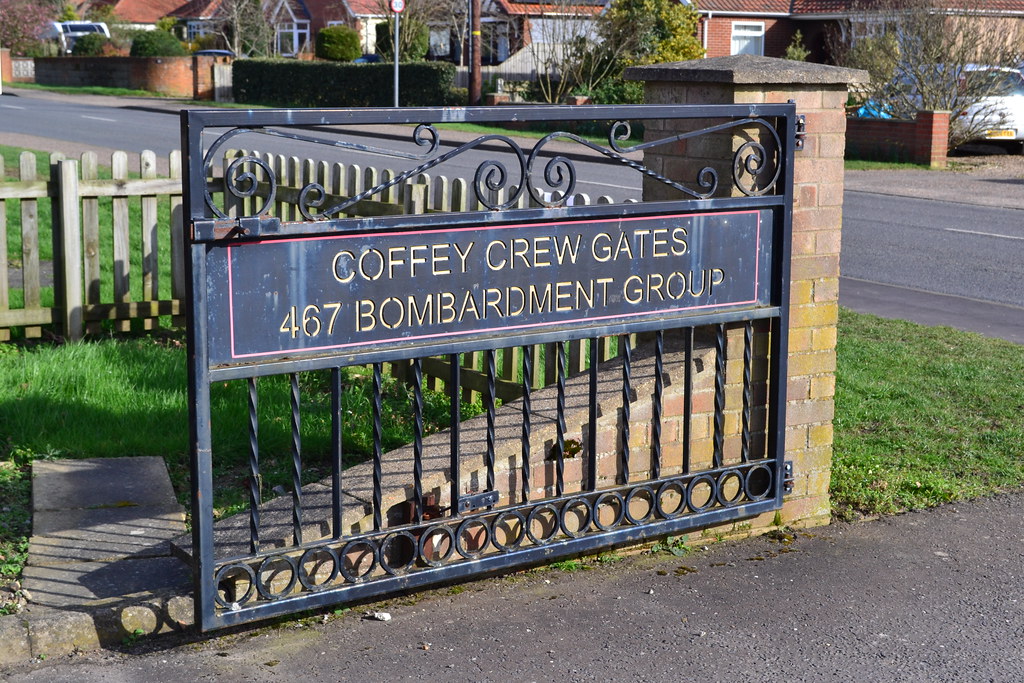
The memorial gates donated by the Coffey crew.

When leaving the church, go back but turn right along Green Lane West. This takes you past the remaining hardstands and along to the industrial estate. Enter by Wendover Road, named after Wendover Field in Utah. Turning into Bidwell Road, (following the signs) you will find the main memorial on the the corner of Bidwell Road and Liberator Close.

Coming back again, turn left, follow Wendover Road to the corner with Witchcraft Way, a small road to your left. Here you will see the Watch Office. Also along here are Ramirez Road, Albert Shower Road, the T2 and other buildings of interest. A real rabbit warren, it is best explored to really discover the many buildings and plaques that remain.

The main accommodation areas were located back across the from the entrance of Wendover Road. Today a new road has been cut through this wooded area but within these woods, remains of huts still exist, some with etchings on the walls. All on private land, they are also gradually disappearing from view.

Rackheath was a short lived base, operating for just a short part of the war. But its contribution and the contribution of its crews, was nonetheless immense. With high accuracy and the determination to win, they took the war into the heart of Germany itself. The names of these young men now live on, in the road names and plaques that adorn many of the building and streets around this beautiful and now peaceful area of Norfolk.

After departing Rackheath we head a few miles east, toward the coast. Not far away, is another airfield, this time a former RAF site. Long gone it continues to use part of the original runway, two watch offices remain, and a smattering of wartime buildings lay dormant in the corner of now agricultural fields. In part 2 of Trail 58 we visit RAF Ludham.

Sources and further reading RAF Rackheath

For more detail on Mission 311 see: McLachlan, I., “Night of the Intruders” Pen and Sword (1994).

RAF Rackheath – The 467th BG, the highest bombing accuracy (Pt1).

In Trail 58 we head to the east of Norwich into an area known as the Norfolk Broads; an area created through turf extraction in medieval times. The large, shear sided pits were later flooded giving more navigable inland waterways than both Venice and Amsterdam.

Today, it attracts a wide range of wildlife, and offers a range of boating, bird watching and fishing holidays. The shear size and scope of the Broads attracting some 7 million visitors per year to enjoy the rich nature and peace of the Broads.

But in this area during the Second World War, life was very different. Overhead, the drone of aircraft engines was a constant reminder of a war being fought both across the sea and here in East Anglia.

Between Norwich and the East Anglian coast we visit two airfields, one USAAF and one RAF, both now long closed, they each played a vital part in the destruction of the Nazi tyranny across the sea in Europe.

Our first stop is a former bomber base. Now a huge industrial estate where many of the original wartime buildings have been demolished. But some still remain, refurbished, re-clad and in many cases almost indistinguishable from their original design. A memorial, located in the heart of the estate, denotes the technical area of the former base, and a local church displays a collection of wartime photographs.

Our first stop on this trail is the former US bomber base RAF Rackheath (Station 145).

Rackheath (Station 145)

Rackheath airfield lies approximately 5 miles north-east of Norwich, bordered to the east by the  East Norfolk Railway Line, and to the west by the (modern) A1270.

RAF Rackheath

Rackheath village sign denotes its history and links to the base.

Built over the period 1942-43, it was built as a Class A airfield incorporating three runways: one of  2,000 yds and two of 1,400 yds in length, each 50 yds wide and each covered with concrete.

A large number of hardstands lined the perimeter track, some 50 altogether, all being of the spectacle type; with  a bomb store to the north of the main airfield site, sitting surprisingly close to the majority of the hardstands and nearby Rackheath village.

A wide range of technical buildings, supported by two T2 hangars for aircraft maintenance, allowed for repairs and crew preparation: crew rooms, parachute stores, dingy stores, armouries, photographic blocks and so on. The watch office (design 12779/41) stood proud of the technical area located to the south-west of the site. All personnel areas – eleven accommodation and three ancillary sites – lay to the west of the airfield, dispersed around Rackheath Hall, an early 19 Century listed building with its notable architectural features and its own turbulent history. These sites, hidden amongst the woodland, were both extensive and well serviced by concrete roads that led to the main airfield site.

Rackheath was initially designed as a bomber airfield, but during the construction phase, it was re-designated as a fighter airfield. However, delays in the construction process, led to it never being operated as a fighter station, instead it was manned by the Eighth Air Force’s 467th Bombardment Group (BG) and B-24 Liberators.

The 467th BG consisted of the 788th, 789th, 790th and 791st Bomb Squadrons (BS), each flying Consolidated’s heavy bomber the B-24 Liberator. The group’s long journey to Rackheath started on 19th May 1943 at Wendover Field in Utah. After being activated on August 1st, they moved to Mountain Home Army Airfield in Idaho, then back to Utah and Kearns, from there onto Wendover Field again where they remained for fifteen weeks undertaking intensive training. On 12th February the ground echelons made their way, by train, to Camp Shanks, New York where they boarded the US ship Frederick Lykes. Their Atlantic journey brought them, like so many before them, to Greenock, a major port on the Clyde on Scotland’s west coast. From here, they boarded trains and made their way to Rackheath.

The air echelon in the meantime flew the southern route, tragically en route, they lost one of their B-24s (#42-52554 “Rangoon Rambler“) with all its crew, over the Atlas mountains in North Africa. The remainder of the group finally arrived here at Rackheath combining with the ground echelons in late March 1944, where they began to prepare for their first operation on April 10th.

Operating initially within the 2nd Bombardment Division (later the 2nd Air Division) 96th Combat Wing (CBW), they flew Liberator ‘H’, ‘J’, ‘L’ and ‘M’ models under the command of Colonel Albert J. Shower, the only US group commander to have brought and remained with the same group until the end of hostilities.

The 467th’s first mission was to bomb Bourges airfield, a relatively light target in which 730 bombers pounded aviation targets across the low countries. On the next day, they formed part of a even larger force of over 900 heavies attacking aircraft production factories in Germany, their honeymoon was well and truly over in one fell swoop.

But the first major event of the war for the 467th was to occur shortly after this on April 22nd 1944, on a day that has since become infamous in American aviation history. Mission 311, was an attack by 803 heavy bombers of the 1st, 2nd and 3rd Bombardment Divisions on targets at Hamm, Soest and Koblenz along with targets of opportunity. The Massed formation, escorted by 859 fighters, were led by the 445th BG, 2nd Air Division from Tibbenham. The 96th CBW portion was led  by the 458th BG from Horsham St Faith, with the 466th BG from Attlebridge on the low left, and the 467th ‘The Rackheath Aggies‘  on the high right.

As teleprinters rattled across the East Anglian area, B-24s were bombed up, fuelled and checked over by mechanics who meticulously prepared their machines for war. Maps were drawn up, meteorological reports were read out and orders were strict – ‘avoid the Ruhr!’

Once in the air, brightly coloured assembly ships gathered their flocks together in tight formations, and then it was time to set off for Germany. On route, technical problems dogged the lead plane, which led to inaccurate navigation, and ultimately brought the entire force into Ruhr Valley – exactly where they did not want to be.

Dividing up, the massed formations hit a range of targets, Hamm being the focus of the 467th. Surprisingly though, results were good, especially considering the many problems the formation had suffered flying over to Germany. Pleased with their results, the 467th set course for home, blissfully unaware of the dangers that were lurking not far away as they made the return leg of their journey.

The whole operation had been meticulously planned, but it meant that many of the bombers would be arriving home in the dark, an environment alien to many American crews. Experience had told them that Luftwaffe fighters lurked in the dark, unseen and dangerously accurate in their attacks.

When approaching from the east, Rackheath and Nearby Horsham St. Faith were the first two large airfields available, a distance of just some 4 miles separating them. With navigation lights and landing lights illuminating the aircraft, airfields were lit up like christmas trees, each one inviting their bombers home to safety. These lights were also a beacon for the as yet unknown, marauding Luftwaffe night fighters. As the first Rackheath Liberator approached, the air filled with requests for landing  permission, fuel now getting critically low and crews tired from the long flight. Gun places were vacated and crews began preparing to land, everyone was starting to relax – they were home.

It was this point that all hell was unleashed over Rackheath. Canon shells ripped in to the wings and fuselage of 1st Lt. Stalie Reid’s B-24 #42-52445, setting both starboard engines on fire.  The lead Luftwaffe pilot Staffelkapitaen Hauptmann Dieter Puttfarken of II/KG51, taking his companions, in their mix of night fighters, right into the heart of the flight path of the returning bombers. Here they waited, unseen, until the moment the bombers were at their most vulnerable.

RAF Rackheath

The former Watch Office has been refurbished and used as offices.

As the Liberator began to fall uncontrollably out of the sky, four of the crewmen manged to don their parachutes and escape, the remaining six failing to vacate the aircraft in time. All six were lost in the ensuing crash when the aircraft hit the Earth near to Barsham in Suffolk. For Sgt. Edward Hoke, one of those lucky enough to escape, his troubles were not yet over, for somehow, he was pulled from his parachute, and without a means to slow his descent, he too  fell to his death. It was only the third mission of the war for the crew.

Meanwhile, other aircraft began to line up desperate to land. Near misses were now becoming a risk, aircraft suddenly appearing out of the darkness within feet of each other. Then a second B-24 went down –  struck by the terror of the night. B-24 #42-52536 piloted by 2nd Lt. James A. Roden was hit by canon fire. So severe and so accurate were the strikes, that it severed the tail of the Liberator from the fuselage. Now split in two, the aircraft went into a spin and eventual fireball. The entire crew were lost that night.

Not content with picking aircraft off in the air, the Luftwaffe night fighters then began to attack, with bombs and guns, the main airfield site, strafing ground targets almost at will. By now crews were starting to panic, some withdrew from the landing pattern and headed off away from the airfield only to run the gauntlet of friendly Anti-Aircraft guns who were not expecting to see heavy American bombers at night.  By now it was becoming clear what had happened, and to protect the airfield all lights were extinguished. Aircraft were unable to see the runways, parts of which were now only illuminated by fires of wrecks and bombs. Waiting patiently, or diverting to other bases, B-24s light on fuel, circled frantically the field trying to find some sign that it lay below. The confusion that night, repeated across numerous US airbases, tore a hole in the hearts of the American flyers as numbers of those lost across East Anglia began to filter through.

April 22nd would go down in history as the worst loss in one night to intruders alone, made even worse by the fact that once over home territory, you consider yourself to be ‘safe’. Some American gunners were able to retaliate and there are records of intruders being shot down, but the statistics clearly fell heavily in favour of the intruders.

With that, the 467th had finally cut their teeth, their war was real, and it was having an effect.

On D-Day, the 467th were assigned to bombing shore installations and bridges near to Cherbourg, then as the allies progressed through France they supported them by attacking supply lines at Montreuil. A few days after the D-Day landings, a 467th BG Liberator became the first four engined bomber to land on a beach-head airstrip. The B-24 #42-95237, ‘Normandy Queen‘ piloted by 1st Lt. Charles Grace was hit by flak and badly damaged. Unable to make the crossing back home, he ordered the crew to bail out whilst he and his co-pilot brought the aircraft down onto an allied fighter airstrip, luckily without further mishap. All the crew that day survived to tell the tale.

B-24 Liberator (4Z-U, #42-95237) 791st BS, 467th BG parked on the grass in a field in Normandy – the first four engined heavy to do so. (IWM FRE 8431)

By now the allied onslaught of occupied Europe was well under way. Continual flying began to make its mark on both air and ground crews. The summer months seeing over 28,000 sorties being flown, meaning that many crews were reaching their quotas of missions in a very short space of time.

In early August a reshuffle of command within the Eighth saw several changes at the highest levels. Lower down, in the front line units, further reshuffles saw crews and squadrons move from one unit to another. The 788th BS, who had been taken to form the 801st Group to perform ‘Carpetbagger‘ operations in the lead up to D-Day, now rejoined their original Group back at Rackheath.

The long, cold winter of 1944-45 was known for its persistent fog, snow and ice that hampered air operations, and all just as the German army was about to make its one last push through the Ardennes forest. Christmas 1944 would be sombre time for the US forces, with the loss of both Brigadier General Frederick W. Castle and the fighter ace Major George Preddy who was inadvertently shot down by friendly fire and killed.

For the 467th BG it would also be a period of misery, a period that started with one of the most bizarre events in their history. We shall revisit Rackheath again in Part 2.

RAF Leeming – The Great North Road (Pt 4).

In this, the last part of Trail 57 – The Great North Road (pt 2) we see how Leeming progressed from the late 1960s to the present day. From the modest little Jet Provost to the Tornado and on to the Hawk trainer. Leeming’s long history was far from over, but it is now very different to those dark days of World War 2 and the four-engined heavy bombers of the Canadian Air Force. At this point in time it was now home to No. 3 Flying Training School (F.T.S.)

The Flying Training School would remain at Leeming for twenty-three years, before being disbanded for a few years, in 1984. It  had a long history extending as far back as 1920, morphing into different guises but performing basically the same role each time.

Here at Leeming, 3 F.T.S. would use the Jet Provost T.3, a design that was based on the piston-engined P.56 Provost, using a new fuselage mated to the original wing structure, it would become a popular design, seeing many years of service both in the Royal Air Force and Air Forces abroad. Designed and built by Hunting Percival Aircraft Limited, who were based at Luton Airport, it would go through few design changes (most were technical e.g. ejection seats, upgraded engines etc) between its initial flight and final model the T.5. In 1967 it would become the Strikemaster, when the British Aircraft Corporation (B.A.C) took over, but the initial design would go on to serve well into the 1990s performing well in the training role it was designed to do.

The Provost was designed for a straight through or ‘Ab Initio‘ (‘from the beginning’) role, taking the trainee pilot from the piston engined stage through to obtaining his ‘wings’ before advanced flying training as a qualified pilot.

Bruntingthorpe May 2016 079 Hunting Jet Provost T.3A at Bruntingthorpe. This was previously flown by 1 FTS.

Initial arrivals were slow, but courses ran on time and very soon Leeming would be welcoming cadets and trainees from across the globe. Over the next 20 years or so, further upgrades would be made to the airfield site, repairs and modifications made to the perimeters and hardstands. Leeming was to operate on a 24 hours basis allowing for emergency landings of visitors  both civil and military. It would take part in NATO exercises, hosting as it does today, aircraft from around the country and the globe when the need arose.

The mid 60s saw the return of female personnel to Leeming. An absence of almost twenty years with little pomp or ceremony, but it was nevertheless a milestone in Leeming’s long and distinguished history.

Another major event in Leeming’s history was the arrival of the Central Flying School (C.F.S.) in 1976-77. This addition to Leeming’s pans had been slowly coming with aircraft being dispersed here since the previous year. The C.F.S. was another long standing and dynamic unit that had gone through many changes and many moves, here at Leeming though, its arrival was heralded with a display by the ‘Vintage Pair’ a Vampire T.11 (XH304) and Meteor T.7 (WF791) seen at many airfields around the country until the flight was disbanded in May 1986.

The C.F.S.’s history is far too detailed to be looked at here, but in essence the first arrivals were the Scottish Aviation Bulldogs, a small single engined aircraft with side-by-side seating. These were joined not long after by the Headquarters, Groundschool and Jet Provosts of the C.F.S. from RAF Cranwell in September 1977.

More upgrades to hangars and aprons in the late 70s and early 80s saw further changes with arrivals and departures of other units, and a rather important cadet arrived in the form of HRH Prince Andrew, amid much public interest. 1982 also saw the arrival of an American unit, the USAF’s 131st Tactical Fighter Wing (T.F.W.), with 12 Phantom F-4s, followed not long after by C130s and C141s.

In 1984, a four year reconstruction programme amounting to some £148m was implemented to prepare Leeming for the arrival of the latest version of the Multi Role Combat Aircraft the Tornado. In this case the F2 Air Defence Variant (A.D.V.). It was during this time (1984) that Leeming would join 11 Group Strike Command, the old Fighter and Bomber Commands having been amalgamated in 1968. To facilitate the upgrade, the remaining units, both the C.F.S. and 3 F.T.S. would cease operations here. The C.F.S. departing to Scampton and  3 F.T.S. being disbanded for another five years.

The move of the C.F.S. to Scampton, saw the Jet Provosts and Bulldogs depart Leeming in a grand final farewell. Flying in formation, nine bulldogs took off an hour before a second formation of Jet Provosts led in a Vampire by Air Commodore Kip Kemball. In addition to the Bulldogs were sixteen Jet Provosts, an equal mix of Mk.3s and MK.5s, two Meteors and the Vampire. After flying over several of Yorkshire’s airfields, they arrived simultaneously at Scampton and their new home.

In July 1988 the rebuilding programme had been completed and RAF Leeming reopened with the arrival of No XI(Fighter) Sqn – on July 1st 1988. Following not far behind was No 23(Fighter) Sqn on 1st November that same year. The third squadron to arrive, No XXV(Fighter) Sqn, landed on 1st October 1989; all being reformed here and all operating the F3 Variant Tornado. The F3 would perform its duties for 20 years at Leeming, ending with the final disbandment of XXV(F) Sqn in April 2008.

XI (F) Squadron, had been in operation since 1915 with an almost unbroken service record. XXV (F) Sqn had been operating as a Bloodhound SAM unit since the early 1960s. In 1989 they returned to manned aircraft, taking on the Tornado, operating in a range of military operations during Gulf War 1, the former Yugoslavia and the Baltic States.

In 1989 a tragic accident marred the almost unblemished record of modern Leeming, when on Friday 21st July a Tornado of 23 Sqn ZE833, crashed into the sea off Tynemouth whilst on a training flight. The Pilot, Fl. Lt. Stephen Moir,  was leading a pair of ‘target’ aircraft, when after an initial field intercept he pulled the aircraft up to 4,000ft, before initiating a 20o-25o nose down dive. At 3 – 400 ft the navigator gave a verbal warning just as the on board low warning indicator, set at 200 ft, activated. Within moments the aircraft hit the calm sea, a fireball engulfing the aircraft, at which point the crew ejected. The co-pilot passed through the fireball sustaining minor burns but the pilot suffered major head injuries rendering him unconscious. After 40 minutes the co-pilot was recovered by a Sea King helicopter from RAF Boulmer, but the pilot had been unable to initiate any recovery action and sadly drowned*10.

An inquiry could not establish any direct cause of the crash, other than suggesting the pilot had not taken into account the lack of lift with wings set back at 67o and the smooth sea not providing visual cues as to his height. By the time the navigator gave his warning it may well have been too late to recover.

A second, but less serious accident occurred for XI (F) Sqn five years later on June 7th 1994. On this occasion, whilst performing a high speed, low-level (1,300ft) pass over the sea 45 miles north-east of Scarborough, the labyrinth seal around the high pressure shaft failed causing a massive fire, major component failure and eventual failure of the right engine. The aircraft, now uncontrollable, became engulfed in flames. The two crew ejected safely and the aircraft crashed into the sea. As a result, a speed restriction was put on all Tornado aircraft until the RB199 engine seal had been investigated.

Further reviews of the armed forces led to the Tornado F3 squadrons being cut. This was to aid the phasing in of its replacement the Eurofighter Typhoon. The first of these to go was 23 Sqn, who had previously occupied Port Stanley airfield following the Falklands War. After being reduced to just four aircraft the unit was disbanded only to reform here at Leeming in 1988. As a result of this review, on February 26th 1994, 23 Sqn was disbanded not reemerging again until 1996 at Waddington with Sentry AEW 1s.

Another review of the military (2003 Defence White Paper, “Delivering Security in a Changing World”) saw further reductions of the Tornado squadrons, notably the demise of XI (F) Squadron in October 2005. This reduction left just one Tornado F3 unit XXV (F) at Leeming. They remained here until 4th April 2008 when they too were disbanded.

The next big step in Leeming’s history occurred in 1995, with the arrival of 100 Squadron. 100 Sqn had a history extending back to World War 1, they had an extensive World War 2 history, culminating in the humanitarian operations ‘Manna’ and ‘Exodus’.

The role of 100 Sqn at Leeming was a far cry from the activities of the previous years. Equipped with the BAe Hawk T MK.1 – a fully aerobatic, low-wing, transonic, two-seat training aircraft, it fulfils an  ‘aggressor’ role simulating enemy forces and providing essential training to the RAF front-line units. The Hawk T1 is equipped to ‘operational standards’, capable of being armed with AIM-9L Sidewinder air-to-air missiles and up to eight 3Kg practice bombs.

A final and tragic loss occurred at Leeming on 22nd October 1999 with the loss of Hawk T.1A ‘XX193’ just outside the village of Shap in Cumbria. The flight incorporated a three ship formation flying in the aggressor role, where one aircraft attempts to intercept the remaining two, who then take defensive action. After performing two such ‘attacks’ the aggressor, flown by Sqn Ldr Mike Andrews, flew north along the M6 corridor. During a slow turn, XX193, struck two trees and a brick outbuilding causing extensive damage to the property and destroying the aircraft. Neither of the two crew managed to eject resulting in both their deaths.

The assessment of the crash ruled that the aircraft was well maintained and serviceable, and that the Hawk pilot may have been distracted by other close aircraft taking his concentration off the low height. They also sited pilot fatigue as possible factor *11

RAF Leeming Hawk T1s of 100 Sqn line up for take off at RAF Leeming.

A number of other squadrons continue to use Leeming, in April 1996, 34 Squadron RAF Regiment arrived in North Yorkshire after serving for forty years in Cyprus. Now part of No. 2 RAF Force Protection Wing, their role is to provide air force protection capabilities. In 2007 – 90 Signals Unit arrived from RAF Brize Norton, they now form the largest contingency at Leeming,  half of the airfields population, providing communication services to operations both within the UK and by supporting operations world wide.

Whilst not flying units these nonetheless provide important services and support to the Royal Air Force operations, forming a large part of Leeming’s presence in this small Yorkshire village.

In 2014, history repeated itself with the return of 405 (R.C.A.F.) Sqn who flew into Leeming to take part in operation ‘Joint Warrior’. Now flying CP-140 Auroras, it was the first time the squadron had been at Leeming since it departed in World War 2. The full story appeared in ‘The Northern Echo’ newspaper.

Currently the RAF operate both the Hawk and the 120TP Prefect at Leeming. With its history extending far back to the origins of the Second World War, its links with the Canadian bomber group and a wide range of aircraft types and personnel, its history for the moment looks secure. In an ever changing world though who knows what the future holds, but for now, Leeming plays a major role in the training of Britain’s front line fighter pilots striving to keep the World’s air spaces free from terror.

Being an active base access to Leeming is restricted. A Tornado currently resides as the Gate Guard reminding us of the links with the former work horse of the RAF’s front line squadrons. The A1 main road by passes Leeming and access to the site has to be by exiting this road and turning on to the old Leeming road into the village. The road along side the airfield does offer excellent views, and a public viewing area has been provided by the base, for those who wish to watch the flying safely and virtually unrestricted.

Leeming has along and varied history, used by many nationals and operating a wide range of aircraft types, it is has been, and continues to be, a major player in Britain’s  air defence.

RAF Leeming 120TP PREFECT

Sources and further reading.

*1 National Archives Operational Record Book AIR 27/98/1

*2 National Archives Operational Record Book AIR 27/379/4

*3 National Archives Operational Record Book AIR 27/1796/28

*4 To avoid confusion with renumbering, Air Force Order 324/40, dated 7th June 1940, stated: “In order to avoid confusion in matters pertaining to similarly numbered units of the RAF and the RCAF, all units of the RCAF, after embarkation for overseas, are to be identified by use of the word “Canada” as a suffix immediately after the Squadron number, e.g., No. 110 Canadian (AC) Squadron.” However, this order was cancelled on 4th June 1943 by Air Force Routine Order 1077/43.

*5 AIR 27/1848

*6 Emmanuel College Roll of Honour website.

*7 Coupland, P. “Straight and True –  A History of RAF Leeming” Leo Cooper 1997.

*8  The London Gazette on 23rd October 1951 (Issue: 39366, Page: 5509)

*9 Buttler, T., “The 1957 Defence White Paper – The Cancelled Projects”. Journal of Aeronautical History, Paper No. 2018/03

*10 Ministry of Defence Military Aircraft Accident Summaries 7/90 6th June 1990

*11 Ministry of Defence Military Accident Summaries January 2001.

AIR 27/141/24

The Bomber Command Museum of Canada Website.

The Canadian Warplane Heritage Museum website

RAF Leeming – Royal Air Force Website.

Ward. C., “4 Group Bomber Command: An Operational Record“. 2012 Pen and Sword.

A detailed history of RAF Leeming can be found in: Peter Coupland’s book “Straight & True  – A History of RAF Leeming“, published in 1997 by Pen and Sword.

The full Trail can be seen in Trail 57.

A desperate plea for help!

I have recently been contacted by Mike Potter, the former Museum Director of Jerry Yagen’s Warbird collection / museum in Virginia. A self confessed ‘aviation nut’, Mike is struggling to find details of the inner workings of a standard World War II Watch Office built to design 518/40.
For those who may not know, or remember, the Military Aviation Museum is the team that dismantled the former RAF Goxhill Watch Office in North Lincolnshire (post June 2017) in 2017 and had it shipped back to the United States where it has been painstakingly rebuilt brick by brick to its former glory. The refurbishment is all but complete and will be opening to the public very shortly. However, Mike and his team of dedicated volunteers, are trying to find out about the various posters, boards and instruments located within the office as specific information is quite rare.

Mike has been using a photo taken at RAF Snaith as a ‘model’ and specific questions refer to the ‘SANDRA‘ poster? flares or signal rockets? and Landing Control Board on the left side of the picture. Mike would like further details on the operation of these and pictures or originals that they could obtain for their own watch office.

Royal Air Force Bomber Command, 1942-1945. CH18743.jpg
By Clark N S (Fg Off), Royal Air Force official photographer – (
IWM – CH18743)

The team have been on contact with numerous organisations here in the UK who have all supplied various drawings, pictures and advice, but as yet these specific details remain a little ‘foggy’. If anyone knows of precise information about these items or any others within the office, please get in contact with Mike (Mhpotterone@gmail.com) or myself and I will pass the information on.

Specifically, they would like to find a digital copy or photo of the poster titled “Searchlight Assistance To Lost Aircraft”.  They are also looking to learn what kind of signal flares or rockets are below the poster, and finally specifically what is on the Landing Control Board, and how the various markers were used.  If anyone has a clearer photograph or illustration of this kind of Board, it would be quite helpful.

Ideally someone who worked in the/a Watch Office itself would be ideal, however, I appreciate due to the length of time that has passed, this may not sadly be possible any longer.

Any help anyone can offer would be most gratefully appreciated by both Mike and his team.

Many thanks, Andy

RAF Polebrook – the First USAAF Bombing mission (Pt 2).

In Part One of RAF Polebrook, we saw how the airfield had been developed, how it had been used by the first B-17s in RAF service. We saw how the first USAAF B-17 had landed setting the wheels of history in motion. We also saw the first USAAF bombing mission, and the American’s first major losses of the war. By mid 1943 a new unit, the 351st Bomb Group, was now arriving at Polebrook and they too were preparing for combat and their first mission of the War.

On May 12th 1943, the 351st would be initiated into the conflict, but it was not the most auspicious of starts to their campaign. The Eighth Air Force put up a force of seventy-two B-17s from the 4 BW and a further ninety-seven from the 1 BW. The call required all fourteen 351st BG aircraft to head for St. Omer / Ft. Rouge in France. After the lead aircraft discovered a fault in the oxygen system, it turned for home, the remaining aircraft then became disorganised and returned to base without dropping a single bomb.

The 351st would improve and go on to attack many prestige targets including: Schweinfurt, Mayen, Koblenz, Hannover, Berlin, Cologne, Mannheim and Hamburg. They would later go on to target submarine pens, harbours and ‘V’ weapons sites. Ground support was provided for both the Normandy invasion, the Battle of the Bulge and other major ground battles up to and including the crossing of the Rhine.

foundations

Stone foundations poke through the undergrowth.

In October 1943, the unit received the first of its Distinguished Unit Citations (DUC), with highly accurate bombing in very challenging conditions raising the standing of this new group. A second DUC was to follow in January 1944 for action deep in the heart of Germany. During an attack on Leipzig in the ‘Big Week’ campaign of 20th – 25th February 1944, two crewmen of the 510th, 2nd Lt Walter Truemper (Navigator) and Sgt. Archibald Mathies*2 (Flt. Engineer), both received Medals of Honour for taking over their stricken aircraft when both Pilot and Co-Pilot were injured / killed. B-17, TU-A ‘Ten Horsepower‘ (#42-31763), was directly hit by flak, both Truemper and Mathies nursed the aircraft back to Polebrook where they allowed the other crew members to bail out safely. On attempting to land the aircraft for the third time, it crashed (Great North Road) between Glatton (Trail 6) and Polebrook exploding, killing all three remaining crew members.

A B-17G Flying Fortress nicknamed

The last moments of B-17G “Ten Horsepower” (TU-A, #42-21763) piloted by Second Lieutenant Walter E Truemper  and Sergeant Archibald Mathies, as it is guided by a fellow aircraft after the pilot was severely injured. Truemper and Mathies unsuccessfully attempted to land the aircraft at Polebrook and were posthumously awarded the Medal of Honour for their bravery, 20th February 1944. (IWM FRE 4724)

It was also during this time that (Cp.) Clark Gable was stationed at Polebrook, initially to make recruitment films for air gunners, flying five combat missions in total and taking a film crew on each one. The first was on 4th May 1943 and his last on 23rd September that same year. He was initially awarded the Air Medal, and later the Distinguished Flying Cross, finally leaving Polebrook with over 50,000 feet of film on 5th November 1943. In 1944, the film ‘Combat America’, narrated by Gable himself, was shown in theatres around the United States. The film covers the 351st from their departure from the United states through their campaign. Included is footage of the collision between the two B-17s on May 7th 1943.

Another remarkable record was set at Polebrook, between 13th June 1943 and January 11th 1944, when Maj. Eliza LeDoux would lead the 509th BS (351st BG) for fifty-two  consecutive missions without losing either a single man nor a single aeroplane. An astonishing example set when at the same time other US Groups were losing aircraft at a rate of around 5%.

Major LeDoux, commanding officer of the 351st Bomb Group the cockpit of a B-17 Flying Fortress, 20 June 1943. Official caption on image:

Major LeDoux, CO, 509th BS, 351st BG, 20th June 1943. He led his squadron without loss for 52 consecutive missions.

The 351st remained at Polebrook until shortly after VE day, returning to the US and becoming deactivated on August 28th 1945. Polebrook then became quiet once more being put under care and maintenance until its closure in 1948.

During the three years the 351st were at Polebrook, they flew a total of 279 B-17s on 9,075 sorties with 7,945 of them dropping 20,778 tons of bombs. Air gunners on these aircraft were credited with 303 enemy aircraft destroyed. In all they flew 311 credited missions losing 175 B-17s in all.

One interesting point about Polebrook was that as a station under care and maintenance, it is thought that within its hangars was the last Short Stirling to be owned by the Royal Air Force.  A MK.V aircraft, it was struck off charge in 1946, a point that ended a long and interesting career for an aircraft that has long been considered a failure. As a bomber, this was certainly partly true, the many teething problems it had suffered – a lack of altitude, poor climb rate, continued engine problems and a tendency to swing on take off – all giving it a bad name. However, it could out manoeuvre a Lancaster and it could give any fighter of its time a run for its money. By the end of its flying career, the Stirling was loved by its crews, it had been a successful transport aircraft, mining platform and had brought many POWs back home after the war. Sadly though, none survived other than as wrecks at the bottom of Fjords or as bits salvaged from various crash sites across Europe. The days of the Stirling were now over and the only person to gain any benefit from them was to be the scrap man.

Thor site walls

3 Thor missile sites remain used for farm machinery.

But it wasn’t quite the same for Polebrook. Post war, and with the heightened threat from the Soviet Union, Polebrook was once more brought back to life, with three Thor missile sites being constructed in the centre of the main runway. These remained operational until August 1963 when they were finally removed and the site closed off. It was sold back to the former owners, at which point the airfield’s runways were dug up for valuable hardcore and many of the buildings were pulled down.

Standing on the site now, the wind howling across the open fields, it is easy to imagine how the site must have been all those years ago. A memorial stands on what remains of the main runway, a small section of concrete, overlooking the airfield.

Memorial

A memorial looks over the remnants of the main runway.

Two benches carved in marble with a main triangular stone are beautifully carved and cared for. Trees planted in lines mark the threshold where many bombers would have left on their way to targets in occupied Europe. A guest book is supplied in a wooden box and signatures reveal visitors from all over the world.

Across the road from here, tucked away in the corner of a field, is the main battle headquarters. Originally a sunken chamber with communications centre and raised platform, it allows observers a full 360 degree view over the site and surrounding area. Built to specification 1008/41 it is sadly now flooded and standing proud of the ground. Both access points are open to the more adventurous, or fool hardy, explorer.

Battle Headquarters designed to drawing 1008/41.

The battle headquarters offers 360 degree views.

The single largest and most well-preserved building is the original ‘J’ type hangar. Used for farming purposes, it is well looked after and visible from most parts of the site. The T2 hangars that would have been opposite are gone. as has the control tower and other main structures.

The three Thor sites are still standing, used by the farmer for storage. They were (at the time of visiting) buried beneath hay bales and farm machinery. One is clearly visible however, the blast walls standing proud. Whilst careful exploring around the others reveals tracks and remains of the housing for the Liquid oxygen supply tank and hydropneumatic controllers, all ancillary buildings are gone.

The best evidence of life at Polebrook can be seen from the entrance to the ‘industrial’ site on the Lutton to Polebrook Road. This area, now woodland, is actually designated a nature reserve and access is freely available. This small road is the original entrance to the airfield and to both your left and right are the technical areas. Beneath the leaves and muddy floor, road ways still lined with kerbstones, are visible, and whilst the road way is not clear, it is possible to make out the general view of the site.

main entrance

The original entrance to the airfield. The main road in the distance separates the technical areas, left and right, from the accommodation areas in the woods ahead.

Hidden amongst the trees and brambles, are a few good examples of the buildings once used. Most, are now piles of concrete, but quite a few shelters are still about and accessible. Storage tanks are open, the covers gone and so as a caution, tread very carefully amongst the bushes watching your footing.

From the entrance, to your left and a little further in, are two buildings, still shells but intact. The larger, I believe is the operations block, a smaller building next to it may have been a power or perhaps communications building.

operations block and adjacent building

One of the various substantial remains, possibly the operations block.

Polebrook is unique in that it has/had examples of twin looped pill boxes. Here one firing window is situated above the other. A few other more standard examples are also on site some easily seen from the road or track.

I believe that the office on the site contains a full-scale model of the airfield as it was, and that the owner is more than helpful to visitors. Unfortunately on the day I was there, I was unable to take advantage of this so a return visit is certainly on the cards for later.

I was amazingly surprised by Polebrook. It is a truly an atmospheric place with plenty to see for the visitor; remnants of a time gone by lay hidden amongst the trees and brambles of the now wooded area, and little reminders of lives lost, lay beneath the leaves. A howling winter wind replaced by summer sun, carry the voices of those young men across its open expanse and through its decaying walls of history.

Polebrook appears in Trail 19.

Sources and further Reading

*1 Ashton Wold – Historic England information sheet List Entry Number: 1001715 accessed 6/2/19

*2 Photo taken from Wikipedia open source. http://commons.wikimedia.org/wiki/File:Polebrook-Aug1948.png

*3 The story of Archie Mathies appears in the ‘Heroic Tales‘. The crew list of B-17 ‘Ten Horsepower‘ was:

Pilot: Clarry Nelson,
Co-Pilot: Roland Bartley,
Navigator: Walter Truemper
Engineer / Top Turret Gunner: Archie Mathies
Bombardier: Joe Martin (POW)
Radio Operator: Joe Rex,
Ball Turret Gunner: Carl Moore,
Waist Gunner: Tom Sowell,
Waist Gunner: Russ Robinson,
Tail Gunner: Magnus Hagbo

Anton. T., & Nowlin. B., “When Football went to War” 2013, Triumph Books

Freeman, R., “The Mighty Eighth War Diary“, (1981) Jane’s Publishing.

Freeman, R., “The Mighty Eighth“, (1986), Arms and Armour Press.

For further information, see the superbly detailed website dedicated to the 351st BG with photos of crews and aircraft.

If time allows, the nearby Polebrook church also has a memorial dedicated to the personnel of the base.

Polebrook was originally visited in the latter part of 2014, the full Trail can be seen in Trail 19.

The 446th BG (H), “The Bungay Buckaroos” – Part 2

In part 1 of this Trail (Trail 14) we saw how Bungay had grown from a satellite airfield into a fully fledged bomber airfield housing the 446th BG known as “The Bungay Buckaroos”.

The night of April 22nd 1944 saw the USAAF’s Mission 311, when over 800 bombers, a mix of B-17s and B-24s, were ordered to attack the marshalling yards at Hamm in three waves, each with its own designated target. The bombers were to take off from their respective bases between 17:50 and 18:21, but even before the stream arrived over the target, Bungay would bear witness to what was about to happen that night.

For the crew of #42-50306 “Dragon Lady“, it would begin at home. On take off the B24 skidded and crashed killing not only the ten airmen on-board, but two ground staff as well. Then, shortly before arriving over the Dutch coast, a B-17 #42-19818 of the 401st BG at Deenethorpe, suffered a fire inside the fuselage. As the fire took a grip of the aircraft, the pilot Lt. Roland Schellenberg put the B-17 into a steep dive during which three crew members either fell or jumped from the aircraft. Eventually, the fires were extinguished and the aircraft returned to the UK making an emergency landing here at Bungay, with nor further loss. The aircraft was salvaged at the Salvage depot at Watton, but the three crewmen who left the aircraft, were never found even after an intense RAF Air Sea Rescue Search of the area.

B-24H #42-50306 crashed on take off at Bungay on April 27th 1944 with killing twelve men. (IWM FRE 6607)

As the bomber stream made its way to Hamm, unpredicted winds played havoc with many aircraft, some passing beneath the higher groups as they approached the bomb release point, putting themselves in grave danger of being hit from falling bombs. Others following these leading groups also began arriving too early over the target, and were unable to distinguish landmarks due to the heavy smoke from the previous wave’s bombing.

Whilst conditions were very difficult, most aircraft did manage to bomb either their given target or alternative targets of opportunity, and considering this, results were generally good for the three Divisions. However, the troubles for the crews didn’t really start until they left the target and began their flight home.

Being a late operation, returning bombers were not locating their bases until well after dark, a situation the Luftwaffe exploited to their full advantage. A small force of Me-410 night fighters mingled with the returning bombers, and so ground radar were then unable to pick them up. Once the ground staff realised what was happening airfield lights were extinguished and crews ordered to other bases. Unseen, the German fighters gradually picked off the bombers as they tried in vain to land at darkened airstrips.  One such pilot, 2nd. Lt. Frank Baker,  luckily managed to avoid not only the fighters but another B-24 as he struggled to bring his aircraft (#42-95294) down at an alternative base. For his action that night, Baker received an Oak Leaf Cluster to add to his DFC. The entire night cost the USAAF nearly 60 men, some of these being to friendly fire in the confusion that reigned in the skies that night. Twenty Liberators had been damaged by the marauding Luftwaffe fighters, many crashing with fatal results.

The night of June 5th 1944, brought good news and a surprise for the men of the 446th. A crew briefing was called at 23.30 in which they were told they would lead the Eighth Air Force’s part in the invasion the next day. A massive operation, it would require pin-point accuracy and split-second timing to achieve its aim. Bombers were to take off in darkness and rendezvous at given heights with the 2nd Division forming up in an area between the Mersey and Humber estuaries. Take off was just before 02:00 with the 446th’s ‘Red Ass‘ piloted by Captain Charles Ryan, along with Sgt William Barlow, (G); Sgt Stuart Merwin, (R/O); Sgt Bruno Corridino, (G); Sgt Jesse Davis, (G); Sgt Joseph Parkin, (G); Sgt Howard Weaver, (Flt. Eng/G); 1st. Lt Robert McConnel, (C/P); 1st. Lt. Banks Jacobs, (B/A); and 1st. Lt. Michael Paczan, (N) taking the lead. Also on board that day was Col. Jacob Brogger the station Commander.

At 05:55 the formation was over Vierville  dropping one hundred 500lb bombs. A days long event that saw continued and repeated attacks behind the invasion line. With no Luftwaffe intervention, the event was more of a side-show for the gunners of the heavy bombers, and very few casualties were incurred by the crews. This did not mean however, that casualties were absent throughout the invasion period. On June 7th, #42-51116 crashed on takeoff on a mission to Alencon in France. In the accident eight members of the ten crew were killed.

It was also the 446th that would suffer from the little impact that the Luftwaffe had. On the next day 8th and then again on 12th near Jersey and Rennes respectively, they were attacked by a small group of Bf109s, on each day one 446th aircraft was lost.

On the 8th, the first of these two days, #42-109830 went down in the English Channel with the loss of five crewmen. The remaining five were rescued by French fishermen only to be picked up later the German forces.*2 On the second day, B-24 #42-94859 also went down with another five aircrew killed. Of those who survived, one was caught and taken prisoner, whilst the remaining four managed to evade capture.*3

As the allies pushed on thorough France, Holland and into Germany, the 446th supported them. They targeted bridges, gun batteries and enemy troop positions during the St. Lo breakout in July. They dropped supplies to the paratroops around Nijmegen in September and attacked marshalling yards, bridges and road junctions in the Ardennes, preventing German reinforcements from pushing through in December 1944 – January 1945. This support continued right up to the wars end, dropping supplies to advancing troops over the Rhine and on through Germany itself.

Through all these missions, the ‘Bungay Buckaroos‘ managed some remarkable achievements. Liberator #42-52612 of the 706th BS, “Home Breaker” flew 102 missions before returning to the US, and both the 706 BS and the 707 BS surpassed 60 consecutive mission each (62 and 68 respectively) without loss.

RAF Bungay (Flixton)

Admin and bomb site Site – now a decaying.

The end of the war however brought a final twist for the 446th. On April 11th, when on the return flight from Regensburg, two B-24s #42-50790 and #42-51909, both of the 706th BS, collided over the base killing all twenty-two airmen on-board. But as if that were not enough, there was another evil twist of the knife just two weeks later, on the 26th, when two days after their final mission, a transition flight crashed killing a further six crewmen. It was a tragic and sad end to the Group’s war.

In all, the 446th had carried out 273 missions in total, dropping just short of 17,000 tonnes of bombs for the loss of 68 aircraft in combat and 28 through accidents and other incidents. Yet with all these remarkable achievements, the Group were never awarded any recognition in the form of a Citation or Group award.

With the war at an end, the 446th would depart Bungay for home. The aircraft departing mid June via the southern routes and the ground parties departing on the Queen Mary from Greenock in early July.

Bungay airfield, then surplus to US requirements, was transferred over to the Fleet Air Arm and renamed HMS Europa II on September 25th 1945. Bungay formed one of a small cluster of former USAAF airfields handed over to the Fleet Air Arm in preparation for the war in the Pacific. Acting as a satellite for HMS Sparrowhawk (formally RAF Halesworth another US airbase), it fell under the command of  Lt. Csr. R.J. Hanson D.S.O., D.S.C. but due to the end of the war against Japan, it only operated until May 1946 when it was handed back to the RAF and placed under the control of 53 Maintenance Unit. A further change in management saw it pass to 94 Maintenance Unit in November 1947 who stored surplus munitions along its runways and inside its buildings. A range of ordinance, from 250lb bombs to 4,00lb bombs, cables, flares, mines and German munitions were all stored here before disposal.

In the early 1950s the site was gradually run down, no longer needed by the RAF and finally closed in 1955. It was eventually sold off in 1961 and was returned to agriculture. As it closed, the last main gate board to adorn the site was rescued and now rests in the Norfolk and Suffolk Aviation Museum a short distance away.

Bungay gate sign

The last main gate sign from Bungay.

After that some private flying did take place at the airfield, the Martlesham Heath Parachute Club using it with a variety of aircraft types, but this was short-lived. Gradually the site was taken over by agricultural uses, the runways and perimeters tracks being all but removed, the buildings allowed to deteriorate with many being removed over time. Time had gone full circle, and Bungay airfield is no more. In memory of those who were stationed here a memorial stone in the shape of a B24 tail fin marks the site of the former airfield. Just one of several memorials in the local area.

Tucked away down a country lane, Bungay is best found from the B1062. Stopping on the small country lane, Abbey Road, you can see along what is left of these parts. Now predominately agriculture, fields stretch where the Liberators once stood, trees adorn the admin areas and hard standings support tractors and other modern farm machinery. Much of what remains is rooted on private land, and many of these buildings contain murals created by those who were stationed here in the latter part of the war. Dilapidated huts, they are gradually falling into ruin, overgrown with bushes and trees.

A well presented memorial and garden marks the site, and the Airfield entrance is now a farm along with its associated dwellings. A small plaque signifies a crash site at Barsham some 3 miles east and a superb museum at nearby Bungay  houses a range of artefacts associated with the 446th and other Eights Air Force groups. The nearby church holds a roll of honour and its own memorial to the group. A former rest room for the crews is now the local Community Centre and it too holds a plaque in memory of the 446th.

RAF Bungay (Flixton)

A peaceful memorial garden to the 446th marks the site of Station 125.

Sources and further reading.

*1 MACR 1735
*2 MACR 5482
*3 MACR 5802

Freeman, R.A., “The Mighty Eighth“, 1986, Arms and Armour Press.

A website dedicated to the 446th has further details of the crews and aircraft.

The 446th BG (H), “The Bungay Buckaroos” Part 1

In Trail 14 we visit an airfield that was built in the mid part of the war and one that took some time to establish itself as a front line bomber station. However, it is one that would have its own share of problems, heroic acts, records and sacrifice.  In the second part of this trip, we visit the former airfield RAF Bungay.

RAF Bungay (Flixton) (USAAF Station 125)

Bungay airfield lies in Suffolk, above an area known as the Waveney Valley, about two miles from the village from which it takes its name and fifteen miles from Norfolk’s county town of Norwich. It served under a variety of names: HMS Europa II,  RAF Flixton,  RNAS Bungay and USAAF Station 125. However, throughout its short life, it remained primarily under the control of the United States Army Air Force as a heavy bomber station designated Station 125.

Construction began in 1942, by Kirk & Kirk Ltd, but the work would not be completed for at least another two years until the spring of 1944. Even though the site was unfinished, the first units to be stationed here, would be so in the autumn of that same year, 1942.  Initially designated as a satellite for the heavy bombers of RAF Hardwick, it would be some time before Bungay would establish itself as a fully operational front line airfield.

With the invasion of North Africa dominating the European theatre, a build up of military might would see many of Britain’s airfields taken over and utilised for both men and machinery. A part of this build up was the arrival of the twin-engined units the: 47th, 310th, 319th and 320th BGs operating the North American B-25 Mitchell. The 310th BG initially arrived at RAF Hardwick, over September and into October, where they would continue their flying training before departing for North Africa. The 310th consisted of the usual four Bomb Squadrons: 379th, 380th, 381st and 428th BS, and it was whilst training at Hardwick that one of these squadrons, the 428th, would move across to Bungay. Their arrival here was no more than as a dispersed site, allowing for free movement of aircraft in the busy skies over this part of East Anglia. At the end of their short stay, they would rejoin the main Group and depart for the warmer climates of North Africa.

The next group to arrive was something considerably bigger but also posted from nearby RAF Hardwick, the 329th BS of the 93rd BG with their B24 Liberators. Known affectionately as ‘Ted’s Travelling Circus‘ (after the CO, Colonel Ted Timberlake), the 93rd BG earned their unique name as a result of their constant moving around, continuously being spread across, what must have seemed, the entire European and Mediterranean theatres of war. Often split between the two, rarely were the Group ever together for any length of time.

During this period UK-based units of the 93rd at Hardwick began transferring to the 2nd Bombardment Wing, where they began training for ‘special duties’. Gaps in the 329th BS were filled with crews from the other 3 squadrons of the Group (328th, 330th, 409th) and were moved here to Bungay. Once here, the aircraft were fitted with the British ‘Gee‘ system and crews trained in its use. A remarkably accurate system of radio navigation, it was devised initially by Robert Dippy as a short-range aid for blind landings, but its success encouraged its development for a much greater use by the  Telecommunications Research Establishment (TRE) at Swanage.

RAF Bungay (Flixton)

The remains of Bungay’s NE-SW runway looking north-east.

Bungay was Initially planned to equip the 44th BG, but the 329th were chosen over them and within a very short time the crews were ready, and ‘Moling’ mission could now begin. Designed as a ‘blind bombing’ utility, and because of fears of the system falling into enemy hands, heavy cloud cover was needed for operations to go ahead. Such conditions occurred early in 1943, on January 2nd, when four B-24s of the 329th set off from Bungay for the Ruhr. Unfortunately, as they neared the target, the cloud cover broke and the flight was exposed. This exposure prevented Gee from being used as it was intended, and the aircraft returned both without bombing and without using their Gee successfully. The weather again proved to be the Achilles heel in the planning on both the 11th and 13th January, when similar conditions were experienced and again all aircraft returned without bombing. These erratic weather conditions carried on well into March, the last attempt being made on the 28th, after which it was decided to abandon the idea, and ‘Moling’ operations were cancelled.

It was not a complete disaster for the 329th though, the experience of flying over occupied territory and using blind bombing equipment, meant they were able to transfer to a new Pathfinder role, now skilled in equipment not known about in other units of the USAAF.

At the end of these trials, and in the absence of her sister squadrons, the 329th joined up with the 44th BG in a move that led to their imminent departure from Bungay.

Following their departure, the work on Bungay’s construction continued. Built to Class A specifications, it would have three concrete, tarmac and wood chip runways intersecting to form the ‘A’ frame. Thirty-six frying pan and fourteen spectacle hardstands provided dispersed aircraft accommodation and two T2 hangars provided covered space for maintenance and repairs. The main technical area lay to the west of the airfield, the bomb store to the east and the main administration site (site 2) across the road to the west. As a dispersed site, many of its accommodation areas would be hidden amongst the trees beyond here. Linked by a maze of footpaths and small roadways, there were two communal sites (sites 3 and 4), seven officer and other ranks sites, a WAAF site, a sewage works and a sick quarters. In all it could accommodate around 3,000 men and women of mixed rank. Updating of the watch office included the addition of a Uni Seco control room (5966/43) by anchoring it to the roof of the already built observation room. By late autumn 1943, it was completed and the site was handed over to the 446th BG (H), Bungay’s most prominent resident, who would become known as  “The Bungay Buckaroos”.

Their arrival here commenced on 4th November 1943, with four squadrons of B-24s – the 704th, 705th, 706th and 707th – all of which formed the larger 20th Combat Wing of the Second Bombardment Division, Eighth Air Force. The remainder of this wing included those of Hardwick’s 93rd BG and Seething’s 448th BG.

The 446th’s journey took the ground echelons from Arizona, to Colorado and onto Bungay via the Queen Mary,  and the air echelons the southern air route via Brazil and Marrakesh. Under the command of Colonel Jacob J. Brogger, they would begin operations on the 16th December 1943. Throughout their term here the 446th would attack prestige targets including: U-boat installations, Bremen’s port, the chemical plants at Ludwigshafen, Berlin’s ball-bearing plants, the aero-engine works in Munich and the marshalling yards at Coblenz. In addition to these, the 446th would support the Normandy invasion, the break out at St.Lo, and drop supplies to the ground forces at both Nijmegen and in the snowy conditions of the Ardennes.

This remarkable list of strategic targets would begin with Bremen. The mission would see twenty-three heavy bomber groups along with a Pathfinder group drop over four thousand 500lb general purpose bombs and over ten thousand 100lb incendiary bombs. During the raid four B-17s would collide in mid-air and as for the 446th, they would not escape without loss. Two of their aircraft would crash, one of which, a Ford built B-24H-1-FO Liberator #42-7539, “Ye Old Thunder Mug“, would run out of fuel and crash near to its home airfield at Bungay.

The 446th would unusually send just one aircraft to Bremen four days later. This aircraft, a 704th BS Liberator, #42-7494 “Bumps Away” was hit by flak over Texel, one of the Dutch Wadden Islands. The strike sheered the tail turret sending the aircraft momentarily out of control. After the pilot (Second Lieutenant Thomas B. Long) stabilised the aircraft, it went on to complete its mission only to collide with another B-24 of the 392nd BG on its return journey. The collision sent the Liberator crashing into the North Sea killing all those on board*1.

Then on the 22nd, the 446th were sent back to Germany, this time Osnabruk. On this mission, B-24 #42-7611, another 704th BS Liberator thought to be ‘Silver Dollar‘, was hit by falling bombs from above. The aircraft fell from the sky killing eight of the crew with another two surviving, both being taken prisoner by the Germans. On board this aircraft was right waist Gunner Sergeant Walter B. Scurlock who had survived the crash landing in “Ye Old Thunder Mug” earlier that month on the 16th. It had been a difficult start for both Sgt. Scurlock and the 446th.

A B-24 of the 446th BG lands at a cold and frosty Bungay 24/12/44 (IWM FRE 6571)

January 1944 then took the men of the 446th to Kiel, but the cold and icy winter would be as much of an enemy to the group as the occupying German forces were a short distance across the sea. With several missions being curtailed during the month, those that did take place were prone to their own problems. On the 7th, the Bomb Group was unable to rendezvous with the 392nd and returned without bombing; on the 11th, the mission to Brunswick was recalled, again due to the bad weather. Following a Noball mission to St. Pierre-des-Jonquies on the 14th, the group were grounded for a week after yet more bad weather closed in. The continuing poor conditions prevented further immediate attacks,  but the 28th would see the weather ease and the start of four days of consecutive flights to Frankfurt, Brunswick and two further Noball targets.

February, March and April were much more conducive to flying activities but the weather still played its part in cancelled or aborted operations. As the lead up to D-Day began, breaks in the weather allowed for strategic targets to be hit, airfields and marshalling yards, along with yet more Noball targets.

April 22nd 1944 saw the USAAF’s Mission 311, a mission that would become notorious in the history of the Eighth Air Force. On this day, the Eighth would lose more aircraft to enemy infiltrators than at any other time in its wartime history. The mission was to attack the  marshalling yards at Hamm, which was considered a highly important strategic communications target, especially in the lead up to the allied invasion of Normandy. Hamm was especially chosen as it was said to be capable of dealing with up to 10,000 railways wagons a day, making it the busiest marshalling yard in Germany, and a prime target for the heavy bombers of the Allied forces.

On that particular day, over 800 bombers, a mix of B-17s and B-24s, were ordered to attack in three waves, each with its own designated target. The bombers were to take off from their respective bases between 17:50 and 18:21, but even before the stream arrived over the target, Bungay would bear witness to what was about to happen that night.

In part two we shall see what happened on the night of April 22nd and how Bungay developed during the closing stages of the war and beyond.