Cold and unhomely, it was home to 2000 personnel

The admin blocks were designed to accommodate 1,845 men and 250 women, in a large area to the south of the airfield. Tuddenham had a total of 12 administration and technical areas spread across the entire site. Hurriedly built, the accommodation blocks were unheated, cold and un-homely“.

RAF Tuddenham, located in the western side of Suffolk, close by to RAF Mildenhall, one of the USAF’s busiest bases, was home to Stirlings and Lancasters of RAF Bomber command. They suffered heavy losses in the bombing campaign over europe.

Visit Tuddenham today in Trail 16.

DSC_0002

Tuddenham village sign depicts a Lancaster of 90 Squadron RAF flying overhead.

For the Fallen – Laurence Binyon (1869-1943)

To all those who went before, Laurence Binyon’s 1914 poem is widely used in remembrance services across the world. It was published 100 years ago today. http://wp.me/P4xjD9-8u

For the Fallen

With proud thanksgiving, a mother for her children,
England mourns for her dead across the sea.
Flesh of her flesh they were, spirit of her spirit,
Fallen in the cause of the free.

Solemn the drums thrill: Death August and royal
Sings sorrow up into immortal spheres.
There is music in the midst of desolation
And a glory that shines upon our tears.

They went with songs to the battle, they were young,
Straight of limb, true of eye, steady and aglow.
They were staunch to the end against odds uncounted,
They fell with their faces to the foe.

They shall grow not old, as we that are left grow old:
Age shall not weary them, nor the years condemn.
At the going down of the sun and in the morning
We will remember them.

They mingle not with their laughing comrades again;
They sit no more at familiar tables of home;
They have no lot in our labour of the day-time;
They sleep beyond England’s foam.

But where our desires are and our hopes profound,
Felt as a well-spring that is hidden from sight,
To the innermost heart of their own land they are known
As the stars are known to the Night;

As the stars that shall be bright when we are dust,
Moving in marches upon the heavenly plain,
As the stars that are starry in the time of our darkness,
To the end, to the end, they remain.

(Published in The Times newspaper, 21st September 1914).

DSC_0169

For the Fallen – Laurence Binyon (1869-1943)

A Heroine Meets an Ungainly Ending.

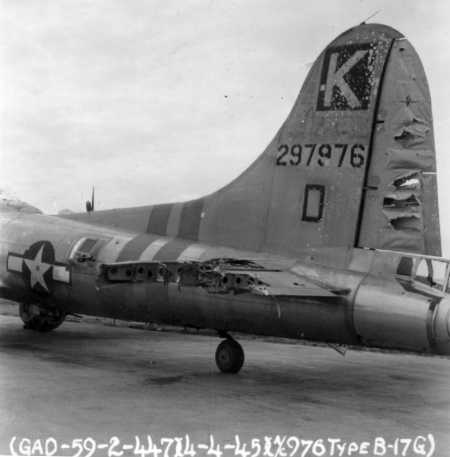
Originally designated ‘Louie the Creep’, B-17 42-97976 was repaired and  returned to Rattlesden as ‘Bit o’ Lace’. She went on to complete 82 missions in total before being returned via Bradley Field, Boston, to Kingman AAB for storage. Later she met an ungainly ending being stripped and scrapped on 9th November 1945.

42-97976_g

B-17 42-97976 ‘Bit o’ Lace’ after the attack on Kiel, 4th April 1945 (author unknown)

‘Bit o’ Lace’ earned notoriety whilst serving from RAF Rattlesden in Suffolk. She is famous for several special reasons one of which is for completing a mission with only half a tail.

What’s the other?


What’s the answer?

Whilst on my trails I find it disheartening to see so many of our former airfields disappear under builders machinery or industry looking for a cheap alternative to building their own premises. Using the guise of ‘recycling’ old sites, they fail to understand the history, importance or significance of these ‘brown field’ places.

These airfield were not simply a place where aircraft took off and landed a long time ago, but they are places where people died, suffered terrible injuries. were traumatised or lost loved ones and friends. It’s where young men, many away from their families for the first time, spent their last days on gods earth before giving themselves up in the name of peace.

Yes I see the relevance and difficult balance between the building infrastructure, jobs and housing needs against the desire to preserve small areas of heritage, history and desire to respect the need to preserve what are important marks that represent a major tuning point in the worlds development. It is hard, and not one that any political or historical follower takes lightly I’m sure. But if it were not for volunteers, people with a real understandings of the relevance of these matters, we would have very little to show for what was an incredible and turbulent time in world history.

Is there an answer? I don’t know, I wish I did. It would be easy to say “save every airfield” but for what? To rot, to be a time capsule soaking money form important public areas like health and education. Or is it dig them up, we don’t need them it was a long time ago, let’s move on!

All I know is, with each visit I make a little more of history disappears, a memory is lost and as the years roll on, a veteran passes away. Something needs doing and it needs doing soon.

IMG_1956.JPG

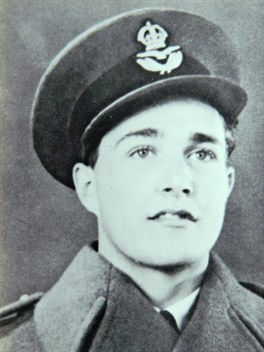
At 20 yrs old, this RAF Pilot fought his aircraft bravley.

On the morning of 30th, Manser and another pilot were instructed to collect two Manchesters from Coningsby, Lincolnshire. As many of these aircraft were drawn from reserves and training squadrons, it was inevitable that many would be in poor condition. Manser’s was no exception, it had no mid upper turret and a sealed escape hatch.

manserWhen the order came and Manser took off, his aircraft L7301 ‘D’ Dog, an Avro Manchester Mk1, with a full bomb load of incendiaries, was now difficult to manoeuvre and he was unable to reach an altitude of more than about 7,000 ft. Hoping the main bomber force would attract the greater concentration of  flak, he decided to continue on.

What happened to this young 20-year-old as he flew with his crew? find out…

‘For the Fallen’ – Laurence Binyon (1869-1943)

On the anniversary of the Start of World War One, we remember those who gave their all.  In remembrance, we use a verse from the Poem ‘For the Fallen’ written by Laurence Binyon in 1914.

A poem of 7 stanzas, it was first published in September of that year. This is the poem in its entirety.

For the Fallen

With proud thanksgiving, a mother for her children,
England mourns for her dead across the sea.
Flesh of her flesh they were, spirit of her spirit,
Fallen in the cause of the free.

Solemn the drums thrill: Death August and royal
Sings sorrow up into immortal spheres.
There is music in the midst of desolation
And a glory that shines upon our tears.

They went with songs to the battle, they were young,
Straight of limb, true of eye, steady and aglow.
They were staunch to the end against odds uncounted,
They fell with their faces to the foe.

They shall grow not old, as we that are left grow old:
Age shall not weary them, nor the years condemn.
At the going down of the sun and in the morning
We will remember them.

They mingle not with their laughing comrades again;
They sit no more at familiar tables of home;
They have no lot in our labour of the day-time;
They sleep beyond England’s foam.

But where our desires are and our hopes profound,
Felt as a well-spring that is hidden from sight,
To the innermost heart of their own land they are known
As the stars are known to the Night;

As the stars that shall be bright when we are dust,
Moving in marches upon the heavenly plain,
As the stars that are starry in the time of our darkness,
To the end, to the end, they remain.

(Published in The Times newspaper on 21st September 1914).

DSC_0169

For the Fallen – Laurence Binyon (1869-1943)