Kings Cliffe under threat!

Following my recent revisit to RAF Kings Cliffe (Trail 6) I have been contacted by a reader who informs me that there is a planning application in to change the site to a caravan and camping site.

The application will utilise the site of the T2 hanger used by Miller for his final hangar concert in October 1944 and the memorial that now stands there. Details and photos of the site are in the trail update.

In the application, there is no reference to maintaining or preserving this memorial or any of the few remaining buildings that exist on this site.

This application was placed just prior to Christmas and so the offices have been shut for a large part of the holiday.

This is an area of natural beauty, used by walkers, cyclists and horse riders, not to mention visitors to the memorial. The roads are narrow and the surrounding villages are beautiful.

From an aviation point of view, Kings Cliffe is an historical site and is yet another example of world history being developed with little or no regard to its significance.

If you wish to see this application, it can be found on the East Northants Website application reference 14/02225/FUL. Linked below – The closing date for any objections is January 12th 2015.

http://pawebsrv.east-northamptonshire.gov.uk/online-applications/applicationDetails.do?activeTab=summary&keyVal=NFDYXIGO03N00 or google ’14/02225/FUL’

Thank you
Andy.

/home/wpcom/public_html/wp-content/blogs.dir/dc6/67045631/files/2015/01/img_2306.jpg

/home/wpcom/public_html/wp-content/blogs.dir/dc6/67045631/files/2015/01/img_2285.jpg

/home/wpcom/public_html/wp-content/blogs.dir/dc6/67045631/files/2015/01/img_2283.jpg

‘In the Mood’ for aviation nostalgia?

Taking advantage of the winter sun and nearby location, I decided to take a short visit to one of the earlier trails and see how things had changed. Being a different time of year too, perhaps the buildings I saw would now be less obscured. I also thought that the initial trails were lacking and needed a little ‘historical substance’.

Whilst not wanting to lose sight of the idea behind the blog, I felt a little extra would not go amiss. Hearing about a memorial that I had missed earlier, I braved the late December air, donned coat, hat and scarf and set off to Kings Cliffe, in the top corner of Northamptonshire – land of Fighter squadrons and the last hangar concert performed by Major Glenn Miller.

RAF Kings Cliffe (Station 367)

(Revisited and updated December 2014)

DSC_0169

The Memorial at Kings Cliffe.

Unlike the other airfields in the tour, Kings Cliffe was a fighter airfield. Pass through the village from the south, out the other side, under the odd twin-arched bridge and then right. A few hundred yards along and the airfield is now on your right hand side. The memorial is here, flanked by the two flags. It is a more elaborate memorial than some, being made with the wing of a Spitfire on one side and the wing of a Mustang on the other. Various squadron badges are etched into the stone and as the weather takes it’s toll, these are gradually disappearing.

DSC_0197

Protected aircraft pen, with ‘dual skin’ defences on three sides. A number of these litter the site.

Over its life, Kings Cliffe would have a number of fighter units grace it skies. Built in 1943, it would receive its first squadron late that same year when P-39 Airacobras of Duxford’s 347th FS (350th FG) were temporarily based here. A short spell they would soon leave and be replaced with another short-term unit.

The following January, the 347th left and three squadrons: the 61st (code HV), 62nd (code LM) and the 63rd (code UN) of the 56th FG arrived from the U.S. This group fell under the command of the 67th Fighter Wing, Eighth Air Force. Redesignated the 56th FG in the previous May, they were initially given P-47s and continued to train at Kings Cliffe for fighter operations until moving on the 4th/6th April 1943 to Horsham St Faith, Norfolk. A few days later on 13th April 1943, they undertook their first operational sortie. Over the next two years the 56th FG would become famous for the highest number of destroyed aircraft of any fighter unit of the entire Eighth Airforce. A remarkable feat.

Littlefriends.co.uk

Pilots of the 77th FS, at Kings Cliffe 1944-45*1

After the 56th left Kings Cliffe, three more squadrons arrived. In August that year, the 20th FG arrived with their P-38 Lightnings. The 55th (code KI), 77th (code LC) and the 79th (code MC), would fall under the umbrella of the 67th Fighter Wing, Eighth Airforce.

After a spell of renaming, aircraft changes and training, their arrival at Kings Cliffe would see a period of stability for the 20th. Initial operations started in December that year, and their primary role would be to escort bombers over Europe, a role it maintained until the cessation of conflict. Targets of opportunity were often found whilst on these missions, but toward the end of the war, with fighter cover becoming less of an issue, dive bombing and ground attack missions became more common place. Their black and white chequered markings became feared by airfields, barracks and in particular trains as they became known as the “Loco Group” for their high number of locomotive attacks.

Oakington Pillbox Kings Cliffe Dec 2014

Oakington Pillbox, found in pairs, they offer a 360 degree field of fire.

On April 8th 1944, the 20th attacked an airfield in Germany, action for which they received a Distinguished Unit Citation (DUC). They would later take part in the Normandy invasion, Operation Market Garden, and air cover in the Battle of Bulge. In July 1944 they converted to P-51s and continued to escort bombers and search out targets of opportunity until the war closed. In the following October 1945, they returned to the U.S. and Kings Cliffe was returned to RAF ownership. The RAF would use it as a storage depot until selling it off in 1959. Its runways were dug up for hardcore, the buildings demolished and the site finally returned to agriculture.

Kings Cliffe December 2014 Draincover

Drainage covers and pipes adorn the remains of the runway.

Whilst standing at the memorial, it is difficult to imagine any of the activity that occurred here all those years ago. However, behind the memorial you can see a number of brick defence buildings enshrouded in trees and bushes. Move along the road to your right and there is the main gate. Stating that it is an airfield, it doesn’t encourage entrance. However, walk or drive a little further and there is a bridal way that allows access to the site. Walking along around the edge of the airfield, you can see hidden amongst the thorn bushes  an Oakington Pill box. Found in pairs and common in this area, they offer a 360 degree view of the site. The second of the pair is  short distance away in the middle of the field and more visible to the viewer. Also round here are three protected dispersal pens. Each pen has a double skin, in other words, an outside loop holed wall for firing through and an inner wall to protect air and ground crews in the event of an attack. There are a handful of other ancillary buildings here, all of which can be accessed with careful treading. A considerable number of these exist close to the road and path, so extensive travelling or trespass is not required for the more ‘informal’ investigation.

DSC_0188

Inside the Shelter.

Walking further along the path, you pass a large clump of trees heading of in an easterly direction. These mark the line of the east-west runway. Whilst the runway has gone, evidence of its existence can be found. A drainage channel, numerous pieces of drainage material and grates can be found amongst the remains of hardcore.

The path continues in a southerly direction away from the main part of the airfield, and a better option may be to return to the car and drive along to a different part of the site.

If you return through Kings Cliffe, bear left and through the small but gorgeous village of Apethorpe. Continue on and you’ll see a footpath that goes through the woods. Park here and walk through the woods. A couple of miles in and you come across a large open space, to your left is a distinguished memorial to Glenn Miller.

Glenn Miller Memorial RAF Kings Cliffe Dec 2014

Memorial to Glenn Miller’s final hangar concert, 3rd October 1944.

The memorial is located on the site of the original T2 hangar, quite a distance away from the main airfield. It was here that Miller performed his final hangar concert on October 3rd 1944. Standing here in the wintry air listening to ‘In the Mood’, is a surreal experience. To think that, on this spot 70 years ago, this very tune was performed by Miller himself; whilst young couples jitterbugged the evening away – a brief respite from the wartime tragedies that dominated their daily lives.

Leaving here, back to the track, you come across a footpath that takes you north, toward the main airfield before veering off and away to the west.

This path provides what is probably the nearest access point to the tower, as it crosses the track that joins the perimeter near to the towers location. The control tower still stands, but access from the path is over private land and should be undertaken with the land owner’s permission.

A final car trip back to the north side of the airfield reveals evidence of the accommodation blocks. The cinema, Gymnasium and chapel along with some other communal buildings still stand and in use by local timber companies. Well preserved, they are easily accessible and offer a good view to anyone aiming to find evidence of Kings Cliff’s history.

Kings Cliffe December 2014 Chapel with gym

Gymnasium and Chapel now used by a timber company.

Like many sites of it’s age, the majority of Kings Cliffe’s buildings are overgrown, indeed entering them you can see how the roofs have become detached in many cases, and mature trees now the only inhabitants where personnel once stood.

The main part of the airfield is agriculture, and it can be seen from further back, why this site was chosen as the views across the landscape toward Peterborough and the south are stunning. A remarkable place, it offers good evidence, nostalgia and beautiful walks into the bargain.

Overgrown buildings

Overgrown buildings

Kings Cliffe concludes this tour, however, if you return back along the road to the village of Kings Cliffe, turn right away from the village, you will eventually find yourself sitting opposite one of the crash exits of RAF Wittering, the main station to which Kings Cliffe was built as a satellite. Also along here, is a remnant of RAF Collyweston, an airfield absorbed into RAF Wittering at the end of the war when it expanded ready for the V – force bomber aircraft and later the Harriers. Now closed to flying due to government cutbacks, it houses an army detachment and a small RAF detachment for maintenance duties only.

Much of the evidence from the American participation in the Air War of the Second World War has now disappeared, being swallowed up by natures determination to regain what was originally hers. Agriculture and small businesses have clung on to the remainder, leaving little to see. In some ways, and I touched on this earlier, the fact that peace has now taken over what were bustling camps of 3000+ personnel, the roar of four engined bombers laden with high explosives or troop carriers taking scared young men to the killing fields of Europe, is a reflection on their bravery and dedication. These areas are simply peaceful now because of the men that served, lived and died here and whilst they are now gone, maybe their ghosts remain.

Kings Cliffe originally featured in Trail 6 ‘American Ghosts’.

*1 photo by Robert Derenbacker from ‘Little friends’ website http://www.littlefriends.co.uk

A Tuskegee Airmen from St. Louis, MO: Captain Hugh J. White

It was 35 years ago today that the life of a brave African-American man from St. Louis, Missouri, (MO) ended. His name was Captain Hugh J. White, and he was a Tuskegee Airmen.

Riviera Beach high schoolers meet the United States' first black military aviators, the Tuskegee Airmen photo

Tuskegee Airmen Charles Hill, second from left, with fellow pilots (l-r) Hugh White, Lincoln Hudson and Carl Ellis, taken in 1944 in Alabama. Courtesy of Charles Hill.


You might recognise St. Louis, MO and places like nearby Ferguson, MO from the news as of late, but not for the great accomplishments of its citizens, rather for the seemingly never-ending division among between people of different races. The actual Ferguson case aside (because I do not know enough about it to comment intelligently, nor do I want this post to draw any more attention to a topic that has had more than its share), It is my goal, that we, as a community, as members of the human race, spend more time considering the things we share in common and discussing the positive contributions that are made by all people. That is not to diminish the importance of such issues of racial division, because they are of the utmost importance. It is simply, that I would like to see the focus move in a different direction.

On December 14th, 1979, Captain Hugh J. White, passed away. Yes, it was 35 years ago this very day. An anniversary worth noting I believe. Captain White was a veteran of the United States Army Air Corp and a famous Tuskegee Airmen, who began his decorated career as an Aviation Cadet.

Captain White was born on August 24th, 1922 in St. Louis, MO. As he did with nearly everything in his life, he approached his high school years with nothing short of expecting complete excellence from his efforts. As a young teenager at Charles Sumner High School, he did just that; he excelled. He was voted by his peers to be president of his class and earned top grades and graduated as a member of the National Honour Society.

His plans, like many young men growing up in wartime, changed quite suddenly. His initial plans were to attend Stowe Teachers College and pursue a worthwhile career. However, as events in Europe grew more dire, it became apparent that every able-bodied young man must rise to challenge and answer the imminent call of duty to country and homeland. It was in January 1943 that he volunteered for the United States Army Air Corp. Not long after, Captain White was sent to Tuskegee, Alabama for his initiation and training.

Captain White graduated as part of Class 44-F, and because of his own high standards and insistence upon personal excellence, he graduated at the top of his class. He was then sent to the European Theater of Operations to participate in the war in Italy. He became a pilot assigned to the 99th Pursuit Squadron of the 322nd Fighter Group, and in the course of his dedicated service, earned 190 combat hours and flew 35 combat missions.

Photograph shows, first row: 1. Hugh J. White, St. Louis, MO, 44-F; 2. Col. Benjamin O. Davis, Commanding Officer, 332nd Fighter Group, Class 42-C; 2. Conrad A. Johnson, New York, NY, 44-G; 4. Thurston L. Gaines, Freeport, NY, 44-G; 5. Robert W. Williams, Ottumwa, IA, 44-E; 6. Lewis J. Lynch, Columbus, OH, 44-F; 7. William T. Matison, Conway, AR, 42-I. Second row: 1. Rual W. Bell, Portland, OR, 44-D; 2. Elbert N. Merriweather, Jr. Brooklyn, NY, 44-G; 3. John H. Lyles, Chicago, IL, 44-G; Leland H. Pennington, Rochester, NY, 44-G; 5. unidentified; 6. unidentified; 7. James H. Fischer, Stoughton, MA, 44-G; 8. George Arnold Lynch, Valley Stream, NY, 44-F; 9. Rupert C. Johnson, Los Angeles, CA, 44-F. Image and caption credit: Library of Congress, Prints & Photographs Division, Toni Frissell Collection.


On April 23rd, 1945, whilst flying his 35th mission, Captain White’s P-51 was shot down by anti-aircraft fire whilst escorting B-24s on a bombing mission over Italy. He survived but was captured and became a prisoner of war. Though no doubt both trying and difficult for him, he survived his ordeal as a POW. Thankfully, while White was in captivity, the Second World War in Europe finally drew to its conclusion and hostilities ceased. White was soon released and repatriated with his unit.

Captain White received an honourable discharge and eventually returned to his beloved homeland safe and sound, and he went home to St. Louis, MO. Never one to be without a goal, he applied to and was accepted to the Cleveland Marshall Law School (in Cleveland, Ohio). He graduated from law school, passed the Missouri bar exam, and his practice specialised in criminal law.

Not unlike high school, Captain White was again elected by his peers, though this time to the Missouri Legislature where he served as a State Representative. He was first elected in 1961, and in 1963, his constituents re-elected him to be their State Representative once again,

Captain White was a key figure in the organisation of the St. Louis Chapter of the Tuskegee Airmen before his death in 1979.

scan painting Hugh J. White Tuskegee Airmen P51 Pilot St. Louis

For his dedication, determination and bravery, and for action against the enemy, Captain White was awarded the Purple Heart. Captain White and the numerous other Tuskegee Airmen, fought alongside their fellow American airmen, for the rights and freedoms that all of us enjoy today.

On the 35th anniversary of his death, we owe a great deal of gratitude, not only to Captain White and his compatriots, but to all who fought in World War II.

–  By Marcella Beaudreau


What the Luftwaffe failed to do, the local council have finally managed.

Many of Britain’s airfields have hung on desperately to a small corner of history. Hawkinge is sadly one of those that has been buried deep beneath housing, schools and shops. Sadly, one of England’s most historic airfields, has finally been defeated not by Goring’s Luftwaffe, but by local planners.

Hawkinge was at the forefront of the Battle of Britain, it was repeatedly attacked by the bombers of the Luftwaffe. Because of its location, just minutes from France, crews would often have little warning and would have to take to the sky unprepared. Many returning aircraft would use its runways as a safe haven returning battle damaged and weary; Hawkinge fire crews were some of the busiest Britain was to have. It was used as a transport depot in the First World War, became a mecca for international pilots, saw some of the first ‘drones’ and was used in the filming of the 1969 film ‘The Battle of Britain’.

Today a small museum, utilises what’s left of the original buildings whilst housing creeps like poison ivy, ever further across the airfield.

The nearby cemetery is home to not only RAF pilots but also fallen Luftwaffe crews, ironically remaining in the land they tried to take all those years ago.

As part of a second aviation trail around historic Kent, Hawkinge is a must for any follower of history, aviation or the Battle Of Britain.

See the full story and Kent’s second trail here.
lady cropped 2 B&W


Eisenhower stopped off at Lashenden

It was during this time, on July 4th 1944, that General Eisenhower stopped off at Lashenden following one of his many flights over the German lines in Normandy. His pilot, Brig. Gen. Elwood R. Quesada, veteran of 90 sorties, was berated by his superiors for such a ‘foolish’ act. In response he said, “When a five-star general says ‘Go,’ you go!”

Lashenden, also known as Headcorn, was an advanced landing ground, built initially for the RAF, it was taken over by the US Ninth Airforce who used to to fly P-51s and P-47s out over France.

Today it is a thriving airfield, whose annual reenactments bring back the nostalgia of 1940s Britain. Find out more about Lashenden’s history and other airfields in Kent. Click on this link.

lady cropped 2 B&W

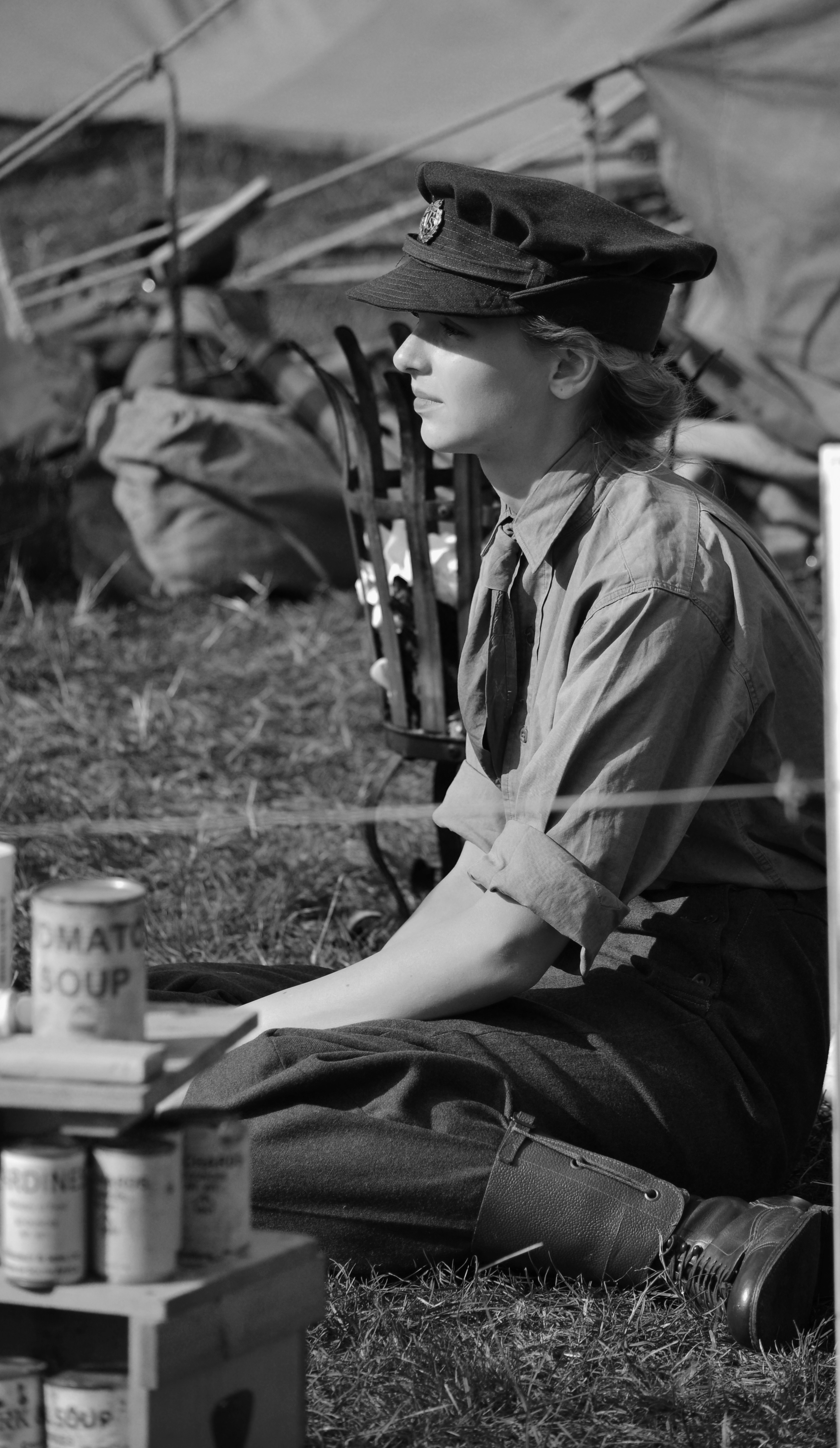
1940s Britain is reenacted on the Former Lashenden Advanced Landing Ground used by the Ninth Air Force.


Polish Fighter Ace Turned a V1 on its back.

The first V1 for 315 sqn was shot down by Flt Sgt Jankowski at 13:10 on July 11th. There were three more the following day and several others would meet similar fates. Shooting down a V1 was dangerous, many aircraft being caught in the subsequent blast. Other, less conventional methods would include tipping the wing of the V1 destabilising the gyroscopic guidance system within, sending it tumbling to the ground. On one occasion, WO Tadeusz Szymanski managed to completely turn a V1 onto its back using such a method.

Brenzett, was an advanced landing ground, built to be temporary, but even so, it produced some remarkable stories.

As part of a second trail around Kent, we visit three more of Britain’s airfields, Hawkinge, Brenzett and Lashenden. Each with its own story to tell. Want to know more? click here to go back to 1940s England and then see what has happened to these historic places.

Brenzett village sign

Brenzett Village Sign Depicts its Aviation History


Lt. Col. Leon Vance 489th BG – Medal of Honour

Leon vance.jpg

Leon Vance*

The story of Leon Vance is one of  the saddest stories to emerge from the Second World War. He was a young American, who through his bravery and dedication, saved the lives of his colleagues and prevented their heavily striken aircraft from crashing into populated areas of southern England. Following a mission over France, his was very severely injured, but miraculously fought on.

Leon Robert Vance, Jr. known as ‘Bob’ to his family and friends, was born in Enid, Oklahoma, on August 11th, 1916. He graduated from high school in 1933 after receiving many honours and being singled out as a high performing athlete. He went on, after University, to the prestigious Training College at West Point in 1935, staying until his graduation four years later in 1939. It was here, at West Point, he would meet and marry his wife Georgette Brown. He and Georgette would later have a daughter, after whom Vance would name his own aircraft ‘The Sharon D’.

Vance would become an aircrew instructor, and would have various postings around the United States. He became great friends with a Texan, Lieutenant Horace S. Carswell, with whom he would leave the Air Corps training program to fly combat missions in B-24 Liberators. They became great friends but would go on to fight in different theatres.

Prior to receiving his posting, Vance undertook training on Consolidated B-24s. Then, in October 1943, as a Lieutenant Colonel, he was posted to Europe with the newly formed 489th Bombardment Group (Heavy), as the Deputy Group Commander. One of the last groups to be assigned to the european theatre, they formed part of the 95th Combat Bombardment Wing (2nd Bomb Division),  Eighth Airforce, and were sent to RAF Halesworth (RAF Holton) designated Station 365 by the USAAF.

The group left their initial base at Wendover Field, Utah in April / May 1944 and their first mission would be that same month on May 30th, 1944, as part of a combined attack on communication sites, rail yards and airfields. A total of 364 B-24s were to attack the Luftwaffe bases at Oldenburg, Rotenburg and Zwischenahn, along with other targets of opportunity far to the north in the German homeland. With only 1 aircraft lost and 38 damaged, it was considered a success and a good start to the 489th’s campaign.

As the build up to Normandy developed, Vance and the 489th would be assigned to bombing targets in northern France in support of the Normandy invasion about to take place further to the south. An area the unit would concentrate on, prior to the Allied beach invasion on June 6th that year.

The day before D-day, the 489th would fly to Wimereaux, in the Pas-de-Calais region of northern France. This would be Leon Vance’s final mission.

B-24H Liberator of the 489thBG, RAF Halesworth*2

The group, (Mission 392),  consisted of 423 B-17s and 203 B-24s and were to hit German coastal defenses including: Le Havre, Caen, Boulogne and Cherbourg areas as precursors to the Normandy invasion. Some 127 P-47s and 245 P-51s would support the attacks. The 489th would assemble at 22,500 feet on the morning of June 5th, proceed to the south of Wimereaux and fly over dropping their payload then return to England. On the run in to the target, Vance was stationed behind the pilot and copilot.  The lead plane encountered a problem and bombs failed to jettison. Vance ordered a second run, and it was on this run that his plane, Missouri Sue, took several devastating hits.

Four of the crew members, including the pilot were killed and Vance himself was severely injured. His foot became lodged in the metal work behind the co-pilots seat. There were frantic calls over the intercom and the situation looked bad for those remaining on board. To further exacerbate the problems, one of the 500lb bombs had remained inside the bomb bay armed and in a deadly state, three of the four engines were disabled, and fuel spewed from ruptured lines inside the fuselage.

Losing height rapidly, the co-pilot put the aircraft into a dive to increase airspeed. The radio operator, placed a makeshift tourniquet around Vance’s leg, and the fourth engine was feathered.  They would then glide toward the English coast.

The aircraft was too damaged to control safely, so once over english soil, Vance ordered those who could, to bail out. He then turned the aircraft himself out to the English Channel to attempt a belly landing on the water. A dangerous operation in any aircraft, let alone one with an armed bomb and no power.

Still trapped by the remains of his foot, laying on the floor and using only aileron and elevators, he ensured the remaining crew left before the aircraft struck the sea. The impact caused the upper turret to collapse, effectively trapping Vance inside the cockpit. By sheer luck, an explosion occurred that threw Vance out of the sinking wreckage,  his foot now severed.  He remained in the sea searching for whom he believed to be the radio operator, until picked up by the RAF’s Air Sea Rescue units.

Vance was alive, but severely injured. He would spend a number of weeks, recuperating in hospital, writing home and gradually regaining his strength. Disappointed that his flying career was over, he looked forward to seeing his wife and young child once more. However, on a recuperation trip to London, Vance met a young boy, who innocently, and without thought, told him he wouldn’t miss his foot. The emotional, impact of this comment was devastating to Vance and he fell into depression. Then, news of his father’s death pushed him down even further.

Eventually, on July 26th, 1944 Vance was given the all clear to return home and he joined other wounded troops on-board a C-54, bound for the US. It was never to arrive there.

The aircraft disappeared somewhere between Iceland and Newfoundland. It has never been found nor has the body of Leon Vance or any of the others on board that day. Vance’s recommendations for the Medal of Honour came through in the following  January (4th), but at the request of his wife, was delayed until October 11th 1946, so his daughter could be presented the medal in her father’s name.

The citation for Leon Vance reads:

For conspicuous gallantry and intrepidity above and beyond the call of duty on 5 June 1944, when he led a Heavy Bombardment Group, in an attack against defended enemy coastal positions in the vicinity of Wimereaux, France. Approaching the target, his aircraft was hit repeatedly by antiaircraft fire which seriously crippled the ship, killed the pilot, and wounded several members of the crew, including Lt. Col. Vance, whose right foot was practically severed. In spite of his injury, and with 3 engines lost to the flak, he led his formation over the target, bombing it successfully. After applying a tourniquet to his leg with the aid of the radar operator, Lt. Col. Vance, realizing that the ship was approaching a stall altitude with the 1 remaining engine failing, struggled to a semi-upright position beside the copilot and took over control of the ship. Cutting the power and feathering the last engine he put the aircraft in glide sufficiently steep to maintain his airspeed. Gradually losing altitude, he at last reached the English coast, whereupon he ordered all members of the crew to bail out as he knew they would all safely make land. But he received a message over the interphone system which led him to believe 1 of the crew members was unable to jump due to injuries; so he made the decision to ditch the ship in the channel, thereby giving this man a chance for life. To add further to the danger of ditching the ship in his crippled condition, there was a 500-pound bomb hung up in the bomb bay. Unable to climb into the seat vacated by the copilot, since his foot, hanging on to his leg by a few tendons, had become lodged behind the copilot’s seat, he nevertheless made a successful ditching while lying on the floor using only aileron and elevators for control and the side window of the cockpit for visual reference. On coming to rest in the water the aircraft commenced to sink rapidly with Lt. Col. Vance pinned in the cockpit by the upper turret which had crashed in during the landing. As it was settling beneath the waves an explosion occurred which threw Lt. Col. Vance clear of the wreckage. After clinging to a piece of floating wreckage until he could muster enough strength to inflate his life vest he began searching for the crew member whom he believed to be aboard. Failing to find anyone he began swimming and was found approximately 50 minutes later by an Air-Sea Rescue craft. By his extraordinary flying skill and gallant leadership, despite his grave injury, Lt. Col. Vance led his formation to a successful bombing of the assigned target and returned the crew to a point where they could bail out with safety. His gallant and valorous decision to ditch the aircraft in order to give the crew member he believed to be aboard a chance for life exemplifies the highest traditions of the U.S. Armed Forces”*1

Leon Vance’s actions would be remembered. His local base in Oklahoma was renamed ‘Vance Air Force Base’ on July 9th, 1949. The gate at Tinker Air Force Base, Oklahoma was also later named after him on May 9th, 1997, and his name appears on the ‘Wall of the Missing’ at Madingley American War Cemetery in Cambridge, England.

IMG_2005

The Wall of the Missing, on Which Leon Vance’s Name Appears.

Leon Robert Vance, Jr. (August 11th, 1916 – July 26th, 1944)

For other personal tales, click here.

references

* Photo public domain ia Wikipedia

*1 “Medal of Honor recipients – World War II”.

*2 Photo Public Domain via Wikipedia.

Caught at Upwood and executed for spying

“Upwood was to experience some rather difficult times and localised action. Numerous accidents were interspersed with attacks by marauding Luftwaffe aircraft and a parachuting spy. This event led to much excitement around the base. The spy,  Josef Jakobs, was found guilty of treason and later executed at the Tower of London”

Possibly one of the most photographed sites in the country, it is like a ghost town, its buildings vandalised and shattered, its walls resonate with the ghostly callings of those who trod its corridors.

Why not see more of Upwood and what remains of this one bustling site using this link.

DSC_0179

Ghostly reminders of days long gone


5,127 Missing Americans are Honoured Here

There are many excellent and fitting memorials around the country dedicated to the RAF and USAAF personnel. Many of these are relatively new and make for terrific places to sit, remember and give thanks to the young men and women who gave so much.

I have visited a few myself and will feature them here as I get round them. If you have been to one and would like to write a piece for us, please feel free to contact us, and we can make the necessary arrangements to post it here. We would love your contribution.

My first is the American Cemetery at Madingley.

Cambridge American Cemetery and Memorial – Madingley

Not far from Cambridge, to the west of the M11, is the American Cemetery and Memorial at Madingley.

IMG_1998

A Panoramic View Across Madingley Cemetery

Madingley is the only American Military Cemetery in the United Kingdom, dedicated solely to the Second World War. It covers an area of some 30 acres and the land it uses was donated by Cambridge University. The site was dedicated on July 16th 1956. It is operated and maintained solely by the American Battle Monuments Commission, who oversee 24 cemeteries and 25 memorials across 15 different countries.

DSC_0573

One of the 3,812 Headstones

The cemetery has become a symbol of not only the  sacrifice of those held within its walls but the 3 million Americans who were stationed here during Word War II and the continuing alliance between the United Kingdom and the United States in times of conflict.

Within the cemetery stand 3,812 headstones, 3,732 Latin crosses, and 80 Stars of David. The stones are laid out in a fan, each row like a ripple in a pool, with the origin at a flagpole, from which the entire site and surrounding countryside can be seen. Around the base of the flag pole are the words from  “In Flanders Fields“, a World War I poem written by John McCrae, which reads: “To you from failing hands, we throw the torch – be yours to hold it high“. Every night, as the flag is lowered, ‘Taps’ is played on a bugle to signify the end of the military day and lights out – the time to sleep.

DSC_0572

The Plaque Dedicated to the Crew of the 577th BS

Next to this are two buildings. Firstly, the visitors’ centre, where there is a place to sit and staff who will willingly search the Commission’s online database for you. On the wall outside the centre is a plaque dedicated to the crew of a B-24 of the 577th BS, 392nd BG, that flew from RAF Wendling; who through their actions avoided crashing into civilian homes in Hertfordshire.  Next to this, is an exhibition hall, detailed through stories and pictures, the American involvement in the Second World War; with specific examples of some of those souls laid to rest at Madingley.

Along the southern side of the cemetery, is the wall holding the “Tablets of the Missing”. Here, the names, rank and service branch of 5,127 personnel, whose bodies were never found are located. Among them are those of Major Alton Glenn Miller and Lt. Joseph P. Kennedy Jr. (Older brother of John F. Kennedy), to name but a few.

Along the top of the wall is the inscription:

The Americans, whose names here appear, were part of the price that free men for the second time in this century, have been forced to pay to defend human liberty and rights. All who shall hereafter live in freedom
will be here reminded that to these men, and their comrades,
we owe a debt to be paid with grateful remembrance of their sacrifice,
and the high resolve that the cause for which they died
shall live eternally.”

IMG_2005

The Wall With the Names of the Missing

The 427 foot long wall, has 4 statues representing: a soldier, an airman, sailor and coast guardsman, who stand guard over the inscriptions; the four statues were designed and created by the American sculptor, Wheeler Williams (November 30th, 1897 – August 12th, 1972). Wreaths are placed at the foot of the wall by American associations and serving units and makes for a moving experience.

DSC_0590

One of the Four Sculptures Depicting an Airman

At the other end of the wall is the memorial and chapel. The inscription on the memorial says “Grant Unto Them O Lord Eternal Rest” and 5 pillars each inscribed with one year of the war 1941 – 1945, that the Americans were involved. A brass inscription over the entrance reads “Into Thy Hands O Lord” and opens up to a detailed and incredible room. The roof depicts a formation of bombers and their escorts typical of those that flew from airfields in England, on their way to occupied Europe. On the wall a large map illustrates “The Mastery of the Atlantic – The Great Air Assault”,  in superb detail.  Designed by Herbert Gate, the American Artist, it is thirty feet long and eighteen feet high and shows the routes used to transport men and machinery from the United States. It also shows Naval operations and the bombing routes used during the great battles over Europe.

DSC_0581

The Memorial Building and Chapel

Outside the chapel, along the length of the ‘Tablets of the Missing’, are rectangular pools and rose beds, neatly laid out as they should be. Lined by trees, it makes a serene place to walk.

Madingley Cemetery is a moving yet peaceful place to sit and remember, to pay homage and to give thanks to the many young men and women who came from another country, to give up their lives in the name of freedom and democracy.

In the words of the original Chairman, General John J. Pershing, Commander of the American Expeditionary Force of the First World War:

“Time will not dim the Glory of Their Deeds”.

IMG_2006

The Atlantic Display Inside the Chapel

DSC_0582

The Rectangular Ponds in Front of ‘The Tablets of the Missing’

Madingley Cemetery can be visited freely, opening times and other details are available on their website here, from which many of the facts of this record have come.

The American Battles Monuments Commission also manages the Brookwood Cemetery in Woking, Surrey and their details can be found here.

The American Role of Honour can be seen here at St Pauls Cathedral, my thanks goes to wynnebook.wordpress.com for the valuable link.

They shall grow not old, as we that are left grow old: …

Originally posted on the anniversary of the publication of his poem, For the Fallen, 21st September 2014, Laurence Binyon’s poem has become synonymous with remembrance services across the country. This week is remembrance Weekend (and Veteran’s day in the United States) on which we remember the fallen: those who gave the greatest sacrifice, so we could live in peace.

I thought it appropriate to repost this during Thai special week so we know a little more about the poem and the history behind it.

‘Lest we forget’

“To all those who went before, (Robert) Laurence Binyon’s 1914 poem is widely used in remembrance services across the world. Laurence Binyon wrote his For the Fallen, with its Ode of Remembrance, while Binyon was visiting the cliffs of North Cornwall between Pentire Point and The Rumps.

Today, if you visit, there is a stone plaque at the spot to commemorate his poem, which reads: For the Fallen Composed on these cliffs 1914″. There is also a second plaque located on the beehive monument on the East Cliff above Portreath in central North Cornwall. There, you will find a plaque on a statue inscribed with the same words. Laurence Binyon’s poem, For the Fallen, was published in The Times newspaper, following heightened public sentiment due to the recent Battle of Marne (5-12 September 1914) on 21st September 1914, 100 years ago today. http://wp.me/P4xjD9-8u

For the Fallen

With proud thanksgiving, a mother for her children,
England mourns for her dead across the sea.
Flesh of her flesh they were, spirit of her spirit,
Fallen in the cause of the free.

Solemn the drums thrill: Death august and royal
Sings sorrow up into immortal spheres.
There is music in the midst of desolation
And a glory that shines upon our tears.

They went with songs to the battle, they were young,
Straight of limb, true of eye, steady and aglow.
They were staunch to the end against odds uncounted;
They fell with their faces to the foe.

They shall grow not old, as we that are left grow old:
Age shall not weary them, nor the years condemn.
At the going down of the sun and in the morning
We will remember them.

They mingle not with their laughing comrades again;
They sit no more at familiar tables of home;
They have no lot in our labour of the day-time;
They sleep beyond England’s foam.

But where our desires are and our hopes profound,
Felt as a well-spring that is hidden from sight,
To the innermost heart of their own land they are known
As the stars are known to the Night;

As the stars that shall be bright when we are dust,
Moving in marches upon the heavenly plain,
As the stars that are starry in the time of our darkness,
To the end, to the end, they remain.

(Published in The Times newspaper, 21st September 1914).

Thanks to Marcella who contributed to the writing of the original post.”

DSC_0097

 For the Fallen – Laurence Binyon (1869-1943)