RAF Mattishall Airfield – Part of Trail 36

Following on from previous posts about Tydd St. Mary and Narborough airfields, RAF Mattishall was used by the same squadron, 51 (HD) Sqn to combat the threat from Zeppelin airships over the eastern counties of England. Now long gone and sadly relegated to the history books, we visit another airfield that played a role in the defeat of these once mighty airships.

RAF Mattishall.

Close by to RAF Swannington is the former RAF/RFC airfield at Mattishall, a few miles to the south beyond Attlebridge and its huge USAAF base. Closed at the end of the First World War, Mattishall saw detachments of 51 Squadron during the First World War. 51 (HD – Home Defence) Squadron had its headquarters at Thetford, with other flights at Harling Road, Narborough and Tydd St Mary. Flying a range of models, including both the BE2 and BE12 models; 51 (HD) Sqn had a mix spread across these airfields taking on the FE2b in both single and two variants later on in the war.

Intrusions by Zeppelins were more common in the earlier stages of the war, and the Home Defence Squadrons were created to counter-act them. Poor performance initially led to poor successes against these airships but that didn’t stop the determined young crews of the RFC and latterly the RAF. Toward the end of the war in 1918, home defence had been scaled back. However, as the newer Zeppelins, Gotha and Zeppelin-Staaken were able to fly at much higher altitudes, home defence squadrons needed a more able aircraft to combat them. In poured numbers of Sopwith Camels, SE5 and DH4s, but it was all a bit ‘too-little, too-late’ for the mighty airships that once ruled the skies.

During the last Zeppelin raid of the war on the night of August 5th/6th, 1918, RAF DH4s and Sopwith Camels attacked a small fleet of airships of the Norfolk coast. Inland the home defence squadrons were alerted and scrambled but the group of Zeppelins never made it in-land and flights from 51 Squadron at Mattishall were to play no part in their eventual downfall. Sadly Lt. Drummond from Mattishall flying in FE2b ‘A5732’ had to make a forced landing at Skegness, presumably as a result of engine trouble. This was to bring the night fighter operations to an end and with it the end of both 51 Sqn and RAF Mattishall.

The airfield was built close to Toll House Farm and had a range of facilities common to First World War airfields. A few wooden huts and two hangars were erected on-site and these proved to be the limit of accommodation on the 80 acre site. Post war, these were all sold off to local businesses and farms and the land returned to the farmer.

Now completely agricultural, Mattishall was once a hive of flying activity for a short period of the war, where flying bravely in open cockpits and without parachutes was common place. Sadly, Mattishall’s existence has disappeared into the history books and it is no more.

A short history of Mattishall along with some personal accounts can be found here.

Mattishall is can be found in Trail 36 – North Norfolk (Part 6).

RAF Tydd St. Mary

Just over the Cambridge border into the area known today as South Holland in Lincolnshire, is a field that was a small airfield during the First World War. Designed for home defence, it was used for attacking marauding Zeppelin airships approaching England across the North Sea. Larger towns and cities such as Norwich and Lincoln were prime targets, although most designated targets were much further north for example Manchester and Liverpool. To protect themselves, the crews of these mighty airships flew at night and at altitude, but navigation skills were poor and crews were generally unaware of their actual location. As a result, they rarely made it beyond the eastern counties or the Fens of Cambridge and Lincolnshire. Because of poor weather and inexperienced pilots flying against these ships, some Zeppelins were able to wander – at the will of the weather – for as much as 10 hours unabated, randomly dropping bombs on what they considered to be ‘prime targets’.

A major turning point in this air-war, was the night of January 31st 1916 when nine Zeppelins of the German Navy attacked what they believed to be the industrial north-west. In fact they had barely got beyond the lower regions of Lincolnshire before dropping their ordnance. These attacks resulted in the loss of sixty-one people and whilst no British fighter was known to have engaged the airships, a number of Royal Flying Corps (R.F.C) crews were lost due to bad weather.

This disastrous night led to major changes in the Home Defence Squadrons of the R.F.C and R.N.A.S (Royal Naval Air Service), a process that would take a considerable time to complete.

As a part of these changes, an airfield was developed just south of the South Holland Drain a mile or so north of the village of Tydd St. Mary.

RAF Tydd St. Mary

Designed as a class 1 landing ground, Tydd St. Mary covered 125 acres by the time it closed in 1919. Development of the site began in mid 1916 following the re-organisation of the home defence force, but the first units didn’t arrive until the autumn of 1917. Not much more than a field, it did eventually have a small number of  Bessonneau*1 hangars and a small selection of crew huts.

The main unit to use Tydd St. Mary was 51 Home Defence (HD) Squadron whose main flight was based at Thetford. Formed from the nucleus of 9 Reserve Squadron (RS) on 15th May 1916, they moved to Hingham with flights dispersed at Harling Road, Norwich (‘A’ Flight), Mattishall (‘B’ Flight), ) and Narborough (‘C’ Flight). Initially they were equipped with the BE2c, which were soon replaced by the BE12 and subsequently the FE2b aircraft and then the BE2e in December 1916.

For a short while Zeppelin intruder flights were rare and this breather allowed for extensive practice flights by both 51 (HD) Sqn and their partner unit 38 (HD) Sqn who were based a little further to the north.

This lull in movements ceased in the autumn of 1916, when a large formation of Zeppelins gathered over the wash and headed for London. Badly hindered by fog and bad weather, they were eventually scattered across the southern and eastern regions of England where they dropped their bombs on remote farmland. This attack caused no damage to property, nor were the Zeppelins challenged in any major way – the marauders had little to worry about other than poor weather. Patrols by 51 and 38 (HD) Sqn’s were in vain, a pattern that was to continue for the large part, for the duration of the war.

At the end of 1916, Tydd St. Mary was re-designated a Night Landing Ground (NLG) following the renaming of R.F.C Home Defence Stations. 51 (HD) Squadron would soon fly from here in the defence of the eastern counties.
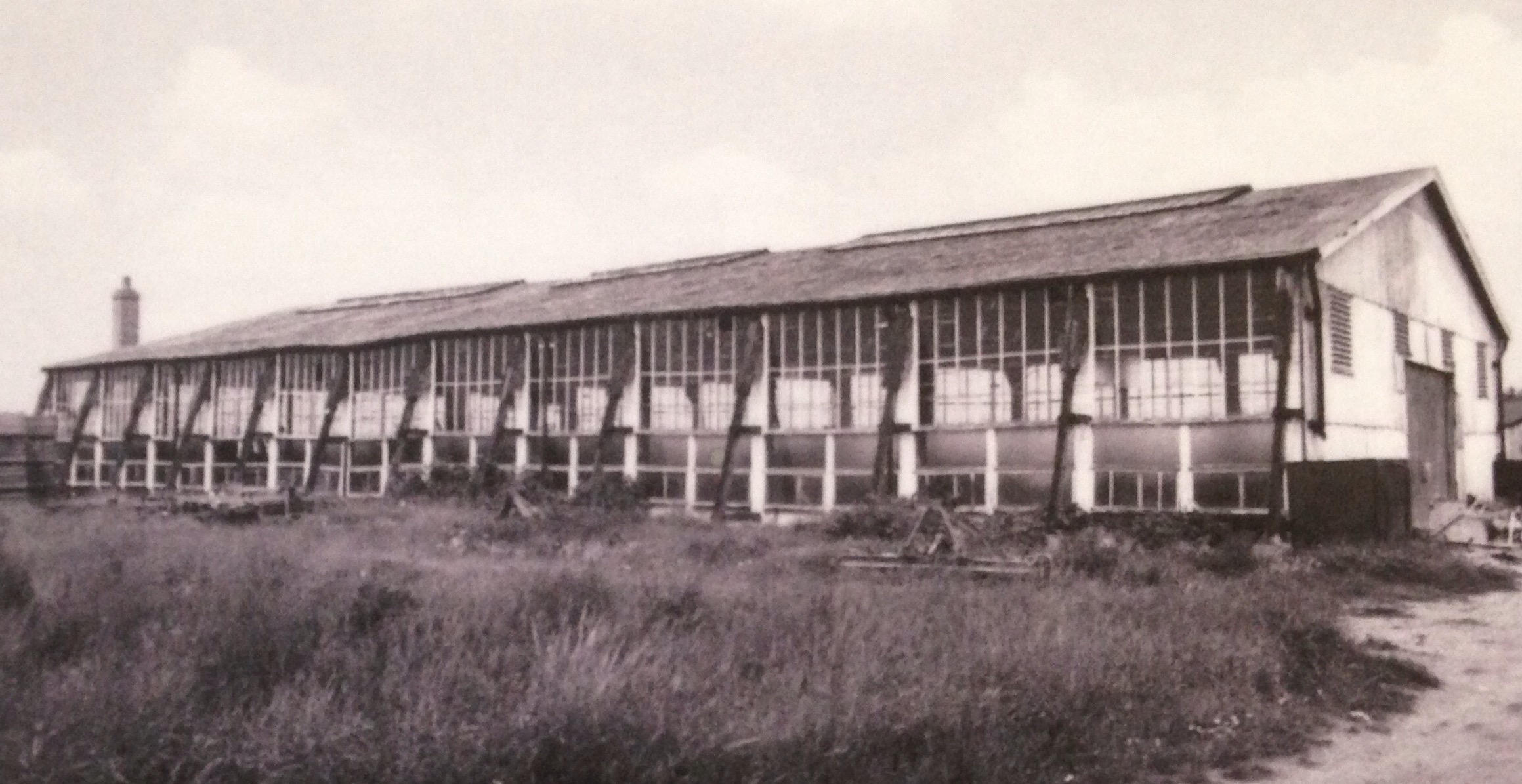
51(HD) Sqn aircraft hangar modified for agricultural use post war.*2

The Zeppelins main advantage over the British was the poor performance of the aircraft types the R.F.C used.  Whilst capable of operating at the 8,000 – 10,000 ft altitude used by the Zeppelins, many aircraft simply took too long to get there and thus could not reach the airship in time to attack it.

As performance improved along with the development of the explosive ammunition that would ignite the airship’s gases, the odds were a little more balanced and larger numbers of airships were being brought down over the eastern region. The tide was turning and pilots of 51 (HD) Sqn were playing a large part in this.

In the early part of 1917  cuts to the Home Defence units were announced based on the increasing gains made by units of the Norfolk / Cambridge / Lincoln squadrons. But the Germans had not given up yet. Reductions in weight enabled new Zeppelins to reach greater altitudes. Now capable of 16,000 – 20,000 feet, few British defences could reach them.

As the tide was turning in France, attacks became fewer and fewer. These high altitude flyers were more at the mercy of the bitter cold and poor weather than defending aircraft.

In August 1917 51 (HD) Sqn moved their headquarters to Marham, and ‘A’ Flight arrived at Tydd St. Mary and 51 (HD) Sqn began replacing their BE2e aircraft with the Martinsyde G.100 ‘Elephants’ – so-called because of their size and poor manoeuvrability.

A large contingent of airships gathered once more on the night of October 19th 1917, requiring extensive sorties by 51 (HD) Sqn at Tydd St. Mary and her counterparts. Whilst a determined effort was made by the R.F.C crews, they had little or no impact, and the gathered airships made off only to be badly beaten by bad weather and anti-aircraft fire over France.

Further changes to R.F.C Squadron designations  in the latter parts of 1917/18, dropped the title ‘Home Defence’ and Tydd St. Mary became the base for 51 Sqn ‘A’ Flight in Eastern Command. Aircraft by now were primarily Royal Aircraft Factory FE2bs, although 51 Sqn were now replacing some of their ‘Elephants’ with BE12b variants which they kept until the autumn of that year. Further changes in February 1918 meant that ‘A’ Flight moved to Mattishall, whilst ‘B’ Flight took their place at Tydd St. Mary.

As the R.F.C turned into the R.A.F on April 1st 1918, Tydd St. Mary would once again become significant. On the night of April 12th 1918, Zeppelin L62 was sighted close by and aircraft took off to intercept. As it was dark at 22:00 the flare path was lit to assist the now R.A.F crews, which openly guided L62 directly onto the airfield. Gliding above the site, L62 dropped a small number of incendiary bombs onto the aerodrome in an attempt to damage or destroy aircraft on the ground. Fortunately the bombs fell well away from parked aircraft and caused no damage to either buildings or aircraft. Pursuit was made by Lt. F. Sergeant in FE2b ‘A5753’, but to no avail and he returned to base empty-handed. Other pilots also tried to catch L62, some crashing due to engine failure, but many simply weren’t able to catch-up with the intruder. Eventually L62 reached the coast and made a break for it across the sea under the protection of yet more bad weather.

By November 1918 the final FE2bs had been relinquished and for the remainder of the year and into May 1919, 51 Sqn operated Sopwith Camels. A move by ‘B’ Flight in May to Suttons Farm (RAF Hornchurch) not only signified the end of the Camels (replaced by Sopwith Snipes) but the end of 51 Squadron who were disbanded in June. This departure also meant the end of Tydd St. Mary and in November 1919 notice of closure was given and the site finally closed in January 1920.
Tydd Gote Village sign

The village sign at Tydd Gote, remembers the RFC from the airfield at Tydd St Mary.

At its height Tydd St. Mary covered an area of 125 acres, and contained two Home Defence flight sheds as single units (believed to measure 130 x 60 ft). These were utilised by local farmers and business and lasted for many years. Other buildings were also utilised, the last, believed to be the Flight Office, is thought to have been demolished as late as 2009.

Not a major player in the war and never to return to aviation, Tydd St. Mary is a notable site and perhaps when passing, a second thought for those who flew from here in defence of the Eastern counties, should be offered.

Tydd St. Mary forms part of Trail 37.

Sources and Further Reading

*1 Early Bessonneau hangars were constructed of wood covered in canvas. Various types were made and were designed to be erected by small trained groups of men. Later models replaced wood with metal and were more permanent.

*2 Photo on display at Thorpe camp, Woodhall Spa.

Goodrum, A. ‘No Place For Chivalry: RAF Night Fighters Defend the East of England Against the German Air Force in Two World Wars‘. 2005, Grub Street

The Great War Forum – website 
RAF Narborough – Norfolk’s first Airfield.

Resting not more than a mile or so from the boundary of RAF Marham, is an airfield that never made it beyond the First World War – but it played such a major part, it should never be forgotten. Opened originally as a satellite by the Royal Naval Air Service, it became the biggest First World War airfield and led the way for the aviators of today’s Royal Air Force.

RAF Narborough

Built as the largest, aircraft based, World War One aerodrome, Narborough was known under a range of different names. The most common, ‘The Great Government Aerodrome’ reflected not only its size but also its multi-national stature and its achievements in aviation history. Used by both the Royal Naval Air Service (RNAS) and the Royal Flying Corps (RFC) it would also have names that reflected both these fledgling services.

Designed to counteract the threat of the German Zeppelin and Schütte-Lanz airships, Narborough was initially used by the RNAS as a satellite station to RNAS Great Yarmouth. No crews were permanently stationed here, but ‘on-duty’ crews would fly in and await the call to arms should a raid take place over East Anglia.

The first recorded arrival was in August 1915; an event that would keep the site in use by the RNAS for the next ten months before being designated as surplus to requirements, and handed over to the RFC in June 1916.

Used as a training ground, accommodation was basic to say the least, being described as a “desolate God-forsaken place”*1 buildings needed to be erected for accommodation, training and maintenance. A total of seven Boulton and Paul hangars and up to 150 buildings would be built on the site over the next two years. By the end of the war, some 1,000 personnel would be based at Narborough – a number comparable with any modest Second World War airfield.

As the First World War raged on the European continent, the use of aircraft was seen as a new way to monitor, kill and record enemy troop movements; it would develop into a lethal weapon and a very potent reconnaissance vehicle. Training programmes were rushed into place, and Narborough would become a preparation ground for new recruits. With training considered basic by today’s standards, recruits had to pass a series of tests before being sent to the France. Written examinations followed up by twenty hours solo flying, cross-country flights and two successful landings, were followed by flying for fifteen minutes at 8,000 feet and landing with a cut engine. These daring young men, many who were considered dashing heroes by the locals, would display their skills for all who lined the local roads awe-inspired by their antics.

Life was not always ‘fun’ though. Accident rates were high and survival from a crash was rare. Some 15 graves lay in the local church  at Narborough, all young men who never made it through the training and on to the battle in France.

The occurrences of these accidents were so frequent, that one instructor, W.E. Johns, creator of ‘Biggles’ cited spies as the cause of many ‘accidents’ – tampering with machines causing the deaths of the crews on board. Johns, himself having written of many machines, believed Americans with German sounding names were to blame for aircraft breaking up in mid-air or crashing at the bottom of loops. More likely, the fault lay with over exuberant or poorly trained recruits.

Narborough as a training station would operate a wide range of aircraft. The French designed Henry Farman F.20, a military reconnaissance trainer, would operate with 35 Squadron from June 1916 until October when they were replaced by the Armstrong Whitworth FK8; 35 Sqn moving to France with these aircraft in January 1917.

The first full squadron to be formed here was 59 Sqn on 21st June 1916. Born out of 35 Sqn, they would operate Avro’s 504K followed by the second French design, the Maurice Farman Shorthorn; named so because of the length of the skids designed to prevent recruits overturning the aircraft on landing. After these came the BE2c, BE12 and RE8s, before the squadron moved to St-Omer in February 1917.

It was during this year that 83 Squadron would be born out of 18 Reserve Squadron (RS) operating various aircraft in the training role. They arrived at Narborough during December that year with FE2bs before they themselves moved to St-Omer in March 1918.

As the war drew to a close, one further squadron was formed at Narborough; 121 Squadron on New Year’s Day 1918. Whilst originally formed to fly the DH9, they actually used a variety of aircraft before being moved to Fliton and eventual disbandment on 17th August 1918.

Three other units would pass through Narborough before it closed. Now part of the Royal Air Force, 56, 60 and 64 Sqns would all come here as cadres in February 1919. 64 Sqn disbanded here in the following year, whilst both 56 and 60 Sqn moved to Bircham Newton and onto disbandment.

The end of the war saw the closure of Narborough. But unlike its sister station RAF Marham a mile or so away, it would remain closed. The buildings were all sold off in what was considered to be one of the biggest auctions in Norfolk, with some of them going to local farmers, small industrial units, schools and the like. Some of these buildings still exist at various places around the local area today but many have long since succumbed to age and inevitable deterioration.

Narborough itself having no hard runways or perimeter tracks has long since gone. A small memorial has been erected by a local group aiming to promote and preserve the memory of Narborough, a memorial plaque also marks the fifteen graves of those who never made it to France; and the small Narborough Museum & Heritage Centre holds exhibits of 59 Squadron in the local church.

Significant not only in size, but in its history, Narborough has now been relegated to the history books. But with the dedication and determination of a few people the importance and historical significance of this site will hopefully continue to influence not only the aviators of tomorrow, but also the public of today.

The memorial to those who served at Narborough.

Sources, Links and Further Reading.

*1 letter from 2/AM C. V. Williams from 59squadronraf.org.uk

C.G. Jefford, RAF Squadrons, Airlife Publishing limited, 2001

The Narborough History Society cane be visited through their website.

The Narborough Airfield Research Group tell the history of 59 Squadron at Narborough, this includes personal notes and details of the Narborough airfield.

Memorial Garden Opening 

Mixing my day job with my hobby is not usual but I felt this was more than worthy of a post.

For some time now I have been toying with the idea of a Memorial Garden at school tied in with the various topic work that we have been doing, which is linked to both the World War I and VE-day commemorations.

The idea really came to fruition in sort early last year when I approached the head of the school and put the idea to her. With enthusiasm the go ahead was given and the children were approached with the idea as an after school club. A small group volunteered to help and we began planning.

On June 18th 2015 the plan finally came together.

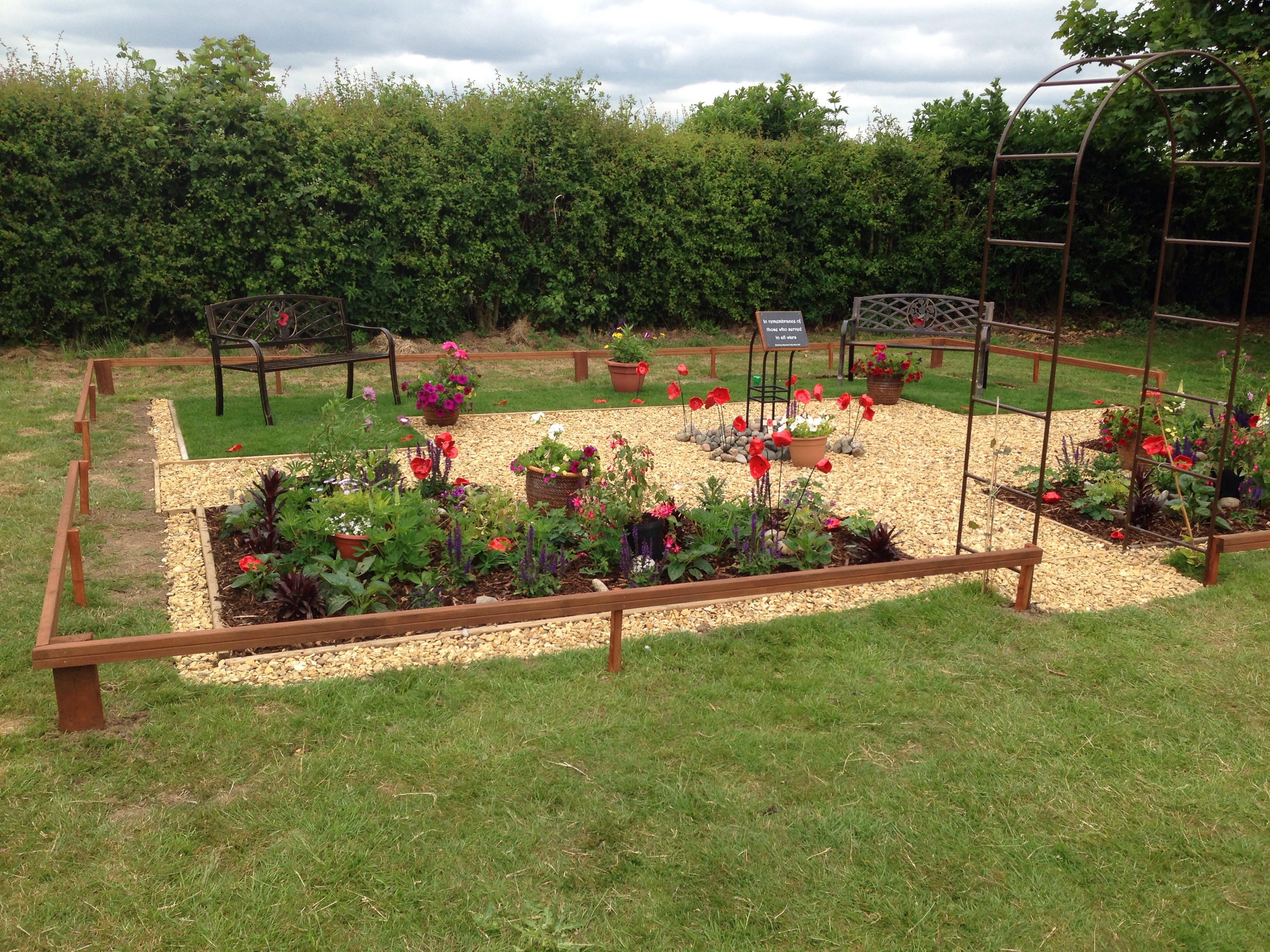
The Memorial at the Centre of the Garden.

As people arrived they were greeted with refreshments and displays of work, photos of family members along with artefacts gathered or brought in by friends and parents. My good friend Kevin Fleckner brought four original uniform and bits from a crashed B-17 for us to show.

At 17:15 two RAF Tornado jets from RAF Marham flew overhead. The first low and slow, the second 15 seconds behind, higher and much faster with her wings swept. Over the school, she banked and the crowd waved. The event had opened.

The head then read a short introduction and it was my turn. I have to tell you that public speaking is not my forte and whilst I had been a little nervous I stood at the podium and the nerves vanished. My speech went thus:

June 18th 2015 is a special day. Not just because we’re opening this beautiful space, but for several iconic reasons. 200 years ago today the British and French forces were locked in arms at the Battle of Waterloo. 75 years ago today Winston Churchill made his famous “this was their finest hour” speech. Two dates that will go down in history as both important and momentous.

But these ae not the only significant dates in history.

100 years ago last year in 1914 young men in their thousands signed up with excitement for what they thought would be the war to end all wars. However, the war they thought would be over by Christmas went on for four long years. In the killing fields of Flanders, young men, many barely older than 16 or 17 were slaughtered in their thousands, living in mud and rat infested trenches very few were to survive. If not killed by the constant shelling, sniper fire or the slow march through no man’s land, many would suffer shell shock, a brutal psychological illness that would eat away at the very heart and soul of the young men. Eventually, in 1918 the First World War ended, the guns fell silent and Europe could finally begin rebuilding once more.

Sadly man’s inhumanity to man was to raise its ugly head again. In 1939, Europe was plunged once more into war with the German invasion of Poland. As The mighty Nazi war machine blitzkrieged its way across Europe, the British Armed Forces once more fought bravely in the name of freedom and democracy.

From the beaches of Dunkirk to the defence of Britain in the skies over Kent, the landing grounds of Normandy, to the battles in the Ardennes, Arnhem, over the Rhine and eventually the battle for Berlin itself, the brutality of war would once more be seen again.

The civilian population of Europe was to suffer greatly too. The blitz of our cities and the bombing of European targets that killed thousands upon thousands as bombs rained down from the sky. The concentration camps, death camps and prisoners of war camps saw a brutality on a scale that was and still is, incomprehensible.

From the hot deserts of Africa through the warm seas of the Mediterranean to the freezing conditions of the Arctic convoys, young men would bravely fight without question many paying the ultimate and final sacrifice.

Eventually, on 8th May 1945, the war in Europe finally ended and Peace reigned once more. However, the killing went on in the Far East. On the Pacific Islands of Okinawa, Saipan, Iwo Jima and Guadalcanal, The fighting continued in some of the most brutal conditions known to man. Eventually on August 15th 1945. UK time, following the Americans dropping the world’s most devastating and horrific bombs on Hiroshima and Nagasaki, war was declared finally over. The world has now entered the atomic age and six years of war had left it scars across Europe, the Middle East, The Far East, in the waters of the Atlantic and Pacific Oceans and across both the northern and Southern Hemispheres. Across the world millions lay dead, injured, homeless or orphaned. In the words of our distinguished guests here today “There are no winners in war.”

If there is one thing that history can teach us, it is that man is unable to live at peace with his fellow-man. Whether it be disputes over territory, natural resources or religious ideologies, War has continued to be fought and young men and women have continued to die.

In post-World War 2, the world lived on a knife-edge; the Cuban missile crisis being the ultimate stand-off between the east and west. From Korea and Vietnam to the Falkland Islands, the Middle Eastern countries of Iraq and Afghanistan, Britain and her allies have continued to fight for peace and democracy something we here take very much for granted.

It is in the name of these young men and women that we have built this memorial garden, so that their memories and their sacrifice may live on in the hearts and minds of future generations. It is so that we can pay homage and remember the dedication, bravery and self-sacrifice that they have shown so that we may live today without fear and in freedom.

It is to these people that I say thank you. Thank you for willing to lay down your life so we may freely speak out against injustice. To those who never came home, who paid the ultimate sacrifice, may you forever rest in peace. Thank you

Next one of the children read what the garden meant to him. Un-nerved by the occasion, he told how his father passed on his grandfathers tales of the war, how it means he can enjoy the peace and tranquility and he made a remarkably moving speech from the heart.

We then had a young lady from the group read in full the Robert Lawrence Binyon poem ‘For the fallen’. Short gasps from some of the audience told me they didn’t realise where the Remembrance Day words came from as it appears in the middle of the poem. She too read fluently and without falter, quite an achievement. Both these children were only just 10/11 years old.

A blessing by the vicar led us into the last post and a two minutes silence for those who had paid the ultimate sacrifice. A number of visiting Vets saluted, the Air Training Cadets lowered the colours and all went silent. Not a sound bar the cool wind in the adjacent trees.

My Good Friends Baz and Helen, whom helped enormously, John and Tony the Veterans and Kevin, who brought a number of uniforms and bits for us to display.

After the reveille the colours were raised and the two veterans invited to open the memorial officially. One Tony, a Normandy D-day+1 vet and the other John, who fought from Africa against Rommel’s Tigers, through Italy up into the continent, stood either side. As they lifted the flag, John declared the garden open to applause from the gathered audience. The children then sang unaccompanied Vera Lynn’s “We’ll meet again”; many from the audience joined in. The event closed and photos were taken around the memorial.

I estimated around 150 people, which for a small school of 68 children is remarkable. We had veterans from Cambridge a good hour and half away,  visitors from Northampton another similar distance and a large number of folk from the village turn up.

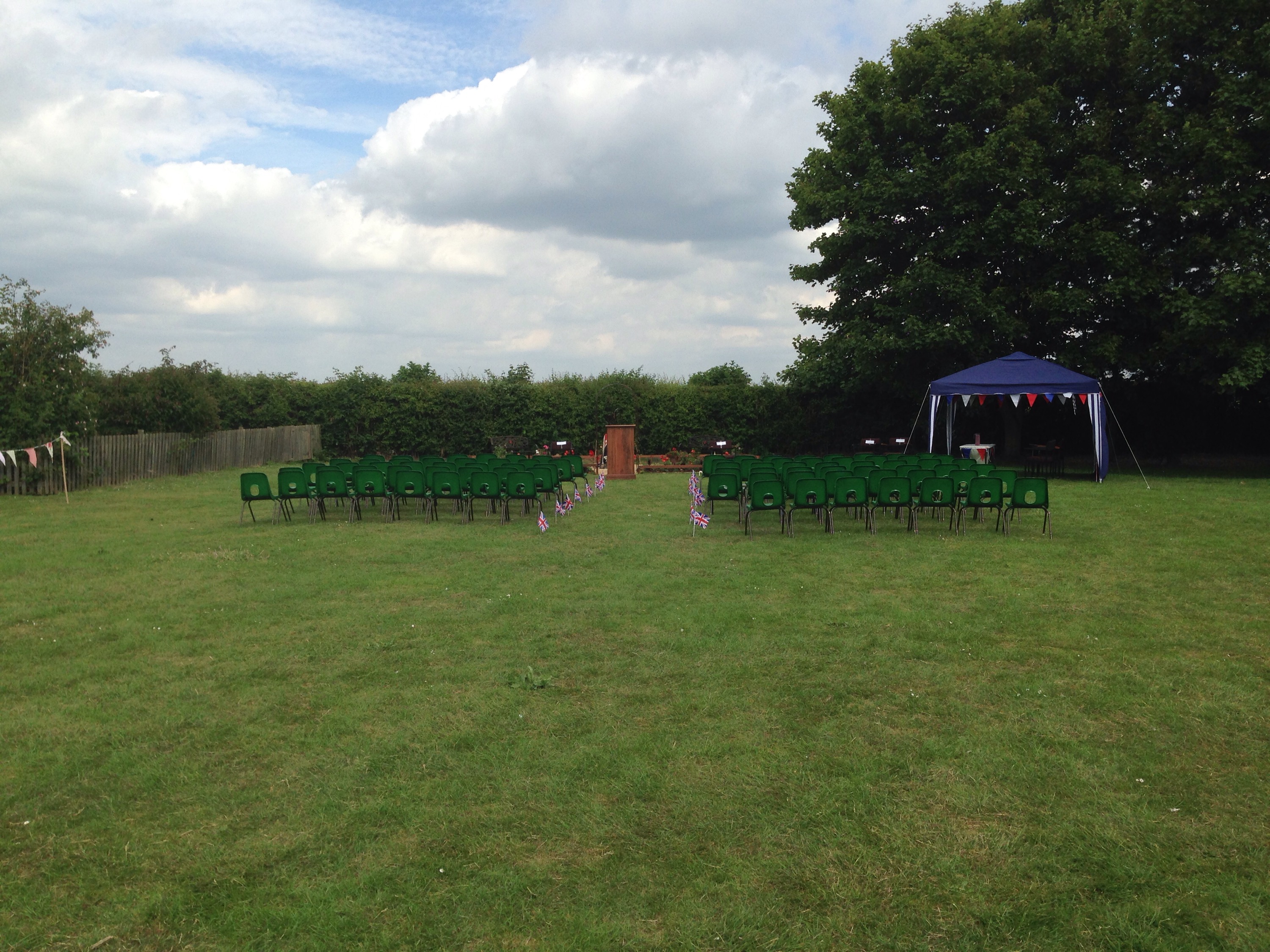
The seating before people started to arrive. There were many more standing, being a small school. we simply didn’t have enough chairs!

The feedback from visitors was superb and everyone was buzzing.

A real team effort, the long evenings, the hard work and recent battle against moles had all been worth while.

We had texts and emails from those who were there praising the efforts. It all worked out far better than even I had envisaged.

We shall miss it. We had great fun, even the odd beer or two, but it has been a real bonding exercise, we have become a little ‘family’ and are really proud of our achievements.

I passed on the good wishes to the children whom I think are quite overwhelmed themselves. They did a fantastic job and were superb role models for others to follow.

The Garden as it is today. We shall seed the outside, and continue the fight with the moles. An area for relaxation and thought.

We shall continue to nurture and maintain the Garden and watch it grow. The children use it already and do enjoy it. The rose in the crown were the poppies. Made out of clay, they are all handmade by the children mounted on metal rods and bunched in groups of 3 or 4. They do look superb.

There were small stumbling blocks along the way, and these caused delays but none so great we couldn’t deal with them. All in all it went beautifully, far, far better than I ever imagined and the finished product, I hope you’ll agree, is stunning.

An article appeared in the paper on the following day, Saturday here’s a link.

RAF Bircham Newton.

Trail 20 is a Trail that takes us round northern Norfolk. Our first stop is RAF Docking. After Docking, we travel to Bircham Newton.

Bircham Newton has it origins in the First World War prior to the birth of the Royal Air Force. Its distinguished career, saw action in both World Wars and post war right up to 1965 when it finally closed.

Guard House

The former Guard House now stands as a shop.

Opened in 1916, its first operational use was as a fighter gunnery School in 1918. Its runways were grass and early residents included: DH4, DH5 and the DH9, amongst others. There then followed a period of expansion and development where larger buildings and accommodation blocks were built. Its first and possibly its most significant early aircraft, were the Handley Page V/1500 bombers. An enormous 4 engined aircraft, it was designed to hit Germany hard, targeting Berlin from airfields in East Anglia.

During expansion, a number of squadrons were based here: 7, 11, 166, 167 and 274 to name but a few. Primarily a bomber base during this period, it was soon passed to Coastal Command, who would also take charge of a number of other airfields around this area, including both satellites at RAF Docking and RAF Langham. Many of the original buildings were demolished and those we see today built instead.

Armoury and Photographic building

Former armoury and photographic building.

New residents for Bircham featured heavier twin-engined aircraft such as the Lockheed Hudson, Bristol Beaufighter and Vickers Wellington, for which steel matting was laid to prevent sinking in the soft earth.

The majority of missions from here were anti-shipping activities, mine laying and Air-Sea rescue. Like its satellite, Docking, it saw a large number of squadrons pass through it gates, too many to give the required credit to here.

As the second World War drew to a close, Bircham’s activity began to dwindle and its role lessened. From Anti Shipping activities to Flying Training, Transport Command and finally to a Technical Training unit, training the Officers of the future. Flying reduced, and Chipmunks became the order of the day. The most notable ‘resident’ of Bircham being HRH The Duke of Edinburgh, who made several landings here as part of his flying training in the early 1950s.

DSC_0242

One of the former technical buildings no longer used.

Finally, in 1962, Bircham Newton closed its doors to aviation, but it was not to be the end of the story. In 1965, with the development of the Kestrel, Hawker Siddeley’s VTOL baby, Bircham came to life once more, albeit briefly, with the sound of the jet engine.

A year later, Bircham was sold to the National Construction College and the pathways are adorned with young building apprentices, diggers and cranes of varying sizes. Being a busy building college, many of the original buildings hae been restored but the runways, flying areas and sadly the Control Tower, removed. Whilst private, the airfield retains that particular feel associated with an airfield.

Main Stores

The main stores with two of the C-type hangars in the background.

Luckily, the main road passes through the centre of Bircham. A memorial project has been set up to remember those that served at the airfield with photos and exhibits from days long gone. A memorial has also been erected and stands outside the original Station Commanders house, just off the main road and is well sign posted. The original accommodation blocks, technical buildings and supporting blocks are still visible even from the road. The 1923 guard-house, is now a shop and the operations block, the reception centre.

Squash courts

The original squash courts are still used as they were intended.

Reputedly haunted, the squash courts (built-in 1918) continue to serve their original purpose, and most significantly, the three large C-type hangers and 2 Bellman sheds are still there – all visible from the public highway.

RAF Bircham Newton, stands as a well-preserved model one of Britain’s wartime airfields. Although Private now, the buildings reflect the once time bustling activities of a busy centre of aviation.

RAF Memorial and Station Commanders house

The recently added RAF Memorial and behind, the Station Commanders house

The memorial project at RAF Bircham Newton has a website and can be found here. Norfolk Heritage Explorer also has more details here.

Finally – recognition for Britain’s airfields and the sacrifice made by so many. 

The government recently announced their final budget before the forthcoming general election. Amongst the tax hype, vote buying and pre-election promises we have come so accustomed to, was a small recognition to those who gave their all for the security of Britain. 

Recognition has finally been given to the deterioration of Britain’s wartime airfields. In particular Stow Maries that dates back for the First World War, the museum at Hendon and the chapel at the former RAF base at Biggin Hill, have all been the subject of grants to improve and update them. 

This does not in itself signify a dramatic change in heart of the upkeep or a reduction in planning and development of Britain’s wartime airfields, but it does show a change in attitude toward those that flew from them and the memories we hold of them. 

Any small recognition of the sacrifice made by these people, and the fading historical aspect of these now decaying sites has to be good. Maybe just maybe, somewhere along the line planning regulations may change to allow for preservation of some small part of these sites before they are all gone forever. 

This has to be a positive step forward, let’s hope so!

An interesting article relating to this appeared in the “Telegraph” newspaper on May 21st. It’s well worth a read and can be found here 

Royal Air Force Memorial, Embankment, London

London has many stunning memorials and monuments scattered about its streets and gardens. The Royal Air Force memorial is just one of many visited over recent months.

London Feb 2015 024

The Royal Air Force memorial stands on the Embankment overlooking the Thames.

The Royal Air Force memorial is located on the banks of London’s River Thames, between Embankment and Westminster tube stations.

Overlooking the river, it was designed by Sir Reginald Blomfield, sculpted by William Reid Dick, and  completed on 13th July 1923.

The memorial consists of a bronze globe on which stands a gilded eagle with its wings spread as if about to take off. The main tapering column is of Portland stone and this forms the official Royal Air Force memorial.

The initial idea for a memorial was raised by Maj.Gen.J.M.Salmond, in a letter to the Air Ministry on 27th November 1918. Following this a committee was set up and discussions continued around the raising of funds and more importantly, how it should be spent. The leads in this committee were Air Chief Marshal Sir Hugh Trenchard and Lord Hugh Cecil. Eventually, on 21st January 1920, an appeal was launched with an article in the Times newspaper and the money gradually gathered.

There then followed many discussions about a suitable location for the memorial and eventually, the current location was agreed and permission given for its erection. The Architect, Sir Reginald Blomfield, decided upon William Reid Dick as the sculptor, plans were drawn up and building work started.

London Feb 2015 003

A Bronze gilded Eagle stands as if about to fly.

It wasn’t until 16th July 1923, that the memorial would be both finished and unveiled. In the presence of Sir Hugh Trenchard, and many other dignitaries, the Prince of Wales gave a moving speech highlighting the sacrifice of those who gave their lives in this new form of warfare.

Following the Second World War, further inscriptions were added and the updated memorial unveiled by Lord Trenchard on Battle of Britain Sunday, 15th September 1946. The tradition of placing a pilot’s brevet shaped wreath at its base has continued ever since.

There are a number of inscriptions around the column and base, each one referring to the dedication and loss of the men and women from the entire British commonwealth who gave their lives in both World Wars.

Even on a wet winters day, this is a stunning memorial and a beautiful tribute to those brave people.

London Feb 2015 028

The Eagle looks across the Thames to the London Eye,

For more information about its history go to the RAF Benevolent Fund website here. A pdf is available.

Other major memorials appear in the blog here and for specific airfield memorials here.

They shall grow not old, as we that are left grow old: …

Originally posted on the anniversary of the publication of his poem, For the Fallen, 21st September 2014, Laurence Binyon’s poem has become synonymous with remembrance services across the country. This week is remembrance Weekend (and Veteran’s day in the United States) on which we remember the fallen: those who gave the greatest sacrifice, so we could live in peace.

I thought it appropriate to repost this during Thai special week so we know a little more about the poem and the history behind it.

‘Lest we forget’

“To all those who went before, (Robert) Laurence Binyon’s 1914 poem is widely used in remembrance services across the world. Laurence Binyon wrote his For the Fallen, with its Ode of Remembrance, while Binyon was visiting the cliffs of North Cornwall between Pentire Point and The Rumps.

Today, if you visit, there is a stone plaque at the spot to commemorate his poem, which reads: For the Fallen Composed on these cliffs 1914″. There is also a second plaque located on the beehive monument on the East Cliff above Portreath in central North Cornwall. There, you will find a plaque on a statue inscribed with the same words. Laurence Binyon’s poem, For the Fallen, was published in The Times newspaper, following heightened public sentiment due to the recent Battle of Marne (5-12 September 1914) on 21st September 1914, 100 years ago today. http://wp.me/P4xjD9-8u

For the Fallen

With proud thanksgiving, a mother for her children,
England mourns for her dead across the sea.
Flesh of her flesh they were, spirit of her spirit,
Fallen in the cause of the free.

Solemn the drums thrill: Death august and royal
Sings sorrow up into immortal spheres.
There is music in the midst of desolation
And a glory that shines upon our tears.

They went with songs to the battle, they were young,
Straight of limb, true of eye, steady and aglow.
They were staunch to the end against odds uncounted;
They fell with their faces to the foe.

They shall grow not old, as we that are left grow old:
Age shall not weary them, nor the years condemn.
At the going down of the sun and in the morning
We will remember them.

They mingle not with their laughing comrades again;
They sit no more at familiar tables of home;
They have no lot in our labour of the day-time;
They sleep beyond England’s foam.

But where our desires are and our hopes profound,
Felt as a well-spring that is hidden from sight,
To the innermost heart of their own land they are known
As the stars are known to the Night;

As the stars that shall be bright when we are dust,
Moving in marches upon the heavenly plain,
As the stars that are starry in the time of our darkness,
To the end, to the end, they remain.

(Published in The Times newspaper, 21st September 1914).

Thanks to Marcella who contributed to the writing of the original post.”

DSC_0097

 For the Fallen – Laurence Binyon (1869-1943)

Anthem for Doomed Youth – Wilfred Owen

https://i0.wp.com/upload.wikimedia.org/wikipedia/commons/e/e3/Wilfred_Owen_plate_from_Poems_%281920%29.jpg

Wilfred Owen, died November 4th 1918

The BBC broadcast a World War 1 drama in the week leading up to Remembrance Sunday, 2014. Entitled, ‘The Passing Bells’, it was about two young men, one German and one English, who join up under the ‘romantic’ idea of going to war to ‘have a go’ at the enemy.

Their beliefs are soon shattered though, when they finally see the true horrors of the Western Front.

Intrigued by the title, I looked it up and found that it was a reference from the Wilfred Owen poem,Anthem for a Doomed Youth. Owen himself, was killed on November 4th 1918.

Wilfred Edward Salter Owen was born on March 18th 1893 in Oswestry, Shropshire, England. He became synonymous with poetry that depicted the true horrors of trench warfare, the conditions, the death and the futility of war. His writings, along with those of his mentor, poet Siegfried Sassoon, starkly contrasted the propaganda of the government, who, in a drive to recruit more troops and prevent morale from falling back home, painted a much ‘nicer’, cleaner picture of the war.

Owen did not enlist straight away. It wasn’t until 1915 that he would join and once at the front, he would endure many atrocities and witness the realities of the First World War. Being injured himself and suffering from shell-shock, he would spend some time behind the lines in hospitals, before eventually being sent to Edinburgh, a place that would change him forever. It was here, that he met his friend and mentor, poet, Siegfried Sassoon.

Owen would return to Flanders in August 1918. Two months later, he led an attack on the German lines. Following a serious injury to his commanding officer, he took charge and overcame an enemy machine gun. For this action, Owen was awarded the Military Cross for bravery.

The end of the war was in sight, and one month later in November 1918, the armistice was signed, and peace once again fell over the fields of Flanders. However, in a further attack, just one week before the cessation of conflict, whilst making the crossing of the Sambre–Oise Canal, Owen would be killed, bringing this chapter of the young writer’s life to a final close.

Owen wrote many poems, and is considered one, if not the best World War One poet. He believed the government was more interested in the benefits they would receive from the war rather than the original reason of  supporting their ally. His writings reflected the pity and futility of this war, and his memory is commemorated in a number of memorials around the United Kingdom and France.

The BBC series, ‘The Passing Bells’, refers to Owens’ poem entitled ‘Anthem for Doomed Youth‘ that was written between September and October 1917.

Anthem for Doomed Youth

What passing-bells for these who die as cattle?
Only the monstrous anger of the guns.
Only the stuttering rifles’ rapid rattle
Can patter out their hasty orisons.
No mockeries now for them; no prayers nor bells,
Nor any voice of mourning save the choirs, –
The shrill, demented choirs of wailing shells;
And bugles calling for them from sad shires.

What candles may be held to speed them all?
Not in the hands of boys, but in their eyes
Shall shine the holy glimmers of goodbyes.
The pallor of girls’ brows shall be their pall;
Their flowers the tenderness of patient minds,
And each slow dusk a drawing down of blinds.

Wilfred Owen (18/3/1893 – 4/11/1914)

Wilfred Owen is buried in the community grave at Ors, near to where he fell. He is remembered in memorials including the Poets’ Corner’ in Westminster Abbey, and in a stained glass window in Birkenhead Central Library.

His writings and his memory, unlike his body, will live on in perpetuity.

“We live in trenches.

Underground, most of the time.

Like rabbits.

And it’s cold and dark and…

…noisy and wet,
and you just spend every second

wishing you were somewhere else.

But there’s a now-ness
to everything.

It’s like you’re seeing it
for the first time.

Like a blade of grass in the mud,
or…

…colours.

The sky is amazing.

You can smell the air.

Everything’s just more intense.

It’s like your brain’s
taking it all in…

…knowing it might be the last cloud
or blade of grass you’ll ever see…

…You see life…

disappear in front of you.

And, as it goes…

…you realise
just how precious it was.

That’s why I want us
to get married.”

– Quote from ‘The Passing Bells’ (BBC, 2014)

The quote from BBC’s ‘The Passing Bells’ was contributed by Marcella Beaudreau @LadyOfShalottMA

Notes:

orisons – prayers

pallor – pale / paleness

The Wilfred Owen Society have a website dedicated to the memory of Owen, and they include a number of photographs and discussion about his writings. If you wish to see the site click here.

The Soldier – Rupert Brooke

Rupert Brooke, died April 1915.

Known for his First World War sonnets, Rupert Brooke was born in Rugby, England, on August 3rd 1887. He attended two independent schools before going to Cambridge. Here he joined various literary groups where he made many friends and developed his interest in writing.

Following a difficult breakup with his girlfriend, Katherine Laird Cox, he went to Germany and then to both Canada and the United States, via the Pacific, where he wrote travel journals. Brooke returned to England just prior to the outbreak of war, and was commissioned into the Royal Naval Division.

One of Brooke’s first experiences of the war, was in the failed expedition in October 1914 to Antwerp. A year later, he would sail to the Dardanelles as part of the Mediterranean Expeditionary Force, but received a mosquito bite and developed sepsis. Whilst receiving treatment on a French hospital ship, Brooke took a turn for the worse and died. His body was subsequently buried in an olive grove on the nearby Greek island of Skyros, where it remains today.

Brooke was one of the few, if not the only poet, to never experience the horrors of trench warfare, his poetry some say, reflects this.

Brooke’s poem, ‘The Soldier‘, was the fifth of five sonnets, all preceded by ‘The Treasure‘ written originally in 1914. It became truly famous when the Dean of St Paul’s Cathedral read it at the Easter Sunday service in 1915, three weeks prior to Brooke’s death.


The Soldier

If I should die, think only this of me:
  That there’s some corner of a foreign field
That is for ever England. There shall be
  In that rich earth a richer dust concealed;
A dust whom England bore, shaped, made aware,
  Gave, once, her flowers to love, her ways to roam,
A body of England’s, breathing English air,
Washed by the rivers, blest by suns of home.

And think, this heart, all evil shed away,
  A pulse in the eternal mind, no less
  Gives somewhere back the thoughts by England given;
Her sights and sounds; dreams happy as her day;
  And laughter, learnt of friends; and gentleness,
   In hearts at peace, under an English heaven.

Rupert Brooke

(August 3rd, 1887 – April 23rd, 1915)

Ypres 007