Amongst the Rabbit holes and bracken stand the bomb stores of yesteryear.

Trail 13 continued around the western edges of Norfolk, near to Thetford Forest and the heaths of Breckland. Here, not from Thetford, is an airfield left over from the latter parts of the war. Seeing both RAF and USAAF personnel, it was often boggy and wet, but that didn’t deter those brave young men who fought for freedom.

Now an Army training camp, what’s left is being attacked by another enemy. We return to Southern Norfolk to complete an earlier Trail.

RAF East Wretham (Station 133)

Originally built-in the early part of the Second World War and opened in March 1940, East Wretham was designed as a satellite to RAF Honington with an all grass runway running NE/SW, 2 x T2 hangars, various defence pillboxes, support buildings and a number of blister hangars. At Honington, a newly formed 311 (Czech) Sqn was formed (29th July 1940) flying Wellington ICs, and they utilised East Wretham as a dispersal until August that year, when they permanently moved in. 311 Sqn carried out night bombing duties for the duration of the time they were here, but then in 1942, Wretham’s status changed once more. 311 sqn moved out and East Wretham became a satellite for Mildenhall taking in 115 Sqn on the 8th November, with their Wellington IIIs. The following March (1943) these were replaced with the rarer Lancaster MkIIs and these remained here in the night bomber role, until a further change in August 1943 when 115 sqn moved to Little Snoring and the site passed to American hands to become Station 133.
rear-turret-of-Lanc-lost-595x478

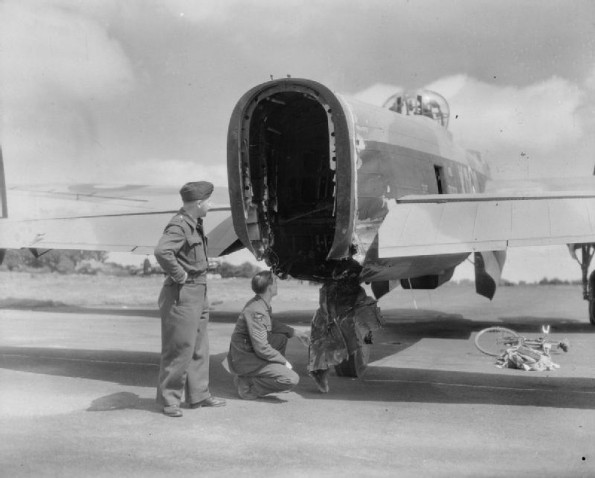
Avro Lancaster B Mk II, DS669 ‘KO-L’, of No. 115 Squadron, was hit by bombs from an aircraft flying above. durinhttps://aviationtrails.wordpress.com/wp-admin/post.php?post=1422&action=editg a raid on Cologne on the night of 28/29 June 1943. The tail gun and gunner were both lost. (Author unknown)

Now home to the 359th Fighter Group,  it hosted the big heavy P-47 Thunderbolts of the 368th (code CV), 369th (IV) and 370th (CR latterly CS) Fighter Squadrons and so had to have steel matting runways laid to accommodate their heavy weight on the soft ground. Used primarily for bomber escort, the 359th FG would fly escort to targets in nearby France. However, in April 1944 the P-47s  were replaced with the more agile P-51s which allowed them to penetrate deep into the heart of both Germany and Poland. A task the ‘Mustang’ became famous for. During the Allied invasion of Normandy the 359th attacked bridges, locomotives and supported bombers hitting targets around the invasion area. As the invasion force got a foothold in France, the three squadrons of the 359th returned to long-range bomber escort duties, taking part in raids over Ludwigshafen, Frankfurt, Berlin and Merseburg. During August 1944, the group supported the operations in ‘Market Garden‘ and later that year the Battle of the Bulge in the Ardennes.

Wetmore

Maj. R. Wetmore, of the 370th FS, in front of P-51B (42-106894) ‘CS-P’. on the shoulders of his ground crew*1.

On 11th September 1944, the Green nosed Mustangs of the 359th really made their mark when they shot down 26 enemy fighters; for this, they received the Distinguished Unit Citation (DUC). The determination shown by the 359th resulted in many outstanding pilots. One, Maj. Raymond “X-Ray Eyes” Wetmore became the 359th (370th FS) top ace scoring 21 victories – his last being an Me 163. Flying in P-51 “Daddies Girl” named after his daughter, he received numerous awards and by the end of the conflict had completed 142 missions covering 563 combat hours.

Aug 2015 002

The old part remains cordoned off.

This attitude to the war, gave the 359th a worthy credit of 263 aircraft shot down with over 100 more being destroyed on the ground. In the 346 missions they flew, they lost a total of 106 of their own aircraft.

In November 1945 the USAAF left and no further flying took place at East Wretham . The airfield reverted to 12 Group (RAF) ownership, then in May the following year, it was handed back once more to Bomber Command . Within a month the site was handed over to the Technical Training Command and finally East Wretham became a Polish resettlement camp for those personnel who were unable to return home. When they had all finally be moved on, the majority of the site became what it is today, used by the British Army as part of the massive Stanford Practical Training Area (STANTA ) for manoeuvres and live firing training.

Aug 2015 015

The bombs stores blast walls are still intact – just.

Today most traces of the airfield as it was are gone. A number of buildings notably a T2 hangar and several Nissen huts survive on what is now farmland or in the military camp. The unique Watch Tower was demolished after the war as were many of the other ‘temporary’ buildings. Now used by STANTA, a mix of old and new are intertwined and the majority stands on inaccessible military ground.

Perhaps the best and by far most accessible examples of East Wretham’s past, is the bomb site which forms part of the East Wretham Heath Nature Heritage Trail. Access is to the south of the site just off the main A1075, Thetford Road. A two-mile walk though Heath land, it takes you right through the original bomb store. An area of natural beauty, famed for its wetland and ancient flints, you can easily find the many blast walls and small fusing buildings still there. Also traceable are the tracks that once took bomb loaded trailers to the airfield across the heath. Many now buried under the acidic soil, their existence evident in exposed patches of bare concrete.

Aug 2015 020

The decay is evident throughout the bomb store.

All these stores are being gradually reclaimed by nature, trees and rabbit holes have both played taken their toll, the layout is still discernible and whilst much of the brickwork is intact, the warning signs are there and they are crumbling fast.

A small airfield, East Wretham was never considered the most ‘homely’ of sites. Often wet and boggy, it was one of the less well-known and less famous places to be used. But the courage and determination of those who served here both RAF and USAAF, went a long way to helping defeat the tyranny that stood facing us across the small section of water not so far away.

To see the other sites on this Trail, Old Buckenham and Tibbenham, go to Trail 13.

Sources and further reading:

*1 Photo: 359th Fighter Group Association, accessed at http://www.littlefriends.co.uk/
1940s revisited

A little more light-hearted look at the 1940s away form the disused airfields of Britain.

These last two years have been significant years in terms of both the First and Second World Wars. With the 100th anniversary  of the start of WWI last year, the 75th anniversary of the Battle of Britain this year, VE-day and of course to come VJ-day commemorations, there has been an understandable increase in interest in all things Second World War.

One thing I have noticed in particular, is the increase in numbers at 1940s weekends, in both participants and visitors.

DSC_0008

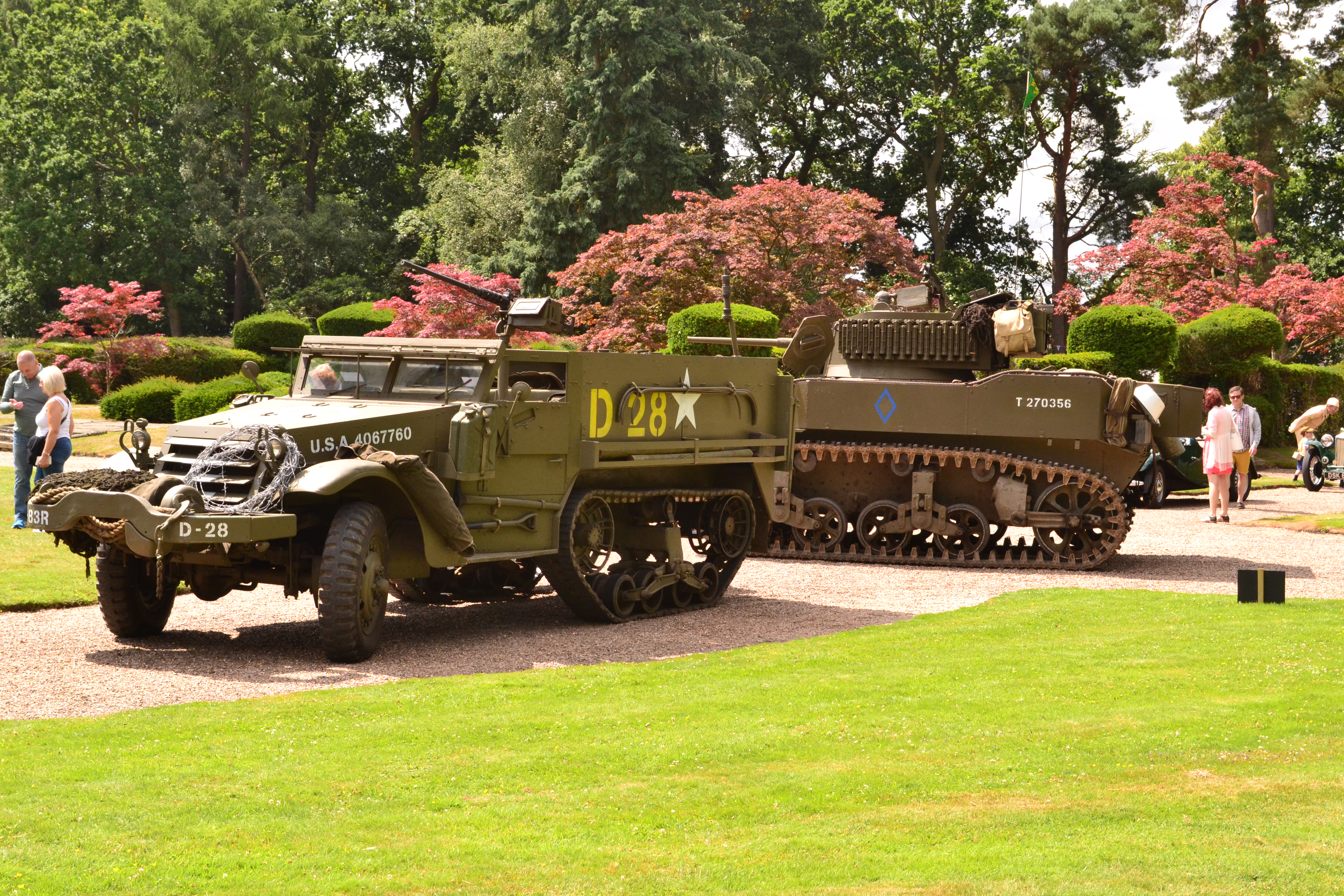
Vehicles of all shapes and sizes came for the weekend.

I myself have been to two recently, and at one I got the chance to sit in a Spitfire cockpit. Not something you do every day!

I know these events are not to everyone’s taste and some will groan at the thought of it, but I do think there is an historical value to them. Many of the participants only use genuine clothing or equipment, much of what you see is rare and in all cases they are only too keen to talk about what they have, its history, how and where it was used and in some cases, allow you to hold the articles in question.

DSC_0010

The rumbling of tanks could be heard once more.

From another perspective, and for those of you who know my day job, there are too, a growing number of children attending these events which I believe is a good thing as it brings history to life – something that is very difficult in a school classroom. A gun in school? I can see the headline now!

Two events I recently attended, both for different reasons, were at Woodhall Spa and Baston, two small villages in ‘Bomber country’, Lincolnshire.

Woodhall Spa was the home to the Dambusters, and for one weekend each year the entire village steps back in time to the 1940s. A second invasion occurs. Walking along the high street is like walking along in 1940, uniforms of every description can be seen, from RAF aircrew to British Army, U.S. infantry, Canadian, and even a variety of Russian, Luftwaffe and German infantry. Even the 1940s housewife, ‘spiv’, Firemen, Policeman and Milkman are represented in full 1940s attire. Many of the vehicles that line the numerous side streets are authentic World War II vehicles, half-tracks, trucks, endless jeeps and even the odd small tank driven here on trailers or under their own steam. Owners have taken a lot of time and money to get them rebuilt and keep them going.

DSC_0018

Re-enactors were everywhere

At the Petwood Hotel, used by 617 Squadron as a mess and officers quarters, there are re-enactments, talks and even ‘briefings’ in a 1940s style. The BBMF perform short displays over the grounds of this small village adding to the feel and as always people stop and watch in awe as once again a Spitfire, Hurricane and Dakota fly low over the streets of this small Lincolnshire village.

Inside the Petwood, you can wander the rooms that 617 Sqn once wandered by Guy Gibson and his crews; drink a tea or refreshing beer in the same room they did. The Squadron bar, displays numerous letters, photographs and other memorabilia connected with 617’s stay here. It is a remarkable place to be, knowing you walk the same ground as those special crew members did some 70 years ago.

July 2015 008

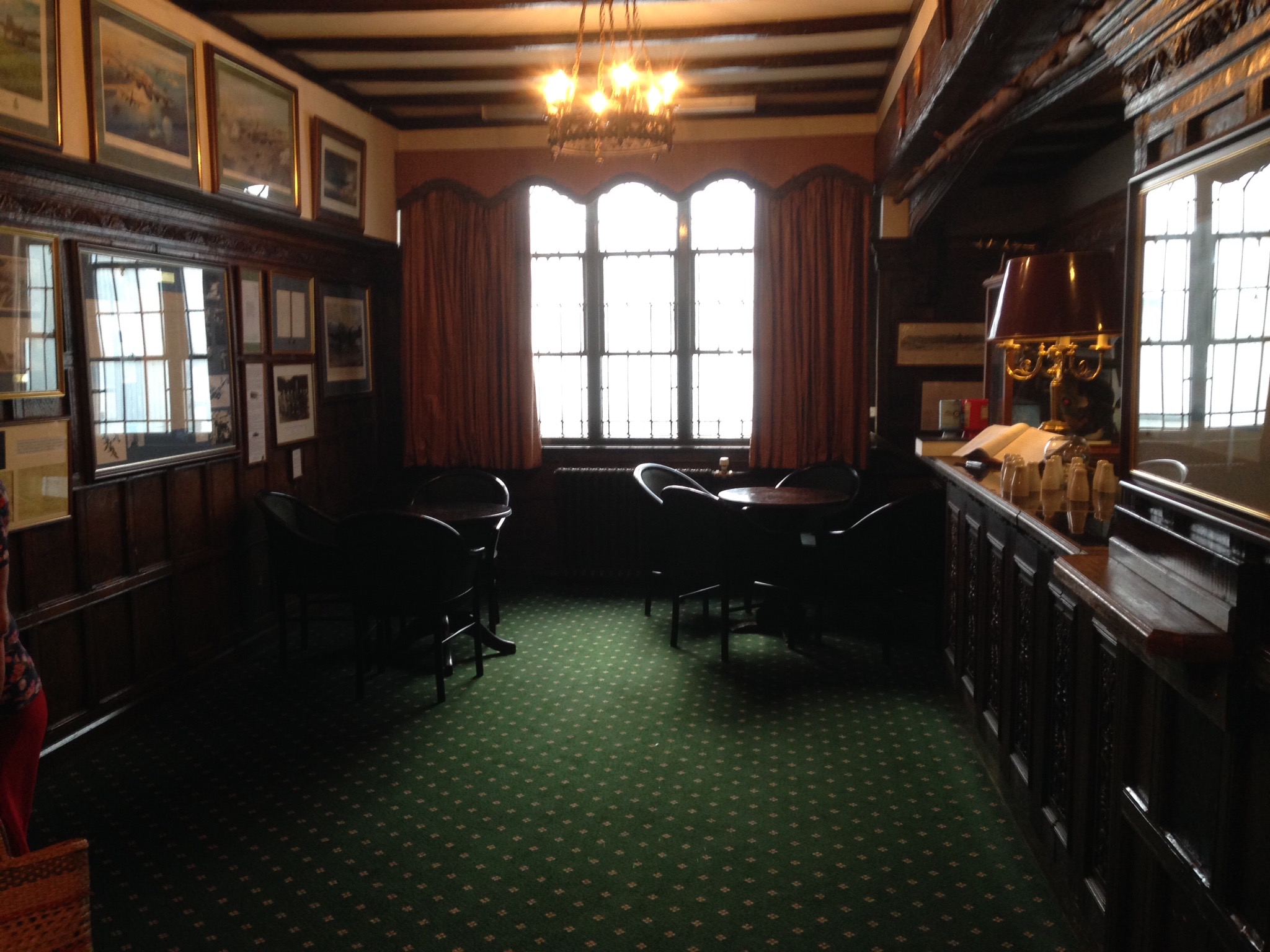
The Squadron bar.

Outside in the manicured gardens among the rhododendrons singers perform the many songs that inspired a nation, bolstered our morale and kept us going through those dark days of the Second World War. The feel is very much 1940s.

DSC_0001

Spitfire that is about 80% original.

Baston was very much the same. A large participation of re-enactors, vehicles and uniforms, many rasing money, good money, for War Veterans – a valuable cause I’d say. But it is the most odd feeling to walk amongst uniforms that once fought to the death and that were feared by those who were governed by them. In the summer and autumn of 1940, Britain came so close to being invaded, today an invasion has taken place.

Whether you like them or not, these events do have a place in our ‘living history’ and thankfully now, at least, it is on friendly terms.

Engines roar over Grafton Underwood once more. 

The ‘updated’ memorial at the former American Airbase,  RAF Grafton Underwood (Station 106), has been revealed with the help of Europe’s only flying B17 – ‘Sally B‘.

A large crowd gathered at the Memorial On Friday 29th May 2015, to hear speakers and see the beautiful ‘Sally B‘ perform a number of flypasts over the skies of Station 106 once more.

I sadly could not go due to work commitments, but have been informed that it was a resounding success and that it was very well attended by well wishers and members of the public alike.

This updating, has been in the pipeline for a while now and all the hard work has finally paid off. A new parking area and flag poles have been added and the site generally improved for visitors.

I have obtained and attached a short ‘You Tube’ video taken by one of the visitors to the event for you to see.

A lovely end to a remarkable tail.

My thanks go to Kevin for all his hard work and dedication keeping the memorial in such great condition and the memories of the 384th BG (H) well and truly alive.

The video of the event was kindly sent to me,  I don’t know who took it but all credit goes to them. I will try to find their name and attach it when I can.

Grafton Underwood appears in Trail 6.

RAF West Malling revisited. 

Around two years ago, I visited West Malling airfield in Kent to see what was left of this once historic place. Surprisingly, quite a bit did still survive albeit hidden amongst new buildings and office blocks.

Many of the ‘H’ blocks were left as was the Officer’s quarters and the control tower. The tower was shrouded in scaffolding and well hidden in the depths of a housing estate.

This May, I was in the area once more and decided to pop in and see what had become of the tower. Was it an office block, a museum dedicated to the men and women who were stationed here, or a modern cafe with retro decor? It was actually a bit of all of them.

Let me explain. The ground floor is partly a Costa Coffee shop with its ‘modern’ interior, but the original walls and windows are still used. A 1940s building, they have decorated the walls with photographs taken during West Malling’s operational time. I have to admit it is rather tasteful for a coffee bar, and they have maintained the feel quite well.

The outside provides a quiet seated area.

Next door, is a property development company,  who occupy both the ground and upper floors. The ground floor entrance is a small reception in which hangs a number of large photographs, again taken from West Malling’s operational time. There are no captions to the photographs but as a visitor, you can freely browse them, or at least I did and the lady behind the reception desk didn’t seem to mind.

There still remains a fair amount of scaffolding around the top of the tower, but the overall building refurbishment seems to be complete. Even the garden area to the front, adorned with children’s comments from airshows long gone, are tastefully cared for. Whilst they have made every endeavour to preserve this historic building, it is somewhat enclosed by houses and a large supermarket. There is no reference to what role the building played or even why it is here. The whole area has been rebuilt with upmarket restaurants and boutiques and all looks very pleasant. I do wonder how long it will retain this stylish appearance?

The cafe uses the original windows and walls, displaying photographs from an era long gone.

When I was there in 2013, I distinctly remember seeing a ‘blue plaque’. These are given to specific buildings to identify them as a site of special historical interest. On visiting this time, I could not find it and as a last resort stopped and asked a suited gentleman if he knew where it was. He introduced himself as the Estates Manager and said there is no blue plaque. Maybe I was mistaken. He then proceeded to tell me that the building I was sat outside of, was the original officer’s mess and that he would show me around if I so wished.

The Officer’s Mess. The board dedicating it to Guy Gibson, is to the left of the door.

I of course jumped at the chance, and he took me around to the front of the building and showed me a board naming the building as the ‘Gibson building’ in dedication to Guy Gibson.

He unlocked the doors and we went in. The walls here are adorned with photographs, squadron badges and other personal items from those who served at West Malling during its operational time. We then went through further doors into what was the billiard room. The gentleman explained that all the wooden doors, skirting and ceiling decorations are original. He also said that the fireplace was original too and that the lighting whilst not, was the same design and shape as the original lighting.

The local toilets reflect the tower’s design.

Then we walked through to what is now the council meeting room, he again explained that the doors and ceiling decorations were originals. He went on to explain that the fireplace here too was original and showed me a photograph of the room as it was before closure, it was indeed virtually identical – all apart from the modern furniture.

We then went to what is now the public reception at the back of the building, passing on the way, the dining room. This has been made much smaller with a false wall but again much of the 1940s architecture is still evident.

“These buildings are now grade 2 listed, and as such cannot be altered without permission” he explained, and he went on to describe how on some of the buildings you can still see traces of the original camouflage paint work.

A closer look reveals the original camouflage paint.

He went on to tell me the stories behind a number of the photographs on the wall. How they got them from local people and who they were of. I asked him about other remaining buildings on the site, and he explained how all other minor structures and hangers were long since gone; this building, the ‘H’ blocks, and the control tower being the only surviving buildings.

We talked about properties near to the site such as the local pub “The Startled Saint”, which was built to keep the RAF personnel ‘on base’. He also mentioned the initial officer’s quarters, now a private residence, which has on one of the ceilings, all the names of the crew members written with candle smoke. Apparently this property is open once a year for public viewing!

Before we said our goodbyes, he gave me a booklet written in 1989 to commemorate the life of West Malling airfield and the crews and personnel stationed here before its closure.

I did not get his name, but he is the Estates manager for the property, now owned by Tonbridge and Malling Borough Council, and I am truly grateful for the time he took to explain everything to me and for the booklet which I shall read and keep with pleasure.

I can certainly say that whilst the majority of the airfield has gone, what they have done with these last few buildings is both a surprise and real pleasure to see. They have tried to retain the original identity of the airfield through its architecture and road names. A number of small notice boards detail the events that occurred here from its inception until its final closure in the 1990s.

Whilst flying has long since ceased and all major features are gone, West Malling as an airfield has died. However, the centrepiece of this site, the fabulous memorial of the sculpted airman running for his plane, and the tastefully refurbished buildings, not only hold many secrets and tales, but give a hint of the atmosphere of this once historic and important Kent airfield.

West Malling was originally visited in 2013, in Trail 4. I shall be updating the trail shortly as a result of this latest visit.

Death of a Ball Turret Gunner – Randall Jarrell.

ball

A Ball Turret, the home to many young men.1

There have been many poems written around the theme of death and dying in the line of duty. Some have become ‘classics’ known and used world-wide. Others have remained unknown but to those who wrote them.

Often written by young men, they reflect the horror of war , the conditions in which they served and lived , the sense of hopelessness and never-ending feeling of not knowing if today would be your last. Written in the latter stages of the Second World War and published in 1945, ‘The Death of the Ball Turret Gunner‘ is a short poem by Randall Jarrell. Jarrell, too old to serve as a Combat Pilot himself, served as an instructor and wrote many works around the theme of war. He reflects in this piece about the ‘matter-of-factness’ of war and death and how men (or boys) are slaughtered with little thought or remorse.

‘Death of a Ball Turret Gunner’ is about the death of a gunner in the underbelly of an American bomber.

“From my mother’s sleep I fell into the State,
And I hunched in its belly till my wet fur froze.
Six miles from earth, loosed from its dream of life,
I woke to black flak and the nightmare fighters.
When I died they washed me out of the turret with a hose.”

Jarrell, added his own explanation, describing how the ball turret resembled a mother’s womb and the “short small man”, the gunner within, a foetus.

As a ball gunner, you were exposed to exploding cannon shells. Spinning round and round contoured into all sorts of positions. Your only companion being the two .50 calibre machine guns that rattled their violent disgust. Many have analysed the work, it has been the inspiration for a play, published with illustrations and referred to in many literature works.

To me. It’s more simple. The work of a young man whose life was turned upside down, taken from the safety of his home, put into a killing machine and then discarded with little thought when life is extinguished.

The poem appears in many publications and websites, I found this copy on Wikipedia at:

http://en.m.wikipedia.org/wiki/The_Death_of_the_Ball_Turret_Gunner

A biographical account of Jarrell can be found here.

1 Photo courtesy of Marcella.

Other poems can be found here.

Luftwaffe diaries – Big Week

Following on from the earlier diaries of Luftwaffe pilots during the Battle of Britain, I have found other examples, worth sharing.

These examples, were written as the Allies launched the ‘Big Week’ campaign against heavily defended German targets. In defence, the Luftwaffe were operating a wide range of aircraft, heavily armed, they were designed to destroy the big heavy bombers, both quickly and easily. The US Eighth and Fifteenth Airforces were bombing during daylight whilst the RAF were bombing at night. As a result, brutal dogfights were common place between escorting P-51s, P-47s and P-38s and the German aircraft.

Based at Wunstorf near Hanover, was III Gruppe Zerstorergeschwader 26, (part of Luftflotte 2) whose primary role was defence of the North Western Sector of Europe, Belgium and the Netherlands. Formed along with I. and II. Gruppe; III. Gruppe were to suffer badly at the hands of their superior American counterparts. During 1940, they had a total fo 33 aircraft, by the time ‘Big Week’ had come in 1944, this number was significantly lower.

The entry starts in the middle of February, with visits from Generalmajor Ibel1, re-equiping of machines and flight training. Prior to Big week, the Gruppe were also operating in support of land forces. However, as the allied forces began their operations, this role changed.

20.2.44 – At 12:03 hours the Gruppe received orders from 2. Jagddivision to take off and engage reported enemy bomber formation. At 12:13 hours, Bf 110s were airborne and assembled at radio beacon Marie, after new orders re-assembled overhead base. The Kommandeur, Major Kogler, took off late with three more BF 110s at 12.19 hours but failed to meet up with the aircraft which had taken off at 12.13. At 4,000m the first formation was surprised by enemy fighters attacking out of the sun and as a result 11 Bf 110s were shot down2. During the incursion two enemy fighters carried out a low-level attack on the airfield. As a result nine aircraft were hit and suffered up to 30% damage.3

21.2.44 – At 12:41 hours the group received orders to engage incoming enemy formations. At 12:45 ten BF 110s were airborne; assembly over radio beacon Marie.
At 13:15 hours these aircraft joined up with the escort a friendly fighters in the Rottenburg area. Our formation made contact with the enemy force, but due to poor direction failed to reach a favourable position from which to attack.4

22.2.44 – The Gruppe was ordered to take off at 12:22 hours to engage incoming enemy formations. The Gruppe scrambled eight BF 110s at 12:28 hours. Weather at take-off: Fair weather, 50km visibility, cloud base 1,000m, 2–3/10 cover. At 12:55 to 13:00 hours joined own fighter escort at 7,000m above Lake Steinhude. The Gruppe joined up behind I./ZG 26 which was operating under the control of the 2. Jagddivision. At 13:35 hours three formations of Fortress IIs were sighted. The leader of our formation (I./ZG 26) closed on the enemy formation to attack from head-on. III./ZG 26, following, was too close behind for a head-on attack, and had to turn an attack from the rear. While closing in to attack, fire was opened from about 400m. The enemy machine flying on the left outside of the formation burst into flames along its right side. It began to curve away to the left and the second attack was carried out from above and to the left, from behind. This Fortress dropped away from the formation well ablaze. There was strong defensive fire from the enemy rear gun positions. Each enemy formation numbered about 60 aircraft, flying in arrow. Weather in operational area: about 3/10 cloud cover, cloud base 500m tops 2,000m. Visability above cloud more than 50km.

During the head-on attack, the formation leader turned in too soon, so that the aircraft coming behind were unable to get into an attacking position.

Landing: Two BF 110s landed at Wunstorf, at 13:58 and at 14:10 hours. Four BF 110s made belly-landings. No landing reports received so far from two BF 110s. 5

Successes: One Fortress II shot down by Oblt. Bley.

23.2.44 – No operations. The Gruppe carried out instrument flying training missions as planned. The 7th Staffel is in the process of receiving replacement aircraft.

24.2.44 – Operational report.
Take off: Four BF 110s from Wunstorf at 12:01 hours. Order: Scramble take-off to engage incoming enemy formations. The Gruppe assembled at 7,000m over Brunswick with ten BF 110s of I./ZG 26. II./JG 11 joined up to provide the escort at 12:15 hours. Instructions received from JaFue6 during the assembly. At 13:15 hours eight formations each of about 15 liberators were seen in the area of Nordhausen, stepped up from 4,000m to 7,000m and flying on the south-easterly heading. It was noticeable that the enemy aircraft were wavering about. On the approach of our Gruppe the enemy force turned south and later south-west. Attack was carried out at 13:00 hours in the area of Holzminden, from the left and above. III./ZG 26 scored one victory7 and one Herausschuss (bomber leaving formation after attack by Major Kogler). Several liberators were observed to be on fire; others were seen to crash8. The claims of I./ZG 26 are not to hand. Landing: Two BF 110s landed at Wunstorf at 14:08 and 14:14 hours. One BF 110 suffered damage to the cabin and turned back. One BF 110: no landing report received (Gern’s aircraft).

Supplement: the enemy bombers were escorted by Thunderbolts, which flew above the formation. It was ascertained that the leading formation, which I tried to attack, always went into a turn to the right when I was in front shortly before I turned in to make my attack. It is possible that this forced the bombers away from their target.

Diary written by Major (Gruppe Kommandeur) Kogler, 1944

On February 24th 1944, there were several missions flown by the USAAF: Mission 233, (to attack targets at: Gotha, Rostock, Poznan and Schweinfurt) and 234 which occurred at night.  Mission 233 was the second largest operation to take place during ‘Big Week’ and involved 809 bombers with 767 fighters as escort.

Mission 233 took place in 3 Waves, Wave 1 – 239 B-24s were sent to Gotha; Wave 2 – 266 B-17s were sent to Schweinfurt and Wave 3, 304 B-17s were dispatched to the primary target of Poznan.

A fatal mistake by the lead aircraft in the first Wave (due to a faulty oxygen mask) led to Eisenach being bombed by mistake. The following formation also bombed by mistake, following his mark.  These are the only B-24s that flew on that day and as a result, it is probable (but not certain) that these are the Liberators mentioned in Kogler’s diary for that day. Casualties reported by the USAAF for that mission were: 3 KIA, 6 WIA and 324 MIA9.

Liberators of the 392nd BG from RAF Wendling were involed in this mission, an account is available here along with MACRs and statements from those involved.

It has been interesting to compare explantions from both sides, with limited resources, any connection is only presumed, but it does give an interesting perspective to the bomber war over Europe.

Sources:

1 – Generalmajor Ibel was the Commander of 2. Jagddivision

2 – Six pilots and five radio operators were killed in the attack. Two pilots and four radio operators were wounded.

3 – One armourer was killed along with one Radio operator and one mechanic wounded.

4 – Combat report D1

5 – Later found to have been shot down, their crews were killed.

6 – JaFue – Fighter Controller.

7 – Oblt Meltz.

8 – Lt. Gern, who was shot down during the action but bailed out of his aircraft, logged a claim for one Fortress shot down when he returned to his unit.

9 – 8th Airforce Operations, http://8thafhs.com/missions.php

The full diary entry appeared in The Luftwaffe Data Book, by Dr. Alfred Price, Published by Greenhill Books, 1936, 1977, 1997. pg197-200

A new parking area for the 384th BG memorial Grafton Underwood

Following many months of lobbying, letters and phone calls, a friend of mine, whom I met whilst trailing ‘American Ghosts‘, has finally secured and had built, a new parking area adjacent to the Memorial of the 384th BG at the former airfield, RAF Grafton Underwood (Station 106).

Kevin Fleckner, has maintained the site for some considerable time, which is located on the former airfield at the end of the 6000ft long, No.1 runway, part of which can still be seen in front of the memorial today.

Kevin’s next aim is to get both the ‘Stars ‘n’ Stripes’ and the union Flag raised once more, something that has not happened since the end of hostilities, 70 years ago.

The parking area is now tarmac, with top soil, seed and bollards placed to repair damage done by tractors and other road traffic.

It is accessible by wheelchairs and is a superb memorial, paying tribute the many men and women who served at Grafton Underwood during the Second World War.

My congratulations and thanks go to Kevin, for his dedication and for all the hard work he puts in maintaining the memorial on behalf of us all.

Well done buddy!

Grafton memorial

Grafton memorial

DSC_0127

The remains of the No.1 Runway

The memorial is bottom left by the road.

The memorial is bottom left by the road.


DSC_0115

The Church memorial window dedicated to the 384th BG


1st Lt. Raymond Harney and 2nd Lt. Warren French – 349th BS, 100th BG

Lt Raymond Harney (Photo courtesy of Tsymond Harney JR.)*1

A recent story that came to light, was that of two American airmen whose World War II story has finally come to a close 70 years after their death.

The two airmen, U.S. Army Air Corps 1st Lt. Raymond Harney (s/n O-523208) and U.S. Army Air Corps 2nd Lt. Warren French, (s/n O-2056584) of the 349th BS, 100th BG, were in a B17G (44-6306) over Germany on September 28th 1944, when they were hit by flak whilst on a mission to Merseberg. This would be their eighth and final mission.

Mission 652 involved a total of 342 B-17s which were sent to bomb the Merseburg/Leuna oil refinery and any additional targets of opportunity. During the operation, 10 B-17s were lost, 4 were damaged beyond repair and 251 damaged but repairable. Escort for the mission was provided by 212 P-51s of the USAAF.

B-17 ’44-6306′, was delivered to Kearney airbase on 28th June 1944,  then moved to Grenier airbase, New Hampshire on 9th July 1944, for onward transport to the United Kingdom.  It was assigned to the 349th Bomb Squadron, of the 100th Bomb Group, given the code ‘XR-G’, and based at RAF Thorpe Abbotts from the 12th July 1944.

The crew of 44-6306, assigned on the 28th August 1944, was: (Pilot) 1st Lt Raymond E.Harney, (co-pilot) 2nd Lt William R.Kimball, (Navigator) 2nd Lt Charles M.Hamrick, (Bombardier) 2nd Lt Warren.M.French, (Top Turret/Engineer) Cpl Thadeus L.Gotz, (Radio Operator/Gunner) Cpl Hubert J.Burleigh,Jr., (Ball Turret) Cpl Melvin F.Cordray, (Waist Gunner) Cpl Robert C.Minear, (Waist Gunner) Cpl James J.Sorenson, and (tail Gunner) Cpl John H. Bundner. (For this particular mission, Gotz was not aboard, S/Sgt Jack D.Francisco flew as tail gunner and Cpl Robert C.Minear flew as Flt. Engineer.)

At 12:10, whilst over the target, the B-17 was hit in the number 2 engine by anti-aircraft flak. As a result, the engine caught fire, the aircraft withdrew from the protection of the formation, joining another formation further back, but began to fall back again when the number 4 engine was also feathered. Harney continued to fly the crippled B-17 for a further two hours after being hit, before finally ordering the crew to bail out. He decided that he and the injured French, would remain and try to land the aircraft.

Outside of the village of Schwickershausen, to the north of another major target, Schweinfurt, Germany, they attempted a belly landing bringing the aircraft down in a turnip field. The B-17 slid across the ground, ripping off the port wing, causing a tremendous fire. Neither Harney nor French sadly survived the subsequent fireball.

Although he managed to get the crew to leave the aircraft, their safety was not guaranteed and sadly, many were killed by local the police in the following days. Only two of the gunners, Cpl. Melvin F.Cordray, and Cpl. Robert C.Minear, survived as POWs.

What makes this story more significant than usual, is what followed after the crash.

‘Bloody Hundredth’ members’ grave marker returned to Thorpe Abbotts

The Cross and Certificate Donated to the Thorpe Abbot Museum. *2

The local people, made a wooden cross in remembrance of the crew and they kept it hidden away in the local church for over 70 years.

The large wooden cross, had the words “Hier ruhen in Gott! 2 amer. Flieger,” or “Here rests in God 2 American flyers,” engraved on it, along with details of the aircraft crash. On the 70th anniversary of the crash, 28th September 2014, a memorial service was held in the village of Schwickershausen. Following this, on 5th October, the cross was flown over to England in an American KC-135 Stratotanker from RAF Mildenhall, with two Luftwaffe Tornados ‘escorting’ over Germany. The cross was donated to the ‘Bloody 100th’ museum at Thorpe Abbots for safe keeping. A certificate was also handed over along with the cross signifying not only the now peaceful and co-operative alliance between the two nations, but the final closing of a chapter of the history of two crew members of the “Bloody Hundredth.”

This is a remarkable story, and one that certainly stands out amongst the horrors and heroism of the Second World War.

2Lt Warren M French

Warren French’s memorial stone in Belgium*3

Lt Raymond E. Harney’s Gravestone is at F.t Snelling Cemetery in Minnesota, his remains are in the graveyard at Gemeindefriedhof Schwickershausen. Warren French’s headstone is in the Ardennes, Neuville-en-Cond, in Belgium.

Thorpe Abbotts airfield and museum is featured in Trail 12

Sources:

*1 photo https://100thbg.com/index.php?option=com_bombgrp&view=personnel&id=2186&Itemid=334

*2 Photo from RAF Mildenhall news http://www.mildenhall.af.mil/news/story.asp?id=123429343

*3 Photo from ‘Find a Grave’ http://www.findagrave.com/cgi-bin/fg.cgi?page=gr&GRid=56358247

This story first appeared in the RAF Mildenhall news report; http://www.mildenhall.af.mil/news/story.asp?id=123429343

As Heard on the BBC: RAF Kings Cliffe – Time is Running Out!

We recently published a post highlighting the proposed development of the former RAF Kings Cliffe airfield (Trail 6), and in particular the Glenn Miller Memorial located at Jack’s Green, which is part of Rockingham Forest in Northamptonshire, England (post 6/1/15).

IMG_2285

The memorial and hangar base where Maj. Glenn Miller played his last hangar concert on 3rd October 1944.

The proposal, by the land owner/developer, Philip Ashton-Jones, states that a ‘caravan site’ with access and associated buildings would be built on part of the former airfield. This outlined plan includes the location of the memorial on the hangar base where Maj. Glenn Miller performed his final hangar concert (3rd October 1944) before his mysterious disappearance over the English Channel in December that year.

Whilst promoting the issue, Marcella, contacted John Griff at BBC Northants, who in turn asked for an interview on the Stuart Linnell Breakfast Show. Living in the U.S., this would prove interesting as there is a time difference of 5 hours. However, a suitable time was agreed and arrangements made for a pre-recorded rather than live interview.

The proposal has, unsurprisingly, been met with resistance from the local community. Some of the issues include: impact on local property and the current roads around Kings Cliffe which pass a quarry and lead to the back of Kings Cliffe village. The roads are very narrow, and unsuitable for high levels of traffic. The area is relatively high up and gives great views of the surrounding countryside, a reason why it is used by walkers, horse riders, cyclists etc. Furthermore, there is a wide range of wildlife including a herd of  deer that roam freely through the forest – it is indeed an idyllic area of pristine and natural beauty.

Of course there is the NIMBY aspect, no one wants a holiday village in their back garden. There are fears of ‘development creep’ and damage to the local finely balanced ecosystem. To Aviation Trails, it is not only the environment, but it the future of the Glenn Miller Memorial that is at stake, as are the remains of the airfield where so many brave young men, who gave the ultimate sacrifice, flew from during the Second World War.

The BBC broadcast both sides of the debate, including an interview with the landowner/developer, Mr. Philip Ashton-Jones, who slipped into admitting it was not caravans but 55 ‘luxury lodges’ that are being proposed. This was one of several ‘suspicious’ actions, along with the time at which the planning application was made public (i.e. prior to the Christmas holiday when the planning offices were closed), that caused some concern. This action reduced the amount of time objectors had to raise their concerns.

We feel these issues and the memorial in particular, are an important part of our shared British and American history. RAF Kings Cliffe comes from an era that changed the world, and Maj. Glenn Miller was a man whose musical talents helped shape and develop popular music for years to come.

These ancient forests are now delicate ecosystems, the memorials, rapidly disappearing monuments to past generations and Anglo-American heritage. Both need protection from permanent and sustained damage.

The BBC site has the various interviews available through their website, (links are valid for 30 days from the 9th February 2015 – but may be available on archives). They are for entire shows, but we have noted the timings of the relevant parts.

The BBC news website article can be found here.

A facebook page here, anyone can access this.

The radio interview with Marcella can be found here at 1:39:20

The interview with Ian Sharpe and Mr Philip Ashton-Jones can be found here at 2:39:15

A further report from the site can be found here on the John Griff show at 1:15:30

A big thanks also goes to my good friend, Kevin Fleckner, who wrote in support of the memorial.

As an additional note, there is also talk of development on the nearby RAF Deenethorpe site, another Northampton historical site likely to disappear. See the BBC report here.

Andy Laing and Marcella Beaudreau

Sgt. Archibald Mathies, USAAF, RAF Polebrook (Medal Of Honour)

Staff Sgt. Archibald Mathies (U.S. Air Force file photo)*1

Born in the Scottish town of Stonehouse, South Lanarkshire, on the 3rd June 1918, Archibald (Archie) Mathies was to become a Second World War hero. He was awarded the Medal of Honour (MOH) for his actions whilst at RAF Polebrook (USAAF Station 110) in Northamptonshire, England.

It would be on the 20th February 1944, shortly after arriving at Polebrook, that he would earn this honour but his life would be dramatically cut short.

Not long after his birth in Scotland, Mathies moved with his family to the United States, to a small town in Western Pennsylvania called Finleyville, in Washington County.

After leaving school, he began work in a local coal mine. The work was hard, and the pay was low; Mathies was not inspired. Then, following the Japanese attack on Pearl Harbour, as many other brave young American men did, he joined the Army, enlisting in Pittsburgh on the 30th December 1940. Mathies would transition through a number of stations and training centres before finally completing a course in aerial gunnery on the 22nd March 1943. His last U.S. posting was to the 796th Bombardment Squadron at Alexandria, Louisiana for operational training duties flying B-17s. He would leave here on the 8th December 1943 bound for England and the European Theatre of Operations.

Mathies arrived in the U.K. eight days later. His initial assignment was with the Eighth Air Force Replacement Depot, before being attached to the 1st Replacement and Training Squadron. On the 19th January 1944, he received his first and only operational squadron posting; the 510th Bomb Squadron, 351st Bomb Group, based at RAF Polebrook, as an engineer/gunner. Promotion was swift, and on 17th February 1944, probably following his first mission, Mathies was awarded the rank of Staff Sergeant.

A few days later, on 20th February 1944, the allies began the enormous aerial campaign known as ‘Big Week’. During this short period a massive number of aircraft would attack targets deep in the heart of Nazi Germany. One of the first, (Mission 226) would see a total of 417 aircraft fly from airfields across England. From RAF Polebrook, 39 B-17s took off to attack Leipzig. In the lead planes were Maj. Leonard B. Roper (s/n O-734101 ) of the 510th BS forming the high group, and Maj. James T. Stewart (s/n O-659405) of the 508th BS, leading the low group.

Flying in the number three ship of the lower Squadron, in B-17 (42-31763) ‘Ten Horsepower‘ was: Pilot: Clarry Nelson, Co-Pilot: Roland Bartley, Navigator: Walter Truemper, Engineer / Top Turret Gunner: Archie Mathies, Bombardier: Joe Martin, Radio Operator: Joe Rex, Ball Turret Gunner: Carl Moore, Waist Gunner: Tom Sowell, Waist Gunner: Russ Robinson, and Tail Gunner: Magnus Hagbo.

A B-17 believed to be “Ten Horsepower” (TU-A, serial number 42-31763) taken prior to its crash”2.

On approaching the target, the formation was hit hard by fighters and flak, who would attack the formation for over an hour, hitting many aircraft in the subsequent melee. Ten Horsepower, was targeted repeatedly receiving many hits from 20mm cannon shells. In these attacks the co-pilot was killed and the pilot knocked unconscious from his wounds. Fearing the bomber was doomed, the bombardier jettisoned the bombs and then bailed out, later being captured by the Germans and becoming a prisoner of war. The remaining crew remained with the B-17 which soon began a deathly spiral toward the ground.

Mathies and the navigator (Walter Truemper) would eventually take over control of the aircraft and nurse it back to England. Once over their base at RAF Polebrook, the crew were instructed to bail out but both Mathies and Truemper refused to leave the injured pilot. After deliberation, they were given permission to try to land, the remaining two crew members prepared themselves for a heavy landing.

The first two attempts had to be aborted, but on the third attempt, as they approached the airfield, the aircraft struck the ground, killing all three crew members onboard.

The crash was a severe blow for the base, both air and ground crews were devastated. On returning from the mission, five other aircraft (42-38028, 42-38005, 42-39760, 42-39853 and 42-6151). were forced to land at nearby Glatton (Conington) only a short distance away.

This was only Mathies’ second mission and sadly, his last.

For his bravery, Mathies was awarded the Medal of Honour; his name now appears on page 280 of the St. Paul’s Cathedral Roll of Honour. Also, as a dedication to him, one of the temporary lodging units at the Joint Base Anacostia-Bolling is named after him, as is the Airman Leadership School at RAF Feltwell,  and the Noncommissioned Officer Academy at Keesler AFB, Mississippi. In addition, the bridge on Truemper Drive crossing Military Highway at Lackland Air Force Base, Texas; the USCIS Dallas District Office and the Mathies Coal Company in Pittsburgh, Pennsylvania, are all named in his honour.

Archibald Mathies  citation reads:

For conspicuous gallantry and intrepidity at risk of life above and beyond the call of duty in action against the enemy in connection with a bombing mission over enemy-occupied Europe on 20 February 1944. The aircraft on which Sgt. Mathies was serving as engineer and ball turret gunner was attacked by a squadron of enemy fighters with the result that the copilot was killed outright, the pilot wounded and rendered unconscious, the radio operator wounded and the plane severely damaged. Nevertheless, Sgt. Mathies and other members of the crew managed to right the plane and fly it back to their home station, where they contacted the control tower and reported the situation. Sgt. Mathies and the navigator volunteered to attempt to land the plane. Other members of the crew were ordered to jump, leaving Sgt. Mathies and the navigator aboard. After observing the distressed aircraft from another plane, Sgt. Mathies’ commanding officer decided the damaged plane could not be landed by the inexperienced crew and ordered them to abandon it and parachute to safety. Demonstrating unsurpassed courage and heroism, Sgt. Mathies and the navigator replied that the pilot was still alive but could not be moved and they would not desert him. They were then told to attempt a landing. After two unsuccessful efforts, the plane crashed into an open field in a third attempt to land. Sgt. Mathies, the navigator, and the wounded pilot were killed“.*3

Mathies was truly a brave and dedicated man, who in the face of adversity, refused to leave his wounded pilot and friend. Daring to land a badly damaged aircraft, he sadly lost his life showing both great courage and determination.

The crew of ‘Ten Horsepower‘ were:

Pilot: Clarry Nelson,
Co-Pilot: Roland Bartley,
Navigator: Walter Truemper
Engineer / Top Turret Gunner: Archie Mathies
Bombardier: Joe Martin (POW)
Radio Operator: Joe Rex,
Ball Turret Gunner: Carl Moore,
Waist Gunner: Tom Sowell,
Waist Gunner: Russ Robinson,
Tail Gunner: Magnus Hagbo

Notes:

*1 Photo from Malmstrom Air Force Base website.

*2 Photo IWM Freeman Collection FRE 4725

*3 Citation taken from: US Army Centre for Military History website.