In Part 3, we saw how Scone grew in the post war era, taking on more civilian operations, training pilots from around the world. This continued on in the years that followed and so the airfield grew even more.
Airwork’s ideas were big though, and one of the major changes they would make would be the extension of the runways adding not one but two tarmac runways of 2,800 ft and 2,000 ft in 1968. Scone then became the only UK Air Training School to have such facilities. As an international training college it was going to need to be able to accommodate large numbers of personnel, students and aircraft.
By the 1970s Scone had reached a peak with in excess of 400 students being trained at any one time. Catering for all these nationalities was hard work and a separate school had to be set up to standardise the language. A School of English taught both basic English and technical English, meaning that by this time not only were pilots and engineers being trained in aeronautical procedures, but English as well. The AST became so busy, that it boasted of being “the largest civil aviation training organisation in the world”.*3
The demand for Scone’s operations continued to grow, as did the airfield itself. Development took another step forward in the late 1970s and early 1980s when Air Service Training Ltd. expanded yet again. With huge increases in overseas student numbers (over 100 nationalities) a new hall had to be built to provide accommodation for them all. This was Stormont Hall, a large building with all the facilities needed to accommodate and cater for all student needs.
However, like many aviation related histories, things took a turn in the 1990s. Political moves by the Civil Aviation Authority and the Government, combined with changing global economies, caused AST to cease training overseas pilots at the international college at Scone. By April 1996, following the closure of the college, the site owners, Caledonian Investments, broke the news to its users, that it was selling up and in August, Scone was put on the market with a £3m price tag; the end of an era had apparently come to an abrupt end.*4
However, the move did not initially prove to be too much of a set back for AST and Scone as a whole, as it was able to bolster its maintenance programme with the purchase of a Jetstream from Cranfield University. The facilities for the programme, primarily the hangar, proved to be too small, so a larger one was obtained, on lease, from the Airport authorities, and was officially opened for business in November 2008 after an opening ceremony led by the then-Cabinet Secretary for Education and Lifelong Learning, Fiona Hyslop MSP.*3
A buyer for Scone was soon found however, and in 1997, the airport was purchased as a going concern by the Morris Leslie Group, who allowed the various companies to continue to operate as normal from the airfield. Scone, or now Perth airport, had a new lease of life and would quickly grow to some fifty companies employing around 400 people once more. It has also updated many of the former buildings, providing both residential properties and workshops. It has over recent years, welcomed high prestige figures including Queen Elizabeth, former President George Bush and Prince Andrew.
AST continue to operate from Scone under the new owner, and they are not alone. Other organisations include the Scottish Aero Club (formerly The Scottish Flying Club) and whose history, goes back to 1927, and who relocated to Scone in 1956, joining ranks with the Strathtay Aero Club to form the new club. The Aero Club remains Scotland’s largest flying club and continues to offer rotary and fixed wing training as well as both auto-gyro and micro-light flying. It also provides maintenance for those aircraft located on the site.
Other users of Perth include Scotland’s Charity Air Ambulance (SCAA) flying the EC135-T2 helicopter, a charitable organisation that relies solely on donations to keep it flying. It was formed in 2012 and launched a helicopter air ambulance in May 2013 to assist the Scottish Air Ambulance Service (SAAS) to deliver front-line care to time-critical emergencies across Scotland. SCAA provides a fully equipped medical helicopter that can be deployed to incidents across the length and breadth of Scotland.
Today many of the wartime buildings remain, in use, by small industrial units. The Battle Headquarters, can be seen from the road very much exposed, as all but the top slotted observation ‘turret’ would normally be underground. The accommodation and technical areas are located together and many now form part of a small hotel for those visiting the area.
There are three runways in use, two of concrete / tarmac and one of grass, these being 2,799 ft and 1,998 feet, the third grass runway is 2,040 feet, all joined at the ends to form a perimeter. Two large hangars hold around 85 aircraft with further space for 15 more parked on the apron.
The airfield lies a few miles north of Perth, the main A94 offers access to the airfield and views across some of the site. It sits on a hill and so much of it is hidden from view at ground level. Being an active airfield, access is limited and understandably restricted. However, views of the current residents are available and many of the wartime buildings are accessible operating as retail and industrial units.
The Battle Headquarters is very much exposed, this would normally be below ground level with only the slits visible.
Scone for such a small airfield, has had a long and fruitful history. Its links to pilot training, especially throughout the war years, no doubt sent many airmen to front line squadrons, many of whom would go onto serve in some of Britain’s fiercest air battles. A small and often rudimentary airfield, it played a huge part in Britain’s wartime and post-war aviation history, and long may it continue.
The full history of Scone can be read in Trail 56.
Sources and further reading (RAF Scone).
*1 University of Glasgow website. Accessed 10.2.25
*2 McCloskey. K., “Airwork – A History“. The History Press, 2012.
*3 The Herald Newspaper, 16th August 2020, via website
*4 The Herald Newspaper, 9th August 1996 via website
Part 1 of this trail, saw how Scone began its life, and how through private enterprise, it developed into a pilot training centre for RAF pilots. As the need for pilots and navigators increases so does the work at Scone.
On September 3rd 1939, with Britain’s declaration of war, the training units operating on behalf of the RAF were immediately reorganised and re-designated, 11 E&RFTS becoming known more simply as 11 Elementary Flying Training School (EFTS).
This reorganisation of training schools also led to new aircraft, the Tiger Moths currently under civilian registration, were given military designations (BB672 – BB692) and the Hart trainers were replaced by Miles Magisters. Whilst ground crews remained as civilians, the instructors were drafted into the RAF and the school became RAF controlled.
Also at this time, Airwork formed and operated a further training unit here at Scone, 7 Civil Air Navigation School (CANS) flying Avro Ansons. Like 11 E&RFTS, they were, in October, disbanded and re-designated 7 Air Observers Navigation School (AONS), this new designation beginning on 1st November 1939. To fulfil their role, they would then take on eight Dragon Rapides, specifically to train new crews in cross country navigation techniques. After further expansion of both aircraft numbers and type, on June 1st 1940, the AONS was disbanded, further streamlining of training units meaning these needs were met elsewhere.
It was in these early war years that Scone almost became the hub for vital research into radar, when in late 1939, the Telecommunications Research Establishment (TRE) relocated here from Bawdsey Manor in Suffolk; mainly to be away from prying eyes but also away from the possibility of attack by German bombers. The pioneer of radar Robert Watson-Watt, grew up in this region and later went to University here, so it was a natural place to move the research to. However, once at RAF Scone, it was realised that the facilities were far to rudimentary and completely insufficient to accommodate the amount of work needed to carry out this vital research. So, in early 1940, the establishment moved again this time near to Swanage on the Dorset coast. Scone’s fifteen minutes of fame had sadly and quickly passed them by.
Then in early November 1940, 309 Squadron sent a detachment of Lysander IIIs to Scone. Only recently formed, they remained here for about six months, being primarily based at Renfrew where the Polish pilots found the number of woods and railway lines confusing. The sole purpose of 309 Sqn was as a Polish Co-operation unit to work in conjunction with the C-in-C of the Polish Army. It was unique in that it was ‘double’ ranked, having both British and Polish officers in charge, the idea being that once the Polish personnel were in place the British would be pulled out and the squadron would operate as an independent Polish unit. A series of training flights were carried out by the Polish pilots, but with lectures being carried out through a translator, it was often a difficult task to do.
In September 1941, ‘E’ Flight of 11 EFTS was used to form a new training unit, 5 Flying Instructors School (Supplementary) then again simply to the Flying Instructors School, finally becoming the Flying Instructors School (Elementary) from April 1942. The small number of resident pilot instructors flew Miles Masters and Tiger Moths training hundreds of pilots between them before the unit was eventually disbanded in November 1942.
Scone airport looking south in 1947. (@Britain from above)
The remainder of 11 EFTS continued on to the war’s end however, gradually being reduced in size as demand for new pilots decreased. Post war, in 1947, it was renamed as 11 Reserve Flying School (RFS) still operated by Airwork and still flying the biplane the Tiger Moth along with Airspeed Oxfords, Ansons and Hawk trainers. By 1954, the unit had wound down finally being disbanded that same year on the 20th June.
The immediate post war years also saw a huge closure of now ‘unwanted’ airfields, all surplus to requirements. Many were put into care and maintenance or reserved for future use should east-west relations diminish. RAF Errol, located to the east of Scone between Perth and Dundee, was closed and proposals put forward to turn it into a municipal airport for Perth and Dundee. This proposal allowed Airwork to put forward their own offer to Perth Town Council for the site at Scone, the offer (£54,000) was quickly accepted and the deal was finalised and ownership handed over on 31st July 1946, just four months after the initial offer was made.
The war’s end allowed many of the former civilian clubs to reinstate their operations, some though, were unable to due to high costs or lack of suitable facilities. The Strathtay Aero Club, who were one of the lucky ones, were once again able to continue their operations with Airwork at Scone.
Throughout the 1940s, a resurgence of public events saw many air pageants and displays take place across the country. At Perth, the Strathtay Aero Club in conjunction with Airwork, organised its first post war air display attracting around 10,000 spectators, highlighting the renewed interest in aviation at that time.
Amongst those present at the display on 16th August 1947, were the Lord Provost Ure Primrose and Air Marshal Sir Richard Peirse. Aircraft taking part ranged from Bleriot’s 1909 monoplane to a squadron of clipped wing Spitfires. A short film of the event is available to view through the British Pathe Newswebsite.
Thus renewed interest in civilian flying, allowed Scone (Airwork) to become the saviour of yet another civilian aeroclub, and another that had been forcible suspended by the war. The Scottish Flying Club (SFC), who were initially based at Renfrew and whose buildings 309 Sqn moved into, were closed following the declaration of war and evicted from their premises. After being ejected from their airfield, they found themselves in the awkward position of having nowhere to operate from and unable to afford the high fees being charged by many civilian operators in the immediate post war years.
Airwork allowed the SFC to use Scone’s facilities in such a way that Airwork made no profit out of the agreement. This was clearly a saving grace for the club who eventually joined forces with the Strathtay Aero Club later in 1956, to form a new organisation, The Scottish Aero Club, who would continue to operate from here at Scone.
But the RAF had not finished with Scone yet. In 1949, 666 Squadron was reformed at Scone as an Royal Auxiliary Air Force unit (RAuxAF) comprising of the 1966 Air Observation Post Flight (AOP), the 1967 (AOP) Flight at Renfrew and the 1968 (AOP) Flight at Abbotsinch. The squadron flew Austers Vs and VIs, in a cooperation role with Army units, but by 1957 all three flights, and thus the squadron, had ceased to exist when a letter, signed by the Queen, was handed to more than eighty senior officers of the RAuxAF, officially ending its existence as a military unit. With that, thirty-two years of history had come to an end, a history that had seen the RAuxAF take part in virtually all of Britain’s major air battles since 1925.
With the war over, the RAF’s need for pilots reduces dramatically and so does the need for supporting civilian operations. However, at Scone, operations go from strength to strength.
The full history of Scone can be read in Trail 56.
In Trail 56, we head north once again, this time across the River Tay into Perthshire, the gateway to the Highlands.
The grand city of Perth boasts a majestic history, once the capital of Scotland, it is a city with galleries, museums and stunning architecture; described by VisitScotland.com as “a picturesque playground for Kings and Queens“, and rightly so.
The village that gave this airfield its name, has its own history, going back as far as the Iron age. Once the seat of Royals, it is mentioned in Shakespeare’s Macbeth, and once housed the famous ‘Stone of Scone‘ or ‘Coronation stone‘ that has for centuries been used for coronations of the Kings and Queens of Scotland and England. It was stolen by King Edward I of England who took it to London, where it remained until 1950 when it was stolen once more by four Scottish students and taken back to Scotland. It was a year later, returned to London where it remained, being used for the coronation of Queen Elizabeth II. In 1996, the Queen and Prime Minister agreed the stone should be returned to Edinburgh on the proviso that it be brought to London for any future coronations, the last one being King Charles III – it must be the most famous 125kg of rock anywhere in the world. *1
So, on Trail 56 after passing through the beautiful city of Perth and onto this small but famous village, we find one former RAF airfield that has since become Perth Airport. Located in the same region as Scone Castle, we now visit the former RAF Scone.
RAF Scone.
RAF Scone was built in the 1930s, and has been known by a series of names: Perth Airport, Perth Aerodrome, Perth Municipal Airport, RAF Perth, RAF Scone and Scone Aerodrome. The airfield is located about 3.5 miles north-east of the aforementioned city of Perth.
In the days before Scone was built, the Lord Provost of Perth, Thomas Hunter, had an idea to build an aerodrome near to his home town, designated Newlands aerodrome. The idea never came to fruition however, and no real progress was ever made on the site. However, in 1935, with the rumblings of war in Europe, the Government announced the expansion of the Royal Air Force, and so the idea was taken up again, this time by Sir John Ure Primrose.
Sir John, with support from many Perth Councillors, put forward a plan costing some £20,000 for an aerodrome, and with a small committee of members, began to seek advice from a number of sources including the aircraft company A.M. Airwork Ltd., and the architects Norman, Muntz and Dawbarn. After looking at the designs and reviewing Sir John’s plans, a revised model was put forward doubling the cost to some £40,000.
The new scheme was passed however, and 250 acres of woodland and pasture were purchased from two local landowners, Scone Estates and J. Patrick Cuthbert of Barclayhills. In September 1935, work began on clearing the site which employed around 440 labourers and tradesmen all employed by two companies, Maxwell M. Hart & Co. and William Taylor & Son.*2
It was agreed that the running of the airfield would be undertaken by the Airwork company, who were founded in 1928 and based at the then Heston Aerodrome in Middlesex. For much of this time, Airwork’s chief pilot was Captain Valentine Baker MC, DFC, who later joined forces with Sir James Martin to form the now famous Martin-Baker company, famous for it ejector seats found on numerous fast jests world wide.
Numerous buildings survive from Scones wartime past.
Initially Scone (pronounced Scoone) aerodrome, would be a municipal aerodrome used by various civilian operators including North Eastern Airways and Railway Air Services, who made both local and national flights as far as London and Aberdeen. Some of these flights began in the dawning of 1936, before the airfield had officially opened and so the future looked fairly bright.
This burning light was also fuelled by the formation of the Strathtay Aero Club here at Scone, on May 29th 1936. Set up by three ex-RAF personnel, its initial operations were short lived however, being suspended due to the impending war in Europe. Despite this, with the war’s end in 1945, the club was allowed to continue these operations, including holding major events in 1947 leading to further growth over the next few years.
However, with increasing tension on the continent in the 30s, the RAF’s expansion was paramount and it would take preference over civilian operations. Not only would huge numbers of military personnel be required – an additional 2,000 pilots and over 16,000 ground personnel – but new airfields to operate and fly the aeroplanes from to wage such a war.
With some fifty new aerodromes required by the end of 1937, and so many new pilots to train, elementary flying training would have to form a major constituent of the programme, the majority of which would pass to civilian hands allowing the RAF to focus their efforts on advanced flying techniques. To meet this demand, civilian centres were to be increased from four to an initial thirteen *1, of which Scone would be one.
The entire training programme was overhauled with separate sites providing different instructions – ground or air – and a new RAF Volunteer Reserve class was set up to provide temporary training to cadets designated the rank of Sergeant. It was planned that those part-time trainees located at Scone, would learn to fly in one of twelve aircraft, each aircraft accumulating as many as 3,500 flying hours each year as a result.
The demand was therefore great, and Scone’s civilian operators, who were by now well established, would be joined on 27th January 1936, by No. 11 Elementary & Reserve Flying Training School (E&RFTS) operating under the control of 51 Group RAF, who were then based in Leeds. Even though 11E&RFTS were a military unit, their pilots would be trained by civilian instructors whilst they were stationed at the airfield.
It was clear at this point though, that Scone’s infrastructure was going to be insufficient for both the military and Airwork’s needs, and further land and development was going to be required. To this end, another 120 acres were either purchased, or leased from local landowners, allowing the development, now costing £60,000, to have two runways, 1,000ft and 4,200ft both initially of grass. These new extensions and the extra teaching facilities provided would add both space and accommodation to the original large hangar, administration and support buildings, terminal and its six cottages.
Airwork’s influence stretched far beyond the boundaries of Scone though, their experiences elsewhere allowing them to develop the airfield and provide much of the infrastructure themselves. As an established aviation company they already provided maintenance facilities and operations across Britain, supporting what would become a thriving civil aviation network. In fact, this additional work would provide as much for the aviation industry as the flying training did.
The current Watch Office at Scone (Perth Airport).
The original twelve training aircraft supplied by the RAF were also going to be insufficient, so a further eight were obtained giving of total of twenty, a mix of Tiger Moths (DH.82) along with a handful of Hawker Harts and Hawker Hinds. Over the next few months, various other models would be obtained and used by the unit at Scone, these included: Audax, Fairy Battles and Avro Ansons at some point.
With the number of operators using the site growing, it was going to be busy, and the ground would take considerable punishment. But the cold winter weather prevented the growth of newly laid grass and so, for a period of some two months, 11 E&RFTS moved out until the grass had established itself and the colder weather had passed.
Not long after this, the airfield was officially opened. On June 5th, 1936, a grand ceremony, led by Viscount Swindon, and a number of dignitaries, saw the airfield officially handed over to the Airwork Company under the management of P. Perkins, the general manager of Airworks – Scone had been born.
Even with all the development and extension work that had been going on, Scone would remain a relatively rudimentary station. On site, there would be a watch office, a single Civil 160 x 90 ft hangar; one 120 x 110 ft hangar, six blister hangars but no hardstands and the runways remained grass. A hard perimeter track did circumnavigate the airfield and although it only had two runways, a third strip was also used. A set up that would see Scone enter the war.
In Part 2, Scone develops as the war progresses. Pilot training and maintenance work increases.
The full history of Scone can be read in Trail 56.
Part 2 of this trail saw a range of units arrive at Grangemouth, each one bringing new aircraft and new personnel to this small Scottish site. Some, playing a rather sinister role, eventually move on to leave Grangemouth’s longest standing unit here to see the war out.
58 OTU was initially set up to train night fighters, but was quickly turned into a Spitfire training unit, the purpose to train pilots to fly the Spitfire, many of these trainees would be Polish. In fact, so many were training here that by February 1941, the unit had grown from a small half sized unit to a full unit with in excess of 50 Spitfires and 20 Masters available to the trainees. To help accommodate the aircraft, Grangemouth was paired with a satellite airfield located at Balado Bridge*8 between Edinburgh and Perth.
The training unit would become the longest standing resident unit at Grangemouth and this would set the scene for its future.
The turn of the year though, really saw little change, except the weather got even colder. More rain and fog was joined by frost, and on several days the airfield was closed, its ground simply unsuitable for any flying activity.
Even though the weather was playing havoc, the work that both 58 OTU and the resident 614 Sqn would do in conjunction with the Polish airmen, led an affiliation between 614 and the Polish forces on January 10th 1941; an acknowledgement of the good work that was being done jointly between the two.
March 1941 then brought the news that 614 Squadron would be moving on, to Tranent (Macmerry), perhaps a welcome move as the last few months had seen flying hours drop to around 200 in the day and less than 20 at night. Several accidents had left aircraft badly damaged, crewmen injured and the squadron short of aircraft, it had not been a good year. But by early in the month, the move had taken place and 614 had departed to its new home where it could continue to carry out its sinister role.
With that, the OTU remained the main sole user of Grangemouth until on 10th March 1941, when the Aircraft Delivery Flight Grangemouth was set up. (A month later it would be re-designated 4 Aircraft Delivery Flight). During its lifetime it would operate a number of aircraft: Oxfords, Dominies, Lysanders, Beaufighters, Mustangs and Typhoons. The role of the flight was to ferry aircraft from one location to another, taking new aircraft to new squadrons in support of 13 and 14 Groups.
Delivering aircraft was not without its problems either. On October 2nd, a Hurricane IIA was being transferred by Sgt. Arthur Carl Young of the Flight from Martlesham Heath to Grangemouth. The pilot became disorientated in cloud, and so bailed out leaving the Hurricane to its fate crashing in an area near Goole.
The numbers of trainees at Grangemouth had grown significantly by 1942, so much so, that within 58 OTU a dedicated squadron was formed. Designated as ‘A’ squadron, it was manned by both British and Polish instructors, many of these were hardened veterans including Sqn. Ldr. Henryk Drobinski who had multiple kills and awards to his name.
But Grangemouth would be a multinational training centre, taking pilots from all around the world. The diversity of languages must have been a headache for some, the non- English speaking airmen having to learn very quickly indeed.
Collisions played a large part in the accident roll at Grangemouth, such was the nature of the training programme and those learning to fly the Spitfire, close formation flying being a large part of the syllabus here at the airfield.
In his biography “Challenge in the Air” (William Kimber, 1988), Miroslav Liskutin describes how on a six week course, six of the thirty pilots on his course were killed, a fact they simply lived with.
On April 17th, two pilots were killed when Spitfires R7073 and X4905 collided over Falkirk. One was killed outright, whilst the other died during an attempted crash landing following the incident. Sgt. Siemienczuk (26) along with P/O. Malkiewicz (24), both from Poland, were subsequently buried in Grangemouth Grandsable Cemetery located to the south of the airfield site.
In fact, 1942 saw no less than six collisions or near collisions, all of which resulted in either one or both pilots being killed. All these young men were in their 20s and from countries far beyond Britain’s own borders.
As the demand for training increased and subsequently the numbers of trainees increased, it was decided to increase the length of the main east–west runway by some 300 yards. This would allow for a greater amount of time to land and come to a stop and would allow for faster or larger aircraft to utilise the airfield should the requirement demand. Whilst the necessary work was carried out, operations and training flights continuing unhindered.
The extension of the runway however, didn’t prevent further accidents from happening whether in the air or on the ground. Collisions with parked aircraft appear on several occasions, although and perhaps the worst incident, would occur some distance away from the airfield site.
On January 16th 1943, three Spitfires from the OTU were out on a formation flying exercise when they collided with a hillside killing two of the three airmen. It is what happened subsequent to the crash that is perhaps more incredible.
The accident occurred on Saturday 16th January 1943, when bad weather intervened in their flight plans. Initially they were ordered to land at the satellite airfield at Balado Bridge, but an accident there prevented this and so they were diverted to Perth.
In dense mist the three Spitfires X4614 (Ia), AR254 (Ia) and P8276 (IIa) remained in formation resulting in all three colliding with a 648ft high hill known as King’s Seat in the Ochils, 3km north of Dollar, Clackmannanshire. In the collision, two of the three pilots F.O. Hugh Gordon ’Bud’ Reynolds and Sgt. Gordon Murray Duda were both killed instantly. The third pilot, an RAAF airman, Sgt. Vincent P Daly, managed to see the hillside in time and pulled his Spitfire’s nose up at the last minute to reduce the impact on the hillside. As a result, he survived sustaining only a broken leg and other minor injuries.
F.O. Reynolds, his Spitfire behind him. *6
The crash site being high up in the hills and covered in snow, would not be reached for some time though, and so Daly, even though suffering from a range of injuries (a compound fracture, bruising and cuts to head and body), managed to drag himself down the hillside where he was found two days later by a local farmer.
Daly had managed to use his scarf at the time of the crash, to tie his legs together making a make shift splint to support his broken tibia. He then set off, in freezing conditions, down the hill side toward safety and help. During the decent, he began to contract double pneumonia and suffered severe frostbite to both his toes and his nose – the tip of which he lost.
Once he had been located, Daly was transferred to Larbert Military Hospital, where he made a partial recovery, having to use special shoes and a walking stick to walk. Once out of hospital, he was sent back to RAF Grangemouth, but he never recovered sufficiently to fly again in the RAF. He died in 1969 in his home country, Australia, at the age of just 48 from a heart condition.
Reynolds and Duda were both flying with the RCAF (Duda being an American) and their bodies were eventually found and brought back to be buried at Grangemouth Grandsable Cemetery.
In memory of the airmen and as a lasting tribute a Cairn has been erected at the site (as is common in Scottish mountain crashes) in 2009, and was marked with a flypast by the BBMF Spitfire, Hurricane and Lancaster.
Later that year, on October 5th 1943, 58 OTU would finally be disbanded in name, the aircraft and training programme being reused under the new name 2 Combat Training Wing still here at Grangemouth. For just the next two weeks or so, the unit would operate under this guise, before on the 15th yet another renaming would take place and it would become 2 Tactical Exercise Unit. Continuing to use the Hurricane, Masters and Spitfires, it operated until 25th June 1944, at which point it was seen as surplus to requirements and disbanded for good. This move began the slow and inevitable run down of the airfield.
Between 1944 and 1945 Grangemouth was used by several maintenance units, including both No. 14 MU and No. 243 MU, who used the site after the departure of the OTU to store materials and ammunition. This took the airfield into the late 1940s, at which point there followed a period of limited flying, primarily through a number of RAF gliding schools.
The first of these was No. 6 Gliding school , who were formed here in January 1945 using Cadets, Grunau Baby IIBs and Sedburgh TX.1s. In 1947 a second school, No. 2 Gliding School was also reformed here after being disbanded at Dumfries earlier in the war.
Then on April 1st, 1948, No. 13 Reserve Flying School was formed here at Grangemouth, under the control of Airwork Ltd,. This organisation ran a number of flying training units around the country including two at Scone outside of Perth. 13 RFS used six Tiger Moths and were led by Wing Commander F. Nugent. The School was disbanded a year later in 1949, with almost 200 trainees on their books at various stages.
In 1949, the two Gliding Schools were also amalgamated, the Scone operations continuing at the demise of Grangemouth and absorbing all their equipment.
A third school No. 4 Gliding School then joined Grangemouth in 1951, and eventually all three were absorbed into one under the control of No. 2 Gliding School. A year later the grand terminal building, which had now stood throughout the war, would be destroyed by a major fire, which further helped the demise of the airfield categorically killing any future it may have had.
By 1955, neither Glasgow nor Edinburgh councils had shown any interest in the site as an aviation project, despite the money that had been spent on it previously. Scottish Aviation had also pulled out its resources and so, with all glider schools gone, the terminal building destroyed and no prospect of further flying, the land was put up for sale with an £11m price tag.*9
With that, the airfield was closed. The great dream of civilian aviation at Grangemouth would never materialise again after that. The runways became a proving ground for the young, and new car drivers honed their skills on the concrete paths. By the 1960s, the site was being ripped up and built upon, houses very quickly filled the gaps and the oil refinery took over most of the site. The runway extension, built to allow for longer landings, now holds the Charlotte Dundas Shopping centre along with further housing.
Grangemouth’s humble existence started off as an amazing dream, one that was shattered by the calling of war. A future that was so promising for Scotland’s Aviation industry sadly failed to materialise. Instead, Grangemouth became a training ground for many young men who were far away from their homes in Europe and across the commonwealth. In all, 80 air and ground crew lost their lives while serving at Grangemouth, 60 of those being aircrew. The majority of these lay buried in the local cemetery close to the airfield where they served all those years ago. There are many famous names synonymous with Grangemouth too, many of these were ‘Aces’, highly decorated pilots who achieved many ‘kills’ in their attempt to turn the tide of war. Becoming trainers they also set many trainees off on their long journeys to the war’s end. One such pilot was Neville Duke the test pilot, who went on to achieve great things in the aviation industry.
Whilst elements of the site are still visible, (the two original hangars and traces of one of the runways as part of a Inchyra play park) the airfield leaves few distinguishing features and you would be forgiven for not knowing such a site ever existed close to this growing Scottish town.
In 2013, the cadets of 1333 (Spitfire) Squadron led by Squadron Leader Tom McMorrow, finally saw their plans come to fruition when they were present at the unveiling of their Spitfire memorial outside the original hangar that remains standing today.
Their work and dedication ensures that the memories of those who not only who died here, but served at Grangemouth will go to survive so that we can enjoy the peace we have today.
*2 Delve. K., “The Military Airfields of Britain – Scotland and Northern Ireland“, Crowood Press Ltd. 2010.
*3 During this early part of the Grangemouth’s operation, the unit names became interchangeable, the use of ‘civil’ in 10 CANS being dropped in many situations, and 10 AONS being referred to in the ORBs as early as September.
In Part 1, we saw how Grangemouth was created through incredible vision, but how the impending war shattered that dream. Also how it then went on to become a training airfield, training young pilots to fly Spitfires. This was not an easy task, the weather playing havoc with training schedules and an ill prepared airfield adding to the cauldron of problems that would culminate in the inevitable accidents and resultant deaths.
On October 1st 1939, F.O. James A. B. Somerville (known as Young Hamish, to his family) was taxiing his Spitfire I. (L1047), when P.O. J.S. Morton flying Spitfire I (L1059) landed on top of him. In the resulting accident Somerville was killed outright and his aircraft totally written off. P.O. Morton was uninjured and his aircraft received only minor damage, however, the accident would no doubt have a lasting impact the injuries to F.O. Somerville being so severe. *5
On October 6th, the order to move the entire 602 Squadron finally came though and the next day the main portion of the unit transported its belongings to Grangemouth. More poor weather prevented another early departure by the aircraft, but by lunchtime, all ground and air crew along with their Spitfires, were over at Grangemouth. Lacking in accommodation, airmen had to be billeted off site in the town itself, whilst Officers took up residency in one of the vacant houses just north of the airfield. The war had finally started for this small airfield in Central Scotland.
602’s stay at Grangemouth was to be short lived though. With threats of German attacks coming from the east, it was decided to move 602 elsewhere, and within a week new orders had come through to move lock, stock and barrel to RAF Drem, in North Berwickshire. By the 13th October, the Spitfires and all their personnel, were gone and Grangemouth was vacant once more.
602 Sqn would go on to make further ‘firsts’ whilst at Drem, when on the 16th of October, pilot George Pinkerton would intercept and shoot down, a Heinkel 111. In doing so, he would be the first pilot to to fire in anger in the skies over Great Britain. It would also be 602 who would down the first ‘intact’ enemy aircraft onto British soil. Known as the Humbie Heinkel, it would become famous for this reason.
It would then be all change again, and on the 19th October 1939, Grangemouth would see the arrival of a new squadron and a new aircraft. 141 Squadron Led by Pilot Officer H. Anderson, another former Turnhouse unit, brought with them Gloster’s Galdiator, an outdated but much loved biplane that began being supplemented during November by the more updated Blenheims.
Like their predecessors, airmen were billeted in three halls in the town whilst officers occupied two vacant houses -110 Boness Road and its neighbour. Whilst accommodation was far from ideal, it would do for now and all those assigned here were soon in and settled.
On the next day, a funeral guard of honour was provided back at Turnhouse for the burial of several German airmen. Those who were to stay behind had the unenviable task of filling sandbags, which were to be used around the dispersal points to protect aircraft from attacking bombers; a task that was eventually postponed due to yet more heavy Scottish rain.
In the following weeks little happened at Grangemouth. Six Gladiators were eventually brought in and used for local flying practise. The squadron tried to use the Air Observer School Ansons and although permission was eventually granted by Fighter Command, no instructors were available due to the School’s own backlog of hours. Further sand was delivered and yet more bags were filled, the monotony of such duties being broken only by the trickle of a small number of Blenheims from Hullavington.
Training flights were fraught with danger, and there were several accidents including on November 12th 1939, a crash on a night approach by Sgt. P. Green in his Gladiator. Sgt. Green was unfortunately injured in the accident, but after being taken to nearby Falkirk hospital for treatment, he made a good recovery. Also in November five Gladiators were sent to Acklington for firing practice. Due to bad weather though, all five had to make emergency landings en route, P.O. Louden hit a wall and P.O. Smith landed badly. In both incidences the aircraft received substantial damage but thankfully neither pilot was injured. The other three aircraft reported no damage after their various forced landings.
P.O. Louden would have a second lucky escape in the following January when the Blenheim he was flying, overshot the runway and crashed beyond the airfield boundary. Again the aircraft was badly damaged but P.O. Louden was once more unhurt.
The weather in southern Scotland can be terrible, and persistent heavy rain not only caused cancelled flights, but also made the ground boggy and difficult to traverse. Even the floodlight tractor became bogged down and stuck in the mud causing further problems for night flying activities.
The routine of local flying, link training and lectures then became the norm for the days leading into the new year. January 1940 saw snow, rain and fog play a large part in the daily lives of those stationed here, causing as many issues on the ground as it did in the air. In the following month, the squadron was given new orders to transfer to Prestwick, a move it made on the 13th. But before they had time to unpack and settle in, further orders came in to return back to Grangemouth, their stay at Prestwick lasting no more than a week!
The early part of the year saw yet more night flying practice and yet more landing accidents. The Blenheims taking a bit of beating as heavy landings caused considerable damage to landing gear and aircraft structures.
By April 1940 another new aircraft was being delivered to the Grangemouth squadron, the Boulton Paul Defiant I. A ‘fighter’ that had failed miserably in its initial role – falling foul of the enemy’s superior aircraft – but would later become more effective as a night fighter. The first of these aircraft was delivered on April 4th 1940, by from 24 Maintenance Unit (MU) based at Ternhill.
141 Squadron continued to re-equip with the Defiants, and by the end of June 1940 they were carrying out target practice at various sites around the UK. Excitement then came to the airfield when on 26th June 1940, crews were called to standby – the first air raid warning of the year sounded over Grangemouth. No bombs were dropped but an enemy aircraft was seen to be shot down. Those pilots from 141 Sqn who were put on stand by at the airfield were not needed and probably disappointed for not having the opportunity to put into practice their new found flying skills.
Replica Supermarine Spitfire Mark I X4859 PQ-N -which crashed 15th September 1941 over Avondale estate killing Sergeant Eugeniusz Lukomski. It stands at the front of the former airfield as a memorial to all those who trained here, especially the Polish airmen. Unveiled by 1333 Grangemouth Air Cadet Squadron in 2013.
A second warning sounded again on the 28th June, but once more those 141 Sqn pilots put on standby were not required, another disappointment for those waiting for the signal to scramble and a chance to get their revenge.
On that very same morning (June 28th 1940), new orders came through to 141, their posting to Grangemouth had come to an end. It was all move once more. Busses began to ferry the staff and their equipment from Grangemouth back to Turnhouse, a move that lasted for most of the day. By the late afternoon all aircraft and personnel had made the transfer across and the settling in process would begin once more. This wouldn’t be the end of the link however, for a small detachment would return in July before the ties between Grangemouth and 141 Sqn were finally severed for good.
The month of June would see many changes at Grangemouth, not only did 141 Squadron depart, but there would be three other units all arrive within days of each other before the month was out.
On the 8th, 614 Squadron arrived, followed the next day on the 9th by No 52 (Army Co-operation) Wing and then on the 28th, 263 Squadron. It would be a hectic time for this small and ill prepared airfield.
Two of these units, 52 ACW and 263 squadron would both be short lived stays, neither remaining beyond the end of September 1940.
The role of No. 52 (Army Co-operation) Wing, was a tactical move to help defend the northern regions from enemy attack. These Lysanders and Defiants were brought in to free up valuable Spitfires and Hurricanes who could subsequently be moved south to protect London and the South East. Here in Scotland, they could protect not only the industrial regions of the north from attack, but assist in army training operations ready for their return to the continent – whenever that would be. Being located at Grangemouth, they were in easy reach of both the west and east coast, an area they began patrolling almost immediately. This stay would be yet another short lived one though and they soon would move on elsewhere just a month after their arrival.
The second of these short stay units were the Hurricanes from 263 Squadron. 263 had been re-established at RAF Drem earlier in the month, after flying on board naval carriers, including HMS Glorious until she was sunk on June 8th 1940. They were now firmly a land based unit, and gradually getting back to full strength.
The other change came with the introduction of Westland’s Whirlwind for 263 Squadron. The underrated and rather obscure fighter being brought in to replace the Hurricanes they had been using since their reformation the month before.
In early September 1940, the time for change came once more, this time it was 263 who were to transfer from Grangemouth back to Drem, taking their newly acquired Whirlwinds with them. This would be the squadron’s only spell at Grangemouth before their final disbandment in 1963.
The first of these June moments however, was to be the longer lasting one, remaining at Grangemouth until March 1941. 614 (County of Glamorgan) Squadron arrived on June 8th 1940, transferring north from Odiham
Over the next two days, twenty-two Lysanders would arrive, the crews being billeted in tents around the airfield site; hardly an ideal situation considering the location of the airfield and the weather they were experiencing at the time.
614 Sqn was another of the twenty-one Auxiliary Air Force units, and the only one formed in Wales. It had been operating in France assisting the Army as artillery spotters, providing coordinates for the French and British gunners desperately trying to stem the tide that was the blitzkrieg.
Once settled, 614 Squadron began practise flights dropping messages and performing tactical reconnaissance sorties. By the 17th June 1940, day long patrols were being carried out along the east coast of Scotland, covering an area from Inverness to Berwick, flying over the coastline and up to 5 miles inland. None of these patrols provided any signs of enemy action though.
Over the next few weeks further patrols and practise flights took place, one aircraft was damaged when struck by a second trying to land, and others had to land in fields due to bad weather or engine failures. There were no causalities but some of the aircraft were badly damaged in these incidents.
614 were also used to test gas spraying techniques in a chemical warfare role. Parts of Grangemouth were off limits and heavily guarded, and permits had to be issued to those personnel needing access to such areas. The idea behind this was that of the enemy launched an invasion force along the Scottish coast, then mustard gas (stockpiled at Grangemouth) would be used against them. This secret and somewhat underhand method of warfare was carried on by 614 once it moved to Macmerry in the following year.*4
In July 1940, internal changes saw the headquarters, motor transport unit and armaments sections move from one part of the airfield to a farm located at the northern side of the site. Simultaneously 180 airmen moved into the recently requisitioned annex at the local Grange School, whilst a further 100 moved into the school itself. A temporary measure that would only last until the next school term started. Other duty personnel were moved to tents around the airfield, perhaps somewhat reluctantly, especially as within days, heavy rain would flood them out resulting in them being billeted off site as well.
Over the next few weeks little flying took place as bad weather continued to cause problems. Airfield defences continued to be erected and a visit by the Inspector General Sir E. Ludlow-Hewitt, broke the monotony of the pouring rain.
On August 10th 1940 an accident occurred when Lysander P9186 piloted by F.O. N. Merrett and F.O. J. Harper collided with Lysander N1251 flown by P.O. Cheminant. During the evasive tactics exercise the aircraft struck Merrets Lysander losing virtually all its main-plane. The aircraft then crashed to the ground killing both occupants. The second aircraft, whilst damaged, managed to land safely.
Bad landings caused extensive damage to several aircraft in the month that followed, whilst three others were grounded awaiting spares. Luckily none of the occupants in the poor landings were injured, but it did mean the squadron was now six aircraft down causing issues with both cover and patrols.
The last few days of September 1940 brought other incidents and fatalities. Outside the airfield, a dispatch rider was killed in a head on collision with a car, and an enemy bomber dropped a bomb in the vicinity of the airfield. No damage was done to the site but it brought home the fact that war was never very far away. At this time work also began on building the asphalt runways, which up until now had remained as grass. With luck, the heavy rain that had continued throughout the summer would soon not hinder flying activities.
At the close of September 1940, 754 hours had been flown by crews in daylight but only 17 had been flown at night; it had not been a great summer all round.
On the 4th November (1940) news came though that Grangemouth was transferring from 22 Group back to Fighter Command, the news brought little more than hope, those units already here remaining where they were and with what they had.
The miserable weather of 1940/41 brought little to cheer about at Grangemouth. Perhaps the greatest interest, apart from a hopeful christmas break, was the formation of a training unit in December. On the 2nd, 58 Operational Training Unit (OTU) was set up and provided with Spitfires along with a selection of Fairy Battles, Hurricanes and a Whitley amongst others. The OTU was supposed to have been formed earlier in November, but when Sqn. Ldr, (later Air Vice Marshal) Henry Hogan arrived, it was not ready for the OTU and so he left disappointed having to return the following month.
The last part of the trail shows how Grangemouth met it demise. Once the dream of a visionary it slowly begins to decay as the war comes to an end and units are gradually pulled out, surplus to requirements. The end comes slowly, but not before its last and longest standing unit arrives.
In this latest trail around Britain’s wartime airfields, we travel to central Scotland, and the foothills of the Highlands. Travelling west from Scotland’s capital Edinburgh, we head toward an area of outstanding beauty where the flat lands begin to meet the lower highlands. Here during the Second World War, lay an airfield that never reached its full potential, but it did play a major part in the training of the RAF’s fighter pilots.
In Trail 64, we visit the former RAF Grangemouth.
RAF Grangemouth.
Grangemouth lies 1 mile from the town that gave it its name and 3 miles from Falkirk. The Firth of Fourth, Edinburgh’s major sea outlet, crosses west to east north of the airfield providing not only major docks and shipping services, but dry docks for submarines and other naval vessels as well. It is the natural sea outlet that led to Grangemouth’s very existence when founded in 1768 by Sir Lawrence Dundas, following the creation of the Forth and Clyde Canal that linked Glasgow to Edinburgh.
The Shipping that this development brought led to a huge expansion of the docks at Grangemouth. Exports increased along with the number and size of the docks available. Then during the First World War, these were taken over and renamed HMS Rameses, by the military, who set up a mine manufacturing and training school here. Once usefulness of mines was realised, old merchant vessels were quickly adapted to drop mines and these were both stored and loaded here at Grangemouth.
The airfield itself was located to the south of these docks, and would play a large part in their defence, especially as a major oil refinery has been located here for many years. The expansion of this refinery, albeit a turbulent one, has since taken over the airfield site leaving little trace of its history behind.
Accommodation for those personnel stationed here was often rudimentary to say the least, tents providing cover for many whilst the local town hotels were used for the luckier ones. A substantial number of houses along Boness road, just beyond the airfield perimeter, were also known to have been requisitioned over a period of time, some used for sick quarters whilst others became aircrew billets.
Life for Grangemouth airfield began long before the current industrial modernisation of the area though, initially being earmarked as a civilian site for commercial operations before war broke out. It was opened on May 1st, 1939 and was intended to have as many as four grass runways, the longest being 1,360 yards long. It would be operated and run by Scottish Aviation Ltd., who were based at Prestwick. Built by a number of companies including the construction company Wimpey, it would have at least twenty dispersals, two of which had blister hangars on them by the war’s end.
The main Edinburgh road originally passed between the airfield and the Firth, thus restricting any wartime expansion northwards. Now replaced by the M9 to the south, this road is now a minor road through housing serving a thriving residential community.
When it was handed over to the military, the site was then developed further, some of the rudimentary accommodation was replaced by more substantial blocks, and the grass runways were replaced with tarmac. The airfield was by then, able to cater for upwards of 600 personnel of mixed rank and gender.
With a total of eight Blister hangars added, its maintenance facilities were then extended far beyond those of its civil requirements.
It ambitious origins began in early 1939, with the purchase of 500 acres of farmland to develop into what was intended to be Scotland’s largest airport, initially serving routes to London, Glasgow, Edinburgh and the Shetland Isles. During its construction, two large civil airport hangars were built along with a large and luxurious terminal at a cost of some £160,000 (£14,000,000 today).
The luxurious Terminal building (Falkirk Herald)
Even before the site was completed, the grass runways were active with the first commercial ticket being sold to Provost Robert Peddie for the princely sum of £9.00 10 shillings. The ticket gave him passage south in a de Havilland Dragon Rapide, but more importantly, this inaugural flight meant that Grangemouth was now commercially ‘operational’, even though it had not yet been officially opened.
On July 1st, 1939, Air Marshall Viscount Trenchard, the ‘Father of the RAF’.*1 arrived at the airfield declaring it officially open for business. Known as Central Scotland Airport, it was part of the expansion of the much troubled North-Eastern Airways, a company that had only been formed five years earlier, on March 4th 1935 by a group headed by the wealthy racehorse owner and banker, Ralph Beckett, 3rd Baron of Grimthorpe.
A KLM operated DC-3 at Grangemouth. It is thought this was taken at the opening of the airfield,. The terminal is in the background. (Feel Falkirk website P12358)
Flying in direct competition with the rail service LNER, North-Eastern Airways operated flights from London to Newcastle and then onto Grangemouth before heading northward again to Perth and beyond. The majority of their fleet were Airspeed AS.6A Envoys, with the Rapides following on later.
North Eastern Airways Timetable April 1939 @Bjorn Larsson
North It was intended that more routes would soon open up encouraging new operators and prosperity to the area, unfortunately this was only a pipe dream and with increasing costs and cheaper rail tickets challenging the operator, these routes were soon closed proving uneconomical to run in light of strong competition. The onslaught of war then hammered the final nail in to the coffin of commercial operations, By September 1939, all flights had ceased, and the future of Grangemouth was no longer in the hands of civilian operators.
Whilst these commercial operations were the prime reason for the purchase and development of Grangemouth, Scottish Aviation’s interest, and that of Air Marshall Trenchard was more than a passing coincidence. The company had early on in the proceedings, secured a government contract to train pilots for what seemed to be an inevitable war with Germany.
Scottish Aviation set up their own civilian run training group 35 Elementary and Reserve Flying Training School (ERFTS) to fulfil this contract. They operated some fifty-one aircraft including: the Audax, Hawker Hinds, Tiger Moths and soon after Avro Ansons, with an intended capacity of 200 trainee pilots at any one time*2
Soon after the declaration of war, a reformation of military training operations took place, and a new unit was established here with 35 ERFTS being disbanded and reformed as 10 Civil Air Navigation School (CANS). The use of the Ansons continued. This name however, would only last until November, when a further re-naming took place, forcing the disbanding and renumbering of the unit to 10 Air Observers Navigation School (AONS)*3
10 AONS, continued to soldier on with the Ansons. Then on 2nd December 1939 it was all change again when the unit was absorbed into the Prestwick school, 1 Air Observers Navigation School. Grangemouth, now closed to all civilian operations, was passed to full control of the RAF’s Fighter Command and 13 Group. It would seem there were to be big changes ahead.
Meanwhile, back on August 25th 1939, the RAF began mobilisation, orders were sent round military airfields to begin preparing for war. One such order came through to the Abbotsinch based 602 (City of Glasgow) Squadron, instructing them to inspect the buildings at Grangemouth with a view to moving there shortly afterwards. Sqn Ldr. Farquhar and two other members of his staff then travelled by car to Grangemouth, inspected the site and made their findings known later that evening.
On September 1st 1939, at 23:45 hrs, a notice came through to 602 Squadron to mobilise all units and prepare for war. With a considerable amount of preparation already having been done, the squadron were able to pronounce themselves ‘mobilised’ by 10:30 hrs the following morning. Commanding Officer Sqn Ldr A.D. Farquhar with Flight Lieutenants W. Robinson “A” Flight, and G.D. Pinkerton “B” Flight, led the way, taking the Scottish unit to war.
602 Sqn had the grand distinction of being the first of the Auxiliary Air Force squadrons to be formed, an honour that occurred in 1925. Although the first staff member, adjutant Flt. Lt. Martyn arrived at Renfrew to begin proceedings on September 12th 1925, the squadron’s official birthday wasn’t recorded until September 15th.
The two hangars and terminal building. These hangars are the sole remaining structures left on the site. See photo below. (Falkirk Herald Website)
Between its formation and its impending move to Grangemouth, 602 Sqn had operated a wide range of aircraft: Hawker Harts, Hinds, Hectors Gauntlet IIs and from May 1939, Spitfire MK.Is. The Spitfire being a major leap forward in terms of flying technology, speed and power. This change gave 602 yet another ‘first’, being the first Auxiliary unit to receive the new aircraft type.
Two days later on September 3rd, official notice Movement Order 3 of 1939, gave notice of the imminent move, and preparations immediately began at Abbotsinch. The aim of the squadron’s move to Grangemouth was to protect the valuable iron foundries, dockyards and numerous chemical factories that were now abundant along the banks of the Fourth.
Apart form organising the move, the first few days of war were unsurprisingly uneventful, with orders to “Stand by” being given to both A and B Flights coming to nothing more. The routine quickly changed to night flying practise, and as a result, the first ‘casualty’. In the dark, with little lighting to guide them in, a Spitfire crashed on the airfield whilst trying to land but luckily no one was injured and the aircraft only suffered ‘minor’ damage.
The quietness of the Phoney War, enabled the C.O. to test a new device that would stop the obscuring of the windshield from oil thrown out by the propeller. The unit was made, fitted and tested in the air, and photographs along with a detailed report was submitted to Fighter Command on September 6th. On the 8th, Sqn Ldr. Tidd of 13 Group came to see the item in action for himself, and finding it most suitable, had it used on all aircraft. As a result, the idea played a major part in future Spitfire development.
Left: One of the two original hangars still used at Grangemouth.
On the 30th September, a further visit to Grangemouth led to the decision that only a small detachment, and not the entire squadron, of 602’s Spitfires could be moved to Grangemouth, not at least until the accommodation, currently held by the Navigation School, had become vacant. These few aircraft and their ground crews would operate from Grangemouth between 09:00 and 18:00 hrs each day with ground staff and pilots being billeted on site during their tour there.
The next day, October 1st, a small detachment comprising of six aircraft, along with ammunition and all the necessary flight equipment, departed Abbotsinch for Grangemouth. The desired early departure was unfortunately delayed by poor weather, something that was going to dominate the next few years at Grangemouth, and so the group, led by Flt. Lt M. Robinson, didn’t arrive until later than planned that day.
It was also at this time that 602’s sister squadron and rival, 603 (City of Edinburgh) Squadron, another Turnhouse unit, would begin to receive their Spitfires. As these were new aircraft to the squadron, each Flight, ‘A’ and ‘B’, would travel to Grangemouth to train. ‘B’ arrived first, flying between 17th and 24th, followed by ‘A’ Flight between the 25th and the 30th. These daily flights meant a considerable amount of movement in and out of the airfield, and with so many trainees in unfamiliar aircraft, accidents were almost inevitable.
In Part 2, we see how Grangemouth goes on to develop further, how the weather played a role in its operation and how with so many young men eager to learn, mistakes were made with dire consequences.
In Trail 56, we head north once again, this time across the River Tay into Perthshire, the gateway to the Highlands.
The grand city of Perth boasts a majestic history, once the capital of Scotland, it is a city with galleries, museums and stunning architecture; described by VisitScotland.com as “a picturesque playground for Kings and Queens“, and rightly so.
The village that gave this airfield its name, has a history going back as far as the Iron age, once the seat of Royals it is mentioned in Shakespeare’s Macbeth, and once housed the famous ‘Stone of Scone’ or ‘Coronation stone’ that has for centuries been used for coronations of the Kings and Queens of Scotland and England. It was stolen by King Edward I of England who took it to London, and was last used in the Coronation of Elizabeth II in 1953. It now resides in Edinburgh Castle on the proviso that it returned to London for Royal Coronations – it must be the most famous 125kg of rock anywhere in the world.
On Trail 56 we pass though the beautiful city of Perth and onto this small but famous village that leads into the countryside beyond. It is here that we find a former RAF airfield that has since become Perth Airport. In the same region as Scone Castle, we visit the former RAF Scone.
RAF Scone.
RAF Scone is known under a range of names: Perth Airport, Perth Aerodrome, Perth Municipal Airport, RAF Perth, RAF Scone and Scone Aerodrome, and can be found 3 1/2 miles north-east of Perth.
Scone (pronounced Scoone) opened in 1936 under the control of 51 Group based in Leeds and was, throughout it military life, an Elementary Flying Training School operating a number of training flights as well as some operational squadron detachments.
A very rudimentary station, it had no more than a watch office, a single Civil 160 x 90 ft hangar; one 120 x 110 ft hangar, and six blister hangars spread about the site. There were no hardstands and runways were initially grass. A hard perimeter track circumnavigated the airfield and although it only had one officially designated ‘runway’, a grass strip of 1,300 yds in length, other strips were used.
The Watch Office at Scone (Perth Airport).
Being a training airfield accommodation was also rudimentary and limited, designed for only 400 permanent personnel, it would cater for both males and females of mixed rank. Even though Scone was small, it was by no means insignificant, boasting the passage of hundreds of pupils passing though its gates on their way to front line flying units.
The initial user of Scone was 11 Elementary and Reserve Flying Training School (E&RFTS) operating Hawker Harts, Audax, Hinds, Battles, Tiger Moths and Ansons at some point. Formed here on the 27th January 1936 it was operated by A.M. Airwork Ltd.
The Airwork company was founded in 1928 and based at the then Heston Aerodrome in Middlesex. For much of this time, Airwork’s chief pilot was Captain Valentine Baker MC, DFC, who later joined forces with Sir James Martin to form the now famous Martin-Baker company famous for it ejector seats found on numerous fast jests world wide.
Numerous buildings survive from Scones wartime past.
Airwork moved north under contract from the Air Ministry to support training needs for the Royal Air Force, they moved into Scone (and several other airfields such as Renfrew and Abbotsinch) and developed the airfield providing much of the infrastructure themselves. A large company they would also provide maintenance facilities and operations across Britain supporting what would become a thriving civil aviation network.
On September 3rd 1939, with Britain’s declaration of war, the training units operating on behalf of the RAF were reorganised and re-designated, 11 E&RFTS becoming known more simply as 11 Elementary Flying Training School (EFTS). Also at this time Airwork formed and operated a further training unit here at Scone, 7 Civil Air Navigation School (CANS) flying Dragon Rapides. They too were re-designated though, becoming 7 Air Observers Navigation School (AONS) on 1st November 1939. They would then take on the Avro Anson, training crews in navigation techniques. On June 1st 1940, the AONS was also disbanded, training needs being met elsewhere.
Also during early November 1940, 309 Squadron sent a detachment of Lysander IIIs to Scone. only recently formed, they remained here for about six months. The sole purpose of 309 Sqn was as a Polish Cooperation unit to work in conjunction with the C-in-C of the Polish Army. It was unique in that it was ‘double’ ranked, having both British and Polish officers in charge, the idea being that once the Polish personnel were in place the British would be pulled out and the squadron would operate as an independent Polish unit. A series of training flights were carried out by the Polish pilots, but with lectures being carried out through a translator, it was often difficult task to do.
Old buildings are utilised for modern purposes.
In September 1941, ‘E’ Flight of 11 EFTS was used to form a new training unit, 5 Flying Instructors School (Supplementary) then simply Flying Instructors School, finally becoming Flying Instructors School (Elementary) from April 1942. The small number of pilot instructors flew Miles Masters and Tiger Moths training hundreds of pilots between them before the unit was disbanded in November 1942.
The remainder of 11 EFTS continued on to the war’s end gradually being reduced in size. Post war, in 1947, it was renamed as 11 Reserve Flying School (RFS) still operated by Airwork and still flying the biplane the Tiger Moth along with Airspeed Oxfords, Ansons and Hawk trainers. By 1954, the unit had wound down finally being disbanded that same year.
The Battle Headquarters is very much exposed, this would normally be below ground level with only the slits visible.
In 1949, 666 Squadron was reformed at Scone as a Royal Auxiliary Air Force unit comprising: 1966 Air Observation Post Flight (AOP), with 1967 (AOP) Flight at Renfrew and 1968 (AOP) Flight at Abbotsinch. The squadron flew Austers Vs and VIs, in a cooperation role with Army units, and by 1957 all three flights, and thus the squadron, had ceased to exist when a letter, written by the Queen, was handed to more than eighty senior officers of the RAuxAF, officially ending its existence as it was. With that, thirty-two years of history had come to an end, a history that had seen the RAuxAF take part in virtually all of Britain’s major air battles since 1925.
In that same year on March 8th, 1957, another training unit, 1 Civilian Fighter Control Co-operation unit, formed here operating the Avro Anson T21. Little seems to be published about the activities of this unit, but I would assume it was operated by civilians working as part of the Royal Air Force’s training programme. It remained active here at Scone until 31st January 1961 where upon it was disbanded. A year after its disbandment on May 10th, an Anson of the unit ‘VV977’ was sold as scrap at No.27 MU Shawbury.
Later on D.H. Chipmunks of the Glasgow University Air Squadron graced the skies over Scone, the airfield now being known as Perth. A reign that lasted until 1993 when the squadron moved back to Glasgow, and its place of formation in the early days of the Second World War.
Due to high usage, two hard concrete runways were built on the site, whilst the third remained as grass.
With that the RAF’s connections with Perth ceased. The airfield was passed to ACS Aviation, who claim to be the “leading Commercial Flight Training Organisation in Scotland”. Operating a range of services including commercial pilot training and maintenance provisions. Other users of Perth include Scotland’s Charity Air Ambulance (SCAA) flying the EC135-T2 helicopter, a charitable organisation that relies solely on donations to keep it flying.
Today many of the wartime buildings remain, in use, by small industrial units. The Battle Headquarters, can be seen from the road very much exposed, as all but the top slotted observation ‘turret’ would normally be underground. The accommodation and technical areas are located together and many now form part of a small hotel for those visiting the area.
The airfield lies a few miles north of Perth, the main A94 offers access to the airfield and views across some of the site. It sits on a hill and so much of it is hidden from view at ground level. Being an active airfield, access is limited and understandably restricted. However, views of the current residents are available and many of the wartime buildings are accessible operating as retail and industrial units.
Scone for such a small airfield, had a long and fruitful history. Its links to pilot training, especially throughout the war years, no doubt sent many airmen to front line squadrons, many of whom would go onto serve in some of Britain’s fiercest air battles. A small and rudimentary airfield, it played a huge part in Britain’s wartime and post-war aviation history.
Modern day Scone is home to a large number of small aircraft.
Sources and further reading.
National Archives AIR 27/1679/1
Lake, A., “Flying Units of the Royal Air Force“, Airlife, 1999.
Following on from Part 1 of Trail 41 – The Borders, we return to Charterhall in the beginning of 1943.
During the Battle of Britain many pilots suffered from burns in aircraft fires and crashes. The famous ‘Guinea Pig club’ became synonymous with those men who underwent experimental techniques in reconstructive skin work carried out by of Archibald McIndoe at the Queen Victoria Hospital, East Grinstead in Sussex. Some of these men wrote about their experiences, and one, Flight Lieutenant Richard Hillary, sadly lost his life at Charterhall.
Hillary arrived here in November 1942 – after two long years of surgery and hospitalisation. Writing about his experiences in ‘The Last Enemy‘ he opted for night fighter training and was posted to Charterhall. Still disfigured, he had virtually no experience in night flying and none on twin-engined aircraft.
One of two remaining hangars.
The controls of the Blenheim were awkward and difficult to use at the best of times, Hillary, with his disfigured hands, found the Blenheim I more so and often needed help with the undercarriage. Cockpit lighting was another issue experienced by crews, even in later models instrument panels were difficult to read in the dark and this led to several pilots making errors when reading the various dials and gauges. Hillary found this a further challenge, with damaged eyelids his night sight was ‘impaired’ and on January 8th 1943, his aircraft, Blenheim V BA194, struck the ground killing both him and his Radio Operator Flight Sgt. K.W. Fison. The cause of the crash is unclear, whether Hillary’s condition added to the accident is not known, and it is generally thought to be as a result of icing due to the thick, cold Scottish fog. Whatever the cause, it ended the life of two very brave young men, one of whom had fought long and hard to survive in some of the harshest of times.*2
In April 1943 Beauforts began arriving to replace the ageing and very much outdated Blenheim Is. It was also in this month that responsibility of the O.T.Us passed over to 9 Group, and there were now fourteen operational units countrywide. Monthly ‘processing’ of new crews would be increased to an intake of 40 all undertaking a 12 week course before finally being posted to operational squadrons.
The summer of 1943 saw a rapid increase in accidents. Some of these occurred on the ground as well as whilst flying. On June 14th a tragic accident occurred when a Beaufighter piloted by Sgt. Wilkie, swung on take off colliding with another aircraft being refueled. The Bowser exploded in the accident destroying both aircraft and killing two ground staff: Leading Aircraftman (LAC) Francis P. Matthews and Leading Aircraftman George Lotherington.*3
A further incident, also caused by a Beaufighter swinging on take off, caused the first July fatality, when the aircraft hit both a blister hangar and a taxiing Beaufort. The two collisions wrote off the Beaufighter and severely damaged the Beaufort. The pilot of the Beaufighter, Flight Sgt. W. Andrew (s/n 415280) aged just 21, was killed in the incident.
July was a milestone for 54 O.T.U in that it was the first time that 3,000 flying hours had been exceeded of which 894 had been carried out at night at a cost of 20 accidents – such was the demand for trained operational crews.
During September, new MK VI Beaufighters began to arrive. These were passed directly to Winfield and ‘C’ squadron after delivery and inspection at Charterhall. Even though they were ‘factory new’, they did not prevent further accidents nor deaths occurring. By the end of 1943, 54 O.T.U had amassed 28,940 hours flying time of which 7,012 were at night. A huge total that had enabled the RAF to pass the equivalent of 12 operational squadron crews but it had also taken a serious loss of life.
In January 1944 the unit strength was up to ninety-six aircraft, flying continued where the inclement weather allowed, and the year would start off with no serious accidents or deaths – a welcome break; but 1944 would eventually prove to be Charterhall’s worst year.
May brought a new focus for the trainees when it was decided to make 54 O.T.U operational in support of the impending invasion. Operating in the night fighter role, they were called out on to intercept German aircraft roaming over the north-east of England and southern Scotland. Unfortunately, whilst intruders were detected, no contacts were made during these operations, primarily due to the intruders flying too low for the GCI to pick them up; but it did give some purpose to the heavy losses that were being incurred.
At this time a new aircraft began appearing in ‘C’ Squadron, a model that gave new hope and determination to the crews – the incredible, D.H. Mosquito. By the war’s end, 54 O.T.U. would have used eight different variants of the Mosquito.
The initial batch of two were located at Winfield, rather disappointing perhaps for those at Charterhall, but they were not to be devoid of their own special breed of aircraft.
The final part of our visit to RAF Charterhall will follow soon, the end of the war is in sight and so starts a new era for RAF Charterhall…
Sources and further reading
*2 News report on Hillary in ‘The Scotsman‘ Newspaper, 11th November 2001
*3 Commonwealth War Graves Commission website accessed 29/4/17
After leaving the Wolds of Yorkshire, Trail 41 takes us north across the border into Scotland. A land as diverse in its history as it is its beauty. With fabulous views of the Cheviots to the south and the North Sea coast to the east, it is an area renowned for beautiful scenery and delightful walks. With Holy Island and Lindisfarne Castle standing proud, it also an area with a rich and diverse aviation history,
In this trail we stop off at two airfields where we find some remarkable relics and some terrible stories.
Our first stop is at a site that is little known about even though it played a major part in the night-fighter air war, and was also the proving ground for some of the world’s top motor racing drivers as well. Yet beneath all this glamour and bravado it holds a collection of terrible stories. We stop off at the former RAF Charterhall.
RAF Charterhall.
Located some 15 miles south-west of the coastal town of Berwick, Charterhall airfield had its aviation origins in the First World War. Its original name was RFC Eccles Tofts (although the two were not quite the same physical site), a landing ground for 77 Squadron who were based further north at Edinburgh, and flew the Royal Aircraft Factory BE.2c/d/e, BE.12, RE8, de Havilland DH6 and Avro’s 504k. Whilst not official detached here, the airfield was available for these aircraft to land upon and be recovered should the need arise. It wasn’t kept open for long and soon disappeared returning to its former agricultural use.
Charterhall is one of those airfields that has a grand sounding name, suggesting regency and nobility, its reality though, was somewhat different. It gained the rather unsavoury, but apt, nick-name ‘Slaughterhall’, due to the high accident rate of the trainee aircrew who passed through here.
Technical buildings at Charterhall.
Many of the aircraft that operated from here were outdated and ‘war weary’, held together by the dedicated mechanics that took great pride in their work. Used for short-term placements of trainees, it would not house any true front line squadrons until the war’s end in 1945.
As a training airfield it would have a large number of airfield buildings, two Tarmacadam (Tarmac) runways the main running east-west of 1,600 yards and the second north-east/south-west of 1,100 yards; both were the standard 50 yards wide. There were some 38 dispersal pans, similar in shape to the ‘frying pan’ style , eight blister hangars and four main hangars of which two still survive. Chaterhall’s accommodation was initially designed for 1,392 airmen and 464 WAAFs – consisting of 126 Officers (both male and female) and 1,730 other ranks (again both male and female).
The main technical area was to the north side of the airfield with accommodation spread amongst the woods around this area. The watch office, long since demolished, was a mix of concrete and timber (thought to be initially a 518/40 design), which originally had timber floors, roof and stairs. However, an acute shortage of wood led to all these designs having only a timber balcony and control room. These modified designs (Charterhall included) were therefore built to a mix of 518/40 and 8936/40 specifications.
Another interesting feature of Charterhall would have been the instructional fuselage building. Here crews would have been trained using an aircraft fuselage (Charterhall had two, one each of Beaufighter and Blenheim) jacked up and linked to a controller’s panel. A number of simulated problems could be created for the crews to experience, anything from radio exercises through small warning lights to engine failure and even ditching. All crewmen had to have a good understanding of their aircraft, working hydraulics, electrical and fuel systems were all taught using this same method. In addition to these training fuselages, Charterhall would operate six Link Trainers, along with several other ‘state of the art’ training facilities.
Many of the remaining buildings are in a poor state of repair.
The entire airfield would occupy around 143 hectares, it was certainly not large, especially considering the numbers of crews and mix of aircraft it would have during its short life.
Construction of Charterhall took place over 1941/42 opening on April 30th as part of 81 Group Fighter Command (and later 9 Group), receiving 54 Operational Training Unit (O.T.U) in May 1942. Formed two years earlier, they flew primarily Blenheim Is and Beaufighter IIs under the Squadron code ‘BF’ (Four different unit codes were used: BF, LX, ST and YX). A number of these aircraft were fitted with Aircraft Interception radar (AI) and some Blenheims were dual control.
To support the operations at Charterhall, a satellite airfield was built at nearby Winfield, a few miles east, both sites being used by 54 O.T.U. simultaneously. Later in the war, in an effort to divert marauding Luftwaffe bombers away from the two airfields, a dummy ‘Q’ site (No. 179) was built at Swinton also to the east of Charterhall.
The increase in O.T.U.s in these early days of the war was as a direct result of the increase in demand for new pilots in Fighter Command. In December 1940, 81 Group had six such units (54-59 O.T.U.) and by June 1941 this had increased to nine (52 – 60). By 1942, a total of twelve were in existence boosted by the addition of 12, 61 and 62 O.T.U. 54 O.T.U. would be one of two specialising in twin-engined night fighter flying. New crews, of which there were about 30 per month, were initially given about ten days to establish themselves and ‘crew up’. As time passed however, this time reduced to the point where some intakes were literally herded in a hangar and told to find a crewman or they would be allocated one! *1
Many of the crews arriving at Charterhall were brought in from around the Commonwealth and after passing their basic flying training instruction, would proceed through a further three stages of training. Some crews were also ex-fighter pilots already battled hardened, who had transferred in from front line units to night-fighters.
Progression through the course would be through initially three, and latterly four, squadrons. ‘A’ Squadron would be the initial conversion unit initiating crews on the rudiments of twin-engined aircraft as many had come from single engined fighter units. ‘B’ Squadron was the intermediate squadron, where the crews moved onto the larger twin-engined aircraft and finally ‘C’, (based at Winfield) was the advanced squadron honing skills such as aircraft interception and attack. After completing the full training period, crews would receive postings to front line squadrons across the U.K. and beyond.
A latrine on the technical site.
Initially on opening, Charterhall was not completely ready, especially the airfield’s lighting (Drem), and so training flights would only occur during the day. But, with the help of ground crews, this was soon rectified and by the end of the month considerable work had been done, and very soon night flying could begin.
The first daylight flights took place on May 13th 1942, followed by night flying seven days later, and – as crews were to find out very quickly – flying these aircraft would be a risky business.
During 1942 some 5000 aircrew would enter 81 Group’s training units, and they would suffer in the region of 2,000 accidents, of which just under 200 would be fatal. On May 23rd, 54 O.T.U’s first accident would occur when a ‘technical failure’ on a Blenheim Mk I, would cause the controls to jam. The aircrew were thankfully unhurt but the aircraft was severely damaged in the resultant crash. The first fatality would not be long in coming though, occurring just two days later, on May 25th, less than a month after 54 O.T.U’s arrival. On this day, Blenheim IV (Z6090) crashed killing both Pilot Officer J. A. Hill (s/n 115324) and Observer Sgt. A.E. Harrison (s/n 1384501) in an accident which is thought to have been caused by icing. P/O Hill is buried at Haddington (St. Martin’s) burial ground in East Lothain, whilst Sgt Harrison is buried in Middlesbrough (Acklam) Cemetery, Yorkshire.
During June, the first Beaufighters would begin to arrive, followed quickly by their first accident. Whilst on delivery by 2 Aircraft Delivery Flight at Colerne, the aircraft – a Beaufighter MkIIf – had an engine cut out causing it to crash about 10 kilometres north-west of Charterhall. Luckily the crew were able to walk away but the aircraft was written off.
During July bad weather hampered flying activities, but it didn’t prevent the unit from increasing its strength to seventy-seven aircraft. Primarily Blenheims and Beaufighters, there were also a small number of Lysanders for target towing and four Airspeed Oxfords.
Accidents continued to occur at Charterhall, and it wasn’t until September 1942 that it would be fatality free – a welcome boost to the morale of the instructors at the time. However, the reprieve was short-lived, and October would see further accidents and yet more fatalities. On the 5th, two Blenheim MK Is (L6788 and L8613) collided: Pilot Sgt. J. Masters (missing – presumed drowned) and Navigator Sgt. J. Gracey were both killed. There were seven other accidents that month, a tally that involved two Blenheims and five Beaufighters, with the loss of one life. Causes included: two burst tyres, two overshoots, a loss of control and an undercarriage failure, all of which added to the lengthening list of accidents occurring at Charterhall.
The need for new crews increased the pressure on training stations to increase flying hours. Courses were cut short, spares were lacking and with only rudimentary rescue equipment, further deaths were inevitable. As a result, it wouldn’t be until March 1943 before Charterhall would see a break in these increasing fatalities.
The start of 1943 saw a new Station Commander, but the new change in command would not see the new year start on a good note…
(Part 2 of Trail 41 will continue shortly).
Sources and further reading
*1 An interview with Edward Braine, in ‘reel 4’ he describes his posting to RAF Charterhall for operational training; crewing up; transfer onto Bristol Beaufighters; position of navigator in Bristol Beaufighter; accident during training; method of observing aircraft at night and interpreting radar signals. Sound file reel 4 Recorded and presented by the Imperial War Museum.


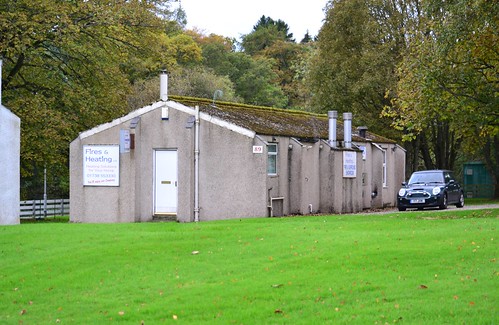
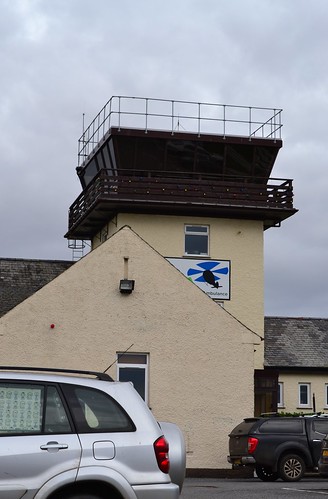
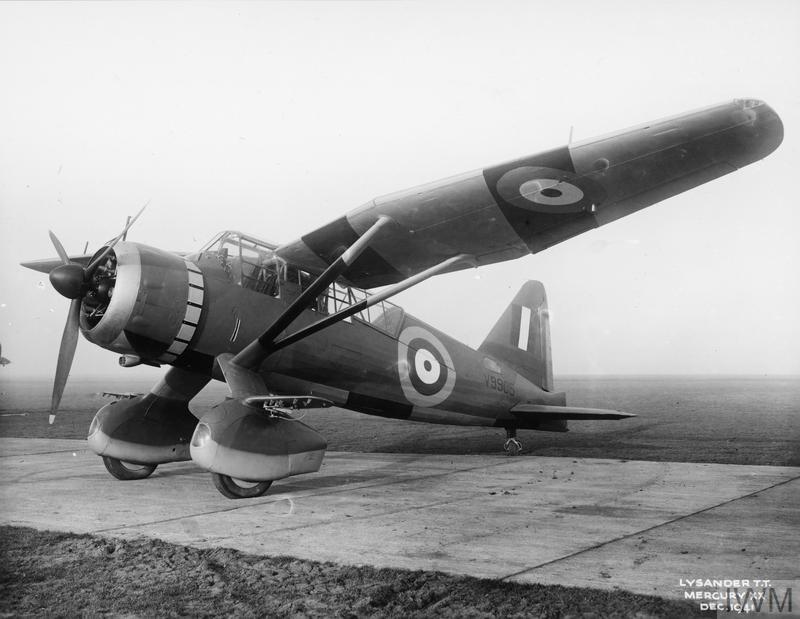


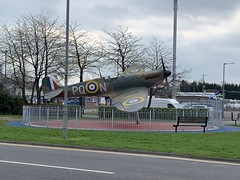


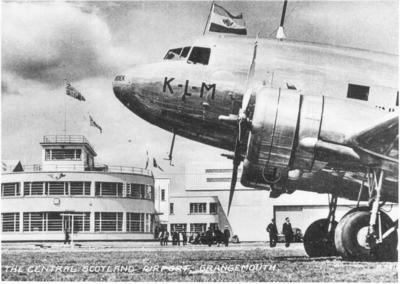

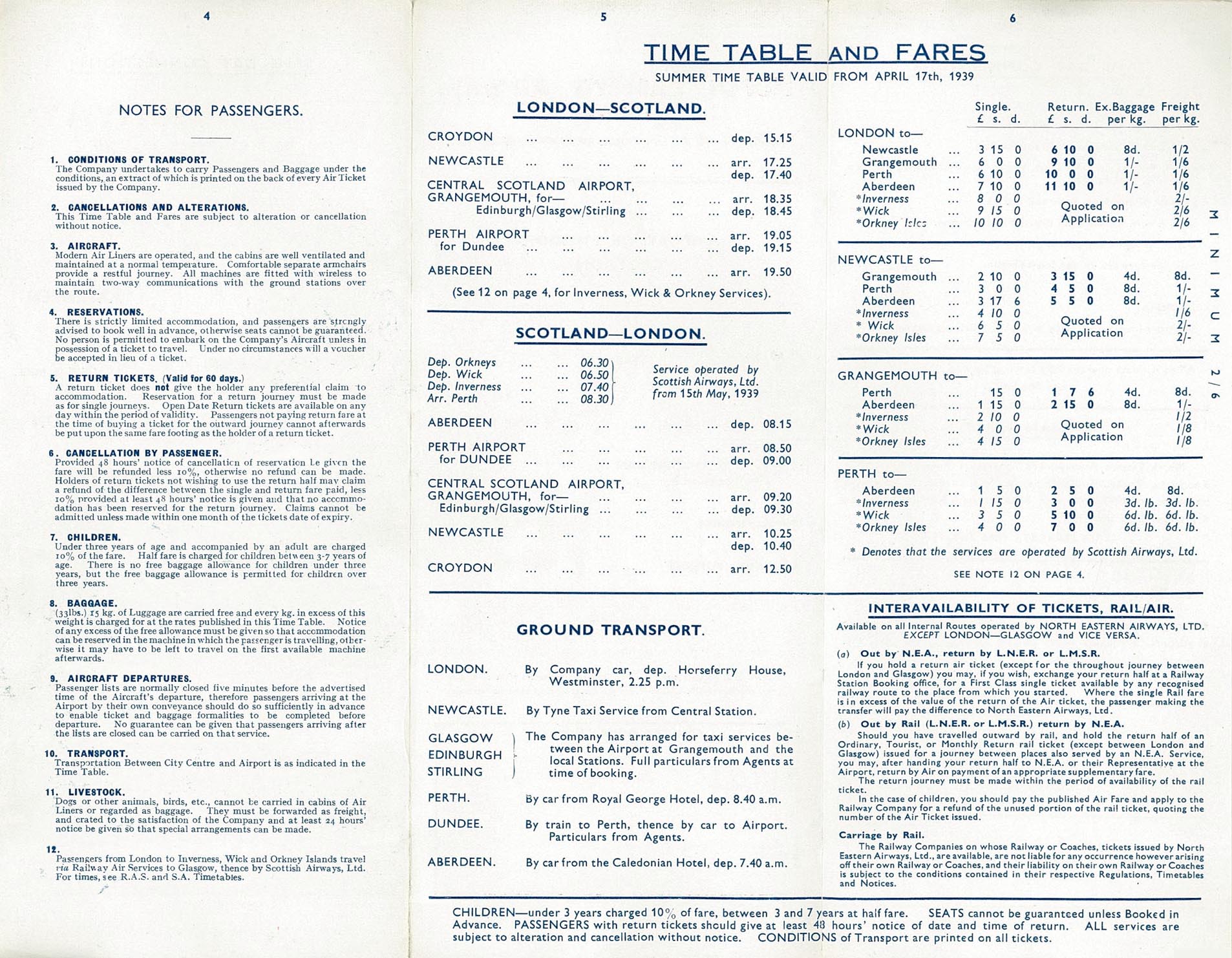
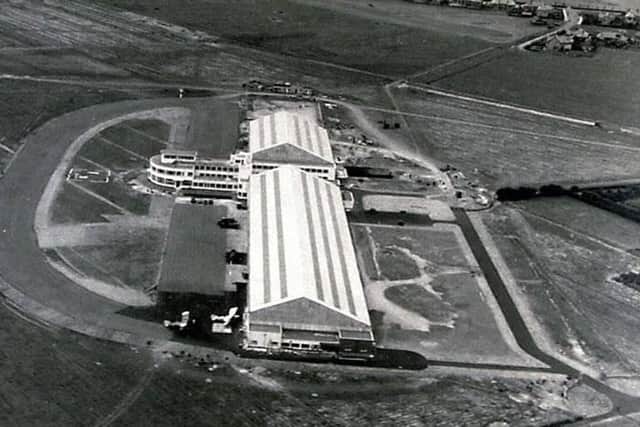

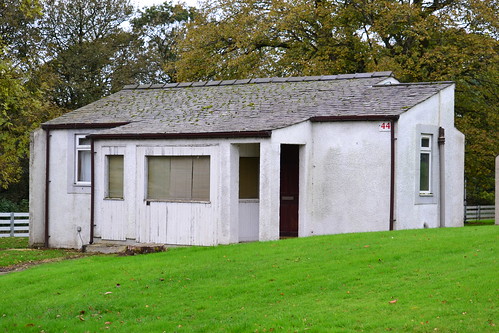


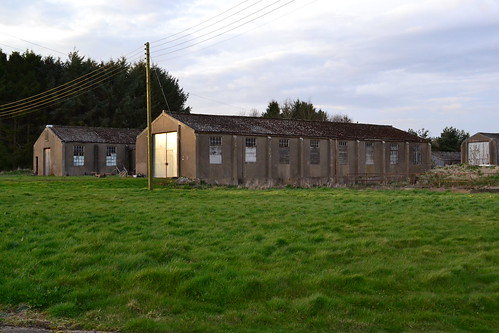
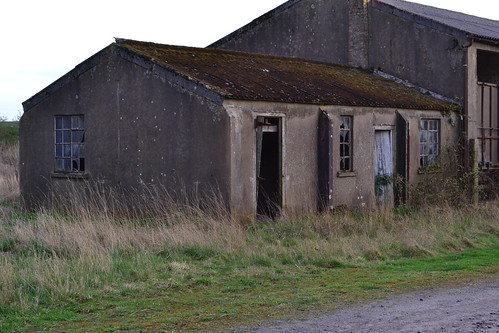
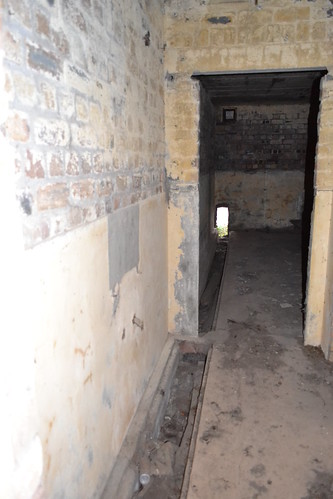
 Aviation Trails