On the morning of December 24th, 1944, Brigadier General Frederick W. Castle (s/n 0-319375), woke to the greet the day, and like most pilots facing perilous missions, he probably wondered if it would be his last. However, knowing what I know about Castle from my research, he was a calm, confident and highly competent pilot, so most likely he had every reason to believe in the success of his next mission. Sadly though, that was not to be the case. Castle never made it back that night. On Christmas Eve of 1944, this brave pilot lost his 30th and final battle.
Lieutenant Colonel Elliott Vandevanter of the 385th Bomb Group with Colonel Frederick W Castle (centre) of the 487th Bomb Group and Brigadier General Curtis A LeMay. *1
Frederick W. Castle was born on October 14th, 1908 at Fort McKinley in Manila, the Philippines. He came from an active military family and was the son of Col. Benjamin Frederick Castle. Following the end of World War 1, he was to settle in the United States in Mountain Lakes, New Jersey.
From a young age, Castle was destined to follow in his fathers footsteps, groomed for a life of military service. He attended Boonton High School and Storm King Military Academy before moving on to the US Military Academy from where he graduated in June 1930.
His first service was with the New Jersey National Guard, where he stayed for two years transferring to the Air Corps, March Field, California, then onto Kelly Field in Texas. Castle gaining his wings in October 1931.
Serving as a pilot with the 17th Pursuit Squadron for 3 years, he eventually left the forces returning to civilian life but holding a reserve status. With the entry of the United States into the Second World War, Castle would be called upon by his good Friend Ira Eaker, returning to the fold in January 1942, and being promoted within two months to Major. By the following September, Castle had been promoted yet again, he was now a Lieutenant Colonel.
With the forming of the Eighth Air Force in England, headed by General Ira Eaker, Castle was one of seven high-ranking officers selected to fly with him on the dangerous route over the Bay of Biscay, eventually arriving at Hendon wearing their civilian clothes. Joining Eaker on February 20th 1943 in the DC-3 from Lisbon were: Lt Colonel Frank Armstrong Jnr, Major Peter Beasley, Captain Beirne Lay Jnr, Lt. Harris Hull and Lt. William Cowart Jnr.
Castle desired a combat role, and this desire would lead to him taking over the command of the ailing 94th Bomb Group. His methods of command were initially considered weak, but in the face of low morale and apprehension, he personally took the 94th to some of the furthest targets yet, his first being Oschersleben in the heart of Germany; a mission that went on to inspire the film “12 o’clock High“. Castle went on to fly in many combat missions including numerous high prestige targets, a role that took him on to Brigadier General and command of 4th Combat Wing.
On Christmas Eve 1944, following a week of poor weather, orders came though for a maximum effort mission, involving every available B-17 and B-24 in support of the troops in the Ardennes. Airfields, supply lines and troop movements were to be attacked, and following weeks of poor weather, a break was at last predicted.
As a joint effort, this would be the largest single attack to date involving 500 RAF and Ninth Air force bombers, 800 fighters and just short of 2,050 Eighth Air Force bombers. Such was the demand for aircraft, that even ‘war weary’ examples, were hastily armed and prepared, many unfit for more than assembly or training duties. Truly an armada of incredible proportions.
General Arnold with Colonel Frederick W Castle, Brigadier General Curtis LeMay, General Williams and General Anderson during a visit to RAF Rougham, home of the 379th BG. *2
Taking lead position, Frederick Castle, was in B-17G-VE, ’44-8444′ “Treble Four“, an aircraft that had itself seen battle experience. Assigned to the 836BS, 487BG, and at RAF Lavenham, it was previously damaged in a raid over Darmstadt. The aircraft was later salvaged in January 1945.
A veteran of 29 missions, Castle was a more than a competent leader. They set off, the weather was as predicted but with a haze that restricted ground level visibility. It was this haze prevented the fighters from leaving causing an all important delay in the escorts. This delay was not considered a major problem at the time however, as the escorts being faster, would soon catchup and overtake the heavily laden bombers. The Luftwaffe, in an unprecedented move, brought forward fighters into the Liege area to meet the oncoming bombers before any escorts could reach them. In the first few minutes of the battle, four of the 487th BG’s aircraft were downed and a further five forced to land in Belgium.
Castle’s lead plane, suffering problems with one of its engines (possibly due to previous battle damage) was attacked by the first wave of fighters, action was taken to leave the flight and join a formation further back. It was then attacked again, the aircraft catching fire, and the navigator being wounded.
Castle took control, and even though still being attacked, refused to jettison the bombs for fear of killing civilians or allied troops below. Further attacks led to both engines on the starboard wing catching fire, which ultimately led to the fuel tank exploding sending the aircraft into an uncontrollable spin.
Through Castle’s actions, seven of the crewmen were able to leave the aircraft, sadly though not all survived.
Frederick Castle died in the crash, his body is now buried in Henri-Chapelle American Cemetery, Liege, Belgium, Plot D, Row 13, Grave 53.
His citation reads:
“He was air commander and leader of more than 2,000 heavy bombers in a strike against German airfields on 24 December 1944. En route to the target, the failure of 1 engine forced him to relinquish his place at the head of the formation. In order not to endanger friendly troops on the ground below, he refused to jettison his bombs to gain speed maneuverability. His lagging, unescorted aircraft became the target of numerous enemy fighters which ripped the left wing with cannon shells. set the oxygen system afire, and wounded 2 members of the crew. Repeated attacks started fires in 2 engines, leaving the Flying Fortress in imminent danger of exploding. Realizing the hopelessness of the situation, the bail-out order was given. Without regard for his personal safety he gallantly remained alone at the controls to afford all other crewmembers an opportunity to escape. Still another attack exploded gasoline tanks in the right wing, and the bomber plunged earthward. carrying Gen. Castle to his death. His intrepidity and willing sacrifice of his life to save members of the crew were in keeping with the highest traditions of the military service*3.”
For his action, Frederick W. Castle was awarded the Medal of Honour posthumously. In 1946, the Castle Air Force Base, in the heart of California’s San Joaquin Valley, was dedicated in his name, and on June 20th, 1981, the Castle Air Museum was officially opened on the now closed base, for the purpose of preserving the Air Force and Castle heritage. Museum details can be found on their website. His name is also on a plaque in the Memorial Park, in Mountain Lakes, New Jersey.
The awarding of the Medal of Honour, reflected the determination and personality of one of Eakers “Original Seven”, who chose to leave a safe position for a combat role, taking on the demoralised 94th, and leading them into some of the Second World War’s most ferocious air battles.
Sources and further reading.
*1 Photo from Roger Freeman Collection, IWM, FRE9833
*2 Photo from Roger Freeman Collection, IWM, FRE9879
*3Congregational Medal of Honour Society, Website, accessed 22/12/15
There have been many instances of incredible acts of bravery and bizarre cases of survival that would normally seem impossible. Flt. Sgt. Nicholas Alkemade falling from 18,000ft without a parachute is just one of very many.
Another such remarkable event occurred on May 3rd 1943, when twelve Lockheed Venturas attacked a Dutch Power Station near Amsterdam. The ‘Ramrod‘ mission involved twelve Venturas from 487 Squadron from RAF Methwold, an airfield located between Downham Market and Thetford, on the edge of Thetford Forest.
This mission, ‘Ramrod 16‘, turned out to be a total disaster for the Venturas, an aircraft converted from a passenger aircraft for war. With its fat body and poor handling, the Ventura earned itself the unsavoury name the “Flying Pig”.
On May 3rd, twelve aircraft, all Ventura MK.Is, departed RAF Methwold, heading for Amsterdam as part of a much larger force involving aircraft from both 12 Group (the main force) and 11 Group who were flying a diversionary sweep.
One Ventura from Methwold would turn back shortly after takeoff when the crew hatch broke off, leaving eleven to proceed: AE684 (EG-B); AE713 (T); AE716 (U); AE731 (O); AE780 (S); AE798 (D); AE916 (C); AE956 (H); AJ200 (G); AJ209 (V) and AJ487 (A). On board each of those aircraft were four crewmen including one Squadron Leader Leonard H. Trent V.C. whose bravery saw the attack through to the bitter end and the awarding of the Victoria Cross for his actions.
The carefully planned attack went horribly wrong though, after aircraft on ‘Rodeo 212′ from 11 Group entered the Vlissingen area thirty minutes ahead of schedule, alerting both the ground and air defences. By the time the Venturas of 487 Sqn arrived, the defenders were well and truly ready.
The crew of ‘EG-B’ Sgt George Sparkes 2nd from the right – others F/O S. Coshall, F/O R.A. North & Sgt W. Stannard *1
On board another one of the other Venturas AE684, (EG-B) that day, was Sgt. William Stannard (s/n: 1253660) and crew. As they approached the target area, Sgt. Stannard’s aircraft was attacked by the alerted Luftwaffe fighters, the Ventura being shot down at 17:45 over Bennebroek, a few miles from Haarlem, in Holland. As a result of the attack, the Ventura broke in half, the tail section – in which Sgt. Stannard was located – breaking away from the main fuselage. The main body of the aircraft – now out of control, burning and failing to Earth – would crash killing both the Pilot F.O. Stanley Coshall (s/n: 46911) and Sgt. George Henry Sparkes (s/n: 1392394). The forth crewman, F.O. Rupert A. North, luckily survived the ordeal, bailing out before the aircraft crashed, being captured and taken prisoner. Sgt. North would be reunited for a short while with Sgt. Stannard before being transferred to Stalag Luft Sagan and Belaria.
Sgt. Stannard, still trapped in the tail, remained there until it too hit the ground – its descent slowed by the flying qualities of the tail becoming an impromptu glider. The whole section coming to Earth where it collided with a tree knocking Sgt. Stannard unconscious. When he came to, Sgt. Stannard was in a Dutch Manor House surrounded by astonished German officials who were waiting to interrogate him before taking him into custody!
Sgt. Stannard, alive and well, was imprisoned at Stalag Kopernikus for the duration of the war. He miraculously survived the fall trapped inside the rear section of the Ventura which managed to glide to Earth before striking the tree.
Middleton (s/n: 402745) was born on 22nd July 1916 in Waverley, New South Wales, Australia. Son of Francis and Faith Middleton, he was educated at Dubbo Hugh School. Nicknamed ‘Ron’ by his friends, he was a keen sportsman excelling at many sports particularly cricket and football. After leaving school, he worked as a ‘Jackaroo’ (cattle handler) until joining the Royal Australian Air Force on the 14th October 1940 under the Empire Air Training Scheme. He learnt to fly at Narromine, New South Wales and then was sent to Canada for further training in preparation for his posting to the UK. He finally arrived in Britain in September 1941, as a second pilot, and his first operational squadron was No. 149 Squadron RAF, who were flying Short Stirling bombers out of both Lakenheath and nearby Mildenhall in Suffolk.
Five student pilots from No. 7 Empire Air Training Scheme (EATS) course at No. 5 Elementary Flying Training School (5 EFTS) Narromine. They are left to right: Aircraftman (AC) Gordon Orchard; AC Douglas Scott; Leonard Reid; Pilot Officer (PO) Douglas Wilberforce Spooner (DFM); PO Rawdon Hume Middleton*2
Middleton’s first experience of operations, was in a Short Stirling over the Rhur, the industrial heartland of Nazi Germany. After spending a short time with 149 squadron he moved temporarily to No. 7 Squadron (RAF).
In July 1942, as first pilot, he was given his own aircraft and crew, it was also around this time that he returned to 149 squadron.
Their first mission together would be on July 31st, to bomb the strategic and heavily defended target, Düsseldorf. Middleton and his crew would continue to fly together and took part in other prestigious missions; namely Genoa on the 7th of November and his 28th mission, Turin on the 20th November. His 29th and final mission, would take place on the night of 28/29th November 1942.
In the early evening of the 28th he took off in Stirling BF372 coded ‘OJ-H’ as part of the raid on the Fiat works in Torino, Italy, along with 227 other aircraft which included – 117 Avro Lancasters, 46 Short Stirlings, 45 Handley Page Halifaxes, and 19 Vickers Wellingtons.
Middleton’s crew consisted of: Ft.Sgt. Leslie Anderson Hyder, Ft. Eng: Sgt. James Ernest Jeffrey, Bomb Aimer F.O. G. R. Royde, Wireless Operator: Sgt. John William Mackie; Gunners: P.O. N. E. Skinner, Sgt. D. Cameron and Sgt. H. W. Gough. Three of these had already completed their tour of 30 operations and could have left. However, their dedication to Middleton kept them together.
The mission would take the aircraft over the Alps and the Stirling, laden with bombs and fuel combined with having a notoriously poor ceiling, had to negotiate through the mountains rather than fly over them. A factor that often resulted in a high number of casualties.
Once over the target area, OJ-H was subjected to an extreme flak barrage. With poor visibility, Middleton had to make three passes over the target area to enable his crew to positively identify it. It was on the third pass that a shell burst hit the cockpit. The resulting damage was severe, and fragments had hit Middleton’s head badly injuring him. His right eye was lost and his skull exposed. There were further hits on the aircraft’s fuselage causing considerable damage to the control systems and airframe. Knocked unconscious by the blast, Middleton lost control and the aircraft plummeted through the skies to an altitude of around 800ft. The second pilot, Fl.Sgt. Hyder eventually managed to take the controls, release the bombs over the target and then pull the aircraft into a climb, safely reaching 1,500ft.
With his aircraft severely damaged, Middleton had a choice, get his crew to bail out over occupied France and certain capture, fly to Africa or head back to England; a journey that would last over 4 hours and put the aircraft at risk of attack and the crew in danger. Wanting to give them a fighting chance of getting home, he opted for the latter, and set a course for England.
Middleton was buried with full military honours at St. Johns Church, Beck Row. Suffolk.*3
The aircraft experienced a number of attacks as they crossed occupied France, but Middleton, fighting for survival, kept reassuring the crew that he would get them home. Eventually, and against all the odds, they made the English coast, and once over land Middleton ordered the crew to bail out. Five crewmen left the stricken aircraft whilst the other two remained to help him control it. Turning for the Channel, Middleton ordered the two remaining crew members to bail out, whilst he stayed at the controls, steadying the aircraft.
By now the Stirling was very low on fuel and it finally gave up the fight and crashed at 03:00 on the morning of November 29th 1942. Middleton, too injured and too weak to escape the wreckage, drowned within the aircraft fuselage. His two crew members, Sgt. James Ernest Jeffrey (576050) age 19 and Wireless Operator Sgt. John William Mackie (994362) age 30, despite escaping, also drowned. Both the bodies of Sgt Mackie and Sgt. Jeffrey were washed ashore later that day on the 29th.
Middleton’s body remained in the aircraft, but was eventually freed from the wreckage by the action of the sea, and was washed ashore on Shakespeare Beach, Dover, in February 1943. His remains were taken to RAF Lakenheath and he was buried in St John’s churchyard, Beck Row, within sight of his airfield in Suffolk, with full military honours. Middleton was only 26 and only one mission away from ending his tour and returning home.
For his action, dedication and bravery, Flt. Sgt. Middleton was posthumously awarded the Victoria Cross, the first to any serving member of the R.A.A.F in World War II. He was also posthumously awarded a commission as Pilot Officer, backdated to mid November before his sortie to Turin. Thirty years later, in 1978, Middleton’s V.C. was presented to the Australian War Memorial, in Canberra for safe keeping and preservation.
For their actions, the other crew members received three DFMs and two DFCs. Fl.Sgt. Leslie Hyder (DFM) was injured, P.Officer. N. Skinner (DFC) was also injured, along with Sgt. H. W. Gough (DFM). F.O. G. R. Royde (DFC) and Sgt. D. Cameron (DFM) escaped unhurt.
The London Gazette published a report on 12th January 1943. It said:
“Fl. Sgt. Middleton was captain and first pilot of a Stirling aircraft detailed to attack the Fiat Works in Turin one night in November, 1942. Very difficult flying conditions, necessitating three low altitude flights to identify the target, led to excessive petrol consumption, leaving barely sufficient fuel for the return journey. Before the bombs could be released the aircraft was damaged by anti-aircraft fire and a splinter from a shell which burst in the cockpit wounded both the pilots and the wireless officer. Fl. Sgt. Middleton’s right eye was destroyed and the bone above it exposed. He became unconscious and the aircraft dived to 800 ft. before control was regained by the second pilot, who took the aircraft up to 1,500 ft. releasing the bombs, the aircraft meanwhile being hit many times by light flack. On recovering consciousness Fl. Sgt. Middleton again took the controls and expressed his intention of trying to make the English coast, so that his crew could leave the aircraft by parachute. After four hours the badly damaged aircraft reached the French coast and there was once more engaged and hit by anti-aircraft fire. After crossing the Channel Fl. Sgt. Middleton ordered the crew to abandon the aircraft. Five left safely, but the front gunner and the flight engineer remained to assist the pilot, and perished with him when the aircraft crashed into the sea”.
Funeral service for 402745 Flight Sergeant Rawdon Hume Middleton, the RAAF’s first VC winner. He was buried with full military honours in a country churchyard near his station. Air Vice Marshal H. N. Wrigley represented the High Commissioner for Australia (Mr S. M. Bruce) and the RAAF. The graveside service was conducted by Squadron Leader H. C. Thrush of Prospect, SA, RAAF Chaplain. (Australian War Memorial Public Domain)
Middleton’s citation read:
“Flight Sergeant Middleton was determined to attack the target regardless of the consequences and not to allow his crew to fall into enemy hands. While all the crew displayed heroism of a high order, the urge to do so came from Flight Sergeant Middleton, whose fortitude and strength of will made possible the completion of the mission. His devotion to duty in the face of overwhelming odds is unsurpassed in the annals of the Royal Air Force”.
In honour of Middleton’s bravery, Number 1 RAAF Recruit Training Unit at RAAF Base Wagga has renamed the club in his name, the “Middleton VC Club”, and he also appeared on one of the 1995 Australian 45c stamps. The dining hall located at the nearby (now American) base at RAF Mildenhall in Suffolk, has also been named in his honour.
Middleton was a brave and dedicated young man who gave his life to save those of his crew. Each and every one of them acted with the highest dedication, sadly for some, it cost them dearly.
Sources
*1 photo courtesy of Australian War Memorial, image 100641, Public domain.
*2 photo courtesy of Australian War Memorial, image P01019.003, Public domain.
*3 Photo courtesy of Australian War Memorial, Image SUK10501, Public domain
*4 Photo courtesy of Australian War Memorial, Image SUK10500, Public domain
Part 1 of Newmarket Heath saw the rebirth of this First World War airfield. The outbreak of war and the confusion that grew from the Phoney War.
Part 2 continues the growth and development of Newmarket and its eventual demise.
The Autumn of 1941 saw the reforming of a World War 1 squadron, 138 Sqn whose re-creation on the 25th, was the result of renumbering 1419 Flight. who would operate Lysanders, Whitleys and finally Halifax IIs before they departed mid December. 138 Sqn would then go on to play a major part in the forming of yet another squadron, also here at Newmarket, in a few months time.
December 1941 heralded another First World War squadron reformation, this time the ground echelons of 215 Sqn, who would make their way to India before the air echelons – formed at Waterbeach – could join them.
The winter of 1941 – 1942 would be a time of great discord for Bomber Command even to the point where its whole future was at stake. With high losses and poor bombing accuracy, there were those in power who were seeking to reduce the Command to a fraction of its size, and with such unsustainable losses, their arguments were holding a lot of water. But Sir Charles Portal, who vehemently supported the Bomber Command dogma of carpet bombing, managed to secure the backing of Churchill, and having Churchill on your side meant you had power.
Across Bomber Command, 1942 would bring many changes. To implement this mass bombing policy, now targeting the populous rather than individual industrial targets, Portal employed Sir Arthur Harris in February 1942. Whilst not Harris’s conception, it would be his name that would become synonymous with the policy that has become so controversial ever since.
Along with Harris came a restructuring of Bomber Command, including its support structure. With the heavier four-engined types all coming on line and into full squadron service, it would see the reduction on the reliance of the smaller, now outdated, twin-engined types: Whitley, Hampden and the Manchester; and whilst the numbers of Bomber Command aircraft would not significantly increase, its payload would.
These changes would include the training units designed to train crews for the new bomber aircraft, With larger aircraft, came larger and more specific roles. Within the reshuffle came renumbering, amalgamation and reformation, making their evolution a complicated mix of numbers and bases. Newmarket was a part of this mix.
One such unit to go through these changes was No. 1483 (Target Towing and Gunnery) Flight which joined with other flights to be finally renamed No. 3 Group Air Bomber Training Flight in mid 1942. The Flight would continue on in this form until mid March 1944, whereupon it was disbanded, and its aircraft disposed of.
The confusing reforming of training units would reflect the reshaping that Bomber Command would also go through, much of which was settled and firmly embedded by the year’s end. Much of this would be under Harris’s direction, but some by the natural evolutionary process of development and improvement.
The development of aircraft was rapid during the war years. With both the Allied and Axis powers investigating faster and more powerful aircraft, it wouldn’t be long before the jet engine would make an appearance. For the RAF, the Meteor (F.9/40 ‘GlosterWhittle’ twin-jet interceptors) would be the breakthrough. A twin engined jet aircraft, of which twelve prototypes were initially ordered by the Ministry of Aircraft Production (designated DG202 – DG213), and was unofficially known as the ‘Rampage’, would have different engines to undergo flight testing.
On July 2nd, 1942, one of these prototypes DG202, was transferred from the Gloster factory at Bentham in Gloucestershire, here to Newmarket by road. Loaded onto a low loader, its wings were removed and then reassembled for ground run and taxiing trials.
On the 10th, the aircraft was powered up and taxied by Flt. Lt. P.E.G. ‘Gerry’ Sayer, who attempted two short flights. On the second attempt, Sayers managed to get the aircraft off the ground for a few seconds before bringing it back down again. The engines fitted at the time, were not designed to be flight condition engines and so no greater duration attempts were made.
After suffering problems with the undercarriage, trials were resumed with Hawker Typhoon wheels, until mid August when the engines were removed, and the aircraft stored in one of the hangars on the airfield.
After further tests, the aircraft was transported, again by road, to RAF Barford St. John, in Banbury, Oxon where it would eventually fly for six minutes under the control of Gloster’s chief test pilot, Michael Daunt. DG202 then underwent numerous modifications and further flight tests, eventually being mothballed and refurbished, until it found its way to the RAF Museum at Hendon, London. The Meteor would of course go on the break the Air Speed Record at Herne Bay, Kent on November 7th 1945.
Meanwhile back at Newmarket, the end of October 1942 saw air and ground crews of 75 (NZ) Sqn at nearby RAF Mildenhall, begin transferring across to Oakington, an airfield that had caused so many problems with mud earlier in the war. The purpose of the move was to convert the men, initially of ‘B’ Flight and then ‘A’ Flight, over to the Stirlings they were about to receive. Once trained, they would return to Mildenhall and then transfer to Newmarket’s Rowley Mile, where they would be based for the foreseeable future.
At the end of October the transformation from Wellington to Stirling began. Thirteen Welllingtons were dispatched to other squadrons, at which point the New Zealanders began their move to Newmarket. The move, overseen by Sqn. Ldr. R. Crawford, commenced on November 1st 1942, and involved two parties, one travelling by road whilst the other travelled by air. Once at Newmarket the crews would begin settling in, and as soon as their replacement aircraft arrived, they would carry out air training flights acclimatising themselves to the intricacies of the new four-engined heavy.
With new aircraft to get used to, it would not be long before the first accident would occur, one that thankfully did not involve casualties. A wheels-up landing by Sgt. P. Buck at Holme whilst on an air-to-air firing flight to RAF Marham, marked the start of a new era.
The first operational flight from Newmarket took place on November 20th, a long distance flight to Turin. A small force comprising of only four aircraft carrying 4 lb incendiary bombs, made up 75 Sqn’s component of 232 aircraft – the largest Italian raid of the period. Whilst the raid was successful and no losses were encountered by any squadron, two of the four No. 75 Squadron Stirlings returned early with problems; the incendiaries they were carrying being dropped over southern France or in The Wash.
Operations to Stuttgart two nights later showed similar results, this time only two aircraft were detailed of which one returned early with an unserviceable rear turret.
A pattern was beginning to emerge. On the 28th, another raid with four aircraft saw one forced to jettison its load of 1,000 lb and 500 lb bombs due to one engine cutting out, the other three aircraft bombing Turin successfully. On the return, Stirling BK608 ‘T’ ran out of fuel over Stradishall, the crew bailing out as low as 600 ft, but against the odds, they all survived unhurt. The aircraft crashed, but was eventually recovered and converted to an instructional air frame. Sadly the same could not be said for the crew of BF399, who whilst on a training flight back at Oakington, flew into the ground killing all but the mid-upper gunner instantly. Sgt. C. T. Roberts, the only crash survivor, unfortunately succumbed to his injuries a few days later, adding another tally to the list of dead. It later transpired that the pilot, Sgt. H. Broady, had tried to avoid a head-on collision with another Stirling possibly putting the aircraft into a stall from which he could not recover.
On the 29th, further problems dogged the Stirlings, a faulty bomb release mechanism meant an early return for BK609 ‘R’, who landed in poor weather at Bradwell Bay; the pilot overshooting the runway damaging the aircraft and injuring the Air Bomber Sgt. Broadle.
Over the October / November period, 75 Sqn received a quantity of new Stirlings, the factories at Rochester, Swindon and Birmingham each supplying examples as the last of the Wellingtons were dispatched elsewhere.
By December, the crews were all together back here at Newmarket and taking part in squadron operations over occupied Europe. The last days of 1942 would not be happy yule tides for all though, as fate would claim one last victim of 75 Sqn, that of BF400 ‘G’ which was shot down over Holland. The crew were all captured and placed in POW camps, F/O. Eric Williams being one of those whose famous escape via the Wooden Horse was immortalised on film.
As 1943 dawned and Bomber Command settled into its new form, Newmarket would see a short stay of 2 Sqn Mustang Is. Based primarily a stones throw away at RAF Bottisham, they were only a detachment and would soon depart the site. Similarly, between the 6th and 14th March of 1943, 453 Sqn flying Spitfire VBs utilised the bomber site. Another short stay unit, the Merlin engined fighter group had only been formed at Drem in Scotland, some nine months earlier.
In the preceding years, the Stirling and Wellington had remained, for a large part, the main backbone of 3 Group, with the Stirling gradually replacing the twin-engined ‘Wimpy’, until it too would be withdrawn from front line service in favour of the Lancaster.
75 Sqn suffered only a handful of losses, many aircrew being captured and taken prisoners of war. In the March, the MK.I began to be replaced by the MK.III, and with it came new hope for improved performance. Many of the teething troubles that had dogged the earlier version of the Stirling had now been resolved, but it still remained a poorly performing aircraft, even in its current form.
Initial tests of the MK.III at Boscombe Down were positive. Altitudes of 17,000 ft were achievable, and whilst still far below that of the Lancaster or Halifax, it was better than the MK.I. However, these tests failed to take account of new equipment such as new dorsal turrets and flame dampers, additional weight and drag meant that in operational form, the new model was barely better than its predecessor, and far better engines were needed if any significant improvement was going to be made. With further engine developments the first of the MK.III Stirlings came out. Fitted with Hercules MK.VI engines they could achieve a marginal 2,300 ft better altitude and a slightly faster climb rate; it was hardly anything to call home about, but with improved German flak defences it was welcomed with open arms.
In March, 75 Sqn received two of the new models, with others following not long after. One of these was lost on April 8th on a mission to Duisburg. The crew were all lost when the aircraft came down on its way home only three miles west of Diss in Norfolk.
On the RAF’s anniversary, 75 Sqn formed a new section, ‘C’Flight, an increase in crew meant an an increase in operations too. Whilst 1943 saw low casualties generally, there were three nights on which four aircraft were lost each time. On the night of 28-29th April R9290, W7513, BF4667 and BK807 were all lost whilst on ‘Gardening’ missions in the Baltics, there were no survivors. Another four aircraft were then lost over Wuppertal, with only seven of the airmen surviving – it was another huge loss. A further four aircraft were lost on the night 22-23rd June whilst on a mission to Mulheim. During this attack the four aircraft were shot down by a combination of night fighters and flak, with only five crewmen from BK810 surviving as prisoners of war.
June 1943 saw the last remaining Newmarket operations. On the 19th, fourteen aircraft were dispatched to Krefeld on the western banks of the Rhine a few miles north-west of Dusseldorf. Over the target, Stirling MK.I EH880 piloted by Flt. Lt. J. Joll, was hit by flak, breaking a fuel-cock and control cables. As a result, fuel and oil poured into the aircraft’s body, causing a fire in the fuselage, mainplane and mid-upper turret. Without thinking for his safety, the Flight Engineer Sgt. G. Falloon, cut a hole into the wing with an escape axe, and crawled through. Once inside, he located and isolated the leak enabling the aircraft to land safely back at Newmarket.
Undaunted the crew returned to Krefeld two nights later, this time safely returning without damage. As the month closed, the last Newmarket loss came on the night of 25-26th June 1943, a loss that coincided with the Sqn’s departure from Newmarket, and a move to pastures new at RAF Mepal. The Loss of Stirling BK768 ‘L’ piloted by F/O. Perrott, came as a last minute blow to the squadron, with the loss of all on board.
As the war progressed, new technologies and better methods for bombing were being investigated by both sides. Within the RAF, the Bomber Development Unit (BDU) (formally 1418 Flight) was making huge steps in this direction. A specialist unit that was set up to run trials of new technologies for the RAF’s heavy bombers included: H2S, ‘Monica’, ‘Boozer’ and ‘Fishpond‘, each one designed to improve bombing accuracy or aircraft protection.
On 13th September 1943, the BDU moved from RAF Feltwell to Newmarket, where they continued these tests, including trials into higher altitude mine laying. The research carried out by the BDU was paramount in the introduction of ventral guns fitted in many of the RAF’s wartime heavy bombers. Under the leadership of Sqn. Ldr. (later Wing Commander) Richard ‘Dickie’ Speare DSO, DFC and bar, and Sir Lewis Hodges, they also investigated the idea of a radar guided rear turret (AGLT) that locked onto enemy aircraft. A design feature that never really took off, and the idea was later scrapped.
A number of other units, Maintenance units, Glider Maintenance sections, Training Schools and Flights, also graced the skies over Newmarket. But by now the end was drawing closer, and operations from Newmarket began winding down until they finally ceased shortly after the end of the war. A military presence remained for a further two years, but there was little activity. Post war, the Rowley Mile racecourse was reinstated, the buildings returned to their former use and the majority of the airfield’s buildings were pulled down. Within three years the military had pulled out and Newmarket’s wartime history came to a close.
Newmarket racecourse today. The Grandstand to the right with the Rowley Mile along the front (white fencing). The main runway was directly in front of you at this point, cutting across the airfield. (Taken from the lowered section of the Dyke)
Today the racecourse is predominant, little evidence can be seen of the former airfield, the Dyke still has the lowered section, and one original hangar remains to the north of the site next to the A14 road. The July landing strip still operates, and aircraft are permitted to land and take off up to an hour before or after racing commences/finishes, used mainly by visiting jockeys and horse owners, it is perhaps the last remaining sign of an aviation history at this once busy airfield.
The dangers of the Dyke continue to show themselves today, on June 1st 2000, a Piper Seneca carrying the Jockeys Frankie Dettori and Ray Cochrane crashed on this site both suffering serious injuries. The pilot, Patrick Mackey, was killed in the crash which took place between the July strip and Rowley mile, impacting on the Devils Dyke – yet another victim claimed by this ancient structure.
The Grandstand, the former accommodation block for aircrews, still stands but much refurbished and updated, a grand viewing platform where race-goers can watch in comfort as the horses gallop across the finish line.
Newmarket airfield started off as a rather insignificant satellite airfield growing considerably in size over its life. Although the runways were grass, (there were three officially designated) the longest stretched to around 9,000 ft (2,500 yds) – some 500 more than a standard Class A bomber airfield of the war years. The remaining two runways (1,800 yds and 1,600 yds), were also large for its size. A bomb store, much needed early on in the war, was located to the north and a small, non circular perimeter track linked the many hangers that were found on the original wartime site. Several T2s, two B1s, and various blister hangars were all located around the airfield.
The majority of the technical area was found to the north of the site, the opposite end of the Grandstand which was close to the watch office. In this technical area were located twenty-four hardstands of the spectacle style, all of which have now gone. The main A14 road now cuts across this former technical area, only one of the B1s still exists today, the second having been burnt down and replaced in recent years.
RAF Newmarket Heath saw a huge range of flying activities during its life. Primarily a bomber station, it witnessed many accidents and suffered many losses. From its inception in the First World War to its development as a substantial airfield in the second, it grew to be a remarkable site, and one which continues to be prominent today. Sadly though, this important period of history seems to have all but vanished, the slate wiped clean and replaced with something much more appealing to the general public today.
After we leave Newmarket, we head a short distance west towards Cambridge where we find another airfield that has long since gone. Through huge efforts by a small group of volunteers though, we see a museum sprouting out of the ashes, as we head to the former airfield RAF Botisham.
In the second of the four airfields visited in Trail 55, we move on from Snailwell, a small grassed airfield to a similar station a stones throw away to the west.
This second airfield is now one of the major venues of British Horse Racing, second only to Ascot, and is found in an area where much of the land is owned by the British Horse Racing School, stud farms, and stabling. It is also home to the famous Jockey Club, an organisation founded in 1750 that has a turnover of over £200 million.
Now where virtually all traces have long gone, we visit the former base RAF Newmarket Heath.
RAF Newmarket Heath (Rowley Mile).
Like RAF Snailwell, Newmarket Heath saw a wide variety of units using it. Initially a satellite airfield, it housed in excess of 20 squadrons or training units during its life. Being a satellite it would also be used by a wide range of aircraft types, but primarily the heavy bombers of Bomber Command, each one bringing its own story of hardship and heroism.
Opened in October 1916, its history lasted until the military finally pulled out on 15th April 1948, but whilst military flying has ceased, some light flying still does occur, mainly for those attending race days at the Newmarket race course.
Today Newmarket airstrip is one that confuses many pilots trying to land and use its facilities. The original landing strip was know as ‘Rowley Mile’, which now forms part of the Newmarket racecourse ending at the Rowley Mile Stands. During the summer months, another strip is used, known simply as the ‘July landing strip’, and this sits to the west of the Rowley Mile along side the ‘Devils Dyke’*1 (locally called the Devil’s Ditch’). This is is a 7 mile long embankment, created in Anglo-Saxon times, and is thought to be around 1,450 years old. Because of its collection of wild fauna and flora, is has been designated a Site of Special Scientific Interest (SSI), which, at its highest point, reaches some 50 feet. It was this dyke that caused the loss of several wartime crews including that of a 99 Sqn Wellington on 18th December 1940, which crashed into the Dyke on take off. Four of the crew were killed and two injured, escaping only by the bravery and quick thinking of P.O. J. Hansen the famous Danish speedway rider. Arriving shortly after the crash he pulled the two crewmen from the wreckage winning himself the George Medal for his actions.
A second aircraft, a Stirling of 75 Squadron, based at the airfield, struck the dyke almost exactly two years later to the day, at ten minutes past ten on December 16th 1942.
The Devils Dyke looking north. The ‘July Strip’ is to the left and the ‘Rowley Mile’ and Newmarket Airfield to the right. This is the bank struck by the Stirling.
During take off, Stirling R9245 piloted by Sgt. B. Franklin, and carrying mines for the Gironde Estuary, clipped the Dyke with its starboard undercarriage tearing out the oil tank which caused one of the engines to fail. The incident brought the aircraft down about a mile from the airfield, killing all seven crewmen on board after the mines it was carrying, exploded. As a result, the mission was cancelled and the following five aircraft were stood down for the night. Because of these, and other accidents involving the Dyke, part of it was lowered during 1943, the results of which are still apparent today, and it is where a memorial stands in memory of the crew lost of that night in December 1942.
The plaque at the base of the Dyke where Stirling R9245 struck on the night of December 16th 1942.
Today there is a further memorial located outside the conference centre. A tribute to all those who served at the ‘Heath’ along with a propeller blade extracted from the ground where a further 99 Sqn Wellington came down near to Wisbech on the night of February 11th 1941.
The Rowley Mile airfield originally opened during the First World War and operated for almost than three years. The primary users of this site, were the two Night Training Squadrons: 190 and 192 who were created out of elements of both 51 Sqn and 33 Sqn respectively. These two units operated from Newmarket in the latter stages of World War I, both being disbanded in 1919 after the war’s end. 190 Sqn had by then, moved to RAF Upwood whilst 192 had remained at Newmarket whereupon its operations ceased.
Between the wars it would seem there was no real flying activity, the race course being the prominent feature. But when war broke out again, it was put back into use, and utilised by the RAF as a large airfield capable of dealing with some rather large aircraft.
Being bordered to the north by the modern A14 road, and with the town of Newmarket to the east, Newmarket Heath reopened for military business in 1939 under the control of 3 Group Bomber Command, whose headquarters were at Harraton House in nearby Exning. Newmarket accepted its first visitors, a detachment of Blenheim IVs from 107 Sqn, during May of that same year.
On September 1st, two days before the declaration of war between Britain and Germany, the airfield was, by then, a satellite for RAF Mildenhall in Suffolk. Present at Mildenhall was 99 Sqn, with Wellington MK.Is, an aircraft they had been operating for a year.
The beginning of September marked a turning point not only in world history, but also in British aviation. On September 1st, a general mobilisation order was received at airfields across Britain, and at RAF Mildenhall, like many, 99 Sqn were told to prepare to put “Scatter” schemes into operation. Once confirmation was received, eleven aircraft were flown from Mildenhall to Newmarket along with a sufficient number of crews to prepare Newmarket for crew accommodation. This accommodation was to be the Grandstand originally used for spectators at the various race meetings.
The Grandstand was never designed for aircrew accommodation, the NCO’s never fully accepting the poor living conditions in which they had to stay. It was dirty and the facilities barely even primitive! Washing facilities consisted of a cold water tap, whilst latrines were slit trenches with planks placed over the top. The only remnant of decency was a hessian cloth hung between posts separating you from the man next door. Eventually things did ‘improve’, the mess hall became a room within the grandstand complex and ablutions a makeshift building outside. Needless to say however, it was not a popular place to be posted to.
The Grandstand today taken from the Devil’s Dyke. The white fencing indicates the Rowley mile and the former World War 1 landing strip.
The intention was to transfer the entire squadron to Newmarket leaving only a maintenance and repair section at Mildenhall, a move which began almost immediately. Then on September 3rd, at 11:00 hrs, the squadron were called to assemble on Newmarket’s parade ground to hear the Prime Minister, Neville Chamberlain, announce Britain’s declaration of war on Germany. Little did they know that history was being made, and that for the next five years the world would be plunged into very dark times indeed.
On the very same day that the declaration was made, orders were put in place to carryout leaflet drops, but subsequent instructions cancelled these, and no flying took place. As Britain entered the ‘phoney war’, confusion, mixed orders and a rather disorganised period would follow. Orders and counter orders became the norm, squadrons were moved and reorganised, and no one seemed to know quite what they were to do.
New orders came through on the 5th to prepare to ‘disperse all aircraft that could be flown’, along with skeleton crews, to RAF Upper Heyford. The confusion of the Phoney War continued, and when the local air raid warning sounding at 7:15 on the 6th, crews found themselves spread about the field as only one air raid shelter at Newmarket was usable. Immediately after, a new order came through to implement the ‘withdrawal’ scheme and so eleven Wellingtons, who had only recently arrived, took off for RAF Upper Heyford. A twelfth aircraft, that had also transferred over to Newmarket, was unable to fly due to it being unserviceable.
Further mixed orders came through with yet more operations being cancelled. But then on the 8th, a new order for leaflet drops was issued, and four aircraft were designated to fly to Newmarket and then onto Mildenhall where they would receive up to date information on the ‘target’ area. Four crews arrived and prepared to take off from Mildenhall. One of these Wellingtons, L.7770, was then found to have a leak in the oxygen system, and its flight was cancelled. With insufficient time to collect a spare aircraft from Newmarket, the operation was again scrubbed, and the three aircraft returned to base; another frustrating let down and another source of confusion for the crews.
On the 9th, another message came through to evacuate Newmarket, and all aircraft were prepared once more to move to RAF Elmdon (now Birmingham Airport). An additional sortie also planned for that night was also again cancelled, this time though due to bad weather, as preparations for the squadron’s move continued. Four Newmarket aircraft then departed for Elmdon in the afternoon, Wing Commander Walker making the necessary arrangements, flying to both RAF Upper Heyford, where further aircraft were dispersed, and then onto RAF Elmdon to ensure the move went smoothly. Coinciding with all this, the squadron received its first upgrade, the MK.IA, in the form of Wellington N2870, which was delivered by a ferry pilot to RAF Mildenhall.
The evacuation was completed by the late evening, all personnel had departed leaving just an NCO and a working party to clear the Grandstand and remove any remaining stores. A 32 seat omnibus along with a heavy lorry transported thirteen men and their supplies to Elmdon. The remainder of the party then transferred back to Mildenhall.
On the 25th, another order was received in the early evening to return to Newmarket, Sqn. Ldr. J. Griffiths must have said a few choice words as he made the arrangements to move the men and their stores back from where they had only just come.
Suggestions where again made to locate the entire squadron to Newmarket, but this was now seen as impracticable, and so only the dispersed Elmdon group made the move. By the end of the next day the transfer was complete.
With firing trials taking place at Carew Cheriton near Tenby, further instructions came through, again suggesting the squadron move to Newmarket. Again though this was noted as impractical, and the move stopped for a second time. The confusion was then broken at 12:15 when a message came thought to say that a Wellington had crashed on take off prior to undertaking gunnery practice, the crew sustaining minor injuries, but the aircraft being severely damaged in the accident. The crew were able to return to Newmarket after receiving treatment for their injures, where they resumed their duties.
On the 20th, the aircraft located at Newmarket were placed on a 60 minute standby, ready to attack the German fleet which was sailing from its base in northern Germany. But, by 16:30, the chance had passed and the flight was stood down. The irony of training with Leica cameras must have broken the monotony of gunnery practice, when on the 8th October, six aircraft did finally take off from their Newmarket base to attack the fleet. Unfortunately, the aircrews could not locate the ships, and all aircraft returned to Mildenhall for debriefing before flying on back to Newmarket.
It was this same order that would, on December 14th 1939, decimate the Newmarket detachment. A search for the fleet over the North Sea led to forty-two aircraft from various squadrons, flying Bomber Command’s most extensive search yet. The twelve 99 squadron aircraft finally managed to locate the fleet through the cloud at Schillig Roads, close to Willhelmshaven. Once here, the cloud, highly accurate flak and the Luftwaffe, decimated the formation. Five of the Wellingtons went down in the target area, and a further aircraft, after disposing of its bombs over the sea, limped back to Newmarket badly beaten up. Even though they were away from hostile territory, the crew were not yet safe, and when within sight of the airfield, the aircraft finally gave up the battle and crashed into the ground. The pilot, Flt.Lt. Eugene Hetherington (s/n: 39026) a New Zealander, perished along with two others of his crew. Of the six aircraft lost, only three from Flt. L. Herington’s crew survived, and the bodies of only two men from the other five aircraft were ever found. 99 Sqn had lost 33 aircrew in one night, a terrible blow to the Newmarket crews.
In the post operation analysis, Bomber Command officials decided that it was not the fighters that brought the aircraft down, and that good close formation flying had been a ‘success’ of the mission. They decreed that concealment was better than any amount of firepower and that pilots should seek shelter in cloud wherever possible.
With only one other aircraft going down in the then, neutral Belgium, there were no other major loses in 1940 and only a few, largely due to training accidents, in early 1941. The Winter of 1939-40, was certainly a baptism of fire for the crews of 99 Sqn.
The dawn of 1941 would signify changes to Newmarket. By March, 99 Sqn had finally pulled out, their poor start to the war proving that the idea of bombers successfully protecting themselves on daylight missions was a fallacy. A point made in dramatic style in one single operation.
On the 16th of March, orders were issued at nearby RAF Oakington to move the Stirlings of ‘A’ Flight, 7 Sqn, out to the new satellite station here at Newmarket; the runways at Oakington now becoming nothing more than a mass of mud, causing a danger to any aircraft that dare to venture out. By the 26th, the situation has become so bad that both ‘A’ and ‘B’ Flight officers had departed, with the main body of ‘A’ Flight following the next day. For a month the squadron’s Flights operated out of Newmarket whilst Oakington’s mud dried out. However, by the 5th April, it was clear that the accommodation situation at Newmarket, both ‘inhospitable’ and ‘cold’, was far too cramped, and ‘B’ Flight were ordered back to Oakington where they would be ferried the short distance to Newmarket where their aircraft were to remain.
By the 27th April, Oakington had sufficiently dried out and the surface was ‘improving rapidly’, enough at least for ‘A’ Flight to return home. After one month of being at Newmarket, the crews could finally breathe a sigh of relief to be leaving the rather inaptly named ‘Grandstand’ behind.
Part 2 will see how Newmarket developed further, its wartime legacy and its eventual demise as an operational airfield.
In part 1 of this Trail (Trail 14) we saw how Bungay had grown from a satellite airfield into a fully fledged bomber airfield housing the 446th BG known as “The Bungay Buckaroos”.
The night of April 22nd 1944 saw the USAAF’s Mission 311, when over 800 bombers, a mix of B-17s and B-24s, were ordered to attack the marshalling yards at Hamm in three waves, each with its own designated target. The bombers were to take off from their respective bases between 17:50 and 18:21, but even before the stream arrived over the target, Bungay would bear witness to what was about to happen that night.
For the crew of #42-50306 “Dragon Lady“, it would begin at home. On take off the B24 skidded and crashed killing not only the ten airmen on-board, but two ground staff as well. Then, shortly before arriving over the Dutch coast, a B-17 #42-19818 of the 401st BG at Deenethorpe, suffered a fire inside the fuselage. As the fire took a grip of the aircraft, the pilot Lt. Roland Schellenberg put the B-17 into a steep dive during which three crew members either fell or jumped from the aircraft. Eventually, the fires were extinguished and the aircraft returned to the UK making an emergency landing here at Bungay, with nor further loss. The aircraft was salvaged at the Salvage depot at Watton, but the three crewmen who left the aircraft, were never found even after an intense RAF Air Sea Rescue Search of the area.
B-24H #42-50306 crashed on take off at Bungay on April 27th 1944 with killing twelve men. (IWM FRE 6607)
As the bomber stream made its way to Hamm, unpredicted winds played havoc with many aircraft, some passing beneath the higher groups as they approached the bomb release point, putting themselves in grave danger of being hit from falling bombs. Others following these leading groups also began arriving too early over the target, and were unable to distinguish landmarks due to the heavy smoke from the previous wave’s bombing.
Whilst conditions were very difficult, most aircraft did manage to bomb either their given target or alternative targets of opportunity, and considering this, results were generally good for the three Divisions. However, the troubles for the crews didn’t really start until they left the target and began their flight home.
Being a late operation, returning bombers were not locating their bases until well after dark, a situation the Luftwaffe exploited to their full advantage. A small force of Me-410 night fighters mingled with the returning bombers, and so ground radar were then unable to pick them up. Once the ground staff realised what was happening airfield lights were extinguished and crews ordered to other bases. Unseen, the German fighters gradually picked off the bombers as they tried in vain to land at darkened airstrips. One such pilot, 2nd. Lt. Frank Baker, luckily managed to avoid not only the fighters but another B-24 as he struggled to bring his aircraft (#42-95294) down at an alternative base. For his action that night, Baker received an Oak Leaf Cluster to add to his DFC. The entire night cost the USAAF nearly 60 men, some of these being to friendly fire in the confusion that reigned in the skies that night. Twenty Liberators had been damaged by the marauding Luftwaffe fighters, many crashing with fatal results.
The night of June 5th 1944, brought good news and a surprise for the men of the 446th. A crew briefing was called at 23.30 in which they were told they would lead the Eighth Air Force’s part in the invasion the next day. A massive operation, it would require pin-point accuracy and split-second timing to achieve its aim. Bombers were to take off in darkness and rendezvous at given heights with the 2nd Division forming up in an area between the Mersey and Humber estuaries. Take off was just before 02:00 with the 446th’s ‘Red Ass‘ piloted by Captain Charles Ryan, along with Sgt William Barlow, (G); Sgt Stuart Merwin, (R/O); Sgt Bruno Corridino, (G); Sgt Jesse Davis, (G); Sgt Joseph Parkin, (G); Sgt Howard Weaver, (Flt. Eng/G); 1st. Lt Robert McConnel, (C/P); 1st. Lt. Banks Jacobs, (B/A); and 1st. Lt. Michael Paczan, (N) taking the lead. Also on board that day was Col. Jacob Brogger the station Commander.
At 05:55 the formation was over Vierville dropping one hundred 500lb bombs. A days long event that saw continued and repeated attacks behind the invasion line. With no Luftwaffe intervention, the event was more of a side-show for the gunners of the heavy bombers, and very few casualties were incurred by the crews. This did not mean however, that casualties were absent throughout the invasion period. On June 7th, #42-51116 crashed on takeoff on a mission to Alencon in France. In the accident eight members of the ten crew were killed.
It was also the 446th that would suffer from the little impact that the Luftwaffe had. On the next day 8th and then again on 12th near Jersey and Rennes respectively, they were attacked by a small group of Bf109s, on each day one 446th aircraft was lost.
On the 8th, the first of these two days, #42-109830 went down in the English Channel with the loss of five crewmen. The remaining five were rescued by French fishermen only to be picked up later the German forces.*2 On the second day, B-24 #42-94859 also went down with another five aircrew killed. Of those who survived, one was caught and taken prisoner, whilst the remaining four managed to evade capture.*3
As the allies pushed on thorough France, Holland and into Germany, the 446th supported them. They targeted bridges, gun batteries and enemy troop positions during the St. Lo breakout in July. They dropped supplies to the paratroops around Nijmegen in September and attacked marshalling yards, bridges and road junctions in the Ardennes, preventing German reinforcements from pushing through in December 1944 – January 1945. This support continued right up to the wars end, dropping supplies to advancing troops over the Rhine and on through Germany itself.
Through all these missions, the ‘Bungay Buckaroos‘ managed some remarkable achievements. Liberator #42-52612 of the 706th BS, “Home Breaker” flew 102 missions before returning to the US, and both the 706 BS and the 707 BS surpassed 60 consecutive mission each (62 and 68 respectively) without loss.
Admin and bomb site Site – now a decaying.
The end of the war however brought a final twist for the 446th. On April 11th, when on the return flight from Regensburg, two B-24s #42-50790 and #42-51909, both of the 706th BS, collided over the base killing all twenty-two airmen on-board. But as if that were not enough, there was another evil twist of the knife just two weeks later, on the 26th, when two days after their final mission, a transition flight crashed killing a further six crewmen. It was a tragic and sad end to the Group’s war.
In all, the 446th had carried out 273 missions in total, dropping just short of 17,000 tonnes of bombs for the loss of 68 aircraft in combat and 28 through accidents and other incidents. Yet with all these remarkable achievements, the Group were never awarded any recognition in the form of a Citation or Group award.
With the war at an end, the 446th would depart Bungay for home. The aircraft departing mid June via the southern routes and the ground parties departing on the Queen Mary from Greenock in early July.
Bungay airfield, then surplus to US requirements, was transferred over to the Fleet Air Arm and renamed HMS Europa II on September 25th 1945. Bungay formed one of a small cluster of former USAAF airfields handed over to the Fleet Air Arm in preparation for the war in the Pacific. Acting as a satellite for HMS Sparrowhawk (formally RAF Halesworth another US airbase), it fell under the command of Lt. Csr. R.J. Hanson D.S.O., D.S.C. but due to the end of the war against Japan, it only operated until May 1946 when it was handed back to the RAF and placed under the control of 53 Maintenance Unit. A further change in management saw it pass to 94 Maintenance Unit in November 1947 who stored surplus munitions along its runways and inside its buildings. A range of ordinance, from 250lb bombs to 4,00lb bombs, cables, flares, mines and German munitions were all stored here before disposal.
In the early 1950s the site was gradually run down, no longer needed by the RAF and finally closed in 1955. It was eventually sold off in 1961 and was returned to agriculture. As it closed, the last main gate board to adorn the site was rescued and now rests in the Norfolk and Suffolk Aviation Museum a short distance away.
The last main gate sign from Bungay.
After that some private flying did take place at the airfield, the Martlesham Heath Parachute Club using it with a variety of aircraft types, but this was short-lived. Gradually the site was taken over by agricultural uses, the runways and perimeters tracks being all but removed, the buildings allowed to deteriorate with many being removed over time. Time had gone full circle, and Bungay airfield is no more. In memory of those who were stationed here a memorial stone in the shape of a B24 tail fin marks the site of the former airfield. Just one of several memorials in the local area.
Tucked away down a country lane, Bungay is best found from the B1062. Stopping on the small country lane, Abbey Road, you can see along what is left of these parts. Now predominately agriculture, fields stretch where the Liberators once stood, trees adorn the admin areas and hard standings support tractors and other modern farm machinery. Much of what remains is rooted on private land, and many of these buildings contain murals created by those who were stationed here in the latter part of the war. Dilapidated huts, they are gradually falling into ruin, overgrown with bushes and trees.
A well presented memorial and garden marks the site, and the Airfield entrance is now a farm along with its associated dwellings. A small plaque signifies a crash site at Barsham some 3 miles east and a superb museum at nearby Bungay houses a range of artefacts associated with the 446th and other Eights Air Force groups. The nearby church holds a roll of honour and its own memorial to the group. A former rest room for the crews is now the local Community Centre and it too holds a plaque in memory of the 446th.
A peaceful memorial garden to the 446th marks the site of Station 125.
Sources and further reading.
*1 MACR 1735
*2 MACR 5482
*3 MACR 5802
Freeman, R.A., “The Mighty Eighth“, 1986, Arms and Armour Press.
A website dedicated to the 446th has further details of the crews and aircraft.
In Trail 14 we visit an airfield that was built in the mid part of the war and one that took some time to establish itself as a front line bomber station. However, it is one that would have its own share of problems, heroic acts, records and sacrifice. In the second part of this trip, we visit the former airfield RAF Bungay.
RAF Bungay (Flixton) (USAAF Station 125)
Bungay airfield lies in Suffolk, above an area known as the Waveney Valley, about two miles from the village from which it takes its name and fifteen miles from Norfolk’s county town of Norwich. It served under a variety of names: HMS Europa II, RAF Flixton, RNAS Bungay and USAAF Station 125. However, throughout its short life, it remained primarily under the control of the United States Army Air Force as a heavy bomber station designated Station 125.
Construction began in 1942, by Kirk & Kirk Ltd, but the work would not be completed for at least another two years until the spring of 1944. Even though the site was unfinished, the first units to be stationed here, would be so in the autumn of that same year, 1942. Initially designated as a satellite for the heavy bombers of RAF Hardwick, it would be some time before Bungay would establish itself as a fully operational front line airfield.
With the invasion of North Africa dominating the European theatre, a build up of military might would see many of Britain’s airfields taken over and utilised for both men and machinery. A part of this build up was the arrival of the twin-engined units the: 47th, 310th, 319th and 320th BGs operating the North American B-25 Mitchell. The 310th BG initially arrived at RAF Hardwick, over September and into October, where they would continue their flying training before departing for North Africa. The 310th consisted of the usual four Bomb Squadrons: 379th, 380th, 381st and 428th BS, and it was whilst training at Hardwick that one of these squadrons, the 428th, would move across to Bungay. Their arrival here was no more than as a dispersed site, allowing for free movement of aircraft in the busy skies over this part of East Anglia. At the end of their short stay, they would rejoin the main Group and depart for the warmer climates of North Africa.
The next group to arrive was something considerably bigger but also posted from nearby RAF Hardwick, the 329th BS of the 93rd BG with their B24 Liberators. Known affectionately as ‘Ted’s Travelling Circus‘ (after the CO, Colonel Ted Timberlake), the 93rd BG earned their unique name as a result of their constant moving around, continuously being spread across, what must have seemed, the entire European and Mediterranean theatres of war. Often split between the two, rarely were the Group ever together for any length of time.
During this period UK-based units of the 93rd at Hardwick began transferring to the 2nd Bombardment Wing, where they began training for ‘special duties’. Gaps in the 329th BS were filled with crews from the other 3 squadrons of the Group (328th, 330th, 409th) and were moved here to Bungay. Once here, the aircraft were fitted with the British ‘Gee‘ system and crews trained in its use. A remarkably accurate system of radio navigation, it was devised initially by Robert Dippy as a short-range aid for blind landings, but its success encouraged its development for a much greater use by the Telecommunications Research Establishment (TRE) at Swanage.
The remains of Bungay’s NE-SW runway looking north-east.
Bungay was Initially planned to equip the 44th BG, but the 329th were chosen over them and within a very short time the crews were ready, and ‘Moling’ mission could now begin. Designed as a ‘blind bombing’ utility, and because of fears of the system falling into enemy hands, heavy cloud cover was needed for operations to go ahead. Such conditions occurred early in 1943, on January 2nd, when four B-24s of the 329th set off from Bungay for the Ruhr. Unfortunately, as they neared the target, the cloud cover broke and the flight was exposed. This exposure prevented Gee from being used as it was intended, and the aircraft returned both without bombing and without using their Gee successfully. The weather again proved to be the Achilles heel in the planning on both the 11th and 13th January, when similar conditions were experienced and again all aircraft returned without bombing. These erratic weather conditions carried on well into March, the last attempt being made on the 28th, after which it was decided to abandon the idea, and ‘Moling’ operations were cancelled.
It was not a complete disaster for the 329th though, the experience of flying over occupied territory and using blind bombing equipment, meant they were able to transfer to a new Pathfinder role, now skilled in equipment not known about in other units of the USAAF.
At the end of these trials, and in the absence of her sister squadrons, the 329th joined up with the 44th BG in a move that led to their imminent departure from Bungay.
Following their departure, the work on Bungay’s construction continued. Built to Class A specifications, it would have three concrete, tarmac and wood chip runways intersecting to form the ‘A’ frame. Thirty-six frying pan and fourteen spectacle hardstands provided dispersed aircraft accommodation and two T2 hangars provided covered space for maintenance and repairs. The main technical area lay to the west of the airfield, the bomb store to the east and the main administration site (site 2) across the road to the west. As a dispersed site, many of its accommodation areas would be hidden amongst the trees beyond here. Linked by a maze of footpaths and small roadways, there were two communal sites (sites 3 and 4), seven officer and other ranks sites, a WAAF site, a sewage works and a sick quarters. In all it could accommodate around 3,000 men and women of mixed rank. Updating of the watch office included the addition of a Uni Seco control room (5966/43) by anchoring it to the roof of the already built observation room. By late autumn 1943, it was completed and the site was handed over to the 446th BG (H), Bungay’s most prominent resident, who would become known as “The Bungay Buckaroos”.
Their arrival here commenced on 4th November 1943, with four squadrons of B-24s – the 704th, 705th, 706th and 707th – all of which formed the larger 20th Combat Wing of the Second Bombardment Division, Eighth Air Force. The remainder of this wing included those of Hardwick’s 93rd BG and Seething’s 448th BG.
The 446th’s journey took the ground echelons from Arizona, to Colorado and onto Bungay via the Queen Mary, and the air echelons the southern air route via Brazil and Marrakesh. Under the command of Colonel Jacob J. Brogger, they would begin operations on the 16th December 1943. Throughout their term here the 446th would attack prestige targets including: U-boat installations, Bremen’s port, the chemical plants at Ludwigshafen, Berlin’s ball-bearing plants, the aero-engine works in Munich and the marshalling yards at Coblenz. In addition to these, the 446th would support the Normandy invasion, the break out at St.Lo, and drop supplies to the ground forces at both Nijmegen and in the snowy conditions of the Ardennes.
This remarkable list of strategic targets would begin with Bremen. The mission would see twenty-three heavy bomber groups along with a Pathfinder group drop over four thousand 500lb general purpose bombs and over ten thousand 100lb incendiary bombs. During the raid four B-17s would collide in mid-air and as for the 446th, they would not escape without loss. Two of their aircraft would crash, one of which, a Ford built B-24H-1-FO Liberator #42-7539, “Ye Old Thunder Mug“, would run out of fuel and crash near to its home airfield at Bungay.
The 446th would unusually send just one aircraft to Bremen four days later. This aircraft, a 704th BS Liberator, #42-7494 “Bumps Away” was hit by flak over Texel, one of the Dutch Wadden Islands. The strike sheered the tail turret sending the aircraft momentarily out of control. After the pilot (Second Lieutenant Thomas B. Long) stabilised the aircraft, it went on to complete its mission only to collide with another B-24 of the 392nd BG on its return journey. The collision sent the Liberator crashing into the North Sea killing all those on board*1.
Then on the 22nd, the 446th were sent back to Germany, this time Osnabruk. On this mission, B-24 #42-7611, another 704th BS Liberator thought to be ‘Silver Dollar‘, was hit by falling bombs from above. The aircraft fell from the sky killing eight of the crew with another two surviving, both being taken prisoner by the Germans. On board this aircraft was right waist Gunner Sergeant Walter B. Scurlock who had survived the crash landing in “Ye Old Thunder Mug” earlier that month on the 16th. It had been a difficult start for both Sgt. Scurlock and the 446th.
A B-24 of the 446th BG lands at a cold and frosty Bungay 24/12/44 (IWM FRE 6571)
January 1944 then took the men of the 446th to Kiel, but the cold and icy winter would be as much of an enemy to the group as the occupying German forces were a short distance across the sea. With several missions being curtailed during the month, those that did take place were prone to their own problems. On the 7th, the Bomb Group was unable to rendezvous with the 392nd and returned without bombing; on the 11th, the mission to Brunswick was recalled, again due to the bad weather. Following a Noball mission to St. Pierre-des-Jonquies on the 14th, the group were grounded for a week after yet more bad weather closed in. The continuing poor conditions prevented further immediate attacks, but the 28th would see the weather ease and the start of four days of consecutive flights to Frankfurt, Brunswick and two further Noball targets.
February, March and April were much more conducive to flying activities but the weather still played its part in cancelled or aborted operations. As the lead up to D-Day began, breaks in the weather allowed for strategic targets to be hit, airfields and marshalling yards, along with yet more Noball targets.
April 22nd 1944 saw the USAAF’s Mission 311, a mission that would become notorious in the history of the Eighth Air Force. On this day, the Eighth would lose more aircraft to enemy infiltrators than at any other time in its wartime history. The mission was to attack the marshalling yards at Hamm, which was considered a highly important strategic communications target, especially in the lead up to the allied invasion of Normandy. Hamm was especially chosen as it was said to be capable of dealing with up to 10,000 railways wagons a day, making it the busiest marshalling yard in Germany, and a prime target for the heavy bombers of the Allied forces.
On that particular day, over 800 bombers, a mix of B-17s and B-24s, were ordered to attack in three waves, each with its own designated target. The bombers were to take off from their respective bases between 17:50 and 18:21, but even before the stream arrived over the target, Bungay would bear witness to what was about to happen that night.
In part two we shall see what happened on the night of April 22nd and how Bungay developed during the closing stages of the war and beyond.
In this, the last of the series looking at the development of Britain’s airfields, we look at the Watch Office, perhaps the most atmospheric of buildings associated with Britain’ wartime airfields. The hub of an airfield control, it was where aircraft were counted out and back, where the battle was monitored and the cries of those who fought in the air war were heard.
Though only a recent addition to airfield architecture, it developed quickly and became one of the technologically advanced offices in the world.
Watch Offices.
The Watch office, Watch Tower or in American terms Control Tower, was the centre piece of any airfield, the place in which all operations were controlled. Even today, the control tower is the one feature that stands high above the rest of the airfield with commanding views across the entire site.
Many of these watch offices remain today, some as fabulous museums, some as private dwellings, but many are sadly derelict or even worse – gone altogether. This that do survive create a haunting and evocative feeling when seen from inside.
The beautifully restored Thorpe Abbots Watch Office (design 15683/41).
Unlike hangar development, the watch office appeared quite late in the development of the airfield, only really coming into being as war seemed inevitable. Before this, a rudimentary office was often all that was used, usually attached to the side of the main hangar, and was used to ‘book’ aircraft in and out. But by the mid war period the watch office had become a major structure on the airfield, a standard design (depending upon the airfield use) with two or more floors and often a ‘glass house’ for observation purposes.
For obvious reasons the watch office was built away from other buildings with clear sight over the entire airfield, an important aspect if controllers were to keep watch on the many aircraft that were moving about the airfield space. A vital asset to the airfield it was often targeted by marauding bombers, and in the case of attack, the controllers within would relocate to an emergency battle headquarters, hidden at ground level on a remote part of the airfield, but still with views across the site.
The basic watch office was often adapted rather than demolished and rebuilt, this can and does, cause great confusion as to its design origin. Further more, on some sites, the original was abandoned but not demolished, and a new office built elsewhere on a nearby site, thus giving rise to two offices on the one airfield eg. Matlask and Martlesham Heath
The Watch Office as we know it was first seen on military airfields in 1926 and resembled a small bungalow with bay windows. Those constructed on bomber bases would be slightly smaller than those on fighter bases, a fighter base office having a pilots office attached. The idea behind this was to keep pilots as close to the airfield control centre so they could quickly be scrambled and report back to the airfield controller on their return. These early design were found on airfields such as Bircham Newton in Norfolk, Hendon and Tangmere and were all built to the same basic 1926 drawing design only modified to take the extra pilots room.
The standard shape of the World War 2 Watch Office stems back to the mid 1930s, with the introduction of a two-storey building that was square in design. Like similar buildings of its time, it was brick, a building material that was replaced with concrete, in 1936.
West Malling a 5845/39 design which is now a coffee shop.
By the end of the expansion period, and with the introduction of hard runways, it was realised that the non-dispersed sites gave poor visibility for early watch offices, views across the airfields were not clear and so a quick remedy was called for. The answer lay in two choices, (a) demolish the current buildings and rebuild it in a better location, or (b) add an extension. In many cases the former was the better idea and this progressed quite quickly, however, where the latter was chosen, remedial work required alteration of the building whilst it remained in use.
A further complication to these designs was the introduction of meteorological sections, which all new buildings erected at the beginning of the war now had. This gave a mix of design styles, enough though there was only a small selection of design drawings from which to work.
These late expansion period and early war designs introduced the idea of ‘viewing platforms’ or parapets, surrounded by safety railings along the front of the building. These deign also had very large glass fronted walls, bright and airy they allowed a lot of light to enter the building but gave cause for concern later on, when it was realised that a bomb blast would cause severed injury to the occupants in an attack. It was also found that during night operations, large windows were more difficult to black out and so smaller windows offered both better protection and greater ease of black out.
As building materials became scare, particularly wood and brick, concrete became the norm. This change also led to drawing changes even though the basic design inside and out, was the same.
In order to appreciate the changes to watch office designs, one needs to consider the different roles that airfields played during the war. Bomber Command airfields would have a differ office to a fighter Command airfield, which in turn, had a different office to a satellite or night-fighter station.
Watch Offices give commanding views across the airfield. (Thorpe Abbots).
The regional control stations where these first offices were being built were certainly getting the better choice at this time, standard fighter and bomber airfields having to use inferior designs that very soon became outdated and inadequate for the needs of the airfield.
During the massive building programme of 1941/42, there was some effort made to standardise all airfield Watch Offices, this resulted in the 1941 design drawing no. 12779/41. This was to be the basic airfield watch office design, with its parapet, six large windows to the front and outside access steps. As older airfields were brought up to Class A Specification, many had these new Watch Offices built to replace the older original ones. Some simply had adaptation of the original. Here the use of the airfield had a bearing on the watch office modification / design, and whilst the basic 12779/41 model was employed, slight variations did exist where the airfield was not a bomber airfield.
Therefore various adaptations of this did follow, examples of which include the slightly smaller 13023/41 (RAF Cottam), those with modified smaller windows 15371/41 (Kimbolton) and 343/43 (Martlesham Heath), and the smaller Night-Fighter design 15684/41 (Winfield). Being a Night-Fighter station Winfield, had the same basic design but construction methods were totally different. This new design 15684/41, would become standard at all night fighter bases.
All these alternative designs appear outwardly very similar to the original, but differ mainly in window design only, although the physical size of some is different.
The Night-Fighter station Watch Office at Winfield (15684/41) is a similar design but smaller, having only four windows in the front.
This design, 343/43, eventually became the most common design for watch offices and appeared on all operational stations and Operation Training Unit airfields after 1943, using a set of six half-size windows across the front.
The smaller windows of Parham (Framlingham) were half the original design size (12779/41 modified to 343/43).
A further addition was the glass observation room located on the roof of the Watch Office. These were generally only applied to Group control offices, and gave an excellent all round unrestricted view of the entire airfield. Examples that exist today, such as Framlingham above, are replicas but have been built to very high standards.
Martlesham Heath is a similar design to Framlingham (modified to 343/43) – Note the runway heading board on the roof.
At the end of the war some airfields such as Sculthorpe and West Raynham had their Watch Offices modified as they changed roles to Very Heavy Bomber Stations. This new design 294/45, improved on former buildings as a complete new design based on a steel frame with precast concrete floors. It had an extra floor added and then the octagonal ‘glass house’ or Visual Control Room with slanted glass to reduce glare.
Sculthorpe’s modified tower gives 360 degree views over the airfield. A three-story block it utilises the former World War 2 Watch Office.
The Watch Office has been the hub of airfield command and control since the mid 1930s, it has developed from the humble shed to a multi-functional technologically advanced building dominating the skyline of the airfield today. Sadly though, many are now gone, and of those that are left only a few remain in good condition or open to the public.
Summary
The war-time airfield incorporated numerous building designs and shapes, certainly far too many to cover here, the wide variety of technical buildings, synthetic trainers, parachute stores, headquarters and general stores, all changing as the war progressed. The design and materials used in these structures was as varied as the designs themselves. But as the RAF grew so too did the airfields they used. The runways, the hangars, the technical buildings and accommodation sites have all grown alongside. Sadly many of these buildings have now vanished, but the process and speed at which they developed has been unprecedented. From humble grass strips with wooden shacks to enormous conurbations with numerous buildings, they have become iconic symbols representing decades of both aviation history and human sacrifice.
Whilst the runway’s remains one of the biggest features of an airfield, perhaps one of the most discussed and certainly visible is the hangar. Large sheds used to maintain aircraft, many still dominate the skyline today, used by farmers and industrial companies, they are massive buildings, but yet many remain classed as temporary or even transportable!
The development of these huge buildings is another that lasted many years, and whilst similar in layout and design, they are as complicated and as varied as any other building found on Britain’s airfields.
Hangars and Aircraft Sheds.
The topic of aircraft hangars is well versed in a large number of books and internet references. They, like the runways, can explain much about the history and use of an airfield, being the largest single building on any airfield site. Distinguishing features between hangar types is often difficult to see, many now re-clad or updated with modern features, doors or materials, even the differences between some designs is so small, without technical drawings or measurements, ascertaining the type can be all but impossible.
Hangars (or aircraft sheds as they were initially called) have been fairly constant in design, however, different services used different types, Admiralty seaplane sheds for example, were primarily side opening, whereas RAF hangars were generally front opening. Design and construction was undertaken by numerous companies (Herbertson & Co. Ltd., Nortons Ltd., Teeside Bridge and Engineering Co. Ltd., and Sir William Arrol & Co.) and even Handley Page Aircraft Co. and Boulton & Paul dabbled with the idea. With so many forms being used, it is a topic both detailed and extremely wide.
This is not therefore, intended to describe each and every hangar ever built (Second World War Air Ministry designs alone covered more than 56 types!), but more a general realisation of the huge development they undertook during this expansion and wartime period on RAF / USAAF airfields. Figures quoted here are generally rounded.
In order to understand the changes in aircraft hangars we need to briefly look at those of the First World War, where aircraft were stored in ‘sheds’, often made from canvas covering a wooden frame, or as a more permanent construction, completely wooden sheds with sliding doors. Later on these were built using metal (iron in particular) and were designed to be permanent, capable of housing several aircraft at a time.
The First World War hangars were varied and often crude, some little more than glorified tents, but through development famous names such as the Bessonneau and Hervieu were created toward the end of the war. Hangars became so large that specialist units had to be created solely to transport, erect and maintain them, and their use became more widespread.
The most common hangar of this period, the Bessonneau, was the first standard transportable hangar used on Royal Air Force airfields. Modern forms of it are still in use today, using different materials, they are quick to erect and offer reasonable protection from the weather outside.
The Bessonneau was a wooden frame structure covered in canvas. It was a simplistic design, able to be erected in as little as two days by a group of 20 skilled men. Heavy canvas doors open at one end allowing aircraft to be moved in and out with relative ease. The problem with these hangars was that the canvas was prone to freezing in winter and therefore becoming difficult to use.
There were two models of the Bessonneau built, differing only in their length – either 79 feet or 118 feet – but both were 65 feet wide.
The interwar and early war years were perhaps understandably, the years in which the greatest hangar development occurred. The Air Ministry – the body overseeing the works – decided upon a system of ‘structure type’ using names and designations such as, Type ‘A’, ‘B’, ‘C’, Bellman, ‘T2’, etc., and just like the expansion period schemes, they progressed through this system as new developments came about.
The first type was the Type ‘A’, a permanent design, originating in 1924, it was used well into the 1930s when it was gradually replaced during the expansion period. Some examples did last well into the war and even beyond, for example, North Weald, one of the first airfields to be allocated a Type ‘A’, still uses one today.
Type A Hangar at North Weald. One of the first stations to have these types of Hangar, it has workshops attached to the Hangar side.
The Type ‘A’ is probably the first to represent the modern hangar, doors at both ends in leaves of four running on rails. Workshops are attached to the hangar side, something that was discontinued as Britain entered the war. Walls were reinforced with concrete to protect from bomb splinters, and they were built 249 feet long and 122 feet wide.
During the late 1920s, the Air Ministry published requirements for new heavy bombers, and these would require new hangars in which to maintain them. In response, the Ministry then updated the Type ‘A’ hangar to the Type ‘B’. In essence a larger version of the Type ‘A’, (160 ft span and 273 ft in length) the ‘B’ was named the ‘Goliath‘ with only three being built (each being a different length). One of these was at RAF Martlesham Heath and is still used today on what is now the industrial park. Like the Type ‘A’, the roof of the ‘B’ is possibly its most discernible feature, a series of trusses along its length crossing laterally over the roof.
With expansion period demands increasing, further developments were needed, and it was envisaged that an increasing bomber size would be needed if substantial bomb loads were to be delivered deep into the continent. The current size of hangar was now considered too restrictive and so a new buildings would be needed. The requirements of the Air Ministry was for a hangar with a span of 150 feet and length of 300 feet. With these in place, new aircraft specifications could be issued.
The Type ‘C’, (designed in 1934) as it was designated, would become the dominant building on any airfield and therefore visible from quite a distance. As airfield designs were subject to scrutiny by the Society for the Preservation of Rural England, local objections were taken into account during the design process. To appease any objections, the steel frame was covered with local brick or stone, keeping it inline with other buildings not only on the airfield, but houses and buildings erected locally.
Most airfields during the expansion period were built with these hangars on site, and naturally went through a series of developments and improvements. This means, that there are many different forms of the Type ‘C’: gabled roof, hipped rafter and reinforced concrete. Another modified version of the ‘C’ appeared in 1938 and was designated the ‘C1’ (or ‘Protected’), this was an austerity measure development, reducing the amount of material used by lowering the roof height by 5 feet – internal metal work was also left partially exposed. Both the ‘C’ and ‘C1’, continued to be built with offices, workshops and aircrew accommodation attached to the hangar side, the idea being that it was more efficient to do so for the repair of the aircraft inside. As these were larger in width and length than their predecessors, they would have six leaf doors also sliding on top and bottom rails.
Type C at the former RAF Upwood.
1936 saw a dramatic change in hangar design, with two new requirements being issued by the Air Ministry. Firstly, storage space was now running out and so new facilities were required. These Aircraft Storage Unit Stations (ASU) would need their own hangar type, and so a requirement for these was put forward. Also at this time, the Ministry put out a demand for transportable hangars, these would replace the ageing Bessonneaus of the First World War. The response to these demands were three storage hangars and two temporary hangars.
Storage Hangars.
The Type ‘D’, ‘E’ and ‘L’ Hangars, were a development used specifically by the ASU stations, and they were not generally built on front line operational airfields. They were virtually identical in size to the Type ‘C’, but each type was marginally bigger in span 150 ft, 160 ft and 167 ft than the previous model, and all were the same length at 300 feet. The three types were different from previous hangars in that they had curved roofs, allowing the ‘E’ and ‘L’ to be covered with soil for protection and camouflage (the ‘D’ had straight side walls and therefore could not be covered). ASUs were built to assemble and disassemble aircraft for shipment to operational airfields in Britain or overseas. Aircraft were stored, in varying degrees of assembly within these units, and heavy hoists were often used to store aircraft ‘tail up’. However, with the outbreak of war, aircraft storage was thought better dispersed around the airfield and not concentrated in one space, so this method of storing aircraft was abandoned. Many of these hangars still remain today, used by small industrial units or for farm storage.
The next two types, the ‘J’ and ‘K’, were virtually identical in design, again with curved roofs, they were used for storage of aircraft. The ‘J’ can be found on many operational airfields, built in conjunction with other main hangars (Waterbeach is a very good example of this combination), whilst the ‘K’ was built on ASU stations. The design came in as a result of Expansion Scheme M, and was as a result of the call for 2,550 front line aircraft by March 1942.
The main difference between the two, (other than their location) was in the roof structure, the ‘K’ having lifting tackle rails along its width, while the ‘J’ were along its length. The ‘K’, being used for storage of aircraft, didn’t have any windows, where as the ‘J’ did as offices and workshops were in use constantly. Like previous hangars, the ‘J’ and ‘K’ both had a span of 150 ft and a length of 300 ft.
A ‘J’ hangar located at RAF Waterbeach.
Transportable hangars.
The 1936 transportable hangar requirement, asked for a hangar that could be easily erected and didn’t require a permanent base. It also asked for doors at both ends and needed to be simplistic in design, with parts being interchangeable. These hangers also saw the separating of the office/workshop facilities previously built onto the side of the hangars, these now being located in buildings in the technical and administrative areas. After considering numerous designs, two were chosen and ultimately built.
The first of these, and the primary choice, was the Bellman. Designed by an engineer within the Works Directorate, N.S. Bellman, they were smaller than previous hangars (88ft span and 175 ft on RAF bases) and could be built in under 500 hours by a dozen men. So successful, were they, that over 400 were built between 1938 and 1940 across a wide range of airfield types. Some of these examples even appeared in Russia.
Bellman Aircraft sheds at the former RAF Bircham Newton
The second design, was the Callender (later Callender-Hamilton with modifications) Hangar, designed by the bridge design company Callender Cable and Construction. These had a span of 90 clear feet, with a length of 185 ft, and were used on both RAF and RNAS airfields. There were only eight of these built before the outbreak of war, examples of which appear at East Fortune, further examples with lower roof clearances (17 ft) being purchased after 1940. The Callender-Hamilton are best recognised by their lattice-work on the top door rails.
Callender-Hamilton Hangar East Fortune National Museum of Flight
As the war approached, 1939 – 1940 saw a transition period between ‘permanent’ and ‘temporary’ buildings, although many of these temporary buildings still stand today! Because of this change, many airfields had various hangars built, something that often gives a mix of hangar designs on one airfield which can cause confusion as to its age and origin. However, from this point on, all wartime hangars were designed as temporary hangars, designed with short lives and easily assembled / disassembled.
By 1940, the Bellman was considered too small for the RAF’s requirements and a new design was going to be needed. An agreement between the Air Ministry and Teeside Bridge & Engineering resulted in the ‘T’ series of hangars, perhaps the most well-known of the hangar designs.
The ‘T’ series covers a wide range of (temporary or transportable) hangars, each slightly different to the previous, but designed as three main types; T1 (90 ft span), T2 (113 ft) and T3 (66 ft). The length of each hangar varied depending upon local requirements and the number of additional bays added as needed. The design number e.g T2 (26) indicated the number of bays (26) and hence the length.
The ‘T’ range were a diverse and complicated range, the ‘T2’ being sub split into 5 variants (T2, T2 Heavy Duty, TFB (flying Boat), TFBHD (flying boat heavy-duty) and T2MCS (marine craft shed), so the identification of each being difficult without measuring equipment.
A T2 hangar at RAF Wratting Common.
On first inspection the ‘T2’ and Bellman look virtually identical, both lightweight, steel lattice frames with metal side panels. The main distinctions are that the Bellman doors are flush with the top of the side panelling whereas the ‘T2’ has an extra level of panelling and so are not flush. The other difference is the lattice frame inside the roof, the ‘T2’ has only diagonal braces whereas the Bellman has vertical braces in addition to the diagonals. Both hangars have six leaf doors on sliding rails supported both top and bottom, allowing full width access.
A final addition to the ‘T2’ were the Ministry of Aircraft Production Hangars the Type ‘A’ (A1 & A2) and Type ‘B’ (B1 & B2) built in the mid war years 1942-43 and funded by the Ministry of Aircraft Production. These hangars, not to be confused with the type ‘A’ and ‘B’ of the 1920s, were designed specifically for the repair of damaged aircraft especially operational aircraft on their own airfield. They were also erected at ASUs, and Satellite Landing Grounds (SLG).
A B1 at RAF Wratting Common an RAF bomber station.
The ‘B1’ and ‘B2’ were built specifically at Bomber Command airfields for the repair of damaged bombers thus eliminating the need to transport them long distances to specialist repair depots. Designed by T. Bedford Consulting Engineers they were eventually found on virtually all Bomber Command airfields by the end of the war and were manned by civilian repair organisations. Examples of both the ‘T2’ and ‘B1’ can be found in use at Wratting Common.
‘A1’ and ‘A2’ hangars on the other hand, whilst similar in design – metal cladding on metal frames – were slightly smaller and found only on aircraft factory airfields. Thus again there are virtually two identical hangars designated primarily by their location!
The last hangar to be commonly found on RAF / USAAF airfields were the blister hangar. A hangar of a temporary nature that usually used a curved metal frame covered in metal sheeting. The Blister hangar was the brainchild of architects and consulting engineers Norman & Dawbarn and William C. Inman of Miskins & Sons, and was designed to accommodate small span aircraft ideally fighters dispersed around the perimeter of airfields. Maintenance or storage could easily be carried in these hangars, and they could easily and quickly be erected, no base or foundations being required before hand.
These types of hangar came in three designs, the standard blister, (timber construction), over type (light welded steel) and Extra Over (also light welded steel), and ranged in span from 45 – 70 feet, A further type built was that of Double extra Over and Dorman Long, a separate design similar in shape but securely bolted to foundations. Many of these hangars have now gone, the majority being dismantled and sold off, only to be erected elsewhere on farmland well away from their original location. The father of a friend of mine, was employed in this very role, one day finding a Spitfire inside a blister hangar which nobody claimed to own!
By the end of the war, in excess of 900 ‘T2’ hangars were erected on British airfields including those built abroad. In 2004 it was thought there were about 100*7 left surviving on MOD property in Britain. A number have also survived on farmland used to store foodstuffs or machinery, or industrial sites. The ‘T2’ remained the main hangar in use by both the RAF and USAAF during the war, appearing on all Class ‘A’ airfields, occasionally with other models also being present. A number of other older models also continue to serve even to this day. Considering many of these were built as temporary buildings, they have survived remarkably well and are testament to the engineering design of the pre and early war years.
This is by no means an exhaustive list of those hangars that were built during the period 1918 – 1945 (other examples include the: Aeroplane Twin Shed; RFC Sheds; Seaplane Sheds; General Service Sheds; Plane Stores; Running Sheds; Lamella (a German idea built in Britain); Hinaldi; Main Hangars; Lamson Hangars; Fromson Hangars; Robins Hangars; Butler (a US design); Merton; ‘S’ type Hangars (RNAS); Pentad Hangar and Boulton & Paul Hangars and of course post war examples such as the Gaydon), but hopefully it has shone a glimmer of light on these remarkable structures that often dominated the skyline and that remain the centrepiece of many a disused airfield today.
In the next section we shall look at that other main iconic building in airfield design, the watch office.
Sources and further reading.
*7Technical Bulletin 02/02 “World War II Hangars – Guide to Hangar Identification” Ministry of Defence (February 2002).
After considering the architecture of Britain’s airfields in Part 5, we turn to the hard surfaces, primarily the runways. Developed out of necessity, they created a steep learning curve for those involved in their construction. Many problems were found, many materials were tried, but ultimately they were built and even after their removal for hardcore, many have left scars in the tissue of the earth that remind us of their once massive presence.
Runways, Perimeter Tracks and Hardstands
In the pre-war years, the development of hard runways and large airfields was a new phenomena, hard surfaces being a new aspect still very much a topic of considerable controversy. In the First World War, water logging and mud was an issue even for the small biplanes that filled the skies over Britain and France. To overcome this, ash was spread over landing surfaces and to some degree successfully, but even though many local remedies were tried, it wouldn’t be taken seriously until the Second World War loomed.
Runways like this one at Glatton (Conington) remain in good condition and used by the local flying club.
At this point the typical airfield layout included up to four grass runways, one of 1,300 x 400 yards and three of 1,000 x 200 yards, many were even smaller. Bomber and Fighter Command, realising that not only would the new era of aircraft call for longer, hard runways on its airfields, but the need to maintain year round activity was essential if Britain was to defeat the Luftwaffe.
Both Fighter and Bomber Command pushed the Government to allow these to be developed, on the one hand Sir Hugh Dowding, fighting the corner for Fighter Command, pressed home the need for hard surfaces on his fighter airfields, whilst Sir Arthur Harris on the other, pushed for hard surfaces on his bomber airfields.
The entire process was lengthy and complex, and lacked in-depth, professional knowledge. The first hard ‘pavements’ later runways and taxi ways, being constructed based on road building techniques and knowledge. So before any firm decisions could be made, trials would need to be carried out to determine not only whether or not they were indeed needed, but if so, how they should be best constructed.
Initial steps in runway construction was started as early as 1937, where ‘flexible’ runways were constructed comprising layers of brick or stone covered with two further layers of tarmac and a coat of asphalt to seal the structure in. Concrete pavements, which proved to be much stronger were either 150 mm or 200 mm thick slabs laid directly onto the ground after the topsoil had been removed by heavy machinery. As would be expected, these early designs failed quite quickly under the heavy loads of the fighters and bombers that were coming into service. Rapid repairs were carried by adding a further layer of tarmac (6.5cm) and another layer (2cm) of sealant.
These early flexible constructions continued to fail whereas the concrete designs stood up to much more wear and tear and proved longer lasting. However, time was short and the learning curve would be steep.
The test to determine these needs was to take a Whitley bomber, laden to equal its full operational weight, and taxi it across a grassed surface. A rather primitive assessment, it was intended to ascertain the effects of the aircraft on the ground beneath. Trials were first carried out at Farnborough and then Odiham, and these were generally successful, the Whitley only bogging down on recently disturbed soils. Further trials were then carried out at RAF Stradishall in March 1938, and the results were a little more mixed. Whilst no take offs or landings took place during these trials, the general agreement was that more powerful bombers would have no problems using grassed surfaces, as long as the ground was properly prepared and well maintained. All well and good when the soils were dry and well-drained.
By April 1939, the Air Ministry conceded, and agreed to lay runways at a small number of fighter and bomber airfields, of which Kenley, Biggin Hill, Debden and Stradishall were identified. Whilst construction was slow, only two fighters airfields being completed by the outbreak of war, progress was finally being made.
These initial runways were only 800 yards long and 50 yards wide, but were extended later that year to 1,000 yards long, as aircraft were repeatedly running off the ends on to the grassed areas. Over the years Stradishall in particular, would be further developed, its longest runway eventually extending to 2,000 yards.
The runway at Charterhall in the borders, breaking up after many years of use both by training units and as a motor racing circuit post war.
During the early war years, the demand for airfields grew. By early 1940 the requirement was for three runways as close as possible at 60o to each other, and of a minimum length of 1,000 yards with room for extension up to 1,400 yards. This then became the norm by late 1940 especially at bomber airfields, with the main runway being 1,400 yards and subsidiaries at 1,100 yards. A month later, this increased by another 200 yards with a requirement to be able to extend to 2,000 and 1,400 yards respectively.
However, these short piecemeal responses were not sufficient and it was both a continual problem and a thorn in the side for the Air Ministry. Sir Arthur Harris, in raising his concerns for airfields belonging to Bomber Command, also pushed the need to develop good, long and reliable surfaces. He voiced his frustration in a vehement letter*6 to Lord Beaverbrook in 1941, In which he states:
“For twenty years everybody on the stations and the squadrons has been screaming for runways without avail.”
and he continues stressing the need for hard surfaces particularly in winter as:
“Through not having runways our effort will be seriously detracted from in normal winter conditions and reduced very probably to zero in abnormal winter conditions.”
He then goes on to state that Britain’s views were ‘blinkered’ saying that:
“Every other nation throughout the world has long been convinced of the necessity for runways…”
By the summer of 1941, the length of runways had again increased, all stations would now have a main runway of 2,000 yards and two subsidiaries of 1,400 yards and where this was not possible, then a minimum of 1,600 and 1,100 yards (fighter and night fighter stations being shorter at 1,300 and 1,400 yards respectively).
The harsh winters were less than ideal for laying concrete (by far the best material for the job) but any delay could mean the difference between success and failure. Elaborate testing was therefore passed over, materials were laid and experience led the way. This method of trail and error, led to many instances of runways having to be dug up and relaid, this in itself led to problems as aircraft, men and machinery had to then be moved and housed elsewhere. The American Eighth Air Force suffered greatly with these problem, fully laden bombers repeatedly breaking through the surface or falling off the edges as it gave way.
Another consideration was that of training and satellite airfields. As the need for new pilots increased, the training of new recruits intensified. The harsh winters were causing major headaches for these airfields as mud, stones and other winter debris was causing continuous problems for flying. With both man power and materials being in short supply, suitable alternatives were sought. A number of solutions were offered all very similar in their design and material.
The answer it seemed lay in steel matting – of which twelve different types were used – the more common being : Sommerfeld Track, Pierced Steel Planking (PSP – also called Marston Mat), or Square Mesh Track (SMT).
Sommerfeld track was a steel mat designed by Austrian Kurt Sommerfeld. The tracking was adapted from a First World War idea, and was a steel mat that when arrived, was rolled up in rolls 3.25 m (10 ft 8 in) wide by 23 m (75 ft 6 in) long. It was so well designed that a full track could be laid, by an unskilled force, in a matter of hours. Each section could be replaced easily if damaged, and the entire track could be lifted and transported by lorry, aeroplane or boat to another location and then reused.
Sommerfeld track (along with these other track types) were not only used commonly on training and satellite airfields, but also on Advanced and Forward Landing Grounds in Kent and later France after the Allied invasion of Normandy. In the build up to D-Day, 24 Advanced Landing Grounds in southern England were created using this form of Steel Matting,
Tracking had to be robust, it had to be able to withstand heavy landings and be non-conspicuous from the air. Sommerfeld track met both of these, and other stringent criteria very well, although it wasn’t without its problems. Crews often complained of a build up of mud after heavy rain, and concerns over both tyre and undercarriage damage were also extensively voiced; several records reporting tail wheels being ripped off after catching in the track lattice.
Because of the poor state and short length of runways, bombers were still regularly running off the ends, especially at night, or being unable to fly because the surfaces were poor or even unusable. A number of ideas were tested out to alleviate the problem, one such idea led to twenty sites testing arrester hook facilities. Several heavy bombers: Halifax, Manchester, Stirlings and later the Lancaster, were all modified to undertake these trials, with Woodhall Spa becoming the first airfield to have the full complement of six arrester sets.
Runway arrester gear at Woodhall Spa.
The idea was met with scepticism, but trials went ahead and in January 1942, a list of priority airfields was sent out to the Headquarters of No. 1,3,4, and 5 Groups RAF detailing those twenty sites selected for the equipment. At the top of the list was RAF Woodhall Spa in Lincolnshire, followed by Bottesford, Swinderby, Ossington, Syerston, Middleton St. George, Linton, and ending with Waterbeach and Stradishall. By late 1942 Woodhall Spa was ready and in October, five landings were made by an Avro Manchester. A month later the decision was made to install units at all major operational airfields, but this never came to fruition and the idea was soon mothballed. By 1943, it had been forgotten about and the 120 or so units built were scrapped (many being left buried where they were laid).
It was finally during early 1942 that a standard design airfield would be put in place. Known as the Class ‘A’, it would be the standard to which all new airfields and updated older sites would be made.
A Class A airfield would be designed around three hard concrete runways, shaped like an ‘A’ with each runway at 60o to each other where possible. The main runway would be aligned with the prevailing wind again were possible to allow aircraft to take off/land into the wind as often as possible (north-east, south-west). In several cases, due to land features and local restrictions, this was not always possible, and so many permutations of design were seen as a result.
Rapidly becoming the largest part of the airfield layout, the runways and other paved areas – perimeters tracks, aprons and hardstands – were now given high priority. The standard now called for a main runway of 2,000 yards with two subsidiaries of 1,400 yards. Each of these would be 50 yards wide whilst the connecting perimeter tracks would be 50 feet wide. Along side these runways would be an emergency landing strip, a grassed area given a landing surface of 400 and 200 yards respectively.
Dues to the high numbers of bombers returning badly damaged and unable to make safe and proper landings, a small number of emergency strips were created by extending the main runways to 4,000 yards long and 400 yards wide. One such airfield was RAF Manston in Kent. Being on of the closest airfields to the continent, it was often the first place a stricken aircraft, especially a bomber, would seek out.
Whilst the general layout of airfields did not change for the remainder of the war, some further runways were extended to 3,000 yards, one such example being RAF Sculthorpe in Norfolk which was prepared to take the heavy B29 ‘Superfortress’ and post war, the B-36 ‘Peacemaker’.
A further point worth mentioning here is that of dispersals, not required pre-war, they were also an aspect of airfield architecture that were born out of the Second World War. In the inter-war years, aircraft were housed either on a central pan (apron or ramp) or within hangars. These collections of aircraft were easy targets and even a small amount of munitions could cause huge damage. In 1939 the need for dispersals was therefore recognised and so to address the issue, hedges were removed and tracks created that took aircraft away from the main runway but kept them within easy reach of the airfield site. The initial design was that of the ‘frying pan’ a 150 ft circle connected to the perimeter track by a small concrete track.
However, by 1942, it was found that aircraft were clogging up these tracks, some even ‘falling off’ the concrete onto soft soil and so blocking following aircraft in their tracks. The answer was the ‘spectacle’ or ‘loop’ hardstand, so-called by their oval shape, generally in pairs, that allow aircraft in and out without the need to turn or block access tracks. From 1942 onward, this model became the standard hardstand for all Class A airfields, and the aim was to have 50 such hardstands placed strategically around the perimeter, with 25 at satellite airfields. As the threat of attack diminished toward the end of the war, ‘finger’ or ‘star’ dispersals began to appear, much less effective than the predecessors, they were however cheaper and easier to construct.
Unusual as many training airfields didn’t have aircraft pans, RAF Millfield, in the borders, had several
In addition to hardstands, pens were built on fighter stations. The first, an experimental pit, was dug at Feltwell, whilst overly expensive and obtrusive, it did lead the way to aircraft pens later on, pens that were developed as either type ‘B’ or ‘E’ on these fighter airfields. The main difference here is that the early type ‘B’ had cranked side walls whereas the ‘E’ had walls that were straight. The former requiring more space, was later phased out in favour of the ‘E’, named so by its shape, using side and back walls to protect the fighter or small bomber located within.
The remains of a Type ‘B’ Fighter Pen at Matlaske.
A Type ‘B’ Pen at RAF Macmerry. The cranked wall can be seen to the right, with the central wall on the left. The entrance is to the bottom right.
Examples of these pens were located at Matlaske (type ‘B’ – built to design 7151/41) and Macmerry in Scotland, whilst the type ‘E’ were found on airfields especially those around London that included Biggin HiIl, Kenley and North Weald.
One of the ‘E’ type pens found at Kings Cliffe. Adapted with rifle slits for additional defence.
These pens were designed to specific dimensions and were designed as either a ‘Hurricane’ or ‘Blenheim’ to accommodate either a single engined or twin-engined aircraft. Within the back wall of these pens was a shelter for up to 25 personnel, and in some cases, they had Stanton Shelters built-in to the structures. Some, for example, at Kings Cliffe in Northampton, remain with rifle slits for additional protection from ground forces.
Inside the aircraft pen shelter at King’s Cliffe.
Whilst the majority of these shelters were manufactured using banks of soil, sandbags, brick or concrete, there was a least one example at RAF Drem, in Scotland which used logs cut to size and shape and built in the style of a Scandinavian house. It is these various designs of aircraft pen that paved the way to modern hardened aircraft shelters (HAS) seen on military airfields today.
From the early days of grass runways to the massive lengths of concrete that were created up to and after the mid 1940s, runways and hardstands have become a defining factor in airfield design. The sole purpose of an airfield – to get aircraft off the ground as quickly as possible, get them to their target and them get them home again – led to the development of both runway lengths and construction materials, much of which has paved the way for modern airfields today. These early leaps into runway designs have enabled larger and heavier aircraft to make those important journeys that we very much take for granted in this the modern world of air travel and general aviation.
In the next section we look at one of the buildings most associated with the airfield. An early form of aircraft storage, its role changed as it was soon realised that aircraft needed to be dispersed and not grouped together on large aprons as they were in the prewar era. Aesthetics and neatly lined up aircraft were no longer an important factor in front line flying, but safety and the ability to repair aircraft quickly and efficiently were. Here we introduce the hangar, a huge building often of a temporary or transportable nature, that became one of the more longer lasting structures of airfield architecture.
Sources and further reading.
*6 Letter from Arthur Harris to Lord Beaverbrook, February 1941 – AIR 19/492 – National Archives

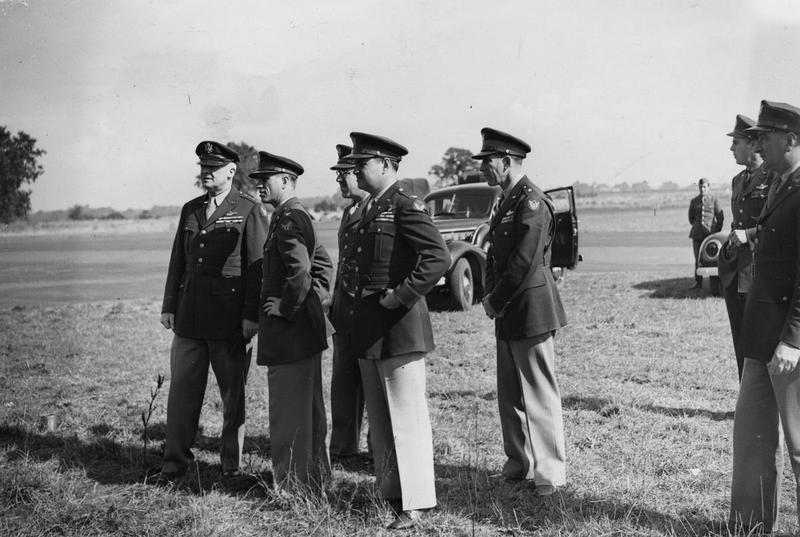
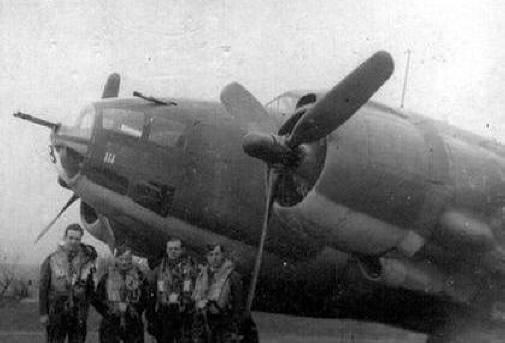


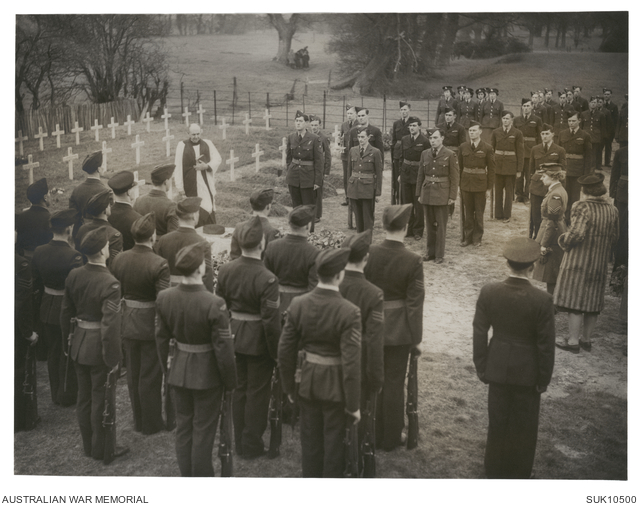
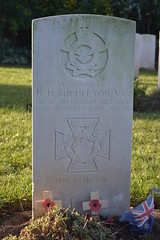


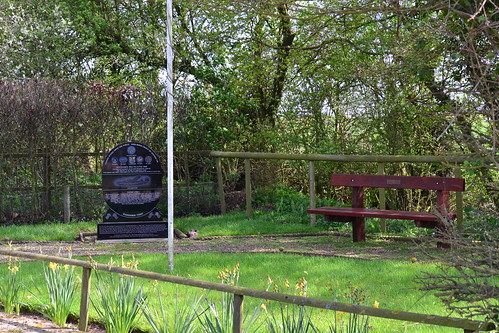
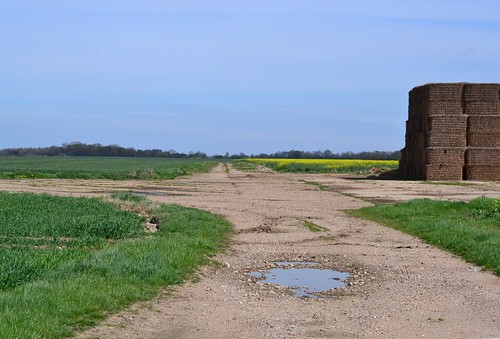

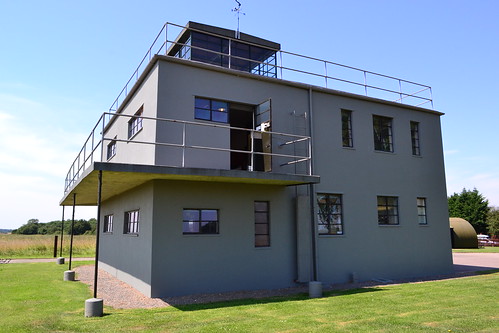
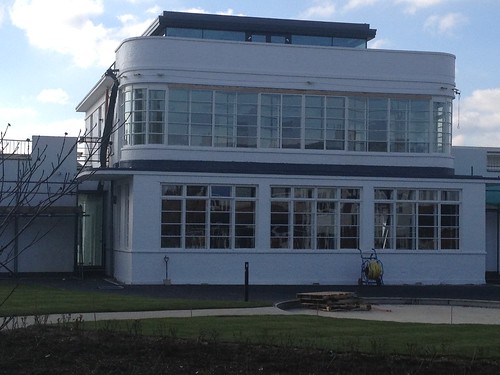

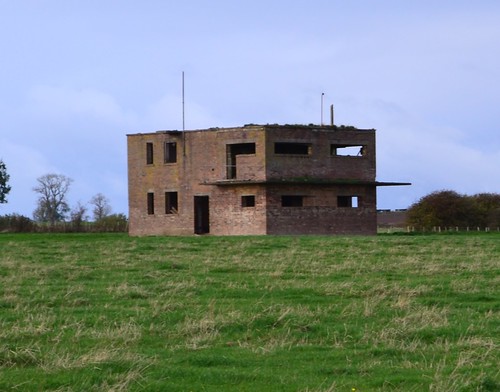


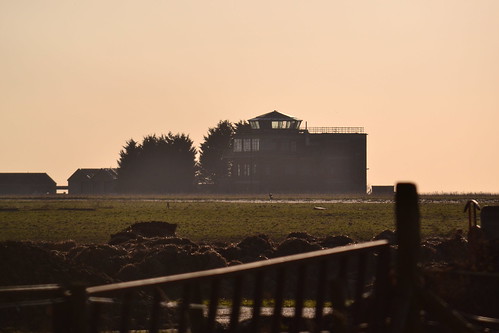
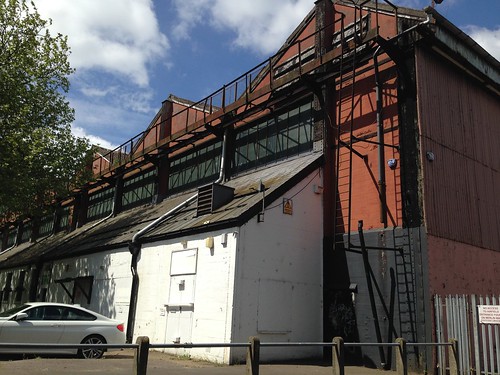


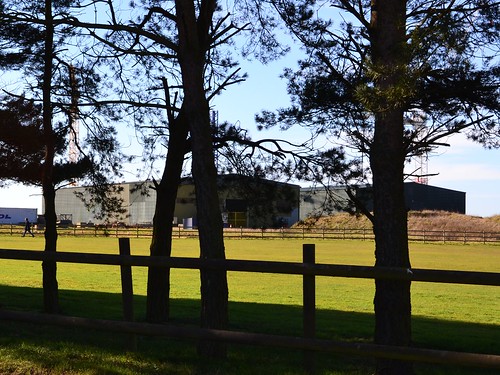
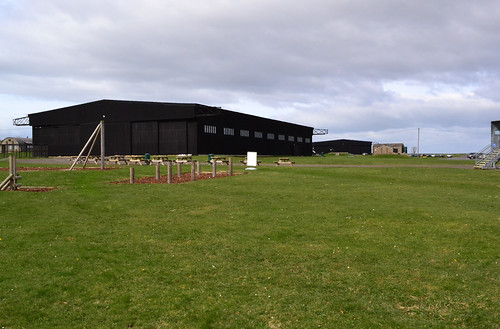
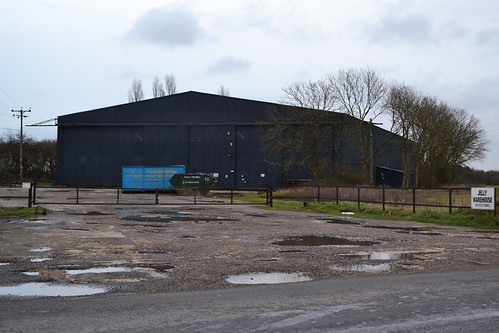
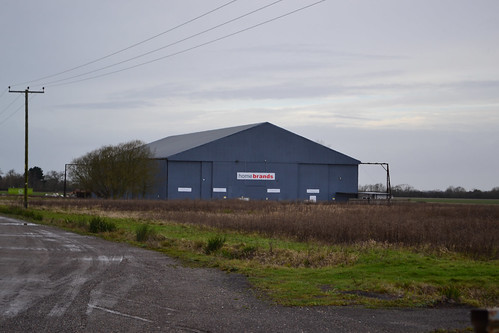

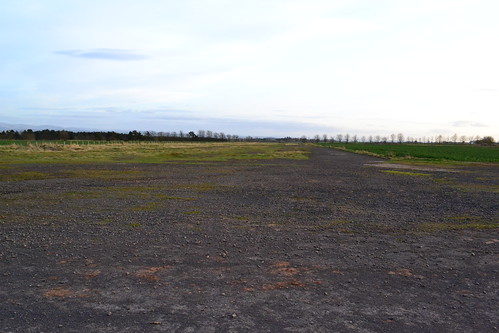
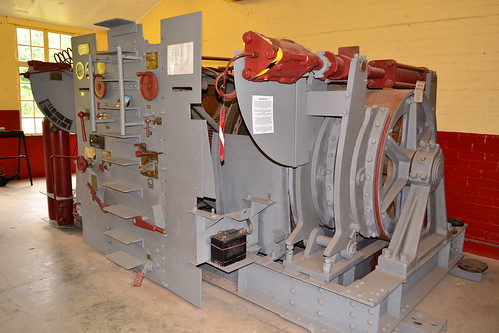
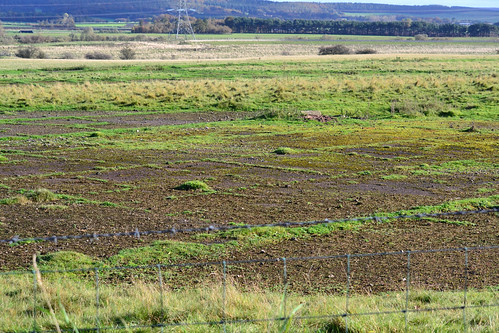
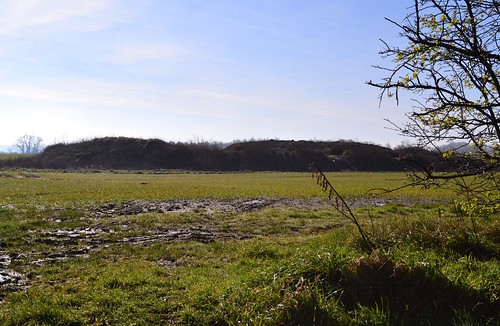


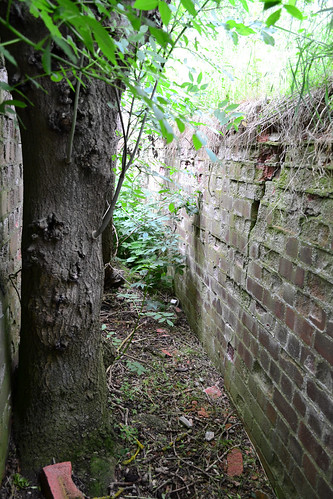
 Aviation Trails