RAF Witchford a revisit to a fascinating airfield.

I originally visited RAF Witchford some time ago but was lucky enough to have an invite to a gathering taking place earlier this month at the site. It was a very memorable day indeed. Trail 11, which this forms part, can be found here.

RAF Witchford

Witchford is found a few miles East of Mepal in the shadows of Ely Cathedral. Now an industrial estate, a large amount of the site is still in existence (and being used) and freely accessible to the general public. This makes it one of the rarer airfields around in terms of visiting.

RAF Witchford Perimeter Track Looking South

RAF Witchford Perimeter Track Looking South, the B1 Hangar is to your right.

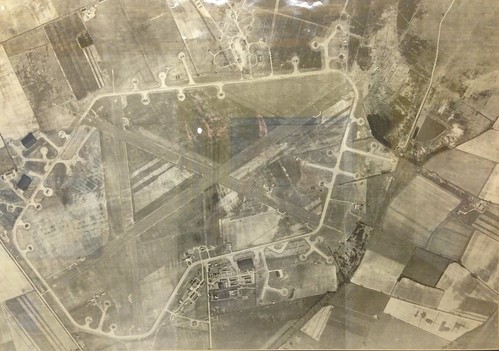
A typical triangular Class A airfield, it had two runways of 1,408 and 1,415 yards and a further main runway of 2,010 yards, all concrete and 50 yards in width. The technical site was located on the western side of the airfield behind the long and straight perimeter track. A number of Nissen workshop huts were constructed along with the standard 343/43 Watch Office, Braithwaite water tower and 150 or so supporting buildings. As with all bomber airfields, the bomb store was well away from accommodation and was located to the southern side. Being a large airfield, it had three hangars, two T2 and one B1, and a total of 36 loop-type dispersed hardstandings.

The accommodation sites (14 in total), were spread out well behind the technical site predominately where the village now stands and beyond. The main entrance to the airfield, also to the west, is now a small track leading to housing known as Bedwell Hey Lane. In total Witchford was designed to accommodate 1,502 men and 230 female ranks and it officially became operational in July / August 1943.

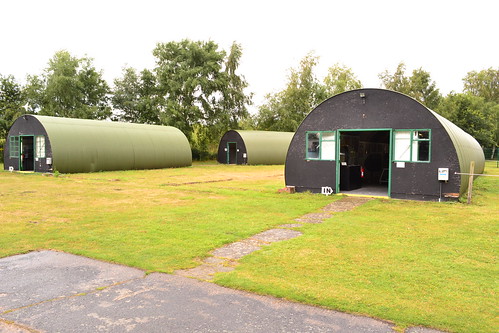
Original Stores Hut

Original Nissen Hut now used for stores.

Witchford was served initially by Stirling IIIs of the newly formed 196 sqn RAF, whose first operational flight took place on August 28th that year. But as heavy operational losses built up, it soon became obvious that the large bomber was ‘unsuitable’ for long distance bombing missions and gradually, squadron by squadron, they were replaced by the more superior Lancaster to which the business park gets it’s modern name.  As these Stirlings became obsolete for front line use many were redeployed covering glider towing, mine laying and transport duties.

During September to November 1943 a number of changes were to happen at Witchford. A second squadron, 195 sqn RAF, was reformed at Witchford (October 1st 1943) using elements of 115 sqn, who were at that time, based at Little Snoring (Trail 22) in Norfolk.

IMG_3282

Inside the Nissen Hut.

A further unit, 513 Squadron, also formed at Witchford (15th September) again using the ill-fated Stirlings. However, 513 sqn never became operational, and were disbanded only two months later.

On the night of 26th November 1943, 12 aircraft of 115 Squadron left RAF Little Snoring in Norfolk, to attack the German capital, Berlin. On return, they were to land at their new station RAF Witchford where the ground staff had moved to that very day. Only one aircraft did not make it back that night and this meant that 115 sqn (who in August 1941 had taken part in trials of GEE) were now totally based at Witchford. 115 were still using the Armstrong Whitworth (Bagington) built Lancaster IIs with their Bristol Hercules engines. (My father, the inspiration to my love of aircraft, worked for Armstrong Whitworth at the Bagington site not long after being demobbed). It was with these aircraft that the Squadron dropped the first 8000 lb bomb on Berlin during Air Chief Marshal Harris’s bombing campaign against the German capital.

In March 1944, 115 sqn began replacing its Mk IIs with the Merlin engined Mk I and IIIs, aircraft it flew until hostilities ceased in 1945.

IMG_3287

Currently a stable, the original building will become a Gymnasium.

Enemy intruder missions over Allied Airfields were common place, and Witchford and her neighbour Mepal, were no exception. On the night of April 18th and 19th 1944 an ME 410 joined the circuit over nearby Mepal (see above) and shot down two Lancasters both from 115 sqn. A further intruder mission also occurred on the night of April 2oth / 21st but luckily there were no fatalities and little damaged was caused in this attack.

When 115 sqn’s war finally came to an end, it had one of the finest records in Bomber Command. A total of 678 operations in all, second only to 75(NZ) Sqn at Mepal. But the price was high, 208 aircraft being shot down or lost in action. Witchford as an airfield closed in March 1946 with the withdrawal of all operational units at the end of hostilities.

Today the site is a small business park, located on the western side of the airfield with a wide range of businesses working where the main Technical site of the field once stood. On entering the park, you drive down a long straight road, this is the original perimeter track. On your right is where the main hangars and maintenance area would have been located. The original B1 still stands today, but it is heavily transformed with new cladding and metal work. If you drive the length of this road you come to a security gate. Just to your right are a number of small huts. These are the original stores and in remarkable condition. Used by local businesses they house machinery and other equipment, but their features and layout clearly represent airfield architecture. Tucked away in here, in the foyer of one of the businesses, is a small but significant museum dedicated to the crews and personnel of RAF Witchford and nearby Mepal. It has a fantastic array of photographs, personal items and one of the Bristol Hercules engines from the downed 115 sqn Lancaster II. A free museum, it has a bizarre feeling to it as workers casually walk through between offices while you peruse the items neatly displayed on the walls. Do spend some time here; it is a fascinating insight into life on the base. (Further details are available later in the blog).

RAF Witchford Memorial Looking South

RAF Witchford Memorial Looking South

After leaving the museum, return back up the road taking the first right turn. On your right is the location of the control tower – now long gone. This brings you onto the remains of the main runway. If you drive to the top and turn back, you will see that it has been cut by a hedge that now separates the runway with the field. To the left of the hedge, you can still see the concrete remains of the original track. Continue to the top and turn the corner, then turn right.

RAF Witchford 'Diary'

RAF Witchford ‘Diary’

This is the threshold of the runway and joining perimeter and is marked by a superb memorial dedicated to the crews of the airfield. Also on here, is the remarkable ‘factual diary’ of the squadron and makes for very interesting reading. Look back south from here you have views across the airfield, along the perimeter track and down the runway; you just can sense the roar of lumbering bombers on their way to occupied Europe.

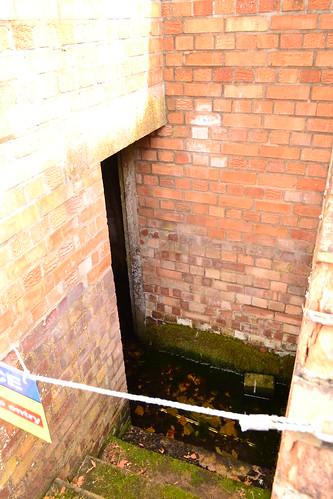
If you now leave the site, and turn left out of the park, follow the road down and turn left. Drive along as far as you can and stop at the gate. This is Bedwell Hey Lane and the original main entrance to the airfield. Vehicle access is only by permission, but a ‘kissing gate’ allows walkers free access and walks across the field. Go through. On your right are the entrances to various works stations, denoted by covered brickworks, further along to your left is the site of the original guard-house. keep going, and on your left you will see the Nissen huts mentioned previously. You finally arrive at the rear of the security gate you were at earlier. There are several occurences of a worker having stood in the wet concrete, these footprints can be found at numerous points around the site, especially here. Turn right and walk through another farm gate and you are on the remainder of the perimeter track. From here you can walk around a large portion of the perimeter track, having great views across the field. In a short distance you join where the threshold of the second runway would have been, it too is now all but gone.

RAF Witchford Holding point and Runway Threshold to the Right

RAF Witchford Holding point and Runway Threshold to the Right

Continue walking round the perimeter track, after a while, you see it narrows, the sides becoming overgrown with weeds, If you look in the adjacent fields, you will find a large quantity of former airfield drainage piping, scattered amongst pieces of building left after demolition. Eventually you arrive at a split in the track. Access straight on is not permitted, but you can take the right fork and in front you will see the low-lying remains of the armoury. Walking down this section will eventually bring you onto the main Ely to Cambridge road. If you look straight ahead and to the right from where you are standing, you will see the location of one of the two type T2 hangars.

RAF Witchford Perimeter Track Looking East - The Bomb Stores are to the Right

Witchford Perimeter Track Looking East – The Bomb Stores are to the Right, the T2 Hangar in Front

To your right and behind, is the bomb store, a significant size in its day, covered in huts and stores, bustling with activity; today there is sadly no remaining evidence of this busy section of the airfield.  However, this part of the perimeter track is well-preserved and shows use by the local farmer who now uses a  majority of the site. But looking across back toward the industrial area, you get a real sense of wartime activity, Lancasters and Stirlings rumbling where you now stand, bomb crews readying aircraft and vehicles hurrying from one aircraft to the next. Take in the atmosphere before walking back the way you came. Keep your eye open to the right. Part way along here, you can see along the length of what remains of the second runway along to the point where you stood earlier by the memorial. The original concrete still evident and witness to the many aircraft that flew from here. A poignant moment indeed. Continue back the way you came taking in views across the filed and the stores area.

RAF Witchford Runway Looking North

Remains of RAF Witchford Runway Looking North

After leaving the site, drive back along the main road away from Ely, you will pass a number of derelict buildings once used by the RAF at Witchford. Indeed one such building is now a small industrial unit, the others overgrown and in a poor state of disrepair. (Photos of both these buildings are available on flckr).

One of the happier stories to emerge from wartime Witchford is that of Sgt. Nicholas Alkemade, who given the choice of staying in his burning Lancaster, to die a terrible death, or jump minus his parachute, to a rather quicker death, opted for the latter. Amazingly for him, jumping from 18,000ft he landed in fir trees and soft snow, surviving with little injury. The Germans, after questioning him, confirmed his story after finding burnt sections of his parachute in the aircraft wreckage. He survived the war and returned to England later marrying his sweetheart. See his story here.

There are few wartime airfields today that exist in any form let alone accessible to the general public. Witchford has a few little gems tucked away in amongst the now busy business park, none more so than the museum and memorial. But walking round the perimeter track, you do so knowing that many years ago, Lancasters and Stirlings also rumbled here, and that many a young man left here never to return again.

On July 12th 2015, I was lucky enough to have been invited to join members of the 115 squadron Memorial project who have painstakingly researched the crash site and details of Lancaster ‘KO-Y’ DS 734, that took off from Witchford and crashed near Pasbrug, Mechelen, Belgium on the night of April 24th/25th, 1944.

Together with Sue Aldridge, one of the Museum founders, we met Dave Howell, son of Aubrey Howell DFC who flew Lancasters whilst at RAF Witchford. We were also given a short tour of the buildings by David Brand of Grovemere Holdings, the current land owners of both Witchford and Mepal sites. To them all I would like to say a huge thank you, It was a most memorable day and a great honour to have met you.

Sue and her husband Barry, have written a book ‘Memories of RAF Witchford’ which includes an enormous number of personal stories, photographs and detail about the life of RAF Witchford and the people who worked here. It is a must for anyone wanting to know more.

115 visit 010

The members of the Belgium memorial Project at Witchford July 2015.

Sources and Links.

‘Memories of RAF Witchford’ can be purchased from Sue, for details click here.

The 115 Squadron Memorial Project website can be found here.

RAF Langham – A revolution on the very tip of Norfolk.

This airfield concludes our four-part tour around Norfolk. It visits a large airfield that played a revolutionary part in the Second World War. So revolutionary, that it paved the way for air defence well beyond the Second World War. We go to the very edge of North Norfolk, to an area of sanctuary, mud flats and a bird watchers paradise. A place where the sound of the Lark has replaced the roar of the piston engine.

RAF Langham

RAF Langham is located at the tip of North Norfolk’s coast. Its location perfect for the role it was to operate.

Built as a satellite to Bircham Newton, it opened in 1940, with three grass runways, and would take aircraft from a number of nearby airfields. Not having any official resident units until 1941, when the Polish and Czech units of 300 and 311 squadrons used it as a forward operating base, it saw little operational action. Langham was initially used as a gunnery training airfield, towing targets for gunnery practice at nearby Stiffkey, a few miles to the north. This is perhaps Langham’s most famous role and the one that many people associate with Langham.

Langham airfield display board

Langham Airfield (photo of the display board at Langham Dome).

Then in November 1942 Langham was closed and redeveloped having concrete runways laid and around 35 looped style dispersals. The longest runway, (NE/SW) was of 1,988 yards, the second (N/S) 1,400 yards and the third (E/W) also of about 1,400 yards, all approximate. The accommodation sites were well away from the airfield many in and around the village of Langham itself to the east or south-east. Three T2 hangars were also erected, one to the north-west and two the south-east in the technical area. There were also various technical and administration blocks and a bomb storage area well away to the north of the site.

various 005

Langham’s Watch Office.

The first operational units arrived in April 1944, with Beaufighters of 455 (Australian) and 489 (New Zealand) squadrons of the Beaufighter Strike Wing, on the 8th and 13th respectively. This wing would famously form a combined attack against enemy shipping in the North Sea, being responsible for the sinking of 4 ‘U’ Boats and 36 surface vessels whilst here. A combination of nose mounted cannons and underwing rockets proved a deadly adversary for the flak ships and merchant vessels of the German Navy.

In August that year, the 521st Squadron moved from their base at RAF Docking to Langham to carry out its role of meteorological reconnaissance. Operating with Lockheed Hudsons, they would soon be ‘upgraded’ to Boeing’s massive B-17 adapted for these special duties. Other coastal command roles such as air-sea rescue were also carried out from Langham and a range of aircraft types would operate from here for the duration.

various 007

A collection of technical buildings still exist today.

Post war Langham was used by the Royal Netherlands Air Force as a Technical Training School, until June 1947 when it was vacated and then finally put into care and maintenance in the following September. For a short period between March 1953 and November 1958, it became a target towing site once more, pulling targets for No. 2 Civilian Anti-Aircraft Cooperation Unit and finally as if to defy the odds, it was used as an emergency landing ground for aircraft from nearby RAF Sculthorpe.

As with many of these Norfolk sites, Langham was eventually sold off, bought by Bernard Matthews becoming home to a number of turkey Sheds, the role it performs to this day.

various 001

Like so many in Norfolk, Langham’s main runway now houses poultry.

The majority of the concrete layout of Langham remains today, utilised by the company for transportation and storage. The technical sites and accommodation sites virtually indistinguishable from the farmland it once occupied. A small collection of buildings can be seen from the public road including: the watch tower, Fire tender shed, a Floodlight trailer, tractor shed,  a Night flying equipment store and a small brick hut used for weather balloons. To the north-east, on the brow of the hill sits the restored battle headquarters. But certainly the most famous and most distinguishable building of this site, is the former gunnery trainer dome.

various 011

The ‘famous’ Langham Dome – former Gunnery Trainer.

Refurbished through Lottery Money, the dome is now classed as an ancient monument and a museum run by the Trust and Friends of the Langham Dome. Much has been written about the dome and recently (May 17th 2015) the BBC ran a programme about its development and history which is available on BBC iplayer for a short period. Only a small number of these structures exist today, none of which are accessible, which is what makes the Langham dome so special and unique. Developed in conjunction with Kodak, it projected a film of an aircraft onto the dome wall, to simulate an attack, at which the gunner would ‘fire’ his gun. The trainer would measure the trainees accuracy using a dot to the front of the aircraft visible only to himself. A remarkable breakthrough in gunnery training, it led the way in anti-aircraft training for a good number of years even after the war.

various 021

A plaque from Veterans of the Royal Netherlands Airforce in the Church at Langham.

Langham is one of Norfolk’s most Northerly airfields, it provided a safe haven for returning aircraft, and its residents conducted air-sea rescue missions, sank a number of ships and played a role in meteorological reconnaissance and anti-aircraft training. A mixed bag, but certainly an important one, the memory of Langham should continue and thrive for without it, there would certainly have been many more casualties in the Second World War.

References

A website dedicated to the Dome and life at RAF Langham can be found here. It includes a range of photographs and first hand accounts of what it was like to live on or near the airfield.

The BBC iplayer programme may only available in the UK and for a short period of time. You can find it here.

RAF North Creake – A gem in Norfolk’s countryside.

The final part of this four part tour takes us to the very edge of North Norfolk’s Heritage coast and the nature reserves of Holkham and Blakeney.  Today it resounds with tourists and bird watchers, during the Second World War, it would have been very different.

Our first stop is North Creake, saddling the B1105 road to Wells-Next-the-Sea, it houses a few surprises.

RAF North Creake

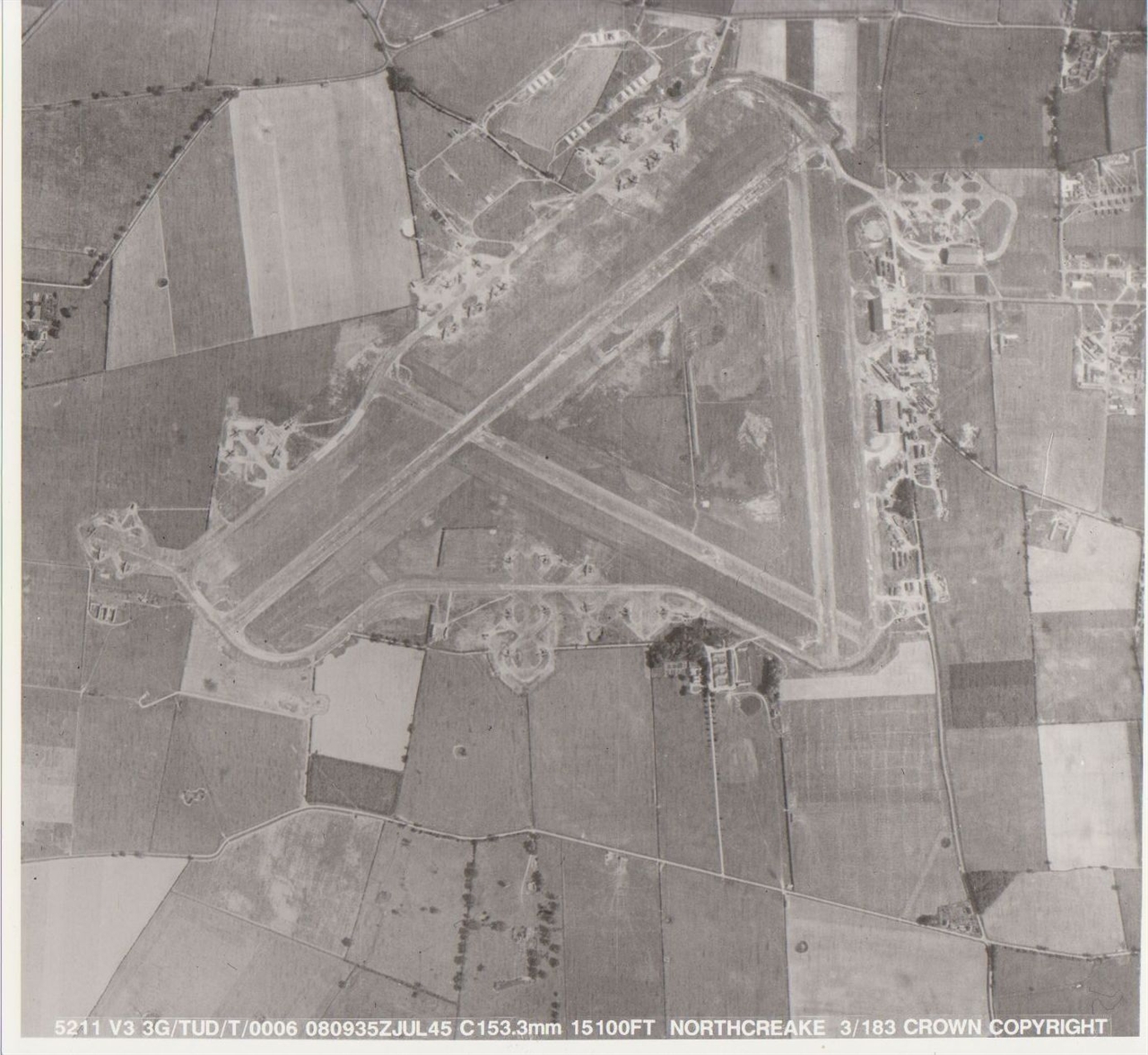
plan

RAF North Creake taken in July 1945, shows a large number of dispersed aircraft around the perimeter.

North Creake, like many of the nearby airfields around this part, was originally a satellite for Docking, which in turn was originally a satellite for Bircham Newton.

Construction commenced on this decoy site in 1940/41, and North Creake, known locally as Egmere from the medieval site it stands on, operated in this role until 1942. With the need for more heavy bomber bases, it was soon decided to upgrade North Creake to a Class A airfield, with accommodation for up to 2,951 male and 411 female staff. Three concrete runways were added, two, 01/19 and 13/31 both 4,314 ft (1,315 m) and the third 04/22 of 5,643 ft (1,720 m). To accommodate the aircraft destined to reside here, 36 loop hardstandings, the majority of which are to the north-west of the site, two T2 hangars and one B1 hangar were also added in. The control tower would be built to the East side of the airfield adjacent to the technical site.

various 009

The AML Bombing Teacher nestles in the woods.

Construction was finally completed in 1943, however changes to the structure of Bomber Command, meant that no flying units would operate from here until well into May the following year.

Initially part of 2 Group, North Creake was passed like so many on this tour, to 100 Group, Bomber Command, and would also operate in the Electronic Warfare role. 199 Squadron was the first to arrive. 199 Squadron initially operated Short Stirling bombers, and latterly HP Halifaxes, on radio and radar jamming operations. Flying between 5th June 1944 and 3rd May 1945, they used both ‘Window’ and ‘Mandrel’ on sorties that were frequently combined with standard bombing operations. 199 squadrons ‘C’ flight was broken away from the unit and formed into 171 squadron on September 8th 1944, but carried on this role in support of 199, whose last mission took place on the night of 2nd/3rd May 1945 – in which they flew 17 successful bomber support sorties by Halifaxes in support of an attack against Kiel.

On July 27th, 1945, 171 squadron was disbanded, 199 sqn went 2 days later (being reformed in 1951 with Avro Lincolns, de Havilland Mosquitos, EE Canberras and finally the Vickers Valiant in 1957) and the site was closed to operational flying. It remained as a storage for surplus de Havilland Mosquitos prior to scrapping for a further two years until finally closing in 1947.

various 002

One of the remaining T2 Hangars.

Luckily, the causal observer can still see much of this history at North Creake. The road passes directly though the centre of the Technical Site. Nissan huts now used by small industrial units, still thrive, two of the hangers remain, both in use by an agricultural company and minor buildings such the Bomb Teacher and turret trainer can be found lurking between the trees. The main stores, gas clothing and respirator store are also in use, as are a workshop and away to the north-east, the Airman’s huts.

various 025

Main stores and Gas clothing huts.

North Creake’s runways and taxiways along with two looped hardstandings, are all but gone, covered in trees or used as pathways for the local farmer, but their location very much evident from satellite photos. Development has begun of yet another solar farm, and these great unsightly panels are gradually taking over yet another of Britain’s wartime airfields.

The one Jewell in the crown of North Creake, has to be the control Tower, purchased by private owners, it has undergone a painstaking transformation being refurbished and turned into a Bed and Breakfast. Modernised inside, it remains one of the better preserved buildings on the site.

various 028

North Creake’s Tower now a Bed & Breakfast.

To the south of the site, a memorial has recently been erected by the Airfield’s of Britain Conservation Trust, as a lasting tribute to not only the 17 crews who never returned, but to all those who served at RAF North Creake during the latter days of World War Two.

North Creake is certainly a gem for those wishing to see airfield architecture first hand, and if you desire, the chance to stay inside a tower that would have played a big part in Britain’s attack on Nazi Germany.

Leave North Creake heading north toward the coast, and then turn east. A few miles away lies our next and final stop, RAF Langham.

Links

Details of the North Creake Control Tower Bed & Breakfast can be found here.

RAF Little Snoring – not a sleepy village 70 years ago.

The second airfield on this part of the trail, takes us further north, to a little village and small airfield. It also features one of only a few round towered churches that hold some remarkable records of the region’s history.

RAF Little Snoring

Little Snoring is as its name suggests, a quiet hamlet deep in the heart of Norfolk. Surrounded by beautiful countryside, it boasts a superb round towered church (another called St. Andrew’s) that holds a remarkable little gem of historical significance.

various 002

The Village sign shows Little Snoring’s aviation history.

The airfield, to the North East, was originally opened in 1943, late in the war, as a satellite for nearby Foulsham. It had three runways: 2 constructed of concrete 4,199 ft (1,280 m) in length, (01/19 and 13/31) and one 07/25 of 6,004 ft (1,830 m) again in concrete. As with other airfields it was a typical ‘A’ shape, with 36 dispersal sites, a bomb site to the north, fuel dump to the south and the accommodation blocks dispersed away from the airfield to the east. It was built to accommodate 1,807 RAF and 361 WAAF personnel housed over eight domestic sites.

Initially under the command of 3 Group Bomber Command, it housed the rare Bristol Hercules engined Lancaster IIs of 1678 HCU (Heavy Conversion Unit) and 115 squadron, (between August and November 1943) formally RAF Witchford (Trail 11) and East Wretham, who were to carry out night bombing duties, a role it had performed well at Witchford. Then, as with many of the airfields in this location, it was taken over by Addison’s 100 Group and Mosquitos moved in.

various 007

One of two original T2 hangars still in use today.

169 squadron operating both Mosquito IIs and Beaufighter VIs, would undertake night fighter missions between December 1943 and June 1944. Like their counterparts at Great Massingham, Foulsham, North Creake, West Raynham and Sculthorpe amongst others, they would take part in electronic warfare and counter measures against enemy fighter operations. 100 Group, investigated a wide range of devises suitable for tracking, homing in on or jamming enemy radars. With a wide rage of names; “Airborne Cigar”, “Jostle”, “Mandrel”, “Airborne Grocer”, “Carpet” and “Piperack”, they used both “Serrate” and “ASH” to attack the enemy on their own airfield at night before they could intercept the bombers.

various 010

A road leads to one of the dispersed accommodation sites.

After a short spell with an American Intruder detachment between March and April 1944 flying P-51s and P-38s, Little Snoring was itself the subject of an attack from Luftwaffe aircraft that had followed the bomber stream home. The attack was so successful that Little Snoring was put out of action for some considerable time.

Night intruder missions continued, with 515 squadron, 23 squadron and 141 squadron operating a range of twin-engined aircraft such as the Beaufighter IIf, Blenheim V, Mosquito II, FB.VI and NF.30. Radar training also continued using smaller aircraft such as the Defiant, Anson and Airspeed Oxfords of 1692 Flt.

Eventually in September 1945, operational flying officially ceased  and the airfield was reduced to care and maintenance. Like other airfields in this area, it became the storage area for surplus Mosquitos on their way to a sad ending under the choppers blade. Then in the 1950s Little Snoring was opened temporarily and used by a civilian operated anti-aircraft co-operation unit, flying Spitfire XVI, Mosquito TT.35 and Vampire FB.Vs. Finally in April 1953, Little Snoring was shut, the gates locked and the site sold off.

However, that was not the of flying. Now in civilian hands, Little Snoring operates a small flying club and a microlight manufacturer. Aircraft can visit, and occasionally a ‘fly-in’ happens and the site springs into life once more.

various 017

The road uses the former eastern perimeter track, part of which is still visible to the side.

Following sale of the site, a large number of buildings were demolished or taken away for use elsewhere. The officers’ mess housed four ornately and beautifully written honours and awards boards. Luckily, these were saved by a good samaritan and now reside in the base’s ‘official’ church, St. Andrew’s, on the west wall. Written in paint, they detail the awards and ‘kills’ of the various crew members stationed at Little Snoring. Just a short walk from the church is the village sign which depicts a Mosquito, often seen over the skies of Little Snoring all those years ago.

The perimeter track to the east is now the road, the accommodation site on the eastern side still bears the track but is closed off, what secrets it must hold! A few remnants of concrete roadway exist outside of the airfield, the northern threshold of the main runway is also there used to store gravel and other road material. A small number of buildings, mainly huts, exist in private gardens used as storage sheds. The local caravan site has what is believed to be the base hospital and / or mortuary now a washing block.

The largest and best preserved buildings are two of the original T2 hangars, both used to store potatoes. A blister hangar is also on site but thought not an original of Little Snoring.

various 018

An air-raid bunker protected the personnel from attack.

The bomb site is a field, and all but a small part of the runways are gone or at best farm tracks. Little Snoring’s gem is its watch office, standing proud in the centre of the site, a lone wind sock fluttering from its walls. Run down and dilapidated, it is crying out for love and restoration, but I suspect this isn’t going to happen and perhaps its days are very sadly numbered.

During its operational life, twelve Lancasters and forty-three Mosquitos were lost during missions over enemy territory and to date no ‘official’ memorial exists in their honour. Maybe one day this too will change.

The base commander, ‘glass eyed’ Group Captain Rex O’Bryan Hoare (Sammy) was a known character and has been mentioned in a number of books discussing night intruder missions. He was a very successful Mosquito pilot  and looked up to by his fellow pilots. A superbly detailed account of him appears here and is certainly worth a read.

A once bustling airfield, Little Snoring is now a sleepy site with a few remaining remnants of its wartime activity. The church boards reminders of its successes and the toll paid by the young men of the Royal Air Force.

various 025

The watch office now derelict and forlorn.

The four award and honours boards in St. Andrew’s Church can be seen by clicking here.

Little Snoring ends Trail 22, but leads us to the last part of North Norfolk and a to Trail 23. As we continue north toward the coast, we visit two sites with some remarkable features.

RAF West Raynham – a well Preserved Segment of Britian’s Aviation History.

From the first site of this trail, RAF Sculthorpe, we travel a few miles south, a stones throw, to its sister station and another post war relic – RAF West Raynham.

RAF West Raynham

Nestled away in the heart of Norfolk is a real hidden gem. West Raynham remains an incredibly intact airfield, complete virtually in its entirety. But don’t get over excited, the diggers, cranes and bulldozers are there and already casting their blows.

Built in 1939 it had four runways, all of grass with 36 pan type dispersals, an accommodation block, ‘C’ type hangars and all the associated support buildings of a wartime airfield. Used by bomber command, it would see a range of twin-engined aircraft operate from within.

C Type Hangar

West Raynham’s hangars will be holiday flats.

Opened in May 1939, it was typical of its time. The first squadron to be based here was 101 squadron RAF, equipped with Bristol Blenheim IVs and later Vickers Wellington 1cs. 101 sqn began the war with daylight attacks on oil supplies in the port areas, communication lines and enemy airfields. A duty that later changed to the more successful night fighter role. 101 eventually left West Raynham, being replaced by further Blenheims of 114 squadron. Other squadrons to arrive included: 2 Grp TT flight, 76, 139, 18, 90 (with B17c ‘Fortresses’), 614, 18 and 1482 squadrons. A variety of aircraft came with them, including: Lysanders, Defiants, Bostons, Hampdens and Fairy Battles giving West Raynham a real diverse range of types.

In September 1942, two more squadrons arrived at West Raynham, 98 and 180 operating the North American B25 ‘Mitchells’. In the following year, Between May and November 1943, the grass runways were removed and replaced with concrete runways, one 2,000 yards (1,800 m) long and the other 1,400 yards (1,300 m) long. To coincide with this, the accommodation area was also expanded to allow for the influx of new personnel. West Raynham was now able to accommodate up to 2,456 men and 658 WAAFs.

West Raynham 042

The Officers mess is destined for other uses.

Night intruder attacks from West Raynham increased. De Havilland’s ‘Wooden Wonder’, the Mosquito II, FB, VI and NF 30s of 141 and 239 squadrons taking over this role. A number of switching between nearby Sculthorpe and Great Massingham, led to regular changes in residency, indeed as the war closed and the jet age beckoned, West Raynham would be the home to many types of modern fighter and their squadrons. Fighter trials became the order of the day, Tempests, Spitfires, Firebrands, Sea Mosquitos (see here), Sea Venoms, Sea Hawks Meteors, Javelins and Canberras to name but a few. The Royal Navy based many of their types here for various trials and research projects. The last piston examples to fly from West Raynham were the Fireflys and Hellcats of 746 sqn RN as part of Naval Fighter development Unit.

Further fighter trials and development units continued into the jet age, and the last aircraft to grace the skies over West Raynham were the Hunters and Canberras of 45, 85 and 100 squadrons. Then the roar of the jet engine was replaced by the Bloodhound missile and West Raynham began its decline into closure. In the 1994 West Raynham finally closed its hangar doors and its personnel moved out, the airfield itself remaining in MOD hands. Sadly the housing lay empty and it quickly became derelict, targeted by the vandals, the accommodation blocks were damaged and windows smashed.

Long debates and scornful banter over the housing shortage boiled over in parliament and sites such as West Raynham were seen as Prime land, with a huge infrastructure already in place, they were half way to meeting the needs of a growing community. The MOD eventually gave in, agreed to the sale and the site was handed over.

Control Tower

The Tower stands in the late sun shrouded in scaffolding. A sign of new life?

Initial attempts at obtaining a Grade II listing to a large number of the airfield’s buildings was made by the English Heritage but sadly, this was later withdrawn and no follow-up made. A number of planning applications have been passed over a period of years and as a result, the number of developments designated for this site have increased. Luckily, many of the original homes will and have been refurbished and sold off, thankfully retaining their original style and layout.  The Hangars remain and will be turned in to Holiday apartments. How much of the other airfield architecture will remain in its original design is yet to be seen, but much of the north end of the runway and Bloodhound sites have already gone, being replaced by the beginnings of what is reputed to be, Britain’s largest Solar Park.

The control tower remains along with a wide range of smaller ancillary buildings, shrouded in scaffolding maybe it will become a cafe or other ‘social centre’. The Rapier Training dome still stands as does the elaborate Officers Mess. The adjacent tennis courts have now been reclaimed by trees and like the mess, will no doubt will find a new lease of life in some other guise.

various 005

The Rapier training dome resembles the gunnery trainers found at other older airfields.

If you drive round the airfield, to the east side, you can still obtain good views across to the hangars. The original Battle headquarters remains buried and pill boxes for the airfields defence can also be found.

A memorial to the crews of West Raynham has been erected in what is now the centre of a new housing area that utilises the old accommodation blocks. Around it remain fences and grazing sheep, the buildings behind them yet to see their fate.

West Raynham’s lasting legacy may be down to Flight Lieutenant Alan Pollock, flight commander of No 1 Squadron, who around midday on 5th April 1968 flew a Hawker Hunter FGA.9 (XF442) between the two spans of Tower Bridge in London. This stunt, a protest by Pollock at Government defence cutbacks, resulted in Pollock being invalided out of the RAF on ‘medical’ grounds, the alternative being a rather more embarrassing court-martial.

West Raynham remains today an incredibly well ‘preserved’ airfield, complete in its entirety. Its history is well documented in its walls and architecture. The layout, even as private housing is clearly that of an airfield, with the feel of an airfield, but what of its future? What will eventually become of this grand and large segment of British History? Only time will tell.

various 002

West Raynham’s memorial stands in the centre of the refurbished housing development.

Just a few minutes drive from West Raynham to the west is another wartime airfield and our last for today. Whilst the majority of the infrastructure has gone, all is not lost as it is a private airfield open to landings and with access in part via a footpath, a real delight to end the trail. We visit the picturesque village of Great Massingham.

A new parking area for the 384th BG memorial Grafton Underwood

Following many months of lobbying, letters and phone calls, a friend of mine, whom I met whilst trailing ‘American Ghosts‘, has finally secured and had built, a new parking area adjacent to the Memorial of the 384th BG at the former airfield, RAF Grafton Underwood (Station 106).

Kevin Fleckner, has maintained the site for some considerable time, which is located on the former airfield at the end of the 6000ft long, No.1 runway, part of which can still be seen in front of the memorial today.

Kevin’s next aim is to get both the ‘Stars ‘n’ Stripes’ and the union Flag raised once more, something that has not happened since the end of hostilities, 70 years ago.

The parking area is now tarmac, with top soil, seed and bollards placed to repair damage done by tractors and other road traffic.

It is accessible by wheelchairs and is a superb memorial, paying tribute the many men and women who served at Grafton Underwood during the Second World War.

My congratulations and thanks go to Kevin, for his dedication and for all the hard work he puts in maintaining the memorial on behalf of us all.

Well done buddy!

Grafton memorial

Grafton memorial

DSC_0127

The remains of the No.1 Runway

The memorial is bottom left by the road.

The memorial is bottom left by the road.


DSC_0115

The Church memorial window dedicated to the 384th BG


‘In the Mood’ for aviation nostalgia?

Taking advantage of the winter sun and nearby location, I decided to take a short visit to one of the earlier trails and see how things had changed. Being a different time of year too, perhaps the buildings I saw would now be less obscured. I also thought that the initial trails were lacking and needed a little ‘historical substance’.

Whilst not wanting to lose sight of the idea behind the blog, I felt a little extra would not go amiss. Hearing about a memorial that I had missed earlier, I braved the late December air, donned coat, hat and scarf and set off to Kings Cliffe, in the top corner of Northamptonshire – land of Fighter squadrons and the last hangar concert performed by Major Glenn Miller.

RAF Kings Cliffe (Station 367)

(Revisited and updated December 2014)

DSC_0169

The Memorial at Kings Cliffe.

Unlike the other airfields in the tour, Kings Cliffe was a fighter airfield. Pass through the village from the south, out the other side, under the odd twin-arched bridge and then right. A few hundred yards along and the airfield is now on your right hand side. The memorial is here, flanked by the two flags. It is a more elaborate memorial than some, being made with the wing of a Spitfire on one side and the wing of a Mustang on the other. Various squadron badges are etched into the stone and as the weather takes it’s toll, these are gradually disappearing.

DSC_0197

Protected aircraft pen, with ‘dual skin’ defences on three sides. A number of these litter the site.

Over its life, Kings Cliffe would have a number of fighter units grace it skies. Built in 1943, it would receive its first squadron late that same year when P-39 Airacobras of Duxford’s 347th FS (350th FG) were temporarily based here. A short spell they would soon leave and be replaced with another short-term unit.

The following January, the 347th left and three squadrons: the 61st (code HV), 62nd (code LM) and the 63rd (code UN) of the 56th FG arrived from the U.S. This group fell under the command of the 67th Fighter Wing, Eighth Air Force. Redesignated the 56th FG in the previous May, they were initially given P-47s and continued to train at Kings Cliffe for fighter operations until moving on the 4th/6th April 1943 to Horsham St Faith, Norfolk. A few days later on 13th April 1943, they undertook their first operational sortie. Over the next two years the 56th FG would become famous for the highest number of destroyed aircraft of any fighter unit of the entire Eighth Airforce. A remarkable feat.

Littlefriends.co.uk

Pilots of the 77th FS, at Kings Cliffe 1944-45*1

After the 56th left Kings Cliffe, three more squadrons arrived. In August that year, the 20th FG arrived with their P-38 Lightnings. The 55th (code KI), 77th (code LC) and the 79th (code MC), would fall under the umbrella of the 67th Fighter Wing, Eighth Airforce.

After a spell of renaming, aircraft changes and training, their arrival at Kings Cliffe would see a period of stability for the 20th. Initial operations started in December that year, and their primary role would be to escort bombers over Europe, a role it maintained until the cessation of conflict. Targets of opportunity were often found whilst on these missions, but toward the end of the war, with fighter cover becoming less of an issue, dive bombing and ground attack missions became more common place. Their black and white chequered markings became feared by airfields, barracks and in particular trains as they became known as the “Loco Group” for their high number of locomotive attacks.

Oakington Pillbox Kings Cliffe Dec 2014

Oakington Pillbox, found in pairs, they offer a 360 degree field of fire.

On April 8th 1944, the 20th attacked an airfield in Germany, action for which they received a Distinguished Unit Citation (DUC). They would later take part in the Normandy invasion, Operation Market Garden, and air cover in the Battle of Bulge. In July 1944 they converted to P-51s and continued to escort bombers and search out targets of opportunity until the war closed. In the following October 1945, they returned to the U.S. and Kings Cliffe was returned to RAF ownership. The RAF would use it as a storage depot until selling it off in 1959. Its runways were dug up for hardcore, the buildings demolished and the site finally returned to agriculture.

Kings Cliffe December 2014 Draincover

Drainage covers and pipes adorn the remains of the runway.

Whilst standing at the memorial, it is difficult to imagine any of the activity that occurred here all those years ago. However, behind the memorial you can see a number of brick defence buildings enshrouded in trees and bushes. Move along the road to your right and there is the main gate. Stating that it is an airfield, it doesn’t encourage entrance. However, walk or drive a little further and there is a bridal way that allows access to the site. Walking along around the edge of the airfield, you can see hidden amongst the thorn bushes  an Oakington Pill box. Found in pairs and common in this area, they offer a 360 degree view of the site. The second of the pair is  short distance away in the middle of the field and more visible to the viewer. Also round here are three protected dispersal pens. Each pen has a double skin, in other words, an outside loop holed wall for firing through and an inner wall to protect air and ground crews in the event of an attack. There are a handful of other ancillary buildings here, all of which can be accessed with careful treading. A considerable number of these exist close to the road and path, so extensive travelling or trespass is not required for the more ‘informal’ investigation.

DSC_0188

Inside the Shelter.

Walking further along the path, you pass a large clump of trees heading of in an easterly direction. These mark the line of the east-west runway. Whilst the runway has gone, evidence of its existence can be found. A drainage channel, numerous pieces of drainage material and grates can be found amongst the remains of hardcore.

The path continues in a southerly direction away from the main part of the airfield, and a better option may be to return to the car and drive along to a different part of the site.

If you return through Kings Cliffe, bear left and through the small but gorgeous village of Apethorpe. Continue on and you’ll see a footpath that goes through the woods. Park here and walk through the woods. A couple of miles in and you come across a large open space, to your left is a distinguished memorial to Glenn Miller.

Glenn Miller Memorial RAF Kings Cliffe Dec 2014

Memorial to Glenn Miller’s final hangar concert, 3rd October 1944.

The memorial is located on the site of the original T2 hangar, quite a distance away from the main airfield. It was here that Miller performed his final hangar concert on October 3rd 1944. Standing here in the wintry air listening to ‘In the Mood’, is a surreal experience. To think that, on this spot 70 years ago, this very tune was performed by Miller himself; whilst young couples jitterbugged the evening away – a brief respite from the wartime tragedies that dominated their daily lives.

Leaving here, back to the track, you come across a footpath that takes you north, toward the main airfield before veering off and away to the west.

This path provides what is probably the nearest access point to the tower, as it crosses the track that joins the perimeter near to the towers location. The control tower still stands, but access from the path is over private land and should be undertaken with the land owner’s permission.

A final car trip back to the north side of the airfield reveals evidence of the accommodation blocks. The cinema, Gymnasium and chapel along with some other communal buildings still stand and in use by local timber companies. Well preserved, they are easily accessible and offer a good view to anyone aiming to find evidence of Kings Cliff’s history.

Kings Cliffe December 2014 Chapel with gym

Gymnasium and Chapel now used by a timber company.

Like many sites of it’s age, the majority of Kings Cliffe’s buildings are overgrown, indeed entering them you can see how the roofs have become detached in many cases, and mature trees now the only inhabitants where personnel once stood.

The main part of the airfield is agriculture, and it can be seen from further back, why this site was chosen as the views across the landscape toward Peterborough and the south are stunning. A remarkable place, it offers good evidence, nostalgia and beautiful walks into the bargain.

Overgrown buildings

Overgrown buildings

Kings Cliffe concludes this tour, however, if you return back along the road to the village of Kings Cliffe, turn right away from the village, you will eventually find yourself sitting opposite one of the crash exits of RAF Wittering, the main station to which Kings Cliffe was built as a satellite. Also along here, is a remnant of RAF Collyweston, an airfield absorbed into RAF Wittering at the end of the war when it expanded ready for the V – force bomber aircraft and later the Harriers. Now closed to flying due to government cutbacks, it houses an army detachment and a small RAF detachment for maintenance duties only.

Much of the evidence from the American participation in the Air War of the Second World War has now disappeared, being swallowed up by natures determination to regain what was originally hers. Agriculture and small businesses have clung on to the remainder, leaving little to see. In some ways, and I touched on this earlier, the fact that peace has now taken over what were bustling camps of 3000+ personnel, the roar of four engined bombers laden with high explosives or troop carriers taking scared young men to the killing fields of Europe, is a reflection on their bravery and dedication. These areas are simply peaceful now because of the men that served, lived and died here and whilst they are now gone, maybe their ghosts remain.

Kings Cliffe originally featured in Trail 6 ‘American Ghosts’.

*1 photo by Robert Derenbacker from ‘Little friends’ website http://www.littlefriends.co.uk

The 490th BG – a claim to fame!

The 490th BG (H) were based at RAF Eye (Station 138) and had several ‘claims to fame’.

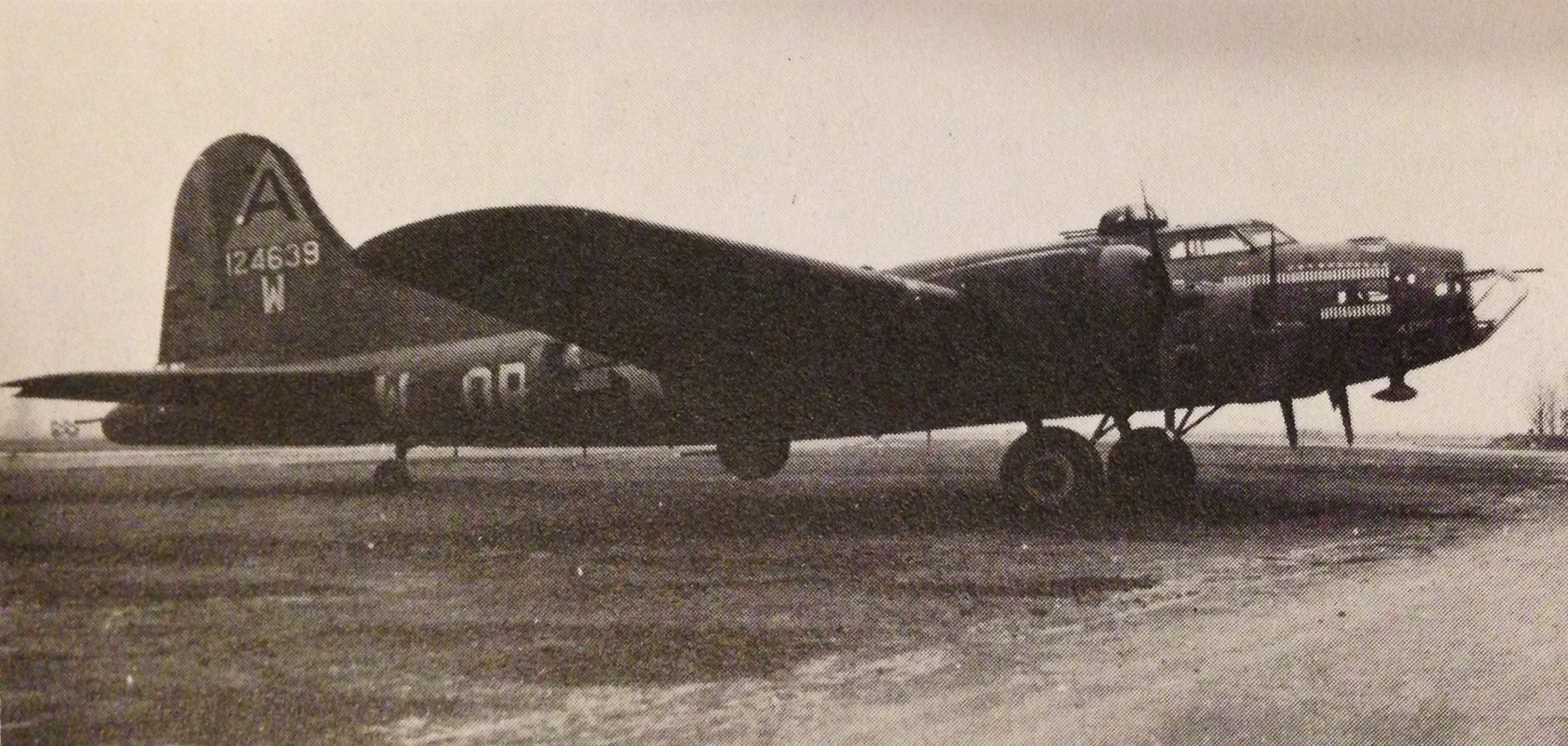
Adorning their aircraft, was some of the most provocative nose art of any USAAF aircraft. Seemingly uncensored, like other aircraft of the mighty Eighth, they wore full length nudes and made references to prostitutes of the day – unheard of at the time.

RAF Eye is now an industrial estate, where wind turbines have replaced the propellers of lumbering B-17s, the runway remains in its entirety but the threat of further development continues to increase.

RAF Eye is part of Trail 14

Photo: 490th Bomb Group, USAAF via Eric Swain (via http://www.controltowers.co.uk/e/eye.htm)