Sqn. Ldr. Leonard Trent VC – RAF Methwold

RAF Methwold was a small airfield that was never intended to be a major player in the Second World War, yet it would see some remarkable achievements performed by the people who were stationed there.

Once such notable person was Squadron Leader Leonard Trent V.C., who, on 3rd May 1943, took a squadron of Lockheed Venturas on a ‘Ramrod’ Mission to attack an electricity power station on the northern side of Amsterdam.

As part of a larger attack, it would not be a mission central to Bomber Command’s overall bombing strategy, but more a mission of support and encouragement to the resistance fighters bravely fighting in occupied Holland.

Trent (N.Z.248i) was born in Nelson, New Zealand on 14th April 1915 the son of dentist Leonard Noel Trent and his wife, Irene Violet Everett.

The family moved to Takaka when Trent was four years old where, a short while later, he would be introduced to flight, and a ride in a Gipsy Moth.

As an older child he attended Nelson College, a boarding school, where he took up golf, and rather that focus on his work, he focussed on his new found hobby which would eventually take him to victory in the Nelson Golf Club Senior Championship.

After finishing his studies, Trent worked in various jobs, saving steadily to reach his goal of earning a pilot’s licence. Once qualified, he returned to flying at Taieri near Dunedin, where a brief training course prepared him to join the RNZAF.

Following his Air Force training, he earned his wings in Christchurch in May 1938 – just one month before departing for England to begin service with the Royal Air Force.

At the outbreak of war he was sent with No. 15 Squadron flying the out-gunned and out-performed Fairy Battles, to France to carry out photo-reconnaissance sorties over occupied territory. As part of the Advanced Air Striking Force, he flew only one mission before the squadron would return to England (RAF Wyton) and change their Fairy Battles for Bristol Blenheim IVs.

After carrying out a number of low-level attacks, he was awarded a DFC for his part in the air war over Belgium, a career that preceded him becoming a flying instructor for RAF crews.

Wing Commander G J “Chopper” Grindell (centre), Commanding Officer of No. 487 Squadron RNZAF, with his two flight commanders in front of a Lockheed Ventura at Methwold, Norfolk. On his left is the ‘A’ Flight commander, Squadron Leader T Turnbull, and on his right is the commander of ‘B’ Flight, Squadron Leader L H Trent. (IWM)*1

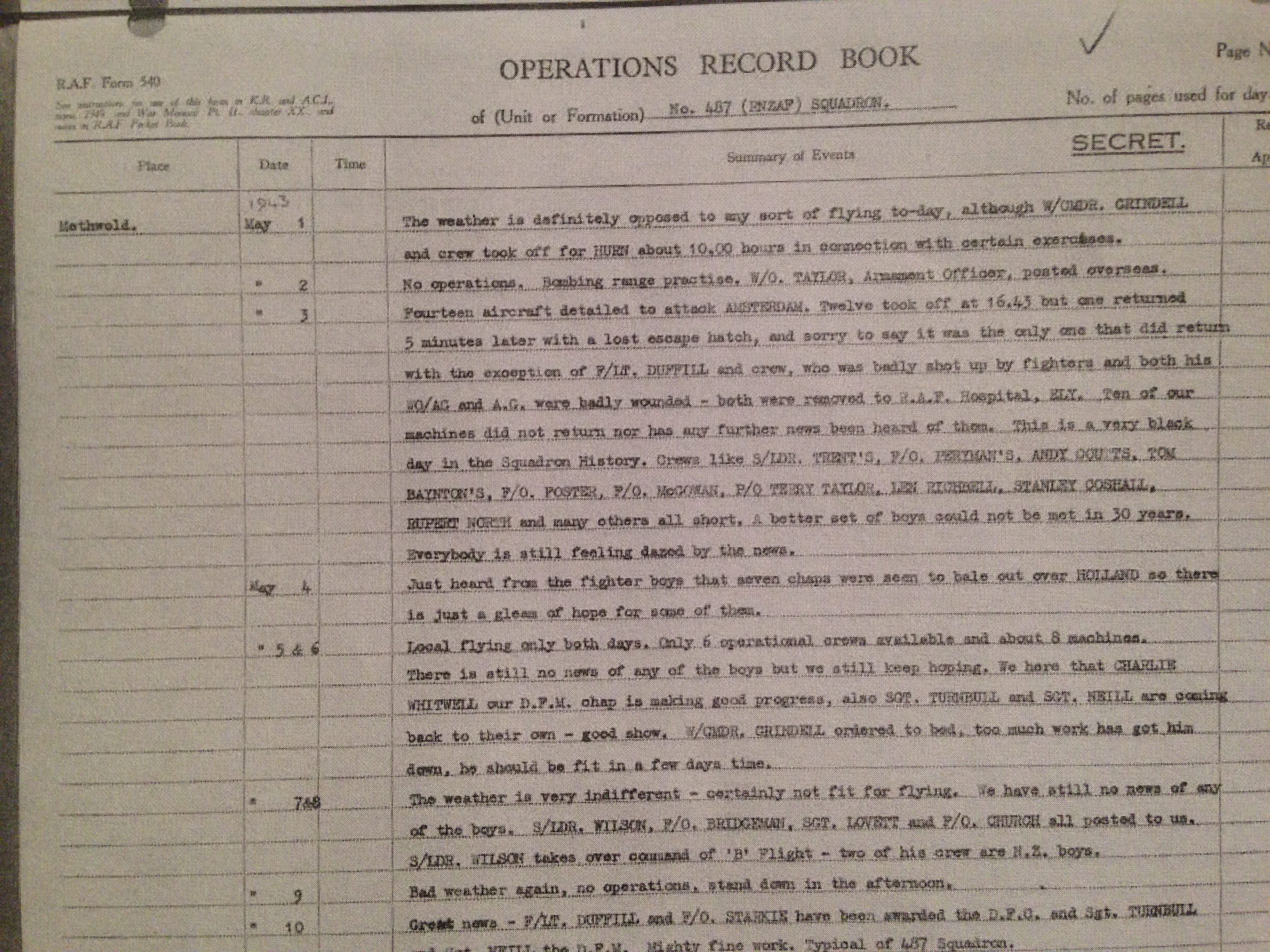
In 1942 he returned to operational duties as a newly promoted Squadron Leader taking command of B Flight, 487 (NZ) Squadron at RAF Feltwell. At the time 487 were part of No. 2 Group and were in the process of replacing their Blenheims with Venturas. The squadron moved from Feltwell to Methwold in early April 1943. Little did they know that only a month later, the Squadron’s Operations Record Book would read: “This is a very black day in the Squadron history…a better set of boys could not be met in 30 years. Everybody is still feeling dazed by the news.”

As an experienced pilot Trent would fly several low-level missions over the low countries, using an aircraft that was originally designed around a small passenger aircraft back in the United States. Whilst having powerful engines, Venturas suffered from poor manoeuvrability and a heavy air frame, these two failings combined with its rather ‘fat’ appearance, earned it the name “flying pig“.

Loses in Ventura operations would be high, and this was reflected nowhere else than on the very mission that Trent would fly on May 3rd 1943.

On that day fourteen Venturas of 487 Sqn were detailed to attack a target in Amsterdam, however only twelve aircraft actually took off, all at 16:43 from RAF Methwold. These aircraft were all part of a much wider operation, one that would involve an escort of nine RAF fighter squadrons. Timing was therefore crucial, as was low-level flying and maintaining the element of surprise. Within five minutes of their departure though, ‘EG-Q’ piloted by Sgt. A. Baker, would return after losing the crew escape hatch. This left eleven aircraft to carry on to the target.

A diversionary attack carried out by aircraft of 12 Group flying ahead of the main formation flew in too high, too soon, thus losing the surprise and alerting the defenders of the impending attack. Caught out by low fuel, many of the escorting fighters then had to leave, thus reducing the overall effectiveness of the defensive escorting force. The Luftwaffe, now ready and waiting, had scrambled numerous fighters, a deadly cocktail of FW-190s and Bf-109s. The squadron record book reports an estimated “80+ ” enemy aircraft in the locality of the attacking Venturas.

From this point on things went very badly for 487 Sqn.

As they crossed the Dutch coast Ventura ‘AJ478’ (EG-A) was attacked and shot down by Luftwaffe fighters. Ditching in the sea the crew took to a life raft where Sgt. T Warner, injured in the attack, died of his injuries. Committing his body to the sea the remaining three would be captured and become prisoners of war. Warner’s body would wash up two days later on a Dutch beach and be buried in the small town of Bergen op Zoom – all four were from New Zealand.

A second aircraft, ‘AE916’ (EG-C) was also very badly shot up by the pouncing fighters. However, it managed to return to England landing at their former base RAF Feltwell. The pilot and navigator were both unhurt, but the wireless operator and air gunner were both badly wounded, and were immediately taken directly the RAF hospital at Ely, Cambridgeshire. The aircraft was so badly damaged in the attack that it was written off. For their actions the pilot (F/Lt. Duffill) and navigator (F.O. Starkie) were both awarded the DFC, whilst the wireless operator (Sgt. Turnbull) and gunner (Sgt. Neill) the DFM.  Dufill later went on to become the managing director of Humbrol paints, a company renowned for its paint and modelling supplies.

Pressing on to the target, the casualties got worse and the loss rate increased.

Firstly, Ventura ‘AE684’ (EG-B) was shot down at 17:45 near Bennebroek with the loss of two; at the same time ‘AE731’ (EG-O) was shot down  just north of Vijfhuizen, three crewmen were captured but the fourth, Sgt. Tatam, died. Five minutes later at 17:50, ‘AE780’ (EG-S) was lost, with only one crew member surviving – the aircraft crashing into the suburbs of Amsterdam. Within three more minutes, a fourth aircraft of this group would go down; ‘AE713’ (EG-T) was hit, also causing it to crash in the northern suburbs of Amsterdam, this time killing all on board. By 18:00 there were only two of the eleven aircraft left, ‘AJ209’ (EG-V) flown by Squadron Leader Leonard Trent, and ‘AE716’ (EG-U) flown by F.O. T. Baynton.

Baynton’s aircraft, ‘EG-U’, would then be shot down by fighters causing it to crash in the outskirts of Amsterdam, also killing all four on board. Squadron Leader Trent, seeing all around him fall from the sky, pressed on. Flying toward the target he dropped his bombs and then turned away. Trent bravely and coolly defended his aircraft, shooting down a Bf-109 with his forward facing guns. Shortly after, he too was hit, the aircraft badly damaged, spiralled earthward uncontrollably, breaking up as it did so, throwing both Trent and his navigator F.L. V. Philips, out of the falling wreckage.

Both Trent and Philips were later captured and taken prisoner, the other two crew members; F.O. R. Thomas and Sgt. G. Trenery, both lost their lives in the crash.

One further aircraft, ‘AJ200’ (EG-G) piloted by New Zealander Sgt. J Sharp was thought to crash 3 km west of Schiphol, with only Sharp surviving; whilst the remaining two unaccounted aircraft, ‘AE956’ (EG-H) and ‘AE 798’ (EG-D), were lost over the sea on the way to the target. All eight crewmen were presumed killed, two of them being washed up several days later on the Dutch coast. The remainder were never heard from again.

In the space of only a few minutes, eleven aircraft had been attacked and ten shot down with the loss of 28 young RAF lives.
operations-record-page

The Operations Record Book for May 3rd 1943, shows the depth of feeling felt by the crews at Methwold following the disastrous mission. (Crown Copyright*2)

Trent spent the remainder of the war in Stalag Luft III where he participated in the ‘Great Escape‘, being the 79th man out of the famous tunnel, just as the sentry discovered the escape route. Trent was almost stood on by the guard. Being captured at this point possibly saved his life after Hitler gave orders to shoot many of the escapees. Only on his eventual return to England did the full and disastrous story of what had happened come out. He was awarded the Victoria Cross for his leadership in ensuring the bomb run was completed despite heavy enemy resistance and very high losses. The London Gazette published his citation on Friday 1st March 1946, in the Third Supplement which said:

“Before taking off, Squadron Leader Trent told the deputy leader that he was going over the target, whatever ‘happened…”

It later went on to say…

“On this, his 24th sortie, Squadron Leader Trent showed outstanding leadership. Such was the trust placed in this gallant officer that the other pilots followed him unwaveringly. His cool, unflinching courage and devotion to duty in the face of overwhelming odds, rank with the finest examples of these virtues.” *3

A determined attack, it was flawed from the moment the preceding force were spotted. The Venturas, woefully inadequate and unprotected, were literary cut down from the sky. Fighters escorting the Venturas confirmed seeing seven parachutes from the aircraft, but the scale of the loss was a blow so devastating, it left only six operational crews in the entire squadron.

For many days after, the Operational Record Books indicated “no news of the boys“, and as new crews and aircraft arrived, prayers for their return faded, but hopes for a return to operational status rose. Following a number of training flights, the next operational mission would finally take place on May 23rd, a mission that was a total success, and one that must have boosted the morale of the squadron immensely.

This mission was a disaster for the Royal Air Force and for Methwold in particular. The loss of life dealt a huge blow to the community both on, and around the base. In memory of these gallant young men, many of whom were never found, their names are inscribed on the Runnymede memorial, whilst those whose bodies were recovered, remain scattered in various graves across the Dutch countryside.

Trent himself, was transferred back to the UK in 1947 on a permanent commission, and from 1948 to 1959,  he was attached to Training HQ No. 3 Group based at Mildenhall. During this time, he would be posted to RAF Oakington and as Commander of 214 Sqn at RAF Marham, from where he flew Vickers Valiants during the Suez crises of 1956. On the night of 1st – 2nd September 1956, he flew a Valiant non-stop from Loring Air Base in Maine to RAF Marham, a time of 6 hours and 25 minutes – the first non-stop ‘V’ bomber flight across the Atlantic*4.

After that, and for the next three years, he would command RAF Wittering before being posted to the British Defence staff in Washington as an assistant air attaché, where he remained up until his retirement in 1965. During this time, he would also take up the role of Senior Air Staff Officer, Chief Intelligence Officer (RAF) and as an aide-de-camp to Her Majesty the Queen, Queen Elizabeth II.

After retirement, Trent would return to his homeland, where he would build a home for himself and his family.

In 1983, Leonard Trent managed an emotional return visit to his former station, RAF Methwold, from where he and so many of his friends took off from on that fateful day. Just three years later he would pass away at the age of Seventy-one.

As an accomplished golfer, painter and expert flyer, Leonard Trent was proud of his nationality and of his homeland. His distinguished service record and numerous honours position him among the nation’s foremost military pilots, securing his legacy as a revered figure.

RAF Methwold appears in Trail 8.

Sources and further reading.

*1 Photo source The Imperial War Museum (© IWM HU 81283)

*2 AIR\27\1935\13

*3  The London Gazette: (Supplement) no. 37486. p. 1179. 26 February 1946. Retrieved 29th January 2017

*4  RAF Museum Website accessed 3/11/25

Times Newspaper 20th May 1986.

AIR\27\1935\13 – Operational Records Book (summary), The National Archives

AIR\27\1935\14 – Operational Records Book (work carried out), The National Archives

Chorley, W.R., “Bomber Command Losses 1943, Midland Counties, 1996

The Amiens Prison Raid – February 18th 1945

There are multiple stories of heroism and daring stemming from the Second World War, each and everyone pushing man and machine beyond their boundaries. Many daring missions were flown in which crews performed and completed their task with extraordinary bravery and at great cost to both themselves, and to those on the ground.

Stories such as the ‘Dambusters’ have become famous and commemorated year on year, and yet another daring raid is barely mentioned or even considered by those outside of aviation history. The details of the raid remained secret for years after the event and even now, factual evidence is scarce or difficult to find; even the name of the operation can cause heated debate. The merits of the operation continue to be debated and many are still divided as to what the true purpose of the operation really was.

Whatever the reason behind it however, the historical fact is that the operation was a daring, low-level raid that helped many prisoners of war escape captivity and probably death, and one that was carried out in very difficult circumstances by a group of extremely brave young men.

It was of course the raid on the Amiens prison on February 18th 1944, by nineteen Mosquitoes of 140 Wing based at RAF Hunsdon.

As a new wing, it was formed at RAF Sculthorpe, and would consist of three multinational squadrons, a ‘British’, Australian and New Zealand unit, and all would be based at Hunsdon as part of the RAF’s Second Tactical Air Force (2TAF) designed to support ground troops in the forthcoming invasion of Europe.

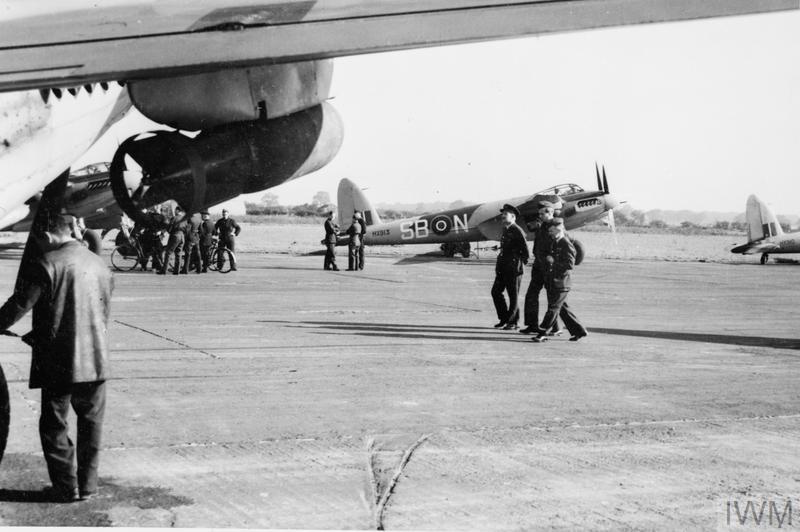
Group Captain P C “Pick” Pickard (centre), Commander No. 140 Wing, flanked by Wing Commander I G E “Daddy” Dale, Commanding Officer of No. 21 Squadron RAF (to Pickard’s right), and Wing Commander A G “Willie” Wilson, Commanding Officer of No. 487 Squadron RNZAF, visit No. 464 Squadron RAAF at Hunsdon, prior to a daylight raid against flying-bomb sites in the Pas-de-Calais. 464’s Mosquitoes (FB Mk VIs) have been loaded with 250-lb MC bombs for the operation: HX913 ‘SB-N’ can be seen in the background (@IWM HU 81335).

The raid on Amiens was not the only low level raid carried out by the Wing however. Between 1944 and 1945, they would attack numerous ‘V’ weapons sites, along with the Gestapo headquarters at Aarhus University and  the Shellhaus building in Copenhagen. Operation Carthage, another of their more famous raids, occurred whilst the wing was based at RAF Fersfield in 1945, but their most controversial raid, Ramrod 564 or ‘Operation Jericho’ as it has since become known, took place the year prior to that, whilst they were based at Hunsdon in early 1944.

There is a lot of speculation around Ramrod 564, many of the official records are missing, inaccurate or even vague. The operational record books for the squadrons involved  are recorded as ‘secret‘ and contain no details other than aircraft, times and dates.

The Operation, was designed to assist in the escape of 120 French patriots, who were reportedly condemned to death for assisting the Allies in the fight against the Nazis. These prisoners included key resistance fighters who had considerable knowledge of resistance operations in France, and so it was imperative that they escape.

The plan was for Mosquitoes of 140 Wing to attack from different directions, breaching the walls of the prison and blowing up several key buildings inside the prison holding German guards and soldiers. It would require each aircraft to carry 11 second, time-delay fuses in 500lb bombs dropped at very low level.

The Operation, formulated by Air Vice Marshal Basil Embry, would be critical, even the amount of explosive itself had fine limits, and time was also of the essence. The prisoner’s executions were imminent, so the attack had to be carried out quickly thus allowing only a small window of opportunity for the operation to take place.

The exact time of day that the attack could take place was also critical, there needed to be as many of the guards as possible in the key buildings at the time of attack, and the prisoners needed to be safely gathered together out of harms way. So, a time of 12:00 pm precisely on a date between 10th and 19th February was chosen, as both the guards and prisoners would be having lunch at this time, and it would be prior to the executions being carried out.

The route would take the aircraft from Hunsdon to Littlehampton, then via appropriate lattice to Tocqueville / Senarpont / Bourdon – one mile south, Doullens / Bouzincourt – two miles west-south-west, Albert / target – turn right – St. Saveur / Senarpont / Tocqueville / Hastings and return to Hunsdon.

In the attack, 3 waves of Mosquito would be used, 6 from 487 (RNZAF) Squadron, 6 from 464 (RAAF) Squadron and 6 from 21 Squadron. In addition, to record the attack, one aircraft (a Mosquito) of the Photographic Reconnaissance Unit (PRU) was detailed to monitor and film the entire operation. Along with them were three squadrons of Typhoons (198, 174 and 245) each protecting one of the three waves. These escorts were ordered to rendezvous with the waves one mile east of Littlehampton at Zero minus 45, 42 and 32 minutes respectively.

The first wave of Mosquitoes was directed to breach the wall in at least two places, the leading three aircraft attacking the eastern wall using the main road as a lead in. The second section of three aircraft would, when ten miles out from target, break away to the right at sufficient height as to allow them to observe the leading three aircraft, and if successful, attack the northern wall on a north-south run, immediately following the explosion of the bombs of the leading section. The time of this attack Zero Hour.

The second wave was ordered to bomb the main prison buildings, the leading three aircraft attacking the south-eastern end of main building and second section of three aircraft, attacking the north-western end of the key building. Both attacks were to be carried out in a similar fashion to the first. This would follow three minutes behind the first wave at Zero +3.

The final wave was a reserve wave intended to bomb if any of the first two waves failed to hit their targets. They would follow the same patterns as the first two, one section from east and one from north, but they would only bomb if it was seen that one of the previous attacks had failed. The details of the attacks would be determined by the leader and would happen thirteen minutes (zero +13) after the initial planned attack. If they were not required, the order to return would be given by the Group Leader or substitute.

Embry elected himself to lead the attack, but this was blocked by those higher up, As a result, and much against his wishes, Embry therefore had to choose a successor. Group Captain Percy C. Pickard (D.S.O. and two bars, D.F.C.) was chosen, but even though he was known as an expert pilot and leader, Embry was not convinced of Pickard’s ability to complete the job at such low level. Despite his reservations though, Embry duly informed Pickard of the decision and preparations for the operation began in earnest.

On February 18th that year, a day after the initial planned attack and in extremely poor weather, the Nineteen Mosquitoes took off to attack, breech and destroy the walls and a key building of the Amiens prison.

During the flight out, two Mosquitoes and three Typhoons of 198 Sqn became lost in swirling snow and were forced to turn back as they had now lost contact with their main formations. The remaining crews flew on, but whilst over France a third Mosquito, flown by Flt. B. Hanafin, suffered engine problems and was also forced to turn back. On his return journey he was attacked by Flak from which he was seriously injured. Helped by his navigator the two were able to land back at RAF Ford where he was given medical treatment for his injuries.

Just three minutes behind schedule, the first wave split and the first three aircraft followed the main road toward the prison’s eastern wall at tree top height. The second set of three waited and observed. Wing. Cdr. I. Smith, 487 Sqn, went in first, dropping his bombs with 11 second fuses against the wall. The second three then followed as instructed.

Wing Commander I Smith, Commanding Officer of No. 487 Squadron RNZAF, at Hunsdon (©IWM CH 12649)

Official reports state (edited only for fluency):

“Three Mosquitoes of No 487 Squadron attacked the eastern wall at 12:03 hours, just clearing the wall on a heading of 250 degrees with 12 bombs. The leader’s bombs were seen to hit the wall five feet from the ground, while other bursts were seen adjacent to the west wall with overshoots in fields to the north. Two aircraft of no 487 Squadron attacked the northern wall at 12:03 hours just clearing the wall on a heading of 150 degrees with 12 bombs. These attacks were directed at places later reported breached by reconnaissance aircraft. One bomb seen to hit the large building, and northern side of the eastern building was also reported hit.”

The second wave then attacked the south-eastern main building and north-western end respectively. Following the explosions chaos ensued inside the prison, guards were taken by surprise and over running bombs had caused some damage inside, prisoners began to run toward the gaps but some had been injured or struggled to escape.

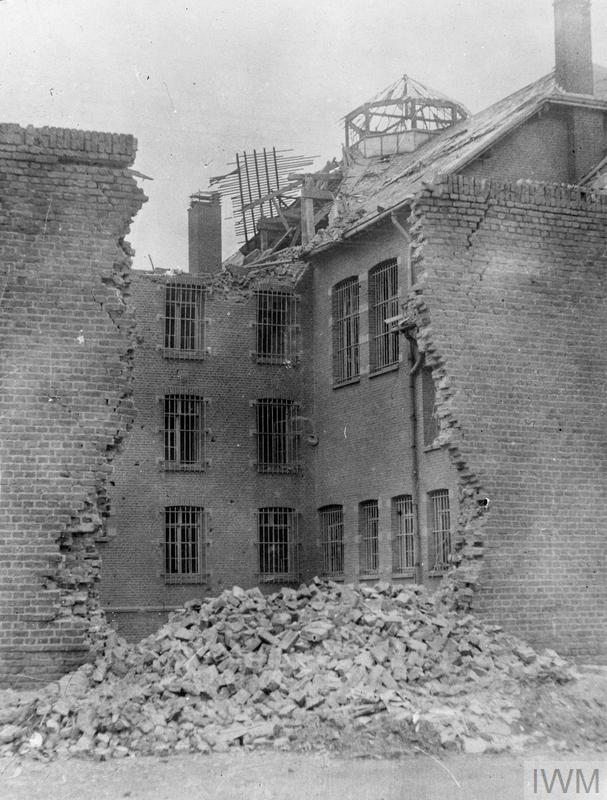
The 12 foot wide breach in the south side of the prison’s outer wall, through which 258 prisoners escaped. © IWM (C 4740)

Again reports say:

“Overhead view of the prison, showing the breaches made in the outer walls. Two Mosquitoes of No 464 Squadron bombed the eastern wall at 12:06 hours from 50 feet heading 150 degrees and 250 degrees with 8 x 500lb bombs. The wall appeared unbreached before the attack. Results were unobserved.

Two Mosquitoes of No 464 Squadron bombed the main building at 12:06 hours from 100 feet heading 150 and 250 degrees with 8 x 500lb bombs. The north wall appeared to be already damaged. One of these aircraft was seen to bomb and has not returned.

The breach in the Eastern wall. One Mosquito of the PRU circled the target three times between 12:03 and 12:10 hours from 400 to 500 feet using a cine film camera but carrying no bombs. He reported a large breach in the eastern centre of the north wall and considerable damage to the extension building west of main building as well as damage to the western end of main building. A number of men were seen in the courtyard near the separate building which appeared to be workshops and three men running into fields from large breach in northern wall.

The four aircraft of No 21 Squadron received VHF messages from ‘F’ of No 464 Squadron (Gp. Capt. Pickard) and PRU aircraft when between 2 and 4 miles from the target, instructing them not to bomb. Target was seen covered with smoke and they brought their bombs back.

The target was obscured by smoke, so later aircraft were instructed not to bomb. Two aircraft were missing from this operation; one was last seen circling the target and heard giving VHF messages not to bomb (Pickard) and the other after attacking the target, was seen at Freneuville at 12:10 hours at 50 feet leading his formation. It attacked a gun position and shortly afterwards dropped to starboard and was not seen again. One aircraft of No 467 Squadron was hit by light flak near Albert; starboard nacelle holed and starboard wheel collapsed on landing. One aircraft of No 21 Squadron landed at Ford – aircraft damaged. One aircraft of No 487 Squadron abandoned task south of Oisemont – pilot slightly wounded and aircraft damaged. Two aircraft of No 21 Squadron abandoned before leaving English Coast owing to technical failure.”

It is thought by some that Pickard had been shot down before giving the return order, but these reports state that it was both Pickard and the PRU Mosquito flown by Flt. Lt. Wickham, that gave 21 Sqn the “Red, Red, Red” order, sending the last wave home as their bombs were no longer needed.

After the attack, FW.190s began to swarm and various dogfights took place between them and the Typhoons, but not before they had attacked some of the fleeing Mosquitoes who also returned fire.

It was one of these FW190s flown by the ace Feldwebel Wilhelm Mayer, who  severed Pickard’s tail sending the aircraft into the ground near to Saint Gratien killing both occupants.

A story goes that Pickard had left his dog ‘Ming’ at RAF Sculthorpe, their previous airfield,  to be looked after whilst he was away. On the day he was shot down, 18th February 1944, the dog fell gravely ill. Pickard’s wife, Dorothy, went to get him and sensed that after seeing the state of the animal that Pickard had been killed . It took months for Ming to recover, and some years later whilst living in Rhodesia, Ming went outside looked up to the sky as he always did when Pickard was flying, heard a whistle, collapsed and died.*1

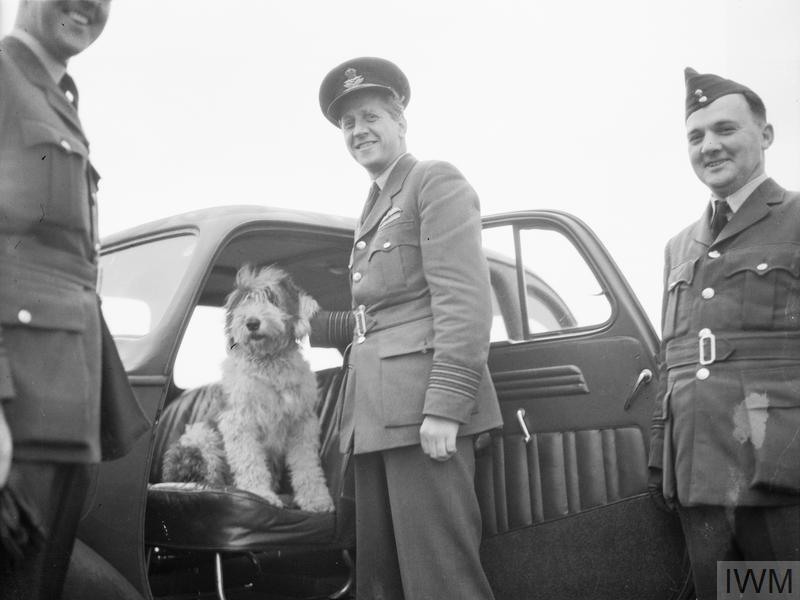
Group Captain P. C. “Pick” Pickard with his pet sheepdog “Ming”, pictured while resting from operations as Station Commander at Lissett, Yorkshire. © IWM (CH 10251)

A famously brave act, the attack resulted in the death of three crew members; Gp. Capt. Percy C. Pickard, and Flt. Lt. John A. Broadley, (RNZAF), both in Mosquito HX922, ‘EG-F’, and Flt. Lt. Richard W. Samson, (RNZAF) in Mosquito MM404 ‘SB-T’. Samson’s pilot, Sqn. Ldr. A. I. McRitchie survived his crash and was taken prisoner. Two Typhoons from 198 Sqn escorting the Mosquitoes are also thought to have failed to return (the ORBs don’t confirm this). Considered a success at the time, ‘evidence’ has since come to light to suggest that the operation was ‘unnecessary’, and may have failed to achieve anything more than a successful PR role (see end note). *2

Of the 700 prisoners detained within the walls of Amiens prison that day, a total of 258 escaped. In the confusion, 102 were killed and a further 74 wounded, but the success remained secret from the public for another eight months. With so much speculation around the attack, it will no doubt remain one of the mysteries of the war, but it was without doubt, an incredibly brave and daring mission that cost the lives of many superb young men.

A podcast using eyewitness accounts from the Imperial war museum can be heard through their website.

(A better quality version is available on the Pathe News website.)

All controversy aside, the raid took place at very low level and in very poor weather, with bombs dropped against a wall with delayed fuses. There was little resistance on the flight in and Typhoons provided higher cover when it was needed, but dogfights still ensued and lives were lost.

A daring attack, the Amiens raid was not the only one where lives were lost. Airfields along with the Hazmeyer electrical equipment factory at Hengels in Belgium, were also attacked at low level. On this particular operation Mosquito MM482 was hit by intense flak setting the starboard engine on fire. As a result, the aircraft flown by Canadian Sqn. Ldr. A. W. Sugden with navigator Fl. Off. A. Bridger, was lost and both men were listed as missing. Having been with the squadron since 1942 they were considered ‘old timers’ by the others and were sorely missed.

The three squadrons of 140 Wing would later depart Hunsdon, leaving the joy of success and the turmoil of a thousand questions behind them. 464 went first on March 25th whilst 21 and 487 Sqns would both leave mid April, both moving to RAF Gravesend in Kent.

The Amiens raid has no doubt caused great controversy, and as the years pass it will probably seep into the depths of history where it’ll become ‘just another raid’. But whist the background to it remains a mystery, it was done with great valour and courage by a group of young men who believed strongly that it was a worthy and much needed attack.

Aircraft involved in the attack (all Mosquito Mk.VI):

Crews attacking the target:
No 487 Squadron

‘R’ Wg Cdr Smith, DFC (Pilot) / Flt Lt Barnes, DFM (Navigator)
‘C’ Plt Off Powell / Plt Off Stevenson
‘H’ Flt Sgt Jennings / WO Nichols
‘J’ Plt Off Fowler / WO Wilkins
‘T’ Plt Off Sparkes / Plt Off Dunlop

No 464 Squadron

‘F’ Wg Cdr Iredale, DFC / Flt Lt McCaul, DFC
‘O’ Fg Off Monghan, DFM / Fg Off Dean, DFM
‘A’ Sqn Ldr Sugden / Fg Off Bridger
‘V’ Flt Lt McPhee, DFM / Flt Lt Atkins

Missing (Killed/POW)
No 464 Squadron

‘F’ Gp Capt P C Pickard, DSO, DFC / Flt Lt J A Broadley, DSO, DFC, DFM
‘T’ Sqn Ldr A I McRitchie / Flt Lt R W Samson

Crews instructed not to attack the target:
No 21 Squadron:

‘U’ Wg Cdr Dale / Fg Off Gabites
‘O’ Flt Lt Wheeler, DFC / Fg Off Redington
‘J’ Flt Lt Benn, DFC / Fg Off Roe
‘D’ Flt Lt Taylor, DFC / Sqn Ldr Livry DFC

Abortive Sorties
No 487 Squadron

‘Q’ Flt Lt Hanafin / Plt Off Redgrave

No 21 Squadron

‘P’ Flt Lt Hogan / Flt Sgt Crowfoot
‘F’ Flt Sgt Steadman / Plt Off Reynolds

PRU

‘C’ Flt Lt Wickam, DFC / Plt Off Howard

Escorts (Typhoons)

198 Squadron (six aircraft set off, three returned early)
174 Squadron (Eight aircraft took off and rendezvoused with Mosquitoes)
245 Squadron (Eight aircraft took off rendezvoused with Mosquitoes)

Sources and Further Reading

*1 Gunn, P.B., “Flying Lives – with a Norfolk Theme“, Peter Gunn, 2010

*2 – The Amiens raid is one that has become embedded in history and is beyond doubt an incredible and daring low-level raid that succeeded in its aim. However, official records seem to have many errors, anomalies or missing details that it is very difficult to ascertain the accuracy of these historical ‘facts’.

The ORBs for each of the four squadrons give no details other than an ‘operation to France’, some crew names and aircraft numbers. There is no record of the use of the word ‘Jericho‘ but there are two sides to this story.

Some authors including Rowland White “Mosquito” and John Laffin “Raiders – Great Exploits of the Second World War“, both cite Basil Embry as the creator of the name ‘Jericho‘ before the missions took place, whilst Robert Lyman “The Jail Busters” cites a French film, made in 1946, as the author of creator of the name. Some believe the name was created by various media outlets since then whilst others say that Embry created the name after the operation had been carried out. It is however, widely considered that it was a post-war name as the original operation was ‘Ramrod 564‘ and none of the ORBs use the name ‘Jericho‘.  To further add mystery, the use of the title ‘Renovate‘ has also cited, but records in the National Archives show this as the secret VHF code word to be used by aircraft on the operation and not the Operation title.

The name aside, and more recently, one of the French Resistance fighters revealed his doubts about the operation, and considers that it may have been nothing more than a propaganda operation or a diversionary attack linked to D-Day. One book (one amongst many) on the subject has been written by author Simon Parry and historian Dr Jean-Pierre Ducellier entitled The Amiens Raid – Secrets Revealed‘ and is published by Red Kite. It goes into the details of the raid and possible reasons behind it.

There have also been theories that it was an MI6 operation but due to the nature and secrecy of the mission, little evidence is publicly available to substantiate this.

Of those who lost their lives, both Pickard and Broadley are buried in St. Pierre Cemetery, Amiens, whilst Sampson is buried in the Poix-de-Picardie cemetery in the Somme region.

The Official report and details from it were accessed at the National Archives Web Archive © Crown Copyright 2004 and © Deltaweb International Ltd 2004

National Archives:

AIR-27-264-25; AIR-27-1170-23; AIR-27-1170-24; AIR-27-1924-27; AIR-27-1924-28; AIR-27-1935-27; AIR-27-1935-28; AIR-27-1109-4; AIR-27-1482-4; AIR-27-1482-3

Thirsk. I., “de Havilland Mosquito – An Illustrated  History Vol 2“. Crecy. 2006

White. R., “Mosquito” Bantam, 2023.

Remembrance Sunday November 2022

At the eleventh hour on the eleventh day of the eleventh month 1918, the guns on the western front fell silent. Four years of war in which millions were either killed or wounded, towns and villages wiped from the map and the environment changed forever, had finally come to an end. All along the front line, men were soon to put down their arms and leave their trenches for home.

The war to end all wars had finally come to an end. During the last four years some 40 million people had been killed or wounded, many simply disappeared in the mud that bore no preference to consuming man or machine.

Back home, virtually no city, town, village or hamlet was left unscathed by the loss of those four years. Many who returned home were changed, psychologically many were wounded beyond repair.

Sadly, twenty years later, the world slipped into the abyss of war once more. A war that saw some of the most incredible horrors, one that saw the extreme capabilities of what man can do to his fellow-man. Across the world millions of innocent people were slaughtered under the guise of an ideology. An ideology that was determined to rid the world of anyone who was willing to speak out against that very same ideology.

Young men were transported thousands of miles to fight in environments completely alien to them. Many had never been beyond their own home town and yet here they were in foreign lands fighting a foe they had never even met.

The bravery and self-sacrifice of those young men  on the seas, on the land and in the air, go beyond anything we can offer as repayment today.

For nearly 80 years, the world has been at an uneasy rest, Korea, Vietnam, the Falklands, the Middle East, and the Far East, in almost every corner of the globe there has been a war in which our service men and women have been involved. The war to end all wars failed in its aim to bring peace to the world.

In this year, 104 years after the end of the First World War, we remember those who laid down their lives in the fight for freedom. We remember those who fought for the right to free speech, for the right to be who you are and the right to live our lives in peace.

We will remember them…

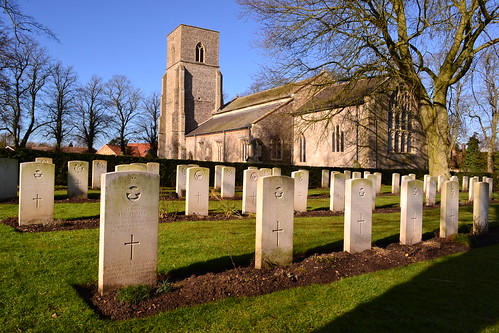
War Graves Cemetery - St Mary's Great Bircham

St Mary’s Great Bircham

St. Clement Danes - Church of the RAF

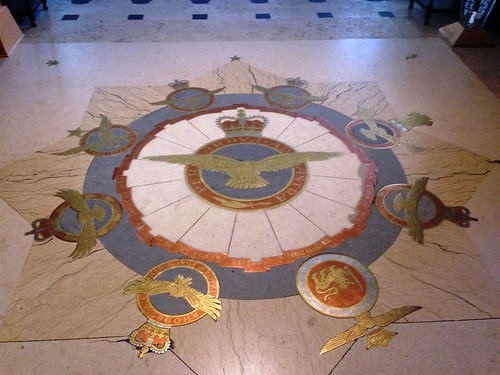
The rosette of the Commonwealth Air Forces – St. Clement Danes

Ypres 007

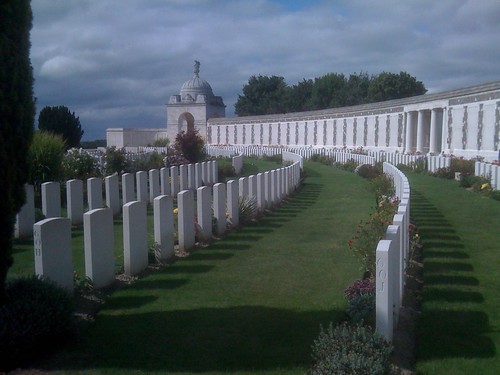
Tyne Cot, Ypres

DSC_0587

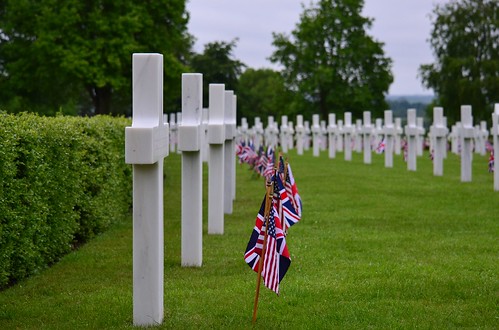
The American Cemetery Madingley

Anthem for Doomed Youth

What passing-bells for these who die as cattle?
Only the monstrous anger of the guns.
Only the stuttering rifles’ rapid rattle
Can patter out their hasty orisons.
No mockeries now for them; no prayers nor bells,
Nor any voice of mourning save the choirs,
The shrill, demented choirs of wailing shells;
And bugles calling for them from sad shires.

What candles may be held to speed them all?
Not in the hands of boys, but in their eyes
Shall shine the holy glimmers of goodbyes.
The pallor of girls’ brows shall be their pall;
Their flowers the tenderness of patient minds,
And each slow dusk a drawing down of blinds.

Wilfred Owen (18/3/1893 – 4/11/1914)

Remembrance Day 2021 – At the going down of the sun…

At the eleventh hour on the eleventh day of the eleventh month 1918, the guns on the western front fell silent. Four years of war in which millions were either killed or wounded, towns and villages wiped from the map and the environment changed forever, had finally come to an end. All along the front line, men were soon to put down their arms and leave their trenches for home.

The war to end all wars had finally come to an end. During the last four years some 40 million people had been killed or wounded, many simply disappeared in the mud that bore no preference to consuming man or machine.

Back home, virtually no city, town, village or hamlet was left unscathed by the loss of those four years. Many who returned home were changed, psychologically many were wounded beyond repair.

Sadly, twenty years later, the world slipped into the abyss of war once more. A war that saw some of the most incredible horrors, one that saw the extreme capabilities of what man can do to his fellow-man. Across the world millions of innocent people were slaughtered under the guise of an ideology. An ideology that was determined to rid the world of anyone who was willing to speak out against that very same ideology.

Young men were transported thousands of miles to fight in environments completely alien to them. Many had never been beyond their own home town and yet here they were in foreign lands fighting a foe they had never even met.

The bravery and self-sacrifice of those young men  on the seas, on the land and in the air, go beyond anything we can offer as repayment today.

For nearly 80 years, the world has been at an uneasy rest, Korea, Vietnam, the Falklands, the Middle East, and the Far East, in almost every corner of the globe there has been a war in which our service men and women have been involved. The war to end all wars failed in its aim to bring peace to the world.

In this year, we remember those who laid down their lives in the fight for freedom. We remember those who fought for the right to free speech, for the right to be who you are and the right to live our lives in peace.

We will remember them…

War Graves Cemetery - St Mary's Great Bircham

St Mary’s Great Bircham

St. Clement Danes - Church of the RAF

The rosette of the Commonwealth Air Forces – St. Clement Danes

Ypres 007

Tyne Cot, Ypres

DSC_0587

The American Cemetery Madingley

Anthem for Doomed Youth

What passing-bells for these who die as cattle?
Only the monstrous anger of the guns.
Only the stuttering rifles’ rapid rattle
Can patter out their hasty orisons.
No mockeries now for them; no prayers nor bells,
Nor any voice of mourning save the choirs,
The shrill, demented choirs of wailing shells;
And bugles calling for them from sad shires.

What candles may be held to speed them all?
Not in the hands of boys, but in their eyes
Shall shine the holy glimmers of goodbyes.
The pallor of girls’ brows shall be their pall;
Their flowers the tenderness of patient minds,
And each slow dusk a drawing down of blinds.

Wilfred Owen (18/3/1893 – 4/11/1914)

September 8th 1943 – Tragedy at RAF Mepal.

On the night of September 8/9th 1943,  a force of 257 aircraft comprising 119 Wellingtons, 112 Stirlings, 16 Mosquitoes and 10 Halifaxes took off from various bases around the U.K. to bomb the Nazi gun positions at Boulogne. Included in this force were aircraft from the RAF’s Operational Training Units, and for the first time of the war, five B-17s flown by US aircrews of the USAAF’s 422nd BS, 305th BG at Grafton Underwood. This was the first of eight such missions to test the feasibility of the USAAF carrying out night operations over Europe.  After the remaining seven missions, in which the squadron had dropped 68 tons of bombs, the idea was scrapped, the concept considered ‘uneconomical’ although the aircraft themselves proved to be more than capable of the operations.

RAF Mepal - memorial

RAF Memorial – Mepal

The Gun battery targeted, was the emplacement that housed the Germans’ long-range guns, and the target wold be marked by Oboe Mosquitoes. With good weather and clear visibility, navigation was excellent, allowing the main force to successfully drop their bombs in the target area causing several huge explosions. However, not many fires were seen burning and the mission was not recorded as a success. Reports subsequently showed that the emplacement was undamaged due to both inaccurate marking by Pathfinders, and bombing by the main force. However, as both anti-aircraft fire and night fighter activity were light, no aircraft were lost during the flight making it a rather an uneventful night.

However, the mission was not all plain sailing, and whilst all crews returned, the night was marred by some very tragic events.

Three Stirlings were to take off from their various bases that night: at 21:00 hrs from Chedburgh, Stirling MK. III, EF136, piloted by F/S. R. Bunce of 620 Sqn; at 21:30, another Stirling MK.III, from 75 Sqn at RAF Mepal, BK809 ‘JN-T*1‘ piloted by F/O I.R.Menzies of the RNZAF; and lastly at 21:58 also from Chedburgh, Stirling MK. I, R9288 ‘BU-Q’ piloted by N.J. Tutt  of 214 Sqn.  Unfortunately all three aircraft were to suffer the same and uncanny fate, swinging violently on take off. The first EF136 crashed almost immediately, the second BK809 struck a fuel bowser, and the third R9288 ended up in the bomb dump. Miraculously in both the Chedburgh incidents there were no casualties at all, all fourteen crew men surviving what must have been one of their luckiest escapes of the war! The same cannot be said for the second though.

Stirling BK809 was part of a seventeen strong force of 75 Sqn aircraft. Each aircraft was carrying its full load made up of 1,000lb and 500lb bombs. As the Stirling was running along the runway, it swung violently, striking a fuel bowser which sent it careering into houses bordering the edge of the airfield.

One of the occupants of one of the houses, Mr. P. Smith, saw the aircraft approaching and ran into the street to warn others to get clear. As the aircraft struck the rear of the houses, it burst into flames causing some of the bombs to detonate. This brought considerable rubble down on the occupants of the second house, Mr and Mrs John Randall.

Mrs Randall managed to get out, her legs injured, whereupon she was met by a local fireman, Mr. A.E. Kirby of the National Fire Service. Mr. Kirby went on to help search in the wreckage of the house until his attempts were thwarted by another explosion. His body, along with that of Mr. Randall, was found the next day.

Two other people were also killed that night trying to provide assistance, those being F/Sgt Peter Gerald Dobson, RNZAF and Section Officer Joan Marjorie Easton WAAF. F/Sgt. Dobson was later mentioned in despatches. Three members of the crew lost their lives as a result of the accident, F/O. Menzies and F/O. N. Gale both died in the actual crash whilst Sgt. A. Mellor died later from injuries sustained in the accident.

A number of others were injured in the crash and one further member of the squadron, Cpl Terence Henry King B.E.M, was awarded the British Empire Medal “for his bravery that night in giving assistance“.

The mission on the night of September 8/9th 1943 will not go down as one of the most remarkable, even though  it was unique in many respects, but it will be remembered for the sad loss of crews, serving officers and civilians alike in what was a very tragic and sad event.

The crew of Stirling BK809 were:

F/O. Ian Robert Menzies RNZAF NZ415002. (Pilot).
P/O. Derek Albert Arthur Cordery RAFVR 136360. (Nav).
P/O. Norman Hathway Gale RAFVR 849986. (B/A).
Sgt. Ralph Herbert Barker RNZAF NZ417189. (W/O).
Sgt. Albert Leslie Mellor RAFVR 943914. (Flt. Eng).
Sgt. Bullivant G RAFVR 1395379. (Upp. G)
Sgt. Stewart Donald Muir RNZAF NZ416967. (R/G).

RAF Mepal was visited in Trail 11.

Sources and Further Reading.

*1 Chorley, 1996 “Bomber Command Losses 1943” notes this aircraft as AA-T.

National Archives: AIR 27/646/42: 75 Sqn ORB September 1943

Chorley, W.R., “Bomber Command Losses – 1943“, Midland Counties, (1996)

Middlebrook M., & Everitt C., “The Bomber Command War Diaries”  Midland Publishing, (1996)

Further details of this accident, the crews and those involved can be found on the 75 (NZ) Sqn blog. This includes the gravestones of those killed and a newspaper report of the event.

My thanks also go to Neil Bright for the initial  information.

Loss of Mosquito FBVI ‘NS828’ RAF Swanton Morley.

Memorial to Fl. Lt. J Paterson and Fl. Lt J. Mellar

On April 25/26th 1944, 487 Sqn (RNZAF) moved from RAF Gravesend to RAF Swanton Morley in Norfolk, taking with them D.H. Mosquitoes. They had only been at Gravesend a few days when news of the new move came through.

487 Sqn had previously been involved in ground attacks on German airfields across the occupied countries, and in several high profile missions. In particular, during the previous February, they had been involved in Operation ‘Jericho‘, the attack on the Amiens Jail, in France. It was also a Methwold based Ventura piloted by Squadron Leader Leonard H. Trent, who, on 3rd May 1943, had led the Squadron in a disastrous daylight attack on the power station at Amsterdam. As a result of his actions that day, Sqn. Ldr. Trent received the V.C., the highest honour bestowed on personnel of the armed forces.

On their arrival at Swanton Morley, 487 Sqn would immediately begin training for new air operations, their part in the forthcoming D-day invasion at Normandy, with the first flights taking off the following day.

On April 27th three ‘targets’ were chosen, the Grimston Range not far away from Swanton Morley, the Bradenham Range in the Chilterns, and lastly the Army Gunnery School site at Stiffkey, on the North Norfolk coast. Each of these were to be ‘attacked’ in cross country sorties by the Mosquitoes.

In one of those Mosquitoes ‘EG-A’ was Pilot Flight Lieutenant John Charles Paterson (NZ/2150), and his Navigator Flight Lieutenant John James Spencer Mellar (s/n: 49175) both of the R.N.Z.A.F.

The day’s sortie went well, until the return flight home was made. It was on this leg of the flight that the port engine of the Mosquito, a Hatfield built FBVI ‘NS828’ under contract 555/C.23(a), began to overheat.

Immediately Flt. Lt. Paterson feathered the engine – now flying on just one. The Mosquito was lined up on approach to Swanton Morley for a single-engined landing, but all did not go well. Unfortunately,  instead of putting the aircraft down on the runway, the aircraft overshot the airfield crashing into a field beyond, the resultant accident killing both pilot and navigator instantly.

The Operational Record Book (AIR 27/1935/31) for April 27th states:

Formation dive bombing on Grimstone [sic] range. Low level bombing on Bradenham Range. Formation cross country with air to sea firing practice off the coast at Wells. In the evening six aircraft carried out formation attacks on gun positions at an army Gunnery School at Stiffkey. Returning from this ‘A’, F/Lt. Paterson developed engine trouble and feathered the airscrew.  In attempting to land, he overshot and crashed. F.Lt. Paterson and his navigator F. Lt. Mellar, were both killed.”

Since then, a memorial has been erected in memory of the two men, located on the side of the B1110 Dereham Road just outside the village of North Elmham in Norfolk, it stands not far from the site of the crash site, west of Swanton Morley airfield. After the crash, Flt. Lt. Paterson’s body was buried at Shepperton Church Cemetery, whilst Flt. Lt. Mellar was buried at Brookwood Military Cemetery plot 24. D. 20.

Flight Lieutenant Mellar was 29 on the date of his passing, he was the son of William Edward and Eleanor Mellar; and husband of Dorothy Freda Mellar. Flight Lieutenant Paterson was 24 years of age, he was the son of John Alexander and Alice Louise Paterson, of Papakura, Auckland, New Zealand, and husband of Doris Josephine Paterson, of Shepperton.

Swanton Morley appears in Trail 38.

Loss of Mosquito FBVI ‘NS828’ RAF Swanton Morley.

Memorial to Fl. Lt. J Paterson and Fl. Lt J. Mellar

On April 25/26th 1944, 487 Sqn (RNZAF) moved from RAF Gravesend to RAF Swanton Morley in Norfolk, taking with them D.H. Mosquitoes. They had only been at Gravesend a few days when news of the new move came through.

487 Sqn had previously been involved in ground attacks on German airfields across the occupied countries, and in several high profile missions. In particular, during the previous February, they had been involved in Operation ‘Jericho‘, the attack on the Amiens Jail, in France. It was also a Methwold based Ventura piloted by Squadron Leader Leonard H. Trent, who, on 3rd May 1943, had led the Squadron in a disastrous daylight attack on the power station at Amsterdam. As a result of his actions that day, Sqn. Ldr. Trent received the V.C., the highest honour bestowed on personnel of the armed forces.

On their arrival at Swanton Morley, 487 Sqn would immediately begin training for new air operations, their part in the forthcoming D-day invasion at Normandy, with the first flights taking off the following day.

On April 27th three ‘targets’ were chosen, the Grimston Range not far away from Swanton Morley, the Bradenham Range in the Chilterns, and lastly the Army Gunnery School site at Stiffkey, on the North Norfolk coast. Each of these were to be ‘attacked’ in cross country sorties by the Mosquitoes.

In one of those Mosquitoes ‘EG-A’ was Pilot Flight Lieutenant John Charles Paterson (NZ/2150), and his Navigator Flight Lieutenant John James Spencer Mellar (s/n: 49175) both of the R.N.Z.A.F.

The day’s sortie went well, until the return flight home was made. It was on this leg of the flight that the port engine of the Mosquito, a Hatfield built FBVI ‘NS828’ under contract 555/C.23(a), began to overheat.

Immediately Flt. Lt. Paterson feathered the engine – now flying on just one. The Mosquito was lined up on approach to Swanton Morley for a single-engined landing, but all did not go well. Unfortunately,  instead of putting the aircraft down on the runway, the aircraft overshot the airfield crashing into a field beyond, the resultant accident killing both pilot and navigator instantly.

The Operational Record Book (AIR 27/1935/31) for April 27th states:

Formation dive bombing on Grimstone [sic] range. Low level bombing on Bradenham Range. Formation cross country with air to sea firing practice off the coast at Wells. In the evening six aircraft carried out formation attacks on gun positions at an army Gunnery School at Stiffkey. Returning from this ‘A’, F/Lt. Paterson developed engine trouble and feathered the airscrew.  In attempting to land, he overshot and crashed. F.Lt. Paterson and his navigator F. Lt. Mellar, were both killed.”

Since then, a memorial has been erected in memory of the two men, located on the side of the B1110 Dereham Road just outside the village of North Elmham in Norfolk, it stands not far from the site of the crash site, west of Swanton Morley airfield. After the crash, Flt. Lt. Paterson’s body was buried at Shepperton Church Cemetery, whilst Flt. Lt. Mellar was buried at Brookwood Military Cemetery plot 24. D. 20.

Flight Lieutenant Mellar was 29 on the date of his passing, he was the son of William Edward and Eleanor Mellar; and husband of Dorothy Freda Mellar. Flight Lieutenant Paterson was 24 years of age, he was the son of John Alexander and Alice Louise Paterson, of Papakura, Auckland, New Zealand, and husband of Doris Josephine Paterson, of Shepperton.

Swanton Morley appears in Trail 38.

Sqn. Ldr. Leonard Trent VC – RAF Methwold

RAF Methwold was a small airfield that was never intended to be a major player in the Second World War, yet it would see some remarkable achievements performed by the people who were stationed there.

Once such notable person was Squadron Leader Leonard Trent V.C., who, on 3rd May 1943, took a squadron of Lockheed Venturas on a ‘Ramrod’ Mission to attack an electricity power station on the northern side of Amsterdam.

As part of a larger attack, it would not be a mission central to Bomber Command’s overall bombing strategy, but more a mission of support and encouragement to the resistance fighters bravely fighting in occupied Holland.

Trent (N.Z.248i), born in Nelson, New Zealand on 14th April 1915, achieved his wings with the RNZAF in Christchurch in May 1938, a month before sailing to England and a role with the Royal Air Force.

At the outbreak of war he was sent with No. 15 Squadron flying Fairy Battles, to France to carry out photo-reconnaissance sorties over occupied territory. The squadron then moved back to England (RAF Wyton) and changed their Fairy Battles for Bristol Blenheim IVs.

After carrying out a number of low-level attacks, he was awarded a DFC for his part in the air war over Belgium, after which he became a flying instructor for RAF crews.

Wing Commander G J “Chopper” Grindell (centre), Commanding Officer of No. 487 Squadron RNZAF, with his two flight commanders in front of a Lockheed Ventura at Methwold, Norfolk. On his left is the ‘A’ Flight commander, Squadron Leader T Turnbull, and on his right is the commander of ‘B’ Flight, Squadron Leader L H Trent. (IWM)*1

In 1942 he returned to operational duties as a newly promoted Squadron Leader taking command of B Flight, 487 (NZ) Squadron at Feltwell. At the time 487 were part of No. 2 Group and were in the process of replacing their Blenheims with Venturas. The squadron moved from Feltwell to Methwold in early April 1943. Little did they know that only a month later, the Squadron’s Operations Record Book would read: “This is a very black day in the Squadron history…a better set of boys could not be met in 30 years. Everybody is still feeling dazed by the news.”

As an experienced pilot Trent would fly several low-level missions over the low countries, using an aircraft that was originally designed around a small passenger aircraft back in the United States. Whilst having powerful engines, Venturas suffered from poor manoeuvrability and a heavy air frame, these two failings combined with its rather ‘fat’ appearance, earned it the name “flying pig”.

Loses in Ventura operations would be high, and this was reflected nowhere else than on the very mission that Trent would fly on May 3rd 1943.

On that day fourteen Venturas of 487 Sqn were detailed to attack a target in Amsterdam, however only twelve aircraft actually took off, all at 16:43 from RAF Methwold. These aircraft were all part of a much wider operation, one that would involve an escort of nine RAF fighter squadrons. Timing was therefore crucial, as was low-level flying and maintaining the element of surprise. Within five minutes of their departure though, ‘EG-Q’ piloted by Sgt. A. Baker, would return after losing the crew escape hatch. This left eleven aircraft to carry on to the target.

A diversionary attack carried out by aircraft of 12 Group flying ahead of the main formation flew in too high, too soon, thus losing the surprise and alerting the defenders of the impending attack. Caught out by low fuel, many of the escorting fighters had to then leave thus reducing the overall effectiveness of the defensive escorting force. The Luftwaffe, now ready and waiting, had scrambled numerous fighters, a deadly cocktail of FW-190s and Bf-109s. The squadron record book reports an estimated “80+ ” enemy aircraft in the locality of the attacking Venturas.

From this point on things went very badly for 487 Sqn.

As they crossed the Dutch coast Ventura ‘AJ478’ (EG-A) was attacked and shot down by Luftwaffe fighters. Ditching in the sea the crew took to a life raft where Sgt. T Warner, injured in the attack, died of his injuries. Committing his body to the sea the remaining three would be captured and become prisoners of war. Warner’s body would wash up two days later on a Dutch beach and be buried in the small town of Bergen op Zoom – all four were from New Zealand.

A second aircraft, ‘AE916’ (EG-C) was also very badly shot up by the pouncing fighters. However, it managed to return to England landing at their former base RAF Feltwell. The pilot and navigator were both unhurt, but the wireless operator and air gunner were both badly wounded, and were immediately taken directly the RAF hospital at Ely, Cambridgeshire. The aircraft was so badly damaged in the attack that it was written off. For their actions the pilot (F/Lt. Duffill) and navigator (F.O. Starkie) were both awarded the DFC, whilst the wireless operator (Sgt. Turnbull) and gunner (Sgt. Neill) the DFM.  Dufill later went on to become the managing director of Humbrol paints, a company renowned for its paint and modelling supplies.

Pressing on to the target, the casualties got worse and the loss rate increased.

Firstly, Ventura ‘AE684’ (EG-B) was shot down at 17:45 near Bennebroek with the loss of two; at the same time ‘AE731’ (EG-O) was shot down  just north of Vijfhuizen, three crewmen were captured but the fourth, Sgt. Tatam, died. Five minutes later at 17:50, ‘AE780’ (EG-S) was lost, with only one crew member surviving – the aircraft crashing into the suburbs of Amsterdam. Within three more minutes, a fourth aircraft of this group would go down; ‘AE713’ (EG-T) was hit, also causing it to crash in the northern suburbs of Amsterdam, this time killing all on board. By 18:00 there were only two of the eleven aircraft left, ‘AJ209’ (EG-V) flown by Squadron Leader Leonard Trent, and ‘AE716’ (EG-U) flown by F.O. T. Baynton.

Baynton’s aircraft, ‘EG-U’, would then be shot down by fighters causing it to crash in the outskirts of Amsterdam, also killing all four on board. Squadron Leader Trent, seeing all around him fall from the sky, pressed on. Flying toward the target he dropped his bombs and then turned away. Trent bravely and coolly defended his aircraft, shooting down a Bf-109 with his forward facing guns. Shortly after, he too was hit, the aircraft badly damaged, spiralled earthward uncontrollably, breaking up as it did so, throwing both Trent and his navigator F.L. V. Philips, out of the falling wreckage.

Both Trent and Philips were later captured and taken prisoner, the other two crew members; F.O. R. Thomas and Sgt. G. Trenery, both lost their lives in the crash.

One further aircraft, ‘AJ200’ (EG-G) piloted by New Zealander Sgt. J Sharp was thought to crash 3 km west of Schiphol, with only Sharp surviving; whilst the remaining two unaccounted aircraft, ‘AE956’ (EG-H) and ‘AE 798’ (EG-D), were lost over the sea on the way to the target. All eight crewmen were presumed killed, two of them being washed up several days later on the Dutch coast. The remainder were never heard from again.

In the space of only a few minutes, eleven aircraft had been attacked and ten shot down with the loss of 28 young RAF lives.

operations-record-page

The Operations Record Book for May 3rd 1943, shows the depth of feeling felt by the crews at Methwold following the disastrous mission. (Crown Copyright*2)

Trent spent the remainder of the war in Stalag Luft III where he participated in the ‘Great Escape‘, being the 79th man out of the famous tunnel, just as the sentry discovered the escape route. Trent was almost stood on by the guard. Being captured at this point possibly saved his life after Hitler gave orders to shoot half of the escapees. Only on his eventual return to England did the full and disastrous story of what had happened come out. He was awarded the Victoria Cross for his leadership in ensuring the bomb run was completed despite heavy enemy resistance and very high losses. The London Gazette published his citation on Friday 1st March 1946, in the Third Supplement which said:

“Before taking off, Squadron Leader Trent told the deputy leader that he was going over the target, whatever ‘happened…”

It later went on to say…

“On this, his 24th sortie, Squadron Leader Trent showed outstanding leadership. Such was the trust placed in this gallant officer that the other pilots followed him unwaveringly. His cool, unflinching courage and devotion to duty in the face of overwhelming odds, rank with the finest examples of these virtues.” *3

A determined attack, it was flawed from the moment the preceding force were spotted. The Venturas, woefully inadequate and unprotected, were literary cut down from the sky. Fighters escorting the Venturas confirmed seeing seven parachutes from the aircraft, but the scale of the loss was a blow so devastating, it left only six operational crews in the entire squadron.

For many days after, the Operational Record Books indicated “no news of the boys“, and as new crews and aircraft arrived, prayers for their return faded, but hopes for a return to operational status rose. Following a number of training flights, the next operational mission would finally take place on May 23rd, a mission that was a total success, and one that must have boosted the morale of the squadron immensely.

This mission was a disaster for the Royal Air Force and for Methwold in particular. The loss of life dealt a huge blow to the community both on, and around the base. In memory of these gallant young men, many of whom were never found, their names are inscribed on the Runnymede memorial, whilst those whose bodies were recovered, remain scattered in various graves across the Dutch countryside.

May their memories live for evermore.

RAF Methwold appears in Trail 8.

Sources and further reading.

*1 Photo source The Imperial War Museum Collections

*2 AIR\27\1935\13

*3  The London Gazette: (Supplement) no. 37486. p. 1179. 26 February 1946. Retrieved 29th January 2017

AIR\27\1935\13 – Operational Records Book (summary), The National Archives

AIR\27\1935\14 – Operational Records Book (work carried out), The National Archives

Chorley, W.R., Bomber Command Losses, 1943, Midland Counties, 1996

RAF Methwold -History was made, War was won and Lives were lost.

Whilst visiting the Swaffham (Norfolk) area, this was perhaps more prominent than in many of the other places I’d been. Like other sections, this area was predominately American in nature, forming the back bone of the USAAF, bomber squadrons of the 8th Air Force. An area rich in aviation history there are numerous tales of heroism and valour to be found. Our first stop along Trail 8 is RAF Methwold.

RAF Methwold

Methwold Village sign

Methwold village sign

Located between Downham Market and Thetford, Methwold is a small rural setting on the edge of Thetford Forest. Its village sign and combined memorial, remind the passer-by of its strong air force links – a Lockheed Ventura taking off over the village church.

Methwold was actually built as a satellite for nearby RAF Feltwell and as such, had few squadrons of its own. Being a satellite its runways were of grass construction with little in the way of luxuries for accommodation.

On the day war broke out in Europe, 214 Squadron, equipped with Wellington MKIs, moved from RAF Feltwell to here at Methwold. Feltwell being larger, offered a prime target for the Luftwaffe and so their loss would be Methwold’s gain. The first production Wellington, the MKI was powered by two 1,000 hp Bristol Pegasus XVIII radial engines, and would soon be updated and replaced by the MKIA; the main difference being a change in gun turret from the Vickers to the Nash & Thomson. As part of Bomber Command, 214 Sqn did not carry out its first operational bombing flight until June 1940 some four months after it had left Methwold; but that is not to say casualties were not suffered.

On Monday November 6th 1939, Wellington L4345, crashed whilst circling on approach to Methwold. The accident resulted in the deaths of both crewmen, Pilot Officer J. Lingwood and Aircraftman 1, – A. Matthews.

Tragic accidents were not uncommon in these early stages of the war, another similar incident occurring at Methwold only a month later. In mid December, Pilot Officers W. Colmer and R. Russell-Forbes, along with Leading Aircraftman J. Warriner, were all killed whilst on approach to the airfield flying in another Wellington, R2699. Both these Officers were only recently commissioned and were still considered relative flying ‘novices’.

In February 1940, 214 Sqn departed Methwold and transferred to RAF Stradishall leaving only a small number of Wellington IIIs of 57 Sqn detached from their parent station at Feltwell. These would, in September 1942, be replaced by the mighty Lancaster, the four engined bomber that formed the backbone of the RAF’s Bomber Command.

The Intelligence Room of No. 140 Wing, No. 2 Group, at Methwold, Norfolk. © IWM (HU 81315)

Little happened at Methwold for the next two years, then in October 1942, 21 Sqn arrived. After having flown many missions against coastal targets in the Mediterranean, they were disbanded at Luqa only to be reformed and re-equipped at Bodney the same day. After changing their Blenheims for Venturas in May 1942, they transferred to RAF Methwold where they stayed for six months.

Operating both the Ventura MKI and II, they were the first Bomber Command squadron to re-equip with the type, and were one of the small number of squadrons who took part in the famous Eindhoven raid, attacking the Philips radio factory in December 1942. The daring Operation Oyster, would see the loss of sixteen aircraft – three of which belonged to 21 Sqn. Two of these aircraft crashed in enemy territory, whilst the third ditched in the North Sea after having been hit by enemy gunfire. Using a mix of Venturas, Bostons and Mosquitoes, this mission perhaps revealed the true vulnerability of such aircraft over enemy territory, a warning that would violently repeat itself in the months to come.

The spring of 1943 would again see changes at Methwold; as 21 Sqn departed, the ‘Flying Dutchmen’ of 320 (Dutch) Sqn would move in. 320 Sqn, were formed after the German forces invaded the Netherlands and consisted of mainly Dutch nationals. They carried out both anti-shipping and rescue duties before transferring, from Leuchars, to Methwold via Bircham Newton. Upon arriving here, 320 Sqn was absorbed into No. 2 Group and would shortly swap their Hudson VIs for Mitchell IIs. After a very short transfer period, they then departed Methwold, moving to the much larger base at Attlebridge.

Two further squadrons of Venturas arrived at Methwold in the early spring of 1943. Both 464 (RAAF) and 487 (RNZAF) Sqns were formed, transferred and disbanded in unison, and both consisted of commonwealth crews. Having entered the war in a baptism of fire, they also flew alongside 21 Sqn on the Eindhoven raid; 464 Sqn contributing fourteen aircraft whilst 487 contributed sixteen – each squadron losing three aircraft and all but four of the twenty-four crewmen.

RAF Methwold

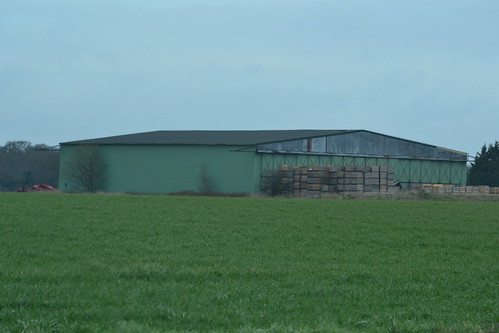
One of the original hangars at Methwold.

The Venturas earned themselves the unsavoury title the ‘flying pig‘ partly due to their appearance and partly due to poor performance. Based on the Lockheed Model 18 Lodestar, it was primarily a passenger aircraft and even though it had powerful engines, it performance was low and so operational losses were often high.

On May 3rd 1943, whilst on a ‘Ramrod‘ mission, eleven out of twelve (one returning due to engine trouble) 487 Sqn aircraft were lost to enemy action, and all but twelve of the forty-four crewmen were killed. Of these twelve, Squadron Leader Leonard H. Trent, was captured and taken to Stalag Luft III where he participated in the ‘Great Escape‘. On his eventual return to England at the end of the war, he was awarded the Victoria Cross for his leadership in ensuring the bomb run was completed despite heavy enemy resistance and very high losses.

In the summer of 1943, both 464 and 487 Squadrons became part of the newly formed Second Tactical Air Force; a move that led to their departure from Methwold, along with a new role and new aircraft.

Following their departure, Methwold was passed over to 3 Group and was designated to receive the heavy four-engined bombers of Bomber Command. To accommodate them, the site was upgraded to Class ‘A’ standard. Three runways were built, five hangars (four ‘T2s’ and one ‘B1’) were erected, and a wide range of ancillary buildings added. Aircraft dispersal consisted of 36 hard standings mainly of the spectacle type.

The incoming ground and aircrews would be accommodated in areas to the east of the airfield, buildings were sufficient for a small bomber site of some 1,800 men and just over 300 women, by no means large.

In this interim period on March 13th, a lone American P-47 #42-74727, suffered engine failure whilst on a routine training flight in the area. In an attempt to land at Methwold, the P-47 Thunderbolt crashed, slightly injuring the pilot but writing off the aircraft.

The first of the heavy bombers to arrive at the newly constructed Methwold were the mighty Stirling IIIs of 218 Sqn. A small detachment from RAF Woolfox Lodge, they would operate from here along side 149 Squadron who moved here from RAF Lakenheath in May 1944. 149’s record so far had been highly distinguished. Participating in the RAF’s second bombing mission of the war on September 4th, they had gone on to take part in the first 1,000 bomber raid, attacked prestige targets such as the Rhur, and had taken part in the Battle of Hamburg. They had also been in action in the skies over the Rocket development site at Peenemunde. They had gone on to drop essential supplies to the French Resistance, and one of its pilots, Flight Sergeant Rawdon Middleton, had won the VC for his valour and determination in action. 149 Sqn would go on with the offensive right up until the war’s end, replacing the ill-fated Stirlings with Lancaster MKIs and later the MKIIIs in August 1944.

During the D-Day landings, 149 Squadron were tasked with dropping dummy parachutists away from the Normandy beaches. As part of Operation Titanic, they were to deceive the German ground forces, aiming to draw them away from the Normandy beaches, thus reducing the defensive force. A task that proved relatively successful in certain areas of the invasion zone, it caused confusion in the German ranks and pulled vital men away from drop zones. During this dramatic operation, two 149 Sqn Stirlings were lost; LJ621 ‘OJ-M’ and LX385  ‘OJ-C’ – with all but three of the eighteen crew being killed.

In August 1944, 218 Sqn moved the remaining crews over to Methwold completing the unit’s strength once more. This move also led to them taking on the Lancaster MKIs and IIIs. 218 Sqn was another squadron with a remarkable record of achievements, its most notable being the VC posthumously awarded to Flight Sergeant Arthur Aaron for his ‘most conspicuous bravery’ whilst at RAF Downham Market.

As the allied advance moved across Europe, 149 Sqn supported them. In December 1944, 218 Sqn departed Methwold taking their Lancasters to RAF Chedburgh and disbandment the following year. 218’s losses were not over though, just days before the war’s end on April 24th 1945, Lancaster NF955 ‘HA-H’ crashed on take off, the last fatality of the squadron’s operational record. For 149 Sqn food packages replaced bombs as the relief operation – Operation Manna – took hold. After the fall of Germany in 1945, 149 Sqn ferried POWs back to Methwold in Operation Exodus, and for many, it was their first taste of freedom for many years.

The final squadron to be stationed at Methwold was 207 Squadron, between October 1945 and the end of April 1946 also flying the Lancaster I and III. As with many other bomber command squadrons, its history was also long and distinguished; flying its final mission of the war on 25th April 1945, against the SS Barracks at Berchtesgaden. During its wartime service 207 Sqn had completed some 540 operations, lost 154 crews and earned themselves a total of 7 DSOs, 115 DFCs and 92 DFMs.

In 1946, the Lancasters of 149 Squadron departed Methwold and all fell quiet. The site was officially closed in 1958 and the land returned to the former owners. In the early 1960s, much of the concrete was removed for hardcore, buildings were demolished and the land returned to agriculture, a state it primarily survives in today.

RAF Methwold

Stores huts used for light industry

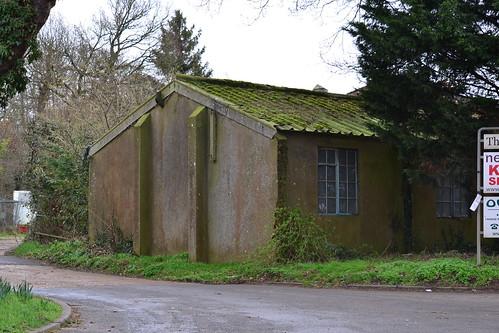
Methwold airfield is located south of the village of Methwold, accessible by the B1112. As you drive along this road, the technical area is to your left and the main airfield to your right. The entire site is primarily agricultural, with some of the remaining buildings being used for farming purposes or light industry. Many of these are accessible or at least can be seen from the main public highway.

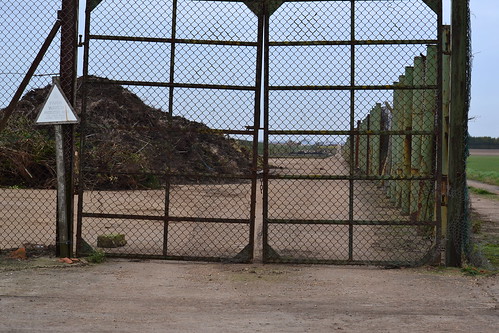
Large parts of the runways do still exist, although much of them are covered in newly developed industrial units, or are hidden away on private land. These most notable developments are at the northern end of the runway closest to Methwold village. However, best views of what’s left, are from the southern end, along a farm track that was once the perimeter track. Also here, is a single large and original ‘T2’ hangar, now used for storing agricultural equipment and other farm related products. This main north-westerly runway, built later in the war, is also used for farm related storage. Divided by a large fence, it is now part track and part storage. The remaining sections of perimeter track, a fraction of its original size, allows access to the runway past the hangar to an area of development further south to where the turret trainers once stood. Also visible here, is the Gymnasium built to drawing 16428/40 later adapted by the addition of a projection room (889/42) for recreational films.

Back alongside the B1112 hidden amongst the woods, is the technical area. Here in between the trees are the former technical huts and workshops now used by small industrial units, many of which survive in varying conditions, some of these are accessible to the general public.

RAF Methwold

One of the former runways looking north-west.

Methwold was never intended to be major player in the war. home to a small number of squadrons, it housed a variety of aircraft and a number of nationals who all combined, tell incredible stories of heroism, bravery and dedication. The squadrons who passed though here, carried out some of the RAF’s most daring raids, whether it be as part of a thousand bomber raid, a small force to attack the heart of Reich, or a diversionary raid to foil air and ground forces.

Methwold is now quiet, agriculture has taken over. The sound of heavy piston engines are now replaced by the sound of tractors, the buildings that once housed brave young men and their incredible machines now home to the machinery of food and farming. The small remnants of Methwold hold stories of their own, for it is here that history was made, war was won and lives were lost – and all in a very unassuming manner.

Notes and further reading 

Local information and further detail is available from the local Methwold history group. 

Methwold was originally visited in April 2013.

November 11th 2018 – At the going down of the sun…

At the eleventh hour on the eleventh day of the eleventh month 1918, the guns on the western front fell silent. Four years of war in which millions were either killed or wounded, towns and villages wiped from the map and the environment changed forever, had finally come to an end. All along the front line, men were soon to put down their arms and leave their trenches for home.

The war to end all wars had finally come to an end. During the last four years some 40 million people had been killed or wounded, many simply disappeared in the mud that bore no preference to consuming man or machine.

Back home, virtually no city, town, village or hamlet was left unscathed by the loss of those four years. Many who returned home were changed, psychologically many were wounded beyond repair.

Sadly, twenty years later, the world slipped into the abyss of war once more. A war that saw some of the most incredible horrors, one that saw the extreme capabilities of what man can do to his fellow-man. Across the world millions of innocent people were slaughtered under the guise of an ideology. An ideology that was determined to rid the world of anyone who was willing to speak out against that very same ideology.

Young men were transported thousands of miles to fight in environments completely alien to them. Many had never been beyond their own home town and yet here they were in foreign lands fighting a foe they had never even met.

The bravery and self-sacrifice of those young men  on the seas, on the land and in the air, go beyond anything we can offer as repayment today.

For nearly 80 years, the world has been at an uneasy rest, Korea, Vietnam, the Falklands, the Middle East, and the Far East, in almost every corner of the globe there has been a war in which our service men and women have been involved. The war to end all wars failed in its aim to bring peace to the world.

In this year, 104 years after the end of the First World War, we remember those who laid down their lives in the fight for freedom. We remember those who fought for the right to free speech, for the right to be who you are and the right to live our lives in peace.

We will remember them…

War Graves Cemetery - St Mary's Great Bircham St Mary’s Great Bircham
St. Clement Danes - Church of the RAF The rosette of the Commonwealth Air Forces – St. Clement Danes
Ypres 007 Tyne Cot, Ypres
DSC_0587 The American Cemetery Madingley

Anthem for Doomed Youth

What passing-bells for these who die as cattle?
Only the monstrous anger of the guns.
Only the stuttering rifles’ rapid rattle
Can patter out their hasty orisons.
No mockeries now for them; no prayers nor bells,
Nor any voice of mourning save the choirs,
The shrill, demented choirs of wailing shells;
And bugles calling for them from sad shires.

What candles may be held to speed them all?
Not in the hands of boys, but in their eyes
Shall shine the holy glimmers of goodbyes.
The pallor of girls’ brows shall be their pall;
Their flowers the tenderness of patient minds,
And each slow dusk a drawing down of blinds.

Wilfred Owen (18/3/1893 – 4/11/1914)