In Part 2 we saw how RAF Chelveston opened in August 1941 under RAF Bomber Command’s 2 Group while construction and runway extensions continued to bring the station up to heavy-bomber standards. Early activity centred on training and experimental work, including operations by the Central Gunnery School and airborne trials carried out by the Airborne Forces Experimental Establishment. The arrival of the American 60th Transport Group in mid-1942 introduced the first USAAF presence at the airfield, and although their stay was brief before departing for North Africa, senior Allied visits soon followed, hinting that Chelveston’s role was about to change significantly.
Chelveston Goes to War: Early Operations of the 301st
A change in management led to Major Kincaid (USAAF) assuming responsibility for the control of RAF Chelveston just before the station’s first formal operational unit, the USAAF’s 301st Bombardment Group (BG), was preparing to arrive. His oversight ensured that the transition from a training and transit airfield to an active bomber station proceeded smoothly.
With Chelveston now upgraded to accommodate heavy bombers, the newly arrived B‑17F Flying Fortresses of the 301st BG became the first operational aircraft to fly from the airfield. In taking up residence, the group inherited the original ‘J’-type hangar, a distinctive but unusual feature on USAAF bases, as few American stations were equipped with them.
The 301st’s journey to the UK began at Geiger Field in Washington, before flying the northern route via Greenland and Iceland to Prestwick, arriving here with twenty aircraft, 115 officers, one warrant officer and 1,395 enlisted men.
On arriving at Chelveston in mid-August 1942, the group was far from operational readiness, a situation compounded by the lack of accommodation for all four squadrons. As a temporary measure, the 352nd Bomb Squadron moved to the satellite station at RAF Poddington. It was not until 2nd September, when the RAF anti-aircraft regiment transferred from Chelveston to RAF Ludham in Norfolk, that the squadron could return, reuniting the group once more.
With all four squadrons, the 32nd, 352nd, 353rd, and 419th, all now together at Chelveston, operations could begin, and it wouldn’t be long before they did.
As with most early operations, the first few were to coastal targets in France and the low countries, considered easier targets or ‘milk runs’, they were initially designed to acclimatise crews to combat conditions.
The Group’s initiation to the European theatre occurred on 2nd September 1942. An operation that took them to the locomotive engine sheds at Rouen. During the operation, twelve aircraft jointly from the 352nd and 419th set off to drop their payload on the target. Two aircraft returned early, one from each squadron, leaving the remainder to drop their 40 x 1,000lb bombs on the locomotive sheds. With no losses, it was a relatively successful start to their wartime journey.
The 301st would be in action again on the 6th, with thirteen aircraft despatched but only eleven being effective. On this occasion, the Eighth AF suffered their first heavy bomber losses with two aircraft (one each from the 92nd and 97th Bomb Groups) going down; the 301st on the other hand would see all their aircraft return. With two more ‘uneventful’ operations on the 7th and the 26th, September drew to a close with little to report.
The first casualties for the group occurred on October 2nd, with a twenty-five ship operation to the Meaulte aircraft factory. Whilst all aircraft returned, one was forced to crash land at RAF Gatwick after three of the aircrew on board were wounded by enemy fighter attacks.
The 301st BG found itself squarely in the sights of the Luftwaffe that day, and at the rear of the formation B-17 41‑24397 ‘Phyllis’ bore the worst of the punishment. As the tail-end Charlie, she was repeatedly singled out by attacking Fw-190s. One pass after another tearing into the aircraft, smashing the top turret and badly wounding the gunner inside. Moments later the outboard starboard engine began to run wildly out of control, while further damage left the inboard engine completely dead.
With control cables severed, ‘Phyllis’ pitched violently, rearing into a steep climb that the crew struggled to contain. As if the situation were not already desperate, part of the oxygen system failed, further increasing the danger faced by those on board. Damage to the wing and control surfaces meant that simply holding level flight demanded the full attention and cooperation of the entire crew, and even then it could not be sustained for long.
At last, British soil came into view. Spotting the first airfield they could, the pilot headed for RAF Gatwick. Given the aircraft’s battered condition and the risks involved, they elected to make a wheels-up landing – often the safest option under such circumstances. ‘Phyllis’ came down and skidded across the airfield, clipping a hangar before finally safely coming to a rest.
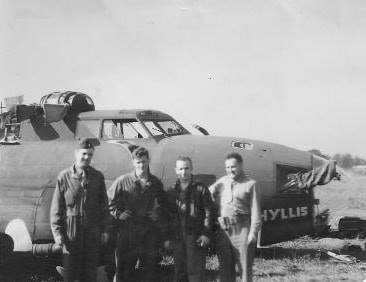
B-17 ‘Phyllis’ of the 301st BG after crash-landing at RAF Gatwick. (IWM UPL 36745).
Only afterwards did the full extent of her ordeal become clear. The aircraft was found to have absorbed around 300 small-calibre hits, at least sixteen cannon shell penetrations, and evidence of concentrated fire around the tail. Three members of the crew had been wounded, and it was little short of remarkable that the bomber had remained airborne for as long as it did. That survival owed much to the skill and determination of the pilots, the teamwork of the crew, and the inherent strength of the B-17’s construction.*8
A subsequent mission on the 9th October to the Compagnie de Fives steel works at Lille, France, saw further casualties for the 301st, and for the first time, an Eighth Air Force bomber ditching in the sea.
The B-17, 41-24362, piloted by 1st. Lt. Donald M. Swenson, was badly damaged by fighters knocking out or damaging, three of the four engines, causing the aircraft to lose altitude rapidly. Swenson, with the intercom out of action, gave the controls to the co-pilot and went back to instruct each member of the crew to prepare for ditching. With rough seas, it was not going to be easy, and even though the crew were prepared, some were caught off guard by the 15 – 20 foot swell and were thrown about the aircraft causing minor injuries as they did so.
After the aircraft came to rest on the water, most of the crew escaped through the gun port, while the pilot and co-pilot forced their way out through the cockpit windows. To their dismay, only one of the life rafts proved serviceable, the other having been damaged by gunfire in the attacks. Three of the airmen were able to climb aboard the intact raft, while the remainder could do no more than cling to its sides. Having discarded their sheepskin flying jackets – which quickly became waterlogged and dangerously heavy – they remained in the sea roughly a mile off North Foreland (Margate).
Luckily on the way down, the radio operator had sent out a may-day giving their position to the RAF’s Rescue Service who were quickly on the scene. Once there, they managed to successfully retract each crewmember from the water.
But, the story behind the aircraft goes a little deeper than being the first successful ditching by a USAAF aircraft. The B-17 was initially earmarked for RAF service, as a MK II FA667, through the lend-lease agreement, but was diverted to the USAAF at the last minute. Then, on only its third operation with the 301st, and just before the aircraft departed on its flight, one of the ground crew, M. Sgt. Glenn Doerr, persuaded the pilot to allow him to fly with them without official permission – a decision he would no doubt regret. However, his part in the rescue of the crew must have played a large part in redeeming his misdemeanour, no doubt, thereby, reducing the severity of his punishment on his return to Chelveston.
On November 8th, the 301st would perform their final mission as part of the 8th Air Force, as on the 23rd, a mere three months after their arrival in the UK, they were ordered to relocate to the 12th Air Force in Algeria.
Like the 60th TCG, the 301st (and 97th at Polebrook), were all ordered out under the direction of Roosevelt, who, influenced by Churchill, sent units to bolster the war in North Africa. Churchill – fearing that an inadequate invasion force sent to Northern France would be decimated – persuaded Roosevelt to postpone the invasion and concentrate on bolstering the Africa campaign instead.
Eisenhower, the commander picked by Roosevelt to lead Operation Torch, was bitterly opposed to the plan, and when Henry H. Arnold (General of the Army; Commanding General, U.S. Army Air Forces) was informed, he too was furious. The move would strip back the fledgling Eighth Air Force, almost killing it before it even got off the ground.
Despite their misgivings though, the various groups departed the UK and headed for North Africa, the 301st leaving Chelveston far behind.
During their brief tenure at the airfield, the 301st completed just eight operational missions, losing just a single aircraft in actual combat. Between the 8th and 23rd of the month they were formally designated ‘non-operational’ while preparations for their relocation were put in hand.
Their departure was marked by a visit from King George VI, who toured the station in the company of Col. R. Walker, Commanding Officer of the 301st, and Squadron Leader Robert Clayton.
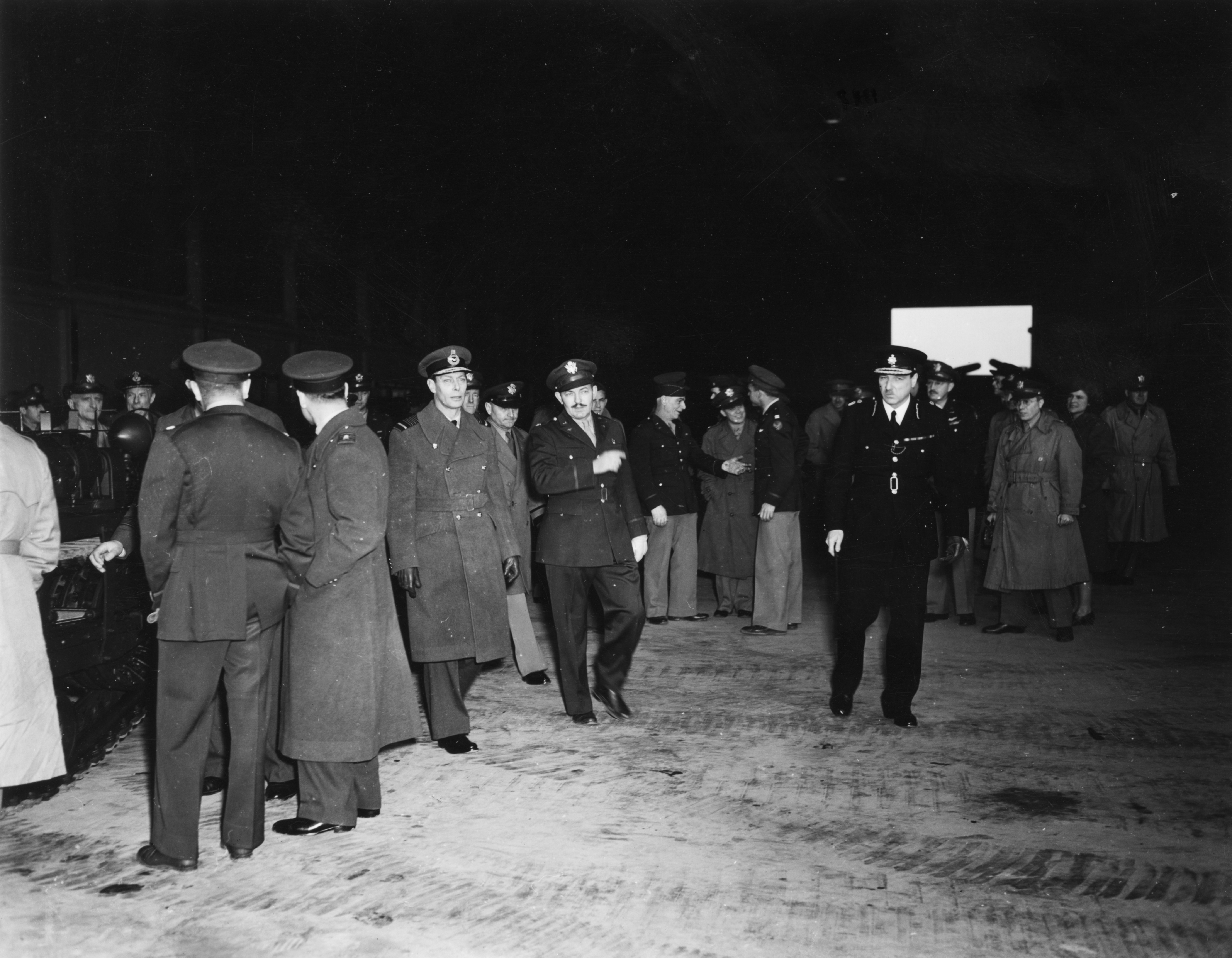
King George VI with Colonel Robert Walker and Squadron Leader Robert Clayton during a visit to the 301st Bomb Group at Chelveston. (IWM FRE 9802).
The 301st’s departure from Chelveston on 26th November, would then leave the airfield all but empty and ready for a new group, and it would be another B-17 group, the 305th, that would fill that space.
The whole story of Chelveston can be read in Trail 66. Northants and Bedfordshire (Part 2)
 Aviation Trails