Today I attended my local Church for the Remembrance Sunday service. In the cemetery are 50, very mixed nationality, Second World War graves: English, Canadian, New Zealand, Australian, Polish and German. Walking distance from where we were stood is a former RAF airfield where many of these young men died carrying out their duties in the service of their country.
The vicar spoke of remembrance, reflection and forgiveness and mentioned one startling fact; in the two world wars, a period of only 30 years apart, some 50 million people died. A staggering figure.
One of the hymns we sang was written by Richard Bewes, and was based on Psalm 46. The tune is better known as ‘The Dambusters’.
1. God is our strength and refuge,
our present help in trouble;
and we therefore will not fear,
though the earth should change!
Though mountains shake and tremble,
though swirling floods are raging,
God the Lord of hosts is with us evermore!
2.There is a flowing river,
within God’s holy city;
God is in the midst of her – she shall not be moved!
God’s help is swiftly given,
thrones vanish at his presence
God the lord of hosts is with us evermore!
3.Come, see the works of our maker,
learn of his deeds all-powerful;
wars will cease across the world where he shatters the spear!
Be still and know your creator,
uplift him in the nations-
God the lord of hosts is with us evermore!
May the sacrifices of those people never be forgotten.
In Trail 39 we turn south once more and return to Suffolk, to the southern most regions of East Anglia, to an area known for its outstanding beauty and its stunning coastline. It is also an area rich in both Second World War and Cold War history. Perhaps better known for its fighter and light bomber stations, it was also the location for several heavy bomber bases, each one with its own fascinating story to tell.
We start off this trail at the former site of American base at RAF Framlingham.
RAF Framlingham (Station 153)
RAF Framlingham is actually closer to the village of Parham than it is the town of Framlingham, hence it was also known as RAF Parham – a name that it became synonymous with. Built as a class ‘A’ bomber station its official American designation was Station 153.
Building work commenced in 1942, and as with most large bomber stations it was designed to the Class A specification to include: three concrete runways (one of 6,400 ft and two of 4,400 feet in length), an adjoining perimeter track that linked fifty ‘pan style’ dispersals; two T-2 hangars (one to the west with the technical site and one to the south-east) and accommodation for some 3,000 personnel dispersed in 10 sites to the south-west of the airfield. A further sewage treatment plant dealt with the site’s waste.
The main runway ran east-west and to the eastern end sat the bomb store, a large area that included: a pyrotechnic store, fusing point, incendiary store and small arms store – all encircled by a concrete roadway.
Part of the Perimeter track at the southern end of the airfield. To the right was the crew rest rooms, locker and drying rooms.
The administration site sat between the main technical site and accommodation areas all located to the south-west side of the airfield.
Opened in 1943, the first residents were the B-17s of 95th Bomb Group which consisted of four bomb squadrons: the 334th, 335th, 336th and the 412th. Flying a tail code of a square ‘B’ they initially formed part of the 4th Bomb Wing, changing to the 13th Combat Wing, 3rd Air Division of the Eighth Air Force in September 1943 following the reorganisation of the U.S. Air Force in Europe.
Following their inception and constitution on 28th January 1942 and subsequent activation in June, they moved from their training ground at Barksdale Field, Louisiana, through Oregon, Washington and eventually to Rapid City Air force Base in South Dakota. They began their move across the Atlantic in the spring of 1943, taking the southern route via Florida arriving at Alconbury and then moving on directly to Framlingham in early May/June that year. It was whilst stationed at Alconbury though that they would have their first few encounters of the war, and they would not all be plain sailing.
On May 27th, 1943 just 14 days after their first mission, ground crews were loading 500 lb bombs onto a 334th BS B-17 ’42-29685′ when the bombs inexplicably detonated, the Alconbury landscape was instantly turned to utter carnage and devastation. The blast was so severe that it killed eighteen men (another later died of his injuries), injured twenty-one seriously and fourteen others slightly. The B-17 involved was completely destroyed and very little of its remains could be found in or around the huge crater that was left deep in the Alconbury soil. Three other aircraft, 42-29808, 42-29706 and 42-29833, all sat within 500 feet of the explosion, were severely damaged and subsequently scrapped. In total, fifteen B-17s were damaged by the blast, it was a major blow to the 95th and a terrible start to their war.
There then followed a transition period in which the group moved to Framlingham. During this time operations would continue from both airfields leaving the squadrons split between the two bases. The first few missions were relatively light in terms of numbers of aircraft lost, however, on June 13th 1943, they were part of a ‘small’ force of seventy-six B-17s targeting Kiel’s U-boat yards. This was to be no easy run for the 95th, a total of twenty-two aircraft were lost on this raid and of the eighteen aircraft who set off from Framlingham in the lead section, two aborted and only six made it back. In one of the lead planes, was the newly appointed Brigadier General Nathan Bedford Forrest as observer. Riddled with bullet holes, his aircraft plummeted from of the sky with the majority of its tail plane missing and one of its engines ablaze. His body was never found and he became the first U.S. General causality of the war. In total, the raid resulted in 236 crewmen being listed as either missing, killed or wounded – this would be the 95th’s heaviest and most costly mission of the entire war.
A view from the tower looking East to West.
Two days after this mission the group would depart Framlingham and move to RAF Horham a few miles north-west, where they remained for the remainder of the war. The majority of the crews would probably be pleased to move away leaving behind many terrible memories and lost friends. However, the tide would turn and they would go on to gain a remarkable reputation and make a number of USAAF records. They would be the only Eighth Air Force group to achieve three Distinguished Unit Citations (DUC), and be the first group to bomb Berlin. They also claimed the highest number of enemy aircraft shot down by any bomb group and they would be the group to suffer the last aircraft loss (on a mission) of the war – all quite remarkable considering their devastating introduction to the European Theatre.
As the 95th departed Framlingham so moved in the 390th BG.
The 390th BG like the 95th and 100th were part of the 13th Combat Wing, 3rd Air Division. They too were a new Group, only being formed themselves early in 1943. The 390th BG was made up of four B-17 bomb squadrons: the 568th, 569th, 570th and 571st, and at initial full strength consisted of just short of 400 personnel. They formed part of the larger second wave of USAAF influxes who were all new recruits and whose arrival in the U.K. would double the size of the USAAF’s presence overnight.
Old hands of the Mighty Eighth, took great pride in teasing these new recruits whose bravado and cockiness would soon be knocked out of them by the more experienced Luftwaffe fighter pilots.
The 390th would create quite a stir in the Suffolk countryside and not just because of their ‘smooth taking’, ‘endless supply of chocolate’ and ‘upbeat music’. Up until now, the ‘smuggling’ of pets into American airbases had been by-and-large ignored, but with the 390th came a Honey Bear, a beast that quite frequently escaped only to be confronted by rather bemused locals! There would be however, despite all this frivolity, no rest period for the crews, and operations would start the 12th August 1943, less than a month after they arrived.
The latter parts of 1943 saw a lot of poor weather over both the U.K. and the continent, and this combined with the heavy use of smoke screens by the Germans, prevented large numbers of bombers finding their targets. As a result, many crews sought targets of opportunity thus breaking up strong defensive formations. The eager Luftwaffe pilots made good use of this, taking advantage of broken formations and poor defences. As a result, the bombers of this new influx would receive many heavy casualties and August 12th was to become the second heaviest loss of life in the American air war so far.
1943 would be a busy time for the 390th, within a few days and on the anniversary of the U.S. VIII Air Force’s first European operation, they would attack the Messerschmitt factory at Regensburg, a mission for which they would receive their first Distinguished Unit Citation (DUC).
The operation would be a blood bath. On that day 147 B-17s took off with the 390th forming the high squadron in the first formation. For over an hour and a half, multiple fighters of the Luftwaffe attacked the formations which were split by delayed arrivals, and large gaps in the formation. Compounded with this was the fact that the escorting P-47s had to return home leaving the formations largely undefended. With no fighter escort the bombers became easy prey and the numbers of blood-thirsty attacks increased. The rear and low formations of the force were decimated and departing P-47 fighter crews could only look on in horror.
Over the target, skies cleared and bombing accuracy was excellent, but it was the 390th that would excel. Of the seven groups to attack, the 390th manged to get 58% of its bombs within 1000 ft of the target and 94% within 2000 ft, a remarkable achievement for a fledgling group. Flying on, they passed over the Alps and across Italy onto North Africa where they landed – their first shuttle mission was complete. The run in to the target and subsequent journey to North Africa would create multiple records; two B-17s, one of which belonged to the 390th, sought sanctuary in neutral Switzerland, the first of any group to do so. But the journey across Europe had been difficult and it would cost the lives of six B-17 crews – it had truly been a hard-won DUC.
Two months and some 20 missions later, they would repeat this epic achievement. On October 14th 1943, they took part in the second major attack on Schweinfurt, a target whose name alone put the fear of God into many crews. The route that day would take them across some of the most notorious Flak black spots, Aachen, Frankfurt, Bad Kissingen and Schweinfurt itself. On top of that, Luftwaffe fighters would be hungry for blood, many crew members knew this would be a one way trip.
Take off was at 10:00am, and the Third Air Division would provide 154 aircraft, but again due to mechanical problems and poor weather, the formation were scattered across the sky and defences were weak. As they crossed the channel enemy aircraft were few and far between, giving false hopes to rookie crews who were cruising 20,000 feet above the ground. Eventually at around 1:00pm the escorts left and the waiting Luftwaffe crews stepped in. All hell broke loose. Rockets, timed bombs and heavy machine gun fire riddled the B-17 formations – Schweinfurt was going to live up to its reputation. After fending off relentless attacks by the Luftwaffe, the formation reached their target and all 390th aircraft managed to bomb with an accuracy of 51% of the MPI (Mean Point of Impact). For this they received their second DUC – the newbies were rapidly becoming masters of the air.
The widest section of runway, now a mere fraction of its former self.
1943 would draw to a close, and the optimism of many ‘successful’ raids over the Reich would bring the dawn of 1944. Big week in February saw the massed attacks on the German aircraft production factories, and in March, the 390th attacked Berlin. During this raid B-17 ’42-30713′ “Phyllis Marie” made an emergency landing only to be captured intact by the Luftwaffe and flown under KG200. It was later found in Bavaria.
Other major targets for the 390th this year included Frankfurt marshalling yards, Cologne, Mannheim, the navel yards at Bremen and the oil refineries at Mersburg. In 1944 the 390th softened the German defences along the Atlantic coast just fifteen minutes before the invasion force landed in June. They followed up the advance by supporting the allied break out at St. Lo.
During August 1944, the 390th flew a round mission that took them for the second time to a Russian airfield. After refuelling and rearming, they attacked the oil refineries at Trzebinia (later famed with the POW’s ‘death march’ across western Europe) and then back to Russia. Three days later they flew to North Africa, depositing high explosives in Romania, and then four days after that, the return trip to Framlingham bombing Toulouse on the way.
The cold winter of 1944 would become well-known for its snow and ice, a period in which almost as many aircraft were lost to ice as to enemy action. On December 27th, the cold would claim B-17 ’42-107010′ “Gloria-Ann II” of the 569th BS. A build up of ice would bring her down within a minute of taking off and the ensuing explosion of fuel and bombs would cause a fire from which nine crew members would perish. Houses in the vicinity of Parham were also damaged but there were no local casualties and the aircraft would be salvaged and reborn as “Close Crop“.
Battle damage was often severe, here B-17G #42-97849 “Liberty Bell” of the 570th BS, shows extensive damage to her tail section. (IWM)
In the early months of 1945 the Ardennes was also gripped in this terrible fog and cold. The 390th took off in support of the paratroopers locked in the Belgium forests, bombing strategic targets beyond the Ardennes, they cut German lines preventing further supplies reaching the front.
By 1945 it was no longer a rare occurrence for bombers to have exceeded the 100 mission milestone, for the crews however, it was a target to avoid. For the 390th, April 1945 would see the first US airman to surpass the 100 mission mark achieved solely whilst operating in the European theatre. Hewitt Dunn, acting as bombardier (Togglier) was the first US Eighth AF airman to surpass 100 missions in an operational span that started in January 1944 and that had seen him in virtually every position of an operational B-17, and over virtually every high risk target in occupied Europe – he was just 24 years old.
Gradually the summer sun came and with it clear skies. Allied air operations increased and soon the end was in sight for Nazi Germany, but air accidents and US losses would still continue. On landing his B-17 “Chapel in the Sky“, Murrell Corder ground looped his aircraft to prevent crashing into other parked B-17s. In doing so, he clipped the wings of “Satan’s Second Sister” severely damaging both aircraft, thankfully though, there were no casualties.
At the end of the war the 390th left Framlingham and returned to the United States. They had received two Distinguished Unit Citations, had the highest enemy aircraft claim of any unit on one single mission and reached the first 100th mission of any aircrew member. Their tally had amounted to 300 missions in which they had dropped over 19,000 tons of bombs. They had definitely earned their place in the Framlingham history books.
On departure, Framlingham was given back to the RAF who used it as a transit camp to help with the relocation of displaced Polish people. It was then closed in the late 1940s and sold back to the local farmer, with whom it remains today.
A small consortium of volunteers have manged to rebuild the control tower into a fabulous museum, displaying a wide variety of aircraft and airfield parts, and personal stories from those at Framlingham. They have also refurbished a couple of Nissen huts, recreating life in a barrack room as it would have been during the Second World War, and displaying articles and stories from the resistance organisation.
As for the airfield, much of the perimeter track remains as do long sections of the runways as farm tracks. The public road today passes through the centre of the airfield dissecting the technical area from the bomb store. From the northern most end a footpath allows you to walk along the north-western section of the perimeter track, currently used by a road repair company for storing stone chippings and lorries. The hardstands have been removed and piles of rubble contain evidence of drainage and electrical supply pipes. From the road at this point you can also see a small section of the main runway – now holding piggery sheds – which has virtually all been removed. From the western side of the perimeter track you can look along the north-west to south-east runway, a mere fraction of its former self, it is barely wide enough for a tractor let alone a heavily laden B-17 and her crew.
Returning to the museum front takes you along the widest part of this runway. A small section at almost full width, it gives you an indication of the 150 feet of concrete that makes up these great structures, and an insight into what they would have been like during the mid 1940s.
The Watch office is now a refurbished museum and highly recommended.
Behind the museum stands one of the hangars, this along with the tower are the two most discernible buildings left on site. Many of the accommodation buildings are now gone, and what is left is difficult to see. A footpath does allow access across the bomb store – now a wooded area, but if walking from the north, it is virtually impossible to park a car due to the very narrow and tight roads in the area.
Like many of Britain’s airfields Framlingham holds a wealth of stories in its midsts. The near constant roar of B-17s flying daily missions over occupied Europe are now whispers in the trees. The museum, a lone statue, gazes silently over the remains of the airfield offering views of ghostly silhouettes as they lumber passed on their way to a world gradually being forgotten. Framlingham and the 390th, have definitely earned their place in the world’s history books.
Whilst in the area, take a short trip to Framlingham town, below the castle, is St Michael’s church and above the door a 390th Group Hatchment in honour of those who served at Framlingham.
From here, we travel south-west toward Ipswich and stop at another USAAF base also with a fabulous museum. We go to RAF Debach – home of the 493rd BG(H).
Notes, sources and further reading.
*Photos exist of what appears to be a Type ‘J’ or ‘K’ hangar on the site. This does not appear on the airfield drawings however and its origin is as yet unknown.
A number of sources were used to research the history of RAF Framlingham and the 390th, they are highly recommended for further information. They include:
With the BEF evacuation at Dunkirk, some thought that the war was over and that the mighty Nazi war machine was undefeatable. Poised on the edge France, a mere 20 or so miles from the English coast, the armies of the Wehrmacht were waiting ready to pounce and invade England. For Britain though, the defences came up and the determination to defeat this evil regime grew even stronger.
Defeat in the air during the Battle of Britain reversed the fortunes of Germany. Then the Japanese attack on Pearl Harbour in the Pacific, which led to the United States joining the war, set the scene for a new and vigorous joint front that would lead to the eventual invasion of occupied Europe, and ultimately the freedom for those held in the grip of the Nazi tyranny.
Plans for the invasion were never far from the thoughts of those in power – even in the darkest hours of both Dunkirk and the Battle for the British homeland. To complete this enormous task, an operation of unprecedented size and complexity would be needed. Vehicles, troops and supplies would all needed to be ferried across the English Channel, a massive air armada would have to fly thousands of young men to the continent. To succeed in this auspicious and daring operation, a number of both training and operational airfields would need to be built, and in 1943 Spanhoe was born.
Known originally as RAF Wakerley (and also referred to as Harringworth or Spanhoe Lodge) it was handed over to the U.S.A.A.F. and designated Station 493.
Remaining buildings on the Technical site at Spanhoe Lodge.
Located in the county of Northamptonshire, it would be a huge site with three concrete runways, the longest of which was 6000 ft. Two smaller intersecting runways were of 4,200 ft and all three were a huge 150 ft wide. A total of 50 spectacle hardstands were spread around the perimeter track whilst the tower, built to a 1941 design (12779/41), was located to the south of the airfield between the technical area and main airfield. Such was the design of the airfield, that the tower was located a good distance away from the main runway to the north. The technical area included a small number of Quonset huts, temporary brick-built buildings and two T2 hangars. Instructional and training buildings included a Synthetic Navigation Classroom (2075/43) designed with the most up-to-date projection and synthetic training instruments possible. These buildings were made more distinct by the two glazed astrodomes located at one end of the building which could be used on nights when stars were visible.
As Spanhoe was originally built as a bomber station, a bomb and pyrotechnic store was built on the eastern side of the airfield with three huge fuel stores, one to the north and two others to the west, all capable of holding 72,000 gallons of aviation fuel each.
Accommodation for the crews and ground staff was widely spread to the south amongst the local woods and fields, and consisted of numerous cold Quonset huts – but for the residents, Spanhoe was considered nothing special to write home about.
The first U.S. units to arrive were the Troop Carriers the of the 315th Troop Carrier Group (TCG), whose journey from the United States was not as straightforward as most.
Whilst on their way over the north Atlantic route, they were hit by bad weather and had to be diverted to Greenland. Here they stayed for over a month scouring the seas for downed aircraft and dropping supplies to the crews before they were rescued.
Eventually the 315th made England and began a series of training operations. A small detachment were sent to Algiers to assist in the dropping of supplies to troops in the Sicily and Italy campaigns before returning to the main squadron in the U.K. The 315th arrived at Spanhoe on 7th February 1944 now part of the Ninth Air Force, IX Troop Carrier Command, 52nd Troop Carrier Wing. They operated two versions of the adapted Douglas DC-3; the C-47 Skytrain and the C-53 Skytrooper transport aircraft. Four Troop Carrier Squadrons (TCS) would use Spanhoe: the 34th, 43rd, 309th and 310th, and would all operate purely as paratroop carriers.
C-47 Skytrains of the 315th Troop Carrier Group in flight. over the Harringworth Viaduct. RAF Spanhoe, the home of the two Aircraft is just out of shot. (IWM – FRE 3396)
For the next few months they would train in preparation for the forthcoming D-day landings in which they would rehearse both formation flying at night and night paratroop drops with the 82nd Airborne; the unit the 315th would take to drop zones behind enemy lines in Normandy. These preparations were relentless, and not without casualties. The 315th were considered as one of the ‘weaker’ elements of the air invasion force, and would carry out drops nightly until the paratroops had completed their full quota of jumps and all were finally classed as ‘proficient’. The majority of these jumps were however, carried out in clear weather, a point that had not been factored into the final decision.
Flying at night would, unsurprisingly, claim lives and this was brought home when on the night of May 11th-12th, two aircraft from the 315th’s sister group the 316th, collided during combined operations, killing fourteen airmen.
Even with all this training and a very high aircraft maintenance programme, there were many factors that could affect the outcome of operations. Some 40% of crews had only recently arrived before operations, and thus were not a party to a large part of the training missions. Of the 924 crews that were designated for the operations, 20% had only had minimal training and 75% had never actually been under fire. The airborne crews were not well prepared.
On the third day of June the order came through to paint invasion stripes on the aircraft. These three white and two black stripes, each two feet wide, were designed to enable the recognition of allied aircraft who were sworn to radio silence over the invasion zones. D-Day was now imminent.
The 52nd’s mission would involve all the other groups of the Wing, taking aircraft from: Barkston Heath (61st TCG), Folkingham (313th TCG) Saltby (314th TCG) and Cottesmore (316th TCG) as well as eleven other paratroop and glider-towing units of the U.S. Ninth Air Force and fifteen RAF Squadrons – it was going to be an incredible sight.
315th C-47 landing at Spanhoe. On the ground can be seen the 315th’s C-109 (converted B-24) tanker . (Knight Collection)
Forty-eight aircraft took off from Spanhoe and formed up with the other Groups at checkpoint ‘ATLANTA’, they continued on toward Bristol turning south at checkpoint ‘CLEVELAND’ . They flew crossed the south coast at Portland and headed out toward Guernsey. The route would then take them north of the island where the 52nd would turn east and head over the Cherbourg Peninsula. They would drop their load of heavily laden paratroops south of Utah beach to capture the important town of St. Mere-Eglise. A ten-mile wide corridor would be filled with aircraft and gliders.
Over the drop zone the aircraft encountered cloud and heavy flak. Whilst a quarter received damage, all but one were able to return to England, the last being lost over the drop zone. For their efforts that night, the 315th TCG was awarded the Distinguished Unit Citation, the only one they would receive during the war.
After D-day, units of the 315th continued to drop supplies to the advancing troops, a default role they carried out for much of the war.
Tragedy was to rear its ugly head again and strike down Spanhoe crews. In July 1944, 369 Polish paratroopers arrived for training as part of Operation ‘Burden’. This involved thirty-three C-47s of the 309th TCS, fully loaded flying in formation at around 1,300 ft. The aim of the flight was to drop the Polish Paratroops at a drop zone (DZ) over R.A.F. Wittering.
One of the few overgrown buildings at the entrance to Spanhoe Lodge.
Shortly before arriving at the DZ near to the Village of Tinwell, two aircraft made deadly contact and both plummeted to the ground. Twenty-six paratroops and eight crewmen were killed that day, the only survivor was Corporal Thomas Chambers who jumped from an open door. Eyewitness accounts tell of “soil soaked in aviation fuel”, and bodies strapped to part open parachutes as many tried to jump as the aircraft fell. This tragic accident was a devastating blow to the Polish troops especially as they had not yet been able to prove themselves in combat and one that ultimately led to the disbandment of the section and reabsorption into other units.*1
The 315th’s next major combat mission would be ‘Market Garden‘ on September 17th, 1944, another event that led to many tragedies. On the initial day, ninety aircraft left Spanhoe with 354 Paratroops of the U.S. 82nd Airborne, the following day another fifty-four aircraft took British paratroops and then on the third day they were to take Polish troops. However, bad weather continually caused the cancellation of the Polish operations and even with attempts at take-offs, it wasn’t to be. Finally on September 23rd good skies returned and operations could once more be carried out. During all this time, the Polish troops were loaded and unloaded, stores under the wings of the C-47s were added and then removed, it became so frustrating that one Polish paratrooper, unable to cope with the stress and anticipation of operations, fatally shot himself.
Later that month, another plan was hatched to resupply the beleaguered troops in Holland. The idea was to land large numbers of C-47s on different airfields close to Nijmegen. Not sure if they had been secured, or even taken, the daring mission went ahead. Escorting fighters and ground attack aircraft neutralised anti-aircraft positions around the airfields allowing hundreds of C-47s to land, deposit their supplies and take off again, in a mission that took over six hours to complete. In total: jeeps, trailers, motorcycles, fuel, ammunition, rations and 882 new troops were all delivered safely without the loss of a single transport aircraft – a remarkable feat.
Further supplies were dropped to troops during both the Battle of the Bulge and Operation Varsity – the crossing of the Rhine – in March 1945. During this operation, the 315th would drop more British paratroopers near Wesel, Germany, a mission that would cost 19 aircraft with a further 36 badly damaged.
By now the Allies were in Germany and the Troop Carrier units were able to move to France leaving their U.K. bases behind. This departure signalled the operational end for Spanhoe and all military flying at the airfield would now cease.
Two months later the 253rd Maintenance Unit arrived and prepared Spanhoe for the receiving of thousands of military vehicles that would soon be arriving from the continent. Now surplus to requirements, they would either be scrapped or sold off, Spanhoe became a huge car park and at its height, would accommodate 17,500 vehicles. For the next two years trucks, trailers and jeeps of all shapes and sizes would pass through, until in 1947 the unit left and the site was closed for good and eventually sold off.
This was not the end for Spanhoe though. Aviation and controversy would return again for a fleeting moment on August 12th 1960, with the crash of Vickers Valiant BK1 ‘XD864’ of 7 Squadron RAF. The aircraft, piloted by Flt. Lt. Brian Wickham, took off from its base at nearby RAF Wittering, turned and crashed on Spanhoe airfield just three minutes after take off. The official board of enquiry concluded that the accident was caused by pilot error and that Flt. Lt. Wickham, was guilty of “blameworthy negligence”. The Boards findings were investigated by an independent body who successfully identified major flaws in both the analysis and the Boards subsequent findings. Sadly no review of the accident or the Boards decision has ever taken place since.
Spanhoe was the home of the 315th Troop Carrier Group, part of the 52nd Troop Carrier Wing, Ninth Air Force.
Spanhoe was then turned into a limestone quarry by new owners, the runways and the majority of the perimeter track was dug up and the substrate was removed. The majority of the buildings were demolished but a few were left and now survive as small industrial units involved in, amongst other things, aircraft maintenance and preservation work. A private flying club has also started up and small light aircraft now use what remains of the southern section of the perimeter track and technical area.
The main entrance to the airfield is no longer grand, and in no way reflects the events that once took place here. From this point you can see some of the original technical buildings and hidden behind the thicket, what was possibly a picket post. A footpath though the nearby woods allows access to the remains of eastern end of the main runway and perimeter track, other than this little is accessible without permission.
Outside the main entrance are two memorials consisting of a modern board detailing the group and squadron codes, and a stone obelisk listing the names of those crew members who failed to come home. Both are well cared for if not a little weathered.
Spanhoe Lodge memorial
Spanhoe leaves a legacy, for both good reasons and bad. The crews that left here taking hundreds of young men into the jaws of death showed great bravery and skill. Determination to be the best and perform at the limits were driving factors behind their successes. Relentless training led to the deaths of many who had never even seen combat, and the scars of these events linger in what remains of the airfield today. Thankfully for the time being, the spirit of aviation lives on, and Spanhoe clings to the edge, each last gasp of breath a reminder of those brave men who flew defenceless in those daring and dangerous missions over occupied Europe.
On leaving Spanhoe, return to the main road, keeping the airfield to your left, join the A43, and then turn right and then immediately left. Follow signs to Oundle and Kings Cliffe and our next destination, the former airfield at Kings Cliffe, an airfield with its own modern controversies.
Continuing on Trail 38, we depart Swanton Morley and travel south-east toward the former RAF / USAAF base at Hethel. Here we find fast cars, a museum, and more remnants of yesteryear. On the way, we pass-by another former RFC airfield from the First World War – the Home Defence Station at Hingham.
Hingham Home Defence Station.
There is considerable speculation about the true location of Hingham airfield. It is sadly one of those sites that has long since gone, and its history is now so blurred that its true location is not accurately known. It is known however, that it housed only three squadrons in its very short life: 51 (HD), 100 and 102, but only 51 Sqn remained for any period of time, thus making it the sole unit to have flown actively from this airfield.
A grass site, it was believed to be located near to the village of Hingham in Norfolk, some 12 miles south-west of Norwich, however, some sources cite it as Scoulton (latterly Watton airfield) located a few miles to the west of here. Wherever the true whereabouts of Hingham are, it is known that it did play a small but important part in the defence of Great Britain, and therefore worthy of a thought as we pass by.
Following the reorganisation of the RFC and RNAS in 1916, it was known that 51 (HD) transferred from Thetford to Hingham, arriving at the fledgling airfield on 23rd September 1916, with the Royal Aircraft Factory BE12s. With detachments at Harling Road, Mattishall and Narborough, they were widely spread and would operate solely in the Home Defence role. These airfields were designated Home Defence Stations of which there were two, the ‘Flight‘ station (the smaller of the two) and the ‘Squadron‘ Station, the larger and main station. It is very likely that Hingham was designated as a Flight Station.
In October 1916, 51 (HD) replaced with the BE12s with two-seat FE2bs and then with further RAE aircraft, the BE2e, in December 1916. The Hingham flight moved to Marham in early august 1917, whilst the Mattishall flight remained where they were. ‘B’ flight moved west to Tydd St. Mary, a small airfield located on the Lincolnshire / Cambridgeshire border.
The Royal Aircraft Factory F.E.2b at Hendon, London
Throughout the war 51 (HD) squadron fought against the Zeppelins that foraged over the eastern counties. By flying across the North Sea and then turning into The Wash, they were aiming to reach targets as far afield as Liverpool, Coventry and London.
One of several Home Defence airfields in this region, the role of Hingham aircraft (and the other Home Defence units around here), was to protect these industrial areas by intercepting the Zeppelins before they were able to fly further inland.
However, in the early days of the war, Zeppelins were able to fly at greater speeds and altitudes than many of the RFC aircraft that were available, and so the number of RFC ‘kills’ were relatively light. Many of these German Naval airships were able to wander almost at will around the Fens of Cambridge and Lincolnshire dropping their bombs wherever they pleased. It was this lack of a strong defence strategy that perpetuated the creation of the Home Defence squadrons. This new organisation along with improvements and developments in both ammunition and aircraft performance, began to improve the ‘kill’ success rates, and gradually the number of raids decreased. 51 (HD) Sqn played a pivotal part in this role, attacking Zeppelins on a number of occasions in these mid-war years.
It was during this time that two new RFC squadrons would be formed at Hingham. On February 11th 1917, the nucleus of 51 Sqn were relocated here to form the new 100 Sqn, whilst on August 9th that same year, the new 102 Sqn was formed. Both these units would train in the night bombing role and then go on to attack airfields and troops in Northern France in support of the stagnating Allied ground troops.
A stay of about 6 weeks for 102 Sqn and 12 days for 100 Sqn saw them both depart to pastures new, St. Andre-aux-Bois in France and Farnborough in the south of England respectively. It was at these locations that they would collect their operational aircraft before reuniting in Northern France in March that year.
After 51 (HD) squadron left Hingham, the site was never used again by the military and it was subsequently closed down. Whatever structures that were there were presumably sold off in the post war RAF cutbacks, and the field returned to agriculture with all traces, if any, removed – Hingham’s short history had finally come to a close.
Hingham was a small airfield that played its own small part in the defence of the Eastern counties. Whilst its true location is sadly not known, it is certainly worthy of a thought as we travel between two much larger, and perhaps much more significant sites, in this historical part of Norfolk.
Resting not more than a mile or so from the boundary of RAF Marham, is an airfield that never made it beyond the First World War – but it played such a major part, it should never be forgotten. Opened originally as a satellite by the Royal Naval Air Service, it became the biggest First World War airfield and led the way for the aviators of today’s Royal Air Force.
RAF Narborough
Built as the largest, aircraft based, World War One aerodrome, Narborough was known under a range of different names. The most common, ‘The Great Government Aerodrome’ reflected not only its size but also its multi-national stature and its achievements in aviation history. Used by both the Royal Naval Air Service (RNAS) and the Royal Flying Corps (RFC) it would also have names that reflected both these fledgling services.
Designed to counteract the threat of the German Zeppelin and Schütte-Lanz airships, Narborough was initially used by the RNAS as a satellite station to RNAS Great Yarmouth. No crews were permanently stationed here, but ‘on-duty’ crews would fly in and await the call to arms should a raid take place over East Anglia.
The first recorded arrival was in August 1915; an event that would keep the site in use by the RNAS for the next ten months before being designated as surplus to requirements, and handed over to the RFC in June 1916.
Used as a training ground, accommodation was basic to say the least, being described as a “desolate God-forsaken place”*1 buildings needed to be erected for accommodation, training and maintenance. A total of seven Boulton and Paul hangars and up to 150 buildings would be built on the site over the next two years. By the end of the war, some 1,000 personnel would be based at Narborough – a number comparable with any modest Second World War airfield.
As the First World War raged on the European continent, the use of aircraft was seen as a new way to monitor, kill and record enemy troop movements; it would develop into a lethal weapon and a very potent reconnaissance vehicle. Training programmes were rushed into place, and Narborough would become a preparation ground for new recruits. With training considered basic by today’s standards, recruits had to pass a series of tests before being sent to the France. Written examinations followed up by twenty hours solo flying, cross-country flights and two successful landings, were followed by flying for fifteen minutes at 8,000 feet and landing with a cut engine. These daring young men, many who were considered dashing heroes by the locals, would display their skills for all who lined the local roads awe-inspired by their antics.
Life was not always ‘fun’ though. Accident rates were high and survival from a crash was rare. Some 15 graves lay in the local church at Narborough, all young men who never made it through the training and on to the battle in France.
The occurrences of these accidents were so frequent, that one instructor, W.E. Johns, creator of ‘Biggles’ cited spies as the cause of many ‘accidents’ – tampering with machines causing the deaths of the crews on board. Johns, himself having written of many machines, believed Americans with German sounding names were to blame for aircraft breaking up in mid-air or crashing at the bottom of loops. More likely, the fault lay with over exuberant or poorly trained recruits.
Narborough as a training station would operate a wide range of aircraft. The French designed Henry Farman F.20, a military reconnaissance trainer, would operate with 35 Squadron from June 1916 until October when they were replaced by the Armstrong Whitworth FK8; 35 Sqn moving to France with these aircraft in January 1917.
The first full squadron to be formed here was 59 Sqn on 21st June 1916. Born out of 35 Sqn, they would operate Avro’s 504K followed by the second French design, the Maurice Farman Shorthorn; named so because of the length of the skids designed to prevent recruits overturning the aircraft on landing. After these came the BE2c, BE12 and RE8s, before the squadron moved to St-Omer in February 1917.
It was during this year that 83 Squadron would be born out of 18 Reserve Squadron (RS) operating various aircraft in the training role. They arrived at Narborough during December that year with FE2bs before they themselves moved to St-Omer in March 1918.
As the war drew to a close, one further squadron was formed at Narborough; 121 Squadron on New Year’s Day 1918. Whilst originally formed to fly the DH9, they actually used a variety of aircraft before being moved to Fliton and eventual disbandment on 17th August 1918.
Three other units would pass through Narborough before it closed. Now part of the Royal Air Force, 56, 60 and 64 Sqns would all come here as cadres in February 1919. 64 Sqn disbanded here in the following year, whilst both 56 and 60 Sqn moved to Bircham Newton and onto disbandment.
The end of the war saw the closure of Narborough. But unlike its sister station RAF Marham a mile or so away, it would remain closed. The buildings were all sold off in what was considered to be one of the biggest auctions in Norfolk, with some of them going to local farmers, small industrial units, schools and the like. Some of these buildings still exist at various places around the local area today but many have long since succumbed to age and inevitable deterioration.
Narborough itself having no hard runways or perimeter tracks has long since gone. A small memorial has been erected by a local group aiming to promote and preserve the memory of Narborough, a memorial plaque also marks the fifteen graves of those who never made it to France; and the small Narborough Museum & Heritage Centre holds exhibits of 59 Squadron in the local church.
Significant not only in size, but in its history, Narborough has now been relegated to the history books. But with the dedication and determination of a few people the importance and historical significance of this site will hopefully continue to influence not only the aviators of tomorrow, but also the public of today.
The Narborough Airfield Research Group tell the history of 59 Squadron at Narborough, this includes personal notes and details of the Narborough airfield.
With the increase in airfield construction and the demand for greater quantities of munitions, additional bomb storage became a problem during the Second World War. Bomb sites needed to be close enough to the airfields so that stores could be transferred quickly, but far enough away so as to not cause problems should an attack happen at either the airfield or at the store.
Apart from the major underground stores bought and secured in the 1930s, the War Office planned an additional nine above ground ‘Ammunition Parks’ at the outbreak of war*1. They were to add a further two more once the war had started and following the realisation that nine would not be sufficient to meet the demands of the air war over Europe.
Each of these parks were initially designed to hold a total of 1,000 tons of ordnance, but it was quickly realised that this too was not going to be anyway near sufficient and the capacity was soon raised to 10,000 tons.
Any store, needless to say, had to be safe, secure and well hidden from prying eyes, all of which presented the War Office with numerous problems. The initial pre-war sites relied upon the strength of the design to protect them but it was then thought better to use concealment as a way of protecting them and so the latter two sites did just this.
About one mile from RAF Attlebridge (Station 120) in Norfolk, stands one of these two sites. Located in Hockering Wood, now a site of Special Scientific Interest, it not only houses some of the rarest plants and animals in Norfolk but across the country as well.
Hockering Wood is one of the largest ancient, semi-natural woodlands in Norfolk, its ponds provide habitats for the protected Great Crested Newt, and a rare mix of soils support an ecological range that is remarkably unusual for Norfolk. It also contains a moated site believed to date as far back as the middle ages.
Yet with all this fauna and flora thriving, it is hard to believe that during the Second World War, this was an enormous bomb store capable of accommodating 8,400 tons of High Explosive (H.E.) bombs and 840 tons of incendiary bombs. A number of hardstandings, huts, component stores, staffing blocks and open sites, were spread out across the site, each linked by 9 foot (18 foot by adjoining H.E. groups) tar sprayed, metal roads that followed the natural contours of the wood. Whilst the general layout and design of each of these sites were similar, each construction team would have a certain amount of autonomy in the decision-making depending upon the conditions at each site. At Hockering, this would take into account the drainage, natural ditches, tree cover and natural barriers that existed there at the time. The requirement being that all natural features were to be retained as much as possible.
The H.E. bombs and ordinary small arms ammunition (S.A.A.) would be stored on hardstands, with the S.A.A. sited between the H.E. in the wooded area. The incendiaries, components stores and pyrotechnics would be stored in 36′ x 16′ Nissen huts, with some of the incendiaries on open land. The original plan was for the pyrotechnics to be grouped together in 6 huts per group, whilst the component stores would be in pairs. This provided a total of 17,000ft of storage for small arms, and over 20,000ft for pyrotechnics. Tail units, not fitted to the bombs until arming, were stored in an area covering 36,750ft. In addition to this at Hockering, there were two extra accommodation sites also planned in just beyond the perimeter fence should there be an overspill at nearby Attlebridge.
Access to the site was limited and controlled. Three public roads were closed off and entrance along these roads was by pass only – security was understandably high.
The site designed in the early 1940s, and designated as a ‘Forward Ammunition Depot’, was originally built to supply RAF units of 2 Group Bomber Command, and was under the control of No. 231 Maintenance Unit. It was built in the latter part of 1942, opening in early 1943 closing in 1945 at the end of the war. At its height it is thought to have served both USAAF and RAF units.
The tracks that led around the store are still there today, hidden beneath years of vegetation and soil build up. Foundations from many of the huts are still evident and even the odd building still stands as a reminder of the work that took place here all those years ago.
As with many of these historic sites though, mother nature has a way of claiming them back. Careful ecological management ensures the public get to enjoy the site whilst protecting the rare species that continue to thrive there.
A quiet and unassuming site today, it was once a hive of activity that supplied the bombs and bullets that brought death and destruction upon our enemy. It is somewhat reassuring to know that we can once again enjoy the peace and tranquillity that it now brings.
One of the more complete huts on the edge of Hockering Wood.
Sources and further reading
*1Wikipedia has a full list of all the designated ammunition parks.
The technical information was obtained from the plan drawing MC/97/42 Sheet B.
As part of the ‘American Ghosts’ trail around the borders of Northampton and Cambridgeshire, we move away from Kimbolton to an airfield that is synonymous with both the first and last bombing raids of the American Air War in Europe. We travel a few miles north, here we find a truly remarkable memorial and an area rich in history. We go to RAF Grafton Underwood.
RAF Grafton Underwood. (Station 106)
Construction of Grafton Underwood began in 1941, originally part of the RAF’s preparation of the soon to be defunct bomber group to be based in this region. But with the birth of the Eighth Air Force on January 28th 1942, it would become the USAAF’s first bomber base, when the 15th Bomber Squadron arrived after sailing on the SS Cathay from the United States.
A B-17 of the 384th BG features in the Memorial Window at Grafton Underwood.
The original idea for the ‘Mighty Eighth’ was to house a total of some 3,500 aircraft of mixed design in 60 combat groups. Four squadrons would reside at each airfield with each group occupying two airfields, this would require 75 airfields for the bomber units alone. This figure was certainly low and it would increase gradually as the war progressed and demand for bomber aircraft grew.
The terrible attack by the Japanese on Pearl Harbour diverted both attention and crews away from the European Theatre, but in April / May 1942 the build up began and American forces started to arrive in the UK.
With ground staff sailing across the Atlantic and aircrews ferrying their aircraft on the northern route via Iceland, the first plain olive drab B-17Es and Fs of the 97th BG set down on July 6th 1942, two squadrons at Polebrook and two at Grafton Underwood.
The sight of American airmen brought a huge change to life in this quiet part of the countryside. Locals would gather at the fence and stand watching the crews as if they were something strange. But as the war progressed, the Americans would become accepted and form part of everyday life at Grafton Underwood.
Eventually the airfield would be complete and although it would go through development stages, it would remain a massive site covering around 500 acres of land.
The remains of the main runway looking south.
A total of thirteen separate accommodation and support sites would be built; two communal; seven officers; a WAAF site; a sick quarters and two sewage treatment sites to cope with upward of 3,000 men and women who were to be based here.
The accommodation was based around an octagonal road design, the centre piece being the ‘Foxy’ cinema in Site 3 the main communal site. Roads from here took the crews away to various sites hidden amongst the trees of the wooded area. All theses site were located east of Site 1, the main airfield itself.
Grafton would have three runways; runway 1 (6,000 ft) running north-east / south-west, runway 2 (5,200 ft) running north-west / south-east and runway three (4,200 ft) running north to south, all concrete enabling the airfield to remain active all year round.
B-17 ’42-97948′ BK-U, “Hell on Wings” 384th BG, 546th BS. Prior to being lost on 11th October 1944. (IWM UPL 12946)
A large bomb store was located to the north-western side of the airfield, served by two access roads, it had both ‘ultra heavy’ and ‘light’ fuzing buildings; with a second store to the north just east of the threshold of runway 1. Thirty-seven ‘pan’ style hardstands and three blocks of four ‘spectacle’ hardstands accommodated dispersed aircraft around the perimeter track. Surprisingly only two hangars were built, both T2 (drg 3653/42) one in the technical area to the east and the second to the south-west.
On May 15th 1942, Grafton officially opened with the arrival of its first detachment. The 15th Bombardment Squadron (Light) arrived without aircraft and had to ‘borrow’ RAF Bostons for training and deployment. As yet there was no official directive, and so crews had little to do other than bed in. The 15th BS remained here until June 9th 1942 whereupon they moved to their new base at RAF Molesworth and began operations in their RAF aircraft supported by experienced RAF crews. This move coincided with the arrival of the main body of the Eighth Air Force on UK soil and the vacancy at Grafton was soon filled with B-17s of the 97th BG (Heavy).
Only activated in February that year, the 97th consisted of four Squadrons: at Polebrook were the 340th BS and the 341st BS, whilst at Grafton were the 342nd BS and the 414th BS. Whilst State side they flew submarine patrols along the US coast, but with clear skies and little in the way of realistic action, the ‘rookie’ crews would be ill prepared for what was about to come.
With the parent airfield at RAF Polebrook providing much of the administration for the crews, it was soon realised that gun crews, navigators, pilots and radio operators were poorly trained for combat situations. Quickly thrown together many could not use their equipment – whether a radio or gun – effectively and so a dramatic period of intense training was initiated. The skies around Grafton and Polebrook, quickly filled with the reverberating sound of the multi-engined bombers.
These early days were to be hazardous for the 97th. On August 1st, B-17 “King Condor” would crash on landing at Grafton Underwood. The aircraft’s brakes failed, it overshot the runway, went through a hedge and hit a lorry killing the driver.
B-17 41-9024 ‘King Condor’ Crash landed August 1st, 1942 pilot Lt Claude Lawrence ran off runway, through hedge and hit a truck, killing driver John Jimmison. (IWM UPL 19654)
On August 9th, the atmosphere at Grafton became electric, as orders for the first mission came through. Unfortunately for the keen and now ‘combat ready’ crews, the English weather changed at the last-minute and the mission was scrubbed. This disappointment was to be repeated again only 3 days later, when further orders came through only to find the weather changing again and the mission being scrubbed once more.
In the intervening days the weather was to play another cruel joke on the group claiming the first major victim of the 97th. A 340th BS B-17E ’41-9098′, crashed into the mountainside at Craig Berwyn, Cadair Berwyn, Wales, killing all 11 crew members. A sad start indeed for the youngsters.
Eventually though the weather calmed and on August 17th 1942, at 15:12, twelve aircraft took off from Polebrook and Grafton and headed south-east over the French coast. Not only was it notable for its historical relevance as Mission 1, but on board one of the B-17s was Major Paul Tibbets who later went on to drop the atom bomb on Hiroshima 3 years later. If this wasn’t enough, a further B-17, ’41-9023′, “Yankee Doodle”, also contained the Commanding General of the Eighth, Ira Eaker, – truly a remarkably important and historical flight indeed.
The 97th would go on to attack numerous targets including airfields, marshalling yards, industrial sites and naval installations before transferring to the Twelfth Air Force and moving away from Grafton to the Mediterranean in November 1942.
There then followed a quiet spell, for Grafton. A short spell between September and December 1942 saw the heavy bombers of the 305th BG reside at Grafton before moving off to Chelveston and another short spell for the heavies of the 96th BG in the latter half of April 1943 whilst on their way to Great Saling in Essex. It wouldn’t be until early June 1943 that Grafton would once again see continuous action over occupied Europe.
Activated at the end of 1942, the 384th BG (formed with the 544th, 545th, 546th and 547th BS) would train for combat with B-17Fs and Gs, move to Grafton via Gowen Field, Idaho, and Wendover Field, Utah, and perform as a major strategic bomber force. Focussing their attacks on airfields, industrial sites and heavy industry deep in the heart of Germany, they would receive a Distinguished Unit Citation (D.U.C) for their action on January 11th 1944. Targets included the high prestige works such as: Cologne, Gelsenkirchen, Halberstadt, Magdeburg and Schweinfurt. They would take part in the ‘Big Week’ attacks in February 1944, support the Normandy invasion, the break out at St. Lo, Eindhoven, the Battle of the Bulge and support the allied advance over the Rhine. A further DUC came on 24th April 1944 when the group led the 41st Wing in the attack against Oberpfaffenkofen airfield and factory. Against overwhelming odds, the group suffered heavy losses but took the fight all the way to the Nazis.
A dramatic photo of B-17 Flying Fortress BK-H, (s/n 42-37781) “Silver Dollar” of the 546th BS, 384th BG as it goes down after losing its tail. (IWM FRE1282)
Just as Grafton had played its part in the opening salvo of American bombings, it was to be a part of the last. On April 25th 1945, the last bombing raids took place over south-east Germany and Czechoslovakia. Mission 968 saw 589 bombers and 486 fighters drop the final salvos of bombs of the war on rail, industrial and airfield targets, shooting down a small number of enemy aircraft including an Arado 234 jet. Last ditch efforts by the remnants of the Luftwaffe claimed 6 bombers and 1 fighter, before the fight was over. After this all remaining missions were propaganda leaflets as bombs were replaced by paper.
Two years after their arrival the 384th departed for France, eventually returning to the US in 1949 and disbandment. Their departure left Grafton quiet, it was retained by the RAF under care and maintenance and then finally in 1959 declared surplus to requirements and sold off.
In the short two years of being at Grafton, the 384th had amassed 9,348 operational sorties, in 314 missions. They dropped 22,415 tons of explosives and lost 159 aircraft for the shooting down of 165 enemy aircraft. They received two Distinguished Unit Citations and over 1000 Distinguished Flying Crosses. A remarkable achievement for any bomb group.
Grafton today is very different to how it was in the mid 1940s. But before you go to the airfield, you must visit the local church. Passing through the village you’ll see a signpost for the church, park here and walk up the short path. Approaching the church, roughly from the East, you see a dark window which is difficult to make out. However, enter the church and look back, you will see the most amazing stained glass window ever, – the vibrant colours strike quite hard. This window commemorates the men and women of the 384th Bombardment Group of the Eighth Air Force who were stationed at here at Grafton Underwood.
Next to it, someone has placed a handwritten note with the picture of a very young man 2nd Lt. Thomas K Kohlhaas and details of the crew of B-17 ‘43-37713’ “Sons o’ Fun”. It states that he, along with 3 others of the crew, were murdered by German civilians after their aircraft was downed by flak on 30th November 1944. This is a very moving and personal place to be and a poignant reminder of what these young men were facing all those years ago.
When you leave the church, look on the wall of the porch and you will see two dedications. These list the location and names of trees, dedicated to the personnel of the Mighty Eighth, that have now replaced the runways on the airfield. Unfortunately these are on private land and for some very odd reason, not accessible.
Leave the church, turn left into the village, following the stream and then turn left up the hill. The memorial is on your right. Like most American memorials of the USAAF, it has the two flags aside the memorial which is well-kept. When I visited, ‘the keeper’ (who has since become a good friend of mine) was there and we chatted for ages. The memorial stands on what was the 6000 ft main runway and when you look behind you, you see what is left of it, a small track used for estate business. Other than this and a few inaccessible sections, the remains of the airfield have gone and it is open agriculture once more.
Small tracks remain in the accommodation areas.
Grafton, like Kimbolton, is split by the road. Leaving the memorial drive back to the village, turn left and follow the road. Along on the left is the former technical site, a few small huts still stand here used by the local farmer. Also, a few feet from the roadside would have been the perimeter track and dispersal pans. What is left of the main entrance, now nothing more than a large blue gate, can be seen as you pass. Odd patches of concrete can also be seen through the thick trees but little else. Then a little further along, passed the equine sign, is another blue gate. Park here. This is the entrance to Grafton Park, a public space, and what was the main thoroughfare to the mess, barracks and squadron quarters. Grafton housed some 3000 personnel of which some 1600 never returned. It is immense! Walking along the path, you can just see the Battle Headquarters, poking out of the trees, the site is very overgrown and nature is claiming back what was once hers. The roads remain and are clearly laid out, some having been recovered with tarmac, but careful observations will see the original concrete beneath. Keep on the ‘Broadway’ and you will pass a number of side roads until you come to the hub. This forms a central octagonal star, off from which were the aptly named: ‘Foxy’ cinema, mess clubs and hospitals. Each road taking you from here, site 3, to the various other sites a short distance away. Careful observations and exploring – there are many hidden ditches and pits – will show foundations and the odd brick wall from the various buildings that remain. A nice touch to the hub, is that it is now a grassed area with picnic tables.
The hub of the accommodation site is now a picnic area.
You do lose a sense of this being an airfield; the trees and vegetation have taken over quite virulently and hidden what little evidence remains. Exploring the area, you will find some evidence, but you have to look hard. Walk back along the Broadway, and take the first turn left. Keep an open to the right, and you will see other small buildings, the officers’ quarters and shelters – this was site 4. Again, very careful footing will allow some exploration, but there is little to gain from this.
Considering the size of Grafton Underwood, and then fact that 3000 men and women lived here, there is little to see for the casual eye. A beautiful place to walk, Grafton’s secrets are well hidden; perhaps too well hidden, but maybe the fact that it is so peaceful is as a result and great service to those that fought in that terrible battle above the skies of Europe directly from here.
There is a superb website dedicated to the crews of Grafton Underwood and it can be found at: http://384thbombgroup.com
Grafton Underwood was originally visited in 2014, this post has been updated since then. It forms part of Trail 6.
Laying quietly between the airfields at Matlaske and Swannington is another one of Addison’s 100 group’s small collection. An airfield that not only saw a variety of makes and models, but a range of nationalities as well, each having a remarkable story to tell. In the second part of Trail 34, we travel a few miles south and visit RAF Oulton.
RAF Oulton.
RAF Oulton in 1946, taken from the north. (IWM)
Although an RAF base, Oulton was also home to the heavy American bombers the B-17 and B-24. However, they were not used in their natural heavy bomber role, but a more secret and sinister one.
Initially built as a satellite for the larger bomber base at Horsham St. Faith, Oulton originally only had grass runways. It would later, in 1942, be upgraded to class ‘A’ standard, which would require the construction of three concrete runways, a new tower and bomb store and upgrading to the technical site. Runway 1 (2000 yds) ran east-west, runway 2 (1,400 yds), north-east to south-west, and runway 3 ran approximately north-south and was also 1,400 yds. All were the standard 50 yards wide and would be connected by thirty-two loop style hardstands and eleven pan style hardstands. Uncommonly, Oulton would also have four T2 hangars (three to the eastern side and one to west, two of which would later hold Horsa gliders) and a further blister hangar.
The majority of the technical area was to the eastern side of the airfield next to the main entrance and along side Oulton Street. The two bomb stores were located to the north and western sides of the airfield well away from personnel and aircraft as was common. The first of the two towers, was built to drawing 15898/40, which combined the tower and crew rooms; the second built later to drawing 12779/41 (adapted to the now common 343/43) brought the airfield in line with other Class ‘A’ airfields.
One of the huts used for agricultural purposes today.
Throughout the war personnel accommodation utilised the grand and audacious Blickling Hall. A seventeenth century building that stands in a 4,777 acre estate that once belonged to the family of Anne Boleyn. Owned more recently by Lord Lothian, he famously persuaded Churchill to write to Roosevelt declaring Britain’s position and poor military strength. Lord Lothian was a great entertainer dining with many notable people including Joachim von Ribbentrop, Hitler’s foreign Policy advisor and close friend. A number of other notable events took place at Blickling, including, in early 1945, Margaret Lockwood raising eyebrows when she and James Mason arrived to film ‘The Wicked Lady’ .
In the early 1940s, the hall was requisitioned by the RAF, officers were billeted inside the ‘wings’ whilst other ranks were put up in Nissen huts within the grounds. The lake was used for Dingy training and the upper floors allowed for baths albeit with cold water! In total some 1,780 personnel could be housed in and around the estate.
For the first two years between 1940 and 1942, Oulton airfield was the home to Blenheims, Hudsons and Beaufighters, each undertaking a light bombing or anti-shipping role as part of 2 Group.
First came 114 sqn on August 10th 1940 with Blenheim IVs. Apart from a small detachment at Hornchurch, they stayed here until the following March whereupon they moved to Thornaby. Their most notable mission was the mid-December attack on Mannheim, an attack that would signify the start of the RAF’s ‘area’ bombing campaign. A short spell of three months beginning April 1941 by 18 Sqn, preceded their return later in November and then subsequent move to Horsham St Faith.
Like many airfields during this time, units moved around and it was no different for 139 Sqn. With their Blenheims and later Hudsons, they would leapfrog between Horsham St. Faith and Oulton throughout 1941 only to disband and reform returning in 1942 with Mosquito IVs.
A few buildings remain on the site, many are fighting a losing battle with nature. The main entrance to the airfield is just to the right of this building.
It was during this time in late 1941 that Hudson conversion flight 1428 would be formed at Oulton with the sole job of training crews on the Hudson III. They would remain here until the following May, at which point they were disbanded.
The re-establishment of 236 Sqn in July 1942 with Beaufighter ICs meant Oulton performed as part of Coastal Command for a short time. The success of 236 in torpedo strikes, led to a new wing being formed at North Coates with 236 leading the way, they departed taking their Beaufighters with them. This left a vacancy, that would soon be filled with a new twin-engined model, the Boston III and 88 Squadron.
88 Sqn were split over 6 different airfields before being pulled together here at Oulton. They retained two of these detachments, one at RAF Ford and the other at RAF Hurn, and their arrival and start of operations at Oulton, would be tarnished with sadness.
On October 31st 1942, a month after they arrived, ground crews were unloading a 250lb bomb from 88 Sqn Boston ‘W8297’ when it suddenly went off. The resultant explosion destroyed the Boston and killed six members*1 of the ground crew. The youngest of these, AC2 K. F. Fowler, was only 19.
After having suffered serious losses in France whilst claiming the first RAF ‘kill’ of the war, they were the first unit to fly the new Boston, and would continue to undertake dangerous daylight intruder operations. Flying daring, low-level missions, they would attack shipping and coastal targets before supporting the allied advance on D-day. Their most famous attack was the renowned bombing of the Philips works in Eindhoven, which resulted in the loss of production for six months following the raid. Ninety-three aircraft took part in the raid, all flying beyond the reach of any fighter escort, a factor that no doubt resulted in the heavy casualties sustained by 2 Group on that mission*2 .
Two Nissen huts would have been next to this building, and according to the site map, it was part of the rubber store.
In March 1943, the Boston IIIs left and Oulton passed to Addison’s 100 group. As with many other airfields in this part of Norfolk, 100 group were using them to fly missions investigating electronic warfare and radio counter measures. This move to 100 Group would bring a major change for Oulton.
The now satellite of Foulsham would soon be seeing larger and heavier aircraft in the form of the American Fortress I (B-17E), II (F), III (G) and Liberator VI (B-24H). This change required extensive upgrading; the construction of hard runways, updating of the accommodation, new technical buildings and a second, updated tower, along with further storage facilities. The airfield was closed throughout the operation, and with the completion in May 1944 operations could begin almost immediately.
Both USAAF and RAF crews moved in. 1699 Flight were providing conversion for crews to fly the heavy bombers for their parent Squadron 214 Sqn, whilst the American 803rd BS, 36th BG flew radio-countermeasures in their B-17s and later B24s. This move here allowed their own parent station RAF Sculthorpe, to also be extensively redeveloped.
The Americans stayed for three months whilst their work was undertaken, but the RAF units remained until the end of the war. After 1699 Flt. had completed conversions, 214 changed Fortress IIs for IIIs and flew these until disbandment on July 27th 1945.
On August 23rd 1944, 223 Sqn reformed at Oulton. Having previously been flying the twin-engined Baltimore, the new unit would have to get used to much larger aircraft very quickly, a task they commanded with relative ease. They flew the heavier Liberator IVs, and Fortress IIs and IIIs until their final disbandment a year later.
Both 214 and 223 flew the heavy bombers now bristling with electronics. Using a range of electronic gadgetry such as ‘window’ ,’H2S’ and ‘Mandrel’, they had their front turrets painted over or removed and electronic equipment added. ‘Window‘ chutes were installed in the fuselage of the aircraft and a heavy secrecy enveloped the airfield.
The winter of 1944 proved to be one of the worst for many years, crews worked hard in the snowy environment, relaxing where they could at the nearby pubs, one nicely placed next to Blickling Hall and the other directly opposite the entrance to the airfield.
Both units would participate in a number of major, high prestige operations, providing radio jamming and window curtains for the bomber formations. ‘Spoof’ operations were common, diverting enemy fighters away from the real force and playing a daring game of cat and mouse with the German radio operators. As the war drew to a close, so too did the operations from 214 and 223. Eventually in July 1945 both Squadrons were disbanded, 214 being the renumbered 614 squadron, with 223 having to wait until 1959 before being reborn as a THOR missile squadron.
With the withdrawal of the heavies, the end was near for Oulton. After being used for storage of surplus Mosquitoes for a year it was closed and sold off. The end had finally arrived and Oulton closed its gates for the last time.
Oulton airfield stands as a reminder of the bravery of the light bomber and ECM crews; today many of the original buildings still remain, used for agricultural purposes and even by the National Trust.
One of the few buildings that remain, the former squadron offices.
Whilst the general layout of the airfield has changed with the addition of farm and ‘industrial’ units, its layout can still be recognised. The majority of the runways still exist, now housing poultry sheds, and large sections can easily be seen from the roadside. Luckily, even some of the original huts from the technical area are also in existence and ‘accessible’.
Approaching from the north, the first reference point is the memorial. Standing at the crossroads on the north-eastern corner, it serves as a pointer directly in line with the centreline of the Runway 2. Behind you to your right is the former sick quarters, here would have been an ambulance station, Static water tank and sick quarters, now all gone. Turning right here, keeping the airfield to your left, you pass along the northern boundary, within a short distance of what would have been the perimeter track.
The first sign is a pillbox. This was placed next to the special signals workshop which consisted of three small buildings. Now overgrown, this maybe a Vickers Machine gun Pillbox, different to ‘standard’ pill boxes as it has a concrete ‘table’ beneath the gun port designed to support the heavier gun and tripod.
Further along this road, to your right, is the first and main bomb store. A small track being the only visible reminder, the walls having been removed long ago. The large concrete ‘pan’ being the entrance, on which farm products are now stored.
The second store and USAAF quarters were further along this road, again all trace has gone and it is purely agricultural now. Retracing your steps, go back to the memorial. At the crossroads, ahead of you, was Number 1 accommodation site, now all farm buildings, but formerly the officers, sergeants quarters and airman’s barracks.
Turn right here and as you drive down Oulton Street, there are a number of original buildings back from the road in a small enclave. The National Trust own part of these and use them to restore historic textiles, one of these buildings being the squadron offices. The main entrance to the airfield is further along this road and now an insignificant farm gate, allowed to grow and fill in, the path buried beneath the grass. Beyond this, you can see some remaining buildings across the field, truly overgrown and very dilapidated, these are possibly the crew locker and drying rooms. Continue on along this narrow road and you arrive at the pond. Behind the pond, stands a well-preserved hut and smaller buildings. These were the main workshops, rubber store and general stores, now holding agricultural products and waste material. Certainly they are some of the better preserved buildings on the site. Further along, the road crosses the main runway, here it is full width on both sides of the road. Poultry sheds stand on the main section, whilst farm waste resides on the left.
The eastern end of the main runway.
Continuing on and the road crosses the third runway, where we turn left. We can now see the site of one of the four T2s, the road at this point using the original perimeter track before it departs away to the north.
From here, we return north, head back past the airfield and return to the main road. Here we turn right and follow the road for a few miles east through the woodland where we arrive at Blickling Hall. The accommodation sites here, include the No.1 and 2 WAAF sites, NAAFI, No. 4 and 5 accommodation site and various service sites.
The east wing of the Blickling Hall is now a museum, formerly the barracks and still shows the original paintwork. A range of uniforms, photos and personal stories can be seen and read.
There are virtually no remnants of the other sites which were primarily Nissen huts. Footpaths do allow you to walk through these, now natural spaces, walking in the footsteps of former airmen and women.
Next to the Hall, is the church of St. Andrew, in here is a small collection of artefacts and a roll of honour for those who died at Oulton. Also here is the sole grave of Sergeant L. Billington, who died on March 4th 1945 at the young age of 20. He was part of a crew in a Fortress III (B-17) on window duties. As the aircraft was returning from its mission, it was attacked by a JU 88, causing it to crash on the airfield boundary. All but two of the crew were killed*3, their bodies being buried in different locations. A sad end to another young life at Oulton.
The Roll of Honour at St. Andrew’s Church, next to Blickling Hall.
RAF Oulton housed a range of aircraft types and nationalities. Their role encompassed many important duties and missions that certainly helped defeat the Nazi tyranny. Many of these young men, led the way in today’s electronic counter measures and electronic warfare. The daring missions they led, firmly embedded in our history, and now the remnants of Oulton stand as a reminder to both their sacrifice and dedication.
Notes and Further Reading.
*1 The ground crew were:
E.J. Bone, Aircraftsman Ist Class
H. Bramham, Aircraftsman 2nd Class
A.C. Emery, Aircraftsman 2nd Class
K.F. Fowler, Aircraftsman, 2nd Class
F. Packard, Leading Aircraftsman
A. Torrence, Leading Aircraftsman
*2 National Archives, RAF Bomber command diary 1940.
*3 The crew were:
P/O H Bennett
Sgt. L Billington
F/S H. Barnfield
W/O LJ Odgers (RAAF)
F/S W Bridden
F/S LA Hadder
F/S F Hares
Sgt. A McDirmid (injured)
W/O RW Church (injured)
Sgt. PJ Healy
If visiting the airfields of North Norfolk, then a stop at the grand 17th Century Blickling Hall is a must. Here, not only do we have a house that dates back some 400 years, but an estate that goes back even further to the 15th Century, and once belonged to the Boleyn family. A mix of Jacobean architecture, grand paintings and tapestries complement a library that contains one of the most historically significant collections of manuscripts and books in England. Walks that take you through a 4,800 acre estate of gardens, wild meadows and woodland, are brimming with wildlife. Even on busy days, you cannot fail to enjoy the peace and tranquillity, the inviting waters of the lake and views over the Norfolk countryside.
But equally important, you have a house that once belonged to Philip Kerr, 11th Marquis of Lothian, Britain’s Ambassador to the United States. Lord Lothian, played a major part in Britain’s war, convincing Churchill to write to Roosevelt, explaining the consequences of a Nazi victory in Europe and the poor defensive position Britain lay in at that time. A letter that began a chain of events including Lord Lothian’s speech to the American people, that eventually led to the ‘Lend-Lease’ programme being initiated and arms allowed to flow into Britain.
Blickling Hall, the Museum can be found in the buildings to the right hand side.
A few miles from Blickling, is the airfield RAF Oulton, part of 100 Group commanded by Air Commodore Addison, whom the farm at RAF Foulsham is named after. Oulton utilised much of the house and grounds of Blickling, billeting officers in its ‘wings’ and other ranks in Nissen huts within its grounds. The lake was regularly used for dingy training, the upper floors allowed for bathing in baths – a real luxury for aircrews in the Second World War.
Housed within one of the ‘wings’, is a small museum, the RAF Oulton Museum.
The museum itself is situated in the upper floors on the eastern side, utilising one of the former barrack blocks used by the RAF. The original paintwork still colours the walls and a ‘mock’ billet has been recreated using original furniture sourced from local shops, auctions and through donations.
The museum holds a unique collection of photographs, personal letters and stories gathered over a number of years accumulating into a fascinating record of life at RAF Oulton only a few miles away. The winter of 1944-45 was one of the worst on record and many of the photographs show crew members relaxing in the snow on and around the base.
Letters tell of the local people, their connections with the base, the pub outside the main gate formerly the ‘Bird in Hand’, (now a private residence) and the Buckinghamshire Arms next to Blickling Hall, (still a pub) where crews would spend their evenings and ‘free’ time.
Log books and uniforms from those stationed at Oulton, along with a mix of original artefacts and replica newspapers, all help to recreate the atmosphere of an RAF billet. It is packed with historical and personal information – a real gem for those interested in history and life on the RAF base.
A great little museum, it is certainly worth a visit.
More information about Blickling Hall and the RAF Museum can be found on the National Trust Website.
By the end of the Second World War, there were a substantial number of airfields covering the UK, mainly used by the Royal Air Force, the United States Army Air Force, the Royal Navy and all their associated branches; they were handed back to the RAF at the end of the war as the various forces were pulled out. Some were used as POW or repatriation camps, some were used to store surplus aircraft, vehicles or ordinance; many were put into care and maintenance whilst the RAF decided their ultimate fate.
Thankfully a few have lasted as airfields and are even fulfilling that role today, sadly though, many were dug up, their runways used for hardcore, the buildings demolished and the events that occurred there reserved for the history books.
The scale and pace of development was massive. The size of these sites bigger than many of the villages they took their names from, the populations larger than many towns of the time. Architecturally they changed the landscape dramatically.
Today as they dwindle away, many are mere names, locals have little knowledge of their existence, memorials are being forgotten, and life is moving on.
As a little reminder of those times and to put the scale of development into perspective, here are two maps held by the British Library that show the main Royal Air Force and Royal Navy airfields as of 31st December 1944.
The two maps, divide the UK and show not only the airfields but satellites as well. They also show Royal Air Force and Royal Navy Water Airfields, and Royal Air Force Moorings. There are a number of sites not included on the map such as relief landing grounds, and training schools, but they do give an indication of the number of airfields that covered the UK by the end of the war.
These are both low resolution pictures, and copyright is held by the British Library who have given permission for them to be reproduced here.

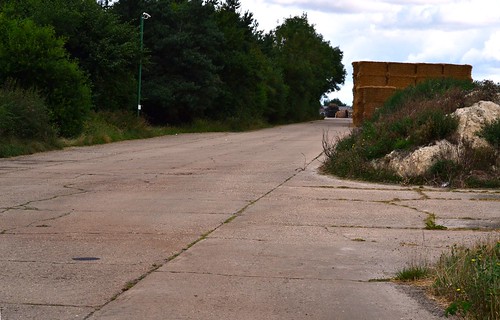

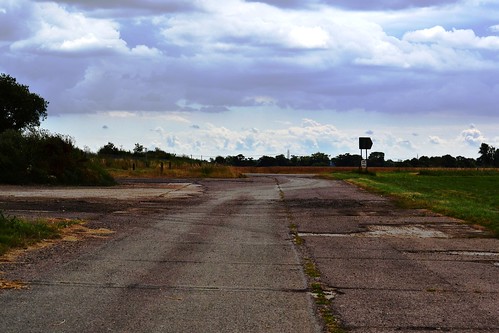

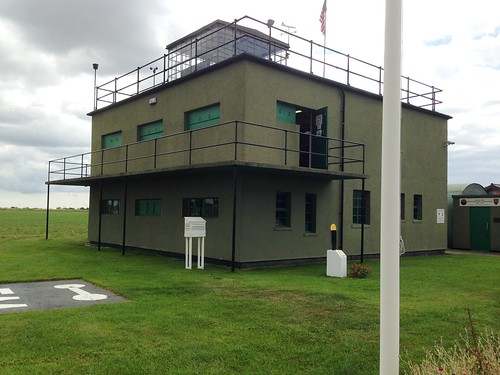
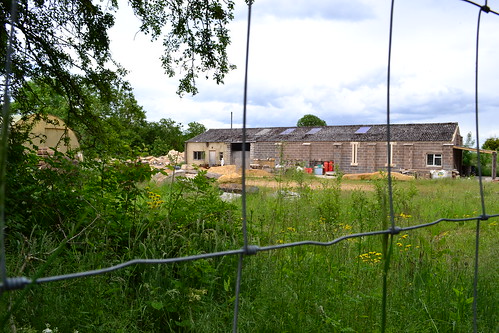


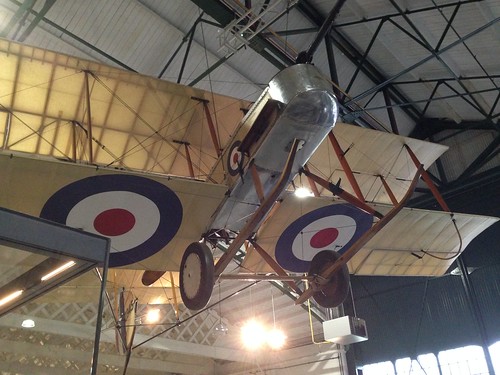

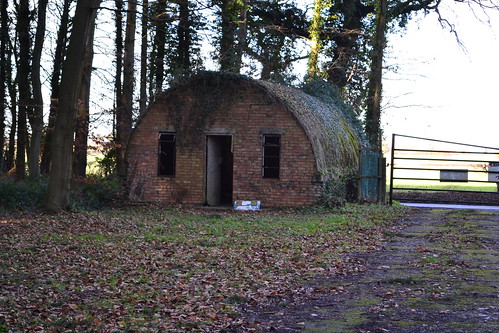
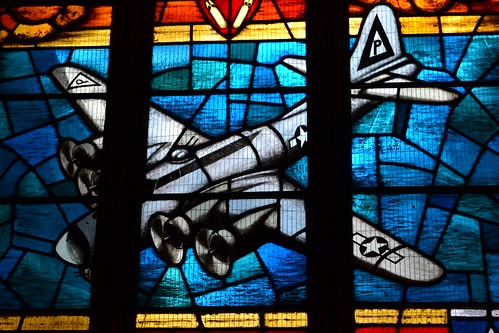
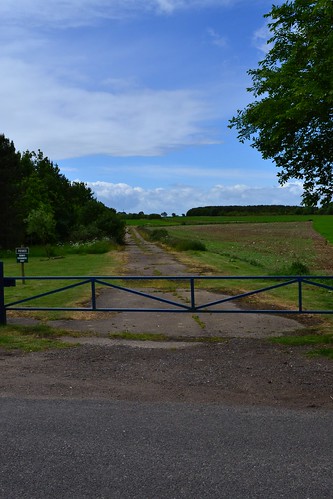


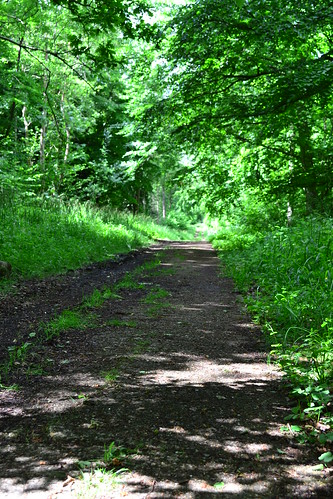
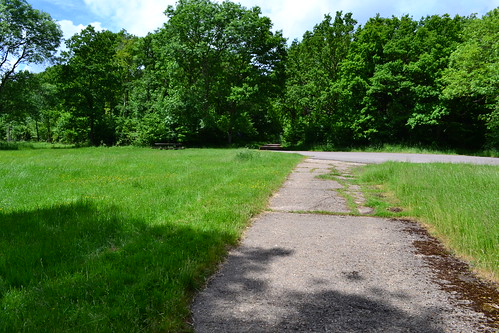

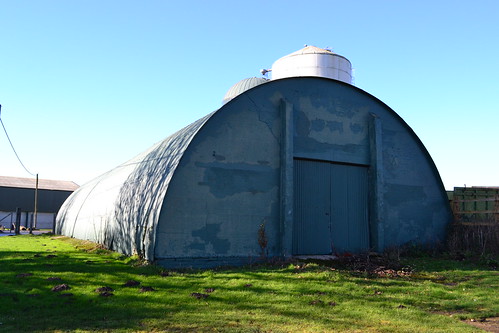


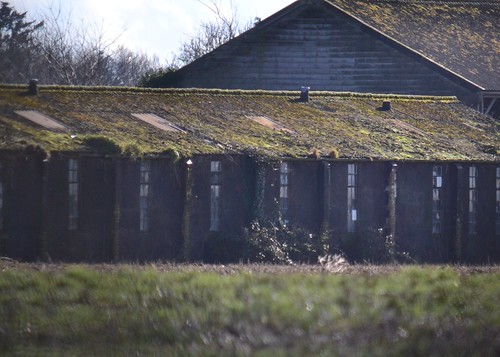

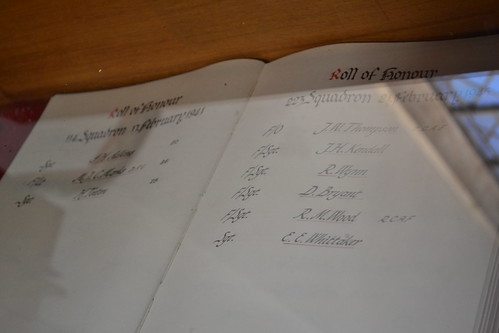
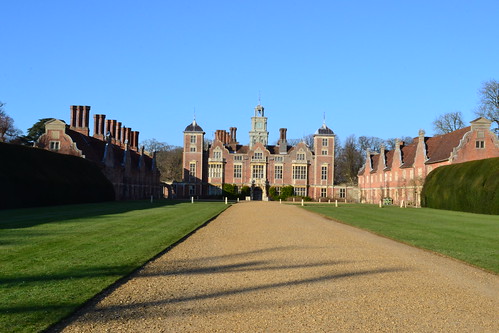


 Aviation Trails