As the year draws to a close, I would like to pass on my sincere thanks to all those of you who have followed, read, commented and shared a common interest with me here at Aviation Trails. It has truly been a challenging year but with determination we will no doubt get through these difficult times and on to better ones in the months ahead.
Since starting, I have now written over 60 trails, the number of airfields I have now visited has increased to over 120 stretching from Scotland’s north west coast to Kent in the south, from the eastern regions of England to the west; a huge area but one in which there are still many, many more airfields and sites yet to visit.
As 2021 approaches I would like to take the opportunity to wish you all, wherever you are in the world, a very happy and safe Christmas and both a peaceful and prosperous New Year.
A final stop on Trail 47 sees us north again, a few miles from the A1 on England’s north east coast, where in the distance are the Farne Islands, a small group of islands that are home to some 150,000 seabirds all fighting for their own small piece of space during the breeding season. A little further north is Bamburgh Castle and beyond that, Holy Island and Lindisfarne with its Castle and monastic history. It is truly a location full of history and beauty.
Here we stop off at the small coastal town of Seahouses, a town much visited by tourists along this beautiful Northumbrian coastal route.
During the First World War though, this was also the site, albeit for only a short time, of a wartime airfield and a marine operating station.
RFC/RAF Seahouses (Elford ).
Seahouses or Elford as it was primarily known, was initially a landing ground for 77 (HD) Sqn from February 1917. 77 Sqn, who were based at numerous airfields around the country including Thetford, Edinburgh and the not so far away Haggerston, used it well into 1918, flying Royal Aircraft Factory B.E.2 and B.E.12 models. They operated here until it became a Maritime Operations Station (RNAS Seahouses) in the summer of 1918. It was at this point that 256 Sqn were formed at the airfield with the idea of carrying out maritime patrols. Shortly after their creation though, they were absorbed as 256 Sqn into the newly formed Royal Air Force.
In conjunction with this formation, the final 92 acre site was graced with Bessonneau hangars, these were standard aircraft hangars constructed using a canvas covering over a wooden frame, and could be erected by a team of twenty skilled men within forty-eight hours. As a transportable hangar, they were used well into the 1930s being replaced by Bellman hangars after that time.
256 Sqn, initially operated the DH.6, one of along line of de Havilland models built by Airco and de Havilland. These would be maintained in the hangars and used for anti-submarine patrols over the North Sea.
DH 6 Note the roundel under the top wing as a result of the wings being interchangeable. (public domain via Wikipedia)
The Airco company was founded in 1911 by George Holt Thomas, who initially had the idea of selling and maintaining Farman aircraft at Hendon on the outskirts of London. He met with Geoffrey de Havilland at Farnborough and soon an agreement was struck between the two for Airco to begin manufacturing de Havilland aircraft. After a period away in service, de Havilland returned to Airco and the process of designing new aircraft fr the military began. Many of these new models were given the designation DH.
At Seahouses, 256 Sqn took delivery of the DH.6, their arrival being just after they were formed, in June 1918. A standard British military trainer biplane, it was designed to be cheap and easy to repair, de Havilland considering the mishaps that many pilots were likely to have during training periods.
The memorial plaque erected by Airfield of Britain Conservation trust.
It was a solid basic design, with wings that were interchangeable, heavily braced and with a strong camber. Many considered them ‘too safe’ being almost impossible to stall even by the unwary, and with dual controls any trainee was even less likely to get into trouble as the instructor could easily take over if the situation required it. Even so, those that used them would often refer to them in derogatory ways, a range of unsavoury names becoming the more common wartime references.
256 Sqn consisted of four initial flights: 525, 526, 527 and 528 (Special Duty) Flights all arriving in the summer / autumn of 1918, with 495 (Light Bomber) Flight arriving at the war’s end. With detachments at New Haggerston (a field a few miles north of here), Remmington, Cairncross and Ashington, the DH.6s were eventually supplemented by Blackburn Kangaroos of 495 (Light Bomber) Flight in the November of 1918. Both of these models operated with 256 Sqn even after they departed Seahouses for Killingholme as a cadre in January 1919. By the June of that year, with the war in Europe long over, the squadron was disbanded.
During their time here at Seahouses, 256 Sqn patrolled the coastal region around the Northumbrian coast. Flying in the twin seaters they were not armed but did carry bombs, luxuries such as parachutes were considered too heavy and so were not permitted. Flying over the sea, they would search for German submarines, but with a four hour duration, flights could be long and cold and concentration was sometimes difficult. Once spotted though, a sub would be forced to submerge, here it could do little damage, wartime submarines being unable to communicate or place mines once under water.
One Flight Lieutenant Morley Roy Shier, one of many Canadian pilots in the fledgling RAF was killed flying from Seahouses in his D.H.6 (C5172), when he went into the sea in fog off Coquet Island. He was killed on September 6th 1918, age 23, in the last few days of the war. He is commemorated at the Hollybrook Memorial in Southampton, a memorial that honours some 1,900 service men and women from the commonwealth who were lost at sea or have no known grave from such action.
Two weeks later on the 19th September, another 256 Sqn accident occurred, also with a D.H.6 (C5174), when a young eighteen year old Air Mechanic 3 Thompson Mackenzie and his Canadian pilot 2Lt Clarence Wilfred Kerr, were caught in a gust of wind on take-off at Edinburgh. Unable to control the light aircraft in the wind, it crashed killing Thompson Mackenzie and injuring Clarence Kerr.
When the armistice finally came, one over exuberant pilot, Captain Charles Augustus Grey Bennet, 8th Earl of Tankerville, decided to ‘celebrate’ in style. He took off from the airfield in a biplane armed with rockets for shooting down Zeppelins, and flew over Seahouses town. He decided he was going to have his own firework display and fired off the rockets toward to the sea. However, some fell short and landed on hay stacks at Seafield Farmhouse, setting fire to the hay. The local people, also excited by the rather large fires, came to watch the event unfold.
With the posting of 256 Sqn, Seahorses as it was now known, returned to agricultural use, any remnants of its aviation heritage being removed very quickly.
This signified the ending of all aviation activity at the site, Seahouses never being brought back to military aviation use again.
On June 14th, 2018, the Airfields of Britain Conservation Trust erected a memorial plaque in the town centre of Seahouses, to commemorate those who served. It is all that stands to remind us of that small and short lived airfield of the First World War.
Sources and Further Reading.
Graces Guide to British Industrial History website.
Another trip along the North Kent coast in Trail 44, brings us from Herne Bay past Allhallows to the former RAF Gravesend. Another of Britain’s airfields that has since disappeared under housing, it has a history going back to the heydays of aviation and the 1920s. It was, during the war, a fighter airfield and was home to many famous names including James “Ginger” Lacey DFM and Squadron Leader Peter Townsend. A number of RAF squadrons used the site, as did American units in the build up to D-day. A wide range of aircraft from single engined biplanes to multi-engined fighters and even air-sea rescue aircraft could have been seen here during those war years. Gravesend was certainly a major player in Britain’s war time history and thanks to Mitch Peeke, we can visit the site once more.
RAF Gravesend
Gravesend aerodrome was born during the heyday of public interest in aviation in the late 1920’s and early 1930’s. The original site was nothing more than two fields off Thong Lane in Chalk, which was used by some aviators of the day as an unofficial landing ground. One such pilot was the Australian aviator Captain Edgar Percival, who often landed his own light aircraft there when visiting his brother, a well-known Doctor in Gravesend. It is widely thought that it was Percival, who was after all a frequent user of those fields, who first suggested the actual building of an airport there.
Whether he did or whether he didn’t, the two men who founded the airport’s holding company, Gravesend Aviation Ltd., in June of 1932, were Mr. T. A. B. Turnan and Mr. W. A. C. Kingham. A local builder, Mr. Herbert Gooding, was engaged to build the Control Tower/Clubhouse building. In September of that year, with the construction work well advanced, Herbert Gooding and a man named Jim Mollison (the husband of the British aviatrix Amy Johnson), joined the Board of Directors of Gravesend Aviation Ltd.
The Mayor of Gravesend, Councillor E. Aldridge JP, officially opened the newly constructed airport as “Gravesend-London East”, on Wednesday 12th October 1932. To mark this Gala occasion, the National Aviation Air Days Display Team, led by Sir Alan Cobham, visited the new airport and gave flying demonstrations to thrill those people present. Also on display for visitors was a curious flying machine called the Autogiro, a sort of cross between a helicopter and a small aircraft, that had been built for a Spanish aviator by the name of Senor Cierva.
At the time of its opening, Gravesend airport covered 148 acres. Its two 933 yard-long runways were grass and the airfield buildings comprised the combined Control Tower/Clubhouse, two smallish barn-style hangars and some other, small ancillary workshop and stores buildings. Located in open countryside on the high, relatively flat ground on the western side of Thong Lane, between the Gravesend-Rochester road and what is now the A2 (Watling Street), Gravesend airport boasted an Air-Taxi service and a flying school among its amenities.
In November of 1932, just one month after the airport’s opening, Herbert Gooding took over as Managing Director of Gravesend Aviation Ltd. It seems likely that Mr. Gooding had effectively been “saddled” with the airport that he’d largely built. The original Directors, Messrs. Turnan and Kingham, possibly had run out of cash with which to pay Mr. Gooding for his construction work. They disappeared at this time, probably having paid Mr. Gooding with their own company shares. Jim Mollison, though married to Amy Johnson, had never been anything more than a “sleeping” director anyway, so it fell solely to Gooding to try to recoup his investment by making the airport a commercial success.
The original idea behind the airport had been to encourage the rapidly expanding European airlines to use Gravesend as an alternative London terminal to the often-fogbound Croydon airport, and this, Gooding now set out to accomplish. Although a number of airlines such as KLM, Swissair, Imperial Airways and even Deutsche Lufthansa did indeed make use of Gravesend, they didn’t utilise it on anything like the scale that had been hoped for. Perhaps it was thought at the time that Gravesend just wasn’t quite close enough to London, geographically.
Then in 1933, a year after the airport had been officially opened; Captain Edgar Percival established his aeroplane works in the small hangar next to the flying school. It was from here that he started to turn out the Percival Gull and Mew Gull aircraft. These were possibly the finest light and sports aeroplanes respectively, of their day, and in fact pilots flying these aircraft set many inter-war aviation records. Such pilots, for example, as Alex Henshaw, (who later became a Spitfire test pilot), Sir Charles Kingsford-Smith, Amy Johnson, and another well-known aviatrix, Jean Batten, as well as Edgar Percival himself.
Gravesend airport 1935 – Gravesend Airport Research Group (Ron Neudegg). During this time, a much larger, third hangar had been constructed by A.J. & J. Law Ltd. of Merton, alongside the existing two. This new hangar, forever referred to as the “Law hangar”, was 130 feet wide and 100 feet long, with integral offices and workshops running down each of its two sides. The Law hangar was completed in the early part of 1934 and prominently bore the legend “GRAVESEND LONDON EAST” above the hangar doors.
In December of 1936, Captain Percival moved his business to Luton. This may have seemed like a disaster for Gooding and his airport at the time, but as luck would have it, a company called Essex Aero Ltd., moved into Percival’s vacated premises almost immediately and stayed at Gravesend, building a thriving business from aircraft overhaul and maintenance, though their real forte was the preparation of racing aircraft and the manufacture of specialist aircraft parts.
Business at Gravesend airport was positively booming when Gooding sold the place to Airports Ltd., the owners of the recently built Gatwick airport. It was felt that if anyone could make a proper commercial success out of using Gravesend for its originally intended purpose, these people could. They certainly tried, but in the end sadly, even they couldn’t; and they quickly offered the site to Gravesend Borough Council, for use as a municipal airport. There followed protracted negotiations over terms, price, etc., all of which were suspended when, because of the increasingly ominous rumblings from Adolf Hitler’s Germany, the Air Ministry stepped in.
It was the expansion of the Royal Air Force that ultimately saved Gravesend. In 1937, No 20 Elementary and Reserve Flying Training School was established at Gravesend to train pilots for the RAF and the Fleet Air Arm.
The training of service pilots began in October of 1937. The school operated the De Havilland Tiger Moth and the Hawker Hart at that time. Accommodation for the instructors and the student pilots wasn’t exactly salubrious. For the most part, they used the clubhouse, together with rooms in some of the local houses.
Meanwhile, as the trainee service pilots learned their craft daily, (and not without accident!) the civil aviation side of Gravesend continued, with record attempts to the fore. In 1938, the twin-engined De Havilland Comet, G-ACSS that was used to set a record for the flight to New Zealand and back, was fully prepared for its successful record attempt by Essex Aero, as was Alex Henshaw’s Percival Mew Gull, which he used the following year to make a record-breaking flight from England to Capetown and back. Both of these record flights departed from Gravesend and were well publicised at the time.
The origin of the Hawker Hurricane. This visiting Hawker Fury MkI, K2062 belonging to No.1 Squadron, was photographed at Gravesend airport in 1938. Photo: S Parsonson via Gravesend Airport Research Group (Ron Neudegg).
But in the same year that Alex Henshaw set his record, war with Germany looked to be a near certainty and the Air Ministry duly set in motion the formalities needed to requisition Gravesend airport, in the increasingly likely event of war.
When war indeed came that September, No 20 E&RFTS was relocated, Airports Ltd surrendered their lease to the Air Ministry and the RAF duly took over Gravesend airport as a satellite fighter station in the Hornchurch sector. Essex Aero however, stayed; taking on a vast amount of contract work for the Air Ministry. Among the items they soon found themselves making, were fuel tanks for Spitfires.
The first fighter squadron to be based at what was now RAF Gravesend was 32 Squadron, who moved in with their Hurricanes in January of 1940. They were followed by 610 (County of Chester) Squadron with their Spitfires, who helped cover the Dunkerque evacuation. Following the deaths in action of two successive commanding officers within a short space of time, 610 Squadron was moved to Biggin Hill in July and 604 Squadron moved into RAF Gravesend temporarily with their Bristol Blenheims, whilst training as a night fighter unit. Also on temporary detachment at this time from their usual base at Biggin Hill, were the Spitfires of 72 Squadron.
It was during this period that the two decoy airfields at Luddesdown and Cliffe were completed, to help protect Gravesend. It was thought to have been an obvious matter to the Germans that the RAF would take over the airport at the commencement of hostilities. After all, the Germans certainly knew that Croydon airport was now a fighter station.
Accommodation was always to remain something of a problem at Gravesend. The clubhouse of course had some rooms, but nowhere near enough to house an operational fighter squadron’s complement of pilots, let alone the ground crews, station maintenance crews, or even the administration staff. In the end, most pilots were billeted either in the Control Tower/Clubhouse accommodation, or at nearby Cobham Hall, the ancestral home of Lord Darnley. (In fact, Lord Darnley nearly lost his home during the Battle of Britain. Not to German bombs, but to the hi-jinks of some of 501 Squadron’s pilots, who nearly burned the place down letting off steam on one drunken evening!).
The station’s Ground crews were billeted at either the Laughing Waters Roadhouse (the original site of which is now occupied by The Inn on the Lake) about one mile up Thong Lane, or just the other side of Watling Street in somewhat spartan accommodation encampments, where “home” was a village of Nissen huts hidden in Ashenbank Woods. (Nothing remains of these encampments today save for three of the large underground Air Raid Shelters). Those who could not be accommodated in the huts were billeted in Bell tents pitched around the airfield perimeter. No doubt this was fine during the spring and summer, but not so good during the winter.
On 27th July 1940, 604 and 72 Squadrons moved out and 501 Squadron took up residence, being based there throughout the greater part of the Battle of Britain period, during which time the sector boundary was changed, so that Gravesend then came under the aegis of Biggin Hill. 66(F) Squadron arrived to relieve 501 in September, but as the Battle of Britain raged and German bombs mercilessly pounded Fighter Command’s other airfields, Gravesend got off lightly, especially compared to the sector command station at Biggin Hill.
Pilots of 66(F) Squadron in the clubhouse at RAF Gravesend in September 1940. From left to right, standing: Flight Lieutenant Bobby Oxspring, Squadron Leader Rupert Leigh and Flight Lieutenant Ken Gillies. From left to right, seated: Pilot Officer C Bodie, Pilot Officer A Watkinson, Pilot Officer H Heron, Pilot Officer H (Dizzy) Allen, Hewitt (Squadron Adjutant), Pilot Officer J Hutton (Squadron Intelligence Officer) and Pilot Officer Hugh Reilley. Photo: The Times, via Gravesend Airport Research Group (Ron Neudegg).
Although the Luftwaffe reconnaissance branch belatedly photographed Gravesend airfield again in November of 1940 and updated their target identification sheet, (Gravesend was given the target designation G.B. 10 89 Flugplatz) one can only conjecture that prior to that, the decoy site at Cliffe must have performed its role superbly. The fact that only two German bombs ever landed on RAF Gravesend during the entire Battle of Britain period, and then only in passing, would seem to support this, as the decoy airfield at Cliffe was bombed many times. Each time the Germans bombed the decoy airfield at Cliffe, with its equally fake Hurricanes dispersed around it, RAF work gangs would fill in the craters. This activity in turn seemed to convince the Germans that Cliffe ought to be bombed again. In the meantime, the real fighter station at Gravesend was left virtually unmolested. On the only occasion when Gravesend airfield was specifically targeted, the Germans bombed the wrong side of Thong Lane and missed the airfield completely.
Given the fact that during the pre-war period, Lufthansa flights had regularly made use of Gravesend airport to deposit passengers, it seems all the more astonishing that the Luftwaffe were seemingly unable to find the place again when distributing their stock of bombs. Ultimately, the night decoy airfield at Luddesdown also attracted little attention from the Luftwaffe either.
Piece of paper from the Sergeants Mess at RAF Gravesend in 1940, bearing the signatures of some of the Sergeant Pilots of 501 Squadron. Clearly legible is that of James “Ginger” Lacey DFM, who became the top-scoring RAF Battle of Britain pilot, and Geoffrey Pearson, (last one down, right hand column) who was killed in combat, aged just twenty-one. Via Kent County Library Services.
In October, at Churchill’s insistence, 421 Flight was formed at Gravesend from a nucleus of 66(F) Squadron’s pilots. In recognition of their origin, 421 Flight’s aircraft wore the same squadron identification letters as 66(F) Squadron’s aircraft, (LZ) but with a hyphen between them. Their job was to act as singleton flying observers to incoming enemy raids. A job with rather a high risk element!
With the manifest failure of the Luftwaffe’s daylight offensive, 66(F) Squadron and 421 Flight moved out of Gravesend at the end of October, and 141 Squadron with their Boulton-Paul Defiants moved in. They were joined soon afterwards by the Hurricanes of 85 Squadron, a former day-fighting unit led by Squadron Leader Peter Townsend, to take up the challenging role of night-fighting. These two squadrons stayed at Gravesend throughout the remainder of 1940. Townsend’s squadron moved out just after New Year, leaving 141 Squadron as the resident unit into the spring of 1941, though another Defiant-equipped squadron, 264 Squadron, joined them for a short time while the Luftwaffe continued with their efforts to destroy London by night. When the Luftwaffe finally abandoned that enterprise late in May of 1941, the night fighters moved out and Gravesend once again saw the Spitfires of several different day-fighting squadrons based there to carry out offensive sweeps over occupied France.
In 1941, the height of the control tower was raised by one level and during more major works that were carried out during 1942 and 1943, the two existing 933-yard grass runways were extended. The north-south runway was lengthened to 1, 700 yards and the east-west runway to 1, 800 yards. The station’s storage facilities were also enlarged and runway lighting was finally installed, as was Summerfield runway tracking, in an attempt to combat the autumn and winter mud. Also enlarged was the ground crew accommodation camp at nearby Ashenbank Wood.
In December of 1942, 277 Squadron, an RAF Air-Sea Rescue unit, duly took up residence. An unusual unit inasmuch as they flew a variety of aircraft at the same time. They had the amphibious Supermarine Walrus, which one would expect given the nature of their work, but they also had Westland Lysanders, Boulton-Paul Defiants and Spitfires. They were stationed at RAF Gravesend for a total of sixteen months, making them the record holders for the longest stay of any squadron at Gravesend.
The enlargement and improvement of the station had made possible the accommodation of three squadrons and in fact, three fighter squadrons of the USAAF were stationed at Gravesend for a while. Having longer and better runways also meant that battle-damaged heavy bombers returning from raids on Germany now stood a reasonably good chance of making a successful emergency landing at Gravesend, too.
In the early part of 1944, 140 Wing of the 2nd Tactical Air Force was based at Gravesend with their Mosquito fighter-bombers. The Wing comprised two Australian squadrons and one New Zealand squadron. The Wing’s task was that of “softening up” targets prior to the Normandy landings. With the success of the D-Day landings, 140 Wing continued their operations but shortly after D-Day, a new menace totally curtailed the station’s flying activities.
On 13th June, the very first V-1 “Doodlebug” landed at nearby Swanscombe, having flown almost directly over RAF Gravesend. In the coming weeks, the sheer numbers of these high speed pilot-less rocket-bombs passing very close to, if not actually over the RAF station, meant that flying from there was now a hazardous undertaking. 140 Wing moved out.
With the aircraft gone, RAF Gravesend became a command centre for the vast number of barrage balloon units that were brought into the surrounding area to help deal with the V-1 menace. The station also became a local air traffic control centre, to ensure that no friendly aircraft fell foul of the balloons. The V-1 campaign petered out toward the end of 1944 as the advancing Allied armies rapidly overran the launching sites and five months into 1945, the war ended.
With the end of the war, Gravesend was put into a care and maintenance state and surplus service equipment was stored in the Law hangar for a while. Only Essex Aero continued to work there, as they had throughout the war, eventually taking over the Law hangar, too.
Although Essex Aero tried hard to carry on from where they had left off just before the war, the nature of civilian aircraft and aviation had changed a great deal. Air racing and record-breaking was no longer in the public eye, as they had been in the thirties. The Air Training Corps now ran a gliding operation from Gravesend, and Essex Aero continued to make specialist aircraft parts and revolutionary Magnesium Alloy products, but the biggest problem facing them was the fact that Gravesend Borough Council steadfastly refused to grant the necessary planning permission that would allow the wartime runway extensions to be properly incorporated into the post-war aerodrome.
In April 1956, unable to work on the more numerous but ever-larger civilian aircraft types, because the pre-war dimensions of the airfield would not permit them to land there, Essex Aero went into liquidation.
In June of 1956, the Air Ministry relinquished their lease on the airfield and demolition and clearance work began in 1958. First to go were the two Barn-style hangars. The Law hangar was dismantled and re-erected on Northfleet Industrial Estate, minus its offices and workshops, where it served as a bonded warehouse until the late 1990’s. The rest of the buildings, except the Control Tower/Clubhouse, which became the site offices of the developers, were bulldozed to make way for a massive new housing estate, known today as Riverview Park. In 1961, the control tower was finally demolished and the last houses were built where it had stood. No visible trace of the once vital fighter station was left to remind anyone of what had been there.
A final view to the south from the Control Tower of Gravesend aerodrome, prior to its demolition in 1961. The stacks of bricks piled up on the old hangar floors are for the construction of the houses that made up the final stage of the development. These houses were built where the airport buildings once stood, thus removing the last visible trace of this once vital fighter station. Photo: P Connolly, Gravesend Airport Research Group, via Ron Neudegg.
Yet RAF Gravesend had one last, hidden, reminder of its presence left to reveal. In April of 1990, many of the houses on the estate had suddenly to be evacuated when an unusual item was found buried in one of the gardens.
Fifty years previously, in June of 1940, the prospect of a German invasion looked very real. As we have seen, measures were taken to protect the airfield such as the setting up of the two decoy fields and the building of perimeter defence positions. Another, since totally forgotten measure, was the laying of “pipe mines” that would be exploded to deny the use of the airfield to the Germans should they succeed in invading England. It was one of these mines that had been found.
It transpired that Dolphin Developments Ltd, the building contractors who had constructed Riverview Park, were completely unaware of the presence of these mines and had happily built the entire estate on top of them. The original plans of the minefield were finally procured and the Royal Engineers were called in to locate and remove the rest of the mines. Once this operation had been successfully completed, the very last wartime vestige of RAF Gravesend had been removed.
Yet the story of RAF Gravesend doesn’t quite end there. When “Cascades” Leisure Centre was built on the eastern side of Thong Lane, almost opposite where the main entrance to the RAF station once was, they put up a plaque of remembrance to the station and the pilots who had lost their lives flying from there during the Battle of Britain. The original plaque was initially located on an outside wall. Unfortunately, the name of the first of those pilots, Phillip Cox of 501 Squadron, was somehow shamefully omitted.
Cascades Leisure Centre, Thong Lane, Chalk, near Gravesend (Mitch Peeke)
The plaque stayed there, despite the inglorious error, for many years until 2003; when Sunday 2nd March saw the dedication of an all-new memorial to commemorate RAF Gravesend, the part it played in the Battle of Britain and a new plaque commemorating all fifteen of the pilots who died in combat whilst flying from the airfield during the battle.
The memorial itself is a large Black Marble plaque with Gold lettering, bearing both the RAF and the Fighter Command crests; one set either side of the gilded legend “RAF GRAVESEND”. The plaque is set into a purpose-built, stone-clad wall outside the gates of the Leisure Centre, and faces the houses that now stand close to where the airfield’s main entrance once was. The new plaque, finally listing all fifteen pilots, can now be found on the wall in the reception of the Leisure Centre, along with other displays which include a brief history of the airfield and the two squadrons that flew from there during the Battle of Britain. A few years later, photographs of all of the fifteen pilots were put into a collective frame and added to the display.
There was a full dedication ceremony flanked by standard-bearing parties of Air Cadets from the two local units, 402 Gravesend and 2511 Longfield Squadrons, led by Flight Lieutenant Tony Barker, the Commanding Officer of 2511 Squadron. Reverend Group Captain Richard Lee, lead the service of dedication and thanksgiving. Also included was a short history of the airfield read by Ron Neudegg, a founder of the Gravesend Airport Research Group. The Right Honourable Chris Pond, MP for Gravesham, then read the lesson, before Sergeant Steve Maher of the Central Band of the Royal Air Force sounded the ‘Last Post’ on the bugle. At last was paid a truly fitting tribute to a once vital fighter station and the fifteen pilots who lost their lives while flying from there.
One last, but still little-known fact however, is that if you know where to look, you will find the graves of two of those fifteen pilots quite nearby, in Gravesend Cemetery. The graves are those of Pilot Officer John Wellburn Bland of 501 Squadron, and Pilot Officer Hugh William Reilley of 66(F) Squadron.
The fortunes of the place where the pilots used to relax, The White Hart, have been as up and down as the aircraft those pilots flew. The pub the airmen knew was opened on October 19th 1937, just as the RAF moved into Gravesend Airport and started to train service pilots there. It was a new building, replacing one that had stood there for over a century, which was itself a replacement of the much older original building. The new White Hart was owned by Truman’s Brewery and Daniel Pryor was the first Landlord of this newly built inn. Daniel’s association with the airfield’s pilots probably started with those being trained at No 20 E&RFTS. By the time Daniel’s Den was playing host to the pilots of 501 and later, 66(F) Squadrons’ pilots, a direct line had been set up from the airfield to the pub, to warn pilots of imminent air raids (and probably visits from high-ranking officers!). Daniel Pryor’s tenure lasted till 1943. After a succession of further Landlords, the building was demolished in 1999 to make way for the Harvester Pub and Restaurant that occupies the site today.
In what is surely a strange quirk of fate, more actually remains of the fake airfield at Cliffe marshes, despite the bombing, than the real one at Gravesend, today. At the site of the decoy airfield, the southwest and the western parts of the access track remain, as does the fake control point. The control point is accessible from the track and is a two-roomed, brick-built bunker with a concrete roof. The bunker is entered via a small, door-less corridor. The two rooms are at the end of the short corridor, one on each side. The left-hand room has light, due to a square hatch in the ceiling, the cover of which has long since been removed. The right-hand room is smaller and completely dark, as the whole bunker is window-less. There is nothing inside the bunker today except for a small amount of rubbish and the seemingly inevitable graffiti that adorns the walls. The three-quarter-mile-long grass runways that never actually were, are today home to grazing cattle.
The new memorial situated in Thong Lane, Gravesend, to commemorate the part played in the Battle of Britain by RAF Gravesend. Photo: Mitch Peeke.
Apart from the bunker, there is no lasting or purpose-built memorial to the part played by the dummy airfield, even though it saved untold damage being done to the real fighter station at Gravesend, not to mention the corresponding casualties that would have been sustained among the personnel stationed there. Sadly, RAF Cliffe is now but a little-known and seldom remembered place. Above all, like the vital fighter station it once protected, it is yet another example of this country’s disappearing heritage.
By Mitch Peeke.
Editors note: in 2016 the Airfields of Britain Conservation Trust erected an airfield marker outside of Cascades Leisure Centre to commemorate and mark the location of RAF Gravesend.
After Part 1 of Trail 59, we return to the Lake District, and Lake Windermere, to see how the Second World War affected the tranquil waters of the Lake district. In particular, we go to White Cross Bay, where that majestic aircraft the Short Sunderland made its dramatic appearance.
Windermere White Cross Bay.
In the intermediate war years Windermere remained as it was, tranquil and aviation free, but once war broke out things would change.
With increased bombing of Britain and in particular the growing threat to aircraft production in southern England, the Ministry of Aircraft Production (MAP) began studies into creating new factories in safer areas away from Kent and the south. Short Brothers at Rochester was one such organisation identified for expansion. Primarily home of the Stirling bomber and located not far from London, it was a high risk location, and it was within easy reach of the Luftwaffe’s bombers. In response to the need for expansion and relocation, the ministry turned their attention to Windermere, ordering an immediate feasibility study*4 into the move.
With just three Sunderland Squadrons at the outbreak of war, the defence of shipping and anti-submarine patrols needed a major boost. Production of Sunderlands, Short’s long range Flying boat, had to be increased, and so it was decided, that a new factory independent from Rochester, would be constructed at Windermere. At 75,000 sq ft, it was to be the largest single span hangar in the country, and it would be at a huge cost too.
As had happened before at Windermere, local objections became a major issue. The thought of the beauty and tranquillity of the landscape succumbing to both an aircraft factory and housing for some 1,200 workers, would not be without its consequences. Other suitable sites were given due consideration too, but with Rochester coming under attack from German bombers, the Government were pushed into making a decision and quickly. On 16th December 1940, it was confirmed, and the go ahead to build at Windermere was given, albeit with some concessions. It was agreed between the Government of the time and the local population, that the factory and all its associated buildings, would be removed once the war was over and the site was no longer needed. A concession that sadly led to virtually nothing of this remarkable venture remaining visible today.
Over the next two years, building work progressed, jigs were brought in and new specialist tools were ordered. There were in essence, two main buildings for the production process, the factory where the various parts were made, and an assembly hangar where the aircraft were fabricated. A third area located at Troutbeck Bridge (subsequently referred to as Calgarth), consisted of a range of accommodation blocks and associated buildings, it was in fact, an entirely new ‘village’.
Known as the Calgarth Estate, it would have everything from two shops to a primary school, a laundry to a football team, it even had its own Policeman! The estate was set out in a semi-circular design, with rows of houses around the outside. The canteen, assembly hall and school were all located withing the centre of the site next to a large and open recreation ground.
Building a flying boat is probably more like building a boat than an aeroplane – rather than fixing stringers over bulkheads allowing the aircraft to be built in sections and pieced together, the Sunderland was built from the keel upwards.
The Sunderland (a pure flying boat) was a massive aircraft, 112 ft in span, 85 feet in length and standing 32 feet high (to the top of the fin), it could fly for some 13 hours with a range of 1,700 miles. With a crew of up to 15, it was an ideal sub-hunter and long range maritime escort. Its hull was a single step hull, with two decks; the upper for the flying crew, and the lower a storage area for bombs and depth charges. Being such a large hull, it also had a wardroom, galley, cooking and washing facilities.
ML824 at the RAF Museum Hendon. Depth charges/bombs were extended out onto the wings from inside the fuselage.
By April 1942 the first hulls had begun to be assembled. Even the enormous hull of the Sunderland was dwarfed by the size of the hangar. The first RAF allocated aircraft, DP176 began construction in April. The jigs were cemented into the ground and the construction process began with six keels being formed. A skeletal fuselage was built up, and then treated aluminium panels (Dural) were added using rivets.
Even though the site at Windermere was huge, the wings, like the engines, were pre-built and delivered to Windermere for adding to the hulls. Space inside the wing was tight, the only way to access internal wing parts (control rods for example) was to crawl inside the wing and work in the very confined space between the two surfaces. Many workers, proud of what they had achieved, left their names inside the wing using a pen.
Each Sunderland built at Windermere (all MK.IIIs) was ‘hand made’, panels bent and riveted, most by hand rather than machine, so that each one was unique. Operating on water, each aircraft had to be water tight, this being tested from the inside under pressure, and any that were not, were stripped down and rebuilt. It was extremely noisy work, mainly using a non-skilled workforce recruited primarily from the local area. As skilled labour was in very short supply, and Short Bros. at Rochester couldn’t afford to let their skilled work force go (many were working on the RAF’s heavy bomber the Stirling) women and youths were drafted in (as part of the Governments recruitment plans) to fill those spaces left by the men who had joined up.
This meant extensive training programmes had to be delivered, and it became a frustrating time for those employed at the site. But, over time, things settled down and production got into full swing, the workers united and a ‘family’ was formed.
Once complete, the aircraft was rolled out using a special tail-trolley with beaching wheels attached to the fuselage sides beneath the wings. As a pure flying boat, the Sunderland could not easily move under its own power whilst on land, but had to be towed by a small tractor. Once in the water, it cold move using its engines and rudder, but having no water rudder meant it was difficult to manoeuvre. To help, two drogues were used, located either side of the fuselage and passed through the galley windows. These 3 foot wide drogues could catch huge amounts of water, pulling a large cable and a man’s hand with it – if care wasn’t taken. Each man would throw one of the drogues out of the open window and drag it through the water to turn the aircraft, rather like how a canoeist does today. These methods, whilst primitive, were effective.
Once out of the hangar, the aircraft were lowered into the water, and the beaching gear was removed. The aeroplane was then towed, by boat, out onto the Mere where they were moored to buoys. To assist with this, the front turret could be withdrawn into the hull and a crew man would lean out and grab the mooring rope using a hook. Moving the aircraft into and out of the water was a tricky job indeed, and required great skill so as to not damage the hull of the aircraft through grounding.
Sunderland ML824 at the RAF Museum Hendon showing the front turret withdrawn to enable mooring. Notice also the maintenance panel in the wing, lowered to allow maintenance whilst moored. My father would fasten cork to his tools in case he dropped them into the water.
On September 10th 1942, the first aircraft, DP176, finally left the hangar ready for engine runs and its first flying test. Lashed down to the slipway, the four Bristol Pegasus XXII air-cooled radial engines were started up and ran. After a successful test, the test pilot John Lankaster-Parker, took the aircraft onto the water where it was moored ready for further tests, and its first flight the following day.
The next day, 11th September 1942, the workforce were given the day off to witness their first Sunderland’s flight. As Short Brother’s own test pilot John Lankester-Parker (who also flew the first Stirling) climbed aboard with a selection of technicians, a large crowd gathered outside the factory. The buzz of seeing the first Windermere Sunderland, was met with cheering and clapping as it gradually rose in to the air. After twenty minutes, Parker returned to the water and all was reported to be well. After further flying tests, DP176 was passed to RAF control, and taken away to have its electronics fitted before commencing operational flying duties with the RAF.
A post war picture of a Sunderland launching (photo my father) either Wig Bay or Stranraer. Does anyone know what U.I.D might mean?
The ‘Flying Porcupine’ as the Sunderland was known, became the backbone of Coastal Command operations, a sturdy reliable aircraft it was used as a model for the RAF’s Stirling bomber (less successfully) and went on to be the basis for the Short Shetland, a flying boat that dwarfed even the Sunderland.
In January 1944, Sir Richard Stafford Cripps*5, now the Minister of Aircraft Production (after Churchill had removed him from the War Cabinet for criticising his policies on war) visited Windermere to see the site and meet with the management team. The visit, unbeknown to those at Windermere, had an ulterior motive and in his meeting with the managers he announced that all production at the site was to stop with the last few fuselage frames in the factory being the last. It was a devastating blow for the workforce, but it was not however, the end of Windermere. As part of the change, the factory was to be retained and utilised as a Civilian Repair Organisation (CRO) repairing and updating older Sunderlands rather than building new ones.
The job of repairing the aircraft brought home to the workers just how bad things could be. Worn out, damaged and battered aircraft flew into Windermere to be repaired and returned to service. In some cases, women were not allowed entry into the aircraft until the blood and human remains had been removed, such was war. Some aircraft came only to be scrapped, taken apart by the axe, any usable parts were saved and reused on other less worn models.
A number of these damaged aircraft passed through Windermere, many due to action with the enemy, but some due to accidents. Those that were repairable were hauled into the factory on the beaching gear, stripped and repaired. Some were converted into MK.Vs, having new engines fitted with feathering propellers – over heating engines had been an issue on some long flights.
The CRO carried out repairs on Sunderlands, until the war’s end. In 1945 a new direction was taken and upgrading work took over as the main task for the workers. MK.IIIs were brought in, stripped and upgraded to MK.Vs. New Pratt and Whitney Twin Wasp engines were installed, the dorsal turret was removed, and two gun mounts were added to the insides of the fuselage behind the wings. In addition, to extend longevity all of the control cables were replaced.
Inside the Sunderland looking forward. The two brackets either side are the gun mounts of the MK.V, the turret having been removed and replaced.
The Sunderland gained the nickname ‘Flying Porcupine’ (Fliegendes Stachelschwein), generally thought so because of its extensive array of aerials. Alternatively, it gained its name from the Germans who fell foul of its powered gun turrets. It is also thought however, and more likely, that this naming was more to do with British propaganda than anything else, as the name appeared in print before any real skirmishes had occurred between RAF and Luftwaffe aircraft.
At the beginning of the Second World War, Coastal Command had only thirty-four Sunderlands on their books, but by the end almost 750 had been built, the majority being MK.IIIs, serving well into 1959. There were four military marks built: MK.I, MK.II, MKIII. and MK.V. The MK.IV being an upgrade of the MK.III with heavier guns: (.50 inch machine guns and 20mm Hispano Canons); a larger tail; longer fuselage and bigger, stronger wings. It also had in addition, more powerful Bristol Hercules engines. It was then considered an entirely new aircraft, and so received the designation S.45 ‘Seaford’. Only 8 examples were ever completed, all of which arrived too late to see combat duties. None of those constructed making it beyond trials with the Royal Air Force.
The last Windermere Sunderland worked on, ML877, arrived from 228 Sqn on April 4th 1945, along with NJ171 to collect and return the crew. The aircraft was upgraded to MK.V standard after which it was taken away and returned to operational duties.
The last Sunderland ML877 taken at Pembroke Dock (from my fathers photo album).
With that, Windermere’s aviation history closed. By the time production had ceased, Windermere had produced thirty-five aircraft equipping seventeen front line RAF Squadrons, along with Maintenance Units (MU) and Operational Training Units (OTU). Their service stretched as far as West Africa, Hong Kong and of course bases around the shores of the UK. One of the biggest ‘users’ was 57 MU / 1 FBSU (Flying Boat Service Unit) at Wig Bay, whilst others ended up at Pembroke Dock – both of which my own father was posted to, to work on Sunderland Flying Boats, I wonder if he came across any of these.
Workers from Windermere were transferred to either Rochester or Belfast, others stayed in the area to find alternative employment. After being nationalised by the Government during the war, Shorts in Rochester was closed and all production moved to Belfast. It was eventually taken over by the Canadian company Bombardier. It is believed that some aircraft parts along with general rubbish were dumped into Windermere to dispose of them, and rumours of complete aircraft being scuttled there have long since drawn divers to the area in search of these hidden wrecks. These are unfortunately unfounded, those who worked at the site have not given any credence to the myths, and so it remains a sad truth that the Windermere Sunderlands are indeed now just a part of history.
Back at the Windermere, the Government’s agreement to remove the buildings wasn’t implemented straight away.
In August 1945, the British government agreed to give refuge to 1000 child sufferers of Nazi concentration camps. 300 of them were brought to the Calgarth Estate, the former Short’s accommodation area, where a team of counsellors and volunteers had been assembled hoping to rehabilitate them.
The (4 month) pioneering project run by Oscar Friedman at Windermere, aimed to rehabilitate the children, allowing them to lead a normal life in society once more, after the horrific treatment they had received in the various concentration camps under the Nazi regime.
On arrival the children were separated into girls and boys, asked to remove clothing and given a medical examination. Some, fearful of what had happened before believed they were going to experience similar atrocities. Others were more forgiving and more hopeful. Their clothes were burnt, they were deloused and then the children were fed.
The former flying boat site provided accommodation for the workers, this accommodation would now house the refugees, each older child having their own bed, in their own room. A far cry from the squalid bunks of the concentration camps.
With the freedom of coming and going, even simple things frightened the children. A dogs bark or a uniform could mean the difference between life and death. Their nightmares would linger on for years to come.
During the day, they attended classes, English and sport along with therapy sessions using art as a medium through which they expressed their emotions. The pictures they created reflected the brutal suffering and emotional damage that the Nazi regime had inflicted upon them. Not the happy blue skies and sunny landscapes a ‘normal’ young child would have created.
Very soon the Red Cross brought the devastating news about their families:. Brothers, sisters, parents who had all perished in the various death camps across Eastern Europe. This was another blow to those who were either located here or worked here.
By the time the children were able to leave they had formed great friendships. In all, 732 children passed through British ‘camps’ all going on to make independent lives for themselves. Many set up businesses here in the UK, some in the US. Of those who stayed, many received accolades – an MBE and a knighthood being among them.
Windermere was a place of salvation, of peace and harmony. The journey was a difficult one, but after the horrors of the German concentration camps it brought life, love and lasting friendship to many heartbroken children.
Even though the local people had grown to liking the new factory, eventually the agreement made between them and the Government, to remove the buildings and all trace of the factory, was carried out. In 1949, the factory element was pulled down, leaving the accommodation area to continue on well into the 1960s.
In July 1990 the world’s last flyable Sunderland flew over Windermere visiting White Cross Bay. ML 814 (known as ‘Islander’), was a Belfast built Sunderland, and served with the RNZAF after the war. She also served as a civilian aircraft operated by Ansett Airlines. She was given permission to land on Windermere during the 1990 Windermere Festival, whilst the then owner Edward Hulton was looking for a permanent base for the aircraft. Sadly it was not to be, the authorities in 1990 were less keen than their predecessors to have large four engined aircraft on the water, and so the aircraft departed eventually being purchased and transported to Florida’s Fantasy of Flight Museum.
Traces of the site remained for many years, but now only the slipway, odd patches of concrete and paths hint at its history. The Holiday camp built on the site has a small display of items to do with the factory, and the Airfields of Britain Conservation Trust have erected a memorial stone to all those who served here. The stone stands outside of the ‘club house’.
Once a conglomeration of buildings, it is now a huge holiday park; how many of those who stay here I wonder, give more than a passing glance at the historic value of this once busy and noisy place.
Post Script.
For years rumours of scuttled Sunderlands proliferated around the aviation world drawing divers to explore the depths of Windermere in search of the wrecks. Whilst aircraft were indeed taken apart at Windermere, it would seem none were actually scuttled here and the rumours of such events were indeed just that – rumours. Perhaps they were created by locals wishing to extend the longevity of Windermere’s historic links, or perhaps they were created out of the minds of ex-workers misguided by fading memories. Whatever the origin, it would be nice to think that at least one does remain down there waiting for the day it is discovered and brought back to the surface to rekindle Windermere’s history once more.
Both the Imperial War Museum (IWM) at Duxford and Hendon have a Sunderland Flying boat on display. At Hendon ML824, a MK. V was transferred from the French Navy to Pembroke Dock (see photo above) where it sat outside exposed to the elements for many years. After deteriorating it was transported to Hendon where it was fully restored and now allows public entry into the fuselage.
At Duxford, ML796, the first production MK.V went to Calshot on the Solent and then onto Wig Bay in 1946. After remaining in storage for three years she was also passed to the French Navy, serving until 1950 when she was transferred to Shorts Brothers in Ireland for modifications. Returning to France in 1951 via Wig Bay, ML796 served again until 1962 at which point she was struck off charge. Purchased privately, she was then unceremoniously gutted being turned into a discotheque and drinks club. She then became the charge of the IWM in 1976 where she too was refurbished. Like her surviving sister, she remains on public display, located in the Airspace hangar.
Both the Windermere site and the Sunderlands that were built there are no more, an important and decisive part of Britain’s aviation history has gone forever. With two models in Britain and less than five globally, the Sunderland is an iconic aircraft that helped in Britain’s defence of Europe, and in the defence of her own borders. It’s such a shame that both this beautiful aircraft and the memory of Windermere, have been allowed to disappear from our skies forever.
*2 Whilst others had attempted, and to some extent achieved flight (both Gnosspelius and Commander Oliver Schwann at Barrow in Furness) Adams gained the title as he was the only one able to keep the aircraft under control, a pre-requisite for being the first.
For further information on the production of Sunderlands at Windermere, including personal stories and photographs, I would suggest Allan King’s excellent book “Wings on Windermere“, published in 2008 by MMP.
In Trail 59, we head to the northwest of the country, to an area of outstanding natural beauty. It is an area made famous by its many hills and lakes. It was the home of Beatrix Potter, Arthur Ransome’s series of books Swallows and Amazons; several water speed records, and it is a mecca for tourists flocking to “get away from it all”.
Surprisingly then, it is an unlikely place for aviation, yet it was up until the end of the Second World War, a major player in Britain’s aviation industry, utilising one of the vast lakes for that spectacular machine the flying boat.
In Trail 59 we head to the Lake District, and Lake Windermere in particular, where there are two sites linked to Britain’s aviation history. The first, at Cockshott Point, is where the aviation link began, whilst the second, White Cross Bay, is where the more substantial part of the trail takes place.
Windermere.
(RNAS Windermere/Cockshott Point / RNAS Hill of Oaks)
Lake Windermere (as it is incorrectly known) is the largest of the 16 bodies of water in the Lake District, and at almost seventy metres deep, eleven miles long and just under a mile wide, it is actually classed as a ‘Mere’, and not a lake. It is however, probably the most famous of all the Lakes, Meres or Tarns in the district and certainly it is the most visited. In 2018, Windermere helped draw more than 19,000,000*1 visitors to the area, many taking up recreational activities on its 14.8 square kilometres of water.
Windermere’s aviation connection began in 1911, when a civil engineer, Oscar Gnosspelius, and a barrister, Captain Edward William Wakefield, began trials of flying from water both men using Windermere as their base. Progress for the two was slow, each finding out for themselves the perils of trying to take off from water. Both men trove to be the first to achieve this challenging task, and both found the many difficulties of such an action.
After many failed attempts of breaking the water’s hold over these ‘hydro-aeroplanes’, both Gnosspelius and Wakefield reached a point where they believed take off was truly possible, all it needed was good weather.
The notoriously poor climate of the Lakes finally broke, and on 25th November 1911, Gnosspelius made his attempt first. After steering his aircraft along the water, lift was achieved, and it momentarily rose from the lake only to have the wing strike the water bringing the aircraft and Gnosspelius crashing down.
Wakefield meanwhile, had teamed up with a Rolls Royce engineer, 27 year old Herbert Stanley Adams, whilst he was based at Brooklands. Wakefield had offered him the job of test pilot, which Adams duly accepted. On the same day that Gnosspelius made his attempt, Adams took Wakefield’s aircraft, an Avro adapted Curtiss biplane, out onto Windermere water. The first run failed to gain any lift at all, but then, on his second run, he turned the craft and headed north. Now with a good headwind, the aircraft broke the surface tension and it gradually rose from the water flying some 50 feet or so above its surface. History was at last made, and Adams became the first man in the UK to fly an aircraft that had taken off from water*2
November 25th 1911, the date Adams took off from Windermere and flew the first UK flight from, and back, to water.
And so, Adams’ achievement set in motion a series of events that would lead Windermere on a long, and difficult path to aviation history. As confidence grew in waterborne aviation, more and more flights were made which soon led to the formation of the Lakes Flying Company. All this activity and the noise from albeit small aircraft engines, inevitably led to vehement objections from many locals including Beatrix Potter herself. These objections were so strong that organisations were set up to oppose the continuation of flying. Support for them rapidly grew, and soon they had amassed over 10,000 signatures in their support. But the argument in favour of flying was also strong. Many had the foresight to see where flying from water could lead, and in April 1912, the Government made the decision to allow further flights from Windermere, a decision that enabled Wakefield to continue with his business endeavour.
Fearing other nations were also trialling flight from water, especially France, the Government debated at length the need for such measures. During one such debate, the Rt. Honourable Mr. Joyson-Hicks directed his questions about France’s progress in hydro-planes, directly to the then 1st Lord of the Admiralty, Winston Churchill.
Mr. Joyson-Hicks asked Churchill how many such hydro-aeroplanes the British Navy owned. Mr. Churchill, in his answer, explained that there was indeed one under construction at East-Church, two others on order, and another thirty-two experiments with machines of this type occurring at:Sheerness,Lake Windermere, and at Barrow. He went on to explain that the results obtained so far from these trials “were promising“.*3
Gnosspelius meanwhile, repaired his damaged aircraft. Learning from his mistakes he modified it and retested it – it flew, giving him the lesser honour of becoming the first person to fly an aircraft built solely in Cumbria; albeit in the shadow of Adams’ and Wakefield’s triumphant achievement.
By the time World War I arrived, the benefits of taking off from water were well and truly clear, the Royal Naval Air Service took a great interest in the exploration seeing a future for water borne aircraft within their service. Wanting to perform their duties, both Adams and Gnosspelius joined up, leaving the company without anyone to lead it. Seizing on the opportunity, it was bought out by William R. Ding, an instructor who had been brought in by Wakefield, and had also realised the potential of taking off from water. In light of the RNAS’s interest, he could see profit in training pilots to perform the task. Eventually, so keen to investigate and carry on the idea themselves, the RNAS requisitioned the company and took over the site renaming it RNAS Hill of Oaks.
Many of the civilian staff who were already employed on the site remained for the time being, but when the last individuals left in 1916, it became a naval base, and as such was renamed again – this time the more appropriate RNAS Windermere. Training continued under the supervisory eye of the RNAS, but eventually, as the war approached its end, operations from Windermere began to wind down. Predictably, it reached a point where flying ceased altogether and the RNAS departed the site.
This could well have been the end of the line for Windermere, but a short reprieve in 1919 saw the once famous 1914 Schneider Trophy air race pilot, Charles Howard Pixton, return to the site. Utilising Avro 504K floatplanes, he set up and carried out tourist flights, which he combined with an newspaper delivery service to the Isle of Man. These operations breathed new life into waterborne flight, and in particular, into Windermere.
Eventually though even these ceased, and during these post war years, flying activity gradually declined at Windermere, and apart from a few recreational flights onto the water, it eventually ceased altogether. With this, the final flight had been made, and Cockshott Bay, a place unique in British aviation history, would no longer resound to the sound of aircraft engines. This part of Windermere’s aviation life had come to an end.
Now a major marina, only a tiny section of slipway remains, its access is difficult even for boat owners, primarily due to its location. It is rather sad, especially considering the importance of this site that nothing more tangible remains (a memorial stone from Airfields of Britain Conservation Trust is nearby) to commemorate the incredible deeds of Adams, Wakefield and Gnosspelius, who between them took Windermere into the annals of aviation history.
The second site visited today lies a few miles north from here, also along Windermere’s eastern bank. It is this site that is perhaps the more prominent, and perhaps the more defining, of the two. From here we take a short trip north stopping off at White Cross Bay.
In the afternoon of the September 30th, 1940; a lone Messerschmitt 109 flew low and slow over Strood, Kent, belching smoke. The pilot, Unteroffizier Ernst Poschenrieder, had been in combat with Spitfires from 222 Squadron whilst escorting bombers to London. Ernst’s squadron had suffered heavily when the Spitfires pounced. The aircraft he was flying wasn’t even his usual mount. He wasn’t superstitious, but so far this definitely wasn’t his day.
Knowing he would never get back to France and that he was too low to jump, crash-landing on Broom Hill, a hilltop field cultivating vegetables for the war effort, was now his only option. He could see it would be tricky. People were tending the field, but his wounded engine was giving up. To minimise the dangers of a wheels-up landing, he overflew the field and emptied his guns harmlessly into the surrounding treetops.
Unteroffizier Ernst Poschenrieder (courtesy Shoreham Aircraft Museum)
Approaching the tree-line, Ernst throttled back and put the flaps down, losing as much airspeed as possible. The treetops seemed to be trying to grab him as he cut the dying engine; a fire prevention measure. Skimming the trees, the Messerschmitt sank through the last thirty feet of the air and hit the ground violently at 60 MPH, ploughing down the slope. Bucking and bouncing, it tore up the dry soil then broke its back, slewing half-round and stopping just before the trees. He’d made it, just; but the force of the crash had nearly broken Ernst’s back, too.
The farm workers ran to the scene with hoes and forks. Thinking the pilot had tried to machine-gun them, they sought blood; but a young Land Army girl, a Scots lass named Sarah Kortwright, got there first. Standing beside the cockpit, she kept them back. Ernst sat there, ears ringing and in intense pain; and waited. Someone had gone to fetch a Policeman.
PC Jack Matthews (back row, 3rd from right) who later arrested Unteroffizier Ernst Poschenrieder (by kind permission of Mike Hearne)
Sixty-year-old PC 28 Jack Matthews, of the Rochester Police, quickly arrived on the scene. Taking immediate control, he arrested the pilot, for his own protection. Jack was over six feet tall and athletically built. Facing the mob, truncheon in hand, he sternly announced that anyone trying to interfere would be obstructing a Police Officer or having to assault one. The mob lost interest and Ernst was carefully extracted from his cockpit, grateful to be alive.
Ernst’s crashed 109, courtesy Friends of Broomhill
Ernst was taken to Chatham Police station, then immediately to Hospital, for emergency surgery. Thereafter, he was a POW.
He returned to England in 1955, to thank both Sarah Kortwright and the doctor who’d treated him. He traced the hospital doctor, but Sarah had returned to Scotland. Undeterred, he tracked her down and armed with a bouquet of flowers, went to Scotland and took her out to dinner! In 2005, Ernst visited artist Geoff Nutkins, at the Shoreham Aircraft Museum in Kent, to sign some prints and sketches. Ernst became a frequent visitor to the museum’s events. Sadly, he died in 2009, aged 98. he was killed not by old age; but rather unexpectedly, by a car.
This article was excerpted from a new e-book. 1940: THE BATTLES TO STOP HITLER gives the full story of this and many other events like it, that took place during the time when it seemed that only the French and the British stood in Hitler’s way. Published by Pen & Sword Books Ltd this e-book is available to download at http://www.pen-and-sword.co.uk/1940-The-Battles-to-Stop-Hitler-ePub/p/11119 priced at £8:00.
Many of you will be aware of Mitch Peeke, a friend of mine and author, who has contributed several articles to Aviation Trails. He also organised the building of a memorial to the crew of B-17 #44-6133 which crashed after colliding with another B-17 over the Thames Estuary. Mitch has now written about the former RAF/RFC site at Allhallows, located not far from the memorial, which is a long abandoned airfield, now totally agriculture, located on the northern coast of Kent on the Hoo Peninsula.
It has been included in Trail 44, as an addition to the Barnes Wallis memorial statue, the Herne Bay / Reculver Air Speed Record and the Amy Johnson statue.
My thanks to Mitch.
RFC/RAF Allhallows. (1916-1935).
The operational life of this little known Kent airfield began in the October of 1916, a little over two years into World War 1. Situated just outside the Western boundary of Allhallows Village, the airfield was bounded to the North by the Ratcliffe Highway and to the East by Stoke Road. Normally used for agriculture, the land was earmarked for military use in response to a direct threat from Germany.
Toward the end of 1915 and into 1916, German Zeppelin airships had begun raiding London and targets in the South-east by night. At a height of 11,000 feet, with a favourable wind from the East, these cigar-shaped monsters could switch off their engines and drift silently up the Thames corridor, to drop their bombs on the unsuspecting people of the city below, with what appeared to be impunity.
Not surprisingly, these raids caused a considerable public outcry. To counter the threat, street lights were dimmed and heavier guns and powerful searchlights were brought in and Zeppelin spotters were mobilised. Soon, some RFC and Royal Naval Air Service squadrons were recalled from France and other, specifically Home Defence squadrons, were quickly formed as the defence strategy switched from the sole reliance on searchlights and anti-aircraft guns, to now include the use of aeroplanes. Incendiary bullets for use in aircraft were quickly developed, in the hope of any hits igniting the Zeppelins’ highly flammable lifting gas and thus bringing down these terrifying Hydrogen-filled German airships.
No. 50 Squadron RFC, was founded at Dover on 15 May 1916. Quickly formed in response to the Zeppelin threat, they were hastily equipped with a mixture of aircraft, including Royal Aircraft Factory BE2’s and BE12’s in their newly created home defence role. The squadron was literally spread about trying to cover the Northern side of the county, having flights based at various airfields around Kent. The squadron flew its first combat mission in August 1916, when one of its aircraft found and attacked a Zeppelin. Though the intruder was not brought down, it was deterred by the attack; the Zeppelin commander evidently preferred to flee back across the Channel, rather than press on to his target.
At the beginning of October 1916, elements of 50 Squadron moved into Throwley, a grass airfield at Cadman’s Farm, just outside of Faversham. This was to become the parent airfield for a Flight that was now to move into another, newly acquired grass airfield closer to London; namely, Allhallows. On 7 July 1917 a 50 Squadron Armstrong-Whitworth FK8 successfully shot down one of the big German Gotha bombers off the North Foreland, Kent.
The main entrance of the former airfield (photo Mitch Peeke)
In February 1918, 50 Squadron finally discarded its strange assortment of mostly unsuitable aircraft, to be totally re-equipped with the far more suitable Sopwith Camel. 50 Squadron continued to defend Kent, with Camels still based at Throwley and Allhallows. It was during this time that the squadron started using their running dogs motif on their aircraft, a tradition which continued until 1984. The design arose from the squadron’s Home Defence code name; Dingo.
Also formed at Throwley in February of 1918, was a whole new squadron; No. 143, equipped with Camels. After a working-up period at Throwley, the complete new squadron took up residence at Allhallows that summer, the remnants of 50 Squadron now moving out.
RFC Allhallows had undergone some changes since 1916. When first opened, it was literally just a mown grass field used for take-off and landing. Tents provided accommodation for mechanics and such staff, till buildings began to appear in 1917. The first buildings were workshops and stores huts, mostly on the Eastern side of the field, on the other side of Stoke Road from the gates. The airfield itself was never really developed, though. No Tarmac runway, no vast Hangars or other such military airfield infrastructure was ever built.
On 1st April, 1918, the RFC and the RNAS were merged to become the RAF. 143 Squadron and their redoubtable Camels continued their residence at what was now RAF Allhallows even after the Armistice. In 1919, they re-equipped with the Sopwith Snipe, but with the war well and truly over, the writing was on the wall. They left Allhallows at the end of that summer and on October 31st, 1919; 143 Squadron was disbanded.
Their predecessors at Allhallows, 50 Squadron, were disbanded on 13th June 1919. An interesting aside is that the last CO of the squadron before their disbandment, was a certain Major Arthur Harris; later to become AOC-in-C of RAF Bomber Command during World War 2.
The Allhallows was presented by the Airfields of Britain Conservation Trust. The former airfield lies beyond the trees. (Photo by Mitch Peeke).
Now minus its fighters, RAF Allhallows was put into care and maintenance. It was still an RAF station, but it no longer had a purpose. The great depression did nothing to enhance the airfield’s future, either. But it was still there.
In 1935, a new airport at Southend, across the Thames Estuary in Essex, opened. A company based there called Southend-On-Sea Air Services Ltd began operating an hourly air service between this new airport and Rochester, here in Kent. They sought and were granted, permission to use the former RAF Allhallows as an intermediate stop on this shuttle service. Operating the new twin engined Short Scion monoplane passenger aircraft, each flight cost five shillings per passenger. Boasting a new railway terminus, a zoo and now a passenger air service, Allhallows was back on the map!
Alas, the new air service was rather short-lived. The service was in fact run by Short Bros. and was used purely as a one-season only, testing ground for their new passenger plane, the Scion. At the end of that summer, the service was withdrawn. As the newly re-organised RAF no longer had a use for the station either, it was formally closed. Well, sort of.
The land reverted to its original, agricultural use. But then, four years later, came World War 2. The former RAF station was now a declared emergency landing ground. In 1940, the RAF’s Hurricanes and Spitfires fought daily battles with the German Luftwaffe in the skies over Allhallows, as the might of Germany was turned on England once again, in an attempt at a German invasion. That planned hostile invasion never came to fruition thankfully, but in 1942/43 came another, this time, friendly invasion. America had entered the war and it wasn’t long before the skies over Allhallows reverberated to the sound of American heavy bombers from “The Mighty Eighth.” It wasn’t long before the sight of those same bombers returning in a battle-damaged state became all too familiar in the skies above Allhallows, either.
On 1st December 1943, an American B 17 heavy bomber, serial number 42-39808, code letters GD-F, from the 534th Bomb Squadron of the 381st Bombardment Group; was returning from a raid over Germany. She was heading for her base at Ridgewell in Essex, but the bomber had suffered a lot of battle damage over the target. Three of her crew were wounded, including the Pilot; Harold Hytinen, the Co-Pilot; Bill Cronin and the Navigator; Rich Maustead.
B-17 42-39808 of the 534BS/381BG [GD-F] based at RAF Ridgewell, crashed landed at Allhallows following a mission to Leverkusen on 1st December 1943 . The aircraft was salvaged at Watton, all crew returned to duty. (@IWM UPL 16678)
Tired from the long flight, fighting the pain from his wounds and struggling to keep the stricken bomber in the air, Hytinen chose to crash-land his aircraft at the former RAF station, Allhallows. Coming in roughly from the South-east, he brought her in low over the Rose and Crown pub, turned slightly to Port and set her down in a wheels-up landing along the longest part of the old airfield. All ten crew members survived and later returned to duty. The USAAF later salvaged their wrecked aircraft.
That incident was the last aviation related happening at the former airfield. In 2019, the Airfields of Britain Conservation Trust erected a memorial to the former RAF station, in the car park of the Village Hall. No visible trace of the airfield remains today, as the land has long since reverted to agriculture, but the uniform badge of the nearby Primary School, features a Sopwith Camel as part of the design of the school emblem.
RAF Allhallows is yet another part of the UK’s disappearing heritage, but although it has long gone, it will be long remembered; at least in the village whose name it once bore.
By Mitch Peeke.
Editors Note: Allhallows, or to be more precise ‘Egypt Bay’ also on the Hoo Peninsula and a few miles west of Allhallows, was the location of the death of Geoffrey de Havilland Jnr., when on 27th September 1946 he flew a D.H. 108, in a rehearsal for his attempt the next day, on the World Air Speed record. He took the aircraft up for a test, aiming to push it to Mach: 0.87 to test it ‘controllability’. In a dive, the aircraft broke up, some say after breaking the sound barrier, whereupon the pilot was killed. The body of Geoffrey de Havilland Jnr. was days later, washed up some 25 miles away at Whitstable, not far from another air speed record site at Herne Bay – his neck was broken.
In Part 3 Upwood became part of the Pathfinders operating Mosquitoes on major operations as Bennett’s Pathfinder Force. Eventually the war drew to a close and bombing operations wound down. Then we entered the jet age.
With the war in Europe now over, Upwood would become a ‘graveyard’ for RAF squadrons. The first of these 105 Squadron, arrived in the same month as 156 departed, with Mosquito XVIs. By the end of January 1946 they were gone, but like the Phoenix of Greek folklore, they would arise from the ashes at Benson in the early 1960s.
102 Squadron were another typical example of this, arriving in February 1946, only to be disbanded two weeks later, being renumbered as 53 Squadron. 53 Sqn made a conscious effort to buck the trend by flying with the four engined heavies the Liberator VIs and VIIIs, but sadly they too did not last long, closing in the summer of that same year.
1946 was a busy year at Upwood, with what seemed a constant ebb and flow of ‘heavies’, this motion setting a scene that would prevail for the next eight years or so.
February 1946 finally saw the departure of 139 Sqn to Hemswell, after two years at Upwood, their time here had come – their historic role had come to an end. But for Upwood, it was still not the final curtain, for on July 29th, another unit would arrive, 7 Squadron. The unit was reduced to just ten aircraft prior to the move, and would not take on any new models until 1949 when the Lincoln B.2 arrived. An aircraft developed from the highly successful Lancaster, it would be used in operations over Malaya until the squadron was disbanded and then reformed elsewhere with Valiants in 1956.
Back in November 1946, two other squadrons would reform here at Upwood, both 148 and 214 Sqns, and both with Lancaster B.1 (F.E.). These ‘tropicalised’ versions of the B.1 had been destined to go to the Far East to fly operations against Japan as the ‘Tiger Force‘. These modifications included changes made to the radio, radar, navigational aids and included having a 400 gallon fuel tank installed in the bomb bay. Faced with the high temperatures of the Far East, they were painted white on top to reduce heat absorption, and black underneath. Fortunately though, the war with Japan had ended before they could be used, and in 1949, both these units would lose them in favour of the Lincoln also. This meant that Upwood now boasted three Lincoln squadrons, the war may have been over, but the power of the Merlin continued on well into the mid 1950s, these three squadrons disbanding between 1954 and 1956.
In the summer months of 1952, Dirk Bogarde starred in a film made at Upwood using Lancasters in an ‘Appointment in London‘.
A wartime story it was made by Mayflower Film Productions, and used four Lancasters crewed by Upwood airmen. Starring Dirk Bogarde, it is a story of intense rivalry between a Wing Commander aiming for his 90th mission, and an American officer, there is the usual love story attached as the two try to put aside their rivalry to achieve their own personal aims.
On February 23rd 1954, a forth Lincoln squadron arrived at Upwood, 49 Squadron took the number of four engined heavy bombers even further, staying here until August 1st the following year, at which point they were disbanded only to be reborn at Wittering in 1956.
By now, the RAF’s long range jet bomber, the Canberra, had been in service for a few years, and had proved itself as a more than capable aircraft. A first generation medium bomber, it was designed by W. E. W. ‘Teddy’ Petter, and would go on to set the world altitude record of 70,310 ft two years after entering service here at Upwood.
The success of the Canberra would be one to rival the Lancaster and Spitfire. Being built in twenty-seven different versions, it was exported to over fifteen countries world wide. In the RAF it served with no less than thirty-five squadrons, several of them ending up here at Upwood. Over 900 examples were built by British companies, with a further 403 being built under licence by the American Martin Company and designated the B-57. In RAF service, it reigned for fifty-seven years, the last examples being stood down in 2006.
Between 22nd May 1955 and 11th September 1961, eight RAF squadrons: 18, 61, 50, 40, 76, 542 and finally 21, were all disbanded at Upwood, and all operating the aforementioned Canberra; primarily the B.2 or B.6 models, few of them operating the model for more than three years. There was also a return of 35 Sqn, the former Bomber Command unit who operated from Upwood in early 1940; they came over from Marham having operated as the Washington Conversion Unit before renumbering as 35 Sqn. They remained here until September 1961 whereupon they were disbanded for the penultimate time.
After the last Canberra Sqn had departed, Upwood remained under RAF control as part of the RAF’s Strike Command, until 1964 when they too pulled out leaving a small care and maintenance unit behind. Over the next few years Upwood would be used in the training of non-flying duties, until these units also left, the last in 1981. Upwood’s future now looked very insecure.
Inside the Gate house, the USAF presence. (Security Police Squadron).
Fortunately though, control of Upwood was then passed to the USAF for training and support services for nearby RAF Alconbury and RAF Lakenheath. It was earmarked for medical services, and should an attack occur during the Cold War, it would quickly be turned into a control area ready to deal with heavy nuclear attack casualties. Thankfully this was never put to the test though, and gradually the USAF phased out its use of Upwood, and as other airfields closed, personnel numbers became less and the homes they used emptied. Eventually, even the 423rd Medical Squadron pulled out, taking their community support, equipment and staff with them.
Upwood finally closed on 26th October 2012, and the remaining buildings including the NAFFI and NCO homes, were all sold off to developers and the site wound down. Since then, there have been numerous attempts to purchase the site and develop it with housing. These have all faltered along the way for one reason or another. On the positive side, the hangars remain actively used by an aero-engine company who refurbish jet engines. A glider club has been agreed a 10 year lease on the remaining parts of the runways (although these have been removed) and two Nissen huts have been fully refurbished to allow modern use. This part of the airfield looks and feels like a real and active military base, whilst the admin and medical side are ghostly reminders of its past. Standing on the site looking around, the imagination can only begin to think how this lonely and desolate place once bustled with crews and aircraft, crews going about their business and vehicles ferrying aircrew to their machines.
RAF Upwood’s hangars are still in use today. Aero engines outside await work.
Today it is an enormous site covered with derelict buildings as if left following an atomic blast. The windows are all shattered, the buildings vandalised and graffiti daubed on all the walls. Two tanks have been brought in and a small urban assault company use it for mock battles. The guardroom, officers quarters and associated mess halls all remain, some in a worse state than others.
In 2017 the redundant site was acquired without conditions, and planning permission obtained for a comprehensive development of a small six acres of the site. This plan, put forward by Lochailort *5 included 60 houses. Huntingdon District Council have now incorporated Upwood into their long term Local Plan, and a proposal is under consideration for further development which would include the removal of large quantities of the buildings. It would also see hardstands being replaced by a mix of housing (450 homes) and business premises. The intention is to keep the architecturally significant buildings and layout, along with the hangars, thus retaining the military atmosphere, developing it “in a way which respects its setting and former use“.*4 I only hope that the sympathetic approach is indeed used, and that this incredible and historic site does not become another of Britain’s matchbox towns.
Post Script:
A website dedicated to RAF Upwood shows a range of older photographs, squadron details and information about Upwood’s history. Created by Sean Edwards, it is well worth a visit for more specific details.
A local gentleman has purchased a scrapped Canberra nose section that once flew from Upwood, and has rebuilt it. It remains in his garage and is displayed at shows around the country.
Sources and further reading.
National Archives – AIR 27/379/4
National Archives – AIR-27-961-4
In Part 2 Upwood progressed through the early war years as a training airfield operating a range of aircraft types. As the larger, heavier aircraft came n line, its wet and boggy ground became churned up necessitating the construction of hard runways.
By the end of the year these runways were completed, and in the early months of 1944, two more new squadrons would arrive at the airfield, 139 and 156 in February and March respectively.
By now Bomber Command aircraft had been pounding German cities and industrial targets, the period January to March 1944 was to see Berlin hit particularly hard, and with Stirlings being withdrawn due to their high losses, the Lancaster crews would now be taking the brunt.
Now under the control of Bennett’s new Pathfinder Force (PFF), 139 (Jamaica) Sqn would bring with them the beautiful and much loved Mosquito MK.XX. Coming from nearby RAF Wyton, they had already begun replacing these with the MK.XVI, flying both models whilst performing operations from the Cambridgeshire airfield. The following month a Lancaster squadron, 156, who were based at another PFF airfield, RAF Warboys, joined 139. Within a month Upwood had become a major front line airfield, the roar of multiple Merlins now filling the Cambridgeshire skies.
139 (Jamaica) Squadron had a long history, which had begun on July 3rd 1918. This first period of their existence lasted only a year, the unit being disbanded in March 1919. With the onset of war they were called back into operation being reformed in 1936, when they went on to fly Blenheims, and later Hudsons, until being disbanded and renumbered as 62 Sqn in April 1942. Reformed again in the June of that year 139 Sqn would go on to serve well into the late 1950s.
Named ‘Jamaica’ Squadron, 139 acquired their name as a result of the huge effort of the colony to provide enough money for twelve Blenheims, a remarkable effort considering the nature and size of the country. It was from Trinidad that Sqn. Ldr. Ulric Cross came, the most decorated West Indian of World War II, who earned himself the DSO and DFC whilst flying with the Pathfinders.
139’s drafting in to the Pathfinders occurred at the end of May 1943, leaving 2 Group for Don Bennett’s 8 Group, they formed the nucleus of the Light Night Striking Force (LNSF). At this time they were still at RAF Marham, but moved across to Wyton and then onto Upwood arriving here on 1st February 1944, with a mix of Mosquito IV, IX, XX and XVIs.
There would be no settling in period for 139 Sqn, their first sortie, marking for a raid on Berlin, was due that very night. Take off for F.O. D Taylor and F.Lt. C. Bedell in Mosquito DZ 476, was at 17:50; they dropped their Target Indicator which was subsequently bombed on by Mosquitoes from another squadron. Whilst flak was recorded as ‘slight’, the aircraft was heavily engaged over Neinburg. The Mosquito landed back at Upwood, ending the squadrons first successful operation from here, at 22:40.
156 Squadron were one of the four initial Pathfinder units having been taken on by the new Group in August 1942 whilst at RAF Warboys a few miles up the road. After two years of relatively high losses for the Squadron, the time for change had come, and they moved across here to RAF Upwood. Hopefully a new start for the depleted unit would see better results and higher morale. As 156 moved in, the few remaining aircraft of the NTU moved out, rejoining the main collection at Warboys, the unit having been split over the two sites for some time.
However, the first three months of 1944 were to prove to be the worst for 156 Sqn, over half its total yearly losses occurring during this period. This culminated, at the end of March, with the loss of four Upwood aircraft. Lancaster MK.IIIs: ND406 (S), ND466 (Z), ND476 (V) and ND492 (L) all left as part of a seventeen strong force from Upwood joining with a further ninety-three other PFF aircraft to attack Nuremberg. Even though the weather was against the bombers, the operation went ahead, the 795 heavy bombers of Bomber Command making their way east. Strong winds caused havoc, with large parts of the force drifting off course, much farther north than they should have done. This resulted in them unknowingly bombing Schweinfurt and not Nuremberg. Outward bound, the German defences waited, many picking off the bombers before they even reached Germany. In total 95 bombers were lost, 82 of them on the outward journey. For 156 Squadron it was another devastating blow, and for Bomber Command a disaster, their biggest loss of the entire war*3.
A huge number of derelict buildings remain on the now abandoned site.
Of the thirty 156 Sqn airmen lost that night (two Lancasters were carrying eight crewmen), only six survived, each of these being incarcerated as POWs, the rest all being killed and buried in this region of Germany.
The months preceding June were taken up with missions to support the impending D-Day landings. With Bomber Command forces being pulled away from targets in Germany, many missions now focused on V weapons sites, rail and transport links, coastal batteries and airfields across western France. The number of Pathfinder Mosquitoes increased, as did the need for precision bombing, the wider ‘blanket’ bombing not being implemented on these small scale targets.
The transportation plan as it was known, required intense operations from 8 Group, and although the number of missions rocketed the number of casualties fell. Morale was on the increase and things were looking up for the crews of Upwood based aircraft.
With the Pathfinders being mainly experienced and skilled crews, any loss was considered damaging. In the period up to D-Day, losses for both squadrons were in single figures, but of those who were lost, many were DFC or DFM holders, including on the 27th – 28th April, 156 Sqn Lancaster III ND409, which had five DFC bearing crewmen on board.
During this raid, which was only some four weeks after Nuremburg, 323 aircraft attacked Friedrichshafen’s engineering plants, where components were made for German tanks. Highlighted as an ‘outstanding’ raid, marking was near perfect which resulted in the entire destruction of the plant and almost three-quarters of the town.
Meanwhile, the Canadians were busily building Mosquitoes for the RAF, and on May 10th – 11th, the first Bomber Command MK. XX built in Canada, was written off when a flare ignited inside the aircraft. Returning from Ludwigshafen, the marker had failed to release only to cause disaster near Cambridge on the return flight. Inside the aircraft were Flying Officers G. Lewis and A. Woollard DFM, Woollard going on to survive a second serious crash on 12th June when his aircraft crashed in Sweden after it was hit by flak. Flying Officer Lewis in the first crash failed to survive.
In June 1944, a very special aircraft was unveiled at the de Havilland Canada Downsview factory during the ‘Million Dollar Day’ ceremonies. Mosquito KB273 was unveiled by the cousin of Geoffrey de Havilland Junior, Joan Fontaine, the Hollywood film star, who gave her name to the aircraft. KB273 ‘Joan‘ would be passed to 139 Sqn here at Upwood before being handed over to 608 Sqn in August. In fact, KB273 was one of many Mosquitoes from this same stable that passed through 139 Sqn to the Downham Market unit. It was sadly lost on 29th February 1945, its pilot evading capture whilst the navigator was taken as a POW.
Losses remained relatively low on a month by month basis for the two squadrons, an excellent improvement compared to previous months and against other units. By the end of the year, 139 Sqn had sustained twenty operational losses whilst 156 Sqn suffered fifty-two. All in all 1944 had been a little more positive.
The dawn of 1945 saw the world entering the final stages of the war. The long and cold winter of 1944-45 prevented many operations from being carried out, and even though the Luftwaffe were finding it difficult to put up sufficient numbers of aircraft and skilled pilots, losses in Bomber Command were still high overall. Last ditch efforts saw attacks from fighter jets, mainly Me 262s, and 1945 would signify the end of operations from Upwood for one of the two Pathfinder squadrons based here.
For 156 Sqn the early months of 1945 would be their last, and although there was an all out effort, casualties were relatively light. With one Lancaster being lost in January (PB186) with all on board; three in February – two over the Prosper Benzol plant at Rottrop, (ME366, PB505) and another (PB701) over Dussledorf – January and February would close with few losses. March similarly would see another two in the closing hours of the month over Berlin, both crews of PB468 and PB517 being completely wiped out.
Germany continued to be pounded by large formations during April, a month that saw many of the last major operations for several squadrons. For 156, their final bombing mission came on the 25th, sixteen aircraft taking part in a raid to Wangerooge in which Bomber Command lost seven aircraft – six of which were collisions in near perfect weather. For 156 though, the raid was casualty free, and with that their bombing raids ceased. The final capitulation of Germany was taking place and mercy raids could now be flown to supply those who had lived in terror and hunger under the Nazi regime.
Aerial photo taken on 25th April 1945 over Wangerooge*1.
In that month alone, Squadron crews were awarded no less than: one DSO; nineteen DFCs; a CGM and three DFMs. Aircrews had flown over 850 operational hours in 141 sorties, a small fraction of the 4,839 they had flown in their three year existence. By June, operations for 156 Sqn had wound down at Upwood and they moved back to Wyton, finally being disbanded and removed from the RAF register in September.
139 Sqn meanwhile, had continued their marking for night raids on German cities. During the period late February to the end of March, 139 Sqn carried out thirty-six consecutive night raids on Berlin, one of these being the largest ever attack by Mosquitoes on the German capital. On this operation, 142 twin-engined ‘Wooden Wonders’ from a number of different squadrons unleashed their loads in two waves over the German city. 139 Sqn leading the Light Night Striking force using up to date models of H2S.
After the Battle of Berlin had ended, along with a winter of heavy bombing, the analysis would now begin. Bomber Command’s effectiveness, and in particular its bombing strategy, would suddenly be under the spotlight, with its leader Sir Arthur Harris, the focal point. It would be a legacy that would last for generations to come, even to this day the debate continues, and there are many that fight the cause in support of Harris’s operational strategy.
The end of the bombing war for 139 Sqn came in May 1945, ironically their busiest month of the year, flying 256 sorties which culminated with an attack on Kiel.
Throughout their operational tour, 139 Sqn had lost a total 23 aircraft in 438 raids , the highest of all the Mosquito PFF squadrons.
Part 4 takes us into the Cold War, the development of the jet engine in which Upwood becomes a graveyard for disbanding RAF Squadrons.
In Part 1 we saw how Upwood was formed and how the first squadrons arrived ready to show off their new Fairey Battles. As September 1939 dawned, war was declared and Upwood stepped up to the mark and prepared itself for the conflict.
The immediate issuing of order S.D.107 and S.D.107a, resulted in the whole of 63 Sqn, including their dispersed aircraft, being moved to Abingdon, whose crews and aircraft were in turn moved to France. The transfer of men and machinery being completed by 08:00 on the 8th September, at which point 63 Sqn joined No.6 Group, leaving Upwood far behind.
52 Sqn also brought back their aircraft from Alconbury filling the spaces left by 63 Sqn, before moving themselves to Kidlington, and then onto Abingdon where they would join once again with 63 Sqn.
The outbreak of war saw huge changes for the RAF. The immediate mobilisation began with the implementation of the ‘Scatter Scheme’, where aircraft were dispersed away from parent airfields to avoid the ‘imminent’ threat of attack. Over at West Raynham, 90 Sqn were doing just that. In mid September, aircraft that were dispersed to Weston-on-the-Green were now brought over to the all but vacant Upwood, in a move that preceded a more long lasting move by the squadron to the airfield.
Guard house to the former airfield.
Over the next few weeks a mix of Mk.I and MK.IV Blenheims were collected and brought into Upwood supporting the training role carried out by 90 Sqn. Training was a risky business, as many trainee crews would find out. On the 18th October, two Upwood Blenheims crashed, one in a field with its undercarriage retracted following an engine failure, and the second on the airfield itself. The worst of these was Blenheim L4876 which crashed on take off, and resulted in the loss of the life of the pilot P.O T. Peeler. His observer, Sgt. Dobbin was injured, whilst the wireless operator, AC2 Brown, managed to escape without injury.
Over the winter months Upwood would rise in the league tables of airfields notorious for flooding and water logged ground. The heavy rains making the airfield unserviceable on numerous occasions. This caused great concern for the air staff who made the difficult decision to cut short training programmes, thus enabling the supply of aircrew to be maintained. It did however, mean that there would be a supply to front line squadrons of crews with partial or less than perfect training. This problem would persist at Upwood for some time to come, eventually being partly solved by the building of hard runways.
1940 brought with it another training squadron, 35 Sqn, who also found the ground at Upwood difficult, their move being hampered for several weeks before they could finally settle in and begin operations properly. The summary for February shows thirteen days were lost to bad weather and nine to waterlogged surfaces!
March 12th 1940, saw another fatal accident at Upwood, with the death of trainee pilot Sgt. Alphonse Hermels (s/n: 517823) whose aircraft collided with a Blenheim on detachment from 90 Sqn, the two aircraft taking off simultaneously but neither apparently being aware of the other’s presence.
In early April, both 35 and 90 Sqns were disbanded and amalgamated to form No. 17 Operational Training Unit (OTU). The name of 35 Sqn would be reborn as part of Bomber Command at Boscombe Down at the year’s end, but that would be their ties with this rather wet airfield cut, until in 1956, when it would return extending its stay to a more permanent five years. For the next three years the OTU would be the main user of Upwood, flying with a wide range of aircraft types, including: the Lysander, Anson, Hurricane, Spitfire, Wellington and Fairey Battle. The unit eventually departed to Silverstone – famous for British Motor Racing – in December 1943.
As the BEF were being withdrawn from the beaches of Dunkirk, Britain began to brace itself for the impending invasion. Although the Battle of Britain would not officially start for some time yet, the period immediately after Dunkirk saw minor attacks on British airfields, particularly those in East Anglia. On several days during June, enemy bombers would penetrate British airspace and unload their small bomb loads on these sites. Some of the first enemy intruder missions were recorded at this time, and Upwood would receive its fair share of bombings although little damage was done.
This operational ‘dry spell’ was momentarily broken when 26 Squadron appeared on the scene at Upwood. For what must be one of the most mobile squadrons of the RAF, 26 Squadron were constantly transferring from airfield to airfield, staying here on an overnight stop in early October. In the space of less than a week the squadron had operated from no less than 6 different airfields including: Twinwood Farm (Glenn Miller’s last stop), Barton Bendish, and Snailwell.
Upwood’s collection of buildings are numerous.
Upwood was to experience some rather difficult times and localised action. Numerous accidents were interspersed with attacks by marauding Luftwaffe aircraft, they even had their own parachuting spy. The event caused a great deal of excitement around the base, and saw the spy, 42 yr old Josef Jakobs, being found guilty of treason and subsequently executed at the Tower of London.
Jakobs, who parachuted into England on January 31st 1941, broke his ankle when he landed at Dovehouse Farm, Ramsey Hollow, a few miles from the airfield. He was found by passing farm workers (Charles Baldock and Harry Coulson) after firing shots into the air. With him were maps with both RAF Upwood and RAF Warboys identified, transmitting equipment, codes, £497 in £1.00 notes and false papers. He was arrested, taken to Cannon Row Police Station in London where he was handed over to Lt. Col. Tommy ‘Tar’ Robertson of MI5.
Robertson took Jakobs to ‘Camp 020’ a special interrogation camp run by MI5, on Ham Common, where he was treated for his injuries and interrogated with a view to turning him into a ‘double agent’. However, his position had already been compromised because of local gossip about his capture, and so MI5 could not guarantee his position with the spy network.
Jakobs was finally tried under the Treachery Act under military law – a court martial consisting of four military figures. The court hearing began on 4th August and lasted two days. He was subsequently found guilty of treason and on the morning of the 15th he was shot by a firing squad formed from the Holding Battalion of the Scots Guards at the Tower of London, his body being buried in an unmarked grave in St. Mary’s Roman Catholic Cemetery in Kensal Green, North-West London.*2
Often, training airfield squadrons would operate in conjunction with various specialised units, in this case 11 Blind Approach Training Flight who were formed here at Upwood, in October 1941, with Air Speed Oxfords. This unit was quickly renamed 1511 (Beam Approach Training) Flight, and trained pilots in the use of navigation beams for poor weather or night landings. These twin engined Oxfords were found in numerous training flights and at numerous airfields across Britain and in Canada, and were generally popular with trainees.
As the war progressed new advances meant that the older aircraft were becoming tired and in need of replacement. With larger bombers coming on line, Wellingtons pulled from front line service were now being used in training operations. Added to this, the introduction of the Lancasters of the Navigation Training Unit (NTU) in June 1943, meant that Upwood’s runways could no longer withstand the churning up by heavy aircraft, and it was now that Upwood’s notoriously bad surface began to really show its true colours.
A scene typical of the buildings at Upwood
Being a heavier breed than the Blenheims and Oxfords, the ground began to break up, and it was for this reason that the OTU moved to Silverstone, and the Beam Training Flight moved out to Greenham Common. This left the airfield devoid of all operational aircraft apart from the NTU. It was now time to make amends at Upwood.
Whilst the site was all but vacant, one of the RAF’s Airfield Construction Flights moved in and construction began on the three concrete runways needed for Upwood to continue operations. The brain child of Wing Co. Alexander John ‘Daddy’ Dow, they were a huge organisation that supported the RAF’s front line squadrons by building, repairing and maintaining their runways.
In Part 3 Upwood see the arrival and use of the four engined heavies. The Pathfinders are born and Upwood becomes a front line bomber airfield.


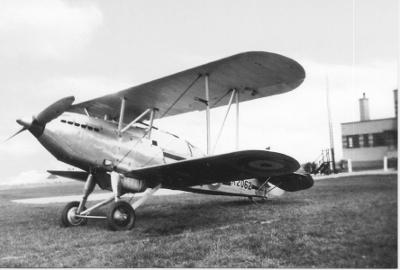

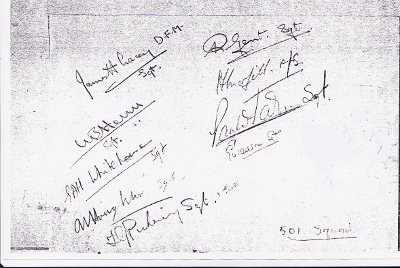

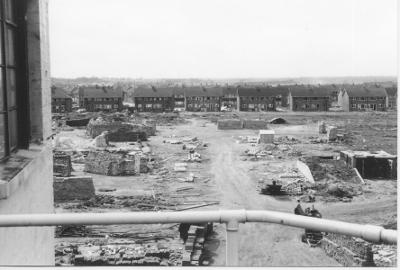
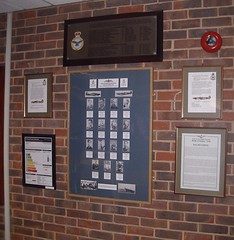
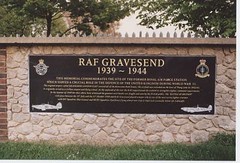
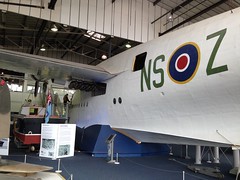
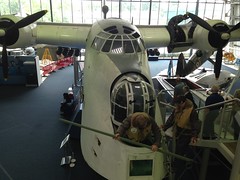
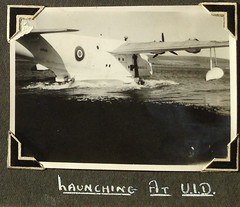
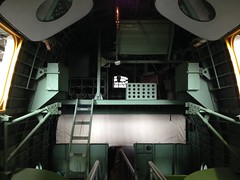
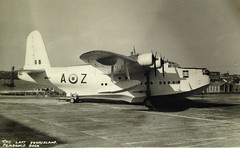
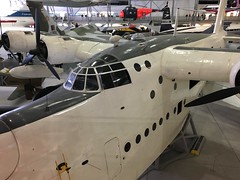
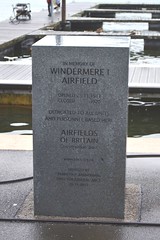
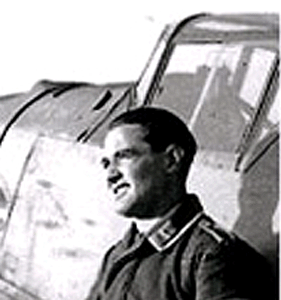

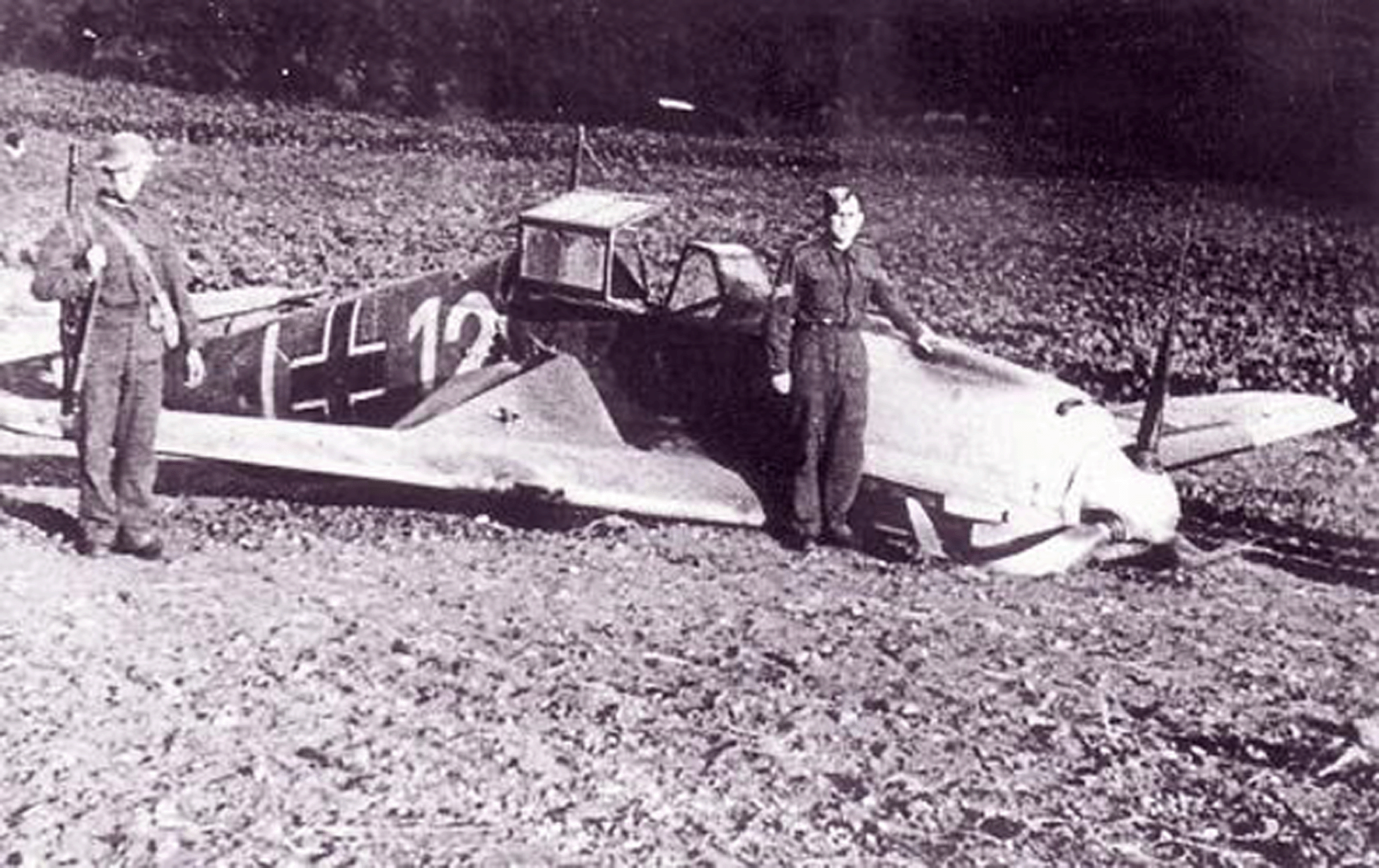


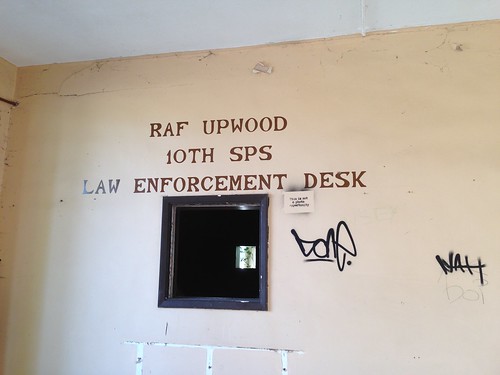

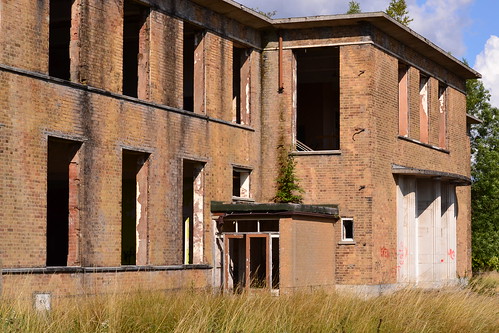

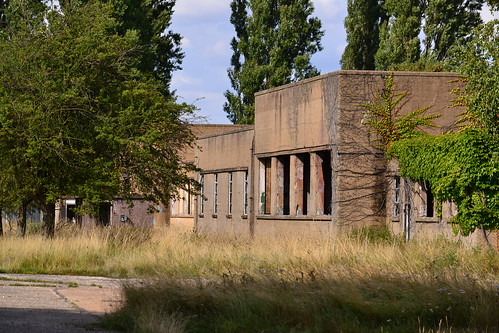


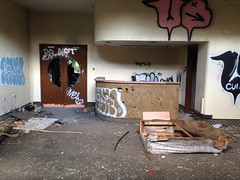
 Aviation Trails