RAF Bircham Newton (Part 1 – The Early Years)

The north Norfolk coast area boasts numerous wartime airfields and several Cold War examples too, all of which are now closed. Many of these retain buildings or parts of runways in various states of disrepair. In Trail 20, we visit three of these and in one case a substantial amount remains solely thanks to its owners. As we revisit Trail 20, we look at the long history of RAF Bircham Newton.

RAF Bircham Newton.

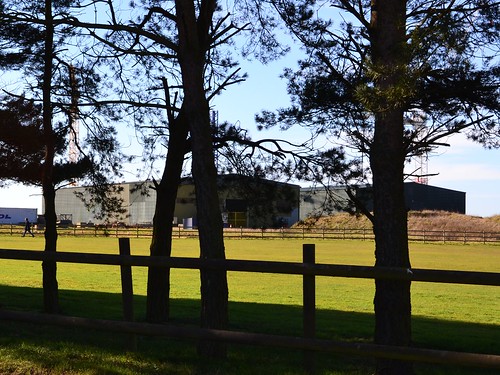
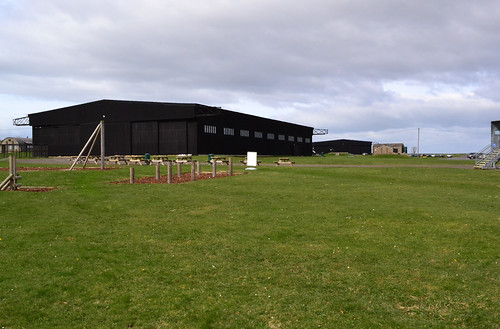
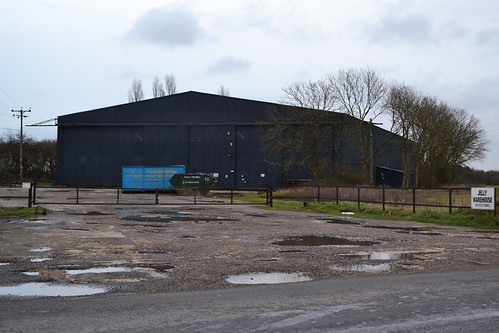
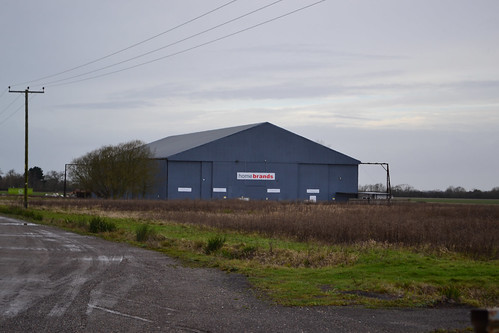
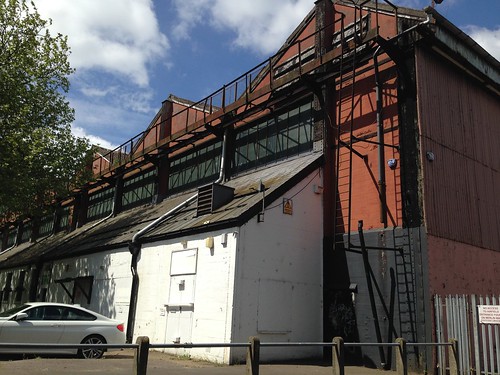
RAF Bircham Newton has one of the country’s best preserved technical and accommodation areas anywhere in the UK. This remarkable achievement is largely down to the owners, the Construction Industry Training Board (CITB), who opened their first training centre here at Bircham Newton in 1966. Attracted particularly by the large hangars, they are an organisation who specialise in training people for the construction industry through a number of training centres spread across the UK. Their work at Bircham Newton has ensured maintenance/preservation of many (but not all) of the buildings on site.

Located 8 miles from the Norfolk town of Fakenham, RAF Bircham Newton has associations with several airfields including: RAF West Raynham (its parent), RAF Docking (its satellite from where all night flying took place) and four minor decoy sites including the former RFC/RAF Sedgeford.

With its origins in the First World War, prior to the birth of the Royal Air Force, Bircham Newton has had a long and distinguished career mainly serving under 16 Group Coastal Command, who operated a range of single and twin engined aircraft from the site.

By the end of the Second World War, it would have seen considerable development, including three runways, all BRC steel matting (British Reinforcing Concrete), three ‘C’ Type Hangars, three Bellmans, ten Blister hangars and two Belfast hangars mainly located in the south eastern corner. It would also have an extensive range of accommodation and technical buildings catering for around 3,000 personnel of mixed rank and gender.

Opened in 1916, little initially happened with the airfield, and it wasn’t until near the war’s then that Bircham really came into being. Its first operational use was as a Fighter Gunnery School in 1918, with No. 3 School of Aerial Fighting & Gunnery (later known as No. 3 Fighting School) as its initial resident.

The School was born out of the need to train both pilots and gunners in the early biplanes to use their guns effectively in aerial combat. With their roots in the Auxiliary School of Aerial Gunnery, they were formed in May 1918 when Numbers 2 and 4 merged with another two Schools, Numbers 1 and 2 School of Aerial Gunnery. This amalgamation of ‘Schools’ was designed to streamline the complex array of establishments that had grown out of the need for new gunners and pilots. Once formed, they would be one of four new schools which were joined by a fifth in September later that year. Operating a range of aircraft including: B.E.2e, Bristol M.IC, D.H.4, Dolphins, Camels and H.P. 0/400 aircraft, their stay at Bircham would however, be short lived, moving to nearby RAF Sedgeford in November of that year.

Early losses with trainee pilots were high, novices learning to fly the hard way. At Bircham, one such loss occurred to 2Lt. Horace G. R. Boyt, who was killed when his Sopwith Camel (D8226) of No. 3 Fighting School stalled whilst attempting a forced landing near to Thornham bombing range, on July 31st 1918. 2Lt. Boyt was only 19 years of age at the time of his death – a young man taken in the prime of his life.

Possibly Bircham’s most significant early aircraft was the Handley Page V/1500 (Super-Handley) bombers*1. An enormous four-engined aircraft, it first flew in May 1918, and was designed to hit Germany hard, striking targets as far away as Berlin. The V/1500 was more than capable for the role too. It could carry up to thirty 250lb bombs over a range of 1,300 miles with a crew of six. Even more unusual, especially for an aircraft so large, it boasted folding wings; presumably this allowed it to be placed inside a hangar/repair shed for maintenance or storage.

BRITISH AIRCRAFT OF THE FIRST WORLD WAR

Handley-Page V/1500 heavy bomber biplane possibly at Bircham Newton. (© IWM Q 67329)

These aircraft arrived with three squadrons, the first 166 Squadron, was formed on 13th June 1918. Whilst initially receiving FE.2Bs, the squadron was created with the sole purpose of bombing Berlin, and the d’elite crews (mainly Canadian) were hand picked accordingly; a situation not unlike 617 (Dambusters) Sqn of the Second World War. Bircham Newton was chosen for these aircraft, as it was both the most suitable and the most easterly aerodrome available to the RAF at that time.

Formed under the command of Major Cecil H. Darley DSC and Bar, DFC,  a seasoned veteran of the war, the squadron fell under the control of 3 Group, a relationship it maintained until 13th September 1918 when it was transferred to 86 Wing, 27 Group. As the squadron rapidly developed, it naturally grew in size taking on new staff on a regular basis. By the end of September, after its Group transfer, it would have 17 officers and 308 ‘other ranks’ on its books.

After building the squadron up and preparing for war, an audacious and no doubt suicidal attack, was planned for November 9th 1918 – a raid on Berlin. However, maintenance problems meant that only two of the three aircraft at Bircham Newton were serviceable, this despite ground crews working hard to get all three in the air. There then followed a spell of bad weather which caused even further delay to the operation. By the time the situation had improved and the weather was more favourable, the armistice had been agreed, and so the raid was no longer required. As a result, the squadron was ordered to ‘stand down’ and the raid never took place.

For 166 Squadron it was a bitter disappointment, had the war gone on and the flight taken place, they certainly would have made history regardless of whether or not they were successful in their task. Perhaps they too would would have been as famous as their Second World War partners 617 Sqn.

As for the V/1500s, it is believed they were left in Bircham’s sheds, allowed to decay until they had deteriorated beyond use, ultimately they were scrapped. A rather appalling end to an incredible aircraft.*2

The second squadron to be formed with these remarkable aircraft here at Bircham, was 167 Sqn, who also failed to see any active military service. Being formed on the 18th November 1918, just days after the Armistice was agreed, they too were no longer required.

The last of these special squadrons to be created was 274 Sqn,  which was also  formed here, at Bircham Newton, a year later on 15th June 1919. Personnel for the unit came from the nucleus of No.  5 (Communication) Squadron after it was renamed. As the war had now come to a conclusive end though, there seemed little need for these huge, long-range bombers and so all three units were disbanded each within six or seven months of their initial creation.

The immediate post-war era saw little interest in the building of a military force, especially an air force, and strong opposition from both the Navy and Army was fuelled by an anti-war feeling amongst the British public. As a result, many airfields were sold off, aircraft and equipment were scrapped and thousands of personnel demobbed. Airfields like Bircham Newton, now had in their store, numerous surplus aircraft awaiting disposal.

On of these surplus aircraft was the V/1500, and it would be Major Darley of 166 Sqn, who would go on to fly one, not in an operational  capacity, but as a non-stop flight to Madrid to promote these long range aircraft as potential civilian transports. It was not all plain sailing though, for the trip nearly cost Major Darley his life when, on the return leg, the aircraft got into difficulties and crashed into he sea off Biarritz. Managing to survive the accident, Major Darley eventually returned home to Bircham where he continued his military service. In honour of his achievements, the Spanish Government awarded Major Darley the Cross of Military Merit.*3

In a twist of fate, Major (now Captain) Cecil H. Darley, was joined in 1919 by his brother Flt. Lt. Charles Curtis Darley, also a veteran of the First World War, here at Bircham Newton, and they would be tasked with flying more of these surplus aircraft, this time Vickers Vimys, to Cairo. On their first trip together, on 24th September 1919, they departed Bircham heading for France, then onto Rome and eventually Cairo. On the 27th, following a forced stop at Lake Bracciano, 20 miles from Rome, the aircraft struck a telegraph pole causing it to crash. The resultant fire killed Captain Cecil Darley whilst his brother tried in vane to pull him free from the burning wreckage.*3

BRITISH AIRCRAFT OF THE INTERWAR PERIOD

Vickers Vimy (© IWM Q 73389)

Whilst Britain had entered a period of ‘demilitarisation’, the early 1920s saw increasing Government concern over France’s build up of military aircraft, particularly its bombers. The Government now saw France not as  potential Allie, but a potential aggressor, and there was now a growing concern over Britain’s lack of defensive strength.

By 1922, Britain had only 12 squadrons available in the UK, a weak and lacking force it would have been unable to counteract any aggressive moves made by the French. Consequently the Government put in a place a plan to rebuild its forces and increase this number, to a more substantial 52 squadrons by the mid 1920s.

In Part 2. we see how Bircham developed in response to the Governments plans and how new squadrons arrived at this rapidly developing airfield.

The full text can be seen in Trail 20 – North Norfolk Part 1.
The Development of Britain’s Airfields (Part 7).

Whilst the runway’s remains one of the biggest features of an airfield, perhaps one of the most discussed and certainly visible is the hangar. Large sheds used to maintain aircraft, many still dominate the skyline today, used by farmers and industrial companies, they are massive buildings, but yet many remain classed as temporary or even transportable!

The development of these huge buildings is another that lasted many years, and whilst similar in layout and design, they are as complicated and as varied as any other building found on Britain’s airfields.

Hangars and Aircraft Sheds.

The topic of aircraft hangars is well versed in a large number of books and internet references. They, like the runways, can explain much about the history and use of an airfield, being the largest single building on any airfield site. Distinguishing features between hangar types is often difficult to see, many now re-clad or updated with modern features, doors or materials, even the differences between some designs is so small, without technical drawings or measurements, ascertaining the type can be all but impossible.

Hangars (or aircraft sheds as they were initially called) have been fairly constant in design, however, different services used different types, Admiralty seaplane sheds for example, were primarily side opening, whereas RAF hangars were generally front opening. Design and construction was undertaken by numerous companies (Herbertson & Co. Ltd., Nortons Ltd., Teeside Bridge and Engineering Co. Ltd., and Sir William Arrol & Co.) and even Handley Page Aircraft Co. and Boulton & Paul dabbled with the idea. With so many forms being used, it is a topic both detailed and extremely wide.

This is not therefore, intended to describe each and every hangar ever built (Second World War Air Ministry designs alone covered more than 56 types!), but more a general realisation of the huge development they undertook during this expansion and wartime period on RAF / USAAF airfields. Figures quoted here are generally rounded.

In order to understand the changes in aircraft hangars we need to briefly look at those of the First World War, where aircraft were stored in ‘sheds’, often made from canvas covering a wooden frame, or as a more permanent construction, completely wooden sheds with sliding doors. Later on these were built using metal (iron in particular) and were designed to be permanent, capable of housing several aircraft at a time.

The First World War hangars were varied and often crude, some little more than glorified tents, but through development famous names such as the Bessonneau and Hervieu were created toward the end of the war. Hangars became so large that specialist units had to be created solely to transport, erect and maintain them, and their use became more widespread.

The most common hangar of this period, the Bessonneau, was the first standard transportable hangar used on Royal Air Force airfields. Modern forms of it are still in use today, using different materials, they are quick to erect and offer reasonable protection from the weather outside.

The Bessonneau was a wooden frame structure covered in canvas. It was a simplistic design, able to be erected in as little as two days by a group of 20 skilled men. Heavy canvas doors open at one end allowing aircraft to be moved in and out with relative ease. The problem with these hangars was that the canvas was prone to freezing in winter and therefore becoming difficult to use.

There were two models of the Bessonneau built, differing only in their length – either 79 feet or 118 feet – but both were 65 feet wide.

The interwar and early war years were perhaps understandably,  the years in which the greatest hangar development occurred. The Air Ministry – the body overseeing the works – decided upon a system of ‘structure type’ using names and designations such as, Type ‘A’, ‘B’, ‘C’, Bellman, ‘T2’, etc., and just like the expansion period schemes, they progressed through this system as new developments came about.

The first type was the Type ‘A’, a permanent design, originating in 1924, it was used well into the 1930s when it was gradually replaced during the expansion period. Some examples did last well into the war and even beyond, for example, North Weald, one of the first airfields to be allocated a Type ‘A’, still uses one today.

Type A Hangar

Type A Hangar at North Weald. One of the first stations to have these types of Hangar, it has workshops attached to the Hangar side.

The Type ‘A’ is probably the first to represent the modern hangar, doors at both ends in leaves of four running on rails. Workshops are attached to the hangar side, something that was discontinued as Britain entered the war. Walls were reinforced with concrete to protect from bomb splinters, and they were built 249 feet long and 122 feet wide.

During the late 1920s, the Air Ministry published requirements for new heavy bombers, and these would require new hangars in which to maintain them. In response, the Ministry then updated the Type ‘A’ hangar to the Type ‘B’. In essence a larger version of the Type ‘A’, (160 ft span and 273 ft in length) the ‘B’ was named the ‘Goliath‘ with only three being built (each being a different length). One of these was at RAF Martlesham Heath and is still used today on what is now the industrial park. Like the Type ‘A’, the roof of the ‘B’ is possibly its most discernible feature, a series of trusses along its length crossing laterally over the roof.

With expansion period demands increasing, further developments were needed, and it was envisaged that an increasing bomber size would be needed if substantial bomb loads were to be delivered deep into the continent. The current size of hangar was now considered too restrictive and so a new buildings would be needed. The requirements of the Air Ministry was for a hangar with a span of 150 feet and length of 300 feet. With these in place, new aircraft specifications could be issued.

The Type ‘C’, (designed in 1934) as it was designated, would become the dominant building on any airfield and therefore visible from quite a distance. As airfield designs were subject to scrutiny by the Society for the Preservation of Rural England, local objections were taken into account during the design process. To appease any  objections, the steel frame was covered with local brick or stone, keeping it inline with other buildings not only on the airfield, but houses and buildings erected locally.

Most airfields during the expansion period were built with these hangars on site, and naturally went through a series of developments and improvements. This means, that there are many different forms of the Type ‘C’: gabled roof, hipped rafter and reinforced concrete. Another modified version of the ‘C’ appeared in 1938 and was designated the ‘C1’ (or ‘Protected’), this was an austerity measure development, reducing the amount of material used by lowering the roof height by 5 feet – internal metal work was also left partially exposed. Both the ‘C’ and ‘C1’, continued to be built with offices, workshops and aircrew accommodation attached to the hangar side, the idea being that it was more efficient to do so for the repair of the aircraft inside. As these were larger in width and length than their predecessors, they would have six leaf doors also sliding on top and bottom rails.

RAF Upwood

Type C at the former RAF Upwood.

1936 saw a dramatic change in hangar design, with two new requirements being issued by the Air Ministry. Firstly, storage space was now running out and so new facilities were required. These Aircraft Storage Unit Stations (ASU) would need their own hangar type, and so a requirement for these was put forward. Also at this time, the Ministry put out a demand for transportable hangars, these would replace the ageing Bessonneaus of the First World War. The response to these demands were three storage hangars and two temporary hangars.

Storage Hangars.

The Type ‘D’, ‘E’ and ‘L’ Hangars, were a development used specifically by the ASU stations, and they were not generally built on front line operational airfields. They were virtually identical in size to the Type ‘C’, but each type was marginally bigger in span 150 ft, 160 ft and 167 ft than the previous model, and all were the same length at 300 feet. The three types were different from previous hangars in that they had curved roofs, allowing the ‘E’ and ‘L’ to be covered with soil for protection and camouflage (the ‘D’ had straight side walls and therefore could not be covered). ASUs were built to assemble and disassemble aircraft for shipment to operational airfields in Britain or overseas. Aircraft were stored, in varying degrees of assembly within these units, and heavy hoists were often used to store aircraft ‘tail up’. However, with the outbreak of war, aircraft storage was thought better dispersed around the airfield and not concentrated in one space, so this method of storing aircraft was abandoned. Many of these hangars still remain today, used by small industrial units or for farm storage.

The next two types, the ‘J’ and ‘K’, were virtually identical in design, again with curved roofs, they were used for storage of aircraft. The ‘J’ can be found on many operational airfields, built in conjunction with other main hangars (Waterbeach is a very good example of this combination), whilst the ‘K’ was built on ASU stations. The design came in as a result of Expansion Scheme M, and was as a result of the call for 2,550 front line aircraft by March 1942.

The main difference between the two, (other than their location) was in the roof structure, the ‘K’ having lifting tackle rails along its width, while the ‘J’ were along its length. The ‘K’, being used for storage of aircraft, didn’t have any windows, where as the ‘J’ did as offices and workshops were in use constantly. Like previous hangars, the ‘J’ and ‘K’ both had a span of 150 ft and a length of 300 ft.

RAF Waterbeach 'J' Hangar

A ‘J’ hangar located at RAF Waterbeach.

Transportable hangars.

The 1936 transportable hangar requirement, asked for a hangar that could be easily erected and didn’t require a permanent base. It also asked for doors at both ends and needed to be simplistic in design, with parts being interchangeable. These hangers also saw the separating of the office/workshop facilities previously built onto the side of the hangars, these now being located in buildings in the technical and administrative areas. After considering numerous designs, two were chosen and ultimately built.

The first of these, and the primary choice, was the Bellman. Designed by an engineer within the Works Directorate, N.S. Bellman, they were smaller than previous hangars (88ft span and 175 ft on RAF bases) and could be built in under 500 hours by a dozen men. So successful, were they, that over 400 were built between 1938 and 1940 across a wide range of airfield types. Some of these examples even appeared in Russia.

Bellman Aircraft shed

Bellman Aircraft sheds at the former RAF Bircham Newton

The second design, was the Callender (later Callender-Hamilton with modifications) Hangar, designed by the bridge design company Callender Cable and Construction. These had a span of 90 clear feet, with a length of 185 ft, and were used on both RAF and RNAS airfields. There were only eight of these built before the outbreak of war, examples of which appear at East Fortune, further examples with lower roof clearances (17 ft) being purchased after 1940. The Callender-Hamilton are best recognised by their lattice-work on the top door rails.

Callender-Hamilton Hangar East Fortune National Museum of Flight

Callender-Hamilton Hangar East Fortune National Museum of Flight

As the war approached, 1939 – 1940 saw a transition period between ‘permanent’ and ‘temporary’ buildings, although many of these temporary buildings still stand today! Because of this change, many airfields had various hangars built, something that often gives a mix of hangar designs on one airfield which can cause confusion as to its age and origin. However, from this point on, all wartime hangars were designed as temporary hangars, designed with short lives and easily assembled / disassembled.

By 1940, the Bellman was considered too small for the RAF’s requirements and a new design was going to be needed. An agreement between the Air Ministry and Teeside Bridge & Engineering resulted in the ‘T’ series of hangars, perhaps the most well-known of the hangar designs.

The ‘T’ series covers a wide range of (temporary or transportable) hangars, each slightly different to the previous, but designed as three main types; T1 (90 ft span), T2 (113 ft) and T3 (66 ft). The length of each hangar varied depending upon local requirements and the number of additional bays added as needed. The design number e.g T2 (26) indicated the number of bays (26) and hence the length.

The ‘T’ range were a diverse and complicated range, the ‘T2’ being sub split into 5 variants (T2, T2 Heavy Duty, TFB (flying Boat), TFBHD (flying boat heavy-duty) and T2MCS (marine craft shed), so the identification of each being difficult without measuring equipment.

RAF Wratting Common

A T2 hangar at RAF Wratting Common.

On first inspection the ‘T2’ and Bellman look virtually identical, both lightweight, steel lattice frames with metal side panels. The main distinctions are that the Bellman doors are flush with the top of the side panelling whereas the ‘T2’ has an extra level of panelling and so are not flush. The other difference is the lattice frame inside the roof, the ‘T2’ has only diagonal braces whereas the Bellman has vertical braces in addition to the diagonals. Both hangars have six leaf doors on sliding rails supported both top and bottom, allowing full width access.

A final addition to the ‘T2’ were the Ministry of Aircraft Production Hangars the Type ‘A’ (A1 & A2) and Type ‘B’ (B1 & B2) built in the mid war years 1942-43 and funded by the Ministry of Aircraft Production. These hangars, not to be confused with the type ‘A’ and ‘B’ of the 1920s, were designed specifically for the repair of damaged aircraft especially operational aircraft on their own airfield. They were also erected at ASUs, and Satellite Landing Grounds (SLG).

RAF Wratting Common

A B1 at RAF Wratting Common an RAF bomber station.

The ‘B1’ and ‘B2’ were built specifically at Bomber Command airfields for the repair of damaged bombers thus eliminating the need to transport them long distances to specialist repair depots. Designed by T. Bedford Consulting Engineers they were eventually found on virtually all Bomber Command airfields by the end of the war and were manned by civilian repair organisations. Examples of both the ‘T2’ and ‘B1’ can be found in use at Wratting Common.

‘A1’ and ‘A2’ hangars on the other hand, whilst similar in design – metal cladding on metal frames – were slightly smaller and found only on aircraft factory airfields. Thus again there are virtually two identical hangars designated primarily by their location!

The last hangar to be commonly found on RAF / USAAF airfields were the blister hangar. A hangar of a temporary nature that usually used a curved metal frame covered in metal sheeting. The Blister hangar was the brainchild of architects and consulting engineers Norman & Dawbarn and William C. Inman of Miskins & Sons, and was designed to accommodate small span aircraft ideally fighters dispersed around the perimeter of airfields. Maintenance or storage could easily be carried in these hangars, and they could easily and quickly be erected, no base or foundations being required before hand.

These types of hangar came in three designs, the standard blister, (timber construction), over type (light welded steel) and Extra Over (also light welded steel), and ranged in span from 45 – 70 feet, A further type built was that of Double extra Over and Dorman Long, a separate design similar in shape but securely bolted to foundations. Many of these hangars have now gone, the majority being dismantled and sold off, only to be erected elsewhere on farmland well away from their original location. The father of a friend of mine, was employed in this very role, one day finding a Spitfire inside a blister hangar which nobody claimed to own!

By the end of the war, in excess of 900 ‘T2’ hangars were erected on British airfields including those built abroad. In 2004 it was thought there were about 100*7 left surviving on MOD property in Britain. A number have also survived on farmland used to store foodstuffs or machinery, or industrial sites. The ‘T2’ remained the main hangar in use by both the RAF and USAAF during the war, appearing on all Class ‘A’ airfields, occasionally with other models also being present. A number of other older models also continue to serve even to this day. Considering many of these were built as temporary buildings, they have survived remarkably well and are testament to the engineering design of the pre and early war years.

This is by no means an exhaustive list of those hangars that were built during the period 1918 – 1945 (other examples include the: Aeroplane Twin Shed; RFC Sheds; Seaplane Sheds; General Service Sheds; Plane Stores; Running Sheds; Lamella (a German idea built in Britain); Hinaldi; Main Hangars; Lamson Hangars; Fromson Hangars; Robins Hangars; Butler (a US design); Merton; ‘S’ type Hangars (RNAS); Pentad Hangar and Boulton & Paul Hangars and of course post war examples such as the Gaydon), but hopefully it has shone a glimmer of light on these remarkable structures that often dominated the skyline and that remain the centrepiece of many a disused airfield today.

In the next section we shall look at that other main iconic building in airfield design, the watch office.

Sources and further reading. 

*7Technical Bulletin 02/02 “World War II Hangars – Guide to Hangar Identification” Ministry of Defence (February 2002).

Development News for Britain’s Airfields (3).

A third proposal for airfield development had been released in this last week. The first two, RAF Downham Market and RAF West Raynham have been highlighted in previous posts. The third, is possibly the most significant so far and one that like RAF West Raynham, sets a standard by which future developments could proceed. This site is that of RAF Coltishall.

RAF Coltishall – The Future

RAF Coltishall was home to around 56 RAF Squadrons throughout its life, these included the Jaguars of 6, 41 and 54 Squadrons along with a wide range of  aircraft from both the Second World War, Cold War era and the Gulf War.  It is a large site that accommodated around  1,500 people at its height, with four hangars, a single runway and both extensive accommodation and technical sites.

Vacated by the RAF  in 2006, it has been the subject of a public consultation since 2013. Questions were asked about the possible future use of the site which included light aviation with air displays, a change to affordable housing, industrial use and site redevelopment. Norfolk County Council took the future of the site very seriously, knowing how much it meant to both the local people of Norfolk and Britain’s aviation heritage. The results of this consultation have now been released and can be accessed through the link at the base of the page.

DSC_0095

The Control Tower at Coltishall may be part of a Heritage Trail

As with West Raynham, a site like Coltishall, that is complete, offers a unique opportunity to develop the buildings and structures whilst retaining and highlighting the heritage value that it represents. The buildings and infrastructure are ideal for a small self-contained ‘village’ that encourages links with both the local and wider community as a whole.

Norfolk County Council have recognised the importance of this site in particular, and as a result, much of it is now listed as ‘ancient monuments’ or locally listed buildings. These include: the World War 2 dispersals, Cold War blast walls, hangars, tower and communal buildings. It survives today in its entirety, primarily because the entire airfield is designated a Conservation Area by Norfolk County Council. This status gives protection against some of the more virile development and ensures in part, the preservation of the site for future generations.

Norfolk County Council have now released their proposed plans for the site, which include a harmonic development of both the main technical and accommodation areas utilising the buildings in situ where they can.

These plans may mean the sad loss of the main runway and grassed areas, probably both being returned to agriculture or open green space. It would also suggest a loss of much of the perimeter track as well.  However, their plans do include creating a public heritage trail, viewing platform and sign-age to promote and explain the uses of Coltishall, as it was throughout its aviation life. There are also suggestion of ‘interpretations’ of both cold war and second world war aircraft in their respective pens.

Just this week however, a private enterprise (led by a cycle shop owner) put forward a proposal to use the three-mile perimeter track as a cycle track for recreational and competition cycling opportunities. Further proposals include  a £300,000 development of the former operations room into a cafe and cycle workshop.  Landscaping would also be included making it a hub for recreational activities linked by cycles paths to Norwich, Hoveton and Aylsham.

Financial support has not yet been granted for this particular part of the proposal, but it is hoped that the site will be open mid 2016.

Norfolk County Council are considering the plans in line with their own heritage and development ideas. If it all goes ahead, then once developed, RAF Coltishall is likely to be the best preserved airfield in the UK that has not only been developed but opened to the public. Furthermore, if these proposals are to come to fruition, it could become a model for future development of Britain’s old wartime relics.

Details of the Council’s proposal can be found here.

The overall plan can be found here.

RAF Coltishall appears in Trail 7.