In Trail 66, we return to the Bedfordshire and Northamptonshire borderlands to visit the site of another former bomber airfield that has been almost entirely erased from the landscape. Although its wartime service was relatively brief, it was defined by intense operational pressures, loss, and remarkable acts of heroism.
Despite continuing in use well into the Cold War and beyond, the airfield failed to leave the regional mark it deserved. Over time, its purpose changed and its structures were gradually removed, the land being adapted to modern energy use, leaving little visible evidence of its former importance. This transformation stands in contrast to the role the station once played and the legacy it holds today.
Home to a small number of RAF units, it was predominately an American base during the Second World War, and remained with them into the depths of the Cold War. Although flying activity ceased in 1962 with the departure of the modern United States Air Force, a military presence remained there until the Ministry Of Defence (MOD) sold the site as recently as 2005.
Whilst some aspects of the original airfield do remain, the vast majority has been decommissioned and removed, including the runways, works buildings and training facilities, leaving little more than ghostly evidence behind.
In this part of our trip to Northants and Bedfordshire, we visit the former RAF Chelveston.
RAF Chelveston (Station 105).
RAF Chelveston (Station 105) lies across the two counties of Bedfordshire and Northamptonshire, and although the border crosses roughly through the centre, the majority of the site lies in Northampton. Like many wartime airfields it went through a series of name changes depending upon who owned it at the time. Today it is known as Chelveston Renewable Energy Park, reflecting its modern use as the ‘centre of technological innovation’ capable of producing enough electricity, to power 60,000 properties.*1
During the planning stages in 1940 the aerodrome site was briefly referred to as Shelton, after the nearby village to the east. Before the station officially opened in 1941, however, the name was changed and it entered service as RAF Chelveston, the official British designation. Later in the war the airfield passed into American control and was designated Station 105 by the United States Army Air Force. Over the years though, it was also referred to as RAF Station Chelveston, and simply Chelveston Aerodrome, reflecting both its early planning name and the variety of roles it fulfilled throughout its operational history.
The land upon which the airfield sits, lies approximately four miles to the east of Rushden and about twenty-seven miles south-west of Peterborough. It shares a region – designated by a Peterborough, Northampton and Bedford triangle – with a number of other former bomber airfields including Kimbolton, Thurleigh and Molesworth.
The land for Chelveston (a name derived from a Norman family) was acquired by the Air Ministry in 1940, with construction beginning shortly afterwards. The airfield was initially intended for the RAF and the reformed 8 Group, with Taylor-Woodrow Ltd serving as the main contractor. At first, it had grass runways and minimal storage, consisting of a single ‘J’-type brick-and-metal hangar measuring 300 ft by 151 ft. Later, two ‘T2’-type metal hangars were added, each 240 ft long, 115 ft wide, and 29 ft high. The original design fell under development scheme ‘M’ of the Government’s expansion programme, which essentially replaced the earlier ‘C’-type hangars with the newer ‘J’-type. Since construction began during the war rather than before it, accommodation sites were dispersed away from the main airfield site – unlike pre-war designs, where living quarters were typically located on-site.
At Chelveston, these accommodation sites were positioned to the south-west of the airfield, unusually close to the main runway’s flightpath – in-fact within just a few hundred feet of its threshold. In all there were twelve accommodation sites, supplemented by two sewerage sites, giving a total of fourteen in all. These accommodation areas included: two communal sites, officers’ quarters, enlisted men’s quarters, sick quarters, and a large WAAF area with its own sewerage facilities.
The all important technical area, lay directly across the dividing public road from here; a little further north than the accommodation area and on the western side of the main airfield. It included a wide range of buildings including: MT (motor transport) sheds, operations blocks, briefing rooms, link trainers, stores, flight offices, works offices and the like.
Typical of the range of buildings found on any wartime airfield, they were a mix of both temporary and permanent construction. The manufacturers involved were also typical of those pertaining to wartime airfields: Laing, Romney, SECO, Ministry of Works and Nissen, who used a variety of construction materials including timber, iron, plasterboard, brick and concrete to create these various standard design structures.
On the main airfield itself, No. 1 runway ran north-east to south-west, whilst No. 2 dissected it in a north-west to south-east direction. The third runway, No.3, ran just off north to south. The classic ‘A’ frame was created by the crossing of all three in the centre of the airfield with the runways extending extensively beyond this point. As in all cases, the three runways were linked by a circular perimeter track, around which eventually, some fifty-five hardstands were built; both a mix of ‘spectacle’ and ‘frying-pan’ types.
As with all airfields of its kind, a bomb store would be incorporated well away from the accommodation and technical areas, and in Chelveston’s case this was just off to the north-east. Here, a number of hardened shelters were interlinked by small tracks along which the bombs were transported to the various aircraft dispersals.
Bombs being man-handled at Chelveston. (IWM FRE10440).
Overseeing movements in and out of the airfield was the watch office, which stood proud with clear views across the airfield. Located to the western side of the site, the office was built to drawing 518/40 – the largest and most common wartime design. This particular build evolved from the 1939 drawing, number 5845/39, and incorporated the meteorological office within its layout. By combining both functions into a single structure, it enabled the rapid exchange of vital weather information.
Chelveston’s construction began in 1940 on land straddling the Bedfordshire-Northamptonshire border. A basic airfield to start with, it soon began to develop and grow, all part of Britain’s rapid wartime airfield expansion programme. Over the next few months it would grow and develop into a standard three-runway bomber airfield complete with dispersals, technical buildings, bomb stores and extensive accommodation sites. Though the landscape has since been transformed into the modern Chelveston Renewable Energy Park, the wartime layout still hints at the scale and ambition of the original station.
The story of how this quiet stretch of countryside evolved from construction site to operational wartime airfield begins in Part 2, as RAF Chelveston opens its runways and the station starts its journey toward becoming an important Allied base.
Part 3 took us through the 1920s and 1930s in the life of Sutton Bridge. As the war opened, the airfield swung between roles with remarkable speed. From a brief stint as a recruit training centre to hosting newly formed 264 and 266 Squadrons, the airfield grappled with scarce aircraft, harsh winter weather, and early operational mishaps. Defiants, Blenheims, and then Spitfires tested both pilots and crews, while accidents and maintenance challenges were constant. By early 1940, with the squadrons gone, Sutton Bridge pivoted once more, becoming a hub for new recruits and small training flights, laying the groundwork for its next vital role as 6 Operational Training Unit.
The Birth of 6 Operational Training Unit
6 OTU were created on March 10th, 1940 from the ashes of 11 Group Pilot Pool who were up until then based at RAF St. Athan. They had been established specifically to train front line fighter pilots who had already mastered the basics of flying and were to be ‘polished’ up before passing on to front line operational squadrons.
Following the initial administration and setting up of the unit, a small party of four non-commissioned officers and twelve airmen, arrived here at Sutton Bridge. They were followed a few days later by the main party including six officers and ten further airmen. Once established, the unit would be commanded by Sqn. Ldr. Philip C. Pinkham, who led the first course for trainees beginning March 11th 1940.
Pinkham was responsible to the Station Commander, the recently promoted Wing Commander Philip R. Barwell, who had even as a Station Commander, remained a keen flyer. To meet his insatiable demand for flying, Barwell would take any opportunity to fly that passed his way, often pulling rank, he would fly in as many aircraft as he could, frequently in the guise of that common excuse an ‘air test’. The new OTU would offer a great opportunity for Barwell, operating a mix of aircraft types but mainly Hurricanes, Masters, Fairy Battles, Battle trainers and a Gladiator.
The early days of the OTU here however, were not as grand as many would have hoped. Yet another lack of serviceable aircraft combined with the poor Fen weather of 1940, led to a reduction of available flying days, and so one day a week the airfield would close with a ‘day off’ being given to those stationed here – hardly reflective of a war mentality.
Training for War: Sutton Bridge under the Spotlight
The part-time attitude to the job didn’t reduce the seriousness of their efforts though, and a visit by dignitaries including, as suggested in some sources, Hugh Dowding, the AOC Fighter Command, made sure they were aware of that.
On May 3rd 1940, Air Chief Marshal Sir Edgar Ludlow-Hewitt, the Inspector-General of the Royal Air Force, also paid a formal visit to Sutton Bridge. Crossing the airfield’s runways and observing the pilots in action, he took careful note of the station’s flying operations and training routines. His inspection combined a keen eye for detail with practical recommendations, aimed at refining instruction and ensuring operational readiness. The visit, recorded in Report No. 11, highlighted both the strengths of the airfield and the areas that required attention, underscoring Sutton Bridge’s vital role in Britain’s initial wartime training programme.*11
Hewitt’s inspection highlighted significant challenges at the OTU. Gunnery practice for visiting units relied on firing at four 20-foot target drogues, towed from the beam by the OTU’s four Henley aircraft. The training, however, was severely limited by the condition of the Henleys; a shortage of spare parts often meant that only one or two aircraft could operate at any time. Accurate gunnery depended heavily on the steady towing of the targets. Additionally, Hewitt was sceptical of the OTU’s claim that the large, slowly moving targets “get shot to bits at once.” His observations highlighting how mechanical constraints could, and did, directly impact the effectiveness of instructor and trainee practice.
Despite all these challenges though, courses rapidly progressed, and soon foreign nationals who had joined the RAF, began to arrive. These included those not only those from the Commonwealth but the European countries invaded by the Nazis along with a handful from the United States: all eager to join up before the US officially joined the war.
There would of course be many casualties during these courses, some due to mechanical issues, many due to pilot error, learning to fly a combat aircraft under combat conditions being a very risky business indeed. Many of these casualties form the sixty – joined by a single Luftwaffe airman – graves less than a mile away in the St. Matthew’s Church yard in Sutton Bridge.
A change in fortune meant that the increase in trainees also meant an increase in aircraft. By the middle of the year 6 OTU were operating thirty-four Hurricanes in addition to the odd twenty or so other types present here although they were still classed as ‘unserviceable’. Combine these with visiting detachments and the sky over Sutton Bridge soon became an incredibly busy airspace.
The ever increasing numbers of aircraft using the site inevitably led to a demand for more hangar space, and in May 1940, the first of two Bellman hangars were erected on the site, thus extending its ability to service damaged aircraft.
Following the fall of France, Britain stood alone, and many of the front line pilots at her disposal were either tired veterans or recently qualified and inexperienced, and so more crews were needed if they were to stand any chance of repelling the Germans, who so far, had rolled virtually unopposed across Europe. Many of these veterans of France, were now being posted into the training stations to train new pilots in the tactics and airman-ship that would hopefully save their lives. Sutton Bridge was no different, the record books for this period list endless postings in of these front line pilots as instructors, many holding DFCs or DFMs in reward for their action over France. One of those to arrive here was F. Off. Derek Dowding the son of Air Chief Marshal Hugh Dowding, the recruits were indeed in the company of the noble, Derek having the title ‘Honourable.’
F.O. Derek H.T. Dowding (right) with his father Hugh Dowding. (Battle of Britain Monument archive)
Training at a Cost: Accidents and Fatalities at 6 OTU
Life at Sutton Bridge was not without risk, even for the instructors. Sergeant Charles Cotton being the first from 6 OTU to suffer. On 25th June 1940, he sadly crashed after having only arrived about three weeks earlier at the airfield. Cotton was performing low level aerobatics near to the village of Upwell, not far from Sutton Bridge, when the Hurricane he was flying was seen to climb from low level, possibly stall and then dive nose first into the boggy Fen ground. The aircraft buried itself deep in the soil, leaving little trace on the surface of its demise.
The next day a recovery truck tried to remove the wreckage, but the boggy ground combined with limited access, made recovery difficult. With perseverance though, Sgt. Cotton’s remains were eventually removed from the aircraft whereupon he was taken to his home town in Essex and laid to rest.
To meet pilot demand, courses were cut from six weeks to two, increasing the already immense pressure on trainees to complete their flying training. This pressure often led to mistakes being made. Between June and November there were no less than eleven fatalities, six of which were involved in airborne collisions.
One such incident occurred on August 18th, when Sgt. Dudley McGee and Sqn. Ldr. Kazimierz Niedwiecki were involved in a collision in the skies to the east of Sutton Bridge. The pair were performing aerial combat techniques when the collision happened causing the death of both pilots. Niedwiecki, a Polish airman, had only just arrived at the airfield from 15 Elementary Flying Training School (EFTS) in Carlisle, a grading school for Polish pilots; whilst McGee had arrived two days after Niedwiecki from Ternhill’s 10 Flying Training School (FTS). Both airmen were experienced flyers, and so it is feasible that the pressure of getting through the course and onto active duty was a factor in their demise.
After colliding, Niedwiecki’s Hurricane came down on farmland near Terrington St. Clements whilst McGee’s fell near to Walpole Cross Keys a few miles away. Once recovered, both the pilots were buried in St. Matthews Church Yard in Sutton Bridge.
Instructors of Note: The Arrival of Bill Waterton
Dowding’s son was not the only notable person to instruct at Sutton Bridge. During the late autumn of 1940, one William ‘Bill’ Waterton was posted in to Sutton Bridge by his Squadron Commander Douglas Bader of 242 Squadron RAF Coltishall. Waterton had been in hospital for three months following a head injury suffered in a crash whilst providing cover over Dunkirk. He came to Sutton Bridge as an instructor and proved to be an exceptionally good one. It was a move that kick started a change in career for him that would change his life forever. However, at Sutton Bridge, providing instruction to other pilots was not enough for Waterton, and he yearned for a return to front line operations.
Waterton never got this move, instead he was sent to Canada, returning to the UK in 1943 on a posting to RAF Fighter Command and the Air Fighting Development Unit (AFDU) at RAF Wittering. Here he tested many captured German aircraft, pitting them against RAF fighters to see how they performed. Post war, he would fly a Gloster Meteor in an attempted world speed record achieving speeds in excess of 600mph. Speaking frankly and to the point, he would leave the RAF to fly for Gloster, the makers of the Meteor, and become a very successful test pilot pushing aircraft to their limits and nudging the much sought after sound barrier.
Being known for his ‘forthright’ attitude, Waterton achieved great things in aviation research, an achievement that was kick-started by his duties at RAF Sutton Bridge. *12 *13
Foreign Trainees and the Cost of Speed
As summer turned to Autumn and August to September, the RAF were losing pilots at an unsustainable rate, and Dowding needed many more and quickly. With many trainee pilots in the OTUs being foreign, and with poor English, he had little choice but to rush them through courses and get them into front-line units. The first Czech course consisted of some twenty airmen and lasted from 17th August to 11th September 1940. Virtually all of these went on to serve in the Battle of Britain, many being killed or posted as ‘Missing in Action’.
To expedite their movements, courses were refined further, and many trainees were sent up in pairs to practice combat manoeuvres on their own. One British pilot, Sgt. Frederick Howarth in L1658 and Czech pilot Sgt. Karel Stibor, collided in one such activity resulting in the death of both airmen. The two sites were cleared of immediate debris but the aircraft remained buried until the 1970s and mid 80s, when major parts were found and removed. These two men join the many others in St. Matthew’s. Such was the demand for new pilots that at Sutton Bridge alone, 525 pilots were posted in from, or out to, front line squadron between March and October 1940; only one-quarter of them not having fought in either the Battle of France or the Battle of Britain; most (345) having seen action in just the Battle of Britain. *14
The attack on Britain’s airfields was by now subsiding, but that didn’t stop the occasional bomb from dropping on Sutton Bridge, nor its ‘Q’ decoy site at nearby Terrington some 4 miles north-east. The first attack came in the night of August 30th-31st, in which bombs were dropped harmlessly on the dummy airfield. It was Terrington again at the end of September that would get another rogue bomber dropping its payload. By now the locals were getting worried and annoyed, and requested the site be moved. The RAF’s reply was not favourable nor was it what they wanted to hear. With yet another attack at the end of October, it was becoming clear why the RAF wasn’t going to play ball, a few dead horses and damage to walls was a small price to pay for keeping the training camp clear and operational.
‘Handcraft hut’ now a private building.
During the whole of the war, the ‘Q’ site took no less than six German attacks, whilst the airfield at Sutton Bridge received only three, a comprehensive reason for the use of such areas at this crucial time.
From 6 OTU to 56 OTU: A New Chapter
By the end of the Battle of Britain, the various OTUs had shown their true capability, fuelling the front line squadrons that would protect the UK from German invasion and sweeping the enemy from the sky. But changes were now afoot, and in November 1940, 6 OTU was disbanded immediately being renumbered as 56 OTU; the change coming through as a result of the reshuffle of the training units – ’50’ being added as a prefix to all OTUs.
56 OTU continued to fly the Hurricane using the squadron code ‘FE’. In fact, little changed and everything carried on as usual with little immediate evidence of the new change. The new, recently appointed station commander, Group Captain Bruce Caswell, continued his reign over both the airfield and the daily goings on at the site.
The new unit would form the main squadron at Sutton Bridge for the next two years continuing to train pilots in the art of dog-fighting and air gunnery; the renumbered 56 OTU carrying on pretty much where 6 OTU had left off. New pilots arrived and were pushed through the various courses; the RAF still desperate to get new pilots into front line squadrons as soon as possible.
The challenge of getting pilots through the courses was still a great one, and with so many trainees coming and going, errors, accidents and fatalities remained a common occurrence.
A New Spirit: The RAF and Its American Volunteers
The end of 1940 and the success of the Battle of Britain gave renewed hope and boosted morale for both aircrew and civilians alike. Now, and even though the United States was still out of the war, the RAF found itself being bolstered by a small number of American airmen wanting to join the fight and stand by Britain’s side. Some of these joined as early as 1939 as volunteer reserves, going on to fly during the Battle of Britain. Whilst there are records of US airmen flying in the battle, most went on to join the famed ‘Eagle‘ Squadrons joining names like Don Gentile, Don Blakeslee and Johnny Godfrey, many of whom have become household names in Second World War terms, with historical stories to match.
As a way to retain US neutrality, the airmen made their way through training schools in Canada to the UK, arriving by ship as civilians. Many were sent to 3 Personnel Reception at Bournemouth and then onto 57 OTU or the new 56 OTU here at Sutton Bridge to complete their training before passing over to RAF units.
The First American Loss: Pilot Officer William Davis
One of these pilots arrived in March 1941, P.O. William Davis, a twenty-five year old trainee from St. Louis. He found himself sent to Sutton Bridge, preparing to take on the Hurricane. With twenty-five flying hours under his belt already, he made his first solo less than two weeks after his arrival, managing a successful flight but suffering a problematic landing. The next day, he departed the airfield again, this time to carryout a map reading exercise over the Lincolnshire Fens. Unfortunately, the weather closed in and with a featureless landscape to navigate by, he eventually ran out of fuel and opted for a landing in one of the many expanses of Fen fields.
Unfortunately, as he landed, the undercarriage dug into the soft mud, flipping the Hurricane (P5195) onto its back breaking Davis’s neck, killing him outright. Davis was the first American to die at Sutton Bridge, this tragic accident cutting his war very short. He remains a long way from home, buried not far from the airfield in the local church yard at Sutton Bridge. His full story can be read in Heroic Tales.
Pilot Officer W. Davis, killed March 1941.
The Eagles Gather
His was the first of a run of several accidents. Later in the summer of that year, Sgt Bidgood and Flt. Sgt. John Craig, who both veterans of the Battle of Britain, collided over the nearby village of Terrington St. John, killing both airmen. Being experienced airmen and valued pilots, their loss was a tragic one that cost the RAF dearly.
The Americans however, kept on coming. During 1941 alone they accounted for twenty-six accidents at Sutton Bridge. By the end of the year, 144 US airmen had passed through the airfield, 87 of whom went on to fly with the famed ‘Eagle Squadrons’ before they were officially transferred to the USAAF in 1942.
March 1940 saw the birth of 6 OTU at Sutton Bridge, a fast-paced training hub turning skilled pilots into front-line fighters. Operating Hurricanes, Battles, and Gladiators despite shortages and harsh Fen weather, the unit trained British and foreign recruits under tight schedules and high pressure. Success came at a cost, with accidents and fatalities a constant reminder of the dangers faced even before reaching combat, underscoring Sutton Bridge’s vital role in preparing airmen for the Second World War.
In Part 2, we saw how Sutton Bridge grew from a temporary summer camp into a fully operational RAF station, shaped by innovation, spectacle, and the relentless demands of training aircrew. The lessons learned here – from aerobatic displays and night-firing trials to early experiments with new aircraft – prepared both pilots and the airfield itself for the pressures of wartime service. As Europe edged closer to conflict, Sutton Bridge stood ready, its evolving infrastructure and experienced personnel poised to meet the coming challenges of the Second World War.
In the tense early months of the Second World War, Sutton Bridge briefly served a crucial administrative and training role. On 14th September 1939, the airfield was designated a Recruit Sub-Receiving Centre, and within a week – on 22nd September – it was formally redesignated No. 3 Recruit Training Pool (RTP). The purpose was straightforward: to process and provide initial instruction for newly enlisted airmen as they entered RAF service. However, this function was short-lived – in what was typical of the rapidly evolving war-time organisational changes, No. 3 RTP at Sutton Bridge was disbanded on 29th October 1939, and the training process was relocated elsewhere.
Immediately, orders came through from 12 Group Fighter Command ordering the formation of two new squadrons: 264 Sqn and 266 Sqn, both to be stationed at Sutton Bridge. For a brief moment it appeared that this basic grass airfield would become a front line fighter station, propelling it into the limelight of Fighter Command, operating both single and twin engined aircraft. In charge of the two new squadrons and the airfield as a whole, was the new station commander, one Sqn. Ldr. Philip R. Barwell.
Barwell had previously been stationed at RAF Digby, in Lincolnshire, with 46 Sqn. and had himself trained here at Sutton Bridge no less than a decade earlier. He was famed for heading off the first enemy air attack on a convoy in British waters near to Spurn Head. In the attack he shot down one enemy aircraft and shared in the destruction of another, action which led him to receive the DFC followed by a rapid promotion to Wing Commander.
Barwell would oversee the organising and training of both these new squadrons. 264 Squadron, who adopted the name “Madras Presidency Squadron” after a financial donation to the squadron from the then President of Madras, and was led by Sqn. Ldr. S. H. Hardy; 266 Squadron, on the other hand, was led by Sqn. Ldr. John W. A. Hunnard. To fulfil the squadron’s obligations, Sutton Bridge would see a huge influx of men, all being posted in from various Training Schools, who over the next few weeks, would train to fly in the two new units.
The influx of men was not matched by the influx of machines for them to fly however. With continued delays in the arrival of the aircraft, crews were temporarily posted to other airfields to train and gain the vital experience they needed. On the ground, lectures filled many days, whilst some airmen were given temporary leave and others used the Link trainer to gain what basic experience they could.
Desperate to get started, pressure was put on those above, and on November 8th, the order was given for pilots of 264 Sqn to collect three Magisters (N3867, N3857 and N3868) from RAF Hullavington. These were followed three days later, by a further three for 266 Sqn. *9
Defiants, Battles, and the Harsh Winter of 1939
With little in the way of equipment, or even direction from the Ministry, 264 Sqn would very soon learn that they were to receive the new Defiant, a fighter built by Boulton Paul, and one which caused a major split in the ranks of the High Command. Being the first Defiant unit, it would be dogged by many issues including both political wrangling and production problems.
The Defiant, a much despised aircraft by both Dowding and Parks – due to their dislike of the idea of a free turning turret on a two seat fighter – came up against incredible opposition within the government bodies, but after much pressure from those higher up, Dowding succumbed and reluctantly accepted the squadron for the defence of the UK.
The political infighting and excessive demands put on Boulton Paul, led to delay after delay of its arrival at front line stations. Indeed, only at the end of the year, after 264 Squadron had moved to Martlesham Heath, did they receive any aircraft at all. The Defiants would go on though, to perform far better initially than Dowding could have hoped for, but its success was marred by poor management leading to huge losses and a reputation that soon saw it labelled unfairly as an utter failure.
The Defiant and its crews performed admirably during the early months of the war, particularly over Dunkirk, where 264 became the first ‘Ace in a day’*10 squadron. The crew, Flt. Lt. Nicholas Cooke and Cpl. Albert Lippett of 264 Sqn, shot down five enemy aircraft whilst patrolling over Dunkirk achieving the much sought after status that many young pilots would crave.
Sadly, the successes didn’t continue though, the Germans soon realising the aircraft’s poor performance, and the limitations of the turreted four Browning machine guns, it quickly became prey to the hungry Luftwaffe airmen especially during the Battle of Britain where it often flew without a much needed escort.
The Defiant was designed as a bomber destroyer, not a fighter, the idea being to attack and destroy bombers by flying along side or underneath, then rotating its turret and guns accordingly. However, on many occasions they flew alone and ended up taking on the Me 109s which were far superior in what became almost suicidal missions.
The crews that flew the Defiants, spoke very highly of the aircraft, and although many would lose their lives, they would defend the aircraft saying it was not used as it was intended and subsequently, as a fish out of water, it didn’t perform as well as they knew it could. Dogged by political infighting, the Defiant never achieved full status, instead being forced into a role it was never designed to perform, and so, naturally, it met with devastating results.
264’s departure from Sutton Bridge on December 7th, coincided with the arrival of the main party of 254 Sqn from Stradishall, who were in the process of receiving Blenheim IFs. Like the Defiants though, the Blenheim Squadron was having considerable problems, not with the supply of aircraft but with serviceability, many requiring oxygen systems, radios, guns or even complete overhauls due to their expired flying hours.
Mishaps and poor weather then began to play their part causing further issues with flying. A serious accident in which one aircraft (K7132), piloted by Sgt. T.K. Rees, suffered extreme air frame stresses in a vertical dive, led to considerable damage. Rees however, using all his skill and know how, managed to land the aircraft at the airfield where it was found many of the flying controls were badly damaged.
Meanwhile 266 Squadron, the second front line unit formed at Sutton Bridge, fared slightly better, receiving their first three Fairey Battles (L5348, L5350 and L5374) in early December 1939. They were soon followed by three more which led to the whole of the month being used for formation flying and training in the new aircraft for all crews. As a training unit, the inevitable accident would soon happen. On December 9th, one of these aircraft was forced into a wheels up landing, in which luckily, the two crewmen, Flt. Lt. Coward and Plt. Off. James L. Wilkie, were unhurt but the Battle had been badly damaged during the belly landing on the airfield.
With further aircraft arriving during that December, Sutton Bridge became increasingly busier, and with fifteen aircraft by the end of the month, 266 became a well established squadron. The weather of course, played its part, cancelling flying activities on a regular basis, and so this, combined with continuous minor accidents, led to an increasing shortage of spares.
As a result, 266 would also soon be dogged by serviceability issues, having to take their Battles to RAF Upwood for servicing, causing severe issues for those crews trying to increase their hours in the air. Combine that with the poor weather, snow by now having fallen, and temperatures dropping to below freezing, the winter months did not look promising for anyone stationed here at Sutton Bridge.
From Battles to Spitfires: The Transformation of 266 Squadron
The initial idea of 266 Sqn being an all two-seater squadron soon changed though. On the 10th January1940, news of their immediate change to Spitfire MK.Is came through, and keen to get into the air in one, pilots took every chance they could to get airborne – even flying in poor weather. But the weather can be a formidable enemy, and before long, all aircraft were grounded, as heavy and thick snow lay on the frozen ground for almost a month. Sutton Bridge was essentially closed in.
Entrance to bomb store 2.
The gradual change in status from a ‘two-seat’ squadron to a ‘single seat’ one, would also mean a change in personnel, as a single seat fighter unit, the Battle’s gunners were now surplus to requirements and so were posted out to other units where gunners were in much needed demand.
Eventually, as it usually does, the weather broke and the early spring temperatures began to slowly rise. The melting snow and frozen ground led to waterlogged runways as a thaw set in. Being low lying, water took a long time to drain away, and the runways quickly became bogs. The hopes of getting airborne were dashed as quickly as they were raised. With little flying happening, and new aircraft arriving (by early February the squadron had received nineteen Spitfires) pilots were soon queuing up to get a flight.
One notable incident during this time, led to the demise of Spitfire N3120 piloted by Flt. Lt. Ian Gleed. When testing the aircraft at 18,000 ft, for some reason, it disintegrated throwing Gleed from the cockpit. After the aircraft wreckage crashed into the Fen soil, the various parts were collected and taken to the Woolwich Arsenal, presumably for analysis, eventually ending up at the Kent Battle of Britain Museum on the former RAF Hawkinge airfield. Gleed was relatively unhurt after his accident, and was eventually passed fit for flying going on to continue his career in the RAF before being killed in 1943 in North Africa.
An Airfield Without a Squadron: Sutton Bridge in Transition
Another change for the squadron would come in February 1940, when they received the order to prepare to move and join 264 Sqn, at RAF Martlesham Heath taking their Spitfires with them. 254 Sqn, for whom serviceability had also continued to be an issue, also received their departure orders leaving for Bircham Newton in mid January joining Coastal Command, meaning that all three initial units under Fighter Command had now left Sutton Bridge for pastures new.
However, what the RAF really needed, were new aircrew and the training stations to create those pilots, gunners and Navigators. To cope with the massed intake of new recruits that would hopefully come, a series of Recruiting Centres were set up all over the country. Sutton Bridge suddenly, and once again, changed its status becoming a training centre for new recruits in RAF discipline, preparing them for the rigours of day-to-day life in the Royal Air Force. But this initiative was also short lived as Sutton Bridge was soon to become a Flying Training airfield once more, training these new pilots in the art of flight techniques and gunnery.
The station flight, which had been continuously based at the airfield, had been the primary reason for Sutton Bridge. It remained active throughout all these recent changes, towing drogues for air-to-air gunnery practise, but with the poor weather they had had little to do. With no flying, the ill-prepared aircraft that had landed at their feet were soon worked on and missing components quickly fitted. With the departure of the three main resident squadrons, it meant that new visitors could be no more than ‘entertained’ until flying could once again start to take place.
With the airfield now devoid of any major unit other than small training units like the Henley Target Towing flight, it was an ideal opportunity to open a new training unit specifically for fighter pilots, and so 6 Operational Training Unit (OTU) was born.
In the opening months of the Second World War, Sutton Bridge swung between roles with remarkable speed. From a brief stint as a recruit training centre to hosting newly formed 264 and 266 Squadrons, the airfield grappled with scarce aircraft, harsh winter weather, and early operational mishaps. Defiants, Blenheims, and then Spitfires tested both pilots and crews, while accidents and maintenance challenges were constant. By early 1940, with the squadrons gone, Sutton Bridge pivoted once more, becoming a hub for new recruits and small training flights, laying the groundwork for its next vital role as 6 Operational Training Unit.
Part 1, gave us an insight into the reason for Sutton Bridge’s origin and how it developed into a more recognisable and efficient airfield.
The 1920s and 1930s, then saw Sutton Bridge develop further becoming a hub of daring displays, training activities, and aviation firsts. From thrilling aerobatics over the Fens to early bombing and gunnery trials, pilots and crews developed both skill and courage, often at deadly risk. As biplanes gave way to faster monoplanes and the Fleet Air Arm joined in, the airfield transformed from a seasonal training camp into a fully established RAF station, laying the foundations for its crucial role in the Second World War.
Flying Circuses and Fatal Risks: The 1920s at Sutton Bridge
The 1920s saw a range of squadrons use the site for short, week long stays, each flying in, completing practise days and then departing back to their home airfield. Many of the early users of the range and Sutton Bridge arrived in Leyland 3-ton trucks, a 1918 model with hard tyres. These advanced party trucks were packed with additional equipment: Bowsers, tail-trolleys, chocks and extra tool kits; all of which had to be unloaded before anyone could find themselves a bed for the night. The main party usually arrived shortly after, using the more comfortable train whilst the pilots took a leisurely flight bringing their aircraft in later on. *3
The number and range of aircraft that attended Sutton Bridge is far too many to list at this time, but records show the presence of some fifteen squadrons in one year alone, bringing a wide range of models and personnel. Such aircraft included: Hawker Woodcocks, Gloster Gamecocks, Bristol F2B Fighters, A.W. Siskins, Hawker Furys and Bristol Bulldogs to name but a few.
Interspersed with these flying activities, aircrew would put on displays for the locals who readily accepted them into their homes, pubs and dance halls. Dramatic flying completing loops and almost zero feet aerobatics amazed the gathered crowds, and the local swing-bridge became a ‘target’ to buzz and even fly underneath!*4 With all this daring activity, there was as a result, accidents both in the air and on the ground. Many of those lost were seasoned pilots from the First World War, and it would become a trend rather than a short lived phase in the airfield’s life.
The routine of bombing, air firing and displays would continue on until the weather began to close in, around about October. With that, the site would then shut with the tents and temporary accommodation taken away until the following spring.
From Experiment to Establishment: Sutton Bridge in the 1930s
The 1930s saw a global recession along with an increasing interest in Hitler’s activities in Germany. The British were beginning to think ahead, and Sutton Bridge quickly became a hive of activity, with wave after wave of dignitaries presenting themselves at the airfield to see the activities occurring at the site. Out on the ranges however, all was not going well. Biplanes of the 1930s launched bombs from carriers fitted beneath the fuselage, close to where the undercarriage was fixed, and on several occasions, the bombs caught the axle detonating in mid air. On more than one occasion, the aircraft was destroyed and the pilot killed by this very issue. Eventually, the Air Ministry called a halt to dive bombing, particularly at steep angles, but it had taken an airman’s death to trigger the move – at least until a better way of fixing the bombs could be found.
During these early years, the Fleet Air Arm (FAA) began to join the RAF in using Sutton Bridge, several Flights came and went enjoying the benefits of the nearby range. For the naval squadrons, Sutton Bridge offered an ideal shore base from where gunnery practice could be carried out over the Wash, away from the constraints of crowded airfields or carrier decks.
Among the earliest visitors was 801 Squadron, which detached to Sutton Bridge on a number of occasions – first recorded in July 1933, and again in May 1935 and January 1938. These short stays were typical of the Fleet Air Arm’s use of practice camps, allowing pilots and air gunners to sharpen their skills before re-joining their carriers. 802 Squadron followed a similar pattern, making use of Sutton Bridge in August 1934 and again in May 1935, its aircraft temporarily filling the skies over Lincolnshire before returning to front-line duties.*5*6
As the decade drew to a close, Fleet Air Arm activity at the airfield increased. In February 1939, 803 Squadron moved from Worthy Down to Sutton Bridge, settling in for a period of flying and training ashore. Not long afterwards, 800 Squadron, newly disembarked from HMS Ark Royal, also linked into this circuit of shore training, taking advantage of Sutton Bridge’s ranges as part of its spring 1939 programme.*7
Outside of the FAA’s activities, things at the airfield began to move forward. In 1933, prior to the winter closing in October, 23 Squadron took part in night firing trials using tracers being fired at drogues illuminated by searchlights on the ground. The first event witnessed by Group Captain Tedder, would eventually open a new chapter in the life of the airfield, allowing aircraft to fly from Sutton Bridge over the range to carry out night firing activities, something that continues on the range today.
Sutton Bridge officially became an airfield on March 1st, 1936, as a result of the reorganisation of the RAF commands. No longer a Summer Armament Training Camp, it received the status it needed – RAF Station Sutton Bridge – although it continued to remain under the control of the Air Armament School.
Pageantry and Public Spectacle
Sutton Bridge’s elevation to official RAF station status in that year brought little immediate operational change, but one development was significant: the construction of married quarters along Chalk Lane. These quarters still stand today but now as private housing. When built, they would accommodate married couples providing a comfortable alternative to those supplied to single men.
Perimeter track west side.
As a way of show-casing the RAF, many air pageants sprouted up around the country during this time, with military stations opening their doors to the general public. Sutton Bridge was no exception, with some 3,000 people attending its first on 23rd May 1936. A grand display of aerobatics and formation flying, was supported by open hangars and pilots keen to provide information and encouragement to those wanting to know more.
During these shows, pilots would fly along the adjacent River Nene, which being banked by high flood banks, could approach unseen by those waiting on the other side. As they neared the swing bridge they would rise up and over the bank in dramatic style surprising the waiting audience. A feat of daring that was repeated regularly up until a year later in the 1937 Empire Day at the airfield. This final event, was a dismal day, with very poor weather and low visibility, little flying took place, and whilst it would have been hoped to have continued on, it would unfortunately be the end for Sutton Bridge, as it was to never take part in public days again. With war now inevitable, preparations began to be made that would supersede any public engagements.
From Biplanes to Monoplanes: Trials at Sutton Bridge
The looming war accelerated change. Outdated biplanes, long being the backbone of the RAF, began to give way to sleek new monoplanes. Hurricanes, Spitfires and Blenheims were soon seen at Sutton Bridge, foreshadowing the modern era of aerial warfare, though training still relied heavily on older aircraft. The introduction of the Henley, Hawker’s own monoplane bomber designed to a specification for a light day-bomber that was capable of providing close air-support, was tried and tested with 350 initially ordered by the government. However, after a change in policy, this was reduced to 200 and even these being demoted to second line duties.
The promising aircraft, the younger brother of the Hurricane, never reached its potential, cut short before it had time to prove itself; many ended up as engine test beds or more likely, target tugs which caused many to have engine problems due to the low speeds it had to maintain with its high powered Merlin engine.
The second Henley prototype, K7554, fitted with a windmill-driven target winch (@BAE Systems.)*8
It was four of these Henleys that found themselves at Sutton Bridge where they were ‘downgraded’ and used as a Target Towing aircraft under 3 ATS between 1936 and 1939.
The Shadow of War: Sutton Bridge in 1939
1939 saw Europe heading catastrophically toward conflict, and this conflict was the reason for the reduced stay of 64 Sqn in August that year. On the 12th, they were ordered from their base at Church Fenton to Sutton Bridge for an armament training period, but owing to the worsening situation on the continent, this was cut short, and on the 24th, they were recalled. Within a week, like many other squadrons, they were ordered to mobilise.
Just before the outbreak of war, a sudden posting of the Training School from Sutton Bridge signalled what may have been its demise. But, the next day, one of the world’s most famous speeches was given, and Britain entered the war with Germany.
By the end of the 1930s, Sutton Bridge had grown from a temporary summer camp into a fully operational RAF station, shaped by innovation, spectacle, and the relentless demands of training aircrew. The lessons learned here – from aerobatic displays and night-firing trials to early experiments with new aircraft – prepared both pilots and the airfield itself for the pressures of wartime service. As Europe edged closer to conflict, Sutton Bridge stood ready, its evolving infrastructure and experienced personnel poised to meet the coming challenges of the Second World War.
On the windswept Fens bordering Lincolnshire and Norfolk lies a site that shaped the skies of World War II. Far more than a quiet airfield, it was a crucible for pilots from Britain, the Commonwealth, and beyond, where Hurricanes, Spitfires, and Wellingtons soared – and often fell – as young airmen learned the deadly art of aerial warfare.
From rocket-firing trials to emergency landings, from multinational trainees to seasoned instructors, this airfield was a hub of innovation, skill, and courage. Lives were lost, lessons were learned, and generations of aircrew left ready to defend Britain’s skies. Though the airfield has largely returned to nature, its legacy remains – a testament to bravery, determination, and the high stakes of war in the air.
In Trail 3, we revisit the airfield that was RAF Sutton Bridge.
RAF Sutton Bridge
The origins of Sutton Bridge airfield are rooted some 20 years before the start of the Second World War, and largely owes its creation to the Holbeach firing range located in the shallows of the Wash just a stones throw north of the airfield. The range, which is still in operation today, was first supported by the airfield at Sutton Bridge as early as 1926 – a basic airfield from which to base those units using the range.
From Fens to Flying Fields
The airfield itself sits on the edge of the Fens, a flat, open area often referred to as ‘desolate’ and ‘drab’. In winter, certainly the wide open expanses allow winds to blow freely across its dark silt substrate, much of which lay under water for millions of years previously. But this dark open landscape offers prime agricultural and historical prospects, the Romans, Vikings and the Icini people all having made their mark on its dramatic landscape.
The airfield’s roots go back as far as the end of the First World War, the then newly formed RAF was cut back hard, reduced to a mere twenty-five squadrons for both home defence and to protect the commonwealth’s interests abroad. With little need seen for a home based air force, little thought was put into preparing pilots and gunners for any likely future conflict. To keep pilots busy, aerobatics and formation flying took preference over mock dog fights, aerial warfare tactics and ground attack practise.
But by the 1920s, this was not seen as productive and thoughts began to turn to training crews more responsibly, after all, if a pilot cannot engage and defeat his enemy then what use is he? So, a new firing range was sought to train pilots and gunners in the art of ground attack and air-to-air firing. The area required for such a task would need to be away from the public, but easily accessible and coastal, preferably with shallows waters. In 1925, several areas were seen as possible candidates; Catfoss, Donna Nook and an area known as Holbeach Marsh on the Lincolnshire / Norfolk border. After inspection by the Air Ministry, all three were deemed ideal, and so they took control creating three new ranges for the RAF’s use.
To be able to access the range at Holbeach, a nearby airfield was then needed, and being the closest, the former World War 1 site at Tydd St. Mary was given first consideration. However, strong objections from both local landowners and the council jointly, persuaded the military otherwise, and so an alternative had to be found.
The Birth of Sutton Bridge
The Ministry looked further east, nearer to the Wash, and found a small area close to the village of Sutton Bridge on the Lincoln / Norfolk border, about a mile or so from the sea. It would be perfect, and so an area of some 130 acres was obtained through either purchase or lease, allowing, on 1st September 1926, the birth of the soon to be, RAF Sutton Bridge.
The airfield’s main entrance gate and guard house, leading down towards the Mechanical Transport (MT) Shed, Bessonneau hangars and the airfield ground beyond. Visible in the far left background is the new Hinaidi type aircraft hangar built during the 1930s replacing two of the airfield’s original four Bessonneau type aircraft hangars. (source wiki)
Sitting on prime agricultural land, the airfield was hemmed in by both the River Nene along the western boundary and a former LNER railway line (now the A17 road) along the northern boundary. The borders of the two counties, Lincolnshire and Norfolk, cross the airfield resulting in it being divided between the two. The nature of this design though, would later on, lead to many problems. The airfield being irregular in shape, meant that landing across it – cross-wind east / west – was very difficult if not impossible as there was insufficient room to do so. This would, in itself, restrict the number of days on which flying by trainees could take place, thus forcing them to make difficult cross-wind landings when they did.
In these early days Sutton Bridge would be rudimentary at best, bell tents being the main form of accommodation; only developing as new and longer training courses were needed. More permanent buildings were gradually erected including an Officers’ Mess, permanent accommodation blocks and maintenance workshops.
The 1920s was not a time for major airfield construction though, very few companies had developed or mastered the necessary skills needed for good airfield development. A local business, Messers Thomson and Sons of Peterborough, were initially brought in, commencing the construction with small roads and tracks, along with four canvas Bessonneau hangars for storage and maintenance. Rudimentary maybe, but it was beginning to take some shape.
The original entrance today.
Expansion and Identity: Sutton Bridge in the 1930s
The emergence of the ‘expansion period‘ in the 1930s, saw a period of rapid change and development in the military, where the need for airfields and a strong air force was seen as priority. Airfield development now began to improve and new companies, skilled in their design and construction, emerged onto the scene. One of these, “En-Tout-Cas”, in conjunction with other smaller companies, was enlisted to oversee the continued construction of the site at Sutton Bridge. These new and more experienced companies were employed under contract directly with the Air Ministry, using both civilian workers and their equipment, to build not only Sutton Bridge but Catfoss, Lee-on-Solent and Sealand as well *1
On January 1st 1932, the various training sites including Sutton Bridge were given formal titles – Armament Training Camps (ATC) – with each being given a number to distinguish them. Sutton Bridge became known as No. 3 ATC, handling fighter squadrons. Over the next few years it would go through a series of name changes, the first being on 1st April 1938, when it became 3 Armament Training Station (ATS), and then again, a year later, it would close only to reopen under the name of 4 Air Observers School (AOS).
Being better skilled in airfield design and construction, specific buildings for particular tasks were now being added to the work already done, small blocks for administration, maintenance sheds and such like all began to spring up. Being a pre-war construction, all buildings, including accommodation blocks, were placed directly on the airfield site rather than being dispersed as was the norm later on. Dispersals for aircrew were located at different points around the airfield’s perimeter, alongside the aircraft dispersals, and were brick built to protect crews from the heat and cold of the Fen weather.
The early Bell tents and Marquees were gradually replaced with more permanent brick structures arranged neatly in rows alongside the access road. Even with more permanent structures to bed down in, the comforts of a proper bed failed to materialise, instead metal stretchers with sawdust filled wadding for a mattress became the norm. *2
Wartime Growth and Shifting Commands
The runways of which there were three, were initially grass, but as the war progressed these were upgraded to ‘hard’ surfaces using a mix of steel matting, 080 American Planking and 130 Sommerfeld Track; all variants of metal planks that locked together to form a temporary but hard base. A concrete perimeter track was installed and fourteen hardstands were added using a hardcore base with tarmac coverings. In addition, two Bellman hangars, one Aeroplane Repair Section (ARS) Hangar and twelve 69 ft blister hangars were also erected on site. By the time it was established it had become a formidable site.
Sutton Bridge was passed directly to RAF control fourteen days after initial construction began, followed two weeks later by the arrival of the first RAF personnel from RAF Bircham Newton.
In these pre and early war years, the airfield would go through a series of ‘owners’ with 25 (Armament Training Group) under The Flying Training Command taking over in 1937 followed by 12 Group Fighter Command in September 1939 and finally back to The Flying Training Command once again in April 1942. The rapid change of ownership reflecting the many changes that the airfield would go through and the many units that would use its meagre but highly regarded facilities.
All these changes would mean that personnel numbers would fluctuate throughout the war depending upon who was there and what courses were being run, but in general the airfield accommodation could initially cater for 109 Officers, 110 Senior Non-Commissioned Officers and 110 ordinary rank male personnel; WAAFs were also catered for with 6, 12 and 361 respectfully. The fluctuation in staff would also reflect the numbers and types of aircraft on site. It is known that at one point there were no less than ninety Hurricanes plus other trainers along with Spitfires and Wellingtons on the airfield at one time.
For those travelling here on a posting, a train station was conveniently placed across the road from the airfield, getting to and from it was therefore relatively easy as long as the trains were running.
Photograph of the airfield’s main entrance (left) the Mechanical Transport (MT) Shed and on-site airfield road leading down towards four Bessonneau hangars and the airfield ground beyond. (Source via Wiki)
So far we have seen how Sutton Bridge began, how its origins owe its thanks to the range at Holbeach and how over the immediate post war years it developed as an airfield. In Part 2, we progress through the 1920s and 1930s towards war, during which time, Sutton Bridge shone in the public eye, with pageants and air displays that enthralled the locals.
Part 4 of this trail saw Thurleigh reach the war’s end and the 306th rise victoriously from early disasters. But, even as the last B-17s roared over the Bedfordshire countryside, the future of Thurleigh was already stirring in whispers and blueprints. The airfield, freshly scarred by the demands of war, seemed poised on the edge of a new era—one that promised to push aircraft faster, higher, and farther than anyone had imagined. Across Britain, minds were turning toward the possibilities of jet power, supersonic flight, and technologies that could transform not just military aviation, but the very way people would travel the skies. Somewhere in these plans, Thurleigh would emerge—not just as a relic of wartime heroism, but as the stage for an ambitious experiment in Britain’s post-war aeronautical future.
Post-War Vision: Thurleigh and the Rise of RAE Bedford
In the immediate post war years, the bulk of what was left after ‘demobbing’, the 306th along with their sister squadron the 305th at Chelveston, moved abroad, the 306th to Geibelstadt, Germany as part of Project ‘Casey jones‘; to photograph 2 million square miles of Europe, Iceland and both north and west Africa. They transferred from base to base, the four squadrons being significantly reduced by the points system, until their final disbandment on Christmas Day, 1946*33.
As the B-17s of the 306th were flying their final missions from Thurleigh, forward-looking minds were already envisioning a future shaped by peace and rapid advancements in aviation. The war had more than proven aviation’s strategic power and hinted at its potential to revolutionise post-war life, particularly through fast and efficient global air travel. The development of the jet engine – pioneered in both Britain and Germany – ushered in a new era where speed and altitude were no longer limited by ‘slow’ piston engines.
With the dawn of the jet age came a fresh frontier: supersonic flight. Many wartime aircraft had already nudged the sound barrier, revealing strange and unpredictable aerodynamic behaviours; behaviours that demanded further study and investigation. This not only posed new scientific challenges, but created huge opportunities for further aviation development. As Britain looked ahead, there was a growing interest into which sites could support such serious, large-scale aeronautical research facilities.
In these closing months of the war, the government recognised that any attempt to carry out this research would require heavy investment in cutting-edge technology. In February 1945, several months before the war’s end, Sir Stafford Cripps, (the new Minister of Aircraft Production), confirmed in the House of Commons that a new national research centre would indeed be created. The question then became where?
The natural choice would have been the already established Royal Aircraft Establishment (RAE), at Farnborough, but it could not expand sufficiently in terms of either its runway, nor its infrastructure, and so an alternative had to be found.
Following a detailed national survey, Bedfordshire was then chosen as the prime location; its gentle rolling landscape and access to several wartime airfields made it an ideal choice. Part of this grand scheme was to create a new independent agency the ‘National Experimental Establishment’, but as time went on, this evolved into the National Aeronautical Establishment (NAE). With its base at Thurleigh, it would eventually be renamed, in 1955, as the Royal Aircraft Establishment Bedford (RAE Bedford).
RAF Thurleigh (as it was still known), with its long wartime runways and open surroundings, was a natural fit. Early thoughts considered it a possible location for a UK test facility to rival the Muroc Field in California’s Mojave Desert (now Edwards Air Force Base). That bold idea involved joining Thurleigh with RAF Twinwood Farm (to the south) and RAF Little Staughton (to the east) via a massive five-mile runway and taxiway, creating one vast experimental complex. However, this ambitious and frankly unrealistic vision was ultimately scaled back, and although some ground work had begun, the full development plan never materialised in this form.
With the idea ‘still on the table’, the programme was pushed ahead, but on a much smaller and by no means less ambitious scale, with both sites at Thurleigh and Twinwood Farm being developed and taking on new roles; both becoming central to Britain’s aviation future.
Development Begins: A New Thurleigh Rises
Development of the new facility was therefore split across the two sites. Firstly, on land near to Milton Ernest, close to the old Twinwood Farm airfield, a network of four powerful, ex Luftwaffe Research Station, wind tunnels were erected. Varying in size and power, each of these would test different aspects of aerodynamic behaviours under different conditions; one for example, measuring 8 feet by 8 feet, could test models in wind speeds up to Mach 5, an unprecedented achievement in post war Britain. *22
Meanwhile, Thurleigh itself was transformed into a highly advanced flight test centre. This required substantial redevelopment of the airfield: buildings were demolished, the infrastructure overhauled, and some original wartime hangars repurposed – two of these still exist in situ and in use today.
One of Thurleigh’s wartime hangars (former Aero Flight) still in use today.
Thurleigh’s new runway – measuring 3,400 metres (2.11 miles) long and 97 metres wide, was one of the largest in Europe at the time, and reflected both the size and speed of the aircraft it was going to need to accommodate. Upgraded by the company John Laing, a second runway was also extended reaching over 2,000 metres (1.2 miles) in length, each with a substantial 92 cm*23 of concrete beneath their surface. Even though full development wouldn’t be completed until 1957, the first residents moved in starting their research work as early as 1954.
The work at the new facility, spanned numerous aeronautical fields: aircraft control and handling, blind landing systems, all-weather operations, approach and landing aids, air traffic management, and military vertical take-off and landing systems, which would later culminate in the iconic Harrier jump jet. The site also supported naval aviation research and contributed significantly to the early development of Concorde, contributing to both the aerodynamic and avionic systems of the supersonic airliner.
Throughout the 1950s, the facility’s work was invaluable. The Naval Air Department (NAD) arrived at Thurleigh in mid-1954, formed by merging the Carrier Equipment Department and naval elements of the Aerodynamics Department at Farnborough. Tasked with developing launch and recovery systems for increasingly larger and heavier carrier-based aircraft such as the F-4 Phantom and Blackburn Buccaneer, the NAD’s base was on the northern side of Thurleigh airfield, alongside one of the original unmodified runways of the Second World War. It featured both flush and elevated catapults, arrester gear, a full proving base, and specialist equipment like Catapult Alignment Equipment (CALE) and Jet Blast Deflectors (JBDs). Unique among shore-based facilities, it included a prototype steam catapult system, one that would eventually become standard on naval carriers worldwide. This unique facility also caught the eyes of Britain’s neighbours, being used by the French Navy to test aircraft such as the Étendard and Alizé, highlighting its world-class research and development status.
The NAD operated at Thurleigh until 1970, when it was disbanded following the 1967 Defence White Paper, which ended the Royal Navy’s fixed-wing aircraft carrier operations. As a consequence, and with little need for fixed wing research, the naval research facility at Thurleigh closed. *24 *25
Not long after the NAD’s arrival though, in 1955, the Flight Division of the Aerodynamics Department – known as ‘Aero Flight’ joined them at Thurleigh. This division was comprised of three sections: Supersonic Flight, Subsonic Flight, and Dynamic Stability Research. They investigated aircraft stability, control, and flying qualities right across the speed spectrum. Over time, their work expanded into vertical take-off and landing systems, flight simulation, and helicopter trials. To achieve these aims, Aero Flight regularly used various aircraft models including the Gloster Meteor, Hawker Hunter, De Havilland Venom, and English Electric Canberra (WT327), (WK163), (WK163), all in the famous ‘Raspberry Ripple’ paint scheme. They also tested purpose-built experimental aircraft such as the Boulton Paul P.111; Avro 707; Short SC1 (XG900, XG905) and SB5; Hunting Jet Flap; Fairey FD2; Hawker P1127 (XP831, XP984) and Handley Page HP115 (XP115), all of which appeared regularly at Thurleigh.*26
The SC1 (XG905) at RAE Bedford
In 1957, a third unit arrived at the site: the Blind Landing Experimental Unit (BLEU) which was originally formed in 1945 to develop early aircraft blind approach systems. Initially tested on De Havilland Devon aircraft, the BLEU progressed to Canberras, going on later to equip many military aircraft, including the ‘V’ bombers, with automatic landing systems – technology now standard on civil airliners worldwide.
Trident Two G-AVFA landing at Thurleigh, March 1968 as part of the testing for the ILS ‘Triplex’ automatic landing system (FAST) *27
The 1950s and 60s, saw the pinnacle of the Cold War, with countries world Wide placed on a war footing, ready for what seemed to be yet another terrifying conflict. With the RAF’s first ‘Blue Danube’ atomic bomb being delivered to RAF Wittering in 1953, the UK was ready, and able, to retaliate should the need arise. In preparation for such an event, the ‘V’ Force bombers would be dispersed to airfields across the country ready to take off at a moments notice. Thurleigh, with its extensive runway, was earmarked to hold four such aircraft each one sitting on its pan ready for a quick and decisive launch.*28
1960s: The Search for London’s Third Airport and Thurleigh’s Role
Even with the Cold War climbing towards its pinnacle, aviation interests in Thurleigh continued to grow, and by the mid-1960s, Britain was beginning to face the growing pressures of low-cost air travel, and nowhere was this felt more than at its major airports – London Heathrow and Gatwick, which were already struggling to keep up with demand. A White Paper “The Third London Airport” published in May 1967 listed nine possible sites, including Thurleigh, but ruled out many of these due to conflicts with nearby military installations. In response, the government set up the Roskill Commission in 1968, who went on to conduct a detailed two-year investigation into a number of potential sites all capable of becoming London’s third airport.
The inquiry followed a detailed five-stage process. First, four candidate locations were shortlisted: Foulness in Essex; former RAF Nuthampstead in Hertfordshire; Wing in Buckinghamshire (Clublington) and Thurleigh in Bedfordshire.
Background information on each site was then published, followed by public hearings held near each of the shortlisted locations. These hearings provided an opportunity for local authorities, campaigners, and residents alike to express their views and raise concerns.
Reaction in Bedfordshire – both to the Thurleigh and Wing proposals – was largely unfavourable. Local residents expressed concerns, both verbally and through graffiti – “Not Thurleigh” – about noise, pressure on roads, public services, and the broader environmental impact. County Councils, including Bedfordshire, opposed the airport plans outright.
In the north of the county, those living around Thurleigh formed the Bedford Airport Resistance Association (BARA) to give local opposition a voice, while in the south, similar resistance was growing against the Wing plan. Yet, not everyone objected. A smaller local group, the Thurleigh Emergency Committee for Democratic Action (TECDA), welcomed the idea, arguing that an airport could boost jobs and bring long-term economic benefits to the area. The resultant hearings all took place during 1969.
Stage Three saw the Commission’s own Research Team gather technical data and examine submissions from expert witnesses and interested parties. This work fed into a comprehensive report, which formed the basis for further discussion in Stage Four. At this point, members of the Commission met with representatives from key organisations – including Bedfordshire County Council, BARA and TECDA – to debate the findings and test individual arguments.
The final stage was a lengthy series of formal hearings – 74 days in all – held at the Piccadilly Hotel in London. Here, all sides presented their evidence, with cross-examinations led by barristers representing the various parties. After the exhaustive process was over, the Commission recommended, by majority vote, that the new airport be built at Wing, accompanied by further plans for an additional “Airport City.” Only one member disagreed favouring Foulness as the better site.
Ultimately though, Wing was dropped and the government shifted its focus to Maplin Sands, close to Foulness. However, later in 1974, in the face of public pressures, that plan was also abandoned, and attention turned to other pre-existing sites. Luton was briefly considered, but by 1979, the decision was made: Stansted would be developed as London’s third airport, leaving Thurleigh’s long term airport development plans permanently shelved.*29
1970s: Consolidation and Systems Integration at RAE Bedford
Meanwhile at the now renamed RAE Bedford (the airfield no longer under military ownership) the 1970s brought significant organisational changes. In 1974, the various departments were merged to create the Flight Systems Department, bringing together a diverse range of expertise under the one roof. This integration fostered a comprehensive, systems-based approach to aeronautical research and development, moving beyond the previously isolated group of technical fields.
The new department was structured into three core areas: Flight Dynamics (FS1), Operational Systems (FS2), and Common Services (FS6). Collectively, these units covered flight dynamics and control, operational systems & flight management, and flight simulation technology.*30
This broader, interdisciplinary approach allowed RAE Bedford to expand its research across both military and civilian aviation sectors. Employing more modern aircraft – including the Tornado and later the Typhoon – enabled the development of sophisticated radar, tracking, landing, and handling systems. These advancements would shape aviation technology well into the coming decades.
The End of an Era and a New Beginning: Thurleigh in the 1990s and Beyond
By the early 1990s, shifts in defence policy led to a significant reduction in government-funded test flying activities. In 1994, official flying operations at Thurleigh came to an end, and the airfield was officially closed. All ongoing research activities were transferred to Boscombe Down, marking the close of a pivotal chapter in Thurleigh’s aviation history. Despite this closure though, the eastern runway continued to see occasional use by civil aircraft, preserving a faint echo of its once glorious former life.
In 1996, ownership of much of the site changed hands again, with the majority being sold to St. Modwen Properties Ltd, a company specialising in the regeneration of brownfield sites. Meanwhile, a smaller portion of the airfield remained under the control of QinetiQ, the successor to the Ministry of Defence’s Defence Evaluation and Research Agency (DERA), allowing continued military research on advanced defence systems. However, by 2008, QinetiQ too had left, and the once-bustling research complex at Thurleigh gradually fell into disrepair.*31
The Rise of The Phoenix: Thurleigh’s Comeback.
A new chapter in Thurleigh’s long book then began in 1999, when the former Formula 1 driver Jonathan Palmer and his MotorSport Vision Group (MSV), purchased a 384 acre section of the eastern side of the airfield. Palmer went on to design and develop the site into four different circuits utilising 5 miles of original airfield and newly developed track, providing a private circuit for participants to test their skills in high speed racing.*32
A year later, in 2010, marking seventy years since the start of Thurleigh’s crucial role in the Second World War, Thurleigh airfield was re-licensed by the Civil Aviation Authority (CAA) and given the new name Bedford Aerodrome, symbolising a return to aviation.
Whilst the main part of the business is owned and run by Palmer’s Group, civil aviation is permitted and the two projects run alongside each other on this former wartime airfield.
During 2025 the hard runways were out of use until further notice, however, a new grass runway was provided and its use was by arrangement with the operators permission. Helicopter flights continued as usual, so, whilst limited aviation does still continue at Thurleigh, its main operations lay elsewhere. Part of the airfield has since been converted into a business park and its disused runways store considerable quantities of vehicles ready for the open market. A large portion of the perimeter track continues to be utilised by the aforementioned car racing organisation for motor sport activities.
A former small arms building not far from Galsey Wood and the former bomb store, has been converted into a small but excellent 306th Bombardment Group Museum run by local volunteers, and the memorial which once stood in the village, has now been moved and placed outside the museum appropriately on the airfield itself.
The former small arms building is now a well run museum.
Although no longer a hub of government research, Thurleigh’s legacy now endures as a testament to British aviation history — a site that witnessed both the resilience of wartime efforts and the ambitious technological strides of the post-war jet age.
Throughout this trail we have seen how Thurleigh evolved from a wartime bomber base into a cornerstone of British aviation research and development. During the Second World War, it served as home to the USAAF’s 306th Bomb Group, from where young crews flew dangerous missions – many never to return. The cost was high, and the loss of so many lives remains a poignant part of its story. In the post-war years, the site became part of RAE Bedford, pushing the boundaries of flight technology and innovation. Though official flying ended in 1994, its legacy endures – rooted in sacrifice, resilience, and remarkable achievement.
Today, Thurleigh stands as more than an airfield – it is a testament to the daring spirit of those who dared to fly, build, and innovate. Its story is a mix of triumphs and trials, quiet reinventions, and bold leaps into the unknown – a narrative that continues to echo across its runways.
Thurleigh – 306th BG Museum.
The 306th Museum is located in a former small arms building (building 185) close to the bomb site at Galsey Woods. It can be accessed by following the perimeter track (now road) around from the main entrance to the site through a gate. There is a small amount of free parking available and access is also free.
The museum is run by volunteers, and is well stocked with photos and artefacts pertaining to the 306th and Thurleigh. It was donated by Johnathan Palmer when part of the woods were removed.
Inside are various uniforms, photographs and artefacts, both a home front display, a jeep and a ‘pub’ bar.
Its an excellent little museum and well worth the effort of visiting. More information can be found by visiting their website.
One of the displays inside the museum.
Sources and further reading (Thurleigh)
*1 Bedfordshire Archives website. Accessed 7 July 2025.
*2 Bedfordshire Archives website [ref: WW2/AR/CO2/3] Accessed 7 July 2025.
*3 Bedford Aerodrome History website. Accessed 7 July 2025.
*4 Miller, D.L. ” Eighth Air Force” Aurum 2008
*5 Miller, D.L. “ Eighth Air Force” Aurum 2008
*6 Goodrum. A., “School of Aces” Amberley Books 2019.
*7 Miller, D.L. “ Eighth Air Force” Aurum 2008
*8 Freeman. R., “The B-17 Flying Fortress Story“. Arms and Armour. 1998
*9 Freeman, R., “The Mighty Eighth“. Arms and Armour. 1989.
*10 306th BG War Diaries via 306th BG Historical Association website. Accessed 8 July 2025.
*11 MACR 15502 via 306th BG Historical Associationwebsite. Accessed 8 July 2025.
*12 MACR via 306th BG Historical Associationwebsite. Accessed 8 July 2025.
*13 Mission reports 1943 via 306th BG Historical Associationwebsite. Accessed 8 July 2025.
*14 306th Combat war Diary March 1943 via 306th BG Historical Associationwebsite. Accessed 9 July 2025.
*15 306th BG Mission Report 17th April, 1943 via 306th BG Historical Associationwebsite Accessed 9 July 2025
*16 Mission Report, October 14th 1943 via 306th BG Historical AssociationWebsite Accessed 11 July 2025
*17 306th War diaries October 1943, via 306th BG Historical AssociationWebsite Accessed 11 July 2025
*18 Bedfordshire Archives [ref: WW2/AR/CO2/3] via website Accessed July 11 2025
*19 Mission Report 24th April 1944, via 306th BG Historical Associationwebsite. Accessed 11 July 2025
*20 306th BG War Combat Diaries via 306th BG Historical Associationwebsite. Accessed 11 July 2025.
*21 306th BG Mission Report April 1945, via 306th BG Historical Associationwebsite. Accessed 18 July 2025.
*22 Farnborough Air Sciences Trust (FAST) website Accessed 19 July 2025
The Bedford aerodrome website contains extensive material on the current and some historical use of Thurleigh.
The Bedford Aeronautical Heritage Group website (now closed but accessible) contains information about the work and history of RAE Bedford. It has since been moved to the Farnborough Air Services Trust (FAST) website which also offers endless information about the services of both RAE Bedford and RAE Farnborough.
Bedfordshire and Luton Archive and Record Service has an extensive collection of Third London Airport material as part of the Bedfordshire County Council archive which includes material for all four original sites. It also has material from BARA.
PPRuNe forum has information, photos and personal information about the research at both Thurleigh and Twinwood Farm.
Airfields of Britain Conservation Trust website. Accessed 24 July 2025
Last time, in Part 3, we followed the 306th Bomb Group through their difficult arrival at Thurleigh, enduring poor conditions, training accidents, and costly missions over occupied Europe. Despite setbacks- including the loss of Captain Paul Adams’s crew – the Group adapted, honed their tactics, and began proving themselves in battle. Now, as 1943 drew on, the challenges only grow sharper: missions stretched deeper into enemy territory, German resistance stiffened, and the winter skies of northern Europe offered no mercy. For the 306th, the coming year would demand courage and endurance on a scale they had never faced before.
Another party of officials along with a squad of Brigadier Generals returned to Thurleigh on July 27th, the event being to present the Congressional Medal of Honour to Sgt. Maynard Smith who, as ball turret gunner, performed admirably on May 1st 1943. The B-17 he was in, had been attacked by three enemy aircraft setting it on fire. Three of the crew baled out leaving Lt. Smith to douse the fire enabling pilot Lt. Johnson to save the aircraft by landing it in south-west England.
As summer gave way to autumn, the toll on men became increasingly evident. The four Groups of the Eighth Air Force that had led the way from the summer of 1942 – the 91st, 303rd, 305th and 306th, were all exhausted and battle weary. Signs of stress and ‘battle fatigue’ were becoming more and more common. Heavy drinking, temporary blindness, shaking, insomnia, nausea, weight loss, horrific nightmares and violent tempers were a mere scratch on the surface of what was being witnessed. The men desperately needed rest, yet reinforcements and replacements were slow to arrive, leaving them to continue missions under increasingly perilous odds.
USAAF personnel on the control tower at Thurleigh airfield [ref: Z50/122/45] (Bedfordshire Archives website)
Return to Schweinfurt: The October 14th Massacre
When the mission curtain was drawn back on October 14th, the air in the briefing room must have felt heavy – Schweinfurt. The first trip there after the disastrous mission of August 17th, 1943, which almost caused the collapse of the Eighth Air Force, with the loss of so many aircraft.
In amongst the various crews, those who had experienced that traumatic event cursed and dropped their heads, whilst newcomers struggled to grasp the danger.
Schweinfurt lay deep int heart of the Nazi homeland, almost to the Czechoslovakian border. To get there, formations had to fly 500 miles into enemy territory, a six hour flight of which four were on oxygen and at altitude. Every step of the way was heavily defended by Flak and fighters, the odds of returning dropped like a stone.
The 306th dispatched eighteen aircraft, take off time 10:25 hrs, making a total of 320 aircraft from the 1st, 2nd and 3rd Bombardment Divisions. 196 P-47s would escort, but only just into enemy territory leaving the bombers to fend for themselves in the face of several hundred fierce and deadly accurate 88mm anti-aircraft guns.
The 368th “Eager Beavers” were fortunately for them, rostered ‘off’ that week and so did not take part. The 369th provided seven, the 368th and 423rd the remainder between them.
The mission was to go wrong from the start. Bad weather caused issues with forming up, mechanical problems prevented a full ‘maximum effort’. Groups were lost in thick cloud over England and several become lost and out of formation when they did get to their allocated station. For the 306th, they were able to put up eighteen aircraft, in the high position above the 92nd BG led by Colonel Peaslee.
Once over enemy territory three B-17s of the 306th were forced to return due to mechanical problems, then at around 1:00pm, the escorting P-47s had to leave, and immediately swarms of around 300 Luftwaffe fighters pounced on the bomber stream. Between the Rhine and the target, rockets and bombs were dropped on the bombers many exploding harmlessly in the open, but canon fire from forward attacking fighters, as many as twenty at a time, ripped into the B-17s. One crewman described the scene like a ‘parachute invasion’ with so many chutes being deployed from falling bombers.*16
By the time they had begun the bomb run, the 306th were down to just six aircraft, the 92nd eight – only marginally more than other units. Over the target, the 306th had just five bombers dropping their ordnance, ten were missing all believed shot down. Of those five, four had received heavy damage from flak, canon or rockets leaving only one untouched.
A common site at many airfields across Britain. Thurleigh ambulances await the return of their bombers. (IWM UPL 18748)
The return flight home was thankfully ‘uneventful’, the Luftwaffe fighters concentrating on those bombers still approaching or arriving over the city. But the 306th had been decimated, all but one aircraft having been shot down, returned early, damaged by flak or canon. Estimates afterwards suggest that 75% of Schweinfurt’s ball-bearing industry (which produced 50% of Germany’s total output) had been destroyed. As good as the results were thought to be, Schweinfurt had once again been a slaughter for the Thurleigh men.
The next day the 306th was stood down, there simply wasn’t enough aircraft to put up, it had been another black day indeed for those stationed at Thurleigh.
Words of Recognition, Echoes of Sacrifice
A week later Sir Charles Portal, Air Marshall said in acknowledgement to the efforts of the Eighth, “The U.S. Eighth Air Force has earned for itself during the past weeks a reputation that the Royal Air Force will never forget. The Schweinfurt raid may well go down in history as one of the decisive air actions of this war, and it may prove to have saved countless lives by depriving the enemy of a great part of his means of resistance.” *17
Into a New Year: Transition and Tension at Thurleigh
As time always does, 1943 merged into 1944 and the war rolled on. Progress in Europe was slow but behind the scenes plans were afoot for the invasion of the continent. With poor weather, flights were limited and as a result January bore witness to just a small number of losses, with almost all aircraft returning safely to base.
On the ground, training continued with a gas training exercise on the base. What was meant to be a safe exercise turned out to be anything but. Driven by the wind, gas was blown over neighbouring fields where farmer Arthur Filsell was working. The gas, needless to say, caused him severe health issues. *18
January’s record was reflected in February, with the 306th achieving a new record for missions – twelve – almost one every two days of the month. It was also the month that saw the death of Lt. Roskovitch, the first airman to achieve his mission quota of twenty-five operations previously. Throughout the month, losses were minimal, but damage from accurate and intense flak was high, with many aircraft returning with extensive damage – such was the strength of the B-17.
As the invasion plans came nearer to their fruition, new records were set again at Thurleigh. The number of operations flown increased from February’s twelve to sixteen, and as an ironic reward, the number of operations in a tour also increased, rising from twenty-five to thirty. With the Luftwaffe noted by their absence, the chances of survival were thought to be increasing.
Shattered Hopes: The Oberpfaffenhofen Disaster
However, the optimism was to bite back not long after. In April 1944, another mission took twenty-five aircraft to Oberpfaffenhoffen in southern Germany, a long route that took them across the German heartland. The twenty-five B-17s were part of a much larger formation of thirteen Combat Wings totalling 524 B-17s and 230 B-24s, that spilt to attack three targets: Leipheim, Gablingen and Oberpfaffenhoffen.
Departing at 09:00 hrs, the 306th’s group, made up of sixteen aircraft in the low group, six in the high and another six as spares, headed to Beachy Head where they formed up and departed to France at 11:00 hrs. Keeping south of Paris they headed to Stuttgart and onto Augsburg. At 12:50 the P-47 escort had to return home reaching the extent of their flying endurance. Immediately, enemy aircraft honed in on the formation strategically attacking the group leaders. A few widely spread Mustangs gave what support they could, but the shear numbers of enemy aircraft simply overwhelmed them.
By 12:35 the full might of the Luftwaffe had been unleashed, and for forty minutes they attacked continuously using a new full frontal wave consisting of between four and eleven fighters at a time. In conjunction, the enemy attacked from both the 2:00 and 11:00 positions splitting the defensive fire-power of the bombers.
Flak was ‘meagre’ but very accurate causing extensive damage to a number of aircraft and bringing one down. Fighter attacks brought down another nine.
The 306th had again been decimated. Almost half of those sent out failed to return, of those that did many had damage and / or casualties. The ‘soft’ targets of early 1944 could no longer be deemed ‘soft’.*19
The Path to Invasion: Record-Breaking in May; D-Day and Beyond
As raids intensified the Groups returned to Berlin, the 306th hitting Berlin no less than four times in May. Another new high was set in both the number of sorties flown, and with the tonnage of bombs dropped. In addition, another new record of twenty operations was set for the month. Despite this, losses were zero, whilst claiming several enemy aircraft shot down or damaged.
On D-Day, 6th June, the 306th supported ground troops as they breached the Normandy beachhead. Bombing howitzer installations inland, road junctions at Caen and Bridges over the River Orne; they encountered a great deal of heavy cloud. With many aircraft resorting to PFF equipment, results were difficult to ascertain. A change in targets mid month then saw the group sent to bomb ‘Noball‘ targets, the “Pilotless planes launching platforms” (V1) in France, but low cloud prevented bombing and all but two aircraft brought their bombs home.
By the end of the month the group were back to Berlin, bombing targets in the city. With another increase in operations, especially in support of D-Day, more records were again broken. A greater tonnage of bombs were dropped in this month than in the first eight months of their tour of operations. In addition, and despite the high records, losses were amongst the lowest in any 30 day period. Post D-Day, the limit of thirty operations was increased yet again to an incredible thirty-five. Even with the increase, many gunners were reported to be nearing the end of their tour, many not having fired at an enemy aircraft as they had been so absent from the combat zone.
A Royal Tribute: The ‘Rose of York‘ Christening
The 6th July 1944, saw a highlight with a royal visit for a special christening. The party included HRH Princess Elizabeth who was here to christen B-17 #42-102547 “Rose of York“. Joining her were King George VI, Queen Elizabeth, Lady Patricia Hambleden (Lady in waiting) and a selection of other Royal Guests and Generals including Lt. General James Doolittle.
Just prior to the dedication taking place, a formation of fifty-two B-17s flew over the airfield marking the occasion. The Princess then broke a bottle of cider over the chin turret and met each member of the crew in turn. After a tour of the airfield and lunch in the mess, the Royal party departed having made a huge impact on the personnel on the base.
King George VI, Queen Elizabeth, Princess Elizabeth and General James Doolittle, visit the 306th BG in order to christen B-17 “Rose of York” in honour of the Princess. (@IWM FRE 1155)
Accidents and Celebrations: Summer at Thurleigh
With such poor weather dominating the summer months that year, many bombs already fused and live, were brought back home to Thurleigh. These were placed in a distant revetment for safety but on the 30th July, one went off causing a chain reaction that led to twenty-four exploding, shaking the distant windows of the headquarter’s building. No one was hurt in the blast, which saw a huge column of black smoke rise high into the Thurleigh sky. A nearby B-17 was so severely damaged it had to be written off and earmarked for salvage.
A week later, another twenty-four bombs were detonated in a controlled explosion. The location of the ‘dump’, whilst being the safest option, had prevented aircraft from using the taxiway, but now they were all cleared away, the perimeter track was opened and ground movements could operate easily once more.
The 9th September marked the second anniversary of the 306th’s presence in the European Theatre of Operations. To celebrate the day, the entire group was given the day off to watch and enjoy a range of entertainment including a carnival, ball games and music performed by Glenn Miller’s band. Dances were held in the hangar and personnel had the opportunity to view a Ju88, Me109 and FW 190 that had all been captured. The only low point of the day being the sad news of the suicide of Corporal Robert Bickston of the 367th BS.
Chaff, Fog, and Tragedy: Autumn in the Air
By now, the Americans had been using ‘chaff’ for some time, a product like the RAF’s ‘Window’ which utilised strips of metal foil that caused interference and confusion on the enemy radar screens. To test this further and determine exactly what interference it did cause and which method of discharge was the best, crews of the 306th flew to Farnborough to perform four runs depositing ‘chaff’ from various points in the aircraft. These tests began on September 19th, with the first run dropping no chaff at all, thus giving a base line indication. On the second, it was discharged by the radio operator from his position in the aircraft. On the third, the discharge point was moved to the bomb bay “Razzle Dazzle style” (a more chaotic and less organised style) and on the last run, the chaff was dropped prior to the aircraft turning onto the bomb-run. Once completed, the data was assimilated and all the results examined. These proved to be “very interesting and informational“.*20
Britain’s weather had long been a challenge for flying operations, and the autumn of 1944 offered no respite. Poor visibility was a constant hazard, often contributing to accidents both in the air and on the ground. While clear skies typically reduced the risk, they were no guarantee of safety. A brief lapse in concentration could, and often did, result in disaster – as the 306th Bomb Group tragically discovered on 22 October 1944.
As the formation made its way back across the North Sea from Hannover, two B-17s from the same squadron collided mid-air. The first, B-17 #44-8099 of the 423rd Bomb Squadron, flown by 1st Lt. Harry Aylea Jr., was in the No. 1 position of the high squadron. Flying nearby in the No. 4 slot was B-17 #43-37976, nicknamed “Suzy”, piloted by Captain Joseph Mathis.
At around 12,000 feet, with a total of 19 airmen on board the two aircraft (ten and nine respectively), the lead bomber began to climb, reducing speed as it did so. Suzy, flying very close beneath, attempted to maintain position – but the gap was too tight. The aircraft collided, sending both into uncontrollable spins. As they fell from the sky, Suzy exploded.
The crash occurred over water, and an immediate air-sea rescue operation was launched to search for survivors. Of the nineteen men aboard, only one was found alive – Staff Sergeant H. Key Jr., the tail gunner from #44-8099. Two bodies were later recovered, but the rest were declared missing in action.
Meanwhile, as the surviving aircraft neared their home bases, the weather over Bedfordshire worsened rapidly. Visibility dropped, and in the poor conditions two returning formations of Chelveston’s 305th Bomb Group – approached from different directions – crossing paths directly over Thurleigh airfield. A collision then followed, with both aircraft exploding on impact and scattering wreckage across the station. Much of the debris fell onto the 367th’s dispersal area. Tragically, there were no survivors and the weather had claimed yet more victims.
Two B-17s of the 305th BG collide over Thurleigh in thick fog. October 22nd, 1944, (IWMFRE 10489)
The poor weather prevented many flights over the following weeks, and so ground talks took up a large portion of aircrew time. Despite this, fourteen missions were carried out, two visually and twelve using PFF with generally good results. To date, some 73,000 hours of flying had taken place and 160 aircraft had been lost to various causes, many along with their crews.
This poor weather continued on almost relentlessly into the last months of the year scrubbing many operations into mainland Europe. But, undaunted, 1945 arrived and 1944 was seen out in style at Thurleigh airfield. Christmas meals were served to those on base, whilst some who had managed to get airborne, had diverted to other bases forcing them to have their celebrations elsewhere. New Year likewise was celebrated with large quantities of music, food and needless to say drink. Spirits were high, and many personnel were convinced that the new year would bring an end to what now seemed to be an endless conflict.
The end of the year also signified the end of the inter-base football season. Thurleigh played three matches culminating in a 12-0 victory over fellow teams at Grafton Underwood. On the sports field as in the air, the year had ended with Thurleigh achieving good successes; four wins, two losses and three ties.
Christmas at War: The End of 1944 and the Final Push into 1945
Unbeknown to everyone, including those at Thurleigh, 1945 would indeed see the end of the war. With only five more months to go, their gut feelings and hopes of peace, were finally coming to fruition.
The beginnings of 1945 saw major movements in Europe on both the eastern and western fronts. The Russians, making huge advances into German held territory, were driving their way into Germany. From the Baltic to the Carpathian Mountains five enormous armies pushed to the banks of the Oder, a mere 40 miles from the German capital Berlin.
Battling the extreme cold weather and constant fog, the western armies were held in the Ardennes facing a strong and determined enemy who were now making a last ditch effort to break through the allied lines. But as the poor weather continued, many flights from UK bases were prevented from occurring and thus dropping much needed supplies to both those on the entrenched front line and those serving behind in hospitals and support services.
But some flights did get away; the 306th managing to play their part by flying 544 sorties in January, attacking mainly enemy communication centres along the front. With low fuel stocks and a high attrition of experienced crews, the Luftwaffe were largely unopposing, so losses for the Thurleigh crews were kept to a minimum.
With the eventual breakout of the Ardennes, the German front began to crumble. The Eighth Air Force and the 306th made a return to Berlin causing further considerable damage to the city, and as the allied forces pushed ever further into Germany, Thurleigh supported the advance with crews hitting numerous strategic targets: oil, communication lines, transportation routes, military camps and jet airfields among many others. With bordering on almost total control of the sky no aircraft were lost by the 306th.
But as the allied forces pushed toward the capital, the U-boat menace remained at large. Submarine pens located along the coast were still in operation and needed eliminating. The problem with these structures was that they were very difficult to not only hit, but to destroy as well, largely due to the incredibly thick reinforced concrete they were constructed of. The RAF and USAAF had tried countless times to destroy these buildings with little success: conventional weapons simply ‘bouncing off’ like ping pong balls.
Secret Weapons: The Disney Bomb Trials
With both the British and Americans carrying out investigations and trials into new and more powerful bombs, the possibility of destroying these bunkers moved slowly closer. It was thought, a British development, the ‘Disney bomb’, may provide the answer.
The bomb, designed by a Royal Naval Captain, Edward Terrell, was of a long thin design that could be slung beneath a heavy bomber and launched at its target from a high altitude. With added rocket propulsion, the bomb could reach speeds just short of 1,000 mph punching its way through thick concrete into the pen where it would explode destroying the contents in this case the U-Boat.
Although a British design, the USAAF trialled it between February and April 1945, with the 306th using them for the first time in an operation on March 30th against the Submarine pens near to Farge on the Vesser River. Major Witt led twelve aircraft, (including two PFF) in two groups of six. Unfortunately, 4/10th cloud cover, forced the lead group into making four passes over the target before they could get a good sighting and thus release their bombs.
Whilst the reports after the raid were good, little was gained long term from the Disney bombs as they were too difficult to accurately use against such small targets from high altitude, and so the trials ended without any major successes.
B-17 #43-38910 ‘Salvoin Sachem‘ with Disney Bomb on a Torpedo trailer. The bomb carrier can be seen between the engine and the fuselage. *21
War’s End: Honour, Reflection and the Final Missions
With both east and west fronts meeting up in April 1945, the German war machine effectively collapsed. Doenitz took over after Hitler’s death and Berlin fell into allied hands. The 306th completed fifteen sorties, but no bombings were carried out after the 19th due to potential targets being overrun by the allied forces and so risking ‘friendly fire’ incidents.
After that, the Group essentially stood down. A few leaflets flights were made by the 369th dropping newspaper, propaganda leaflets and other material over Holland, Belgium and Germany.
During May and the last days of the war, these leaflet drops became the norm along with ‘cooks’ tours over Europe. Essentially tours for ground staff, allowing them to see for themselves the damage inflicted on Nazi Germany by the combined heavy bombing of the RAF and USAAF.
When peace was declared and the war finally over, the 306th stood tall. After participating in some of the fiercest air battles of the Second World War, they had come through with great achievements. Tales of heroism were rewarded with two Medals of Honour and Purple Hearts were numerous. The 369th BS had flown an unprecedented forty-two consecutive missions without loss. As a group though, losses had been incurred, and many young and brave men had been lost in the fight against Nazi Germany. Some 177 aircraft had been shot down or lost, and over 730 men had been killed with over 800 more taken prisoner. The 306th had played their part with great courage and sacrifice.
Part 5 takes us beyond the climate of conflict and into the work of research and development. Thurleigh becomes a hub of aviation excellence, the experimentation takes over and a new owner eventually takes control.
Part 2 gave us an insight into Thurleigh’s transformation as a USAAF base bringing the American 306th Bomb Group, whose early months were marked by harsh conditions, inexperience, and heavy losses. Yet through resilience and innovation, they adapted quickly. With these lessons learned, the Group now faced the escalating intensity of 1943’s air battles over occupied Europe.
Under Siege: New Tactics, Devastation in December and Heroic Returns
Not only were the Luftwaffe now changing tactics by attacking head on, but they were also developing other methods and weapons to down these heavy bombers.
By attacking in rotation, one group being replaced by another as they refuelled and rearmed, the Luftwaffe fighters were able to keep up an almost endless attack on the formation; fresh eyes and ammunition gradually sapping the gunner’s energy.
This was one such tactic used on the 20th December 1942. After the escort of Spitfires had left and the bomber formation approached the target, they were attacked by a new group of fifty or so FW-190s. The 306th took the full force of the attack losing four aircraft with another two crash landing in England. A further twenty-nine were badly damaged, some even written off. The vulnerability of the unescorted heavy bomber had become all too apparent.
In November and December, the 306th Bomb Group continued operations against targets in France with mixed success, hampered at times by poor weather, mechanical issues, and crew illnesses. On 7th December, many aircraft returned without releasing their bombs due to heavy cloud cover, and the following day a mission over Lille saw Captain Adam’s aircraft shot down and another bomber badly damaged, with several crews breaking protocol to protect it until all returned safely. During November alone, the group was recognised with twenty-six Air Medals, a Distinguished Flying Cross for Colonel Overcracker, and two Purple Hearts for wounded airmen.
A New Chapter; Thurleigh Faces Tough Reforms
December 9th 1942 bore witness to a remarkable event in history when Thurleigh airfield was officially handed over from RAF control to the USAAF, the first such event to have taken place. The change in ownership didn’t however, immediately affect operations and the closing month of the year saw further flights into enemy territory with yet more losses. These increase in losses were met with a corresponding decline in morale.
But as Christmas approached, there was a change in sentiment with a festive Christmas diner and New Year celebrations in which a newly formed band played music well into the night. The end of the year went out with many regrets but brought high hopes for a much better and happier 1943.
The dawning of the new year then saw big changes occur at Thurleigh. In command of the Eighth Air Force was General Spaatz, who at the time was meeting with with General Eisenhower to discuss the future of the North African Air Force, leaving Ira Eaker in charge of the Eighth Air Force in Britain. His own replacement, Brigadier General Newton Longfellow, was charged with reviewing the losses being incurred by the air force, and found at Thurleigh, a lack of discipline and poor leadership.
Even though Col. Overcracker, the Commander in charge at Thurleigh, was a well liked commander by his men, there were concerns from those above that he was overly caring for his crews to the point that they were able to ‘get around’ him far too easily. This, Newton thought, was the reason why so many aircraft and crews from the Group had been lost in those early months of their war.
Newton consulted with Eaker who called upon Col. Frank Armstrong, one of the six original staff members at the inception of the 8th AF, to go to Thurleigh and make amends. This he did. he ruled the men with a tight and hard discipline turning the Bomb Group’s fortunes around, a move that was later recalled in the novel and film “Twelve o’clock High” written by one of Eaker’s other original six staff members, Cap. Beirne Lay Jr. along with Maj. Sy Bartlett one of Spaatz’s staff officers.
Armstrong would take over the 306th for a month and a half. Being assigned to the Group on 2nd January 1943. During that time, he would make dramatic changes to both the structure and the outcomes of the Group.
Baptism by Fire: Losses Continue Despite Command Changes
But change came slowly. Even as Armstrong took over, the 306th continued to lose aircraft and crews. On January 3rd, seventy-two B-17s and thirteen B-24s from the 44th, 91st, 303rd, 305th and 306th Bomb Groups were sent back to bomb the U-boat pens at St. Nazaire. After all seven of the 306th aircraft bombed the target they headed for home. The Journey in however, had been hell for the crews as flak had been both heavy, thick and accurate, with many aircraft from all groups sustaining damage.
One 306th aircraft, B-17F – #41-24470, “Sons Of Fury” had been so badly damaged that two engines were out of action and the nose with both the navigator and bombardier inside, was blown off. Separated from the rest of the formation, it was soon picked up over the sea by FW-190s and attacked yet again. Slowly losing height, it would eventually ditch in the cold waters of the Bay of Biscay. But even as it did so, the top turret continued to fire at the passing 190s, who continued to strafe the aircraft and crewmen who were now in the water, even though it was down and sinking. The heroic actions of the gunner in the turret, T/Sgt. Arizona Harris, were witnessed by a tail gunner in another 306th aircraft, who described how Harris continued to fire his weapons even as the water filled his turret until eventually, the firing stopped. His actions that day led to him receiving a DSC posthumously.
From page 50 of the wartime British Edition of “Target Germany” – 1944. The text relates what a 369th BS officer witnessed on the 3 January 1943 mission to Saint-Nazaire, when B-17 # 41-24470 went down. (IWM UPL 44487)
Meanwhile at Thurleigh, the first of Armstrong’s many changes were implemented starting with Colonel Overcracker, who on the 4th, was relieved from the organisation and posted to Headquarters. Three days later Major Coleman was relieved from his duties as Group Adjutant and reappointed as Group Executive Officer, his vacant position position being taken over by Captain Charles Day Jr.
To bolster the falling crew numbers, new crews were brought in, all arriving between the 14th and the 16th January, a move that coincided with seventeen aircraft attacking the locomotive and engineering works at Lille. Led by Major Wilson, the successful attack was marred by the tragic collision between #41-24471 “Four of a Kind” piloted by 1st Lt. Frank Jacknick and another B-17 #41-24498 piloted by 2nd Lt. Wallace Kirkpatrick, both of the 369th BS. *10, There were few survivors from the crash and those that did were taken prisoner by the Germans.
A report by a following crew*11 highlighted how Kirkpatrick’s aircraft was thought to have lost sight of the lead plane as they turned into the sun. The lead plane being unaware, carried on in a straight line. Kirkpatrick’s aircraft then crossed the lead plane at about 30o catching the tail fin with his propellers. The lead ship looped as a result breaking in half as the propellers from the second ship tore through its fuselage sending the aircraft toward the ground, such were the perils of formation flying in a war zone.
Concrete Cracks and Operational Strains
The continued onslaught against Germany led to further issues at Thurleigh airfield. A common problem on some airfields was that the weight of the heavy bombers was too much for the thin concrete tracks, and soon the substrate of both the perimeters and the runways began to fall apart. At Thurleigh, this caused numerous difficulties whilst taxiing and taking off, with tyres being repeatedly blown or damaged. The problem became so severe that engineers had to be brought in quickly and essential repairs made. *12*13
The swiftness of the early changes made by General Armstrong continued on with postings and further changes of role. On the 18th January, Major Putnam was assigned as the 306th Group Operations Officer, followed by on the next day, Major Landford who was relieved of command of the 368th and reassigned to the 11th CCRC. His departure was met with sadness from the crews as he had led them from the start and was liked by the crews. The 20th then saw Capt. Mack Mckay reassigned from the 423rd to the 368th; he would be promoted to Major at the end of February only to be relieved from his assignment and duty in early April.
A Turning Point: The 306th Strikes Back
The 23rd January was then marked by two major events. Firstly, Lt. Col. Delmer Wilson was released from his post and reassigned to the 1st Combat Wing, and secondly, seventeen aircraft of the 423rd took off on a return visit to the U-Boat base at St. Lorient – an operation that had previously caused huge problems for the Group. Led by Major Wilson of the 423rd, the attack was, this time, successful and there were no loss of aircraft, even the bombing which devastated the German barracks, was accurate.
After almost four months of operations, the icing was finally put on the cake for the 306th when the Eighth Air Force made its first venture into Germany, and Wilhelmshaven. On 27th January, 1943, Colonel Armstrong (who had led the Eighth’s first mission with pilot Major Paul Tibbets of ‘Enola Gay’ fame) and Major Putnam, led the 306th’s formation in a 367th BS aircraft. Following along in the formation were three other B-17 Groups and two B-24 Groups, it was a mighty armada heading into German airspace. General Eaker had decided that Armstrong, and the newly reformed 306th, deserved the honour of being ‘first over Germany’ after their incredible turn round in operational achievements.
Bombing through breaks in the cloud, the formation experienced only moderate flak and few enemy fighters, the Germans being caught ‘off guard’ for once. Once again, all the 306th aircraft returned home safely, greeted by a “crowd of beaming Generals and inquisitive reporters“. Of the ninety-one aircraft dispatched in total, only three were lost, none from the 306th. To top it all, at the end of that month the 306th were further rewarded with General Armstrong receiving an Air Medal, twelve crewmen receiving Purple Hearts, and a number of others receiving other awards including three Oak Leaf Clusters.
Armstrong’s strong leadership was now paying off and results were being seen from the Thurleigh group. A bad start had led to an almost perfect six mission period for the 369th BS, with no aircraft or crewman being listed as ‘missing in action’. A remarkable record considering how fierce the spring of 1943 had been.
Leadership Legacy: Armstrong’s Departure and Recognition at Vegesack
In February, Colonel Armstrong Jr. was promoted to Brigadier General, his reign at Thurleigh then came to and end – a month and a half after he had arrived. His place as Commanding Officer was then filled by the also recently promoted, Lt. Colonel Putnam.
One issue that had come to the front during this short period, was the lack of electrically heated suits for the gunners who were now suffering from serious bouts of frostbite. A shortage of navigators and bombardiers due to illness or injury was also now starting to cause problems, and requests were put in for more of each to cover those incapacitated through various health issues.
Despite this, bombing accuracy was much improved. Mechanical issues were far less frequent and more aircraft were reaching their targets than before. In mid March this improvement was recognised following an attack on the submarine works at Veggesack, when Major Wilson led twenty aircraft of the 306th BG into both heavy and accurate flak and intense fighter opposition.
When all aircraft returned the results were commended and applauded by the Prime Minister, the Marshall of the RAF, the Secretary of State for Air, the Commanding General of the USAAF, the Chief of Air Staff RAF, and the Commander in Chief Bomber Command. In response, Major General Ira Eaker wrote “To my mind the Vegesack raid is the climax; it concludes the experiment. There should no longer be the slightest vestige of doubt that our heavy bombers, with their trained crews, can overcome any enemy opposition and destroy their targets“. *14
Two days later, Lt. General Frank Andrews accompanied several generals including Eaker on a visit to Thurleigh for an inspection of the station. A group dance was held afterwards in “B” mess which continued on well into the early hours of the next morning. The month concluded with a range of congratulatory messages of praise, it would seem the 306th were now leading the way for the Eighth Air force and their fight against Nazi Germany.
By now airmen were mounting up their operational flights, getting nearer to that magical twenty-five operations. At Thurleigh, another ‘first’ would be achieved when Technical Sgt Michael Roskovitch achieved that golden figure in April 1943.
First to Twenty-Five: Sgt Roskovitch’s Milestone
Roskovich, from Pennsylvania – known as “The Mad Russian” because of his distinctive looks and matching personality – was the son of a Russian immigrant and was posted directly to the 306th BG at Thurleigh and assigned to the 423rd BS.
He achieved his ticket home on April 5th; not only was it his first tour of duty ,but the first of any 8th Air Force airmen, a significant milestone in the organisation’s history, However, instead of going home as he was entitled to do, Roskovich opted to continue on with further operations extending his service record even further. He was promoted to the rank of 2nd Lt. as a Gunnery Officer going on to complete a further eight missions before losing his life.
On 4th February the following year (1944) he was part of a crew in B-17 #42-31715 on a training flight to RAF Drem in East Lothian, Scotland. On take off from Drem, the aircraft, with four crew and two British passengers on board, suffered an engine failure in the number 1 engine. With little time to think, the pilot opted to continue the take off on three, which proved to be a disaster as the aircraft failed to gain height and crashed into a field just beyond the airfield boundary. All those on board were killed that day including Michael Roskovich.
Technical Sgt Michael Roskovitch (sitting left) of the 423rd BS, 306th BG, who achieved 25 missions on April 5th 1943, the first American to do so. (IWM UPL 20320)
Roskovitch’s remarkable April achievement was followed up the very next day by Lt. James Pollock, also of the 423rd BS, who became the first Officer to achieve his twenty-five missions. With a third that month, the magical twenty-five was indeed achievable and many more airmen in the 306th were also closing in on that coveted title.
These three landmark achievements that April were however, to be overshadowed by what was perhaps the pinnacle of disasters for the 306th. On the 17th, no less than ten aircraft were lost on one single mission.
A Day of Tragedy: The Bremen Raid, 17 April 1943
According to the mission report*15, it was a maximum effort operation with the 306th sending out twenty-six aircraft at 09:45 to attack the Focke-Wulf plant at Bremen. The troubles started some fifty miles out when one aircraft had to return due to an oxygen failure. A second then turned back with one engine out and a further causing problems. On approach to the target the weather was clear and visibility good, allowing the 50 – 100 reported enemy fighters to clearly see the formation and pick out their targets. A mix of Me 109s and FW 190s swarmed the Americans in a determined and aggressive frontal attack, stragglers being picked off by a mix of Me 110s, Me 210s and JU 88s bearing various markings. In an attempt to split the formation, a new type of weapon was used, ‘aerial bombs’ dropped from above the formation to explode in amongst the bombers. The shrapnel from exploding bombs simply adding to the incredible amount of explosives already facing the bomber crews on their long and what must have seemed slow progress to the target.
The attacks started long before the target was reached with two aircraft from the 306th going down. Approaching the city, the bombers faced flak that was both intense and accurate, many having to perform violent evasive moves to avoid being hit. Those inside the fragile B-17s being thrown about the fuselage like rag dolls. Crews reported that the resultant smoke was so intense that they couldn’t see where they were going and had to fly using their instruments instead of visually.
Once the bomb run was completed and all bombs dropped, the attackers returned and a further six bombers were seen to go down. Another two were also lost but in the chaos and mayhem that ensued, it was difficult for crews to establish just when that was. Numerous parachutes were seen, and it was too many to suggest there weren’t high casualties.
Despite all this, bombing was reported as ‘good’ with several principle buildings being set alight. Unfortunately though, no photographs were taken as the cameras were located on those aircraft that went down; of the remining ones they simply failed to function.
Of those aircraft that did return, two were so severely damaged that repairs took a further three weeks to complete. Another three were out of action for almost a week and a sixth landed away at RAF Coltishall its damage at the time unknown. The mission had been a slaughter.
Summer Challenges: The Epic ‘La Mesa Lass’
The early summer of 1943 saw extensive use of these new weapons to break up the bomber formations. Stragglers and lone aircraft being far easier to attack and bring down that those offered the protection and security of a tight formation. Not wanting to forgo this protection, the B-17s were determined to remain together as long as they could. Rockets and aerial bombing by the Luftwaffe simply made this more challenging.
It wasn’t all one sided though. For on May 21st twenty-one aircraft were dispatched to Wilelmshaven as part of a much larger force of heavy bombers. During the attack the determination of the air-gunners paid off, with one B-17 crew, that of #42-29666 (La Mesa Lass) being credited with the shooting down of eleven enemy aircraft, a record for the European Theatre.
The journey home for Lt. Robert Smith and his crew in ‘La Mesa Lass’ was one of great courage and determination. Over the target the aircraft was hit by flak knocking out two of the four engines. From there, until they were over the sea, they were relentlessly attacked by enemy fighters, as many as five at any one time, eventually losing a third engine. Now with little power and ‘down on the deck’ with fires repeatedly starting, all guns but the top turret ran out of ammunition. Shadowed by a Ju 88 waiting for the ‘kill’ co-pilot Lt. Robert McCallum climbed into the vacated turret and took aim. Giving a long burst, he became the only co-pilot in the Eighth Air Force to shoot down an enemy fighter.
Now barely flying, ‘La Mesa Lass’ was forced to ditch in the sea. The crew’s continued determination to ‘get home’ finally came to an end, and after a controlled ditching, all the crew managed to escape and climb into the dinghies where they remained for almost thirty hours before being picked up by the Royal Navy the following day.
Farewell Flight: The Death of Captain Raymond Check
On June 26th, 1943 Captain Raymond Check departed Thurleigh in ‘Chennault’s Pappy III‘ on what should have been an easy run – a milk run – to attack the German airfield in Tricqueville, France. As a farewell, Check’s old friend and commander, Lt. James Wilson, flew as pilot and the pilot, Lt. William Cassidy flew as waist gunner. Check sat in the co-pilot’s seat, his usual position in the aircraft.
Just seconds before bomb release, a canon shell ripped through the cockpit striking Check in the neck where it exploded decapitating him. A fire started in the cabin which Wilson tried putting out with his bare hands having removed his gloves just seconds earlier. With Oxygen now pouring into the cockpit it quickly became an inferno. Wilson with little usable flesh beneath his elbow and in excruciating pain, tried to control the aircraft with what was left of his limb, all the time a further crewman tried to extinguish the fire with a small fire extinguisher. With his face and hands so badly burnt there was little skin left, Wilson fought on, when suddenly another shell struck the flares igniting them, setting off another fierce fire in the same confined space.
Cassidy, on hearing the alarm bell, made his way to the cockpit to be greeted by the most horrific sight imaginable. He tried to administer morphine to Wilson before passing him to a passenger medic on board who had joined them for ‘experience’.
Cassidy sat in the pilots seat next to the decapitated body of his co-pilot trying to avoid looking at him. With help from the navigator, Lt. Milton Blanchette – also on his 25th mission – he brought the badly damaged ship home to Thurleigh landing from the downwind direction so as to avoid Check’s waiting girlfriend and wife to be, a nurse, and the welcoming group setting up a party for Check.
In a matter of moments, what should have been a gloriously happy day turned to the most gruesome of events that would no doubt affect the lives of so many people for evermore.
Captain Raymond J. Check 423rd BS, 306th BG, killed June 26, 1943 on his 25th mission (IWM UPL 26584)
Visitors in the Wake of Tragedy; but The Cracks are Showing
The following day, a pre arranged visit occurred in which the British Foreign Secretary Anthony Eden; Lt. Gen. Jacob Devers (ETO Commander); Maj. Gen. Ira Eaker (USAAF Commander); Brig. Gen. Lonfellow and Brig. Gen. Armstrong were all given a tour of the airfield. Following such a dramatic event, the visit probably did little to lighten the mood at Thurleigh that particular afternoon.
Thurleigh’s transformation into a USAAF base began in 1942 bringing the 306th Bomb Group across the Atlantic, the first American unit to take the fight to occupied Europe from British soil. Their welcome was far from easy – mud, unfinished huts, and constant shortages made daily life tough, while their earliest missions were plagued by heavy losses and accidents. Captain Paul Adams’s aircraft was lost over Lille, Captain Raymond Check was brutally killed on his last mission and others returned shot full of holes. Yet through adversity, and a complete change in command, the Group hardened quickly, adapting tactics and strengthening their Flying Fortresses. By year’s end, the men of the 306th were tested, blooded, and ready for more.
There has been much written about the young Kennedy, his life, his family and his death, but a lot of information around his death has remained ‘unknown’ for many years. Even today, the actual cause of his death is not clear and will probably remain so.
Joseph Kennedy Jnr was based at RAF Fersfield (originally RAF Winfarthing) in Norfolk (Trail 27), and had only been there a few weeks before he tragically died on August 12th 1944, whilst operating on secret operations. A tragic loss, this is the last flight of Joseph Kennedy and Wilford Willy from RAF Fersfield, Norfolk, England.
The Crew – Lieutenant Joseph Kennedy Jnr.
Joseph Kennedy was born July 25th 1915, Nantasket, Massachusetts, he was the eldest brother of eight siblings including John F. Kennedy. He was son to Joseph Patrick Kennedy and Rose Fitzgerald. Throughout his life he had been pressured into the political life by his father who had high hopes that his son would become the future President. Joseph Jnr wanted to please. As war loomed, Joe Kennedy Jnr rose to the challenge seizing his opportunity to become the ‘shining light’ of the Kennedy family.
The Kennedy parents instilled a desire to be competitive, to win and succeed and to be the best. This came out in Joseph during his time at both home and at school. The pressure on Joseph was enormous, and it was clearly evident throughout his short life.
Joseph lived in the shadow of his younger brother John, who would captain a PT boat in the Far East, and in Joseph’s absence, go on to become President of the most powerful nation on Earth. John was the brighter, the more determined of the two, and this caused friction between them. Joe always wanting to ‘out-do’ his brother persevered, but never seemed to quite make it.
It was this determination and rivalry that perhaps led Joseph to do what he did, to impress, to be the best and the ideal way he thought was as a war hero.
With a remarkable academic background behind him, Joseph Kennedy joined the U.S. Naval Reserves on October 15th 1941, reporting to the Naval Air Station (N.A.S.) at Jacksonville, Florida the following day. After several months of training he received his commission and on January 10th 1943 he joined a flying patrol squadron. In May he became a Junior Grade Lieutenant transferring to a bomber squadron in the following July that year. In 1944, on July 1st, he was promoted to Lieutenant United States Naval Reserve. His military life would last just over one month.
Joseph was posted to RAF Dunkeswell serving under the RAF’s Coastal Command. Flying a PB4Y he would carry out U-Boat searches over the Atlantic around the Bay of Biscay and the Atlantic. As he accumulated flying hours, he rarely came into any real danger, even when posted to cover the Allied invasion fleet over Normandy he rarely came into contact with any opposing aircraft or vessels.
Joseph Kennedy’s opportunity came when volunteers were asked for to undertake a special secret and dangerous operation. He jumped at the chance to be a hero.
Joseph Kennedy arrived at RAF Fersfield, Norfolk on 30th July 1944, where he was trained for two weeks. On August 10th 1944, he wrote a letter home, it would be his last communication with his family. Joseph Kennedy was to become a pilot in operation Anvil, the Navy’s version of Aphrodite.
Lieutenant Wilford John Willy
Sadly, Lieutenant Wilford J. Willy (s/n: O-137078), has remained in the shadows probably because the status of Joseph Kennedy Jnr. A tragic loss nonetheless and no less an important one. Willy was born 13th May 1909, New Jersey. He enlisted in the Navy in 1928, gaining his Naval Wings on April 30th 1937, just two years after he had married his sweetheart, Edna C. Schaffery, the women he left behind. On advancing through the rank of Chief Petty Officer, he was awarded Lower Grade Lieutenant (April 28th 1942) and two months later, on June 26th, he achieved the rank of Lieutenant. Willy served at a number of operational stations, including Pearl Harbour, before being posted to RAF Fersfield, in Norfolk.
Willy, now an expert in Radio Operations and procedures, became the Executive Officer of the Special Air Unit One (S.A.U.1), the rank he achieved when he took off with Kennedy on August 12th 1944.
Operations Anvil and Aphrodite.
Whilst Drone technology and research had been around as early as World War I, it was still relatively unchartered territory. However, radio controlled drones (modern name Unmanned Aerial Vehicles or U.A.V.s) were already being used with relative success for target practice by the RAF and USAAF during World War II. The ‘Queen Bee’ being one of many used by the RAF. The Germans had also been investigating drone and guided bomb use through examples such as the Mistel aircraft (the most successful being a combination of either a FW-190 or Me-109 mounted above a Ju 88).
Both the USAAF and USN were undertaking secret trials into drone aircraft operations with the view of attacking the heavily defended and ‘impenetrable’ submarine and ‘V’ weapons sites across northern France . The aim, to stop, or at least reduce, the Nazi’s use of the V1, V2 rockets and the development of the new V3 canon.
Codenamed ‘Aphrodite‘ by the USAAF, and ‘Anvil‘ by the Navy, they were two secret operations running side by side. The idea behind these operations, was to remove all excess equipment from war-weary B-17s and B-24s, fill them with explosives, such as the British Torpex, put in radio receivers so that the drone (baby) could be controlled by a separate aircraft (mother) and fly them into designated targets. A volunteer crew of two would take off, set the aircraft in flight and then bail out over the U.K. or English Channel, leaving the ‘baby’ in the control of the ‘mother’ aircraft. These would then fly, by remote control, to the target when they would be put into a dive destroying whatever they hit.
The controls of the B-17 . The arm linkage moved the control column in response to the radio controls. (credit USAF)
The idea was remarkable but not new, and the equipment whilst innovative for its day, was basic to say the least. In all the operations undertaken only one drone ever reached its target, and that was through more luck than skill.
‘Azon’ (from AZimuth ONly*1) controls had been used successfully on individual 500lb or 1000lb bombs, where the control box was attached to the rear of the bomb and controlled by the bomb aimer through a joy stick. Using two directional controls (left or right) he could direct a bomb very accurately onto a given point. The downside of Azon, was that range and fall had to be determined in the usual way by the bomb aimer, and could not be altered once the bomb had left the aircraft.
Azon had been used and proven in attacking bridges, railways and other longitudinal targets and was very accurate with a good bomb aimer. However, because of its limitations, it could only be used in one dimension and therefore was not capable a making a ‘baby’ take off.
Two aircraft types were identified for the project. Boeing’s B-17 ‘Flying Fortress’ and Consolidated’s B-24 ‘Liberator’. These once converted would be given new identifications BQ-7 (usually B-17Fs) and BQ-8 (B-24D/J). In each case it was deemed that two crew members would be needed to raise the ‘baby’ off the ground, partly because of the strength needed to pull back the control columns in these heavy bombers. Once airborne, they would climb to around 20,000ft, arm the Torpex, set the aircraft on a trajectory to the target, switch on the receivers and bail out.
About twenty-five BQ-7s were modified, but it is not known accurately how many USAAF BQ-8s were converted. However, it is known that at least two naval PB4Y-1s (the naval version of the B-24 of which 400 had been converted from B-24 status – these were given s/n 31936 – 32335) were converted to BQ-8 standard; one of which was flown by Lt. Kennedy and Lt. Willy on the 12th August 1944.
A number of support aircraft were needed for each mission. Prior to the attack a Mosquito XVI of the 653rd BS would photograph the target. Then the ‘baby’ would be accompanied by at least one fighter (either P-38 or P-51) incase the ‘baby’ lost control and had to be shot down, and for fighter escort; a ‘mother’ either a Lockheed Ventura or another B-17 modified to CQ-4 standard, and a photographic Mosquito from the 8th Combat Camera Unit (CCU) to record in-flight behaviour. A post mission photo reconnaissance operation was carried out by the 25th BG at Watton to analyse the effectiveness of the bombing. It therefore took a lot of fuel, crew and aircraft to fly one drone to its target.
Because of the design features of the bombers, the USAAF looked into removing the cockpit to allow easy departure. The only aircraft that received this treatment was B-17F, “Olin’s 69’ERS” 42-30595 formally of 560BS, 388BG at Knettishall. It was never used on an Aphrodite mission and was scrapped post war after being used for training in the open cockpit mode. The BQ-8 (B-24) also had modifications made in the form of a widened hatch in the nose allowing for an easier escape from the aircraft. Once modified, the aircraft would have had all previous markings removed, and a special white or yellow paintwork applied to identify them from other bombers in the air. To assist the controllers in sighting the ‘babies’ whilst in flight, the aircraft were fitted with a smoke canister that would be ignited allowing the bomb aimer to see the aircraft as it began its dive. In addition to this, two cameras were fitted to some ‘babies’ that transmitted pictures to the mother or support ship. These pointed at the controls through the plexiglass, a revolutionary step forward in drone technology.
A modified B-17 (BQ-7) with its canopy removed, this aircraft became a training drone. (Credit USAF)
In all, there were fifteen missions undertaken by the USAAF and USN, but none were to successfully hit their targets. These included: Mimoyecques (Fortress); Siracourt (V1 Bunker); Watten (V2 Bunker); Heligoland (U-boat pens); Heide; Le Havre (docks); Hemmingstedt (oil refinery); Herford (marshalling yard) and Oldenburg (Power station). Both the operations and entire programme were cancelled only a few months after the Kennedy/Willy mission.
The last flight.
At RAF Fersfield, on August 12th 1944, Lieutenants Joseph Kennedy Jnr. and Wilford J. Willy, both of the S.A.U. 1 of the Fleet Air Arm Wing Seven, boarded their converted B-24 Liberator, s/n 32271 (ex USAAF B-24J 42-110007)*2 and began their preflight checks. The aircraft was filled with 21,270lbs of explosive. At 17:55 and 17:56 two Lockheed Ventura ‘mother’ aircraft took off, followed by a further navigation aircraft and then the ‘baby’ at 18:07. The ‘baby’ climbed to 2,000 ft, the two ‘mothers’ 200 feet higher and slightly behind. They were joined by two Mosquitoes, one for monitoring the weather, and the second, a USAAF F-8, to photograph the ‘baby’. This aircraft was flown by pilot Lieutenant Robert A. Tunnel and combat camera man Lieutenant David J. McCarthy. There was a further B-17 relay ship, a P-38 high altitude photo reconnaissance aircraft and five P-51 Mustangs to provide fighter cover.
The group set off toward the target at Mimoyecques , Northern France. They were to fly south-east toward the Suffolk coast, then turn south and head toward the target. Once level and stabilised, Kennedy and Willy handed over control to one of the ‘mother’ ships Then they reached the first control point (CP) at which time the group began to turn south; the ‘mother’ controlling the ‘baby’. Shortly after the turn was completed (about two minutes) Kennedy was heard to give the code “Spade Flush“, then at that 18:20 the ‘baby’ disintegrated in what was described as “two mid-air explosions” and a “large Fireball”.*4 The explosion, spread debris over a large area of the Suffolk countryside killing both crew members instantly. The following Mosquito also suffered damage and minor injuries to its crew. Following the explosion, all the aircraft were ordered back to base and the crews debriefed.
Many months (and indeed years) of investigations followed, but no firm conclusions could be drawn as to the precise cause of the explosion that ripped the aircraft apart. A number of speculative theories were drawn up, but the most plausible is that the electronic arming system was faulty, and when Kennedy or Willy, flicked the switch, an electronic short occurred that caused the bombs to detonate. Oddly the film that was in the following Mosquito has never been seen or made public – if indeed it was filming at that time.
The cause of death of both Joseph Kennedy and Wilford Willy still remain a mystery to this day, the secrecy behind one of the world’s worst explosions remaining locked away in archives.
Joseph Kennedy wanted to be a hero. He wanted to be talked about as the one who achieved and outshone his brother. Sadly, this dream cost him his life.
The letter sent to the Kennedy’s after Joseph’s death.*3
The letter sent to the Kennedy’s after Joseph’s death.*3
This fateful mission and its two crew members are remembered across the world. In France, the Mimoyecques museum contains a memorial honouring both pilots, and their names are carved in the Tablets of the Missing at the American Cemetery, Madingley, Cambridge. Kennedy has a ship the Destroyer ‘USS Joseph P. Kennedy Jr.’ DD850 named after him, and this is now a museum in Battleship Cove, Fall River, Massachusetts. Both aviators were awarded the Naval Cross posthumously,
Lieutenant Joseph P Kennedy Jr, USNR, appears on the Wall of the Missing at the American Cemetery, Madingley, Cambridgeshire.
Lieutenant Jospeh P. Kennedy Jnr had no dependents but Lieutenant Wilford J. Willy left a widow and three children.
Sources and further reading.
*1 Azimuth being the clockwise horizontal angle from a given point (usually North) to a second given point.
On Sunday July 30th 1944, Lancaster PB304 from 106 Squadron RAF Metheringham in Lincolnshire, crashed with the loss of all on board, along with two civilians, in Salford Greater Manchester.
Lancaster PB304, was a MK.III Lancaster based at RAF Metheringham in Lincolnshire, flying under the squadron code ZN-S. It was tasked to attack enemy strong points at Cahagnes in the Normandy battle zone following the Allied invasion in June.
The early briefing at 04:00 was not a welcome one, many men having been out the night before following a stand down order due to bad weather and heavy rain over the last two days. On board that day was: F/L. Peter Lines (Pilot); Sgt. Raymond Barnes (Flt. Eng.); F/O. Harry Reid RCAF (Nav.); F/O. John Harvey Steel (Air Bomber); Sgt. Arthur William Young (W.O/Gunner); Sgt. John Bruce Thornley Davenport (Mid-Upper Gunner) and Sgt. Mohand Singh (Rear Gunner)*1.
The operation, code-named Operation Bluecoat, would involve attacking six specific targets, each one identified to assist a forthcoming offensive by British land forces in the Normandy area.
After all the ground checks were completed and the signal given to depart, PB304 began the long taxi to the runway, take off was recorded as 05:55, but it is thought that this was ten minutes early with the first aircraft (ND682) departing at 06:05. Once in the air, the aircraft formed up alongside twenty other 106 Sqn aircraft, meeting with a smaller formation from 83 Sqn at Coningsby before joining the main formation.
The weather remained poor with heavy cloud blanketing the sky between 5,000 and 10,000 feet, as the 183 Lancasters from No. 5 Group and one Mosquito headed south toward the Normandy coast.
With further poor weather ahead, signals were beginning to come through to abandon the mission and return to base, but communication between aircraft was garbled and difficult to understand, it may have been as a result of German interference broadcasting messages over that of the master bomber. The order to abort finally came through just after 08:00 even though some of the formation had released bombs on target indicators (TI) dropped by the Pathfinders. Smoke was by now mixing with the low cloud causing more confusion and difficulty in identifying the primary targets. Not all aircraft understood the message however, and many continued circling in the skies above Cahagnes. To make a difficult situation even worse, there was by now, an approaching formation of over 450 American A-20s and B-26s along with just short of 260 P-51 and P-47 escorts on their way to France; the sky was full of aircraft in thick cloud and was an accident waiting to happen.
Difficult communication continued, some aircraft were seen disposing of their bomb loads over the Channel, whilst others retained them. Various courses were set for home, but with many airfields closed in by low cloud, alternatives were gong to be needed and alternative courses were issued to the returning bombers of each squadron.
106 Sqn were ordered to fly north along the western coast, passing over Pershore and on to Harwarden near Chester, before turning for home. The messages coming through continued to be misheard or misunderstood with several aircraft landing at either Pershore, Harwarden or Squires Gate at Blackpool. Gradually all aircraft managed to land, whether at home at Metheringham or at away airfields. Patiently the Metheringham staff waited, nothing had been heard from PB304 and they could not be contacted on the radio – something was wrong.
Precise details of the accident are sketchy, but an aircraft was seen flying low and in some difficulty. It passed low over Prestwich on the northern edges of Manchester, where it was later seen engulfed in flames. It twice passed over a playing field, where some suspect F/L. Lines was trying to make a crash landing, but this has not been confirmed. At some time around 10:10 -10:15 the aircraft came down resulting in a massive explosion, a full bomb load and fuel reserves igniting on impact. Many houses were damaged in the explosion with one being completely demolished.
As a result of the accident, all seven of the crew were killed along with two civilians, Lucy Bamford and George Morris, as well as, what is believed to be, over 100 others being injured all to varying degrees.
PB304 was the only aircraft lost that night, in a mission that perhaps with hindsight, should not have taken place. The poor weather and difficult communication playing their own part in the terrible accident in Salford on July 30th 1944.
The Memorial at Metheringham pays tribute to all those who flew with 106 Sqn.
Notes and Further Reading.
*1 Operational Record Book AIR 27/834/14 notes Sgt. Young as Sgt. A.L. Young.
A book written by Joseph Bamford the Grandson of Lucy who was killed that night, was published in 1996. “The Salford Lancaster” gives excellent details of the crew, the mission and the aftermath of the accident, published by Pen and Sword, it is certainly worth a read for those interested in knowing more about the incident.
Carter. K.C., & Mueller. R., “Combat Chronology 1941-1945“, Centre for Air Force History, Washington D.C.
Freeman. R., “Mighty Eighth War Diary“, Jane’s Publishing. 1980
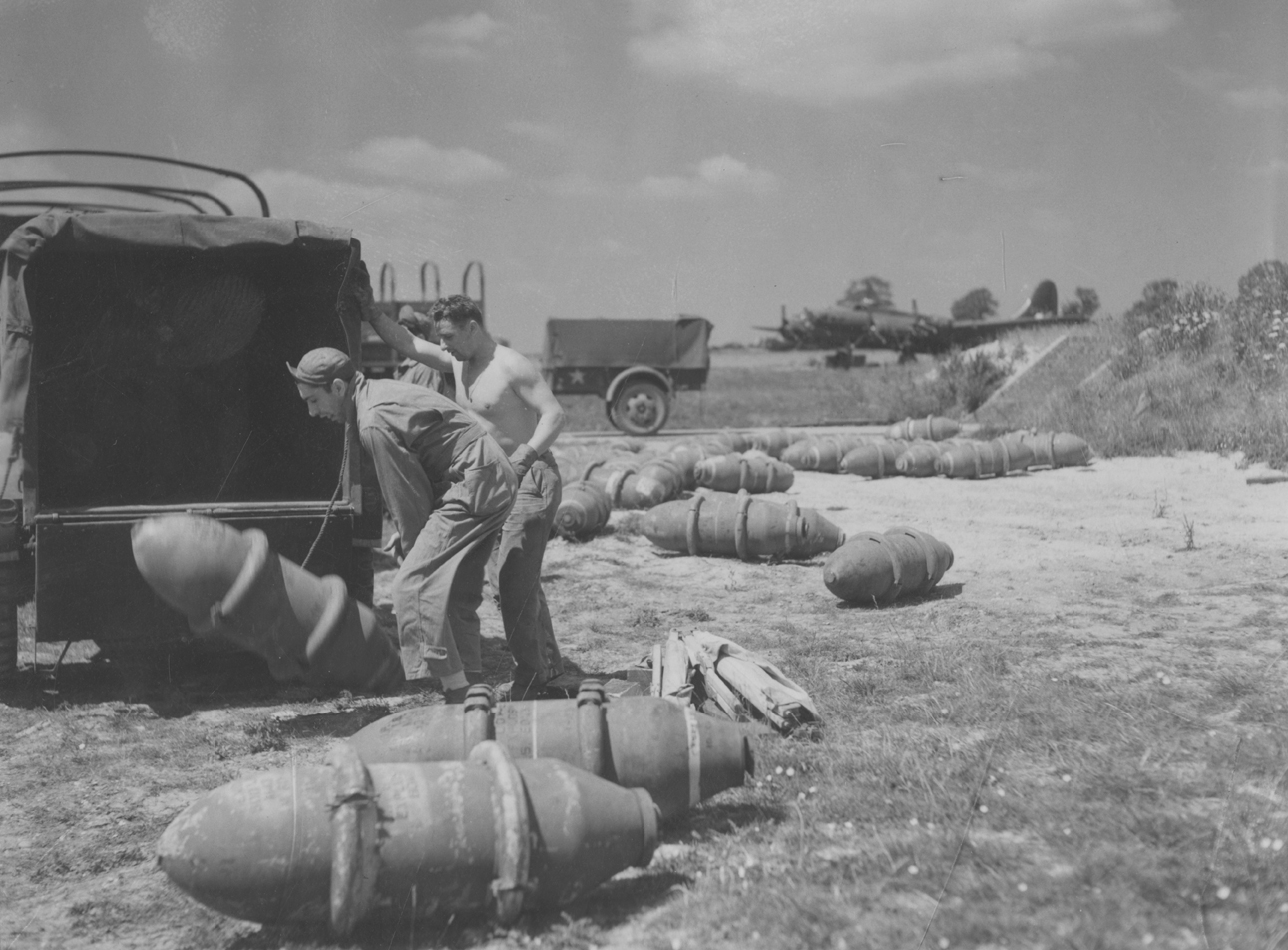


![USAAF personnel on the control tower at Thurleigh airfield [Z50-122-45]](https://bedsarchives.bedford.gov.uk/CommunityHistories/Thurleigh/ThurleighImages/USAAF%20personnel%20on%20the%20control%20tower%20at%20Thurleigh%20.jpg)


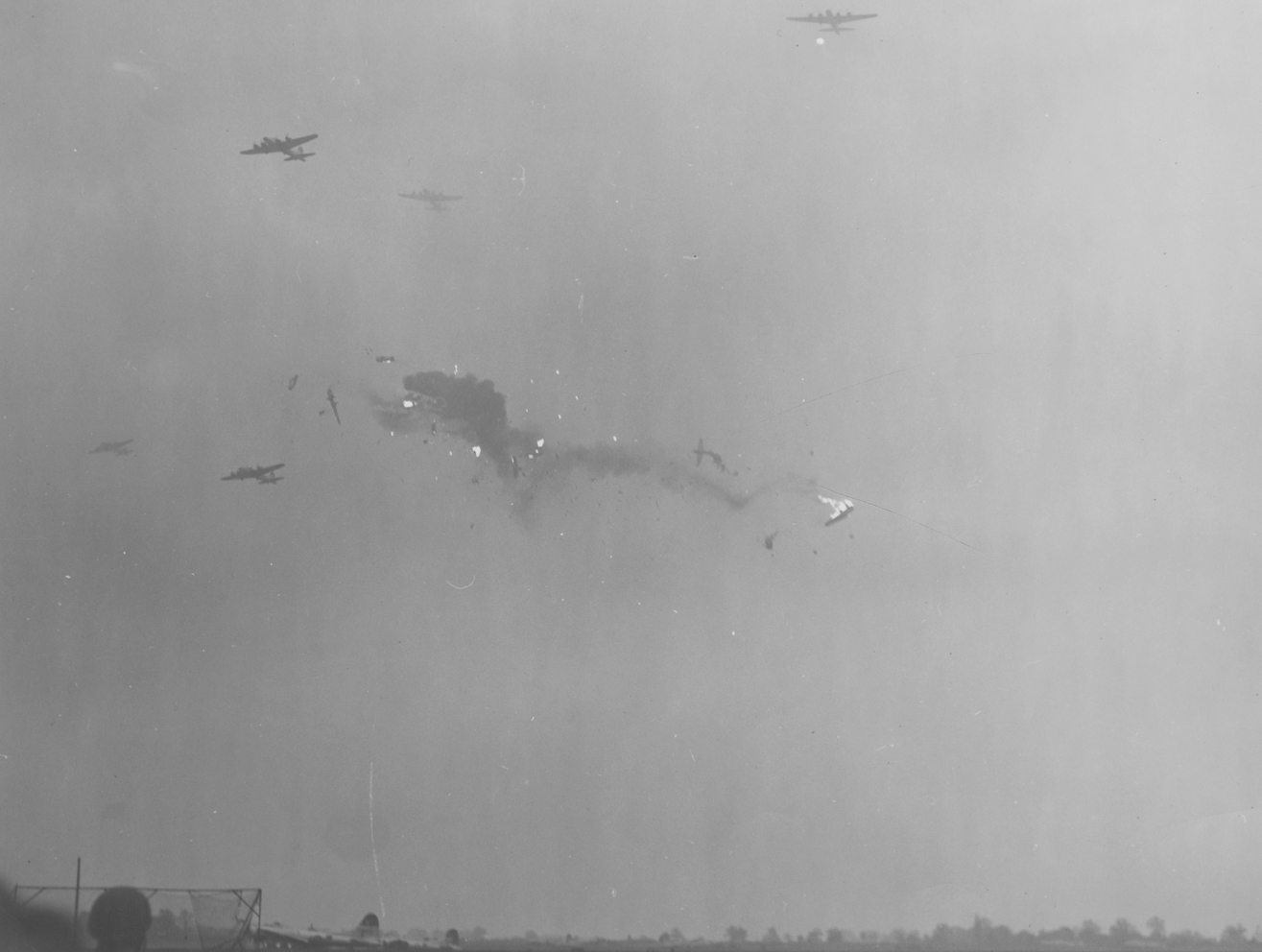
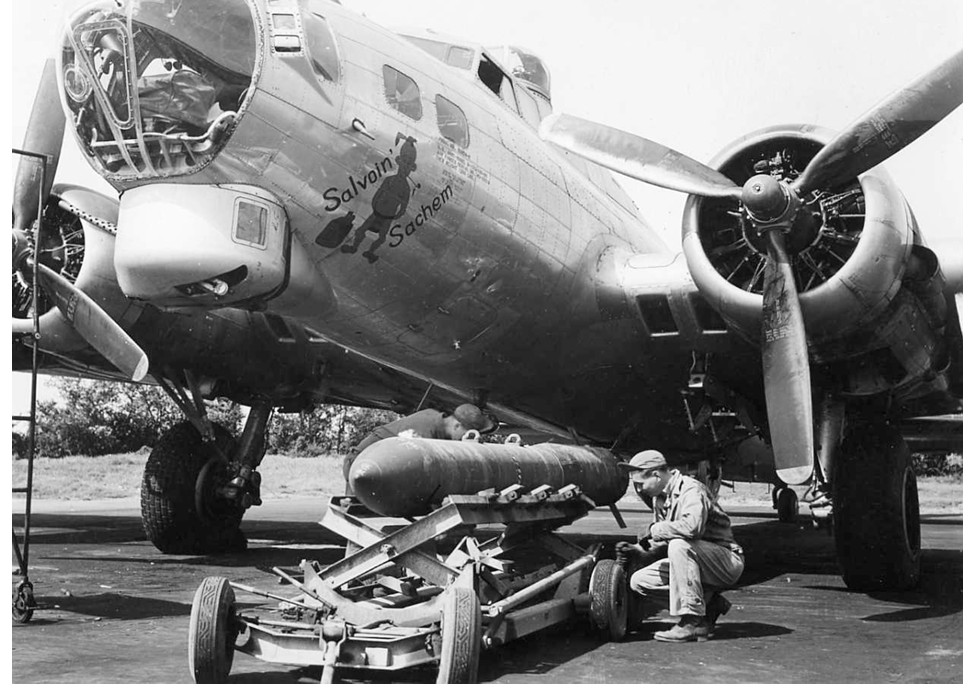
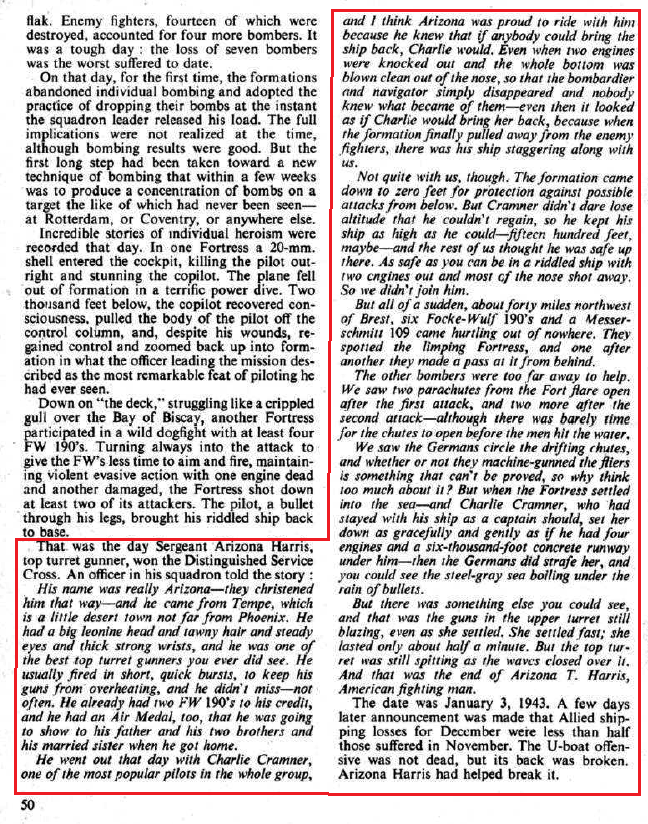

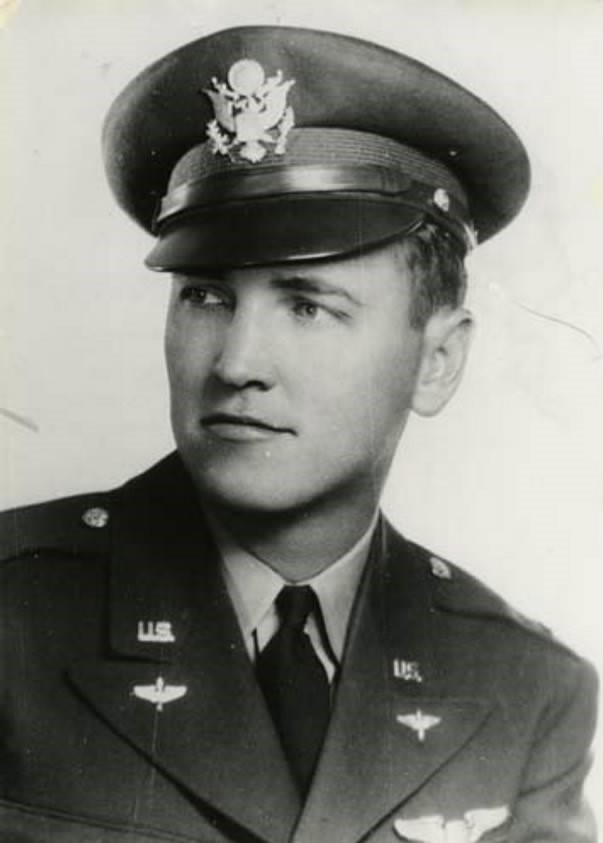

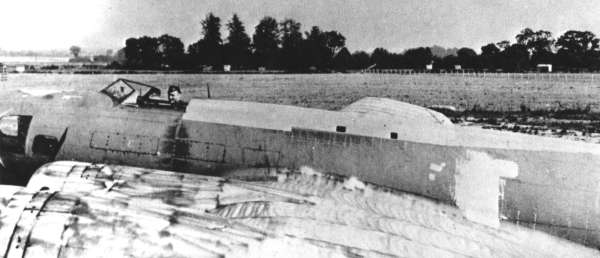


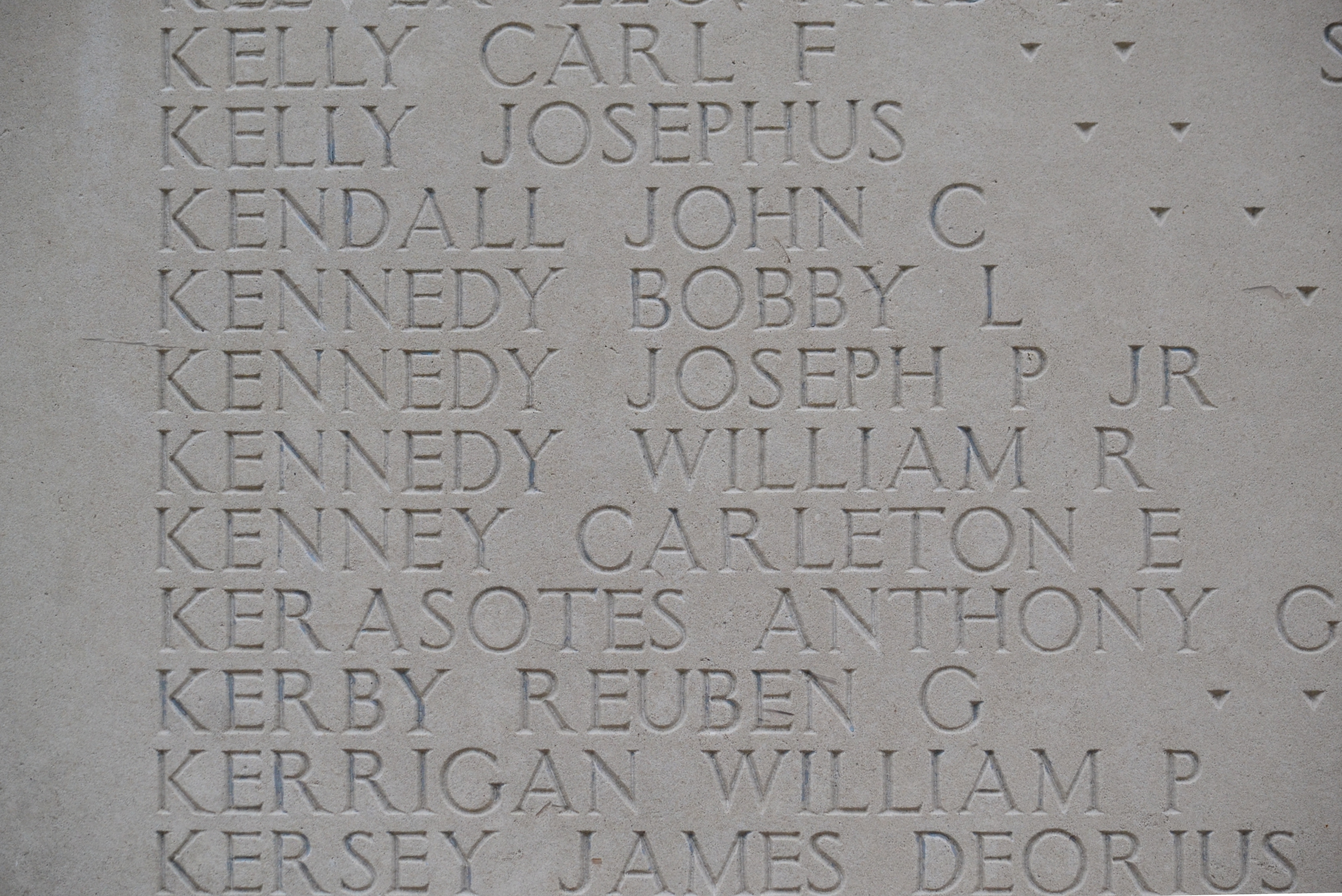
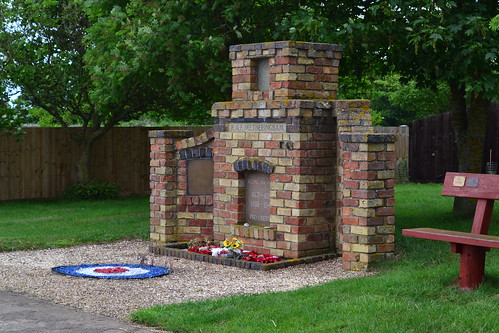
 Aviation Trails