Trail 34 a visit to former RAF Oulton

Laying quietly between the airfields at Matlaske and Swannington is another one of Addison’s 100 group’s small collection. An airfield that not only saw a variety of makes and models, but a range of nationalities as well, each having a remarkable story to tell. In the second part of Trail 34, we travel a few miles south and visit RAF Oulton.

RAF Oulton.

RAF Oulton in 1946, taken  from the north. (IWM)

Although an RAF base, Oulton was also home to the heavy American bombers the B-17 and B-24. However, they were not used in their natural heavy bomber role, but a more secret and sinister one.

Initially built as a satellite for the larger bomber base at Horsham St. Faith, Oulton originally only had grass runways. It would later, in 1942, be upgraded to class ‘A’ standard, which would require the construction of three concrete runways, a new tower and bomb store and upgrading to the technical site. Runway 1 (2000 yds) ran east-west, runway 2 (1,400 yds), north-east to south-west, and runway 3 ran approximately north-south and was also 1,400 yds. All were the standard 50 yards wide and would be connected by thirty-two loop style hardstands and eleven pan style hardstands. Uncommonly, Oulton would also have four T2 hangars (three to the eastern side and one to west, two of which would later hold Horsa gliders) and a further blister hangar.

The majority of the technical area was to the eastern side of the airfield next to the main entrance and along side Oulton Street. The two bomb stores were located to the north and western sides of the airfield well away from personnel and aircraft as was common. The first of the two towers, was built to drawing 15898/40, which combined the tower and crew rooms; the second built later to drawing 12779/41 (adapted to the now common 343/43) brought the airfield in line with other Class ‘A’ airfields.
RAF Oulton

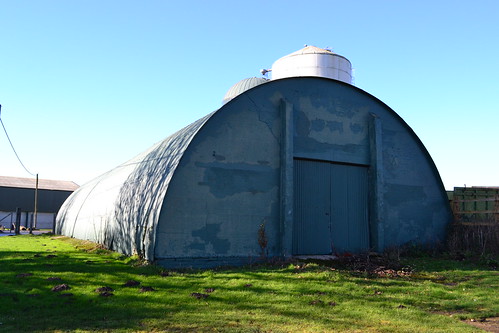
One of the huts used for agricultural purposes today.

Throughout the war personnel accommodation utilised the grand and audacious Blickling Hall. A seventeenth century building that stands in a 4,777 acre estate that once belonged to the family of Anne Boleyn. Owned more recently by Lord Lothian, he famously persuaded Churchill to write to Roosevelt declaring Britain’s position and poor military strength. Lord Lothian was a great entertainer dining with many notable people including Joachim von Ribbentrop, Hitler’s foreign Policy advisor and close friend. A number of other notable events took place at Blickling, including, in early 1945, Margaret Lockwood raising eyebrows when she and James Mason arrived to film ‘The Wicked Lady’ .

In the early 1940s, the hall was requisitioned by the RAF, officers were billeted inside the ‘wings’ whilst other ranks were put up in Nissen huts within the grounds. The lake was used for Dingy training and the upper floors allowed for baths albeit with cold water!  In total some 1,780 personnel could be housed in and around the estate.

For the first two years between 1940 and 1942, Oulton airfield was the home to Blenheims, Hudsons and Beaufighters, each undertaking a light bombing or anti-shipping role as part of 2 Group.

First came 114 sqn on August 10th 1940 with Blenheim IVs. Apart from a small detachment at Hornchurch, they stayed here until the following March whereupon they moved to Thornaby. Their most notable mission was the mid-December attack on Mannheim, an attack that would signify the start of the RAF’s ‘area’ bombing campaign.  A short spell of three months beginning April 1941 by 18 Sqn, preceded their return later in November and then subsequent move to Horsham St Faith.

Like many airfields during this time, units moved around and it was no different for 139 Sqn. With their Blenheims and later Hudsons, they would leapfrog between Horsham St. Faith and Oulton throughout 1941 only to disband and reform returning in 1942 with Mosquito IVs.

RAF Oulton

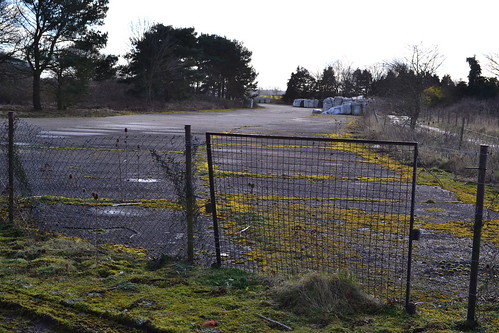
A few buildings remain on the site, many are fighting a losing battle with nature. The main entrance to the airfield is just to the right of this building.

It was during this time in late 1941 that Hudson conversion flight 1428 would be formed at Oulton with the sole job of training crews on the Hudson III. They would remain here until the following May, at which point they were disbanded.

The re-establishment of 236 Sqn in July 1942 with Beaufighter ICs meant Oulton performed as part of Coastal Command for a short time. The success of 236 in torpedo strikes, led to a new wing being formed at North Coates with 236 leading the way, they departed taking their Beaufighters with them. This left a vacancy, that would soon be filled with a new twin-engined model, the Boston III and 88 Squadron.

88 Sqn were split over 6 different airfields before being pulled together here at Oulton. They retained two of these detachments, one at RAF Ford and the other at RAF Hurn, and their arrival and start of operations at Oulton, would be tarnished with sadness.

On October 31st 1942, a month after they arrived, ground crews were unloading a 250lb bomb from 88 Sqn Boston ‘W8297’ when it suddenly went off. The resultant explosion destroyed the Boston and killed six members*1 of the ground crew. The youngest of these, AC2 K. F. Fowler, was only 19.

After having suffered serious losses in France whilst claiming the first RAF ‘kill’ of the war, they were the first unit to fly the new Boston, and would continue to undertake dangerous daylight intruder operations. Flying daring, low-level missions, they would attack shipping and coastal targets before supporting the allied advance on D-day. Their most famous attack was the renowned bombing of the Philips works in Eindhoven, which resulted in the loss of production for six months following the raid. Ninety-three aircraft took part in the raid, all flying beyond the reach of any fighter escort, a factor that no doubt resulted in the heavy casualties sustained by 2 Group on that mission*2 .

DSC_0178

Two Nissen huts would have been next to this building, and according to the site map, it was part of the rubber store.

In March 1943, the Boston IIIs left and Oulton passed to Addison’s 100 group. As with many other airfields in this part of Norfolk, 100 group were using them to fly missions investigating electronic warfare and radio counter measures. This move to 100 Group would bring a major change for Oulton.

The now satellite of Foulsham would soon be seeing larger and heavier aircraft in the form of the American Fortress I (B-17E), II (F), III (G) and Liberator VI (B-24H). This change required extensive upgrading; the construction of hard runways, updating of the accommodation, new technical buildings and a second, updated tower, along with further storage facilities. The airfield was closed throughout the operation, and with the completion in May 1944 operations could begin almost immediately.

Both USAAF and RAF crews moved in. 1699 Flight were providing conversion for crews to fly the heavy bombers for their parent Squadron 214 Sqn, whilst the American 803rd BS, 36th BG flew radio-countermeasures in their B-17s and later B24s. This move here allowed their own parent station RAF Sculthorpe, to also be extensively redeveloped.

The Americans stayed for three months whilst their work was undertaken, but the RAF units remained until the end of the war. After 1699 Flt. had completed conversions, 214 changed Fortress IIs for IIIs and flew these until disbandment on July 27th 1945.

On August 23rd 1944, 223 Sqn reformed at Oulton. Having previously been flying the twin-engined Baltimore, the new unit would have to get used to much larger aircraft very quickly, a task they commanded with relative ease. They flew the heavier Liberator IVs, and Fortress IIs and IIIs until their final disbandment a year later.

Both 214 and 223 flew the heavy bombers now bristling with electronics. Using a range of electronic gadgetry such as ‘window’ ,’H2S’ and ‘Mandrel’, they had their front turrets painted over or removed and electronic equipment added. ‘Window‘ chutes were installed in the fuselage of the aircraft and a heavy secrecy enveloped the airfield.

The winter of 1944 proved to be one of the worst for many years, crews worked hard in the snowy environment, relaxing where they could at the nearby pubs, one nicely placed next to Blickling Hall and the other directly opposite the entrance to the airfield.

Both units would participate in a number of major, high prestige operations, providing radio jamming and window curtains for the bomber formations. ‘Spoof’ operations were common, diverting enemy fighters away from the real force and playing a daring game of cat and mouse with the German radio operators. As the war drew to a close, so too did the operations from 214 and 223. Eventually in July 1945 both Squadrons were disbanded, 214 being the renumbered 614 squadron, with 223 having to wait until 1959 before being reborn as a THOR missile squadron.

With the withdrawal of the heavies, the end was near for Oulton. After being used for storage of surplus  Mosquitoes for a year it was closed and sold off. The end had finally arrived and Oulton closed its gates for the last time.

Oulton airfield stands as a  reminder of the bravery of the light bomber and ECM crews; today many of the original buildings still remain, used for agricultural purposes and even by the National Trust.
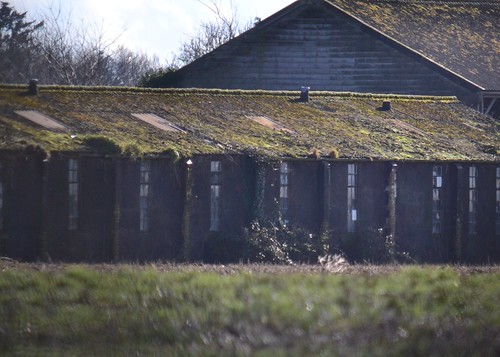
RAF Oulton

One of the few buildings that remain, the former squadron offices.

Whilst the general layout of the airfield has changed with the addition of farm and ‘industrial’ units, its layout can still be recognised. The majority of the runways still exist, now housing poultry sheds, and large sections can easily be seen from the roadside. Luckily, even some of the original huts from the technical area are also in existence and ‘accessible’.

Approaching from the north, the first reference point is the memorial. Standing at the crossroads on the north-eastern corner, it serves as a pointer directly in line with the centreline of the Runway 2. Behind you to your right is the former sick quarters, here would have been an ambulance station, Static water tank and sick quarters, now all gone. Turning right here, keeping the airfield to your left, you pass along the northern boundary, within a short distance of what would have been the perimeter track.

The first sign is a pillbox. This was placed next to the special signals workshop which consisted of three small buildings. Now overgrown, this maybe a Vickers Machine gun Pillbox, different to ‘standard’ pill boxes as it has a concrete ‘table’ beneath the gun port designed to support the heavier gun and tripod.

Further along this road, to your right, is the first and main bomb store. A small track being the only visible reminder, the walls having been removed long ago. The large concrete ‘pan’ being the entrance, on which farm products are now stored.

The second store and USAAF quarters were further along this road, again all trace has gone and it is purely agricultural now. Retracing your steps, go back to the memorial. At the crossroads, ahead of you, was Number 1 accommodation site, now all farm buildings, but formerly the officers, sergeants quarters and airman’s barracks.

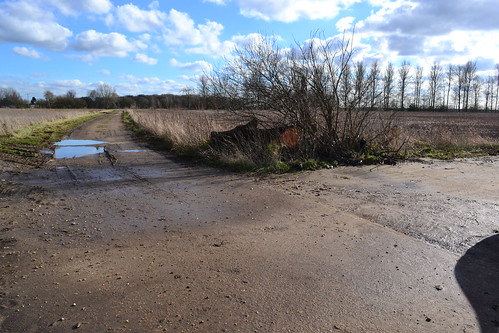
Turn right here and as you drive down Oulton Street, there are a number of original buildings back from the road in a small enclave. The National Trust own part of these and use them to restore historic textiles, one of these buildings being the squadron offices. The main entrance to the airfield is further along this road and now an insignificant farm gate, allowed to grow and fill in, the path buried beneath the grass. Beyond this, you can see some remaining buildings across the field, truly overgrown and very dilapidated, these are possibly the crew locker and drying rooms. Continue on along this narrow road and you arrive at the pond. Behind the pond, stands a well-preserved hut and smaller buildings. These were the main workshops, rubber store and general stores, now holding agricultural products and waste material. Certainly they are some of the better preserved buildings on the site. Further along, the road crosses the main runway, here it is full width on both sides of the road. Poultry sheds stand on the main section, whilst farm waste resides on the left.

RAF Oulton

The eastern end of the main runway.

Continuing on and the road crosses the third runway, where we turn left. We can now see the site of one of the four T2s, the road at this point using the original perimeter track before it departs away to the north.

From here, we return north, head back past the airfield and return to the main road. Here we turn right and follow the road for a few miles east through the woodland where we arrive at Blickling Hall. The accommodation sites here, include the No.1 and 2 WAAF sites, NAAFI, No. 4 and 5 accommodation site and various service sites.

The east wing of the Blickling Hall is now a museum, formerly the barracks and still shows the original paintwork. A range of uniforms, photos and personal stories can be seen and read.

There are virtually no remnants of the other sites which were primarily Nissen huts. Footpaths do allow you to walk through these, now natural spaces, walking in the footsteps of former airmen and women.

Next to the Hall, is the church of St. Andrew, in here is a small collection of artefacts and a roll of honour for those who died at Oulton. Also here is the sole grave of Sergeant L. Billington, who died on March 4th 1945 at the young age of 20. He was part of a crew in a Fortress III (B-17) on window duties. As the aircraft was returning from its mission, it was attacked by a JU 88, causing it to crash on the airfield boundary. All but two of the crew were killed*3, their bodies being buried in different locations. A sad end to another young life at Oulton.
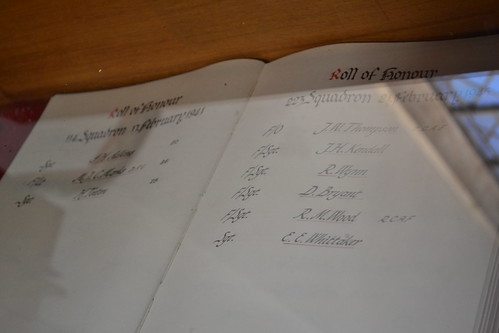
St. Andrew's Church

The Roll of Honour at St. Andrew’s Church, next to Blickling Hall.

RAF Oulton housed a range of aircraft types and nationalities. Their role encompassed many important duties and missions that certainly helped defeat the Nazi tyranny. Many of these young men, led the way in today’s electronic counter measures and electronic warfare. The daring missions they led, firmly embedded in our history, and now the remnants of Oulton stand as a reminder to both their sacrifice and dedication.

Notes and Further Reading.

*1 The ground crew were:

E.J. Bone, Aircraftsman Ist Class
H. Bramham, Aircraftsman 2nd Class
A.C. Emery, Aircraftsman 2nd Class
K.F. Fowler, Aircraftsman, 2nd Class
F. Packard, Leading Aircraftsman
A. Torrence, Leading Aircraftsman

Source Aircrew remembered website.

*2 National Archives, RAF Bomber command diary 1940.

* The crew were:

P/O H Bennett
Sgt. L Billington
F/S H. Barnfield
W/O LJ Odgers (RAAF)
F/S W Bridden
F/S LA Hadder
F/S F Hares
Sgt. A McDirmid (injured)
W/O RW Church (injured)
Sgt. PJ Healy

Source: Chorley, W.R., RAF Bomber Command Losses 1945, 1998, Midland Counties.
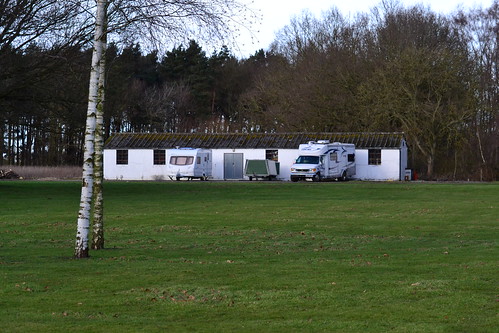
Mosquitoes abound – RAF Swannington

This airfield forms another in a short trail through this part of north Norfolk. An area littered with the remnants of war and aviation history.  As we continue south through the narrow lanes of the Norfolk countryside, we find the almost forgotten airfield at Swannington.

RAF Swannington

Swannington was one of the last airfields to be opened during the Second World War, hence very few units were permanently based here. This considered, an appreciable amount of it remains visible even today.

Also known as Haveringland, construction was started as early as 1942, but it didn’t actually open until 1944. It utilised much of the forests of nearby Haveringland Hall along with large parts of its estate. The hall itself, a rather large and grand building, was blown up at the end of the war following requisition damage and then being classed as ‘surplus to requirements’ by the MOD!

Once the forest area had been removed, work could begin, and a number of accommodation sites were erected. Haveringland Hall itself became the Officers mess, with various accommodation sites constructed all around it, all located to the east of the airfield. In 1944 there were 154 Officers (of both RAF and WAAF ranks) along with 1239 other ranks stationed here although accommodation was provided for around 2,500.

RAF Swannington

Former Sergeants Mess in use Today

Designated a class ‘A’ airfield, Swannington would have two T2 hangars and one B1, three runways (1 x 2000 yds and 2 x 1,400 yds) and 36 loop style hardstands.

100 Group became the immediate owners of Swannington and instantly placed two squadrons of de Havilland’s Mosquito at the base – No. 85 and 157 Squadrons. 100 Group were formed in November 1943 to investigate and oppose the electronic warfare operations being conducted by the Luftwaffe. To counter this threat, a number of airfields in this area were utilised, Swannington being one of them.

Using a range of new devises and tactics, 100 Group operated a range of different aircraft, predominately the heavier bombers: B-24s, Lancasters, B-17s, Halifaxes, Wellingtons along with the smaller and more agile, Mosquito.

On May 1st 1944, following a successful tour at West Malling*1 , the first Mosquito XVIIs of 85 Squadron arrived at Swannington.

Having a history that extended back to the First World War, 85 Sqn had been in France to support the B.E.F then, re-equipped, they participated in the opening skirmishes of the Battle of Britain. After taking on a new role as a night fighter squadron and moving to Yorkshire, they transferred to 100 group with their move to Swannington. Here they began supporting bombing missions, seeking out enemy night fighters before they attacked the bombers and then loitering over their airfields as they returned.

The Mosquitoes had proven so successful in all operations that 85 Sqn were moved back to West Malling for a short period to combat the increasing threat from the V-1 ‘Doodlebugs’. Their stay in Kent ended in the following August, at which point they returned to Swannington upgrading to the Mosquito XXX before moving off again, to RAF Castle Camps.

157 Squadron joined 85 at Swannington on May 7th 1944 with the Mosquito XIX, later upgrading to the NF.30 with its superchargers and a new radar. 157 had been the first squadron to receive the NF.IIs earlier in March 1942 with the delivery of both W4087 and W4098*2 .

157 Sqn’s arrival would not be the best. Three days after their arrival, Flight Lieutenants Tweedale and Cunningham would take off for an Airborne Interception (AI) training sortie in their Mosquito XVII. On their return, the aircraft would crash, losing its starboard undercarriage, and whilst neither officer was injured, it would be the first ‘casualty’ of 157 Squadron whilst based at Swannington. A very successful fighting unit, they would not be immune from further incidents, some to the embarrassment of their crews.

Whilst on patrol on November 21st 1944, Mosquito MM629 ‘RS-Y’ piloted by Flying Officers A Mackinnon and G Waddell, were shot down in error by another Mosquito of the same squadron, who believed them to be a Ju 88! Both crew members parachuted safely into enemy territory but managed to evade capture returning home within 12 hours.

RAF Swannington

Portions of concrete remain in the Technical Area.

157 Sqn would also transfer with 85 Sqn to West Malling, undertaking ‘anti-diver’ or ‘Doodlebug’ sorties; operations that saw 157 Sqn claim a total of 36.5 flying bombs, whilst 85 claimed some 18.

157 Sqn then returned to Swannington with 85 Sqn at the end of August 1944 and as with 85 Sqn, they upgraded to the MK XXX Mosquito. They, unlike 85 Sqn however, remained at Swannington until disbandment on 16th August 1945. By the end of operations at Swannington, both 85 Sqn and 157 Sqn had completed a touch under 2000 sorties between them, with 108 enemy aircraft destroyed and 19 damaged.

Toward the end of 1944 and early 1945, four other fighter squadrons would visit Swannington. 229 and 451 (Australian) Squadrons came first in the November of 1944; in a move initiated by poor weather, they would come from nearby waterlogged Matlask. 229 brought Spitfire IXs which within a month they would replace with LF XVIEs. This was followed by a swift departure to nearby Coltishall where they were disbanded and renumbered 603 (Auxiliary) Sqn in the following January.

It was a similar story for both 453 (Australian) Sqn with their Spitfire LF XVI, and 602 Sqn with their Spitfire XVI, both swinging like a pendulum between Matlask and Swannington and Swannington and Coltishall. 453 Sqn then transferred to Kent and eventually the continent whilst 602 Sqn followed 229 to Coltishall where they were disbanded on May 15th 1945. These late model Spitfires were now escorting daylight bombing raids such was the strength and superiority of the Allied Air Force over Europe.

RAF Swannington

Portions of the Perimeter track remain, some of it in full width.

These four squadrons, 602, 229, 453 and 451, were to join forces with 124 and 303 to tackle the new V-2 rocket, strafing and bombing the launch and control sites. It was on the 14th February 1945, that 602 Sqn pilot Sgt. T “Cupid” Love fired upon a rising V-2, the first (and only) record of any such incident occurring. An account of the event appears in Raymond Baxter’s log, and he explains how it was fortunate that the shots missed, for had he hit the rocket, it would no doubt have exploded ending the lives of himself and his fellow crews.

As the war came to a close and German forces were thought to be amassing troops at Kiel for a final assault on Norway, Mosquitoes from 157 Sqn were sent along with those from 8 Group to attack airfields in the area. These were to be some of the last attacks carried out by RAF aircraft in the European Theatre.

Their final departures signalled the end of operational duties for Swannington. The site was used for storage of surplus materials, mothballed Mosquitoes and numerous Merlin Engines until the RAF finally pulled out in 1947. Future plans for an upgrade to the airfield were abandoned, and the site was then sold off, it has since become a mix of agriculture and forestry.

DSC_0220

Swannington’s Stand By Set House is used for storage.

The majority of Swannington airfield is best seen from the eastern side. Approaching from the north, you first come across the former technical site that marks the top right corner of the site. Turn right here and you will see the location of one of the T2s, a farm building now stands here and behind it the location of the tower and a small number of ancillary buildings. These are today shrouded in trees and large bushes, which prevents any real sighting of them. Sadly the current condition, which is believed to be quite poor, is difficult to verify from this point on the roadside. Large portions of concrete denote the perimeter track and access routes to the technical area. Across the road from here, other buildings do still remain and are easily seen from the roadside. A small portion of the north-east / south-west runway also remains here, virtually full in its width.

Turning back on yourself, turn right and drive past the technical area to your right. Poultry sheds and farm buildings now stand here, but the shape of the hardstands are easily recognisable. On your left are more concrete structures and piles of rubble from former buildings. After a sort distance you arrive at the perimeter track, this crosses the road and is full width at this junction. A gate to your left allows access to the distant church, and by driving along here you traverse the actual perimeter where many Mosquitoes would  have moved on those night missions in 1944/45. The distant round-towered Church was so close to the perimeter that aircraft were often parked next to  the church yard, a rather eerie and stark reminder to those crews boarding the aircraft at this point. Stopping at the church the enormous size of the track can again be seen,  virtually full in its width, photos exist of a Mosquito also standing here in this very same position.

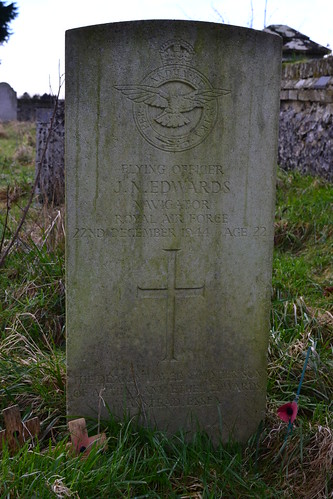
Outside this church, is a memorial dedicated by the ‘Airfields of Britain Conservation Trust’, the only ‘official’ memorial on the site. The church itself is locked, but two graves within the church yard and a bench dedicated to two members of the same family can be found here. The bench, dedicated to Lt. Cdr. M. Auckland and Flt. Lt. W. Auckland, both Harrier Pilots stands near the gate, whilst the older graves, F.O J. Edwards (Navigator) and Corporal C. Mace, can be found behind the church.

Flying Officer Edwards (s/n) 172240) was killed when his Mosquito TA392 ‘RS-K’ developed trouble whilst returning from an intruder mission. The aircraft crashed close to the airfield and both he and his pilot, Flt. Lt. W. Taylor, lost their lives. *3

Before returning, look across to the north to the small wooded area and you will see the Squash courts, standing in  what was the Haveringland Hall estate. Now return back to the road, and turn left, follow the road south. You will cross, a short distance away, the remains of the east-west runway, followed shortly by the returning perimeter track. Carry on to Clay Lane, and turn right. To your left is a small farm and a track that leads away over private land. This is the entrance to the bomb store, it circles round and rejoins the road further along, both now narrow and restricted to farm traffic only.

RAF Swannington

The Grave of F.O. J Edwards, Killed 22nd December 1944, age 22.

From here it is best to retrace your tracks, go back along Clay Lane, turn left and head north. On your right is a turn into the Haveringland Hall Holiday Park. A number of buildings remain here, the squash court, former sergeants mess and standby set house and most in good condition. The woods around here also contain many derelict remains and foundations of former structures. Some visible others shrouded by growth, many are too dangerous to explore.

Swannington had a short life, and many of the crews that passed though here went on to achieve great things. Swannington though wasn’t without its drama. Because of the nature of the operations carried out from here, losses were incurred, many fatal. The later part of 1944 saw a particularly high number of accidents and crew losses, many of these young men never being found.

The remaining buildings at Swannington stand as a silent reminder of the activities of 100 Group. Along with the brave Mosquito and Spitfire crews are all those who fought a long and hard battle against Hitler and his terror weapons. Whilst the Griffons and Merlins have gone, their memories have not.

Sources and further reading.

*1 85 Squadron was previously commanded by Wing Commander ‘Cats Eyes’ Cunningham, who became famous for downing 20 enemy aircraft during hostilities. He later went on to be a test Pilot for de Havilland, testing the DH Comet – the worlds first jet airliner. He received a number of awards and achieved a number of aviation firsts, He died in 2002.

*2 de Havilland Mosquito, An Illustrated History Vol 2, Ian Thirsk, Crecy Publications.

**3RAF Bomber Command Losses of the Second World War, W.R. Chorley, Midland.

Spitfire Dive-Bombers versus the V-2, Volume 2, Bill Simpson, Pen and Sword Books, has a good account of the V-2 war by the RAF Squadrons.

RAF Gransden Lodge aircraft revealed.

A recent article published by the Royal Canadian Air Force, tells the story of the fate and eventual discovery of, RCAF 405 “Vancouver” Sqn Halifax II, LQ-B.

LQ-B, s/n HR871, was based at RAF Gransden Lodge as part of 8 Group, Pathfinder Force from April 19th 1943 and was flown by Sgt. John Philips with his six crew members.

On the night in question, August 2/3 1943, they were part of a 740 strong force consisting of a mix of heavy and light bombers, who were despatched to Hamburg as part of the ongoing operation “Gomorrah”, to destroy Hamburg through blanket bombing. A combined operation by the RAF and USAAF would see continuous bombing both day and night from the end of July to the beginning of August whereupon they turned their attention to Nuremberg, Milan and then Peenemunde. In this short period some one hundred RAF aircraft were lost, many flown by Canadian, Australian and New Zealand crews, all fighting a war a very long way from home.

LQ-B set off with the other aircraft on the night of August 2nd and it was during this leg of the trip that they would encounter a terrific thunderstorm, in which lightning would strike the aircraft knocking out the two inboard engines, damaging a number of instruments and the radio.

With the aircraft difficult to control Philips made the decision to head north toward Sweden where the crew were eventually ordered to bail out. All the crew escaped the aircraft safely and were interned by the Swedish authorities until January 1944, when they were repatriated.

LQ-B went on to crash into waters just off shore of the Swedish coast where it has recently been discovered in 17 metres of water broken up and partially submerged in the silt. It is hoped to recover the aircraft in the near future.

During this same night 405 Sqn also lost the aircraft and crews of Halifaxes, LQ-E (HR849) and LQ-G (HR917) most of whom have no known grave.

Gransden Lodge, located on the Bedfordshire / Cambridgeshire border, can be seen in Trail 31, whilst the Royal Canadian Air force article can be found through this link.

A trip around my Dad’s past: RAF Elsham Wolds

My Dad, Fred, used to tell me many tales of his years in the RAF. He served in Bomber Command, and, as I grew older, stimulated perhaps by the increased interest generally in the Second World War, I made great efforts to find out the exact details of where he had served and what exactly […]

http://johnknifton.com/2015/08/17/a-trip-around-my-dads-past-raf-elsham-wolds/

In Honour of the 55,573 Young Men Who Never Returned

RAF Bomber Command – Green Park,

London

The Bomber Command memorial was erected in honour of the 55,573 crew members of the RAF Bomber Command who died during the Second World War. It stands as a reminder of the young men, whose average age was only 22, and who never returned to their beloved homes. It was unveiled by the Queen, on June 28th 2012, when a Lancaster bomber of the BBMF flew over dropping thousands of poppies.

RAF Bomber Command Memorial

RAF Bomber Command Memorial

The monument can be found in London adjacent to Green Park. It stands proudly watching over the grassed picnic area where picnickers, shoppers and tourists sit. The main part of the monument is a bronze sculpture consisting of seven members of a typical bomber command aircrew.

Perhaps not obviously noticed, some of the crew are looking to the sky, some with hands to shield from the morning sun, as if looking for missing friends. Others are looking downward, perhaps in despair or fear for those not yet home. The stance of the statues suggests a crew recently returned from a mission who have just disembarked from their damaged aircraft. Tired, bewildered and overwhelmed by what they have witnessed, they have been created in precise and superb detail.

The Pilot stands central and to the rear of the group; the navigator to the left, followed by the flight engineer, mid-upper gunner, bomb aimer, rear gunner and then the wireless operator to the right. Their faces reflecting the feelings and emotions that these young men felt. The base of the statues were ‘littered’ with photos of loved ones and messages from around the world. A moving tribute.

RAF Bomber Command Crest "Strike hard, Strike Sure"

RAF Bomber Command Crest “Strike Hard, Strike Sure”

Outside and on the walls of the memorial, are two crests; on the left, the RAF crest “Per Ardua ad Astra” meaning “Through adversity to the Stars“. The crest has its origins going back to August 1st 1918 and has been the symbol of the RAF ever since. On the right, is the crest of Bomber Command whose motto is “Strike Hard, Strike Sure“. Both beautifully carved into the undoubtedly beautiful Portland Stone.

A number of quotes, including one from Winston Churchill, “The Fighters are our salvation, but the bombers alone provide the means of victory” surround the memorial giving  it strength. A further quote, to the rear of the memorial reflects the losses of all nations, who on the ground, lost lives as a result of bombing campaigns on both sides – a reflection of reconciliation and peaceful times ahead.

The roof above the memorial is open. This allows you to see the figures against a backdrop of sky, whether at day or night, rather than the bustling city behind.  A view more representative of the times they lived and flew in.

The remainder of the roof is similar to the kriss cross design of the Vickers Wellington, one of the RAF’s bombers during World War II. The design is both eye-catching and unique, not only to the memorial but the Wellington from which it came.

The building of the memorial, which is truly a mix of emotion, international representation, and a build that reflects the lives of those affected by the war, is considered as closure for many; a symbol of what the young crews had to endure on long missions over occupied Europe. It also serves to act as a lesson to the those who were too young to know what the war meant to those who fought and died in it. It is A beautiful place to sit and give thanks to those 55,573 brave young men who never lived to experience peacetime again.

IMG_0426

RAF Bomber Command Memorial – Note the Roof Design.

The official Bomber Command Memorial website is here. An app is also available for a small fee that goes part way to supporting the maintenance of the memorial, it gives greater detail to the construction and design of the memorial, along with an audio script and stories from survivors of Bomber Command.

A history of the RAF Crest and its derivations can be found by clicking here.

By clicking here, you can see and hear some stories of those to whom the monument is honouring.

  “The Fighters are our salvation, but the bombers alone provide the means of victory

Winston Churchill, 1940

To see more memorials from airfields around the country please click here