9th October 1944, loss of Mosquito KB261 RAF Downham Market

On October 9th 1944 Mosquito KB261 608 (PFF) Sqn, took off with 21 other Downham Market aircraft to attack the naval port at Wilhelmshaven in Lower Saxony, Germany. Situated on the western side of the Jade Bight, a bay of the North Sea in Northern Germany, it was a major target frequently attack by allied bombers during the war.

The Mosquito, ‘D’ – Dog, a MK. XX, piloted by Flt. Lt. Reginald George Gardner (s/n 68776) with Fl. Off. Oswald Cuthbert Sweetman DFM*1 (s/n 145171) as navigator, departed Downham Market at 18:03 carrying a mix of bombs. It arrived over the target only to see 10/10ths cloud, and the target obscured. However, bombs were released successfully on red target indicators, after which crews reported seeing several flashes beneath the cloud along with large explosions lasting several seconds.

In debriefing, all crews reported a successful operation although visual confirmation was difficult due to the cloud cover which had extended to between 6 and 8,000 ft in height.

However, Mosquito KB261 never made it down. It arrived home and circled the airfield waiting for its turn to land, it showed no signs of distress or problem – all appeared well. As it entered the ‘funnel’ it suddenly – and without explanation, –  dived into the ground from around 1,000 ft, crashing at 21:30.

The aircraft hit a cowshed in the nearby hamlet of Barroway Drove, to the south-west of the airfield, killing both pilot and navigator. A farm building was slightly damaged and some animals in or near the shed were also killed.

The aircraft had been fully flight tested and reported  ‘serviceable’ that afternoon by the pilot Flt. Lt. Gardner, and both engines were known to be running at the time of the crash.

A report into the accident concluded it as “obscure” with no known cause, although the Station Commander witnessed the crash saying “…it would appear that while turning into the funnel the aircraft did a slipping turn resulting in rapid loss of height and final crash.”

In the Accident Report Form 765C, the pilot was noted to have called the tower on the downwind leg, but there was no report at that time, from him, as to any problems with the aircraft and all appeared to be in order.

The two crewmen were both married. Flt. Lt. Gardener was born in 1913 and married Nancy Buttle of Bearstead, Kent, where his remains are buried*2; and Fl. Off. Sweetman, born 1916, was married to Jessie James from Newcastle in 1940, he also remains buried in his home town*3.

On the following two nights, October 10th and 11th, two more 608 Squadron Mosquitoes were lost; KB404 ‘6T-T’ and KB348 ‘6T-M’.

In KB404, a Mosquito B MK. 25, both crewmen (pilot – Fl. Off. James Arthur Smith DFC RAAF, and navigator Sgt. John Burchell) emerged safely from the aircraft which crash landed in a field near to the airfield. The port engine was reported to have cut out at approximately 100 feet after take off, whereupon the pilot managed to perform a wheels up landing bringing the aircraft down safely.

In the third Mosquito, KB348, (MK.XX), the aircraft was hit by Flak over the city of Berlin and crashed at the Bornstettin Army Exercise Grounds near Potsdam at 04:02 hrs. The pilot,  Fl. Off.  Stanley Warren Reeder (RAFVR), and navigator Flt. Sgt. Robert John Bolton (RAAF) were both killed. Initially buried locally in Potsdam, they were, in 1946, interred in the Berlin 1939-1945 War Cemetery, Plot 4, Row K, Graves 26 and 27, where they remain today.

608 Squadron were only reformed at Downham Market on August 1st 1944, after being disbanded earlier at the end of July. They remained at Downham Market for the remainder of the war being disbanded again on 24th August 1945. In May 1946 they reformed once more only to disband for the last time on March 10th, 1957 at Thornaby whilst flying Vampires. It was at Thornaby that they were initially formed in 1930.

Downham Market Runway remains

The last remnants of the main runway being approached by the Mosquito before they were removed.

The history of Downham Market appears in Trail 7 – North West Norfolk.

Notes and sources.

*1  Fl. Off. Sweetman’s DFM was gazetted on 5th February 1943, for service he carried out with 104 Sqn flying Wellingtons in the Middle East.

*2 Flt. Gardener was buried in the Holy Cross Churchyard, Section N, Grave 184

*3 Fl. Off. Sweetman was buried in All Saints Cemetery, Section E, Unconsecrated Grave 191.

National Archives: AIR-27-2101-19, AIR-27-2101-20

Chorley, W.H. “Bomber Command Losses – Vol 5 1944” Midland Publishing,. 1997

Aviation Safety Network website, accessed 11/1/25

Downham Market Heritage Centre
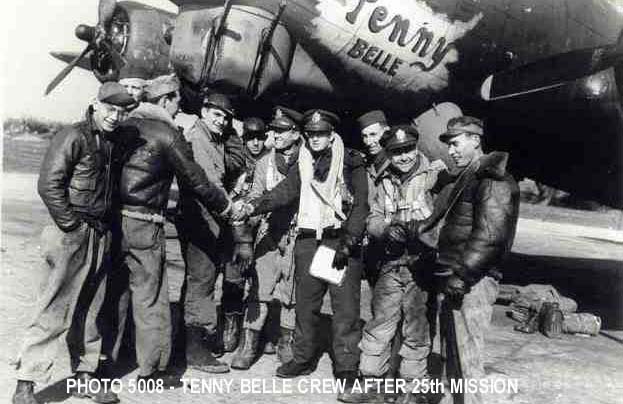
11th April 1944 – Loss of B-17 ‘Tenny Belle’ RAF Kimbolton

On 11th April 1944, a mix of 917 B-17s and B-24s of the 1st,  2nd and 3rd Bomb Divisions (BD) of the USAAF, departed their airfields in England to strike at a range of targets across Germany – it was mission 298. The 1st BD, made up of 341 B-17s, attacked targets at Cottibus, Dobberphel, Stettin, Trechel and Sorau. the Focke Wulf aircraft assembly plant in Germany.

One of those aircraft taking part was #42-31083 “Tenny Belle” of the 525nd BS, 379th BG, based at RAF Kimbolton (Station 117) in Cambridgeshire. The aircraft had already flown thirty-seven operations before this one, but this would sadly be her last.

After taking off from Kimbolton at 07:41, the aircraft climbed to gain altitude and to form up. Its flight would take it easterly over Norfolk and the coast.

On board the aircraft, a B-17G-1-BO “Flying Fortress”, ‘FR*A’, was: 2nd Lt. John E. Daly Jr. (pilot); 2nd Lt. Robert W. Koerber (co-pilot); 2nd Lt. Williams F. Evans (navigator); S/Sgt. Carl B. Christensen (nose gunner/bombadier); T.Sgt. Omer L. Young (Flt. Engineer/top turret gunner); T.Sgt. Adriel Langendoerfer (radio operator); S.Sgt. Harvey W. Tuber (Ball turret gunner); S.Sgt. John N. MacCallum (right waist gunner); S.Sgt. Frank J. Hearne Jr. (left waist gunner) and S.Sgt. Howard L. Polizzo (tail gunner).

This was not Daly’s first crew though, they had formed at Pyote Air Base, Texas and transferred out to the UK together. On this operation, S/Sgt. Carl B. Christensen replaced the normal bombardier 1st Lt. Joseph Jennings who was at RAF Alconbury receiving Radar training.

#42-31083 ‘Tenny Belle‘ and probably Daly’s crew (centre facing camera) after the 25th mission.  (IWM UPL 31620)

Once airborne, the aircraft levelled out and began to find its place in the formation before heading off over the sea to Germany. At 09:03 and at 9,000 feet, in formation travelling at about 115 mph, the aircraft for unknown reasons, suddenly and violently lurched to the left as if the pilot had tried to steer away from another aircraft; it then lurched once again, this time to the right throwing the crew around inside the fuselage in an uncontrollable manner. The forces acting on the weary aircraft were too great though, and a fracture caused it to split into two sections.

The “Tenny Belle“, now unstable and with no aerodynamic stability whatsoever, simply fell from the sky hitting the ground with such force as to completely destroy it. In the impact, it also killed nine of the ten crewmen left onboard. The tenth, 2nd LT. Evans, managed to don his chute and escape the stricken aircraft whilst it hung in the air on the smallest amount of lift possible immediately following the accident.

According to the official crash report Form AF-14, the aircraft came down four miles west-south-west of Downham Market in the small hamlet of Barroway Drove. However, some sources say the aircraft fell at Fen Farm some six miles south-west of the town, neither can be confirmed at this stage, although due to the nature of the accident, it is possible parts were located in both areas.

There was no record of any explosions, and all engines were reported by 2nd Lt. Evans as “running very fast”.  In his statement following the crash he said:

The formation entered the clouds and we levelled off. We were in the clouds only a few minutes when the ship swerved violently to the left. I thought the pilot saw another wing-tip and was trying to avoid it. We then swerved more violently to the right. I then figured out it was out of control and thought that the plane had broken in two. I had my chute on before this. The last I saw of the Bombadier, he was trying to put his chute on. We were going straight down, and the engines were all running fast. There did not appear to be any fire in the wings. I tried to get to the escape hatch, but everything at his point is very confused and I do not know if I got out this way. I remember looking down to see of my chute was on, and  noting that it was backwards. It opened with some help from me and a moment later I hit the ground. I looked around to the plane coming down, the tail part landed way behind the ship and numbers of burning pieces were falling around. There was a farmer near and I tried to walk over to him, but I was feeling pretty shaky. He got a car and took me to a hospital. I didn’t feel any explosions and no alarm was given.”

The official board of enquiry concluded that:

The cause of the accident is undetermined and consequently, responsibility therfor[sic] cannot be established.”

Post crash, the bodies of the crew were removed and the B-17 guarded, none of the bombs aboard detonated. It was later salvaged on the 18th April 1944, but the strength of the impact had completely destroyed its fragile structure.

The normal bombadier, Joseph Jennings learnt about the loss of the crew that day, the news affected him badly, and he never talked about them or their loss afterwards.

Pilot, 2nd Lt. John Daly, (s/n: 0-805776) had flown 273 hours and 15 minutes on B-17s, gaining his pilots licence on June 30th 1943. He was only 19 years of age and thought to be one of the youngest pilots to serve in the USAAF at that time.

Sources and further reading.

Air Accident Form (A.A.F.) No. 14 USAAF.

American Air Museum Website accessed 14/1/25

Downham Market Heritage Centre