RAF Debach – Home of Helton’s Hellcats.

As we depart Framlingham we head a short distance away to the south-west, to another U.S Bomber base also with a remarkable museum. As we head towards Ipswich we arrive at Debach, the former base of the 493rd BG(H) and a group named after its commander Col. Elbert Helton, “Helton’s Hellcats.”

RAF Debach (Station 152).

Debach was one of the last bases to be built during the war, hence its life span was relatively short. Construction began in 1943 opening in 1944 and was constructed by the 820th Engineer Battalion (Aviation) whose headquarters were at Great Barrington in the Cotswolds.

The 820th arrived, by boat, at Glasgow, unprepared but warned about the ‘English reserve‘ that they were likely to encounter. After travelling by train to Debach they were kept ‘on base’ sleeping in tents that were arranged around the airfield they were intending to build. Against orders, the men then decided it was time to see what England was all about and set off along its leafy lanes with thatched cottages and chocolate box views. Their first real taste of England came at the local pub ‘The Dog‘ in Grundisburgh, which sat across a wooden bridge from the local village green.

A traditional pub, it had served the locals for centuries, and to the Americans, it was stuck there. Old men with pipes sat in the corners while oak beams held the low ceilings just above the GI’s heads.
Debach Airfield and Museum

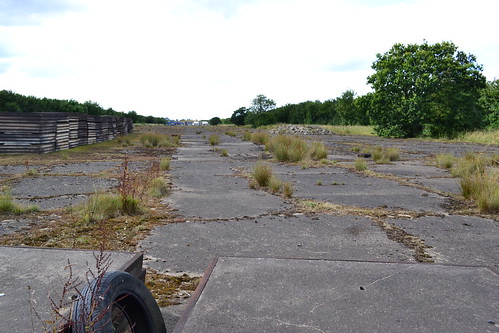
Part of the runway at Debach, cracking and breaking up, built by the 820th Engineer Battalion, it once resounded to the roar of heavy bombers.

After thinking they had entered a weird new world, the GIs tried the beers, all of them, to find one that suited the American taste buds the best. Before long, word spread, and the pub empty on their arrival, quickly filled with inquisitive English people, interested in seeing what these Americans were really like.

After an evening of much talk and drinking, the GI’s left for their tented homes, their first introduction to the British being a polite and pleasant affair. By the end of the evening the pub had run out of beer, the first time such a thing had happened in its 450 year old history.

Debach as a Class ‘A’ site, had three concrete runways, the main running slightly off north/east-south/west, the second east-west, and the third slightly off north-south.  The runway patterns at Debach were slightly different to the norm in that the cross of the ‘A’ was at the base rather than part way up, but the various lengths were as per other Class ‘A’ models.

A perimeter track with 50 spectacle hardstands joined the thresholds of each runway, with the bomb store to the south-east and the accommodation, admin and technical areas all spread along the western side. The airfield site encompassed the medieval site of Thistledon Hall, a three-moated house that has historical features dating back to the late 16th and early 17th Century. A building that was demolished by the 820th Engineer Battalion to make way for the airfield.

Accommodation was split over 6 officer and enlisted crewmen sites, two WAAF sites, a sick quarters and admin block that granted access to the main airfield. The majority of the buildings were Nissen huts, with some Romneys, a blister hanger for the gunnery trainer and two T2 hangars.

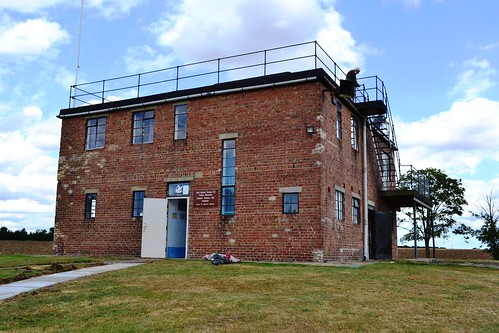
The watch office was of the standard wartime design, built to drawing 12779/41 later adapted to take the much smaller windows as per the updated drawing 343/43. This gave it a slightly different appearance to non-modified towers of the time.

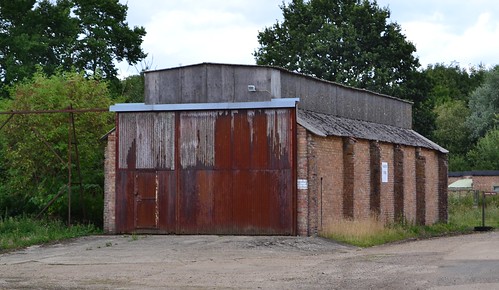
In the technical area, Debach had the usual range of buildings, stores and supply huts, however, the parachute store was almost unique in that it had its own drying room attached – perhaps as a result of the late building of the site. Like many of the forty-one airfields built to house the USAAF heavy bombers, Debach cost nearly £1,000,000 to construct, a small amount compared to the £645, 000,000 it cost to build all 250 US airfields in the UK*.

The mid war years saw a dramatic and rapid build up of the Eighth Air Force on British soil. This build up had seen huge numbers of both men and machinery arrive via Atlantic routes, many coming through the large ports at Greenock or Liverpool. The 40th, and last group to be assigned to the ‘Mighty Eighth’, would be the 493rd Bombardment Group (Heavy) and they would be assigned to RAF Debach.
Debach Airfield and Museum

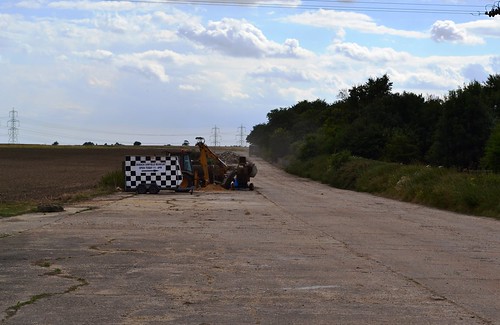
The perimeter track forms access for farm vehicles.

The 493rd would be a relatively short-lived unit, moving from their training ground at McCook Army Airfield in Nebraska, to their headquarters at Elveldon Hall, and Debach airfield. They remained here until their return to Sioux Falls post war. Their entire service would last just short of 2 years. Following their activation in November 1943, they had their ground echelons assigned in early 1944 with the air echelons joining in the following May. Ground crews were pulled in from other units to form these ground echelons, with additional support coming over from the U.S arriving at Liverpool on the USS Brazil. The 493rd were initially assigned the mighty ‘Olive-Drab’ B-24H ‘Liberator’  a lumbering giant of the skies it was loved by many and loathed by some.

Their inauguration would be a baptism of fire, celebrations overshadowed by events taking place overseas. On the morning of Tuesday 6th June 1944, high spirits took the crews of the 860th, 861st, 862nd and 863rd Bombardment squadrons high above the beaches of Normandy. Joining some 11,000 other aircraft, this 3rd Air Division unit would aim to soften up German gun defences dug in along the Normandy beach head. As the allies moved inland, the 493rd would go on to target key bridges and airfields, German strongholds around St. Lo and Caen. Other strategic targets further inland would include marshalling yards, manufacturing plants and the heavily defended oil plants at Merseberg.

Cpl. Kenneth Blair died in a tragic accident on July 8th 1944. He is buried in the Cambridge American Cemetery, Madingley.*1

Losses in battle are often more ‘acceptable’ than losses though accidents, and Debach would have its share of both. On July 8th 1944 only a month after their first mission, Cpl. Kenneth Blair (s/n: 39692721) of the 18th Weather Squadron, 493rd BG would be killed in a tragic accident that involved him walking into the spinning propeller of a running B-24. Only minutes before, he had received good news that took him  to his ultimate and tragic death.

The last mission to see the 493rd using B-24s was on August 24th, when fifty-two B-24s and 383 B-17s attacked Kiel in Germany. Within two weeks crews were using the formidable B-17G ‘Flying Fortress’, an aircraft that took them back to the German Heartland. Using these aircraft they went on to support the allied push through Holland to Arnhem, and in the fight back against Von Rundstedt’s last-ditch attempt to push back the Allies in the Ardennes.
Debach Airfield and Museum

The parachute room was rare with its addition of a separate drying area.

Late 1944 was a difficult time for the crews of the Air Forces. many of the airfields in the UK were shrouded in fog, causing many operations to be cancelled at late notice. Those that did go ahead were largely ineffective until finally, the clouds lifted and the fog dispersed. The frustration for the crews must have been immense.

It was during this time that one crew had a very lucky escape in an event that was reflected on many airfields across England. On December 12th, whilst on the 493rd’s third trip to Darmstadt, B-17 #43-38219 ‘Devil’s Own‘ suffered an engine problem that resulted in an intense fire on the port wing. In an attempt to extinguish the fire, the pilot, Lt. John E. DeWitt, put the aircraft into a dive. This proved fruitless and with little choice left he decided to bring the stricken aircraft back to Debach. The fire had now become so intense that there was an almost certain chance that the wing would separate from the fuselage. The resulting crash would have most certainly led to the deaths of the crew and those on the ground below.

DeWitt flew straight in to Debach narrowly missing parked aircraft and vehicles. The crew abandoned the B-17 and within moments the entire bomb load exploded in an explosion that was so severe that the nearby hangar doors were blown completely off their rails. The aircraft was blown apart and pieces spread across a wide area.

With fires still burning, ‘Devil’s Own‘ is scattered across a wide area of Debach. (IWM)

The weather at this time was to play its own part in Debach’s history. Even though it was a relatively new airfield, the frost and cold worked its way into the runway surfaces, and with continued heavy use, it began to break up. New runways were the only answer and so as soon as the aircraft left to attack Uim on March 1st, the ground echelons and servicing units began the arduous task of moving every possible piece of machinery and all supplies over to a temporary base at Little Walden. The 493rd would fly twenty missions from this site as the runways of Debach were removed and then relaid. Remarkably the entire event went with out a single hitch.

In 1945, the 493rd went on to  support the Rhine crossing softening up defences along the German borders, but by the end of April, their bombing war was over, their last mission was carried out on the 20th April 1945 in which they attacked the marshalling yards at Nauen just 38 km west of Berlin. An event that would take their bomb load tally to 11,733 tons in 4,871 sorties. For the remainder of the war the 493rd took part in operation Mania, dropping food in six missions over Holland. Further revival flights took the 493rd to Austria on four occasions in the last days of May 1945.

In the following month the ground echelons returned via the Queen Elizabeth to New York whilst the air echelons flew back in the following July and August. Following thirty days rest and recuperation the unit was disbanded. Debach was now devoid of aircraft and the empty accommodation blocks became a site for both German and Italian Prisoners of War, and displaced persons.

Post war, Debach fell into disrepair. It was eventually sold to the current landowner after the T2s were removed and the runways largely dug up for the lucrative road hardcore. Many of the technical buildings were left and, as with the watch tower, they were in a very poor state of repair.
Debach Airfield and Museum

The Watch Office is now a superbly restored museum dedicated to those who served at Debach.

Debach is now a busy farm, the watch tower has been superbly refurbished as have many of the remaining buildings. It now forms the 493d BG museum which houses an incredible amount of memorabilia and wartime stories. It also has a remarkable collection of toys and other items made by prisoners of war and is thought to be the largest collection in the East Anglia region.

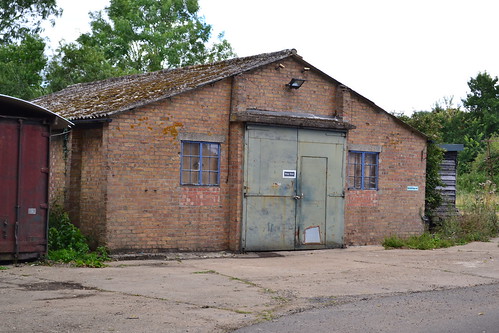
Debach is a working farm and the museum is only open at limited times. However, the curators and farm owners are happy to oblige visitors, my self having a personal guided tour of the museum during the summer of 2016. Much of the perimeter track is still there, sections of the runways are also there in part  and allow for the landing of light aircraft during special occasions; but these are amongst the farm grounds and generally off-limits to the public. Then technical area has several buildings used for storage of farm material and a wide collection of military vehicles and memorabilia. The parachute and dingy store are still present as are former motor transport shed and other stores; as a visitor you are able to wander these at will.

If you leave through via main entrance (itself the original airfield entrance) cross the road, walk along the track, on your right you will find the former headquarters building which is now a small industrial unit, this is where you will find the memorial. I was invited in to the building to browse, again freely, at the various photos and mission charts that adorned the walls. These give a fascinating insight into the lives of those at Debach.

When you leave here, head north, (left) turn right at the main road and pass the Clopton Commercial Park (the northern most end of the main and secondary runway, which is still visible beneath the many huts built upon them now). Turn right into Debach village, the village sign is on your left. Depicting a B-17 flying over the village, it has at its base a dedication to those who served and died at the base. Behind the houses to your right are where many of the hardstands upon which the B-17s would have stood. These are now gone beneath the homes of the local residents. Continue on and then turn first right, this road is the old perimeter track and takes you to the end of the secondary runway. From here you can see along its length and width which is still full width today. The decay is obvious though and large cracks filled with small bushes are a sign of its impending demise. This road, still using the perimeter track, then takes you round toward the end of the main runway and away from the site.
Debach Airfield and Museum

The Dingy Store is one of the many buildings in use today storing farm machinery.

Whilst only being around for a short period of time, Debach has, like so many of these wartime airfields, its own unique stories to tell. It has a history that is part of a time so dramatic that it has become a monument to human ingenuity, planning and suffering.

Almost forgotten and abandoned for good, Debach has been painstakingly and lovingly restored to represent a superb monument to those who fought and died from his airfield. The dedication of the owners is second to none, their passion for the site reflected in the warm welcome you receive when visiting. The small group of volunteers that work so tirelessly to keep it open, enables it to stand today as a reminder of so many events that occurred in the dreadful years leading up to end of the conflict in 1945.

Links and further reading.

Whilst in the village, the now closed church of All Saints also has a memorial in its graveyard.

The 493rd Museum website has all the details of the site and the museum opening hours.

*Wilson, K., “Blood and Fears – How America’s Bomber Boys and Girls in England Won Their War.”,  Weiden & Nicolson. 2016

*1 Photo from IWM image UPL 20040

Arbib, Robert S, “Here we are together: The Notebook of an American Soldier in Britain.”, Longmans, Green And Co. (1946)

Trail 34 a visit to former RAF Oulton

Laying quietly between the airfields at Matlaske and Swannington is another one of Addison’s 100 group’s small collection. An airfield that not only saw a variety of makes and models, but a range of nationalities as well, each having a remarkable story to tell. In the second part of Trail 34, we travel a few miles south and visit RAF Oulton.

RAF Oulton.

RAF Oulton in 1946, taken  from the north. (IWM)

Although an RAF base, Oulton was also home to the heavy American bombers the B-17 and B-24. However, they were not used in their natural heavy bomber role, but a more secret and sinister one.

Initially built as a satellite for the larger bomber base at Horsham St. Faith, Oulton originally only had grass runways. It would later, in 1942, be upgraded to class ‘A’ standard, which would require the construction of three concrete runways, a new tower and bomb store and upgrading to the technical site. Runway 1 (2000 yds) ran east-west, runway 2 (1,400 yds), north-east to south-west, and runway 3 ran approximately north-south and was also 1,400 yds. All were the standard 50 yards wide and would be connected by thirty-two loop style hardstands and eleven pan style hardstands. Uncommonly, Oulton would also have four T2 hangars (three to the eastern side and one to west, two of which would later hold Horsa gliders) and a further blister hangar.

The majority of the technical area was to the eastern side of the airfield next to the main entrance and along side Oulton Street. The two bomb stores were located to the north and western sides of the airfield well away from personnel and aircraft as was common. The first of the two towers, was built to drawing 15898/40, which combined the tower and crew rooms; the second built later to drawing 12779/41 (adapted to the now common 343/43) brought the airfield in line with other Class ‘A’ airfields.

RAF Oulton

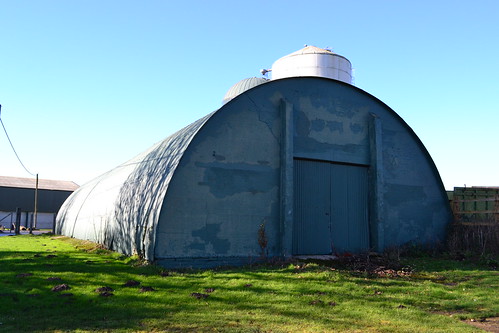
One of the huts used for agricultural purposes today.

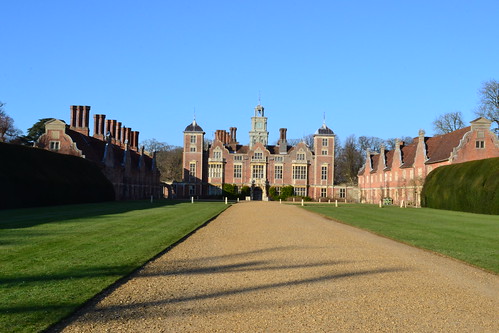
Throughout the war personnel accommodation utilised the grand and audacious Blickling Hall. A seventeenth century building that stands in a 4,777 acre estate that once belonged to the family of Anne Boleyn. Owned more recently by Lord Lothian, he famously persuaded Churchill to write to Roosevelt declaring Britain’s position and poor military strength. Lord Lothian was a great entertainer dining with many notable people including Joachim von Ribbentrop, Hitler’s foreign Policy advisor and close friend. A number of other notable events took place at Blickling, including, in early 1945, Margaret Lockwood raising eyebrows when she and James Mason arrived to film ‘The Wicked Lady’ .

In the early 1940s, the hall was requisitioned by the RAF, officers were billeted inside the ‘wings’ whilst other ranks were put up in Nissen huts within the grounds. The lake was used for Dingy training and the upper floors allowed for baths albeit with cold water!  In total some 1,780 personnel could be housed in and around the estate.

For the first two years between 1940 and 1942, Oulton airfield was the home to Blenheims, Hudsons and Beaufighters, each undertaking a light bombing or anti-shipping role as part of 2 Group.

First came 114 sqn on August 10th 1940 with Blenheim IVs. Apart from a small detachment at Hornchurch, they stayed here until the following March whereupon they moved to Thornaby. Their most notable mission was the mid-December attack on Mannheim, an attack that would signify the start of the RAF’s ‘area’ bombing campaign.  A short spell of three months beginning April 1941 by 18 Sqn, preceded their return later in November and then subsequent move to Horsham St Faith.

Like many airfields during this time, units moved around and it was no different for 139 Sqn. With their Blenheims and later Hudsons, they would leapfrog between Horsham St. Faith and Oulton throughout 1941 only to disband and reform returning in 1942 with Mosquito IVs.

RAF Oulton

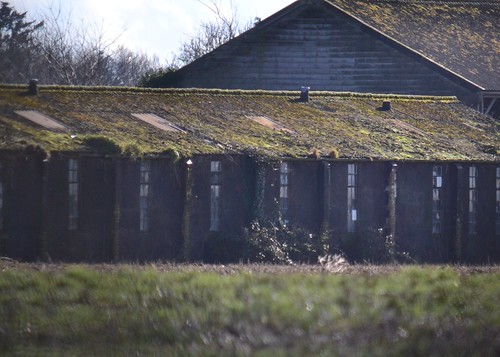
A few buildings remain on the site, many are fighting a losing battle with nature. The main entrance to the airfield is just to the right of this building.

It was during this time in late 1941 that Hudson conversion flight 1428 would be formed at Oulton with the sole job of training crews on the Hudson III. They would remain here until the following May, at which point they were disbanded.

The re-establishment of 236 Sqn in July 1942 with Beaufighter ICs meant Oulton performed as part of Coastal Command for a short time. The success of 236 in torpedo strikes, led to a new wing being formed at North Coates with 236 leading the way, they departed taking their Beaufighters with them. This left a vacancy, that would soon be filled with a new twin-engined model, the Boston III and 88 Squadron.

88 Sqn were split over 6 different airfields before being pulled together here at Oulton. They retained two of these detachments, one at RAF Ford and the other at RAF Hurn, and their arrival and start of operations at Oulton, would be tarnished with sadness.

On October 31st 1942, a month after they arrived, ground crews were unloading a 250lb bomb from 88 Sqn Boston ‘W8297’ when it suddenly went off. The resultant explosion destroyed the Boston and killed six members*1 of the ground crew. The youngest of these, AC2 K. F. Fowler, was only 19.

After having suffered serious losses in France whilst claiming the first RAF ‘kill’ of the war, they were the first unit to fly the new Boston, and would continue to undertake dangerous daylight intruder operations. Flying daring, low-level missions, they would attack shipping and coastal targets before supporting the allied advance on D-day. Their most famous attack was the renowned bombing of the Philips works in Eindhoven, which resulted in the loss of production for six months following the raid. Ninety-three aircraft took part in the raid, all flying beyond the reach of any fighter escort, a factor that no doubt resulted in the heavy casualties sustained by 2 Group on that mission*2 .

DSC_0178

Two Nissen huts would have been next to this building, and according to the site map, it was part of the rubber store.

In March 1943, the Boston IIIs left and Oulton passed to Addison’s 100 group. As with many other airfields in this part of Norfolk, 100 group were using them to fly missions investigating electronic warfare and radio counter measures. This move to 100 Group would bring a major change for Oulton.

The now satellite of Foulsham would soon be seeing larger and heavier aircraft in the form of the American Fortress I (B-17E), II (F), III (G) and Liberator VI (B-24H). This change required extensive upgrading; the construction of hard runways, updating of the accommodation, new technical buildings and a second, updated tower, along with further storage facilities. The airfield was closed throughout the operation, and with the completion in May 1944 operations could begin almost immediately.

Both USAAF and RAF crews moved in. 1699 Flight were providing conversion for crews to fly the heavy bombers for their parent Squadron 214 Sqn, whilst the American 803rd BS, 36th BG flew radio-countermeasures in their B-17s and later B24s. This move here allowed their own parent station RAF Sculthorpe, to also be extensively redeveloped.

The Americans stayed for three months whilst their work was undertaken, but the RAF units remained until the end of the war. After 1699 Flt. had completed conversions, 214 changed Fortress IIs for IIIs and flew these until disbandment on July 27th 1945.

On August 23rd 1944, 223 Sqn reformed at Oulton. Having previously been flying the twin-engined Baltimore, the new unit would have to get used to much larger aircraft very quickly, a task they commanded with relative ease. They flew the heavier Liberator IVs, and Fortress IIs and IIIs until their final disbandment a year later.

Both 214 and 223 flew the heavy bombers now bristling with electronics. Using a range of electronic gadgetry such as ‘window’ ,’H2S’ and ‘Mandrel’, they had their front turrets painted over or removed and electronic equipment added. ‘Window‘ chutes were installed in the fuselage of the aircraft and a heavy secrecy enveloped the airfield.

The winter of 1944 proved to be one of the worst for many years, crews worked hard in the snowy environment, relaxing where they could at the nearby pubs, one nicely placed next to Blickling Hall and the other directly opposite the entrance to the airfield.

Both units would participate in a number of major, high prestige operations, providing radio jamming and window curtains for the bomber formations. ‘Spoof’ operations were common, diverting enemy fighters away from the real force and playing a daring game of cat and mouse with the German radio operators. As the war drew to a close, so too did the operations from 214 and 223. Eventually in July 1945 both Squadrons were disbanded, 214 being the renumbered 614 squadron, with 223 having to wait until 1959 before being reborn as a THOR missile squadron.

With the withdrawal of the heavies, the end was near for Oulton. After being used for storage of surplus  Mosquitoes for a year it was closed and sold off. The end had finally arrived and Oulton closed its gates for the last time.

Oulton airfield stands as a  reminder of the bravery of the light bomber and ECM crews; today many of the original buildings still remain, used for agricultural purposes and even by the National Trust.

RAF Oulton

One of the few buildings that remain, the former squadron offices.

Whilst the general layout of the airfield has changed with the addition of farm and ‘industrial’ units, its layout can still be recognised. The majority of the runways still exist, now housing poultry sheds, and large sections can easily be seen from the roadside. Luckily, even some of the original huts from the technical area are also in existence and ‘accessible’.

Approaching from the north, the first reference point is the memorial. Standing at the crossroads on the north-eastern corner, it serves as a pointer directly in line with the centreline of the Runway 2. Behind you to your right is the former sick quarters, here would have been an ambulance station, Static water tank and sick quarters, now all gone. Turning right here, keeping the airfield to your left, you pass along the northern boundary, within a short distance of what would have been the perimeter track.

The first sign is a pillbox. This was placed next to the special signals workshop which consisted of three small buildings. Now overgrown, this maybe a Vickers Machine gun Pillbox, different to ‘standard’ pill boxes as it has a concrete ‘table’ beneath the gun port designed to support the heavier gun and tripod.

Further along this road, to your right, is the first and main bomb store. A small track being the only visible reminder, the walls having been removed long ago. The large concrete ‘pan’ being the entrance, on which farm products are now stored.

The second store and USAAF quarters were further along this road, again all trace has gone and it is purely agricultural now. Retracing your steps, go back to the memorial. At the crossroads, ahead of you, was Number 1 accommodation site, now all farm buildings, but formerly the officers, sergeants quarters and airman’s barracks.

Turn right here and as you drive down Oulton Street, there are a number of original buildings back from the road in a small enclave. The National Trust own part of these and use them to restore historic textiles, one of these buildings being the squadron offices. The main entrance to the airfield is further along this road and now an insignificant farm gate, allowed to grow and fill in, the path buried beneath the grass. Beyond this, you can see some remaining buildings across the field, truly overgrown and very dilapidated, these are possibly the crew locker and drying rooms. Continue on along this narrow road and you arrive at the pond. Behind the pond, stands a well-preserved hut and smaller buildings. These were the main workshops, rubber store and general stores, now holding agricultural products and waste material. Certainly they are some of the better preserved buildings on the site. Further along, the road crosses the main runway, here it is full width on both sides of the road. Poultry sheds stand on the main section, whilst farm waste resides on the left.

RAF Oulton

The eastern end of the main runway.

Continuing on and the road crosses the third runway, where we turn left. We can now see the site of one of the four T2s, the road at this point using the original perimeter track before it departs away to the north.

From here, we return north, head back past the airfield and return to the main road. Here we turn right and follow the road for a few miles east through the woodland where we arrive at Blickling Hall. The accommodation sites here, include the No.1 and 2 WAAF sites, NAAFI, No. 4 and 5 accommodation site and various service sites.

The east wing of the Blickling Hall is now a museum, formerly the barracks and still shows the original paintwork. A range of uniforms, photos and personal stories can be seen and read.

There are virtually no remnants of the other sites which were primarily Nissen huts. Footpaths do allow you to walk through these, now natural spaces, walking in the footsteps of former airmen and women.

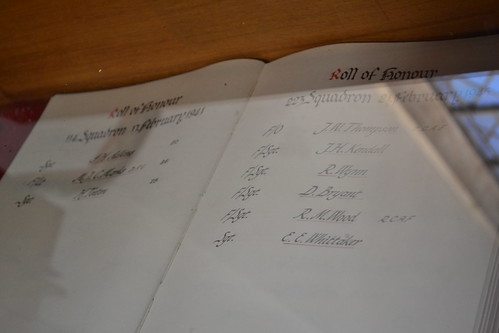
Next to the Hall, is the church of St. Andrew, in here is a small collection of artefacts and a roll of honour for those who died at Oulton. Also here is the sole grave of Sergeant L. Billington, who died on March 4th 1945 at the young age of 20. He was part of a crew in a Fortress III (B-17) on window duties. As the aircraft was returning from its mission, it was attacked by a JU 88, causing it to crash on the airfield boundary. All but two of the crew were killed*3, their bodies being buried in different locations. A sad end to another young life at Oulton.

St. Andrew's Church

The Roll of Honour at St. Andrew’s Church, next to Blickling Hall.

RAF Oulton housed a range of aircraft types and nationalities. Their role encompassed many important duties and missions that certainly helped defeat the Nazi tyranny. Many of these young men, led the way in today’s electronic counter measures and electronic warfare. The daring missions they led, firmly embedded in our history, and now the remnants of Oulton stand as a reminder to both their sacrifice and dedication.

Notes and Further Reading.

*1 The ground crew were:

E.J. Bone, Aircraftsman Ist Class
H. Bramham, Aircraftsman 2nd Class
A.C. Emery, Aircraftsman 2nd Class
K.F. Fowler, Aircraftsman, 2nd Class
F. Packard, Leading Aircraftsman
A. Torrence, Leading Aircraftsman

Source Aircrew remembered website.

*2 National Archives, RAF Bomber command diary 1940.

* The crew were:

P/O H Bennett
Sgt. L Billington
F/S H. Barnfield
W/O LJ Odgers (RAAF)
F/S W Bridden
F/S LA Hadder
F/S F Hares
Sgt. A McDirmid (injured)
W/O RW Church (injured)
Sgt. PJ Healy

Source: Chorley, W.R., RAF Bomber Command Losses 1945, 1998, Midland Counties.

RAF Oulton Museum, Blickling Hall.

If visiting the airfields of North Norfolk, then a stop at the grand 17th Century Blickling Hall is a must. Here, not only do we have a house that dates back some 400 years, but an estate that goes back even further to the 15th Century, and once belonged to the Boleyn family. A mix of Jacobean architecture, grand paintings and tapestries complement a library that contains one of the most historically significant collections of manuscripts and books in England. Walks that take you through a 4,800 acre estate of gardens, wild meadows and woodland, are brimming with wildlife. Even on busy days, you cannot fail to enjoy the peace and tranquillity, the inviting waters of the lake and views over the Norfolk countryside.

But equally important, you have a house that once belonged to Philip Kerr, 11th Marquis of Lothian, Britain’s Ambassador to the United States. Lord Lothian, played a major part in Britain’s war, convincing Churchill to write to Roosevelt, explaining the consequences of a Nazi victory in Europe and the poor defensive position Britain lay in at that time.  A letter that began a chain of events including Lord Lothian’s speech to the American people, that eventually led to the ‘Lend-Lease’ programme being initiated and arms allowed to flow into Britain.

Blickling Hall Blickling Hall, the Museum can be found in the buildings to the right hand side.

A few miles from Blickling, is the airfield RAF Oulton, part of 100 Group commanded by Air Commodore Addison, whom the farm at RAF Foulsham is named after. Oulton utilised much of the house and grounds of Blickling, billeting officers in its ‘wings’ and other ranks in Nissen huts within its grounds. The lake was regularly used for dingy training, the upper floors allowed for bathing in baths – a real luxury for aircrews in the Second World War.

Housed within one of the ‘wings’, is a small museum, the RAF Oulton Museum.

The museum itself is situated in the upper floors on the eastern side, utilising one of the former barrack blocks used by the RAF. The original paintwork still colours the walls and a ‘mock’ billet has been recreated using original furniture sourced from local shops, auctions and through donations.

The museum holds a unique collection of photographs, personal letters and stories gathered over a number of years accumulating into a fascinating record of life at RAF Oulton only a few miles away.  The winter of 1944-45 was one of the worst on record and many of the photographs show crew members relaxing in the snow on and around the base.

Letters tell of the local people, their connections with the base, the pub outside the main gate formerly the ‘Bird in Hand’, (now a private residence) and the Buckinghamshire Arms next to Blickling Hall, (still a pub) where crews would spend their evenings and ‘free’ time.

Log books and uniforms from those stationed at Oulton, along with a mix of original artefacts and replica newspapers, all help to recreate the atmosphere of an RAF billet. It is packed with historical and personal information – a real gem for those interested in history and life on the RAF base.

A great little museum, it is certainly worth a visit.

More information about Blickling Hall and the RAF Museum can be found on the National Trust Website.

RAF Fersfield – The Last Flight of Joseph Kennedy Jnr and Wilford Willy

There has been much written about the young Kennedy, his life, his family and his death, but a lot of information around his death has remained ‘unknown’ for many years. Even today, the actual cause of his death is not clear and will probably remain so.

Joseph Kennedy Jnr was based at RAF Fersfield (originally RAF Winfarthing) in Norfolk (Trail 27), and had only been there a few weeks before he tragically died on August 12th 1944, whilst operating on secret operations. A tragic loss, this is the last flight of Joseph Kennedy and Wilford Willy from RAF Fersfield, Norfolk, England.

The Crew – Lieutenant Joseph Kennedy Jnr.

Joseph Kennedy was born July 25th 1915, Nantasket, Massachusetts, he was the eldest brother of eight siblings including John F. Kennedy. He was son to Joseph Patrick Kennedy and Rose Fitzgerald. Throughout his life he had been pressured into the political life by his father who had high hopes that his son would become the future President. Joseph Jnr wanted to please. As war loomed, Joe Kennedy Jnr rose to the challenge seizing his opportunity to become the ‘shining light’ of the Kennedy family.

The Kennedy parents instilled a desire to be competitive, to win and succeed and to be the best. This came out in Joseph during his time at both home and at school. The pressure on Joseph was enormous, and it was clearly evident throughout his short life.

Joseph lived in the shadow of his younger brother John, who would captain a PT boat in the Far East, and in Joseph’s absence, go on to become President of the most powerful nation on Earth. John was the brighter, the more determined of the two, and this caused friction between them. Joe always wanting to ‘out-do’ his brother persevered, but never seemed to quite make it.

It was this determination and rivalry that perhaps led Joseph to do what he did, to impress, to be the best and the ideal way he thought was as a war hero.

With a remarkable academic background behind him, Joseph Kennedy joined the U.S. Naval Reserves on October 15th 1941, reporting to the Naval Air Station (N.A.S.) at Jacksonville, Florida the following day. After several months of training he received his commission and on January 10th 1943 he joined a flying patrol squadron. In May he became a Junior Grade Lieutenant transferring to a bomber squadron in the following July that year. In 1944, on July 1st, he was promoted to Lieutenant United States Naval Reserve. His military life would last just one more month.

Joseph was posted to RAF Dunkeswell serving under the RAF’s Coastal Command. Flying a PB4Y he would carry out U-Boat searches over the Atlantic around the Bay of Biscay and the Atlantic. As he accumulated flying hours, he rarely came into any real danger, even when posted to cover the Allied invasion fleet over Normandy he rarely came into contact with any opposing aircraft or vessels.

Joseph Kennedy’s opportunity came when volunteers were asked for to undertake a special secret and dangerous operation. He jumped at the chance to be a hero.

Joseph Kennedy arrived at RAF Fersfield, Norfolk on 30th July 1944 where he was trained for two weeks.  On August 10th 1944 he wrote a letter home, it would be his last communication with his family. Joseph Kennedy was to become a pilot in operation Anvil.

Lieutenant Wilford John Willy

Sadly, Lieutenant Wilford J. Willy (s/n: O-137078), has remained in the shadows probably because the status of Joseph Kennedy Jnr. A tragic loss nonetheless and no less an important one. Willy was born 13th May 1909, New Jersey. He enlisted in the Navy in 1928, gaining his Naval Wings on April 30th 1937, just two years after he had married his sweetheart, Edna C. Schaffery, the women he left behind. On advancing through the rank of Chief Petty Officer,  he was awarded Lower Grade Lieutenant (April 28th 1942) and two months later, on June 26th, he achieved the rank of Lieutenant. Willy served at a number of operational stations, including Pearl Harbour, before being posted to RAF Fersfield, in Norfolk.

Willy, now an expert in Radio Operations and procedures, became the Executive Officer of the Special Air Unit One (S.A.U.1), the rank he achieved when he took off with Kennedy on August 12th 1944.

Operations Anvil and Aphrodite.

Whilst Drone technology and research had been around as early as World War I, it was still relatively unchartered territory. However, radio controlled drones (modern name Unmanned Aerial Vehicles or U.A.V.s) were already being used with relative success for target practice by the RAF and USAAF during World War II. The ‘Queen Bee’ being one of many used by the RAF. The Germans had also been investigating drone and guided bomb use through examples such as the Mistel aircraft (the most successful being a combination of either a FW-190 or Me-109 mounted above a Ju 88).

Both the  USAAF and USN were undertaking secret trials into drone aircraft operations with the view of attacking
the  heavily defended and ‘impenetrable’ submarine and ‘V’ weapons sites across northern France . The aim, to stop, or at least reduce, the Nazi’s use of the V1, V2 rockets and the development of the new V3 canon.

Codenamed ‘Aphrodite‘ by the USAAF,  and ‘Anvil‘  by the Navy, they were two secret operations running side by side. The idea behind these operations, was to remove all excess equipment from war-weary B-17s and B-24s, fill them with explosives, such as the British Torpex, put in radio receivers so that the drone (baby) could be controlled by a separate aircraft (mother) and fly them into designated targets. A volunteer crew of two would take off, set the aircraft in flight and then bail out over the U.K. or English Channel, leaving the ‘baby’ in the control of the ‘mother’ aircraft. These would then fly, by remote control, to the target when they would be put into a dive destroying whatever they hit.

The controls of the B-17 . The arm linkage moved the control column in response to the radio controls. (credit USAF)

The idea was remarkable but not new, and the equipment whilst innovative for its day, was limited to say the least. In all the operations undertaken only one drone ever reached its target, and that was through more luck than skill.

‘Azon’ (from AZimuth ONly*1) controls had been used successfully on individual 500lb or 1000lb bombs, where the control box was attached to the rear of the bomb and controlled by the bomb aimer through a joy stick. Using two directional controls (left or right) he could direct a bomb very accurately onto a given point. The downside of Azon, was that range and fall had to be determined in the usual way by the bomb aimer and could not be altered once the bomb had left the aircraft.

Azon had been used and proven in attacking bridges, railways and other longitudinal targets and was very accurate with a good bomb aimer. However, because of its limitations, it could only be used in one dimension and therefore was not capable a making a ‘baby’ take off.

Two aircraft types were identified for the project. Boeing’s B-17 ‘Flying Fortress’ and Consolidated’s B-24 ‘Liberator’. These once converted would be given new identifications BQ-7 (usually B-17Fs) and BQ-8 (B-24D/J). In each case it was deemed that two crew members would be needed to raise the ‘baby’ off the ground, partly because of the strength needed to pull back the control columns in these heavy bombers. Once airborne, they would climb to around 20,000ft, arm the Torpex, set the aircraft on a trajectory to the target, switch on the receivers and bail out.

About twenty-five  BQ-7s were modified, but it is not known accurately how many USAAF BQ-8s were converted. However, it is known that at least two naval PB4Y-1s (the naval version of the B-24 of which 400 had been converted from B-24 status – these were given s/n 31936 – 32335) were converted to BQ-8 standard; one of which was flown by Lt. Kennedy and  Lt. Willy on the 12th August 1944.

A number of support aircraft were needed for each mission. Prior to the attack a Mosquito XVI of the 653rd BS would photograph the target. Then the ‘baby’ would be accompanied by at least one fighter (either P-38 or P-51) in case the ‘baby’ lost control and had to be shot down and for fighter escort; a ‘mother’ either a Lockheed Ventura or another B-17 modified to CQ-4 standard, and a photographic  Mosquito from the 8th Combat Camera Unit (CCU) to record in-flight behaviour. A post mission photo reconnaissance operation was carried out by the 25th BG at Watton to analyse the effectiveness of the bombing. It therefore took a lot of fuel, crew and aircraft to fly one drone to its target.

Because of the design features of the bombers, the USAAF looked into removing the cockpit to allow easy departure. The only aircraft that received this treatment was B-17F, “Olin’s 69’ERS” 42-30595 formally of 560BS, 388BG at Knettishall. It was never used on an Aphrodite mission  and was scrapped post war after being used for training in the open cockpit mode.  The BQ-8  (B-24) also had modifications made in the form of a widened hatch in the nose allowing for an easier escape from the aircraft. Once modified, the aircraft would have had all previous markings removed, and a special white or yellow paintwork applied to identify them from other bombers. To assist the controllers in sighting the ‘babies’ whilst in flight, the aircraft were fitted with a smoke canister that would be ignited allowing the bomb aimer to see the aircraft as it began its dive. In addition to this, two cameras were fitted to some ‘babies’ that transmitted pictures to the mother or support ship. These pointed at the controls and through the plexiglass. A revolutionary step forward in drone technology.

In all, there were fifteen missions undertaken by the USAAF and USN, but none were to successfully hit their targets.  These included: Mimoyecques (Fortress); Siracourt (V1 Bunker); Watten (V2 Bunker); Heligoland (U-boat pens); Heide; Le Havre (docks); Hemmingstedt (oil refinery); Herford (marshalling yard) and Oldenburg (Power station). Both the operations and entire programme were cancelled only a few months after the Kennedy/Willy mission.

The last flight.

At RAF Fersfield, on August 12th 1944, Lieutenants Joseph Kennedy Jnr and Wilford J. Willy, both of the S.A.U. 1 of the Fleet Air Arm Wing Seven, boarded their converted B-24 Liberator, s/n 32271 (ex USAAF B-24J 42-110007)*2 and began their preflight checks. The aircraft was filled with 21,270lbs of explosive. At 17:55 and 17:56 two Lockheed Ventura ‘mother’ aircraft took off, followed by a further navigation aircraft and then the ‘baby’ at 18:07. The ‘baby’ climbed to 2,000 ft, the two ‘mothers’ 200 feet higher and slightly behind. They were joined by two Mosquitos, one for monitoring the weather, and the second, A USAAF F-8, to photograph the ‘baby’. This aircraft was flown by pilot Lieutenant Robert A. Tunnel and combat camera man Lieutenant David J. McCarthy. There was a further B-17 relay ship, a P-38 high altitude photo reconnaissance aircraft and five P-51 Mustangs to provide fighter cover.

The group set off toward the target at Mimoyecques , Northern France. They were to fly south-east toward the Suffolk coast, then turn south and head toward the target. Once level and stabilised, Kennedy and Willy handed over control to one of the ‘mother’ ships Then they reached the first control point (CP) at which time the group began to turn south; the ‘mother’ controlling the ‘baby’. Shortly after the turn was completed (about two minutes) Kennedy was heard to give the code “Spade Flush”, then at that 18:20 the ‘baby’ disintegrated in what was described as “two mid-air explosions” and a “large Fireball”.*4 The explosion, spread debris over a large area of the Suffolk countryside killing both crew members instantly. The following Mosquito also suffered damage and minor injuries to its crew. Following the explosion, all the aircraft were ordered back to base and the crews debriefed.

Many months (and indeed years) of investigations followed, but no firm conclusions could be drawn as to the precise cause of the explosion that ripped the aircraft apart. A number of speculative theories were drawn up, but the most plausible is that the electronic arming system was faulty and when Kennedy or Willy flicked the switch, an electronic short occurred that caused the bombs to detonate. Oddly the film that was in the following Mosquito has never been seen or made public – if indeed it was filming at that time.

The cause of deaths of Joseph Kennedy and Wilford Willy still remain a mystery to this day.

Joseph Kennedy wanted to be a hero. He wanted to be talked about as the one who achieved and outshone his brother. Sadly, this dream cost him his life.

Page 1 of August 23, 1944 condolence letter to the parents of Lt. Joseph Kennedy, Jr.,

The letter sent to the Kennedy’s after Joseph’s death.*3

Page 2 of August 23, 1944 condolence letter to the parents of Lt. Joseph Kennedy, Jr.,

The letter sent to the Kennedy’s after Joseph’s death.*3

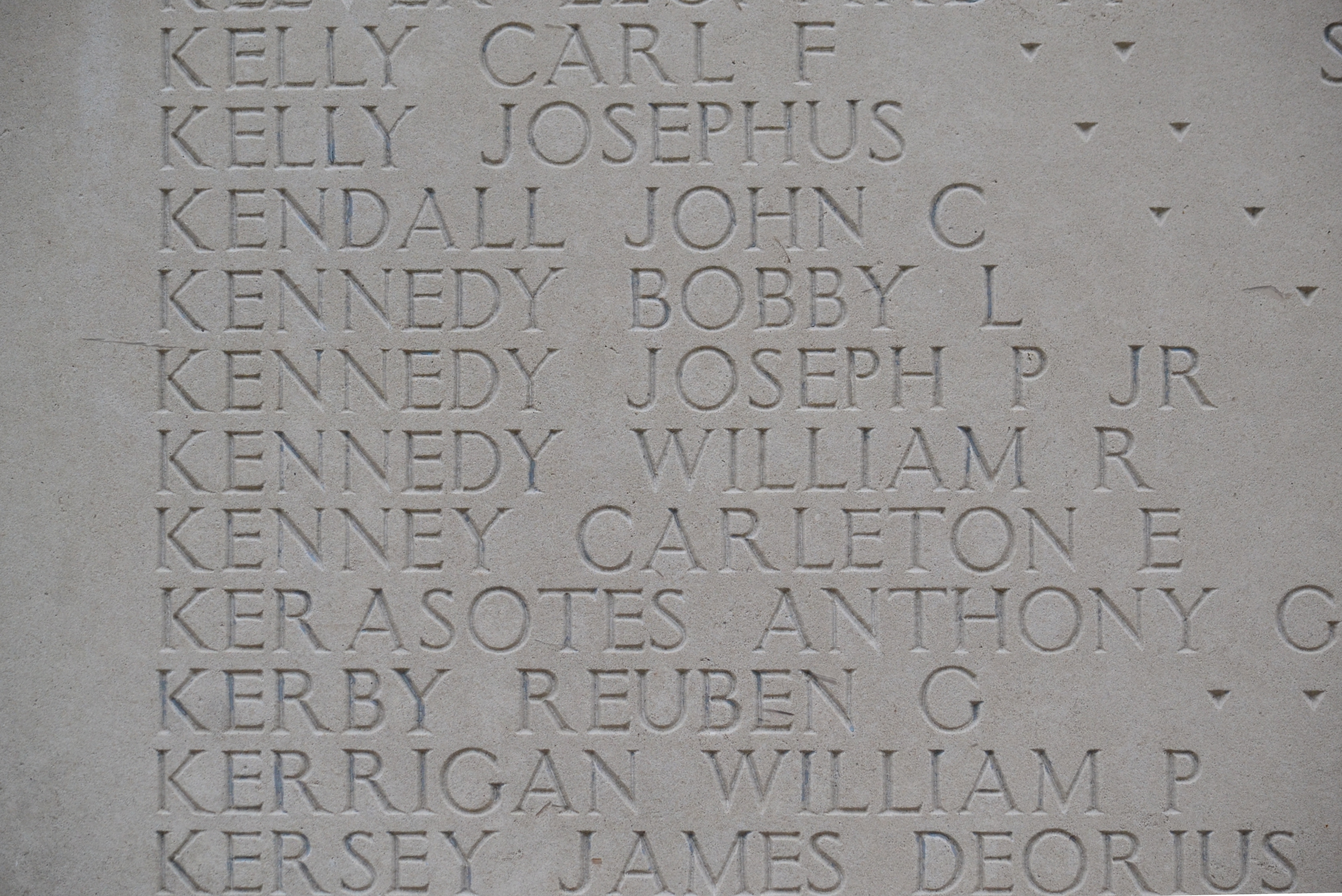
This fateful mission and its two crew members are remembered across the world. In France, the Mimoyecques museum contains a memorial honoring both pilots, and their names are carved in the Tablets of the Missing at the American Cemetery, Madingley, Cambridge. Kennedy has a ship the Destroyer ‘USS Joseph P. Kennedy Jr.’ DD850 named after him and this is now a museum in Battleship Cove, Fall River, Massachusetts. Both aviators were awarded the Naval Cross posthumously,

joe kennedy Lieutenant Joseph P Kennedy Jr, USNR, appears on the Wall of the Missing at the American Cemetery, Madingley, Cambridgeshire.

Lieutenant Jospeh P. Kennedy Jnr had no dependents but Lieutenant Wilford J. Willy left a widow and three children.

Sources and further reading.

*1 Azimuth being the clockwise horizontal angle from a given point (usually North) to a second given point.

*2US Navy and US Marine Corps BuNos, Third Series (30147 to 39998)‘  Joe Baugher, accessed 20/8/15

*3 Photos taken from ‘A People at War‘  Archives.Gov, Accessed 20/8/15

*4Crisis Hunter: The Last Flight of Joseph P. Kennedy Jr.’ Paul Elgood, Columbia Point, 2014 pg 45, 65,

For a list of USAAF drones and pilotless missiles, see here.

For the details on Drones see Wikipedia.

For more information and types, see Mistel aircraft, on Wikipedia.

RAF Fersfield – Where history was made – and lost.

After leaving the open expanses of Deopham Green and the roar of Snetterton, we head to a very remote and quiet airfield. Quiet and remote for a very special reason. From here crews would experience top-secret flights, we would see a link to one of America’s greatest and most powerful families and the RAF would strike another blow at the heart of the Gestapo. We head to RAF Fersfield.

RAF Fersfield (Station 140/554)

https://upload.wikimedia.org/wikipedia/commons/1/15/RAF_Fersfield_-_29_Aug_1946_Airfield.jpg

29 August 1946. Photograph taken by No. 541 Squadron, sortie number RAF/106G/UK/1707. English Heritage (RAF Photography).*1

Originally built as a satellite for RAF Knettishall, RAF Fersfield, was built-in late 1943. The third Class A airfield on this Trail, its main runway ran along a NE-SW direction, was 2000 yds in length and was constructed of concrete. There was a second and third runway of 1,400 yds running N-S and E-W again of concrete. Fersfield had two T-2 Hangars, one to the north side and one to the south, and 50 loop dispersals for aircraft storage. The bomb dump was located to the north, the technical area to the south and the accommodation blocks to the south and south-west. Fersfield would eventually be able to accommodate up to 2000 mixed personnel.

Initially, the airfield was called Winfarthing and designated station 140, it was then handed over  to the USAAF who would rename it Fersfield Station 554.

Fersfield was specifically chosen for its remote location as, unknown to those who came here, it was going to play a major role in the battle over Europe.

The first residents were a detachment of the 388th Bomb Group (BG) based at Knettishall which consisted of four bomb squadrons: the 560th 561st, 562nd and 563rd. A detachment specifically from the 562nd, were brought here to perform special operations and research into radio controlled bombs using war-weary B-17s and B-24s.

T2

T2 Hangar now a store

Operating as Operation ‘Aphrodite’, the idea was to remove all operational equipment from the aircraft, fill it with around 20,000 lb of ‘Torpex’ and fly it by remote control into a specified target such as ‘V’ weapon sites, submarine pen (Operations Crossbow and Noball) or similar high prestige targets that were otherwise difficult to destroy .

Both the USAAF and USN were carrying out these trials. The Navy, also using Fersfield, called their operations ‘Anvil’ and used the PB4Y (the Navy version of the B-24 ‘Liberator’) as their drone.

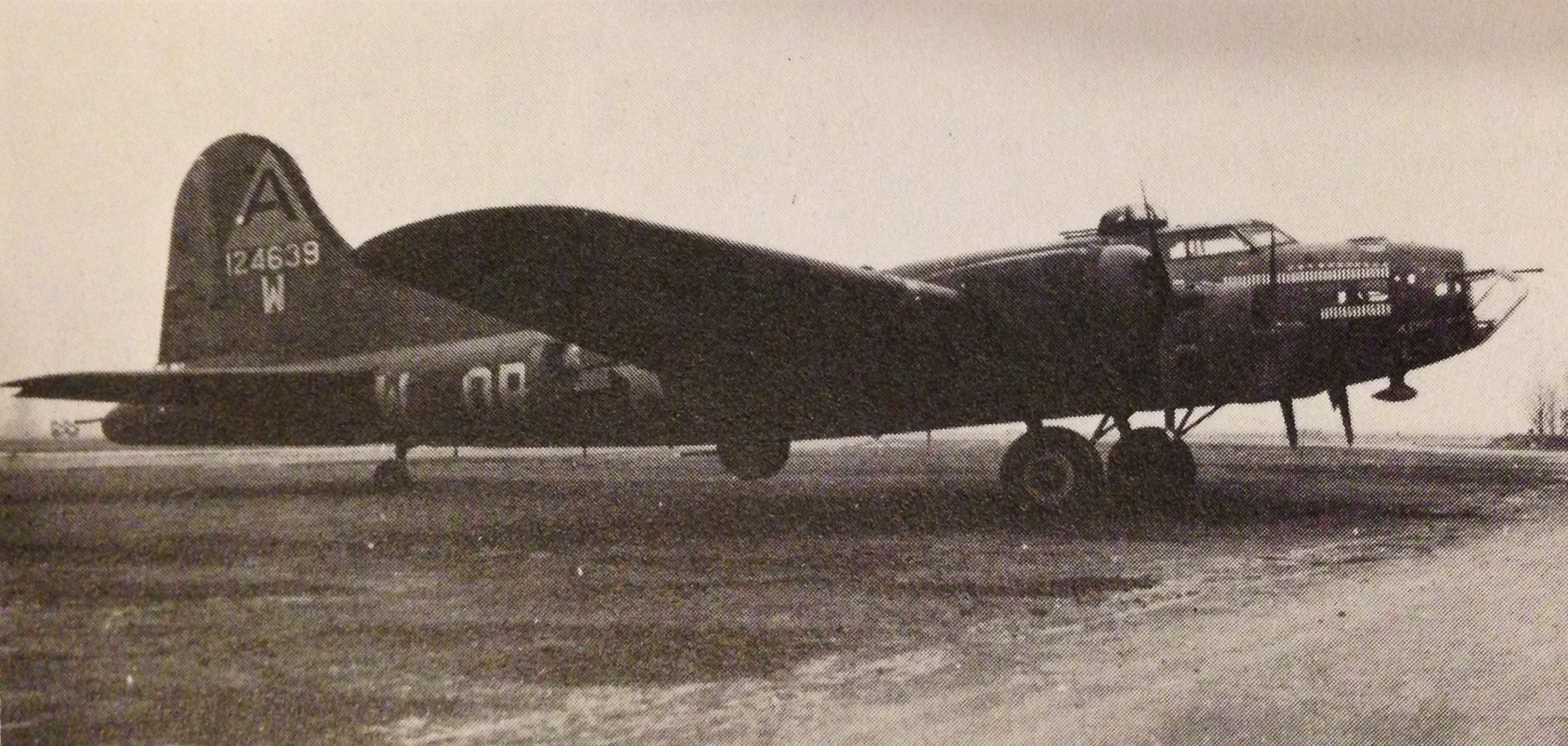
The first Aphrodite mission took place on August 4th 1944, and was to set the tone for all future operations. Mission 515, was flown using four B-17 ‘babies’ with four accompanying ‘mothers’ to target ‘V’  weapon sites at : Mimoyecques, Siracourt, Watten, and Wizernes. Escorting them were sixteen P-47s and sixteen P-51s. One of the babies, B-17 (42-39835) ‘Wantta Spa(r)‘ (TU-N), had completed 16 missions between November 18th 1943 and July 6th 1944 with the 351st at Polebrook and was declared to be “war-weary”. It took off and very soon  the crew, Lt J. Fisher and T/Sgt E. Most, realised there was a problem with the altimeter causing it to climb too quickly. Whilst T/Sgt Most bailed out, Lt. Fisher struggled on with the controls until it finally crashed in an almighty fireball in woodlands at Sudbourne, Suffolk creating a crater 100ft wide. The three remaining ‘babies’ carried on but all failed to hit their designated targets. One Mother lost control and the baby hit a Gun Battery at Gravelines, the second overshot and the third B-17F formally (41-24639) “The Careful Virgin”  ‘OR-W’ of the 91st BG (323rd BS), hit short due to controller error.

The Careful Virgin 41-24639

B-17F “The Careful Virgin” before modification and whilst in the hands of the 91st BG. (USAF Photo)

Similar results were to follow in another mission only two days later, and then in further operations throughout both the Aphrodite and Anvil projects.

The most famous tragedy of these missions was that of Lieutenant Joseph P Kennedy Jnr, who was killed when his PB4Y unexpectedly blew up over Suffolk killing both him and his co-pilot on 12th August 1944.*2 In all there were 25 drone missions completed but none successfully hit their designated target with either control or accuracy. The missions were all considered failures and the operations were all cancelled soon after.

Operations Block

Former Operations Block south of the Technical site.

Another secret operation taking place from Fersfield, also involved radio controlled bombs. Designated Operation ‘Batty’ it involved GB-4 television controlled bombs being  slung underneath B-17s and guided onto targets using TV. The 563rd BS provided much of the support whilst the others in the 388th BG the crews. In the later part of 1944 a small number of these operations were flown again with little success and this too was abandoned before it could have any significant effect on the war.

All in all, the operations carried out here, were disastrous, killing as many crews and causing as much damage to the UK as it did the enemy. However, it did mean that the Allies had entered into the drone war and set the scene for future military operations.

The Americans left Fersfield late in 1944, and it was handed back to the RAF. A number of units used it for short periods primarily for aircrew training. However, Fersfield was to have one last remarkable mission and a further claim to fame.

Accomodation Site

Nissan Huts on the former accommodation site.

On March 21st 1945, Mosquito VI units of 21 Sqn (RAF), 464 Sqn (RAAF) and 487 Sqn (RNZAF) all part of 140 Wing, were pulled back from the continent for a special mission to attack the Gestapo Headquarters at Copenhagen. Primarily based at Hunsdon (Trail 25), the mission was Led by Gp. Capt R Bateson and Sqn Ldr E Sismore, who took off in Mosquito RS570 ‘X’ at 08:35 and led a group of Mosquitoes in three waves of 6 aircraft in Operation Carthage.

The Shellhaus building raid gained notoriety for two reasons. Firstly, a large part of the building was bombed and destroyed and important documents set alight thus achieving the overall objective of the mission. A low-level daring raid it was operationally a great success. However, Mosquitoes following the initial wave attacked what they believed to be the building but what was in fact a school masked by fire and smoke. This caused a significant number of casualties including children.

Six aircraft failed to return from the mission, four Mosquitoes (one of which crashed causing the smoke and fire that masked the school) and Two P-51s that were part of a 28 strong fighter escort.

This operation was one of many daring low-level raids that the wing carried out, attacking various buildings including  the Amiens prison.

The wing left Fersfield which signified the end of overseas operations and Fersfield would become a staging post for units prior to disbandment. Between November 1944 and September 1945 a number of units would be located here  which included 98, 107 (one week), 140 (four days), 180 (one week), 226, 605 and 613 Sqns. Operating a number of aircraft types including: Mosquitoes (T.III), Bostons (IIa), Hurricanes (IV), Martinets (TT.III), Mitchells (III) and Anson Is, Fersfield had now had its day. In the following month, December 1945, the site was closed and the land sold off. Fersfield had closed its door for the last time and history had been written.

Post war, Fersfield had a brief spell of motor racing on its tracks and runways, but unlike Snetterton or Podington it wouldn’t last and in 1951 Fersfield became agricultural once more, with many of the buildings being demolished and the remainder left to rot or, some thankfully, used for storage.

Nissen Huts

A few buildings remain on the technical Site.

Today a few buildings still do remain clinging onto life. The T-2 on the south side stores grain, and a number of Nissen huts  that housed the technical aspects of the airfield, are now storage for farm machinery and other associated equipment. All these can be located at the end of a small road from the village and when visiting, I found the workers here only to willing to allow the visitor to wander freely among them. Footpaths cross the southern side of this site and to the north across the field dissecting the airfield. The path is very poorly marked and you are simply wandering across the crops. From here, you can find the last few remains of the accommodation site, further south a short distance away. Latrines and other communal buildings are shrouded in weeds, gradually disappearing beneath the undergrowth. Trees sprout from between the walls where so many walked, before or after a mission. Nissen huts survive further out, now dilapidated and hastily patched, their memories mixed amongst the personal belongings of new owners.

Latrine Block

One of the many Latrines on the communal site.

It is hard to believe that an airfield with such an iconic history as Fersfield never made it to the status of so many others. Surprisingly, it was here at this quiet and remote part of Norfolk that aviation history was made and American politics changed forever.

Mosquito Mk.VIs involved in the Operation Carthage,*3.

No 487 Squadron

RS570 ‘X’ Gp Capt R N Bateson / Sqn Ldr E B Sismore (Raid Leader)
PZ402 ‘A’ Wg Cdr F M Denton / Fg Off A J Coe (damaged, belly landed at base)
PZ462 ‘J’ Flt Lt R J Dempsey / Flt Sgt E J Paige (hit by flak, 1 engine u/s, returned safely)
PZ339 ‘T’ Sqn Ldr W P Kemp / Flt Lt R Peel
SZ985 ‘M’ Fg Off G L Peet / Fg Off L A Graham
NT123 ‘Z’ Flt Lt D V Pattison / Flt Sgt F Pygram (missing)

No 464 Squadron

PZ353 Flt Lt W K Shrimpton RAAF (Pilot) / Fg Off P R Lake RAAF
PZ463 Flt Lt C B Thompson / Sgt H D Carter
PZ309 Flt Lt A J Smith RAAF / Flt Sgt H L Green RAAF
SZ999 Fg Off H G Dawson RAAF / Fg Off P T Murray (missing)
RS609 Fg Off J H Palmer RAAF / 2nd Lt H H Becker RNorAF (missing)
SZ968 Wg Cdr Iredale RAAF / Fg Off Johnson
All aircraft took off at 0840; last back landed 1405.

No 21 Squadron

SZ977 Wg Cdr P A Kleboe / Fg Off K Hall (missing)
PZ306 Sqn Ldr A F Carlisle / Flt Lt N J Ingram
LR388 Sqn Ldr A C Henderson / Flt Lt W A Moore
HR162 Flt Lt M Hetherington / Fg Off J K Bell
No 21 Squadron records list only these four aircraft and crews above as taking part in this operation.
All aircraft took off at 0835; the three which returned did so at 1355.

Sources and further reading.

*1 Photograph in Public Domain, taken from Wikipedia 20/8/15

*2 For a more detailed explanation of the Anvil operation that killed Joseph Kennedy Jnr see  ‘Heroic Tales‘.

*3 Information from The National Archives, 21/8/15

Death of a Ball Turret Gunner – Randall Jarrell.

ball

A Ball Turret, the home to many young men.1

There have been many poems written around the theme of death and dying in the line of duty. Some have become ‘classics’ known and used world-wide. Others have remained unknown but to those who wrote them.

Often written by young men, they reflect the horror of war , the conditions in which they served and lived , the sense of hopelessness and never-ending feeling of not knowing if today would be your last. Written in the latter stages of the Second World War and published in 1945, ‘The Death of the Ball Turret Gunner‘ is a short poem by Randall Jarrell. Jarrell, too old to serve as a Combat Pilot himself, served as an instructor and wrote many works around the theme of war. He reflects in this piece about the ‘matter-of-factness’ of war and death and how men (or boys) are slaughtered with little thought or remorse.

‘Death of a Ball Turret Gunner’ is about the death of a gunner in the underbelly of an American bomber.

“From my mother’s sleep I fell into the State,
And I hunched in its belly till my wet fur froze.
Six miles from earth, loosed from its dream of life,
I woke to black flak and the nightmare fighters.
When I died they washed me out of the turret with a hose.”

Jarrell, added his own explanation, describing how the ball turret resembled a mother’s womb and the “short small man”, the gunner within, a foetus.

As a ball gunner, you were exposed to exploding cannon shells. Spinning round and round contoured into all sorts of positions. Your only companion being the two .50 calibre machine guns that rattled their violent disgust. Many have analysed the work, it has been the inspiration for a play, published with illustrations and referred to in many literature works.

To me. It’s more simple. The work of a young man whose life was turned upside down, taken from the safety of his home, put into a killing machine and then discarded with little thought when life is extinguished.

The poem appears in many publications and websites, I found this copy on Wikipedia at:

http://en.m.wikipedia.org/wiki/The_Death_of_the_Ball_Turret_Gunner

A biographical account of Jarrell can be found here.

1 Photo courtesy of Marcella.

Other poems can be found here.

Luftwaffe diaries – Big Week

Following on from the earlier diaries of Luftwaffe pilots during the Battle of Britain, I have found other examples, worth sharing.

These examples, were written as the Allies launched the ‘Big Week’ campaign against heavily defended German targets. In defence, the Luftwaffe were operating a wide range of aircraft, heavily armed, they were designed to destroy the big heavy bombers, both quickly and easily. The US Eighth and Fifteenth Airforces were bombing during daylight whilst the RAF were bombing at night. As a result, brutal dogfights were common place between escorting P-51s, P-47s and P-38s and the German aircraft.

Based at Wunstorf near Hanover, was III Gruppe Zerstorergeschwader 26, (part of Luftflotte 2) whose primary role was defence of the North Western Sector of Europe, Belgium and the Netherlands. Formed along with I. and II. Gruppe; III. Gruppe were to suffer badly at the hands of their superior American counterparts. During 1940, they had a total fo 33 aircraft, by the time ‘Big Week’ had come in 1944, this number was significantly lower.

The entry starts in the middle of February, with visits from Generalmajor Ibel1, re-equiping of machines and flight training. Prior to Big week, the Gruppe were also operating in support of land forces. However, as the allied forces began their operations, this role changed.

20.2.44 – At 12:03 hours the Gruppe received orders from 2. Jagddivision to take off and engage reported enemy bomber formation. At 12:13 hours, Bf 110s were airborne and assembled at radio beacon Marie, after new orders re-assembled overhead base. The Kommandeur, Major Kogler, took off late with three more BF 110s at 12.19 hours but failed to meet up with the aircraft which had taken off at 12.13. At 4,000m the first formation was surprised by enemy fighters attacking out of the sun and as a result 11 Bf 110s were shot down2. During the incursion two enemy fighters carried out a low-level attack on the airfield. As a result nine aircraft were hit and suffered up to 30% damage.3

21.2.44 – At 12:41 hours the group received orders to engage incoming enemy formations. At 12:45 ten BF 110s were airborne; assembly over radio beacon Marie.
At 13:15 hours these aircraft joined up with the escort a friendly fighters in the Rottenburg area. Our formation made contact with the enemy force, but due to poor direction failed to reach a favourable position from which to attack.4

22.2.44 – The Gruppe was ordered to take off at 12:22 hours to engage incoming enemy formations. The Gruppe scrambled eight BF 110s at 12:28 hours. Weather at take-off: Fair weather, 50km visibility, cloud base 1,000m, 2–3/10 cover. At 12:55 to 13:00 hours joined own fighter escort at 7,000m above Lake Steinhude. The Gruppe joined up behind I./ZG 26 which was operating under the control of the 2. Jagddivision. At 13:35 hours three formations of Fortress IIs were sighted. The leader of our formation (I./ZG 26) closed on the enemy formation to attack from head-on. III./ZG 26, following, was too close behind for a head-on attack, and had to turn an attack from the rear. While closing in to attack, fire was opened from about 400m. The enemy machine flying on the left outside of the formation burst into flames along its right side. It began to curve away to the left and the second attack was carried out from above and to the left, from behind. This Fortress dropped away from the formation well ablaze. There was strong defensive fire from the enemy rear gun positions. Each enemy formation numbered about 60 aircraft, flying in arrow. Weather in operational area: about 3/10 cloud cover, cloud base 500m tops 2,000m. Visability above cloud more than 50km.

During the head-on attack, the formation leader turned in too soon, so that the aircraft coming behind were unable to get into an attacking position.

Landing: Two BF 110s landed at Wunstorf, at 13:58 and at 14:10 hours. Four BF 110s made belly-landings. No landing reports received so far from two BF 110s. 5

Successes: One Fortress II shot down by Oblt. Bley.

23.2.44 – No operations. The Gruppe carried out instrument flying training missions as planned. The 7th Staffel is in the process of receiving replacement aircraft.

24.2.44 – Operational report.
Take off: Four BF 110s from Wunstorf at 12:01 hours. Order: Scramble take-off to engage incoming enemy formations. The Gruppe assembled at 7,000m over Brunswick with ten BF 110s of I./ZG 26. II./JG 11 joined up to provide the escort at 12:15 hours. Instructions received from JaFue6 during the assembly. At 13:15 hours eight formations each of about 15 liberators were seen in the area of Nordhausen, stepped up from 4,000m to 7,000m and flying on the south-easterly heading. It was noticeable that the enemy aircraft were wavering about. On the approach of our Gruppe the enemy force turned south and later south-west. Attack was carried out at 13:00 hours in the area of Holzminden, from the left and above. III./ZG 26 scored one victory7 and one Herausschuss (bomber leaving formation after attack by Major Kogler). Several liberators were observed to be on fire; others were seen to crash8. The claims of I./ZG 26 are not to hand. Landing: Two BF 110s landed at Wunstorf at 14:08 and 14:14 hours. One BF 110 suffered damage to the cabin and turned back. One BF 110: no landing report received (Gern’s aircraft).

Supplement: the enemy bombers were escorted by Thunderbolts, which flew above the formation. It was ascertained that the leading formation, which I tried to attack, always went into a turn to the right when I was in front shortly before I turned in to make my attack. It is possible that this forced the bombers away from their target.

Diary written by Major (Gruppe Kommandeur) Kogler, 1944

On February 24th 1944, there were several missions flown by the USAAF: Mission 233, (to attack targets at: Gotha, Rostock, Poznan and Schweinfurt) and 234 which occurred at night.  Mission 233 was the second largest operation to take place during ‘Big Week’ and involved 809 bombers with 767 fighters as escort.

Mission 233 took place in 3 Waves, Wave 1 – 239 B-24s were sent to Gotha; Wave 2 – 266 B-17s were sent to Schweinfurt and Wave 3, 304 B-17s were dispatched to the primary target of Poznan.

A fatal mistake by the lead aircraft in the first Wave (due to a faulty oxygen mask) led to Eisenach being bombed by mistake. The following formation also bombed by mistake, following his mark.  These are the only B-24s that flew on that day and as a result, it is probable (but not certain) that these are the Liberators mentioned in Kogler’s diary for that day. Casualties reported by the USAAF for that mission were: 3 KIA, 6 WIA and 324 MIA9.

Liberators of the 392nd BG from RAF Wendling were involed in this mission, an account is available here along with MACRs and statements from those involved.

It has been interesting to compare explantions from both sides, with limited resources, any connection is only presumed, but it does give an interesting perspective to the bomber war over Europe.

Sources:

1 – Generalmajor Ibel was the Commander of 2. Jagddivision

2 – Six pilots and five radio operators were killed in the attack. Two pilots and four radio operators were wounded.

3 – One armourer was killed along with one Radio operator and one mechanic wounded.

4 – Combat report D1

5 – Later found to have been shot down, their crews were killed.

6 – JaFue – Fighter Controller.

7 – Oblt Meltz.

8 – Lt. Gern, who was shot down during the action but bailed out of his aircraft, logged a claim for one Fortress shot down when he returned to his unit.

9 – 8th Airforce Operations, http://8thafhs.com/missions.php

The full diary entry appeared in The Luftwaffe Data Book, by Dr. Alfred Price, Published by Greenhill Books, 1936, 1977, 1997. pg197-200

Lt. Col. Leon Vance 489th BG – Medal of Honour

Leon vance.jpg

Leon Vance*

The story of Leon Vance is one of  the saddest stories to emerge from the Second World War. He was a young American, who through his bravery and dedication, saved the lives of his colleagues and prevented their heavily striken aircraft from crashing into populated areas of southern England. Following a mission over France, his was very severely injured, but miraculously fought on.

Leon Robert Vance, Jr. known as ‘Bob’ to his family and friends, was born in Enid, Oklahoma, on August 11th, 1916. He graduated from high school in 1933 after receiving many honours and being singled out as a high performing athlete. He went on, after University, to the prestigious Training College at West Point in 1935, staying until his graduation four years later in 1939. It was here, at West Point, he would meet and marry his wife Georgette Brown. He and Georgette would later have a daughter, after whom Vance would name his own aircraft ‘The Sharon D’.

Vance would become an aircrew instructor, and would have various postings around the United States. He became great friends with a Texan, Lieutenant Horace S. Carswell, with whom he would leave the Air Corps training program to fly combat missions in B-24 Liberators. They became great friends but would go on to fight in different theatres.

Prior to receiving his posting, Vance undertook training on Consolidated B-24s. Then, in October 1943, as a Lieutenant Colonel, he was posted to Europe with the newly formed 489th Bombardment Group (Heavy), as the Deputy Group Commander. One of the last groups to be assigned to the european theatre, they formed part of the 95th Combat Bombardment Wing (2nd Bomb Division),  Eighth Airforce, and were sent to RAF Halesworth (RAF Holton) designated Station 365 by the USAAF.

The group left their initial base at Wendover Field, Utah in April / May 1944 and their first mission would be that same month on May 30th, 1944, as part of a combined attack on communication sites, rail yards and airfields. A total of 364 B-24s were to attack the Luftwaffe bases at Oldenburg, Rotenburg and Zwischenahn, along with other targets of opportunity far to the north in the German homeland. With only 1 aircraft lost and 38 damaged, it was considered a success and a good start to the 489th’s campaign.

As the build up to Normandy developed, Vance and the 489th would be assigned to bombing targets in northern France in support of the Normandy invasion about to take place further to the south. An area the unit would concentrate on, prior to the Allied beach invasion on June 6th that year.

The day before D-day, the 489th would fly to Wimereaux, in the Pas-de-Calais region of northern France. This would be Leon Vance’s final mission.

B-24H Liberator of the 489thBG, RAF Halesworth*2

The group, (Mission 392),  consisted of 423 B-17s and 203 B-24s and were to hit German coastal defenses including: Le Havre, Caen, Boulogne and Cherbourg areas as precursors to the Normandy invasion. Some 127 P-47s and 245 P-51s would support the attacks. The 489th would assemble at 22,500 feet on the morning of June 5th, proceed to the south of Wimereaux and fly over dropping their payload then return to England. On the run in to the target, Vance was stationed behind the pilot and copilot.  The lead plane encountered a problem and bombs failed to jettison. Vance ordered a second run, and it was on this run that his plane, Missouri Sue, took several devastating hits.

Four of the crew members, including the pilot were killed and Vance himself was severely injured. His foot became lodged in the metal work behind the co-pilots seat. There were frantic calls over the intercom and the situation looked bad for those remaining on board. To further exacerbate the problems, one of the 500lb bombs had remained inside the bomb bay armed and in a deadly state, three of the four engines were disabled, and fuel spewed from ruptured lines inside the fuselage.

Losing height rapidly, the co-pilot put the aircraft into a dive to increase airspeed. The radio operator, placed a makeshift tourniquet around Vance’s leg, and the fourth engine was feathered.  They would then glide toward the English coast.

The aircraft was too damaged to control safely, so once over english soil, Vance ordered those who could, to bail out. He then turned the aircraft himself out to the English Channel to attempt a belly landing on the water. A dangerous operation in any aircraft, let alone one with an armed bomb and no power.

Still trapped by the remains of his foot, laying on the floor and using only aileron and elevators, he ensured the remaining crew left before the aircraft struck the sea. The impact caused the upper turret to collapse, effectively trapping Vance inside the cockpit. By sheer luck, an explosion occurred that threw Vance out of the sinking wreckage,  his foot now severed.  He remained in the sea searching for whom he believed to be the radio operator, until picked up by the RAF’s Air Sea Rescue units.

Vance was alive, but severely injured. He would spend a number of weeks, recuperating in hospital, writing home and gradually regaining his strength. Disappointed that his flying career was over, he looked forward to seeing his wife and young child once more. However, on a recuperation trip to London, Vance met a young boy, who innocently, and without thought, told him he wouldn’t miss his foot. The emotional, impact of this comment was devastating to Vance and he fell into depression. Then, news of his father’s death pushed him down even further.

Eventually, on July 26th, 1944 Vance was given the all clear to return home and he joined other wounded troops on-board a C-54, bound for the US. It was never to arrive there.

The aircraft disappeared somewhere between Iceland and Newfoundland. It has never been found nor has the body of Leon Vance or any of the others on board that day. Vance’s recommendations for the Medal of Honour came through in the following  January (4th), but at the request of his wife, was delayed until October 11th 1946, so his daughter could be presented the medal in her father’s name.

The citation for Leon Vance reads:

For conspicuous gallantry and intrepidity above and beyond the call of duty on 5 June 1944, when he led a Heavy Bombardment Group, in an attack against defended enemy coastal positions in the vicinity of Wimereaux, France. Approaching the target, his aircraft was hit repeatedly by antiaircraft fire which seriously crippled the ship, killed the pilot, and wounded several members of the crew, including Lt. Col. Vance, whose right foot was practically severed. In spite of his injury, and with 3 engines lost to the flak, he led his formation over the target, bombing it successfully. After applying a tourniquet to his leg with the aid of the radar operator, Lt. Col. Vance, realizing that the ship was approaching a stall altitude with the 1 remaining engine failing, struggled to a semi-upright position beside the copilot and took over control of the ship. Cutting the power and feathering the last engine he put the aircraft in glide sufficiently steep to maintain his airspeed. Gradually losing altitude, he at last reached the English coast, whereupon he ordered all members of the crew to bail out as he knew they would all safely make land. But he received a message over the interphone system which led him to believe 1 of the crew members was unable to jump due to injuries; so he made the decision to ditch the ship in the channel, thereby giving this man a chance for life. To add further to the danger of ditching the ship in his crippled condition, there was a 500-pound bomb hung up in the bomb bay. Unable to climb into the seat vacated by the copilot, since his foot, hanging on to his leg by a few tendons, had become lodged behind the copilot’s seat, he nevertheless made a successful ditching while lying on the floor using only aileron and elevators for control and the side window of the cockpit for visual reference. On coming to rest in the water the aircraft commenced to sink rapidly with Lt. Col. Vance pinned in the cockpit by the upper turret which had crashed in during the landing. As it was settling beneath the waves an explosion occurred which threw Lt. Col. Vance clear of the wreckage. After clinging to a piece of floating wreckage until he could muster enough strength to inflate his life vest he began searching for the crew member whom he believed to be aboard. Failing to find anyone he began swimming and was found approximately 50 minutes later by an Air-Sea Rescue craft. By his extraordinary flying skill and gallant leadership, despite his grave injury, Lt. Col. Vance led his formation to a successful bombing of the assigned target and returned the crew to a point where they could bail out with safety. His gallant and valorous decision to ditch the aircraft in order to give the crew member he believed to be aboard a chance for life exemplifies the highest traditions of the U.S. Armed Forces”*1

Leon Vance’s actions would be remembered. His local base in Oklahoma was renamed ‘Vance Air Force Base’ on July 9th, 1949. The gate at Tinker Air Force Base, Oklahoma was also later named after him on May 9th, 1997, and his name appears on the ‘Wall of the Missing’ at Madingley American War Cemetery in Cambridge, England.

IMG_2005

The Wall of the Missing, on Which Leon Vance’s Name Appears.

Leon Robert Vance, Jr. (August 11th, 1916 – July 26th, 1944)

For other personal tales, click here.

references

* Photo public domain ia Wikipedia

*1 “Medal of Honor recipients – World War II”.

*2 Photo Public Domain via Wikipedia.