RAF Bircham Newton (Part 5 – The war comes to an end)

After Bircham entered the war in Part 4, and new innovative designs helped to save lives at sea, Bircham continues on and heads towards the war’s end. Numerous squadrons have now passed through this Norfolk airfield, and many more will come. Once the war is over, Bircham enters the wind down, its future uncertain, but on the horizon a saviour is coming and Bircham may well be saved by an unusual guardian.

By 1942, designs in ASR equipment had moved on, and a jettisonable lifeboat had by now been designed. The Hudsons at Bircham were the first unit to have the necessary modifications made to them to enable them to carry such boats, and as a result several crews were saved by the aircraft of 279 Sqn. Many searches however, were not fruitful and lives continued to be lost as a result of the lack of suitable equipment and poor weather.

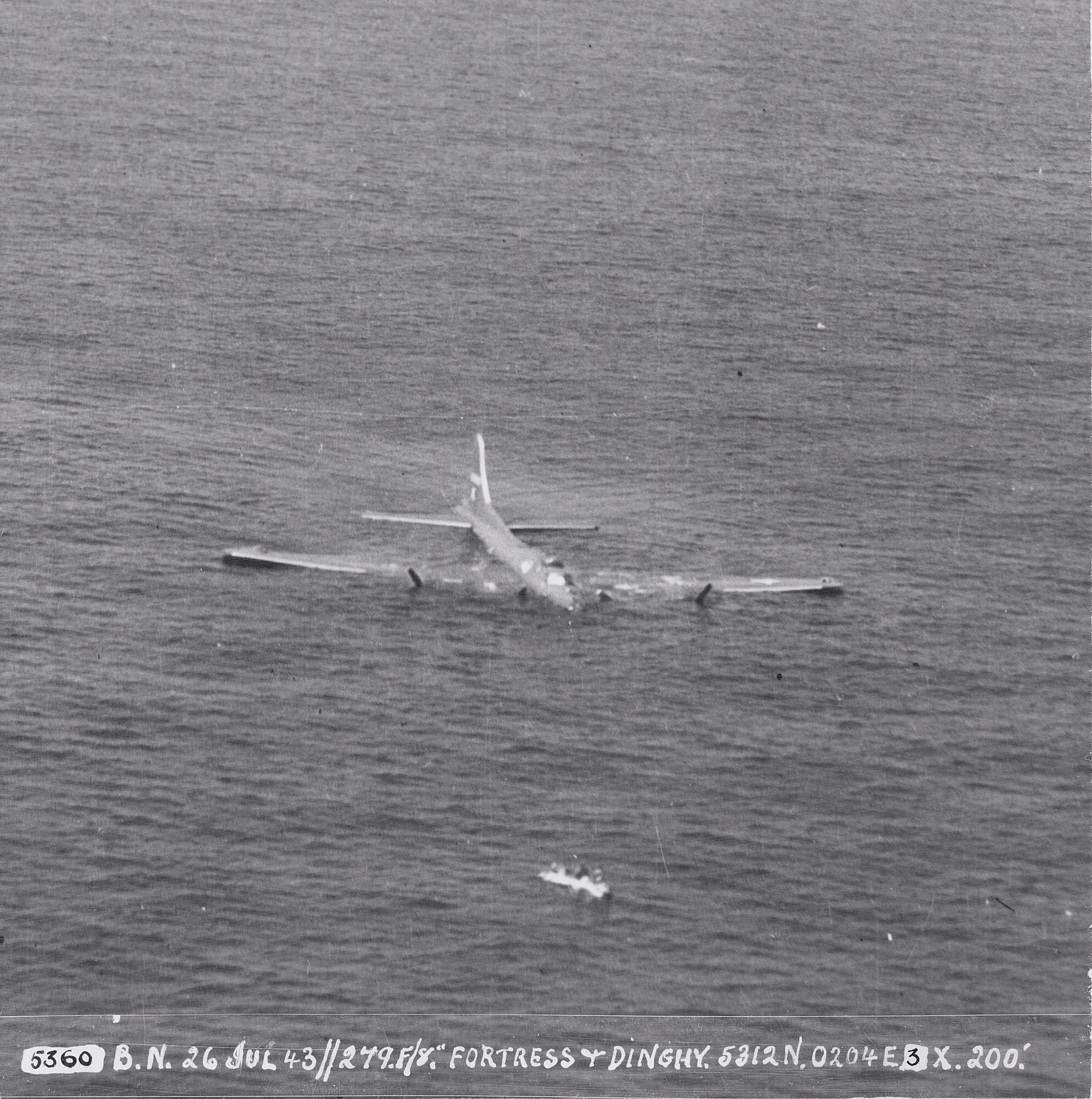
After ditching B-17 #42-29981 (92nd BG) on 26 July 1943 in the relative safety of a calm sea, the crew managed to escape a and (with difficulty) climb aboard their life raft. An ASR aircraft from RAF Bircham Newton located them and a rescue ensued (AAM UPL 39104).

ROYAL AIR FORCE COASTAL COMMAND, 1939-1945.

Moments later, an airborne lifeboat is parachuted down by a Hudson of No. 279 Squadron to the crew. (© IWM C 3691)

During the year yet more front line squadrons would arrive here at Bircham. The first, 502 Sqn brought with it a change of aircraft type, with the Whitley V. The Whitley was a 1930’s design, constructed to Specification B.3/34, and was only one of three front line bombers in service at the outbreak of the war.

Within a matter of weeks, one of these Whitleys, returned from a maritime night patrol, overshot the flare path and crash landed. This particular mark of Whitley was soon replaced by the VII, and as 502 received their new models, so they began their departure to St.Eval; they had only been here at Bircham for a mere month.

March and April 1942 would then see two more units, both operating Hudsons. The first, 407 Sqn, was the first Canadian unit to be based here at Bircham, and would only stay here until October. As part of 16 Group, it would perform attacks on enemy shipping between Heligoland and the Bay of Biscay. The second squadron, 320 Sqn, would arrive at Bircham a month later on April 21st and would remain here for the next year. An entirely Dutch manned unit they had transferred from Leuchars in Scotland where they had been carrying out maritime patrols. The main part of April for 320 Sqn would consist of ferry flights, tests and cross country flying.

The final squadron, 521 (Meteorological) Sqn, was formed here on 22nd July 1942 through the joining of 1401 and 1403 (Met) Flights. These were operating a number of aircraft including the Blenheim IV, Gladiator II, Spitfire V, Mosquito IV and Hudson IIIA, and all passed over to 521 Sqn in the July on its formation. In the following year, March 1943, the squadron would be split again, returning back to two flights once more, Nos 1401 and 1409, thus ending this period of its history. The role of 521 sqn was meteorological, the Gladiators flying locally usually above base, whilst the remainder flew long range sorties over northern Germany or to altitudes the Gladiator could not reach.

There was little ‘front line’ movement in or out of Bircham during 1943, only two new squadrons would be seen here, 695 Sqn with various types of aircraft, and 415 (Torpedo Bomber) Sqn another Canadian unit.

415 were initially a torpedo squadron operating in the North Sea and English Channel areas attacking shipping along the Dutch coast. They arrived here at Bircham Newton in November with both Albacores and Wellingtons, and remained here in this role until July 1944 when they left for East Moor and Bomber Command. During D-day the squadron lay down a smoke screen for the allied advance, taking on the Halifax to join in Bomber Command operations. Throughout their stay they retained detachments at a number of airfields including: Docking and North Coates (Wellingtons) and Manston, Thorney Island and Winkleigh (Albacores). They were well and truly spread out!

695 Sqn were formed here out of 1611, 1612 and 1626 Flights, and performed anti-aircraft co-operation duties using numerous aircraft including: Lysanders, Henleys, Martinets, Hurricanes and Spitfires. They remained here until August 1945 whereupon they departed to Horsham St. Faith now Norwich airport.

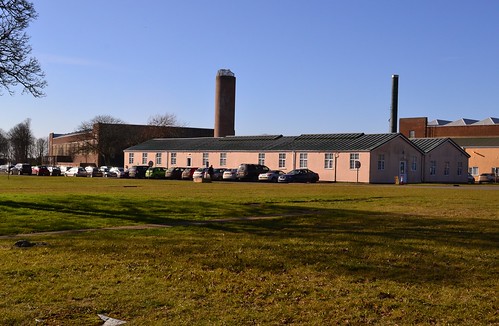
Main Stores

The main stores with two of the C-type hangars in the background.

The only RAF squadron to appear here at Bircham Newton in 1944, was 524 Sqn. It was originally formed at Oban on the Scottish West coast with the failed Martinet, in October 1943, the squadron lasted a mere two months before being disbanded in the early days of December.

Like a phoenix though, it would be reborn later in April 1944 at Davidstow Moor. By the time it reached Bircham in the July, it was operating the Wellington XIII. After moving to nearby RAF Langham in October,  it would eventually disband for the final time in  1945.

It was also during this year that further FAA units would make their presence here at Bircham. 855 Sqn FAA brought along the Avenger, whilst 819 Sqn FAA brought more Albacores and Swordfish. Both these units served as torpedo spotter reconnaissance and torpedo-bomber reconnaissance squadrons.

As the war drew to a close, 1945 would see the winding down of operations and squadrons. Two units would see their days end at Bircham, 598 Sqn with various types of aircraft and 119 Sqn with the Fairey Swordfish, would both be disbanded – in April and May respectfully.

Bircham’s activity then began to dwindle, and its role as a major airfield lessened. From anti-shipping activities to Fighter Command,  Flying Training, Transport Command and finally to a Technical Training unit, Bircham was now training the Officers of the future. Flying activity naturally reduced, and small trainers such as the Chipmunk became the order of the day. Whilst a number of recruits passed through here, the most notable was perhaps HRH The Duke of Edinburgh, who made several landings here as part of his flying training in the early 1950s.

Like all RAF Stations, Bircham was the proud owner of several ‘gate guardians’, notably at this time was Spitfire LF Mk.Vb Spitfire ‘EP120’ from around 1955 to late 1962, along with Vampire F MK.3 ‘VF272’.

Spitfire EP120, was a Castle Bromwich model, which entered RAF service in May 1942, with 45 Maintenance Unit (MU) at Kinloss in Scotland. Whilst serving with several squadrons she achieved seven confirmed ‘kills’ before being relegated to a ground instructional air frame. There then followed a period of ‘Gate Guardianship’ standing at the front of several stations including Bircham Newton. In 1967 she was used as a static example in the famous Battle of Britain movie, before being transferred back to gate guard duties. In 1989 she was then transferred to a storage facility at St. Athan along with several other Spitfires awaiting their fate. Finally she was bought by the ‘Fighter Collection‘ in 1993. After a two year restoration, EP120 finally returned to the skies once more, in September 1995 where she has performed displays around the country ever since.

Spitfire EP120

Spitfire EP120 at Duxford 2014.

Unfortunately, Vampire VF272 wasn’t so lucky. Whilst her fate is unknown at this time, it is believed she was scrapped on site when Bircham finally closed in 1962.

But it was not to be the end of the story though. In 1965, with the development of the Kestrel, Hawker Siddeley’s VTOL baby, Bircham came to life once more, albeit briefly, with the sound of the jet engine. With tests of the new aircraft being carried out, Bircham Newton once again hung on by its finger nails – if only temporarily.

A year later, Bircham was sold to the National Construction College and the pathways were adorned with young building apprentices, diggers and cranes of varying sizes. Being a busy building college, many of the original buildings have been restored but the runways, flying areas and sadly the watch office, removed. Whilst private, the airfield retains that particular feel associated with a wartime airfield.

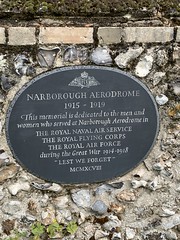
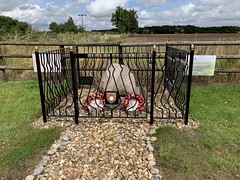
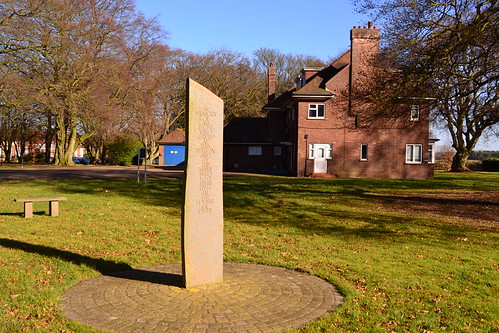
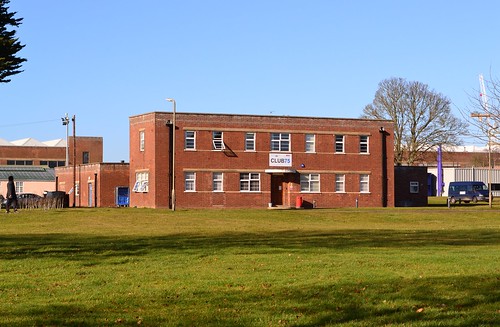
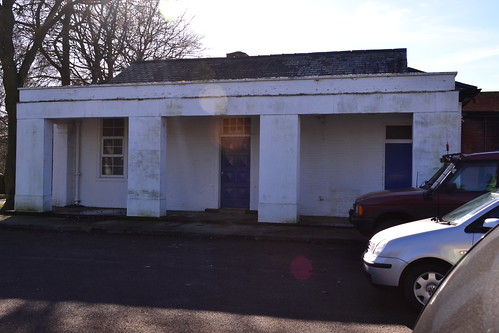
Luckily, the main road passes through the centre of Bircham. A project to turn the Station Commanders Office into a heritage centre*9 has come to fruition, using the ground floor space to exhibit photographs, letters, documents and memorabilia from Bircham Newton.  A memorial has also been erected and stands outside the centre, just off the main road and is well sign posted. The original accommodation blocks, technical buildings and supporting blocks are still visible even from the road. The 1923 guard-house, is now a shop and the operations block, the reception centre.

Reputedly haunted, the squash courts (built-in 1918) continue to serve their original purpose, and most significantly, the three large C-type hangers and two Bellman sheds are still there – again all visible from the public highway.

RAF Bircham Newton, stands as a well-preserved model one of Britain’s wartime airfields. Although private now, the buildings reflect the once bustling activities of this busy centre of aviation.

In February 2020, the CITB announced that they had sold the site to the Bury St Edmunds based West Suffolk College. The move, it says, was planned as a cost cutting exercise with the loss of some 800 jobs. The intention of the West Suffolk College is to continue with the construction training at Bircham, hopefully preserving the site for generations to come. Only time will tell.

RAF Memorial and Station Commanders house

The RAF Memorial, and behind, the former Station Commander’s house.

Sources and links for further reading (RAF Bircham Newton):

The full text can be seen in Trail 20 – North Norfolk Part 1.

*1 A detailed history of the production of the HP.15 /1500 can be found on Tony Wilkin’s blog ‘Defence of the Realm‘.

*2 Letter from C.C. Darley (the brother of C.H. Darley) to Sqn Ldr. J. Wake 1st March 1937 (AIR 27/1089/1 Appendix B)

*3 Gunn, P.B. “Flying Lives with a Norfolk theme“, 2010 Published by Peter Gunn.

*4 Pitchfork, G, “Shot down and in the Drink” 2007, Published by The National Archives. – A very interesting and useful book about the development of the ASR service along with true stories of airmen who had crashed in the sea.

*5 BAE Systems website accessed 6/7/21

*6 Traces of World War 2 Website, accessed 11/7/21

*7 Aviation Safety Network website, accessed 21/7/21

*8 Braithwaite, D., “Target for Tonight“, Pen and Sword, 2005

*9 The Heritage Centre is a free to visit site located in the former Station Commanders House. It is only open on set days each year and is fully staffed by volunteers. The project has over the years been updated and reorganised, and is an excellent exhibit of letters, photographs, memorabilia and documents pertaining to the history of Bircham Newton along with material relating to both Docking and Sedgeford. The staff are extremely knowledgeable and more than willing to she this knowledge with you. Opening times and further details can be found on their Facebook page. I visited on October 15th 2023 and would like to thank Jamie and the staff for sharing their knowledge and showing me round the exhibits. I can’t recommend it enough.

National Archives: AIR 27/263/1; AIR 27/788/1; AIR 27/1233/1; AIR 27/1221/1; AIR 27/1222/11, AIR 27/1222/12

Details of 206 Sqn fatalities are available on the 206 Sqn Coastal Command website.

Details of Great Bircham war cemetery graves are available at the role of honour of St Mary’s Church.

September 8th 1943 – Tragedy at RAF Mepal.

On the night of September 8/9th 1943,  a force of 257 aircraft comprising 119 Wellingtons, 112 Stirlings, 16 Mosquitoes and 10 Halifaxes took off from various bases around the U.K. to bomb the Nazi gun positions at Boulogne. Included in this force were aircraft from the RAF’s Operational Training Units, and for the first time of the war, five B-17s flown by US aircrews of the USAAF’s 422nd BS, 305th BG at Grafton Underwood. This was the first of eight such missions to test the feasibility of the USAAF carrying out night operations over Europe.  After the remaining seven missions, in which the squadron had dropped 68 tons of bombs, the idea was scrapped, the concept considered ‘uneconomical’ although the aircraft themselves proved to be more than capable of the operations.

RAF Mepal - memorial

RAF Memorial – Mepal

The Gun battery targeted, was the emplacement that housed the Germans’ long-range guns, and the target wold be marked by Oboe Mosquitoes. With good weather and clear visibility, navigation was excellent, allowing the main force to successfully drop their bombs in the target area causing several huge explosions. However, not many fires were seen burning and the mission was not recorded as a success. Reports subsequently showed that the emplacement was undamaged due to both inaccurate marking by Pathfinders, and bombing by the main force. However, as both anti-aircraft fire and night fighter activity were light, no aircraft were lost during the flight making it a rather an uneventful night.

However, the mission was not all plain sailing, and whilst all crews returned, the night was marred by some very tragic events.

Three Stirlings were to take off from their various bases that night: at 21:00 hrs from Chedburgh, Stirling MK. III, EF136, piloted by F/S. R. Bunce of 620 Sqn; at 21:30, another Stirling MK.III, from 75 Sqn at RAF Mepal, BK809 ‘JN-T*1‘ piloted by F/O I.R.Menzies of the RNZAF; and lastly at 21:58 also from Chedburgh, Stirling MK. I, R9288 ‘BU-Q’ piloted by N.J. Tutt  of 214 Sqn.  Unfortunately all three aircraft were to suffer the same and uncanny fate, swinging violently on take off. The first EF136 crashed almost immediately, the second BK809 struck a fuel bowser, and the third R9288 ended up in the bomb dump. Miraculously in both the Chedburgh incidents there were no casualties at all, all fourteen crew men surviving what must have been one of their luckiest escapes of the war! The same cannot be said for the second though.

Stirling BK809 was part of a seventeen strong force of 75 Sqn aircraft. Each aircraft was carrying its full load made up of 1,000lb and 500lb bombs. As the Stirling was running along the runway, it swung violently, striking a fuel bowser which sent it careering into houses bordering the edge of the airfield.

One of the occupants of one of the houses, Mr. P. Smith, saw the aircraft approaching and ran into the street to warn others to get clear. As the aircraft struck the rear of the houses, it burst into flames causing some of the bombs to detonate. This brought considerable rubble down on the occupants of the second house, Mr and Mrs John Randall.

Mrs Randall managed to get out, her legs injured, whereupon she was met by a local fireman, Mr. A.E. Kirby of the National Fire Service. Mr. Kirby went on to help search in the wreckage of the house until his attempts were thwarted by another explosion. His body, along with that of Mr. Randall, was found the next day.

Two other people were also killed that night trying to provide assistance, those being F/Sgt Peter Gerald Dobson, RNZAF and Section Officer Joan Marjorie Easton WAAF. F/Sgt. Dobson was later mentioned in despatches. Three members of the crew lost their lives as a result of the accident, F/O. Menzies and F/O. N. Gale both died in the actual crash whilst Sgt. A. Mellor died later from injuries sustained in the accident.

A number of others were injured in the crash and one further member of the squadron, Cpl Terence Henry King B.E.M, was awarded the British Empire Medal “for his bravery that night in giving assistance“.

The mission on the night of September 8/9th 1943 will not go down as one of the most remarkable, even though  it was unique in many respects, but it will be remembered for the sad loss of crews, serving officers and civilians alike in what was a very tragic and sad event.

The crew of Stirling BK809 were:

F/O. Ian Robert Menzies RNZAF NZ415002. (Pilot).
P/O. Derek Albert Arthur Cordery RAFVR 136360. (Nav).
P/O. Norman Hathway Gale RAFVR 849986. (B/A).
Sgt. Ralph Herbert Barker RNZAF NZ417189. (W/O).
Sgt. Albert Leslie Mellor RAFVR 943914. (Flt. Eng).
Sgt. Bullivant G RAFVR 1395379. (Upp. G)
Sgt. Stewart Donald Muir RNZAF NZ416967. (R/G).

RAF Mepal was visited in Trail 11.

Sources and Further Reading.

*1 Chorley, 1996 “Bomber Command Losses 1943” notes this aircraft as AA-T.

National Archives: AIR 27/646/42: 75 Sqn ORB September 1943

Chorley, W.R., “Bomber Command Losses – 1943“, Midland Counties, (1996)

Middlebrook M., & Everitt C., “The Bomber Command War Diaries”  Midland Publishing, (1996)

Further details of this accident, the crews and those involved can be found on the 75 (NZ) Sqn blog. This includes the gravestones of those killed and a newspaper report of the event.

My thanks also go to Neil Bright for the initial  information.

RAF Bircham Newton (Part 4 – Bircham Enters the War)

So far we have seen how Bircham Newton developed from a First World War training airfield through the cutbacks of the early 1920s, and on into the Expansion period of the 1930s. Bircham is now in the hands of Coastal Command, a force lacking in materials but not will power. The units at Bircham work hard, and new developments come along that will help save lives at sea and put Bircham on the map. After Part 3, Bircham now enters the war.

The declaration of war and the early 1940’s would see some remarkable events take place at Bircham Newton; new aircraft and new roles, along with some advances that were to help downed airmen who ended up in Britain’s coastal waters.

One of these advances, was the creation of the ‘Bircham Barrel’, a container manufactured from the tail end of a 250lb bomb that was carried under the wing of searching Air Sea Rescue (ASR) aircraft and dropped to downed aircrews. The barrel was based on the ‘Thornaby bag’ a container designed at RAF Thornaby, in which supplies of: water, food rations, first-aid equipment, clothing and cigarettes were all placed. The Bircham Barrel, developed this idea a little further, making it more water tight and easier to retrieve by crews once in the water.*4

The Barrel was placed under the wing of an aircraft on a bomb rack, and once a crew was sighted, the pilot could drop the barrel providing the crew with sufficient rations for several days. After tests, the idea was given the green light and by 1941 it was in use by a range of aircraft operating in the ASR role.

With an increase in coastal operations from Bircham, particularly in the Air Sea Rescue role, many of the aircraft that would now use the airfield would be the twin-engined types. Kicking off the decade were the Bristol Blenheims, of 254 Sqn in January 1940. Joining a small detachment of 233 Sqn  Blenheims that had arrived here late in 1939, 254 Sqn only stayed for three months, operating as ‘Trade defence’ or fisheries protection unit – perhaps one of the lesser well known operations of Coastal Command.

Twin-engined models were not to be the only aircraft seen at Bircham though. The spring and early summer of 1940 would see further detachments with Hurricanes from 229 Sqn, a short stay by 235 Sqn and the first of a number of Royal Navy’s Fleet Air Arm (FAA) units 815 Sqn with the delightful Swordfish. One further unit to be based here at this time, would bring with it one of the more intriguing models of aircraft used during the Second World War, the Wellington DWI of No 2 General Reconnaissance Unit (GRU).

One of the roles of the GRU was to detect and destroy German mines, particularly new magnetic mines that were proving to be a menace to allied shipping. Using a Wellington 1A bomber modified to carry a large 51 foot ring of wood containing an aluminium coil, it would generate, using a Ford motor, an electronic signature that would resemble a ship. By flying low and slow over the water, it was hoped that the signal from the coil would detonate the new mines. Whilst the idea worked well in principal on land, over water it caused a number of issues primarily because the aircraft had to fly between 60 feet and 35 feet to detonate the mine. A number of successful detonations were recorded, but some aircraft were struck by the blast wash, causing them to be knocked ‘off balance’ as the mines exploded. Fortunately though, there are no recordings of any serious damage being sustained by these aircraft, but it was nonetheless, a dangerous job to do and because of advances elsewhere, it became a short lived attempt to gain an advantage over the Germans in the mine laying war.

ROYAL AIR FORCE OPERATIONS IN THE MIDDLE EAST AND NORTH AFRICA, 1940-1943.

Wellington DWI Mark II of No. 1 GRU based at Ismaliya. The ring weighed over two and a quarter tons.© IWM (CM 5312)

Like the Swordfish, both the Wellingtons of 2 GRU and the Blenheims of 235 Sqn were only based at Bircham for a month, all departing in May 1940, although 235 Sqn did return in the summer staying this time for a year. The immediate period after their departure saw yet more FAA units arrive, 826 and 812 Sqns, with Albacores and Swordfish respectively. Both of these units would operate as shipping patrols and also in mine laying operations, but would again only stay for a short period of time. During operations on 21st June 1940, at De Kooy Naval air base, one 826 Sqn aircraft was lost, two of the Albacore’s crewmen: Sub Lieutenant (A) Peter William S. Butterworth, (famed for his acting in the ‘Carry On’ films) and Telegraphist /Air Gunner Robert (TAG) J. Jackson, were both captured. Sub. Lt Butterworth survived ending up in Stalag Luft III after several failed escape attempts, whilst TAG Jackson died in captivity on 18th January 1945. The third crewman, Sub-Lieutenant Victor J. Dyke, died the day after the attack.*6

Peter Butterworth - Wikipedia

Peter Butterworth from the 1968 film “Carry on… Up the Khyber” (wikipedia)

Bircham’s long standing 206 Sqn were by now replacing their Blenheims with Hudsons, the American built twin engined aircraft designed around the civil Lockheed Super Electra. By militarising it, they produced an aircraft that would serve well in Coastal Command operations.

Initially carrying out convoy duties, the Hudsons would then patrol as far away as the ‘North German Islands’, but primarily flew reconnaissance patrols along the  coastline between Norway and Brest. Shipping was engaged on a number of occasions as were flak and Luftwaffe aircraft. During May, as the new Hudsons were being delivered, a number were lost to enemy action, particularly fighters.

For one Hudson, (P5120), life at Bircham would be short lived, the aircraft arriving here in April, only to be written off after a crash landing in June. The aircraft, one of three, departed Bircham on June 19th at 23:50 for a night patrol. On return it struck a ridge on the airfield’s approach causing it to bounce heavily. The aircraft then stalled and hit the ground so hard it caused the undercarriage to collapse. Thankfully all four crewmen emerged from the aircraft unhurt.

WITH A HUDSON OF COASTAL COMMAND

Hudson C-VX (P5120) of 206 Sqn on patrol before being written off in a crash landing. (© IWM CH 287)

Both during and after the build up to Hitler’s planned invasion of Britain, airfields across southern England were targeted by the Luftwaffe, and Bircham Newton was no exception. Whilst not a fighter airfield high on the list of Luftwaffe priorities, bombs nonetheless did fall on the airfield, and it was the Hurricane detachment of 229 Sqn based here, who were tasked with providing cover against such attacks.

In addition, many support units were also based at Bircham, these would provide training for pilots, gunners, navigators, other members of aircrew along with cooperation with ground operations as well. One such unit here at Bircham was No. 1 Anti Aircraft Co-operation Unit (AACU) which consisted of several Flights, designated ‘B’, ‘C’, ‘D’, ‘K’ and ‘M’, they all operated the Hawker Henley, the Hurricane’s little known relative.

With Flights designated A – Z (‘I’ was omitted), the unit operated at various airfields across Britain, flying a mix of Henley IIIs, Wallace, Lysander and Battle aircraft, with both Flights ‘B’ and ‘M’ being formed here at Bircham Newton. Several of these Flights also used RAF Langham, another Coastal Command / training airfield a few miles away on the Norfolk coast, particularly useful for the training of heavy anti-aircraft guns.

The Henley – built along side the Hurricane – essentially used the same jigs, their similarity thus being quite stark. The Henley was initially designed as a light bomber with modifications to the guns and an additional seat added behind the pilot. However, changes in Government policy toward daylight bombers meant that the Henley was soon transferred to other duties notably target towing. To assist this, a small propeller driven motor was added to the port side of the aircraft, just below the rear cockpit, this would power the winch that held the target drogue as it was towed some 7,000ft behind the aircraft for gunners to aim at*5.

ROYAL AIR FORCE COASTAL COMMAND, 1939-1945.

Hawker Henley, L3353, of ‘K’ or ‘M’ Flight, No. 1 AACU, next to a bomb crater at Bircham Newton. A lone Do 17 dropped seven high explosive bombs on the station causing light damage but also slightly damaging this aircraft. The similarities to the Hurricane are very evident. (IWM CE 43)

In November of 1940, two more squadrons were formed here, one, another First World War unit, was 252 Sqn. It would not fly operationally from here though, instead collecting its aircraft from Chivenor to where it would move a matter of weeks later.

The second unit, 221 Sqn was formed on the 21st November, and was also a former World War One unit. Disbanded in 1919, it would serve for the remainder of the war with the Wellingtons in the Coastal Command role. The initial order was to train crews at Bircham prior to their move to operations at Limvardy, a role it would perform using twenty-four Wellington IC aircraft. By the end of the month two such models, N2909 and N2910 were delivered and ready to be used for the job. A third aircraft, a dual control Wellington (R2700), arrived on the 6th and then on the 12th December, the personnel were all moved off site to a new location the rather grand Heacham Hall. The hall, which burned down during the war, was a 17th Century building, and had historic ties to Matoaka (better known as “Pocahontas”), who married local man John Rolfe. It must have been a  rather nice change for the airmen to be ‘off base’ and in more luxurious, and historical, surroundings.

During the remainder of December more aircraft arrived and by the last day of the year, eleven more Wellingtons were ‘on role’ along with a growing number of personnel – both air and ground crew.

1941 started on a high for Bircham Newton, with a Royal Visit. On 26th January, the Royal party consisting of King George VI, Queen Elizabeth, and Princesses Margaret and Elizabeth, visited the area inspecting the airfield and its aircraft. Whilst here, the King gave airmen a number of awards before the whole party moved of to other airfields across Norfolk.

For the whole of January, training flights were the order of the day for the Wellingtons of 221 Sqn, but poor weather meant that only 12 out of the 31 days were actually suitable. However, by March 27th 1941, all pilots had flown solo by day and a new flight was crewed up and ready for operations. The squadron then began its move over to Limvardy in Northern Ireland.

The summer of 1941 was another busy time for Bircham Newton. In May, two squadrons appeared, the first 200 Sqn was formed from 206 Sqn, which had already been used to create 220 Sqn earlier on. 200 Sqn were formed to perform the ‘operational duties of a Coastal Command general reconnaissance land-plane squadron’ in other words maritime and anti-submarine patrols. It would be made up initially of 210 personnel, who would depart Bircham on the 25th to Greenock, whilst seven Hudsons would fly to Gibraltar on route to Gambia. It would remain abroad until its disbandment at the war’s end in 1945.

The second, 500 Sqn moved in from Detling in Kent, bringing Blenheims with it. With detachments at both Limvardi and Carew Cheriton, these were replaced by the Hudson V in November before the unit departed for Stornaway in Scotland’s Western Isles in May 1942. Once at Bircham they immediately began patrols, looking for downed aircrew, mines or enemy shipping. Poor weather restricted many of these patrols, but both mines and shipping were spotted, sadly no dinghies or aircraft were found in these early days.

The next unit to arrive was another Blenheim squadron, 248 Sqn who performed convoy patrols and strikes against enemy shipping. During July, a month after they moved in, they began to replace the Blenheim with Beaufighter ICs, a powerful and heavily armed aircraft built to design Specification F.37/35. After initial handling issues, it became a sturdy weapons platform that performed well, especially in the anti-shipping role, carrying a torpedo or rockets. For the next month the weather prevented much in the way of flying, with fog, rain and poor visibility preventing all but minimal flying, the squadron remained firmly on the ground for a good deal of August.

Armoury and Photographic building

Former armoury and photographic building.

The last of the summer squadrons to arrive were 53 Sqn and 59 Sqn. Initially based at Detling / Thorney Island, they had also maintained a detachment of aircraft here at Bircham. Once the two squadrons had reformed at Bircham, they both took on the Hudson replacing their Blenheims before departing back to St Eval in the October of that year (53 Sqn) and North Coates (59 Sqn).

By September 1941, the need for more Air Sea Rescue aircraft, particularly deep search aircraft, had become ever more apparent, and it called for the creation of two more squadrons able to perform such tasks. However, suitable aircraft were in short supply, especially Lockheed’s Hudson with ASV (Air to Surface Vessel) radar equipment and Lindholme rescue gear. Thanks though to Sir John Salmond GCB, CMG, CVO, DSO & Bar , Coastal Command’s corner was fought, and even though by the end of 1941, aircraft were still few and far between, by the December one of these Squadrons, 279 Sqn, was up and running here at Bircham. However, it would be a long haul, and it would not be until March the following year before they would be fully operational and their Hudsons operating regularly in the Air Sea Rescue role from this airfield.

The second squadron, 280 Sqn however, was not given the Hudson, instead they had to contend with the Anson. Another unit set up in 1941, its primary base was also at Detling in Kent. Whilst performing this duty, they maintained a detachment of aircraft here at Bircham Newton, a position it held whilst the bulk of the squadron moved to Langham in Norfolk in the summer of 1942. It would then be after this, that the entire squadron would move into Bircham Newton.

Like its sister unit it would take time to become fully operational and it would not be until June before the squadron was operating as it should. The benefit of both units was quickly seen though, thirty-five men from six crews were rescued over May – June by 279 Sqn, whilst one crew was rescued by 280 Sqn within days of them becoming fully operational.

The early years of the war were busy for Bircham Newton, and as war progresses, further units arrive and depart, the hectic scenes will not be stopping yet!

The full text can be seen in Trail 20 – North Norfolk Part 1.

RAF Bircham Newton (Part 3 – The build up begins).

In Part 2 we saw how Bircham had grown following the immediate post war cutbacks, and how France was seen as a threat. Now as developments occur in Germany, the dynamics of Europe begin to change and we enter the Expansion Period of the late 1930s.

Bircham sees more new squadrons, new aircraft and further developments to its infrastructure.

In the 1930s, the Government’s plans for expansion took a new direction when Germany too began to build up its armed forces – albeit surreptitiously at first. New expansion schemes were put in place, which not only signified the expansion of the RAF’s forces, but the number of available airfields, their design, and the number of their associated buildings as well.

One of these modifications was the construction of a standard watch office with attached tower. Designed as drawing 1959/34, it became the standard design used for all Watch Offices of this time, and was in essence a square building with a small observation tower built onto a flat roof. In addition to this, Bircham also had new barrack blocks (2357/36) built, now in the familiar ‘H’ shape, supplementing the previous models which were in the form of a ‘T’. These new buildings had reinforced roofs giving better protection to those inside should it be struck by small incendiaries.

The decade started off on a bad foot however, with the loss of a 207 Sqn aircraft, a Fairey IIIF on January 21st 1930. A previous resident of Bircham, the rear party had brought the last of the personnel to Bircham in November 1929. The next weeks were spent getting as many airmen flying solo on the Fairey IIIFs as possible. However, poor visibility due to fog that day, caused the aircraft ‘J9637’ to crash into an orchard near Sudbury in Suffolk killing both crewmen: F.O. Donald Mackenzie (aged 25) and Cpl. Leonard Edward Barnard who was a year younger.

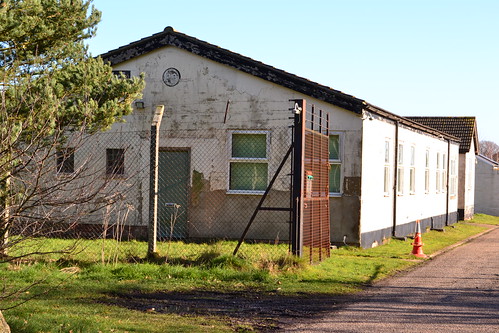
Former Technical Building

One of the former technical buildings no longer used.

In November 1935 information was received at Bircham that two new squadrons were to be formed here, 21 Sqn and 34 Sqn, both bomber units flying Hawker Hinds. Personnel began arriving on December 3rd and began to work on 207 Sqn’s  updated Fairey Gordons, preparing them for dispatch to Cardington prior to their move abroad once more. 21 Sqn were allocated Hangar No. 17, and would receive their first Hind (K.4638) on New Years Eve 1935.

34 Sqn on the other hand, wouldn’t receive their first batch of Hinds until January 1936, when four examples were delivered from the Hawker Aircraft Company Ltd. at Brooklands, by pilots from other units. With two more Hinds being delivered on June 11th, also by pilots of other units, the cadre would soon be preparing to move. On July 30th, both 21 and 34 cadres were ordered north, making the move from Bircham Newton to Abbotsinch in Scotland.

The latter part of the decade reflected previous events at Bircham. Many new changes meant that events at the airfield were as dynamic as ever. Several new squadrons were formed resulting in new crews and some new aircraft. Sharing the space at Bircham were 18 Sqn (Harts and Hinds), 49 Sqn (formed from ‘C’ Flight of 18 Sqn) and ending the decade 206 Sqn with Ansons and later Hudsons. 206 would themselves later be used to form 220 Sqn, which in turn would see ‘C’ Flight be renamed as 269 Sqn. Many of these new squadrons would in turn depart Bircham as changes occurred on the continent.

With 206 came new changes of command at Bircham. Their arrival in 1936, saw a move to Coastal Command (16 Group). Formed at Manston in June under the initial command of Sqn. Ldr. A. H. Love, 23 (Training) Group, 206 Sqn had three flights of six aircraft each and a further six Ansons in reserve. The squadron transferred across to Bircham at the end of July by which time the command had been taken over by Wing Commander F.J. Vincent D.F.C.

206’s main role at this point was training pilots selected for Flying Boats and the  Blenheim squadrons of Coastal Command. Shortly after arrival, the unit’s command would pass over to Wing Commander H. Long D.S.O., and by June 1937, 270 pilots would have been successfully converted in 2,700 hours of flying time.

Naturally accidents did occur during this time, on November 9th 1936, 220 Sqn Anson ‘K6199’ stalled after take-off killing P.O. Peter White (age 23) and injuring three others: Sqn. Ldr. William M. M. Hurley (the pilot), AC.2 Eric D. Butler and AC.1 Reginald K. Birtwistle. The aircraft was written off, after which a court of enquiry recommended modifications to locking bars, as it appeared that the pre-flight checks had been made with the control systems locked. The aircraft was left as an instructional air frame and a stark reminder for proper pre-flight checks!*7

A second accident occurred a year later in September 1937, when another 220 Sqn Anson, ‘K6227’ also stalled, this time falling into the sea near Conway. This time, the crew were not so lucky, with all three, a Sergeant, an AC.1 and an AC.2 all being killed. Their average age was just 22 years old.

Guard House

The former Guard House now stands as a shop.

During the later years of the 1930s, a royal visitor was often seen parked in the hangars at Bircham Newton. The Airspeed Envoy G-AEXX of the King’s Flight was a regular here, being so close to Sandringham House, the Royal residency, it was an ideal location for the aircraft. The Envoy was a creation of the Airspeed company, headed by the author Nevil Shute, a former de Havilland and Vickers employee who later set up his own business, Airspeed Limited. The Envoy was later developed into the Airspeed Oxford which became one of the main trainers used by the RAF.

As the era closed and just weeks before the outbreak of war, another squadron arrived here at Bircham in the form of 42 Sqn with Vickers Vildebeests. The Vildebeest was a late 1920s design biplane, designed to meet Specification 25/25 which required an aircraft operating in the Coastal Defence role and capable of both day bombing and ant-shipping torpedo operations. Several marks were manufactured, up to and including the MK.IV of which only 18 were built. It was some of these that were later delivered to 42 Sqn at Bircham Newton. These aircraft remained in service at Bircham until April 1940, when they were replaced by Beauforts at which point, 42 Sqn departed Bircham transferring to Thorney Island in West Sussex.

On the day war was declared, another very mobile squadron appeared at the door of Bircham, this time it was the Blenheims of 90 Sqn who made a very brief appearance here from West Raynham. Over a period of just two weeks they would locate at five different RAF stations!

With the introduction of the last of the Expansion Schemes ‘L’ and ‘M’ over the years 1938 -39, Bircham would see yet more changes to its infrastructure, notably the demolition of the repair sheds and their replacement with three Type ‘C’ hangars. At this point a fourth was also proposed such was the size and nature of activity at Bircham Newton. In addition, the two original Belfast type hangars were retained providing a mass of hangar space on the airfield. Another bonus for Bircham was the addition of further accommodation blocks, providing better accommodation for the many new air and ground crews who were increasingly appearing at this Norfolk site.

Teetering on the bring of war, Bircham was now operational, more modern aircraft are filtering through and Coastal Command operations begin in earnest. In Part 4, Bircham Newton enters the war.

The full text can be seen in Trail 20 – North Norfolk Part 1.

RAF Bircham Newton (Part 2 – The 1920s)

In Part 1 – The Early Years – we saw how Bircham Newton was created and how it was chosen to be the forefront of long rang bombers targeting Berlin. We saw the untimely death of One Captain Cecil Darley and how, as we enter the 1920s, a new build up of the RAF was required following massive cutbacks after the First World War. In Part 2, we progress through the 20s, Bircham develops into a larger station and how one of its pilots won his VC before arriving here.

This decision to rebuild the RAF in response to France’s build up, then led to an initial burst of refurbishment and development of Britain’s current airfield stock, those not closed by the post-war political hatchet. This included Norfolk’s Bircham Newton.

The link forged in late 1918 with bombers would carry Bircham right through the 1920s and on into the mid 1930s, during which time a number of squadrons would either be formed here or pass through in transit elsewhere. The first of these was through the reforming of 207 Squadron on February 1st, 1920 with DH.9As. This unit came from the nucleus of 274 Sqn, itself a previous resident of Bircham. As a cadre, it would remain here for two years before departing for warmer climates and Turkey, in the Autumn of 1922. That was not the end of the link though, after a spell abroad the squadron would return to the UK, coming back to RAF Bircham Newton at the end of the decade. This return would bring a new variety of aircraft, the Fairey IIIF. By 1932 though, these models were themselves being replaced by another Fairey aircraft, the Gordon, and within three more years the squadron would be back on the road to the Middle East once more.

Another small cadre appeared here on New Year’s Day 1920. Moving in from the former Narborough airfield (Norfolk’s first), the cadre from 60 Squadron would disband later that month, having the good fortune to reappear at Risalpur, India, later in the year.

Over the period 1923 – 24 three more squadrons arrived at Bircham, 7 Sqn (who were formed here from 100 Sqn and stayed for four years); 11 Squadron (6 months) and 99 Squadron (four years) bringing a wide range of aircraft with them to this part of Norfolk. Delights such as the Vickers Vimy; Virginia II, III, IV, V, VI and VII; DH.9A, Fairey Fawn and the Handley Page Hyderabad were all present during this short period of time.

Squash courts

The original squash courts are still used as they were intended.

With such a mass of movement, accidents were inevitable. 7 Sqn suffered a loss when Vickers Vimy (F9187) overturned whilst landing at night on 16th October 1923. Damage to the aircraft itself was not too severe and it was repaired, however, one of the four man crew, AC.1 Ronald Sinclair Watson (aged 20), was not so lucky and was killed  in the crash. The remaining three crew all escaped unhurt.

Another accident befell a 99 Sqn aircraft on 27th February 1925, in which one of its crew was also killed with a second injured. The Avro 504K ‘H3083’,  spun after attempting a stall turn, the manoeuvre resulted in the death of P.O. Cecil S. Marshall Woode also aged just 20. This was the first fatal accident for 99 Sqn.

This build up of squadrons saw continuous movements both in and out of Bircham throughout the 1920s, resulting in many more personnel and aircraft residing at the airfield.

In mid January 1928, 39 Sqn appeared at Bircham (DH.9A) staying for just one year, followed soon after on March 21st, by 101 Sqn. This was another former RFC unit, and were reformed, under the initial command of Sqn. Ldr. J. C. P. Wood. Sqn. Ldr. Wood was posted in from RAF Uxbridge to oversee the formation of the unit and the training of the crews. At its inception the squadron had just 23 airmen in its ranks and was tasked with operating the Sidestrand, an aircraft built by Boulton and Paul aircraft manufacturers.

File:Im1927v145-p46f.jpg

The first example Boulton Paul Sidestrand (Grace’s Guide)

The first model built, J.7938 was collected and brought to Bircham Newton, it was then taken to Ringstead for testing there. It was however, unfortunately damaged in a landing accident after it developed an oil pressure problem whilst being flown by F.O. Duggan, the now Squadron Commander.

Meanwhile, at Bircham, Ground crew were occupied with further ground and air tests, along with lectures by staff from the Bristol Aeroplane Co. on maintenance of the  Sidestrand’s engine, the Jupiter VIIIF.

Rounding off the 1920s was 35 (Bomber) Sqn, reformed with DH.9As and then the Fairey IIIFs, followed not long after by the Fairey  Gordon. 35 Sqn was commanded by  Gilbert Stuart Martin Insall, who had in 1915 been awarded the VC for his actions in France. After having attacked  a German aircraft, he was forced down suffering numerous hits to his own aircraft. Once down, he was able to complete sufficient repairs enabling him to take off again, but in a hail of gunfire that kept others seeking cover.

Later, Insall was shot down again, this time he and his crewman were both injured and captured. Moved from hospital to a POW camp, he made two escape attempts, being recaptured in the first but successfully escaping in the second.

Once repatriated, Insall was by now, a keen archaeologist, and flying with 35 Sqn enabled him to take photographs of the Norfolk landscape. These photographs led to discoveries that have since proven to be very important in the archaeological world. His endeavours in this area went on to help in the development of aerial photography as a reconnaissance tool and to aerial photography as a whole.

However, by the mid 1930s, both Insall and 35 Sqn had also departed Bircham Newton, heading for warmer climates and the Sudan, this move ending their link with this Norfolk airfield.

By now, Bircham had grown considerably, partly in response to the number of its users but also in response to the growing concern over what was happening on the continent. The airfield would by now, have a single aircraft repair section shed along with three double bay general service sheds. All of these were located in the south-eastern corner of the main airfield site, sat in a row with doors facing north-west.

In Part 3, we enter the uncertain times of the 1930s. Germany begins a build up of her forces, and Bircham changes commands being transferred over to Coastal Command.

The full text can be seen in Trail 20 – North Norfolk Part 1.

RAF Bircham Newton (Part 1 – The Early Years)

The north Norfolk coast area boasts numerous wartime airfields and several Cold War examples too, all of which are now closed. Many of these retain buildings or parts of runways in various states of disrepair. In Trail 20, we visit three of these and in one case a substantial amount remains solely thanks to its owners. As we revisit Trail 20, we look at the long history of RAF Bircham Newton.

RAF Bircham Newton.

RAF Bircham Newton has one of the country’s best preserved technical and accommodation areas anywhere in the UK. This remarkable achievement is largely down to the owners, the Construction Industry Training Board (CITB), who opened their first training centre here at Bircham Newton in 1966. Attracted particularly by the large hangars, they are an organisation who specialise in training people for the construction industry through a number of training centres spread across the UK. Their work at Bircham Newton has ensured maintenance/preservation of many (but not all) of the buildings on site.

Located 8 miles from the Norfolk town of Fakenham, RAF Bircham Newton has associations with several airfields including: RAF West Raynham (its parent), RAF Docking (its satellite from where all night flying took place) and four minor decoy sites including the former RFC/RAF Sedgeford.

With its origins in the First World War, prior to the birth of the Royal Air Force, Bircham Newton has had a long and distinguished career mainly serving under 16 Group Coastal Command, who operated a range of single and twin engined aircraft from the site.

By the end of the Second World War, it would have seen considerable development, including three runways, all BRC steel matting (British Reinforcing Concrete), three ‘C’ Type Hangars, three Bellmans, ten Blister hangars and two Belfast hangars mainly located in the south eastern corner. It would also have an extensive range of accommodation and technical buildings catering for around 3,000 personnel of mixed rank and gender.

Opened in 1916, little initially happened with the airfield, and it wasn’t until near the war’s then that Bircham really came into being. Its first operational use was as a Fighter Gunnery School in 1918, with No. 3 School of Aerial Fighting & Gunnery (later known as No. 3 Fighting School) as its initial resident.

The School was born out of the need to train both pilots and gunners in the early biplanes to use their guns effectively in aerial combat. With their roots in the Auxiliary School of Aerial Gunnery, they were formed in May 1918 when Numbers 2 and 4 merged with another two Schools, Numbers 1 and 2 School of Aerial Gunnery. This amalgamation of ‘Schools’ was designed to streamline the complex array of establishments that had grown out of the need for new gunners and pilots. Once formed, they would be one of four new schools which were joined by a fifth in September later that year. Operating a range of aircraft including: B.E.2e, Bristol M.IC, D.H.4, Dolphins, Camels and H.P. 0/400 aircraft, their stay at Bircham would however, be short lived, moving to nearby RAF Sedgeford in November of that year.

Early losses with trainee pilots were high, novices learning to fly the hard way. At Bircham, one such loss occurred to 2Lt. Horace G. R. Boyt, who was killed when his Sopwith Camel (D8226) of No. 3 Fighting School stalled whilst attempting a forced landing near to Thornham bombing range, on July 31st 1918. 2Lt. Boyt was only 19 years of age at the time of his death – a young man taken in the prime of his life.

Possibly Bircham’s most significant early aircraft was the Handley Page V/1500 (Super-Handley) bombers*1. An enormous four-engined aircraft, it first flew in May 1918, and was designed to hit Germany hard, striking targets as far away as Berlin. The V/1500 was more than capable for the role too. It could carry up to thirty 250lb bombs over a range of 1,300 miles with a crew of six. Even more unusual, especially for an aircraft so large, it boasted folding wings; presumably this allowed it to be placed inside a hangar/repair shed for maintenance or storage.

BRITISH AIRCRAFT OF THE FIRST WORLD WAR

Handley-Page V/1500 heavy bomber biplane possibly at Bircham Newton. (© IWM Q 67329)

These aircraft arrived with three squadrons, the first 166 Squadron, was formed on 13th June 1918. Whilst initially receiving FE.2Bs, the squadron was created with the sole purpose of bombing Berlin, and the d’elite crews (mainly Canadian) were hand picked accordingly; a situation not unlike 617 (Dambusters) Sqn of the Second World War. Bircham Newton was chosen for these aircraft, as it was both the most suitable and the most easterly aerodrome available to the RAF at that time.

Formed under the command of Major Cecil H. Darley DSC and Bar, DFC,  a seasoned veteran of the war, the squadron fell under the control of 3 Group, a relationship it maintained until 13th September 1918 when it was transferred to 86 Wing, 27 Group. As the squadron rapidly developed, it naturally grew in size taking on new staff on a regular basis. By the end of September, after its Group transfer, it would have 17 officers and 308 ‘other ranks’ on its books.

After building the squadron up and preparing for war, an audacious and no doubt suicidal attack, was planned for November 9th 1918 – a raid on Berlin. However, maintenance problems meant that only two of the three aircraft at Bircham Newton were serviceable, this despite ground crews working hard to get all three in the air. There then followed a spell of bad weather which caused even further delay to the operation. By the time the situation had improved and the weather was more favourable, the armistice had been agreed, and so the raid was no longer required. As a result, the squadron was ordered to ‘stand down’ and the raid never took place.

For 166 Squadron it was a bitter disappointment, had the war gone on and the flight taken place, they certainly would have made history regardless of whether or not they were successful in their task. Perhaps they too would would have been as famous as their Second World War partners 617 Sqn.

As for the V/1500s, it is believed they were left in Bircham’s sheds, allowed to decay until they had deteriorated beyond use, ultimately they were scrapped. A rather appalling end to an incredible aircraft.*2

The second squadron to be formed with these remarkable aircraft here at Bircham, was 167 Sqn, who also failed to see any active military service. Being formed on the 18th November 1918, just days after the Armistice was agreed, they too were no longer required.

The last of these special squadrons to be created was 274 Sqn,  which was also  formed here, at Bircham Newton, a year later on 15th June 1919. Personnel for the unit came from the nucleus of No.  5 (Communication) Squadron after it was renamed. As the war had now come to a conclusive end though, there seemed little need for these huge, long-range bombers and so all three units were disbanded each within six or seven months of their initial creation.

The immediate post-war era saw little interest in the building of a military force, especially an air force, and strong opposition from both the Navy and Army was fuelled by an anti-war feeling amongst the British public. As a result, many airfields were sold off, aircraft and equipment were scrapped and thousands of personnel demobbed. Airfields like Bircham Newton, now had in their store, numerous surplus aircraft awaiting disposal.

On of these surplus aircraft was the V/1500, and it would be Major Darley of 166 Sqn, who would go on to fly one, not in an operational  capacity, but as a non-stop flight to Madrid to promote these long range aircraft as potential civilian transports. It was not all plain sailing though, for the trip nearly cost Major Darley his life when, on the return leg, the aircraft got into difficulties and crashed into he sea off Biarritz. Managing to survive the accident, Major Darley eventually returned home to Bircham where he continued his military service. In honour of his achievements, the Spanish Government awarded Major Darley the Cross of Military Merit.*3

In a twist of fate, Major (now Captain) Cecil H. Darley, was joined in 1919 by his brother Flt. Lt. Charles Curtis Darley, also a veteran of the First World War, here at Bircham Newton, and they would be tasked with flying more of these surplus aircraft, this time Vickers Vimys, to Cairo. On their first trip together, on 24th September 1919, they departed Bircham heading for France, then onto Rome and eventually Cairo. On the 27th, following a forced stop at Lake Bracciano, 20 miles from Rome, the aircraft struck a telegraph pole causing it to crash. The resultant fire killed Captain Cecil Darley whilst his brother tried in vane to pull him free from the burning wreckage.*3

BRITISH AIRCRAFT OF THE INTERWAR PERIOD

Vickers Vimy (© IWM Q 73389)

Whilst Britain had entered a period of ‘demilitarisation’, the early 1920s saw increasing Government concern over France’s build up of military aircraft, particularly its bombers. The Government now saw France not as  potential Allie, but a potential aggressor, and there was now a growing concern over Britain’s lack of defensive strength.

By 1922, Britain had only 12 squadrons available in the UK, a weak and lacking force it would have been unable to counteract any aggressive moves made by the French. Consequently the Government put in a place a plan to rebuild its forces and increase this number, to a more substantial 52 squadrons by the mid 1920s.

In Part 2. we see how Bircham developed in response to the Governments plans and how new squadrons arrived at this rapidly developing airfield.

The full text can be seen in Trail 20 – North Norfolk Part 1.

Secrets Of The (Not So) Deep.

By Mitch Peeke.

This latest chapter in the story of B17 44-6133, which crashed in shallow water at Allhallows, Kent, in June of 1944, came about during a visit I made to The Kent Battle Of Britain Museum at Hawkinge; which ordinarily, is not perhaps the sort of of venue one might expect to find anything related to The Mighty Eighth.

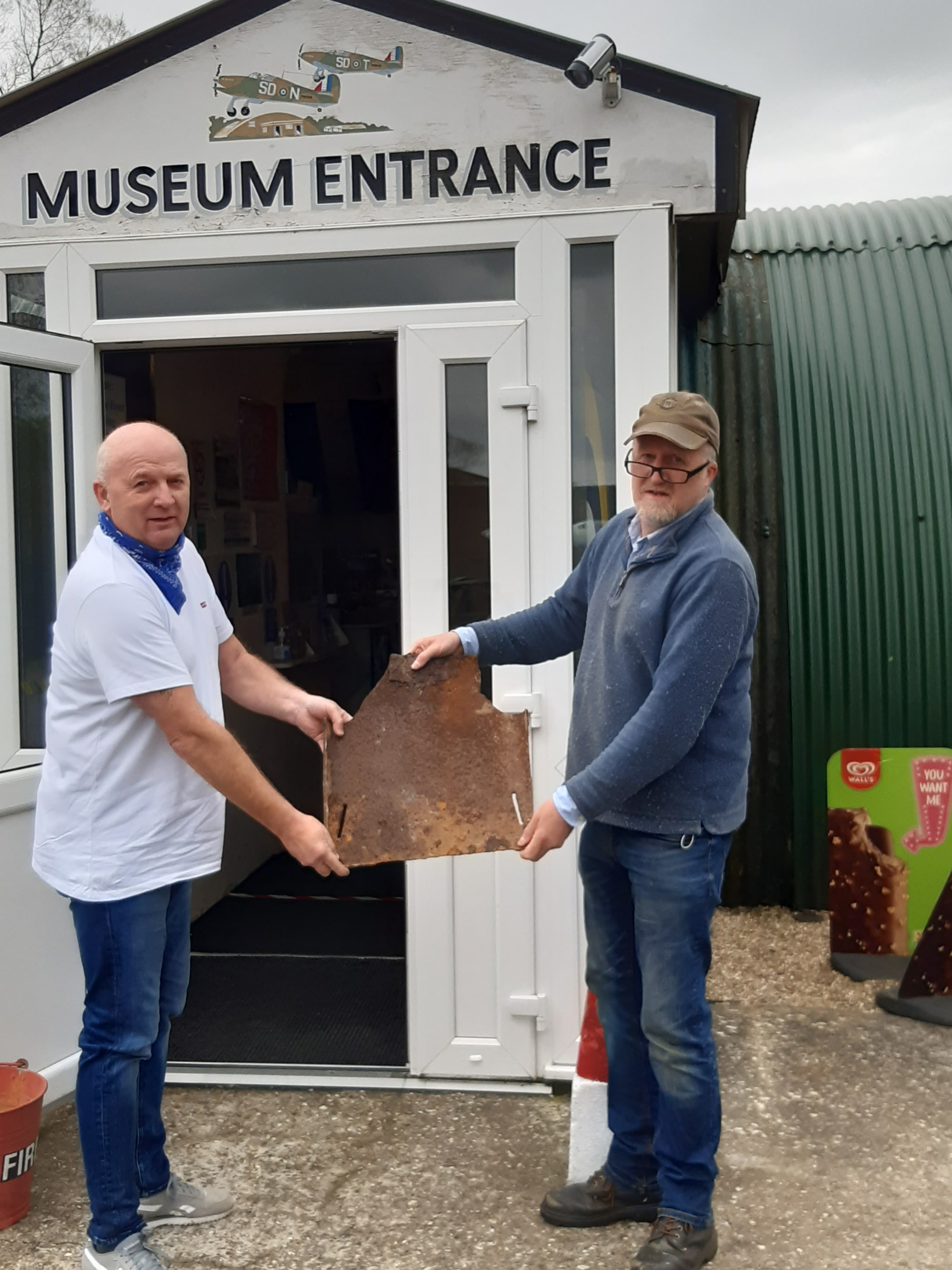
I have been to this excellent museum a few times. They very graciously stocked the promotional leaflets for my own Battle Of Britain E-Book; 1940: The Battles To Stop Hitler when it came out in 2015. Four years later, in the Summer of 2019, I had organized the creation of a memorial at Allhallows, commemorating the lost crew of B17 44-6133 and later that same Summer, there I was, talking to Dave Brocklehurst MBE, Curator of the museum at Hawkinge, about my project, the memorial day we’d just held there and how there was going to be a new museum at nearby Slough Fort, which would include a display relating to the crash. The Fort has a small piece of wreckage from the B17 that had washed up on the beach front at Allhallows. It was then that Dave told me that he also had a genuine piece of that B17 in storage and he offered it to me, for inclusion in the Fort’s display. It is a fair-sized but broken piece of armour plate, thought to be a section of armour from either of the Pilots’ chairs, though Dave was by no means certain of that. We arranged for him to retrieve it from his storage section and for me to return to the museum to collect it. Then came the Covid pandemic of course!

Successive lockdowns meant I couldn’t collect it. Dave was kept extremely busy, not only with the general upkeep but also the museum’s newest acquisition; a Spanish-built Heinkel 111 that had been used in the 1969 film The Battle Of Britain, which of course had seen Hawkinge used as a filming location. Each time we made our arrangements, another lockdown put paid to our plans, then finally, we were able to make a definite date, in May of 2021, nearly two years after first discussing the idea, for me to collect the B17 artefact.

Dave Brocklehurst MBE, (right) Curator of The Kent Battle Of Britain Museum at Hawkinge, Presents Mitch Peeke with the salvaged armour plate. (Photo: Mitch Peeke.)

The first thing that struck me when Dave handed the plate to me, was the sheer weight of it. The plate measures a mere 17 by 19 inches. It is a quarter of an inch thick, but it weighs an incredible 22.6 pounds: 10 kg. No wonder Dave told me not to come to collect it on my Harley! I used my wife’s SUV instead.

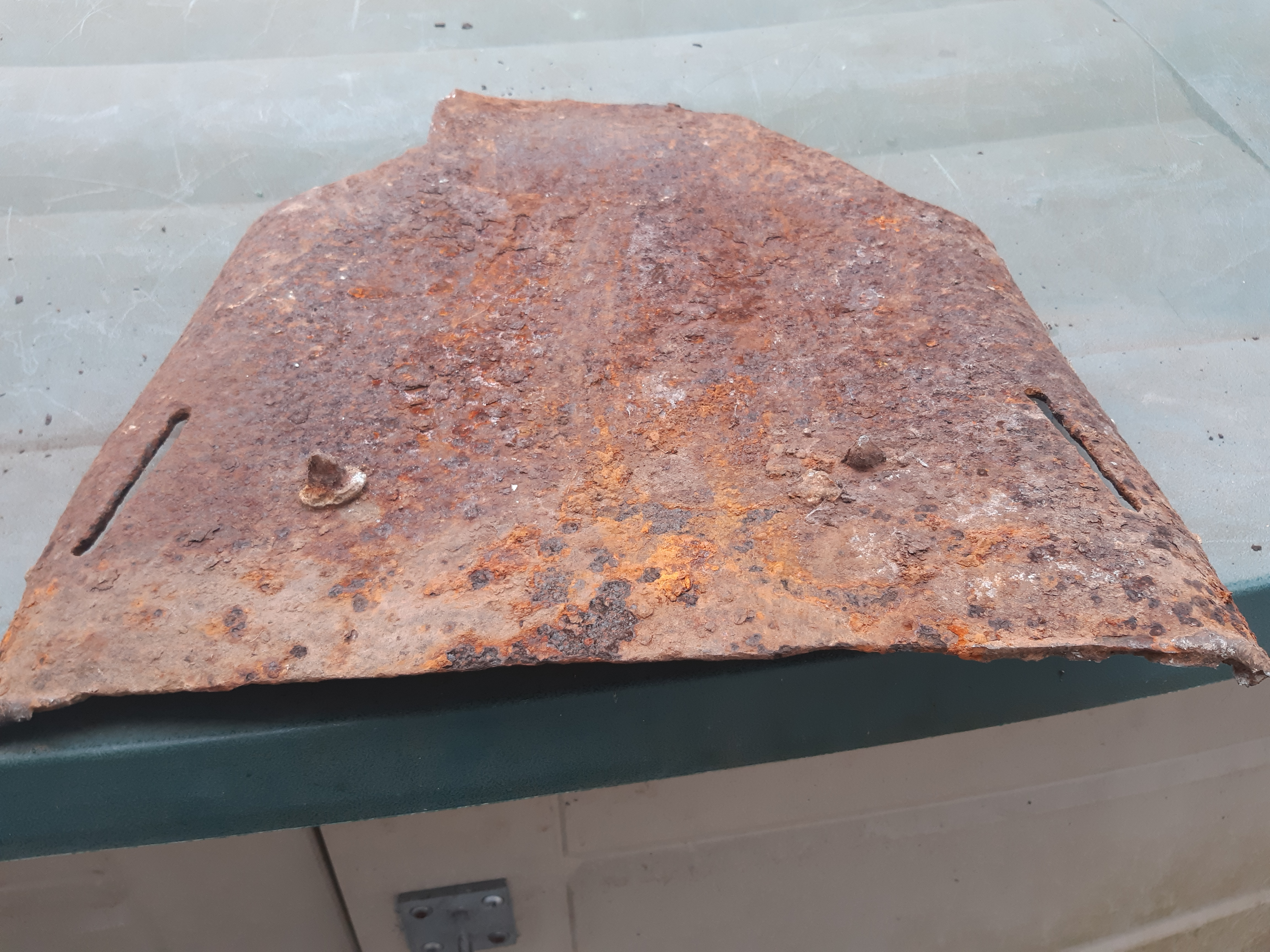
Once I got it safely home, I photographed it from several angles and set about the task of trying to positively identify it. To that end, I emailed the Museum of aviation at Robins Air Force Base in America, as they are currently in the process of restoring a B17 to its former glory. Their Curator, a former US Air Force officer by the name of Arthur Sullivan, replied to my enquiry with 24 hours, expressing a great interest in the the plate and the story behind it. Despite casting their expert eyes over the photos I sent them, we are still not 100% certain; but it would seem likely, given its curved edges and obvious mounting bolts underneath, that it is seat base armour from either of the Pilot’s seats; the two angled slots most likely to have been for the lap straps to pass through.

Underside of the plate, showing the mounting bolts and possible Lap Strap slots. (Photo: Mitch Peeke.)

The plate was salvaged from the wreck site, a muddy, watery crater some 500 yards off the beach at Allhallows, in the late 1970’s. By then, some nefarious low tide salvage attempts had already been made, most notably by slightly drunk members of the Allhallows Yacht Club. One such foray had resulted in the Police being called to the club when the returning “Trophy Hunters” had brought a quantity of .50 caliber machine gun bullets back with them and decided to try “firing” them from a vice on a workbench, using a hammer and the pointed end of a six inch nail. Luckily for those concerned, the bullets had deteriorated to such an extent after laying on the muddy bottom of the Thames Estuary for 32 years, that they merely fizzled and smoked. The Police confiscated them. The Trophy Hunters had also retrieved one of the bombers Browning machine guns, probably one of the waist guns, but that had been hidden from the Police. That gun was apparently later taken apart and smuggled into Canada. To discourage any further foolhardy amateur salvage operations, the Royal Engineers were called in to demolish the wreck with explosives. Nobody seemed to consider the possibility of that wreck being a War Grave. The body of Staff Sergeant Cecil Tognazzini, the bomber’s Flight Engineer/Top Turret Gunner, has never been found. He is the only member of 44-6133’s crew who is still unaccounted for.

Today, the crater is still visible at low tide, as are the fragmented remains of the B17. The tidal mud holds a lot of the wreckage in suspension, so every now and again, more of it becomes visible, sticking up out of the muddy floor of the crater, when the tide goes out. Tempting though it still is for some to venture out there, the oozing mud makes such an expedition a dangerously foolish pursuit. Letting that sleeping B17 rest in peace is a far more noble and worthy aim.

In the meantime, we do now have two tangible pieces of 44-6133; one is the small piece of wreckage that washed ashore in 2017 and the other is the newly re-discovered armour plate. Both are now on display in the Slough Fort Museum. Thanks to Jeanne Cronis-Campbell, we also now have photographs of some of 44-6133’s young crew, taken by her late Father, Teddy; who was the plane’s Bombardier and the sole survivor of 6133’s crew, which I added to the memorial last year. And of course, we finally have that permanent memorial to those men, overlooking the place where they fell. We will, remember them.

My thanks to Mitch for the update.

The full story of 44-6133 can be found in ‘A Long way from Home‘,

RAF Graveley and the Pathfinders (Part 2).

In Part 1, we saw how Graveley had been formed, its early years and the how it was drawn into Don Bennett’s Pathfinder Group. We saw the Introduction of FIDO and the benefits of this incredible fog busting system.

In this, the second and final part we see more uses of FIDO, new aircraft and new squadrons arrive, but we start on the night of 18th/19th November 1942 which saw a remarkable turn of fortune for a squadron who had suffered some devastating losses.

Halifax DT488 (TL-S) piloted by Wing Commander B.V. Robinson, caught fire when flares in the bomb bay ignited. He ordered the crew to bail out, but as the last man left, the fire extinguished itself. Robinson then decided to try and nurse the damaged bomber home. Flying single-handed, he reached the safety of RAF Colerne in Wiltshire, where he survived a crash landing. The six crew members who had bailed out also survived but were unfortunately captured and taken as prisoners of war by the Germans.  As a result of his actions, Robinson was awarded a Bar to add to his DSO. Robinson would go on to have a second lucky escape later on, after which, in May 1943, he would become the Station Commander of his home base here at Graveley.

35 Sqn would continue to carry out missions both marking and attacking strategic targets deep in the heart of Germany, but accuracy, whilst improving, was not yet 100%.

By the end of 1942 the new H2S ground scanning radar system was being introduced, and a small number of 35 Sqn aircraft were fitted with the units. The continuing missions were on the whole successful, even after the Germans developed a device able to track aircraft using it, and eventually, the whole of the PFF were fitted with it.

In April 1943, a detachment of 97 Sqn Lancasters arrived at Graveley. Based at the parent station RAF Bourn, they also had detachments at Gransden Lodge and Oakington, and they remained here for a year. After that, they moved on to RAF Coningsby in Lincolnshire.

A number of major operations were undertaken by 35 Sqn over the coming months, but with it came the end of good fortune for Group Captain Robinson. Fate was finally to catch up with him, and he was lost on the night of 23rd/24th August 1943. Flying in a Halifax II (HR928) ‘TL-R’, his loss that night brought a further blow to the men of Graveley and 35 Sqn. Following this, Air Chief Marshal Sir Arthur Harris restricted flying operations by base Commanders as the number of these experienced men being lost was quickly becoming unsustainable.

On November 18th/19th 1943, Bomber Command began the first phase of its ‘Battle for Berlin’, and Graveley’s Pathfinders would find FIDO more than beneficial. A raid of some 266 aircraft would see light losses on the second night of operations, but on returning to England, crews would find many of their bases shrouded in heavy fog. With visibility down to as little as 100 yards on the ground, the order was given to light up FIDO. This would be FIDO’s first official wartime use, and whilst some of Graveley’s bombers were diverted elsewhere, four managed to land safely using the system. This new invention may well have saved precious lives, as others failed to survive landing at their own fog-bound bases. At debriefing, one airmen, was noted as saying he could see Graveley’s fire as he crossed the English coast, a considerable distance from where he was now safely stood.

The night of 16th/17th December of 1943 would go down as one of the worst for Bomber Command and in  particular for the Pathfinders who were all based in the area around Graveley.

In what was to become known as ‘Black Thursday’ a massed formation of almost 500 aircraft attacked targets in Berlin, and although covered in cloud, marking was reasonably accurate and bombs struck their intended targets. On return however, England was fog bound, thick fog with a layer of heavy cloud prevented the ground from being seen. Whilst not operational that night, Graveley lit up its FIDO in an attempt to guide fuel starved bombers in. With little hope for even getting in safely here, crew after crew requested landing permission in a desperate attempt to get down. Many, out of fuel, bailed out leaving their aircraft to simply fall from the night sky. Others, desperate for a landing spot, simply crashed into the ground with the expected disastrous results. At Graveley, several attempts were made by desperate crews, but even FIDO was unable to help everyone. One aircraft came in cross wind losing vital power as he realised his error and tried to pull away. Another crashed a few miles away to  the north-east and a third aircraft trying to land came down to the south-east of the airfield. Of all those lost around Graveley that night, survivors could be counted on only one hand. 97 Squadron at Bourn, Gravely’s sister Pathfinder station, had taken the brunt with seven aircraft being lost. The role call the next morning was decimated.

The new year brought new changes to Graveley. Mosquito B.IVs arrived with a newly formed 692 Squadron (RAF). Their first mission here would be on the night of February 1st/2nd 1944 in which a single aircraft would defiantly attack Berlin.

graveley

Armourers wheel a 4,000-lb HC bomb into a Mosquito. The Mosquitoes were fitted with bulged bomb-bays in order to accommodate ‘Cookies’. The tower can be seen behind. (© IWM CH 12621)

Some of these 692 Sqn Mosquitoes were later modified to carry the enormous 4,000 lb ‘Cookie’ bomb, This was first used by S/Ldr. Watts in Mosquito DZ647 who took off at 20.45 hours to attack Düsseldorf. The attack took place on  the night of 23rd/24th February 1944 from a height of 25,000 feet. The initial bomb was followed by two further bombs from Mosquitoes of the same squadron, DZ534 and DZ637.

The first casualties for 692 Sqn were reported only three days earlier, on the night of 19th/20th February, which also proved to be the worst night for Bomber Command casualties since the war started – even worse than ‘Black Thursday’. With 79 aircraft failing to return home, the RAF had taken another pounding and squadrons were finding themselves short of crews. These casualties including those in Mosquito DZ612 ‘P3-N’. Flown by F/L. W. Thomas (DFC) and F/L. J. Munby (DFC) the aircraft took off at 01:05 to attack Berlin. The Mosquito was subsequently shot down and both crew members killed.

graveley

Mosquito B Mark XVIs of No. 692 Squadron RAF (PF392 ‘P3-R’ nearest), lined up at Graveley. (© IWM CH 17859)

35 Sqn, who were still flying their Halifaxes, suffered even worse. TL-J, TL-B, TL-N, and TL-O, all fell to the accurate guns of night fighters over the continent. In yet another devastating night of losses, neighbouring Warboys, Wyton and distant Leeming and Waterbeach all lost crews. The casualty list was so high, that barely a squadron operating that night didn’t suffer a loss.

In early April 1944, a small detachment of 571 Sqn Mosquitoes (RAF Downham Market) joined 692 passing through on their way to RAF Oakington. From there that then transferred to  RAF Warboys, where the squadron was eventually disbanded. A series of events not untypical for Graveley.

692 would go on to have another claim to fame a year later, when on January 1st 1945, in an attempt to assist in the Ardennes offensive, they attacked supply lines through a tunnel. A daring attempt it required the bomb to be dropped into the mouth of the tunnel where it would explode. These attacks were carried out between 100 and 250 feet using the ‘Cookies’ and were so successful that smoke was seen bellowing from the other end of the tunnel after the attack.

The final 692 Sqn mission would then be on the night of May 2nd/3rd 1945. As the war was coming to a close, it was feared that remaining resolute Germans would make their escape from Keil, and so 23 aircraft in 2 waves of 12 and 11 went sent to bomb the coastal town. A successful mission, all crews returned safely.

692 Squadron, would operate a variety of Mosquito types during its life including the B.IV, XIV and XVI who would prove to be highly successful and instrumental in 8 Group’s ‘Light Night Striking Force’.

692 Sqn would move to Gransden Lodge in June 1945 where they were finally disbanded; a sad end to a remarkable career. The squadron had performed well since arriving here at Graveley, and had seen many highly regarded crew members lost in operations, including both Sqn. Ldr. R. Fitzgerald and Wing Commander A. Cranswick; its record of prestige losses reflecting the nature and danger of flying as part of the elite Pathfinder Force. 35 Sqn meanwhile would go on to have a long and established career, operating as late as 1982.

The remaining buildings utilised by the farm, which no longer resembles the Control Tower it was.

Other units to grace the skies over Graveley would include detachments of 97, 115 and 227  Sqns all with Lancasters MK. I and MK.IIIs, mainly prior to thier disbandment toward the war’s end.

692 Squadron carried out 310 operations from Graveley losing 17 Mosquitoes in all. A  total of 150 aircraft were registered either missing or crashed following operations from this station: 83 Halifaxes, 32 Lancasters and 35 Mosquitoes.

As one of the many Pathfinder stations in this part of the country, Graveley is linked by the long ‘Pathfinder Walk’ a path that leads all the way to RAF Warboys in the north. Using this walk allows you to visit a number of these bases linking each one by open cross-country footpaths.

Today, Graveley is all but gone. The control tower is now very well disguised as a farm-house, its shape considerably different to the original design, the concrete huts have been pulled down and the runways mainly dug-up. A couple of buildings do still remain next to the farm-house, storing a range of modern farm equipment. The perimeter track considerably smaller in width, remains used by the local farm for lorries to transport their goods to the main road.

Perimeter Track

The perimeter track where bombers once lumbered.

A small memorial has been erected and sad to say, was poorly maintained when I was there. It stands at the entrance to the former airfield on the northern side, now the entrance to the farm site.

Graveley is typical of the sad end to many of Britain’s lost airfields. The wide open expanses that once resounded with the roar of piston engines taking brave young men to war, are now quiet and the sounds mere whispers in the wind. Lorries roll where the wheels of laden bombers once lumbered. The brave acts of those young men now laid to rest in a small stone overlooking where they once walked. As a pivotal station in 8 Group, Graveley and its crews deserve a much greater recognition for their dedication, bravery and sacrifice.

This aside, a beautiful stained glass window can be found in the local Graveley church and is worthy of a visit if time allows.

After the quiet of Graveley we head south-east, toward our next planned destination, RAF Bourn. On the way, we make a brief stop at the now extinct RAF Caxton Gibbet, a little airfield with a colourful history.

*1 Williams, G. “Flying Through Fire FIDO – The Fog Buster of World War Two“, 1995, Alan Sutton Publishing, Page 109.

(Graveley was initially visited in 2015, in Trail 29, this is an updated post).

RAF Graveley and the Pathfinders (Part 1).

In Trail 29 we turn south and head to the southern end of Cambridgeshire. This area is rich in fighter stations, both RAF and USAAF. Home to Duxford and Bader’s ‘Big Wing’, Mustangs, Spitfires and Hurricanes once, and on many occasions still do, grace the blue skies of this historical part of the country.

We start off though not at a fighter station but one belonging to those other true professionals, the Pathfinders of No 8 Group RAF, and former RAF Graveley,

RAF Graveley

Village sign Graveley village sign depicts its aviation heritage.

Graveley airfield sits on the south side of Huntingdon, a few miles to the east of St. Neots in Cambridgeshire. It takes its unusual name from the nearby village. The airfield itself would see a number of changes to its infrastructure, including both upgrades and improvements and it would be home to several different squadrons during  its wartime life.

Initially built as a satellite for RAF Tempsford, Graveley opened in March 1942 when it accepted its first residents, 161 (Special Duty) Squadron.  Formed from a combination of elements from both 138 Sqn and the King’s Flight, it had been formed less than a month earlier at RAF Newmarket  and would bring with it the Lysander IIIA, the Hudson MkI and the Whitley V.

The role of the Special Duty Sqn  was to drop agents of the Special Operations Executive (SOE) into occupied France, a role it would perform throughout its operational wartime life.  Their stay at Graveley would however be short lived, remaining here for a mere month before departing to  Graveley’s parent airfield in Bedfordshire, before moving elsewhere once more.

By the war’s end, Graveley would have become a complete operational airfield in its own right, forming part of Air Vice Marshall Donald Bennett’s 8 Group, with the Pathfinders. After upgrading, its initial concrete runways of 1,600 yards, 1,320 yards and 1,307 yards would be transformed into the standard lengths of one 2,000 yards and two 1,400 yard runways; the measures associated with all Class ‘A’ specification airfields.

Accommodation for all personnel was spread around the north side of the airfield, across the main Offord to Graveley road. These were separated into nine separate accommodation areas, incorporating both a separate communal area and sick quarters. Graveley would, once complete, accommodate upward of 2,600 personnel, a figure that included almost 300 WAAFs.

As with all sites, the bomb store was well away from the accommodation area, to the south-west, partially enclosed by the ‘A’ frame of the three runways. The 50 foot perimeter track linked these runaways with 36 pan style hardstands, all suitable for heavy bombers (after the extension three of these were replaced by loops). The main technical area, with its range of stores, workshops and ancillary buildings lay to the north-west, where two of the three T-2 hangars were also located, the third being erected to the south-east next to the only B-1 hangar on the site.

scan10_020

RAF Graveley (author unknown)

Following the immediate departure of 161 Sqn, Graveley lay operationally dormant. However, in May’s ‘1000’ bomber raid, aircraft from 26 OTU based at RAF Wing, flew from Graveley as part of the massive bombing operation. Sadly four of the Wellingtons (all Mk ICs) failed to return; WS704, DV740, DV707 and DV709. One of these, DV709 crashed some thirteen miles north-east of Cambridge whilst trying to make an emergency landing at Graveley. Unfortunately, when the aircraft came down, it overturned killing two of the crew on board: Sgt. J. Dixon the pilot, and Sgt. B. Camlin the tail gunner. Both these airmen were laid to rest in Beck Row Cemetery, at nearby Mildenhall.

St. John's Church Beck Row, Mildenhall

Beck Row Cemetery, Mildenhall.

The difficulty faced by Bomber Command crews in accurately hitting targets at night had, by now, become a problem for the ‘top brass’ at High Wycombe, and by April 1942, it had been decided, much against the views of Arthur Harris, that a new special Pathfinder Force was to be set up as soon as possible. As if adding salt to the wound, Harris was then instructed to organise it, and with a mixed charge of emotions, he appointed the then Group Captain Don Bennett, a man who had proven himself to have excellent flying and navigation skills.

Bennett then took charge, and on August 15th 1942, he formally took control of the new 8 (Pathfinder) Group, consisting of a specialised group of airmen who were considered to be the cream of the crop.

With its headquarters initially at RAF Wyton, Bennett received the first five founder squadrons of which 35 Sqn was one, the very day they moved into Graveley airfield.

Castle Hill House, Huntingdon

Castle Hill House, Huntingdon, headquarters of the Pathfinders 1943 – 45. (Photo Paul Cannon)

Initially arriving with Halifax IIs, 35 Sqn would upgrade to the MK III in the following October, and then to the Lancaster I and III a year later. There would be little respite for the crews arriving here however, for they would be flying their first mission from Graveley, just three days after their initial arrival.

On the night of 18th/19th August 1942, a total of 31 PFF aircraft left to mark the target at Flensburg, close to the German-Danish border. However, poor weather and strong winds, prevented accurate marking, and two Danish towns were accidentally bombed as a result. It was a rather disastrous start for 35 Sqn and the Pathfinders.

Another blow was to fall 35 Sqn a month later, when on the night of 19th September 1942, the experienced 24 year old Wing Commander James.H. Marks DSO, DFC was lost when his Halifax II (W7657) ‘TL-L’  crashed at Blesme in France. Also being lost that night with W.C. Marks, was 19 year old F.L. Alan J. Child DFC and 25 year old F.O. Richard L. Leith-Hay-Clark; the remaining three crewmen being taken prisoner by the Germans. The squadron designation for this aircraft would then be reallocated, as was the case in in all squadrons, and as if bad luck were playing its hand yet again, that aircraft, Halifax HR928, would also crash with the loss of all its crew, including the highly experienced Sqn Ldr. Alec Panton Cranswick.

graveley

Halifax Mark II Series 1A, HR928 ‘TL-L’, 35 Sqn RAF being flown by Sqn Ldr A P Cranswick, an outstanding Pathfinder pilot who was killed on the night of 4/5 July 1944 on his 107th mission. The Cranswick coat-of-arms decorates the nose just below the cockpit.(I© IWM HU 92966)

In October, Gravely made history when it was earmarked to become the first operational airfield to test the new and revolutionary fog clearing system, FIDO. Classified as Station II, it would be the second of only fifteen British airfields to have the system installed and whilst it had its opponents, it was generally accepted and greeted by all who used it.

Installed by contractors William Press, the system’s pipes were laid along the length of the runway, a not easy feat as operations continued in earnest. One of the initial problems found with the FIDO system, was the crossing of the intersecting runways, pipes had to be hidden to avoid aircraft catching them and an obvious disaster ensuing. Two types of pipe were laid at Graveley, initially the Four Oaks type burner, but this was later replaced by the Haigas (Mk.I) burner. A more complex system, the Haigas took considerable time to install but by January 1943 it was ready, and an aerial inspection was then carried out by Mr. A Hartley – the Technical Director of the Petroleum Warfare Dept (PWD) and Chief engineer of the Anglo-Iranian oil Co. It was Hartley who later played a major role in PLUTO, the cross channel pipeline installed for D-day. Hartley, himself a non flyer, was flown over the burning pipes in a Gypsy Major by no less than Don Bennett himself.

It was later, on February 18th, that Bennett made the first four-engined heavy bomber FIDO landing at Graveley, using a Lancaster of 156 Sqn from Oakington. Setting off from Oakington, Bennett headed towards Graveley airfield, and with the burners lit, he remarked how he was able to see them from some 60 miles distant, the fire providing a far better light than searchlights alone, the means by which aircraft had been guided home on foggy nights previously. A great success, Bennett requested that certain minor modifications be made as he thought pilots could be distracted by the cross pipes at the threshold of the runway. Hartley keen to please Bennett, duly arranged for the necessary alterations and the modification were carried out without further delay.  However, further problems were to come to light on the the first operational lighting of the system, when bushes, hedges and telegraph poles adjacent to the pipelines were ignited due to an extension of the system passing through a nearby orchard!

The installation of FIDO meant that huge oil containers had to be installed too. At Graveley, sixteen cylindrical tanks were mounted in two banks, each tank holding up to 12,000 gallons of fuel. These tanks were kept topped up by road tankers, there being no railway line nearby as was the case at other stations.

Over the next few months, FIDO was tested further, but for various reasons its benefits weren’t truly exploited. On one occasion it was prevented from being lit by a crashed Halifax on the runway, the resultant lack of FIDO after the accident, was then blamed for the loss of two more aircraft, neither being able to safely put down in the poor conditions.  On another night, poorly maintained pipes caused burning fuel to spill onto the ground rather than heating the vaporising pipes above. Bennett somewhat angry at this, once more requested modifications to be made, needless to say they were not long in coming!

With further trials, one pilot was remarked as describing flying through FIDO as “entering the jaws of hell”*1 but once crews were used to it, the benefits were by far outweighing the drawbacks.

The safety of FIDO could not assist all crews though, and a number of other experienced crews were to be lost from Graveley over the next few months. But all news was not bad. The night of 18th/19th November 1942 saw a remarkable turn of fortune.

In Part 2 we see how Graveley sees out the war, the changes that occur, the new aircraft and new squadrons that arrive.

The whole trail can be read in Trail 29 – Southern Cambridgeshire.

July 11th 1945 – Last B-24 leaves the U.K.

As the war drew to a close, encircled German troops, took to flooding the fields of western Holland, forcing the local Dutch people down to starvation levels. In an attempt to help them, Allied operational bombing missions turned to mercy missions. Operations  ‘Manna‘  and ‘Chow Hound’  involved Allied bombers flying low-level to drop supplies of food and other provisions to these people.  They would fly aircraft along mutually agreed routes  to dropping points at the Hague and other sites around Rotterdam.

The first of these RAF operations occurred at the end of April into the early days of May, followed by the USAAF between the 1st and 8th of May 1945. On this first operation, 396 B-17s flew from their bases in East Anglia to unload some 700 tons of provisions over the affected area. Over the next few days similar flights would also take place, which would in total provide some 11,000 tons of food to the starving population. During one of these missions on May 7th, B-17G  #44- 8640 of the 95th BG, 334th BS, was believed to have been hit by ground fire over Ijmuiden,  The aircraft, engine ablaze, ditched in the North Sea. Rescue efforts were mounted to recover the crewmen and observers, but only two survived – eleven were lost. It is believed to be last combat casualty of 8th Air Force in World War 2.

Also during this time, ‘Trolley runs‘ began in which around 10,000 ground crew and other personnel, were given the opportunity to see first hand, the destruction caused by the relentless allied bombing campaign of the previous years. Many were shocked to see the extent of the damage having lived in the relative safety of their airfields back home.

Whilst some crews enjoyed the ‘sight seeing tours’ others were involved in ‘Revival‘ flights, bringing home the many thousands of Allied prisoners of war and displaced persons interned in camps as far away as Austria.

Gradually even these missions began to slow. Squadrons and airfields were wound down, and eyes began to turn to the Pacific. An American force consisting of three P-51 and nine B-17 groups would remain in Europe, the rest of the Eighth  Air force would return home for rest or training and eventual posting to the Pacific.

In the third week of May 1945, the huge operation began, the first B-24 left the U.K. for American shores, a flight that would begin seven weeks of flights across the Atlantic routes. In total some 41,500 men and 2,118 aircraft would depart the U.K. for home, most through either Prestwick in Scotland, or Valley in Wales.

Valley airfield became known as “Happy Valley”, and would see about 90% of the returning aircraft leave from here. Each of the aircraft leaving would carry its crew and 10 passengers, along with sacks of mail for home.

On July 11th 1945, 1st Lt. Gean (or Gene) Williams climbed aboard his B-24, started its engines and pulled off the runway at Valley; the last B-24 the leave the U.K, and with it began the slow demise of Britain’s wartime airfields.

The ‘New York Times’ Published a report on the last Liberator to leave the U.K. on July 12th 1945.