In the final section of these Cambridgeshire Trails, we end with two fighter stations, both of which played a vital part in the defence of Britain and subsequently taking the war to Germany. Our first stop, boasts probably one of the best memorials in the area if not the country. It is that of RAF Steeple Morden.
RAF Steeple Morden (Station 122)
RAF Steeple Morden has been on my list of places to go for quite some time. Since seeing the photos taken by my friend, and reader, Steve Darnell, I have wanted to know much more about it. After driving for a short distance from our previous site at Gransden Lodge, we arrive at the site of this former base.
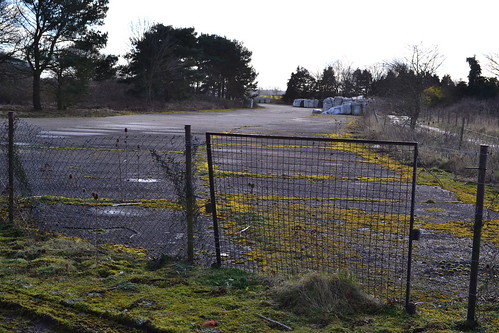
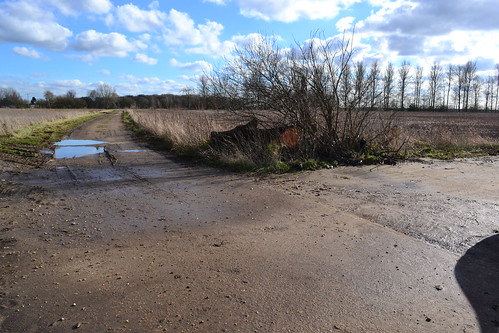
The wide open expanses reveal little of its former life, the travesties , the bravery nor even the mundane hustle and bustle of a busy fighter airfield.

Steeple Morden, 11 May 1945*1.
Construction of Steeple Morden began in 1939 with its opening the following year. Initially, a satellite for nearby RAF Bassingbourn, its early existence would be fairly low-key, housing Wellington MK.1s of 11 Operational Training Unit (OTU) who were based at nearby RAF Bassingbourn. 11 OTU as a training flight, used the airfield primarily for navigation, landing and other training operations. This wasn’t to say that Steeple Morden was to be all quiet though. The first and probably most talked about event of this time, was the mistaken landing by a Junkers Ju 88 after the crew became disoriented following a raid in the midlands. The aircraft crashed as it landed and was written off, but enough of it was salvageable to be used for assessment purposes. Shortly after this, at least two attacks occurred by the Luftwaffe rendering a number of Wellingtons damaged. Whilst some damage was inflicted upon the airfield, little overall disruption occurred.
Being a training unit, accidents were inevitable. Following a tragedy filled inception, the OTUs generally were to lose a number of crews or aircraft through lack of experience or mechanical failures. 11 OTU was no exception. On April 5th 1941 Wellington L4216 careered off the flare path causing its undercarriage to collapse. Luckily no one was injured in this instance, but it would set the scene for further tragic incidents. Wellington L4302 stalled on the night of 18th April, killing both pilots as the aircraft plunged into the ground at Abington Pigotts and on 8th June 1941, Wellington Ic, R1728, mysteriously crashed into the sea killing all six crew members. It is believed they were bounced by enemy aircraft and shot down. Steeple Morden’s crews were not as unfortunate though as those at nearby Bassingbourn, whose loss rates were even higher, – but they would certainly not get away lightly.

The Village Sign at Steeple Morden Reflects its Aviation Links.
Following runway upgrades at Bassingbourn in the Autumn of 1941, further aircrews would find themselves based here and the pace of life would increase. During 1942 11 OTU would take part in the 1000 bomber raids over Germany, and attacks on prestige targets such as Bremen, Düsseldorf, Essen and Koln. On the night of 25th/26th June 1942, Wellington Ics DV778, ‘KJ-A’; R1078, ‘TX-Q’ and X2313, ‘KJ-L’; would all fail to return from Bremen. These high prestige targets would claim further: Australian, New Zealand, Canadian and British lives from 11 OTU.
In September 1942, Steeple Morden was handed over to the US Eighth Airforce, and 11 OTU would move on to their new base at RAF Westcott in Buckinghamshire, to carry on training activity there. Earmarked for a new bomber station, it was given the designation Station 122, and would undergo a huge structural transformation.
Three concrete runways were built, the main running NE-SW, and two secondary running E-W and NW-SE. A large concrete perimeter track linked each one with some 55 pan style hardstands, 9 blister hangars and a T2 hangar. The main dispersals were to the south-east and south-west, with the technical and administration areas to the north behind the watch office. There were seven crew sites, two further WAAF sites, two communal sites and a sick quarters, enough for over 2000 personnel. These were all situated to the north-east beyond the end of the main runway. The bomb store, capable of holding 100 tons of bombs, was to the south-east.
The first units to arrive were the: 5th, 12th, 13th and 14th Photographic Squadrons of the 3rd photographic Group, Eighth Airforce, who would remain here between 26th October and November 1942, whilst on their way to the Mediterranean Theatre of Operations and the Twelfth Air Force. Led by Colonel Elliot Roosevelt, the son of the US President, they would go on to achieve a Distinguished Unit Citation for their part in action over southern France.

P-51 Mustangs of the 355th Fighter Group break formation, ready for landing, over the ground support vehicles and control tower of Steeple Morden Airfield. *2
For a short period between the departure of the Americans and January the following year, Steeple Morden would remain calm and quiet. The next residents being a return to training and 17 OTU (RAF), bringing with them Blenhheims, who wold also only stay for a very short period before moving off again to RAF Silverstone to the west.
The sound over Steeple Morden would then change for good. In came the mighty P-47 ‘Thunderbolts’ nicknamed ‘Jugs’ of the newly formed 355th Fighter Group (FG). No longer seen as suitable for a bomber station, Steeple Morden would be designated a fighter base and this would become its sole use for the remainder of the war.
The 355th FG was made up of 354th (Sqn code WR), 357th (OS) and 358th (YF) Fighter Squadrons, having white noses with red, blue and yellow rudders respectively. Their initiation into war would be slow, lack of supplies and aircraft restricting their ability to perform operationally. With a gentle start, they covered short-range bomber escort duties and low-level sweeps over Belgium, their first operational sortie being on 14th September 1943. Subsequent escort duties though, would take them deep into the heart of Germany. Using the American 75 gallon drop tanks as a substitute for slow delivered 108 gallon British paper tanks, they could reach Germany itself and support the beleaguered bombers of the Eighth Air force all the way to the target and back – a god send to the crews of the B-17s and B-24s.
The 355th would take part in some of Europe’s fiercest air battles, covering targets such as: Berlin, Karlsruhe, Misburg and Gelsenkirchen. But for such dramatic missions, ‘kill’ rates would remain remarkably low.
With the introduction of the new P-51 ‘Mustang’ the 355th’s fortune would turn. Now turning to strafing and low-level bombing runs, they would focus their attention on destroying the Luftwaffe on the ground. They would attack German airfields and earn themselves the apt name ‘The Steeple Morden Strafers‘. A DUC would follow on April 5th 1944 for an attack in a snow storm on the Luftwaffe airfield at Oberfaffenhofen and five other military bases. The 355th claiming to have destroyed 43 aircraft, damaging a further 81 and achieving 8 ‘kills’. From here the numbers continued to climb, both kill rates and the numbers of aircraft destroyed. They had certainly earned their reputation and their name.
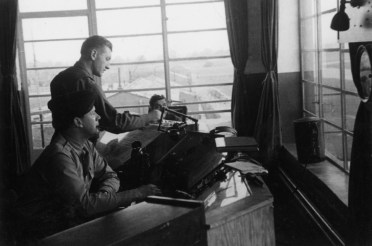
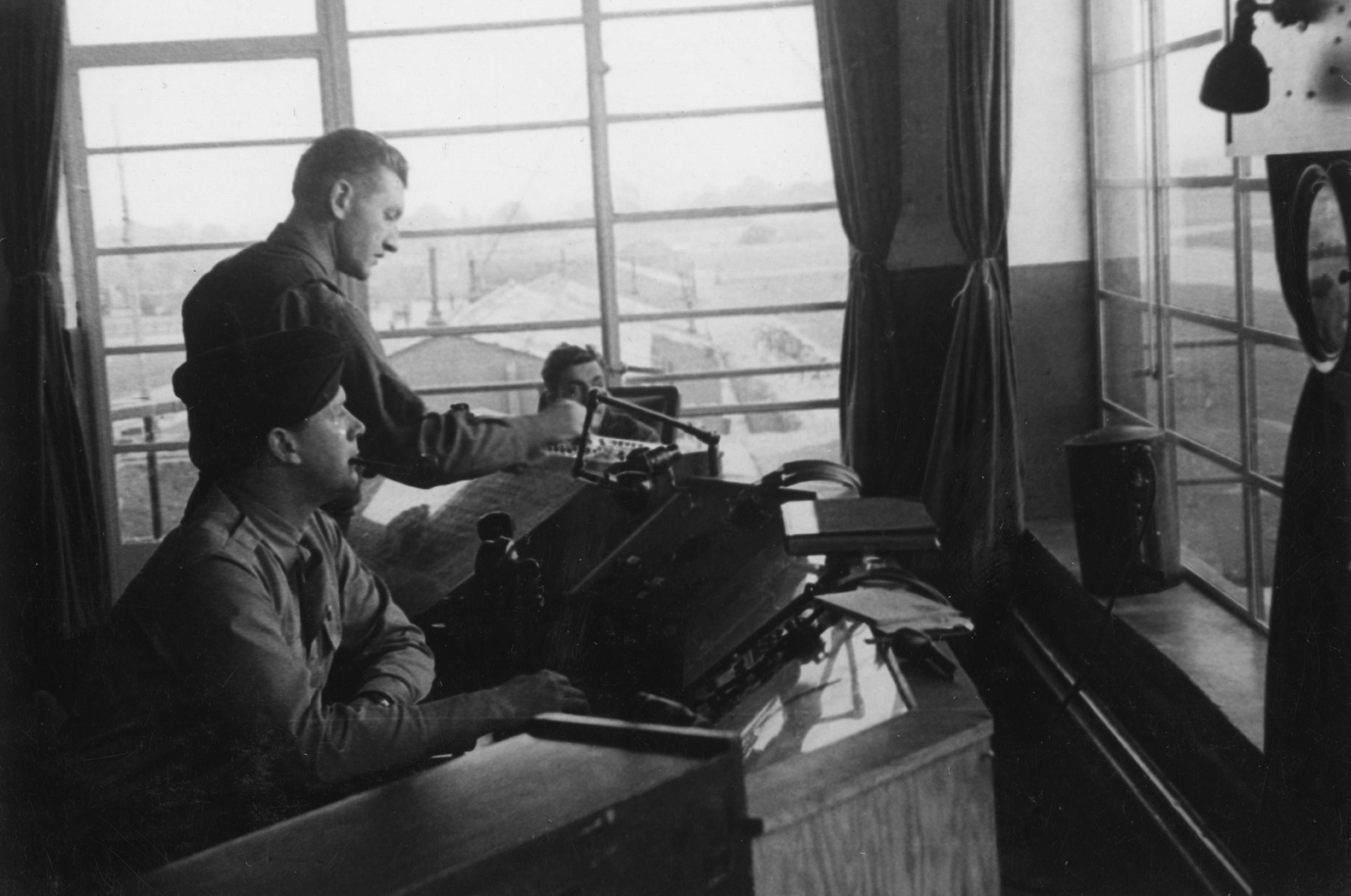
Men of the 355th Fighter Group Survey the Airfield from Inside Steeple Morden Control Tower.*3
Further operations would take the 355th as far away as Politz in Poland, a remarkable achievement for a fighter aircraft, made possible by the addition of the larger drop tanks. The Normandy landings and the St Lo breakthrough were also covered by the 355th, supporting ground troops, strafing supply lines and enemy ground forces. Confidence and determination were high and a short visit by Glenn Miller would only go to increase the joys of the 355th’s successes – morale would be good.
Then Steeple Morden would take a blow. Early on January 1st 1945, B-17 ’42-37911′, “Heat’s on“, of the 401st BS, 91st BG, RAF Bassingbourn, would crash in the dispersal at Steeple Morden killing all crew members and injuring a number of staff on the ground. At least two P51-Ds, 44-14374, ‘WR-A‘ and 44-14498, ‘YF-S‘ were destoyed*4. Such were the fortunes of war.
“We started off the New Year of 1945 with a scheduled flight to the oil refineries at Merseburg on January 1st, but diverted to Kassel when we found Merseburg clouded over. No. 911, “Heats On”, of the 401st Squadron, on her 92nd mission and flown by 1Lt Earl J. Jeffers, had an engine fail on take-off. Lt Jeffers tried to put her down on the nearby 355th Fighter Group base at Steeple Morden, the main runway of which was directly in the flight path from runway 25 at Bassingbourn. Back on the 6th of March 1944, 2Lt Walter Wildinson in No. 761, “Blue Dreams”, had made a similar emergency landing at Steeple Morden. Although the crew forgot to lower the landing gear and completely wrecked the aircraft, no one in “Blue Dreams” or on the ground was injured. But, as “Heats On” touched down, for some unknown reason she careened into a P-51 dispersal area, striking parked aircraft and exploded, killing all 9 of the crew aboard. There are all sorts of ways to die in an air war. Several of the fighter base ground crew members were seriously injured, but none was killed. For us the mission was uneventful.”*5
As the war drew to a close, the 355th continued to strafe ground targets. Their final operation taking place on 25th April 1945. Their final tally would rise to over 860 ‘kills’ with 500 being as a result of ground strafing – one of the highest of any Eighth Air Force unit. Withdrawing Germans left airfields empty and allowed the allies to move to France and eventually into Germany itself. The 355th would go on to form part of the occupying Allied force leaving Steeple Morden for Gamblingen airfield on July 3rd 1945, and then onto Schweinfurt in April 1946, itself a former target for the Eighth Air Force. Eventually in August 1946 the 355th would return to the US without any equipment to be disbanded in the following November.
The departure of the 355th left Steeple Morden quiet. The 4th FG moved in with the 334th, 335th, and 336th FS before they too moved back to the US in November 1945 and temporary disbandment. Formed around a nucleus of former RAF ‘Eagle’ Squadron members, they came here from RAF Debden with a record of success that exceeded most other units. This departure signified the end for Steeple Morden and the airfield was finally closed. The land was sold off back to its original three owners in the early 1960s and it was returned to agriculture, having the majority of its infrastructure demolished or removed.

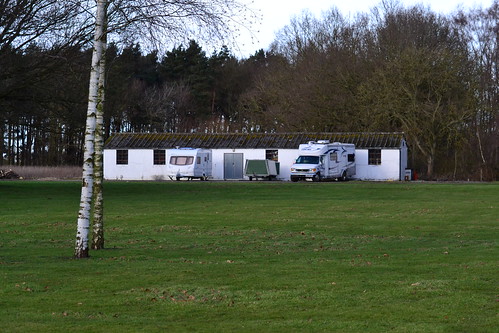
Steeple Morden Technical Site today. The Watch Office would be to the Right in This Picture.
The only significant remnants of this historic airfield, now stand high on the hill-top, a few huts, odd buildings but a remarkable and formidable memorial, that are in tune with the success and bravery of all Steeple Morden’s Allied crews.
With Steeple Morden it is best to start in the village at the village sign, which signifies the links between the community and the base. Located at the village centre, the sign depicts both an RAF Wellington and a P-51 flying low of the countryside. A timely reminder that both RAF and USAAF services operated from here. Take the main road east out of the village, and the airfield and memorial are on your right hand side. A small parking space, once a concrete road that led away from the main part of the airfield and housed general purpose huts, allows you to leave your car and view the memorial without causing a problem to the speeding traffic that uses this road.

The Impressive Memorial to the Crews Who Served at RAF Steeple Morden, both USAAF and RAF.
A grand three-part concrete memorial, its centrepiece the propeller Bose of a P-51 Mustang, overlooks the airfield. To the right and left side are the inscriptions and dedications to the crews of both the RAF and the USAAF. A polished granite stone, all that is left of the watch tower, sits beneath the memorial and three former Nissen huts remain behind giving an atmospheric feel to this site. The fields beyond now completely agriculture this little part of the airfield virtually all that remains. Small sections of concrete, show where the technical site once stood, primarily to your left, with the dispersals and main airfield to your front. The watch office (drawing 13726/40) now long gone, would have been to your left and in front. The entire technical area in which you are standing is now soil, returned to agriculture once more. There are three small huts behind the memorial, these were the crew lockers and drying room, which stood in front of crews tennis courts, suitable for a much-needed recreation break. Along the hedgerow beside the road, would have been 5 further Nissen huts housing the defence crew quarters, again they have all gone.

Crew Locker and Drying Rooms are Virtually the only buildings left.
On a warm summers day, the views from here are stunning. I can imagine a cold winter would transform this place to a freezing, inhospitable airfield with little protection from the elements. A dramatic change indeed.
If you leave here and continue east away from the village, you pass on your left the original operations block designed to drawing 228/43. It contained the crew briefing room, interrogation block and office annex. Still intact, the surrounding buildings mere piles of rubble. Continue on from here and you arrive at the village of Litlington. The church of St. Catherine’s is on your right and this is a ‘must stop’.

The Airfield Operations Room, Whilst Standing, is in Poor Condition.
Before entering the church, look around, the houses opposite, and most of those making up Litlington, are on six of the former accommodation sites. Now mainly bungalows and family homes, there is virtually nothing left visible to show that this was once a vibrant military area.
Once inside the church you will see a beautiful stained glass window that commemorates the 355th FG. A P-47 and P-51, stand aside the eagle of the U.S. Air Force, with the 355th’s sword insignia at the centre of the crest; its detail and stunning blue colours enhanced in the summer light.
A specially commissioned painting can also be seen here. Created by Spencer Trickett, it depicts a P-51D “Miss Steve” as flown by Lt. William Cullerton of the 357th FS, 355th FG, at RAF Steeple Morden. His story is a remarkable one. Shot down by ground fire on April 8th 1945, he was captured by the SS, shot and left for dead. A Jewish doctor and German farmer found him and saved his life. He was then taken to a German hospital from where he escaped and was found by advancing American forces.
Cullerton was the fourth highest scoring ace of the group and the 29th of the entire Eighth Air Force. He was awarded: a Presidential Citation; the Victory in Europe Medal; the Air Medal with Clusters; the Distinguished Flying Cross with Clusters; the Purple Hear; Silver Star with Clusters and the Distinguished Service Cross. His aircraft, “Miss Steve” was named after his girlfriend whom he later married, and is depicted flying low over the church; a landmark used by Steeple Morden crews as it stands directly in line with the main runway.

The Memorial Window at St. Catherine’s Church.
Whilst the majority of Steeple Morden has gone, there are thankfully strong community links with the Eighth and the veterans of the 355th. Whilst predominately American in ‘flavour’, the church window provides a fitting end to a fruitful trail, and what is surely one of the most prestigious memorials on any airfield today. For other photos of this and other memorials, click this link to the memorial page.
From here we go on to conclude this part of our trip with a visit to the RAF base at Fowlmere.
Notes and sources:
*1 Photo from IWM, Roger Freeman Collection, FRE2932,
*2 Photo from IWM, Roger Freeman Collection, FRE000443
*3 Photo from IWM, Roger Freeman Collection, FRE441
*4 Information from ‘Little Friends‘ website accessed 30/10/15
*5 Extract from “Mary Ruth Memories of Mobile…We Still Remember” Ch1- Another Time, Another Place–Lady Lois, Little Jean, published on 91st Bomb Group Website.






 Aviation Trails