There are many memorials and murals around the world dedicated to those who lost their lives or served on wartime airfields fighting the Nazi tyranny. In the UK these amount to hundreds if not thousands, and every now and again, one springs up and looks stunning.
At Conington, the former RAF Glatton, now a training airfield which utilises one of the three original runways, is one such mural, dedicated to those of the 457th Bomb Group who served with and flew missions from the airfield between February 21st, 1944, until April 20th, 1945.
Glatton airfield was built in the last months of 1942, by the 809th and 862nd Engineer Battalion (Aviation) of the U.S. Army, as a class ‘A’ airfield, and would be of a standard size and shape catering for some 3,000 men and women of mixed rank.
The only units to use the airfield were the four bomb squadrons: the 748th, 749th, 750th, and 751st Bomb Squadrons of the 457th Bomb Group, 94th Combat Bombardment Wing of the 1st Bombardment Division. Flying B-17s, they would take part in some of the most horrific battles of the air war, losing some 729 personnel as either killed, missing or taken prisoner, dropping just short of 17,000 tons of bombs in 237 missions.
After training at Rapid City Airfield in South Dakota, the 457th would enter the war with a real baptism of fire. On Monday 21st February 1944, the combined forces of the USAAF and the RAF were involved in the ‘Big Week‘ campaign. Officially known as Operation ‘Argument‘, it was designed to smash the German aircraft industry in one fell swoop. For an entire week the allies pounded the industrial regions of the Rhine, as one of the war’s biggest joint operations, it didn’t nevertheless prove to be as definitive as planned.
They would attack ball bearing plants, aircraft factories and oil refineries. Helped prepare the way for the invasion and took part in Mission 311, on April 22nd 1944, a mission that became famous for the operation in which US forces lost more aircraft to enemy intruders than at any other time in the war.
They would also attack coastal defences, railways, fuel depots took part in the attacks at St. Lo.
Many special visitors would also be seen at Glatton airfield, including in March 1944, YB-29 #41-36963 ‘Hobo Queen‘*8 which took off from Salina Airbase in Kansas piloted by Colonel Frank Cook, as part of a plan to ferry B-29s to China to bomb Japan from airfields there.
On April 20th 1945, the 457th flew their final operational mission, attacking the marshalling yards at Seddin, to the south of Berlin. With the end of the war just around the corner there was little resistance from either ground forces or the Luftwaffe, none of the 457th aircraft taking hits or suffering any damage, it was virtually a ‘milk run’.
Following VE day, the 457th flew POWs back from Europe to England, then with no further action to undertake, the airfield was handed back to the RAF’s No. 3 Group under the control of Bomber Command operating both the Avro Lancaster and Consolidated B-24 Liberators flying out to the Middle East.
By June the war for the 457th was over. The men and machines were transferred back to the United States with the aircraft leaving Glatton between May 19th and 23rd, and the ground echelons sailing on the Queen Elizabeth from Gourock in Scotland, at the end of June. After arriving at New York there was 30 days rest before the men assembled at Sioux Falls. Here the axe fell and the 457th was no more, the four squadrons being disbanded for good and the Group removed from the Air Forces inventory.
Glatton itself was eventually closed and the site was then sold off in 1948, mostly returning to agriculture.
Since then, a training company has taken over part of the airfield, T6 Harvard Ltd, a small light training company, have operated out of Glatton since 2021 providing flying training for pilots on a variety of aircraft including both Chipmunks and Harvard aircraft.
On the side of one of their buildings is a mural, painted by Nathan Murdock, a Peterborough artist, who created the design as a commission by the company owner Julie Churchill, and depicts a Lockheed/Vega B-17G-70-VE Fortress, #44-8557 of 748th Bombardment Squadron on its 234th mission, April 18, 1945. On board that day and depicted in the painting are: Roy Truba; Craig K Winters; Joseph Taylor; William Thistle; Luther Smith; Louis Domato; John H Taylor; John Miller and Harvey Henkel.
This crew was the last 457th crew to sustain a loss in the war when the aircraft was hit by flak over the marshalling yards in Freising on April 18th, two days before their last mission. Following the strike, the crew safely parachuted from the damaged plane, but Sgt. John T. Miller, the engineer, was killed. The rest of the crew landed safely but were soon captured and taken prisoner by the Germans. All were liberated by allied forces ten days later.
The mural was completed and then dedicated on August 19th, 2021 by the U.S. Air Force Col. Abe Jackson, EUCOM JAC commander, who said “Today symbolises an opportunity for us to recognise the significant contributions of those Airmen who came before us,”*1
The mural can be easily seen behind the clubhouse, which also has a display of photographs and memorabilia relating to the 457th and their time here at Glatton. It is a stunning piece of art work, not least of all becasue it is painted onto corregated metal, and is well worth a visit if you are in the area.
The mural depicting the crew and B-17 #44-8557 can be seen behind the clubhouse.
457th Bomb Group crew in 1945. Back row left to right: Roy Truba (Bombardier), Craig K Winters (Navigator), Joseph Taylor (Co-Pilot) and William Thistle (Pilot). Front row left to right: Luther Smith (Tail Gunner), Louis Domato (Radio Operator), John H Taylor (Ball Turret Gunner), John Miller (Flight Engineer) and Harvey Henkel (Right Waist Gunner). (Names taken from an original photo on the American Air Museum website).
In Part 3, we saw how Hunsdon and gone through various squadrons, operating the ill fated Turbinlite system which was soon withdrawn, and onto the arrival of the Mosquito, a deadly aircraft that could out run every German aircraft at its introduction. It was now time to bite, and the bite would come directly at the heart of the Gestapo.
In one of the war’s most famous attacks, so many questions would be asked, but answers would be short-coming and the truth may never come out.
The new wing, previously formed at Sculthorpe, would consist of the three multinational squadrons, a ‘British’, Australian and New Zealand unit, and all would be based at Hunsdon as part of the RAF’s Second Tactical Air Force (2TAF) designed to support troops in the forthcoming invasion.
Group Captain P C “Pick” Pickard (centre), Commander No. 140 Wing, flanked by Wing Commander I G E “Daddy” Dale, Commanding Officer of No. 21 Squadron RAF (to Pickard’s right), and Wing Commander A G “Willie” Wilson, Commanding Officer of No. 487 Squadron RNZAF, visit No. 464 Squadron RAAF at Hunsdon, prior to a daylight raid against flying-bomb sites in the Pas-de-Calais. 464’s Mosquitoes (FB Mk VIs) have been loaded with 250-lb MC bombs for the operation: HX913 ‘SB-N’ can be seen in the background (@IWM HU 81335).
Between 1944 and 1945, 140 Wing would carry out many daring low-level bombing raids against V weapons targets, along with a key Gestapo building and a prison in occupied Europe. These particular raids were designed to both free captive resistance fighters and destroy important Gestapo documents. Operation Carthage took place in Denmark and occurred whilst the wing was based at RAF Fersfield in 1945, but the first, Ramrod 564 or ‘Operation Jericho’ as it has since become known, took place whilst they were based here at Hunsdon in early 1944.
There is a lot of speculation around Ramrod 564, many of the official records are missing, inaccurate or even vague. The operational record books for the four squadrons involved (three Mosquito and a Typhoon) are recorded as ‘secret’ and contain no details other than aircraft, times and dates.
However, we do know that the Operation, formulated by Air Vice Marshal Basil Embry, would be critical, even the amount of explosive itself had fine limits. Time was also of the essence, as several prisoners were thought to be destined for execution and so a time limit was placed on when it needed to be done by. The exact time of day was also critical, they needed as many guards to be in one place as possible, and the prisoners needed to be safely gathered together out of harms way. So, a time of 12:00 pm precisely on a date between 10th and 19th February was chosen, as both the guards and prisoners would be having lunch at this time. In the attack, six Mosquitoes would breach the outer wall in two places, whilst a further six would bomb the main prison buildings allowing the prisoners to escape whilst killing as many guards as possible.
Embry elected himself to lead the attack, but this was blocked by those higher up, As a result, and much against his wishes, Embry therefore had to choose a successor. Group Captain Percy C. Pickard (D.S.O. and two bars, D.F.C.) was chosen, but even though he was known as an expert pilot and leader, Embry was not convinced of Pickard’s ability to complete the job at such low level. Despite his reservations though, Embry duly informed Pickard of the decision and preparations for the operation began in earnest.
On February 18th that year, a day after the initial planned attack and in extremely poor weather, 19 Mosquitoes including a photo reconnaissance MK.VI (from the Operational Film Production Unit (OFPU) for propaganda purposes), took off to attack, breech and destroy the walls and main building of the Amiens prison. A famously brave act, it resulted in the death of 3 crew members; Gp. Capt. Percy C. Pickard, and Flt. Lt. John A. Broadley, (RNZAF), both in Mosquito HX922, ‘EG-F’ and Flt. Lt. Richard W. Samson, (RNZAF) in Mosquito MM404 ‘SB-T’. Samson’s pilot, Sqn. Ldr. A. I. McRitchie survived his crash and was taken as a prisoner of war. Two Typhoons from 198 Sqn escorting the Mosquitoes are also thought to have failed to return (the ORBs don’t confirm this). Considered a success at the time, evidence has since come to light to suggest that the operation was ‘unnecessary’, and may have failed to achieve anything more than a successful PR role (see end note). *1
(A better quality version is available on the Pathe News website.)
All that aside, the raid took place at very low level and in poor weather, with bombs dropped against the wall with delayed fuses. There was little resistance on the flight in and Typhoons provided higher cover when it was needed.
The route would take the Mosquitoes from Hunsdon to Littlehampton – then via appropriate lattice to Tocqueville – Senarpont – Bourdon – then one mile South Doullens – Bouzincourt – two miles west-south-west to Albert – Target – Turn right – St. Saveur – Senarpont – Tocqueville – Hastings and back to Hunsdon.
During the flight out, four Mosquitoes and three Typhoons of 198 Sqn became lost in swirling snow and were forced to turn back as they had now lost contact with their main formations. The remaining crews flew on, but whilst over France a fifth Mosquito, flown by Flt. B. Hanafin, suffered engine problems and was also forced to turn back. On his return journey his was attacked by Flak from which he was seriously injured. Helped by his navigator the two were able to land back at RAF Ford where he was given medical treatment for his injuries.
Just three minutes behind schedule, the first wave of three aircraft followed the main road toward the prison’s eastern wall at tree top height. The second wave would attack the northern wall. Wg. Cdr. I. Smith 487 Sqn went in first dropping the bombs with 11 second fuses against the wall.
The third and fourth waves attacked the south-eastern main building and north-western end respectively. Chaos then ensued inside the prison, as over running bombs had caused some damage inside and some prisoners were injured or struggled to escape.
Noting now that the walls and prison had been breached, the signal to abort was issued over the VHF radio probably by both Pickard and the OFPU Mosquito flown by Flt. Wickham (both the code word “Red, Red, Red” and who sent it are also disputed) instructing the four aircraft of the 21 Sqn Flight not to bomb. The message was heard by the flight, when they were between 2 and 4 miles out from the target, and so returned to base without dropping their payload.
During all this time, FW.190s continued to swarm and various dogfights took place between them and the Typhoons, but not before they had attacked some of the fleeing Mosquitoes who also returned fire.
It is unclear at what point in the attack that Pickard was shot down, but a Focke Wulf 190 flown by the ace Feldwebel Wilhelm Mayer, severed his tail sending his aircraft to the ground near to Saint Gratien. The resultant crash killing both occupants.
The story goes that Pickard had left his dog ‘Ming’ at RAF Sculthorpe, their previous airfield, to be looked after whilst he was away. On the day he was shot down, 18th February 1944, the dog fell gravely ill. Pickard’s wife, Dorothy, went to get him and sensed, that after seeing the state of the animal, that Pickard had been killed . It took months for Ming to recover, and some years later whilst living in Rhodesia, Ming went outside, looked up to the sky as he always did when Pickard was flying, heard a whistle, collapsed and died.*6
Of the 700 prisoners detained inside the prison that day, 258 of them escaped,102 were killed and 74 were wounded*7, but the success remained secret from the public for a further eight months. With so much speculation surrounding the attack, it will no doubt remain one of the mysteries of war, but it was without doubt, an incredibly brave and daring mission that cost the lives of three superb young airmen.
A podcast using eyewitness accounts from the Imperial war museum can be heard through their website.
The Amiens raid was not the only daring low level raid carried out by the wing whilst at Hunsdon however. Airfields along with the Hazmeyer electrical equipment factory at Hengels in Belgium, were also attacked at low level. On this particular operation Mosquito MM482 was hit by intense flak setting the starboard engine on fire. As a result, the aircraft flown by Canadian Sqn. Ldr. A. W. Sugden with navigator Fl. Off. A. Bridger, was lost and both men were listed as missing. Having been with the squadron since 1942 they were considered ‘old timers’ by the others and were sorely missed.
The three squadrons of 140 Wing would soon depart Hunsdon though, leaving the joy of success and the turmoil of a thousand questions behind them. 464 went first on March 25th whilst 21 and 487 Sqns would both leave mid April, both moving to RAF Gravesend in Kent.
However, a month before the wing moved away, another Mosquito squadron would move in temporarily, meaning the airfield was awash with the aircraft of varying types. 409 (RCAF) Sqn’s time would be short, remaining here for just over a month before departing mid May, but they would return in June that same year staying for a further two months. Their final departure on the 25th August 1944, would end their association with Hunsdon for good, a move that took them to the continent and forward bases across the low countries.
Between June and the end of 1944, no less than six squadrons would come and go, most of them moving to the continent as the allied advanced progressed toward Germany. Each of these units would bring further Mosquitoes with them, with marks ranging from the MK.II and VI (418 Sqn); to the XIII with 29, 264 and 48 Squadrons, on to the XXX with 219 and 151 squadrons.
The longest to stay of these six units would be the first, 29 Squadron. Formed in 1915, they have operated almost continuously ever since, with just a short break between the wars and some reformation post war. Today they are based at Coningsby in Lincolnshire and are the southern most QRA Squadron currently flying Typhoons. They were in 1987, the first operational squadron to be equipped with the Tornado F3.
An air raid shelter now exposed.
At Hunsdon in 1944 though, the move would come as a surprise and with some reservations, but once here, it was considered to be an ‘improvement’ on West Malling. 29 Squadron would fly the NF. XIII Mosquito, arriving here on June 19th that year. The NF.XIII was the first variant night fighter to have the strengthened wing of the FB.VI, with increased fuel load and Merlin 23 engines. One such example, HK428 ‘RO-K’built at Leavesden, joined 29 Sqn at RAF Ford in early 1944.
On October 24th that year, during a flight test at Hunsdon, the aircraft suffered an overheating starboard engine and inactive flaps whilst in poor visibility. As a result the aircraft overshot the runway and crashed into a hedge causing the starboard undercarriage to collapse further damaging the aircraft. HK428 was subsequently repaired and passed to the Gunnery School at Catfoss in early 1945. It was eventually one of many that met the scrap man’s axe in 1946.*4
The Squadron would carry out patrols and intruder operations and whilst many of these were ‘uneventful’, several enemy aircraft were shot down including both Ju. 88s and Me. 110s. The last months of the war though were not all plane sailing. On July 1st, an accident during a flying test resulted in the loss of two good airmen and friends, Flt. Lt. John Barry and Fly. Off. Guy Hopkins. A second Mosquito was hit by light flak at 500 feet on the 5th. Flying home on one engine, the aircraft made and emergency landing at RAF Ford, but somersaulted on the ground writing the aircraft off. Thankfully, and remarkably, in this instance neither crewman sustained any injury.
As the allies advanced more intruder missions took place. On some days the squadron was “let loose” to pick and locate their own targets, many choosing road or rail stock, damaging many trains as a result. The rest of the year and into 1945 would be the same. Intruder missions, ‘Flower‘ Operations (attacks against German night fighters at their airfield) brought some results. Then almost as quickly as they arrived they were given notice to move once more, and a huge party on the night of February 22nd 1945 preceded their departure to Colerne
Two other units arrived at Hunsdon after 29 Sqn, those of 418 (25th August, 1944) and 219 (29th August 1944) Squadrons. With all these Mosquitoes there must have been little room for any more aircraft as Hunsdon quickly filled up with the type. 219 Sqn would quickly move out though, leaving what little space there was for a new unit, 488 Squadron who moved in the day prior to 219’s departure. The last of this group of units to arrive that year was 151 Squadron. All but 151 transferred to the various airfields on the continent whilst 151 remained in the UK, leaving Hunsdon on March 1st 1945. It had certainly been a busy period at this Hertfordshire airfield.
1945 would be a reflection of the hectic movements of 1944. However, it would also bring a greater variety of aircraft as detachments arrived posted away from their main unit. It would also bring a slight change of role, as the range of twin engined Mosquitoes departed, single engined fighters came in.
The first would be a small detachment of 285 Sqn Hurricanes who resided here between January and June, followed in the beginning of March by 154 Sqn with Mustangs and Spitfires. 154 Sqn time here would be very short though, sadly ending their days here, just eighteen days later.
Almost at the same time, these units would be joined by 501 Sqn and 611 Sqn, 501 also ending their days of active duty here with their Tempest Vs, whilst 611 would swap their Spitfire VII for Mustang IVs before moving off to Peterhead and disbandment also. Both these units would however rise again the following year being reborn as the jet age dawned, to live on for a few more years.
442 Sqn, another Canadian unit, ended the flurry of units arriving in March that year when they brought Spitfire IXEs back for a spell from the continent, being stationed recently at B80 (Volkel) and B88 (Heesch), they had seen action first hand before arriving here. They soon replaced these aircraft with Mustangs though, moving on to RAF Digby in May as the war ended. 442 were also a short lived squadron, only being formed at Digby in February 1944. Their operational life had lasted just eighteen months.
April and May saw the last of the front line squadrons to reside at Hunsdon. The closing days of April saw 441 with Spitfires and 287 Sqn with a detachment of Tempests Vs. Both these units would move on elsewhere before they too saw the curtain fall, and their days as operational units cease. Like its sister squadron, 441 had only been operational for eighteen months, being formed in unison. In fact, their entire operational record matched to the day, even when they moved abroad.
Hunsdon then closed to operational activity, being used to receive returning men and materials up until mid 1946 whereupon it was placed into Care and Maintenance and allowed to run down. The tower was demolished very soon after the war ended, and the site was returned to agriculture. In total, Hunsdon’s crews accounted for over 220 enemy aircraft destroyed or damaged – a remarkable feat in any airfield’s chapter.
One of the original dispersal pans.
Today Hunsdon remains one of the more accessible airfields of Britain. A number of public footpaths criss-cross its boundaries allowing unprecedented access to it. It is still an active site, allbeit much reduced – a small microlight operation exists here and has done since 1997. Using three small grass runways it has brought life, in albeit a small part, back to this old wartime airfield.
The perimeter track and narrow sections of all its runways still exist today and can be walked using a variety of footpaths. Along these paths and off to the sides can still be seen examples of runway lighting, drainage, inspection covers and even a small number of buildings.
The parachute store is one of the most notable of these, used by the farmer for storage, it is located at the north-western side of the airfield near to the former admins site and where the tower would have stood before being torn down. Also near here is the fire tender shed, now home to the local shooting club, a number of latrines \ wash blocks can also be found hidden amongst the trees to the south-east. The battle headquarters rests nestled amongst the crops still watching over the site, and small defence trenches and shelters can be found to the north and again these are visible from public footpaths. A number of airfield defences buildings in the form of pill boxes and an Oakington style pillbox can also be found around the site.
Many of these examples are buried amongst the undergrowth and are most easily seen in winter when the thorns and vegetation are at their lowest. Careful searching will also reveal a number of minor archaeological examples but again best in the winter when crops and weeds are minimal.
To the northern side of the airfield, next to where the microlight site is based, is a memorial to the crews of all nationalities who were based here all those years ago. Formed from a propeller boss of a Mosquito, it was donated to by the former Mosquito Museum (now de Havilland Aircraft Museum), it stands proud looking down what was the length of the secondary runway. A further memorial plaque can also be found on the wall of the village hall.
Hunsdon is a small site with a big history. It played a large part in trials of new innovations, carried out night intruder missions, and attacked with daring at low-level, at the very heart of the Gestapo. Hunsdon and its crews proudly earned their place in the annals of world history.
After walking Hunsdon we travel the short distance to the north-east to the outskirts of Bishop Stortford and a little known about airfield that is all but gone. We go to RAF Sawbridgeworth.
Further Reading and Sources (RAF Hunsdon)
*1 – The Amiens raid is one that has become embedded in history and is beyond doubt an incredible and daring low-level raid that succeeded in its aim. However, official records seem to have many errors, anomalies or missing details that it is very difficult to ascertain the accuracy of these historical ‘facts’.
The ORBs for each of the four squadrons give no details other than an ‘operation to France’, some crew names and aircraft numbers. There is no record of the use of the word ‘Jericho‘ but there are two sides to this story.
Some authors including Rowland White “Mosquito” and John Laffin “Raiders – Great Exploits of the Second World War“, both cite Basil Embry as the creator of the name ‘Jericho‘ before the missions took place, whilst Robert Lyman “The Jail Busters” cites a French film, made in 1946, as the author of creator of the name. Some believe the name was created by various media outlets since then whilst others say that Embry created the name after the operation had been carried out. It is however, widely considered that it was a post-war name as the original operation was ‘Ramrod 564‘ and none of the ORBs use the name ‘Jericho‘. To further add mystery, the use of the title ‘Renovate‘ has also cited, but records in the National Archives show this as the secret VHF code word to be used by aircraft on the operation and not the Operation title.
The name aside, and more recently, one of the French Resistance fighters revealed his doubts about the operation, and considers that it may have been nothing more than a propaganda operation or a diversionary attack linked to D-Day. One book (one amongst many) on the subject has been written by author Simon Parry and historian Dr Jean-Pierre Ducellier entitled ‘The Amiens Raid – Secrets Revealed‘ and is published by Red Kite. It goes into the details of the raid and possible reasons behind it.
There have also been theories that it was an MI6 operation but due to the nature and secrecy of the mission, little evidence is publicly available to substantiate this.
Of those who lost their lives, both Pickard and Broadley are buried in St. Pierre Cemetery, Amiens, whilst Sampson is buried in the Poix-de-Picardie cemetery in the Somme region.
*2 There is further information and personal stories about Tubinlite operations on RAF 23 Squadron, and they can be found on the 23 Squadron Blog site (1)and (2). All ten were raised to squadron status on 2nd September 1942, but due to administration problems, five were not established until 8th September 1942)
*3 McCloskey, K., “Airwork – A History“. The History Press, 2013 (An excellent account of Airworks and their part in the Turbinlite project).
*4 Thirsk, I., “de Havilland Mosquito – an Illustrated Story Vol 2” 2006, Crecy Publishing Limited.
National Archives: AIR 27/704/9; AIR 27/2001/1 – 19; AIR 27/33/21; AIR 27/704/39; AIR 27/704/11; AIR 27/1045/27; AIR 27/1045/33; AIR 27/1045/37; AIR 27/1802/55; AIR 27/1802/57; AIR 27/342/11
In Part 2, we saw how the Turbinlite system failed to produce what was expected of it, and eventually the system was scrapped and the squadrons disbanded. Those left at Hunsdon continued the night operations but soon they too would depart this Hertfordshire airfield leaving room for an influx of Mosquitoes – de Havilland’s ‘Wooden Wonder’.
On May 5th 1943, 85 Sqn would officially receive its squadron badge, although it was a former World War One Squadron, it had never been officially presented with it, and time had caught up. With the whole squadron lined up outside the Bellman Hangar, A.O.C. 11 Group, Air Vice Marshall H.W. Saunders, C.B.E., M.C., D.F.C., M.M., gave a speech highlighting how well the squadron had performed; shooting down ninety enemy aircraft in France, fifty in the Battle of Britain and a further twenty in night operations whilst at Hunsdon. He went on to highlight the number of decorations its crews had been awarded: four D.S.Os; seventeen D.F.Cs; three D.F.Ms, and Bars to both the D.F.Cs. and D.F.Ms. He then presented the station badge to the Commanding Officer Wing Commander Cunningham. At this point it was announced that the squadron would be moving south to West Malling in Kent and he wished the squadron good luck.
With just a few more days left before departure, operations continued and on the 8th, three more JU. 88s were spotted but intercepted by Spitfires from other squadrons before the Mosquitoes could get to them. It was not to be the glorious ending 85 Sqn had hoped for.
After a farewell dinner for both 85 and 3 squadrons in the officer’s mess, preparations began for the move. Three Harrows arrived to collect personal belongings and equipment, and then, on the 13th, 85 Squadron departed, all ten aircrews performing individual flypasts over the watch office to show their respect and thanks to those who had worked along side them, it was a sad day for Hunsdon. The Harrows once loaded, departed shortly after with the main ground party departing by train soon after that.
The dispersals and accommodation did not remain vacant for long though, they were immediately taken over by a new squadron, 157 Squadron along with their servicing wing 3081 Servicing Echelon.
The new squadron was also a Mosquito Squadron, transferring in from Bradwell Bay. Night patrols had been the order of the day and these continued, and even as the squadron moved into their new home a Do. 17 was intercepted and shot down near Felixstowe.
During the day, personnel took to painting and refurbishing the dispersals, whilst at night patrols continued on, an F.W. 190 falling victim to Flt. Lt. H. Tappin DFC and Fly. Off. I. Thomas in Mosquito S.727
The remainder of the month and into June involved further night patrols, many being cancelled due to poor weather, whilst on the ground yet more decorating took place, with all crews taking part.
June then saw the temporary arrival of 515 Sqn with Defiants moving in from Heston. On June 1st, all aircraft had been received at Hunsdon with the rear party arriving later by road. As soon as 11 Group Headquarters had been notified of the squadron’s readiness, the order came though to move sections to forward bases ready for night operations. Eight aircraft immediately took off from Hunsdon but poor weather curtailed any further flights and they all returned the next day without taking part. This routine pretty much set the scene the remainder of the month. Shortly after arriving here 515 would start to accept the Beaufighter, a remarkable step up from the Defiant and an aircraft they would take when they left Hunsdon for Little Snoring in December that year.
Then in July, a new version Mosquito began to arrive with 157 Sqn – the MK.VI. ‘Ranger‘ patrols became a priority, attacking freight locos across the enemy network. On the 19th August, the Sqn claimed their 100th victim, a landmark number that was acknowledged by Sector Commander Group Captain Harris.
The next few months were a mix of sporadic contacts but few engagements, ‘uneventful’ patrols and cancelled flights due to poor weather. The arrival of a Lancaster out of fuel in early October, a Wellington damaged by flak and a lost B-17 possibly heightening the excitement on the airfield. A large portion of this time was taken with sports including shooting until finally ‘discouraged’ by local landlords.
Remains of the latrines and drying rooms.
157 Sqn however, wouldn’t remain at Hunsdon for much longer, departing with their Mosquitoes for Predannack in November that same year. A relatively uneventful stay at Hunsdon had finally come to an end.
Movements into and out of Hunsdon would continue in November, with the arrival of yet another Mosquito unit, 410 (Royal Canadian Air Force) Squadron. The unit would stay here on three separate occasions throughout 1943 and 1944, each time being for a short period only before moving on again elsewhere. Each stay would bring a new model Mosquito: MK. VI, MK.XIII, and finally the MK.XXX before moving off to the continent in 1944 and their eventual disbandment in June 1945. Whilst the squadron was primarily Canadian (seventy-two personnel), it also consisted of sixteen RAF personnel and four Americans, making it a multinational mix of aircrew, officers and ground crews.
It was whilst at their previous station, West Malling, that they would make the first ‘kill’ of 11 Group, when on the 5th November, a Mosquito piloted by Flg. Off. Green and his navigator Pt. Off. Goodhew, intercepted an Me. 410 and shot it down approximately 15 miles from Dungeoness. Three days later they would arrive at Hunsdon, where a turn in the weather prevented any further kills for the unit for the remainder of the month.
Training flights were managed on the odd occasion, intercepting friendly bombers with camera guns along with several Mahmoud exercises. On the 26th November tragedy struck when on one of these flights Flg. Off. J.J. Blanchfield in Mosquito DD669 struck the target Mosquito DZ259 flown by W.Off. C. James and his navigator Flt. Sgt. T. Levine. Both crews reported that they were bailing out, but both Blanchfield and his navigator Flg. Off. K. Cox, were killed in the accident.
The squadron’s remaining time at Hunsdon was much similar, training flights, the odd operational scramble and bad weather persisted to the end of the year. But in December, one Mosquito flown by Flg. Off. “Joe” Schultz and Flg. Off. Williams manged to shoot down no less than three Dornier 217s in an epic air battle in which they themselves narrowly missed being the victim.
After vectoring onto the initial target, Schultz managed to shoot it down even though the Dornier tried to evade the attack by both attempting to fly into cloud and carrying out violent evasive movements. After dispatching this aircraft, Schultz pursued a second aircraft which exploded some 50 feet ahead of him, causing his own aircraft to jolt as it passed through the debris. A third Dornier gave a more difficult challenge, and even though both its engines were hit, the crew continued to return fire whilst the pilot made aggressive and violent defensive movements. The Mosquito in return, had its instruments put out of action and both engines hit, causing a fire in one. Luckily, this extinguished itself, but the second engine then failed altogether. Schultz managed to safely land the aircraft at Bradwell Bay using the single damaged engine, a remarkable feat considering the damage to the Mosquito and its components.
During the month, yet another new version Mosquito began to arrive at the squadron in addition to those already on station. By the end of the December, when they finally departed Hunsdon for Castle Camps, they had on their books: two Mosquito MK.IIs, one MK.III, one XII and seventeen XIIIs. A squadron Magister was also registered, but the Oxford they had, had struck a hill severely injuring the pilot, Flt. Lt. M.A. Cybulski DFC at Winter Hill, Belmont near Bolton. Flt. Lt. Cybulski had completed his tour of duty and was transferring to 9 Group when the accident happened.
New years eve 1944 would undoubtedly bring the most significant of the RAF units to Hunsdon and the one for which it is most famous. The arrival of 21 Sqn, 464 Sqn and 487 Sqn combined together to form 140 Wing, would see a number of dare-devil raids against German targets which, like the dams raid of 617 Sqn, would be forever discussed by historians.
The full story of RAF Hunsdon can be read in Trail 25.
In Trail 25 we head to the south once more, to the west of Harlow, and to two wartime airfields; one of which played a major part in striking a blow at the very heart of the Nazi regime.
The county of Hertfordshire is an area popular with commuters to both London and the technological towns of Harlow and Bishops Stortford. Being north of London, it is also close to Stansted airport, itself an ex World War II airfield. Hertfordshire has some beautiful countryside, delightful little villages and quaint country pubs. It is also an area with a wealth of history.
Our first stop is a small airfield nestled in the heart of this beautiful countryside. It is situated north-east of the village that gives it its name, RAF Hunsdon.
RAF Hunsdon
The Hunsdon Village sign reflects its history and links to the RAF.
Even before Hunsdon was built, it is referenced in some areas that the site was being used for a detachment of 107 Squadron Blenheims, then based at RAF Wattisham and later Leuchars. This may have been part of the ‘Scatter’ directive given to squadrons in the immediate period before war was officially declared, and was thought to occur between May 1939 and March 1941. However, there are no references to this in the official squadron files and so this action is doubted. However, if this were the case, then it would certainly suggest an early use of the site before it was developed into a fully operational airfield, and it may have been an indication that an airfield was on its way in the near future.
The site was earmarked for development in 1940, with construction occurring over the period October 1940 to March 1941, after which the first squadron moved in. It was built by various construction companies and incorporated two asphalt runways; the main running east-west reaching 1,750 yards in length after its later extension, with a second running north-east to south-west extended to 1,450 yards; both were built to the standard 50 yard width. Aircraft dispersals, maintenance and storage buildings consisted of eighteen ‘twin-engined’ hardstands; sixteen blister hangars (a mix of ‘Over’ (4) and ‘Extra Over’ (12)) and a Bellman hangar. There was also a fuel dump and accommodation buildings for up to 2,240 airmen and some 276 WAAFs, all located across eight dispersed sites.
A large number of operational units, (in excess of twenty-five) would pass through its doors throughout its relatively short life, providing Hunsdon with a multinational mixture of crews and a number of aircraft types.
The airfield itself lies within a stone’s throw of London and so its initial role was that of night fighter operations covering London and the south / east area.
The first recognised squadron to make its mark at Hunsdon was 85 Squadron on May 3rd 1941, transferring across from RAF Debden flying Defiants and Havoc MK.Is. The move across on the 3rd went smoothly with personnel and equipment being transferred across in lorries and 32 seat busses, the majority of personnel arriving later that day.
The Parachute store now holds farm machinery.
On arrival at Hunsdon, personnel of ‘A’ Flight were immediately billeted on the aerodrome close to their dispersals, whilst those of ‘B’ Flight were housed on Number 2 Site, located about a mile or so from the main airfield area. Personnel of both the Headquarters Flight and the servicing Echelon were billeted even further away, about four miles in fact, at Gilstone Park. The officers meanwhile, had the better accommodation, being billeted in a house called ‘Boningtons’ believed to be the former home of “Mr. Brooke Bond” the family of the P.G. Tea empire. It is thought that the family purchased the house in 1940, moving out of their London residency to avoid the blitz. Unfortunately, it was rather a short lived purchase as the property was requisitioned by the RAF not long after!
By the end of the 4th, all 85 Sqn personnel were in and unpacked at Hunsdon, and so night flying duties could commence straight away with patrols taking place over the Felixstowe area. Immediately, a Heinkel He.111 was vectored onto, and a skirmish took place in which both aircraft both gave and received machine gun fire. The Luftwaffe bomber came off worst though, and was last seen diving into cloud firing a white verey pistol, either as a resignation of the fight or possibly as a distress signal to any would be rescuers.
Over the next few nights further contacts were made and several Ju. 88s were either confirmed or claimed as shot down. The squadron was performing well, morale was high and all was looking good.
The night of the 13th could have been different for some though. On his return from a patrol, Fly. Off. Hemingway’s instruments failed and with little choice, he gave the order to bale out. After his operator, Sgt. Bailey, had departed the Havoc, Hemingway followed, both men landing in close proximity to each other in the grounds of Much Hadam Hall (a grade 1 listed building built in the early 1700s). Whilst both airmen were safe, Hemingway’s was not the model jump, as he came to rest in a tree in the grounds of the hall. Bailey fared little better, landing rather ungainly on a bucket not too far away. This was Hemingway’s third successful bale out of a stricken aircraft, his previous two both occurring during the Battle of Britain.
On May 17th, Wg. Cdr. Peter Townsend, now with a DSO, flew to Great Massingham, Flt. Lt. Marshall flew to Odiham to test the runway and Flt. Lt. Rabone flew to Heston from where he collected a special and secret Havoc which was to be tested by the squadron. The first flight of this new variant occurred on May 23rd, and was quickly followed by a second aircraft on the 28th, After this, they would then begin testing both aircraft as a new night flying platform.
This particular type of aircraft was the forerunner of what became known as the Turbinlite Havoc, a new design that was the brainchild of one Sidney Cotton.*3
The main runway has been reduced to a track.
With the help of William Helmore, Cotton took out two patents; GB 574970 and GB 574118, each one relating to this new idea. It would be Helmore (an Air Commodore) who would then develop the idea further turning it into what would become commonly known as the Turbinlite system.
Originally designated Air Target Illumination, Cotton’s idea was passed to the Alan Muntz Company, who in conjunction with G.E.C., developed it into what was at the time, the most powerful searchlight in the world, and one that would fit neatly into the nose of a Douglas Havoc, or Boston as it was known in the RAF.
The light was so powerful that it would require a staggering forty-eight batteries each stored in the bomb bay of the aircraft, adding an additional weight to the aircraft just short of 2,000lbs. The light was so strong (1,400 amps) that it would discharge in less than 12 seconds meaning its use was limited to short searches only.
The first full prototype Turbinlite aircraft fitted with the unit was Boston W8254 and was flown by Acting Squadron Leader A. Clouston of 1422 (Night Fighter) Flight formed at Heston on May 12th 1941. The Flight would then operate a number of these aircraft, along with several other types which included the only Turbinlite Mosquito; along with a Defiant, Wellington and Hurricane.
Heston was the home of Airwork, an aviation company set up by two ex-Cambridge students and soldiers of the great war, Sir Henry Nigel Norman and Alan Muntz. Their vision, was to create the best aerodrome near London, a dream that would cost Norman his life and Muntz to lose his son. Airwork would go through many changes during its life, taking on several Government contracts including a range of flying schools to train RAF pilots throughout the Second World War. These included RAF Digby, RAF Grangemouth, RAF Scone (Perth) and RAF Linton-on-Ouse.
Airwork would themselves modify a further four Bostons, with a further sixteen being modified by the Heston Aircraft Company. A third batch was then developed at RAF Burtonwood, giving a total of nine flights for training and ten operational squadrons comprising just short of 100 aircraft in all.
It was soon realised however, that the Bostons lacked firepower and so the company began to look at the Mosquito as a possible replacement aircraft. Only one Mosquito was modified (W4087, a Hatfield built F.II) at Heston, but this idea, unlike the Boston, failed to progress any further than the prototype stage, and no other aircraft were converted.
The Only Mosquito converted to carry the Turbinlite.*5
The Turbinlite project quickly gained pace, but the units wouldn’t be raised to squadron status until September of the following year. In preparation, ten special Havoc flights were created to train crews to operate the aircraft. The first of two, formed at Hunsdon (and the first of the ten) was 1451 (Fighter) Flight on May 22nd 1941. The Flight used several examples that included both Boston IIIs (AL469 and Z2280) and Havoc Is (AE470 and AW405). It also utilised a Cygnet and Tiger Moth for pilot training. By the end of the month, 85 Sqn had flown a total of 505 hours, 482 of them undertaken in Havocs, with 213 of these being on night flights.
On August 9th 1941, 85 Sqn were joined here at Hunsdon by 3 Sqn, one of the original three squadrons to have been formed by the Royal Flying Corp. Created on May 13th 1912, when the Air Battalion of the Royal Engineers was absorbed in to the month old Royal Flying Corps, 3 Sqn joined both 1 and 2 Squadrons as the oldest units to have operated in the RFC. As such, its history is long and very distinguished.
In Part 2 we see how the Turbinlite develops, and how, as the war goes on, the first of Mosquitoes arrive.
The full story of RAF Hunsdon can be read in Trail 25.
In Part 2, the war finally came to an end and Sculthorpe closed only to be reopened as a Very Heavy Bomber Base. Reconstruction has taken a number of years and although not fully ready, it starts to accept its new residents.
The first of the aircraft, two of Boeing’s huge B-29s, touched down at Sculthorpe on the 7th February 1949 late in the afternoon. However, six others also deployed to Sculthorpe, had to divert to RAF Lyneham due to the pilots not being able to see the runway in the bad weather. These aircraft would not arrive in Norfolk until later on, and so it was not to be the grand opening that many had wished for.
The deployment of US heavy bombers was seen by some as an extension of the US, and that Britain was becoming a ‘puppet’ of the US Government. The British Government try to make it clear to the public that this was not the case, and that these aircraft were only here on a temporary basis (90 day rotations), and that they were both ‘invited ‘ and did not have a nuclear capability. The Press on the other hand, did not see it quite so clearly.
It didn’t take long before the US 92nd Bomb Group were established at Sculthorpe. A veteran group of the Second World War, the 92nd had a prestigious history and one they would preserve and build upon. Formed of three squadrons, 325th BS, 326th BS and 327th BS, their numbers would swell staffing levels to almost 1,400, including both RAF and US personnel.
Various officials attended Sculthorpe’s many opening events, but the start of a new era was marred by a tragic mishap in late February, when an armourer, Corporal Turcell, was killed when one of the B-29’s guns he was cleaning accidentally discharged. It would unfortunately be the first of many tragedies to befall those at Sculthorpe over the coming years.*7
In March the airfield was officially opened with both the Union Flag and the Stars and Stripes being raised simultaneously. Behind the scenes however, construction work continued, with only half of the proposed six ‘Z’ blocks ready to take new residents and only sixty-two of the proposed married quarters being completed, it was far from ready.
A large part of Sculthorpe has been left to rot, piece by piece. These are the former RAF HQ and later the USAF Wing HQ.
The work carried on throughout the initial deployment and 90 days quickly passed. The 92nd’s placement at Sculthorpe soon came to an end and no sooner had they arrived then they began their journey back home to the United States. A relatively uneventful opening had come to a close.
The next of the rotations would take little time in coming. The intensity of each deployment getting greater each time, and even though the Berlin Blockade had come to an end, tensions remained very high right across Europe.
As the 92nd pulled out, a further three squadrons of B-29s began to arrive. Having already been in Japan, the three units the 343rd, 344th and 345th BS began by carrying out a number of exercises with the RAF, which included over June and July, the first multinational exercise code named “Foil“. Like many that would follow, this involved mock attacks by US and RAF bombers whilst fighters from the UK, US and Netherlands attempted to intercept them using camera guns. A successful exercise it gave rise to some interesting comparisons between the US and RAF aircraft, with many surprises in store.
As with the first deployment, the arrival of the B-29s did not all go to plan though, as on July 21st 1949, whilst transferring across from the US, one of them #44-62191 ‘suffered problems’ when its number 3 engine caught fire causing it to crash in an orchard at West Walton, 2 miles east of Wisbech in Cambridgeshire. The aircraft, a Boeing B-29A-65-BN, had a crew of twelve on board, and when it became clear that they were not going to make it, they decided to abandon the aircraft and leave it to its fate.
All twelve of the crew successfully departed the aircraft landing nearby, but in doing so, two of them sustained serious, but not thought to have been life threatening injuries after exiting. The worst, suffered by the pilot, was a possible fractured skull whilst a second crewman suffered a fractured leg; it is believed both airmen made full recoveries. The aircraft itself ultimately crashed, landing in a field east of the small Fenland market town. The remains were quickly retrieved and some parts ended up in the local Fenland and West Norfolk Aviation Museum located in Wisbech. Now sadly closed, they were transferred to the Sculthorpe Heritage Centre located at Sculthorpe.
The 90 day rotations continued unabated. The next deployment bringing two different models; firstly the 63rd BS (43rd BG) with the extended B-29 the B50A ‘Stratobomber’ along with three refuelling aircraft the KB-29M, also a modified version of the B-29 with its turrets removed and refuelling facilities added.
What was perhaps more significant with this move was that the B-29 ‘Lucky Lady II‘ was part of this group. She and her crew had completed a ninety-four hour flight non-stop around the world, being refuelled four times in the air. This achievement sent out a major message to all those would be aggressors, wherever they may be in the world, that they were not beyond the range of the US heavy bombers.
As 1949 drew to a close, one other unit, 19th BS (22nd BG), would complete its rotation at Sculthorpe replacing the 63rd in November. It too brought another version of the B-29 the RB-29, a reconnaissance version of the heavy bomber. In support of this, a further unit would arrive in December, the 23rd Reconnaissance Squadron, bringing yet more versions of the B-29 to the airfield.
Tragedy then struck again in June 1950 when an RB-29A #42-94081, took off on a routine air test and gunnery exercise. During the exercise the outer engine was hit by the aircraft’s own guns setting it on fire. The aircraft was then difficult to control and the pilot ordered the crew to bale out. As the B-29 hit the sea, three airmen, including the captain were still onboard; he failed to reach the aircraft’s dingy and sadly died as a result. Of the thirteen airmen on board seven lost their lives that day.
The watch office in a setting sun. This was ‘secretly’ demolished at short notice in March 2022.
The east/west crises continued with the war in Korea. The threat of an escalation spilling over into Europe led to a call for all US bases in Europe to be brought to full strength and further sites opened. Sculthorpe began its preparations and as the 301st BG and the 72nd Strategic Reconnaissance Squadron both departed for other UK bases, the site was left ready for the arrival of the 97th Bomb Group and their B-50Ds.
This move signalled the beginning of a huge influx of men and machinery at Sculthorpe. Anti-aircraft batteries were brought in, along with ground units to defend the site from any possible attack. A range of aircraft support units also arrived boosting staffing considerably. With just over 400 RAF personnel, 1,800 US personnel and in excess of 600 army personnel, the quantity of men and women on the base was now as high as it had been during the Second World War.
With further deployments and new, larger aircraft arriving, not only was the need for further accommodation matched by the need for larger additional hardstands for the new bombers – the B-50 and B-36 ‘Peacemaker’, but the runways had to be extended even further, and an additional 1,200 feet was added calling for yet another diversion of the local road network.
In early 1951, after some friction between the RAF and US staff on the base, Sculthorpe, like both Mildenhall and Lakenheath, was officially handed over to the US forces, and although they all retained their RAF designation, they would be operated and maintained by US personnel; a standard that applies even today. It was a move that finally ensured America had its desired firm and permanent foot hold on UK soil.
The Cold War would then take a more devious turn. The arrival of the 323rd Reconnaissance Squadron (of the 91st Strategic Reconnaissance Wing) began its 90 day rotation with RB-45C ‘Tornados’, a reconnaissance version of the B-45 four engined bomber – the first if its kind to land on British soil. After landing at RAF Manston, the 323rd moved to Sculthorpe, where it would carry out ELINT (Electronic Intelligence Gathering) and mapping operations of western Europe. This intelligence gathering was not new, but since the end of the war, it had become more clandestine and difficult due to the clamp down by the Soviets on western spies.
Sculthorpe had now entered a new world, the Soviets had developed their own atomic bomb, and using a B-29 obtained at the end of the Second World War, reversed engineered it to provide a means by which to deliver it. The West had to find out more, and aerial reconnaissance was the only viable method with which to establish the location and number of such facilities.
There then followed extensive talks between the US and British Governments regarding Soviet ‘overflights’, western aircraft flying through Soviet airspace photographing and recording Soviet ground positions, SAM sites, airfields etc. Whilst not a new tactic, it was certainly a dangerous one, and one that could lead to all out atomic war should it go wrong.
Sculthorpe’s last remaining Blister hangar in a low setting sun.
As a result of these talks, the ‘Special Duties Flight Sculthorpe’ was formed, working in conjunction with the various squadrons of the 91st Strategic Reconnaissance Wing. RAF crews consisting of two pilots and a navigator, were flown to America for a period of extensive training on the RB-45. By the end of 1951, the course was complete and they returned to Sculthorpe to continue with further training along side crews of the 91st Wing in Norfolk.
This was a British unit, led by Squadron Leader John Crampton (who replaced the initial choice Sqn. Ldr. Micky Martin of the ‘Dambusters’ fame, as he had failed a high altitude medical examination) and was designed in part, to perform deep penetration flights into Soviet airspace carrying out reconnaissance missions for Britain’s planned ‘V’ Bomber force. It would also supply the Americans with substantial information for their own tactical use.
Four RB-45Cs were converted (including one spare), flown to RAF West Raynham they were stripped of all their American markings (allowing them to deny any knowledge of such activity) before their RAF insignia were applied (The RAF would deny ever having operated these aircraft). They were then returned to Sculthorpe as British aircraft operated by British crews. The flights would be code named Operation ‘Ju-jitsu‘, and would follow the same track that the British ‘V’ bombers would take in the event of all out war.
Initially three routes were chosen, one of which took the aircraft close to Moscow; a second flew to the Baltics and the last to southern Russia. To ‘protect’ crews, they were issued with false papers and maps, and told, if caught, to explain that, rather implausibly, they had simply become incredibly lost! Failure of the mission would therefore require a high degree of gullibility on the part of the Russians.
Only two such flights were ever made, each with three aircraft; the first on 17th/18th April 1952, and the second on 28th/29th April 1954*6. The first occurred without any Soviet intervention, but they were understandably outraged and an investigation was carried out immediately.
After the first flight, the crews were congratulated by General LeMay, and the unit was then disbanded. However, it was reformed again, also at Sculthorpe, in 1954 (after a second such temporary reformation in September 1952 which was quickly disbanded again) and a second flight was made. This time the Soviets were ready for them. After having evaluated their air defence network they were far better prepared and the RAF crews were at a much greater level of danger than during their initial flights.
Whilst Soviet SAMs (Surface to Air Missiles) were impotent in that they had no guidance system, and it was thought Flak was unable to reach the high flying RB-45s, the trip would still be a dangerous one and strict radio silence was to be maintained by the crews. The flight itself turned out to be relatively uneventful, but Squadron Leader Crampton did witness Flak, and noticing that, whilst generally ineffective, it was indeed exploding at their height. Bursts were sufficiently close to convince the crews on board that a hasty return to the West was the better option, and a halt was called to the flight.
Some time after the operation, it was revealed that Soviet Mig pilots were instructed to ram the RB-45Cs as they had no suitable radar with which to track the intruders. However, no such contact was made and so thankfully the need never arose.
The unit was then again disbanded and all flights by them ceased for good. The consequences and risk of flying over Soviet territory now considered far too high.
1952 was a busy year at Sculthorpe, it went on to see the deployment of the 47th Bomb Wing (formally the 47th BG) of the Strategic Air Command from the United States. This wing consisted of the 84th, 85th, and 86th BS, along with the 420th Refuelling Sqn and the 19th Tactical Reconnaissance Sqn. These units operated a number of aircraft types including both the aforementioned B-45C and RB-45C, along with the B-66, KB-29, and KB-50 aircraft.
The 47th was activated on March 12th 1951, initially as the 47th Bombardment Wing (BW) but with just two squadrons – the 84th and 85th. As a new unit, it had the honour of being not only the first, but the only jet powered medium bomber Wing in the US Air Force. With NATO becoming more established and nuclear weapons arsenals expanding at a great rate of knots, the 47th were posted to Sculthorpe to provide an airborne nuclear strike force in support of NATO forces who would be operating on the ground in any future conflict.
The B-45 achieved many “firsts.” It was the first US four-engine jet bomber to fly; the first American production jet bomber; the first jet bomber capable of carrying an atomic bomb; and the first multi-jet reconnaissance aircraft to refuel in mid-air. These were based at Sculthorpe between 1952-1958, with the 47th Bomb Wing (Light) along with RB-45Cs from the 19th Tactical Reconnaissance Squadron and Royal Air Force (RAF) Special Duty Flight. These RAF RB-45 crews flew highly classified reconnaissance missions deep into communist territory. (National Museum of the USAF)
A year later, a third squadron would arrive to join the Group, that of the 422nd BS. Within a month or two of its arrival though, the unit was re-designated as the 86th BS a move that brought it in line with its two sister squadrons. For six years the 47th would operate out of Sculthorpe acting as a nuclear support unit for NATO forces in Europe.
The influx of US personnel not only impacted on the immediate and local community, but much further afield as well. In 1953, it cemented strong relations with the people of Norfolk as a whole and in particular those of the coastal town of Hunstanton, when severe floods claimed over 300 lives nationally and 100 locally; some of these were families of those located at the base living in austerity houses near to the seafront.
However, it was more the actions of the personnel at Sculthorpe that led to this unique relationship. When the floods came, staff at Sculthorpe rallied round and attempted rescues of those stranded by the high waters. One such man was 22 year old Airman 2nd Class, Reis Leming of the 67th Air Rescue Squadron, who even as a non-swimmer, braved the freezing waters to rescue no less than twenty-seven people using dinghies from B-29s. His brave and selfless act won him the Soldier’s Medal from the US forces and the British George Medal.
Airman 2nd Class, Reis Leming of the 67th Air Rescue Squadron was awarded the George Medal for his brave act on the night of 31st January 1953.
Various other personnel also received awards for their bravery. These included Staff Sergeant Freeman kilpatrick, (George Medal); Airman 1st Class Jimmy Brown and Technical Sergeant John Germaine (Queen’s Commendation for Brave Conduct); Airman 1st Class Jake Smith (British Empire Medal) and Major Julian Perkinson (Honorary Member of the Order of the British Empire). Both Leming and Kilpatrick have roads in Hunstanton named after them and a plaque dedicated to those who lost their lives stands by the town’s war memorial alongside the Union Flag and the Stars and Stripes*7.
As the 1950s progressed the influx of personnel reached its maximum with some 10,000 personnel being associated with the airfield. The 47th remained the main force located at Sculthorpe but as a division, there would be other, more tactical short range aircraft, also present here. At any time, the 47th could put up between forty and fifty aircraft*7, predominately the B-45, in response to events either in Europe or across the world.
Joint operations continued between the Americans and RAF; including ground forces carrying out training operations ‘attacking’ the airfield to test the defenders in case of war, and training flights assisting gunnery battalions along the north Norfolk coast.
The build up of nuclear weapons also increased, weapon sizes were now more modest although the punch they packed was considerably greater than the original bombs dropped on Hiroshima and Nagasaki. Smaller and faster aircraft could carry these weapons and both were being stored at Sculthorpe. The unfortunate release of this information, soon became media headlines, and quickly became widely known. This plainly identified Sculthorpe as a major site from which any future nuclear attack would come.
The swelling of personnel numbers at Sculthorpe would be further aided by the arrival of the 19th Tactical Reconnaissance Squadron (TRS) and yet more RB-45Cs. Headed by the wartime and Korean veteran Major John Anderson, they would photograph Soviet movements along with installations both along and over the delicate east-west border.
In the final part, Sculthorpe maintains its status as a leading nuclear bomber base, housing US bombers and reconnaissance aircraft on this enormous site. East-West relations deteriorate further but there is hope for the future. In the meantime, bigger and more powerful jet bombers arrive.
In Part 1, we saw how Sculthorpe was developed and how it became an airfield in its own right. 2 Group had taken charge and brought in it light bombers, but all would no go to plan.
Meanwhile 464 and 487 Sqn had both been flying operationally, October 9th being the blackest day yet for the New Zealanders, when twelve Mosquitoes were dispatched for the first operations over occupied territory. An attack on Metz was planned but owing to bad weather only one or two aircraft managed to find the target. After dropping their bombs it wasn’t clear whether the target was hit or not, but worse news was yet to come. The formation, which had been dispersed due to poor weather, was being led by Wing Commander Alan G. Wilson DFC along with his navigator F.O. Donald C. F. Bridgman of 487 Sqn. During the attack the formation encountered severe anti-aircraft fire, and Wilson’s aircraft (HX965) was repeatedly hit. The navigator sustained mortal wounds and the aircraft was set on fire. In a desperate attempt to clear the fire, Wing Commander Wilson had to douse the flames with his hands resulting in extensive burns and injury. After fighting the fire, Wilson managed to eject the now smouldering material from the aircraft, but considerable damage had been done. Now flying on his own with his mortally wounded companion beside him, Wilson showed extreme courage and determination, flying the stricken aircraft back to England where he made a successful crash landing at RAF Manston in Kent.
Blocks adjacent to the Guard Room.
A second aircraft (HX912), flown by Flt. Lt. Phillip C. C. Kerr and F.O. Bernard J. E. Hannan (464 Sqn) – was less lucky, both pilot and navigator being killed when the aircraft dropped its bombs at low level. It is believed the subsequent explosion also blew up the Mosquito they were flying.
On a separate operation to attack the aircraft engine factory at Woippy in France, Mosquito HX938 piloted by Sqn. Ldr. Walter F. Wallington DFC and navigator P.O. James H. Fawdrraf, dropped its bombs by accident and crashed. This time, both airmen managed to bail out, but some thirty people on the ground were killed. Sqn. Ldr. Wallington managed to evade capture but P.O. Fawdrraf was not so lucky and was soon picked up by German ground forces.
The same fate did not befall two more 487 Sqn airmen that day. Flt. Lt. Edgar W. P. Court and Flt. Lt. Jack B. Sands were both killed when their Mosquito (HX937) blew up whilst flying on one engine near to Antwerp. It had been a very sad day for the Wing, and the loss of several ‘good’ men would be deeply felt by both squadrons.
More rain and strong winds eventually turned Sculthorpe into something that resembled a “seaplane base”, by the end of the month, the entire site was waterlogged. The winds were so severe they were reported to have lifted hut roofs off their mountings causing even more problems for those inside.
On the 22nd – 23rd October, the foul weather momentarily broke and allowed for some bombing practice to take place. On return from the range, one of the 464 Sqn Mosquitoes (HX948) overshot due to an electrical failure with its instruments and crashed onto a hedge at the end of the runway blocking a road as it did so. On the 23rd, in more foul weather, one of 487’s Mosquitoes ‘T’ for Tommy (HX831), did exactly the same thing, coming to rest only feet from the wreck that was previously a Mosquito. As if that was not remarkable enough, a few minutes later one of 21 Sqn’s aircraft (HX956) also overshot, colliding with the 3-ton crane that had been brought in to recover the first aircraft, landing directly on top of the wrecked Mosquito! Miraculously no one was hurt in any of these incidents, but according to 21 Sqn’s ORB “considerable loss of public property sustained“, presumably referring to the pile of wood chippings now sitting at the end of the runway.*4 The fact that no one was hurt was a miracle in itself, and all the cockpits remaining intact was a sight that gave the personnel at Sculthorpe a great belief in the strength of the Wooden Wonder! But the catastrophe would begin a series of events that would eventually lead to 140 Wing leaving Sculthorpe for good.
By October’s end, the crews of all squadrons were now fully conversant with the new Mosquito, and the supporting Conversion Flight was disbanded; specific training units taking on the role elsewhere.
The harsh winter of 1943-44 would see a special visitor come to Sculthorpe. Wing Commander Leonard Cheshire arrived to discuss, with Pickard, the plausibility of dropping food and clothing to his brother in Sagan (Salag Luft III) using the Mosquito. Cheshire knowing Pickard’s vast experience, thought he was the ideal person to speak to. Whether this was a personal effort to provide comfort to his brother or whether Cheshire was considering the Mosquito for low level precision attacks is not known, but the latter befell the Wing not long after Cheshire’s visit.
The December of 1943 would then bring major changes here at Sculthorpe. On New Year’s Eve, two months after the initial three Mosquito accident, the Wing, along with Pickard and all three Mosquito squadrons, would leave the Norfolk site, taking their Mosquito VIs to RAF Hunsdon. A much smaller airfield, where the overcrowding experienced at Sculthorpe must have been considerably worse.
It was from Hunsdon that Pickard would famously make his last flight. A story goes that Pickard had left his dog ‘Ming’ at Sculthorpe to be looked after whilst he was away. On the day he was shot down, 18th February 1944, on the Amien raid, the dog fell gravely ill. Pickard’s wife, Dorothy, went to get him and sensed that Pickard had been killed after seeing the state of the animal. It took months for Ming to recover, and some years later whilst living in Rhodesia, Ming went outside, looked up to the sky as he always did when Pickard was flying, heard a whistle, collapsed and died.*2
The departure of the Wing effectively left Sculthorpe with no operational units, until on January 6th 1944, when a new and very different squadron began to move in.
Crews from 214 (Federated Malay States) Squadron based under 3 Group at Downham Market, arrived in two waves, the initial group coming across in early January 1944, whilst the main body continued operations flying their Stirling bombers. Those that arrived here quickly settled in, but a lack of decent paths meant that initial training was mixed with the unenviable task of digging and laying of new paths. Whilst attending lectures and link training were the primary tasks for the pilots and Flight Engineers, the gunners and other aircrew were given the more ‘practical’ task of constructing the new paths ready for the remainder of the squadron’s arrival.
Sculthorpe’s bomb store was relocated in the late 1950s and was nuclear capable.
Then on the 25th, the remaining crews and staff of the squadron departed Downham Market, thus ending their link with 3 Group. Once here, flying circuits and more lectures became the order of the day. Additional training on ‘Monica‘ equipment, fighter affiliation tasks and local cross countries then took the squadron to late spring at which point operations began to take place.
The arrival of 214 Sqn heralded more than just a new bomber squadron though, for they would not be flying the Stirling as they had been; instead, they were set up as part of 100 Group, becoming an official member in mid January 1944. Their arrival here would not only see them change Groups but would also see them convert to the American built B-17 ‘Flying Fortress’. Now designated 214 (BS) Sqn, their arrival would bring another major change to Sculthorpe, a change that would continue for the next five months, but would have repercussions for many years to come.
Operating in the Electronic Warfare role within 100 Group, they would carry out radio jamming operations, an early form of Electronic Counter Measures (ECM). The urgency of the conversion, led to the unit taking on fourteen UK based B17-Fs , their ordered ‘G’ models being used as a trade off*3.
The British B-17 (designated Fortress I, II and III) crews were joined by personnel from various U.S. units. Their role was to train and support the air and ground crews in both flying and maintaining the new aircraft, a role they performed well, right into the early summer of 1944. The set up was so successful that American personnel were soon posted in to fly alongside the RAF crews, thus expanding the influence of the Group.
Flying along side other bomber formations, 214 Squadron would use systems including ‘Monica‘ to track or jam enemy radar, they performed ‘spoof’ missions to entice enemy fighters up to them rather than the main force that was attacking targets elsewhere; a rouse that worked well initially.
Other operations flown by the Group, included: jamming or swamping German radio communications, jamming navigation aids and searching for new signals that may suggest new or improved German radar.*3 The successes of 100 Group, prompted the setting up of the U.S. 803rd (Prov) BS (H) in March that year, a US Group who would learn from, and perform in the same role as 214 Sqn. Initially taking six veteran crews, all having reached 25 missions, from 96th BG at Snetterton Heath combined with those already at Sculthorpe, they would soon build up to a strength of twelve aircraft all based here at the Norfolk airfield. Of these initial six all but one were fitted with Carpet and Mandrel jamming equipment, whilst the sixth (B-17G) had jammers and search equipment in the form of SCR-587 and Hallicrafters S-27 VHF signals intelligence receivers (SIGINT) to track Luftwaffe radar and radio transmissions.*5
However, the initial set up of the unit was seen as ‘messy’ and disorganised with no real focus, a problem that led to delays in preparation, organisation and training. As D-day appeared over the horizon, the U.S. group was distinctly lacking in preparation and action was needed fast. To assist in the training and operations of the Fortress, a further new separate unit was also set up here at Sculthorpe.
From April 24th 1944, 1699 (Fortress Training) Flight who operated each of the Fortress I, II and III, carried out the conversion and training role for these crews, and to speed the process up, they also used the B-24 Liberator along with some smaller examples such as the Avro Anson and Air Speed Oxford. By this time, personnel at Sculthorpe amounted to some 104 RAF Officers, 233 Senior NCOs, 705 airmen, 190 WAAFs of various ranks and 1,073 US Officers, NCOs and airmen*7.
Then, five months after their arrival, both 214 Sqn and the 803rd were both posted out to RAF Oulton, (May 1944), where they continued with their ECM roles. The 803rd, now commanded by Lieutenant Colonel Clayton Scott, began to work on the support of Operation Overlord, and even as late as June 5th, equipment was still being fitted to the aircraft. The Fortress Training Flight moved with the two ECM units and in October it was disbanded and immediately reformed as 1699 (Bomber Support) Conversion Unit, a designation it used for a year before being renamed once more.
The departure of the three squadrons (along with the resident non-flying units) was not a coincidence, for Sculthorpe had been earmarked for redevelopment into a Very Heavy Bomber base (VHB). As soon as the personnel had moved out, it was placed into ‘care and maintenance’ and the workmen from Taylor Woodrow moved in; taking up residence in the now empty nissen huts on Site 3.
‘Z’ type Barrack Block (named so due to their shape – many of these are now in serious dilapidation)
The end of the war in 1945, didn’t unfortunately bring an eased peace. Tensions with Russia and a possible threat from the east meant that discussions had already started between the US and UK authorities over staging American heavy bombers on UK soil. This was not a decision taken easily; firstly, it would put Britain firmly on the front line in a war with Russia, and secondly, these bombers would need a significant infrastructure to support them. Runways would need to be extended to a minimum of 8,000 feet long and 200 feet wide with an additional 1,000 feet for any unintended overrun. Specialist buildings would be needed, larger dispersal pans required and hangars able to house the aircraft would also have to be erected.
With all that in mind, a number of sites in Lincolnshire, Kent and East Anglia were identified as possibles, one such airfield in the eastern region being Sculthorpe. It, like Lakenheath, already had a strong string to its bow, already having sufficient buildings to house the 10,000lb atomic bomb should the need arise. It was also, already a substantial size with good room for extension and further development. These factors essentially saved the life of Sculthorpe and for several decades after the end of the Second World War would see it really come to the fore and become a major player in not only British, but world aviation as a whole.
And so, US development specialist moved in, after which followed a period of sustained redevelopment of the site. This included the removal and reinstatement of longer runways along with the construction of twelve very heavy bomber hardstands. Surrounding public roads were also diverted and further properties were demolished to make way for the airfield’s expansion. New accommodation blocks, ‘Z’ blocks, were built, and new married quarters were created. The whole process took around three to four years to complete during which time the station was basically closed with only an occasional use keeping it alive; one such operator being the 1510 Beam Approach Beacon System Flight (BABS) based at nearby Bircham Newton.
A further deterioration in east-west relations then led to the Berlin crisis and what has famously become known as the Berlin airlift. The political situation in Europe essentially forced the hand of both Governments to make a final decision, one which resulted in the deployment of sixty (2 Bomb Groups) Very Heavy Bombers at various UK airfields. Whilst these deployments were on a temporary basis only, the decision would however, be the first step on the ladder to the US establishing itself officially, on UK soil for many years to come.
The lack of use over the last few years had meant however, that much of the accommodation at Sculthorpe had deteriorated to an unacceptable level. Damp and rot had set in and more work was now needed to bring it back up to standard before further deployments could take place. Even as this was being carried out though, bombs and other supplies along with, in February 1949, an advanced party of US personnel from the 92nd Bomb Group, began to arrive. As they passed through the main gate so began a new page in Sculthorpe’s history, and soon it would be ready to be an active base once more.
By December 1948, Sculthorpe, operating as a satellite to RAF Marham, began to prepare for its official opening. A somewhat premature move as reconstruction work was still going on and there was much to do before the airfield would be truly ready for its new residents.
In Part 3, Sculthorpe develops further, it receives its new residents and a new page is turned. As relations with the East becoming difficult, a new age dawns and nuclear weapons become the way forward.
Not long before Christmas, I had the opportunity to return to RAF Sculthorpe to revisit the small collection they had in the Heritage Centre not only before it closed for the season, but before it moved to its new location in the former Chapel on the base. The Chapel itself, was hugely overgrown and in a very poor state after being left vacant for many years, but has been painstakingly refurbished, by the volunteers at the centre, with an aim to opening early this year (2024).
This gave me an opportunity to also revisit the airfield and see how it had fared.
RAF Sculthorpe
Sculthorpe airfield is located a few miles to the north-west of the town of Fakenham in Norfolk, in a parish that has links as far back as the Romans and even pre-historic eras. The airfield itself however, has its origins more recently in the latter part of the Second World War, but it has a much larger claim to fame , and one that it still retains to this day.
A former American school and more recently a shop now derelict and forgotten.
Designed initially as a heavy bomber site, and satellite to RAF West Raynham, Sculthorpe would initially be built with three runways, ten accommodation sites, a bomb store and a large technical area. Over time, these runways were extended to one of 12,000ft and two of 6,000ft, and all made of concrete. By the end of its life, its accommodation area would have grown enormously, as would its technical and administration sites, housing at its height, 10,000 personnel and their families. Such enormous facilities along with the fact that it was capable of holding around 100 aircraft, gave Sculthorpe the ability to boast being one of the biggest airfields in Western Europe, an honour it retains to this day.
Built by a collection of major companies including: Bovis Ltd, John Laing & Sons, and Constable Hart & Co. Ltd; it would boast as many as five major hangars – one B1 and four T2s, along with nine blister hangars all located around the site. Around the perimeter there would be 36 hardstands, many of which would be absorbed during extension work leaving 29 by 1958.
Although built in the Second World War, Sculthorpe had a limited War life, its heyday coming much later in the Cold War, during which time it became a major nuclear capable airfield housing American bombers on 90 day rotations.
Initially though, following a reshuffle of Bomber Command, it fell under the control of 2 Group Bomber Command but the first users of the airfield were not the bomber crews but the personnel of the 11 Heavy Glider Maintenance Section along with 2 Heavy Glider Maintenance Unit, who both moved in during early 1943, before the site was officially opened. As non-flying units they prepared, repaired and maintained thirty-two Horsa gliders, many of which would have been used the following year in the Normandy invasion. These units remained in situ at Sculthorpe for almost a year, departing mid March 1944.
2 Group were formed primarily of light bombers, and on May 15th 1943, the first of the main residents arrived in the form of Boston IIIAs belonging to 342 (Lorraine) Squadron.
342 Sqn had originally been set up as a Free French squadron in September 1941, operating in the Middle East with French crews. Their time there had not been good though, with many losses as a result of flying what were now considered ‘out of date’ aircraft – the Blenheim. It was then decided, after talks between the RAF and General Valin, the Commander of the Free French Air Force, to bring these men back and retrain them on more modern aircraft, and so in September 1942, orders from the UK directed many of these airmen back to the UK. Sadly however, during their return voyage, two of the four ships that were used to transport them, were sunk by German U-boats, and many of the personnel were lost at sea.
Once in the UK, refresher courses were undertaken with 342 Sqn being officially re-formed on April 1st 1943, using these French personnel at nearby RAF West Raynham . Once formed, training continued, followed not long after by the first loss, when one of the aircraft attempted an emergency landing after running out of fuel. That aside, the Boston IIIa, or A20, they were now using, was considered a much improved model compared to the Blenheim, with both greater power and better armament, and was far more suited to the role it was about to perform.
Following further training, the squadron finally transferred over to Sculthorpe on May 15th 1943, where crews attended lectures on “evasive action and fighter control”. Two further crashes would cost the squadron several more airmen, some of whom were highly experienced and valued members of the unit.
As the saying goes, any port in a storm, and Sculthorpe provided that port. On May 19th, an American B-17 was forced to make an emergency landing at the airfield. On board the aircraft were three injured crewmen, the ball turret gunner, and the two waist gunners. The Ball Turret Gunner was given urgent medical assistance, but unfortunately he later died from those injuries, whilst the two waist gunners, both with frost bite to their hands and ears, thankfully survived. A second B-17 landed some time after the landing and collected the crewmen, transferring them back to their own base where they received further medical assistance.
There then came yet another change at Sculthorpe, as the Free French unit was combined with two other squadrons, 88 and 107 to form the new 137 Wing; a Wing made up of both French and British units. On June 12th 1943, under the new Wing, 342 Sqn’s first operational flight took place, a ‘circus’ raid undertaken in conjunction with 107 Sqn. These types of operations would become the norm for the next month, and whilst there were some losses, they were thankfully light. In mid July, orders came through for the unit to depart Sculthorpe and move to nearby RAF Great Massingham, a move that was well organised and one that went smoothly. By the evening of July 19th all but two aircraft had departed Sculthorpe, and crews were settling in well to their new home.
There was no let up at Sculthorpe though, as over the next two days two more squadrons would move in to the now vacant premises. Orders for the transfer of both 464 (RAAF) and 487 (RNZAF) Squadrons were received with mixed emotions though. To make things worse, the transfer of both men and machinery did not go totally to plan and only happened following a change in operations and planning. Both Squadrons had been flying from RAF Methwold, an airfield not far from Sculthorpe, as light bomber units with Lockheed’s Venturas. They regularly attacked targets in western Europe, often without fighter escort, which resulted in some heavy losses for the units.
The Commissary and BX next door are still on site today
It was whilst at Methwold that Sqn. Ldr. Leonard Trent would perform so bravely receiving the Victoria Cross for his actions on May 3rd, 1943, with 487 (RNZAF) Sqn. The whole process began in mid June with an initial order requiring 464 (RAAF) Sqn, to move to Dunsfold, however, that move never materialised, the order being cancelled on July 4th. This meant that preparations would stop, and the squadron would remain at Methwold. They then entered a period of training, the weather having curtailed many operational flights for both this unit and others across the UK.
Then on July 10th, the weather broke just enough for an operational flight to be carried out by 464 Sqn, attacking targets at St. Omer. These were hit with great success; the 487 squadron commander commenting “a wizard piece of bombing”, but still the squadron awaited, with anticipation, news of its next posting. Then two days later, whilst a contingent of the Australian press where visiting, news came through that the two units were to change its aircraft for Mosquitoes, and that the pilots would be fully trained within 6 weeks. The swap although not what was expected, was generally accepted well by the squadrons, but it brought disappointment for both the wireless operators and air gunners of each unit, who would have no place on board the two-seat ‘Mossie’, and would have to be transferred out.
Following a period of further training, the long awaited news finally arrived. For 487 Sqn it arrived on July 16th, noted as ‘Panic day’, and on July 17th for 464 Sqn. Both squadrons would now transfer over to Sculthorpe. In preparation, 464 Sqn’s station adjutant visited the new airfield on the 19th to assess its condition, but he was not impressed! He reported that “there was very little of it to work in comfort and everything is drastically dispersed.”*1 His aggrieved feelings about the site were further exasperated by a lack of office space, the only silver lining to the whole move, being that more accommodation was apparently ‘in the pipeline’.
487 were the first to transfer. On the 19th, the advance party left Methwold followed in the early afternoon of the 20th by the main road party. The aircraft and crews then transferred over an hour or so after them. On the 21st the aircraft of 464 Sqn also departed Methwold, the departure tinged with sadness as many were sorry to be leaving what had been a good home. The weather typical as it is, once again closed in, and several aircraft had to try two or three times before finally getting down safely at Sculthorpe. Fortunately there were no mishaps and all crews and aircraft arrived safely.
By the evening all personnel were unpacked and settling down for the night. The lack of buildings became quickly evident though, a fact made worse by the lack of bicycles, Sculthorpe being so widespread meant it was difficult to get around without transport. As a result, more bikes were needed and an order was placed with an urgent request. Coinciding with this, was a memo informing staff, of the impending move to form a new headquarters here, a move which would see both new recruits along with an increase in staffing levels. This was a further worry as there was still insufficient accommodation for those already here.
The month ended on a better note however, with good weather, night sorties and training on new equipment gave a hint of things to come. A new station Commander also arrived at this time, in the form of Group Captain P.C. Pickard DSO, DFC, once again hopes for the two squadrons were rising. Pickard’s arrival was by no means a coincidence – a new Wing was being formed and he had been chosen to lead it. Pickard’s record as a leader was outstanding, and he had been hand picked, for the role, by none other than Air Vice Marshall Basil Embry.
Pickard’s role here at Sculthorpe was to set up and command 140 Wing, a new unit consisting of three Mosquito squadrons, under the control of 2 Group of the Second Tactical Air Force headed by Embry himself. Even while the new Wing was being formed, training continued for those already here at Sculthorpe. On August 18th, whilst on one such flight, one of the Venturas (AE668) of 464 Sqn crashed into a Welsh hillside at Llandwrog, with the loss of all four crewmen. What was unusual, and concerning, was why the aircraft was so far off course at the time; the Welsh mountains not being where the aircraft should have been. It was not known why the aircraft crashed nor indeed whether the deviation of course was a factor in the accident, but it was a heart felt tragedy and the squadron’s first accident whilst at Sculthorpe.
Three days after this, on August 21st, the first of the new replacement aircraft arrived, two D.H. Mosquitoes, a milestone that coincided the following day with the setting up of a Mosquito Conversion Flight. The purpose of the Flight was to convert Ventura aircrew from both 464 and 487 Sqns over to the Mosquito.
Flying was slow to start with, as appalling weather prevented any chance of taking off even in the day-time, a situation that would prevail for some time. By now, the new postings for the surplus gunners of both units had begun to filter through, and gradually, one by one, they trickled out of Sculthorpe to their new respective squadrons elsewhere. It wasn’t just the aircrew that were being posted out either, a number of tradesmen were also posted out, but oddly enough, they were not being replaced. The distinct lack of skilled technical personnel soon raised alarm bells amongst the units, for as a Mosquito squadron, 487 had no carpenters, and other skilled workers were becoming distinctly lacking.
By early September Mosquito numbers had reached well into double figures, the lack of manpower was now the issue which was being made worse by the lack of spares, a situation that led to many aircraft being classed as unserviceable. A common problem seemed to be the undercarriage, repairs taking longer than usual keeping aircraft annoyingly grounded.
The 15th September 1943 saw another significant turn in the status of Sculthorpe, as it gained its own independence and became an operational airfield in its own right. With this, Sculthorpe had finally grown up. On the 28th, the numbers of aircraft on the books had reached over 70 when another squadron (21) arrived to join both 464 and 487 thus completing the formation of the Wing. The ORB for 464 Sqn stating that the airfield was not built for three squadrons (and a conversion flight) and that overcrowding was now a major issue for those based here at a cold and wet Sculthorpe.
21 Sqn was another Ventura unit, themselves having a history as far back as 1915, and very soon after their arrival, they too, would begin to receive the Mosquito. As with 464 and 487 Sqns, pilots were quickly placed on the conversion course flying with the Conversion Flight at Sculthorpe, the transition from Ventura to Mosquito being expedited with all speed.
By the 4th October, virtually all pilots had converted and completed cross country solo flights at low level. Only the incident on the 1st, when Flt. Lt. Henderson suffered engine trouble and subsequent fire, marred the otherwise rapid and clean transfer across. In the incident, Flt. Lt. Henderson managed to bring the aircraft down safely at RAF Attlebridge. Other good news for the unit was that those in the administration offices were now able to move from their cold and unsuitable temporary accommodation block to a new permanent building, this new block being the ‘best they had experienced since leaving RAF Oulton‘. Improvements were indeed coming but they were somewhat slow.
In Part 2 the two squadrons fly operationally, but it would not be the great start they had wished for. There would be further changes and more new arrivals at the airfield and larger four-engined bombers would also arrive.The full story can be read in Trail 21.
A guest post written by Dr. Donough Wilson to whom I owe my thanks for the write up and information about the tragic accident of Stirling LK380 ‘Y’, of 90 Squadron, RAF Tuddenham, 12:30, 9th November 1943, 80 years ago today.
Stirling III “Y” Yorker, 90 Squadron, Wratting Common and Tuddenham, July – November 1943
On Saturday 31 July 1943 a newly qualified crew were ‘posted in’ to ‘C’ Flight, 90 Squadron at RAF Wratting Common, Cambridgeshire. They comprised PO. Robert (Bob) Rodger [Pilot]; PO. Cliff Mitchell [Navigator]; Sgt. Robert (Tug) Wilson [Bomb aimer]; Sgt. Leslie Griffiths [Wireless Operator]; Sgt. Roy Child [Mid-Upper Gunner]; Sgt. Howell Jones [Rear Gunner (Australian)] and Sgt. Ed Daveny [Flight Engineer].
Six days later on the night of 6th/7th August, they completed their first mission, which was mine laying near Ile de Ré, La Rochelle, on the French west coast.
Their third mission on the night of the 23rd/24th August was to Berlin. What is significant about this raid is that they were caught and ‘coned’ by searchlights and then attacked by a JU.88 night fighter. As the crew called out information for Bob Rodger to act on, he threw the Stirling into a series of violent corkscrews in an attempt to evade their pursuer and stop themselves being shot down. This action luckily saved their lives and allowed them to fly again.
Between then and the end of September, further missions were flown to Nuremberg, Munchen Gladbach, Berlin again, Mannheim and Boulogne.
Prior to the second Berlin mission, a photographer from the national newspaper “The Daily Sketch” took a photograph of most of “Y” Yorker’s crew walking to their aircraft. Published on the front page of the newspaper, the caption read: ‘Sunset and zero hour before the great raid on Berlin. One of the crew is just aboard’
The photograph depicts from left to right Robert ‘Tug’ Wilson, Roy Child, Leslie Griffiths, Bob Roger, Arthur Stubbs the ground crew chief (nearest camera), Ed Daveny and bringing up the rear Howell Jones. Cliff Mitchell is missing from the photograph*1.
In the squadron records summary for September 1943, Pilot Officer Rodger was by then being listed as the second most experienced surviving pilot in ‘C’ Flight (behind Squadron Leader C. H. Wilson, who would go on to win the DFC and was shot down on 31 March 1944), and on October 1st, was promoted to Flight Lieutenant.
In early October, they flew missions to Kassell, Frankfurt, and Bremen, it was on the Bremen raid that the crew flew a new aircraft, LK380 “Y” Yorker. After Bremen they carried out some training flights before going on leave. Whilst the crew were away, 90 Squadron moved to RAF Tuddenham.
On Tuesday 9th November 1943, Bob Rodgers, now Flight Commander of ‘C’ Flight, took the pilot and two gunners of a new crew who were joining ‘C’ Flight, along with his own crew, on a training exercise in LK380 “Y” Yorker.
The task was to teach the new pilot and gunners the techniques of fighter evasion. The exercise would take place over the Shippea Hill area not far from RAF Mildenhall, which was not far outside of the Tuddenham circuit. The crew of “Y” Yorker were, by that time, considered an experienced crew having successfully completed ten missions over enemy territory, and successfully evading both ‘searchlight coning’, and attacking night fighters.
The three additional crew members joining Rodger’s crew for that exercise were Flight Sgt. Lees Smith [pilot], Flight Sgt. Morley Loyst [Mid-upper gunner (Canada)] and Sgt. Gordon Batten [Rear Gunner]. But missing from the flight was Roy Child, who was grounded with a medical condition.
That meant there were nine crew on board the Stirling that day, including British, Australian and Canadian airmen, a truly multinational mix.
They soon met-up with the training Hurricane IV, KW800, of the Air Fighting Development Unit, from RAF Wittering piloted by Flight Sgt. Ronald Brown (a veteran of Malta with thirty operations under his belt already). Brown had already completed one exercise that day with another 90 Squadron Stirling III, “T” Tommy, On joining with the Hurricane “Y” Yorker’s training quickly began.
“Y” Yorker was observed to be heading south, as if returning to Tuddenham. On approaching the area of the railway line and Shippea Hill level crossing, the Hurricane was seen to dive in a simulated rear attack. It swooped under the belly of the Stirling and then pulled-up into a climbing turn to the right, but unfortunately the pilot misjudged the distance between them, and sliced into the right wing of the Stirling, cutting-off the starboard outer engine along with a four-foot section of wing.
Both aircraft were mortally crippled. Flight Sgt. Brown baled out, but due to the low height he collided with telegraph wires and broke his legs. At 12:30 The Stirling reared up, rolled, and dived into the fen alongside the railway line, 150 yards from the Shippea Hill level crossing on the Mildenhall side. There were no survivors.
The crash site of 90 Sqn ‘Y’ Yorker. Shippea Hill level crossing is behind the photographer.
Although the bomber quickly sank in the boggy fen, unidentifiable partial remains of three crew were recovered immediately. A fourth body was recovered some days later, and a fifth was recovered in 1944. Four crew remain unaccounted for to this day.
In St. John’s Church, Beck Row, alongside Mildenhall airfield, is a memorial in the form of a recovered propeller blade from “Y” Yorker to the nine crew that lost their lives that day.
The Propeller commemorating 90 Sqn’s “Y” Yorker that crashed 9th November 1943*2.
In the Commonwealth War Graves plot adjacent to the church, amongst the other war dead, are the five graves of the airmen who were recovered from “Y” Yorker, each marked ‘An Unknown Airman, 9th November 1943’.
(From front left)The five Graves of the crew 90 Sqn ‘Y’ Yorker – Marked “Unknown airmen”
All of the crew members including those never found, are commemorated on the Royal Air Forces Memorial at Runnymede.
Dr. Donough Wilson
My sincere thanks go to Dr. Wilson for writing the post. I myself tried to get to St. John’s Church but on the day I went it was sadly closed, I shall endeavour to return and locate the propeller.
Sources and additional information.
*1 The photograph was originally taken by, and published in, “The Sketch” newspaper, in 1943, but in the book “Final Flights” (1989) Ian McLachlan (Patrick Stephens publishers), it is credited to the late Jim Munro, secretary of the 90 Squadron Association. On the Wratting Common history website [www.wcnhistory.org.uk] it is credited to Ron Pearson.
In April 2023 a group of archaeological surveyors arrived at the former RAF Downham Market and began digging trenches on the western perimeter along where the track led to the threshold of the main east-west runway. They were looking for historical artefacts of any significance, either wartime or Anglo-Saxon. Apart from odd items, nothing of any real significance was found and the trenches were filled in.
The remains of the perimeter track after diggers removed it.
In mid May, the diggers moved in again, but these were the developer’s diggers, and they began to remove a strip of the western perimeter track along half its length, taking away what would have been the site of two hangars, and several hardstands along with it.
Evident from the thick concrete slabs that have been lifted, are substantial sections of piping for drainage, along with wiring most likely for the perimeter track lighting. Each section of concrete has thick reinforcement cable thread through it to give added strength.
Pipework going through the track bed.
The planning for this site has been ongoing for about 15 years, stalling over various aspects since the current landowners took over. Now, finally, an agreement has been reached and some 240 houses have been earmarked for this site on the former airfield. Other plans have been considered for the remains of the technical area but these didn’t seem to come to fruition. All the runways have been removed and only small sections of peri track now remain, one as a private road and the other along this section to the north of this site.
RAF Downham Market, otherwise known as RAF Bexwell, was opened in July 1942 and closed in 1946. It was home to the Pathfinders of Don Bennett and to Stirlings, Lancaster’s and Mosquitos. It features in Trail 7.
There is extensive pipework along the length of the removed track.
There has been much written about the young Kennedy, his life, his family and his death, but a lot of information around his death has remained ‘unknown’ for many years. Even today, the actual cause of his death is not clear and will probably remain so.
Joseph Kennedy Jnr was based at RAF Fersfield (originally RAF Winfarthing) in Norfolk (Trail 27), and had only been there a few weeks before he tragically died on August 12th 1944, whilst operating on secret operations. A tragic loss, this is the last flight of Joseph Kennedy and Wilford Willy from RAF Fersfield, Norfolk, England.
The Crew – Lieutenant Joseph Kennedy Jnr.
Joseph Kennedy was born July 25th 1915, Nantasket, Massachusetts, he was the eldest brother of eight siblings including John F. Kennedy. He was son to Joseph Patrick Kennedy and Rose Fitzgerald. Throughout his life he had been pressured into the political life by his father who had high hopes that his son would become the future President. Joseph Jnr wanted to please. As war loomed, Joe Kennedy Jnr rose to the challenge seizing his opportunity to become the ‘shining light’ of the Kennedy family.
The Kennedy parents instilled a desire to be competitive, to win and succeed and to be the best. This came out in Joseph during his time at both home and at school. The pressure on Joseph was enormous, and it was clearly evident throughout his short life.
Joseph lived in the shadow of his younger brother John, who would captain a PT boat in the Far East, and in Joseph’s absence, go on to become President of the most powerful nation on Earth. John was the brighter, the more determined of the two, and this caused friction between them. Joe always wanting to ‘out-do’ his brother persevered, but never seemed to quite make it.
It was this determination and rivalry that perhaps led Joseph to do what he did, to impress, to be the best and the ideal way he thought was as a war hero.
With a remarkable academic background behind him, Joseph Kennedy joined the U.S. Naval Reserves on October 15th 1941, reporting to the Naval Air Station (N.A.S.) at Jacksonville, Florida the following day. After several months of training he received his commission and on January 10th 1943 he joined a flying patrol squadron. In May he became a Junior Grade Lieutenant transferring to a bomber squadron in the following July that year. In 1944, on July 1st, he was promoted to Lieutenant United States Naval Reserve. His military life would last just over one month.
Joseph was posted to RAF Dunkeswell serving under the RAF’s Coastal Command. Flying a PB4Y he would carry out U-Boat searches over the Atlantic around the Bay of Biscay and the Atlantic. As he accumulated flying hours, he rarely came into any real danger, even when posted to cover the Allied invasion fleet over Normandy he rarely came into contact with any opposing aircraft or vessels.
Joseph Kennedy’s opportunity came when volunteers were asked for to undertake a special secret and dangerous operation. He jumped at the chance to be a hero.
Joseph Kennedy arrived at RAF Fersfield, Norfolk on 30th July 1944 where he was trained for two weeks. On August 10th 1944 he wrote a letter home, it would be his last communication with his family. Joseph Kennedy was to become a pilot in operation Anvil.
Lieutenant Wilford John Willy
Sadly, Lieutenant Wilford J. Willy (s/n: O-137078), has remained in the shadows probably because the status of Joseph Kennedy Jnr. A tragic loss nonetheless and no less an important one. Willy was born 13th May 1909, New Jersey. He enlisted in the Navy in 1928, gaining his Naval Wings on April 30th 1937, just two years after he had married his sweetheart, Edna C. Schaffery, the women he left behind. On advancing through the rank of Chief Petty Officer, he was awarded Lower Grade Lieutenant (April 28th 1942) and two months later, on June 26th, he achieved the rank of Lieutenant. Willy served at a number of operational stations, including Pearl Harbour, before being posted to RAF Fersfield, in Norfolk.
Willy, now an expert in Radio Operations and procedures, became the Executive Officer of the Special Air Unit One (S.A.U.1), the rank he achieved when he took off with Kennedy on August 12th 1944.
Operations Anvil and Aphrodite.
Whilst Drone technology and research had been around as early as World War I, it was still relatively unchartered territory. However, radio controlled drones (modern name Unmanned Aerial Vehicles or U.A.V.s) were already being used with relative success for target practice by the RAF and USAAF during World War II. The ‘Queen Bee’ being one of many used by the RAF. The Germans had also been investigating drone and guided bomb use through examples such as the Mistel aircraft (the most successful being a combination of either a FW-190 or Me-109 mounted above a Ju 88).
Both the USAAF and USN were undertaking secret trials into drone aircraft operations with the view of attacking the heavily defended and ‘impenetrable’ submarine and ‘V’ weapons sites across northern France . The aim, to stop, or at least reduce, the Nazi’s use of the V1, V2 rockets and the development of the new V3 canon.
Codenamed ‘Aphrodite‘ by the USAAF, and ‘Anvil‘ by the Navy, they were two secret operations running side by side. The idea behind these operations, was to remove all excess equipment from war-weary B-17s and B-24s, fill them with explosives, such as the British Torpex, put in radio receivers so that the drone (baby) could be controlled by a separate aircraft (mother) and fly them into designated targets. A volunteer crew of two would take off, set the aircraft in flight and then bail out over the U.K. or English Channel, leaving the ‘baby’ in the control of the ‘mother’ aircraft. These would then fly, by remote control, to the target when they would be put into a dive destroying whatever they hit.
The controls of the B-17 . The arm linkage moved the control column in response to the radio controls. (credit USAF)
The idea was remarkable but not new, and the equipment whilst innovative for its day, was limited to say the least. In all the operations undertaken only one drone ever reached its target, and that was through more luck than skill.
‘Azon’ (from AZimuth ONly*1) controls had been used successfully on individual 500lb or 1000lb bombs, where the control box was attached to the rear of the bomb and controlled by the bomb aimer through a joy stick. Using two directional controls (left or right) he could direct a bomb very accurately onto a given point. The downside of Azon, was that range and fall had to be determined in the usual way by the bomb aimer and could not be altered once the bomb had left the aircraft.
Azon had been used and proven in attacking bridges, railways and other longitudinal targets and was very accurate with a good bomb aimer. However, because of its limitations, it could only be used in one dimension and therefore was not capable a making a ‘baby’ take off.
Two aircraft types were identified for the project. Boeing’s B-17 ‘Flying Fortress’ and Consolidated’s B-24 ‘Liberator’. These once converted would be given new identifications BQ-7 (usually B-17Fs) and BQ-8 (B-24D/J). In each case it was deemed that two crew members would be needed to raise the ‘baby’ off the ground, partly because of the strength needed to pull back the control columns in these heavy bombers. Once airborne, they would climb to around 20,000ft, arm the Torpex, set the aircraft on a trajectory to the target, switch on the receivers and bail out.
About twenty-five BQ-7s were modified, but it is not known accurately how many USAAF BQ-8s were converted. However, it is known that at least two naval PB4Y-1s (the naval version of the B-24 of which 400 had been converted from B-24 status – these were given s/n 31936 – 32335) were converted to BQ-8 standard; one of which was flown by Lt. Kennedy and Lt. Willy on the 12th August 1944.
A number of support aircraft were needed for each mission. Prior to the attack a Mosquito XVI of the 653rd BS would photograph the target. Then the ‘baby’ would be accompanied by at least one fighter (either P-38 or P-51) incase the ‘baby’ lost control and had to be shot down and for fighter escort; a ‘mother’ either a Lockheed Ventura or another B-17 modified to CQ-4 standard, and a photographic Mosquito from the 8th Combat Camera Unit (CCU) to record inflight behaviour. A post mission photo reconnoissance operation was carried out by the 25th BG at Watton to analyse the effectiveness of the bombing. It therefore took a lot of fuel, crew and aircraft to fly one drone to its target.
Because of the design features of the bombers, the USAAF looked into removing the cockpit to allow easy departure. The only aircraft that received this treatment was B-17F, “Olin’s 69’ERS” 42-30595 formally of 560BS, 388BG at Knettishall. It was never used on an Aphrodite mission and was scrapped post war after being used for training in the open cockpit mode. The BQ-8 (B-24) also had modifications made in the form of a widened hatch in the nose allowing for an easier escape from the aircraft. Once modified, the aircraft would have had all previous markings removed, and a special white or yellow paintwork applied to identify them from other bombers. To assist the controllers in sighting the ‘babies’ whilst in flight, the aircraft were fitted with a smoke canister that would be ignited allowing the bomb aimer to see the aircraft as it began its dive. In addition to this, two cameras were fitted to some ‘babies’ that transmitted pictures to the mother or support ship. These pointed at the controls and through the plexiglass. A revolutionary step forward in drone technology.
A modified B-17 (BQ-7) with its canopy removed, this aircraft became a training drone. (Credit USAF)
In all, there were fifteen missions undertaken by the USAAF and USN, but none were to successfully hit their targets. These included: Mimoyecques (Fortress); Siracourt (V1 Bunker); Watten (V2 Bunker); Heligoland (U-boat pens); Heide; Le Havre (docks); Hemmingstedt (oil refinery); Herford (marshalling yard) and Oldenburg (Power station). Both the operations and entire programme were cancelled only a few months after the Kennedy/Willy mission.
The last flight.
At RAF Fersfield, on August 12th 1944, Lieutenants Joseph Kennedy Jnr and Wilford J. Willy, both of the S.A.U. 1 of the Fleet Air Arm Wing Seven, boarded their converted B-24 Liberator, s/n 32271 (ex USAAF B-24J 42-110007)*2 and began their preflight checks. The aircraft was filled with 21,270lbs of explosive. At 17:55 and 17:56 two Lockheed Ventura ‘mother’ aircraft took off, followed by a further navigation aircraft and then the ‘baby’ at 18:07. The ‘baby’ climbed to 2,000 ft, the two ‘mothers’ 200 feet higher and slightly behind. They were joined by two Mosquitos, one for monitoring the weather, and the second, A USAAF F-8, to photograph the ‘baby’. This aircraft was flown by pilot Lieutenant Robert A. Tunnel and combat camera man Lieutenant David J. McCarthy. There was a further B-17 relay ship, a P-38 high altitude photo reconnaissance aircraft and five P-51 Mustangs to provide fighter cover.
The group set off toward the target at Mimoyecques , Northern France. They were to fly south-east toward the Suffolk coast, then turn south and head toward the target. Once level and stabilised, Kennedy and Willy handed over control to one of the ‘mother’ ships Then they reached the first control point (CP) at which time the group began to turn south; the ‘mother’ controlling the ‘baby’. Shortly after the turn was completed (about two minutes) Kennedy was heard to give the code “Spade Flush”, then at that 18:20 the ‘baby’ disintegrated in what was described as “two mid-air explosions” and a “large Fireball”.*4 The explosion, spread debris over a large area of the Suffolk countryside killing both crew members instantly. The following Mosquito also suffered damage and minor injuries to its crew. Following the explosion, all the aircraft were ordered back to base and the crews debriefed.
Many months (and indeed years) of investigations followed, but no firm conclusions could be drawn as to the precise cause of the explosion that ripped the aircraft apart. A number of speculative theories were drawn up, but the most plausible is that the electronic arming system was faulty and when Kennedy or Willy flicked the switch, an electronic short occurred that caused the bombs to detonate. Oddly the film that was in the following Mosquito has never been seen or made public – if indeed it was filming at that time.
The cause of deaths of Joseph Kennedy and Wilford Willy still remain a mystery to this day.
Joseph Kennedy wanted to be a hero. He wanted to be talked about as the one who achieved and outshone his brother. Sadly, this dream cost him his life.
The letter sent to the Kennedy’s after Joseph’s death.*3
The letter sent to the Kennedy’s after Joseph’s death.*3
This fateful mission and its two crew members are remembered across the world. In France, the Mimoyecques museum contains a memorial honoring both pilots, and their names are carved in the Tablets of the Missing at the American Cemetery, Madingley, Cambridge. Kennedy has a ship the Destroyer ‘USS Joseph P. Kennedy Jr.’ DD850 named after him and this is now a museum in Battleship Cove, Fall River, Massachusetts. Both aviators were awarded the Naval Cross posthumously,
Lieutenant Joseph P Kennedy Jr, USNR, appears on the Wall of the Missing at the American Cemetery, Madingley, Cambridgeshire.
Lieutenant Jospeh P. Kennedy Jnr had no dependents but Lieutenant Wilford J. Willy left a widow and three children.
Sources and further reading.
*1 Azimuth being the clockwise horizontal angle from a given point (usually North) to a second given point.
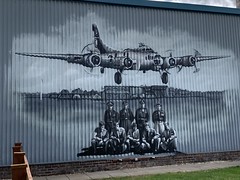
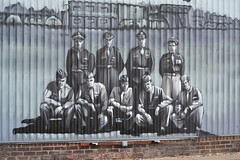
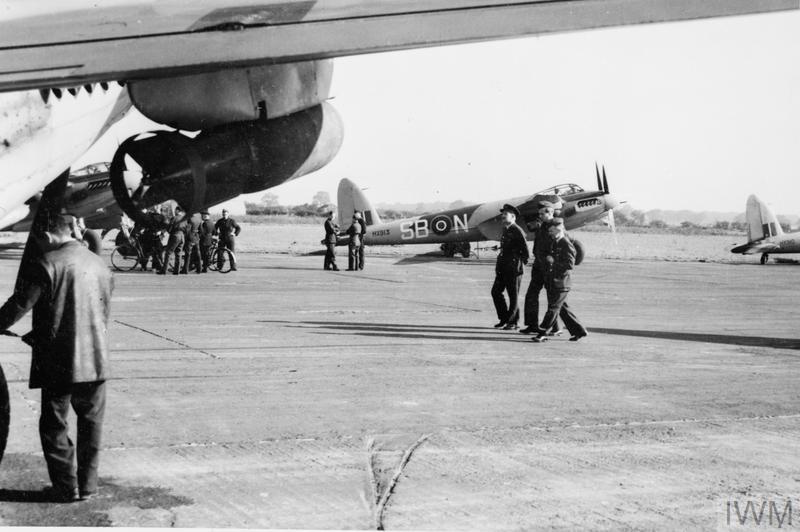

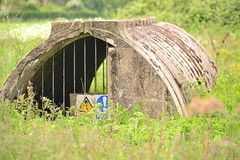

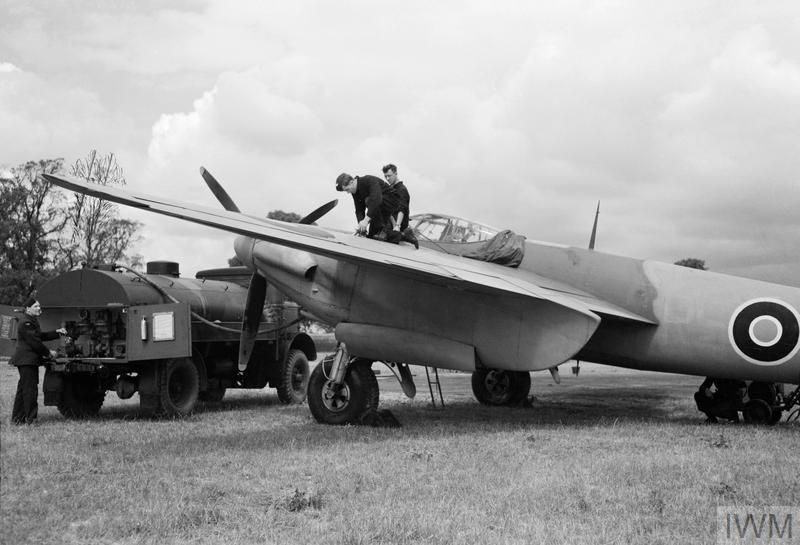

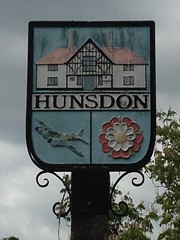
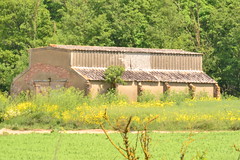
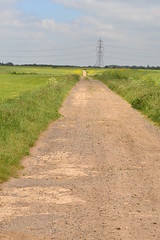


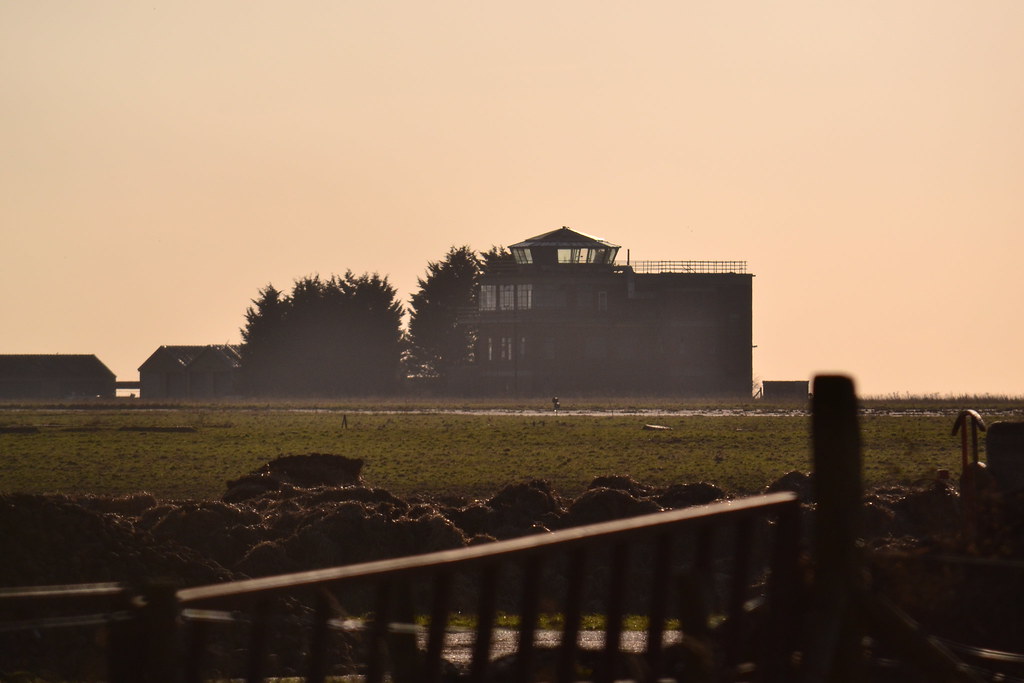
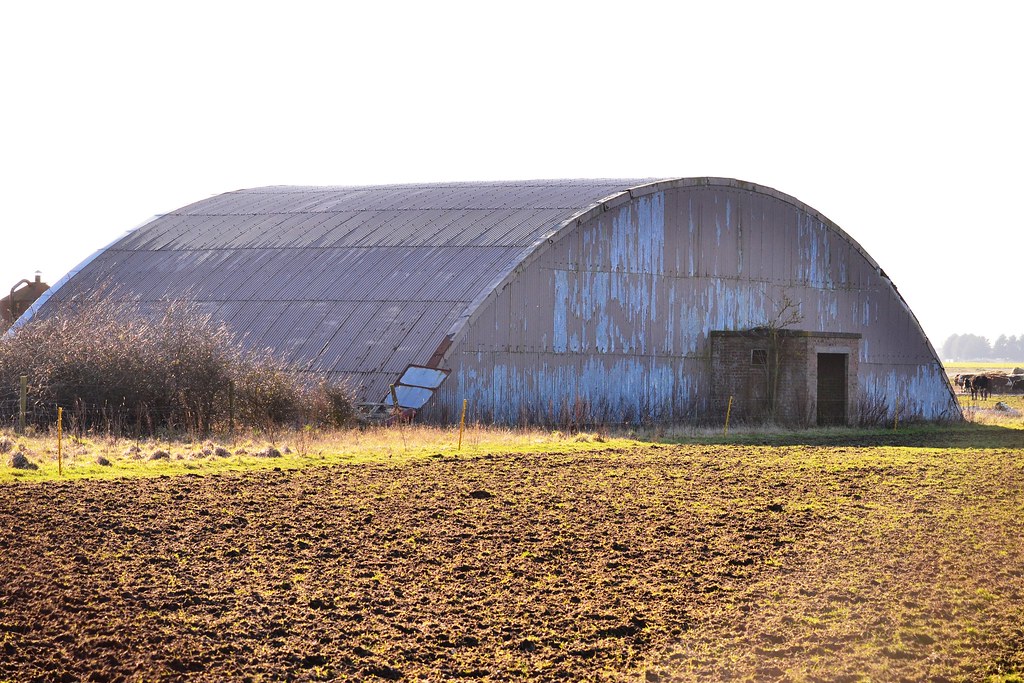
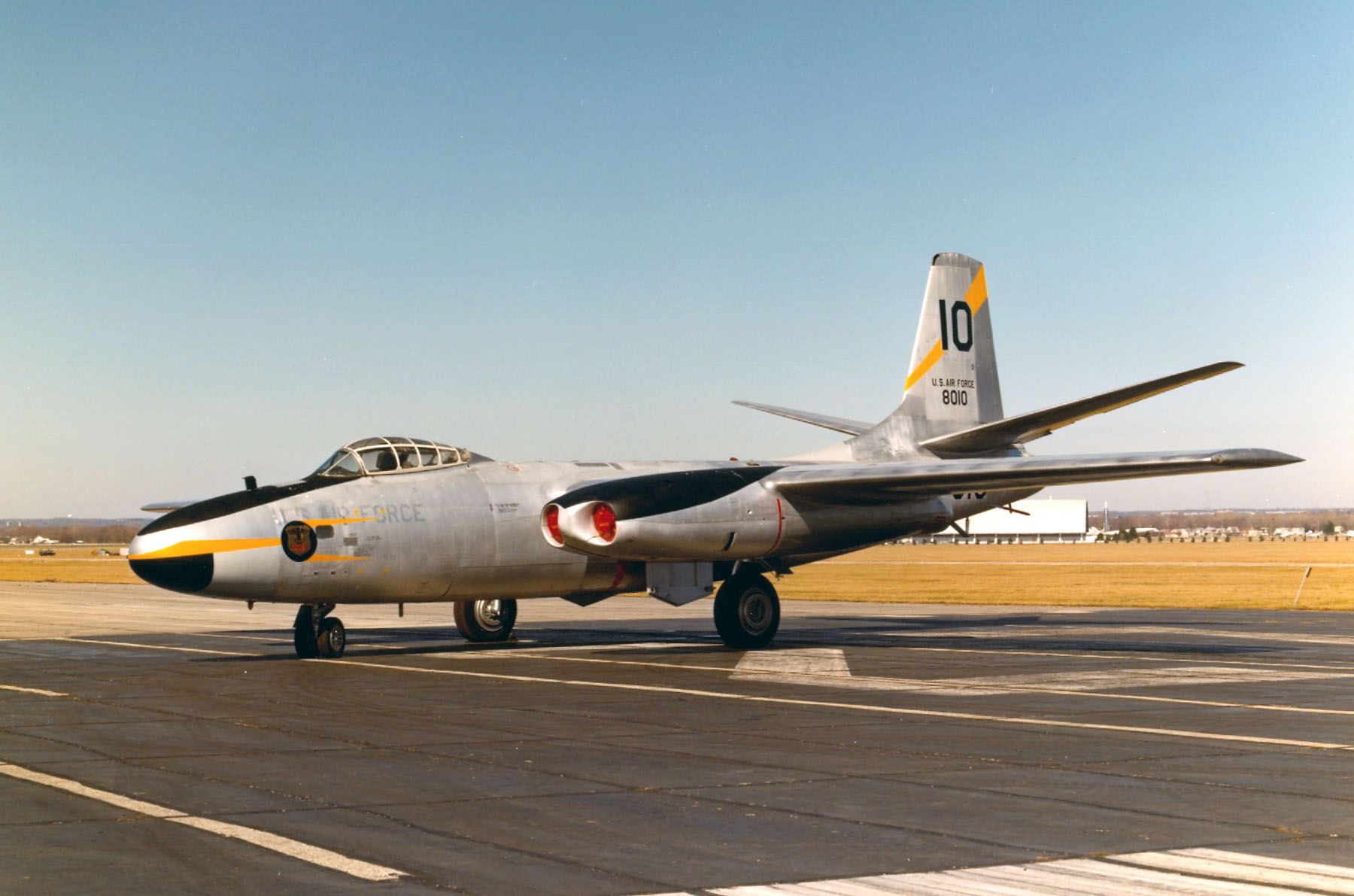

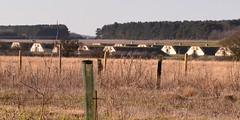
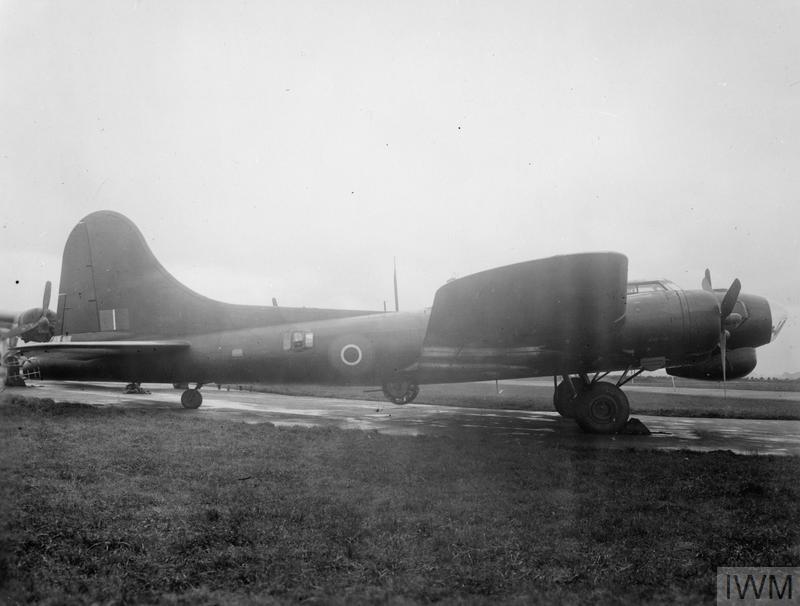
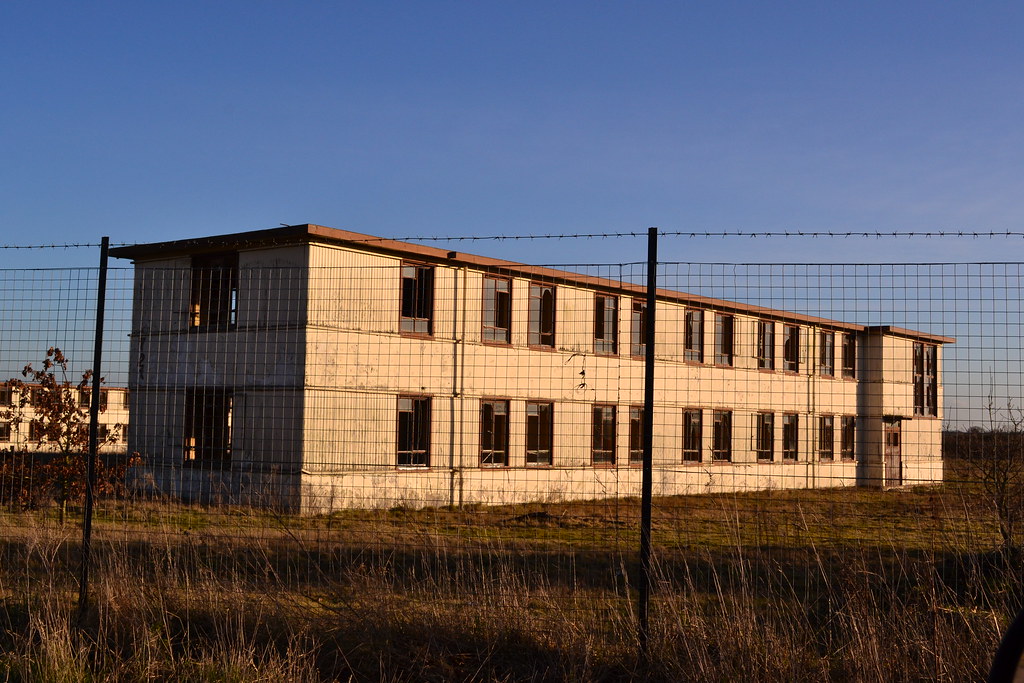
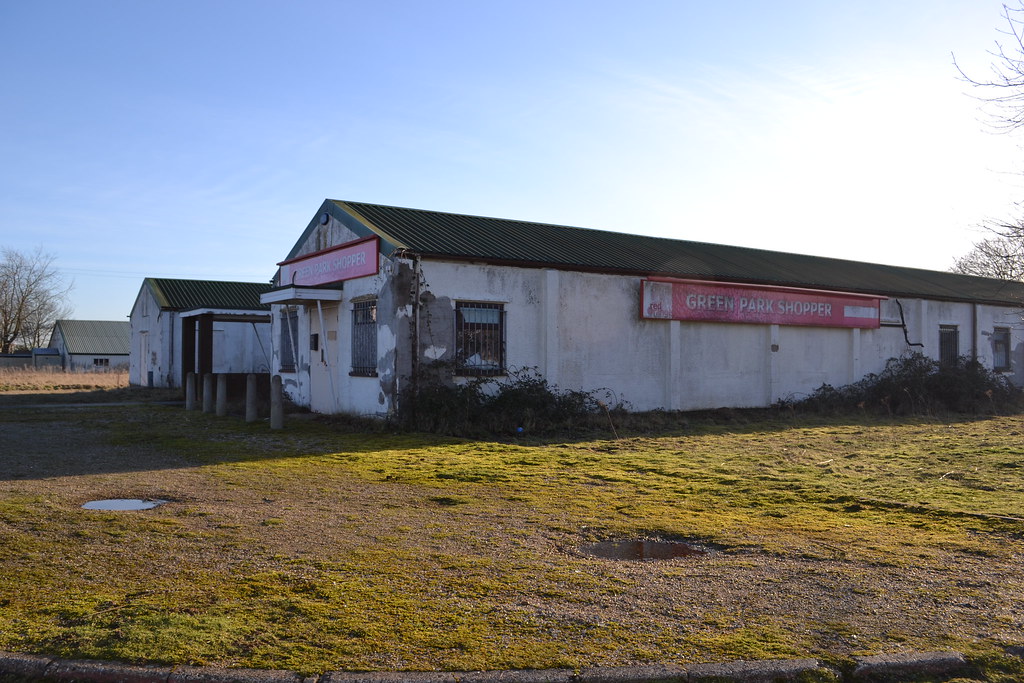
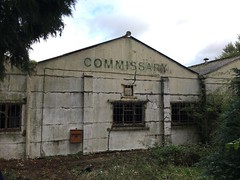
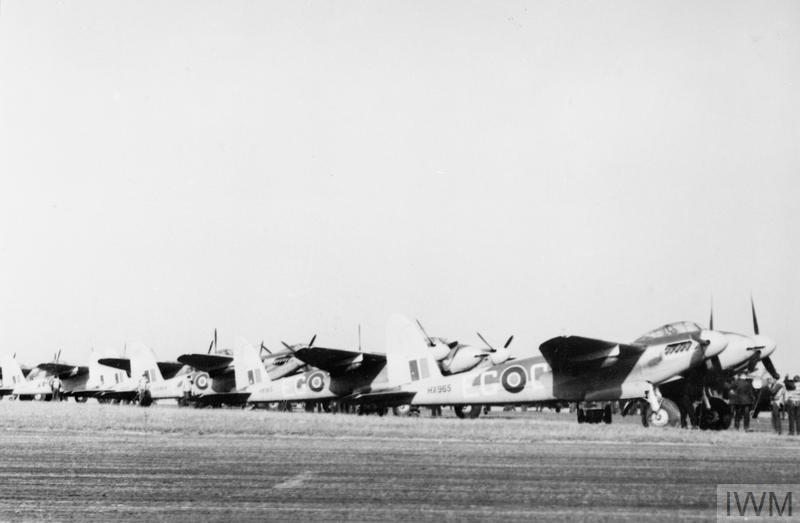

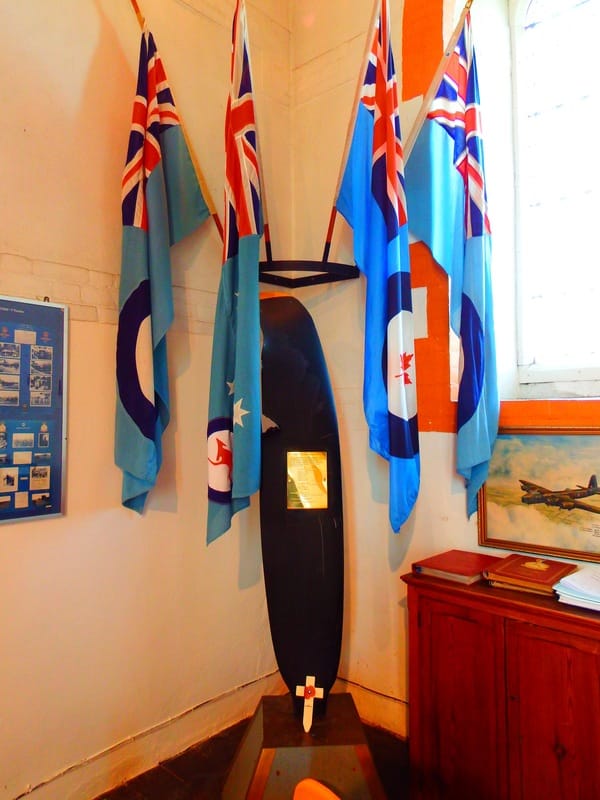
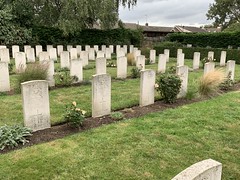


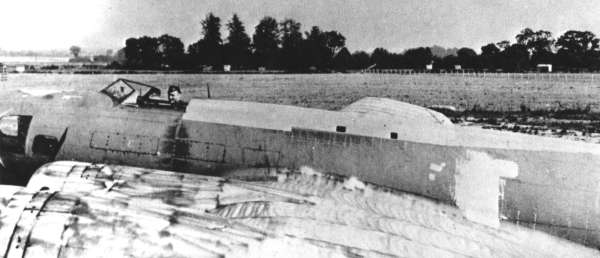


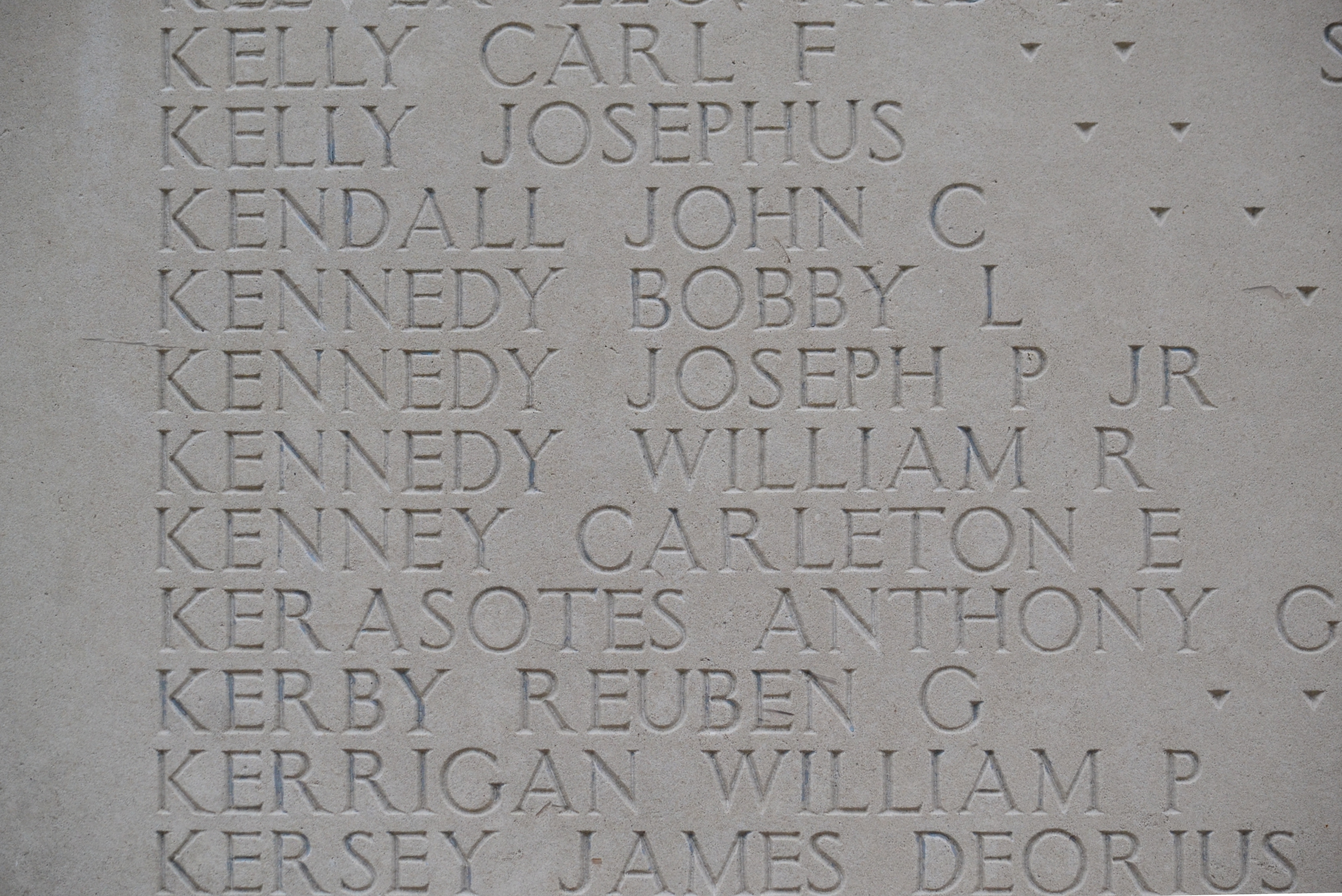
 Aviation Trails