Caught at Upwood and executed for spying

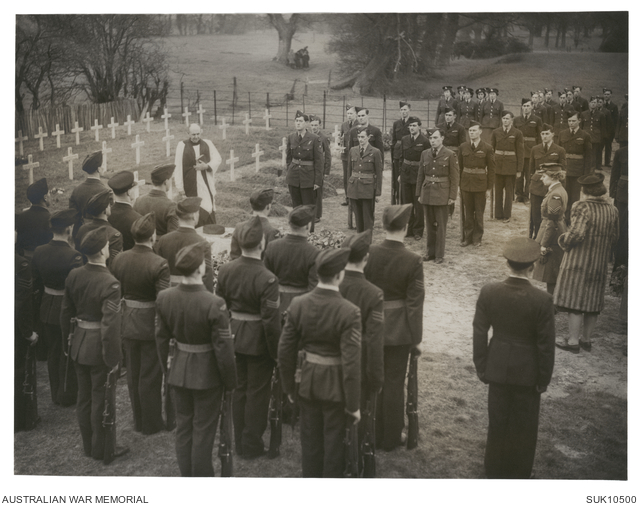
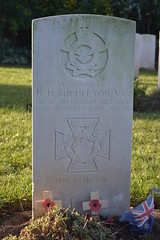
“Upwood was to experience some rather difficult times and localised action. Numerous accidents were interspersed with attacks by marauding Luftwaffe aircraft and a parachuting spy. This event led to much excitement around the base. The spy,  Josef Jakobs, was found guilty of treason and later executed at the Tower of London”

Possibly one of the most photographed sites in the country, it is like a ghost town, its buildings vandalised and shattered, its walls resonate with the ghostly callings of those who trod its corridors.

Why not see more of Upwood and what remains of this one bustling site using this link.

DSC_0179

Ghostly reminders of days long gone


5,127 Missing Americans are Honoured Here

There are many excellent and fitting memorials around the country dedicated to the RAF and USAAF personnel. Many of these are relatively new and make for terrific places to sit, remember and give thanks to the young men and women who gave so much.

I have visited a few myself and will feature them here as I get round them. If you have been to one and would like to write a piece for us, please feel free to contact us, and we can make the necessary arrangements to post it here. We would love your contribution.

My first is the American Cemetery at Madingley.

Cambridge American Cemetery and Memorial – Madingley

Not far from Cambridge, to the west of the M11, is the American Cemetery and Memorial at Madingley.

IMG_1998

A Panoramic View Across Madingley Cemetery

Madingley is the only American Military Cemetery in the United Kingdom, dedicated solely to the Second World War. It covers an area of some 30 acres and the land it uses was donated by Cambridge University. The site was dedicated on July 16th 1956. It is operated and maintained solely by the American Battle Monuments Commission, who oversee 24 cemeteries and 25 memorials across 15 different countries.

DSC_0573

One of the 3,812 Headstones

The cemetery has become a symbol of not only the  sacrifice of those held within its walls but the 3 million Americans who were stationed here during Word War II and the continuing alliance between the United Kingdom and the United States in times of conflict.

Within the cemetery stand 3,812 headstones, 3,732 Latin crosses, and 80 Stars of David. The stones are laid out in a fan, each row like a ripple in a pool, with the origin at a flagpole, from which the entire site and surrounding countryside can be seen. Around the base of the flag pole are the words from  “In Flanders Fields“, a World War I poem written by John McCrae, which reads: “To you from failing hands, we throw the torch – be yours to hold it high“. Every night, as the flag is lowered, ‘Taps’ is played on a bugle to signify the end of the military day and lights out – the time to sleep.

DSC_0572

The Plaque Dedicated to the Crew of the 577th BS

Next to this are two buildings. Firstly, the visitors’ centre, where there is a place to sit and staff who will willingly search the Commission’s online database for you. On the wall outside the centre is a plaque dedicated to the crew of a B-24 of the 577th BS, 392nd BG, that flew from RAF Wendling; who through their actions avoided crashing into civilian homes in Hertfordshire.  Next to this, is an exhibition hall, detailed through stories and pictures, the American involvement in the Second World War; with specific examples of some of those souls laid to rest at Madingley.

Along the southern side of the cemetery, is the wall holding the “Tablets of the Missing”. Here, the names, rank and service branch of 5,127 personnel, whose bodies were never found are located. Among them are those of Major Alton Glenn Miller and Lt. Joseph P. Kennedy Jr. (Older brother of John F. Kennedy), to name but a few.

Along the top of the wall is the inscription:

The Americans, whose names here appear, were part of the price that free men for the second time in this century, have been forced to pay to defend human liberty and rights. All who shall hereafter live in freedom
will be here reminded that to these men, and their comrades,
we owe a debt to be paid with grateful remembrance of their sacrifice,
and the high resolve that the cause for which they died
shall live eternally.”

IMG_2005

The Wall With the Names of the Missing

The 427 foot long wall, has 4 statues representing: a soldier, an airman, sailor and coast guardsman, who stand guard over the inscriptions; the four statues were designed and created by the American sculptor, Wheeler Williams (November 30th, 1897 – August 12th, 1972). Wreaths are placed at the foot of the wall by American associations and serving units and makes for a moving experience.

DSC_0590

One of the Four Sculptures Depicting an Airman

At the other end of the wall is the memorial and chapel. The inscription on the memorial says “Grant Unto Them O Lord Eternal Rest” and 5 pillars each inscribed with one year of the war 1941 – 1945, that the Americans were involved. A brass inscription over the entrance reads “Into Thy Hands O Lord” and opens up to a detailed and incredible room. The roof depicts a formation of bombers and their escorts typical of those that flew from airfields in England, on their way to occupied Europe. On the wall a large map illustrates “The Mastery of the Atlantic – The Great Air Assault”,  in superb detail.  Designed by Herbert Gate, the American Artist, it is thirty feet long and eighteen feet high and shows the routes used to transport men and machinery from the United States. It also shows Naval operations and the bombing routes used during the great battles over Europe.

DSC_0581

The Memorial Building and Chapel

Outside the chapel, along the length of the ‘Tablets of the Missing’, are rectangular pools and rose beds, neatly laid out as they should be. Lined by trees, it makes a serene place to walk.

Madingley Cemetery is a moving yet peaceful place to sit and remember, to pay homage and to give thanks to the many young men and women who came from another country, to give up their lives in the name of freedom and democracy.

In the words of the original Chairman, General John J. Pershing, Commander of the American Expeditionary Force of the First World War:

“Time will not dim the Glory of Their Deeds”.

IMG_2006

The Atlantic Display Inside the Chapel

DSC_0582

The Rectangular Ponds in Front of ‘The Tablets of the Missing’

Madingley Cemetery can be visited freely, opening times and other details are available on their website here, from which many of the facts of this record have come.

The American Battles Monuments Commission also manages the Brookwood Cemetery in Woking, Surrey and their details can be found here.

The American Role of Honour can be seen here at St Pauls Cathedral, my thanks goes to wynnebook.wordpress.com for the valuable link.

They shall grow not old, as we that are left grow old: …

Originally posted on the anniversary of the publication of his poem, For the Fallen, 21st September 2014, Laurence Binyon’s poem has become synonymous with remembrance services across the country. This week is remembrance Weekend (and Veteran’s day in the United States) on which we remember the fallen: those who gave the greatest sacrifice, so we could live in peace.

I thought it appropriate to repost this during Thai special week so we know a little more about the poem and the history behind it.

‘Lest we forget’

“To all those who went before, (Robert) Laurence Binyon’s 1914 poem is widely used in remembrance services across the world. Laurence Binyon wrote his For the Fallen, with its Ode of Remembrance, while Binyon was visiting the cliffs of North Cornwall between Pentire Point and The Rumps.

Today, if you visit, there is a stone plaque at the spot to commemorate his poem, which reads: For the Fallen Composed on these cliffs 1914″. There is also a second plaque located on the beehive monument on the East Cliff above Portreath in central North Cornwall. There, you will find a plaque on a statue inscribed with the same words. Laurence Binyon’s poem, For the Fallen, was published in The Times newspaper, following heightened public sentiment due to the recent Battle of Marne (5-12 September 1914) on 21st September 1914, 100 years ago today. http://wp.me/P4xjD9-8u

For the Fallen

With proud thanksgiving, a mother for her children,
England mourns for her dead across the sea.
Flesh of her flesh they were, spirit of her spirit,
Fallen in the cause of the free.

Solemn the drums thrill: Death august and royal
Sings sorrow up into immortal spheres.
There is music in the midst of desolation
And a glory that shines upon our tears.

They went with songs to the battle, they were young,
Straight of limb, true of eye, steady and aglow.
They were staunch to the end against odds uncounted;
They fell with their faces to the foe.

They shall grow not old, as we that are left grow old:
Age shall not weary them, nor the years condemn.
At the going down of the sun and in the morning
We will remember them.

They mingle not with their laughing comrades again;
They sit no more at familiar tables of home;
They have no lot in our labour of the day-time;
They sleep beyond England’s foam.

But where our desires are and our hopes profound,
Felt as a well-spring that is hidden from sight,
To the innermost heart of their own land they are known
As the stars are known to the Night;

As the stars that shall be bright when we are dust,
Moving in marches upon the heavenly plain,
As the stars that are starry in the time of our darkness,
To the end, to the end, they remain.

(Published in The Times newspaper, 21st September 1914).

Thanks to Marcella who contributed to the writing of the original post.”

DSC_0097

 For the Fallen – Laurence Binyon (1869-1943)

In Honour of the 55,573 Young Men Who Never Returned

RAF Bomber Command – Green Park,

London

The Bomber Command memorial was erected in honour of the 55,573 crew members of the RAF Bomber Command who died during the Second World War. It stands as a reminder of the young men, whose average age was only 22, and who never returned to their beloved homes. It was unveiled by the Queen, on June 28th 2012, when a Lancaster bomber of the BBMF flew over dropping thousands of poppies.

RAF Bomber Command Memorial

RAF Bomber Command Memorial

The monument can be found in London adjacent to Green Park. It stands proudly watching over the grassed picnic area where picnickers, shoppers and tourists sit. The main part of the monument is a bronze sculpture consisting of seven members of a typical bomber command aircrew.

Perhaps not obviously noticed, some of the crew are looking to the sky, some with hands to shield from the morning sun, as if looking for missing friends. Others are looking downward, perhaps in despair or fear for those not yet home. The stance of the statues suggests a crew recently returned from a mission who have just disembarked from their damaged aircraft. Tired, bewildered and overwhelmed by what they have witnessed, they have been created in precise and superb detail.

The Pilot stands central and to the rear of the group; the navigator to the left, followed by the flight engineer, mid-upper gunner, bomb aimer, rear gunner and then the wireless operator to the right. Their faces reflecting the feelings and emotions that these young men felt. The base of the statues were ‘littered’ with photos of loved ones and messages from around the world. A moving tribute.

RAF Bomber Command Crest "Strike hard, Strike Sure"

RAF Bomber Command Crest “Strike Hard, Strike Sure”

Outside and on the walls of the memorial, are two crests; on the left, the RAF crest “Per Ardua ad Astra” meaning “Through adversity to the Stars“. The crest has its origins going back to August 1st 1918 and has been the symbol of the RAF ever since. On the right, is the crest of Bomber Command whose motto is “Strike Hard, Strike Sure“. Both beautifully carved into the undoubtedly beautiful Portland Stone.

A number of quotes, including one from Winston Churchill, “The Fighters are our salvation, but the bombers alone provide the means of victory” surround the memorial giving  it strength. A further quote, to the rear of the memorial reflects the losses of all nations, who on the ground, lost lives as a result of bombing campaigns on both sides – a reflection of reconciliation and peaceful times ahead.

The roof above the memorial is open. This allows you to see the figures against a backdrop of sky, whether at day or night, rather than the bustling city behind.  A view more representative of the times they lived and flew in.

The remainder of the roof is similar to the kriss cross design of the Vickers Wellington, one of the RAF’s bombers during World War II. The design is both eye-catching and unique, not only to the memorial but the Wellington from which it came.

The building of the memorial, which is truly a mix of emotion, international representation, and a build that reflects the lives of those affected by the war, is considered as closure for many; a symbol of what the young crews had to endure on long missions over occupied Europe. It also serves to act as a lesson to the those who were too young to know what the war meant to those who fought and died in it. It is A beautiful place to sit and give thanks to those 55,573 brave young men who never lived to experience peacetime again.

IMG_0426

RAF Bomber Command Memorial – Note the Roof Design.

The official Bomber Command Memorial website is here. An app is also available for a small fee that goes part way to supporting the maintenance of the memorial, it gives greater detail to the construction and design of the memorial, along with an audio script and stories from survivors of Bomber Command.

A history of the RAF Crest and its derivations can be found by clicking here.

By clicking here, you can see and hear some stories of those to whom the monument is honouring.

  “The Fighters are our salvation, but the bombers alone provide the means of victory

Winston Churchill, 1940

To see more memorials from airfields around the country please click here

Ode to the Fallen.

As we approach Remembrance day (and Veteran’s day in America), Aviation Trails will be publishing a mix of poetry and aviation material in remembrance of those brave and courageous young men and women, who, from all nationalities, gave the ultimate sacrifice in war.

The numbers are staggering; during World War 1, there were some 37 million* deaths, (of which around 7 million were civilian). Thankfully, because the war was quite stationary, it did not create as many of the civilian casualties that were found in the Second World War. The higher number here being primarily military and serving personal. Defined as the ‘War to end all Wars’, it brought a devastating blow to societies across the European countries and their allies, as men flocked to the front and the mass slaughter that prevailed.

World War 2 on the other hand, due to the much faster, greater technological advancement that war brings, saw a much higher casuality rate. Over 60 million people died which amounted to approximately 2.5% of the world’s population*1. This is currently about the size of Nigeria, the world’s seventh largest country*2. The war was so widespread and devastating, that the actual number of casualties will never be known. A new type of war, it spread death and destruction to a much wider audience.

Subsequent wars, have also taken their toll, both in military and civilian terms. Continuing conflicts are, and will account for further deaths, and it is a sad reflection of the world we live in today.

So on this special weekend, during the 100th anniversary of the First World War, we remember those who have given so much so that the rest of us can live peacefully.

Memorials visited during the making of ‘Aviation Trails‘ can be seen here.

Ypres 007

Tyne Cot Cemetery, Belgium


Sources:

Whilst not official, Wikipedia gives some detailed accounts of countries and their casualties.

* Wikipedia, World War 1 Casualties;  http://en.wikipedia.org/wiki/World_War_I_casualties

*1 Wikipedia, World War 2 casualties; http://en.wikipedia.org/wiki/World_War_II_casualties

*2 Wikipedia, list of countries by population; http://en.wikipedia.org/wiki/List_of_countries_by_population

20:45 – A tragic time for Mosquito KB 364

On this night 70 years ago (November 6th 1944), twelve RAF Mosquitoes from 608 Squadron, RAF Downham Market (Bexwell), took off on a raid to attack Gelsenkirchen, Germany.

Whilst the raid itself was a success, that night was to be the last for the two crew members of Mosquito KB 364. Pilot Officer James McLean (26) and Sergeant Mervyn Lambert Tansley (21) of the RAF(VR) were to die tragically on approach to Downham Market.

On the return journey, cold air and icy conditions are thought to have caused icing on the controls and wings of KB 364 making it difficult to control and lose height. What happened next was to be tragic, both for the crew members and the village of Bawdeswell.

To see the full story of that night and what happened at 20:45, November 6th 1944, click here

DSCF1168

DH Mosquito at the DH Heritage Centre

The Command Structure of the USAAF

During the Second World War, the USAAF grew beyond recognition. The 16 air forces that made up the overall USAAF covered the globe, every theatre of war saw some action. This ranged from the home regions, protecting the west coast from Japanese submarines and naval attacks, the east coast, searching for marauding German submarines, Europe, the Middle East, the Pacific and Japan.

Organising these air forces fell to Commands, the ‘middle management’ of the Air Force. Commands, or sometimes referred to as ‘Divisions’, combined the groups that made up the fighting forces of each of the 16 air forces.

I have broken each one down, listing the groups and main squadrons that fell within each one. Click the link here to see how these Divisions were organised.

DSC_0042

The de Havilland Sea Mosquito

The de Havilland Mosquito was undoubtedly one of the Second World War’s most famous and prestigious aircraft, achieving fame alongside models like the Lancaster, Spitfire and Hurricane.

During recent conversations I’ve had with friends, I was intrigued to know more about the different variants, and in particular, the Sea Mosquito – one I had very little knowledge of.

Built in a hangar (disguised as a barn) on the estate of Salisbury Hall near Hatfield, the Mosquito, or  ‘Mossie‘, was a unique aircraft of wooden construction. This design feature eventually gave birth to its nickname the ‘Wooden Wonder‘.

Taking its first flight on November 20th 1940, prototype E0234 (later designated W4050 by the Air Ministry), flew with Pilot Geoffrey de Havilland Jnr at the controls. Its potential as a military aircraft was quickly realised, especially by those who were in opposition of the original idea, and further development trials were organised.

IMG_0343

Prototype E0234 (later designated W4050) under restoration at the de Havilland Museum.

The Mosquito went on through various design modifications and variants (41 in all), including fighter-bomber, reconnaissance, target tug and trainer. It also served with numerous air forces across the world, some as far afield as China and Israel. Postwar it obtained notoriety as a film star, the most famous being ‘633 Squadron‘ in which a squadron of ‘Mossies’ attacked the V2 fuel production plant in Norway by bombing an overhanging rock. Film stars such as Cliff Robertson, David McCallum and Gregory Peck have all graced our screens alongside the Mosquito.

With the sad crash of G-ASKH on July 21st, 1996 and the death of both pilot and co-pilot, there is no longer a Mosquito flying in the U.K. On September 27th 2012, Mosquito KA114, restored in New Zealand, took to the skies for the first time making it the only flying example in existence at that time.

Plans to build a U.K. flying example are afoot with ‘The People’s Mosquito’ who are raising money as we speak. It is hoped to get the aircraft built and operational, within a few years.

Undoubtedly a success, the Mosquito was a devastatingly potent aircraft, its speed and agility unmatched by most other aircraft of its time. It is a beautiful aircraft and one that was loved not only by those who made, flew and worked with it, but those who, like me, stood in awe and watched it fly. The sound of its two Merlin engines something to behold.

The Mosquito was a great success in a number of operational configurations, and in different theatres, however, one of the lesser well-known variants, and less successful, was the Sea Mosquito.

Impressed with the performance of the aircraft, the Admiralty showed an interest in obtaining a carrier-based version. The de Havilland Aircraft Company put forward the idea of a redesigned model based on the FB.VI – the concept was soon accepted. Trials began soon after in which Mosquito LR359 was adapted, the body strengthened to take the strain of arrester hook landings; its weight was reduced and the Merlin power plants improved.  These tests proved successful, and the first carrier landing completed in late March 1944 by Lt Cdr Eric ‘Winkle’ Brown onboard HMS Indefatigable.

This was a major achievement in many ways, not only for the Navy, but it was the first time any twin-engined aircraft had landed on a sea-based carrier. Further tests followed, and a second Mosquito, also adapted for naval use, joined LR359 in trials onboard naval carriers.

The scene had been set and the Admiralty put forward a specification for a full production naval version, which deHavilland would designate the TR.33.

As with all naval carriers, space was of a premium and so the new version had wing modifications that allowed them to fold. A new and improved landing gear was also needed for the heavy landings that a carrier-based aircraft would be subjected to. Radar was also installed with later adaptations giving the aircraft an odd ‘thimble-shaped’ nose. In addition, attachments for torpedoes were added to the belly of the aircraft giving it greater anti-shipping capabilities.

Image

Modified from a MK.VI, LR387 became a TR.33 Sea Mosquito and appeared on the front of ‘Life Magazine’.

The first production model, TW227, left the factory in late 1945, but orders came through too late to meet the Japanese threat. Of the initial 100 ordered, only 50 were ever completed. Further trials were undertaken, and the TR.33 would be modified to form the TR.37. This had armament modifications and an upgraded radar system. Again, as with the TR.33, only a few ever made it out of the factory, with only 6 of the original order being completed.

Mosquitoes, whilst being outstanding aircraft, only ever made it to one frontline naval service, 811 squadron of the Fleet Air Arm. Most that were produced were operated from land-based stations and were involved in various trials around munitions development and investigations into naval capabilities. Of those that were made, many of them, in particular the TR.33s, were modified back to regular models and sold off to other air forces, notably the Israeli Air Force.

No further seaworthy variants were made and production concentrated on the land-based models.

The hangar used to build the Mosquito is now the home of the de Havilland Aircraft Museum, (previously the Mosquito Museum) and its main exhibits include, amongst others, the original prototype  Mosquito (W4050) under restoration. Dedicated to de Havilland aircraft, it has a range of models showcasing de Havilland aircraft production from its early days of the 1920s right up to the later modern production fighters and airliners of the 1960s.

Their website can be found here. I visited them a while ago, and my trail can be found here.

More details on 633 squadron can be found on Wikipedia using this link.

Details of Lt Cdr Eric Brown and his achievements can be found through this link.

A remarkable and detailed book illustrating the development of the Mosquito can be purchased from the de Havilland shop. It gives some amazing photos and development history of the aircraft from its conception to cessation of production, detailing production models, uses and variants; it is a worthy book to anyone’s collection.

de Havilland Mosquito – An Illustrated History Vol 2, Ian Thirsk, Crecy Publishing, 2006.

The People’s Mosquito can be found on WordPress or through ‘Aviation Trails’, alternatively on Facebook and Twitter (@peoplesmosquito).

156 Sqn RAF – a 15% chance of survival!

Due to high losses, 156 sqn became known as the ‘chop’ squadron and consequently,  morale fell. With a 15%  chance of survival, morale continued to be an issue and the station was stood down for a short period. In a desperate attempt to bolster the men’s spirits and raise morale, a royal visit was arranged for the Queen. Read more about RAF Warboys and the valuable work they did here.

DSC_0112

Warboy’s Church Memorial to the Pathfinders.

Plan a Trip to a WWII Aviation Heritage Site and Write a Guest Post

Where did the summer go? It was here, and now suddenly, the days are shorter, the sun less bright, and it’s autumn. Before the winter arrives, why not plan your own ‘aviation trail?’ It doesn’t even have to be a series of airfields. It could just be one. It could be a memorial, or a museum that tells the story of a part of Britain’s most impressive aviation history. It’s a lovely time for a road trip. The leaves are changing, the air is crisp and cool, and Britain’s aviation heritage is waiting… for you.

Have you ever wanted to write something of interest to you? To share with others your thoughts, impressions and words, and to actually see them in print? Here is your opportunity!

‘Aviation Trails’ is inviting you to take an autumn journey to an RAF airfield(s) or other aviation heritage site of your choice. While you are there, remember to take along a notebook to jot down some thoughts and ideas, and of course, take some photographs. If it is an airfield, as you walk about, try to imagine it as it must have been when it was bustling with activity during the days of World War II, when the roar of Merlins vibrated through the air, so often, it became the norm. If it is a memorial or a museum, take time to consider the sacrifices made by those brave men and women and how their lives and the lives of their loved ones, were forever altered by the course of World War II.

When you return home, have a go at writing your very own blog post. Do you know any stories about this airfield, memorial or museum that you have heard over the years? Is there someone in your family who served in the RAF or USAAF and was stationed at one of these airfields?  Since Andy last visited some of these airfields, have there been changes you noticed? We would love to hear some of your stories, to learn what you know, and then to be able to share that with our readers.

Once you have completed your post (and be sure to include a few photographs), submit it to: aviationtrails@yahoo.co.uk – We will have a look and consider your piece for publication as part of ‘Aviation Trails’ as a ‘Guest Post.’

This is one of the final weeks for aviation-related events as it is the autumn half-term break for most of the schools across England. Due to this, there will be some airfields offering ‘Open Days’ for museums, as well as other special events that encourage people to visit before the season comes to a close.  I will try to include some of those details below, but it is always best to check out the websites on your own beforehand to find out about opening and closing times, admission fees, etc.

For this post, I’ve decided to focus the suggestions on Lincolnshire, also known as “Bomber Country’. Many of these airfields, museums, memorials and attractions were covered by Andy in Trail 1: Lower Lincolnshire, so you can find additional information and links to museums and such on that page. To have a look, see the link here.

Some of the more well-known airfields and attractions in Lower Lincolnshire include:

  • RAF East Kirkby (Open Mon. – Sat. 9:30 am-5:00 pm through end of Oct.). Also. special event on Sat. 1st Nov. 2014: Lancaster night, taxi runs and fireworks).
  • RAF Woodhall Spa
  • RAF Coningsby (Andy provides very helpful information about the viewing area around Coningsby, so take a look at the link above for his Trail 1).
  • Thorpe-Camp Visitor Centre (Open Sundays 1:00-5:00 pm through end of Oct. and by appointment). Also, on Wed. 29th Oct. 2014 – Coningsby Spotters Get Together).
  • Dambusters Memorial
  • The Petwood Hotel (of Guy Gibson fame)

That being said, you might be in an entirely different county. Please do not feel left out! There are many areas Andy has yet  to have the opportunity to visit, and we would LOVE to hear about an RAF airfield, memorial or museum in a county not covered on one of the ‘aviation trails.’ Please feel free to visit one near you, and then write about what you know; tell us about the stories you have heard, or tell us about your family member who once bravely served at one of these airfields.

Before long, these RAF airfields will be but a distant memory. You will no longer have the opportunity to visit as you do now. Inevitably, as we have seen all over England (e.g. Manston Airport), these treasured places of Britain’s aviation past will be developments with rows of  houses and not a remnant of their once glorious past or the brave men and women who served to protect their beloved England.

So, do not miss your chance to visit an RAF airfield, a memorial or a museum, and give yourself a chance to be the writer you always wanted to be.

If you have any questions or suggestions, please feel free to email us.

Marcella M. Beaudreau (@LadyofShalottMA)

DSC_0031

Autumn leaves at Downham Market