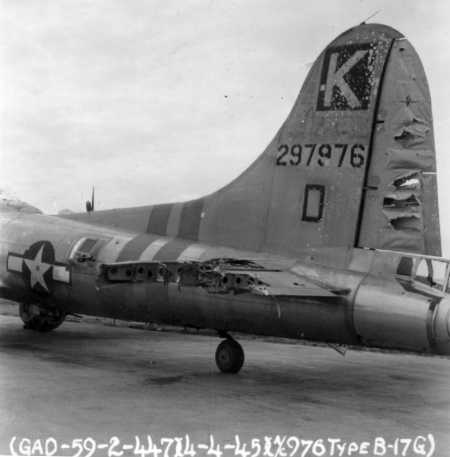
One of the lowest loss records of the Mighty Eighth……

By the time the war had finished, the 490th had completed 158 missions losing only 22  aircraft in combat; one of the lowest records in the whole of the Eighth Airforce. Immediately after cessation of the conflict,  the 490th continued to fly, supplying food and supplies to the people in the Netherlands and other humanitarian operations involving allied POWs across Europe.

The 490th also had another less salubrious claim to fame…

Eye

RAF Eye, Suffolk


What’s the answer?

Whilst on my trails I find it disheartening to see so many of our former airfields disappear under builders machinery or industry looking for a cheap alternative to building their own premises. Using the guise of ‘recycling’ old sites, they fail to understand the history, importance or significance of these ‘brown field’ places.

These airfield were not simply a place where aircraft took off and landed a long time ago, but they are places where people died, suffered terrible injuries. were traumatised or lost loved ones and friends. It’s where young men, many away from their families for the first time, spent their last days on gods earth before giving themselves up in the name of peace.

Yes I see the relevance and difficult balance between the building infrastructure, jobs and housing needs against the desire to preserve small areas of heritage, history and desire to respect the need to preserve what are important marks that represent a major tuning point in the worlds development. It is hard, and not one that any political or historical follower takes lightly I’m sure. But if it were not for volunteers, people with a real understandings of the relevance of these matters, we would have very little to show for what was an incredible and turbulent time in world history.

Is there an answer? I don’t know, I wish I did. It would be easy to say “save every airfield” but for what? To rot, to be a time capsule soaking money form important public areas like health and education. Or is it dig them up, we don’t need them it was a long time ago, let’s move on!

All I know is, with each visit I make a little more of history disappears, a memory is lost and as the years roll on, a veteran passes away. Something needs doing and it needs doing soon.

IMG_1956.JPG

‘For the Fallen’ – Laurence Binyon (1869-1943)

On the anniversary of the Start of World War One, we remember those who gave their all.  In remembrance, we use a verse from the Poem ‘For the Fallen’ written by Laurence Binyon in 1914.

A poem of 7 stanzas, it was first published in September of that year. This is the poem in its entirety.

For the Fallen

With proud thanksgiving, a mother for her children,
England mourns for her dead across the sea.
Flesh of her flesh they were, spirit of her spirit,
Fallen in the cause of the free.

Solemn the drums thrill: Death August and royal
Sings sorrow up into immortal spheres.
There is music in the midst of desolation
And a glory that shines upon our tears.

They went with songs to the battle, they were young,
Straight of limb, true of eye, steady and aglow.
They were staunch to the end against odds uncounted,
They fell with their faces to the foe.

They shall grow not old, as we that are left grow old:
Age shall not weary them, nor the years condemn.
At the going down of the sun and in the morning
We will remember them.

They mingle not with their laughing comrades again;
They sit no more at familiar tables of home;
They have no lot in our labour of the day-time;
They sleep beyond England’s foam.

But where our desires are and our hopes profound,
Felt as a well-spring that is hidden from sight,
To the innermost heart of their own land they are known
As the stars are known to the Night;

As the stars that shall be bright when we are dust,
Moving in marches upon the heavenly plain,
As the stars that are starry in the time of our darkness,
To the end, to the end, they remain.

(Published in The Times newspaper on 21st September 1914).

DSC_0169

For the Fallen – Laurence Binyon (1869-1943)

Medal of Honor for Acts of Bravery

War makes men do terrible things to their fellow mankind. But through all the horror and sometimes insurmountable odds, courage and bravery shine through. Two gallant young men both in the same B-17 were awarded the Medal of Honor for acts of extreme bravery in the face of certain death.

Just who were these two brave young men?

metzger gott

A ‘truant’ and ‘runaway’, it was unimaginable he would pilot a B-17

“Kermit D. Wooldridge’s future looked dim as a teenager. The troubled youngster was described as truant, incorrigible, and a run-away. He dropped out of high-school. Born to deaf-mute parents who could not control him, he was raised by an uncle in Lubbock and Abernathy, Texas.

Bored and headed for trouble, on July 12, 1934, Kermit Wooldridge, age 17, joined the US Army. No one would have predicted that a few years later he would find himself in the midst of the most important war America would ever fight. It was unimaginable that he would pilot the formidable four-engine heavy bomber – the B-17 Flying Fortress.”

Read about 2nd Lt. Kermit D Wooldridge’s life though his diary. http://wp.me/P4xjD9-oo

Lt. Wooldridge After His Last mission on December 13th 1943