RAF Bircham Newton (Part 4 – Bircham Enters the War)

So far we have seen how Bircham Newton developed from a First World War training airfield through the cutbacks of the early 1920s, and on into the Expansion period of the 1930s. Bircham is now in the hands of Coastal Command, a force lacking in materials but not will power. The units at Bircham work hard, and new developments come along that will help save lives at sea and put Bircham on the map. After Part 3, Bircham now enters the war.

The declaration of war and the early 1940’s would see some remarkable events take place at Bircham Newton; new aircraft and new roles, along with some advances that were to help downed airmen who ended up in Britain’s coastal waters.

One of these advances, was the creation of the ‘Bircham Barrel’, a container manufactured from the tail end of a 250lb bomb that was carried under the wing of searching Air Sea Rescue (ASR) aircraft and dropped to downed aircrews. The barrel was based on the ‘Thornaby bag’ a container designed at RAF Thornaby, in which supplies of: water, food rations, first-aid equipment, clothing and cigarettes were all placed. The Bircham Barrel, developed this idea a little further, making it more water tight and easier to retrieve by crews once in the water.*4

The Barrel was placed under the wing of an aircraft on a bomb rack, and once a crew was sighted, the pilot could drop the barrel providing the crew with sufficient rations for several days. After tests, the idea was given the green light and by 1941 it was in use by a range of aircraft operating in the ASR role.

With an increase in coastal operations from Bircham, particularly in the Air Sea Rescue role, many of the aircraft that would now use the airfield would be the twin-engined types. Kicking off the decade were the Bristol Blenheims, of 254 Sqn in January 1940. Joining a small detachment of 233 Sqn  Blenheims that had arrived here late in 1939, 254 Sqn only stayed for three months, operating as ‘Trade defence’ or fisheries protection unit – perhaps one of the lesser well known operations of Coastal Command.

Twin-engined models were not to be the only aircraft seen at Bircham though. The spring and early summer of 1940 would see further detachments with Hurricanes from 229 Sqn, a short stay by 235 Sqn and the first of a number of Royal Navy’s Fleet Air Arm (FAA) units 815 Sqn with the delightful Swordfish. One further unit to be based here at this time, would bring with it one of the more intriguing models of aircraft used during the Second World War, the Wellington DWI of No 2 General Reconnaissance Unit (GRU).

One of the roles of the GRU was to detect and destroy German mines, particularly new magnetic mines that were proving to be a menace to allied shipping. Using a Wellington 1A bomber modified to carry a large 51 foot ring of wood containing an aluminium coil, it would generate, using a Ford motor, an electronic signature that would resemble a ship. By flying low and slow over the water, it was hoped that the signal from the coil would detonate the new mines. Whilst the idea worked well in principal on land, over water it caused a number of issues primarily because the aircraft had to fly between 60 feet and 35 feet to detonate the mine. A number of successful detonations were recorded, but some aircraft were struck by the blast wash, causing them to be knocked ‘off balance’ as the mines exploded. Fortunately though, there are no recordings of any serious damage being sustained by these aircraft, but it was nonetheless, a dangerous job to do and because of advances elsewhere, it became a short lived attempt to gain an advantage over the Germans in the mine laying war.

ROYAL AIR FORCE OPERATIONS IN THE MIDDLE EAST AND NORTH AFRICA, 1940-1943.

Wellington DWI Mark II of No. 1 GRU based at Ismaliya. The ring weighed over two and a quarter tons.© IWM (CM 5312)

Like the Swordfish, both the Wellingtons of 2 GRU and the Blenheims of 235 Sqn were only based at Bircham for a month, all departing in May 1940, although 235 Sqn did return in the summer staying this time for a year. The immediate period after their departure saw yet more FAA units arrive, 826 and 812 Sqns, with Albacores and Swordfish respectively. Both of these units would operate as shipping patrols and also in mine laying operations, but would again only stay for a short period of time. During operations on 21st June 1940, at De Kooy Naval air base, one 826 Sqn aircraft was lost, two of the Albacore’s crewmen: Sub Lieutenant (A) Peter William S. Butterworth, (famed for his acting in the ‘Carry On’ films) and Telegraphist /Air Gunner Robert (TAG) J. Jackson, were both captured. Sub. Lt Butterworth survived ending up in Stalag Luft III after several failed escape attempts, whilst TAG Jackson died in captivity on 18th January 1945. The third crewman, Sub-Lieutenant Victor J. Dyke, died the day after the attack.*6

Peter Butterworth - Wikipedia

Peter Butterworth from the 1968 film “Carry on… Up the Khyber” (wikipedia)

Bircham’s long standing 206 Sqn were by now replacing their Blenheims with Hudsons, the American built twin engined aircraft designed around the civil Lockheed Super Electra. By militarising it, they produced an aircraft that would serve well in Coastal Command operations.

Initially carrying out convoy duties, the Hudsons would then patrol as far away as the ‘North German Islands’, but primarily flew reconnaissance patrols along the  coastline between Norway and Brest. Shipping was engaged on a number of occasions as were flak and Luftwaffe aircraft. During May, as the new Hudsons were being delivered, a number were lost to enemy action, particularly fighters.

For one Hudson, (P5120), life at Bircham would be short lived, the aircraft arriving here in April, only to be written off after a crash landing in June. The aircraft, one of three, departed Bircham on June 19th at 23:50 for a night patrol. On return it struck a ridge on the airfield’s approach causing it to bounce heavily. The aircraft then stalled and hit the ground so hard it caused the undercarriage to collapse. Thankfully all four crewmen emerged from the aircraft unhurt.

WITH A HUDSON OF COASTAL COMMAND

Hudson C-VX (P5120) of 206 Sqn on patrol before being written off in a crash landing. (© IWM CH 287)

Both during and after the build up to Hitler’s planned invasion of Britain, airfields across southern England were targeted by the Luftwaffe, and Bircham Newton was no exception. Whilst not a fighter airfield high on the list of Luftwaffe priorities, bombs nonetheless did fall on the airfield, and it was the Hurricane detachment of 229 Sqn based here, who were tasked with providing cover against such attacks.

In addition, many support units were also based at Bircham, these would provide training for pilots, gunners, navigators, other members of aircrew along with cooperation with ground operations as well. One such unit here at Bircham was No. 1 Anti Aircraft Co-operation Unit (AACU) which consisted of several Flights, designated ‘B’, ‘C’, ‘D’, ‘K’ and ‘M’, they all operated the Hawker Henley, the Hurricane’s little known relative.

With Flights designated A – Z (‘I’ was omitted), the unit operated at various airfields across Britain, flying a mix of Henley IIIs, Wallace, Lysander and Battle aircraft, with both Flights ‘B’ and ‘M’ being formed here at Bircham Newton. Several of these Flights also used RAF Langham, another Coastal Command / training airfield a few miles away on the Norfolk coast, particularly useful for the training of heavy anti-aircraft guns.

The Henley – built along side the Hurricane – essentially used the same jigs, their similarity thus being quite stark. The Henley was initially designed as a light bomber with modifications to the guns and an additional seat added behind the pilot. However, changes in Government policy toward daylight bombers meant that the Henley was soon transferred to other duties notably target towing. To assist this, a small propeller driven motor was added to the port side of the aircraft, just below the rear cockpit, this would power the winch that held the target drogue as it was towed some 7,000ft behind the aircraft for gunners to aim at*5.

ROYAL AIR FORCE COASTAL COMMAND, 1939-1945.

Hawker Henley, L3353, of ‘K’ or ‘M’ Flight, No. 1 AACU, next to a bomb crater at Bircham Newton. A lone Do 17 dropped seven high explosive bombs on the station causing light damage but also slightly damaging this aircraft. The similarities to the Hurricane are very evident. (IWM CE 43)

In November of 1940, two more squadrons were formed here, one, another First World War unit, was 252 Sqn. It would not fly operationally from here though, instead collecting its aircraft from Chivenor to where it would move a matter of weeks later.

The second unit, 221 Sqn was formed on the 21st November, and was also a former World War One unit. Disbanded in 1919, it would serve for the remainder of the war with the Wellingtons in the Coastal Command role. The initial order was to train crews at Bircham prior to their move to operations at Limvardy, a role it would perform using twenty-four Wellington IC aircraft. By the end of the month two such models, N2909 and N2910 were delivered and ready to be used for the job. A third aircraft, a dual control Wellington (R2700), arrived on the 6th and then on the 12th December, the personnel were all moved off site to a new location the rather grand Heacham Hall. The hall, which burned down during the war, was a 17th Century building, and had historic ties to Matoaka (better known as “Pocahontas”), who married local man John Rolfe. It must have been a  rather nice change for the airmen to be ‘off base’ and in more luxurious, and historical, surroundings.

During the remainder of December more aircraft arrived and by the last day of the year, eleven more Wellingtons were ‘on role’ along with a growing number of personnel – both air and ground crew.

1941 started on a high for Bircham Newton, with a Royal Visit. On 26th January, the Royal party consisting of King George VI, Queen Elizabeth, and Princesses Margaret and Elizabeth, visited the area inspecting the airfield and its aircraft. Whilst here, the King gave airmen a number of awards before the whole party moved of to other airfields across Norfolk.

For the whole of January, training flights were the order of the day for the Wellingtons of 221 Sqn, but poor weather meant that only 12 out of the 31 days were actually suitable. However, by March 27th 1941, all pilots had flown solo by day and a new flight was crewed up and ready for operations. The squadron then began its move over to Limvardy in Northern Ireland.

The summer of 1941 was another busy time for Bircham Newton. In May, two squadrons appeared, the first 200 Sqn was formed from 206 Sqn, which had already been used to create 220 Sqn earlier on. 200 Sqn were formed to perform the ‘operational duties of a Coastal Command general reconnaissance land-plane squadron’ in other words maritime and anti-submarine patrols. It would be made up initially of 210 personnel, who would depart Bircham on the 25th to Greenock, whilst seven Hudsons would fly to Gibraltar on route to Gambia. It would remain abroad until its disbandment at the war’s end in 1945.

The second, 500 Sqn moved in from Detling in Kent, bringing Blenheims with it. With detachments at both Limvardi and Carew Cheriton, these were replaced by the Hudson V in November before the unit departed for Stornaway in Scotland’s Western Isles in May 1942. Once at Bircham they immediately began patrols, looking for downed aircrew, mines or enemy shipping. Poor weather restricted many of these patrols, but both mines and shipping were spotted, sadly no dinghies or aircraft were found in these early days.

The next unit to arrive was another Blenheim squadron, 248 Sqn who performed convoy patrols and strikes against enemy shipping. During July, a month after they moved in, they began to replace the Blenheim with Beaufighter ICs, a powerful and heavily armed aircraft built to design Specification F.37/35. After initial handling issues, it became a sturdy weapons platform that performed well, especially in the anti-shipping role, carrying a torpedo or rockets. For the next month the weather prevented much in the way of flying, with fog, rain and poor visibility preventing all but minimal flying, the squadron remained firmly on the ground for a good deal of August.

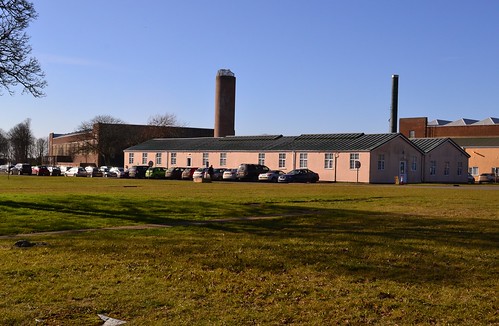
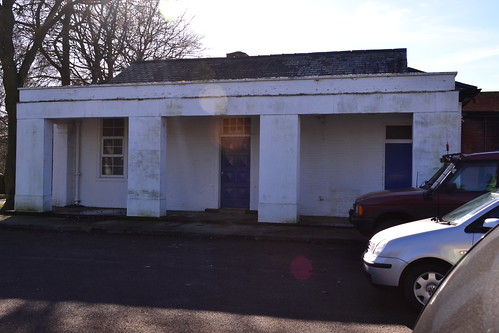
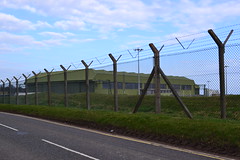
Armoury and Photographic building

Former armoury and photographic building.

The last of the summer squadrons to arrive were 53 Sqn and 59 Sqn. Initially based at Detling / Thorney Island, they had also maintained a detachment of aircraft here at Bircham. Once the two squadrons had reformed at Bircham, they both took on the Hudson replacing their Blenheims before departing back to St Eval in the October of that year (53 Sqn) and North Coates (59 Sqn).

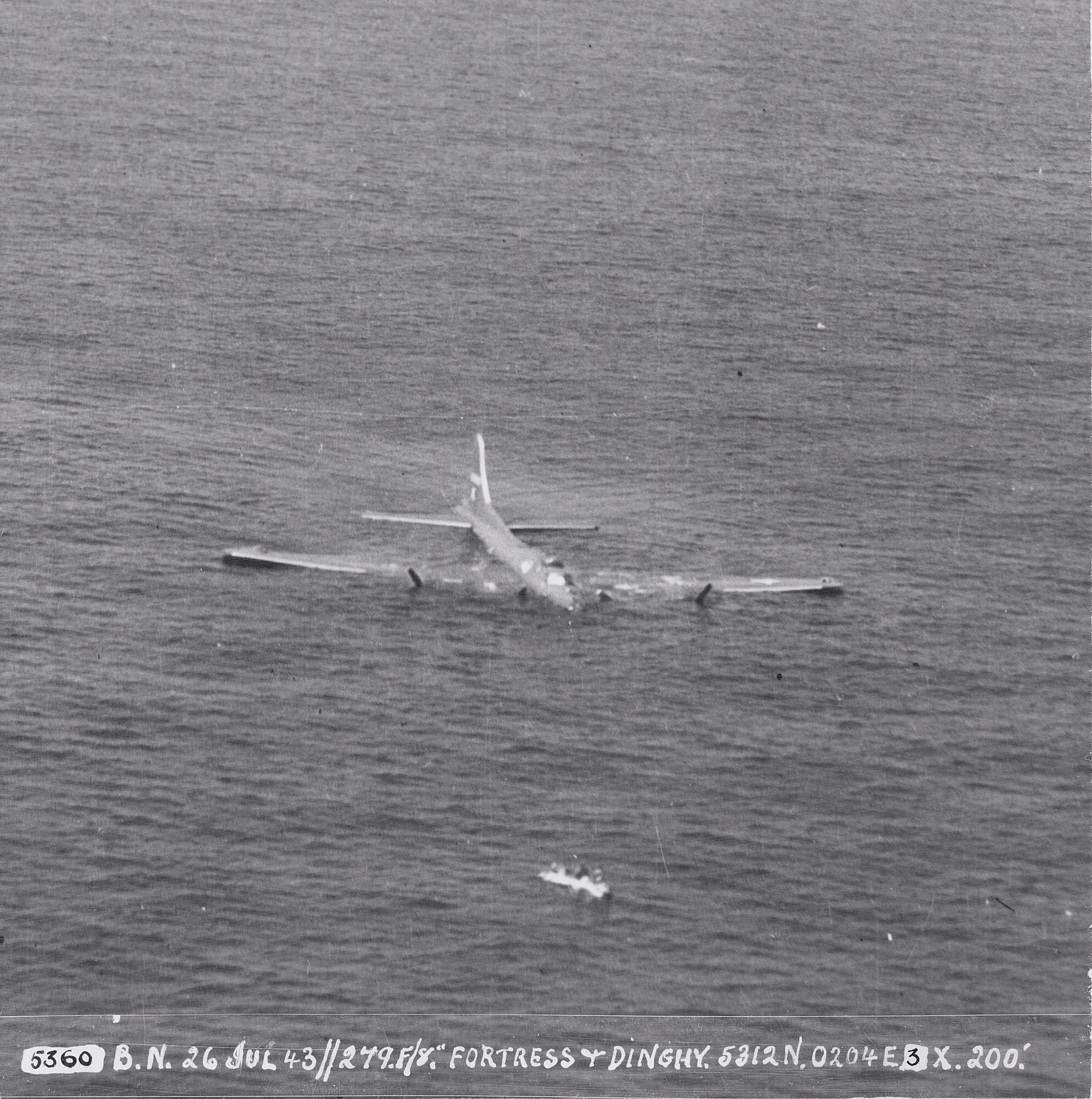
By September 1941, the need for more Air Sea Rescue aircraft, particularly deep search aircraft, had become ever more apparent, and it called for the creation of two more squadrons able to perform such tasks. However, suitable aircraft were in short supply, especially Lockheed’s Hudson with ASV (Air to Surface Vessel) radar equipment and Lindholme rescue gear. Thanks though to Sir John Salmond GCB, CMG, CVO, DSO & Bar , Coastal Command’s corner was fought, and even though by the end of 1941, aircraft were still few and far between, by the December one of these Squadrons, 279 Sqn, was up and running here at Bircham. However, it would be a long haul, and it would not be until March the following year before they would be fully operational and their Hudsons operating regularly in the Air Sea Rescue role from this airfield.

The second squadron, 280 Sqn however, was not given the Hudson, instead they had to contend with the Anson. Another unit set up in 1941, its primary base was also at Detling in Kent. Whilst performing this duty, they maintained a detachment of aircraft here at Bircham Newton, a position it held whilst the bulk of the squadron moved to Langham in Norfolk in the summer of 1942. It would then be after this, that the entire squadron would move into Bircham Newton.

Like its sister unit it would take time to become fully operational and it would not be until June before the squadron was operating as it should. The benefit of both units was quickly seen though, thirty-five men from six crews were rescued over May – June by 279 Sqn, whilst one crew was rescued by 280 Sqn within days of them becoming fully operational.

The early years of the war were busy for Bircham Newton, and as war progresses, further units arrive and depart, the hectic scenes will not be stopping yet!

The full text can be seen in Trail 20 – North Norfolk Part 1.

RAF Bircham Newton (Part 3 – The build up begins).

In Part 2 we saw how Bircham had grown following the immediate post war cutbacks, and how France was seen as a threat. Now as developments occur in Germany, the dynamics of Europe begin to change and we enter the Expansion Period of the late 1930s.

Bircham sees more new squadrons, new aircraft and further developments to its infrastructure.

In the 1930s, the Government’s plans for expansion took a new direction when Germany too began to build up its armed forces – albeit surreptitiously at first. New expansion schemes were put in place, which not only signified the expansion of the RAF’s forces, but the number of available airfields, their design, and the number of their associated buildings as well.

One of these modifications was the construction of a standard watch office with attached tower. Designed as drawing 1959/34, it became the standard design used for all Watch Offices of this time, and was in essence a square building with a small observation tower built onto a flat roof. In addition to this, Bircham also had new barrack blocks (2357/36) built, now in the familiar ‘H’ shape, supplementing the previous models which were in the form of a ‘T’. These new buildings had reinforced roofs giving better protection to those inside should it be struck by small incendiaries.

The decade started off on a bad foot however, with the loss of a 207 Sqn aircraft, a Fairey IIIF on January 21st 1930. A previous resident of Bircham, the rear party had brought the last of the personnel to Bircham in November 1929. The next weeks were spent getting as many airmen flying solo on the Fairey IIIFs as possible. However, poor visibility due to fog that day, caused the aircraft ‘J9637’ to crash into an orchard near Sudbury in Suffolk killing both crewmen: F.O. Donald Mackenzie (aged 25) and Cpl. Leonard Edward Barnard who was a year younger.

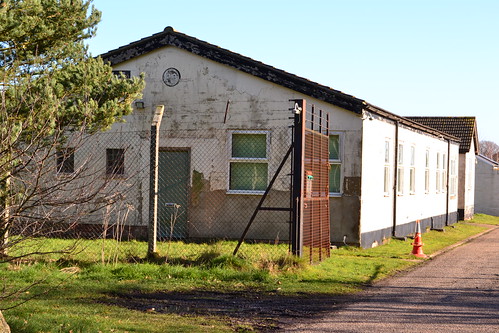
Former Technical Building

One of the former technical buildings no longer used.

In November 1935 information was received at Bircham that two new squadrons were to be formed here, 21 Sqn and 34 Sqn, both bomber units flying Hawker Hinds. Personnel began arriving on December 3rd and began to work on 207 Sqn’s  updated Fairey Gordons, preparing them for dispatch to Cardington prior to their move abroad once more. 21 Sqn were allocated Hangar No. 17, and would receive their first Hind (K.4638) on New Years Eve 1935.

34 Sqn on the other hand, wouldn’t receive their first batch of Hinds until January 1936, when four examples were delivered from the Hawker Aircraft Company Ltd. at Brooklands, by pilots from other units. With two more Hinds being delivered on June 11th, also by pilots of other units, the cadre would soon be preparing to move. On July 30th, both 21 and 34 cadres were ordered north, making the move from Bircham Newton to Abbotsinch in Scotland.

The latter part of the decade reflected previous events at Bircham. Many new changes meant that events at the airfield were as dynamic as ever. Several new squadrons were formed resulting in new crews and some new aircraft. Sharing the space at Bircham were 18 Sqn (Harts and Hinds), 49 Sqn (formed from ‘C’ Flight of 18 Sqn) and ending the decade 206 Sqn with Ansons and later Hudsons. 206 would themselves later be used to form 220 Sqn, which in turn would see ‘C’ Flight be renamed as 269 Sqn. Many of these new squadrons would in turn depart Bircham as changes occurred on the continent.

With 206 came new changes of command at Bircham. Their arrival in 1936, saw a move to Coastal Command (16 Group). Formed at Manston in June under the initial command of Sqn. Ldr. A. H. Love, 23 (Training) Group, 206 Sqn had three flights of six aircraft each and a further six Ansons in reserve. The squadron transferred across to Bircham at the end of July by which time the command had been taken over by Wing Commander F.J. Vincent D.F.C.

206’s main role at this point was training pilots selected for Flying Boats and the  Blenheim squadrons of Coastal Command. Shortly after arrival, the unit’s command would pass over to Wing Commander H. Long D.S.O., and by June 1937, 270 pilots would have been successfully converted in 2,700 hours of flying time.

Naturally accidents did occur during this time, on November 9th 1936, 220 Sqn Anson ‘K6199’ stalled after take-off killing P.O. Peter White (age 23) and injuring three others: Sqn. Ldr. William M. M. Hurley (the pilot), AC.2 Eric D. Butler and AC.1 Reginald K. Birtwistle. The aircraft was written off, after which a court of enquiry recommended modifications to locking bars, as it appeared that the pre-flight checks had been made with the control systems locked. The aircraft was left as an instructional air frame and a stark reminder for proper pre-flight checks!*7

A second accident occurred a year later in September 1937, when another 220 Sqn Anson, ‘K6227’ also stalled, this time falling into the sea near Conway. This time, the crew were not so lucky, with all three, a Sergeant, an AC.1 and an AC.2 all being killed. Their average age was just 22 years old.

Guard House

The former Guard House now stands as a shop.

During the later years of the 1930s, a royal visitor was often seen parked in the hangars at Bircham Newton. The Airspeed Envoy G-AEXX of the King’s Flight was a regular here, being so close to Sandringham House, the Royal residency, it was an ideal location for the aircraft. The Envoy was a creation of the Airspeed company, headed by the author Nevil Shute, a former de Havilland and Vickers employee who later set up his own business, Airspeed Limited. The Envoy was later developed into the Airspeed Oxford which became one of the main trainers used by the RAF.

As the era closed and just weeks before the outbreak of war, another squadron arrived here at Bircham in the form of 42 Sqn with Vickers Vildebeests. The Vildebeest was a late 1920s design biplane, designed to meet Specification 25/25 which required an aircraft operating in the Coastal Defence role and capable of both day bombing and ant-shipping torpedo operations. Several marks were manufactured, up to and including the MK.IV of which only 18 were built. It was some of these that were later delivered to 42 Sqn at Bircham Newton. These aircraft remained in service at Bircham until April 1940, when they were replaced by Beauforts at which point, 42 Sqn departed Bircham transferring to Thorney Island in West Sussex.

On the day war was declared, another very mobile squadron appeared at the door of Bircham, this time it was the Blenheims of 90 Sqn who made a very brief appearance here from West Raynham. Over a period of just two weeks they would locate at five different RAF stations!

With the introduction of the last of the Expansion Schemes ‘L’ and ‘M’ over the years 1938 -39, Bircham would see yet more changes to its infrastructure, notably the demolition of the repair sheds and their replacement with three Type ‘C’ hangars. At this point a fourth was also proposed such was the size and nature of activity at Bircham Newton. In addition, the two original Belfast type hangars were retained providing a mass of hangar space on the airfield. Another bonus for Bircham was the addition of further accommodation blocks, providing better accommodation for the many new air and ground crews who were increasingly appearing at this Norfolk site.

Teetering on the bring of war, Bircham was now operational, more modern aircraft are filtering through and Coastal Command operations begin in earnest. In Part 4, Bircham Newton enters the war.

The full text can be seen in Trail 20 – North Norfolk Part 1.

RAF Bircham Newton (Part 2 – The 1920s)

In Part 1 – The Early Years – we saw how Bircham Newton was created and how it was chosen to be the forefront of long rang bombers targeting Berlin. We saw the untimely death of One Captain Cecil Darley and how, as we enter the 1920s, a new build up of the RAF was required following massive cutbacks after the First World War. In Part 2, we progress through the 20s, Bircham develops into a larger station and how one of its pilots won his VC before arriving here.

This decision to rebuild the RAF in response to France’s build up, then led to an initial burst of refurbishment and development of Britain’s current airfield stock, those not closed by the post-war political hatchet. This included Norfolk’s Bircham Newton.

The link forged in late 1918 with bombers would carry Bircham right through the 1920s and on into the mid 1930s, during which time a number of squadrons would either be formed here or pass through in transit elsewhere. The first of these was through the reforming of 207 Squadron on February 1st, 1920 with DH.9As. This unit came from the nucleus of 274 Sqn, itself a previous resident of Bircham. As a cadre, it would remain here for two years before departing for warmer climates and Turkey, in the Autumn of 1922. That was not the end of the link though, after a spell abroad the squadron would return to the UK, coming back to RAF Bircham Newton at the end of the decade. This return would bring a new variety of aircraft, the Fairey IIIF. By 1932 though, these models were themselves being replaced by another Fairey aircraft, the Gordon, and within three more years the squadron would be back on the road to the Middle East once more.

Another small cadre appeared here on New Year’s Day 1920. Moving in from the former Narborough airfield (Norfolk’s first), the cadre from 60 Squadron would disband later that month, having the good fortune to reappear at Risalpur, India, later in the year.

Over the period 1923 – 24 three more squadrons arrived at Bircham, 7 Sqn (who were formed here from 100 Sqn and stayed for four years); 11 Squadron (6 months) and 99 Squadron (four years) bringing a wide range of aircraft with them to this part of Norfolk. Delights such as the Vickers Vimy; Virginia II, III, IV, V, VI and VII; DH.9A, Fairey Fawn and the Handley Page Hyderabad were all present during this short period of time.

Squash courts

The original squash courts are still used as they were intended.

With such a mass of movement, accidents were inevitable. 7 Sqn suffered a loss when Vickers Vimy (F9187) overturned whilst landing at night on 16th October 1923. Damage to the aircraft itself was not too severe and it was repaired, however, one of the four man crew, AC.1 Ronald Sinclair Watson (aged 20), was not so lucky and was killed  in the crash. The remaining three crew all escaped unhurt.

Another accident befell a 99 Sqn aircraft on 27th February 1925, in which one of its crew was also killed with a second injured. The Avro 504K ‘H3083’,  spun after attempting a stall turn, the manoeuvre resulted in the death of P.O. Cecil S. Marshall Woode also aged just 20. This was the first fatal accident for 99 Sqn.

This build up of squadrons saw continuous movements both in and out of Bircham throughout the 1920s, resulting in many more personnel and aircraft residing at the airfield.

In mid January 1928, 39 Sqn appeared at Bircham (DH.9A) staying for just one year, followed soon after on March 21st, by 101 Sqn. This was another former RFC unit, and were reformed, under the initial command of Sqn. Ldr. J. C. P. Wood. Sqn. Ldr. Wood was posted in from RAF Uxbridge to oversee the formation of the unit and the training of the crews. At its inception the squadron had just 23 airmen in its ranks and was tasked with operating the Sidestrand, an aircraft built by Boulton and Paul aircraft manufacturers.

File:Im1927v145-p46f.jpg

The first example Boulton Paul Sidestrand (Grace’s Guide)

The first model built, J.7938 was collected and brought to Bircham Newton, it was then taken to Ringstead for testing there. It was however, unfortunately damaged in a landing accident after it developed an oil pressure problem whilst being flown by F.O. Duggan, the now Squadron Commander.

Meanwhile, at Bircham, Ground crew were occupied with further ground and air tests, along with lectures by staff from the Bristol Aeroplane Co. on maintenance of the  Sidestrand’s engine, the Jupiter VIIIF.

Rounding off the 1920s was 35 (Bomber) Sqn, reformed with DH.9As and then the Fairey IIIFs, followed not long after by the Fairey  Gordon. 35 Sqn was commanded by  Gilbert Stuart Martin Insall, who had in 1915 been awarded the VC for his actions in France. After having attacked  a German aircraft, he was forced down suffering numerous hits to his own aircraft. Once down, he was able to complete sufficient repairs enabling him to take off again, but in a hail of gunfire that kept others seeking cover.

Later, Insall was shot down again, this time he and his crewman were both injured and captured. Moved from hospital to a POW camp, he made two escape attempts, being recaptured in the first but successfully escaping in the second.

Once repatriated, Insall was by now, a keen archaeologist, and flying with 35 Sqn enabled him to take photographs of the Norfolk landscape. These photographs led to discoveries that have since proven to be very important in the archaeological world. His endeavours in this area went on to help in the development of aerial photography as a reconnaissance tool and to aerial photography as a whole.

However, by the mid 1930s, both Insall and 35 Sqn had also departed Bircham Newton, heading for warmer climates and the Sudan, this move ending their link with this Norfolk airfield.

By now, Bircham had grown considerably, partly in response to the number of its users but also in response to the growing concern over what was happening on the continent. The airfield would by now, have a single aircraft repair section shed along with three double bay general service sheds. All of these were located in the south-eastern corner of the main airfield site, sat in a row with doors facing north-west.

In Part 3, we enter the uncertain times of the 1930s. Germany begins a build up of her forces, and Bircham changes commands being transferred over to Coastal Command.

The full text can be seen in Trail 20 – North Norfolk Part 1.

RAF Bircham Newton (Part 1 – The Early Years)

The north Norfolk coast area boasts numerous wartime airfields and several Cold War examples too, all of which are now closed. Many of these retain buildings or parts of runways in various states of disrepair. In Trail 20, we visit three of these and in one case a substantial amount remains solely thanks to its owners. As we revisit Trail 20, we look at the long history of RAF Bircham Newton.

RAF Bircham Newton.

RAF Bircham Newton has one of the country’s best preserved technical and accommodation areas anywhere in the UK. This remarkable achievement is largely down to the owners, the Construction Industry Training Board (CITB), who opened their first training centre here at Bircham Newton in 1966. Attracted particularly by the large hangars, they are an organisation who specialise in training people for the construction industry through a number of training centres spread across the UK. Their work at Bircham Newton has ensured maintenance/preservation of many (but not all) of the buildings on site.

Located 8 miles from the Norfolk town of Fakenham, RAF Bircham Newton has associations with several airfields including: RAF West Raynham (its parent), RAF Docking (its satellite from where all night flying took place) and four minor decoy sites including the former RFC/RAF Sedgeford.

With its origins in the First World War, prior to the birth of the Royal Air Force, Bircham Newton has had a long and distinguished career mainly serving under 16 Group Coastal Command, who operated a range of single and twin engined aircraft from the site.

By the end of the Second World War, it would have seen considerable development, including three runways, all BRC steel matting (British Reinforcing Concrete), three ‘C’ Type Hangars, three Bellmans, ten Blister hangars and two Belfast hangars mainly located in the south eastern corner. It would also have an extensive range of accommodation and technical buildings catering for around 3,000 personnel of mixed rank and gender.

Opened in 1916, little initially happened with the airfield, and it wasn’t until near the war’s then that Bircham really came into being. Its first operational use was as a Fighter Gunnery School in 1918, with No. 3 School of Aerial Fighting & Gunnery (later known as No. 3 Fighting School) as its initial resident.

The School was born out of the need to train both pilots and gunners in the early biplanes to use their guns effectively in aerial combat. With their roots in the Auxiliary School of Aerial Gunnery, they were formed in May 1918 when Numbers 2 and 4 merged with another two Schools, Numbers 1 and 2 School of Aerial Gunnery. This amalgamation of ‘Schools’ was designed to streamline the complex array of establishments that had grown out of the need for new gunners and pilots. Once formed, they would be one of four new schools which were joined by a fifth in September later that year. Operating a range of aircraft including: B.E.2e, Bristol M.IC, D.H.4, Dolphins, Camels and H.P. 0/400 aircraft, their stay at Bircham would however, be short lived, moving to nearby RAF Sedgeford in November of that year.

Early losses with trainee pilots were high, novices learning to fly the hard way. At Bircham, one such loss occurred to 2Lt. Horace G. R. Boyt, who was killed when his Sopwith Camel (D8226) of No. 3 Fighting School stalled whilst attempting a forced landing near to Thornham bombing range, on July 31st 1918. 2Lt. Boyt was only 19 years of age at the time of his death – a young man taken in the prime of his life.

Possibly Bircham’s most significant early aircraft was the Handley Page V/1500 (Super-Handley) bombers*1. An enormous four-engined aircraft, it first flew in May 1918, and was designed to hit Germany hard, striking targets as far away as Berlin. The V/1500 was more than capable for the role too. It could carry up to thirty 250lb bombs over a range of 1,300 miles with a crew of six. Even more unusual, especially for an aircraft so large, it boasted folding wings; presumably this allowed it to be placed inside a hangar/repair shed for maintenance or storage.

BRITISH AIRCRAFT OF THE FIRST WORLD WAR

Handley-Page V/1500 heavy bomber biplane possibly at Bircham Newton. (© IWM Q 67329)

These aircraft arrived with three squadrons, the first 166 Squadron, was formed on 13th June 1918. Whilst initially receiving FE.2Bs, the squadron was created with the sole purpose of bombing Berlin, and the d’elite crews (mainly Canadian) were hand picked accordingly; a situation not unlike 617 (Dambusters) Sqn of the Second World War. Bircham Newton was chosen for these aircraft, as it was both the most suitable and the most easterly aerodrome available to the RAF at that time.

Formed under the command of Major Cecil H. Darley DSC and Bar, DFC,  a seasoned veteran of the war, the squadron fell under the control of 3 Group, a relationship it maintained until 13th September 1918 when it was transferred to 86 Wing, 27 Group. As the squadron rapidly developed, it naturally grew in size taking on new staff on a regular basis. By the end of September, after its Group transfer, it would have 17 officers and 308 ‘other ranks’ on its books.

After building the squadron up and preparing for war, an audacious and no doubt suicidal attack, was planned for November 9th 1918 – a raid on Berlin. However, maintenance problems meant that only two of the three aircraft at Bircham Newton were serviceable, this despite ground crews working hard to get all three in the air. There then followed a spell of bad weather which caused even further delay to the operation. By the time the situation had improved and the weather was more favourable, the armistice had been agreed, and so the raid was no longer required. As a result, the squadron was ordered to ‘stand down’ and the raid never took place.

For 166 Squadron it was a bitter disappointment, had the war gone on and the flight taken place, they certainly would have made history regardless of whether or not they were successful in their task. Perhaps they too would would have been as famous as their Second World War partners 617 Sqn.

As for the V/1500s, it is believed they were left in Bircham’s sheds, allowed to decay until they had deteriorated beyond use, ultimately they were scrapped. A rather appalling end to an incredible aircraft.*2

The second squadron to be formed with these remarkable aircraft here at Bircham, was 167 Sqn, who also failed to see any active military service. Being formed on the 18th November 1918, just days after the Armistice was agreed, they too were no longer required.

The last of these special squadrons to be created was 274 Sqn,  which was also  formed here, at Bircham Newton, a year later on 15th June 1919. Personnel for the unit came from the nucleus of No.  5 (Communication) Squadron after it was renamed. As the war had now come to a conclusive end though, there seemed little need for these huge, long-range bombers and so all three units were disbanded each within six or seven months of their initial creation.

The immediate post-war era saw little interest in the building of a military force, especially an air force, and strong opposition from both the Navy and Army was fuelled by an anti-war feeling amongst the British public. As a result, many airfields were sold off, aircraft and equipment were scrapped and thousands of personnel demobbed. Airfields like Bircham Newton, now had in their store, numerous surplus aircraft awaiting disposal.

On of these surplus aircraft was the V/1500, and it would be Major Darley of 166 Sqn, who would go on to fly one, not in an operational  capacity, but as a non-stop flight to Madrid to promote these long range aircraft as potential civilian transports. It was not all plain sailing though, for the trip nearly cost Major Darley his life when, on the return leg, the aircraft got into difficulties and crashed into he sea off Biarritz. Managing to survive the accident, Major Darley eventually returned home to Bircham where he continued his military service. In honour of his achievements, the Spanish Government awarded Major Darley the Cross of Military Merit.*3

In a twist of fate, Major (now Captain) Cecil H. Darley, was joined in 1919 by his brother Flt. Lt. Charles Curtis Darley, also a veteran of the First World War, here at Bircham Newton, and they would be tasked with flying more of these surplus aircraft, this time Vickers Vimys, to Cairo. On their first trip together, on 24th September 1919, they departed Bircham heading for France, then onto Rome and eventually Cairo. On the 27th, following a forced stop at Lake Bracciano, 20 miles from Rome, the aircraft struck a telegraph pole causing it to crash. The resultant fire killed Captain Cecil Darley whilst his brother tried in vane to pull him free from the burning wreckage.*3

BRITISH AIRCRAFT OF THE INTERWAR PERIOD

Vickers Vimy (© IWM Q 73389)

Whilst Britain had entered a period of ‘demilitarisation’, the early 1920s saw increasing Government concern over France’s build up of military aircraft, particularly its bombers. The Government now saw France not as  potential Allie, but a potential aggressor, and there was now a growing concern over Britain’s lack of defensive strength.

By 1922, Britain had only 12 squadrons available in the UK, a weak and lacking force it would have been unable to counteract any aggressive moves made by the French. Consequently the Government put in a place a plan to rebuild its forces and increase this number, to a more substantial 52 squadrons by the mid 1920s.

In Part 2. we see how Bircham developed in response to the Governments plans and how new squadrons arrived at this rapidly developing airfield.

The full text can be seen in Trail 20 – North Norfolk Part 1.

RAF Leuchars – one of Britain’s oldest airfields (Part 3)

In Part 2, a number of twin engined models frequented Leuchars performing anti shipping roles and U Boat hunts out in the North Sea. BOAC had begun its clandestine role and shipping ball-bearings back from neutral Sweden. We now see a change to these flights and as the war ends, a new much larger breed begin to appear here are Leuchars.

Throughout all these changes at Leuchars, the BOAC company had been continually running its clandestine operations to Sweden. But by now it was clear that a new, faster more agile aircraft was needed. Even though they were marked with civilian markings and flown by Swedish crews, the Electras were slow and cumbersome and made easy targets for both fighters and flak. Now, with the development of the Mosquito, the opportunity had finally arrived.

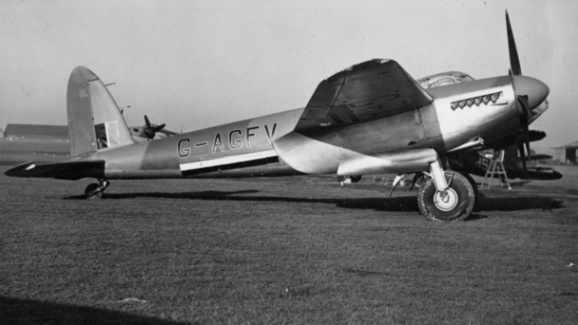
It was during December 1942 that the first civilian operated model of the aircraft arrived here at Leuchars. A Mosquito PR.IV ‘DZ411’,  it was assigned the civilian registration G-AGFV, and would begin flights to Stockholm on 4th February 1943, after which it was joined by six other aircraft. These MK.VIs were given the sequential registrations G-AGGC to GH, and would arrive during the April and May of that year.

By the end of April the following year, a total of nine Mosquitoes would have been modified and delivered to BOAC at Leuchars*5.

BOAC Mosqquito BAE Systems (@BAE Systems)

All these aircraft had to be changed from military status to civilian, this required the removal of all traces of armament. Modified at Hatfield – the home of the Mosquito – the resultant weight loss altered the aircraft’s centre of gravity and so additional ballast had to be added to prevent changes in the aircraft’s flying characteristics.

It was vital that the Mosquitoes remained unarmed for these operations, so as to not infringe or violate Sweden’s wartime neutrality, however, this made any aircraft on this run a potential ‘sitting duck’, even though, like their Lockheed predecessors, they carried BOAC insignia and were flown by civilian aircrew.

These operations were by now carrying more than just mail and ball-bearings though. These covert operations, took the civilian marked and unarmed Mosquito across the North Sea to Sweden, where it would drop off the mail, papers and other written material held within its bomb bay, and return with prominent scientists, special agents or allied aircrew who had been interned in Sweden as well as vital ball-bearings produced by the Swedes. The faster and far more agile Mosquito would, in most cases, be able to out run any opposing Luftwaffe fighter that should, and indeed did, try to intercept the aircraft whilst on one of these flights.

The returning ‘passenger’ on these flights had the unfortunate prospect of having to sit in a modified ventral bay for the whole duration of the flight. The prospect of further internment probably outweighing that of cramp and three hours of discomfort.

One such notable passenger who was carried back from Sweden, was the nuclear physicist Niels Bohr, whose work on atomic structures and quantum theory, had won him the Nobel Prize for Physics in 1922.*4 He would go on to work on the Atom Bomb in the Manhattan Project, the results of which were seen at both Hiroshima and Nagasaki in 1945.

Even though these flights were highly successful, a few aircraft were lost. In Mid August 1944, G-AGKP ‘LR296’, a former 27 MU aircraft, was lost when it crashed into the sea nine miles from Leuchars. All three on board were killed as it approached on return from Stockholm; the passenger being a BOAC Mosquito pilot himself. The crash was believed to have been caused by a structural failure, the aircraft having been repaired previously after an accident in January. By the war’s end fourteen Mosquitoes had been used in some way by BOAC, five of which crashed.*6

As the war moved on, squadron numbers at Leuchars begin to diminish. 1943 brought only two, that of 235 Sqn and 333 (Royal Norwegian Air Force) Sqn who were formed here on April 5th as ‘B’ Flight after the dividing and renumbering of 1477 (Norwegian) Flight. This was a split unit, one part flying the Catalina from Woodhaven, whilst ‘B’ Flight flew the Mosquito MK.II. An upgrade to the MK.VI then saw the unit move to join the famous Banff Strike Wing in September 1944. Whilst at Leuchars they operated as sub-hunters and convoy escorts, whilst ‘A’ flight flew more clandestine operations smuggling secret agents and supplies into occupied Norway. The Mosquito as a multi-function aircraft performed well in these duties, and by the end of the war numerous U-boats had been attacked by aircraft based at the Scottish airfield.

RAF Leuchars

One of the Hangars at Leuchars 2018

With 1944 dawning and major events happening on the continent, more changes would take place at Leuchars.

In the early months, proposals to extend and widen one of the runways was put forward, a part of which was agreed in April. This move also required the relocation of the Watch Office and widening of the perimeter tracks. A further three squadrons would pass through this year beginning with a detachment of 281 Sqn, who stayed for a year from February. A second unit 206 Sqn, stayed here for less than three weeks. But then September/October would bring a new and interesting model in the shape of the B-24 Liberator and 547 Sqn. A change to the smaller twin-engined models that had frequented Leuchars for the last four years or so, the move here was unfortunately a signal of their ending though, the squadron being disbanded in June 1945 never to appear again.

Whilst here, the Liberators would patrol the Norwegian coast in the A/U (anti-U boat) role, many of these patrols being uneventful, the U-boat threat by now greatly reduced compared to its previous Atlantic successes. However, on October 12th, Liberator MK.VI “G” did spot a U boat on the surface which it attacked with both front and rear turrets. Strikes from both guns were seen on and around the conning tower, and it was initially thought that the sub was sunk. After patrolling for a further 45 minutes, the U boat was again sighted some two miles away, but managed to escape in the poor weather. It was believed by the crew to have been a 740 ton vessel which had subsequently suffered damage from the attack.

The B-24s of the these RAF squadrons would be complemented by B-24s now flying separate runs to Sweden by the Americans. In addition to these, Leuchars also saw the reintroduction of the popular and highly successful American built Douglas DC3. The route to Stockholm now being a little less dangerous than it had been in previous years.

The arrival of the Liberator had signified a big change in direction for Leuchars,  they were to be the first of many four engined heavies to serve from the Fife base.

In 1945, 519 Sqn brought along the Halifax III, but sadly they were to go the way of 547 Sqn and disband here at Leuchars in the following May; it too would not reappear in the RAF’s inventory of operational Squadrons. 519 were a meteorological unit, collecting data for flying operations. Using both the Spitfire VII and Halifax IIIs, they would climb to altitudes of around 40,000 ft, and collect valuable meteorological data. Using Prata I, Prata II and Recipe I (Pressure And Temperature Ascent) many of these flights would take the aircraft high out over the North Sea.

With the close of the war, Leuchars had seen no less than twenty-eight operational squadrons pass through its doors, some of these merely staying for a day, whilst others were more prolonged. A range of aircraft had come and gone, mainly twin-engined models operating in the photographic reconnaissance or anti-shipping role. With its position on the north eastern coast, Leuchars had proven vital to maritime operations protecting the seas between Britain and Scandinavia, an area it had operated in, in a number of clandestine roles. But with the war now at an end, these were no longer required, and Leuchars’ role would again revert back to its original one – that of training.

The post war world was very different to the pre-war one, Britain like many other countries was rapidly trying to revert to pre-war budgets. A reduction in the armed forces was seen as essential to cutting costs, whilst rebuilding the nations cities that had been so heavily bombed in the Blitz, was paramount. As a result, the RAF as with the other forces, were having to do with what they had. A reduction in man power and machinery though would not only mean a reduction in squadrons, but the airfields that used them.

Leuchars, like so many, was now under the potential threat of closure. However, the increasing post war tensions between the east and west created the Cold War, with a strained and anxious stand off between Soviet and Western forces right across the European frontier. As had happened before, Leuchars’ position would once again be its saviour. Over the coming years it would see a wealth of operational aircraft and a broad range of front line fighters be based in this small corner of Scotland,

The coming months after the war’s end would see further four-engined models reappear, a previous resident 203 Sqn who had been here in the 1920s, returned from overseas operations in May 1946, bringing back with them the B-24 (Liberator VIII). Within two months though, this would be replaced by the Lancaster GR.3, a version of the mighty four-engined heavy that had wreaked so much devastation across Germany’s industrial cities. But by 1947, 203’s link with the Scottish airfield would finally draw to a close, and the squadron would depart for good.

160 Sqn who arrived a month later in June, also brought the Liberator, and similarly began taking on the Lancaster GR.3. By October though their demise had also arrived, they were renumbered and reformed as 120 Sqn, and by 1947 they had lost the last of their Liberators retaining only the Lancaster.

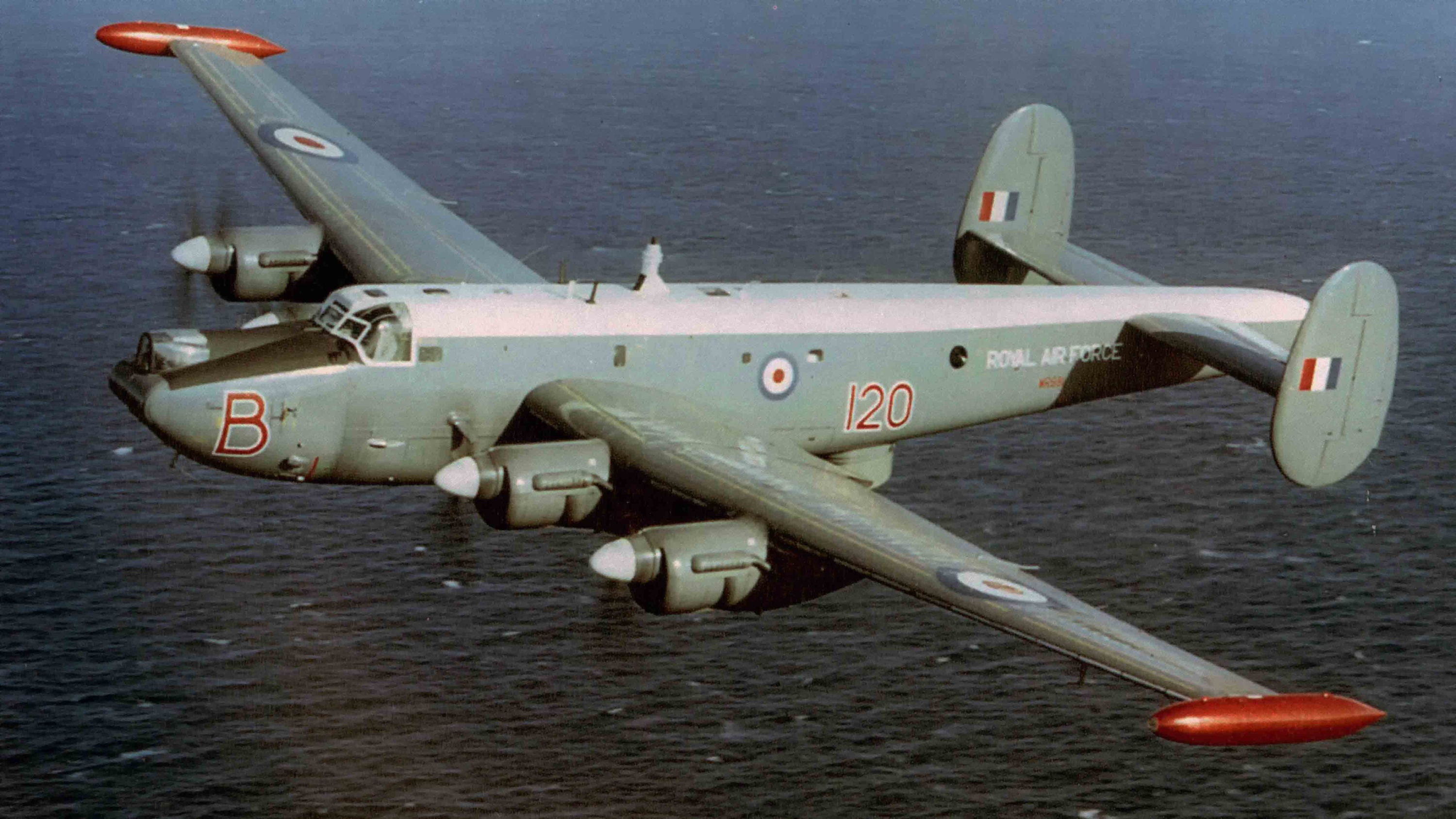
In December 1950, 120 Sqn were posted to Kinloss, where its wartime bombers were replaced with the newer Avro model, the long range maritime patrol aircraft, the Shackleton with its rare contra-rotating props.

Avro Shackleton MR.3 (WR989) of 120 Sqn RAF (@BAE Sytems)

The aircraft, built in response to the growing Soviet threat, was designed around the Lancaster,  Roy Chadwick’s dream bomber. Chadwick, like R.J. Mitchell, having sadly died before their dream had finally been put into service. Built to Air Ministry Specification R 5/46, the Shackleton was initially designed with gun turrets and two Rolls-Royce Griffon 57A engines inboard, and two Roll-Royce Griffon 57 engines outboard.

One other unit arrived here at Leuchars that year, that of 82 Sqn, initially as a Lancaster detachment and then in June 1947 as a base with its own detachments at Eastleigh, Dar-es-Salaam and Lusaka. The last of the prop driven aircraft were now making their ultimate RAF appearances, and soon Leuchars would enter in the jet age.

In Part 4 Leuchars enters the jet age. The Cold War begins and Leuchars takes on a new challenge as it moves to a new Command, that of Fighter Command.

The full story of Leuchars can be seen on Trail 62.

RAF Leuchars – one of Britain’s oldest airfields (Part 2)

After Part 1 in which we saw how Leuchars came about and develop as we moved towards the Second World War, we enter the early 1940s. Here we now see anti shipping sorties, U boat hunts and a strange relationship spawn between the recently formed civilian organisation BOAC and RAF Leuchars.

Immediately after the declaration of war, searches began with flights penetrating out over the North Sea. On the September 4th, a Hudson of 224 Sqn spotted a Dornier 18. The Dornier attacked the Hudson which sustained damage in both the fuselage and fuel tank. Thankfully, the pilot evaded further damage and manged to nurse the aircraft back home to Leuchars without further problems. Leuchars’ position on the eastern coast provided an ideal opportunity for such flights, hunting for bombers, U-boats and ships over the North Sea; it was this operation perhaps that marked the beginning of these maritime searches- a role it would carry out for the next 5 years.

Armourers secure 250lb bombs in the bomb-bay of a Lockheed Hudson of No. 224 Squadron at RAF Leuchars. (public domain)

The two units at  Leuchars continued with repeated patrols, with 233 sighting  both enemy flying boats and a submarine on September 7th. Attacks were made on both but no signs of damage were reported to either. Sadly, on this day, a 224 Sqn Hudson was seen diving into the sea, no explanation was available as to the cause, and a launch was dispatched to search for survivors – sadly with no results. This rolling programme of patrols over the North Sea pretty much set the scene for the remainder of 1940, culminating in the departure of 233 Sqn in September, followed not long after by 224 Sqn on April 15th the following year.

At the base itself, more hangars were built, four (austerity) ‘C’ type hangars were added which expanded the servicing and maintenance area hugely. Leuchars was clearly expanding.

Leuchars like many of Britain’s airfields would not only operate ‘operational’ squadrons from them, but numerous support flights that would run along side. Some of these included: training flights, communications flights, Army support and co-operation flights, and Leuchars was no different. One such unit was that of  18 Group Communications Flight, who resided at Leuchars from the spring of 1940 right the way through to 1960. With only a brief spell at Turnhouse, it would operate a wide range of aircraft throughout its long service and be one of, if not the longest serving unit at the airfield.

The early part of 1940 saw yet another front line squadron arrive here at Leuchars, that of 605 Sqn with Hurricanes. The fighter squadron, whose battle honours would include The Battle of Britain and the Malta campaign,  would only stay for a very short period of time, transferring again at the end of the month to the rather unsuitable Wick, where only one Bessineau hangar existed and there were little or no dispersal facilities. As two other squadrons were also moving onto the airfield at the same time, it was decided to billet the non operational crews off the airfield site, an idea that became the norm in the following war years.

Over the next few years, there would be a plethora of squadrons use Leuchars. In October, 320 Sqn arrived in a move that saw the return of the Avro Anson. Within days of their arrival though the squadron would begin receiving the Hudson I. What makes this particular unit special was the fact that both it, and 321 Sqn with whom it would soon merge, were both formerly of the Royal Dutch Naval Air Service, and had arrived at Pembroke Dock in June that year after the Germans invaded Holland. They brought with them Fokker T VIII seaplanes which were quickly replaced with the Anson.

On January 18th 1941, the two units were merged to form 320 (Dutch) Sqn, whose headquarters were at Carew Cheriton under the command of Lieutenant Commander W. van Lier, at which point all but one of the Ansons were disposed of. For short time the unit would perform from both there and Silloth training crews on aerial photography in the Hudson, before returning here to Leuchars in the March, where upon they gradually updated the Hudsons with the MK.II, the MK.III and eventually the MK.IV before ending their link with Leuchars and departing to Bircham Newton in the April of 1942.

Another unusual squadron to arrive at Leuchars was that of 72 Sqn in November 1940. A Spitfire unit, they had then taken on the Gloster Gladiator, a 1934 designed bi-plane that became famous in the defence of Malta as ‘Faith‘, ‘Hope’, and ‘Charity‘. The switch to the bi-plane appears to have been made as a result of an unsuitable airfield at Acklington. However, and even though the Gladiator was in no way equal to the Spitfire, 72 Sqn retained the Gladiator well into the Spring of 1941, at which point they upgraded to the newer Spitfire, the IIa.

Arriving at Leuchars on November 29th, 1940, 72 Sqn immediately began flying patrols over the sea, their first being in the area around Dunbar. However, the Scottish winter weather dogged operational flying resulting in many cancelled flights and patrols. On December 8th, Green section led by P.O. Norfolk struck lucky, and the flight encountered a lone Luftwaffe Heinkel He.111 over Holy Island. The Spitfire engaged the Heinkel firing numerous shots at the enemy aircraft, but the bomber made his escape flying into the heavy cloud that blanketed the coastal skies. As a result, P.O. Norfolk was unable to make a claim against it. It was this very same bad weather that prevented the squadron’s proposed move back to Acklington, meaning that the planned trip for the 15th, was delayed, the aircraft unable to make the transfer until the end of the month.

AIRCRAFT OF THE ROYAL AIR FORCE 1939-1945: BRISTOL TYPE 152 BEAUFORT.

Beaufort Mark I, N1172 ‘AW-S’, of 42 Sqn RAF, in flight with L9834, also of 42 Sqn (@ IWM CH 2775)

The majority of 1941 saw similar moves; short stays by 86 Sqn (2nd February – 3rd March) with Blenheims; 42 Sqn (1st March – 18th June) with Beauforts on their way to the Far East; 107 Sqn (3rd March – 11th May) with Blenheims and 114 Sqn (13th May – 19th July) also with Blenheims, all of which brought a number of twin-engined models to the Scottish airfield. The primary role for these units was maritime patrols, monitoring and photographing vessels out over the cold waters of the North Sea.

In 1941 a strange relationship spawned between the recently formed British Overseas Airways Corporation (BOAC) and RAF Leuchars. BOAC – being formed by the amalgamation of British Airways Ltd and Imperial Airways – formed a partnership with Leuchars that would remain at the airfield up until the war’s end, operating in an ‘open’ but rather contradictory clandestine role.

The civilian company would initially operate a single Lockheed Model 14 Super Electra (the forerunner of the Hudson) named ‘Bashful Gertie‘, between Leuchars and Stockholm in neutral Sweden. Piloted by Swedish aircrew, the idea behind the route was to pass POW mail into Sweden where it could be forwarded to prison camps in occupied Europe. At the time though, Sweden was one of Europe’s largest producers of ball-bearings, a commodity that both the allied and axis powers needed in order to keep their war machine turning. It is now known that much of Germany’s war supply of ball-bearings was in fact coming from Sweden, but they were not the only country buying the Swedish goods. After dropping off the post, the Electra would be refuelled and filled with ball-bearings before returning to Leuchars. This run hence became known as the ‘ball-bearing run’. These operations would continue for several years from Leuchars, but upgrades at a later date, would see a new form take over from these rather slow and vulnerable aircraft.

On August 12th, another new squadron was formed here at Leuchars, that of 489 Sqn with Beauforts, who kept them until the January of 1942. At this point they began replacing them with the Blenheim IV. After departing to Thorney Island in March 1942, they returned here as a full squadron in October 1943. At this point they began receiving the Beaufighter X an aircraft they kept until the war’s end. Prior to D-day the squadron moved to RAF Langham in Norfolk where they donned invasion stripes ready for their part in the forthcoming invasion of Normandy*3.

A detachment of the Horsham-St-Faith based 105 Sqn, arrived at Leuchars in December 1941 bringing yet another twin-engined, but new design, to these Scottish shores. A revolution in aircraft design, it was the envy of the Luftwaffe and a joy for British pilots – the de Havilland Mosquito IV.

Aircrew of 105 Sqn next to a Mosquito (location unknown) (@IWM CH 018011 1)

The detachment would stay here until after September 1942 whereupon it would reform as a complete unit at RAF Marham in Norfolk. In the last days of September however, four aircraft would leave Leuchars to attack a ‘special’ target in Oslo.

In Oslo on this day was a gathering of high level Nazi officials at the Gestapo headquarters, and this was to be the primary target for the four aircraft. After bombing successfully, they four sped away at low level toward the sea and home, only to be attacked, by four FW-190s. All four Mosquitoes received damage to varying degrees, and one was sadly lost, that flown by twenty-six year old Flt. Sgt. F. Carter and his navigator twenty-year old Sgt. Young. The Mosquito was seen heading toward the Oslo Fjord (Lake Engervann) with its starboard engine on fire. Unable to maintain height, the aircraft clipped trees and struck the water killing the two crew. The two bodies were successfully  pulled from the Fjord by local fishermen and buried in Oslo. The four crews had only been posted to Leuchars the day before.

Little changed throughout 1942. More short detachments and movements through Leuchars saw 217 Sqn, 415 Sqn, 455 (RAAF), 144 Sqn and 544 Sqn bringing mainly twin engined models to Leuchars. Only the detachment of 544 Sqn with Spitfires saw any major changes. The longest standing unit at this time was 144 Sqn with Hampdens, but they were spread far and wide, detachments being located at Skitten, Sumburgh, Wick, Afrikanda and Vaenga.

In October, a month after the departure of 105 Sqn, the Mosquito returned once more. This time a new unit, 540 Sqn, who were created from both ‘H’ and ‘L’ flights of 1 Photographic Reconnaissance Unit (PRU). The multiple flights of this former RAF Benson unit was divided up into five separate consecutive squadrons 540 – 544. Flying models that included:  Mosquito II ‘DD615’, VIII ‘DZ424 and IX ‘LR422 they would also use the Spitfire IV up to the end of the year. Their role here was primarily to photograph targets in Norway and northern Europe, a role they performed until early February 1944. They would eventually return to their former home at RAF Benson leaving a sixteen month  stay at Leuchars behind.

In Part 3, the running of BOAC aircraft from Leuchars see a change, the war comes to a close and new larger aircraft begin to appear here at the Scottish base.

The full story of Leuchars can be seen on Trail 62.

RAF Leuchars – one of Britain’s oldest airfields (Part 1)

Following on from Trail 53 we leave the former RNAS Crail and Dunino behind and head north-west to the mecca of the golfing world, and the historic town of St. Andrew’s, where just outside of the University town is an airfield whose history goes back as far as 1911; this makes it one of Britain’s oldest and most established airfields. Its development then takes it through the First World World War, to the relative peace of the 1920s, the expansion period of the 1930s and on into the Second World War. Faced with potential closure it then went on to be one of the most significant and important airfields in Britain’s Cold War defence network.

Sadly politics played its part as it often does, and in 2011, its fate was sealed when at 4:48pm on July 18th, Dr. Liam Fox the then Secretary of State for Defence announced when talking about bringing the Army back from Germany: “Two major units and a formation headquarters will be based at Leuchars, increasing the number of posts there from 1,200 to more than 1,300. Consequently, the Typhoon force due to be built up there will instead be built up at RAF Lossiemouth.”*10 With that the airfield was to close, being transferred over to the Army, a transfer that occurred four years later in March 2015. Since then the RAF has, on occasion, returned for flying duties,  but its front line RAF role had gone. A state which exists today.

On this next stop, we take an extensive look at the long and incredible life of RAF Leuchars.

RAF Leuchars.

Leuchars sits on the north-eastern coast of Fife, on the banks of the River Eden as it enters the sea at St. Andrew’s Bay. To the north across the River Tay, lies Dundee, and to the west, the city of Perth. South of Leuchars is the University town of St. Andrews – the home of world golfing. Being literally on the shore line, Leuchars provided an ideal location for a whole host of maritime operations, aerial reconnaissance and even later on, search and rescue.

Its life began just after the turn of the last century in 1911, when powered flight was but a mere few years old.  Even before the first aero-engine had been started here, the site was being put to use by the Royal Engineers with a Balloon Squadron, who used it for reconnaissance training in the Tentsmuir Forest on the edge of what is now the airfield.

With the formation of the RFC in 1912, the Balloon Squadron would become part of the first military flying arm to exist in the UK. It would continue in its role as spotting for artillery, even as powered flight gradually became established. On the nearby beaches, small aircraft were tried and tested, but balloon training would ultimately remain the focus of the squadron.

In 1916, the RNAS then acquired the land and began to develop the site as a place for powered flight. Taking over farmland, and eventually swallowing up the resident farm, the airfield slowly expanded, and by 1918 its future was established. By this time, the RAF had been formed, the flying responsibilities of the Navy were transferred to the RAF and the first unit was ready to move in. The Grand Fleet School of Aerial Fighting and Gunnery, run by the RAF to train Naval airmen, resided at the airfield from the end of 1918 on into 1920. This unit, a new unit in its own right, was formed out of the disbanded 208 (Temporary) Training Depot Station which, whilst formed at East Fortune in the Scottish borders, had only been in existence for as little as one month.

RAF Leuchars

The control tower at Leuchars. The airfield’s proximity to the shore line being evident.

In these early days of flying, risks were high, the thrill of manned flight was a draw for many young men eager to experience the joy of soaring above the clouds. As a result, there were numerous accidents and Leuchars was no different.

On May 19th, 1919, Lt. David Gardiner Cooper (22) lost his life when he misjudged a slow roll whilst flying in his Sopwith Camel (F8497), and on August 1st, Canadian, Lt. Philip Hall-Smith (30) was killed, after his Camel was seen to inexplicably nose dive into the ground.*1*2 Two unfortunate losses after a war that had already taken hundreds of thousands of lives.

During the 1920s, with the war now over, military might was seen as an almost unnecessary waste, units were cutback, airfields that had been established for war were closed, and fighting men were returned to civvy street. Political fighting amongst the three arms of the military, saw the RAF cut back to a fraction of its former self, its cause for survival spearheaded by Lord Trenchard. However, Leuchars managed to cling on, remaining not only active, but receiving further development as well. More land was purchased and in 1925 the base was officially renamed RAF Training Base Leuchars.

It would be a time of dramatic change and turbulence for the fledgling Air Force though, and this was wholly reflected by the number of units appearing at Leuchars during this period. Operating as one of the UK’s major Naval training bases (the RAF being responsible for Naval flying at this point), the first of these units to appear was 203 Sqn in March 1920 which had reformed here after having been disbanded just two months earlier at Scopwick.

On April 1st 1923, the RAF Carrier units were re-designated under the new 400 series of squadron codes – a major stepping stone in RAF / Naval structure. Then a year later in 1924, these units were combined to form the new Fleet Air Arm (FAA), the flying branch of the Royal Navy. These changes had a major impact on operational numbers here at Leuchars.

Formally a Royal Naval Air Service unit, 203 Sqn initially flew the Sopwith Camel, replacing these  in April 1922, with the Nieuport and the General (Gloster) Nightjar. In mid September, the squadron was posted to Turkey, departing Leuchars onboard HMS Argus; a posting that would last for three months. After that, the squadron returned to Leuchars once more, again onboard HMS Argus, remaining active at Leuchars until 1st April 1923. At this point the squadron was disbanded, being divided into two Naval Flights: 401 and 402. The squadron as was, would be reformed later, but it would be another twenty-three years before they would see the shores of Leuchars once more.

203 Sqn would be joined a month after their arrival by another former RNAS unit – 205 Sqn. Like 203, it too was disbanded at Scopwick only to reform here at Leuchars in April 1920. Bringing another new model of aircraft to the Scottish airfield, 205 Sqn flew the Parnall Panther, and would serve in its entirety as 205 until October 1921, when the Mobile Flight element  was reformed as 3 Squadron. The remainder of 205 Sqn continued serving alongside here at Leuchars.

3 Squadron would operate out of the Scottish base until 1st April 1923, at which point it was similarly divided into three flights: 420, 421 and 422 now serving at Gosport. The remainder of 205 were also divided up into separate Flights – 440, 441 and 442, but unlike its sister unit, 205 would not return in any form to these Fife shores.

As part of this formation of the FAA, Leuchars would see all these Flights joined by another seven: 403, 404, 405, 406, 443, 445, and 446, and all around this time. This would bring a whole range of aircraft to these shores: Nightjars, Panthers, Nimrods, Flycatchers and the like.  Some of these units would depart for foreign shores whilst some would remain in the UK at other bases. The skies above Leuchars was now buzzing with activity.

For the majority of the 1930s, Leuchars would remain as an FAA training base, being renamed No. 1 Flying Training School, on April 1st 1935. Aircraft seen here would have included a range of training types including the: Fairey IIIF, Fairey Gordon, Avro Tutor and Avro 504N. For three continuous years pilots trained at Leuchars for the Fleet Air Arm, a branch that continued to be the responsibility of the RAF.

The mid to late 1930s would see tensions slowly rise in Germany, but Britain’s general post war doctrine was to defend her shores rather than attack any potential enemy. The Royal Navy was still seen at these times as the main military force, a belief that would very soon change. Britain in these early years, had not seen Germany (partly due to the devastating conditions of the Treaty of Versailles) but France, as her biggest potential aggressor, and as such long range aircraft or heavy bombers were not seen as an important requirement.

Government ideas that Britain should only arm itself with a view to defence against its nearest potential threat, meant that early on, defences were developed at the cost of attacking units. But by the time it was clear that Germany was the threat, Britain was lacking far behind, as little national development had been undertaken. This doctrine saw a far reaching impact right across Britain’s peace time airfields, which at this time included Leuchars. With only one squadron, 36 Sqn (the former Coastal Defence Torpedo Flt.) transiting through on its way to the Far East, preparation for war and flying in particular, remained limited to training flights here at the Scottish base.

As Britain then entered the Expansion Period, new aircraft specifications were being pushed through and airfield development became increasingly important. A number of new airfields were built and a restructuring of the RAF was once again on the cards. Here at Leuchars, the number of hangars was extended, with 7 Belfast Truss hangars being added to the site.

With further changes in the late 1930s, Leuchars became a Temporary Armament Training Camp (later station) with a small collection of Wapitis who used the nearby range at Tentsmuir.

Then in 1938, this restructuring took place, Leuchars, driven by its coastal location, was passed over to Coastal Command in an exchange that saw the two squadrons based at Thornaby (224 Sqn and 233 Sqn) transfer across here, whilst 1 FTS would leave for Netheravon. The Temporary Armament Training Camp previously established here would also disband.

Both these units brought the Avro Anson with them, 224 replacing them the following year with the Lockheed Hudson, a military aircraft born out of a civil transport model. Over the next two years, 224 Sqn would upgrade each of these with both the MK.II and MK.III models before departing to Limvadi in April 1941.

233 Sqn however, would have a more turbulent time, moving initially to Montrose, and then back to Leuchars, where they also took on the Hudson, only to replace it a month or so later with the Blenheim IV. Then, within less than a year, they would depart Leuchars for good, heading for Aldergrove in Northern Ireland where they would continue their operations with Coastal Command.

As 1938 passed the situation in Europe looked even more grave, and home based units were put on alert. 224 Sqn began carrying out searches of the North Sea, looking for vessels making their way to the open waters of the Atlantic. A further flight began sweeps of the Firth of Forth looking for submarines operating in the waters off the Scottish coast. However, in September, Neville Chamberlain returned from Munich, and following his ‘Peace in our time’ speech, war had seemingly been averted for the time being, and these precautionary measures were then relaxed.

In mid December, with tensions eased, 224 Sqn was granted 3 weeks leave allowing personnel time to go home over the Christmas period. The relaxation of measures was however, short lived, and a year later the squadron was put on a war footing with mobilisation orders coming through on September 1st 1939.

In part 2 Leuchars enters the war, being a coastal airfield the sea would dominate its actions and the squadrons that would be based here. It would also be the first line of defence against Luftwaffe bombers, ships and U-boats.

The full story of Leuchars can be seen on Trail 62.

RAF Seahouses – A short lived airfield of the First World War.

A final stop on Trail 47 sees us north again, a few miles from the A1 on England’s north east coast, where in the distance are the Farne Islands, a small group of islands that are home to some 150,000 seabirds all fighting for their own small piece of space during the breeding season. A little further north is Bamburgh Castle and beyond that, Holy Island and Lindisfarne with its Castle and monastic history. It is truly a location full of history and beauty.

Here we stop off at the small coastal town of Seahouses, a town much visited by tourists along this beautiful Northumbrian coastal route.

During the First World War though, this was also the site, albeit for only a short time, of a wartime airfield and a marine operating station.

RFC/RAF Seahouses (Elford ).

Seahouses or Elford as it was primarily  known, was initially a landing ground for 77 (HD) Sqn from February 1917. 77 Sqn, who were based at numerous airfields around the country including Thetford, Edinburgh and the not so far away Haggerston, used it well into 1918, flying Royal Aircraft Factory B.E.2 and B.E.12 models. They operated here until it became a Maritime Operations Station (RNAS Seahouses) in the summer of 1918. It was at this point that 256 Sqn were formed at the airfield with the idea of carrying out maritime patrols. Shortly after their creation though, they were absorbed as 256 Sqn into the newly formed Royal Air Force.

In conjunction with this formation, the final 92 acre site was graced with Bessonneau hangars, these were standard aircraft hangars constructed using a canvas covering over a wooden frame, and could be erected by a team of twenty skilled men within forty-eight hours. As a transportable hangar, they were used well into the 1930s being replaced by Bellman hangars after that time.

256 Sqn, initially operated the DH.6, one of  along line of de Havilland models built by Airco and de Havilland. These would be maintained in the hangars and used for anti-submarine patrols over the North Sea.

DH6SideView.jpg

DH 6 Note the roundel under the top wing as a result of the wings being interchangeable. (public domain via Wikipedia)

The Airco company was founded in 1911 by George Holt Thomas, who initially had the idea of selling and maintaining Farman aircraft at Hendon on the outskirts of London. He met with Geoffrey de Havilland at Farnborough and soon an agreement was struck between the two for Airco  to begin manufacturing de Havilland aircraft. After a period away in service, de Havilland returned to Airco and the process of designing new aircraft fr the military began. Many of these new models were given the designation DH.

At Seahouses, 256 Sqn took delivery of the DH.6, their arrival being just after they were formed, in June 1918. A standard British military trainer biplane, it was designed to be cheap and easy to repair, de Havilland considering the mishaps that many pilots were likely to have during training periods.

RFC Seahouses

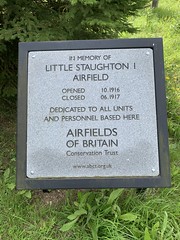
The memorial plaque erected by Airfield of Britain Conservation trust.

It was a solid basic design, with wings that were interchangeable, heavily braced and with a strong camber. Many considered them ‘too safe’ being almost impossible to stall even by the unwary, and with dual controls any trainee was even less likely to get into trouble as the instructor could easily take over if the situation required it. Even so, those that used them would often refer to them in derogatory ways, a range of unsavoury names becoming the more common wartime references.

256 Sqn consisted of four initial flights: 525, 526, 527 and 528 (Special Duty) Flights all arriving in the summer / autumn of 1918, with 495 (Light Bomber) Flight arriving at the war’s end. With detachments at New Haggerston (a field a few  miles north of here), Remmington, Cairncross and Ashington, the DH.6s were eventually supplemented by Blackburn Kangaroos of 495 (Light Bomber) Flight in the November of 1918. Both of these models operated with 256 Sqn even after they departed Seahouses for Killingholme as a cadre in January 1919. By the June of that year, with the war in Europe long over, the squadron was disbanded.

During their time here at Seahouses, 256 Sqn patrolled the coastal region around the Northumbrian coast. Flying in the twin seaters they were not armed but did carry bombs, luxuries such as parachutes were considered too heavy and so were not permitted. Flying over the sea, they would search for German submarines, but with a four hour duration, flights could be long and cold and concentration was sometimes difficult. Once spotted though, a sub would be forced to submerge, here it could do little damage, wartime submarines being unable to communicate or place mines once under water.

One Flight Lieutenant Morley Roy Shier, one of many Canadian pilots in the fledgling RAF was killed flying from Seahouses in his D.H.6 (C5172), when he went into the sea in fog off Coquet Island. He was killed on September 6th 1918, age 23,  in the last few days of the war. He is commemorated at the Hollybrook Memorial in Southampton, a memorial that honours some 1,900 service men and women from the commonwealth who were lost at sea or have no known grave from such action.

Two weeks later on the 19th September, another 256 Sqn accident occurred, also with a D.H.6 (C5174), when a young eighteen year old Air Mechanic 3 Thompson Mackenzie and his Canadian pilot 2Lt Clarence Wilfred Kerr,  were caught in a gust of wind on take-off at Edinburgh. Unable to control the light aircraft in the wind, it crashed killing Thompson Mackenzie and injuring Clarence Kerr.

When the armistice finally came, one over exuberant pilot, Captain Charles Augustus Grey Bennet, 8th Earl of Tankerville, decided to ‘celebrate’ in style. He took off from the airfield in a biplane armed with rockets for shooting down Zeppelins, and flew over Seahouses town. He decided he was going to have his own firework display and fired off the rockets toward to the sea. However, some fell short and landed on hay stacks at Seafield Farmhouse, setting fire to the hay. The local people, also excited by the rather large fires, came to watch the event unfold.

Charles Augustus Grey Bennet, 8th Earl of Tankerville, by Bassano Ltd - NPG x83908

Charles Augustus Grey Bennet, 8th Earl of Tankerville by Bassano Ltd. In the Second World War he went on to become a Flight Lieutenant in the RAFVR © National Portrait Gallery, London

With the posting of 256 Sqn, Seahorses as it was now known, returned to agricultural use, any remnants of its aviation heritage being removed very quickly.

This signified the ending of all aviation activity at the site, Seahouses never being brought back to military aviation use again.

On June 14th, 2018, the Airfields of Britain Conservation Trust erected a memorial plaque in the town centre of Seahouses, to commemorate those who served. It is all that stands to remind us of that small and short lived airfield of the First World War.


Sources and Further Reading.

Graces Guide to British Industrial History website.

Commonwealth War Graves Commission website

Remembrance Sunday – In Honour of 150,000 RAF Personnel.

On Armistice day we pay tribute to all Service men and women who served and died in the defence of freedom. This year we pay particular homage to those of the RAF through a visit to the remarkable St. Clement Danes Church in London.

St. Clement Danes Church – London

St. Clement Danes church stands almost oddly in the centre of London in the Strand, surrounded on all sides by traffic; like an island it offers sanctuary and peace yet its history is far from peaceful.

St. Clement Danes - Church of the RAF

The view toward the Altar. The floor contains nearly 900 Squadron badges of the Royal Air Force.

It reputedly dates back to the Ninth Century AD following the expulsion of the Danes from the City of London, in the late 870s, by King Alfred. As a gesture, he allowed Danes who had English wives to remain nearby, allowing them to dedicate the local church to St. Clement of the Danes. Ever since this time, a church has remained, albeit in part, on this very site.

St. Clement Danes - Church of the RAF

The ‘Rosette’ of Commonwealth Air Force Badges embedded into the floor.

In the 1300s and then again in the late 1600s it was rebuilt, the second time influenced by the great Sir Christopher Wren – notable for his designs of buildings both in and outside of London. Regarded as being Britain’s most influential architect of all time, he designed many famous buildings such as the Library at Trinity College and the Royal Hospital at Chelsea. Wren also redesigned both Kensington and Hampton Court Palaces – his influences stretched far and wide.

Of course Wren’s ultimate master-piece was St. Paul’s Cathedral in London, a structure that reflected both his skill, vision and personality.

During the Great Fire of London in 1666, eighty-seven churches were destroyed in London, but only fifty-two were subsequently rebuilt. Whilst not directly damaged by the fire, St. Clement Danes was included in that list due to its very poor condition and Wren was invited to undertake the huge task.

St. Clement Danes - Church of the RAF

The Memorial to all the Polish airmen who served with the Royal Air Force during World War II.

It then stood just short of 300 years before incendiary bombs of the Luftwaffe destroyed it in May 1941. Leaving nothing but a few walls and the tower, Wren’s design had been reduced to ashes and rubble.

For over ten years it lay in ruins, until it was decided to raise funds and rebuild it. In 1958, following a national appeal by the Royal Air Force, St. Clement Danes was officially opened and dedicated as the Central Church of the Royal Air Force in memory of all those who fought and died whilst in RAF service, and to ‘serve as a perpetual shrine of remembrance’ to them all.

In completing the restoration, every branch of the RAF was included. At the entrance of the church, is the rosette of the Commonwealth made up of all the Air Forces badges of the Commonwealth countries, each of which flew with RAF crews during the conflicts. Beyond the rosette, the floor from the north aisle to the south aisle of the Nave contains nearly 900 squadron badges each one made in Welsh Slate and embedded into the floor.

Around the walls of the church, four on each side and two to the front, are ten Books of Remembrance from 1915 to the present day, in which are listed 150,000 names of those who died whilst in RAF service. A further book on the west wall, contains a further 16,000 names of USAAF personnel killed whilst based in the United Kingdom during the Second World War.

St. Clement Danes - Church of the RAF

Ten Books of Remembrance contain 150,000 names of those who died in RAF Service 1915 – the present day. A further book contains 16,000 names of USAAF airmen who were killed.

On either side of the Altar, are boards and badges dedicated to every branch of the RAF. Two boards list the names of those who were awarded the Victoria Cross and others the George Cross. Other slate badges represent the various units to serve and support the main fighter and bomber groups, including: RAF Training units, Fighter Control units, Maintenance units, University Air Squadrons, Medical units, Communication squadrons, Groups, Colleges and Sectors.

In the North Aisle, a further memorial, also embedded into the floor, remembers those who escaped the Nazi tyranny in Poland and joined the RAF to carry on the fight during World War II. Each Polish Squadron is represented in a beautifully designed memorial around which is written:

“I have fought a good fight, I have finished my course’ I have kept the faith”

Smaller dedications can also be found around the church, such as the Mosquito Aircrew Association, dedicated to both air and ground crews of the mighty ‘Wooden-Wonder’. Some of these memorials are in the form of gifts of thanks many of which come from other nations as their own tribute to those who came from so far away to give their lives in the name of freedom and democracy.


At the going down of the sun and in the morning
We will remember them.

Why not support the British Legion through their website

The Hand of Fate and Squadron Leader Anthony O. Bridgman, DFC. (Part 3)

The Hand of Fate and Squadron Leader Anthony O. Bridgman DFC.  (Part Three).

By Mitch Peeke.

In Part 2 we saw how Tony Bridgman’s war had been going, his friendships, falling in love with John Collier’s sister in law and ultimately; how he’d been shot down and taken prisoner. Now, we find him incarcerated in a POW Camp in Germany.

One month after capture, Kriegsgefangenen (POW) 1264, Bridgman: Anthony Oslands, Squadron Leader RAF, was transferred from the Dulag Luft at Oberursel to OffizierLager (Oflag) IX-A. Better known as Spangenberg Castle, it was a traditional medieval German Schloss. There he would find himself in the company of fellow officers from all three services who would later become distinguished escapers.

POW Card back

Tony’s POW Card showing his continual movements (Photo courtesy of Frances Leach).

On 4th March 1941, Tony and a number of other POW’s from all three service branches, were transferred from Spangenberg to Stalag XX-A, nearly 500 miles away to the East. Word had reached the Germans that some of their officer POW’s held in Canada were imprisoned at Fort Henry, which was not a camp deemed suitable for officers. As a reprisal, the Germans sent British officer POW’s to one of their equally unsuitable camps. Three months later, they were transferred back to Spangenberg.

On October 8th 1941, Tony was transferred to Oflag VI-B at Doessel, Warburg; about 50 miles North-East of Spangenberg. On September 4th 1942, he was transferred again, with other RAF and Fleet Air Arm pilots, this time to Oflag XXI-B at Szubin, Poland; about 480 miles East of Doessel, as the camp at Doessel was temporarily closed.

Escape is forbidden!

By now, Tony had well and truly had enough of this nomadic German hospitality. He was becoming ever more determined not to remain at Oflag XXI-B. It was here that he turned his own skills toward escapism, and I don’t mean idly reading novels, though he did keep a daily journal during his time as a POW.

During his attempt, he and a friend had successfully tunnelled out of their compound. On 5th November 1942, their appointed night to go, Tony went into the tunnel first. By the time he had reached the end of the tunnel and broken the soil to exit, their attempt had been rumbled and Tony’s comrade had already been caught. Tony poked his head out of the ground to find himself confronted by torch beams and the bared teeth of a snarling German Shepherd Dog that was straining at the end of it’s handler’s lead, just inches from his own face. “AUS! AUS!” growled the Dog Handler. Tony climbed out and was marched/shoved back into camp with his hands on top of his head and the barrel of an MP40 Schmeisser at his back. He also very probably had rather a wry smile on his face, too!

As was usual for would-be escapees, the following day he was placed under strict Stubenarrest (House Arrest) for a period of ten days, as a punishment for his Tunnelbau (Tunnel construction). A tedious reminder that “Flucht ist verboten!”

On 28th February 1943, Tony developed a middle ear infection known as Otitis Media. Usually a painful childhood condition, it could also be fairly common among pilots and submariners. The treatment he received was a ten-day course of what was then a crude first generation of antibiotics, known as Sulfa tablets. Given in high doses, these tablets would often have most unpleasant side effects of their own, but it was better than the old treatment of an equally painful incision made in the inner ear to drain it. The condition and especially the surgical treatment for it, could often lead to long term hearing problems for the sufferer.

Another change of address.

After nearly two years of his not being a model prisoner, Tony was moved again on April 14th 1943, with others of his troublesome ilk, to a brand new camp near Sagan; about 100 miles South-east of Berlin, in upper Silesia and 190 miles South-West of Szubin. (It is now a part of Poland). This new camp was sited there because the soil is quite sandy. Also, the topsoil and the subsoil are distinctly different colours, which combined with its sandy texture and the fact that the huts were built raised off the ground; led the Germans to believe that these factors would make tunnelling extremely difficult. Just to be sure, the Germans installed seismographic microphones at regular intervals, into the ground around the perimeter. The camp was opened in March 1942 and Tony and the others were sent there purely because they had been a considerable nuisance to their captors. Oflag IX-A, East Compound, Stalag Luft 3, was now Squadron Leader Tony Bridgman’s latest address.

Someone who frequently used that address, as well as his previous ones, was Tony’s girlfriend, Virginia Bishop. The two maintained as steady a correspondence as was possible throughout Tony’s incarceration, but theirs was very much a long distance relationship now. At least through Virginia, via her sister, Elizabeth; John Collier was being kept informed of his friend’s situation.

Tony was once more in good company at Stalag Luft 3. Among some of his more renowned inmates were people like Roger Bushell, Robert Stanford-Tuck, Roland Beamont, Paul Brickhill and a Naval Pilot named Peter Butterworth, who would later find fame in the Carry On films.

Never look a Gift Horse in the mouth.

In October of 1943, the East Compound was set for the first ever escape from Stalag Luft 3. Inspired by the ancient story of the Trojan Horse, the prisoners had constructed a gymnastic vaulting horse, mostly from the plywood cases of their Red Cross parcels. The horse was designed to conceal one or two men, the tools for digging and bags for excavated soil. Each day, the horse, with either one or two men hidden inside it, was carried out to exactly the same spot near the perimeter fence and while a long line of prisoners conducted gymnastic exercises over it, a tunnel was being dug from within the horse. Two of the many “Gymnasts” vaulting over the horse every day were Tony Bridgman and Peter Butterworth. When Tony wasn’t vaulting; then he, Peter and many others, took turns at tunnelling. The sounds of the men vaulting and landing prevented the sound of the digging from being detected by the buried microphones.

Model Stalag Luft_III used in the film.

Model Stalag Luft_III used in the film The Great Escape. (Free to use image, courtesy Stalag Luft 3 Museum).

At the end of each “exercise period”, a wooden trap door was placed over the tunnel entrance, on a ledge a few inches below the surface, and carefully covered with the surface soil. The horse, with its hidden cargo of men, tools and bagged-up spoil, was then carried back inside to be unloaded, and the day’s excavated soil distributed evenly in the roof space of the prisoners’ huts.

Over a few months the prisoners, working in shifts of one or two diggers at a time, had managed to dig a tunnel over 30 metres (100 ft) long, deep underground. They used bowls as shovels and poked metal rods carefully through the tunnel roof to make air holes. The only shoring they’d used was for the entrance.

In the early evening of 19th October 1943, Lieutenant Michael Codner, Flight Lieutenant Eric Williams and Flight Lieutenant Oliver Philpot, all three dressed in “suits” made from blankets, made their escape. All three men spoke German fluently, which is why they were nominated to go. Williams and Codner successfully reached the port of Stettin, where they stowed away onboard a Danish ship. Philpot posed as a Norwegian businessman and managed to catch a train to the port of Danzig. Once there, he stowed away on a Swedish ship bound for Stockholm. All three made it safely back to England and once home, they sent a coded postcard to Herbert Massey, (Later Air Commodore Massey) the Senior British Officer at Stalag Luft 3, which boosted morale in the camp considerably when he read it out to the prisoners, during morning parade.  The story of the escape was made into a film in 1950 called The Wooden Horse. An interesting aside here is that Peter Butterworth auditioned for a part in that film, but was turned down. Apparently, he wasn’t considered to be sufficiently athletic and heroic-looking, to take part!

Obviously, news of the successful escape of three prisoners from this brand new, supposedly very hard to escape from camp, was not well received by the Germans. The Kommandant at Stalag Luft 3 was a Luftwaffe Officer: Oberst (Colonel) Friedrich Von Lindeiner-Wildau. Von Lindeiner was a highly decorated veteran of WW1 and before. He was a German patriot and most irrefutably anti-Nazi in his beliefs. He had a reputation for fairness and liberal open-mindedness. He had tried to retire before the war, but was not permitted to. As a result of the Wooden Horse Escape, he ordered that certain prisoners were to be relocated to other camps. Having spent close to two years in Stalag Luft 3, Tony Bridgman was among those who had to go. This was probably just as well, as that was not the only escape project that had been on the go in Stalag Luft 3. Five months after Wooden Horse, in March 1944, came the mass breakout that would become known as The Great Escape, organised by Roger Bushell. Given his track record for getting involved in these things, Tony may well have been up for it and as history has shown, a very high number of those involved, including Bushell, were recaptured and executed by the Gestapo; an event which sickened Von Lindeiner. Subsequently relieved of command at the camp, Von Lindeiner was arrested. Facing Court Martial and a likely execution, he cleverly feigned mental illness to avoid further punishment. After the war, he identified and testified against those who had been responsible for the wholesale murder of his prisoners, at the Nuremberg Trials. Von Lindeiner himself was found to have behaved impeccably throughout the war. He died in May 1963 in Frankfurt, aged 82.

Oberst Von Lindeiner-Wildau, Kommandant of Stalag Luft 3

Oberst Von Lindeiner-Wildau, Kommandant of Stalag Luft 3 (Photo: Free to use image, commons-wikipedia).

After leaving Stalag Luft 3, the Germans stopped recording Tony’s whereabouts on his POW Identity Card. It wasn’t too much longer till news of the successful Allied D Day invasion and breakout began reaching the camps. As the net closed in on Nazi Germany, the guards became increasingly averse to the idea of surrendering to the Russians coming in from the East. They decided to gather their prisoners and march them Westwards, toward the advancing British and American forces. The overall distance involved in these staged marches was in the order of a couple of hundred miles or more and it was all done on foot. Thirty to forty miles per day was not out of the ordinary and the guards and POW’s slept in Churches and Barns along the way. By the time they reached their destination camp somewhere on the outskirts of Berlin, the POW’s, Tony included, had literally made it there on their hands and knees. Tony later recalled crawling into a bunk and staying there for about three days.

Liberation

By now it was becoming increasingly clear to the Germans that their war was lost. In those final weeks and days, the Germans’ treatment of their prisoners became more relaxed. In the event, that long, agonising march had been for nothing. The prisoners woke up one morning to find that the Russians had arrived to liberate the camp. Now the war really was over!

However, the prisoners had to remain in their camp for another couple of weeks, till transport could be arranged for them all on trucks. Once the trucks had been arranged, the prisoners were driven to an American Army Camp. The Americans then flew them on to Brussels in Belgium, ready for the cross-Channel journey home, but there were naturally delays and problems. By now, Tony was fulfilling the role of Senior British Officer.

From Brussels, the men were finally all flown home to England, but Tony was asked to bring a list of all his fellow POW’s to General Grant, at his headquarters in Paris. Tony was duly put on a C47 (the Military version of the famous DC3 Airliner) and flown to an airfield just outside of Paris. From there he was taken to General Grant’s HQ.

Tony said that he was feeling very self-conscious at this point because he now found himself standing in this very fine building, surrounded by well-dressed Americans, dressed in the clothes he’d been wearing when he was shot down four and a half years previously! Despite his attire, Tony was ushered in to see General Grant.

At the end of their meeting, General Grant put Tony up in the smartest hotel in Paris at Uncle Sam’s expense. He also took Tony out to dinner. Grant asked Tony if there was anything he needed and Tony asked him for a new uniform, if it were possible. Tony was duly fitted out with such.

After a few days and nights of General Grant’s hospitality, Tony was put on a ship back to England. Having arrived in Newhaven, he boarded a train to London. Somewhere on that train journey, Tony had a keepsake of some kind that he’d managed to hang on to throughout the war, stolen from him. He was particularly upset by that, as can be imagined.

Tony stepped off the train at London’s Victoria Station and went to a friend’s house for dinner. After dinner and a no doubt pleasant evening, Tony left his friend’s house to walk to the Barracks where he was being put up. Quite suddenly, he found that he did not know what to do or where to go. He later tearfully recalled that “I just felt finished, and didn’t know what to do”. Wandering aimlessly about and obviously in a state of some bewilderment, Tony was found by a Policeman, who directed him to Knightsbridge Barracks. Tony’s war had suddenly caught up with him.

This was not an uncommon occurrence with returning POW’s. The subject of one of my previous books was a former POW of the Japanese and exactly the same thing happened to him. Driving the normally short distance home from work one night, he just went blank. When he “came to”, he was in his old home village of Radway in Oxfordshire, with absolutely no recollection of how he’d got there. Unfortunately, he lived in Kent.

The RAF officially gave Tony a backdated promotion to Full Squadron Leader and the corresponding back-pay due to him. They also offered him a Commanding Officer’s job, but he turned it down. The RAF wasn’t the same now and besides, he’d lost nearly everyone that he knew. He’d also lost Virginia Bishop. She had met and married somebody else in the four and a half years that Tony was a POW. (Her son would grow up to become Patrick Bishop, the author). A man who seemingly now had nothing much left to lose, Tony went on three months leave and was officially discharged from the RAF in 1946.

Civvy Street.

So, what on earth was a now Ex, highly trained, low-level attack pilot and dedicated serial escaper, going to do in peacetime Civvy Street? Well, to start with, someone he knew got him into Ogilvy and Mather’s of Fleet Street, and certainly for a while, it seemed like a good idea. They had connections in America and were a large advertising and publishing company. But a man like Tony was far more used to giving the daily orders, than he was to taking them.

In 1950, Tony was asked to meet someone at London Airport. An American woman by the name of Jeannette Graef, from New York. Tony got talking to her in the car and it was the start of a whirlwind romance that would see them getting married that very same year, despite the fact that she was fourteen years younger than he was.

Tony in 1951 at Temple Golf Club.

Tony in 1951 at Temple Golf Club (Photo courtesy of Frances Leach).

The couple spent the early 1950’s living something of a nomadic life involving London, then Camberley and finally, Canada. For a while, they lived in J M W Turner’s old house at 119 Cheyne Walk in Chelsea; then they moved to Camberley in Surrey. They also found time to have three daughters; Judith in 1951, Frances in 1952 and Kathleen in 1957. Kathleen was born in Canada, as Tony had moved the family to Vancouver in 1956. Tony and Jeannette separated not long after Kathleen was born.  Jeannette took all three children to Nassau in the Bahamas; and there she stayed. Tony remained in Canada, convinced he could still make it.

In Canada, Tony had ended up working in a Gas Station on the Alaska Highway. One snowy, icy night, he was the passenger in a car being driven by a friend, who lost control and crashed. Tony’s back was broken in the accident. As can be imagined, he was in hospital for a very long time and was lucky indeed that he was finally able to walk away from it. Meanwhile, one of his sisters, Marian; concerned that nothing had been heard from him in ages, contacted the Missing Persons Bureau to find him. Find him they did and he was brought back to England; to Hindhead in Surrey.

“Pressed” into action

Once recovered, Tony needed something to do, workwise. Keen not to go down any roads he’d been down before, he still took another chance and bought a small printing company in nearby Guildford. This was the start of the rest of his career, as with presses rolling, Tony Bridgman got Dramrite Printers Ltd off the ground. Guildford was all well and good to start with, but if any money were to be made, it would surely be in London, so Tony decided to move Dramrite’s. He found a small but suitable premises in Long Lane, Southwark, SE1.

In 1968, my Dad, Jim; got himself a job at Dramrite’s, as a printer. My Dad was the original “get on your bike and get yourself a job” type, long before Norman Tebbit’s advice! I was a six year old boy at the time and my Brother was four and a half. It was shift work, as most print jobs were and indeed still are. One week on earlies, one week on lates and some days of double shifts. Fortunately, we lived within easy walking distance of Long Lane; in Great Dover Street.

Most of Dramrite’s work was the urgent kind of jobs, fast turnaround. My Dad loved working there. He loved the small, close-knit fraternity of it and he quickly came to like Tony, very much. My Mum would often help out from home, especially during the school holidays, with some of the finishing work, which Tony paid her for. Typical of the work she did was collating the business forms that Dramrite’s seemed to turn out in their thousands. I well remember the four piles of different coloured paper that seemed to live semi-permanently on a table in our front room. They had to be collated into one pile, in the order white on top, then pink, then yellow and then green on the bottom. Once collated, they were boxed up ready for Tony to collect in the firm’s van. As he collected them, he would of course drop a lot more off to be collated! Tony used to sit in our kitchen sometimes having a cold drink and playing little “where’s it gone?” games with my Brother and I. My Dad always said he was such a fair man to work for, but I don’t remember Tony paying me for any of the collating that I got roped into!

Tony at his desk at Dramrite's, taken about eight years after my Dad worked for him.

Tony at his desk at Dramrite’s, taken about eight years after my Dad worked for him (Photo courtesy Frances Leach).

My Mum says that Tony was always “such a Gentleman”. One day during the second summer that my Dad worked for him, I took my first flying lesson; …….over the handlebars of my bike! The resultant crash landing wasn’t exactly text-book and I broke my left forearm. Crying and cradling my arm, I ran home and my Mum decided it would be quicker if we walked up to Guys Hospital. We had no phone in those days and we’d have to pass Dramrite’s anyway, so we stopped off to let my Dad know what had happened. On hearing me crying, Tony came out of his office to find out what was going on. My Mum quickly told him and then off we went to Guys. Just after we left, Tony told my Dad to get himself cleaned up as soon as he could and come straight after us. My Dad said to him “but what about the job on my press, its urgent?!” Tony said: “They’re all urgent, Jimbo; (Seems being given an RAF-style nickname was still traditional!) don’t worry, we’ll cope! Now GO!” He still paid my Dad to the end of his shift.

It is fair to say that Tony lived and breathed Dramrite’s. He lived in the flat above the print works. Frances recalls visiting him there as a student. Frances would often rent a little bedsit during any term time in London as both she and Judith were living and studying at University in London by then. Tony would often call round to them with food shopping and anything else an impoverished student was likely to be in need of! My Mum said Tony often told her how he missed his girls. Frances describes him as being a good and kindly Dad, but he seemed to find it hard to express emotion. After he and Jeannette separated, Tony never remarried, though Jeannette did.

Tony did have two other passions though. One was Golf and the other was horses. No, not the wooden, vaulting-over kind again! The four-legged show-jumping kind. An accomplished horseman himself, Tony owned two horses at Hickstead. One was named Contrast and the other was called Sandyman. I can remember my Dad taking us to a show somewhere to see Contrast compete. Champion show-jumper David Broome used to ride Tony’s horses for him.

Tony with Sandyman.

Tony with Sandyman (Photo: Courtesy Judy Costa).

In May 1972, my family moved out of Central London to the then leafy suburbs of Sidcup, Kent. My Dad didn’t want to leave Dramrite’s, but with nowhere to park a car nearby, he had to rely on the train to get to work. Despite his earnest efforts, British Rail’s timetable just couldn’t be made to fit the demands of a busy and necessarily flexible shift pattern such as that at Dramrite’s. Reluctantly, my Dad had to leave Tony’s employ, but armed as he was with a glowing reference, he quickly found work locally. Although he happily settled in first at Ashmead Press and shortly after at Masterprint, he always said that he never again found anywhere like Dramrite’s. My Dad (who must have liked his nickname, because he was still known as “Jimbo” 16 years later at Masterprint), died very suddenly in 1988, eight weeks short of his 51st birthday.

"Jimbo" a few years later at MasterPrint.

“Jimbo” a few years later at MasterPrint. (Photo Mitch Peeke).

Steer South-west, more Gardening Ops

With retirement in mind, Tony finally sold his beloved and very successful Dramrite’s in 1980 and moved to the picturesque village of Polruan in Cornwall, where he lived in a very comfortable semi-detached house by the sea. He still loved gardening, but it was the green-fingered type this time, and he grew lots of vegetables, which didn’t explode or sink enemy ships! Frances described his garden as being; “Military. Everything was in very straight rows.” He also kept a meticulous daily journal of his gardening activities. Tony bought a small Sailboat too, but he never really got into sailing and he ultimately sold it with very few nautical miles on the clock.

I asked Frances if she knew whether Tony had ever kept in touch with any of his old RAF friends. She said; “No, not really. Though he would sometimes cut obituaries out of the newspaper and file them away”. Leonard Snaith, his old C.O. in 83 Squadron, died in 1985 and John “Joe” Collier died in 2000. Jamie Pitcairn-Hill, Rossy and Guy Gibson of course were all killed in action during World War 2. Tony had once given Frances a copy of Guy’s book, Enemy Coast Ahead to read.

Tony with Judith 1951, Tony in his garden at Polruan and Tony on an outing in Paris

Tony with Judith 1951, Tony in his garden at Polruan and Tony on an outing in Paris (Photo courtesy of Frances Leach).

Tony lived happily in his house by the sea for nearly twenty two years till in 2002, he moved up to Hartland in North Devon. By the time he’d reached 85, Tony was starting to have trouble coping on his own. Frances had long been married with two children of her own by then and was an established potter. She and her husband had their own business, a successful pottery in Hartland, and Tony had moved there from Cornwall so that he could be nearer to them. It wasn’t long though till Tony really couldn’t cope on his own any more and he moved into the Lakenham Residential Home in Northam, North Devon; just a few miles up the A39 from Hartland.

Squadron Leader Tony “Oscar” Bridgman DFC, passed away on 14th January 2006 in the care home, aged 90. He left his three daughters and five grand children. In the end, it was he who was the very last of “The Old Guard” from 83 Squadron. However, Tony’s story doesn’t quite end there.

The unfulfilled destiny of Tony Bridgman.

As I mentioned earlier, Dramrite’s was a very busy printers, but they had breaks! During those breaks, the printers, my Dad included, would often get Tony to share one of his stories. He seemed to have an inexhaustible supply of them! During one such break, the subject of Guy Gibson and the Dambusters was raised; possibly after the film had been on the television. Tony smiled and told his “chaps” (as he often called them) “If I hadn’t have had the damned bad luck to get shot down, the history of that raid may well have been different.” Asked what he meant, Tony got up, signifying that it was time to go back to work and said; “Because that could easily have been my show, and not Gibbo’s!”

My Dad didn’t tell me that one till I was about 14. I had more than a keen interest in aircraft by then. I was in the Air Cadets and a weekend flying member of the Kent Gliding Club. I didn’t know all that much about the Dams Raid, then. I’d seen the film (more than once) and read Paul Brickhill’s book, but my knowledge was really not much more than that. So at the time, I tended to think that it may have been something of a “line shoot” perhaps. After all, I’d been brought up with my Grandad’s sea stories and everyone knows how old sailors love to yarn! Why should airmen be any different? Furthermore, Tony wasn’t mentioned in either the film or the book. So, I left it there, but I never actually forgot it.

Fast forward to April/May 2020. I am nearly 58 and we are in the middle of the Coronavirus lock down. For about twenty one years now, I have been something of a writer/historian in my spare time. I’ve had four books and countless articles published in that time and in what is surely a sign of the times, those articles have been increasingly less for printed magazines and increasingly more for websites.

With being somewhat “confined to Barracks” due to the lock down, I have been keeping myself busy (and my sanity preserved), by writing more articles. I was having an email discussion with a man called Paul and he sent me a slightly unusual, though typically posed photo, of Guy Gibson; asking me if I could tell him anything about it. I dug around a bit and was able to tell him where it was taken and that it had been taken shortly before he was selected to command 617 Squadron. I also mentioned that my Dad had once worked for a man who knew Gibson very well.

Then I remembered what my Dad had once said about the possibility of the Dams Raid not being Gibson’s show if circumstances had been different. In what could only be described as my having a “Light bulb moment”, I suddenly found that I had the idea for another article. Little did I realize at the time quite what a mission I had just set myself, or what the sheer size of that article would turn out to be!

So; now that we are all familiar with Tony’s frankly, amazing story; we can come to the $64, 000 question: Namely; is there any truth in Tony Bridgman’s assertion that if he hadn’t been shot down, he may well have led 617 Squadron himself, with Gibson as a Flight Commander.

John “Joe” Collier was a Group Captain by 1943 and was working in Bomber Command’s Raid Planning Dept. As a pilot, he could easily have led the Dams Raid himself, but he was now far too senior and far more valuable where he was. Collier did much of the initial planning of the Dams Raid, including putting forward his suggestions for a suitable leader for such a daring enterprise.

In 1943, in looking at a suitable leader, they were looking for someone with a proven track record in low-level precision attacks. Somebody who was a highly skilled, experienced and successful leader of men. A man who was openly daring, fearless almost. He would have to be a superb pilot of course and if it could be somebody you actually knew personally who possessed all those traits, well; so much the better.

Now, put yourself in Collier’s shoes. He is asked to come up with a recommendation for such a man. Roderick “Babe” Learoyd VC, formerly of 49 Squadron; the man who brought down the aqueduct in August 1940, was available. He was undoubtedly highly experienced and highly skilled. He was certainly extremely brave and a great leader, but he perhaps didn’t quite have that “openly daring” side to him. He was something of a reluctant hero, perhaps; a more than admirable character trait of course but not one that, of necessity, you are looking for at that precise point. Guy Gibson; a skilled and decorated pilot, known personally as both a friend and a squadron mate and still very eager to win himself that VC, was also available. Now, let’s add a third name to the shortlist: That of “Oscar” Bridgman DFC.

Let’s say Tony hadn’t been shot down and that perhaps he had then followed the same sort of path that Gibson did. He’d have left 83 Squadron, been promoted to full Squadron Leader, moving on to larger aircraft types and being given command of a night bomber squadron, followed by further promotion to Wing Commander. Tony was very much the senior man of the two, so he would have done it all that bit sooner and therefore would have had that much more experience. Gibson, if Tony hadn’t have been shot down, would always therefore have been that much behind, following in Tony’s footsteps.

Then the idea for the Dams Raid is put forward. You are still in Collier’s shoes. You have known both those men personally and professionally for years, Tony Bridgman slightly longer. Whom would you choose, if you had to make that choice? The highly skilled but still slightly impetuous and VC-chasing Gibson, or the man who had taught him; the very man that Gibbo himself looked up to: “Oscar” Bridgman. Put it into that context and I really do think there is a great deal of truth in Tony’s assertion.

However, the reality in 1943 was that Tony was shot down, so that choice simply wasn’t one that Collier would ever have to face making. Given the choices that Collier did have available to him, Gibbo was naturally going to be his recommendation and it was Gibson of course who did get the job, as Air Chief Marshal Cochrane evidently went along with Collier’s recommendation.

Ultimately though, I personally feel that if the hand of fate had not intervened that night over Germany in September 1940, this somewhat epic article might never have been written; because Tony Bridgman, like his protogee, probably would not have survived the war. The one thing that both “Oscar” and “Gibbo” never considered, was taking a rest. That mindset certainly took its toll on Gibson. Although he finally got the VC he so desperately wanted, for leading the Dams Raid; his war ultimately cost Guy Gibson his young life.

As something of a finale perhaps, what remained of the wreckage of Tony’s Hampden and that errant 500lb bomb that the German disposal engineers blew up, was found in 2015 by Herr Volker Urbansky; a passionate German local historian. I am indebted to him for the extra information he has so happily and freely provided me with. I am also deeply indebted to Frances Leach, nee Bridgman; for  everything.

Sources and Acknowledgements for (Part 3).

Frances Leach  (Tony Bridgman’s middle Daughter).
Judith and David Costa. (Tony Bridgman’s eldest Daughter and her Husband).
Stalag Luft 3 Museum, Poland.
My Mum; Eve.
My own memories of my Dad; “Jimbo” .
Old Waynfletes Magazine. Issue 36, Page 18. Tony’s Obituary.
Herr Volker Urbansky.
Ditte Trudslev of Aalborg Bibliotekerne, HistorieAalborg, Denmark.
Philippe Listemann at www.raf-in-combat.com

A final acknowledgement must also go to James Marley of The Ringwood and Verwood Round Table; to Mrs Nicky Van der Drift and Dan Ellin, both from the International Bomber Command Centre in Lincolnshire, and to Mr Patrick Otter.

My thanks again to Mitch and everyone who has contributed to the story. It can be read in full in Heroic Tales.

Following the writing of this post, a new page has been created in Wikipedia about Anthony Bridgman.