Following on from Part 1 of Trail 41 – The Borders, we return to Charterhall in the beginning of 1943.
During the Battle of Britain many pilots suffered from burns in aircraft fires and crashes. The famous ‘Guinea Pig club’ became synonymous with those men who underwent experimental techniques in reconstructive skin work carried out by of Archibald McIndoe at the Queen Victoria Hospital, East Grinstead in Sussex. Some of these men wrote about their experiences, and one, Flight Lieutenant Richard Hillary, sadly lost his life at Charterhall.
Hillary arrived here in November 1942 – after two long years of surgery and hospitalisation. Writing about his experiences in ‘The Last Enemy‘ he opted for night fighter training and was posted to Charterhall. Still disfigured, he had virtually no experience in night flying and none on twin-engined aircraft.
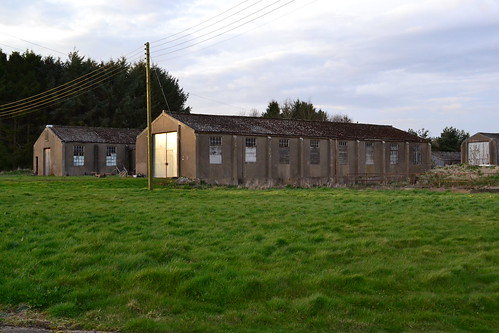
One of two remaining hangars.
The controls of the Blenheim were awkward and difficult to use at the best of times, Hillary, with his disfigured hands, found the Blenheim I more so and often needed help with the undercarriage. Cockpit lighting was another issue experienced by crews, even in later models instrument panels were difficult to read in the dark and this led to several pilots making errors when reading the various dials and gauges. Hillary found this a further challenge, with damaged eyelids his night sight was ‘impaired’ and on January 8th 1943, his aircraft, Blenheim V BA194, struck the ground killing both him and his Radio Operator Flight Sgt. K.W. Fison. The cause of the crash is unclear, whether Hillary’s condition added to the accident is not known, and it is generally thought to be as a result of icing due to the thick, cold Scottish fog. Whatever the cause, it ended the life of two very brave young men, one of whom had fought long and hard to survive in some of the harshest of times.*2
In April 1943 Beauforts began arriving to replace the ageing and very much outdated Blenheim Is. It was also in this month that responsibility of the O.T.Us passed over to 9 Group, and there were now fourteen operational units countrywide. Monthly ‘processing’ of new crews would be increased to an intake of 40 all undertaking a 12 week course before finally being posted to operational squadrons.
The summer of 1943 saw a rapid increase in accidents. Some of these occurred on the ground as well as whilst flying. On June 14th a tragic accident occurred when a Beaufighter piloted by Sgt. Wilkie, swung on take off colliding with another aircraft being refueled. The Bowser exploded in the accident destroying both aircraft and killing two ground staff: Leading Aircraftman (LAC) Francis P. Matthews and Leading Aircraftman George Lotherington.*3
A further incident, also caused by a Beaufighter swinging on take off, caused the first July fatality, when the aircraft hit both a blister hangar and a taxiing Beaufort. The two collisions wrote off the Beaufighter and severely damaged the Beaufort. The pilot of the Beaufighter, Flight Sgt. W. Andrew (s/n 415280) aged just 21, was killed in the incident.
July was a milestone for 54 O.T.U in that it was the first time that 3,000 flying hours had been exceeded of which 894 had been carried out at night at a cost of 20 accidents – such was the demand for trained operational crews.
During September, new MK VI Beaufighters began to arrive. These were passed directly to Winfield and ‘C’ squadron after delivery and inspection at Charterhall. Even though they were ‘factory new’, they did not prevent further accidents nor deaths occurring. By the end of 1943, 54 O.T.U had amassed 28,940 hours flying time of which 7,012 were at night. A huge total that had enabled the RAF to pass the equivalent of 12 operational squadron crews but it had also taken a serious loss of life.
In January 1944 the unit strength was up to ninety-six aircraft, flying continued where the inclement weather allowed, and the year would start off with no serious accidents or deaths – a welcome break; but 1944 would eventually prove to be Charterhall’s worst year.
May brought a new focus for the trainees when it was decided to make 54 O.T.U operational in support of the impending invasion. Operating in the night fighter role, they were called out on to intercept German aircraft roaming over the north-east of England and southern Scotland. Unfortunately, whilst intruders were detected, no contacts were made during these operations, primarily due to the intruders flying too low for the GCI to pick them up; but it did give some purpose to the heavy losses that were being incurred.
At this time a new aircraft began appearing in ‘C’ Squadron, a model that gave new hope and determination to the crews – the incredible, D.H. Mosquito. By the war’s end, 54 O.T.U. would have used eight different variants of the Mosquito.
The initial batch of two were located at Winfield, rather disappointing perhaps for those at Charterhall, but they were not to be devoid of their own special breed of aircraft.
The final part of our visit to RAF Charterhall will follow soon, the end of the war is in sight and so starts a new era for RAF Charterhall…
Sources and further reading
*2 News report on Hillary in ‘The Scotsman‘ Newspaper, 11th November 2001
*3 Commonwealth War Graves Commission website accessed 29/4/17
After leaving the Wolds of Yorkshire, Trail 41 takes us north across the border into Scotland. A land as diverse in its history as it is its beauty. With fabulous views of the Cheviots to the south and the North Sea coast to the east, it is an area renowned for beautiful scenery and delightful walks. With Holy Island and Lindisfarne Castle standing proud, it also an area with a rich and diverse aviation history,
In this trail we stop off at two airfields where we find some remarkable relics and some terrible stories.
Our first stop is at a site that is little known about even though it played a major part in the night-fighter air war, and was also the proving ground for some of the world’s top motor racing drivers as well. Yet beneath all this glamour and bravado it holds a collection of terrible stories. We stop off at the former RAF Charterhall.
RAF Charterhall.
Located some 15 miles south-west of the coastal town of Berwick, Charterhall airfield had its aviation origins in the First World War. Its original name was RFC Eccles Tofts (although the two were not quite the same physical site), a landing ground for 77 Squadron who were based further north at Edinburgh, and flew the Royal Aircraft Factory BE.2c/d/e, BE.12, RE8, de Havilland DH6 and Avro’s 504k. Whilst not official detached here, the airfield was available for these aircraft to land upon and be recovered should the need arise. It wasn’t kept open for long and soon disappeared returning to its former agricultural use.
Charterhall is one of those airfields that has a grand sounding name, suggesting regency and nobility, its reality though, was somewhat different. It gained the rather unsavoury, but apt, nick-name ‘Slaughterhall’, due to the high accident rate of the trainee aircrew who passed through here.
Technical buildings at Charterhall.
Many of the aircraft that operated from here were outdated and ‘war weary’, held together by the dedicated mechanics that took great pride in their work. Used for short-term placements of trainees, it would not house any true front line squadrons until the war’s end in 1945.
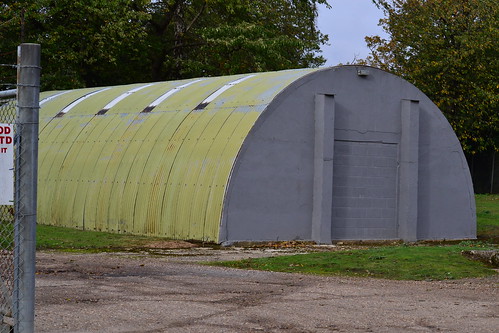
As a training airfield it would have a large number of airfield buildings, two Tarmacadam (Tarmac) runways the main running east-west of 1,600 yards and the second north-east/south-west of 1,100 yards; both were the standard 50 yards wide. There were some 38 dispersal pans, similar in shape to the ‘frying pan’ style , eight blister hangars and four main hangars of which two still survive. Chaterhall’s accommodation was initially designed for 1,392 airmen and 464 WAAFs – consisting of 126 Officers (both male and female) and 1,730 other ranks (again both male and female).
The main technical area was to the north side of the airfield with accommodation spread amongst the woods around this area. The watch office, long since demolished, was a mix of concrete and timber (thought to be initially a 518/40 design), which originally had timber floors, roof and stairs. However, an acute shortage of wood led to all these designs having only a timber balcony and control room. These modified designs (Charterhall included) were therefore built to a mix of 518/40 and 8936/40 specifications.
Another interesting feature of Charterhall would have been the instructional fuselage building. Here crews would have been trained using an aircraft fuselage (Charterhall had two, one each of Beaufighter and Blenheim) jacked up and linked to a controller’s panel. A number of simulated problems could be created for the crews to experience, anything from radio exercises through small warning lights to engine failure and even ditching. All crewmen had to have a good understanding of their aircraft, working hydraulics, electrical and fuel systems were all taught using this same method. In addition to these training fuselages, Charterhall would operate six Link Trainers, along with several other ‘state of the art’ training facilities.
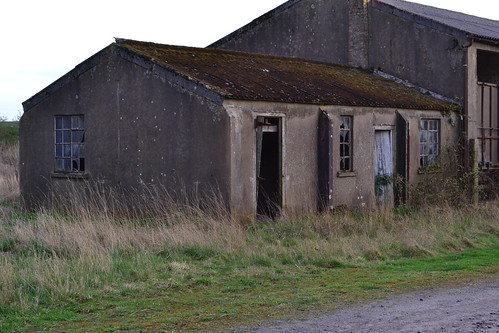
Many of the remaining buildings are in a poor state of repair.
The entire airfield would occupy around 143 hectares, it was certainly not large, especially considering the numbers of crews and mix of aircraft it would have during its short life.
Construction of Charterhall took place over 1941/42 opening on April 30th as part of 81 Group Fighter Command (and later 9 Group), receiving 54 Operational Training Unit (O.T.U) in May 1942. Formed two years earlier, they flew primarily Blenheim Is and Beaufighter IIs under the Squadron code ‘BF’ (Four different unit codes were used: BF, LX, ST and YX). A number of these aircraft were fitted with Aircraft Interception radar (AI) and some Blenheims were dual control.
To support the operations at Charterhall, a satellite airfield was built at nearby Winfield, a few miles east, both sites being used by 54 O.T.U. simultaneously. Later in the war, in an effort to divert marauding Luftwaffe bombers away from the two airfields, a dummy ‘Q’ site (No. 179) was built at Swinton also to the east of Charterhall.
The increase in O.T.U.s in these early days of the war was as a direct result of the increase in demand for new pilots in Fighter Command. In December 1940, 81 Group had six such units (54-59 O.T.U.) and by June 1941 this had increased to nine (52 – 60). By 1942, a total of twelve were in existence boosted by the addition of 12, 61 and 62 O.T.U. 54 O.T.U. would be one of two specialising in twin-engined night fighter flying. New crews, of which there were about 30 per month, were initially given about ten days to establish themselves and ‘crew up’. As time passed however, this time reduced to the point where some intakes were literally herded in a hangar and told to find a crewman or they would be allocated one! *1
Many of the crews arriving at Charterhall were brought in from around the Commonwealth and after passing their basic flying training instruction, would proceed through a further three stages of training. Some crews were also ex-fighter pilots already battled hardened, who had transferred in from front line units to night-fighters.
Progression through the course would be through initially three, and latterly four, squadrons. ‘A’ Squadron would be the initial conversion unit initiating crews on the rudiments of twin-engined aircraft as many had come from single engined fighter units. ‘B’ Squadron was the intermediate squadron, where the crews moved onto the larger twin-engined aircraft and finally ‘C’, (based at Winfield) was the advanced squadron honing skills such as aircraft interception and attack. After completing the full training period, crews would receive postings to front line squadrons across the U.K. and beyond.
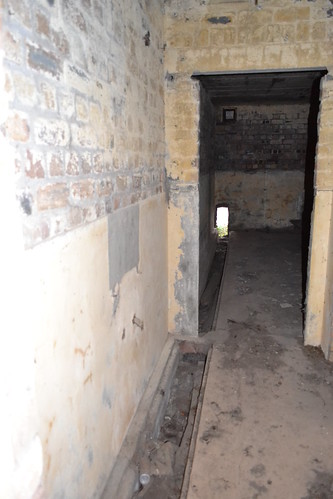
A latrine on the technical site.
Initially on opening, Charterhall was not completely ready, especially the airfield’s lighting (Drem), and so training flights would only occur during the day. But, with the help of ground crews, this was soon rectified and by the end of the month considerable work had been done, and very soon night flying could begin.
The first daylight flights took place on May 13th 1942, followed by night flying seven days later, and – as crews were to find out very quickly – flying these aircraft would be a risky business.
During 1942 some 5000 aircrew would enter 81 Group’s training units, and they would suffer in the region of 2,000 accidents, of which just under 200 would be fatal. On May 23rd, 54 O.T.U’s first accident would occur when a ‘technical failure’ on a Blenheim Mk I, would cause the controls to jam. The aircrew were thankfully unhurt but the aircraft was severely damaged in the resultant crash. The first fatality would not be long in coming though, occurring just two days later, on May 25th, less than a month after 54 O.T.U’s arrival. On this day, Blenheim IV (Z6090) crashed killing both Pilot Officer J. A. Hill (s/n 115324) and Observer Sgt. A.E. Harrison (s/n 1384501) in an accident which is thought to have been caused by icing. P/O Hill is buried at Haddington (St. Martin’s) burial ground in East Lothain, whilst Sgt Harrison is buried in Middlesbrough (Acklam) Cemetery, Yorkshire.
During June, the first Beaufighters would begin to arrive, followed quickly by their first accident. Whilst on delivery by 2 Aircraft Delivery Flight at Colerne, the aircraft – a Beaufighter MkIIf – had an engine cut out causing it to crash about 10 kilometres north-west of Charterhall. Luckily the crew were able to walk away but the aircraft was written off.
During July bad weather hampered flying activities, but it didn’t prevent the unit from increasing its strength to seventy-seven aircraft. Primarily Blenheims and Beaufighters, there were also a small number of Lysanders for target towing and four Airspeed Oxfords.
Accidents continued to occur at Charterhall, and it wasn’t until September 1942 that it would be fatality free – a welcome boost to the morale of the instructors at the time. However, the reprieve was short-lived, and October would see further accidents and yet more fatalities. On the 5th, two Blenheim MK Is (L6788 and L8613) collided: Pilot Sgt. J. Masters (missing – presumed drowned) and Navigator Sgt. J. Gracey were both killed. There were seven other accidents that month, a tally that involved two Blenheims and five Beaufighters, with the loss of one life. Causes included: two burst tyres, two overshoots, a loss of control and an undercarriage failure, all of which added to the lengthening list of accidents occurring at Charterhall.
The need for new crews increased the pressure on training stations to increase flying hours. Courses were cut short, spares were lacking and with only rudimentary rescue equipment, further deaths were inevitable. As a result, it wouldn’t be until March 1943 before Charterhall would see a break in these increasing fatalities.
The start of 1943 saw a new Station Commander, but the new change in command would not see the new year start on a good note…
(Part 2 of Trail 41 will continue shortly).
Sources and further reading
*1 An interview with Edward Braine, in ‘reel 4’ he describes his posting to RAF Charterhall for operational training; crewing up; transfer onto Bristol Beaufighters; position of navigator in Bristol Beaufighter; accident during training; method of observing aircraft at night and interpreting radar signals. Sound file reel 4 Recorded and presented by the Imperial War Museum.
As previously mentioned, Dunsfold airfield has been the subject of a planning proposal and it has been brought to my attention that this has now gone through. Permission has being granted for the construction of some 1,800 homes. However, in order that some of the buildings can be saved, the Dunsfold Airfield History Society are seeking designation of the site as a conservation area.
In addition to this, Historic England are also looking at listing 10 of the buildings on the site, thus protecting them for future generations, and together, these moves may help save some of these historic features before it is too late.
RAF Downham Market in Norfolk, was home to 6 squadrons during the Second World War: 214, 218, 571, 608, 623 and 635 along with a number of other non-flying units. It was also home to a number of aircraft types, Short’s enormous Stirling, the famous Lancaster and of course de Havilland’s ‘Wooden Wonder’ the Mosquito of the RAF’s Pathfinder force.
One of the many huts still left on the airfield.
It was also the airfield that launched the last bombing mission by an RAF aircraft, a Mosquito, on May 2nd 1945, to attack retreating German forces at the Kiel canal.
Considering the strong links it has with the RAF and Bomber Command, it has never been given a fitting memorial, but maybe finally, this is about to change.
A proposal has been put forward to erect a grand memorial on a site next to where one of the former accommodation sites once stood. It will honour not only those who flew from Downham Market and never returned, but those who served and were stationed here as well.
It is hoped that the new memorial will consist of seven polished, black granite slabs with each name of the 700 crewmen who lost their lives, carved into it, in the order in which they were lost. It is hoped to raise £250,000 to cover the cost of the structure which will be grand in scale and stand next to the main A10, a road that was made using the runways for its hardcore.
Currently the only reminder of their sacrifice is a small memorial outside of Bexwell church. It is a small memorial telling the stories of the two heroic crew members, Flight Sergeant Arthur Louis Aaron and Squadron Leader Ian Bazalgette, two pilots who both received the Victoria Cross whilst at Downham Market, for extreme bravery in the face of the enemy.
Today whilst none of the runways or perimeter tracks exist, a number of the original buildings are still present, used by small businesses and light industry. Recently however, a £170m regeneration plan was announced, one that may signify the end of these buildings and Downham Market airfield for good (see here).
RAF Downham Market and especially the many crew members, who came from all across the Commonwealth, deserve great recognition for the work they did. Perhaps this, is finally a sign that it may now happen.
The full story and pictures can be accessed on the Eastern Daily Press website. There are more details and a link to the donations page on the RAF Downham Market website.
RAF Downham Market appears onTrail 7 – North West Norfolk.
These books were kindly lent to me to read, they are the service records of P/O J. A. Philpott (1312948) of the R.C.A.F.
They are four in total and cover a period from September 1941 to November 1945. I shall read them and share some of the records later. These were kindly lent to me by his grandson to whom I am very grateful.
War creates some remarkable heroes. It makes people perform beyond the limits of normal human endurance; through immense pain and suffering, these heroes are able to perform duties beyond those expected or even believed possible.
There were many airmen who carried out these duties with little or no recognition for their actions, never to speak of them or be acknowledged for them. Georges Nadon, a French-Canadian Spitfire pilot, is one of them.
Georges had a long career, he fought both in the skies of Britain and Malta, and completed two ‘tours’ that amounted to an incredible 277 operations and more than 500 hours in the air.
Georges Nadon’s flying career began with 122 Squadron based at RAF Hornchurch, where he flew Spitfires. Of the 27 original pilots of 122 Sqn, only Georges and one other pilot survived. On Christmas Eve 1943 he sailed to Malta, where he would fly – on average and against incredible odds – four sorties a day with 185 Sqn, defending the small island and vital supply routes through the Mediterranean.
At the end of this tour, he returned to England and onto his home country Canada, where he was married.
His second tour began in June 1944, with 403 Sqn (RCAF) based at RAF North Weald, in Essex. They then moved across to France where they gave cover to the advancing allied armies. He eventually left flying service in March 1945.
In 2015, as part of the Canadian commemorations of the Battle of Britain, an image of his face was painted on the tail of the Canadian CF-18 demo aircraft, an image seen by thousands; but yet he still remains relatively unknown and unrewarded.
To find out more about this remarkable man, visit Pierre Lagace’s fabulous 403 Sqn blog, containing information, letters and photographs of Georges Nadon. A man who achieved great things defending the skies over countries far from home, and a man who deserves much greater recognition than he gets.
Georges Nadon of No. 122 Squadron, in his Spitfire at Hornchurch, May 1942. (public domain)
If you are in London, maybe taking in a show or visiting one of the many museums London has to offer, perhaps visiting the RAF Museum at Hendon or as I was, the Imperial War Museum in Lambeth, this is an ideal place to stop off and take time out. Its stained outer walls and hectic surroundings hint at nothing inside this remarkable building.
St. Clement Danes Church – London
St. Clement Danes church stands almost oddly in the centre of London in the Strand, surrounded on all sides by traffic; like an island it offers sanctuary and peace yet its history is far from peaceful.
The view toward the Altar. The floor contains nearly 900 Squadron badges of the Royal Air Force.
It reputedly dates back to the Ninth Century AD following the expulsion of the Danes from the City of London, in the late 870s, by King Alfred. As a gesture, he allowed Danes who had English wives to remain nearby, allowing them to dedicate the local church to St. Clement of the Danes. Ever since this time, a church has remained, albeit in part, on this very site.
The ‘Rosette’ of Commonwealth Air Force Badges embedded into the floor.
In the 1300s and then again in the late 1600s it was rebuilt, the second time influenced by the great Sir Christopher Wren – notable for his designs of buildings both in and outside of London. Regarded as being Britain’s most influential architect of all time, he designed many famous buildings such as the Library at Trinity College and the Royal Hospital at Chelsea. Wren also redesigned both Kensington and Hampton Court Palaces – his influences stretched far and wide.
Of course Wren’s ultimate master-piece was St. Paul’s Cathedral in London, a structure that reflected both his skill, vision and personality.
During the Great Fire of London in 1666, eighty-seven churches were destroyed in London, but only fifty-two were subsequently rebuilt. Whilst not directly damaged by the fire, St. Clement Danes was included in that list due to its very poor condition and Wren was invited to undertake the huge task.
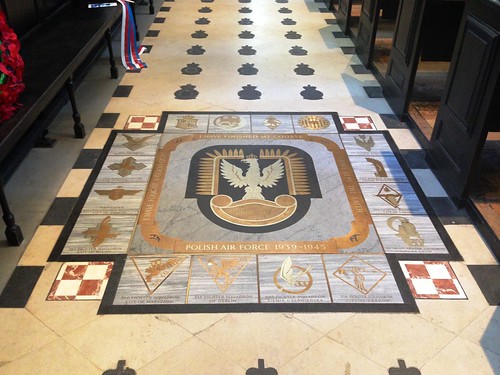
The Memorial to all the Polish airmen who served with the Royal Air Force during World War II.
It then stood just short of 300 years before incendiary bombs of the Luftwaffe destroyed it in May 1941. Leaving nothing but a few walls and the tower, Wren’s design had been reduced to ashes and rubble.
For over ten years it lay in ruins, until it was decided to raise funds and rebuild it. In 1958, following a national appeal by the Royal Air Force, St. Clement Danes was officially opened and dedicated as the Central Church of the Royal Air Force in memory of all those who fought and died whilst in RAF service, and to ‘serve as a perpetual shrine of remembrance’ to them all.
In completing the restoration, every branch of the RAF was included. At the entrance of the church, is the rosette of the Commonwealth made up of all the Air Forces badges of the Commonwealth countries, each of which flew with RAF crews during the conflicts. Beyond the rosette, the floor from the north aisle to the south aisle of the Nave contains nearly 900 squadron badges each one made in Welsh Slate and embedded into the floor.
Around the walls of the church, four on each side and two to the front, are ten Books of Remembrance from 1915 to the present day, in which are listed 150,000 names of those who died whilst in RAF service. A further book on the west wall, contains a further 16,000 names of USAAF personnel killed whilst based in the United Kingdom during the Second World War.
Ten Books of Remembrance contain 150,000 names of those who died in RAF Service 1915 – the present day. A further book contains 16,000 names of USAAF airmen who were killed.
On either side of the Altar, are boards and badges dedicated to every branch of the RAF. Two boards list the names of those who were awarded the Victoria Cross and others the George Cross. Other slate badges represent the various units to serve and support the main fighter and bomber groups, including: RAF Training units, Fighter Control units, Maintenance units, University Air Squadrons, Medical units, Communication squadrons, Groups, Colleges and Sectors.
In the North Aisle, a further memorial, also embedded into the floor, remembers those who escaped the Nazi tyranny in Poland and joined the RAF to carry on the fight during World War II. Each Polish Squadron is represented in a beautifully designed memorial around which is written:
“I have fought a good fight, I have finished my course’ I have kept the faith”
Smaller dedications can also be found around the church, such as the Mosquito Aircrew Association, dedicated to both air and ground crews of the mighty ‘Wooden-Wonder’. Some of these memorials are in the form of gifts of thanks many of which come from other nations as their own tribute to those who came from so far away to give their lives in the name of freedom and democracy.
So next time you’re in London, take time out from the hustle and bustle of the West-end, make your way to the Strand ( a fifteen minute bus journey from the IWM) and visit this peaceful retreat.
St. Clement Danes is open every day to the public, so that those who gave the ultimate sacrifice may live on for eternity.
Young men who died in service for their country, may their memories last forever.
On February 4th 1943, Lancaster III, ED496, ‘WS-P’ of No. 9 Squadron (RAF) took off from its base at RAF Waddington, Lincolnshire. On board were the crew members: Sgts Land, Packer, Gullery, Levesque (RCAF) and McGonigal all of the RAF (VR). This was to be a routine test flight for the crew, but it would end tragically for all those on board.
February 1943 was one of the mildest on record, experiencing low snowfalls and warmer temperatures across the country. However, on the fourth, particularly low temperatures were recorded, and during the night many aircraft on operations turned back due to associated icing problems. During that month there was a very low seasonal rainfall, particularly around Lincoln and the east coast area; with prevailing south-westerly winds, the weather was considered to be ‘fair’.
Lancaster WS-P took off on a routine air test, it was to undertake a number of circuits carrying out practice landings testing on-board equipment aiding such manoeuvres. At 16:00, the aircraft dived in to the ground crashing at Scopwick, north of Sleaford, Lincolnshire. With all its four engines still running when the aircraft struck the ground, the resultant crash led to an inevitable explosion and fire killing all on board. Whilst Sgt Land’s body was thrown clear, the remaining crew members were not and they remained trapped inside. The force of the crash buried the aircraft deep in to the peaty Lincolnshire soil, rendering any recovery virtually impossible.
The crash was investigated by the Air Investigation Branch and their findings summarised in report W1458; but whilst no firm conclusions were drawn, it is believed that ‘structural failure’ of the air frame was to blame for the accident.
The aircraft and bodies remain in the ground to this day and a small monument has been erected in their honour. Sgt Land’s body was taken to Weston Longville, Norfolk, where he was buried in the grounds of All Saints Church. His companions are all honoured at the Runnymede Cemetery, Surrey.
The crew of Lancaster WS-P were:
Sgt Charles Richard Land, (s/n 1332099)
Ronald Jack Packer (s/n 901009) (Panel 160)
Sgt Hugh Francis Gullery, (s/n 1378136) (Panel 151)
Sgt Joseph Thomas Levesque (RCAF) (s/n R/55503) (Panel 183)
Sgt Francis Victor McGonigal, (s/n 1554452) (Panel 157)
Sgt Land is buried in the grounds of All Saints Church, Weston Longville, Norfolk.
By the end of the Second World War, there were a substantial number of airfields covering the UK, mainly used by the Royal Air Force, the United States Army Air Force, the Royal Navy and all their associated branches; they were handed back to the RAF at the end of the war as the various forces were pulled out. Some were used as POW or repatriation camps, some were used to store surplus aircraft, vehicles or ordinance; many were put into care and maintenance whilst the RAF decided their ultimate fate.
Thankfully a few have lasted as airfields and are even fulfilling that role today, sadly though, many were dug up, their runways used for hardcore, the buildings demolished and the events that occurred there reserved for the history books.
The scale and pace of development was massive. The size of these sites bigger than many of the villages they took their names from, the populations larger than many towns of the time. Architecturally they changed the landscape dramatically.
Today as they dwindle away, many are mere names, locals have little knowledge of their existence, memorials are being forgotten, and life is moving on.
As a little reminder of those times and to put the scale of development into perspective, here are two maps held by the British Library that show the main Royal Air Force and Royal Navy airfields as of 31st December 1944.
The two maps, divide the UK and show not only the airfields but satellites as well. They also show Royal Air Force and Royal Navy Water Airfields, and Royal Air Force Moorings. There are a number of sites not included on the map such as relief landing grounds, and training schools, but they do give an indication of the number of airfields that covered the UK by the end of the war.
These are both low resolution pictures, and copyright is held by the British Library who have given permission for them to be reproduced here.
In this, the 34th trail, we go back to the northern area of Norfolk, not far from the North Sea coast, and then head south. We end up near to RAF Attlebridge found in Trail 7, west of the city of Norwich.
Our first stop was a quite unassuming airfield, but one that played an important role during the Second World War. British readers will remember the distinct voice of one Raymond Baxter OBE, the voice behind so many thrilling air show commentaries, the TV programme ‘Tomorrow’s World‘ and a wide range of outside commentaries that brought the wonders of science and technology into our homes. Baxter himself served in 602 Sqn RAF, and was stationed at the airfield in the latter stages of the war. We are of course at RAF Matlask.
RAF Matlask (Station 178)
Documented on airfield site plans and other RAF Documents as Matlask, as opposed to Matlaske the name of the village, it was a large grassed airfield hidden well into the Norfolk countryside.
The village of Matlaske separates the main airfield from the four airmen sites and sewage disposal site, which were widely spread away to the north; only site 2 (communal and WAAF area) and site 7 (Sick Quarters), were located in the village itself.
One of the few remaining buildings at Matlask. This being the former Site 3.
Accommodation was substantial, even taking over the large and rather grand Barningham Hall for the Officer’s Mess. The current building dates back to 1612 and stands in 150 Hectares of garden, park and lakes, a rather ‘up market’ dwelling, that is closed off to public access.
Other accommodation included a range of the usual huts, ‘Nissen’ and ‘Laing’ being the most prominent, with brick and timber featuring most.
The airfield itself stands to the south of the village, with the main entrance way off to the western side. A guard hut would have marked the main gate where a number of brick buildings would have been used for storage, technical activities, fuel storage and the like. A small road took you onto the concrete perimeter track that led all the way round the site. Dispersal was provided by 21 concrete hardstands, although a further 21 temporary hardstands were planned. One single T2 hangar was located next to the technical area, with a further 5 Blister hangers (design 12512/41) spread around the perimeter. Aircraft dispersal was also provided by the standard 6 Type B protected dispersal pens, (7151/41) with built-in air raid shelters; each shelter having a crew entrance and emergency exit. Matlask initially had one watch tower to the north of the site next to the technical area. This was later modified to a two storey design and then a further example was built slightly to the south, this being of the more common two storey ‘standard’. wartime design (343/43).
Matlask although tucked away in the Norfolk countryside would not be devoid of activity. Some 22 RAF squadrons, an Air Sea Rescue unit and an American Fighter Group would all use it at some point.
Designed initially as a satellite for Coltishall, it was dogged with drainage problems, and surprisingly never seem to warrant any form of hard runway. It was opened in 1940 as part of 12 group, destined for fighter defence of the Midlands.
In 1937, 72 Sqn (RAF) was reformed. they moved around a variety of bases eventually ending up at Matlask’s parent base, RAF Coltishall. When Coltishall was attacked in late October 1940, it was decided to move the Spitfire squadron to Matlask for protection. This merely brought the war to Matlask for on the 29th, five Dorniers attacked the airfield, inflicting damage on several dispersed aircraft and injuring a number of personnel.
The village sign in Matlaske village.
After this attack, the first of two, the Spitfires would leave and Matlask would revert back to a satellite having no permanent residents of its own. This situation continued until May/June 1941, when Spitfires IIbs would arrive also from RAF Coltishall (Trail 7) . 222 Sqn (RAF) only stayed until the following July, moving south to the large fighter base at RAF Manston, in Kent.
This would then set the tone for Matlask, a large number of short stays, most for no more than a month or so. But whilst their stays were short, the diversity of aircraft they used was not. Spitfire Is, IIbs, IX, XVI, Hurricane II, Airacobra I, Walrus, Lysanders, Westland Whirlwind, Typhoon Ia and Ib, P-47 ‘Thunderbolts’, Miles Master, Martinets, Hawker’s Henley, Tempest Vs and Mustang IIIs would all grace the skies over this region of Norfolk.
Perhaps one of the more notable examples to fly here, was the American Airacobra. 601 Sqn (RAF) moved from RAF Manston to Matlask at the end of June 1941, bringing Hurricanes with them. These were replaced by the distinctive tricycle undercarriaged P-39 ‘Airacobra‘ a short time after. The first auxiliary squadron, 601 was known as the “Millionaires’ Squadron” and said to have been created by Lord Grosvenor at the gentlemen’s club “White’s“. Membership was initially very restricted, and boasted a unique initiation into the ‘club’. Whilst a determined and very professional unit in the air, they acquired a reputation for flamboyance and bravado on the ground.
In looking for a new fighter, the RAF turned to the Americans. The Airacobra was trialled and whilst found to have a number of advantages over its adversaries, it was considered too poor at heights over 15,000ft. Used in only a small number of raids it was deemed inadequate and soon replaced, with many supplied models being sent on to Russia and the Far East. 601 would use these partly at Matlask and then back at the Fighter Development Unit at Duxford where they moved to on August 16th 1941.
On that same day, Spitfires arrived with 19 Sqn (RAF). They changed their Mk.IIs for Vbs before moving off to RAF Ludham in December. It was during this stay though that a change was to take place for Matlask.
On October 1st 1941, 278 Sqn would be formed out of 3 Air Sea Rescue (ASR) Flight, operating Lysander IIIs. These, whilst successful in SOE missions, were considered the weak link in the Air Sea Rescue Role. Operating initially as a spotter, it would fly to the last reported position of the downed aircraft, carry out a search, drop whatever aids it could, and then pass the information on to a Walrus which would collect the airman. In theory this worked well, but due to its poor capacity (supplies were limited to what could be fitted on the bomb racks), slow speed and vulnerability, it was limited to flying no further than 40 miles from the coast. As a result, and almost immediately, the Lysanders were replaced by the Walrus, an aircraft 278 Sqn operated for some time. Performing in this vital role, they were eventually moved in April 1942 to RAF Coltishall leaving Matlask firmly behind.
Around the time 19 Sqn departed Matlask, 137 Sqn moved in. They were to be perhaps the longest-serving squadron at Matlask and perhaps also one of the most notable.
Operating in the Coastal patrol and fighter role, they brought with them the Westland Whirlwind. Potentially thought be a world-beater, they would be liked by their crews, perform well at low altitude and have a punch that matched anything in the European Theatre at that time. However, having a poor combat range, and production problems with their engines, they were only built-in limited numbers and were restricted to ground attack, anti-shipping duties and low-level sorties. As such, they were only supplied to 2 operational squadrons, 137 Sqn and 263 Sqn; 137 Sqn being the second. Operations by the Whirlwind were mixed. Some great successes were reported, its concentrated fire power proving devastating not only to enemy aircraft but more heavily armoured targets including locomotives.
Despite this however, 137 Sqn was to suffer a major blow in February 1942. Whilst escorting British destroyers, they were unaware of the presence of the two German warships Scharnhorst and Gneisenau. On diving to investigate, they were attacked from above by escorting Bf-109s and of the six Whirlwinds sent out, four were shot down and lost. Despite its good performance, it was never to enter full production and soon the Whirlwind would be declared obsolete and be destined to fall into aviation obscurity.
137 Sqn would leave Matlask in August 1942 only to return 10 days later before departing again to RAF Snailwell at the end of the month. Almost as a direct replacement, Typhoons from Snailwell’s 56 Sqn and Coltishall’s 266 Sqn took their place. 56 Sqn stayed here for almost a year, moving to Manston in July 1943 whilst 266 Sqn moved to Duxford that same month. One of the last fatalities of 56 Sqn was Flight Sergeant R.G. Gravett (s/n 1268706), flying a ‘Rhubarb’ mission in his Typhoon JP392, who was killed when his aircraft was hit by Flak whilst attacking a locomotive at Leiden train station. The resultant crash, which hit 5 homes in Leiden, also killed one civilian and wounded five others.*1
After 56 Sqn’s departure the airfield was allocated to the Eighth Air Force and given the designation Station 178. Sadly though, it was only used for small detachments of the 56th FG flying P-47 ‘Thunderbolts’, and plans to expand the station to three runways were not carried out.
Apart from target towing activities, the early summer of 1943 was relatively quiet at Matlask; Lysanders returned along with the more unusual Masters, Henleys and Martinets of 1489 Flt.
Then came a flurry of fighter activity. The July of that year would see Matlask become a fighter base once again, with Spitfires, Tempest and Mustangs all being stationed here. Some 11 squadrons: 611, 195, 609, 3, 486, 65, 122, 229, 453, 602 and 451 all brought their own variety of fighter with them over the next year.
January 1944 would bring two more ‘unusual’ visitors to Matlask, although neither would be particularly graceful. On the 11th, B-17G (s/n 42-31090) ‘Nasty Habit‘ was instructed to land at Matlask, because of poor weather at its own station, RAF Deenethorpe (Trail 6). The B17 overshot and crashed through the boundary hedges and onto the road. Flying with the 613 BS, 401 BG, it was salvaged ten days later.
B-17G (s/n 42-31090) ‘Nasty Habit’ *2
Then at the end of that month, whilst returning from a mission to Berlin, Halifax III, HX239*3 ‘HD-G’ of 466 Sqn RAF Leconfield, attempted a landing at Matlask due to low fuel. On touchdown the pilot, P.O. D. Graham realised he was on a collision course for a group of workmen. In averting what could have been a major catastrophe, he ground looped and hit a partially built building, injuring three of the crew members. For the crew, a mix of Canadians and Australians, it was not the most comfortable of landings!
Almost as quickly as it all started, aircrews left and Matlask fell silent. The war came to an end and the RAF pulled out. 451 Squadron leapfrogged between here and nearby RAF Swannington, finally leaving on April 6th 1945 to RAF Lympne in Kent. The end had arrived for Matlask. A short spell as a POW camp and then it began its rapid return to agriculture and its present day form.
Matlask airfield today is very different from its heyday of the 1940s. The perimeter track is all but gone, only a small section remains as a simple farm track that leads across what was the northern section of the airfield. Half way across this part of the airfield lay the remains of the base of the T2 hanger. Today its holds farm machinery, waste and other products. On the north-western side would have been the main gate and the technical area. The two towers have left no remnants and even the last fighter pen is all but indistinguishable. Having grass runways, means the site is flat and unrecognisable as having any notable history. A memorial erected by the Airfields of Britain Conservation Trust stands on what was the north-eastern section of the airfield just south of the village. From the village, heading south past this memorial takes you parallel to the airfield, the former perimeter tracks only feet from where you are driving.
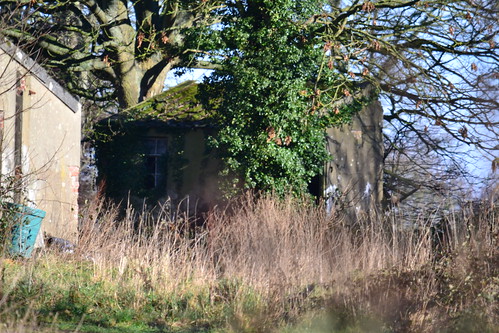
In the village of Matlaske itself, you can find the former sick quarters – site 7, its distinctive roadway still evident but housing small homes and Bungalows now rather than sick bays of the 1940s. To the west there are a small number of buildings remaining on private land, shrouded in vegetation and trees, they are barely visible from the roadside. This would have been the former site 3, the location of six airmen’s barracks, five latrines, an ablutions block, drying room, fuel compound and a picket post. A small community in its own right.
Many of the accommodation sites are located within the grounds of Barningham Hall and the roadways that once took weary crews to and from the airfield now gone. Driving down the western side past the technical site, presents no sign of wartime activity. The former huts have all been removed, and even the battle headquarters, often one of the last few buildings to survive, has been removed.
Matlask has all but gone. When I visited early in 2016 it was a foggy, cold morning. The Norfolk wind has replaced the piston engines, the Merlin’s no longer resonate across the open expanse. The village is quiet. A public defibrillator in an old phone box perhaps a metaphorical gesture. The village sign acknowledges the history, a lone aircraft flying low over the village. As the fog lifts on this winter morning it reveals a wide open expanse that was once the busy and historic RAF Matlask.
Raymond Baxter commentates on some British Classics at RAF St. Athan.
After leaving Matlask airfield, we head south, a short distance to the former base at Swannington.
sources
*1 Air War WW2 database V4.1, Jan Nieuwenhuis, Netherlands







 Aviation Trails