On this, Remembrance Sunday, we pay tribute and homage to those who gave the ultimate sacrifice, to those who put their lives on the line so that we may live peacefully and free.
Not far from the former RAF Charterhall airfield in Berwickshire, is a small church that dates back to the late 1600s. The hamlet in which it stands, Fogo, is small. In 2004 it had a population of just 21 people, yet it is the resting place of 16 service personnel from the Second World War. These are Commonwealth graves with men from: the Royal New Zealand Air Force; Royal Australian Air Force; Royal Navy Volunteer Reserves; Royal Air Force Volunteer Reserves; Royal New Zealand Navy and the Royal Canadian Air Force, all of whom died in service on and around RAF Charterhall.
The sixteen men lay together in a Commonwealth War Graves Commission site.
These are those sixteen – We shall remember them:
F.O. John Morris, (s/n: J/10253) RCAF, killed October 24th, 1942.
F.O. John Morris was one of many pilots who suffered as a result of the autumn storms. It is believed he lost control of his Beaufighter MKIIF (R2313) whilst in the clouds and crashed into the ground in the local area.
F.O. Thomas James Donohue (s/n: 411880) RAAF, Killed November 10th, 1942.
F.O. Donohue was one of many Australian crewmen to pass through Winfield and Charterhall. Sadly it was to be the final resting place for F.O. Donohue, his Blenheim MK V (BA111) crashing into the ground following the port engine cutting out. This was the third Blenheim crash of the month.
Sgt. Clarence Leonard Hutchesson (s/n: 401729) RAAF, Killed November 13th, 1942.
On the 13th November Beaufighter MKIIF R2378 took off from RAF Winfield with Pilot Sgt. Hutchesson and Navigator Sgt. R. Bell on board. The aircraft collided with another Beaufighter (T3359) near to Kettleshall Farm, Poleworth. Both crewmen in R2378 were killed, whilst the other crew managed to fly back to Winfield where they landed safely.
Flt. Sgt. Cosson was killed when the Beaufighter he was flying (V8163) spun into the ground and burned.
Petty Officer Airman Arthur Herbert Percy Archibald (s.n: 3171) RNZN, Killed July 19th, 1943.
Petty Officer Airman Archibald was flying a Fairy Barracuda MKII (DP868) from the RNAS Worthy Down to Scotland when he got into difficulties. The engine failed, after which the aircraft crashed at Charterhall killing him.
Flt. Sgt. Will Andrew (S/n: 415280) RNZAF, Killed July 27th 1943.
July 1943 saw a high number of accidents at Charterhall, Flt. Sgt. Andrew being one of the first fatalities of the month. He was killed when his Beaufighter (T3419) swung on take-off. This action caused the aircraft to collide with a blister hangar and then crash into a taxiing Beaufort. The pilot of the Beaufort was uninjured although the aircraft sustained considerable damage.
Flt. Sgt. Edward John Stacy Williams (s/n: 409952) RAAF, Killed September 19th, 1943.
Flt. Sgt. Williams was killed following a night flight engine fire. The pilot of the Beaufighter (T3361) Flt. Sgt. McGrath reported to RAF Winfield that he and his navigator were bailing out, but the when the aircraft was later found in the area, the bodies of both crewmen were still inside – both dead.
F.O. Gordon William Bigmore (s/n: 418047) RAAF, Killed October 18th, 1943.
It is believed that on the 18th, F.O. Bigmore lost control of his aircraft, Beaufighter MKIIF (T2438) whilst in cloud and on approach to the airfield. The aircraft collided with high ground killing the pilot and causing severe injuries to the navigator F.O. Hirst.
Sgt. Gilbert Douglas James Hanlon (s/n: 1333983) RAFVR, Killed February 17th, 1944.
Sgt. Hanlon was killed when he lost control on final approach to the airfield at Winfield. The Beaufighter MKIIF (R2375) collided with the ground some 2 miles south of the airfield on farmland.
Sub-Lieutenant (A) James Allen Luke, RNVR, Killed March 1st, 1944.
March 1944 started off badly, when Sub-Lieutenant (A) Luke (above) and Sub-Lieutenant (A) Newburgh-Hutchins (below) tried to land their Fairy Fulmar in a snow storm at nearby RAF Winfield. The aircraft, a Fulmer MKI (X8696), was on a flight from the trials aircraft carrier HMS Pretoria Castle when it flew into the snow storm.
Sub-Lieutenant (A) Christopher Newburgh-Hutchins RNVR, killed March 1st, 1944.
W/O. Hamilton Alexander Douglas (s/n: 405843) RAAF, Killed March 18th, 1944.
On March 18th, W/O. Douglas of the RAAF was killed when the Miles Martinet T.T. (EM481) he was flying crashed on take-off at RAF Charterhall.
Flt. Lt. Michael John Dunn O’Leary DFC (s/n: 77614), RAFVR, Killed May 11th, 1944
Flt. Lt. O’Leary DFC was involved in what was possibly Charterhall’s most serious accident, when Beaufighter V8614 suffered an engine failure on the starboard wing; the aircraft unable to gain height, crashed into the ground. Flt. Lt. O’Leary was one of four crewmen killed, a crew that included two instructors and two pupils. O’Leary had just been awarded his DFC for gallantry prior to arriving at 54 OTU.
F.O. John Owen Scott (s/n: 151287) RAFVR, Killed August 5th, 1944.
F.O. Scott was killed in early August when his Beaufighter MKIF (V8739) suffered engine failure at 800 feet and spun into the ground at Charterhall.
F.O. Frank Ernest Larkman ( s/n: J/42709) RCAF, Killed March 3rd, 1945.
F.O. Frank Ernest Larkman was another crewman involved in a serious accident, when the Beaufighter NF VI (KV976) he was a pupil in, lost both its artificial horizon and its gyros. At 5,000 feet and in cloud, the pilot Flt. Sgt. Wedgewood as instructor, perhaps became disoriented and the aircraft crashed into the sea 3 miles north of Berwick. A further unknown crewman who was also aboard, also died in the incident.
F.O. Ernest Arthur Clough (s/n: 147069) RAFVR, Killed July 13th, 1945.
Sadly many crews lost their lives at, or after, the war’s end. Flt. Lt. Clough was one such man. Flying a Hawker Typhoon IB (RB210) of 56 OTU from Winfield, he flew into high ground near North Charlton, Northumberland, in the resultant crash on July 13th, 1945, he was killed.
RAF Charterhall and RAF Winfield were both training grounds where many airmen were trained using unfamiliar or war-weary aircraft. As a result of inexperience, bad weather or in many cases, technical issues, there were a number of accidents many of which ended tragically. These sixteen are just a few of those who lost their lives in these accidents and are now buried in this quiet and secluded part of Scotland.
Trail 44 takes a look at the aviation highlights of the North Kent Coast in the small town of Herne Bay and its neighbour Reculver. It was here, on November 7th 1945, that the World Air Speed record was set in a ‘duel’ between two Gloster Meteors, as they raced across the Kent Sky.
On that day, two Meteor aircraft were prepared in which two pilots, both flying for different groups, would attempt to set a new World Air Speed record over a set course along Herne Bay’s seafront. The first aircraft was piloted by Group Captain Hugh Joseph Wilson, CBE, AFC (the Commandant of the Empire Test Pilots’ School, Cranfield); and the second by Mr. Eric Stanley Greenwood O.B.E., Gloster’s own chief test pilot. In a few hours time both men would have the chance to have their names entered in the history books of aviation by breaking through the 600mph air speed barrier.
The event was run in line with the Fédération Aéronautique Internationale‘s rules, covering in total, an 8 mile course flown at, or below, 250 feet. For the attempt, there would be four runs in total by each pilot, two east-to-west and two west-to-east.
With good but not ideal weather, Wilson’s aircraft took off from the former RAF Manston, circling over Thanet before lining his aircraft up for the run in. Following red balloon markers along the shoreline, Wilson flew along the 8 mile course at 250 feet between Reculver Point and Herne Bay Pier toward the Isle of Sheppey. Above Sheppey, (and below 1,300 ft) Wilson would turn his aircraft and line up for the next run, again at 250ft.
Initial results showed Greenwood achieving the higher speeds, and these were eagerly flashed around the world. However, after confirmation from more sophisticated timing equipment, it was later confirmed that the higher speed was in fact achieved by Wilson, whose recorded speeds were: 604mph, 608mph, 602mph and 611mph, giving an average speed of just over 606mph. Eric Greenwood’s flights were also confirmed, but slightly slower at: 599mph, 608mph, 598mph and 607mph, giving an overall average speed of 603mph. The actual confirmed and awarded speed over the four runs was 606.38mph by Wilson*1.
The event was big news around the world, a reporter for ‘The Argus*2‘ – a Melbourne newspaper – described how both pilots used only two-thirds of their permitted power, and how they both wanted permission to push the air speed even higher, but both were denied at the time.
In the following day’s report*3, Greenwood described what it was like flying at over 600 mph for the very first time.
As I shot across the course of three kilometres (one mile seven furlongs), my principal worry was to keep my eye on the light on the pier, for it was the best guiding beacon there was. On my first run I hit a bump, got a wing down, and my nose slewed off a bit, but I got back on the course. Below the sea appeared to be rushing past like an out-of-focus picture.
I could not see the Isle of Sheppey, toward which I was heading, because visibility was not all that I wanted.
At 600mph it is a matter of seconds before you are there. It came up just where I expected it. In the cockpit I was wearing a tropical helmet, grey flannel bags, a white silk shirt, and ordinary shoes. The ride was quite comfortable, and not as bumpy as some practice runs. I did not have time to pay much attention to the gauges and meters, but I could see that my air speed indicator was bobbing round the 600mph mark.
On the first run I only glanced at the altimeter on the turns, so that I should not go too high. My right hand was kept pretty busy on the stick (control column), and my left hand was. throbbing on the two throttle levers.
Greenwood went on to describe how it took four attempts to start the upgraded engines, delaying his attempt by an hour…
I had to get in and out of the cockpit four times before the engines finally started. A technical hitch delayed me for about an hour, and all the time I was getting colder and colder. At last I got away round about 11.30am.
He described in some detail the first and second runs…
On the first run I had a fleeting glance at the blurred coast, and saw quite a crowd of onlookers on the cliffs. I remembered that my wife was watching me, and I found that there was time to wonder what she was thinking. I knew that she would be more worried than I was, and it struck me that the sooner I could get the thing over the sooner her fears would be put at rest.
On my first turn toward the Isle of Sheppey I was well lined up for passing over the Eastchurch airfield, where visibility was poor for this high-speed type of flying. The horizon had completely disappeared, and I turned by looking down at the ground and hoping that, on coming out of the bank, I would be pointing at two balloons on the pier 12 miles ahead. They were not visible at first.
All this time my air speed indicator had not dropped below 560 mph, in spite of my back-throttling slightly. Then the guiding light flashed from the pier, and in a moment I saw the balloons, so I knew that I was all right for that.
On the return run of my first circuit the cockpit began to get hot. It was for all the world like a tropical-summer day. Perspiration began to collect on my forehead. I did not want it to cloud my eyes, so for the fraction of a second I took my hands off the controls and wiped the sweat off with the back of my gloved hand. I had decided not to wear goggles, as the cockpit was completely sealed. I had taken the precaution, however, of leaving my oxygen turned on, because I thought that it was just that little extra care that might prevent my getting the feeling of “Don’t fence me in.”
Normally I don’t suffer from a feeling of being cooked up in an aircraft, but the Meteor’s cockpit was so completely sealed up that I was not certain how I should feel. As all had gone well, and I had got half-way through the course I checked up my fuel content gauges to be sure that I had plenty of paraffin to complete the job.
I passed over Manston airfield on the second run rather farther east than I had hoped, so my turn took me farther out to sea than I had budgeted for. But I managed to line up again quite satisfactorily, and I opened up just as I was approaching Margate pier at a height of 800 feet. My speed was then 560 mph.
Whilst the first run was smooth, the second he said, “Shook the base of his spine”.
This second run was not so smooth, for I hit a few bumps, which shook the base of my spine. Hitting air bumps at 600 mph is like falling down stone steps—a series of nasty jars. But the biffs were not bad enough to make me back-throttle, and I passed over the line without incident, except that I felt extremely hot and clammy.
After he had completed his four attempts, Greenwood described how he had difficulty in lowering his airspeed to enable him to land safely…
At the end of my effort I came to one of the most difficult jobs of the lot. It was to lose speed after having travelled at 600 mph. I started back-throttling immediately after I had finished my final run, but I had to circuit Manston airfield three times before I got my speed down to 200mph.
The two Meteor aircraft were especially modified for the event. Both originally built as MK.III aircraft – ‘EE454’ (Britannia ) and ‘EE455’ (Yellow Peril) – they had the original engines replaced with Derwent Mk.V turbojets (a scaled-down version of the RB.41 Nene) increasing the thrust to a maximum of 4,000 lbs at sea level – for the runs though, this would be limited to 3,600 lbs each. Other modifications included: reducing and strengthening the canopy; lightening the air frames by removal of all weaponry; smoothing of all flying surfaces; sealing of trim tabs, along with shortening and reshaping of the wings – all of which would go toward making the aircraft as streamlined as possible.
EE455 ‘Yellow Peril’ was painted in an all yellow scheme (with silver outer wings) to make itself more visible for recording cameras.*4
An official application for the record was submitted to the International Aeronautical Federation for world recognition. As it was announced, Air-Marshal Sir William Coryton (former commander of 5 Group) said that: “Britain had hoped to go farther, but minor defects had developed in ‘Britannia’. There was no sign of damage to the other machine“, he went on to say.
Wilson, born at Westminster, London, England, 28th May 1908, initially received a short service commission, after which he rose through the ranks of the Royal Air Force eventually being placed on the Reserves Officers list. With the outbreak of war, Flt. Lt. Wilson was recalled and assigned as Commanding Officer to the Aerodynamic Flight, R.A.E. Farnborough. A year after promotion to the rank of Squadron Leader in 1940, he was appointed chief test pilot at the Royal Aircraft Establishment (R.A.E.) who were then testing captured enemy aircraft. He was promoted to Wing Commander, 20th August 1945, retiring on 20th June 1948 as a Group Captain.
Eric Greenwood, Gloster’s Chief Test Pilot, was credited with the first pilot to exceed 600 miles per hour in level flight, and was awarded the O.B.E. on 13th June 1946.
His career started straight from school, learning to fly at No. 5 F.T.S. at Sealand in 1928. He was then posted to 3 Sqn. at Upavon flying Hawker Woodcocks and Bristol Bulldogs before taking an instructors course, a role he continued in until the end of his commission. After leaving the R.A.F., Greenwood joined up with Lord Malcolm Douglas Hamilton (later Group Captain), performing barnstorming flying and private charter flights in Scotland.
Greenwood then flew to the far East to help set up the Malayan Air Force under the guise of the Penang Flying Club. His time here was adventurous, flying some 2,000 hours in adapted Tiger Moths. His eventual return to England saw him flying for the Armstrong Whitworth, Hawker and Gloster companies, before being sent as chief test pilot to the Air Service Training (A.S.T.) at Hamble in 1941. Here he would test modified U.S. built aircraft such as the Airocobra, until the summer of 1944 when he moved back to Gloster’s – again as test pilot.
It was whilst here at Gloster’s that Greenwood would break two world air speed records, both within two weeks of each other. Pushing a Meteor passed both the 500mph and 600mph barriers meant that the R.A.F. had a fighter that could not only match many of its counterparts but one that had taken aviation to new record speeds.
During the trials for the Meteor, Greenwood and Wilson were joined by Captain Eric ‘Winkle’ Brown, who between them tested the slimmed-down and ‘lacquered until it shone’ machine, comparing drag coefficients with standard machines. Every inch of power had to be squeezed from the engine as reheats were still in their infancy and much too dangerous to use in such trials.
To mark this historic event, two plaques were made, but never, it would seem, displayed. Reputed to have been saved from a council skip, they were initially thought to have been placed in a local cafe, after the cliffs – where they were meant to be displayed – collapsed. The plaques were however left in the council’s possession, until saved by an eagle-eyed employee. Today, they are located in the RAF Manston History Museum where they remain on public display.
One of the two plaques now on display at the RAF Manston History Museum.
To mark the place in Herne Bay where this historic event took place, an information board has been added, going some small way to paying tribute to the men and machines who set the world alight with a new World Air Speed record only a few hundred feet from where it stands.
Part of the Herne Bay Tribute to the World Air Speed Record set by Group Captain H.J. Wilson (note the incorrect speed given).
From Herne Bay, we continue on to another trail of aviation history, eastward toward the coastal towns of Margate and Ramsgate, to the now closed Manston airport. Formerly RAF Manston, it is another airfield that is rich in aviation history, and one that closed with huge controversy causing a great deal of ill feeling amongst many people in both the local area and the aviation fraternity.
Sources and Further Reading.
*1 Guinness World Records website accessed 22/8/17.
*2 The Argus News report, Thursday November 8th 1945 (website) (Recorded readings quoted in this issue were incorrect, the correct records were given in the following day’s issue).
*3 The Argus News report, Thursday November 9th 1945 (website)
Bawdeswell New Village Sign Reflects the Incident that Night
On 1 August 1944, No.608 Squadron (Code 6T) was reformed at RAF Downham Market (also known as Bexwell), initially flying Canadian built DH Mosquitoes Mk B.XXs as part of No.8 (PFF) Group Light Night Striking Force. Their primary role was to carry out night strikes as part of the Pathfinder Operations in the German heartland. Targets included: Berlin, Frankfurt, Hanover, Essen, Stuttgart, Nuremberg, Hamburg, Emden and Kiel. This was a role it carried out until disbanding on 28th August 1945. Their first operational sortie was on the night of 5th/6th August 1944, when a single Mosquito took off and bombed Wanne-Eickel.
The Chaucer House partly damaged in the accident.
However, it was on the night of 6th November 1944 that 12 aircraft from 608 Squadron took off in a diversionary attack on targets at Gelsenkirchen. The idea was to draw defences away from a much larger force attacking both Gravenhorst and Koblenz. The plan was for 608 to begin their attack five minutes ahead of the other forces, a plan that went like clockwork.
For one particular aircraft, Mosquito KB364, piloted by Pilot Officer James McLean (26 year old), and Sergeant Mervyn Lambert Tansley (21 year old), both of the RAF(VR), this was to be its final, fatal flight.
The original cross that stood on the Church tower.
Flying in at 25,000 ft, 608 dropped both flares and high explosive bombs, but reported only light flak over the target area. The mission was a success and 11 of the 12 aircraft returned to Downham Market.
As it was a November night, the air was cold and it is believed that McLean’s aircraft suffered from icing up of the controls. For whatever reason, at 20.45hrs the aircraft lost height and hit some power cables near to Reepham Road, to the east of the village of Bawdeswell (Norfolk). It then careered into All Saints’ Church setting it alight. The impact was such that parts of the aircraft struck two other homes, including the Chaucer House*, opposite the church, causing extensive damage to both properties. The church was completely destroyed in the crash. Sadly, both Pilot Officer McLean and Sergeant Tansley were killed, but there were no other casualties from the incident. The fire was so ferocious that it took four hours to extinguish, and required both local crews and those from the nearby American airbase at RAF Attlebridge.
Bawdeswell Church today.
The church has since been completely rebuilt, and as a reminder, the original cross stands outside the entrance. This cross miraculously remained untouched by the fire. Inside the church, a remnant of Mosquito KB364, has been made into a memorial plaque in remembrance of the two courageous crew who died whilst carrying out their duties that night.
Pilot Officer James McLean was buried in Tranent New Cemetery, East Lothian, Scotland and Sergeant Mervyn Lambert Tansley was buried in Fulham Old Cemetery, City of London.
The memorial plaque made from the Mosquito (Note Sgt. Tansley’s name appears as ‘Melvin’)
The Reeve’s Tale magazine website has eye-witness accounts, and further details of the incident.
* Geoffrey Chaucer’s (Canterbury Tales) uncle was believed to be the rector for Bawdeswell and the old timbered house opposite the church known as ‘Chaucer House’ may have been his rectory.
In Trail 56, we head north once again, this time across the River Tay into Perthshire, the gateway to the Highlands.
The grand city of Perth boasts a majestic history, once the capital of Scotland, it is a city with galleries, museums and stunning architecture; described by VisitScotland.com as “a picturesque playground for Kings and Queens“, and rightly so.
The village that gave this airfield its name, has a history going back as far as the Iron age, once the seat of Royals it is mentioned in Shakespeare’s Macbeth, and once housed the famous ‘Stone of Scone’ or ‘Coronation stone’ that has for centuries been used for coronations of the Kings and Queens of Scotland and England. It was stolen by King Edward I of England who took it to London, and was last used in the Coronation of Elizabeth II in 1953. It now resides in Edinburgh Castle on the proviso that it returned to London for Royal Coronations – it must be the most famous 125kg of rock anywhere in the world.
On Trail 56 we pass though the beautiful city of Perth and onto this small but famous village that leads into the countryside beyond. It is here that we find a former RAF airfield that has since become Perth Airport. In the same region as Scone Castle, we visit the former RAF Scone.
RAF Scone.
RAF Scone is known under a range of names: Perth Airport, Perth Aerodrome, Perth Municipal Airport, RAF Perth, RAF Scone and Scone Aerodrome, and can be found 3 1/2 miles north-east of Perth.
Scone (pronounced Scoone) opened in 1936 under the control of 51 Group based in Leeds and was, throughout it military life, an Elementary Flying Training School operating a number of training flights as well as some operational squadron detachments.
A very rudimentary station, it had no more than a watch office, a single Civil 160 x 90 ft hangar; one 120 x 110 ft hangar, and six blister hangars spread about the site. There were no hardstands and runways were initially grass. A hard perimeter track circumnavigated the airfield and although it only had one officially designated ‘runway’, a grass strip of 1,300 yds in length, other strips were used.
The Watch Office at Scone (Perth Airport).
Being a training airfield accommodation was also rudimentary and limited, designed for only 400 permanent personnel, it would cater for both males and females of mixed rank. Even though Scone was small, it was by no means insignificant, boasting the passage of hundreds of pupils passing though its gates on their way to front line flying units.
The initial user of Scone was 11 Elementary and Reserve Flying Training School (E&RFTS) operating Hawker Harts, Audax, Hinds, Battles, Tiger Moths and Ansons at some point. Formed here on the 27th January 1936 it was operated by A.M. Airwork Ltd.
The Airwork company was founded in 1928 and based at the then Heston Aerodrome in Middlesex. For much of this time, Airwork’s chief pilot was Captain Valentine Baker MC, DFC, who later joined forces with Sir James Martin to form the now famous Martin-Baker company famous for it ejector seats found on numerous fast jests world wide.
Numerous buildings survive from Scones wartime past.
Airwork moved north under contract from the Air Ministry to support training needs for the Royal Air Force, they moved into Scone (and several other airfields such as Renfrew and Abbotsinch) and developed the airfield providing much of the infrastructure themselves. A large company they would also provide maintenance facilities and operations across Britain supporting what would become a thriving civil aviation network.
On September 3rd 1939, with Britain’s declaration of war, the training units operating on behalf of the RAF were reorganised and re-designated, 11 E&RFTS becoming known more simply as 11 Elementary Flying Training School (EFTS). Also at this time Airwork formed and operated a further training unit here at Scone, 7 Civil Air Navigation School (CANS) flying Dragon Rapides. They too were re-designated though, becoming 7 Air Observers Navigation School (AONS) on 1st November 1939. They would then take on the Avro Anson, training crews in navigation techniques. On June 1st 1940, the AONS was also disbanded, training needs being met elsewhere.
Also during early November 1940, 309 Squadron sent a detachment of Lysander IIIs to Scone. only recently formed, they remained here for about six months. The sole purpose of 309 Sqn was as a Polish Cooperation unit to work in conjunction with the C-in-C of the Polish Army. It was unique in that it was ‘double’ ranked, having both British and Polish officers in charge, the idea being that once the Polish personnel were in place the British would be pulled out and the squadron would operate as an independent Polish unit. A series of training flights were carried out by the Polish pilots, but with lectures being carried out through a translator, it was often difficult task to do.
Old buildings are utilised for modern purposes.
In September 1941, ‘E’ Flight of 11 EFTS was used to form a new training unit, 5 Flying Instructors School (Supplementary) then simply Flying Instructors School, finally becoming Flying Instructors School (Elementary) from April 1942. The small number of pilot instructors flew Miles Masters and Tiger Moths training hundreds of pilots between them before the unit was disbanded in November 1942.
The remainder of 11 EFTS continued on to the war’s end gradually being reduced in size. Post war, in 1947, it was renamed as 11 Reserve Flying School (RFS) still operated by Airwork and still flying the biplane the Tiger Moth along with Airspeed Oxfords, Ansons and Hawk trainers. By 1954, the unit had wound down finally being disbanded that same year.
The Battle Headquarters is very much exposed, this would normally be below ground level with only the slits visible.
In 1949, 666 Squadron was reformed at Scone as a Royal Auxiliary Air Force unit comprising: 1966 Air Observation Post Flight (AOP), with 1967 (AOP) Flight at Renfrew and 1968 (AOP) Flight at Abbotsinch. The squadron flew Austers Vs and VIs, in a cooperation role with Army units, and by 1957 all three flights, and thus the squadron, had ceased to exist when a letter, written by the Queen, was handed to more than eighty senior officers of the RAuxAF, officially ending its existence as it was. With that, thirty-two years of history had come to an end, a history that had seen the RAuxAF take part in virtually all of Britain’s major air battles since 1925.
In that same year on March 8th, 1957, another training unit, 1 Civilian Fighter Control Co-operation unit, formed here operating the Avro Anson T21. Little seems to be published about the activities of this unit, but I would assume it was operated by civilians working as part of the Royal Air Force’s training programme. It remained active here at Scone until 31st January 1961 where upon it was disbanded. A year after its disbandment on May 10th, an Anson of the unit ‘VV977’ was sold as scrap at No.27 MU Shawbury.
Later on D.H. Chipmunks of the Glasgow University Air Squadron graced the skies over Scone, the airfield now being known as Perth. A reign that lasted until 1993 when the squadron moved back to Glasgow, and its place of formation in the early days of the Second World War.
Due to high usage, two hard concrete runways were built on the site, whilst the third remained as grass.
With that the RAF’s connections with Perth ceased. The airfield was passed to ACS Aviation, who claim to be the “leading Commercial Flight Training Organisation in Scotland”. Operating a range of services including commercial pilot training and maintenance provisions. Other users of Perth include Scotland’s Charity Air Ambulance (SCAA) flying the EC135-T2 helicopter, a charitable organisation that relies solely on donations to keep it flying.
Today many of the wartime buildings remain, in use, by small industrial units. The Battle Headquarters, can be seen from the road very much exposed, as all but the top slotted observation ‘turret’ would normally be underground. The accommodation and technical areas are located together and many now form part of a small hotel for those visiting the area.
The airfield lies a few miles north of Perth, the main A94 offers access to the airfield and views across some of the site. It sits on a hill and so much of it is hidden from view at ground level. Being an active airfield, access is limited and understandably restricted. However, views of the current residents are available and many of the wartime buildings are accessible operating as retail and industrial units.
Scone for such a small airfield, had a long and fruitful history. Its links to pilot training, especially throughout the war years, no doubt sent many airmen to front line squadrons, many of whom would go onto serve in some of Britain’s fiercest air battles. A small and rudimentary airfield, it played a huge part in Britain’s wartime and post-war aviation history.
Modern day Scone is home to a large number of small aircraft.
Sources and further reading.
National Archives AIR 27/1679/1
Lake, A., “Flying Units of the Royal Air Force“, Airlife, 1999.
In Trail 7 we visited north-west Norfolk, staring at the market town of Downham Market heading on toward Norwich. Here we pass seven airfields and a bomb store. In the second visit of this trail, we leave Downham, travel East to find a few miles along, a field, unmarked and to all intents and purposes, insignificant. It did however, play a vital role and serve several squadrons.
RAF Barton Bendish
At the outbreak of war, orders were issued to all airfields across the UK to implement the ‘Scatter’ directive, a plan to relocate aircraft at various satellite airfields to disperse them away from the main airfield and possible German attack. This meant that many squadrons were spread over several airfields for short periods of time until the immediate threat, or perceived threat, had subsided.
This was first seen at Barton Bendish (a satellite of Marham) when Wellingtons of 115 Sqn located at nearby RAF Marham were placed here. With no cover, the protection Barton Bendish offered seemed small in comparison to the main airfield at Marham.
The openness and cold of Barton Bendish has been noted in several scripts, and this caused problems in the winter months when starting cold engines. ‘Johnnie’ Johnson recalls in Martin Bowman’s book “The Wellington Bomber“*1 how they had to start the Wellington’s engine by getting it to backfire into the carburettor thus igniting unspent fuel in the air intake. This was then allowed to burn for a few seconds warming the carburettor allowing the engine to start. Careful timing was paramount, the danger being that the aircraft could catch fire if you were not cautious!
In the early part of the war Barton Bendish was also used as a decoy site, a flare path being lit at night to attract enemy bombers away from Marham a few miles down the road. How effective this was, is not known, but it may well have saved one or two lives at the main airfield.
Also during 1941, 26 Squadron (RAF) flying Tomahawk IIs were stationed here for three days from the 27th – 30th September, as was 268 Squadron on several other occasions. Also flying Tomahawk IIs, they passed through here during May 1941, then again between the 21st and 25th June 1941, 28th and 30th September 1941 and then again on the 25th/26th October 1941, 268 Sqn who were then based at RAF Snailwell, used the airfield as ‘the enemy’ in a station defence exercise, whereby they would perform mock attacks on Snailwell using gas, parachute and low flying strafing attacks methods. Being little more than a field, Barton Bendish provided no accommodation for the visitors, and so the aircrews slept in tents overnight, these being removed the next day after the attacks had been made.
By 1942, the Stirling was becoming a predominant feature at Marham, and with Barton Bendish being too small for its required take off distance, Downham Market became the preferred satellite, Barton Bendish being sidelined for other minor uses.
Little exists about its existence or purpose other than a few mentions in the operational record books of these squadrons, or recordings in the writings of RAF Marham personnel. Rumours state a ‘huge military (HQ) bunker’ and hard standings, but these are more likely farmer’s concrete pans, abundant across the area. No physical buildings (other than pill boxes) were ever thought to have been built and the airfield is listed as a satellite or landing ground of the parent airfield RAF Marham. No other signs seem to exist of the airfield. Another case of an airfield completely disappearing!
Continuing on from Barton Bendish, toward Norwich we shortly arrive at RAF Marham, one of the RAF’s few remaining front line fighter stations.
After part 1, we return to Snailwell, to see how the American influence played its part at Snailwell and how the build- up to D-day affected life at this small grassed airfield.
The squadron was assigned to the 350th Fighter Group (FG) who would eventually transfer to the Middle East. It would be the 347th’s sister squadron the 346th who would later convert Hurricane Mk I #LB640 target tug into a two-seat liaison plane.
Hurricane Mk I #LB640 after being converted into a two-seat liaison plane. IWM (UPL 17052)
As they were a new squadron the 347th would initially have no ground echelon, they were still being formed and prepared for transportation over the Atlantic from their base at Harding Field, Louisiana. They would arrive in the UK in the November and after a short period at Snailwell, the entire squadron would move out to RAF Kings Cliffe in Northamptonshire, before moving away to the warmer climate of the Middle East.
The winter of 1942/43 saw further detachments being based here at Snailwell. In conjunction with the US forces were 170 Sqn, who remained here from the end of October through the winter until February 1943. After a short spell away they made a brief one day stop over before being moved to RAF Odiham.
The January of 1943 saw yet more short stays. On the 17th 182 Sqn arrived with Typhoon IBs. Based at RAF Sawbridgeworth in Hertfordshire, 182 Sqn were finding it hard to get in any flying at all, as the heavy winter rains had clogged up the metal PSP runways with thick mud preventing the aircraft from taking off.
Two days earlier 70 ground personnel had been dispatched from Sawbridgeworth to Snailwell in preparation for the forthcoming training operation. Operation “Shatter” as it was designated, would be a mock attack on gun emplacements on the outskirts of Thetford Forest. On the 17th, the ten aircraft were sent from RAF Sawbridgeworth led by Sqn. Ldr Pugh along with a further four from the detachment at RAF Hunsdon. On arrival they found their sister squadron, 181 Sqn also with Typhoons, already here for the Army Cooperation training operation. A large party was given that night in honour of the new 182 Sqn crews. The next day, a preliminary attack was made on the target by eleven 182 Sqn aircraft, who made runs over both the dummy and real guns in a “full frontal attack”. The following day, a complete squadron attack was made with the aircraft having to be airborne in under 4.5 minutes. For the first time since forming, all the canons on the Typhoons are fully loaded with live ammunition and a full squadron scramble was undertaken.
Aerial photograph of Snailwell airfield looking south, 26 July 1942 (IWM RAF_FNO_67_V_6032)
In the afternoon a four ship formation was loaded up with 2 x 250 lb bombs and a further attack was made. This attack ended the training session for 182 Sqn and the next day they return to the muddy runways of Sawbridgeworth.
Two months later on March 8th 1943, 181 Sqn was reunited with her other sister squadron 183 Sqn here at Snailwell. After a number of short training flights covering just four days, 183 Sqn departed the Cambridgeshire airfield leaving 181 Sqn here until the end of the month.
Throughout 1943 much of the same was to happen, short stays for training missions were the order of the day. 309 Sqn flew the Mustang MK.I and Hurricane VIs. The Polish squadron became renowned amongst the Allies when F/Lt Janusz Lewkowicz flew a Mustang I to Norway and back strafing targets at Stavanger just to prove the point that the Mustang had the range!
Another squadron, 613 Sqn also brought their Mustangs along in July, and 184 Sqn arrived with Hurricanes. 247 Sqn brought back the mighty Typhoon, each of these squadrons carrying out training flights, some for as little as two days others for more prolonged periods.
As the end of 1943 drew a line under the busy ebb and flow of visiting squadrons, 1944 would see a rather more settled year. After a single RAF squadron, 527 Sqn, moved in and then out two months later, the build up to D-day would see big changes at Snailwell.
The invasion of Europe was destined to be the largest invasion build up the world had ever seen, and southern England was to be the primary area in which this build up would take place. With the creation of the Ninth Air Force, whose primary purpose was to provide assistance to the forth coming Normandy landings, more and more airfields were going to be required. Whilst front line units would be directly involved in operations over the Normandy coast, there would need to be a major service and maintenance support network, if the invasion were to succeed. This service was to be carried out by a series of six Tactical Air Depots (TAD) all falling under the command of the IX Air Force Service Command, via two Advanced Air Depot Areas (AADA).
One of these depots, the 3rd Tactical Air Depot based at RAF Grove some 55 miles from London, were responsible for the maintenance and repair of Douglas A-20 ‘Havocs’ and P-61 ‘Black Widows’. Because of the increasing demand for maintenance facilities, the 3rd TAD took over the facilities at RAF Snailwell, moving in two Mobile Repair and Maintenance Squadrons, the 33rd and 41st, in preparation for maintenance operations. Their primary role was to make field modifications to the aircraft in preparation for operational roles, as a result of which the A-20s became a regular feature around the airfield. After only a short time though it was realised that the 41st would not be required here, and so they returned to RAF Grove. To replace them, a specialist team were brought in – the 51st Service Squadron. By the time D-day had passed, the pressure at Grove had subsided and so both units were able to return home from Snailwell. With that, the American connection with Snailwell ended.
As the war drew to a close so too did both operational flying and training flights. The RAF (Belgian) Initial Training School used the airfield sharing it with nearby RAF Bottisham. In March 1946, the Belgians pulled out returning to their own country now free from the Nazi tyranny that had dominated it for so long.
Snailwell then closed, standing empty and gradually returning to agricultural use. Many of the buildings were pulled down but some hung on for several years being used for agricultural purposes. The Blister hanger, sheds and training buildings remained for a number of years, certainly until the mid 1990s, but gradually even these were removed with little evidence of their existence being left today. The airfield was then dissected by a major road development in 1975, remaining parts being bought up by the British Horse Racing School who now own a large portion of the former airfield. High hedges and gated access restrict most access to the former site, (the Icknield Way long-distance route does pass along side these tracks and borders the former airfield from which remnants can be seen) leaving the last few sections of concrete hanging on as reminders of the airfields once proud and hectic existence.
With a mix of repair and maintenance units added to the pot, the war years for Snailwell were far from slow. The regular ebb and flow of detached units for training flights, and the occasional permanent flying unit, saw a wide range of aircraft types and nationalities grace the skies of this small area of Eastern Cambridgeshire. With little evidence of its existence left today, Snailwell, and its proud history, would seem to have been lost, replaced by Horse racing and the desire for the high stakes demanded by the equestrian market.
From Snailwell, we head west, deeper in to the area owned by the Horse racing fraternity. Here we see on every street corner evidence of this now popular sport, well groomed bushes that surround neatly cut turfs, on what now remains of Britain’s wartime heritage. Our next stop on Trail 55, is the pinnacle of these activities, the former RAF Newmarket Heath.
Sources and Further Reading.
*1 Official Directorate of Works drawing (WA7/395/41) IWM UPL 17710
In the latest Trail around Britain’s airfields, we visit four airfields so close that as the crow flys, they are a mere 12.5 km from the first to the last. It is an area to the east of Cambridge, a large University City that now dwarfs the River Cam the narrow waterway that gave the city its name. The final airfield we visit lies on the outskirts of the city itself, and is probably more famous for its more recent operations under Marshalls of Cambridge, the Aerospace and Defence Group.
Our first stop though takes us through prime horse racing land, through the home of the Jockey Club and an area divided into studs and stabling, not for live stock, but for horses.
Our first stop in Trail 55 is the former RAF Snailwell, a small airfield where life was far from slow!
RAF Snailwell (USAAF Station 361).
Snailwell lies just outside of the town of Newmarket in the county of Cambridgeshire now infinitely famous for its horse racing. The village of Snailwell from which the airfield takes its name, lies on the northern edge of the former airfield which is now owned, as is much of this area, by the British Racing School who vehemently protect it from prying eyes.
Sitting to the north of the Bury St. Edmunds railway line, the airfield opened in the Spring of 1941, after the levelling of ten Bronze age Barrows (ancient burial grounds) as a satellite for RAF Duxford located to the south-west. The airfield would go through an ever changing number of roles including: Army Co-Operation, training, and as a fighter base performing low-level attacks on shipping and land based targets. It would also see a wide range of aircraft types from the small trainer to the powerful tank-buster the Typhoon. Opened as a technical training airfield, it passed to the control of 28 (Technical Training) Group whose headquarters were located in London. It fell under the command of Air Commodore John Charles ‘Paddy’ Quinnell, an avid lover of sailing who had a distinguished military history that extended back to 1914, first with the Royal Artillery and then with the Royal Flying Corps.
As a small grass airfield, Snailwell was by no means insignificant. It had three grass runways the largest being just short of 1,700 yards long, whilst the second and third were 1,400 yards in length. The main runway crossed the airfield on a south-west to north-east direction protruding out of the main airfield area. Aircraft were dispersed on concrete hardstands, a mix of twelve ‘Fighter’ style Type B hardstands (capable of holding two aircraft side by side but separated by a bank) along with two 50 ft diameter ‘frying pan’ style stands. They also had the use of a Bellman hangar, and ten blister hangars for servicing and maintenance of aircraft*1.
To the north, hidden amongst the trees was a bomb store, with separate fusing buildings, tail stores, incendiary and component stores, access to the site being via a 12 ft wide concrete road.
In all, there were only a few permanent personnel at the airfield, accommodation was only erected for around 1,100 officers and enlisted men in Nissen huts over just two sites; Dormitory site 1 and 2, which were supplemented with a mess site and sick quarters. It is known that later users were camped in tents around the airfield perimeter – not ideal accommodation by any means. Unusually, the technical area was widely spread with many buildings being away from the airfield hub. The watch office, at the centre of this hub, was designed to 12779/41 and had an adjoining meteorological office attached, an unusual addition for this type. There was also a wide range of buildings, AMT trainer, two Link trainers, flight offices, sleeping shelters, parachute stores, fire tender huts and numerous associated maintenance stores and sheds.
During construction of the airfield a local road was closed, and a lodge, built at the turn of the century, utilised as a guard room for the airfield. This building later passed to the Jockey Club for use by its employees.
The initial users of the airfield were the Army Co-operation Squadron 268 Sqn RAF, who arrived at Snailwell with Lysander IIIs on April 1st 1941. Being a slow aircraft it was ideal as a reconnaissance aircraft, flying patrols along the coast of East Anglia, looking for any sign of an invasion force. After arriving at Snailwell from Bury St. Edmunds, the three Echelons immediately began training, three photographic sorties taking place on the very day they arrived. In the days that followed, combined Army and Air Force exercises were the order of the day, after which the squadron took part in intensive gas training along with routine flying. However, 268 Sqn would not settle here, yo-yoing between Snailwell and numerous other stations no less than eleven times between their first arrival, and their last departure to RAF Odiham on May 31st 1943.
A Lysander at Duxford’s Battle of Britain Airshow 2019.
In the May of 1941, 268 Sqn would swap their ‘Lizzies’ (as they were affectionately known) for the Tomahawk IIA, an aircraft they kept until changing again to the better performing Mustang I a year later. These Tomahawks would perform a range of duties including – whilst based at RAF Barton Bendish in Norfolk – early morning ‘attacks’ on Snailwell as part of a Station Defence Exercise. These involved mock gas and parachute attacks along with low-level strafing runs. Being little more than a field, Barton Bendish provided no accommodation for visitors, and so the aircrews slept in tents overnight.
During the August of 1941 the first of Snailwell’s many short stay squadrons would arrive. 152 Squadron would use Snailwell for a period of just one week whilst transiting to nearby RAF Swanton Morley. Operating the sleek Spitfire IIA, the brain child of R.J. Mitchell, they would perform fighter sweeps, along with convoy and bomber escort duties. Arriving on the 25th, the only major event occurred on the 28th when the squadron escorted seventeen Blenheims to Rotterdam, Sgt. Savage being the only 152 Sqn pilot to be lost during the mission. The next day, ‘A’ flight searched for signs of him, but sadly found no wreckage nor any sign of Sgt. Savage.
Being a small airfield Snailwell was often home to detachments of squadrons, usually whilst on training. One such unit arriving on November 31st when 137 Sqn posted a detachment here whilst the main body of the squadron stayed at RAF Matlaske further north in Norfolk. Operating the heavily armed escort fighter the Westland Whirlwind, they would perform escort duties for Lysanders, searches for downed aircraft and ‘X’ raid interception duties. Many of their patrols covered Great Yarmouth on the East Anglian coast in an area to the east of the airfield.
Designed in 1937, the Whirlwind had many teething problems with the engines proving to be a particular issue. After purchasing only 112 examples of the model, 137 would be one of only two squadrons who would use it in any operational role. After moving to Matlaske, 137 began a series of training operations, posting a detachment of aircraft to Snailwell whilst preparing to commence anti-shipping operations in the North Sea. Once operationally ready, the unit moved north to RAF Drem (August 1942) before returning once more to Matlaske where further training would take place; ‘B’ Flight replaced ‘A’ Flight at Snailwell until both were reunited at Snailwell in late August. Anti shipping operations continued from Matlaske, with their final sortie occurring on August 20th in which an enemy Ju 88 was intercepted – the aircraft evading its pursuers in bad weather. Moving across to reunite the squadron on the 24th, 137 would perform their first operational sortie from Snailwell in early September, a feint attack against Lille. Designed to attract the Luftwaffe fighters into a trap, the twelve Whirlwinds and their fighter escorts failed to sight one enemy plane and all returned to their respective bases not having fired a shot. After this, the Whirlwinds were fitted with bombs and further training followed, but by mid September, they had left Snailwell and were heading for RAF Manston in Kent.
The summer of 1942 would be a busy period for Snailwell, with several squadrons utilising the airfield. At the end of March 56 (Punjab) Squadron would bring the Hawker Typhoon MK.IA, a model they would begin replacing virtually immediately with the MK.IB. The April of that year was mainly taken up with practice formation flying and aircraft interception flights, before the squadron also moved to Manston in Kent. 56 Sqn would return briefly to Snailwell over the June / August period, but this would be short and they would then depart the airfield for good.
On June 15th 1942, a new squadron would be formed here at Snailwell. Under the command of Sqn. Ldr. F.G. Watson-Smyth, it would have two flights ‘A’ and ‘B’, each led by a Flight Lieutenant. 168 Sqn, initially flying the Curtiss Tomahawk II, was formed from the nucleus of 268 Sqn, and would remain here only until their aircraft and equipment had arrived. Being allocated RAF Bottisham as their main station, they would stay at Snailwell for a mere month. During this time aircraft would have their squadron numbers painted on, and Sqn, Ldr. Spear would give dual flying training to all pilots in a Fairy Battle.
Toward the end of June Sqn. Ldrs. Watson-Smyth and Bowen would visit Bottisham to discuss and prepare the accommodation arrangements for the squadron’s forthcoming arrival. Further deliveries of supplies took place and by the 26th there were seven Tomahawks on charge. On the 13th July, at 14:35 hrs, twelve Tomahawks took off from Snailwell and flew in formation to their new base at Bottisham, a mere stones throw from their current location. The move had begun and 168 Sqn would leave Snailwell for good.
In the August, whilst transiting to North Africa, 614 Sqn would place a detachment of their Blenheim Vs here, a further detachment being placed at Weston Zoyland with the main body of the squadron at Odiham. Coinciding with this was also a detachment of 239 Sqn with Mustang Is, making Snailwell a very diverse station indeed.
With the arrival of autumn in the October of 1942, Snailwell took a very different turn, being handed over to the US Ninth Air Force Service Command who brought in the Airacobra, one of the few wartime fighters to use a tricycle undercarriage. Transferring across from Duxford, the parent airfield of Snailwell, the 347th Fighter Squadron (FS) were a brand new squadron, only being activated that very same month.
In part two we see the early American influence, and how this small grass airfield played its part in the build up to D-day.
Whilst visiting the Swaffham (Norfolk) area, this was perhaps more prominent than in many of the other places I’d been. Like other sections, this area was predominately American in nature, forming the back bone of the USAAF, bomber squadrons of the 8th Air Force. An area rich in aviation history there are numerous tales of heroism and valour to be found. Our first stop along Trail 8 is RAF Methwold.
RAF Methwold
Methwold village sign
Located between Downham Market and Thetford, Methwold is a small rural setting on the edge of Thetford Forest. Its village sign and combined memorial, remind the passer-by of its strong air force links – a Lockheed Ventura taking off over the village church.
Methwold was actually built as a satellite for nearby RAF Feltwell and as such, had few squadrons of its own. Being a satellite its runways were of grass construction with little in the way of luxuries for accommodation.
On the day war broke out in Europe, 214 Squadron, equipped with Wellington MKIs, moved from RAF Feltwell to here at Methwold. Feltwell being larger, offered a prime target for the Luftwaffe and so their loss would be Methwold’s gain. The first production Wellington, the MKI was powered by two 1,000 hp Bristol Pegasus XVIII radial engines, and would soon be updated and replaced by the MKIA; the main difference being a change in gun turret from the Vickers to the Nash & Thomson. As part of Bomber Command, 214 Sqn did not carry out its first operational bombing flight until June 1940 some four months after it had left Methwold; but that is not to say casualties were not suffered.
On Monday November 6th 1939, Wellington L4345, crashed whilst circling on approach to Methwold. The accident resulted in the deaths of both crewmen, Pilot Officer J. Lingwood and Aircraftman 1, – A. Matthews.
Tragic accidents were not uncommon in these early stages of the war, another similar incident occurring at Methwold only a month later. In mid December, Pilot Officers W. Colmer and R. Russell-Forbes, along with Leading Aircraftman J. Warriner, were all killed whilst on approach to the airfield flying in another Wellington, R2699. Both these Officers were only recently commissioned and were still considered relative flying ‘novices’.
In February 1940, 214 Sqn departed Methwold and transferred to RAF Stradishall leaving only a small number of Wellington IIIs of 57 Sqn detached from their parent station at Feltwell. These would, in September 1942, be replaced by the mighty Lancaster, the four engined bomber that formed the backbone of the RAF’s Bomber Command.
Little happened at Methwold for the next two years, then in October 1942, 21 Sqn arrived. After having flown many missions against coastal targets in the Mediterranean, they were disbanded at Luqa only to be reformed and re-equipped at Bodney the same day. After changing their Blenheims for Venturas in May 1942, they transferred to RAF Methwold where they stayed for six months.
Operating both the Ventura MKI and II, they were the first Bomber Command squadron to re-equip with the type, and were one of the small number of squadrons who took part in the famous Eindhoven raid, attacking the Philips radio factory in December 1942. The daring Operation Oyster, would see the loss of sixteen aircraft – three of which belonged to 21 Sqn. Two of these aircraft crashed in enemy territory, whilst the third ditched in the North Sea after having been hit by enemy gunfire. Using a mix of Venturas, Bostons and Mosquitoes, this mission perhaps revealed the true vulnerability of such aircraft over enemy territory, a warning that would violently repeat itself in the months to come.
The spring of 1943 would again see changes at Methwold; as 21 Sqn departed, the ‘Flying Dutchmen’ of 320 (Dutch) Sqn would move in. 320 Sqn, were formed after the German forces invaded the Netherlands and consisted of mainly Dutch nationals. They carried out both anti-shipping and rescue duties before transferring, from Leuchars, to Methwold via Bircham Newton. Upon arriving here, 320 Sqn was absorbed into No. 2 Group and would shortly swap their Hudson VIs for Mitchell IIs. After a very short transfer period, they then departed Methwold, moving to the much larger base at Attlebridge.
Two further squadrons of Venturas arrived at Methwold in the early spring of 1943. Both 464 (RAAF) and 487 (RNZAF) Sqns were formed, transferred and disbanded in unison, and both consisted of commonwealth crews. Having entered the war in a baptism of fire, they also flew alongside 21 Sqn on the Eindhoven raid; 464 Sqn contributing fourteen aircraft whilst 487 contributed sixteen – each squadron losing three aircraft and all but four of the twenty-four crewmen.
One of the original hangars at Methwold.
The Venturas earned themselves the unsavoury title the ‘flying pig‘ partly due to their appearance and partly due to poor performance. Based on the Lockheed Model 18 Lodestar, it was primarily a passenger aircraft and even though it had powerful engines, it performance was low and so operational losses were often high.
On May 3rd 1943, whilst on a ‘Ramrod‘ mission, eleven out of twelve (one returning due to engine trouble) 487 Sqn aircraft were lost to enemy action, and all but twelve of the forty-four crewmen were killed. Of these twelve, Squadron Leader Leonard H. Trent, was captured and taken to Stalag Luft III where he participated in the ‘Great Escape‘. On his eventual return to England at the end of the war, he was awarded the Victoria Cross for his leadership in ensuring the bomb run was completed despite heavy enemy resistance and very high losses.
In the summer of 1943, both 464 and 487 Squadrons became part of the newly formed Second Tactical Air Force; a move that led to their departure from Methwold, along with a new role and new aircraft.
Following their departure, Methwold was passed over to 3 Group and was designated to receive the heavy four-engined bombers of Bomber Command. To accommodate them, the site was upgraded to Class ‘A’ standard. Three runways were built, five hangars (four ‘T2s’ and one ‘B1’) were erected, and a wide range of ancillary buildings added. Aircraft dispersal consisted of 36 hard standings mainly of the spectacle type.
The incoming ground and aircrews would be accommodated in areas to the east of the airfield, buildings were sufficient for a small bomber site of some 1,800 men and just over 300 women, by no means large.
In this interim period on March 13th, a lone American P-47 #42-74727, suffered engine failure whilst on a routine training flight in the area. In an attempt to land at Methwold, the P-47 Thunderbolt crashed, slightly injuring the pilot but writing off the aircraft.
The first of the heavy bombers to arrive at the newly constructed Methwold were the mighty Stirling IIIs of 218 Sqn. A small detachment from RAF Woolfox Lodge, they would operate from here along side 149 Squadron who moved here from RAF Lakenheath in May 1944. 149’s record so far had been highly distinguished. Participating in the RAF’s second bombing mission of the war on September 4th, they had gone on to take part in the first 1,000 bomber raid, attacked prestige targets such as the Rhur, and had taken part in the Battle of Hamburg. They had also been in action in the skies over the Rocket development site at Peenemunde. They had gone on to drop essential supplies to the French Resistance, and one of its pilots, Flight Sergeant Rawdon Middleton, had won the VC for his valour and determination in action. 149 Sqn would go on with the offensive right up until the war’s end, replacing the ill-fated Stirlings with Lancaster MKIs and later the MKIIIs in August 1944.
During the D-Day landings, 149 Squadron were tasked with dropping dummy parachutists away from the Normandy beaches. As part of Operation Titanic, they were to deceive the German ground forces, aiming to draw them away from the Normandy beaches, thus reducing the defensive force. A task that proved relatively successful in certain areas of the invasion zone, it caused confusion in the German ranks and pulled vital men away from drop zones. During this dramatic operation, two 149 Sqn Stirlings were lost; LJ621 ‘OJ-M’ and LX385 ‘OJ-C’ – with all but three of the eighteen crew being killed.
In August 1944, 218 Sqn moved the remaining crews over to Methwold completing the unit’s strength once more. This move also led to them taking on the Lancaster MKIs and IIIs. 218 Sqn was another squadron with a remarkable record of achievements, its most notable being the VC posthumously awarded to Flight Sergeant Arthur Aaron for his ‘most conspicuous bravery’ whilst at RAF Downham Market.
As the allied advance moved across Europe, 149 Sqn supported them. In December 1944, 218 Sqn departed Methwold taking their Lancasters to RAF Chedburgh and disbandment the following year. 218’s losses were not over though, just days before the war’s end on April 24th 1945, Lancaster NF955 ‘HA-H’ crashed on take off, the last fatality of the squadron’s operational record. For 149 Sqn food packages replaced bombs as the relief operation – Operation Manna – took hold. After the fall of Germany in 1945, 149 Sqn ferried POWs back to Methwold in Operation Exodus, and for many, it was their first taste of freedom for many years.
The final squadron to be stationed at Methwold was 207 Squadron, between October 1945 and the end of April 1946 also flying the Lancaster I and III. As with many other bomber command squadrons, its history was also long and distinguished; flying its final mission of the war on 25th April 1945, against the SS Barracks at Berchtesgaden. During its wartime service 207 Sqn had completed some 540 operations, lost 154 crews and earned themselves a total of 7 DSOs, 115 DFCs and 92 DFMs.
In 1946, the Lancasters of 149 Squadron departed Methwold and all fell quiet. The site was officially closed in 1958 and the land returned to the former owners. In the early 1960s, much of the concrete was removed for hardcore, buildings were demolished and the land returned to agriculture, a state it primarily survives in today.
Stores huts used for light industry
Methwold airfield is located south of the village of Methwold, accessible by the B1112. As you drive along this road, the technical area is to your left and the main airfield to your right. The entire site is primarily agricultural, with some of the remaining buildings being used for farming purposes or light industry. Many of these are accessible or at least can be seen from the main public highway.
Large parts of the runways do still exist, although much of them are covered in newly developed industrial units, or are hidden away on private land. These most notable developments are at the northern end of the runway closest to Methwold village. However, best views of what’s left, are from the southern end, along a farm track that was once the perimeter track. Also here, is a single large and original ‘T2’ hangar, now used for storing agricultural equipment and other farm related products. This main north-westerly runway, built later in the war, is also used for farm related storage. Divided by a large fence, it is now part track and part storage. The remaining sections of perimeter track, a fraction of its original size, allows access to the runway past the hangar to an area of development further south to where the turret trainers once stood. Also visible here, is the Gymnasium built to drawing 16428/40 later adapted by the addition of a projection room (889/42) for recreational films.
Back alongside the B1112 hidden amongst the woods, is the technical area. Here in between the trees are the former technical huts and workshops now used by small industrial units, many of which survive in varying conditions, some of these are accessible to the general public.
One of the former runways looking north-west.
Methwold was never intended to be major player in the war. home to a small number of squadrons, it housed a variety of aircraft and a number of nationals who all combined, tell incredible stories of heroism, bravery and dedication. The squadrons who passed though here, carried out some of the RAF’s most daring raids, whether it be as part of a thousand bomber raid, a small force to attack the heart of Reich, or a diversionary raid to foil air and ground forces.
Methwold is now quiet, agriculture has taken over. The sound of heavy piston engines are now replaced by the sound of tractors, the buildings that once housed brave young men and their incredible machines now home to the machinery of food and farming. The small remnants of Methwold hold stories of their own, for it is here that history was made, war was won and lives were lost – and all in a very unassuming manner.
Notes and further reading
Local information and further detail is available from the local Methwold history group.
During March 1944, an event took place in the UK that considering its historical importance, is little known about. It was actually quite a momentous event, especially in terms of aviation history, and in particular the Second World War.
As a follow on to RAF Glatton and Trail 6, we look into the short-lived presence of Boeing’s mighty aircraft the B-29 ‘Superfortress’, in what would appear to be its first and only wartime presence on British soil.
At the time of the bombing of Pearl Harbour in 1941, the United States was less than ready for a global war. The retaliation and defeat of not only Japan, but Nazi Germany as well, was going to be both costly and massive, requiring a huge increase in manufacturing of both arms and machinery.
This increase meant not only aircraft for the Air Force, but the infrastructure to support and train the aircrews too. A network of airfields and supporting organisations totalling some $100 million in 1940, would, by the war’s end be valued in the region of $3,000 million. In terms of size, this infrastructure would cover an area of land equal to the combined areas of: New Hampshire, Vermont, Massachusetts, and Connecticut.*1
To complete the task, along with aiding her allies, the U.S. was going to need to design and manufacture many new models of aircraft, aircraft that would outshine anything previously made available to the U.S. forces. Long range bombers in particular, capable of travelling great distances were going to be required – and a lot of them. At the outbreak of the European war, the U.S. Army Air Corps was in comparison to the European forces, very small, commanding just 26,000 officers and enlisted men, and operating only 800 front-line aircraft. The Luftwaffe on the other hand, had expanded considerably over the previous years, now commanding some 3,600 aircraft. The British, who were still some way behind the Germans but growing rapidly, had available to them some 2,000 aircraft, whilst the French could muster slightly over 1,700. *1a
To meet this demand, U.S. aircraft manufacturers were going to have to start by modifying, and with some exceptions, redesigning the various aircraft types that were already available to the U.S. forces. However, and likewise the British and German manufacturers, new models were going to have to be designed and put into production very quickly if victory was to be achieved in any of the world’s theatres.
Preempting war, the US Government put out tenders for long range bombers, in answer to which during the 1930s, the Boeing Model 299, first flew. Eventually being purchased by the US Government to fulfil the role, it was put into production as the iconic B-17 ‘Flying Fortress’, and was followed not long after by the B-24 ‘Liberator’; a more modern aircraft which took its maiden flight in 1939. But sitting on the drawing board at this time, was another aircraft that performed even better, the formidable B-29, a bomber designed to fly at altitudes up to 40,000ft, beyond the range of anti-aircraft guns and faster than many fighters of the time. The aircraft was so advanced in design that depending upon its payload it was capable of flying distances of up to 5,000 miles, far beyond that of any other heavy bomber.
Whilst the U.S. aircraft manufacturers had already begun designing and testing these new models, it would be some time before the number and types of available aircraft would come anywhere close to being comparable to those of the Luftwaffe, R.A.F. or even later, the Imperial Japanese Air Force.
By August 1942 both the development and production of these two heavy bombers, the B-17 and B-24, were well underway, and so it was decided that they would go initially to the European theatre rather than the Far East. The competition for the attack on Japan now lay between the B-29 and Consolidated’s competitor the B-32 ‘Dominator’ – an enlarged and also pressurised version of their B-24. However, two years after the first design drawings were revealed, neither of these aircraft types had yet flown, and so the shorter ranged B-17 and B-24s were going to have to fill the gap until such times as their replacements could arrive.
The war in the Far East would provide its own set of problems. The distance that supplies would have to be taken would take time and before any invasion could take place, lost ground not only had to be recovered, but held. To achieve this, ground forces would need to be protected by an air umbrella, a defensive shield formed so tightly that air supremacy was guaranteed.
Getting supplies into China was difficult, by air it required long and dangerous flights over the ‘Hump’, the Himalayan mountain range, usually fulfilled by C-47s and DC-3s, their commercial equivalent. With the C-46 ‘Commando’ and C-87 coming on line later on, the frequency and quantity of these supplies could increase but it was still not enough for the Chinese, nor for the difficult task ahead.
By March 1943 the stage was set. The Fourteenth Air Force was created out of Maj. Gen. Claire Chennault’s China Air Task Force, which by the summer time, had begun attacks on coastal positions, ports and troop concentrations under Japanese control. This air umbrella was in part achieved over Burma, and the desired attacks on Japan now looked more possible, but the B-17s and B-24s that had worked tirelessly lacked the range to hit the Japanese homeland; the long range high performance B-29 was by now desperately needed.
During the Quebec Conference in August that year, U.S. officials put forward their proposal to stage American long range bombers on airfields in China, the area required for such bases being under Chinese control already and therefore not at the mercy of the Japanese forces. This offensive, designated the Matterhorn Project, would involve the still as yet untested in battle, B-29s, their longer range and larger bomb capacity enabling them to ‘bomb Japan into submission’ in a similar way that Sir Arthur Harris had hoped for in Europe with the RAF’s bombing campaign against Germany’s industrial targets and cities.
To meet these aims a new force would be created, the Twentieth Air Force, which would be made up of two commands: the XX Bomber Command from China and the XXI Bomber Command who would be based in the Mariana Islands after they were retaken from Japanese control.
The aircraft destined to carry out this role, the B-29, was still very much an unknown quantity. Rushed into production with scant attention to testing, it was a monster of an aircraft, with a crew of eleven in pressurised compartments, electronic gun turrets and a massive 141 ft wingspan. The project was to be the biggest in U.S. aviation history, spares alone in the initial contract costing $19.5m, and one which General Arnold
referred to as the “$3 billion gamble”.*1b
The following film “Birth of the B-29 Superfortress” shows a B-29 production line and a test YB-29 in flight. It also contains some short graphic images at the start.
A batch of four XB-29 prototypes were built, and after initial test flights, a further fourteen ‘test’ aircraft, designated the YB-29, were also constructed. But problems with design drawings, missing parts and rushed testing meant that production was slowed to a minimum, part finished aircraft being stored whilst awaiting vital components. After test flights it became apparent that the B-29’s engines were prone to overheating and in several cases catching fire. This delayed further testing reducing flying time considerably until the problems could be solved. During flight tests, this problem with the engines was graphically seen, first on February 18th 1943, and then again a year later.
In February, XB-29 #41-003 (the second prototype XB) crashed into a meat packing factory killing all eight crew on board along with twenty civilians on the ground. The pilot, Eddie Allen, had already received the Air Medal for successfully landing the same XB-29 following another engine fire in the preceding December. A year later, January 29th 1944, engine problems caused yet another accident when #41-36967, the last of the fourteen*2 Wichita YB-29s manufactured, crashed after losing all four engines whilst in the air. This problem with overheating engines becoming the proverbial ‘thorn in the side’ of the Boeing production team.
By the summer of 1943, B-29 training squadrons were being set up, the first, the 58th Bombardment Operational Training Wing (Heavy) later the 58th BW (Very Heavy), was formed with the 40th, 444th, 462nd, 468th and 472nd Bombardment Groups, each with four or five squadrons of their own.
After a period of training four of these groups (the 472nd was disbanded April 1944) would transfer to India flying via Africa to join the Twelfth Air Force initially flying supplies over ‘the Hump’, before taking part in operations against Japan from the Chinese airfields.
Departure for these groups occurred over the March – April 1944 period, during which time one of these aircraft would divert to the U.K. causing a huge stir whilst ‘touring’ several U.K. airbases.
Whilst precise sources seem scarce, it is thought that flying B-29s across the southern route raised fears of a Luftwaffe attack whilst en-route, and so a plan of ‘disinformation’ was set in motion to fool the Germans into thinking that the B-29s were to be based in England, ready to be used against German targets. The first part of this ruse was in early March 1944, when YB-29 #41-36963 ‘Hobo Queen‘ took off from Salina Airbase in Kansas and flew to England. It initially took the southern route toward Africa, but then deviated north heading to Newfoundland. The YB-29, piloted by Colonel Frank Cook, then flew across to the UK initially landing at RAF St. Mawgan, in Cornwall.
During its short stay in the U.K. it was known to have visited RAF Horsham St. Faith near Norwich, RAF Bassingbourn on the 8th March, RAF Knettishall and RAF Glatton on 11th March before its final departure from RAF St. Mawgan to India in April that year. The route took the YB-29 to Marrakech, Cairo (2nd April), Karachi (5th Apr) finally arriving at Kharagpur, India, on 6th Apr 1944 . Once here, it was assigned to the 769th Bomb Squadron, 462nd Bomb Group who were then based at Piardoba in India, where it was modified as a tanker to ferry fuel over ‘the Hump’. The YB-29, the only test model to fly overseas, gave a successful service, eventually being declared war weary and returned to the United States, its eventual fate being unknown, presumably, like many war weary models, the aircraft was scrapped.*3
Whilst in the U.K. the YB-29 was certainly a major draw, over 1,000 key personnel viewing the aircraft at RAF Glatton alone, its enormous size dwarfing anything that had been seen in U.K. skies before.
The ruse was considered a success. The many B-29s that followed across the southern route did so without any interference from German aircraft, although how much of that was actually down to the ruse itself, is hard to distinguish. It is even thought in some circles that photos of the ‘Hobo Queen‘ appeared in the newspaper of the National Socialist German Workers’ Party, The Völkischer Beobachter, although an initial search of the paper through the Austrian National Library proved fruitless.
Crews and ground staff swarm around B-29 #41-36963 at Glatton airfield 11th March 1944*4.
Although B-29s were initially considered for the European theatre none operated from British soil until after the wars end, when a joint British and American operation, Project ‘Ruby‘*5, investigated deep penetration bombs against reinforced concrete structures. Three B-29s were prepared in the United States along with four B-17s and a select detachment of admin, maintenance, technical staff and air crew, who arrived at RAF Marham, Norfolk, on March 15th 1946. Initial plans were to test a series of bombs on the submarine assembly plant at Farge, but due to the close proximity of housing and an electricity plant, the U-boat shelter at Heligoland was used instead. The bombing trials began on March 25th by which time an original three B-17s from RAF Mildenhall had also joined the group.
A number of both American and British bombs were tested in the trials:
The US 22,000lb. ‘Amazon’ bomb
The US rocket assisted 4,500lb. ‘Disney’ bomb (used by B-17s in the latter stages of the war)
The 4,500lb. ‘Disney’ bomb without rocket assistance
The American 22,000lb. fabricated ‘Grand Slam’ (designated T14)
The American 12,000lb. fabricated ‘Tall Boy’ (designated T10)
The British 12,000lb, ‘Tall Boy’
The British 2,000lb. Armour Piercing bomb
The inert loaded 2,000lb. SAP (M103) bomb
The Picratol filled 2,000lb. SAP (M103) bomb
The 1,650lb. Model bomb
The results of the trials were quite conclusive, none of these bombs in their current form, were capable of penetrating the 23 ft thick concrete of the Farge roof, and therefore, all would need adapting, redeveloping or redesigning if such operations were to be carried out again.
Post war, B-29s were brought into the UK and operated as Boeing Washington B1s, operating with nine RAF Squadrons: No. 15, 35, 44, 57, 90, 115, 149, 192 and 207 at various airfields including RAF Marham, RAF Coningsby, RAF Watton and RAF Waddington, eventually being replaced by the high flying English Electric Canberra. The B-29 then disappeared from operational service in the UK.
Without doubt, the development of the B-29 had a major impact on the world as we know it today, and even though its first arrival in the UK in March 1944 caused a major stir in the aviation world, it incredibly remains a little known about clear fact. With little documentation available, there is clearly much more research to be done.
Since the original posting of this article, I have been contacted by Daniel Partridge whose grandfather (Leon Suthers) was at Randolph Field in the United States, after the war’s end. He has sent me some photos of ‘Hobo Queen’ after she returned to the US. According to information Daniel has supplied, she was used as a training airframe from January 1945 until 1954, after which she was scrapped. From the photos, you can see that much of the aircraft has been stripped away, presumably as part of this programme, yet the 45 camel ‘mission scores’ have been left. Further information from Daniel confirms that these Camels represent flights ‘over the hump’. My sincere thanks to Daniel for the information.
Hobo Queen Post War (Photo courtesy Daniel Partridge)
Hobo Queen Post War (Photo courtesy Daniel Partridge)
Sources and further reading.
*1 Nalty, B., et al. “With Courage The U.S. Army Air Forces in World War II” 1994. Air Force Historical Studies Office (p61)
*1a ibid (p38)
*1b ibid (p147)
*2 Only 14 YB-29BWs were built (#41-36954 – #41-36967) and all at Wichita. They were painted olive drab upper surfaces and light gull grey lower surfaces.
*3 MSN 3334.
*4 Image courtesy of 457th BG Association.
*5 Comparative Test of the Effectiveness of Large Bombs Against Large Reinforced Concrete Structures (PDF), Report of the Air Proving Ground Command, Elgin Field, Florida – Anglo-American Bomb Test Project “Ruby”. October 31st, 1946.
On April 26th 1944, the RAF sent 206 Lancasters and 11 Mosquitoes from No. 5 Group, along with 9 Lancasters from No. 1 Group, to attack the notorious ball bearing factories at Schweinfurt in Bavaria.
Schweinfurt, had since August 1943, struck fear into the the hearts of allied airmen, ever since the USAAF’s attack on the city resulted in a disaster in which 230 unescorted B-17s were cut to pieces by German defences. Subsequent raids, whilst not as disastrous, had also proven costly, and it was a target that Bomber Command’s Commander in Chief, Sir Arthur Harris, so vividly wanted to avoid.
The attention Schweinfurt was getting from the Allies, gave the German authorities sufficient concern to force them into spreading their ball-bearing production far and wide across Germany. This aligned with the fact that the Swiss and Swedes were supplying large quantities of ball-bearings to the Germans, led Harris to believe it was a target for the American forces to deal with, and not Bomber Command.
Norman Cyril Jackson 106 Sqn RAF Metheringham (photo via Wikipedia)
Much against his wishes, an order under the ‘Point-blank’ directive was given, and Harris sent his men to attack the factories. With smoke screens surrounding the area, it proved difficult to hit, as the attack in February proved.
In April, they were to go again, this time using a new low-level target marking technique devised by the then Wing Co. Leonard Cheshire. It would be in this mission that the remarkable actions by the crew of Lancaster ME669, and in particular Flight Engineer Sergeant Norman C. Jackson (later Warrant Officer), would become well known.
At RAF Metheringham in Lincolnshire, sixteen Lancasters completed their ground checks, started their engines and began the taxi along to the runway’s threshold. For around fifteen minutes between 21:30 and 21:45, the heavily laden aircraft took off and headed along the first long unbroken leg 130 miles into enemy held territory.
In Lancaster ‘ZN-O’ #ME669 were: F/O. F Miffin DFC (Pilot); Sgt. N Jackson (Flt. Eng.); Flt. Sgt. F. Higgins (Nav.); Flt. Sgt. M. Toft (Bomb Aim.); Flt. Sgt. E. Sandelands (W/Op); Sgt. W. Smith (M.Up. Gunner) and Flt. Sgt. N. Johnson (Rear Gun.) on the penultimate operation of their tour of duty. The plan was for two groups to attack the city from different directions, bombing on a series of markers dropped by the pathfinders.
On approach to the target the formation encountered strong headwinds and no cloud. With a new moon, they were going to be easy targets for the Nachtjägers. These winds blew markers off track, and repeated efforts by the master bomber to relay instructions to the crews failed, primarily due to faulty radio equipment.
Throughout the run-in over the city, attacks were fierce and consistent. Confused by poor messages and inaccurately placed markers, bombs fell well away from their intended targets. By now fourteen aircraft had already been lost to the fighters, many of them the ghostly Schräge Musik, upward firing fighters.
After bombing from 21,500 feet, Lancaster ‘ZN-O’ was hit several times by a night fighter, starting a fire started in the inner starboard wing section next to the upper fuel tank. Sgt. Jackson, who had been wounded in the leg and shoulder, donned his parachute and grabbed a fire extinguisher before climbing out on to the wing through an escape hatch in the fuselage roof. In doing so, his parachute was deployed into the cockpit area, where his colleagues gathered it up and gradually fed the lines through the hole allowing Jackson to gain access to the fire in the wing. Undertaking such an act on a burning aircraft at speed and altitude, was no easy task, and getting back, had he been successful, virtually impossible. The wind knocked the extinguisher out of his grip which prevented Jackson from succeeding in achieving his aim. The fire now spreading, began to burn his parachute, hands and face and fearing for his safety, his colleagues let go releasing him from the stricken bomber. Sgt. Jackson fell to Earth, his parachute partially burned, opened and allowed him to reach the ground alive, but suffering several injuries in the process.
Sgt. Jackson’s Grave. He died almost 50 years to the day after his brave attempt to save teh aircraft and crew. (Photo Paul Cannon)
The 21 year old Canadian Captain, F/O. Frederick M. Miffin D.F.C., then ordered the crew to abandon the aircraft; himself and 20 year old F/Sgt, Norman H. Johnson, both failing to survive.
Sgt. Jackson’s brave attempt to save his colleagues and their aircraft earned him the Victoria Cross, his actions being published in the Fourth Supplement to the London Gazette on Tuesday 23rd October 1945.
25 year old Sgt. Jackson from London, had been with the crew since training at Wigsley, and had completed his tour of duty. He volunteered for the Schweinfurt mission so he could be with his own crew as they completed their own tour of duty, before all going to join the Pathfinders. Earlier that same day, Sgt. Jackson had received news that he was now a father too.
Sgt. Jackson spent ten months in hospital before eventually being repatriated. He received his VC at the same time as the then, Wing Commander Leonard Cheshire, would receive his. Cheshire asking for Jackson to receive his first, citing his selfless act of bravery as going far beyond anything he had achieved himself.
Sgt. Jackson’s citation reads:
This airman’s attempt to extinguish [sic] the fire and save the aircraft and crew from falling into enemy hands was an act of outstanding gallantry. To venture outside, when travelling at 200 miles an hour, at a great height and in intense cold, was an almost incredible feat. Had he succeeded in subduing the flames, there was little or no prospect of his regaining the cockpit. The spilling of his, parachute and the risk of grave damage to its canopy reduced his chances of survival to a minimum. By his ready willingness to face these dangers he set an example of self-sacrifice which will ever be remembered.
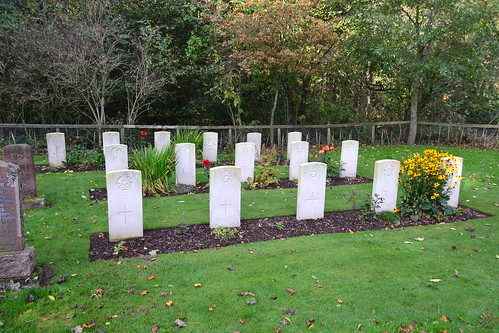

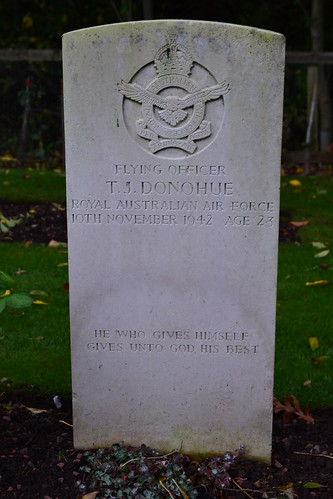
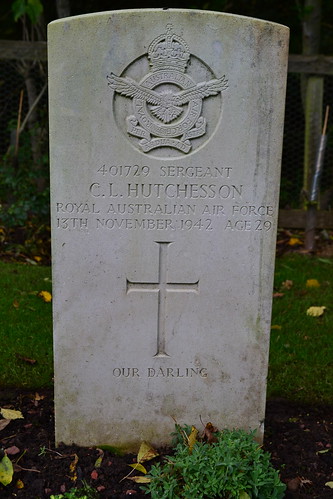

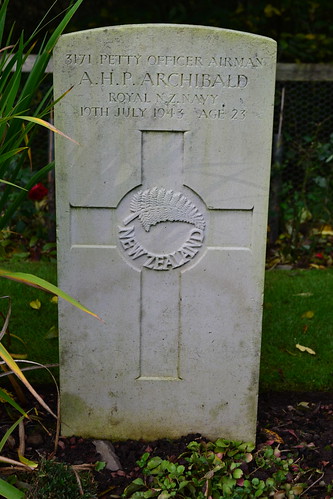

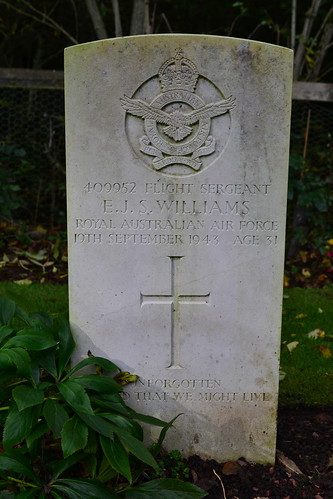
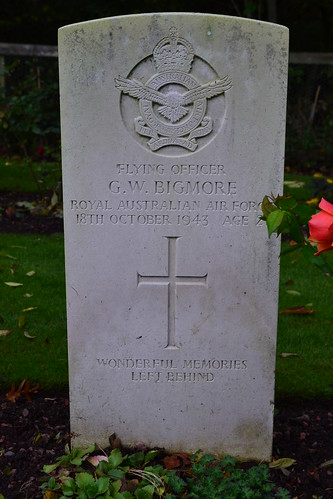
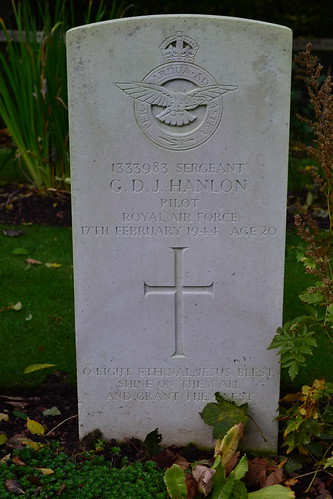
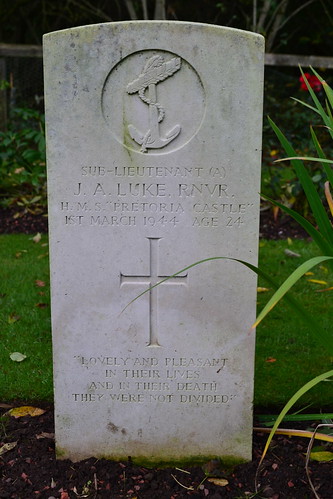
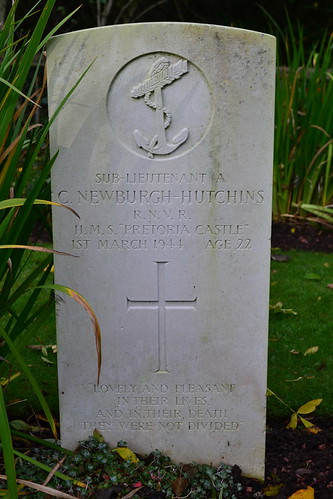
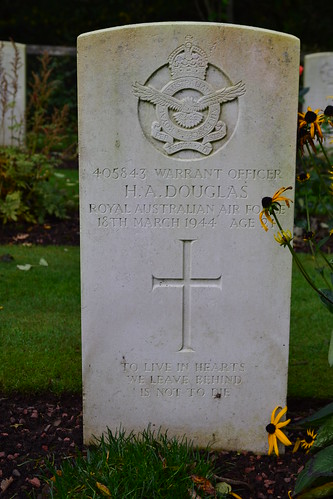
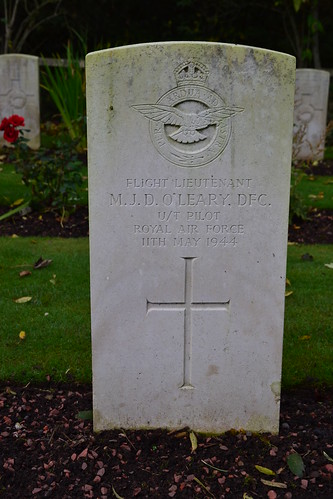
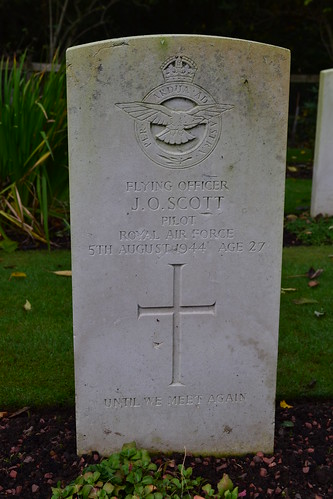
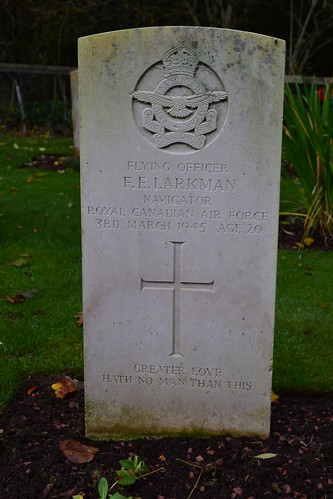
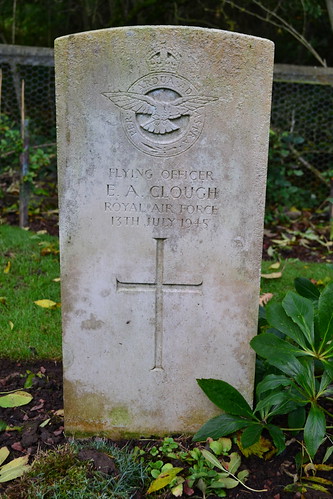

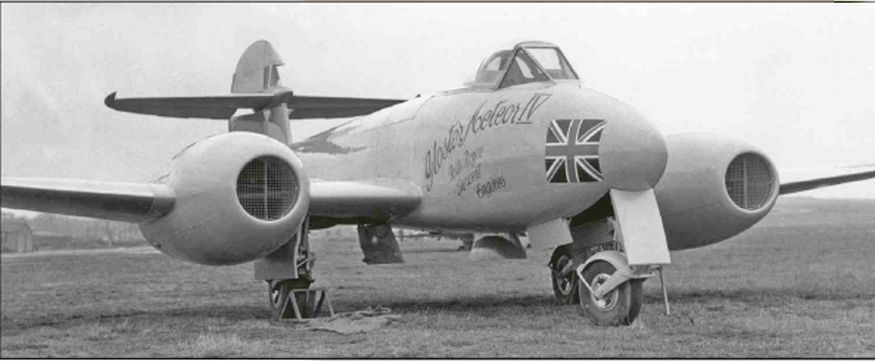
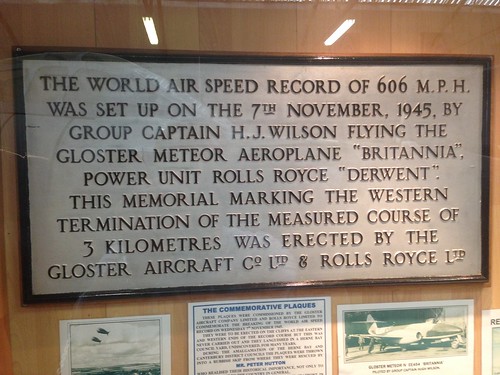


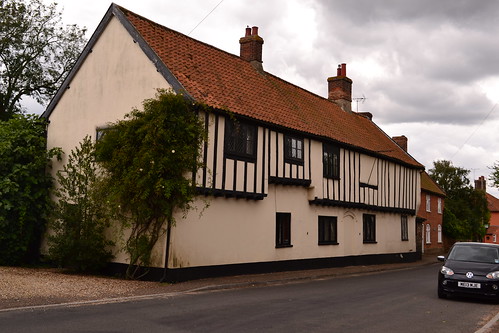


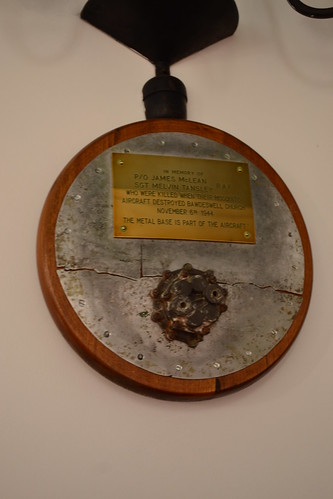
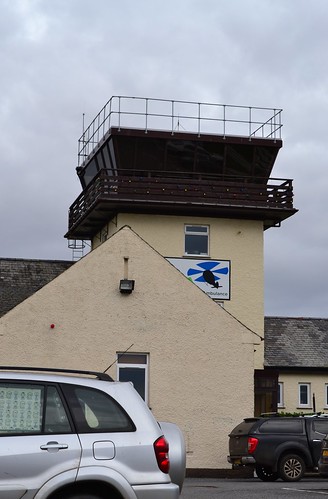
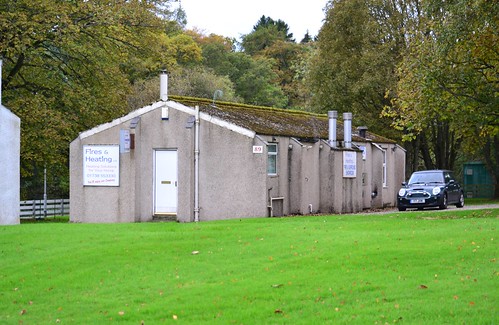
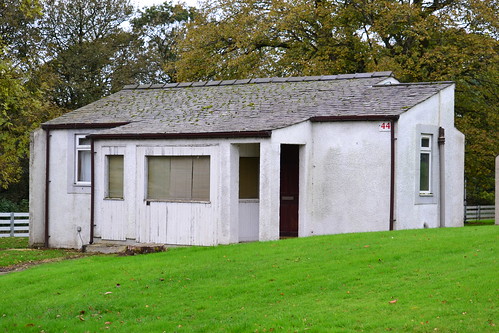


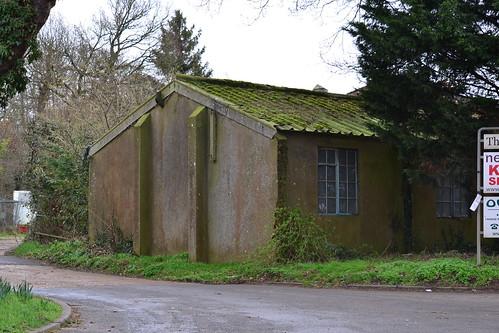

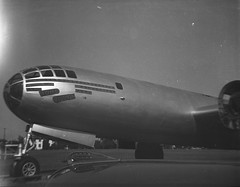
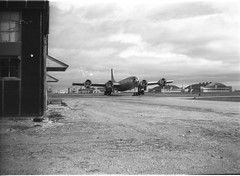


 Aviation Trails