An airfield whose history remains secret.

This is the second airfield of Trail 25 which takes place in the Hertfordshire countryside. Even today, much of what went on here remains secret and little information about the people or its activities exists. However, its role in the both wars was significant.

RAF Sawbridgeworth

RAF Sawbridgeworth was originally constructed as an Advanced Landing Ground (ALG) during April 1916. It was designed to take aircraft from 39 sqn, who were currently based at nearby North Weald. Activated initially to combat the Zeppelins from Germany, 39 sqn are currently based at RAF Waddington flying the MQ-9 Reaper against a much different enemy.

May 2015 044

Part of the Airfield defences.

It wasn’t until the Second World War, that RAF Sawbridgeworth  really came into its own as an operational airfield.

Mathams Wood ALG, as it was known, saw expansion in the early 1940s, more through luck than careful planning. Each of the three runways, were constructed of Summerfield tracking, and measured 1,700 yds, 1,400 yds and 900 yds in length.  The usual Drem lighting was installed adjacent the track rather than embedded as would be the usual case.

A number of buildings were requisitioned as aircraft were dispersed here following France’s fall in 1940. The ALG was expanded through local workers and Mathams Wood ALG took on the unofficial name RAF Sawbridgeworth after the village that stands close by.

The expansion of Sawbridgeworth also included a number of buildings: 16x Dorman Long (4630/42) blister hangars, a T2 hangar, a number of ‘Blenheim’ style aircraft pens and 8 dispersed sites primarily to the East of the airfield. A watch tower, fire tender station, hospital, grocery store, Link trainer, gymnasium and the usual accommodation blocks all added to the much bigger site than had been previously been designed.

grocery store

The former Grocery Store.

The first unit to be based here was that of 2 (AC) sqn flying Westland Lysander II and IIIs in the observational role. Performing primarily in this activity, 2 sqn later on used the Curtis Tomahawk I & II, followed shortly after by the Mustang I and eventually the IA. Other squadrons to be based here included: 4, 63, 80, 126, 168, 170, 182 , 239, 268 and 652 sqns primarily undertaking a PR role whilst here.  A number of other non-flying units performing the evacuation and redeployment of personnel were also stationed here.

2 Sqn were also heavily involved in the secret work of the Special Operations Execute (SOE) involved in dropping agents into occupied France. Much of the training of the aircrews took place at Sawbridgeworth, with practice flights using the famous ‘Black’ Lysanders. Even today, some 75 years later, these operations and the role of the photographic reconnaissance units, remain well hidden operations cloaked in secrecy.

May 2015 041

The perimeter track still remains, in full at some points.

Sawbridgeworth was not devoid of its own enemy attention. On September 19th 1940 a Heinkel III was shot down and crashed in nearby Thorley Wash, one of several crashes close by.

As the war drew to a close, so did the activity at Sawbridgeworth. Following the invasion of Normandy, and the subsequent liberation of Europe, all operational flying ceased in November 1944 and the site went into care and maintenance. The runways were pulled up using P.O.Ws and the tower was demolished a year after the cessation of conflict in 1945. Other buildings were removed or demolished and the land turned back to agriculture.

Wandering the site today, there is luckily still quite a bit of evidence about. The perimeter track is complete, not in its full width throughout, but a large proportion of it. A number of pill boxes remain scattered around the perimeter of the site and the Battle Headquarters (design 11008/41) can be found with determined searching amongst the brambles and hedgerows.

May 2015 037

The former guard block, still largely intact.

To the west of the site is a small industrial complex utilising what was a ten-bed sick quarters, dental annexe, a twelve bed Barrack hut that doubled as a hospital ward, mortuary and an ambulance shed. An ablutions block is was also located here and the site is more or less complete. Not far from here, is a modern farm, which houses a number of smaller original buildings including a Parachute store (built to drawing 11137/41), fabric store, sub station, main stores and other technical buildings. These are all located on private land and in use by the farmer. There is also a signals block, located nearby to these sites and easily visible from the road.

Across to the east of the airfield, is whats left of the communal site. Here stood 33 buildings in total, incorporating a wide range of supporting units for recreation and general living. The only remaining buildings being the standby generator house and the grocery store. Both are used by local businesses.

Emergency generator

The Standby Generator House now a stores for machinery.

A memorial to those who served at Sawbridgeworth stands outside what was the guard block. A recent addition, it is a nice reminder of the dedication of the crews who were stationed here during two world wars.

Sawbridgeworth is a small well hidden airfield and takes some finding. Hidden by woodland and crops, it was created through luck rather than good planning. The crews and aircraft of Sawbridgeworth played a considerable part in the Second World War, and all in its short but yet significant life.

May 2015 005

A memorial stands dedicated to those who served at Sawbridgeworth.

Sawbridgeworth features with its sister station RAF Hunsdon in Trail 25.

1940s revisited

A little more light-hearted look at the 1940s away form the disused airfields of Britain.

These last two years have been significant years in terms of both the First and Second World Wars. With the 100th anniversary  of the start of WWI last year, the 75th anniversary of the Battle of Britain this year, VE-day and of course to come VJ-day commemorations, there has been an understandable increase in interest in all things Second World War.

One thing I have noticed in particular, is the increase in numbers at 1940s weekends, in both participants and visitors.

DSC_0008

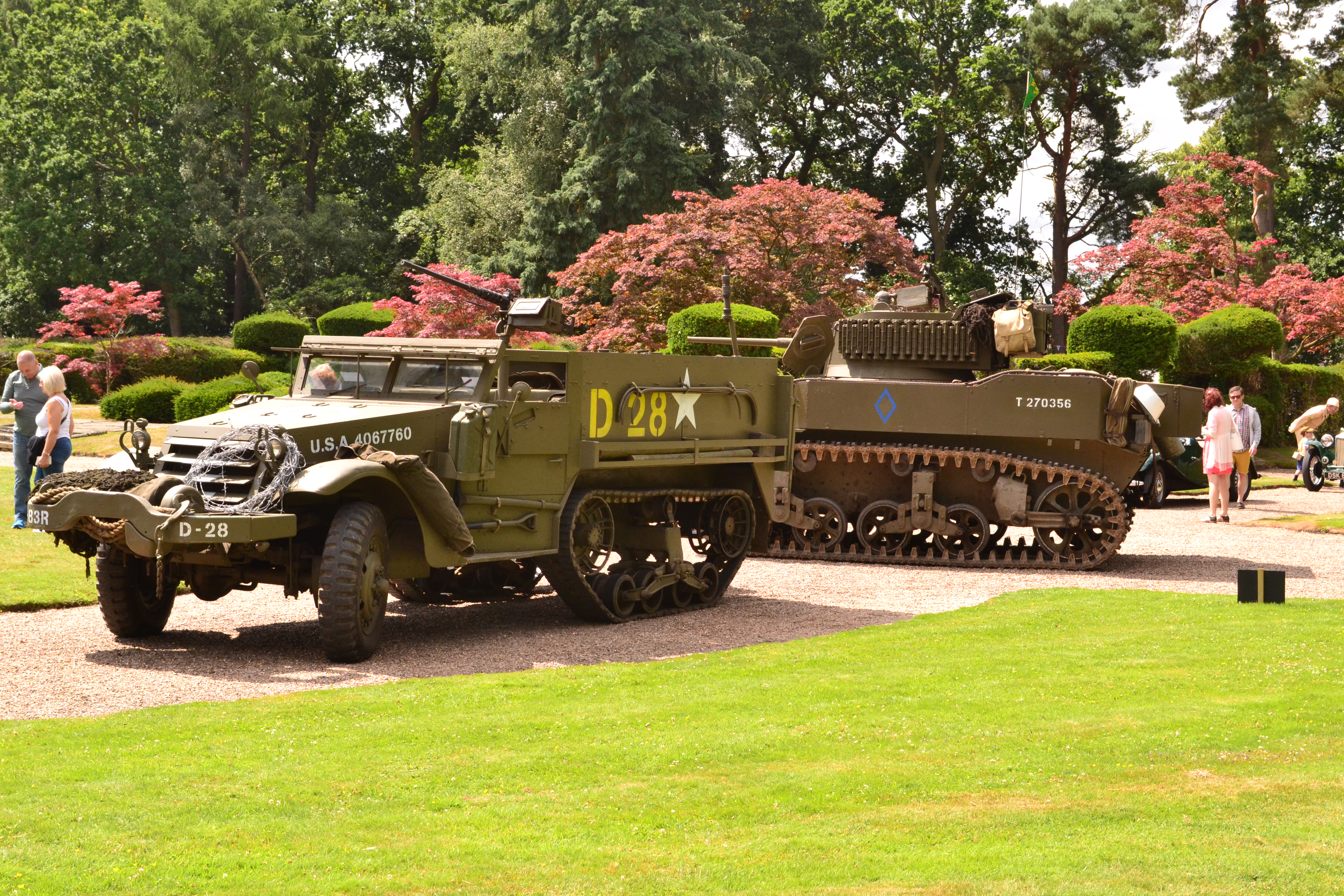
Vehicles of all shapes and sizes came for the weekend.

I myself have been to two recently, and at one I got the chance to sit in a Spitfire cockpit. Not something you do every day!

I know these events are not to everyone’s taste and some will groan at the thought of it, but I do think there is an historical value to them. Many of the participants only use genuine clothing or equipment, much of what you see is rare and in all cases they are only too keen to talk about what they have, its history, how and where it was used and in some cases, allow you to hold the articles in question.

DSC_0010

The rumbling of tanks could be heard once more.

From another perspective, and for those of you who know my day job, there are too, a growing number of children attending these events which I believe is a good thing as it brings history to life – something that is very difficult in a school classroom. A gun in school? I can see the headline now!

Two events I recently attended, both for different reasons, were at Woodhall Spa and Baston, two small villages in ‘Bomber country’, Lincolnshire.

Woodhall Spa was the home to the Dambusters, and for one weekend each year the entire village steps back in time to the 1940s. A second invasion occurs. Walking along the high street is like walking along in 1940, uniforms of every description can be seen, from RAF aircrew to British Army, U.S. infantry, Canadian, and even a variety of Russian, Luftwaffe and German infantry. Even the 1940s housewife, ‘spiv’, Firemen, Policeman and Milkman are represented in full 1940s attire. Many of the vehicles that line the numerous side streets are authentic World War II vehicles, half-tracks, trucks, endless jeeps and even the odd small tank driven here on trailers or under their own steam. Owners have taken a lot of time and money to get them rebuilt and keep them going.

DSC_0018

Re-enactors were everywhere

At the Petwood Hotel, used by 617 Squadron as a mess and officers quarters, there are re-enactments, talks and even ‘briefings’ in a 1940s style. The BBMF perform short displays over the grounds of this small village adding to the feel and as always people stop and watch in awe as once again a Spitfire, Hurricane and Dakota fly low over the streets of this small Lincolnshire village.

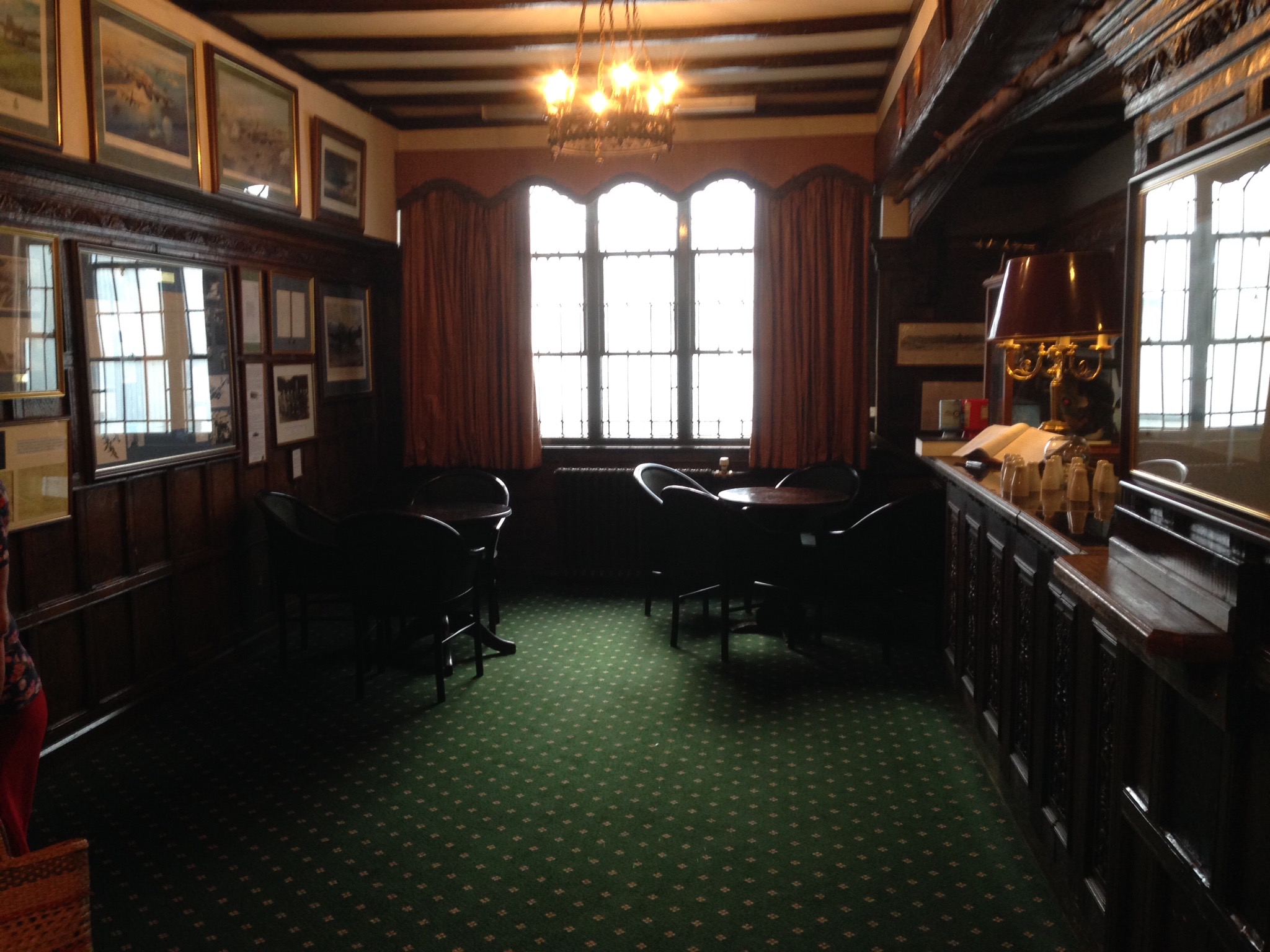
Inside the Petwood, you can wander the rooms that 617 Sqn once wandered by Guy Gibson and his crews; drink a tea or refreshing beer in the same room they did. The Squadron bar, displays numerous letters, photographs and other memorabilia connected with 617’s stay here. It is a remarkable place to be, knowing you walk the same ground as those special crew members did some 70 years ago.

July 2015 008

The Squadron bar.

Outside in the manicured gardens among the rhododendrons singers perform the many songs that inspired a nation, bolstered our morale and kept us going through those dark days of the Second World War. The feel is very much 1940s.

DSC_0001

Spitfire that is about 80% original.

Baston was very much the same. A large participation of re-enactors, vehicles and uniforms, many rasing money, good money, for War Veterans – a valuable cause I’d say. But it is the most odd feeling to walk amongst uniforms that once fought to the death and that were feared by those who were governed by them. In the summer and autumn of 1940, Britain came so close to being invaded, today an invasion has taken place.

Whether you like them or not, these events do have a place in our ‘living history’ and thankfully now, at least, it is on friendly terms.

RAF Witchford a revisit to a fascinating airfield.

I originally visited RAF Witchford some time ago but was lucky enough to have an invite to a gathering taking place earlier this month at the site. It was a very memorable day indeed. Trail 11, which this forms part, can be found here.

RAF Witchford

Witchford is found a few miles East of Mepal in the shadows of Ely Cathedral. Now an industrial estate, a large amount of the site is still in existence (and being used) and freely accessible to the general public. This makes it one of the rarer airfields around in terms of visiting.

RAF Witchford Perimeter Track Looking South

RAF Witchford Perimeter Track Looking South, the B1 Hangar is to your right.

A typical triangular Class A airfield, it had two runways of 1,408 and 1,415 yards and a further main runway of 2,010 yards, all concrete and 50 yards in width. The technical site was located on the western side of the airfield behind the long and straight perimeter track. A number of Nissen workshop huts were constructed along with the standard 343/43 Watch Office, Braithwaite water tower and 150 or so supporting buildings. As with all bomber airfields, the bomb store was well away from accommodation and was located to the southern side. Being a large airfield, it had three hangars, two T2 and one B1, and a total of 36 loop-type dispersed hardstandings.

The accommodation sites (14 in total), were spread out well behind the technical site predominately where the village now stands and beyond. The main entrance to the airfield, also to the west, is now a small track leading to housing known as Bedwell Hey Lane. In total Witchford was designed to accommodate 1,502 men and 230 female ranks and it officially became operational in July / August 1943.

Original Stores Hut

Original Nissen Hut now used for stores.

Witchford was served initially by Stirling IIIs of the newly formed 196 sqn RAF, whose first operational flight took place on August 28th that year. But as heavy operational losses built up, it soon became obvious that the large bomber was ‘unsuitable’ for long distance bombing missions and gradually, squadron by squadron, they were replaced by the more superior Lancaster to which the business park gets it’s modern name.  As these Stirlings became obsolete for front line use many were redeployed covering glider towing, mine laying and transport duties.

During September to November 1943 a number of changes were to happen at Witchford. A second squadron, 195 sqn RAF, was reformed at Witchford (October 1st 1943) using elements of 115 sqn, who were at that time, based at Little Snoring (Trail 22) in Norfolk.

IMG_3282

Inside the Nissen Hut.

A further unit, 513 Squadron, also formed at Witchford (15th September) again using the ill-fated Stirlings. However, 513 sqn never became operational, and were disbanded only two months later.

On the night of 26th November 1943, 12 aircraft of 115 Squadron left RAF Little Snoring in Norfolk, to attack the German capital, Berlin. On return, they were to land at their new station RAF Witchford where the ground staff had moved to that very day. Only one aircraft did not make it back that night and this meant that 115 sqn (who in August 1941 had taken part in trials of GEE) were now totally based at Witchford. 115 were still using the Armstrong Whitworth (Bagington) built Lancaster IIs with their Bristol Hercules engines. (My father, the inspiration to my love of aircraft, worked for Armstrong Whitworth at the Bagington site not long after being demobbed). It was with these aircraft that the Squadron dropped the first 8000 lb bomb on Berlin during Air Chief Marshal Harris’s bombing campaign against the German capital.

In March 1944, 115 sqn began replacing its Mk IIs with the Merlin engined Mk I and IIIs, aircraft it flew until hostilities ceased in 1945.

IMG_3287

Currently a stable, the original building will become a Gymnasium.

Enemy intruder missions over Allied Airfields were common place, and Witchford and her neighbour Mepal, were no exception. On the night of April 18th and 19th 1944 an ME 410 joined the circuit over nearby Mepal (see above) and shot down two Lancasters both from 115 sqn. A further intruder mission also occurred on the night of April 2oth / 21st but luckily there were no fatalities and little damaged was caused in this attack.

When 115 sqn’s war finally came to an end, it had one of the finest records in Bomber Command. A total of 678 operations in all, second only to 75(NZ) Sqn at Mepal. But the price was high, 208 aircraft being shot down or lost in action. Witchford as an airfield closed in March 1946 with the withdrawal of all operational units at the end of hostilities.

Today the site is a small business park, located on the western side of the airfield with a wide range of businesses working where the main Technical site of the field once stood. On entering the park, you drive down a long straight road, this is the original perimeter track. On your right is where the main hangars and maintenance area would have been located. The original B1 still stands today, but it is heavily transformed with new cladding and metal work. If you drive the length of this road you come to a security gate. Just to your right are a number of small huts. These are the original stores and in remarkable condition. Used by local businesses they house machinery and other equipment, but their features and layout clearly represent airfield architecture. Tucked away in here, in the foyer of one of the businesses, is a small but significant museum dedicated to the crews and personnel of RAF Witchford and nearby Mepal. It has a fantastic array of photographs, personal items and one of the Bristol Hercules engines from the downed 115 sqn Lancaster II. A free museum, it has a bizarre feeling to it as workers casually walk through between offices while you peruse the items neatly displayed on the walls. Do spend some time here; it is a fascinating insight into life on the base. (Further details are available later in the blog).

RAF Witchford Memorial Looking South

RAF Witchford Memorial Looking South

After leaving the museum, return back up the road taking the first right turn. On your right is the location of the control tower – now long gone. This brings you onto the remains of the main runway. If you drive to the top and turn back, you will see that it has been cut by a hedge that now separates the runway with the field. To the left of the hedge, you can still see the concrete remains of the original track. Continue to the top and turn the corner, then turn right.

RAF Witchford 'Diary'

RAF Witchford ‘Diary’

This is the threshold of the runway and joining perimeter and is marked by a superb memorial dedicated to the crews of the airfield. Also on here, is the remarkable ‘factual diary’ of the squadron and makes for very interesting reading. Look back south from here you have views across the airfield, along the perimeter track and down the runway; you just can sense the roar of lumbering bombers on their way to occupied Europe.

If you now leave the site, and turn left out of the park, follow the road down and turn left. Drive along as far as you can and stop at the gate. This is Bedwell Hey Lane and the original main entrance to the airfield. Vehicle access is only by permission, but a ‘kissing gate’ allows walkers free access and walks across the field. Go through. On your right are the entrances to various works stations, denoted by covered brickworks, further along to your left is the site of the original guard-house. keep going, and on your left you will see the Nissen huts mentioned previously. You finally arrive at the rear of the security gate you were at earlier. There are several occurences of a worker having stood in the wet concrete, these footprints can be found at numerous points around the site, especially here. Turn right and walk through another farm gate and you are on the remainder of the perimeter track. From here you can walk around a large portion of the perimeter track, having great views across the field. In a short distance you join where the threshold of the second runway would have been, it too is now all but gone.

RAF Witchford Holding point and Runway Threshold to the Right

RAF Witchford Holding point and Runway Threshold to the Right

Continue walking round the perimeter track, after a while, you see it narrows, the sides becoming overgrown with weeds, If you look in the adjacent fields, you will find a large quantity of former airfield drainage piping, scattered amongst pieces of building left after demolition. Eventually you arrive at a split in the track. Access straight on is not permitted, but you can take the right fork and in front you will see the low-lying remains of the armoury. Walking down this section will eventually bring you onto the main Ely to Cambridge road. If you look straight ahead and to the right from where you are standing, you will see the location of one of the two type T2 hangars.

RAF Witchford Perimeter Track Looking East - The Bomb Stores are to the Right

Witchford Perimeter Track Looking East – The Bomb Stores are to the Right, the T2 Hangar in Front

To your right and behind, is the bomb store, a significant size in its day, covered in huts and stores, bustling with activity; today there is sadly no remaining evidence of this busy section of the airfield.  However, this part of the perimeter track is well-preserved and shows use by the local farmer who now uses a  majority of the site. But looking across back toward the industrial area, you get a real sense of wartime activity, Lancasters and Stirlings rumbling where you now stand, bomb crews readying aircraft and vehicles hurrying from one aircraft to the next. Take in the atmosphere before walking back the way you came. Keep your eye open to the right. Part way along here, you can see along the length of what remains of the second runway along to the point where you stood earlier by the memorial. The original concrete still evident and witness to the many aircraft that flew from here. A poignant moment indeed. Continue back the way you came taking in views across the filed and the stores area.

RAF Witchford Runway Looking North

Remains of RAF Witchford Runway Looking North

After leaving the site, drive back along the main road away from Ely, you will pass a number of derelict buildings once used by the RAF at Witchford. Indeed one such building is now a small industrial unit, the others overgrown and in a poor state of disrepair. (Photos of both these buildings are available on flckr).

One of the happier stories to emerge from wartime Witchford is that of Sgt. Nicholas Alkemade, who given the choice of staying in his burning Lancaster, to die a terrible death, or jump minus his parachute, to a rather quicker death, opted for the latter. Amazingly for him, jumping from 18,000ft he landed in fir trees and soft snow, surviving with little injury. The Germans, after questioning him, confirmed his story after finding burnt sections of his parachute in the aircraft wreckage. He survived the war and returned to England later marrying his sweetheart. See his story here.

There are few wartime airfields today that exist in any form let alone accessible to the general public. Witchford has a few little gems tucked away in amongst the now busy business park, none more so than the museum and memorial. But walking round the perimeter track, you do so knowing that many years ago, Lancasters and Stirlings also rumbled here, and that many a young man left here never to return again.

On July 12th 2015, I was lucky enough to have been invited to join members of the 115 squadron Memorial project who have painstakingly researched the crash site and details of Lancaster ‘KO-Y’ DS 734, that took off from Witchford and crashed near Pasbrug, Mechelen, Belgium on the night of April 24th/25th, 1944.

Together with Sue Aldridge, one of the Museum founders, we met Dave Howell, son of Aubrey Howell DFC who flew Lancasters whilst at RAF Witchford. We were also given a short tour of the buildings by David Brand of Grovemere Holdings, the current land owners of both Witchford and Mepal sites. To them all I would like to say a huge thank you, It was a most memorable day and a great honour to have met you.

Sue and her husband Barry, have written a book ‘Memories of RAF Witchford’ which includes an enormous number of personal stories, photographs and detail about the life of RAF Witchford and the people who worked here. It is a must for anyone wanting to know more.

115 visit 010

The members of the Belgium memorial Project at Witchford July 2015.

Sources and Links.

‘Memories of RAF Witchford’ can be purchased from Sue, for details click here.

The 115 Squadron Memorial Project website can be found here.

RAF Little Snoring – Honours and Awards

In the heart of the Norfolk countryside stands a quaint little church with a round turret. Standing proud on top of a hill just outside the nearby village, the church holds a rare and unique collection of war records.

RAF Little Snoring (Trail 22) was home to a number of squadrons including the rare Bristol Hercules engined Lancaster IIs of both 1678 HCU and 115 Sqn and latterly units of 100 Group flying amongst others, the DH Mosquito.

At the end of the war the airfield was closed down, used primarily as a storage site for surplus aircraft prior to scrapping.

Many of the buildings were pulled down and runways dug up returning the site to its primary use of agriculture. Whilst a small section survived along with two hangars and a now derelict control tower, the church has become the holder of a rare collection.

In the Officers Mess of Little Snoring were four boards painstakingly hand painted by L.a.c Douglas Higgins of 23 Squadron between 1944 and 1945, on which the ‘Kills’ of the squadrons were recorded for prosperity. Never intended to be more than a trophy board, they have now become a unique ‘diary’ of the events that took place in the latter part of the Second World War.

The boards of St. Andrew’s holds a unique record

The four boards stand on the back wall of the church and were rescued by a local villager (Mrs E. Whitehead  the church warden) on demolition of the officers mess. The two to the left, list the ‘victories’ and the two to the right the squadron honours.

The first victory is listed as “30.1.44, 169 Sqn, S/L Cooper. F/Lt Connolly. Brandenburg Area. Me 110 destroyed”. The final entry shows eight unidentified aircraft as ‘damaged’ by F/Lt Davis and F.O. Cronin of 515 Sqn over the Kaufbeurin Airfield on the 24th, April 1945.

The first of the four boards starts 30th January 1944

Perhaps one of the most interesting entries is that of 20th, March 1945 when the Station Browning Battery of RAF Little Snoring damaged an attacking Ju 88 on an intruder mission.

A range of aircraft appear on the boards including: Do 217, Me 109, Me 110s, Me 262s, Ju 88s, Ju 52s, Fw 190s and Heinkel’s 111 and larger 177 bombers. Many of the latter entries being for action over enemy airfields toward the closing months of the war.

The final entry is dated 24th April 1945

The honours boards go back slightly earlier. The first 13 entires go to 115 Sqn for a range of honours including the:DFM, DFC and  DSO,  which began on August 1943 when Sergeant Rosonbloom was awarded the DFM.

The final entry is a mention in despatches for L.a.c , G.E. Harper, in September 1944.

Next to the boards is a moving and thoughtful poem written by L.a.c. S. Ruffle on his return to Little Snoring post war. He tells the tale of the airfield through his eyes and about his wartime friend, creater of the board, Douglas Higgins, even referring to the boards in his poem.

These boards stand as a reminder of both the many brave actions of crews and the airfield defence staff,  they are a permanent record of action from a small airfield tucked away in the Norfolk countryside.

Ruffles’s poem recalls his time at Little Snoring.

Structure of the Luftwaffe – The High Command.

Whilst primarily focussed on detailing the disappearing airfields of Britain, I find it important to appreciate what it was the Royal Air Force and her allies were up against, and that to be able to appreciate the enormity and structure of these forces helps to appreciate the lives of those studied.

A breakdown of the USAAF Command and Airforces have been done, and whilst none of these explanations go into enormous depth (I have neither the expert knowledge nor the resources to deal at that level) they do hopefully give an explanation of the general layout of the relative force in question. With this in mind, I have now tackled the Luftwaffe and have hopefully provided a layman’s view of its formation and size. My German is poor to say the least, and if I have misspelt any words through translation, I sincerely apologise.

The Luftwaffe

The Luftwaffe were a fearsome, well equipped and highly trained force, who when in support of the Panzers and other ground forces, must be considered one of the best armed forces in history.

Following the Treaty Of Versailles, the German armed forces were cut to the bone and useless for Hitler’s vision of a powerful and dominating Germany. He would therefore have to commence a massive rebuilding plan along with research and development of ships, tanks and aircraft in order to build up his Third Reich and fulfill this vision.

With growth and development of the Luftwaffe happening almost unabated, Hitler was able to create a substantial force, that was well equipped and well-trained. Many models being developed under the guise of ‘Passenger’ aircraft, they were easily adapted to become bombers or troop carriers thus hiding the real reason for development.

With the outbreak of the Spanish Civil War, Hitler offered his Luftwaffe as ‘support’, whereas some historians believe this to have been a front for a rehearsal for the forthcoming invasion of Germany’s neighbours later on.

Not surprisingly, records show that a huge build up of military aircraft occurred along the eastern frontiers of Germany in the months prior to the invasion of Poland. The writing was on the wall and once the blitzkrieg started, and the forces of the Third Reich took more and more territory, the network of support needed to sustain them also needed to grow. This expansion led to changes in the supply structure of the various forces enabling them to deal effectively with the new challenges that they now faced. As an attacking force, in September 1939, there were high numbers of bombers 1,458 in all, including ground attack and dive bombers compared to 1,077 single and twin-engined fighters. Clearly a force for invasion and not one of defence.

As the war progressed, these numbers changed. By April 1945, there were known to be 1,305 day fighters, a further 485 night fighters and only 37 multi engined bombers. A significant shift from attack to defence.

Throughout the conflict, up until the last few months of the war, the hierarchy of the Luftwaffe remained as it was. But in the dying days it began to crumble and this most powerful force soon became disorganised and demoralised.

The Luftwaffe High Command.

The Luftwaffe was divided into two parts, the overall responsibility lay with Herman Goring – Commander-in-Chief of the Air Force (Oberbefehlshaber der Luftwaffe) who controlled both The Luftwaffe High Command (Oberkommando der Luftwaffe) and The State Minister for Air (Reichsminister der Luftfahrt). His office was within the Air Ministry (Reichsluftfahrt Mininsterium) located in the heart of Nazi Germany in Berlin. The High command, were concerned with military actions, whilst the Ministry for Air, dealt with the administration side of the Luftwaffe.

Bundesarchiv Bild 102-13805, Hermann Göring

Hermann Goring*1

The Luftwaffe High Command was further sub-divided into a number of different directorates covering areas such as: operations, organisation, Training, Movements, Intelligence, Equipment, and personnel. These were then sub-divided further some coming under the command of the Chief of Operations and others the Chief of the General Staff.

Within this branch of the Luftwaffe were two main levels, a forward and a rear. The forward codenamed ‘Robinson’ fell under the Chief of General Staff and were located close to Hitler’s headquarters. This echelon composed of the intelligence and operations directorates and wherever Hitler went, they followed. The second echelon, codenamed ‘Kurfurst’ were more widely spread around Berlin, but all the directorates kept in very close and constant contact.

Regular meetings between Hitler and the leaders of these three services (Ministry for Air, ‘Robinson’ and ‘Kurfurst’) would determine the actions of the Luftwaffe as a whole with orders being passed directly to those in charge of the flying units.

Beneath these top sections lay the Luftwaffe itself, operationally split into 4 fleets (Luftflotten):

Luftflotte 1 – commanded by Albert Kesselring in Berlin who oversaw units to the north-east of Germany

Luftflotte 2 – commanded by Helmut Felmy in Brunswick who controlled the north-west of Germany

Luftflotte 3 – commanded by Hugo Sperrle in Munich who controlled the south-west of Germany

Luftflotte 4 – commanded by Alexander Lohr in Vienna who controlled the south-east, Austria and Czechoslovakia.

As the war progressed, further fleets were added:

Luftflotte 5 – covering Norway, Finland and northern Russia

Luftflotte 6 – covering central Russia

Luftflotte Reich – covering home defence and flak.

Actual flying units, were given as much autonomy as possible, being freed of all administrative duties where they could. This was to allow for a rapid response to ever-changing demands on or near the front and would involve breaking each Luftlotte into zones (Luftgaue) who monitored and organised the airfields within their own zone. This sectioning allowed for the rapid and efficient movement of flying units between zones without the unnecessary problems of obtaining  supplies and slow administration.

The Luftwaffe high command were a well organised and efficient group. Operational matters dealt with by those with experience of battle, and close to Hitler, whilst the more administrative side dealt with by those further afield.

The chain of command was tight, well organised and efficient, the Luftwaffe was a major force to be reckoned with.

In the second part we shall examine the flying units themselves.

Other pages relating to the Luftwaffe can be found here.

Sources and Credits

*1 Photo by (Bundesarchiv, Bild 102-13805 / CC-BY-SA [CC BY-SA 3.0 de (http://creativecommons.org/licenses/by-sa/3.0/de/deed.en)%5D, via Wikimedia Commons) 20th June 2015

The Luftwaffe Data Book‘, Dr Alfred Price, Greenhill Publications, 1977, Pages 13-18

Organization of the Luftwaffe (1933–45), https://en.wikipedia.org/wiki/Organization_of_the_Luftwaffe_%281933%E2%80%9345%29

Battle of Britain Memorial Capel-le-Ferne, Kent.

A recent revisit took me back to the Battle of Britain memorial at Capel-le-Ferne between Folkestone and Dover, in Kent. It sits high on the cliff-top, in a windy corner, a stones throw from the international docks at Dover, and the Battle of Britain airfield at Hawkinge. A ‘recent’ addition to the range of memorials, it is a poignant reminder of the young men who, from many nationalities, gave their lives in the name of freedom and the defence of this country.

Last time I was here, work was starting on the new visitor centre and the two replica aircraft, a Spitfire and Hurricane, had both been removed.

The replica Hurricane.

This week, on May 25th 2015, I went back to see what had been done.

The new centre is superb. First of all it has a good car park with ample space for a large number of cars.

The visitors centre itself has a bright open reception area and a small shop for souvenirs (I had to buy a book!) and upstairs a new cafe with a balcony overlooking the monument and across  the English Channel to France.

The Visitors center behind the ‘Wall of Honour’.

Entrance to the memorial is still free, but there is the option to try the ‘scramble’ experience, which I believe costs £6.00.

The Spitfire and Hurricane are both back, admittedly both are metal replicas but up here it gets very windy and the weather can change dramatically in seconds, so it’s probably for the best. They are certainly good replicas. 

The carved Pilot, sitting in the centre of a three-bladed propeller, gazes patiently out to sea, watching for his missing friends. Designed by Harry Gray of the Carving Workshop, Cambridge, the pilot is surrounded by the creats of those squadrons who took part in the famous battle in the Kent skies.

To either side, two large mounds, signify the locations of anti-aircraft batteries, now silent and filled in, perhaps two replica emplacements might add to the ‘feel’ of the site, although sometimes less is more.

As before, the monument is a quiet and moving place to sit; to read the names of those who gave their lives for us, and to absorb yourself in the battle through the numerous information panels around the site. From here you begin to imagine the vapour and smoke trails high above you and to think that Hitler and his invasion forces, stood not more than 30 miles away in the distant haze on the coast of France.

A big improvement to a very moving place.

RAF Little Snoring – not a sleepy village 70 years ago.

The second airfield on this part of the trail, takes us further north, to a little village and small airfield. It also features one of only a few round towered churches that hold some remarkable records of the region’s history.

RAF Little Snoring

Little Snoring is as its name suggests, a quiet hamlet deep in the heart of Norfolk. Surrounded by beautiful countryside, it boasts a superb round towered church (another called St. Andrew’s) that holds a remarkable little gem of historical significance.

various 002

The Village sign shows Little Snoring’s aviation history.

The airfield, to the North East, was originally opened in 1943, late in the war, as a satellite for nearby Foulsham. It had three runways: 2 constructed of concrete 4,199 ft (1,280 m) in length, (01/19 and 13/31) and one 07/25 of 6,004 ft (1,830 m) again in concrete. As with other airfields it was a typical ‘A’ shape, with 36 dispersal sites, a bomb site to the north, fuel dump to the south and the accommodation blocks dispersed away from the airfield to the east. It was built to accommodate 1,807 RAF and 361 WAAF personnel housed over eight domestic sites.

Initially under the command of 3 Group Bomber Command, it housed the rare Bristol Hercules engined Lancaster IIs of 1678 HCU (Heavy Conversion Unit) and 115 squadron, (between August and November 1943) formally RAF Witchford (Trail 11) and East Wretham, who were to carry out night bombing duties, a role it had performed well at Witchford. Then, as with many of the airfields in this location, it was taken over by Addison’s 100 Group and Mosquitos moved in.

various 007

One of two original T2 hangars still in use today.

169 squadron operating both Mosquito IIs and Beaufighter VIs, would undertake night fighter missions between December 1943 and June 1944. Like their counterparts at Great Massingham, Foulsham, North Creake, West Raynham and Sculthorpe amongst others, they would take part in electronic warfare and counter measures against enemy fighter operations. 100 Group, investigated a wide range of devises suitable for tracking, homing in on or jamming enemy radars. With a wide rage of names; “Airborne Cigar”, “Jostle”, “Mandrel”, “Airborne Grocer”, “Carpet” and “Piperack”, they used both “Serrate” and “ASH” to attack the enemy on their own airfield at night before they could intercept the bombers.

various 010

A road leads to one of the dispersed accommodation sites.

After a short spell with an American Intruder detachment between March and April 1944 flying P-51s and P-38s, Little Snoring was itself the subject of an attack from Luftwaffe aircraft that had followed the bomber stream home. The attack was so successful that Little Snoring was put out of action for some considerable time.

Night intruder missions continued, with 515 squadron, 23 squadron and 141 squadron operating a range of twin-engined aircraft such as the Beaufighter IIf, Blenheim V, Mosquito II, FB.VI and NF.30. Radar training also continued using smaller aircraft such as the Defiant, Anson and Airspeed Oxfords of 1692 Flt.

Eventually in September 1945, operational flying officially ceased  and the airfield was reduced to care and maintenance. Like other airfields in this area, it became the storage area for surplus Mosquitos on their way to a sad ending under the choppers blade. Then in the 1950s Little Snoring was opened temporarily and used by a civilian operated anti-aircraft co-operation unit, flying Spitfire XVI, Mosquito TT.35 and Vampire FB.Vs. Finally in April 1953, Little Snoring was shut, the gates locked and the site sold off.

However, that was not the of flying. Now in civilian hands, Little Snoring operates a small flying club and a microlight manufacturer. Aircraft can visit, and occasionally a ‘fly-in’ happens and the site springs into life once more.

various 017

The road uses the former eastern perimeter track, part of which is still visible to the side.

Following sale of the site, a large number of buildings were demolished or taken away for use elsewhere. The officers’ mess housed four ornately and beautifully written honours and awards boards. Luckily, these were saved by a good samaritan and now reside in the base’s ‘official’ church, St. Andrew’s, on the west wall. Written in paint, they detail the awards and ‘kills’ of the various crew members stationed at Little Snoring. Just a short walk from the church is the village sign which depicts a Mosquito, often seen over the skies of Little Snoring all those years ago.

The perimeter track to the east is now the road, the accommodation site on the eastern side still bears the track but is closed off, what secrets it must hold! A few remnants of concrete roadway exist outside of the airfield, the northern threshold of the main runway is also there used to store gravel and other road material. A small number of buildings, mainly huts, exist in private gardens used as storage sheds. The local caravan site has what is believed to be the base hospital and / or mortuary now a washing block.

The largest and best preserved buildings are two of the original T2 hangars, both used to store potatoes. A blister hangar is also on site but thought not an original of Little Snoring.

various 018

An air-raid bunker protected the personnel from attack.

The bomb site is a field, and all but a small part of the runways are gone or at best farm tracks. Little Snoring’s gem is its watch office, standing proud in the centre of the site, a lone wind sock fluttering from its walls. Run down and dilapidated, it is crying out for love and restoration, but I suspect this isn’t going to happen and perhaps its days are very sadly numbered.

During its operational life, twelve Lancasters and forty-three Mosquitos were lost during missions over enemy territory and to date no ‘official’ memorial exists in their honour. Maybe one day this too will change.

The base commander, ‘glass eyed’ Group Captain Rex O’Bryan Hoare (Sammy) was a known character and has been mentioned in a number of books discussing night intruder missions. He was a very successful Mosquito pilot  and looked up to by his fellow pilots. A superbly detailed account of him appears here and is certainly worth a read.

A once bustling airfield, Little Snoring is now a sleepy site with a few remaining remnants of its wartime activity. The church boards reminders of its successes and the toll paid by the young men of the Royal Air Force.

various 025

The watch office now derelict and forlorn.

The four award and honours boards in St. Andrew’s Church can be seen by clicking here.

Little Snoring ends Trail 22, but leads us to the last part of North Norfolk and a to Trail 23. As we continue north toward the coast, we visit two sites with some remarkable features.

Leslie Howard Pilot Officer 77sqn. RAF(VR) RAF Elvington

As a teacher, I often try to squeeze in a little bit of modern history. I feel it’s important that the younger generations know and understand what sacrifices were made during both the First and Second World Wars (not to mention the many others) so that they realise lives are lost and that war is not a game of ‘Call Of Duty’.

To my surprise one of the girls brought in some papers and explained how it was a relation of hers on her mother’s side, but she knew nothing about him. The gauntlet was thrown, eager to know more, I took copies of the relevant documents and brought them home.

After some considerable searching I came up with some interesting facts about this man.

His name was Leslie Howard (s/n: 168652), he was originally a policeman, and came from the Sheffield area (Birklands Road). He was married to ‘Gladys’ and on joining the RAF was posted to 77 Squadron who were based Elvington at the time of his death. He was a sergeant and received training on Wellington bombers. After promotion, he became and Pilot Officer and flew Halifax (V) bombers from Elvington with 77 Sqn, RAF(VR).

On the night of 20th /21st December 1943, he was on a mission to bomb Frankfurt. With him on board were: Sgt. E Dickman, F/sgt. C. Quine (DFM), F/Sgt. J. Waterston, Sgt. N.H.C. Short, Sgt. W.C. Wight and Sgt. A.P.H. Restarick. His Halifax, S/N LL121, “KN-G” was attacked by what is believed to be by either JU88 or B110 of 8./NJG3 night fighter squadron, piloted by, again not confirmed, Oblt. Paul Zorner, from Hintermellingen, near Frankfurt.

The aircraft was severely damaged and crashed. Both P.O. Howard and Sgt. E.W.Dickman were killed, whilst the others survived being taken prisoners of war.

Sgt. Dickman was buried in Runnymeade, whilst P.O. Howard was buried in the cemetery at Hintermellingen. His remains are now in the Hanover War Cemetery, block 16, row A, number 18.

I informed the father of the young child who was more than interested as they knew little of him. He told me that the family on the mother’s side, still resided in the Yorkshire area and were visiting in the next week or two. He would pass this information on.

I shall continue digging, to find more and confirm the details I’ve already found, but you get a real sense of achievement and satisfaction to know that a little bit of history has been uncovered for this family.

If you know of, or have any further information about this operation or crews, I would love to hear from you.

scan0001

Do you recognise anyone in these photos? Particularly the bottom left.

scan0002

The telegram sent to Mrs Howard.

scan0011

Leslie Howard’s grave is 16.A.18 to the top of the diagram (created by the War Graves Commision).


Luftwaffe diaries – Big Week

Following on from the earlier diaries of Luftwaffe pilots during the Battle of Britain, I have found other examples, worth sharing.

These examples, were written as the Allies launched the ‘Big Week’ campaign against heavily defended German targets. In defence, the Luftwaffe were operating a wide range of aircraft, heavily armed, they were designed to destroy the big heavy bombers, both quickly and easily. The US Eighth and Fifteenth Airforces were bombing during daylight whilst the RAF were bombing at night. As a result, brutal dogfights were common place between escorting P-51s, P-47s and P-38s and the German aircraft.

Based at Wunstorf near Hanover, was III Gruppe Zerstorergeschwader 26, (part of Luftflotte 2) whose primary role was defence of the North Western Sector of Europe, Belgium and the Netherlands. Formed along with I. and II. Gruppe; III. Gruppe were to suffer badly at the hands of their superior American counterparts. During 1940, they had a total fo 33 aircraft, by the time ‘Big Week’ had come in 1944, this number was significantly lower.

The entry starts in the middle of February, with visits from Generalmajor Ibel1, re-equiping of machines and flight training. Prior to Big week, the Gruppe were also operating in support of land forces. However, as the allied forces began their operations, this role changed.

20.2.44 – At 12:03 hours the Gruppe received orders from 2. Jagddivision to take off and engage reported enemy bomber formation. At 12:13 hours, Bf 110s were airborne and assembled at radio beacon Marie, after new orders re-assembled overhead base. The Kommandeur, Major Kogler, took off late with three more BF 110s at 12.19 hours but failed to meet up with the aircraft which had taken off at 12.13. At 4,000m the first formation was surprised by enemy fighters attacking out of the sun and as a result 11 Bf 110s were shot down2. During the incursion two enemy fighters carried out a low-level attack on the airfield. As a result nine aircraft were hit and suffered up to 30% damage.3

21.2.44 – At 12:41 hours the group received orders to engage incoming enemy formations. At 12:45 ten BF 110s were airborne; assembly over radio beacon Marie.
At 13:15 hours these aircraft joined up with the escort a friendly fighters in the Rottenburg area. Our formation made contact with the enemy force, but due to poor direction failed to reach a favourable position from which to attack.4

22.2.44 – The Gruppe was ordered to take off at 12:22 hours to engage incoming enemy formations. The Gruppe scrambled eight BF 110s at 12:28 hours. Weather at take-off: Fair weather, 50km visibility, cloud base 1,000m, 2–3/10 cover. At 12:55 to 13:00 hours joined own fighter escort at 7,000m above Lake Steinhude. The Gruppe joined up behind I./ZG 26 which was operating under the control of the 2. Jagddivision. At 13:35 hours three formations of Fortress IIs were sighted. The leader of our formation (I./ZG 26) closed on the enemy formation to attack from head-on. III./ZG 26, following, was too close behind for a head-on attack, and had to turn an attack from the rear. While closing in to attack, fire was opened from about 400m. The enemy machine flying on the left outside of the formation burst into flames along its right side. It began to curve away to the left and the second attack was carried out from above and to the left, from behind. This Fortress dropped away from the formation well ablaze. There was strong defensive fire from the enemy rear gun positions. Each enemy formation numbered about 60 aircraft, flying in arrow. Weather in operational area: about 3/10 cloud cover, cloud base 500m tops 2,000m. Visability above cloud more than 50km.

During the head-on attack, the formation leader turned in too soon, so that the aircraft coming behind were unable to get into an attacking position.

Landing: Two BF 110s landed at Wunstorf, at 13:58 and at 14:10 hours. Four BF 110s made belly-landings. No landing reports received so far from two BF 110s. 5

Successes: One Fortress II shot down by Oblt. Bley.

23.2.44 – No operations. The Gruppe carried out instrument flying training missions as planned. The 7th Staffel is in the process of receiving replacement aircraft.

24.2.44 – Operational report.
Take off: Four BF 110s from Wunstorf at 12:01 hours. Order: Scramble take-off to engage incoming enemy formations. The Gruppe assembled at 7,000m over Brunswick with ten BF 110s of I./ZG 26. II./JG 11 joined up to provide the escort at 12:15 hours. Instructions received from JaFue6 during the assembly. At 13:15 hours eight formations each of about 15 liberators were seen in the area of Nordhausen, stepped up from 4,000m to 7,000m and flying on the south-easterly heading. It was noticeable that the enemy aircraft were wavering about. On the approach of our Gruppe the enemy force turned south and later south-west. Attack was carried out at 13:00 hours in the area of Holzminden, from the left and above. III./ZG 26 scored one victory7 and one Herausschuss (bomber leaving formation after attack by Major Kogler). Several liberators were observed to be on fire; others were seen to crash8. The claims of I./ZG 26 are not to hand. Landing: Two BF 110s landed at Wunstorf at 14:08 and 14:14 hours. One BF 110 suffered damage to the cabin and turned back. One BF 110: no landing report received (Gern’s aircraft).

Supplement: the enemy bombers were escorted by Thunderbolts, which flew above the formation. It was ascertained that the leading formation, which I tried to attack, always went into a turn to the right when I was in front shortly before I turned in to make my attack. It is possible that this forced the bombers away from their target.

Diary written by Major (Gruppe Kommandeur) Kogler, 1944

On February 24th 1944, there were several missions flown by the USAAF: Mission 233, (to attack targets at: Gotha, Rostock, Poznan and Schweinfurt) and 234 which occurred at night.  Mission 233 was the second largest operation to take place during ‘Big Week’ and involved 809 bombers with 767 fighters as escort.

Mission 233 took place in 3 Waves, Wave 1 – 239 B-24s were sent to Gotha; Wave 2 – 266 B-17s were sent to Schweinfurt and Wave 3, 304 B-17s were dispatched to the primary target of Poznan.

A fatal mistake by the lead aircraft in the first Wave (due to a faulty oxygen mask) led to Eisenach being bombed by mistake. The following formation also bombed by mistake, following his mark.  These are the only B-24s that flew on that day and as a result, it is probable (but not certain) that these are the Liberators mentioned in Kogler’s diary for that day. Casualties reported by the USAAF for that mission were: 3 KIA, 6 WIA and 324 MIA9.

Liberators of the 392nd BG from RAF Wendling were involed in this mission, an account is available here along with MACRs and statements from those involved.

It has been interesting to compare explantions from both sides, with limited resources, any connection is only presumed, but it does give an interesting perspective to the bomber war over Europe.

Sources:

1 – Generalmajor Ibel was the Commander of 2. Jagddivision

2 – Six pilots and five radio operators were killed in the attack. Two pilots and four radio operators were wounded.

3 – One armourer was killed along with one Radio operator and one mechanic wounded.

4 – Combat report D1

5 – Later found to have been shot down, their crews were killed.

6 – JaFue – Fighter Controller.

7 – Oblt Meltz.

8 – Lt. Gern, who was shot down during the action but bailed out of his aircraft, logged a claim for one Fortress shot down when he returned to his unit.

9 – 8th Airforce Operations, http://8thafhs.com/missions.php

The full diary entry appeared in The Luftwaffe Data Book, by Dr. Alfred Price, Published by Greenhill Books, 1936, 1977, 1997. pg197-200

Diary of a Luftwaffe pilot

A recent visit to an antiques shop, led to the purchase of two books, one detailing the events of the Battle of Britain, the second included short diary entries of Luftwaffe pilots. Sadly, not many Luftwaffe diaries exist today, all but a few being destroyed in case they fell into enemy hands! As a result, records are sketchy, few and far between.

Some of these Luftwaffe entries refer to the Battle of Britain.  I tried to make a comparison, maybe one entry would refer to the other – sadly they were not sufficiently detailed enough to be certain. This aside, I was intrigued to see the Germans portrayed their part in the battle and how they might compare in terms of recounts.

After the fall of France, the Germans built up strong groups of fighters, transports and bombers in readiness for the coming invasion of Great Britain. Five main groups (Luftflotte ‘air fleets’ similar to the RAF groups) operated across the German empire. Covering the eastern borders were Luftflotte 1 and 4, to the north in Norway and Denmark was the newly formed Luftflotte 5 and in Belgium and France , Luftflotte 2 and 3 respectively.Total servicable aircraft facing Britain amounted to 3,157.

Jagdgeschwader 3 (fighter ‘wing’ made up of 3 Gruppen*1 and 1 Stab) normally stationed on the eastern front, had been brought in to bolster numbers in Luftflotte 2 and were now based at Samer not far from Boulogne. Commanded by Hauptmann Hans von Hahn*2 (himself a German Luftwaffe ace and recipient of the Knight’s Cross), Luftflotte 2 were able to field 23 Messerschmitt Bf 109Es at the start of September.

The mid part of September had been dogged by poor weather, on the 12th 13th and 14th, the Luftwaffe launched only small raids and reconnaissance missions with minimal numbers of aircraft. Many fighter pilots were given the luxury of rest periods some even taking in local sites.

One of the biggest days of the Battle of Britain, now celebrated as Battle of Britain day, was Sunday 15th September 1940. It saw a major change in Luftwaffe policies. The weather was misty but promised to improve, and the Germans saw this as an opportunity to bring a severe blow to London and the RAF; this would be the ultimate prelude to invasion.

The Unit war diary for 1 Gruppe, Jagdgeschwader 3, September 15th 1940*3, reads:

12:00.

Escort (by 12 aircraft) Do 17s against London. Oblt Keller shot down the Spitfire, Leutnant Rohwer a Hurricane. Fw Wollmer dived into the channel; the impact was seen by Lt Springer. This crash appears not to have been caused by enemy action. After a long dive Wollmer’s machine rolled a quarter turn into a vertical dive and he did not succeed in bailing out. A motorboat detached from a German convoy near Cap Gris Nez and went to the scene of the crash.

15:10.

Operation by nine aircraft to escort He 111s against London. At 1,500m there was almost total cloud cover. Over the Thames estuary and to the north of London there were gaps in the cloud. During the flight in there was contact with Spitfires. The bombers flew in loose formation to the north of London. Strong and accurate flak. The Spitfires came from above, fired, and dived away. Hauptmann von Hahn shot down the Spitfire, Lt Rohwer probably destroyed a Hurricane. During an attack by Spitfires Oberleutnant Reumschuessel became separated from his wing-man, Obfw Olejnik, and has not returned (this aircraft crashed near Charing, Kent; the pilot bailed out and was taken prisoner). After he was separated from the formation Obfw Hessel was heard on the radio, but he failed to return (this aircraft crash near Tenterdon; The pilot bailed out was taken prisoner). Obfw Buchholz’s aircraft was hit in the cooling system and forced down in the Channel. Oblt Keller made contact with the rescue aircraft nearby, which picked up Buchholz. He had injuries and was taken to the military hospital a Boulogne. The body of Lt Kloiber has been washed ashore near St. Cecile, and buried. Lt Meckel and two Feldwebeln attended the funeral. During the last few days news has been received from the Red Cross in Geneva that Oblt Tiedmann, Oblt Rau, Oblt Loidolt, Lt Landry (these last two wounded) and Obfw Lamskemper have been captured by the British”.

 An interesting read, if only there were more!

Notes:

*1 The singular is ‘Gruppe‘ and each Gruppen operated with three Gruppe. Each Gruppe would operate from one airfield but moved as a Gruppen.

*2 Hauptmann Hans von Hahn more infomration can be found at http://www.luftwaffe.cz/hahn3.html or http://falkeeins.blogspot.co.uk/2013/11/hans-von-hahn-and-his-stab-ijg-3.html

*3 The Luftwaffe Data Book, Dr. Alfred Price (1977) Greenhill Publications pg196-197