Little Snoring hardly the quietest of airfields! (Part 2)

In Part 1, we saw how Little Snoring developed,  taking on the Lancasters of 115 Squadron with the radial engined MK.II aircraft. In this next part, they soon depart and ownership of the site takes a change and with it comes new aircraft, anew crews and a new role.

September for 115 Sqn would be much of the same for those stationed at the airfield. More training flights, interspersed with operations to Germany. As with other months, September would see further losses for the squadron. On September 6th, DS658 piloted by F/O. R. Barnes, ran off the runway on return from operations, the aircraft was so severely damaged it was considered beyond repair and used for spares. The crew fared much better though, with none receiving any injuries in the accident. A second incident occurred on the 14th when during crew trials on a new aircraft, the bomb sight jammed resulting  in the pilot being unable to maintain level flight. After ordering the crew into crash positions, the aircraft struck a bank a few miles from RAF Downham Market near to Magdalen station.  Six of the eight on board were killed, the two survivors sustaining serious injuries.

During this month, the HCU that had joined 115 Sqn at Little Snoring received a new posting, they would depart the airfield moving on to RAF Foulsham where they would carry on their role of training pilots for the Lancaster.

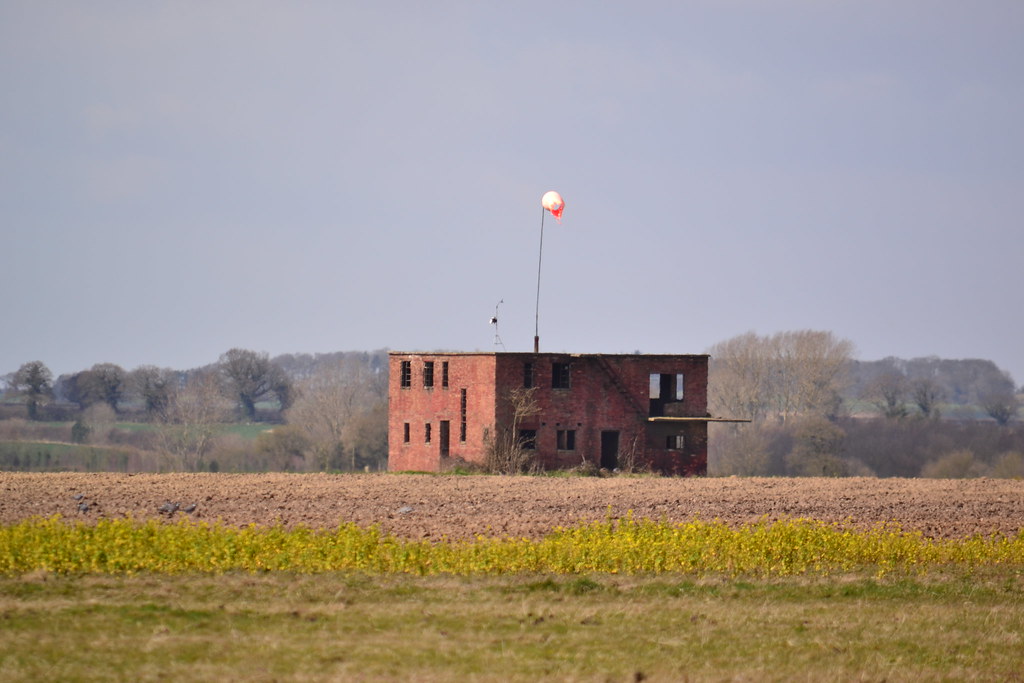
RAF Little Snoring

An air-raid shelter protected the personnel from attack.

In October, further operations to Kassel and mine laying in the West Frisians were badly affected due to six of the twelve aircraft being unable to take off. The first was affected by one of the air crew suffering airsickness; the second suffered a burst tyre which left it stranded on the perimeter’s edge; a third got bogged down in the mud trying to pass this one and three more got stuck behind these unable to pass or turn. The remainder of the aircraft got away safely though, and although carrying out operations satisfactorily, they encountered electrical storms over the target area which hampered the equipment on board. All these crews returned safely and there were no further mishaps

On November 7th, a near catastrophe was luckily avoided after Lancaster DS825 crashed on take off after one of its engines cut out part-way down the runway. After inducing a violent swing the bomber crashed causing its other engines to catch fire. Luckily there were no explosions and all the crew managed to escape the wreckage unhurt.

115’s last operation from Little Snoring would take place on November 23rd 1943, the day prior to its departure for RAF Witchford. Twelve Lancasters, six from both ‘A’ and ‘B’ Flights, lined up and revved their engines to take off speed departing once more for Berlin. With them  they took the usual mix of incendiaries and ‘cookies’, all destined to fall on Berlin’s streets. Two aircraft failed to take off and two returned early; one due to a faulty Gee set and the other a faulty air speed indicator. One of the returning aircraft dropped its payload on Texil, the other safely on unoccupied land before turning for home.  The remainder of the squadron continued on and successfully completed the operation, the attack being considered ‘satisfactory’.

With that, 115 Sqn’s time at Little Snoring had come to an end, departing the next day for RAF Witchford where it would continue the brave fight over Nazi Germany. On their arrival at Witchford, a new flight was immediately formed, ‘C’ Flight, and as a result new crew members would soon arrive.  Little Snoring meanwhile was about to see some major changes itself, not only in personnel and aircraft, but ownership as well.

On December 8th 1943, the station became the charge of 100 Group, the Electronic Warfare Group who had taken up residency elsewhere in this part of Norfolk.

100 Group were the last operational Bomber Command Group to be formed during the war, with a clearly defined role which was to provide night intruder support for bombing operations, and was headed by Air Commodore Edward Addison.  Like their counterparts at Great Massingham, Foulsham, North Creake, West Raynham and Sculthorpe amongst others, they would take part in electronic warfare and counter measures against enemy fighter operations. 100 Group, investigated a wide range of devises suitable for tracking, homing in on, or jamming enemy radars. With a wide rage of names; “Airborne Cigar“, “Jostle“, “Mandrel“, “Airborne Grocer“, “Carpet” and “Piperack“, they used both “Serrate” and “ASH” to attack the enemy on their own airfield at night before they could intercept the allied bombers.

With its takeover of Little Snoring, came 169 Sqn who had only been formed at Ayr just two months before. They received the Mosquito II, the remarkable twin engined beast from de-Havilland which was to perform well in its new role as Night Intruder. In support, came 1692 (Radar Development) Flight, also know as the (Bomber Support Training) Flight from RAF Drem, also in Scotland.

A few days later the two units were joined by a third squadron, 515 Sqn from RAF Hunsdon also with the Mosquito II and VI, and Bristol’s Beaufighter IIF.  All three would work in the area of Electronic warfare.

169’s departure from Ayr was marked with a very ‘successful’ party in the corporal’s mess, with contributions of £1.00 from officers and 2/- from non-commissioned ranks. The beer flowed well into the night, with many trying their rather shaky hands on the piano. Regular rallying on the squadron hunting horn brought the party goers back together and ensured the party spirit was maintained and kept going well into the night.

Norfolk’s wet and miserable weather greeted the personnel as they arrived over the next few days here at Little Snoring. Once they settled in, training flights were scheduled but many of these had to be cancelled due to the continuing rain and fog,

With talks by staff from Rolls Royce on engine handling and another on Bomber Command Operations and Tactics, December’s poor weather provided little time for flying. A reconnaissance was made of the Norwich pubs, and parties became the order of the day, Christmas leave was arranged and various quarters were decorated. As the mood lasted well into the New Year, the war had at least for now, come to a standstill.

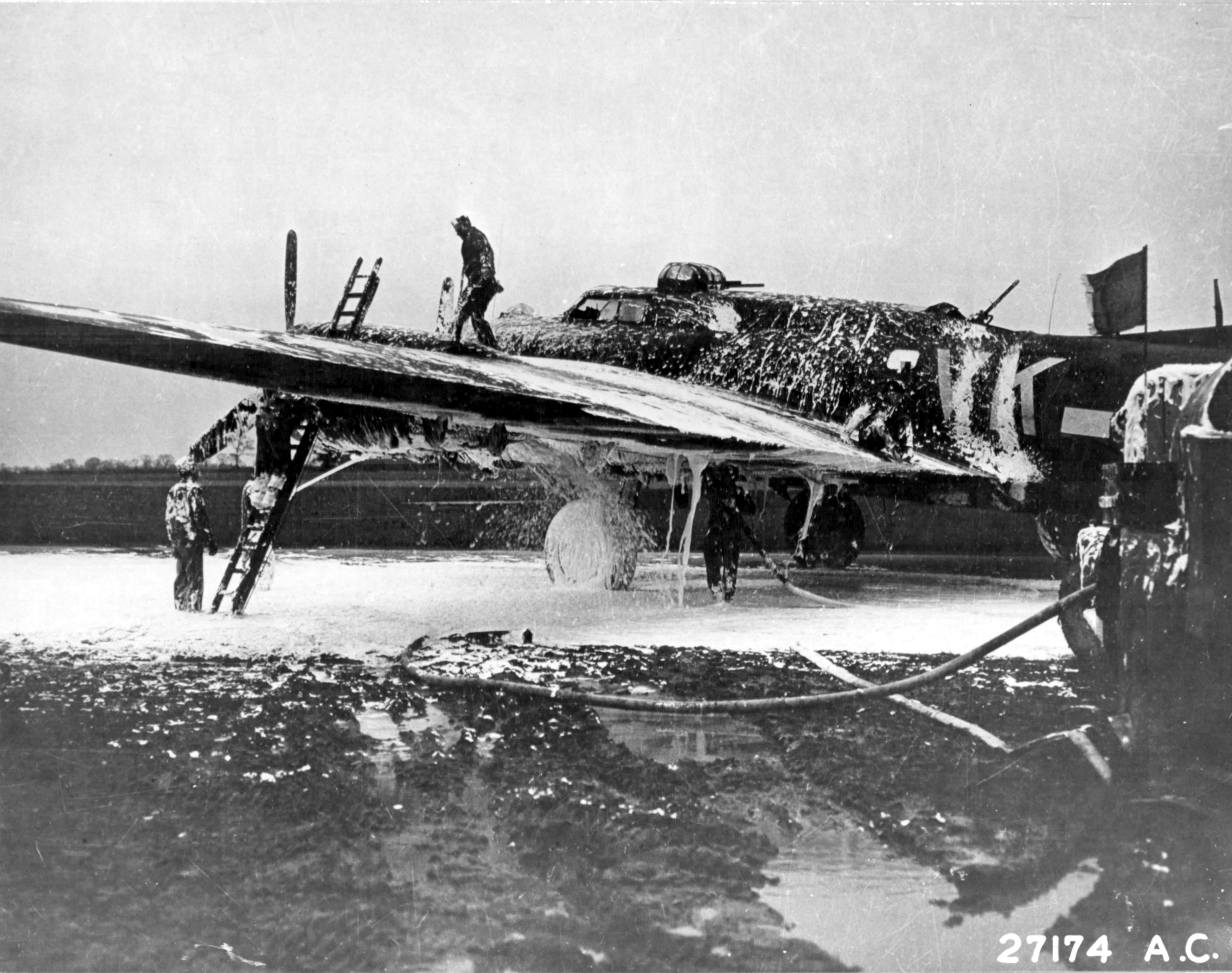
On January 5th 1944, the monotony was broken when thirteen USAAF B-17s landed at the airfield by mistake, the American crews, much to the annoyance of those in residency, were given temporary use of the mess until they could depart some days later. Much ribbing by the locals  no doubt helped ease the burden of sharing their beer and alcohol supply.

Various flights did manage to take place in the meantime, using both the Beaufighter and Anson. Further talks were given by escaped POWs, who gave an interesting insight into what to expect if you were shot down over occupied territory.

Over the winter months, gliders were brought in for storage and maintenance, ready for the impending assault on the French coast. These were stored in hangars on teh western side of the airfield and moved prior to D-day.

On January 20th, the first operation finally took place, a Serrate flight over Northern Holland in support of the bombing of Berlin. Two Mosquitoes were detailed but one had to return shortly after take off as the aircraft’s skin began peeling away from the wing root. Those on board were ‘thoroughly disgusted with their bad luck’.

It was this bad luck that would dog the squadron for the remainder of the month. More cancelled flights, aircraft unserviceable and instruments failing during flights. It wasn’t until the 30th January that the string of bad luck would be broken when Sqn. Ldr. Joe Cooper and Flt. Lt. Ralph Connolly, shot down an Me 110, forty miles west of Berlin in Mosquito HJ711 (VI-P). This was the squadron’s first ‘kill’ of the war since being reformed. Utilising their AI equipment, they destroyed the aircraft with a 3 and 7 second burst of gunfire from 200 ft. The aircraft blew up causing the Mosquito to swerve so violently that it entered a near fatal spin. The crew were only able to pull out after falling to an altitude of 5,000 ft. All in all, they fell some 15,000 feet before recovering. Needless to say, there was huge jubilation when they returned, the aircraft being greeted by several hundred personnel at Little Snoring.

With two more kills in February, the tally of three would remain stagnant until mid April when a series of five more 110s were brought down. With three more in May, their total would stand at eleven by the time 169 Sqn were destined to leave.

RAF Little Snoring

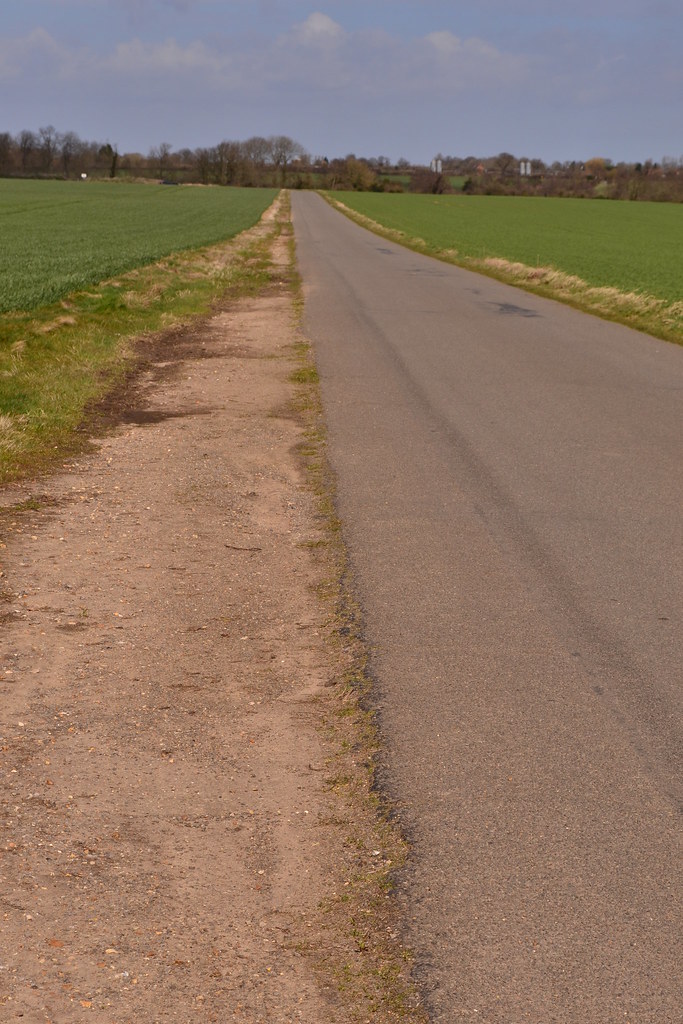
The road uses the former eastern perimeter track, part of which is still visible to the side.

In the next part, a small detachment arrives bring further new types with them, a  famous face appears and bombers strike at Little Snoring.
The full story can be seen in Trail 22.

Little Snoring hardly the quietest of airfields! (Part 1)

In Trail 22 we revisit a former airfield that housed the mighty Lancasters of Bomber Command, one of the few Norfolk airfields to do so. It later took on the Mosquito, a model that remained here for the remainder of the war, taking part in the Night Intruder role, a role it excelled at.

This small and quiet village played host to some remarkable people and aircraft, it was an airfield that certainly didn’t reflect its name.

RAF Little Snoring

Little Snoring is, as its name suggests, a quiet village deep in the heart of Norfolk. Surrounded by beautiful countryside, it boasts a superb round towered church that holds a remarkable little gem of historical significance. Its history dates back to Anglo Saxon times, a time from whence its name derives.

Little Snoring

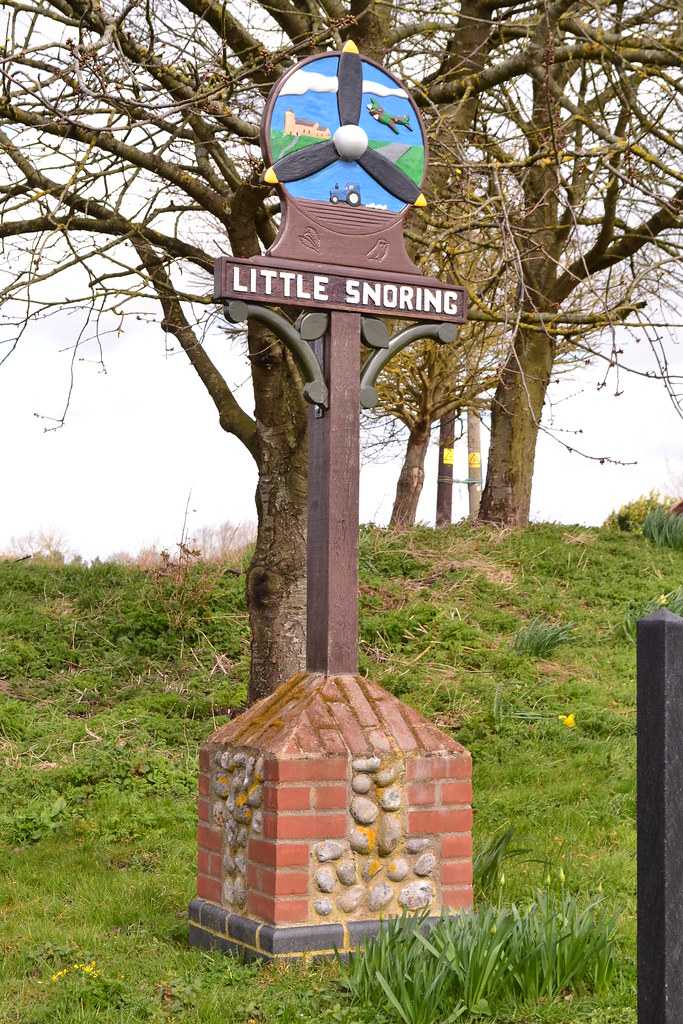
The Village sign reflects Little Snoring’s aviation history.

The airfield, located about 3 miles north-east of Fakenham on land  191 feet above sea level, was opened in July 1943 following a period of construction by the company Taylor Woodrow Ltd. It would during its history, house no less than five different squadrons along with several conversion units, development units and a glider maintenance section before being used for civilian flying in more modern times.

The airfield was originally opened over the period July / August 1943, quite late in the war, as a satellite for nearby RAF Foulsham. It had three runways: two constructed of concrete 1,400 yards in length, (01/19 and 13/31) and one (07/25) of 2,000 yards again in concrete. As with other Class A airfields its runways formed the typical ‘A’ shape, with thirty-six dispersal sites constructed around the perimeter. A bomb site lay to the north of the airfield, a fuel dump to the south and the accommodation blocks dispersed away from the airfield to the south-west. The airfield was built to accommodate 1,807 RAF and 361 WAAF personnel housed over eight dispersed domestic sites.

To accommodate the various squadrons and their aircraft, the airfield would have 5 hangars, two T2s, two Glider and a B1, all dotted around the perimeter of the airfield, Many of these were not finished when the first aircraft moved in.

Initially opening under the command of 3 Group Bomber Command, its first occupants were the rare Bristol Hercules engined Lancaster IIs of both 1678 HCU (Heavy Conversion Unit) and 115 Squadron (the first unit equipped with the model); formally of RAF East Wretham, who were to carry out night bombing duties, a role it would perform throughout the war.

Of the two units, 115 Sqn were the first to arrive, the advance party being led by F.Lt. W. A Major DFC on the 5th August 1943, from East Wretham. The main party, led by F.Lt. R. Howarson, followed the next day, with the rear party, led by P/O. M.G. Gladwell arriving on the 7th. During this time all flying operations were suspended allowing the squadron time to move and settle in.

115 Sqn was historically a First World War unit, forming in 1917 going on to see action in France in the following year. Post war it was disbanded only to reform again in 1937 in preparation for the second impending world conflict. It would go on to have the dubious honour of having the highest losses of not only 3 Group but the whole of Bomber Command as well – a title, which amounted to 208 crews,  not envied by anyone. *2

The two days following their arrival were taken up with flying training including bombing practice and air-to-sea firing before the first operations on the night of the 10th -11th August 1943.

Fourteen aircraft took off between 21:45 and 22:10 to attack Nuremberg, each aircraft carrying a mix of a 4,000lb ‘Cookie’ and incendiary bombs. Although much of the target was obscured by cloud, crews reported seeing many explosions on the ground along with fires being visible some 100 miles away.*1

Of those that departed that night one aircraft (DS684) had to return early due to the gunner’s economiser lead being unserviceable, with a second aircraft (DS665) failing to return and not being heard from again. Following a phone call received from RAF Detling in Kent, it was established that the aircraft had in fact crashed some 5 miles east of Maidstone, near to Hall Farm, Boughton Monchelsea in Kent*3. It would later be revealed that none of the crew on board had survived the crash.

With Italy crumbling, further pressure was applied to Germany’s ally through the bombing of both Milan and Turin; the might of the Lancasters now delivering their huge payloads on the two Italian cities.  It was during the Turin raid on the night of 12th August, that Flt.Sgt. Arthur Louis Aaron from 218 Sqn at RAF Downham Market, would earn a VC for his courageous effort in keeping his aircraft flying whilst seriously wounded.

RAF Little Snoring

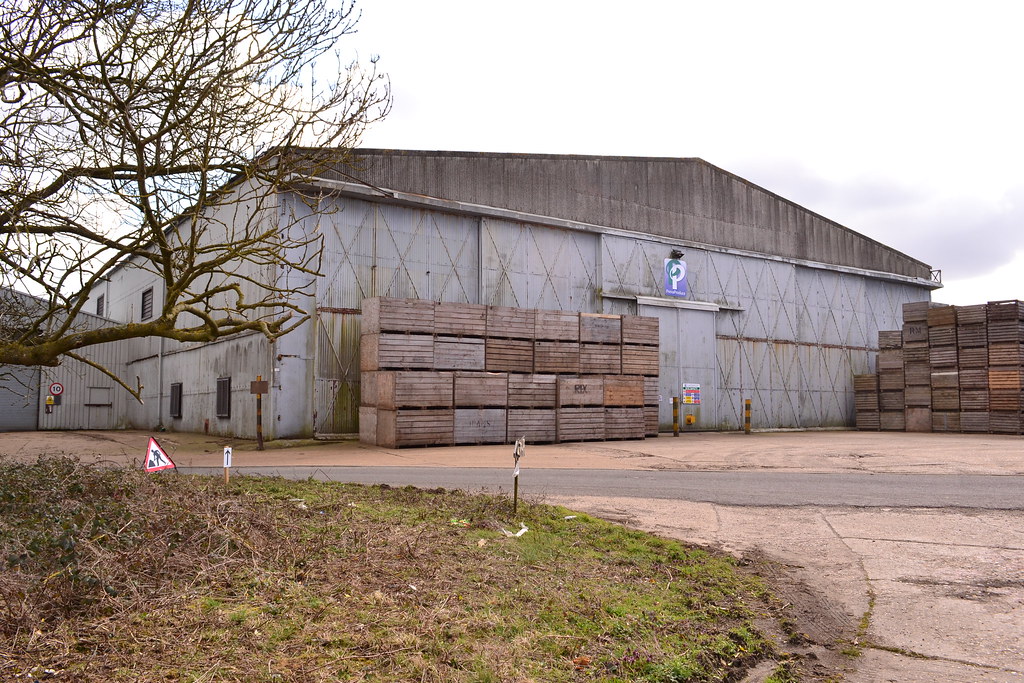
One of two original T2 hangars still in use today. These have since been re-clad.

For 115 Sqn though, the night passed without mishap and all thirteen aircraft returned intact. The next few days saw no further operational flying, the crews undertaking training flights instead, a short relief from operations before they turned their attention northwards and the German rocket research establishment at Peenemunde.

Between 21:38 and 21:50, twelve Lancasters took off from Little Snoring taking a further combination of Cookies and incendiaries with them. Bombs were released  between 7,800 and 12,000ft, a level that just scraped the ceiling of the rising smoke. Of the twelve aircraft that departed, one was lost, that of DS630 ‘H’ flown by F/O. F.R. Pusey – none of the seven aircrew, who were only on their third operation, survived. This took the total of those aircraft lost in the first few days of flying from Little Snoring, to three, almost one per operation.

Another short period of training then followed, before they once again turned their attention to Germany and the capital Berlin.

Amazingly the Lancaster squadron would fair much better than many of its counterparts, particularly those flying Halifaxes and Stirlings, losing only one aircraft, DS630 to the enemy, unlike other squadrons, which were decimated by the Luftwaffe and air defences surrounding the German capital. Of the seven crew on board this aircraft, three were picked up after spending six days drifting in a dingy off the Dutch coast.

The remainder of August was much similar. Training flights and further operations, including mine laying off the West Frisians Islands and the French coast, saw the month draw to its end. Whilst comparatively quiet in terms of losses, the squadron was none the less racking up a steady score of ‘failed to returns’.

In August, Little Snoring would become one of those airfields that would bear witness to an incredible act of bravery one that like so many others would become one of those little known about stories of the war.

On the night of August 23rd – 24th 1943, Berlin was again attacked. On this raid Lancaster ‘KD802’ ‘M’ flying with 207 Sqn from RAF Langar, was attacked by a Ju 88 night fighter. The rear gunner, Sgt. R. Middleton, managed to return fire achieving some strikes on the enemy aircraft, which led to it catching fire and crashing. But Sgt. Middletons determined efforts did not prevent the enemy aircraft from getting his own hits on the Lancaster, causing a fire in both the starboard wing and fuselage. In addition t this, the tail plane and all its controls had also been damaged and the pilot was struggling to maintain control over the burning aircraft.

P.O. McIntosh ordered the bombs ditched at 22:49 hrs. With a lighter load he then turned for home in the hope of reaching home or at least safer territories. In a desperate effort to extinguish the fire, Sgt. Middleton then volunteered to climb out of the fuselage onto the wing, something that had been tried by others in similar situations, but it was a risky and daring challenge. The pilot P.O. McIntosh, refused to grant permission, fearing the the rear gunner would be lost in the strong winds, a risk he was not prepared to take.

Remarkably the aircraft reached the North Sea, McIntosh considered ditching the aircraft fearing its time was almost up, but before he could take action, the navigator announced that they had in fact reached England and the safety of home. Coming in from the north, the first suitable airfield they came across was Little Snoring.

Fuel was now low, and with the landing gear down one of the aircraft’s engines cut out, but using all his skill and training, McIntosh manged a successful and safe landing

The aircraft was written off, so extensive was the damage caused by the fire, but the crew were all safe and uninjured thanks due to an amazing feat of courage and determination by the crew to get the aircraft back home.

In part 2, 115 Sqn’s time at Little Snoring draws to a close. The Lancasters depart and a new aircraft arrives. With it, comes new ownership and a change in operations.
The full story can be seen in Trail 22.

Operation ‘Fuller’ – “The Channel Dash”.

The Second World War was full of extraordinary operations many of which succeeded in their aim resulting in great jubilation on home shores, whilst others will always be remembered for their catastrophic fail and loss of life. In these operations, and even though the mission may have failed, those who took part went far beyond the ‘call of duty’, showing incredible bravery and self sacrifice for the better good.

One such operation took place on February 12th 1942.

Up until now, German warships had been causing havoc in the waters around Britain, sinking in excess of 100,000 tons of allied shipping since the opening days of the war; their ‘trophies’ including the aircraft carrier HMS Glorious and the battleship HMS Hood. In January 1942, three of those German warships responsible the Gneisenau, Scharnhorst (Gluckstein and Salmon as the ships were known by bomber command crews) and Prinz Eugen, all heavily armed and battle hardened, were laying in the port of Brest. Even by remaining there, they were causing the Royal Navy an immense headache, as they were diverted from other important tasks, including operations in the Middle East against German supply ships supplying Rommel, and the valuable protection of allied shipping crossing the Atlantic. The small fleet were a major thorn in the Royal Navy’s side and had to be dealt with.

Coastal Command had been closely monitoring the vessels over a period of months, but information had led to little more than that. With the aim of sinking these ships, the RAF became involved undertaking a total of 299 attacks against them whilst docked in the port. During these attacks, 43 aircraft were lost along with 247 brave airmen. The ships were indeed hit though, and in the case of Scharnhorst, damaged badly, but none ever badly enough not to be beyond repair.

The decision was eventually made to move the ships, Hitler’s fear of a second front being opened in Scandinavia proving to be the deciding factor. On that decision two routes were considered, the northern route around Scotland which would take the small, but powerful fleet in range of British carriers and warships at Scapa Flow, a fight the Germans did not want to engage in. Alternatively, they could attempt a daring dash through the narrow and well defended English Channel. It was a difficult decision to make.

Following a meeting on January 12th, 1942 between many top ranking German officials including Hitler, Raeder (the C In C of the Navy), Vice-Admiral Ciliax and Adolf Galland as commander of the Luftwaffe in the Channel area, a decision was finally made, the shorter English Channel route would be the one to take.

The decision raised great concerns though. Both Galland and other Luftwaffe officials knew that there were too few available fighters in the region – just some two groups and a few training units – to be able to provide the 24 hour protection the ships needed as they dashed through the straits. Night fighters were especially needed, a decision which was affirmed and granted by Major General Jeschonnek, the Luftwaffe Chief of Staff; but the numbers of aircraft available to Galland would still remain greatly inferior to those on British soil ready to attack.

So, Operation Thunderbolt was born with February 11th chosen as ‘X’ day, and a sailing time set at 8:00pm. In the weeks leading up to the ‘dash’, German transmitting stations based at both Calais and Cherbourg, began a cat and mouse game transmitting a series of elaborate but false messages to interfere with British radar stations along the south coast. They provided a cover story, suggesting that the fleet would set sail but head toward the Pacific in support of the Japanese and not north to Scandinavia. In preparation, trial runs were made to test engines, guns and communications. The British, still monitoring their actions, began a series of raids on the port, none of which achieved any great success.

During these attacks, which had been occurring regularly since early January, several aircraft were lost including: three Manchesters from 61 Squadron; two Hampdens from 144 Sqn; three Wellingtons, one each from 12, 142 and 300 Sqns and on the 10th February, another Manchester from 61 Sqn.

To meet the anticipated challenge, Galland had some 252 fighters, including a mix of 109s, 190s and some thirty 110 night fighters at his disposal, but he argued, it was still not enough to provide the cover he wanted.

As ‘X’ day approached, the radars went wild with false readings and interference. But the British, now aware of an impending escape, were on high alert, additional Motor Torpedo Boats (MTBs) were docked at Dover and Swordfish aircraft were drafted in to RAF Manston in Kent. Some 1,100 magnetic mines were laid along the projected route and Dover command was put on standby. At 8:00pm on February 11th,  the flotilla began to assemble outside of Brest harbour, just as a routine air raid was launched, and so the port was shut down. Although only one aircraft was lost, a Wellington from 150 Sqn, the raid proved no more than a nuisance, only delaying the fleet’s departure by two hours.

Now temporarily blinded by false radio measures, the British were unable to ‘see’ the mighty armada as it finally slipped out into the open waters of the Channel. Their escape had been a success.

During the night, good progress was made by the fleet and the lost time was made up quickly. Meanwhile, the skies remained quiet, the British not yet realising the ruse. The early morning remained dark, night fighters patrolled along side the fleet at wave top level, thus avoiding detection by British radar. Day fighters joined them in a relay operation that would be held below the cloud ceiling of 1,500 feet.

At 11:00 am on the 12th, the Germans intercepted a British message signalling that the fleet had been spotted. But it remained another hour before further RAF aircraft were seen, the British being wary and unsure of the message’s accuracy. Even though for months the British Command had been monitoring the fleet, those in command failed to act on valuable information, a mistake that led to a vital delay in operations.

Then, in the early hours of the afternoon, as the fleet approached the narrowest point of the Channel, British defences at Dover opened fire. A sea battle then raged between German warships and British MTBs, but for all their valiant efforts they failed to achieve their goal.

At 13:20 A group of sixteen Spitfires took off from Kenley on a Beaufort escort mission that were sent out to search for, and attack the fleet. They initially  rendezvoused with twelve more Spitfires from 602 Sqn, but then failed to meet the Beauforts over Manston. The formation then continued on to the target area looking for the convoy and its escort. Soon after arriving over the Channel, 485 (NZ) Sqn’s leader, Group Captain, Francis V. Beamish DSO and Bar, DFC, AFC, spotted six destroyers, two E-Boats and two German Battle cruisers. At his altitude there was no fighter escort, the mix of Bf109s and FW190s remaining firmly below radar level at 600ft.

Seizing his chance, Beamish then attacked one of the destroyers raking it with gunfire along the length of its deck, a Spitfire’s guns were no match for the destroyer though and little damage was done. The remaining aircraft of the two squadrons then took on the enemy who were forming a low level protectiove umbrella, achieving a greater rate of success with several ‘kills’ being reported back at kenley.

Now fully aware of the situation, the RAF and Navy were called into action. At RAF Manston, eighteen young men began to prepare for take off, their target, the escaping German fleet of some sixty-six surface vessels including the warships Gneisenau, Scharnhorst and Prinz Eugen, now sailing almost unopposed through the English Channel.

The six Fairy Swordfish of 825 Naval Air Squadron were ageing biplanes, they were no match for Galland’s fast and more dominant fighters, nor the defensive guns of the mighty German fleet they were hoping to attack. To pitch a handful of biplanes with torpedoes against such a heavily armed and well prepared armada, turned out to be no less than suicide.

In front of their Swordfish, Lieut Cdr E Esmonde, RN, (2nd Left) on board HMS Ark Royal, October 1941. This photo was taken after the attack on the Bismark, and includes the various aircrew who received decorations as a result of that daring attack. (Left to right: Lieut P D Gick, RN, awarded DSC; Lieut Cdr E Esmonde, RN, awarded DSO; Sub Lieut V K Norfolk, RN, awarded DSC; A/PO Air L D Sayer. awarded DSM; A/ Ldg Air A L Johnson, awarded DSM). (© IWM A 5828)

The winter of 1942 was very cold, but the Swordfish were kept ready, engines warmed and torpedoes armed, now they could no longer wait, and instead of attacking as planned at night, they would have to attack during the day, and so the order to go was given. The crews started their engines and set off on their daring mission in what was appalling weather.

Shortly after take off, the escort arrived, merely ten Spitfires from No. 72 Squadron RAF, led by Squadron Leader Brian Kingcombe, and not the five Spitfire squadrons promised. The six Swordfish, led by  Lt. Cdr. Eugene Esmonde, dived down to 50 feet and began their attack. Hoping to fly below the level of the anti-aircraft guns each of the six Swordfish flew gallantly toward their targets. Eventually, and even though they were hit and badly damaged, they pressed home their attacks, but they were out-gunned, and out performed, and just twenty minutes after the attack began, all six had fallen victim to the German guns. No torpedoes had struck home.

Of the eighteen men who took off that day, only five were to survive.

Leading the attack, Lt. Cdr. Esmonde (an ex-Imperial Airways captain) was warded the V.C. Posthumously, he had previously been awarded the Distinguished Service Order for his part in the attack on the Battleship Bismark; an award that also went to: S/Lt. B Rose, S/Lt. E Lee, S/Lt. C Kingsmill, and S/Lt. R Samples. Flying with them, L/A. D. Bunce was awarded the Conspicuous Gallantry Medal and twelve of the airmen were mentioned in dispatches.

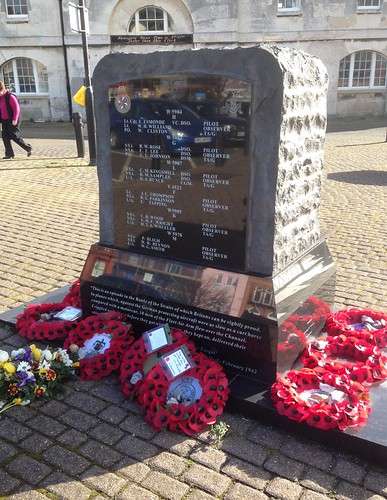
The attack became known as ‘The Channel dash’ officially called operation Fuller, and in honour of the brave attempt to hit the German fleet that day, a memorial was erected in Ramsgate Harbour, the names of the eighteen Swordfish crew are listed where their story is inscribed for eternity.

Operation Fuller was a disaster not only for the Royal Navy and Coastal Command who had been monitoring the fleet for many months, but also for the Royal Air Force. A force of some 100 aircraft made up from almost every Group of Bomber Command had made its way to the Channel. By the time evening had dawned, it had become clear that some sixteen aircraft from the force had been lost. The loss of life from those sixteen aircraft totalled sixty-four, with a further five being captured and incarcerated as prisoners of war.*1

Bomber Command were not without their terrible stories either. The sad loss of W/C. R MacFadden DFC and his six crew who remained in their dingy after their Wellington from 214 Sqn ditched in the cold waters of the Channel. Over a period of 72 hours all but Sgt. Murray, slowly died from the cold, he being rescued at the last minute and incarcerated by the Germans. Of all the RAF squadrons that took part that day, their losses amounted to: 49 Sqn (4 x Hampdens); 50 Sqn (1 x Hampden); 103 Sqn (1 x Wellington);  110 Sqn (1 x Blenheim); 114 Sqn (1 x Blenheim); 144 Sqn (2 x Hampdens); 214 Sqn (1 x Wellington); 419 Sqn (2 x Wellingtons); 420 Sqn (2 x Hampdens) and 455 Sqn (1 x Hampden)*2

February 12th had been a disaster, so bad that The Daily Mirror reported on February 16th 1942 under the headline “9 Lost Hours in the Channel“,  that a demand had been put forward to Parliament for a complete statement on Naval strategy during the event. It also questioned the “suitability of Admiral Sir Dudley Pound”, in fulfilling his role. The paper goes onto say that a lag of some nine hours had largely been ignored by officials, that being the time between the first notice and when action was finally taken against the fleet. It also says that although the initial sighting was no earlier than 10:42 am, it took another hour before it too was responded to.  The public had been mislead it believed.

The entire operation has been badly organised by those in command, with little or no cohesion nor coordination between this various forces involved. As a result, the entire operation was a catastrophe with a major loss of life and no real result. The entire operation was seen by some as akin to a “Gilbert and Sullivan” comedy*3.

However, from that disaster came stories of untold heroism, bravery and self sacrifice by a group of men that have turned this event into one of Britain’s most remarkable and incredible stories of the war.

Operation 'Fuller' The memorial stands in Ramsgate Harbour.
Operation 'Fuller' The names of the 18 airmen and the Swordfish they flew.

Sources and Further reading

*1 To read more about Bomber Commands part in operation Fuller and a German film of the event, see the Pathfinders Website.

*2 Chorley, W.R., “Bomber Command Losses of the Second World War – 1942” 1994, Midland Counties publications.

*3 Bennet, D “Pathfinder“, Goodall, 1998

National Archives AIR 27/1933/20, AIR 27/1933/21

A German account of the ‘dash’ is given in “The First and the Last” by Adolf Galland published in 1955 by Meuthuen & Co.. Ltd.

Trail 60 – Scotland’s West Coast (Part 2).

In the second part of this Trail we continue at Oban (Karrera) off the west coast of Scotland.

In Part 1 we saw how Oban developed into a major Flying Boat base utilising the long stretches of water between Karrera and Oban and how Patrols were being sent out to search for the German Battleship Bismark.

The arrival of the Catalinas not only brought a new aircraft, but new accents to this part of Scotland too. A number of Americans had now joined the Air Force and it was one of these who flew the first Bismark Patrol in May 1941. Taking off at 09:20 in AH531 was F.Lt Van der Kiste D.S.O. and Lt. Maulsby, an American, who together carried out cross over patrols for twelve hours before returning to Oban empty handed. The first attempt to locate Bismark was unsuccessful.

For the next three days, aircraft of 210 Sqn from Oban and Reykjavik searched tirelessly for the Battleship, and on the 26th their efforts paid off. Catalina W8416, flown by F.Lt Hatfield and Lt. Rinehart (another US flyer), took off at 12:23 searching for the rest of the day. At 23:40 Bismark was sighted, without her escort. The Catalina remained on site, shadowing the Battleship for the remainder of the night. Some twenty-seven hours later the aircraft returned to Oban, the endurance of both the aircraft and crew being truly remarkable*2.

For the remainder of the year regular patrols intercepted both Condor reconnaissance aircraft and marauding U-boats, attacking mainly with depth charges, some of these proving highly successful.

When February 1942 arrived, the squadron began to transfer to Sullom Voe, Catalinas transferring large numbers of crewmen whilst Handly Page Harrows transferred ground personnel via the airfield on the mainland at Prestwick.

Within a month though, the Sunderland would return to Oban with the arrival of another new squadron, 228 Squadron. Their move coinciding with the replacement of the Mk.IIs they currently possessed with the updated Mk. IIIs, these remaining here until December of that same year.

Two months after 228’s arrival, another Sunderland squadron arrived at Oban. Being formed on 18th May 1942, 423 Sqn brought yet more Sunderland MK. IIs, and shortly after MK.IIIs. The summer of 1942  was becoming a very busy time in the waters between Kerrera and Oban.

For the first few days, organisational matters were the priority for 423 Sqn. New staff were brought in and rooms were allocated for operations. Two buildings on Kerrera were handed over to the Canadians for their use, one of which was immediately utilised by the Signals Section. Control of 423 Sqn was initially taken over by Sqn. Ldr J.D.E. Hughes DFC, who transferred from 4 OTU at Stranraer. He immediately took the role of Flight Commander. The headquarters were set up in the navigation room, and within days of each other, an adjutant, navigation officer, Medical Officer, Signals Officer and a handful of ground personnel had all arrived. Sqn. Ldr. Hughes then detached to Pembroke Dock so he could oversee the transfer of aircrew, ground personnel and aircraft to Oban.

RAF Oban (Kerrera)
The Slip way on Kerrera. There are buildings to the right and behind.

By July 1st there were twelve Officers and sixty-two ‘other ranks’, but as yet no aircraft had arrived. In addition to this, the development of the site was being hampered by lack of supplies, difficulties in getting suitable building materials preventing the construction of appropriate offices.

At last on the 16th the first aircraft arrived, a MK.II Sunderland ‘W6001’, flown in by Sqn. Ldr. Hughes himself. This momentous moment was followed two days later by the second aircraft, ‘W6000’, being flown by Flt.Lt Lindsay DFC. By the end of the month the Canadian squadron in Oban consisted of twenty-six officers and 160 ‘other ranks’, but still only two aircraft. However, it did mean that at last training flights could now commence*3.

In August 1942, the quiet island of Kerrera and its neighbouring town of Oban, were struck by tragedy. The loss of not only almost an entire crew, but a very special dignitary as well. The tragedy would bring home sharply the dangers that crews faced when flying from coastal bases.

On the 23rd, Sunderland W4026, ‘DQ-M’ of 228 Sqn, with F.Lt. Goyen, W.C. Moseley, P.O Smith and P.O Saunders onboard, took off on a transit flight to the large flying boat base at Invergordon on Scotland’s East Coast. Also on board that day was Sgt. W. Sweet,  Flt.Sgt. W. Jones, Flt.Sgt. E. Hewerdine, Sgt. E. Blacklock, Sgt. A. Catt, Flt.Sgt. A. Jack and Flt.Sgt. C. Lewis. They arrived at Invergordon at 16:30 and began to prepare for their visitor.

Two days later, the aircraft with all eleven crew onboard, along with their special guest  H.R.H. Prince George, The Duke of Kent, and three members of his party, took off for a transit flight to Iceland. At approximately 14:00, the aircraft crashed at Eagles Mount near Dunbeath in poor visibility killing all onboard except the rear gunner Sgt. Andrew Jack. The board of enquiry carried out an investigation and concluded that a navigational error had caused the crash, in which the aircraft, full of fuel, exploded. The flight was on an official flight to Reykjavik, and it is believed that the crew didn’t account for strong winds blowing in off the sea. This it is thought, caused the aircraft to drift. When altering course, the aircraft didn’t have sufficient altitude to clear the high ground in front. Thirteen of the fourteen occupants were instantly killed. At the time, it was recorded as the worst Short Sunderland accident, and Britain’s third worst air accident.*4

By November 1942, it was time for change once again at Oban, as one Canadian squadron swapped with another. The departure of 423 Sqn signalled the arrival of 422 Sqn, one Sunderland squadron replacing another.

Since their inception in April 1942, 422 Sqn had operated two aircraft, the Lerwick and the Catalina IB. On Arrival at Oban, they immediately began to receive the Sunderland III. With four aircraft on roll by December, the squadron had settled in well, and crew training was well underway. However, none of the airmen had any experience of the Sunderland, and so training was going to be long. The bitter cold of the Scottish winter began to bite, which in conjunction with early problems with the towing tractors, hampered training. Gusts and swell in the sea prevented many take offs and crews often had to resort to sleeping on board their aircraft.

RAF Oban (Kerrera)
Kerrera. Is this the same house that appeared behind the Saro Lerwick?

Four months later tragedy would strike again at Kerrera. On the 19th December 1942, 422 Sqn suffered a tragic loss when Sunderland W6029 crashed in the Firth of Lorne, the body of water between Kerrera and the Island of Mull beyond. The aircraft, a MK.III, was returning from a flight to Sullom Voe, picking up a new crew and other passengers. On its return, the weather and sea conditions at Oban were deemed to be unsuitable for landing, but radio contact with the aircraft had been lost. Unaware that they were to divert to Invergordon, the crew attempted to land, and at 16:41 lives were lost. As the aircraft touched down, a swell in the sea caused the front of the aircraft to collapse, severely damaging it, causing the aircraft to overturn and sink.

Killed that day were: F.O. David Mclean Cameron (s/n: 113530); F.O. James Kemp Potter (s/n: J/10323); F.O. Harold Francis Burt-Gerrans (s/n: J/16744); Sgt. Alun Griffiths Rees (s/n: 405084); Sgt. John Luke (s/n: 639582) and LAC William Arthur Allan (s/n: R/118882). Also killed was Intelligence Officer Major John Cox (Black Watch). A further three were seriously injured and the remainder suffered minor injuries, including the pilot Flt. Lt. John D. Reed. In all, over twenty personnel were killed or injured that day, in an accident that shook the lives of those living in the area. Many survivors were taken to the Highland Cottage hospital at Oban, where they thankfully recovered from their injuries.*5

By the end of December there were seven Sunderlands on charge and 109 hours of flying training had been achieved. No operations had as yet been carried out, and despite the recent tragic accidents both aircrew and ground crew were getting to grips with their new aircraft.

The dawn of 1943 saw more patrols and escort duties. Another international squadron would arrive bringing the Catalina with them. 330 (Norwegian) Sqn were a Reykjavik based unit who moved to Oban whilst continuing to operate a detachment out of Reykjavik. Within a month, they would begin to replace their aircraft with Sunderland MK.IIIs, then a year later with MK.IIs before departing to Sullom Voe in July 1943.

The eventual departure of 330 Sqn allowed for their space to be taken a few days later, on July 15th, by 302 Ferry Training Unit (FTU). The unit, which had formed in the previous September at Loch Erne, was set up to train ferry crews specifically for the long range Catalinas and Sunderlands. Overseas operations were now in need of the flying boats and crews were needed to transport them there. The unit remained active at Oban until the war’s end, transferring to Killadeas in mid 1945, prior to disbanding a year later.

In December 1943, a new squadron was formed at Oban, 524 Squadron, although this time it would not be the Sunderland nor the Catalina, but a new model would appear on the water. The Mariner was another US designed aircraft constructed by Martin, Lockheed’s competitor.

A large, deep hulled, twin engined aircraft its distinctive gull wing and angled twin-tail, made it easily recognisable. The squadron was set up under the Command of 15 Group, with a view to gaining operational experience on the new type of aircraft. Initially six Mariners were ordered, and modified to the minimum required for operational purposes. The long term view was that 524 Sqn would transfer overseas once the operational trials were completed.

The initial squadron set up was with 43 Officers, 111 Senior NCOs, 118 Corporals and A.C.s and 15 WAAFs. This combination would allow for the initial establishment of 14 aircrew.

The first aircraft (JX.100, JX.105, JX.106 and JX.110) were received on October 25th, after modification by Saunders-Roe, ready for operational flying. During the time with 524 Sqn, there was great difficulty in obtaining both spares and manuals and the Mariners did not become popular. The situation became so bad that by December the squadron was wound down and disbanded. All aircraft were given a 40 hour inspection and then prepared for disposal. The majority of the squadron staff were retained at Oban in the two training units 302 FTU and 131 OTU, whilst others were dispersed to new squadrons.

Martin (PBM-3B) Mariner I JX103 of No 524 Squadron at Oban, October 1943. © IWM MH 5097

By the end of January 1944 all four Mariners had gone with no more than 90 hours flying time having been completed.

In the lead up to D-day, Oban and the waters around Karrera were utilised for construction of the Mulbury harbour, a floating harbour than enabled men and machinery to be transferred from ship to shore quickly. At Oban Blockships were assembled, these would be used as the outer breakwater for the Mulberry harbours once at Normandy.

Blockships in the waters around Karerra used as the outer breakwater for the Mulberry harbours assembled at Oban. © IWM A 27070

After that, little operational flying took place from Kerrera. As the war began to wind down the Atlantic arena demanded fewer Maritime patrols, the numbers of U-boats at sea now declining below 100. The training units continued to operate for a short time, and then by April 1945 the site was put into care and maintenance. By early 1946, the RAF’s connection had all but ceased and the base was closed.

The Hotels used by the aircrew are still in use today, The Dungallen House Hotel (the former headquarters) being outside of Oban, whilst the Regent Hotel (the sergeants mess) stands on the waterfront.

The slip way on Kerrera and a handful are buildings are known to still survive, these can just about be seen from Oban. Whilst there is a good sized granite memorial and original slipway at Ganavan Sands, there is no official memorial in Oban town, and a return is definitely on the cards to visit these.

The Island of Kerrera is accessible by ferry. It is a small island with a few houses and businesses. The bay used for maintenance now accommodates small boats, the slipway, still present, is visible from Oban. A few buildings still remain on the island and some of these are also visible (with a decent telephoto lens or binoculars) from Oban. The museum which houses a display of memorabilia relating to Oban’s wartime history was closed at this time due to Government restrictions, but I am reliably informed that it has a good range of photographs of Oban’s Sunderlands and Catalinas.

The museum boasts two models, the first a 1/8 scale radio controlled Sunderland, the model being that of the 228 Sqn aircraft that operated from Oban in 1942 and the one that was lost with H.R.H. Prince George, The Duke of Kent onboard. A further and smaller model of a Catalina is also on show, it also having been lost whilst on operations.

The waters around Oban were indeed very busy in the early 1940s. With long range patrols and escort duties being performed, many of Britain’s merchant vessels were protected by these aircraft. The history of Oban has never been forgotten though, with a museum and several hotels boasting displays, the remnants on Kererra have been given new life which tell the story of life at RAF Oban.

Sources and Further Reading.

*1 National Archives AIR 27/1292/4

*2 National Archives AIR-27-1299-9

*3 National Archives AIR 27/1832/1

*4 Aviation Safety Network website.

*5 National Archives AIR/271831

National Archives AIR 27/1415/15

National Archives AIR 27/1415/16

The U-Boat War website. An excellent resource covering all aspects of the U-boat war.

The War and Peace Museum Oban website.

BBC Website “WW2 People’s War” – a record of personal stories.

“Dive Oban And Argyll” website has video / still of aircraft wrecks around Oban.

Trail 60 – Scotland’s West Coast (Part 1).

In this Trail we head to Scotland’s stunning west coast, passing the beautiful Lochs and mountains of the Trossachs to an area known as the ‘Gateway to the Isles’. With the Inner and Outer Hebrides only a short boat trip away, it is, according to the Office of National Statistics, the UK’s 50th most popular tourist destination.

Now no longer a military aviation site, it was during the Second World War, a prime location for those sub-hunters and convoy escorts the Flying Boat. With open seas not far away, U-boats could hide in its hidden bays, sheltered by the many small islands and deep waters.

In Trail 60, we continue with the Flying Boat theme and head to the former RAF base at Oban.

RAF Oban (Kerrera).

The Flying boat base at Oban was actually located across the bay from the town on a small island called Kerrera, although personnel were billeted in the many hotels along Oban’s waterfront. With a further maintenance site a few miles north at Ganavan Sands, Oban, and the surrounding area, made a major contribution to coastal operations during the Second World War.

The calm waters of the Sound of Kerrera, the stretch of water between the island and the mainland,  provided both good shelter and mooring facilities, as well as a long straight run for both take-off and landings.

However, it was not all plain sailing for those based at Oban. Whilst Kerrera sheltered the bay from the prevailing Atlantic winds, it did cause problems for some, as the wind direction could be unpredictable with swirls often being encountered during these crucial times. Another problem that the pilots frequently encountered were the many small boats that frequented the small bay. Strict guidelines were therefore issued to crews with extreme care and caution being the order of the day.

RAF Oban (Kerrera)
Oban bay and Kerrera. The slip way is directly in front.

The RAF arrived in force in 1939, although it is believed that there was some use of the area in the years prior to this, notably from 201 Squadron who flew Supermarine Southamptons.

The first squadron to be posted here was that of 209 Squadron, operating another Supermarine model, the Stranraer. 209 Sqn had a long history, going back as far as World War One, and although it was disbanded in June 1919, it was reformed later in June 1930.

For the next nine years, the squadron would fly a whole range of aircraft types including the: Blackburn Iris III and V, Saunders Roe (Saro) A.7, Supermarine Southampton and Short’s Singapore II and III. All these before taking on the Stranraer in December 1938. Their diversity in aircraft was only matched by the range of bases from which they served. Reformed at Mount Batten in Plymouth, they transferred to half a dozen different bases ‘yo-yoing’ between them and Felixstowe in Suffolk, a place they would become familiar with.

The summer of 1939 was a particularly busy time for 209 Sqn, moving from Stranraer to Felixstowe, from Felixstowe to Invergordon then back once again to Felixstowe. From here, they would make one more move back to Invergordon before finally arriving at Oban on October 7th 1939. This last posting must have provided some light relief for the squadron personnel as they remained here until the end of July 1940. At this point, the squadron would move once again, this time to the major flying boat base at Pembroke Dock. Throughout this hectic and dynamic time, a small detachment of the squadron remained at the base in the Cornish Town of Falmouth.

With no flying in the days preceding the move to Oban, the 7th October saw the first aircraft, Stranraer K7292, depart Invergordon at 14:35. An hour later it arrived at the base at Kerrera, triggering a chain of events that would begin Oban’s aviation history.*1

Over the next few days the number of aircraft transiting to Oban increased and the quantity of Stanraers moored in the bay began to build up.

With local flights, air tests and gunnery practice taking precedence over other flying activities, the first patrols wouldn’t begin until the 18th October. From then on, routine searches would take aircraft around the local islands including Mull, the adjacent island, and out to the Skerrymore Light which was located on the Isle of Tiree.

From then on patrols were carried out mainly between the areas known as Little Minch and North Minch (a stretch of water between the islands), offering a continuous anti-submarine patrol in conjunction with aircraft from 269 Sqn. Any submarines sighted were to be reported rather than attacked, possibly as British Submarines were also operating in the area at that time.

On the 24th October, orders were given to escort the ship SS Hesterus, performing a watch until the Skerrymore Light was reached. At that point the aircraft was ordered to leave the area and return to Oban. The Minch became a submarine hot spot, with new orders coming through on the 25th to now bomb any enemy submarine now seen in this location. German U-boats were now known to lurk in these deep waters waiting for unsuspecting merchant vessels to appear, before they transited to the open sea. With a number of sightings toward the month’s end the war was beginning to heat up.

In December 1939, it was decided to replace the Stranraers with Lerwick Is, a Saunders Roe built aircraft capable of carrying a crew of seven: two pilots, one Air Observer, two Aircrew, one Flight Mechanic and one Flight Rigger. There were some doubts as to the suitability of the Lerwick to operate from Oban’s waters, the rough sea and high terrain surrounding Oban presenting a great risk. It was also advised that night flying and flying in poor weather was also too dangerous, the Stranraer being far more suited to such flights. However, following a study by Wing Commander C.G. Wigglesworth of 209 Sqn, which compared the Lerwick to the Stranraer, he concluded that with a reduction in the overall weight as he prescribed, the Lerwick could be successfully flown from Oban. As a result, four were initially ordered, which would operate in conjunction with the Stranraers until crews became fully acquainted with the new type.

Saro Lerwick L7257 ‘WQ-F’ of 209 Squadron at Oban, August 1940. Note retractable dorsal turret, is this the same house that appears in the modern picture below? © IWM CH 864

On 25th December, a fuel test combined with an anti submarine patrol was carried out. The speed of the Lerwick (L7255) and duration of its flight returned a usage of 85 gallons per hour, a figure which the Station Commander considered good and in line with what Messers Bristols suggested; albeit at a less economical 100 gallons per hour for the Hercules engine.

In 1940, the patrols continued on, and in June one of these patrols spotted  the 3000 ton Finnish vessel “Reculus Suom” . The aircraft contacted the British warship HMS Devonshire, directing her to the vessel’s location. The partnership between the RAF and Navy serving well off the Scottish coast.

Other ships identified on these patrols included Icelandic vessels along with HMS Hood, HMS Ark Royal and HMS Hesperus. With one submarine attacked, patrols and escorts became the primary role of 209 Sqn.

Then on 20th June 1940, aircraft C / 20G was ordered to the position of A.M.C. “Scotstoon”, which had been torpedoed and sunk. On arrival, the aircraft saw 8 lifeboats, along with a considerable amount of oil and wreckage. The pilot contacted a British destroyer which preceded at full speed to pick up the survivors. Whilst the destroyer remained on site, the aircraft patrolled looking for any signs of a U-boat that might be waiting to attack the rescuer. Once all the survivors were gathered, the aircraft returned home to Oban.

Many of these escort duties ran in conjunction with Sunderlands from 15 Group. Some of these would land at Oban, gather fuel and return to their own bases elsewhere. It would soon become a sight that would become the norm.

In July 1940, the Lerwicks of 209 Sqn departed Oban’s waters, heading to Pembroke Dock, allowing space for another squadron, 210 Squadron, flying the larger four engined Short’s aircraft, the Sunderland. In a virtual swap, the Sunderland squadron began arriving two days after 209’s departure.

A Sunderland Mark I, L2163 ‘DA-G’, of 210 Squadron escorting Convoy 6 (TC.6), to Greenock. © IWM CH 832

The Sunderland (detailed in Trail 59) was a big aircraft built and designed like a boat, from the keel up. With its massive fuselage it could maintain flight for some 13 hours covering a range of 1,700 miles. With many comforts built in for crewmen, it was an ideal sub hunter and maritime patrol aircraft.

To give an even greater coverage the squadron had detachments based at Reykjavik (Iceland), Sullom Voe (a major deep water harbour on the Shetland Islands) and Stranrear. It was from Sullom Voe that 210 Sqn Flying Officer John Cruickshank, earned himself the Victoria Cross for his action against a heavily armed German U-boat. During the attack, Cruickshank and four other crewmen were severely injured, his navigator was killed and the aircraft badly damaged. He continued to fly his aircraft (Catalina Mark IVA, JV928 ‘Y) before relinquishing control to his second pilot. But knowing he couldn’t land the aircraft, Cruickshank refused morphine, circling over the base until daylight which allowed him to supervise the landing of the Catalina by the Second Pilot. His actions that night undoubtedly went a long way to saving his crew and his aircraft.

210 Squadron remained at Oban for the next two years replacing their Sunderlands with Catalina Is in April 1941. In February 1942 they finally departed, heading for the deep water base at Sullom Voe.

The main role of the Sunderland here at Oban was to carry out convoy escort and anti-submarine patrols in the Atlantic, especially in the waters off western Ireland. Some U-boats were spotted and engaged by the aircraft, but contacts were infrequent, fog often preventing crews from locating the convoy let alone the U-boats.

On the 5th and 6th January 1941, two 210 Sqn Sunderlands (P9623 and L5798) from Oban located and attacked U-Boats, one of which was recorded as believed sunk. On the 29th, a Luftwaffe Condor, the German long-range reconnaissance aircraft, attacked one of the Sunderlands before departing the area. No damage was recorded by the Sunderland and it too returned to base.

Routine maintenance was carried out whilst aircraft were moored the in water. Note the turret withdrawn for mooring. Short Sunderland Mark I of 210 Squadron. © IWM CH 855

By April, the American built Catalina began to make an appearance, but its introduction seemed to be dogged with compass problems; several aircraft returning from flights with these instruments being faulty. With this corrected, May brought a buzz of activity as the Bismark was thought to be in the area. Regular patrols were put out to find both her and her escorts, with the first flight being on the 23rd.

In Part 2 we see how 210 Sqn began searching the wide open expanses of the Atlantic for the German Battleship. Two major tragedies and what happened as the war finally drew to a close.

The Best of British and German!

Here’s another guest post from Mitch Peeke.

In the afternoon of the September 30th, 1940; a lone Messerschmitt 109 flew low and slow over Strood, Kent, belching smoke. The pilot, Unteroffizier Ernst Poschenrieder, had been in combat with Spitfires from 222 Squadron whilst escorting bombers to London. Ernst’s squadron had suffered  heavily when the Spitfires pounced. The aircraft he was flying wasn’t even his usual mount. He wasn’t superstitious, but so far this definitely wasn’t his day.

Knowing he would never get back to France and that he was too low to jump, crash-landing on Broom Hill, a hilltop field cultivating vegetables for the war effort, was now his only option. He could see it would be tricky. People were tending the field, but his wounded engine was giving up. To minimise the dangers of a wheels-up landing, he overflew the field and emptied his guns harmlessly into the surrounding treetops.

Unteroffizier Ernst Poschenrieder (courtesy Shoreham Aircraft Museum)

Approaching the tree-line, Ernst throttled back and put the flaps down, losing as much airspeed as possible. The treetops seemed to be trying to grab him as he cut the dying engine; a fire prevention measure. Skimming the trees, the Messerschmitt sank through the last thirty feet of the air and hit the ground violently at 60 MPH, ploughing down the slope. Bucking and bouncing, it tore up the dry soil then broke its back, slewing half-round and stopping just before the trees. He’d made it, just; but the force of the crash had nearly broken Ernst’s back, too.

The farm workers ran to the scene with hoes and forks. Thinking the pilot had tried to machine-gun them, they sought blood; but a young Land Army girl, a Scots lass named Sarah Kortwright, got there first. Standing beside the cockpit, she kept them back. Ernst sat there, ears ringing and in intense pain; and waited. Someone had gone to fetch a Policeman.

PC Jack Matthews (back row, 3rd from right) who later arrested Unteroffizier Ernst Poschenrieder (by kind permission of Mike Hearne)

Sixty-year-old PC 28 Jack Matthews, of the Rochester Police, quickly arrived on the scene. Taking immediate control, he arrested the pilot, for his own protection. Jack was over six feet tall and athletically built. Facing the mob, truncheon in hand, he sternly announced that anyone trying to interfere would be obstructing a Police Officer or having to assault one. The mob lost interest and Ernst was carefully extracted from his cockpit, grateful to be alive.

Ernst’s crashed 109, courtesy Friends of Broomhill

Ernst was taken to Chatham Police station, then immediately to Hospital, for emergency surgery. Thereafter, he was a POW.

He returned to England in 1955, to thank both Sarah Kortwright and the doctor who’d treated him. He traced the hospital doctor, but Sarah had returned to Scotland. Undeterred, he tracked her down and armed with a bouquet of flowers, went to Scotland and took her out to dinner!  In 2005, Ernst visited artist Geoff Nutkins, at the Shoreham Aircraft Museum in Kent, to sign some prints and sketches. Ernst became a frequent visitor to the museum’s events. Sadly, he died in 2009, aged 98. he was killed not by old age; but rather unexpectedly, by a car.

This article was excerpted from a new e-book. 1940: THE BATTLES TO STOP HITLER gives the full story of this and many other events like it, that took place during the time when it seemed that only the French and the British stood in Hitler’s way. Published by Pen & Sword Books Ltd this e-book is available to download at  http://www.pen-and-sword.co.uk/1940-The-Battles-to-Stop-Hitler-ePub/p/11119  priced at £8:00.

RAF Upwood (Trail 17) – The Graveyard of RAF Squadrons (Part 4)

In Part 3 Upwood became part of the Pathfinders operating Mosquitoes on major operations as Bennett’s Pathfinder Force. Eventually the war drew to a close and bombing operations wound down. Then we entered the jet age.

With the war in Europe now over, Upwood would become a ‘graveyard’ for RAF squadrons. The first of these 105 Squadron, arrived in the same month as 156 departed, with Mosquito XVIs. By the end of January 1946 they were gone, but like the Phoenix of Greek folklore, they would arise from the ashes at Benson in the early 1960s.

102 Squadron were another typical example of this, arriving in February 1946, only to be disbanded two weeks later, being renumbered as 53 Squadron. 53 Sqn made a conscious effort to buck the trend by  flying with the four engined heavies the Liberator VIs and VIIIs, but sadly they too did not last long, closing in the summer of that same year.

1946 was a busy year at Upwood, with what seemed a constant ebb and flow of ‘heavies’, this motion setting a scene that would prevail for the next eight years or so.

February 1946 finally saw the departure of 139 Sqn to Hemswell, after two years at Upwood, their time here had come – their historic role had come to an end. But for Upwood, it was still not the final curtain, for on July 29th, another unit would arrive, 7 Squadron. The unit was reduced to just ten aircraft prior to the move, and would not take on any new models until 1949 when the Lincoln B.2 arrived. An aircraft developed from the highly successful Lancaster, it would be used in operations over Malaya until the squadron was disbanded and then reformed elsewhere with Valiants in 1956.

Back in November 1946, two other squadrons would reform here at Upwood, both 148 and 214 Sqns, and both with Lancaster B.1 (F.E.). These ‘tropicalised’ versions of the B.1 had been destined to go to the Far East to fly operations against Japan as the ‘Tiger Force‘. These modifications included changes made to the radio, radar, navigational aids and included having a 400 gallon fuel tank installed in the bomb bay. Faced with the high temperatures of the Far East, they were painted white on top to reduce heat absorption, and black underneath. Fortunately though, the war with Japan had ended before they could be used, and in 1949, both these units would lose them in favour of the Lincoln also. This meant that Upwood now boasted three Lincoln squadrons, the war may have been over, but the power of the Merlin continued on well into the mid 1950s, these three squadrons disbanding between 1954 and 1956.

In the summer months of 1952, Dirk Bogarde starred in a film made at Upwood using Lancasters in an ‘Appointment in London‘.

A wartime story it was made by Mayflower Film Productions, and used four Lancasters crewed by Upwood airmen. Starring Dirk Bogarde, it is a story of intense rivalry between a Wing Commander aiming for his 90th mission, and an American officer, there is the usual love story attached as the two try to put aside their rivalry to achieve their own personal aims.

On February 23rd 1954, a forth Lincoln squadron arrived at Upwood, 49 Squadron took the number of four engined heavy bombers even further, staying here until August 1st the following year, at which point they were disbanded only to be reborn at Wittering in 1956.

By now, the RAF’s long range jet bomber, the Canberra, had been in service for a few years, and had proved itself as a more than capable aircraft. A first generation medium bomber, it was designed by W. E. W. ‘Teddy’ Petter, and would go on to set the world altitude record of 70,310 ft two years after entering service here at Upwood.

The success of the Canberra would be one to rival the Lancaster and Spitfire. Being built in twenty-seven different versions, it was exported to over fifteen countries world wide. In the RAF it served with no less than thirty-five squadrons, several of them ending up here at Upwood. Over 900 examples were built by British companies, with a further 403 being built under licence by the American Martin Company and designated the B-57. In RAF service, it reigned for fifty-seven years, the last examples being stood down in 2006.

Between 22nd May 1955 and 11th September 1961, eight RAF squadrons: 18, 61, 50, 40, 76, 542 and finally 21,  were all disbanded at Upwood, and all operating the aforementioned Canberra; primarily the B.2 or B.6 models, few of them operating the model for more than three years. There was also a return of 35 Sqn, the former Bomber Command unit who operated from Upwood in early 1940; they came over from Marham having operated as the Washington Conversion Unit before renumbering as 35 Sqn. They remained here until September 1961 whereupon they were disbanded for the penultimate time.
After the last Canberra Sqn had departed, Upwood remained under RAF control as part of the RAF’s Strike Command, until 1964 when they too pulled out leaving a small care and maintenance unit behind. Over the next few years Upwood would be used in the training of non-flying duties, until these units also left, the last in 1981. Upwood’s future now looked very insecure.

RAF Upwood

Inside the Gate house, the USAF presence. (Security Police Squadron).

Fortunately though, control of Upwood was then passed to the USAF for training and support services for nearby RAF Alconbury and RAF Lakenheath. It was earmarked for medical services, and should an attack occur during the Cold War, it would quickly be turned into a control area ready to deal with heavy nuclear attack casualties. Thankfully this was never put to the test though, and gradually the USAF phased out its use of Upwood, and as other airfields closed, personnel numbers became less and the homes they used emptied. Eventually, even the 423rd Medical Squadron pulled out, taking their community support, equipment and staff with them.

Upwood finally closed on 26th October 2012, and the remaining buildings including the NAFFI and NCO homes, were all sold off to developers and the site wound down. Since then, there have been numerous attempts to purchase the site and develop it with housing. These have all faltered along the way for one reason or another. On the positive side, the hangars remain actively used by an aero-engine company who refurbish jet engines. A glider club has been agreed a 10 year lease on the remaining parts of the runways (although these have been removed) and two Nissen huts have been fully refurbished to allow modern use. This part of the airfield looks and feels like a real and active military base, whilst the admin and medical side are ghostly reminders of its past. Standing on the site looking around, the imagination can only begin to think how this lonely and desolate place once bustled with crews and aircraft, crews going about their business and vehicles ferrying aircrew to their machines.

RAF Upwood

RAF Upwood’s hangars are still in use today. Aero engines outside await work.

Today it is an enormous site covered with derelict buildings as if left following an atomic blast. The windows are all shattered, the buildings vandalised and graffiti daubed on all the walls. Two tanks have been brought in and a small urban assault company use it for mock battles. The guardroom, officers quarters and associated mess halls all remain, some in a worse state than others.

In 2017 the redundant site was acquired without conditions, and planning permission obtained for a comprehensive development of a small six acres of the site. This plan, put forward by Lochailort *5 included 60 houses. Huntingdon District Council have now incorporated Upwood into their long term Local Plan, and a proposal is under consideration for further development which would include the removal of large quantities of the buildings. It would also see hardstands being replaced by a mix of housing (450 homes) and business premises. The intention is to keep the architecturally significant buildings and layout, along with the hangars, thus retaining the military atmosphere, developing it “in a way which respects its setting and former use“.*4 I only hope that the sympathetic approach is indeed used, and that this incredible and historic site does not become another of Britain’s matchbox towns.

Post Script:

A website dedicated to RAF Upwood shows a range of older photographs, squadron details and information about Upwood’s history. Created by Sean Edwards, it is well worth a visit for more specific details.

A local gentleman has purchased a scrapped Canberra nose section that once flew  from Upwood, and has rebuilt it. It remains in his garage and is displayed at shows around the country.

Sources and further reading.

National Archives – AIR 27/379/4
National Archives – AIR-27-961-4

BAE Systems Website

*1 Photo from the UK Archives, (https://www.flickr.com/photos/nationalarchives) no known copyright restrictions.

*2 Josepf Jakobs story can be read on the: Josef Jakobs blog with further information on the Upwood Website.

*3 Middlebrook, M & Everitt, C. “The Bomber Command War Diaries 1939-1945“, Midland Publishing (1996)

*4 Huntingdonshire District Council Local Plan Proposal

*5 Lochailort Investments Ltd, Webiste.

Thirsk, I., “de Havilland Mosquito an illustrated History – Vol 2” Crecy publishing (2006)

For more information and details of the Pathfinders, see the excellent RAF Pathfinders Archive at: https://raf-pathfinders.com/

The full text can be read in Trail 17 – The Pathfinders

RAF Upwood (Trail 17) – The Graveyard of RAF Squadrons (Part 3)

In Part 2 Upwood progressed through the early war years as a training airfield operating a range of aircraft types. As the larger, heavier aircraft came n line, its wet and boggy ground became churned up necessitating the construction of hard runways.

By the end of the year these runways were completed, and in the early months of 1944, two more new squadrons would arrive at the airfield, 139 and 156 in February and March respectively.

By  now Bomber Command aircraft had been pounding German cities and industrial targets, the period January to March 1944 was to see Berlin hit particularly hard, and with Stirlings being withdrawn due to their high losses, the Lancaster crews would now be taking the brunt.

Now under the control of Bennett’s new Pathfinder Force (PFF), 139 (Jamaica) Sqn would bring with them the beautiful and much loved Mosquito MK.XX. Coming from nearby RAF Wyton, they had already begun replacing these with the MK.XVI, flying both models whilst performing operations from the Cambridgeshire airfield. The following month a Lancaster squadron, 156, who were based at another PFF airfield, RAF Warboys, joined 139. Within a month Upwood had become a major front line airfield, the roar of multiple Merlins now filling the Cambridgeshire skies.

RAF Upwood

139 (Jamaica) Squadron had a long history, which had begun on July 3rd 1918. This first period of their existence lasted only a year, the unit being disbanded in March 1919. With the onset of war they were called back into operation being reformed in 1936, when they went on to fly Blenheims, and later Hudsons, until being disbanded and renumbered as 62 Sqn in April 1942. Reformed again in the June of that year 139 Sqn would go on to serve well into the late 1950s.

Named ‘Jamaica’ Squadron, 139 acquired their name as a result of the huge effort of the colony to provide enough money for twelve Blenheims, a remarkable effort considering the nature and size of the country. It was from Trinidad that Sqn. Ldr. Ulric Cross came, the most decorated West Indian of World War II, who earned himself the DSO and DFC whilst flying with the Pathfinders.

139’s drafting in to the Pathfinders occurred at the end of May 1943, leaving 2 Group for Don Bennett’s 8 Group, they formed the nucleus of the Light Night Striking Force (LNSF).  At this time they were still at RAF Marham, but moved across to Wyton and then onto Upwood arriving here on 1st February 1944, with a mix of Mosquito IV, IX, XX and XVIs.

There would be no settling in period for 139 Sqn, their first sortie, marking for a raid on Berlin, was due that very night. Take off for F.O. D Taylor and F.Lt. C. Bedell in Mosquito DZ 476, was at 17:50; they dropped their Target Indicator which was subsequently bombed on by Mosquitoes from another squadron. Whilst flak was recorded as ‘slight’, the aircraft was heavily engaged over Neinburg. The Mosquito landed back at Upwood, ending the squadrons first successful operation from here, at 22:40.

Photograph taken during an attack by De Havilland Mosquito B Mark IVs of No. 139 Squadron, on the locomotive sheds at Tours, France (date unknown) © IWM C 3409

156 Squadron were one of the four initial Pathfinder units having been taken on by the new Group in August 1942 whilst at RAF Warboys a few miles up the road. After two years of relatively high losses for the Squadron, the time for change had come, and they moved across here to RAF Upwood. Hopefully a new start for the depleted unit would see better results and higher morale. As 156 moved in, the few remaining aircraft of the NTU moved out, rejoining the main collection at Warboys, the unit having been split over the two sites for some time.

However, the first three months of 1944 were to prove to be the worst for 156 Sqn, over half its total yearly losses occurring during this period. This culminated, at the end of March, with the loss of four Upwood aircraft. Lancaster MK.IIIs: ND406 (S),  ND466 (Z), ND476 (V) and ND492 (L) all left as part of a seventeen strong force from Upwood joining with a further ninety-three other PFF aircraft to attack Nuremberg. Even though the weather was against the bombers, the operation went ahead, the 795 heavy bombers of Bomber Command making their way east. Strong winds caused havoc, with large parts of the force drifting off course, much farther north than they should have done. This resulted in them unknowingly bombing Schweinfurt and not Nuremberg. Outward bound, the German defences waited, many picking off the bombers before they even reached Germany. In total 95 bombers were lost, 82 of them on the outward journey. For 156 Squadron it was another devastating blow, and for Bomber Command a disaster, their biggest loss of the entire war*3.

RAF Upwood

A huge number of derelict buildings remain on the now abandoned site.

Of the thirty 156 Sqn airmen lost that night (two Lancasters were carrying eight crewmen), only six survived, each of these being incarcerated as POWs, the rest all being killed and buried in this region of Germany.

The months preceding June were taken up with missions to support the impending D-Day landings. With Bomber Command forces being pulled away from targets in Germany, many missions now focused on V weapons sites, rail and transport links, coastal batteries and airfields across western France. The number of Pathfinder Mosquitoes increased, as did the need for precision bombing, the wider ‘blanket’ bombing not being implemented on these small scale targets.

The transportation plan as it was known, required intense operations from 8 Group, and although the number of missions rocketed the number of casualties fell. Morale was on the increase and things were looking up for the crews of Upwood based aircraft.

With the Pathfinders being mainly experienced and skilled crews, any loss was considered damaging. In the period up to D-Day, losses for both squadrons were  in single figures, but of those who were lost, many were DFC or DFM holders, including on the 27th – 28th April, 156 Sqn Lancaster III ND409, which had five DFC bearing crewmen on board.

During this raid, which was only some four weeks after Nuremburg, 323 aircraft attacked Friedrichshafen’s engineering plants, where components were made for German tanks. Highlighted as an ‘outstanding’ raid, marking was near perfect which resulted in the entire destruction of the plant and almost three-quarters of the town.

Meanwhile, the Canadians were busily building Mosquitoes for the RAF, and on May 10th – 11th, the first Bomber Command MK. XX built in Canada, was written off when a flare ignited inside the aircraft. Returning from Ludwigshafen, the marker had failed to release only to cause disaster near Cambridge on the return flight. Inside the aircraft were Flying Officers G. Lewis and A. Woollard DFM, Woollard going on to survive a second serious crash on 12th June when his aircraft crashed in Sweden after it was hit by flak. Flying Officer Lewis in the first crash failed to survive.

In June 1944, a very special aircraft was unveiled at the de Havilland Canada Downsview factory during the ‘Million Dollar Day’ ceremonies. Mosquito KB273 was unveiled by  the cousin of Geoffrey de Havilland Junior, Joan Fontaine, the Hollywood film star, who gave her name to the aircraft. KB273 ‘Joan‘ would be passed to 139 Sqn here at Upwood before being handed over to 608 Sqn in August. In fact, KB273 was one of many Mosquitoes from this same stable that passed through 139 Sqn to the Downham Market unit. It was sadly lost on 29th February 1945, its pilot evading capture whilst the navigator was taken as a POW.

Losses remained relatively low on a month by month basis for the two squadrons, an excellent improvement compared to previous months and against other units. By the end of the year, 139 Sqn had sustained twenty operational losses whilst 156 Sqn suffered fifty-two. All in all 1944 had been a little more positive.

The dawn of 1945 saw the world entering the final stages of the war. The long and cold winter of 1944-45 prevented many operations from being carried out, and even though the Luftwaffe were finding it difficult to put up sufficient numbers of aircraft and skilled pilots, losses in Bomber Command were still high overall. Last ditch efforts saw attacks from fighter jets, mainly Me 262s, and 1945 would signify the end of operations from Upwood for one of the two Pathfinder squadrons based here.

For 156 Sqn the early months of 1945 would be their last, and although there was an all out effort, casualties were relatively light. With one Lancaster being lost in January (PB186) with all on board; three in February – two over the Prosper Benzol plant at Rottrop, (ME366, PB505) and another (PB701) over Dussledorf – January and February would close with few losses. March similarly would see another two in the closing hours of the month over Berlin, both crews of PB468 and PB517 being completely wiped out.

Germany continued to be pounded by large formations during April, a month that saw many of the last major operations for several squadrons. For 156, their final bombing mission came on the 25th, sixteen aircraft taking part in a raid to Wangerooge in which Bomber Command lost seven aircraft – six of which were collisions in near perfect weather. For 156 though, the raid was casualty free, and with that their bombing raids ceased. The final capitulation of Germany was taking place and mercy raids could now be flown to supply those who had lived in terror and hunger under the Nazi regime.

3010671412_0a0a4fd717

Aerial photo taken on 25th April 1945 over Wangerooge*1.

In that month alone, Squadron crews were awarded no less than: one DSO; nineteen DFCs; a CGM and three DFMs. Aircrews had flown over 850 operational hours in 141 sorties, a small fraction of the 4,839 they had flown in their three year existence. By June, operations for 156 Sqn had wound down at Upwood and they moved back to Wyton, finally being disbanded and removed from the  RAF register in September.

139 Sqn meanwhile, had continued their marking for night raids on German cities. During the period late February to the end of March, 139 Sqn carried out thirty-six consecutive night raids on Berlin, one of these being the largest ever attack by Mosquitoes on the German capital. On this operation, 142 twin-engined ‘Wooden Wonders’ from a number of different squadrons unleashed their loads in two waves over the German city. 139 Sqn leading the Light Night Striking force using up to date models of H2S.

After the Battle of Berlin had ended, along with a winter of heavy bombing, the analysis would now begin. Bomber Command’s effectiveness, and in particular its bombing strategy, would suddenly be under the spotlight, with its leader Sir Arthur Harris, the focal point. It would be a legacy that would last for generations to come, even to this day the debate continues, and there are many that fight the cause in support of Harris’s operational strategy.

The end of the bombing war for 139 Sqn came in May 1945, ironically their busiest month of the year, flying 256 sorties which culminated with an attack on Kiel.

Throughout their operational tour, 139 Sqn had lost a total 23 aircraft in 438 raids , the highest of all the Mosquito PFF squadrons.

Part 4 takes us into the Cold War, the development of the jet engine in which Upwood becomes a graveyard for disbanding RAF Squadrons.

The full text can be read in Trail 17 – The Pathfinders

RAF Upwood (Trail 17) – The Graveyard of RAF Squadrons (Part 2)

In Part 1 we saw how Upwood was formed and how the first squadrons arrived ready to show off their new Fairey Battles. As September 1939 dawned, war was declared and Upwood stepped up to the mark and prepared itself for the conflict.

The immediate issuing of order S.D.107 and S.D.107a, resulted in the whole of 63 Sqn, including their dispersed aircraft, being moved to Abingdon, whose crews and aircraft were in turn moved to France. The transfer of men and machinery being completed by 08:00 on the 8th September, at which point 63 Sqn joined No.6 Group, leaving Upwood far behind.

52 Sqn also brought back their aircraft from Alconbury filling the spaces left by 63 Sqn, before moving themselves to Kidlington, and then onto Abingdon where they would join once again with 63 Sqn.

The outbreak of war saw huge changes for the RAF. The immediate mobilisation began with the implementation of the ‘Scatter Scheme’, where aircraft were dispersed away from parent airfields to avoid the ‘imminent’ threat of attack. Over at West Raynham, 90 Sqn were doing just that. In mid September, aircraft that were dispersed to Weston-on-the-Green were now brought over to the all but vacant Upwood, in a move that preceded a more long lasting move by the squadron to the airfield.

RAF Upwood

Guard house to the former airfield.

Over the next few weeks a mix of Mk.I and MK.IV Blenheims were collected and brought into Upwood supporting the training role carried out by 90 Sqn. Training was a risky business, as many trainee crews would find out. On the 18th October, two Upwood Blenheims crashed, one in a field with its undercarriage retracted following an engine failure, and the second on the airfield itself. The worst of these was Blenheim L4876 which crashed on take off, and resulted in the loss of the life of the pilot P.O T. Peeler. His observer, Sgt. Dobbin was injured, whilst the wireless operator, AC2 Brown,  managed to escape without injury.

Over the winter months Upwood would rise in the league tables of airfields notorious for flooding and water logged  ground. The heavy rains making the airfield unserviceable on numerous occasions. This caused great concern for the air staff who made the difficult decision to cut short training programmes, thus enabling the supply of aircrew to be maintained. It did however, mean that there would be a supply to front line squadrons of crews with partial or less than perfect training.  This problem would persist at Upwood for some time to come, eventually being partly solved by the building of hard runways.

1940 brought with it another training squadron, 35 Sqn, who also found the ground at Upwood difficult, their move being hampered for several weeks before they could finally settle in and begin operations properly. The summary for February shows thirteen days were lost to bad weather and nine to waterlogged surfaces!

March 12th 1940, saw another fatal accident at Upwood, with the death of trainee pilot Sgt. Alphonse Hermels (s/n: 517823) whose aircraft collided with a Blenheim on detachment from  90 Sqn, the two aircraft taking off simultaneously but neither apparently being aware of the other’s presence.

In early April, both 35 and 90 Sqns were disbanded and amalgamated to form No. 17 Operational Training Unit (OTU). The name of 35 Sqn would be reborn as part of Bomber Command at Boscombe Down at the year’s end, but that would be their ties with this rather wet airfield cut, until in 1956, when it would return extending its stay to a more permanent five years. For the next three years the OTU would be the main user of Upwood, flying with a wide range of aircraft types, including: the Lysander, Anson, Hurricane, Spitfire, Wellington and Fairey Battle. The unit  eventually departed to Silverstone – famous for British Motor Racing – in December 1943.

As the BEF were being withdrawn from the beaches of Dunkirk, Britain began to brace itself for the impending invasion. Although the Battle of Britain would not officially start for some time yet, the period immediately after Dunkirk saw minor attacks on British airfields, particularly those in East Anglia. On several days during June, enemy bombers would penetrate British airspace and unload their small bomb loads on these sites. Some of the first enemy intruder missions were recorded at this time, and Upwood would receive its fair share of bombings although little damage was done.

This operational ‘dry spell’ was momentarily broken when 26 Squadron appeared on the scene at Upwood. For what must be one of the most mobile squadrons of the RAF, 26 Squadron were constantly transferring from airfield to airfield, staying here on an overnight stop in early October. In the space of less than a week the squadron had operated from no less than 6 different airfields including: Twinwood Farm (Glenn Miller’s last stop), Barton Bendish, and Snailwell.

RAF Upwood

Upwood’s collection of buildings are numerous.

Upwood was to experience some rather difficult times and localised action. Numerous accidents were interspersed with attacks by marauding Luftwaffe aircraft, they even had their own parachuting spy. The event caused a great deal of excitement around the base, and saw the spy,  42 yr old Josef Jakobs, being found guilty of treason and subsequently executed at the Tower of London.

Jakobs, who parachuted into England on January 31st 1941, broke his ankle when he landed at Dovehouse Farm, Ramsey Hollow, a few miles from the airfield. He was found by passing farm workers (Charles Baldock and Harry Coulson) after firing shots into the air. With him were maps with both RAF Upwood and RAF Warboys identified, transmitting equipment, codes, £497 in £1.00 notes and false papers. He was arrested, taken to Cannon Row Police Station in London where he was handed over to Lt. Col. Tommy ‘Tar’ Robertson of MI5.

Robertson took Jakobs to ‘Camp 020’ a special interrogation camp run by MI5, on Ham Common, where he was treated for his injuries and interrogated with a view to turning him into a ‘double agent’. However, his position had already been compromised because of local gossip about his capture, and so MI5 could not guarantee his position with the spy network.

Jakobs was finally tried under the Treachery Act under military law – a court martial consisting of four military figures. The court hearing began on 4th August and lasted two days. He was subsequently found guilty of treason and on the morning of the 15th he was shot by a firing squad formed from the Holding Battalion of the Scots Guards at the Tower of London, his body being buried in an unmarked grave in St. Mary’s Roman Catholic Cemetery in Kensal Green, North-West London.*2

Often, training airfield squadrons would operate in conjunction with various specialised units, in this case 11 Blind Approach Training Flight who were formed here at Upwood, in October 1941, with Air Speed Oxfords. This unit was quickly renamed 1511 (Beam Approach Training) Flight, and trained pilots in the use of navigation beams for poor weather or night landings. These twin engined Oxfords were found in numerous training flights and at numerous airfields across Britain and in Canada, and were generally popular with trainees.

As the war progressed new advances meant that the older aircraft were becoming tired and in need of replacement. With larger bombers coming on line, Wellingtons pulled from front line service were now being used in training operations. Added to this, the introduction of the Lancasters of the Navigation Training Unit (NTU) in June 1943, meant that Upwood’s runways could no longer withstand the churning up by heavy aircraft, and it was now that Upwood’s notoriously bad surface began to really show its true colours.

RAF Upwood

A scene typical of the buildings at Upwood

Being a heavier breed than the Blenheims and Oxfords, the ground began to break up, and it was for this reason that the OTU moved to Silverstone, and the Beam Training Flight moved out to Greenham Common. This left the airfield devoid of all operational aircraft apart from the NTU. It was now time to make amends at Upwood.

Whilst the site was all but vacant, one of the RAF’s Airfield Construction Flights moved in and construction began on the three concrete runways needed for Upwood to continue operations. The brain child of Wing Co. Alexander John ‘Daddy’ Dow, they were a huge organisation that supported the RAF’s front line squadrons by building, repairing and maintaining their runways.

In Part 3 Upwood see the arrival and use of the four engined heavies. The Pathfinders are born and Upwood becomes a front line bomber airfield.

The full text can be read in Trail 17 – The Pathfinders

RAF Upwood (Trail 17) – The Graveyard of RAF Squadrons (Part 1)

In the second part of Trail 17 we visit a station  with a history going back to World War One. This airfield saw a spy caught and hanged; the making of a film using Lancaster bombers, and more recently the site of a hospital for the treatment of victims of a nuclear war. Ever since its closure it has been the subject of numerous failed planning applications, and seems to have hung on by the skin of its teeth – perhaps until now.

This site must rank as one of Britain’s largest collection of ex military buildings (albeit subjected to the usual vandalism) for its collection is huge, and its a collection that includes wartime hangars. We of course go to RAF Upwood near Huntingdon.

RAF Upwood

RAF Upwood is a remarkable site to visit. Its buildings remain very empty stripped of their dignity and daubed with a wide range of graffiti, yet within its boundaries lay many years of history.

Located in the south-western corner of Cambridgeshire, not far from both RAF Alconbury and RAF Warboys, Upwood is possibly one of the countries most photographed aviation sites.

RAF Upwood has seen no less than twenty-two different RAF flying units grace its runways, the majority of these being post war operational units, many coming here prior to their disbandment – it is perhaps the graveyard of RAF squadrons.

However, whilst the latter part of the 20th Century saw it gain its recognition, its origins lay way back in the First World War.

Originally opened in September 1917, as Bury (Ramsey) after the adjacent village, it had no permanent buildings and was merely a grassed airfield with no fixed squadrons of its own. Towards the end of the war though, in 1918, five hangars and a small number of huts had been built, and it was at this time that it became officially known as ‘Upwood’.

RAF Upwood

Post war, Upwood served as a hospital and most of the buildings survive.

Then, when the war ended, the personnel departed and the site was cleared of all military related artefacts, the site being returned to the local community once more.

However, the impending conflict in the late 1930s, required a massive rethinking into Britain’s defences and the need for greater air power. A number of locations were earmarked for opening, and as a former airfield, Upwood was one of them. Designed as a medium bomber station, plans were put in place for as many as five large hangars, although only four were ever completed.

Opened in early 1937, during the expansion period of pre-war Britain, it was home to both 52 and 63 Squadrons Royal Air Force. In March the two newly formed squadrons arrived, 52 Sqn from Abingdon, No. 1. Bomber Group, and 63 Sqn from Andover, No. 2 Bomber Group. At the time of opening conditions were far from ideal, only half of the total number of hangars had been built, and more importantly, there was no provision for permanent accommodation; instead, crews were faced with a rushed collection of inadequate, temporary blocks. 52 Sqn were first, followed two days later by 63 Sqn, by which time conditions had changed marginally for the better, the officers mess being one such building to open as a permanent structure – clearly rank was to have its privileges.

For 52 Sqn it was a complete change, the move being managed over just two days, which also saw them transfer to No. 2 Bomber Group bringing them in line with 63 Sqn. Initially, 52 Sqn brought with them seven Hawker Hinds, then four more on the 8th and a further two on the 10th, bringing the total number of aircraft on role to thirteen. Six of these Hinds were immediately put into reserve saved for the formation of a ‘B’ Flight.

Meanwhile, 63 Sqn began to upgrade their aircraft taking on four replacement Audaxes, each being delivered straight from the A.V. Roe factory (Woodford Aerodrome)  in Manchester. With a further three and then two more being delivered from A.V. Roe’s on the 17th and 18th respectively, the number of aircraft at Upwood now amounted to twenty-two.

This was a busy time for Upwood, with personnel coming and going, new postings arriving and staff being posted out, there was considerable movement before things finally began to settle down and operations bed in.

On the 22nd and 24th, both squadrons took turns to carry out search operations over the local countryside looking for the remains of a DH Moth belonging to Mary Russell, the Duchess of Bedford, which disappeared on the evening of the 22nd during a snowstorm. Both searches proved unsuccessful, with no sightings been made. It later transpired that the Duchess had crashed into the North Sea, her body never being found.

With 52 Sqn’s ‘B’ Flight being formed on April 6th and 63’s on the 12th, the scene was almost set, and with visits by both Air Chief Marshall Sir John Steel KCB, KBE, CMG (Air Officer Commanding in Chief of Bomber Command), and then the Under Secretary State for Air a few days later; Upwood was finally on the map and making progress toward being both operational and fighting fit.

63 Squadron would then take a step forward, having the honour of being the first operational unit to receive the new Fairey Battle, K7559 landing at Upwood on May 20th 1937, some 6 months before 52 Sqn received theirs.

Throughout the summer of 1937, the number of delivered Battles gradually increased, each one coming directly from Ringway Aerodrome, one of Fairey’s main sites. For 63 Sqn, the following months would be a busy time ‘showing off’ their new aircraft to various dignitaries from around the globe. A massive PR stunt, it started with the Gaumont British Film Company, who filmed nine of the aircraft taking off, landing and flying in formation, scenes being recorded for the film “Under the Shadow of the Wing“.

During this period, Upwood would be inundated with visitors; his Highness the Duke of Aosta along with Italian representatives started the ball rolling, followed by: Major Woutieres of Belgium; Lt. Lim Weir K’nei of the Chinese Air Force; Air Chief Marshal Sir E. Ludlow-Hewitt KCB, CMG, DSO, MC; Air Commodore S. Goble CBE, DSO, DSC. and even a consortium from Germany – General der Flieger Milch, General Lieutenant Stumpff, General Major Udet along with their entourage. These three high ranking officials were, from the 1930s onward, key to the development, build up and use of Germany’s illegal Luftwaffe. Accompanying them, were a number of high ranking British Air Force personnel, who openly guided the party through a range of inspections of the Battles, a programme of events that included a flying display at RAF Mildenhall.

Generalfeldmarschall
Erhard Milch March 1942 (Source: Wikipedia)

By the end of 1937, 63 Sqn had flown 2,256 hours, many of these to show off their aircraft. With little else to do at this time, a range of pageants and shows kept the crews busy in between the obligatory gunnery and navigation training sessions.

1938 would be filled with similar such undertakings, but as the year drew on training  would take on a more serious and predominant role, mock bombing attacks being regularly practised by the squadron on various sites including Upwood itself.

After a short period away training at West Freugh, the squadron was placed in a ‘precautionary’ state, in readiness for immediate mobilisation – the threat of war in Europe now growing ever stronger. This period was short lived however, and the squadron temporarily returned to normal duties, with yet more visits from both high ranking officials and royal dignitaries from overseas.

November 25th 1938, would be a sad day for Upwood crews, training flights proving to be hazardous, and even fatal.

New Zealander P.O. K Vare, managed to land and walk away from Battle K7603 as it burned on a nearby railway line, whilst 63 Sqn Battle K7567 crashed in poor weather whilst undertaking a navigation exercise over Hampshire. The aircraft, piloted by P.O. J Ellis (killed), collided with trees severely injuring Cpl. A Thoroughgood and ejecting AC2 V. Rawlings. Being thrown from the aircraft was possibly Rawlings’s saviour, the likely hood of being killed himself higher had he not been.

Fairey Battle Mk.I (K7602) of 52 Squadron, at RAF Upwood.© IWM H(am) 179

On the 16th December, in a ceremony attended by the station staff, P.O. Ellis’s ashes were scattered over the airfield, the procedure being carried out from another Fairy Battle from the squadron.

After a short Christmas break, 63 Sqn returned to their duties once more, training flights, many of which were in conjunction with squadrons from other airfields, increasing in frequency as events across the Channel took on an even more sinister turn.

In mid March, a new policy was issued that would affect the operation of both the Upwood squadrons. This policy turned both 52 and 63 into ‘non mobilising’ units, meaning that the more senior officers would remain on site as instructors, whilst the ‘regular’ crews would be posted to operational units. The spaces left by these vacating staff being filled by Volunteer Reserves from the various Flying Schools. After a period of some months, these trained staff would revert to civilian status, but as reserves, they could be called upon if, or more likely when, war was declared – the war machine was again stepping up a gear. A further element of this change was the allocation of 10 new Avro Anson aircraft, each of these twin-engined training aircraft arriving over the next few weeks direct from Woodford.

This period would see world tensions rise even further, and as war looked even more likely, changes were again made to Upwood’s staff. Rehearsals in dispersing aircraft were carried out, passes were restricted to ensure sufficient numbers were always on hand in case of war being declared, and mock attacks on the airfield were carried out. During these mock attacks ‘Gas’ was sprayed by both ‘attacking’ aircraft and from a ground based “High Pressure Jenny”, a devise developed in America to spray water and steam over the outside of aircraft.

Upwood then experienced a second fatal accident, which occurred on the night of 25th July 1939, the crash involving Fairy Battle K9412 of 63 Sqn with the loss of all on board: Sgt. Albert Shepherd, Sgt. Aubrey Sherriff and AC2 William Murphy. The aircraft struck the ground and caught fire whilst taking part in one of these preparatory exercises.

The end of August saw a further ramping up of the gears with the implementation of the Bomber Command War Order (Readiness ‘D’). Aircraft of both squadrons were now restricted to essential tests and practises only, being dispersed across the airfield, bombed up but without fuses, ready for flight. Personnel were also put on high alert, anyone on leave was recalled and had to return back to the station.

As September dawned, the full readiness ‘D’ plan was brought into full force. 52 Sqn were ordered to disperse aircraft at nearby Alconbury, with twenty-four Battles and five Ansons being flown across, along with a small guard and a selection of maintenance personnel. The Royal Air Force as a body was mobilised by Royal Proclamation, and preparations were made for war, the entry in the Operations Record Book for 63 Sqn simply stating:

3rd Sept. 11:00 “A state of war is declared between Great Britain and the German Reich

In Part 2, Upwood goes to war, major changes come in terms of both aircraft and infrastructure. New squadrons arrive and an unwelcome visitor is caught.

The entire text can be read in Trail 17 – The Pathfinders.