July 30th 1944 – Loss of Lancaster PB304 – 106 Squadron.

On Sunday July 30th 1944, Lancaster PB304 from 106 Squadron RAF Metheringham in Lincolnshire, crashed with the loss of all on board, along with two civilians, in Salford Greater Manchester.

Lancaster PB304, was a MK.III Lancaster based at RAF Metheringham in Lincolnshire, flying under the squadron code ZN-S. It was tasked to attack enemy strong points at Cahagnes in the Normandy battle zone following the Allied invasion in June.

The early briefing at 04:00 was not a welcome one, many men having been out the night before following a stand down order due to bad weather and heavy rain over the last two days. On board that day was: F/L. Peter Lines (Pilot); Sgt. Raymond Barnes (Flt. Eng.); F/O. Harry Reid RCAF (Nav.); F/O. John Harvey Steel (Air Bomber); Sgt. Arthur William Young (W.O/Gunner); Sgt. John Bruce Thornley Davenport (Mid-Upper Gunner) and Sgt. Mohand Singh (Rear Gunner)*1.

The operation, code-named Operation Bluecoat, would involve attacking six specific targets, each one identified to assist a forthcoming offensive by British land forces in the Normandy area.

After all the ground checks were completed and the signal given to depart, PB304 began the long taxi to the runway, take off was recorded as 05:55, but it is thought that this was ten minutes early with the first aircraft (ND682) departing at 06:05. Once in the air, the aircraft formed up alongside twenty other 106 Sqn aircraft,  meeting with a smaller formation from 83 Sqn at Coningsby before joining the main formation.

The weather remained poor with heavy cloud blanketing the sky between 5,000 and 10,000 feet, as the 183 Lancasters from No. 5 Group and one Mosquito headed south toward the Normandy coast.

With further poor weather ahead, signals were beginning to come through to abandon the mission and return to base, but communication between aircraft was garbled and difficult to understand, it may have been as a result of German interference broadcasting messages over that of the master bomber. The order to abort finally came through just after 08:00 even though some of the formation had released bombs on target indicators (TI) dropped by the Pathfinders. Smoke was by now mixing with the low cloud causing more confusion and difficulty in identifying the primary targets. Not all aircraft understood the message however, and many continued circling in the skies above Cahagnes. To make a difficult situation even worse, there was by now, an  approaching formation of over 450 American A-20s and B-26s along with just short of 260 P-51 and P-47 escorts on their way to France; the sky was full of aircraft in thick cloud and was an accident waiting to happen.

Difficult communication continued, some aircraft were seen disposing of their bomb loads over the Channel, whilst others retained them. Various courses were set for home, but with many airfields closed in by low cloud, alternatives were gong to be needed and alternative courses were issued to the returning bombers of each squadron.

106 Sqn were ordered to fly north along the western coast, passing over Pershore and on to Harwarden near Chester, before turning for home. The messages coming through continued to be misheard or misunderstood with several aircraft landing at either Pershore, Harwarden or Squires Gate at Blackpool. Gradually all aircraft managed to land, whether at home at Metheringham or at away airfields. Patiently the Metheringham staff waited, nothing had been heard from PB304 and they could not be contacted on the radio, something was wrong.

Precise details of the accident are sketchy, but an aircraft was seen flying low and in some difficulty. It passed low over Prestwich on the northern edges of Manchester, where it was later seen engulfed in flames. It twice passed over a playing field, where some suspect F/L. Lines was trying to make a crash landing, but this has not been confirmed. At some time around 10:10 -10:15 the aircraft came down resulting in a massive explosion, a full bomb load and fuel reserves igniting on impact. Many houses were damaged in the explosion with one being completely demolished.

As a result of the accident, all seven of the crew were killed along with two civilians, Lucy Bamford and George Morris, as well as, what is believed to be, over 100 others being injured all to varying degrees.

PB304 was the only aircraft lost that night, in a mission that perhaps with hindsight, should not have taken place. The poor weather and difficult communication playing their own part in the terrible accident in Salford on July 30th 1944.

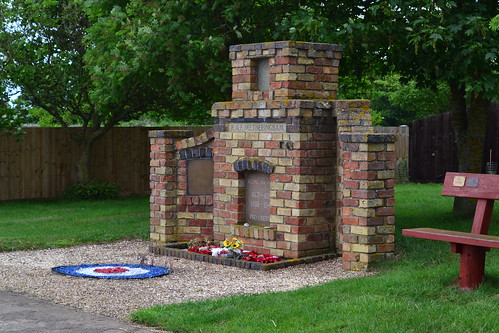
RAF Metheringham

The Memorial at Metheringham pays tribute to all those who flew with 106 Sqn.

Notes and Further Reading.

*1 Operational Record Book AIR 27/834/14 notes Sgt. Young as Sgt. A.L. Young.

A book written by Joseph Bamford the Grandson of Lucy who was killed that night, was published in 1996. “The Salford Lancaster” gives excellent details of the crew, the mission and the aftermath of the accident, published by Pen and Sword, it is certainly worth a read for those interested in knowing more about the incident.

Carter. K.C., & Mueller. R., “Combat Chronology 1941-1945“, Centre for Air Force History, Washington D.C.

Freeman. R., “Mighty Eighth War Diary“, Jane’s Publishing. 1980

August 23, 1944 The worst aircraft accident in the UK during WW2.

During the Second World War, Britain’s landscape changed forever. The friendly invasion brought  new life, new music, rationed items became sought after bounties and they were plentiful – if you knew an American.  But this dramatic change in the British way of life could also be explosive and deadly.

Anyone living near to a wartime airfield knew only too well the risks of such a life. Aircraft could ground loop, collide in the air or suffer a major mechanical failure on take off, all of which could result in a massive explosion in a fully laden bomber. There are numerous recordings of such accidents occurring, and the brave attempts of crewmen trying to avoid local housing. One such crash was that of B-17 #42-39825, “Zenobia” which crashed on take off coming to rest in the nearby village of Deenethorpe. Luckily, the crew were able to escape and warn the locals of the impending danger, thus averting a catastrophe when the aircraft, fully laden with bombs and fuel, exploded twenty minutes later. The explosion was so fierce that it was heard nine miles away!

However, not everyone was as lucky, and on August 23rd 1944, Wartime Britain experienced what is considered its worst wartime air disaster. A disaster in which sixty-one people lost their lives when a USAAF aircraft from BAD2 at RAF Warton crashed into the adjacent village of Freckleton in Lancashire.

Warton, or BAD2 (Base Air Depot No. 2), was responsible for the modification and overhaul of US aircraft and engines when they arrived fresh from the United States. They were assembled, modified and transferred from here to front line operational airfields across the UK. A massive operation that began even before the United States had even entered the War.

Initially, Warton was built as a satellite for the RAF Coastal Command station at Blackpool, known at the time as Squires Gate Airfield, an airfield with a history going as far back as 1909. With many pleasure flights, air pageants and civil flights, it was eventually taken over and used for fighters and bombers of Coastal Command.

With many aircraft being shipped into the UK via the Atlantic during the early years of the war, the need for a site to build and then maintain them became evermore apparent and urgent. It was not long after the outbreak of war, that four such sites were earmarked for use by the USAAF as Air Depots, each one dealing solely with aircraft maintenance and refurbishment. The proposal, initiated by Lord Beaverbrook as early as October 1939, which then progressed through discussions between the American and the British Governments in 1941 , specified that these bases would need to be able to deal with large quantities of aircraft and be able to handle aircraft modifications at any stage of the assembly process. In October, these bases were identified by a consortium of American and British representatives, who selected: Warton, Little Staughton (Bedford), Burtonwood (Warrington) and Langford Lodge in Neagh, Northern Ireland, as the most suitable sites.

Warton would be massive, housing almost 16,000 people in over ten accommodation sites, which when compared to a normal Class A airfield of some 3,000 people, was an enormous conurbation. To be adaptable, the runway was strengthened and extended to match that of any wartime airfield, at almost 2,000 yards long, it could take any aircraft brought over from the United States. Along side this were a wide range of ancillary buildings: stores,  maintenance sheds, office blocks, hangars, engine test sheds and fifty dispersal points. As the war progressed, Warton was extended further with the largest European storage shed and further hangars being added in 1944.

The entire site was completed in just nine months, using a combination of construction groups led by Frank Thomas; this included both Alfred McAlpine, and Wimpey, two of the largest airfield contractors at that time.

Station 582 of the US Eighth Air Force was opened August 1942, housing a small contingent of USAAF personnel. Officially handed over to the USAAF a year later, it now had some 5,000 personnel on its books already, all specially trained to handle the unique American aircraft being brought over from the United States.

Each base would specialise, Burtonwood in radial engines and the B-17, whilst Warton concentrated on in-line engines and B-24s. However, that did not mean that this was a ‘closed door’ operation, Warton would, over the period of the war, see every example of US built aircraft pass though its doors, and at its peek, held over 800 aircraft within its grounds.

Living near such a large and active base would bring many benefits, 700, children were given a Christmas party that lasted for a week, the locals were well provided for and money poured into the local economy. However being so close also brought it dangers. There were numerous accidents with parked aircraft being hit as other aircraft taxied past. There were also several crashes, including a North American P-51D-5-NA Mustang #44-13403 that crashed on June 12th, 1944, killing its pilot. The accident being caused by a catastrophic structural failure of the wing assembly. Another P-51D #44-14608 (310th Ferry Squadron, 27th Aircraft Transport Group) was involved in a landing accident at Warton, on October 5th, 1944. The pilot survived, but the aircraft was destroyed in the crash.

Then there was the P-51B-5 #43-6623 that crashed after taking off from Liverpool’s Speke airport, it was was subsequently taken to Warton where it was combined with other parts of P-51Bs that had been dropped on delivery. The new aircraft, aptly named ‘Spare parts‘, would then be used as an unarmed two-seater ferrying VIPs around, delivering small spare parts to the other airfields and collecting supplies of of whiskey from a distillery in Glasgow. The aircraft itself was lost in late 1944 when it experienced engine failure. The two crew bailed out and survived but the aircraft crashed coming to a rest at the bottom of the Irish Sea.

One of the more terrible accidents at Warton involved the collision of two Douglas A-26B-10-DT Invaders, on November 29th 1944, when #43-22298 collided in midair with #43-22336 over Warton Marsh. The crews’ bodies were removed from the site, but the aircraft remained buried in the silt until excavation in 2004. Both aircraft were then transferred to the RAF Millom Museum at Haverigg, Cumbria where they remained until its closure on 1st September 2010. With many of it exhibits being ‘on loan’, they were returned to their original owners whilst the rest were publicly auctioned off in January 2011. The fate of the two Invaders is unknown at the time of writing.

However, it was on Wednesday, August 23rd 1944, that Warton would be shocked by Britain’s worst wartime air disaster and the terrible events that would unfold that day.

Everything appeared normal that day as the workers at BAD 2 and the surrounding area awoke. The news was generally good, the war was heading in the right direction and victory for the allies appeared to be on the cards. There were high pressure zones to the east and west and low pressure to the north. The first 2 weeks of August were generally dry and  warm with spells of sunshine. There had been  a spell of warm weather that continued into the third week, with temperatures reaching as high as 28°C in the south. On the 23rd, early sunshine was expected to change to light rain later on, nothing that should have caused any significant problems to the experienced crews at Warton.

Early on that day, two routine test flights were booked by experienced pilots on newly refurbished Consolidated B-24 Liberators  before they were sent out out to the 2nd Bomb Division. The first, piloted by First Lieutenant John Bloemendal, ‘Classy Chassis II‘, and the second piloted by First Lieutenant Peter Manassero.

After a delayed start, First Lt. Bloemendal and his two crewmen boarded the B-24, ran their ground checks and started the engines. They then departed on was was a routine test flight. Meanwhile, the second B-24 piloted by First Lt. Manassero also departed and both aircraft headed out from Warton. During this time a weather warning was passed to Warton tower informing them of an impending storm, the likes of which even the British had rarely seen. The notorious British weather had played a cruel joke.  In seconds, the summer sky had turned jet black. Daylight had been all but wiped out, Heavy rain lashed the landscape, localised flash floods and unprecedented strong winds battered the Warton skyline. Locals reported seeing trees being uprooted and buildings being damaged such was the strength of the wind and lashing rain.

The tower issued an immediate warning to land the two aircraft. B-24 #42-50291 “Classy Chassis II“,  was given clearance first, the second flown by First Lieutenant  Manassero was to come in next. With visibility down to some 500 yards, the two aircraft approached the airfield in close formation, simply to keep in visual contact. Bloemendal  lowered his undercarriage followed by Manassero. Bloemendal  then began his approach, suddenly retracting his undercarriage informing Manassero he was going round again for another try. But by now, the weather had deteriorated so much that the tower was extremely concerned, and issued an order, to both aircraft, to withdraw from the circuit and abort landings, telling them to fly to the north to avoid the storm. Bloemendal never received the message.

By now contact had been lost between the two pilots, Manassero headed out of the circuit and flew out of harms way, Bloemendal on the other hand had already hit the ground, a massive fireball ensued. Eye witness accounts differed as to what the cause of the crash was, one witness said she saw  lightning strike the aircraft at the wing root, “splitting the aircraft in two“, others say they saw the wings in a near vertical position as if the pilot was banking steeply to turn away.

The aircraft came down across Lytham Road, after hitting the ‘Sad Sack Snack Bar’, purposefully built for the American servicemen of BAD 2. It demolished three houses and the infant section of Freckleton’s Holy Trinity School, which at the time, was full of children between the ages of 4 and 6 who, along with their teachers, were going about their daily routine. The resultant crash led to a fireball, one that eventually took the lives of sixty-one people. Eighteen in the cafe, forty in the school and the three crewmen aboard “Classy Chassis II“.  Many of these dying in the days that followed from severe burns as burning petrol engulfed the school before flowing into the street .

The crash was so devastating that at the inquest, only the School’s register could be used to identify some of the missing children whilst others were identified merely by parts of their clothing painfully presented to grieving parents. First Lieutenant John Bloemendal was only identified by the remains of his dog tags and wedding ring, the only married man aboard the aircraft.

The US servicemen from BAD2 were highly praised in the days that followed for their quick and brave response to the crash. Pulling away debris while the aircraft still burned, attempting to put out the fire and fighting to save whomever they could from the burning wreck that was once Freckleton village school.

The papers understandably ran the story for months and even years afterwards, as more and more information came to light. Some of the injured were so severely burned, they were read their last rights, whilst many had to have long term skin grafts, including some as part of McIndoe’s Guinea Pig Club.

From Lytham St. Annes, to London and New York, the story of Britain’s worst air disaster spread, putting good news from the front line into painful perspective. Whilst convalescing, young survivors were visited by Bing Crosby, who diverted from his tour of American airfields across the UK, to pay his respects. A small gesture to avert the grieving now felt across both sides of the ocean.

A mass funeral service took place in Freckleton on August 26th, the streets were lined with mourners as service personnel carried the many tiny coffins along in one mass parade. Afterwards, a fund was set up by the USAAF, and an area of land was developed into a playground as a lasting memorial to those lost in the accident. A tablet laid at the playground reads:  “This playground presented to the children of Freckleton by their neighbours of Base Air Depot No. 2 USAAF in recognition and remembrance of their common loss in the disaster of August 23rd 1944”.

The inquest into the crash could not prove conclusively as to the cause of the crash. It states:

“The cause of this accident is unknown. It is the opinion of the Accident Investigating Committee that the crash resulted from pilot’s error in the judgement of the violence of the storm. The extent of the thunder-head was not great and he could have flown in perfect safety to the North and East of the field”.

It also states that a possible “rough air structural failure occurred“, although verification of this was impossible due to the total destruction of the aircraft’s structure.

freckleton 28 Aug 1944 funeral procession Photo Ralph Scott

Crowds line the street as US Servicemen carry the many coffins at Freckleton (Photo Ralph Scott, BAD2)

What did arise from the crash was that US service personnel who were trained in the bright blue skies of America, were unaccustomed to the changeable and fierce British weather. Many, like First Lieutenant Bloemenda, often under-estimating the dangers of these thunderstorms and as a result, training was amended to include warnings about such events.

With the eventual withdrawal of US forces from Warton, the memories of that day linger on, regular services are held at Frekleton in remembrance of those sixty-one lives who were all innocent victims of Britain’s worst air disaster of World War Two.

Sources and Further reading

There are many sites that cover this story, in particular I refer you to:

British Newspaper Archive website.

The Lancashire Aircraft Investigation Team Website which has many photographs pertaining to the crash and is well worth a visit.

BAD2 Blog 

The Book “The Freckleton, England, Air Disaster” by James R. Hedtke, details the accident in depth giving eyewitness accounts, background details and transcripts of the conversations between pilots and the tower. It served as a valuable source of information for this post and is worth buying if interested in reading about this further.

Also, the book ‘Blood and Fears‘ by Kevin Wilson, (Weidenfeld & Nicolson) also briefly mentions accounts of the event. Again a good book should you wish to read further.
A Happy Christmas!

I would just like to take this opportunity to wish all those of you who have followed, read or commented on the blog, a very merry Christmas and a very happy and safe New Year.

A extra big thanks goes out to those of you who have stuck around for so long, we’re now approaching our seventh year of the blog and have managed to visit over 125 airfields, 105 memorials and 40 museums. These have stretched from Perth in Scotland to the South coast of England, Suffolk in the east to Gloucestershire in the west. The range of these airfields is enormous, and they continue to vanish, with many in a worse state now than they were when I visited at the beginning of the journey.

Very soon many of these will be gone, lets hope the memories of those who served are not also gone with them.

A very happy Christmas one and all!

RAF Andrews Field – (Great Saling/Station 485) – Trail 33: Essex Part 1.

RAF Attlebridge  (Station 120) – Trail 7: Northwest Norfolk.

RAF Barkston Heath (Station 483) – Trail 2: Lincoln Borders and Newark

RAF Barton BendishTrail 7: Northwest Norfolk.

RAF Biggin Hill (Westersham) (Station 343) – Trail 4: Kent Part 1.

RAF Bircham NewtonTrail 20: North Norfolk (Part 1).

RAF Bodney (Station 141) – Trail 8: Swaffham and Her Neighbours (Part 1 of 3).

RAF Bottesford (Station 481) – Trail 52: Leicestershire’ Borders.

RAF Bottisham (Station 374) – Trail 55: Around Newmarket

RAF Boulmer – Trail 47: Northumberland.

RAF BournTrail 31: Southern Cambridgeshire (Part 2).

RAF Brenzett (ALG) – Trail 18: Kent Part 2.

RAF BruntonTrail 47: Northumberland.

RAF Bungay (Flixton) (Station 125) – Trail 14:  Central Suffolk (Part 1).

RAF Bury St. Edmunds (Rougham) (Station 468) – Trail 16: West Suffolk (part 1).

RAF Castle CampsTrail 45: Essex (Part 2).

RAF Caxton GibbetTrail 29: Southern Cambridge (Part 1).

RAF Charterhall Trail 41: The Borders of Scotland and England.

RAF ChedburghTrail 49: Bomber Command – Bury St. Edmunds to Haverhill

RAF Collyweston Trail 37: The Northern Reaches of Cambridgeshire.

RAF Coltishall – Trail 7: Northwest Norfolk.

RAF ConingsbyTrail 1: Lower Lincolnshire.

RAF CottamTrail 40: Yorkshire (East Riding).

RNAS CrailTrail 53: Scotland’s East Coast – Fife

RAF CranwellTrail 2: Lincoln Borders and Newark.

RAF Debach (Station 152) – Trail 39: Suffolk around Ipswich (Part 1).

RAF Debden (Station 356) – Trail 46: Essex Part 3.

RAF Deenethorpe (Station 128) – Trail 6: American Ghosts.

RAF Deopham Green (Station 142) – Trail 27: Southern Norfolk (Part 3).

RAF Digby (Scopwick) – Trail 1: Lower Lincolnshire.

RAF Docking – Trail 20: North Norfolk (Part 1).

RAF Downham Market (Bexwell) – Trail 7: Northwest Norfolk.

RAF Drem – Trail 42: Edinburgh’s Neighbours.

RAF Dunino –  Trail 53: Scotland’s East Coast – Fife.

RAF East Fortune – Trail 42: Edinburgh’s Neighbours.

RAF East Kirkby Trail 1: Lower Lincolnshire.

RAF East Wretham (Station 133) – Trail 13: Southern Norfolk around Diss (Part 2).

RAF Eye (Brome) (Station 134) – Trail 14: Central Suffolk (Part 1).

RAF Fersfield – (Station 130) – Trail 28: Southern Norfolk (Part 4).

RAF FoulshamTrail 22North Norfolk (Part 3).

RAF FowlmereTrail 32Southern Cambridgeshire (Part 3).

RAF Framlingham (Parham) (Station 153)Trail 39: Suffolk around Ipswich (Part 1).

RAF GamstonTrail 54: The Great North Road.

RAF Glatton (Station 130) – Trail 6: American Ghosts.

RAF Gransden Lodge – Trail 31: Southern Cambridgeshire (Part 2).

RAF Graveley – Trail 29: Southern Cambridge (Part 1).

RAF Grafton Underwood (Station 106) – Trail 6: American Ghosts.

RAF Great Dunmow (Station 164)- Trail 33: Essex (Part 1).

RAF Great MassinghamTrail 21: North Norfolk (Part 2).

RAF Great Sampford (Station 359) – Trail 50: Haverhill’s neighbours – Wratting Common and Great Sampford.

RAF Hardwick (Station 104) – Trail 12: Southern Norfolk around Diss (Part 1).

RAF Hawkinge – Trail 18: Kent Part 2.

RAF Hethel – Trail 38: To the West of Norwich.

RFC HinghamTrail 38: To the West of Norwich.

RAF Holme on Spalding Moor Trail 40: Yorkshire (East Riding).

RAF Hunsdon – Trail 25: Hertfordshire.

RAF Kimbolton (Station 117) – Trail 6: American Ghosts.

RAF King’s Cliffe (Station 367) – Trail 6: American Ghosts.

RAF LanghamTrail 23: North Norfolk (Part 4).

RAF Lashenden (Headcorn) – Trail 18: Kent Part 2.

RAF Lavenham (Station 137) – Trail coming soon.

RAF Leuchars – Trail 53: Scotland’s East Coast – Fife.

RAF Little SnoringTrail 22North Norfolk (Part 3).

RAF Little Walden – – Trail 46: Essex Part 3.

RAF Macmerry Trail 51: Southern Scotland

RAF MarhamTrail 7: Northwest Norfolk.

RAF Martlesham HeathTrail 48: Suffolk around Ipswich (Part 2).

RAF Matching (Station 166) – Trail 33: Essex Part 1.

RAF Matlaske (Station 178) – Trail 34: North Norfolk (Part 5).

RAF MattishallTrail 36: North Norfolk (Part 6).

RAF Mendlesham (Station 156) – Trail 15: Central Suffolk (Part 2).

RAF MepalTrail 11: Around Ely.

RAF MetheringhamTrail 1: Lower Lincolnshire.

RAF Methwold – Trail 8: Swaffham and Her Neighbours (Part 1).

RAF Milfield –  Trail 47: Northumberland.

RAF Narborough (Narborough Aerodrome)- Trail 7: Northwest Norfolk.

RAF Newmarket Heath – Trail 55: Around Newmarket

RAF North CreakeTrail 23: North Norfolk (Part 4).

RAF North Pickenham (Station 143) – Trail 9: Swaffham and Her Neighbours (Part 2).

RAF North WealdTrail 25: Hertfordshire.

RAF North Witham (Station 479) – Trail 3: Gone But Not Forgotten.

RAF Old Buckenham (Station 144) – Trail 13: Southern Norfolk around Diss (Part 2).

RAF Oulton – Trail 34: North Norfolk (Part 5).

RAF Polebrook (Station 110) – Trail 19: Northamptonshire American Ghosts II.

RAF Rattlesden (Station 126) – Trail 15: (Central Suffolk (Part 2).

RAF SawbridgeworthTrail 25: Hertfordshire.

RAF ScamptonTrail 30: Scampton and the Heritage Centre.

RAF SconeTrail 56: Perthshire.

RAF SculthorpeTrail 21: North Norfolk Part 2.

RAF Sedgeford – Trail 20: North Norfolk (Part 1).

RAF Shipdham (Station 115) – Trail 10: Swaffham and Her Neighbours (Part 3).

RAF Snailwell (Station 361) – Trail 55: Around Newmarket

RAF Snetterton Heath – (Station 138) – Trail 27: Southern Norfolk (Part 3).

RAF Spanhoe Lodge (Station 493) – Trail 6: American Ghosts.

RAF Steeple Morden – Trail 32: Southern Cambridgeshire (Part 3).

RAF Stoke OrchardTrail 24: Gloucestershire.

RAF Stradishall- Trail 49: Bomber Command – Bury St. Edmunds to Haverhill

RAF Sutton BridgeTrail 3: Gone But Not Forgotten.

RAF Swannington – Trail 36: North Norfolk (Part 6) 

RAF Swanton Morley – Trail 38: To the West of Norwich.

RAF Thorpe Abbotts (Station 139) – Trail 12: Southern Norfolk around Diss (Part 1).

RAF Tibenham (Station 124) – Trail 13: Southern Norfolk around Diss (Part 2).

RAF Tuddenham – Trail 16: West Suffolk (Part 1).

RAF Tydd St. Mary – Trail 37: The Northern Reaches of Cambridgeshire.

RAF Upwood – Trail 17: The Pathfinders.

RAF Warboys – Trail 17: The Pathfinders.

RAF WaterbeachTrail 11: Around Ely.

RAF Watton (Station 376/Station 505) – Trail 9: Swaffham & Her Neighbours (Part 2).

RAF Wendling (Station 118) – Trail 10: Swaffham and Her Neighbours (Part 3).

RAF West Malling Trail 4: Kent Part 1.

RAF West RaynhamTrail 21: North Norfolk Part 2.

RAF WethersfieldTrail 45: Essex (Part 2).

RAF Westley – Trail 16: West Suffolk (part 1).

RAF WinfieldTrail 41: The Borders of Scotland and England.

RAF Winthorpe Trail 2: Lincoln Borders and Newark.

RAF WitchfordTrail 11: Around Ely.

RAF Wittering  – Trail 37: The Northern Reaches of Cambridgeshire.

RAF Woodall SpaTrail 1: Lower Lincolnshire.

RAF Wratting CommonTrail 50 – Haverhill’s neighbours – Wratting Common and Great Sampford.

August 23, 1944 The worst aircraft accident in the UK during WW2.

During the Second World War, Britain’s landscape changed forever. The friendly invasion brought  new life, new music, rationed items became sought after bounties and they were plentiful – if you knew an American.  But this dramatic change in the British way of life could also be explosive and deadly.

Anyone living near to a wartime airfield knew only too well the risks of such a life. Aircraft could ground loop, collide in the air or suffer a major mechanical failure on take off, all of which could result in a massive explosion in a fully laden bomber. There are numerous recordings of such accidents occurring, and the brave attempts of crewmen trying to avoid local housing. One such crash was that of B-17 #42-39825, “Zenobia” which crashed on take off coming to rest in the nearby village of Deenethorpe. Luckily, the crew were able to escape and warn the locals of the impending danger, thus averting a catastrophe when the aircraft, fully laden with bombs and fuel, exploded twenty minutes later. The explosion was so fierce that it was heard nine miles away!

However, not everyone was as lucky, and on August 23rd 1944, Wartime Britain experienced what is considered its worst wartime air disaster. A disaster in which sixty-one people lost their lives when a USAAF aircraft from BAD2 at RAF Warton crashed into the adjacent village of Freckleton in Lancashire.

Warton, or BAD2 (Base Air Depot No. 2), was responsible for the modification and overhaul of US aircraft and engines when they arrived fresh from the United States. They were assembled, modified and transferred from here to front line operational airfields across the UK. A massive operation that began even before the United States had even entered the War.

Initially, Warton was built as a satellite for the RAF Coastal Command station at Blackpool, known at the time as Squires Gate Airfield, an airfield with a history going as far back as 1909. With many pleasure flights, air pageants and civil flights, it was eventually taken over and used for fighters and bombers of Coastal Command.

With many aircraft being shipped into the UK via the Atlantic during the early years of the war, the need for a site to build and then maintain them became evermore apparent and urgent. It was not long after the outbreak of war, that four such sites were earmarked for use by the USAAF as Air Depots, each one dealing solely with aircraft maintenance and refurbishment. The proposal, initiated by Lord Beaverbrook as early as October 1939, which then progressed through discussions between the American and the British Governments in 1941 , specified that these bases would need to be able to deal with large quantities of aircraft and be able to handle aircraft modifications at any stage of the assembly process. In October, these bases were identified by a consortium of American and British representatives, who selected: Warton, Little Staughton (Bedford), Burtonwood (Warrington) and Langford Lodge in Neagh, Northern Ireland, as the most suitable sites.

Warton would be massive, housing almost 16,000 people in over ten accommodation sites, which when compared to a normal Class A airfield of some 3,000 people, was an enormous conurbation. To be adaptable, the runway was strengthened and extended to match that of any wartime airfield, at almost 2,000 yards long, it could take any aircraft brought over from the United States. Along side this were a wide range of ancillary buildings: stores,  maintenance sheds, office blocks, hangars, engine test sheds and fifty dispersal points. As the war progressed, Warton was extended further with the largest European storage shed and further hangars being added in 1944.

The entire site was completed in just nine months, using a combination of construction groups led by Frank Thomas; this included both Alfred McAlpine, and Wimpey, two of the largest airfield contractors at that time.

Station 582 of the US Eighth Air Force was opened August 1942, housing a small contingent of USAAF personnel. Officially handed over to the USAAF a year later, it now had some 5,000 personnel on its books already, all specially trained to handle the unique American aircraft being brought over from the United States.

Each base would specialise, Burtonwood in radial engines and the B-17, whilst Warton concentrated on in-line engines and B-24s. However, that did not mean that this was a ‘closed door’ operation, Warton would, over the period of the war, see every example of US built aircraft pass though its doors, and at its peek, held over 800 aircraft within its grounds.

Living near such a large and active base would bring many benefits, 700, children were given a Christmas party that lasted for a week, the locals were well provided for and money poured into the local economy. However being so close also brought it dangers. There were numerous accidents with parked aircraft being hit as other aircraft taxied past. There were also several crashes, including a North American P-51D-5-NA Mustang #44-13403 that crashed on June 12th, 1944, killing its pilot. The accident being caused by a catastrophic structural failure of the wing assembly. Another P-51D #44-14608 (310th Ferry Squadron, 27th Aircraft Transport Group) was involved in a landing accident at Warton, on October 5th, 1944. The pilot survived, but the aircraft was destroyed in the crash.

Then there was the P-51B-5 #43-6623 that crashed after taking off from Liverpool’s Speke airport, it was was subsequently taken to Warton where it was combined with other parts of P-51Bs that had been dropped on delivery. The new aircraft, aptly named ‘Spare parts‘, would then be used as an unarmed two-seater ferrying VIPs around, delivering small spare parts to the other airfields and collecting supplies of of whiskey from a distillery in Glasgow. The aircraft itself was lost in late 1944 when it experienced engine failure. The two crew bailed out and survived but the aircraft crashed coming to a rest at the bottom of the Irish Sea.

One of the more terrible accidents at Warton involved the collision of two Douglas A-26B-10-DT Invaders, on November 29th 1944, when #43-22298 collided in midair with #43-22336 over Warton Marsh. The crews’ bodies were removed from the site, but the aircraft remained buried in the silt until excavation in 2004. Both aircraft were then transferred to the RAF Millom Museum at Haverigg, Cumbria where they remained until its closure on 1st September 2010. With many of it exhibits being ‘on loan’, they were returned to their original owners whilst the rest were publicly auctioned off in January 2011. The fate of the two Invaders is unknown at the time of writing.

However, it was on Wednesday, August 23rd 1944, that Warton would be shocked by Britain’s worst wartime air disaster and the terrible events that would unfold that day.

Everything appeared normal that day as the workers at BAD 2 and the surrounding area awoke. The news was generally good, the war was heading in the right direction and victory for the allies appeared to be on the cards. There were high pressure zones to the east and west and low pressure to the north. The first 2 weeks of August were generally dry and  warm with spells of sunshine. There had been  a spell of warm weather that continued into the third week, with temperatures reaching as high as 28°C in the south. On the 23rd, early sunshine was expected to change to light rain later on, nothing that should have caused any significant problems to the experienced crews at Warton.

Early on that day, two routine test flights were booked by experienced pilots on newly refurbished Consolidated B-24 Liberators  before they were sent out out to the 2nd Bomb Division. The first, piloted by First Lieutenant John Bloemendal, ‘Classy Chassis II‘, and the second piloted by First Lieutenant Peter Manassero.

After a delayed start, First Lt. Bloemendal and his two crewmen boarded the B-24, ran their ground checks and started the engines. They then departed on was was a routine test flight. Meanwhile, the second B-24 piloted by First Lt. Manassero also departed and both aircraft headed out from Warton. During this time a weather warning was passed to Warton tower informing them of an impending storm, the likes of which even the British had rarely seen. The notorious British weather had played a cruel joke.  In seconds, the summer sky had turned jet black. Daylight had been all but wiped out, Heavy rain lashed the landscape, localised flash floods and unprecedented strong winds battered the Warton skyline. Locals reported seeing trees being uprooted and buildings being damaged such was the strength of the wind and lashing rain.

The tower issued an immediate warning to land the two aircraft. B-24 #42-50291 “Classy Chassis II“,  was given clearance first, the second flown by First Lieutenant  Manassero was to come in next. With visibility down to some 500 yards, the two aircraft approached the airfield in close formation, simply to keep in visual contact. Bloemendal  lowered his undercarriage followed by Manassero. Bloemendal  then began his approach, suddenly retracting his undercarriage informing Manassero he was going round again for another try. But by now, the weather had deteriorated so much that the tower was extremely concerned, and issued an order, to both aircraft, to withdraw from the circuit and abort landings, telling them to fly to the north to avoid the storm. Bloemendal never received the message.

By now contact had been lost between the two pilots, Manassero headed out of the circuit and flew out of harms way, Bloemendal on the other hand had already hit the ground, a massive fireball ensued. Eye witness accounts differed as to what the cause of the crash was, one witness said she saw  lightning strike the aircraft at the wing root, “splitting the aircraft in two“, others say they saw the wings in a near vertical position as if the pilot was banking steeply to turn away.

The aircraft came down across Lytham Road, after hitting the ‘Sad Sack Snack Bar’, purposefully built for the American servicemen of BAD 2. It demolished three houses and the infant section of Freckleton’s Holy Trinity School, which at the time, was full of children between the ages of 4 and 6 who, along with their teachers, were going about their daily routine. The resultant crash led to a fireball, one that eventually took the lives of sixty-one people. Eighteen in the cafe, forty in the school and the three crewmen aboard “Classy Chassis II“.  Many of these dying in the days that followed from severe burns as burning petrol engulfed the school before flowing into the street .

The crash was so devastating that at the inquest, only the School’s register could be used to identify some of the missing children whilst others were identified merely by parts of their clothing painfully presented to grieving parents. First Lieutenant John Bloemendal was only identified by the remains of his dog tags and wedding ring, the only married man aboard the aircraft.

The US servicemen from BAD2 were highly praised in the days that followed for their quick and brave response to the crash. Pulling away debris while the aircraft still burned, attempting to put out the fire and fighting to save whomever they could from the burning wreck that was once Freckleton village school.

The papers understandably ran the story for months and even years afterwards, as more and more information came to light. Some of the injured were so severely burned, they were read their last rights, whilst many had to have long term skin grafts, including some as part of McIndoe’s Guinea Pig Club.

From Lytham St. Annes, to London and New York, the story of Britain’s worst air disaster spread, putting good news from the front line into painful perspective. Whilst convalescing, young survivors were visited by Bing Crosby, who diverted from his tour of American airfields across the UK, to pay his respects. A small gesture to avert the grieving now felt across both sides of the ocean.

A mass funeral service took place in Freckleton on August 26th, the streets were lined with mourners as service personnel carried the many tiny coffins along in one mass parade. Afterwards, a fund was set up by the USAAF, and an area of land was developed into a playground as a lasting memorial to those lost in the accident. A tablet laid at the playground reads:  “This playground presented to the children of Freckleton by their neighbours of Base Air Depot No. 2 USAAF in recognition and remembrance of their common loss in the disaster of August 23rd 1944”.

The inquest into the crash could not prove conclusively as to the cause of the crash. It states:

“The cause of this accident is unknown. It is the opinion of the Accident Investigating Committee that the crash resulted from pilot’s error in the judgement of the violence of the storm. The extent of the thunder-head was not great and he could have flown in perfect safety to the North and East of the field”.

It also states that a possible “rough air structural failure occurred“, although verification of this was impossible due to the total destruction of the aircraft’s structure.

freckleton 28 Aug 1944 funeral procession Photo Ralph Scott

Crowds line the street as US Servicemen carry the many coffins at Freckleton (Photo Ralph Scott, BAD2)

What did arise from the crash was that US service personnel who were trained in the bright blue skies of America, were unaccustomed to the changeable and fierce British weather. Many, like First Lieutenant Bloemenda, often under-estimating the dangers of these thunderstorms and as a result, training was amended to include warnings about such events.

With the eventual withdrawal of US forces from Warton, the memories of that day linger on, regular services are held at Frekleton in remembrance of those sixty-one lives who were all innocent victims of Britain’s worst air disaster of World War Two.

Sources and Further reading

There are many sites that cover this story, in particular I refer you to:

British Newspaper Archive website.

The Lancashire Aircraft Investigation Team Website which has many photographs pertaining to the crash and is well worth a visit.

BAD2 Blog 

The Book “The Freckleton, England, Air Disaster” by James R. Hedtke, details the accident in depth giving eyewitness accounts, background details and transcripts of the conversations between pilots and the tower. It served as a valuable source of information for this post and is worth buying if interested in reading about this further.

Also, the book ‘Blood and Fears‘ by Kevin Wilson, (Weidenfeld & Nicolson) also briefly mentions accounts of the event. Again a good book should you wish to read further.

July 30th 1944 – Loss of Lancaster PB304 – 106 Squadron.

On Sunday July 30th 1944, Lancaster PB304 from 106 Squadron RAF Metheringham in Lincolnshire, crashed with the loss of all on board, along with two civilians, in Salford Greater Manchester.

Lancaster PB304, was a MK.III Lancaster based at RAF Metheringham in Lincolnshire, flying under the squadron code ZN-S. It was tasked to attack enemy strong points at Cahagnes in the Normandy battle zone following the Allied invasion in June.

The early briefing at 04:00 was not a welcome one, many men having been out the night before following a stand down order due to bad weather and heavy rain over the last two days. On board that day was: F/L. Peter Lines (Pilot); Sgt. Raymond Barnes (Flt. Eng.); F/O. Harry Reid RCAF (Nav.); F/O. John Harvey Steel (Air Bomber); Sgt. Arthur William Young (W.O/Gunner); Sgt. John Bruce Thornley Davenport (Mid-Upper Gunner) and Sgt. Mohand Singh (Rear Gunner)*1.

The operation, code-named Operation Bluecoat, would involve attacking six specific targets, each one identified to assist a forthcoming offensive by British land forces in the Normandy area.

After all the ground checks were completed and the signal given to depart, PB304 began the long taxi to the runway, take off was recorded as 05:55, but it is thought that this was ten minutes early with the first aircraft (ND682) departing at 06:05. Once in the air, the aircraft formed up alongside twenty other 106 Sqn aircraft,  meeting with a smaller formation from 83 Sqn at Coningsby before joining the main formation.

The weather remained poor with heavy cloud blanketing the sky between 5,000 and 10,000 feet, as the 183 Lancasters from No. 5 Group and one Mosquito headed south toward the Normandy coast.

With further poor weather ahead, signals were beginning to come through to abandon the mission and return to base, but communication between aircraft was garbled and difficult to understand, it may have been as a result of German interference broadcasting messages over that of the master bomber. The order to abort finally came through just after 08:00 even though some of the formation had released bombs on target indicators (TI) dropped by the Pathfinders. Smoke was by now mixing with the low cloud causing more confusion and difficulty in identifying the primary targets. Not all aircraft understood the message however, and many continued circling in the skies above Cahagnes. To make a difficult situation even worse, there was by now, an  approaching formation of over 450 American A-20s and B-26s along with just short of 260 P-51 and P-47 escorts on their way to France; the sky was full of aircraft in thick cloud and was an accident waiting to happen.

Difficult communication continued, some aircraft were seen disposing of their bomb loads over the Channel, whilst others retained them. Various courses were set for home, but with many airfields closed in by low cloud, alternatives were gong to be needed and alternative courses were issued to the returning bombers of each squadron.

106 Sqn were ordered to fly north along the western coast, passing over Pershore and on to Harwarden near Chester, before turning for home. The messages coming through continued to be misheard or misunderstood with several aircraft landing at either Pershore, Harwarden or Squires Gate at Blackpool. Gradually all aircraft managed to land, whether at home at Metheringham or at away airfields. Patiently the Metheringham staff waited, nothing had been heard from PB304 and they could not be contacted on the radio, something was wrong.

Precise details of the accident are sketchy, but an aircraft was seen flying low and in some difficulty. It passed low over Prestwich on the northern edges of Manchester, where it was later seen engulfed in flames. It twice passed over a playing field, where some suspect F/L. Lines was trying to make a crash landing, but this has not been confirmed. At some time around 10:10 -10:15 the aircraft came down resulting in a massive explosion, a full bomb load and fuel reserves igniting on impact. Many houses were damaged in the explosion with one being completely demolished.

As a result of the accident, all seven of the crew were killed along with two civilians, Lucy Bamford and George Morris, as well as, what is believed to be, over 100 others being injured all to varying degrees.

PB304 was the only aircraft lost that night, in a mission that perhaps with hindsight, should not have taken place. The poor weather and difficult communication playing their own part in the terrible accident in Salford on July 30th 1944.

RAF Metheringham

The Memorial at Metheringham pays tribute to all those who flew with 106 Sqn.

Notes and Further Reading.

*1 Operational Record Book AIR 27/834/14 notes Sgt. Young as Sgt. A.L. Young.

A book written by Joseph Bamford the Grandson of Lucy who was killed that night, was published in 1996. “The Salford Lancaster” gives excellent details of the crew, the mission and the aftermath of the accident, published by Pen and Sword, it is certainly worth a read for those interested in knowing more about the incident.

Carter. K.C., & Mueller. R., “Combat Chronology 1941-1945“, Centre for Air Force History, Washington D.C.

Freeman. R., “Mighty Eighth War Diary“, Jane’s Publishing. 1980