RAF Waterbeach – Birth of the Conversion Units (Part 1).

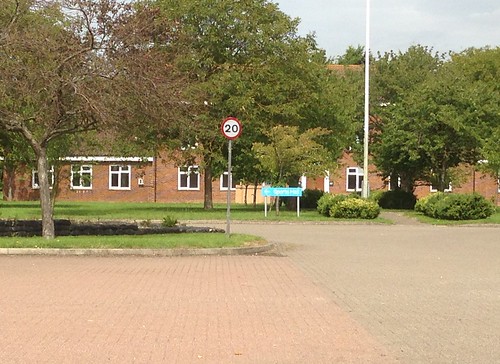
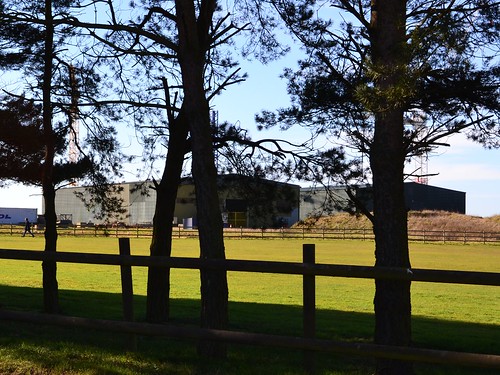
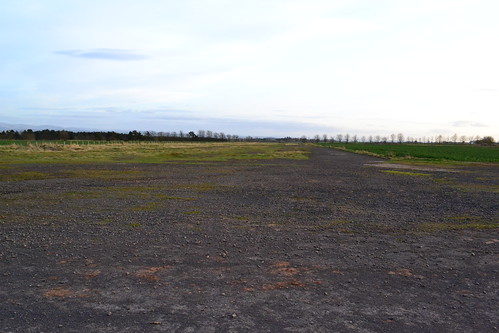
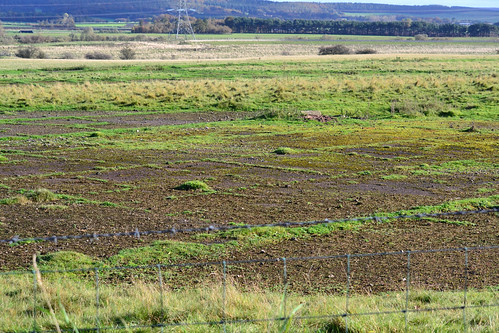
In Trail 11, we visit three airfields all within a stones throw of each other, and all situated around Britain’s third smallest city Ely, in Cambridgeshire. They were all once major airfields belonging to the RAF’s Bomber Command. Post war, two of the three went on to be major Cold War stations, one housing the Thor Missile, whilst the second housed the fast jets of the RAF’s front line of defence. It is this one we visit in the final part of this Trail. It is also one whose days are numbered, already closed and earmarked for development, the bulldozers are knocking at the door whilst the final plans are agreed and development can begin. But this development may not be the total clearing of the site it often is. With plans to integrate parts of this historical site into the development, it is aimed to create a living and working space that reflects it significant historical value. Today, in the final part of Trail 11, we visit the former station RAF Waterbeach.

RAF Waterbeach.

The land on which Waterbeach airfield stands has a history of its own, with royal connections going back as far as the 12th Century. Eventually divided up into farms, one of which, Winfold Farm, stood at the centre, the area would be developed into a long-term military base.

RAF Waterbeach would have a long career, one that extended well into the Cold War and beyond. It would be home to no less than twenty-two operational front line squadrons from both Bomber Command and Fighter Command, along with a further five Conversion Units. With only six of these units (3 front line and 3 Conversion Units) operating during the Second World War, the majority would be post-war squadrons, three being reformed here and eleven being disbanded here. This range of squadrons would bring with them a wide range of aircraft from Dakotas and Wellingtons through the four engined heavies the Stirling, Lancaster and B-24 Liberator, and onto the single and two seat jets, the Meteor, Hunter and Javelin, who would all grace the skies over this once famous airfield.

Originally identified as a possible site in the late 1930s, the land was purchased by the Government with development beginning in 1939. The farm at its centre was demolished and the surrounding fields dug up and prepared for the forthcoming heavy bombers of Bomber Command. As with many airfield developments, there was local opposition to the idea, partly as it occupied valuable Fen farmland with a farm at its centre.

In the early years of the war, it was found that heavy aircraft, bombers in particular, were struggling to use the grassed surfaces originally constructed on pre-war airfields. The rather ridiculous test of taxing a laden Whitley bomber across the site to test the ground’s strength would soon be obsolete, and so after much internal wrangling, hard runways were eventually agreed upon which would be built into all bomber and some fighter stations from that point forward*1.

As an airfield built at the end of the expansion period and into the beginning of the war, Waterbeach would be one of those stations whose runways were hard from the start; a concrete base covered with tarmac to the soon to be standard 2,000 and 1,400 yards in length. By the end of 1945, there would be 35 heavy bomber hardstands of the ‘frying pan’ style and a further three of the spectacle style, all supporting a wide range of aircraft types well into the cold war.

Waterbeach would develop into a major airfield, capable of housing in excess of 3,000 personnel of mixed rank and gender, dispersed as was now common, over seven sites to the south-eastern corner of the airfield. The bomb store was located well away to the north of the airfield, but surprisingly close to the main public road that passed alongside the western boundary of the site.

Being a bomber base, there would be a wide range of ancillary and support buildings, including initially, two J type hangars, followed by three T2s and a B1. The site was considered by its new occupants as ‘luxurious’ and compared to many other similar airfields of that time, it certainly was. This opinion was not formed however, when it opened on January 1st 1941, as it was in a state that was nowhere near completion. The official records show that along with Group Captain S. Park (Station Commander) were the Sqn. Ldr. for Admin  (Sqn. Ldr. F Carpenter), Station Adjutant (Flt. Lt. H. Daves) and Sqn. Ldr. J. Kains (Senior Medical Officer) who were joined  by various other administrative officers, Senior NCOs and 157 corporals and Airmen. They found the majority of buildings incomplete, the runways and dispersals still being built and the site generally very muddy. The cook house was ‘adequate’ for the needs of the few who were there, but the sergeants mess could not be occupied for at least another five to six weeks.

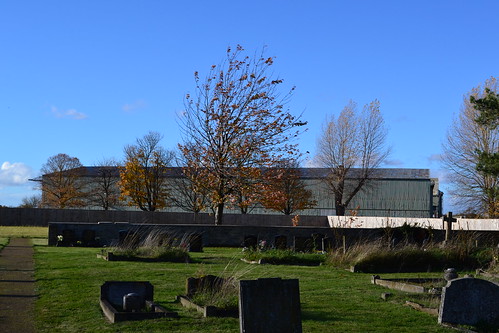
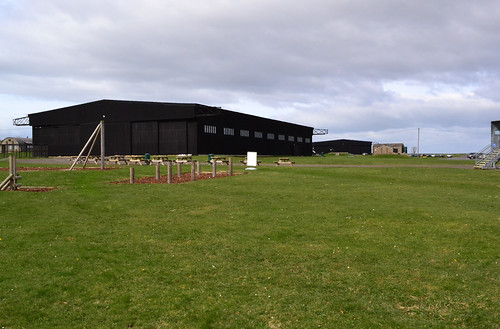
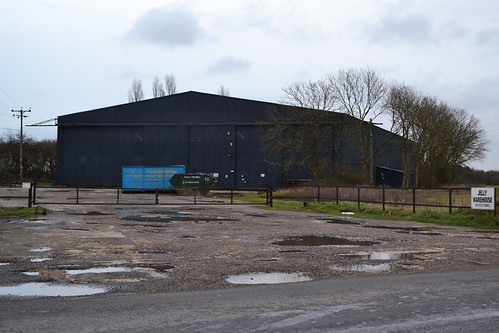
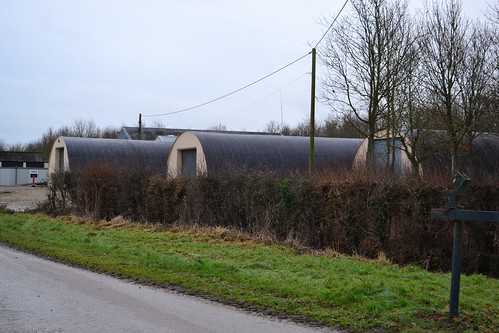
RAF Waterbeach 'J' Hangar

A ‘J’ Hangar seen from the public road at Waterbeach.

As occurred with many airfields at this time, the first personnel to arrive took up the task of completing many aspects of the outstanding work themselves, laying concrete, installing fixings and preparing accommodation blocks for the forthcoming arrivals.

During these early years of the Second World War, the Luftwaffe targeted Britain’s Fighter airfields as a way of smashing the RAF before the German planned invasion could take place. Whilst this policy failed, attacks on RAF airfields were continued, becoming more ‘nuisance’ attacks or small raids, in which airfields beyond the reaches of Kent and London were also targeted. Waterbeach itself was subjected to these nuisance attacks on two occasions between the New Year December 1940 and February 1941. During these, some minor damage was done to the site (hangars, aprons and a runway) and there was one fatality.

These early days of 1941 would be a busy time for the personnel at Waterbeach, further attacks intermixed with flying activities kept them alert and on their feet. Being a large base, its runways would become safe havens for crippled or lost aircraft desperately trying to find a suitable site on which to put down. A number of aircraft used Waterbeach for such an activity, primarily Whitleys and Wellingtons, many being damaged and unable to reach their home bases further north in Yorkshire.

With changes in airfield command taking place a month after its opening, the first units to arrive were the Wellingtons of No. 99 Squadron RAF, in a move that was delayed by a further month in part due to the late completion of the construction work and also because of yet another nuisance attack by the Luftwaffe.

Whilst 99 Sqn were preparing to transfer to Waterbeach, operations would continue from their base at Newmarket Heath, bombing raids that took the Wellingtons to Breman, Gelsenkirchen, Dusseldorf, Duisburg and Cologne.

Once arriving here at Waterbeach, they found early missions, on both the 1st and 2nd of April 1941, being cancelled due to poor weather – training would therefore be the order of the day. The 3rd however, would be very different.  With revised orders coming through in the morning, thirteen aircraft would be required to attack the Battle cruisers Scharnhorst and Gneisenau located in Brest harbour.

Whilst one of the aircraft allocated was forced to land at RAF St Eval in Cornwall due to icing, the remainder flew on completing the raid which was considered a “great success”. One crew, led by P/O. Dixon, carried out particularly daring diving attacks scoring direct hits on one of the two ships in question. Whilst no other hits were recorded by the Wellingtons, many bombs fell very close to the targets and it was thought some may have even struck one of the two ships.

With the squadron being stood down on the 5th April, there would be a return to flying on the 6th, with ten aircraft being allocated to a maximum effort mission returning to Brest and the two German ships. Taking off at 20:17, ten aircraft flew directly to the harbour and carried out their attacks, whilst a ‘freshman’ crew flew a diversionary mission elsewhere. Although all but one aircraft returned safely to base, one aircraft did have problems when its 4,000lb bomb fell off the mounts prematurely.

Flying the MK.I, MK.IC and MK.II Wellington, 99 Sqn would carry out further operations to Germany, and on one of these sorties on the night of April 9th/10th, eight aircraft were assigned to Berlin, two to Breman and a further two to Emden. One Wellington, R1440, piloted by P/O. Thomas Fairhurst (s/n 85673) crashed in the Ijsselmer near Vegesack, whilst the second, R3199 disappeared without trace after making a distress call. On the 30th, the Air Ministry informed Waterbeach that POW cards had been received from a German prison camp from four of the crew: S/L. D. Torrens, P/O. P. Goodwin, Sgt. A. Smith and Sgt. E. Berry. The remaining two crewmen were also taken prisoner but this was not confirmed until much later.

April was a difficult month for 99 Sqn, operations called for in the morning were often cancelled by the evening, those that went ahead were made more difficult by poor weather over the target area. Two positive events occurring during April did bring good news to the crews however. On the 15th, the King approved an award of the DFC to P/O. Michael Dixon (s/n: 86390) for his action in attacking the Scharnhorst and Gneisenau earlier on, and on the 22nd, the Inspector General of the RAF Air Chief Marshal Sir Edgar Ludlow-Hewitt visited the station where he inspected various sections of the squadron, met the crews and discussed some of their recent operations with them. A nice end to what had been a difficult start at Waterbeach.

Air Chief Marshal Sir Edgar Ludlow-Hewitt, Air Officer Commanding-in-Chief Bomber Command, sitting in his office at Headquarters Bomber Command, High Wycombe. © IWM (C 1013)

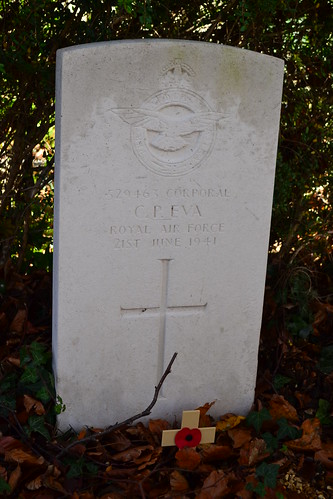
Throughout the summer months 99 Sqn would continue operations into Germany along with further attacks on the Scharnhorst and Gneisenau docked at Brest. With further loses on May 5/6, May 8/9, June 11/12 , and June 21st with the loss of X9643 two miles from the airfield, losses would be relatively low. In a freak accident X9643 would be lost with all of her crew when the dingy became dislodged and fouled the elevators causing the aircraft to crash and burst in to flames.

Corporal C. P. Eva

Corporal C. P. Eva, killed 21st June 1941 when the dingy in his aircraft fouled the elevators.

The latter months of 1941 would see two conversion flights formed at Waterbeach. Designed to train crews on the new four engined bombers, the Stirling and latterly the Lancaster, 26 Conversion Flight was formed out of ‘C’ flight of 7 Sqn on 5th October with 106 Conversion Flight joining them in December. Both units flew the Stirling bomber and were amalgamated in January 1942 to form 1651 Conversion Unit (CU) (later 1651 Heavy Conversion Unit (HCU)). Flying a mix of Stirlings and later Lancasters, they also used a Beaufighter, Spitfire, Tiger Moth and Airspeed Oxford. 1651 CU were one of only three Conversion Units set up in early 1942, with 1651 being the only Stirling unit at this point; the other two units flying with the Halifax or Liberator aircraft.

By the end of 1941, 99 Sqn would suffer thirty-four aircraft lost (2 in non-operational accidents), with many of the crewmen being killed. Whilst these were tragic losses, they were nevertheless ‘in line’ with the majority of all 3 Group operational units of that year. In early 1942 the squadron was sent overseas to India, a move that coincided with the new arrivals at RAF Waterbeach of No. 215 Sqn.

215 Sqn were going through a process of reorganisation and transfer. On 21st February 1942, the air echelon formed at Waterbeach whilst the ground echelons were already on route to India from Stradishall. With more Wellington ICs, they would also depart for India a month later, where they would stay for the remainder of the war. Being only a brief stay, their departure left Waterbeach with only 1651 Conversion Unit and its associated units in situ.

Being a conversion unit, 1651’s aircraft were worn and often unserviceable, and in February 1942, they could only muster five flight worthy aircraft. As the need for more bomber crews grew, so too did the number of aircraft supplied to the Conversion Units, and as a result the number of crews undertaking training also grew. To help meet this demand, another new squadron was formed within 1651 CU in the April, that of 214 Squadron Conversion Flight. Another Flight was also formed at Alconbury and moved to join these two units, No. 15 Squadron Conversion Flight. The idea behind this unit was to provide aircrews with operational experience, an experience many would find hard to deal with.

In Part 2 we see how the Conversion Units were sent into battle, how they coped with the rigours of the aerial war over occupied Europe and then the change from Stirlings to the Lancaster.


The Development of Britain’s Airfields (Part 8).

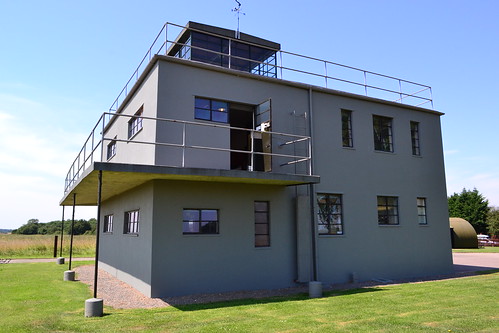
In this, the last of the series looking at the development of Britain’s airfields, we look at the Watch Office, perhaps the most atmospheric of buildings associated with Britain’ wartime airfields. The hub of an airfield control, it was where aircraft were counted out and back, where the battle was monitored and the cries of those who fought in the air war were heard.

Though only a recent addition to airfield architecture, it developed quickly and became one of the technologically advanced offices in the world.

Watch Offices.

The Watch office, Watch Tower or in American terms Control Tower, was the centre piece of any airfield, the place in which all operations were controlled. Even today, the control tower is the one feature that stands high above the rest of the airfield with commanding views across the entire site.

Many of these watch offices remain today, some as fabulous museums, some as private dwellings, but many are sadly derelict or even worse – gone altogether. This that do survive create a haunting and evocative feeling when seen from inside.

Thorpe Abbotts Museum

The beautifully restored Thorpe Abbots Watch Office (design 15683/41).

Unlike hangar development, the watch office appeared quite late in the development of the airfield, only really coming into being as war seemed inevitable. Before this, a rudimentary office was often all that was used, usually attached to the side of the main hangar, and was used to ‘book’ aircraft in and out. But by the mid war period the watch office had become a major structure on the airfield, a standard design (depending upon the airfield use) with two or more floors and often a ‘glass house’ for observation purposes.

For obvious reasons the watch office was built away from other buildings with clear sight over the entire airfield, an important aspect if controllers were to keep watch on the many aircraft that were moving about the airfield space. A vital asset to the airfield it was often targeted by marauding bombers, and in the case of attack, the controllers within would relocate to an emergency battle headquarters, hidden at ground level on a remote part of the airfield, but still with views across the site.

The basic watch office was often adapted rather than demolished and rebuilt, this can and does, cause great confusion as to its design origin. Further more, on some sites, the original was abandoned but not demolished, and a new office built elsewhere on a nearby site, thus giving rise to two offices on the one airfield eg. Matlask and Martlesham Heath

The Watch Office as we know it was first seen on military airfields in 1926 and resembled a small bungalow with bay windows. Those constructed on bomber bases would be slightly smaller than those on fighter bases, a fighter base office having a pilots office attached. The idea behind this was to keep pilots as close to the airfield  control centre so they could quickly be scrambled and report back to the airfield controller on their return. These early design were found on airfields such as Bircham Newton in Norfolk, Hendon and Tangmere and were all built to the same  basic 1926 drawing design only modified to take the extra pilots room.

The standard shape of the World War 2 Watch Office stems back to the mid 1930s, with the introduction of a two-storey building that was square in design. Like similar buildings of its time, it was brick, a building material that was replaced with concrete, in 1936.

RAF West Malling Control Tower under refurbishment

West Malling a 5845/39 design which is now a coffee shop.

By the end of the expansion period, and with the introduction of hard runways, it was realised that the non-dispersed sites gave poor visibility for early watch offices, views across the airfields were not clear and so a quick remedy was called for. The answer lay in two choices, (a) demolish the current buildings  and rebuild it in a better location, or (b) add an extension. In many cases the former was the better idea and this progressed quite quickly, however, where the latter was chosen, remedial work required alteration of the building whilst it remained in use.

A further complication to these designs was the introduction of meteorological sections, which all new buildings erected at the beginning of the war now had. This gave a mix of design styles, enough though there was only a small selection of design drawings from which to work.

These late expansion period and early war designs introduced the idea of ‘viewing platforms’ or parapets, surrounded by safety railings along the front of the building. These deign also had very large glass fronted walls, bright and airy they allowed a lot of light to enter the building but gave cause for concern later on, when it was realised that a bomb blast would cause severed injury to the occupants in an attack. It was also found that during night operations, large windows were more difficult to black out and so smaller windows offered both better protection and greater ease of black out.

As building materials became scare, particularly wood and brick, concrete became the norm. This change also led to drawing changes even though the basic design inside and out, was the same.

In order to appreciate the changes to watch office designs, one needs to consider the different roles that airfields played during the war. Bomber Command airfields would have a differ office to a fighter Command airfield, which in turn, had a different office to a satellite or night-fighter station.

Thorpe Abbotts Museum

Watch Offices give commanding views across the airfield. (Thorpe Abbots).

The regional control stations where these first offices were being built were certainly getting the better choice at this time, standard fighter and bomber airfields having to use inferior designs that very soon became outdated and inadequate for the needs of the airfield.

During the massive building programme of 1941/42, there was some effort made to standardise all airfield Watch Offices, this resulted in the 1941 design drawing no. 12779/41. This was to be the basic airfield watch office design, with its parapet, six large windows to the front and outside access steps. As older airfields were brought up to Class A Specification, many had these new Watch Offices built to replace the older original ones. Some simply had adaptation of the original. Here the use of the airfield had a bearing on the watch office modification / design, and whilst the basic 12779/41 model was employed, slight variations did exist where the airfield was not a bomber airfield.

Therefore various adaptations of this did follow, examples of which include the slightly smaller 13023/41 (RAF Cottam), those with modified smaller windows 15371/41 (Kimbolton) and 343/43 (Martlesham Heath),  and the smaller Night-Fighter design 15684/41 (Winfield). Being a Night-Fighter station Winfield, had the same basic design but construction methods were totally different. This new design 15684/41, would become standard at all night fighter bases.

All these alternative designs appear outwardly very similar to the original, but differ mainly in window design only, although the physical size of some is different.

RAF Winfield

The Night-Fighter station Watch Office at Winfield (15684/41) is a similar design but smaller, having only four windows in the front.

This design, 343/43, eventually became the most common design for watch offices and appeared on all operational stations and Operation Training Unit airfields after 1943, using a set of six half-size windows across the front.

Tower (2)

The smaller windows of Parham (Framlingham) were half the original design size (12779/41 modified to 343/43).

A further addition was the glass observation room located on the roof of the Watch Office. These were generally only applied to Group control offices, and gave an excellent all round unrestricted view of the entire airfield. Examples that exist today, such as Framlingham above, are replicas but have been built to very high standards.

Former RAF Martlesham Heath

Martlesham Heath is a similar design to Framlingham (modified to 343/43) – Note the runway heading board on the roof.

At the end of the war some airfields such as Sculthorpe and West Raynham had their Watch Offices modified as they changed roles to Very Heavy Bomber Stations. This new design 294/45, improved on former buildings as a complete new design based on a steel frame with precast concrete floors. It had an extra floor added and then the octagonal ‘glass house’ or Visual Control Room with slanted glass to reduce glare.

Control Tower

Sculthorpe’s modified tower gives 360 degree views over the airfield. A three-story block it utilises the former World War 2 Watch Office.

The Watch Office has been the hub of airfield command and control since the mid 1930s, it has developed from the humble shed to a multi-functional technologically advanced building dominating the skyline of the airfield today. Sadly though, many are now gone, and of those that are left only a few remain in good condition or open to the public.

Summary

The war-time airfield incorporated numerous building designs and shapes, certainly far too many to cover here, the wide variety of technical buildings, synthetic trainers, parachute stores, headquarters and general stores, all changing as the war progressed.  The design and materials used in these structures was as varied as the designs themselves. But as the RAF grew so too did the airfields they used. The runways, the hangars, the technical buildings and accommodation sites have all grown alongside. Sadly many of these buildings have now vanished, but the process and speed at which they developed has been unprecedented. From humble grass strips with wooden shacks to enormous conurbations with numerous buildings, they have become iconic symbols representing decades of both aviation history and human sacrifice.

The entire page can be viewed separately:

Part 1 – The Road to War.
Part 2 – The Expansion Period and airfield development.
Part 3 – Choosing a site.
Part 4 – Building the airfield.
Part 5 – Airfield Architecture.
Part 6 – Runways and Hardstands.
Part 7 – Hangars and aircraft sheds.

or as a whole document.


The Development of Britain’s Airfields (Part 7).

Whilst the runway’s remains one of the biggest features of an airfield, perhaps one of the most discussed and certainly visible is the hangar. Large sheds used to maintain aircraft, many still dominate the skyline today, used by farmers and industrial companies, they are massive buildings, but yet many remain classed as temporary or even transportable!

The development of these huge buildings is another that lasted many years, and whilst similar in layout and design, they are as complicated and as varied as any other building found on Britain’s airfields.

Hangars and Aircraft Sheds.

The topic of aircraft hangars is well versed in a large number of books and internet references. They, like the runways, can explain much about the history and use of an airfield, being the largest single building on any airfield site. Distinguishing features between hangar types is often difficult to see, many now re-clad or updated with modern features, doors or materials, even the differences between some designs is so small, without technical drawings or measurements, ascertaining the type can be all but impossible.

Hangars (or aircraft sheds as they were initially called) have been fairly constant in design, however, different services used different types, Admiralty seaplane sheds for example, were primarily side opening, whereas RAF hangars were generally front opening. Design and construction was undertaken by numerous companies (Herbertson & Co. Ltd., Nortons Ltd., Teeside Bridge and Engineering Co. Ltd., and Sir William Arrol & Co.) and even Handley Page Aircraft Co. and Boulton & Paul dabbled with the idea. With so many forms being used, it is a topic both detailed and extremely wide.

This is not therefore, intended to describe each and every hangar ever built (Second World War Air Ministry designs alone covered more than 56 types!), but more a general realisation of the huge development they undertook during this expansion and wartime period on RAF / USAAF airfields. Figures quoted here are generally rounded.

In order to understand the changes in aircraft hangars we need to briefly look at those of the First World War, where aircraft were stored in ‘sheds’, often made from canvas covering a wooden frame, or as a more permanent construction, completely wooden sheds with sliding doors. Later on these were built using metal (iron in particular) and were designed to be permanent, capable of housing several aircraft at a time.

The First World War hangars were varied and often crude, some little more than glorified tents, but through development famous names such as the Bessonneau and Hervieu were created toward the end of the war. Hangars became so large that specialist units had to be created solely to transport, erect and maintain them, and their use became more widespread.

The most common hangar of this period, the Bessonneau, was the first standard transportable hangar used on Royal Air Force airfields. Modern forms of it are still in use today, using different materials, they are quick to erect and offer reasonable protection from the weather outside.

The Bessonneau was a wooden frame structure covered in canvas. It was a simplistic design, able to be erected in as little as two days by a group of 20 skilled men. Heavy canvas doors open at one end allowing aircraft to be moved in and out with relative ease. The problem with these hangars was that the canvas was prone to freezing in winter and therefore becoming difficult to use.

There were two models of the Bessonneau built, differing only in their length – either 79 feet or 118 feet – but both were 65 feet wide.

The interwar and early war years were perhaps understandably,  the years in which the greatest hangar development occurred. The Air Ministry – the body overseeing the works – decided upon a system of ‘structure type’ using names and designations such as, Type ‘A’, ‘B’, ‘C’, Bellman, ‘T2’, etc., and just like the expansion period schemes, they progressed through this system as new developments came about.

The first type was the Type ‘A’, a permanent design, originating in 1924, it was used well into the 1930s when it was gradually replaced during the expansion period. Some examples did last well into the war and even beyond, for example, North Weald, one of the first airfields to be allocated a Type ‘A’, still uses one today.

Type A Hangar

Type A Hangar at North Weald. One of the first stations to have these types of Hangar, it has workshops attached to the Hangar side.

The Type ‘A’ is probably the first to represent the modern hangar, doors at both ends in leaves of four running on rails. Workshops are attached to the hangar side, something that was discontinued as Britain entered the war. Walls were reinforced with concrete to protect from bomb splinters, and they were built 249 feet long and 122 feet wide.

During the late 1920s, the Air Ministry published requirements for new heavy bombers, and these would require new hangars in which to maintain them. In response, the Ministry then updated the Type ‘A’ hangar to the Type ‘B’. In essence a larger version of the Type ‘A’, (160 ft span and 273 ft in length) the ‘B’ was named the ‘Goliath‘ with only three being built (each being a different length). One of these was at RAF Martlesham Heath and is still used today on what is now the industrial park. Like the Type ‘A’, the roof of the ‘B’ is possibly its most discernible feature, a series of trusses along its length crossing laterally over the roof.

With expansion period demands increasing, further developments were needed, and it was envisaged that an increasing bomber size would be needed if substantial bomb loads were to be delivered deep into the continent. The current size of hangar was now considered too restrictive and so a new buildings would be needed. The requirements of the Air Ministry was for a hangar with a span of 150 feet and length of 300 feet. With these in place, new aircraft specifications could be issued.

The Type ‘C’, (designed in 1934) as it was designated, would become the dominant building on any airfield and therefore visible from quite a distance. As airfield designs were subject to scrutiny by the Society for the Preservation of Rural England, local objections were taken into account during the design process. To appease any  objections, the steel frame was covered with local brick or stone, keeping it inline with other buildings not only on the airfield, but houses and buildings erected locally.

Most airfields during the expansion period were built with these hangars on site, and naturally went through a series of developments and improvements. This means, that there are many different forms of the Type ‘C’: gabled roof, hipped rafter and reinforced concrete. Another modified version of the ‘C’ appeared in 1938 and was designated the ‘C1’ (or ‘Protected’), this was an austerity measure development, reducing the amount of material used by lowering the roof height by 5 feet – internal metal work was also left partially exposed. Both the ‘C’ and ‘C1’, continued to be built with offices, workshops and aircrew accommodation attached to the hangar side, the idea being that it was more efficient to do so for the repair of the aircraft inside. As these were larger in width and length than their predecessors, they would have six leaf doors also sliding on top and bottom rails.

RAF Upwood

Type C at the former RAF Upwood.

1936 saw a dramatic change in hangar design, with two new requirements being issued by the Air Ministry. Firstly, storage space was now running out and so new facilities were required. These Aircraft Storage Unit Stations (ASU) would need their own hangar type, and so a requirement for these was put forward. Also at this time, the Ministry put out a demand for transportable hangars, these would replace the ageing Bessonneaus of the First World War. The response to these demands were three storage hangars and two temporary hangars.

Storage Hangars.

The Type ‘D’, ‘E’ and ‘L’ Hangars, were a development used specifically by the ASU stations, and they were not generally built on front line operational airfields. They were virtually identical in size to the Type ‘C’, but each type was marginally bigger in span 150 ft, 160 ft and 167 ft than the previous model, and all were the same length at 300 feet. The three types were different from previous hangars in that they had curved roofs, allowing the ‘E’ and ‘L’ to be covered with soil for protection and camouflage (the ‘D’ had straight side walls and therefore could not be covered). ASUs were built to assemble and disassemble aircraft for shipment to operational airfields in Britain or overseas. Aircraft were stored, in varying degrees of assembly within these units, and heavy hoists were often used to store aircraft ‘tail up’. However, with the outbreak of war, aircraft storage was thought better dispersed around the airfield and not concentrated in one space, so this method of storing aircraft was abandoned. Many of these hangars still remain today, used by small industrial units or for farm storage.

The next two types, the ‘J’ and ‘K’, were virtually identical in design, again with curved roofs, they were used for storage of aircraft. The ‘J’ can be found on many operational airfields, built in conjunction with other main hangars (Waterbeach is a very good example of this combination), whilst the ‘K’ was built on ASU stations. The design came in as a result of Expansion Scheme M, and was as a result of the call for 2,550 front line aircraft by March 1942.

The main difference between the two, (other than their location) was in the roof structure, the ‘K’ having lifting tackle rails along its width, while the ‘J’ were along its length. The ‘K’, being used for storage of aircraft, didn’t have any windows, where as the ‘J’ did as offices and workshops were in use constantly. Like previous hangars, the ‘J’ and ‘K’ both had a span of 150 ft and a length of 300 ft.

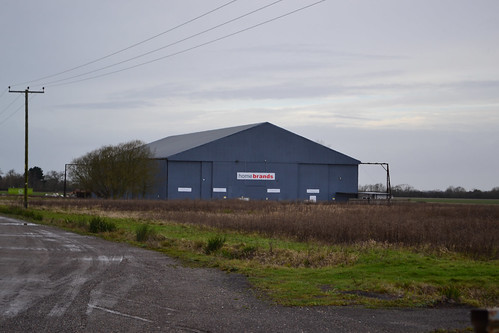
RAF Waterbeach 'J' Hangar

A ‘J’ hangar located at RAF Waterbeach.

Transportable hangars.

The 1936 transportable hangar requirement, asked for a hangar that could be easily erected and didn’t require a permanent base. It also asked for doors at both ends and needed to be simplistic in design, with parts being interchangeable. These hangers also saw the separating of the office/workshop facilities previously built onto the side of the hangars, these now being located in buildings in the technical and administrative areas. After considering numerous designs, two were chosen and ultimately built.

The first of these, and the primary choice, was the Bellman. Designed by an engineer within the Works Directorate, N.S. Bellman, they were smaller than previous hangars (88ft span and 175 ft on RAF bases) and could be built in under 500 hours by a dozen men. So successful, were they, that over 400 were built between 1938 and 1940 across a wide range of airfield types. Some of these examples even appeared in Russia.

Bellman Aircraft shed

Bellman Aircraft sheds at the former RAF Bircham Newton

The second design, was the Callender (later Callender-Hamilton with modifications) Hangar, designed by the bridge design company Callender Cable and Construction. These had a span of 90 clear feet, with a length of 185 ft, and were used on both RAF and RNAS airfields. There were only eight of these built before the outbreak of war, examples of which appear at East Fortune, further examples with lower roof clearances (17 ft) being purchased after 1940. The Callender-Hamilton are best recognised by their lattice-work on the top door rails.

Callender-Hamilton Hangar East Fortune National Museum of Flight

Callender-Hamilton Hangar East Fortune National Museum of Flight

As the war approached, 1939 – 1940 saw a transition period between ‘permanent’ and ‘temporary’ buildings, although many of these temporary buildings still stand today! Because of this change, many airfields had various hangars built, something that often gives a mix of hangar designs on one airfield which can cause confusion as to its age and origin. However, from this point on, all wartime hangars were designed as temporary hangars, designed with short lives and easily assembled / disassembled.

By 1940, the Bellman was considered too small for the RAF’s requirements and a new design was going to be needed. An agreement between the Air Ministry and Teeside Bridge & Engineering resulted in the ‘T’ series of hangars, perhaps the most well-known of the hangar designs.

The ‘T’ series covers a wide range of (temporary or transportable) hangars, each slightly different to the previous, but designed as three main types; T1 (90 ft span), T2 (113 ft) and T3 (66 ft). The length of each hangar varied depending upon local requirements and the number of additional bays added as needed. The design number e.g T2 (26) indicated the number of bays (26) and hence the length.

The ‘T’ range were a diverse and complicated range, the ‘T2’ being sub split into 5 variants (T2, T2 Heavy Duty, TFB (flying Boat), TFBHD (flying boat heavy-duty) and T2MCS (marine craft shed), so the identification of each being difficult without measuring equipment.

RAF Wratting Common

A T2 hangar at RAF Wratting Common.

On first inspection the ‘T2’ and Bellman look virtually identical, both lightweight, steel lattice frames with metal side panels. The main distinctions are that the Bellman doors are flush with the top of the side panelling whereas the ‘T2’ has an extra level of panelling and so are not flush. The other difference is the lattice frame inside the roof, the ‘T2’ has only diagonal braces whereas the Bellman has vertical braces in addition to the diagonals. Both hangars have six leaf doors on sliding rails supported both top and bottom, allowing full width access.

A final addition to the ‘T2’ were the Ministry of Aircraft Production Hangars the Type ‘A’ (A1 & A2) and Type ‘B’ (B1 & B2) built in the mid war years 1942-43 and funded by the Ministry of Aircraft Production. These hangars, not to be confused with the type ‘A’ and ‘B’ of the 1920s, were designed specifically for the repair of damaged aircraft especially operational aircraft on their own airfield. They were also erected at ASUs, and Satellite Landing Grounds (SLG).

RAF Wratting Common

A B1 at RAF Wratting Common an RAF bomber station.

The ‘B1’ and ‘B2’ were built specifically at Bomber Command airfields for the repair of damaged bombers thus eliminating the need to transport them long distances to specialist repair depots. Designed by T. Bedford Consulting Engineers they were eventually found on virtually all Bomber Command airfields by the end of the war and were manned by civilian repair organisations. Examples of both the ‘T2’ and ‘B1’ can be found in use at Wratting Common.

‘A1’ and ‘A2’ hangars on the other hand, whilst similar in design – metal cladding on metal frames – were slightly smaller and found only on aircraft factory airfields. Thus again there are virtually two identical hangars designated primarily by their location!

The last hangar to be commonly found on RAF / USAAF airfields were the blister hangar. A hangar of a temporary nature that usually used a curved metal frame covered in metal sheeting. The Blister hangar was the brainchild of architects and consulting engineers Norman & Dawbarn and William C. Inman of Miskins & Sons, and was designed to accommodate small span aircraft ideally fighters dispersed around the perimeter of airfields. Maintenance or storage could easily be carried in these hangars, and they could easily and quickly be erected, no base or foundations being required before hand.

These types of hangar came in three designs, the standard blister, (timber construction), over type (light welded steel) and Extra Over (also light welded steel), and ranged in span from 45 – 70 feet, A further type built was that of Double extra Over and Dorman Long, a separate design similar in shape but securely bolted to foundations. Many of these hangars have now gone, the majority being dismantled and sold off, only to be erected elsewhere on farmland well away from their original location. The father of a friend of mine, was employed in this very role, one day finding a Spitfire inside a blister hangar which nobody claimed to own!

By the end of the war, in excess of 900 ‘T2’ hangars were erected on British airfields including those built abroad. In 2004 it was thought there were about 100*7 left surviving on MOD property in Britain. A number have also survived on farmland used to store foodstuffs or machinery, or industrial sites. The ‘T2’ remained the main hangar in use by both the RAF and USAAF during the war, appearing on all Class ‘A’ airfields, occasionally with other models also being present. A number of other older models also continue to serve even to this day. Considering many of these were built as temporary buildings, they have survived remarkably well and are testament to the engineering design of the pre and early war years.

This is by no means an exhaustive list of those hangars that were built during the period 1918 – 1945 (other examples include the: Aeroplane Twin Shed; RFC Sheds; Seaplane Sheds; General Service Sheds; Plane Stores; Running Sheds; Lamella (a German idea built in Britain); Hinaldi; Main Hangars; Lamson Hangars; Fromson Hangars; Robins Hangars; Butler (a US design); Merton; ‘S’ type Hangars (RNAS); Pentad Hangar and Boulton & Paul Hangars and of course post war examples such as the Gaydon), but hopefully it has shone a glimmer of light on these remarkable structures that often dominated the skyline and that remain the centrepiece of many a disused airfield today.

In the next section we shall look at that other main iconic building in airfield design, the watch office.

Sources and further reading. 

*7Technical Bulletin 02/02 “World War II Hangars – Guide to Hangar Identification” Ministry of Defence (February 2002).

The Development of Britain’s Airfields (Part 6).

After considering the architecture of Britain’s airfields in Part 5, we turn to the hard surfaces, primarily the runways. Developed out of necessity, they created a steep learning curve for those involved in their construction. Many problems were found, many materials were tried, but ultimately they were built and even after their removal for hardcore, many have left scars in the tissue of the earth that remind us of their once massive presence.

Runways, Perimeter Tracks and Hardstands

In the pre-war years, the development of hard runways and large airfields was a new phenomena, hard surfaces being a new aspect still very much a topic of considerable controversy. In the First World War, water logging and mud was an issue even for the small biplanes that filled the skies over Britain and  France. To overcome this, ash was spread over landing surfaces and to some degree successfully, but even though many local remedies were tried, it wouldn’t be taken seriously until the Second World War loomed.

Glatton (Conington) second runway markings

Runways like this one at Glatton (Conington) remain in good condition and used by the local flying club.

At this point the typical airfield layout included up to four grass runways, one of 1,300 x 400 yards and three of 1,000 x 200 yards, many were even smaller. Bomber and Fighter Command, realising that not only would the new era of aircraft call for longer, hard runways on its airfields, but the need to maintain year round activity was essential if Britain was to defeat the Luftwaffe.

Both Fighter and Bomber Command pushed the Government to allow these to be developed, on the one hand Sir Hugh Dowding, fighting the corner for Fighter Command, pressed home the need for hard surfaces on his fighter airfields, whilst Sir Arthur Harris on the other, pushed for hard surfaces on his bomber airfields.

The entire process was lengthy and complex, and lacked in-depth, professional knowledge. The first hard ‘pavements’ later runways and taxi ways, being constructed based on road building techniques and knowledge. So before any firm decisions could be made, trials would need to be carried out to determine not only whether or not they were indeed needed, but if so, how they should be best constructed.

Initial steps in runway construction was started as early as 1937, where ‘flexible’ runways were constructed comprising layers of brick or stone covered with two further layers of tarmac and a coat of asphalt to seal the structure in. Concrete pavements, which proved to be much stronger were either 150 mm or 200 mm thick slabs laid directly onto the ground after the topsoil had been removed by heavy machinery. As would be expected, these early designs failed quite quickly under the heavy loads of the fighters and bombers that were coming into service. Rapid repairs were carried by adding a further layer of tarmac (6.5cm) and another layer (2cm) of sealant.

These early flexible constructions continued to fail whereas the concrete designs stood up to much more wear and tear and proved longer lasting. However, time was short and the learning curve would be steep.

The test to determine these needs was to take a Whitley bomber, laden to equal its full operational weight, and taxi it across a grassed surface.  A rather primitive assessment, it was intended to ascertain the effects of the aircraft on the ground beneath. Trials were first carried out at Farnborough and then Odiham, and these were generally successful, the Whitley only bogging down on recently disturbed soils. Further trials were then carried out at RAF Stradishall in March 1938, and the results were a little more mixed. Whilst no take offs or landings took place during these trials, the general agreement was that more powerful bombers would have no problems using grassed surfaces, as long as the ground was properly prepared and well maintained. All well and good when the soils were dry and well-drained.

By April 1939, the Air Ministry conceded, and agreed to lay runways at a small number of fighter and bomber airfields, of which Kenley, Biggin Hill, Debden and Stradishall were identified.  Whilst construction was slow, only two fighters airfields being completed by the outbreak of war, progress was finally being made.

These initial runways were only 800 yards long and 50 yards wide, but were extended later that year to 1,000 yards long, as aircraft were repeatedly running off the ends on to the grassed areas. Over the years Stradishall in particular, would be further developed, its longest runway eventually extending to 2,000 yards.

RAF Charterhall

The runway at Charterhall in the borders, breaking up after many years of use both by training units and as a motor racing circuit post war.

During the early war years, the demand for airfields grew. By early 1940 the requirement was for three runways as close as possible at 60o to each other, and of a minimum length of 1,000 yards with room for extension up to 1,400 yards. This then became the norm by late 1940 especially at bomber airfields, with the main runway being 1,400 yards and subsidiaries at 1,100 yards. A month later, this increased by another 200 yards with a requirement to be able to extend to 2,000 and 1,400 yards respectively.

However, these short piecemeal responses were not sufficient and it was both a continual problem and a thorn in the side for the Air Ministry. Sir Arthur Harris, in raising his concerns for airfields belonging to Bomber Command, also pushed the need to develop good, long and reliable surfaces. He voiced his frustration in a vehement letter*6 to Lord Beaverbrook in 1941, In which he states:

“For twenty years everybody on the stations and the squadrons has been screaming for runways without avail.”

and he continues stressing the need for hard surfaces particularly in winter as:

“Through not having runways our effort will be seriously detracted from in normal winter conditions and reduced very probably to zero in abnormal winter conditions.”

He then goes on to state that Britain’s views were ‘blinkered’ saying that:

“Every other nation throughout the world has long been convinced of the necessity for runways…”

By the summer of 1941, the length of runways had again increased, all stations would now have a main runway of 2,000 yards and two subsidiaries of 1,400 yards and where this was not possible, then a minimum of 1,600 and 1,100 yards (fighter and night fighter stations being shorter at 1,300 and 1,400 yards respectively).

The harsh winters were less than ideal for laying concrete (by far the best material for the job) but any delay could mean the difference between success and failure. Elaborate testing was therefore passed over, materials were laid and experience led the way. This method of trail and error, led to many instances of runways having to be dug up and relaid, this in itself led to problems as aircraft, men and machinery had to then be moved and housed elsewhere. The American Eighth Air Force suffered greatly with these problem, fully laden bombers repeatedly breaking through the surface or falling off the edges as it gave way.

Another consideration was that of training and satellite airfields. As the need for new pilots increased, the training of new recruits intensified. The harsh winters were causing major headaches for these airfields as mud, stones and other winter debris was causing continuous problems for flying. With both man power and materials being in short supply, suitable alternatives were sought.  A number of solutions were offered all very similar in their design and material.

The answer it seemed lay in steel matting – of which twelve different types were used – the more common being : Sommerfeld Track, Pierced Steel Planking (PSP – also called Marston Mat), or Square Mesh Track (SMT).

Sommerfeld track was a steel mat designed by Austrian Kurt Sommerfeld. The tracking was adapted from a First World War idea, and was a steel mat that when arrived, was rolled up in rolls 3.25 m (10 ft 8 in) wide by 23 m (75 ft 6 in) long. It was so well designed that a full track could be laid, by an unskilled force, in a matter of hours. Each section could be replaced easily if damaged, and the entire track could be lifted and transported by lorry, aeroplane or boat to another location and then reused.

Sommerfeld track (along with these other track types) were not only used commonly on training and satellite airfields, but also on Advanced and Forward Landing Grounds in Kent and later France after the Allied invasion of Normandy. In the build up to D-Day, 24 Advanced Landing Grounds in southern England were created using this form of Steel Matting,

Tracking had to be robust, it had to be able to withstand heavy landings and be non-conspicuous from the air. Sommerfeld track met both of these, and other stringent criteria very well, although it wasn’t without its problems. Crews often complained of a build up of mud after heavy rain, and concerns over both tyre and undercarriage damage were also extensively voiced; several records reporting tail wheels being ripped off after catching in the track lattice.

Because of the poor state and short length of runways, bombers were still regularly running off the ends, especially at night, or being unable to fly because the surfaces were poor or even unusable. A number of ideas were tested out to alleviate the problem, one such idea led to twenty sites testing arrester hook facilities. Several heavy bombers: Halifax, Manchester, Stirlings  and later the Lancaster,  were all modified to undertake these trials, with Woodhall Spa becoming the first airfield to have the full complement of six arrester sets.

Runway arrester gear

Runway arrester gear at Woodhall Spa.

The idea was met with scepticism, but trials went ahead and in January 1942, a list of priority airfields was sent out to the Headquarters of No. 1,3,4, and 5 Groups RAF detailing those twenty sites selected for the equipment. At the top of the list was RAF Woodhall Spa in Lincolnshire, followed by Bottesford, Swinderby, Ossington, Syerston, Middleton St. George, Linton, and ending with Waterbeach and Stradishall. By late 1942 Woodhall Spa was ready and in October, five landings were made by an Avro Manchester.  A month later the decision was made to install units at all major operational airfields, but this never came to fruition and the idea was soon mothballed. By 1943, it had been forgotten about and the 120 or so units built were scrapped (many being left buried where they were laid).

It was finally during early 1942 that a standard design airfield would be put in place. Known as the Class ‘A’, it would be the standard to which all new airfields and updated older sites would be made.

A Class A airfield would be designed around three hard concrete runways, shaped like an ‘A’ with each runway at 60o  to each other where possible. The main runway would be aligned with the prevailing wind again were possible to allow aircraft to take off/land into the wind as often as possible (north-east, south-west). In several cases, due to land features and local restrictions, this was not always possible, and so many permutations of design were seen as a result.

Rapidly becoming the largest part of the airfield layout, the runways and other paved areas – perimeters tracks, aprons and hardstands – were now given high priority. The standard now called for a main runway of 2,000 yards with two subsidiaries of 1,400 yards. Each of these would be 50 yards wide whilst the connecting perimeter tracks would be 50 feet wide. Along side these runways would be an emergency landing strip, a grassed area given a landing surface of 400 and  200 yards respectively.

Dues to the high numbers of bombers returning badly damaged and unable to make safe and proper landings, a small number of emergency strips were created by extending the main runways to 4,000 yards long and 400 yards wide. One such airfield was RAF Manston in Kent. Being on of the closest airfields to the continent, it was often the first place a stricken aircraft, especially a bomber, would seek out.

Whilst the general layout of airfields did not change for the remainder of the war, some further runways were extended to 3,000 yards, one such example being RAF Sculthorpe in Norfolk which was prepared to take the heavy B29 ‘Superfortress’ and post war, the B-36 ‘Peacemaker’.

A further point worth mentioning here is that of dispersals, not required pre-war, they were also an aspect of airfield architecture that were born out of the Second World War. In the inter-war years, aircraft were housed either on a central pan (apron or ramp) or within hangars. These collections of aircraft were easy targets and even a small amount of munitions could cause huge damage. In 1939 the need for dispersals was therefore recognised and so to address the issue, hedges were removed and tracks created that took aircraft away from the main runway but kept them within easy reach of the airfield site. The initial design was that of the ‘frying pan’ a 150 ft circle connected to the perimeter track by a small concrete track.

However, by 1942, it was found that aircraft were clogging up these tracks, some even ‘falling off’ the concrete onto soft soil and so blocking following aircraft in their tracks. The answer was the ‘spectacle’ or ‘loop’ hardstand, so-called by their oval shape, generally in pairs, that allow aircraft in and out without the need to turn or block access tracks. From 1942 onward, this model became the standard hardstand for all Class A airfields, and the aim was to have 50 such hardstands placed strategically around the perimeter, with 25 at satellite airfields. As the threat of attack diminished toward the end of the war, ‘finger’ or ‘star’ dispersals began to appear, much less effective than the predecessors, they were however cheaper and easier to construct.

RAF Milfield

Unusual as many training airfields didn’t have aircraft pans, RAF Millfield, in the borders, had several

In addition to hardstands, pens were built on fighter stations. The first, an experimental pit, was dug at Feltwell, whilst overly expensive and obtrusive, it did lead the way to aircraft pens later on, pens that were developed as either type ‘B’ or ‘E’  on these fighter airfields. The main difference here is that the early type ‘B’ had cranked side walls whereas the ‘E’ had walls that were straight. The former requiring more space, was later phased out in favour of the ‘E’, named so by its shape, using side and back walls to protect the fighter or small bomber located within.

Remains of Type 'B' fighter Pen

The remains of a Type ‘B’ Fighter Pen at Matlaske.

RAF Macmerry

A Type ‘B’ Pen at RAF Macmerry. The cranked wall can be seen to the right, with the central wall on the left. The entrance is to the bottom right.

Examples of these pens were located at Matlaske (type ‘B’ – built to design 7151/41) and Macmerry in Scotland, whilst the type ‘E’ were found on airfields especially those around London that included Biggin HiIl, Kenley and North Weald.

Kingscliffe airfield

One of the ‘E’ type pens found at Kings Cliffe. Adapted with rifle slits for additional defence.

These pens were designed to specific dimensions and were designed as either a ‘Hurricane’ or ‘Blenheim’ to accommodate either a single engined or twin-engined aircraft. Within the back wall of these pens was a shelter for up to 25 personnel, and in some cases, they had Stanton Shelters built-in to the structures. Some, for example, at Kings Cliffe in Northampton, remain with rifle slits for additional protection from ground forces.

King's Cliffe airfield

Inside the aircraft pen shelter at King’s Cliffe.

Whilst the majority of these shelters were manufactured using banks of soil, sandbags, brick or concrete, there was a least one example at RAF Drem, in Scotland which used logs cut to size and shape and built in the style of a Scandinavian house. It is these various designs of aircraft pen that paved the way to modern hardened aircraft shelters (HAS) seen on military airfields today.

From the early days of grass runways to the massive lengths of concrete that were created up to and after the mid 1940s, runways and hardstands have become a defining factor in airfield design. The sole purpose of an airfield – to get aircraft off the ground as quickly as possible, get them to their target and them get them home again – led to the development of both runway lengths and construction materials, much of which has paved the way for modern airfields today. These early leaps into runway designs have enabled larger and heavier aircraft to make those important journeys that we very much take for granted in this the modern world of air travel and general aviation.

In the next section we look at one of the buildings most associated with the airfield. An early form of aircraft storage, its role changed as it was soon realised that aircraft needed to be dispersed and not grouped together on large aprons as they were in the prewar era. Aesthetics and neatly lined up aircraft were no longer an important factor in front line flying, but safety and the ability to repair aircraft quickly and efficiently were. Here we introduce the hangar, a huge building often of a temporary or transportable nature, that became one of the more longer lasting structures of airfield architecture.

Sources and further reading. 

*6 Letter from Arthur Harris to Lord Beaverbrook, February 1941 – AIR 19/492 – National Archives

50 Aviation Trails Reached!

I am pleased to announce that since starting Aviation Trails four years ago, I have now reached that magic number of 50 Trails around Britain’s wartime airfields, a feat I never thought would happen.

Each Trail covers two or more sites, in some cases six, many three, covering in total, over 100 former RAF and USAAF airfields and museums around Britain.

I can honestly say its been a terrific four years, in which I have learnt a lot about Britain’s wartime past, the men and machines that flew from these places and the tragedies that occurred at so many. The development of these airfields was staggering, the process of construction, and the subsequent decay just as eye-opening. These sites and the people who used them, have changed both the British and world landscape, leaving in many cases scars that may never heal. The buildings and stretches of concrete that remain are monuments to human endurance and sacrifice, a sacrifice that we hope may never have to be repeated.

RAF Tibenham Perimeter track

The perimeter track at the former RAF Tibbenham.

During these four years there have been several changes at many of these sites, hangars and other buildings have gone, runways are continuing to be dug up as they become prime land for development. As we speak there are numerous sites under planning proposals, whilst others are waiting in the wings to hear what their fate will be.

To compile these trails I have personally visited each and every one of these sites, even a field has a certain something when you know who stood there before you.

To all those who have visited, commented and followed me on this journey, I thank you, I hope you have enjoyed the journey back in time as much as I have writing it. I hope that through these trails, the memories of those who gave their all may live on so that future generations may know who they were and what they did, so that we may enjoy the peace we do today.

Here’s to the next 50!

Andy.

RAF Andrews Field – (Great Saling/Station 485) – Trail 33: Essex Part 1.

RAF Attlebridge  (Station 120) – Trail 7: Northwest Norfolk.

RAF Barton BendishTrail 7: Northwest Norfolk.

RAF Biggin Hill (Westersham) (Station 343) – Trail 4: Kent Part 1.

RAF Bircham NewtonTrail 20: North Norfolk (Part 1).

RAF Bodney (Station 141) – Trail 8: Swaffham and Her Neighbours (Part 1 of 3).

RAF BournTrail 31: Southern Cambridgeshire (Part 2).

RAF Brenzett (ALG) – Trail 18: Kent Part 2.

RAF BruntonTrail 47: Northumberland.

RAF Bungay (Flixton) (Station 125) – Trail 14:  Central Suffolk (Part 1).

RAF Bury St. Edmunds (Rougham) (Station 468) – Trail 16: West Suffolk (part 1).

RAF Castle CampsTrail 45: Essex (Part 2).

RAF Caxton GibbetTrail 29: Southern Cambridge (Part 1).

RAF Charterhall Trail 41: The Borders of Scotland and England.

RAF ChedburghTrail 49: Bomber Command – Bury St. Edmunds to Haverhill

RAF Collyweston Trail 37: The Northern Reaches of Cambridgeshire.

RAF Coltishall – Trail 7: Northwest Norfolk.

RAF ConingsbyTrail 1: Lower Lincolnshire.

RAF CottamTrail 40: Yorkshire (East Riding).

RAF CranwellTrail 2: Lincoln Borders and Newark.

RAF Debach (Station 152) – Trail 39: Suffolk around Ipswich (Part 1).

RAF Debden (Station 356) – Trail 46: Essex Part 3,

RAF Deenethorpe (Station 128) – Trail 6: American Ghosts.

RAF Deopham Green (Station 142) – Trail 27: Southern Norfolk (Part 3).

RAF Digby (Scopwick) – Trail 1: Lower Lincolnshire.

RAF Docking – Trail 20: North Norfolk (Part 1).

RAF Downham Market (Bexwell) – Trail 7: Northwest Norfolk.

RAF Drem – Trail 42: Edinburgh’s Neighbours.

RAF East Fortune – Trail 42: Edinburgh’s Neighbours.

RAF East Kirkby Trail 1: Lower Lincolnshire.

RAF East Wretham (Station 133) – Trail 13: Southern Norfolk around Diss (Part 2).

RAF Eye (Brome) (Station 134) – Trail 14: Central Suffolk (Part 1).

RAF Fersfield – (Station 130) – Trail 28: Southern Norfolk (Part 4).

RAF FoulshamTrail 22North Norfolk (Part 3).

RAF FowlmereTrail 32Southern Cambridgeshire (Part 3).

RAF Framlingham (Parham) (Station 153)Trail 39: Suffolk around Ipswich (Part 1).

RAF Glatton (Station 130) – Trail 6: American Ghosts.

RAF Gransden Lodge – Trail 31: Southern Cambridgeshire (Part 2).

RAF Graveley – Trail 29: Southern Cambridge (Part 1).

RAF Grafton Underwood (Station 106) – Trail 6: American Ghosts.

RAF Great Dunmow (Station 164)- Trail 33: Essex (Part 1).

RAF Great MassinghamTrail 21: North Norfolk (Part 2).

RAF Great Sampford (Station 359) – Trail 50: Haverhill’s neighbours – Wratting Common and Great Sampford.

RAF Hardwick (Station 104) – Trail 12: Southern Norfolk around Diss (Part 1).

RAF Hawkinge – Trail 18: Kent Part 2.

RAF Hethel – Trail 38: To the West of Norwich.

RFC HinghamTrail 38: To the West of Norwich.

RAF Hunsdon – Trail 25: Hertfordshire.

RAF Kimbolton (Station 117) – Trail 6: American Ghosts.

RAF King’s Cliffe (Station 367) – Trail 6: American Ghosts.

RAF LanghamTrail 23: North Norfolk (Part 4).

RAF Lashenden (Headcorn) – Trail 18: Kent Part 2.

RAF Lavenham (Station 137) – Trail coming soon.

RAF Little Snoring – – Trail 22North Norfolk (Part 3).

RAF MarhamTrail 7: Northwest Norfolk.

RAF Martlesham HeathTrail 48: Suffolk around Ipswich (Part 2).

RAF Matching (Station 166) – Trail 33: Essex Part 1.

RAF Matlask (Station 178) – Trail 34: North Norfolk (Part 5).

RAF MattishallTrail 36: North Norfolk (Part 6).

RAF Mendlesham (Station 156) – Trail 15: Central Suffolk (Part 2).

RAF MepalTrail 11: Around Ely.

RAF Methwold – Trail 8: Swaffham and Her Neighbours (Part 1).

RAF Millfield –  Trail 47: Northumberland.

RAF Narborough (Narborough Aerodrome)- Trail 7: Northwest Norfolk.

RAF North CreakeTrail 23: North Norfolk (Part 4).

RAF North Pickenham (Station 143) – Trail 9: Swaffham and Her Neighbours (Part 2).

RAF North WealdTrail 25: Hertfordshire.

RAF North Witham (Station 479) – Trail 3: Gone But Not Forgotten.

RAF Old Buckenham (Station 144) – Trail 13: Southern Norfolk around Diss (Part 2).

RAF Oulton – Trail 34: North Norfolk (Part 5).

RAF Polebrook (Station 110) – Trail 19: Northamptonshire American Ghosts II.

RAF Rattlesden (Station 126) – Trail 15: (Central Suffolk (Part 2).

RAF SawbridgeworthTrail 25: Hertfordshire.

RAF ScamptonTrail 30: Scampton and the Heritage Centre.

RAF SculthorpeTrail 21: North Norfolk Part 2.

RAF Shipdham (Station 115) – Trail 10: Swaffham and Her Neighbours (Part 3).

RAF Snetterton Heath – (Station 138) – Trail 27: Southern Norfolk (Part 3).

RAF Spanhoe Lodge (Station 493) – Trail 6: American Ghosts.

RAF Steeple Morden – Trail 32: Southern Cambridgeshire (Part 3).

RAF Stoke OrchardTrail 24: Gloucestershire.

RAF Stradishall- Trail 49: Bomber Command – Bury St. Edmunds to Haverhill

RAF Sutton BridgeTrail 3: Gone But Not Forgotten.

RAF Swannington – Trail 36: North Norfolk (Part 6) 

RAF Swanton Morley – Trail 38: To the West of Norwich.

RAF Thorpe Abbotts (Station 139) – Trail 12: Southern Norfolk around Diss (Part 1).

RAF Tibenham (Station 124) – Trail 13: Southern Norfolk around Diss (Part 2).

RAF Tuddenham – Trail 16: West Suffolk (Part 1).

RAF Tydd St. Mary – Trail 37: The Northern Reaches of Cambridgeshire.

RAF Upwood – Trail 17: The Pathfinders.

RAF Warboys – Trail 17: The Pathfinders.

RAF Watton (Station 376/Station 505) – Trail 9: Swaffham & Her Neighbours (Part 2).

RAF Wendling (Station 118) – Trail 10: Swaffham and Her Neighbours (Part 3).

RAF West Malling Trail 4: Kent Part 1.

RAF West RaynhamTrail 21: North Norfolk Part 2.

RAF WethersfieldTrail 45: Essex (Part 2).

RAF Westley – Trail 16: West Suffolk (part 1).

RAF WinfieldTrail 41: The Borders of Scotland and England.

RAF Winthorpe Trail 2: Lincoln Borders and Newark.

RAF WitchfordTrail 11: Around Ely.

RAF Wittering  – Trail 37: The Northern Reaches of Cambridgeshire.

RAF Woodall SpaTrail 1: Lower Lincolnshire.

RAF Wratting CommonTrail 50 – Haverhill’s neighbours – Wratting Common and Great Sampford.


Great Sampford – A disaster for the U.S. “Eagles”.

After leaving RAF Wratting Common, we turn south and head back past Haverhill towards Finchingfield. Reputedly one of the most photographed villages in England, it has a ‘chocolate box’ appeal, its quaint houses, old tea shops and village pond, reminiscent of Britain’s long and distant past. Finchingfield and this trail, are also close to the airfield at Wethersfield, and a short detour to the east, is an added bonus and a worthy addition to the trail.

This next airfield, a small satellite airfield, lies one and a half miles to the west of Great Sampford village, and five miles south-east of Saffron Walden. It is actually quite remote, with no public roads close to the site. Footpaths do cross parts of the former airfield, which is all now  completely agricultural.

As we head south we stop  off at the former airfield RAF Great Sampford.

RAF Great Sampford (Station 359)

RAF Great Sampford was a short-lived airfield, built initially as a satellite for RAF Debden, it would be used primarily by RAF Fighter Command, and later by the US Eighth Air Force. It was also used by 38 Group for paratroop training, and by the Balloon Command.

Being a satellite it was a rudimentary airfield, and accommodation was basic; utilising wooden huts as opposed to the more pleasant brick dwellings found at its parent station RAF Debden. It was very much the poorer of the airfields in the area, although by the war’s end a wooden hut would no doubt have been preferential to a cold, metal Nissen hut!

As a satellite it would be used by a small number of squadrons, No. 65 RAF, No. 133 (Eagle Squadron) RAF and No. 616 Squadron RAF. The famous Eagle Squadrons being manned by American volunteers, 133 Sqn was later renamed 336th Fighter Squadron (FS), 4th Fighter Group (FG), after their absorption into the US Army Air Force.

There were two runways at Great Sampford, one of grass and one of steel matting (Sommerfeld track), a steel mat designed by Austrian Expatriate, Kurt Sommerfeld. The tracking was adapted from a First World War idea, and was a steel mat that when arrived, was rolled up in rolls 3.25 m (10 ft 8 in) wide by 23 m (75 ft 6 in) long. It was so well designed that a full track could be laid, by an unskilled force, in a matter of hours. Each section could be replaced easily if damaged, and the entire track could be lifted and transported by lorry, aeroplane or boat to another location and then reused.

Sommerfeld track (along with a handful of other track types) were common on fighter, training and satellite airfields, especially in the early part of the war. It was also used extensively on forward landing grounds in Kent and later France after the Allied invasion of Normandy.

Tracking had to be robust, it had to be able to withstand heavy landings and be non-conspicuous from the air. Sommerfeld track met both of these, and other stringent criteria very well, although it wasn’t without its problems. Crews often complained of a build up of mud after heavy rain, and concerns over both tyre and undercarriage damage were also extensively voiced. Some records report tail wheels being ripped off after catching in the track lattice.

At Great Sampford the steel matting was 1600 yards long, extended later to 2,000 yards, the grass strip being much shorter at just over 1,000 yards. A concrete perimeter track circumnavigated the airfield, and due to the nature of the area the airfield took on a very odd shape indeed. With many corners and little in the way of straight sections, it may have suited the longer noses of the RAF’s Spitfires well, avoiding the need to weave continuously to see passed the long engine. However, because it was small and uneven, it caused numerous problems for pilots taking off, the hedges and trees proving difficult obstacles to clear without stalling the aircraft in an attempt to get above them.

Hangars and maintenance huts were also sparse, but four blister hangars were provided as the main structures for aircraft repair and maintenance.

Opened on 14th April 1942, the first unit to use the site was No. 65 (East India) Squadron RAF who arrived the same day that it was opened. No. 65 Sqn, being veterans of both Dunkirk and the Battle of Britain, had been moved about to regroup and refit, upgrading its aircraft numerous times before settling with the Spitfire.

The Spitfire VB of 65 Sqn (who were previously based at Debden) was a modified MK.V,  the first production version of the Spitfire to have clipped wingtips, a modification that reduced the wingspan down to 32 ft but increased the roll rate and airspeed at much lower altitudes. No. 65 Squadron, would use their Spitfire VBs for low-level fighter sweeps and bomber escort duties, something that suited the clipped wing version well.

Between April and July 1942, 65 Squadron would move between Debden, Martlesham Heath and Hawkinge with short spells in between at Great Sampford. They would then have a longer spell in Kent before leaving for RAF Drem in Southern Scotland. These repeated moves were largely in response to the threat of renewed Luftwaffe attacks on the airfields of southern England, and were part of a much larger plan put into place to protect the front line squadrons.

65 Squadron ORB Great Sampford

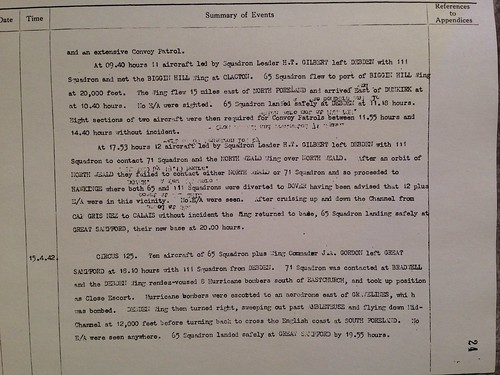
The entry in the Operational Record Book for April 14th shows the first landing of Spitfires at Great Sampford. (AIR 27/594/4)

On April 14th, the move took place, a move that was achieved under some difficulty as the squadron was called upon to participate in two Rodeo (fighter sweeps) operations. After extensive searching between Cap Gris Nez and Calais, no enemy aircraft were sighted, and so the wing returned to their various bases. At 20:00 hrs, the first 65 Sqn aircraft touched down at Great Sampford – the base was now open and operational.

The next mission would be the very next day – there was no let up for the busy flyers! “Circus 125” led by Wing Commander J. Gordon, consisted of ten aircraft from Great Sampford, who after taking off at 18:10, met with the bomber formation and escorted them to an airfield target near Gravelines. The entire mission was uneventful and the aircraft arrived safely back at Great Sampford at 19:55 hrs.

This mission pretty much set the standard for the remainder of the month. Numerous Rodeo and Circus operations saw 65 Sqn repeatedly penetrate French airspace with various sighting of, but little contact with, enemy aircraft. The first real skirmish took place on the 25th, when the Boston formation they were escorting was attacked by fourteen FW-190s. One of the Bostons was hit and subsequently crashed into the sea. Flt. Sgt. Stillwell (Red 3) of 65 Sqn threw his own dingy out to the downed crewman who seemed to make no effort to reach it – he was then assumed to be already dead.

On the April 27th, “Circus 142” took place, the escort of eight Hurricane bombers who were attacking St. Omer aerodrome. Three sections ‘Red’, ‘White’ and ‘Blue’ made up 65 Squadron’s section of the Wing, and consisted of both Rhodesian, Czech and British airmen. The Wing flew across the Channel at 15,000 ft, and when on approach to the target, they were attacked by 50-60 FW-190s. In the ensuing dogfight F/O. D. Davies, in Spitfire #W3461; P/O. Tom Grantham (s/n: 80281) flying Spitfire #BL442, and P/O. Frederick Haslett (s/n: 80143) in Spitfire #AB401, were all reported missing presumed dead. It was thought that both F/O. Davies and P/O. Grantham may have collided as they were together when they went down, P/O. Grantham was just 19 years of age.

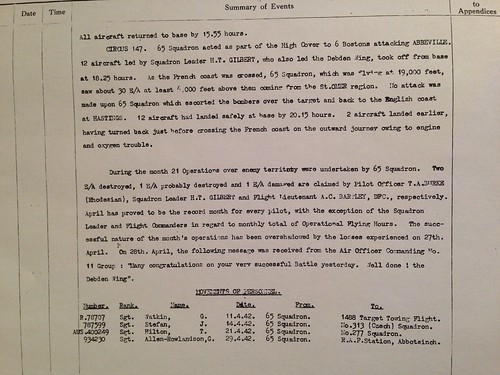
There were no further losses that month although operations continued up until the last day. In all, 21 operations had been flown in which 2 enemy aircraft were destroyed, 1 was a probable and 1 was damaged. April proved to be a record month in terms of operational flying hours for every pilot below the rank of Squadron Leader, the successes of which though, were marred by the sad events of the 27th and the loss of three colleagues.

On the 28th, their last day of this, the first of several stays at Great Sampford, a congratulatory message came though from the Air Officer Commanding No. 11 Group, “Well done the Debden Wing”, which went some way to lighten the atmosphere before the new month set in.*1

65 Squadron ORB Great Sampford

The Operational Record Book for 65 Squadron. A message of congratulations from the Air Officer Commanding No. 11 Group. (AIR 27/594/4)

It was three months later on July 29th 1942, that 65 Squadron would depart Great Sampford for the last time, and the next squadron would arrive, the Spitfire VIs of No. 616 Squadron RAF.

No. 616 Sqn were formed prior to the declaration of war in November 1938. An Auxiliary Air Force Unit, it too took part in supporting both the Dunkirk evacuation and the early days of the Battle of Britain. Now, at Great Sampford, it had been given the high altitude Spitfire, the MK. Vl, an attempt by Supermarine to tackle the Luftwaffe’s high altitude bombers, and quite the opposite to the VBs of 65 Sqn – these Spitfires had extended wingtips!

616 Squadron would, like 65 Sqn before them, spend July to September yo-yoing between Great Sampford and the airfields further south, Ipswich and Hawkinge, before departing Great Sampford for the final time on September 23rd 1942 for RAF Tangmere. Whilst here at Great Sampford, they would perform fighter sweeps, bomber escort and air patrols over northern France, engaging with the enemy on numerous occasions.

On the same day as 616 Sqn departed, the last operational unit would arrive at Great Sampford, the U.S. volunteer squadron, 133 Squadron known as one of the ‘Eagle Squadrons’. Being one of three squadrons manned totally by American crews, it had been on the front line serving at RAF Biggin Hill and RAF Martlesham Heath before arriving here at Great Sampford. Whilst some British RAF ground crews helped servicing and maintenance, the aircrew were entirely US, and crews were regularly changed as losses were incurred or crews were transferred out.

Many of these new recruits came in from other units. Ground crews coming into Great Sampford would have to get the train to Saffron Walden where they were met by a small truck who would take them to RAF Debden for a meal and freshen up. Afterwards they were transferred, again by truck, the few miles here to Great Sampford, the transformation was astonishing! In the words of many of those who were stationed here, “there was nothing ‘great’ about Great Sampford!”*2 Also flying Spitfire VBs, they were to quickly replace them with the MK.IX, a Spitfire that was essentially a MK.V with an updated engine. Having a higher ceiling than the FW-190 and being marginally faster, its improved performance took the Luftwaffe by complete surprise.

It would be a short-lived stay at Great Sampford though, as 133 Sqn RAF were disbanded on the 29th September, being renumbered as 336th FS, 4th FG, USAAF, and officially becoming US Air Force personnel. They were no longer volunteers of the Royal Air Force.

Just three days before this final transfer, on September 26th 1942, 133 Sqn would suffer a major disaster, and one that almost wiped out the entire squadron.

A small force of seventy-five B-17s from the 92nd BG, 97th BG and the 301st BG, were to mount raids on Cherbourg and the airfields at Maupertus and Morlaix, when the weather closed in. The 301st BG were recalled as their fighter escort failed to materialise, and the 97th BG were ineffective as cloud had prevented bombing to take place. The RAF’s 133 (Eagle) Sqn were to provide twelve aircraft (plus two spares) to escort the bombers on these raids. After refuelling and a rather vague briefing at RAF Bolt Head in Devon, they set off. Unbeknown to them at the time, the two pilots instructed to stay behind, P/O. Don Gentile and P/O. Erwin Miller, had a guardian angel watching over them that day.

During talks with P/O. Beaty, it was ascertained that the Spitfires had flown out above 10/10th cloud cover and so were unable to see any ground features, thus not being able to gain a true understanding of where they were. Added to that, a 100 mph north-easterly wind blew the aircraft far off course into the bay of Biscay. Finding the bombers after 45 minutes of searching, the flight set for home and reduced their altitude to below the cloud for bearings. Being over land they searched for the airfield, all the time getting low on fuel. Instead of being over Cornwall however, where they thought they were, they were in fact over Brest, a heavily defended port, and in the words of 2nd Lt. Erwin Miller – “all Hell broke loose.” *3

In the subsequent battle, all but one of 133 Sqn aircraft were lost, with four pilots being killed.  P/O. William H. Baker Jr (O-885113) in Spitfire #BS446; P/O. Gene Neville (O-885129) in Spitfire #BS140 – Millers replacement; P/O. Leonard Ryerson (O-885137) in Spitfire #BS275 and P/O. Dennis Smith (O-885128) in Spitfire #BS294.

Only one pilot managed to return, P/O. Robert ‘Bob’ Beatty,  who crash landing his Spitfire at Kingsbridge in Devon after he too ran out of fuel. During the crash he sustained severe injuries but luckily survived his ordeal. From his debriefing it was thought that several others managed to land either on the island of Ouissant or on the French mainland. Of these, six were known to have been captured and taken prisoners of war, one of whom, F/Lt. Edward Brettell  DFC was executed for his part in the Great Escape from Stalag Luft III. A full report of the events of that day are available in an additional page.

There would be no further operational flying take place for the rest of the month for 133 Sqn – all in all it was a disastrous end for them, and to their spell as RAF aircrew.*4

Pilot Officer Gene P. Neville 133 (Eagle) Sqn RAF, stands before his MK. IX Spitfire at Great Sampford. He was Killed during the Morlaix disaster. (@IWM UPL 18912)

Because these marks of Spitfire were in short supply, the remainder of the Squadron were re-equipped with the former MK.VBs, a model they retained into 1943 before replacing them with the bigger and heavier Republic P-47 ‘Thunderbolts’.

As a result of the losses, the dynamics of the group would change. The cohesive nature of the men who had been together for so long, was now broken and the base took on a very different atmosphere.

The effect on those left behind was devastating, morale slumped, and in an attempt to raise it, Donald ‘Don’ Blakeslee ordered the remaining pilots to line up along the eastern perimeter track and take off in formation; something that had been considered virtually impossible due to its short length, uneven surface and rather awkwardly placed trees along its boundary. Blakeslee, who became a legendary fighter pilot with both 133 Sqn and later the 4th Fighter Group (FG), led the group in true American Style, getting all the aircraft off the ground without any mishaps. Heading for Debden, they formed up, and flew directly over the station at below 500 feet, shaking windows and impressing those on the ground with precision flying that took as much out of the pilots as did air to air combat.

That night, the mess hall at Debden, was awash with celebrations as 133 Squadron pilots enjoyed the limelight they had for so long deserved.

On the next day, September 29th, the crews packed their personal belongings and departed Great Sampford for the comforts of Debden, where an official handover took place. General Carl Spaatz and Air Chief Marshal Sir Sholto Douglas, witnessing the official transfer of the three Eagle Squadrons to the United States Air Eighth Air Force, a move that on the whole, pleased the American airmen.

From then on, Great Sampford would remain under control of the USAAF, being used as a satellite for the 4th FG at Debden, but without any permanent residents. The occasional flight of Spitfires or P-47s would land here whilst on detachment or away pending a Luftwaffe attack. In the early stages of 1943, the Americans decided that Great Sampford (renamed Station 359 as per US designations) was no longer suitable for their needs as it wouldn’t accommodate either the  P-38s or the P-47s due to its awkward size and shape. By February 1943 they had pulled out, and Great Sampford was returned to RAF ownership. By March 1943 the airfield now surplus to flying requirements, was closed, used only by a large selection of RAF Regiments training in airfield defence, Guard of Honour duties and VIP Security. The station eventually closed in August 1944.

Airmen of the 336th Fighter Squadron, 4th Fighter Group with a clipped wing Spitfire Mk. Vb (MD-A), 1943. Handwritten caption on reverse: '19A. KP. Fall, 1942. Great Sampford Satellite Field. 336th crew by 336th Spit Mk. Vb. Wings clipped by sawing off wing & pounding in board then carving and painting it. MD-A, red/blue wheel. Source -Bill Chick, Megura.'

Airmen of the 336th Fighter Squadron, 4th Fighter Group with a clipped wing Spitfire Mk. Vb (MD-A), 1943. at Great Sampford. (@IWM – FRE3230)

However, this closure was not the end for Great Sampford. With paratroop operations progressing in Europe, the airfield was put back into use on 6th December 1944 by 620 Sqn in Operation ‘Vigour‘.

No. 38 Group, in need of practice areas, had acquired the airfield, and were dropping SAS paratroops into the site. This flight preceded another similar activity the following day where Horsa gliders pulled by 620 Sqn Stirlings, took part in Operation ‘Recurrent‘; a cross-country flight from RAF Dunmow in Essex. This flight culminated with the Horsas being released and landing here at Great Sampford. These activities continued throughout the appalling winter of 1944 / 45, and into the following months. In March, in the lead up to Operation ‘Varsity‘ the allied crossing of the Rhine, there was further activity in the skies of this small grass strip. Operation ‘Riff Raff‘  saw yet more paratroops and gliders at Great Sampford, whilst in November 1945, after the war’s end, Operation ‘Share-Out‘ saw the final use of Great Sampford by the paratroops. No. 620 Squadron, who had been based at RAF Dunmow, were now winding down themselves and their use of Great Sampford ceased virtually overnight.

Since then, Great Sampford has become completely agricultural, the perimeter track virtually all that remains of this small but rather interesting site. It lies in a remote area, fed only by farm tracks and small footpaths. The tracks, now a fraction of their original size, still weave their way around the airfield as they did for that short, but busy time, in the mid 1940s.

Regretfully the airfield and its unique history has all but passed into the history books, and rather sadly, no memorial marks the airfield, even though many airmen were lost during  the many sorties in those dark days of the war-torn years of the 1940s.

We depart Great Sampford heading off once more, the airfields of Essex and East Anglia beckoning. As we move off, we spare a thought for those for whom this was the last view they had of ‘home’, and of those who never came back to this quiet and remote part of the world.

Sources and further reading

*1 National Archives: AIR 27/594/4 .

*2 Goodson. J,. “Tumult in the clouds” Penguin UK, (2009) 

*3 Price. A., “Spitfire – A Complete Fighting History“, Promotional Reprint Company,  (1974).

*4 National Archives: AIR 27/945/26

National Archives: AIR 27/945/25

The “Slightly-out-of-Focuswebsite has details of a photo essay documenting the planning and execution of an airborne exercise prior to Operation Varsity. It’s a detailed document which includes gliders of 38 Group RAF landing at Great Sampford.

Trail 50 – RAF Wratting Common – One of the best records of No. 3 Group.

In this next Trail, the 50th trail around Britain’s Wartime airfields, we continue looking at Bomber Command’s airfields around the Cambridge / Suffolk borders. Being a bomber base, this is another that operated both the ill-fated Stirling, and then later the famous Lancaster; it is also a base that had some of the best survival records of 3 Group, but it also paid the price that came with the Stirling.

Turning north-west from Haverhill toward the metropolis of Cambridge, we visit an airfield that is on one of the highest points in the eastern region, at just below 400 feet above sea level, it was cold and inhospitable in winter, but it was one whose pride and significant contribution shall live on. Here we visit the former Bomber Command base RAF Wratting Common.

RAF Wratting Common (West Wickham)

Wratting Common airfield opened in the latter part of the war, May 1943. It was initially named after the local village, West Wickham, which lies a couple of miles to the west. However, due to confusion with another airfield, it was renamed in the August, becoming known as Wratting Common, the name it retained, and used, for the remainder of the war.

Operating under No. 3 Group the losses from Wratting Common would be high, 260 personnel would lose their lives here, equating to almost eleven every month for the duration of its short two-year life. Many of these crews would be Short Stirling crews, the enormous bomber that would take an incredible amount of punishment, but suffered with a limited service ceiling and a weak undercarriage that led to numerous accidents whilst landing or taking off.

Wratting Common was opened in May 1943, under the Class A specification. Three concrete and wood chip runways were built to 2,000 yards and 1,400 yards respectively. A perimeter track joined the three runways and housed 36 spectacle hardstands for aircraft dispersal. Repairs were carried out in one of five hangars, four T2s and one B1, mainly located to the north and west of the airfield. To the south lay the bomb store, and the site had the usual range of standard design buildings. The watch office was of the 12279/41 design, a design adopted by all major airfields by the end of 1943.

RAF Wratting Common

The only B1 hangar built at Wratting Common still survives today.

Designed to take just over 2,000 males and 348 female staff, it had 10 domestic sites  spread about the northern side, these would receive in the region  of 2,500 males of various ranks and 486 females, numbers fluctuating as crews invariably failed to return home and units came and went.

As it was a short-lived airfield, it would have only two operational front line squadrons, No. 90 and No. 195, although other units did use the airfield including: No. 24 Heavy Glider Maintenance Section, No. 273 Maintenance Unit, No. 1552 Radio Aids Training (RAT) Flight (No 2 Section) and No. 1651 Heavy Conversion Unit (HCU).

The opening of the airfield was preceded by the arrival of S/Ldr. W. K. Young , who took early control of the site and oversaw the final preparations for the forthcoming crews. Between April and May, construction was completed, defences were set up, and by the end of May the first operational aircraft began arriving. A handover saw a new and permanent Station Commander take over, a change that saw operational sorties begin within a matter of days.

No 90 Sqn, a first World War squadron, had been absorbed by 17 OTU in 1940, and then reformed again in May 1941. They served for almost a year being the only RAF unit at that time to fly the B-17 before being disbanded once more. This pattern of reforming and disbanding was one that 90 Sqn would perform almost perpetually.

Reforming again in November 1942 at RAF Bottesford, they began operations with the Stirling MK.I, transferring to RAF Ridgewell in December where they began to receive the MK.III. Arriving here at Wratting Common, in the last days of May 1943, they would remain here until the October that year before moving off to RAF Tuddenham,

During these five months 90 Sqn would lose 185 aircrew, a figure testament to the problems with the Stirling but also to the dedication of the crews to ‘get the job done’.

The first sortie took place on the night of 3rd/4th June 1943, when ten aircraft carried out a mine-laying mission off the Biscay ports. A rather uneventful mission, it would be one of the few where all aircraft returned safely.

With Bomber Command’s Battle of the Ruhr approaching its final chapter, 90 Sqn would suffer their first casualties on the night of June 21st/22nd, 1943. It was a mission to Krefield, a mission that saw 705 aircraft drop 2,306 tons of bombs on the town destroying almost half of it. It was the largest area of devastation so far of any mission and was preceded by an almost perfect marking from the RAF’s Pathfinders. The night was marred by high losses though, just over 6% of the force being lost, many as a result of night-fighter action. Of these, 90 Sqn got off lightly losing only one aircraft, Stirling MK.III ‘WP-T’ with the loss of all seven crewmen, a crew that included both an Australian and a Canadian airman.

RAF Wratting Common

One of the remaining five T2 Hangars still in use at Wratting Common.

By the 26th, just four days later, another five aircraft had been lost with only four survivors; a hefty blow that took the lives of thirty-one airmen whilst in their prime.

A new month proved little better, on the night of 3rd/4th July, three more aircraft would be lost, one ‘WP-F’ returning beaten up overshot the runway without thankfully, loss of life. The remaining two aircraft were lost over Belgium and Germany, with only one crewman surviving, captured by ground forces and surviving as a POW.

July would see a both further losses and 90 Sqn returning to Hamburg no less than three times before the month was over. Bomber Command’s tactic of area bombing would now turn from the industrial heartland to the city of Hamburg, and its enormous ship building works. Hamburg would of course become well-known for a number of reasons, the destructive firestorms that would devastate the town, the first joint efforts of the USAAF and RAF, and the use of ‘Window‘ for the first time.

Surprisingly during these raids, 90 squadron would have a rather uniquely ‘clean bill of health’, especially considering the nature of the target. Hamburg would not be easy, attacking at heights of around 13 – 16,000 feet, they would be dropping a mix of high explosive and incendiary bombs, well below the height of other squadrons. On the first night 24th/25th July, all 90 squadron aircraft would return to base, a night that was followed by the loss of one aircraft (Stirling ‘WP-S’) to Essen, before they returned to Hamburg on the 27th/28th.

The loss of this Stirling ‘S-Sugar’ was significant in that it was piloted by the Squadron Leader, S/L. Joseph Dugdale DFC, (s/n 39071). Presumed lost over the sea, the aircraft also had two New Zealanders and an Australian on board, one of which was washed up on the Norfolk coast along with two other members of the crew.

After attacking Hamburg, and damaged by flak, Stirling BK693 ‘WP-A’  would limp back to England landing at nearby RAF Stradishall, where it swung off the runway hitting another Stirling parked at a dispersal. The only 90 Sqn loss that night, it would set a precedent for the third and final attack of the month. Returning the next night, 777 aircraft would fly in from the north of the city, attacking areas so far not damaged by allied bombing. This raid would not be considered one of the RAF’s most ‘successful’ though, the bombing ‘creeping back’ some four miles into residential areas with huge loss of civilian life. Of the 119 Stirlings sent out that night, only four were lost, the only casualty of 90 squadron being ‘WP-F’ which took off at 22:00 hrs, crashing out of control without loss just after.

These light casualties, gave 90 Sqn one of the best records of No. 3 Group, a record that continued to the end of July and the closure of the Battle of the Ruhr.

At the end of July, Wratting Common was visited by an American airman. In rather less than ideal circumstances, Major William Julian of the 83rd FS, 78th FG, based at  Duxford, made a  wheels up landing in his battle damaged P-47 #41-6628, ‘HL-R’. The aircraft would eventually be recovered and repaired only to suffer a similar fate later on. July had been a busy month at Wratting Common!

August 1943 brought the change of name to the airfield, but no change in operations. Missions included Nuremberg, another return to Hamburg, Turin (famous for the VC awarded to Flt. Sgt. Arthur Aaron), and now for the first time, the rocket research establishment at Peenemunde. It was also a time when Sir Arthur Harris turned his attention to Berlin, the heart of the German Reich. A city heavily defended and a long way into occupied Europe, it was going to be difficult for Bomber Crews, and 90 Squadron’s run of luck could be about to falter.

During the short period of late August and early September 1943, 1,600 sorties would be flown to Berlin, and if the German’s determination to survive was going to be seen anywhere, it was going to be in their fearless defence of the capital.

The crew of a Short Stirling Mk III, No. 90 Squadron by their aircraft on a hard stand north of the main runway at Wratting Common, watch as other Stirlings of the Squadron prepare for the night’s operation, a raid on Berlin. (@IWM CH10900)

On the first night of August 23rd/24th 1943, two 90 Squadron aircraft were lost, one ditching in the sea just off the coast near Cuxhaven north-west of Hamburg. After spending 7 days, 16 hours and 10 minutes in their dingy, three of the crew were rescued, the remaining four having been killed*1.

A second Stirling, EH937 ‘WP-S’ was also lost that night. Piloted by Flt. Sgt. Kenneth Longmore, (s/n 413622) an Australian and hairdresser by trade, it crashed in the Ilsselmeer, a stretch of water north of Amsterdam. The aircraft, along with all its crew, were lost at 20:37, three being killed and four classified as ‘missing’.

The path to Berlin was lit by Pathfinders, and of the 727 aircraft sent, 124 were Stirlings, the loss rate for the mission being just short of 8% in total.

The crew of a Stirling are debriefed by an intelligence officer after the costly night raid on Berlin, 23/24 August 1943. © IWM (CH 10804) Can you identify any of these men?

A further loss of a single aircraft on the night of 27th/28th August led to a return to Berlin, and another night of heavy losses for Bomber Command. The Stirling loss rate alone being 16% of the force. Luckily 90 Squadron themselves came off ‘lightly’ once more, losing only one aircraft that night, Stirling MK. III ‘WP-Q’ piloted by W/O. Martin P. Callaway RAFVR, (s/n: 155479), who was only 20 years old.

A third raid to Berlin, saw the withdrawal of both Stirlings and Halifaxes from these duties, their losses being too high compared to those of the Lancaster. The Germans now employing a range of tactics to illuminate the night sky, allowing the night fighters to pick the bombers off almost at will.

There then followed a period of relative calm, until at the end of September, when on the night of 22nd/23rd, 90 Sqn returned to Hannover. A raid that would perhaps be recorded as one of their worst. Between 18:50 and 18:54, three aircraft would depart Wratting Common, one ‘WP-K’ would not get far, its starboard engine catching fire shortly after take off causing the laden bomber to explode at a height of 500 feet. All but one of the crew were killed instantly, whilst the seventh, F/S. Duffy, later died from his injuries.

Of the remaining two aircraft, one was brought down by night fighters over the target, with the loss of all on board, and the third, badly beaten, limped backed to England crashing at RAF Lakenheath in  Suffolk. Two crewmen survived as prisoners, parachuting from the aircraft after confusion arose when the pilot lost control of the Stirling – the remainder of the crew being either killed or injured. For airmanship and courage Sgt. Jones was awarded the Conspicuous Gallantry Medal whilst W/O Denton was awarded a DFC, and Sgt. Suddens a DFM.

By October 1943 the Stirling’s days were numbered, and orders had come through for 90 Sqn to depart Wratting Common for RAF Tuddenham. Crews began to pack and aircraft were readied for their eventual departure. On the 12th a final air test would be carried out on Stirling EP426 ‘WP-W’  and it would not go well. A full crew watched aboard as the pilot W/O. George R. Hilton(s/n: 158247) RAFVR tried to land the aircraft with the starboard outer engine feathered. The landing was a disaster and the resultant crash killed all but one of the crew, Sgt. J. Moran the rear gunner being injured. With that 90 Sqn departed Wratting Common taking with it a record that was one to be proud of, but as part of Bomber Commands overall  strategy, it certainly had paid a high price.

For around six weeks the airfield was, flying wise, very quiet, final departures and preparations for new arrivals were made. At the end of November a new unit would arrive, bringing back the mighty Stirling to this open and cold station once again.

RAF Wratting Common

Nissen huts once used by technical staff are now part of the farm complex.

1651 Heavy Conversion Unit (HCU) were one of three such units still operating the Stirling, the remainder having switched to Lancasters or Halifaxes previously. Whilst at Wratting Common, 1651 HCU would convert crews to four engined heavies, a task much-needed as the toll of recent attacks on the German heartland was beginning to bite. Now withdrawn from front line bombing duties, Stirling crews were feeling a little pushed out, often left by the crews of Lancasters and Halifaxes who rose to the higher levels to avoid the fighters and flak. The conversion to Lancasters by Bomber Command was long and slow, the poor winter of 1943/44 playing a large part in its delay, restricting flying hours and crew training. Once ‘passed’ on Stirlings, crews would go to Lancaster finishing Schools, honing their skills on a much more adored aircraft.

The HCU would remain here for a year, suffering its own share of problems and accidents. Within the first week one Stirling would crash just 20 minutes after take off whilst on an emergency approach to nearby RAF Downham Market.  After losing power the aircraft spun violently crashing into the ground. Thankfully and very remarkably, all the crew escaped with minor injuries.

In June 1944, the renowned undercarriage of the Stirling would lead to problems for the ground crews of Wratting Common. On the night of 6th June, Stirling BF473 landed on the runway at Wratting Common whereupon its port tyre burst. On departing the aircraft, leaving it to the ground crews to recover, the crew left and headed back for their debriefing. Just a few minutes behind them though, was Wellington JA619 of 69 Squadron at RAF Northolt. Suffering engine trouble, the Wellington made an emergency approach unaware of the huge obstacle that lay ahead. The two aircraft collided, creating a huge fireball that took both RAF and local fire crews several hours to extinguish. In the incident, two of the Wellington crew received injuries and a further two were killed, their bodies were not recovered until the next morning after the fire had been put out.

Further training and minor accidents continued, July 1944, saw one major loss with the crash of Stirling MK.III LK565 ‘QQ-R’. Whilst banking, the pilot F/S. DH Wilson lost control of the aircraft causing it to crash killing all eight on board; the eighth man being an additional navigator.

The year progressed and more crews were turned out. Spares for the Stirling became scarce and eventually the HCU was itself to convert to the Lancaster, the Stirlings later being disposed off. With that, 1651 HCU pulled out of Wratting Common leaving only a front line Lancaster Squadron, who arrived eight days previously, the  only operational unit using Wratting Common.

195 Sqn, previously a Typhoon Squadron, had reformed at Witchford from ‘C’ flight of 115 Squadron. Flying the Lancaster MK.I and III, it arrived at Wratting Common on November 13th 1944, staying until August 1945 where upon it was disbanded.

By now the RAF bomber crews had all but total control of the skies, carrying out a number of raids in daylight such was the state of the German defences. With attacks on Merseburg, Dortmund, Oberhausen and Hamm, losses were low, around 1%, considerably lower than figures previously seen. The high morale of bomber command was about to take a battering though, in the daylight raid on the 12th December 1944 on Witten, a town that had seen extreme violence on the night of Kristallnacht of 9th/10th November 1938.

During the raid a force of 140 Lancasters from 3 Group attacked the steel works of Ruhrstahl, which made steel used in the production of aircraft, tanks and other armaments. In the attack, nine Lancasters were lost and the steel works were missed by bombs. Of these, 195 Sqn lost four Lancasters: HK697 ‘A4-C‘; NG351 ‘JE-E‘; PB112 ‘JE-H‘ and PB196 ‘JE-D‘. One crew survived a crash landing, two other crewmen were taken prisoner but the remainder were all killed – a terrible night for Bomber Command and for 195 Sqn in particular.

As the war neared its conclusion further raids were carried out, losses fell as defences weakened, a mix of both day and night sorties saw operations to Munich, Duisburg, Dortmund, Dresden and once again Berlin. 195 Sqn’s last operational bombing sortie took place on April 24th 1945, following which they took part in Operation ‘Manna‘, dropping food supplies to the starving Dutch people.

After this, 195 Sqn began the operations to bring home the many POWs in Operation ‘Exodus’, a task they took great pride in. On May 7th 1945, the last flight took place from Wratting Common and the squadron was disbanded on August 14th. No longer required, Wratting Common airfield was closed, and within eight months its hangar doors were shut for the final time, the site then returned to agriculture a state in which it survives in today.

RAF Wratting Common

One of the few permanent buildings left on the technical site.

Wratting Common was a short-lived airfield, its crews took part in many of Bomber Command’s most fierce-some air battles, losing a large number of men in the process. Whilst not the enormous toll we’ve come to expect from bomber squadrons, it none the less suffered the terrible injustices of war, and the loss of life that scarred so many families for so long. Long may they be remembered.

The efforts of the many Bomber Command crews were never forgotten though, and land owned by the Vestey family was donated for a memorial that was organised through the efforts of numerous people. Some of the original buildings have been refurbished and are now used by the local farm, several of the hangars remain also in use by local companies, by using them they are at least preserving them.

If approaching from the Haverhill direction, the first structures you see are the two hangers, a T2 and a B1, either side of the road. The B1 to your left and the T2 to your right, both linked across the road by a former track and dispersal point. There would have been four spectacle dispersal points here, all now removed. A footpath near to this point does cross part of the airfield site, allowing some access to remnants of the perimeter tracks. Continue along this road and then turn right, you will then come across Weston Woods Farm. This is the former entrance to the airfield site and here stands the memorial and a number of buildings owned by the farm. In the distance, you can see a further T2, and a small group of Nissen huts again owned by the farm. This area was once the technical area, stores, Motor Transport huts and a range of technical buildings were plentiful in the late 1940s. Now reduced to nothing more than a handful, they are reminders of the days when the RAF’s heavy bombers graced the site.

A short distance along the road from here was the operations block (now gone) and turning left at the junction, the first of the domestic sites – Site 7. The road between here and the nearby village of Weston Colville are where the majority of these site stood, the basic concrete entrances being the only significant indication of anything being here. The village sign at Weston Colville displays a Stirling indicating its links to the airfield and the domestic sites that once stood on this ground.

With little of this site remaining, a handful of buildings, the memorial and a well designed information board, keep the history of those young men who flew from here in the few short years of its existence alive, their stories shall live on as will the memories of the fight they took deep into the heart of the Nazi homeland.

From Wratting Common we head south again, turning back on our tracks and returning toward Haverhill. From here we continue on with our trail around Britain’s airfields and back once more into the counties of Suffolk and Essex.

RAF Wratting Common

Weston Colville village sign depicts its links with Wratting Common, the village being home to the many domestic sites of the airfield.

Sources, notes and further Reading.

*1 Chorley., W. R., “Bomber Command Losses 1943“, Midland Counties Publications, 1996.

A book of remembrance is thought to be in St Mary’s Church, West Wickham. Sadly on the day I visited, the church was unusually locked.

A website dedicated to those who flew from Wratting Common has a lot of additional information and photographs, it is certainly worth a visit.

September 8th 1943 – Tragedy at RAF Mepal.

On the night of September 8/9th 1943,  a force of 257 aircraft comprising 119 Wellingtons, 112 Stirlings, 16 Mosquitoes and 10 Halifaxes took off from various bases around the U.K. to bomb the Nazi gun positions at Boulogne. Included in this force were aircraft from the RAF’s Operational Training Units, and for the first time of the war, five B-17s flown by US aircrews of the USAAF’s 422nd BS, 305th BG at Grafton Underwood. This was the first of eight such missions to test the feasibility of the USAAF carrying out night operations over Europe.  After the remaining seven missions, in which the squadron had dropped 68 tons of bombs, the idea was scrapped, the concept considered ‘uneconomical’ although the aircraft themselves proved to be more than capable of the operations.

The Gun battery targeted, was the emplacement that housed the Germans’ long-range guns, and the target wold be marked by Oboe Mosquitoes. With good weather and clear visibility, navigation was excellent, allowing the main force to successfully drop their bombs in the target area causing several huge explosions. However, not many fires were seen burning and the mission was not recorded as a success. Reports subsequently showed that the emplacement was undamaged due to both inaccurate marking by Pathfinders, and bombing by the main force. However, as both anti-aircraft fire and night fighter activity were light, no aircraft were lost during the flight making it a rather an uneventful night.

However, the mission was not all plain sailing, and whilst all crews returned, the night was marred by some very tragic events.

Three Stirlings were to take off from their various bases that night: at 21:00 hrs from Chedburgh, Stirling MK. III, EF136, piloted by F/S. R. Bunce of 620 Sqn; at 21:30, another Stirling MK.III, from 75 Sqn at RAF Mepal, BK809 ‘JN-T*1‘ piloted by F/O I.R.Menzies of the RNZAF; and lastly at 21:58 also from Chedburgh, Stirling MK. I, R9288 ‘BU-Q’ piloted by N.J. Tutt  of 214 Sqn.  Unfortunately all three aircraft were to suffer the same and uncanny fate, swinging violently on take off. The first EF136 crashed almost immediately, the second BK809 struck a fuel bowser, and the third R9288 ended up in the bomb dump. Miraculously in both the Chedburgh incidents there were no casualties at all, all fourteen crew men surviving what must have been one of their luckiest escapes of the war! The same cannot be said for the second though.

Stirling BK809 was part of a seventeen strong force of 75 Sqn aircraft. Each aircraft was carrying its full load made up of 1,000lb and 500lb bombs. As the Stirling was running along the runway, it swung violently, striking a fuel bowser which sent it careering into houses bordering the edge of the airfield.

One of the occupants of one of the houses, Mr. P. Smith, saw the aircraft approaching and ran into the street to warn others to get clear. As the aircraft struck the rear of the houses, it burst into flames causing some of the bombs to detonate. This brought considerable rubble down on the occupants of the second house, Mr and Mrs John Randall.

Mrs Randall managed to get out, her legs injured, whereupon she was met by a local fireman, Mr. A.E. Kirby of the National Fire Service. Mr. Kirby went on to help search in the wreckage of the house until his attempts were thwarted by another explosion. His body, along with that of Mr. Randall, was found the next day.

Two other people were also killed that night trying to provide assistance, those being F/Sgt Peter Gerald Dobson, RNZAF and Section Officer Joan Marjorie Easton WAAF. F/Sgt. Dobson was later mentioned in despatches. Three members of the crew lost their lives as a result of the accident, F/O. Menzies and F/O. N. Gale both died in the actual crash whilst Sgt. A. Mellor died later from injuries sustained in the accident.

A number of others were injured in the crash and one further member of the squadron, Cpl Terence Henry King B.E.M, was awarded the British Empire Medal “for his bravery that night in giving assistance“.

The mission on the night of September 8/9th 1943 will not go down as one of the most remarkable, even though  it was unique in many respects, but it will be remembered for the sad loss of crews, serving officers and civilians alike in what was a very tragic and sad event.

The crew of Stirling BK809 were:

F/O. Ian Robert Menzies RNZAF NZ415002. (Pilot).
P/O. Derek Albert Arthur Cordery RAFVR 136360. (Nav).
P/O. Norman Hathway Gale RAFVR 849986. (B/A).
Sgt. Ralph Herbert Barker RNZAF NZ417189. (W/O).
Sgt. Albert Leslie Mellor RAFVR 943914. (Flt. Eng).
Sgt. Bullivant G RAFVR 1395379. (Upp. G)
Sgt. Stewart Donald Muir RNZAF NZ416967. (R/G).

RAF Mepal was visited in Trail 11.

Sources and Further Reading.

*1 Chorley, 1996 “Bomber Command Losses 1943” notes this aircraft as AA-T.

Chorley, W.R., “Bomber Command Losses – 1943“, Midland Counties, (1996)

Middlebrook M., & Everitt C., “The Bomber Command War Diaries”  Midland Publishing, (1996)

Further details of this accident, the crews and those involved can be found on the 75 (NZ) Sqn blog. This includes the gravestones of those killed and a newspaper report of the event.

My thanks also go to Neil Bright (Twitter handle @Blitz_Detective) for the initial  information.

The death of the Robson Children, 1st December 1943.

It was on Wednesday 1st December 1943, that a 75 Squadron Stirling MK.III (EH880)  piloted by F/S J. S. Kerr (s/n 1558163) would be diverted from RAF Mepal and instructed to land at RAF Acklington in Northumbria. On the final approach it undershot striking a family home in Togston near Amble. Inside the house, Cliff House Farmhouse, was the Robson family. The five children, ranging in ages from 19 months to 9 years of age, were all killed, whilst the parents who were playing cards downstairs, escaped with varying injuries. All but one of the Stirling’s crew were killed, the mid upper gunner Sgt K Hook, was pulled from the burning wreckage his burning clothes being extinguished by the local butcher, Jim Rowell.

This crash was the greatest civilian loss of life in the district,

The crew of Stirling EH880 ‘AA-J’ were:

F/S George John Stewart Kerr, RAFVR (s/n 1558163) – Pilot.
Sgt. Donald Frank Wort, RAFVR (s/n 1585034) – Navigator.
Sgt. Ronald Smith, RAFVR (s/n 1239376) – Air Bomber.
Sgt. Derek Arthur Holt, RAFVR (s/n 1217087) – Wireless Operator.
Sgt. Leonard George Copsey, RAFVR (s/n 1691471) – Flight Engineer.
Sgt. Kenneth Gordon Hook, RAFVR (s/n 1335989) – Mid Upper Gunner.
Sgt. George William Thomas Lucas, RAFVR (s/n 1250557) – Rear Gunner.

The Robson children were:

Sheila (19 months)
William (3 Years)
Margery (5 Years)
Ethel (7 Years)
Sylvia (9 Years)

The ‘Times’ Newspaper, published the story of 3rd December 1943:

Aircraft Crash on Farmhouse. Family of five young children killed.

Five children – all their family – of Mr and Mrs W. Robson were killed when an Aircraft crashed into Cliff House, a small dairy farm near Amble, Northumberland, on Wednesday night. The children’s ages ranged from one to nine years. They were sleeping in an upstairs room.

The mother and father, who with two friends Mr. and Mrs Rowell of Dilston [Terrace] Amble, were sitting in a downstairs room, were injured but not seriously. One of the crew of the aircraft, a gunner, was saved by Mr. Rowell.

Mr Rowell said last night: “We did not realise what had happened until the house collapsed above our heads. We managed to stand up, bruised and badly dazed, and, looking upward we saw the sky. Mrs Robson tried to make her way towards the stairs, which had been blown away. My wife called my attention to a burning object outside which was moving about.  We rushed over and found it was a gunner with his clothes alight. Mr Rowell rolled the airman on the ground to extinguish the burning clothes. Although badly burned, the gunner was alive.

The children’s partly charred bodies were recovered later.

Five streets on a housing estate near to the crash site in Amble have since been named after each of the Robson children. The crew are remembered on a plaque in St. John the Divine, the official church of RAF Acklington St. John.

RAF Waterbeach Museum.

Earlier this year I was able to visit the Waterbeach Military Heritage Museum located on the former RAF Waterbeach airfield; creating the museum has been quite an achievement and a very worthy cause. The museum contains many interesting photographs and artefacts relating to life at “the ‘Beach”, from its inception in 1940 right through to its final closure in 2013.

The current Museum was opened after the Army’s departure and the subsequent closure of the barracks. It is currently housed in Building 3 just inside the main entrance next to the former guard-house, and access is strictly controlled, and by prior arrangement only. It was created by the then curator, Oliver Merrington, along with a handful of local people who wanted to secure the future of the museum and keep the memories of Waterbeach alive for future generations. Mr. Merrington has since sadly passed away, but the volunteers continue the good work he put in place.

Whilst the museum is currently small, it holds a tremendous amount of information, all  of which is neatly displayed in cabinets and on the walls. Many original photographs are supplemented with official documents, personal stories, newspaper cuttings and artefacts, some of which relate to specific aircraft from Waterbeach’s history.

RAF Waterbeach Museum

Part of one of the many displays in the museum.

Whilst most of the displays reflect life at Waterbeach during the Second World War, various aspects reflect its post war life, both with the RAF and with the Army’s Engineer Regiment – the founders of the original Waterbeach Museum in 1984.

The two rooms of the museum are dedicated to all these people, taking you on a journey through the life of Waterbeach, starting with the sad First World War story of three brothers: Sgt. Jack Day, (1st July 1916), Private Walter Day (1st July 1916) and Private Clifford Day (13th August 1918). Like so many families of the war, their lives were all taken prematurely, two of which occurred on the first day of the first Battle of the Somme. The three brothers, whose ages ranged from 19 to 22 years old, were all local boys to Waterbeach, and like so many, left a family devastated by their loss. Two of the boys remain buried abroad but Walter, like so many other young men, has no known grave and remains missing.

From here the display takes us to Waterbeach in the 1940s, the story of its construction and design are told using photographs taken at that time. Representations of the various bomber squadrons who used the airfield are supported with operational details, personal stories and artefacts relating to individual aircraft that flew from Waterbeach during these early war years.

In the post-war period Waterbeach was transferred to the Transport Command and again photographs and documents show the range of aircraft that flew from here: Liberators, Dakotas, Lancastrians and Avro Yorks.

Into the jet age and we see a flying suit, and a canopy from Gloster Javelin XH871, which ended its days at Bovingdon as a fire fighting air frame. It is particularity significant as it previously served here at RAF Waterbeach in the late 1950s.

RAF Waterbeach Museum

One of the many exhibits on display at the Museum.

After the Royal Air Force departed the base was handed over to the Army, and a small number of exhibits represent their presence here at Waterbeach. The Royal Engineers finally departed the barracks themselves in March 2013.

Other exhibits on display here include: the weather vane from the station church (now demolished), the operations boards, astro-compasses, radios and telephone equipment, all neatly arranged inside glass cabinets. A detailed history of one of the former gate guards, Spitfire LF MK.XIVe ‘TE392’ which now flies with the Lone Star Flight Museum, Galveston, Texas, is also on view.

This is a delightful little museum that has been put together to pay homage to those who served at Waterbeach, either under RAF command or with the Royal Engineers. It is run by volunteers and relies on charitable donations to keep it running. Like many museums, it has limited opening hours, but the range of material is fabulous and it deserves a great deal of public support.

On a final note, my personal thanks go out to Adrian Wright who gave up his own time to open up and show me around the museum.

For details of opening times and other information the curator can be contacted via email at:  waterbeachmilitarymuseum@waterbeach.org

or via Facebook at: https://en-gb.facebook.com/waterbeachmilitaryheritagemuseum/