Part 1 of this trail, saw how Scone began its life, and how through private enterprise, it developed into a pilot training centre for RAF pilots. As the need for pilots and navigators increases so does the work at Scone.
On September 3rd 1939, with Britain’s declaration of war, the training units operating on behalf of the RAF were immediately reorganised and re-designated, 11 E&RFTS becoming known more simply as 11 Elementary Flying Training School (EFTS).
This reorganisation of training schools also led to new aircraft, the Tiger Moths currently under civilian registration, were given military designations (BB672 – BB692) and the Hart trainers were replaced by Miles Magisters. Whilst ground crews remained as civilians, the instructors were drafted into the RAF and the school became RAF controlled.
Also at this time, Airwork formed and operated a further training unit here at Scone, 7 Civil Air Navigation School (CANS) flying Avro Ansons. Like 11 E&RFTS, they were, in October, disbanded and re-designated 7 Air Observers Navigation School (AONS), this new designation beginning on 1st November 1939. To fulfil their role, they would then take on eight Dragon Rapides, specifically to train new crews in cross country navigation techniques. After further expansion of both aircraft numbers and type, on June 1st 1940, the AONS was disbanded, further streamlining of training units meaning these needs were met elsewhere.
It was in these early war years that Scone almost became the hub for vital research into radar, when in late 1939, the Telecommunications Research Establishment (TRE) relocated here from Bawdsey Manor in Suffolk; mainly to be away from prying eyes but also away from the possibility of attack by German bombers. The pioneer of radar Robert Watson-Watt, grew up in this region and later went to University here, so it was a natural place to move the research to. However, once at RAF Scone, it was realised that the facilities were far to rudimentary and completely insufficient to accommodate the amount of work needed to carry out this vital research. So, in early 1940, the establishment moved again this time near to Swanage on the Dorset coast. Scone’s fifteen minutes of fame had sadly and quickly passed them by.
Then in early November 1940, 309 Squadron sent a detachment of Lysander IIIs to Scone. Only recently formed, they remained here for about six months, being primarily based at Renfrew where the Polish pilots found the number of woods and railway lines confusing. The sole purpose of 309 Sqn was as a Polish Co-operation unit to work in conjunction with the C-in-C of the Polish Army. It was unique in that it was ‘double’ ranked, having both British and Polish officers in charge, the idea being that once the Polish personnel were in place the British would be pulled out and the squadron would operate as an independent Polish unit. A series of training flights were carried out by the Polish pilots, but with lectures being carried out through a translator, it was often a difficult task to do.
In September 1941, ‘E’ Flight of 11 EFTS was used to form a new training unit, 5 Flying Instructors School (Supplementary) then again simply to the Flying Instructors School, finally becoming the Flying Instructors School (Elementary) from April 1942. The small number of resident pilot instructors flew Miles Masters and Tiger Moths training hundreds of pilots between them before the unit was eventually disbanded in November 1942.
Scone airport looking south in 1947. (@Britain from above)
The remainder of 11 EFTS continued on to the war’s end however, gradually being reduced in size as demand for new pilots decreased. Post war, in 1947, it was renamed as 11 Reserve Flying School (RFS) still operated by Airwork and still flying the biplane the Tiger Moth along with Airspeed Oxfords, Ansons and Hawk trainers. By 1954, the unit had wound down finally being disbanded that same year on the 20th June.
The immediate post war years also saw a huge closure of now ‘unwanted’ airfields, all surplus to requirements. Many were put into care and maintenance or reserved for future use should east-west relations diminish. RAF Errol, located to the east of Scone between Perth and Dundee, was closed and proposals put forward to turn it into a municipal airport for Perth and Dundee. This proposal allowed Airwork to put forward their own offer to Perth Town Council for the site at Scone, the offer (£54,000) was quickly accepted and the deal was finalised and ownership handed over on 31st July 1946, just four months after the initial offer was made.
The war’s end allowed many of the former civilian clubs to reinstate their operations, some though, were unable to due to high costs or lack of suitable facilities. The Strathtay Aero Club, who were one of the lucky ones, were once again able to continue their operations with Airwork at Scone.
Throughout the 1940s, a resurgence of public events saw many air pageants and displays take place across the country. At Perth, the Strathtay Aero Club in conjunction with Airwork, organised its first post war air display attracting around 10,000 spectators, highlighting the renewed interest in aviation at that time.
Amongst those present at the display on 16th August 1947, were the Lord Provost Ure Primrose and Air Marshal Sir Richard Peirse. Aircraft taking part ranged from Bleriot’s 1909 monoplane to a squadron of clipped wing Spitfires. A short film of the event is available to view through the British Pathe Newswebsite.
Thus renewed interest in civilian flying, allowed Scone (Airwork) to become the saviour of yet another civilian aeroclub, and another that had been forcible suspended by the war. The Scottish Flying Club (SFC), who were initially based at Renfrew and whose buildings 309 Sqn moved into, were closed following the declaration of war and evicted from their premises. After being ejected from their airfield, they found themselves in the awkward position of having nowhere to operate from and unable to afford the high fees being charged by many civilian operators in the immediate post war years.
Airwork allowed the SFC to use Scone’s facilities in such a way that Airwork made no profit out of the agreement. This was clearly a saving grace for the club who eventually joined forces with the Strathtay Aero Club later in 1956, to form a new organisation, The Scottish Aero Club, who would continue to operate from here at Scone.
But the RAF had not finished with Scone yet. In 1949, 666 Squadron was reformed at Scone as an Royal Auxiliary Air Force unit (RAuxAF) comprising of the 1966 Air Observation Post Flight (AOP), the 1967 (AOP) Flight at Renfrew and the 1968 (AOP) Flight at Abbotsinch. The squadron flew Austers Vs and VIs, in a cooperation role with Army units, but by 1957 all three flights, and thus the squadron, had ceased to exist when a letter, signed by the Queen, was handed to more than eighty senior officers of the RAuxAF, officially ending its existence as a military unit. With that, thirty-two years of history had come to an end, a history that had seen the RAuxAF take part in virtually all of Britain’s major air battles since 1925.
With the war over, the RAF’s need for pilots reduces dramatically and so does the need for supporting civilian operations. However, at Scone, operations go from strength to strength.
The full history of Scone can be read in Trail 56.
In Trail 56, we head north once again, this time across the River Tay into Perthshire, the gateway to the Highlands.
The grand city of Perth boasts a majestic history, once the capital of Scotland, it is a city with galleries, museums and stunning architecture; described by VisitScotland.com as “a picturesque playground for Kings and Queens“, and rightly so.
The village that gave this airfield its name, has its own history, going back as far as the Iron age. Once the seat of Royals, it is mentioned in Shakespeare’s Macbeth, and once housed the famous ‘Stone of Scone‘ or ‘Coronation stone‘ that has for centuries been used for coronations of the Kings and Queens of Scotland and England. It was stolen by King Edward I of England who took it to London, where it remained until 1950 when it was stolen once more by four Scottish students and taken back to Scotland. It was a year later, returned to London where it remained, being used for the coronation of Queen Elizabeth II. In 1996, the Queen and Prime Minister agreed the stone should be returned to Edinburgh on the proviso that it be brought to London for any future coronations, the last one being King Charles III – it must be the most famous 125kg of rock anywhere in the world. *1
So, on Trail 56 after passing through the beautiful city of Perth and onto this small but famous village, we find one former RAF airfield that has since become Perth Airport. Located in the same region as Scone Castle, we now visit the former RAF Scone.
RAF Scone.
RAF Scone was built in the 1930s, and has been known by a series of names: Perth Airport, Perth Aerodrome, Perth Municipal Airport, RAF Perth, RAF Scone and Scone Aerodrome. The airfield is located about 3.5 miles north-east of the aforementioned city of Perth.
In the days before Scone was built, the Lord Provost of Perth, Thomas Hunter, had an idea to build an aerodrome near to his home town, designated Newlands aerodrome. The idea never came to fruition however, and no real progress was ever made on the site. However, in 1935, with the rumblings of war in Europe, the Government announced the expansion of the Royal Air Force, and so the idea was taken up again, this time by Sir John Ure Primrose.
Sir John, with support from many Perth Councillors, put forward a plan costing some £20,000 for an aerodrome, and with a small committee of members, began to seek advice from a number of sources including the aircraft company A.M. Airwork Ltd., and the architects Norman, Muntz and Dawbarn. After looking at the designs and reviewing Sir John’s plans, a revised model was put forward doubling the cost to some £40,000.
The new scheme was passed however, and 250 acres of woodland and pasture were purchased from two local landowners, Scone Estates and J. Patrick Cuthbert of Barclayhills. In September 1935, work began on clearing the site which employed around 440 labourers and tradesmen all employed by two companies, Maxwell M. Hart & Co. and William Taylor & Son.*2
It was agreed that the running of the airfield would be undertaken by the Airwork company, who were founded in 1928 and based at the then Heston Aerodrome in Middlesex. For much of this time, Airwork’s chief pilot was Captain Valentine Baker MC, DFC, who later joined forces with Sir James Martin to form the now famous Martin-Baker company, famous for it ejector seats found on numerous fast jests world wide.
Numerous buildings survive from Scones wartime past.
Initially Scone (pronounced Scoone) aerodrome, would be a municipal aerodrome used by various civilian operators including North Eastern Airways and Railway Air Services, who made both local and national flights as far as London and Aberdeen. Some of these flights began in the dawning of 1936, before the airfield had officially opened and so the future looked fairly bright.
This burning light was also fuelled by the formation of the Strathtay Aero Club here at Scone, on May 29th 1936. Set up by three ex-RAF personnel, its initial operations were short lived however, being suspended due to the impending war in Europe. Despite this, with the war’s end in 1945, the club was allowed to continue these operations, including holding major events in 1947 leading to further growth over the next few years.
However, with increasing tension on the continent in the 30s, the RAF’s expansion was paramount and it would take preference over civilian operations. Not only would huge numbers of military personnel be required – an additional 2,000 pilots and over 16,000 ground personnel – but new airfields to operate and fly the aeroplanes from to wage such a war.
With some fifty new aerodromes required by the end of 1937, and so many new pilots to train, elementary flying training would have to form a major constituent of the programme, the majority of which would pass to civilian hands allowing the RAF to focus their efforts on advanced flying techniques. To meet this demand, civilian centres were to be increased from four to an initial thirteen *1, of which Scone would be one.
The entire training programme was overhauled with separate sites providing different instructions – ground or air – and a new RAF Volunteer Reserve class was set up to provide temporary training to cadets designated the rank of Sergeant. It was planned that those part-time trainees located at Scone, would learn to fly in one of twelve aircraft, each aircraft accumulating as many as 3,500 flying hours each year as a result.
The demand was therefore great, and Scone’s civilian operators, who were by now well established, would be joined on 27th January 1936, by No. 11 Elementary & Reserve Flying Training School (E&RFTS) operating under the control of 51 Group RAF, who were then based in Leeds. Even though 11E&RFTS were a military unit, their pilots would be trained by civilian instructors whilst they were stationed at the airfield.
It was clear at this point though, that Scone’s infrastructure was going to be insufficient for both the military and Airwork’s needs, and further land and development was going to be required. To this end, another 120 acres were either purchased, or leased from local landowners, allowing the development, now costing £60,000, to have two runways, 1,000ft and 4,200ft both initially of grass. These new extensions and the extra teaching facilities provided would add both space and accommodation to the original large hangar, administration and support buildings, terminal and its six cottages.
Airwork’s influence stretched far beyond the boundaries of Scone though, their experiences elsewhere allowing them to develop the airfield and provide much of the infrastructure themselves. As an established aviation company they already provided maintenance facilities and operations across Britain, supporting what would become a thriving civil aviation network. In fact, this additional work would provide as much for the aviation industry as the flying training did.
The current Watch Office at Scone (Perth Airport).
The original twelve training aircraft supplied by the RAF were also going to be insufficient, so a further eight were obtained giving of total of twenty, a mix of Tiger Moths (DH.82) along with a handful of Hawker Harts and Hawker Hinds. Over the next few months, various other models would be obtained and used by the unit at Scone, these included: Audax, Fairy Battles and Avro Ansons at some point.
With the number of operators using the site growing, it was going to be busy, and the ground would take considerable punishment. But the cold winter weather prevented the growth of newly laid grass and so, for a period of some two months, 11 E&RFTS moved out until the grass had established itself and the colder weather had passed.
Not long after this, the airfield was officially opened. On June 5th, 1936, a grand ceremony, led by Viscount Swindon, and a number of dignitaries, saw the airfield officially handed over to the Airwork Company under the management of P. Perkins, the general manager of Airworks – Scone had been born.
Even with all the development and extension work that had been going on, Scone would remain a relatively rudimentary station. On site, there would be a watch office, a single Civil 160 x 90 ft hangar; one 120 x 110 ft hangar, six blister hangars but no hardstands and the runways remained grass. A hard perimeter track did circumnavigate the airfield and although it only had two runways, a third strip was also used. A set up that would see Scone enter the war.
In Part 2, Scone develops as the war progresses. Pilot training and maintenance work increases.
The full history of Scone can be read in Trail 56.
RAF Methwold was a small airfield that was never intended to be a major player in the Second World War, yet it would see some remarkable achievements performed by the people who were stationed there.
Once such notable person was Squadron Leader Leonard Trent V.C., who, on 3rd May 1943, took a squadron of Lockheed Venturas on a ‘Ramrod’ Mission to attack an electricity power station on the northern side of Amsterdam.
As part of a larger attack, it would not be a mission central to Bomber Command’s overall bombing strategy, but more a mission of support and encouragement to the resistance fighters bravely fighting in occupied Holland.
Trent (N.Z.248i) was born in Nelson, New Zealand on 14th April 1915 the son of dentist Leonard Noel Trent and his wife, Irene Violet Everett.
The family moved to Takaka when Trent was four years old where, a short while later, he would be introduced to flight, and a ride in a Gipsy Moth.
As an older child he attended Nelson College, a boarding school, where he took up golf, and rather that focus on his work, he focussed on his new found hobby which would eventually take him to victory in the Nelson Golf Club Senior Championship.
After finishing his studies, Trent worked in various jobs, saving steadily to reach his goal of earning a pilot’s licence. Once qualified, he returned to flying at Taieri near Dunedin, where a brief training course prepared him to join the RNZAF.
Following his Air Force training, he earned his wings in Christchurch in May 1938 – just one month before departing for England to begin service with the Royal Air Force.
At the outbreak of war he was sent with No. 15 Squadron flying the out-gunned and out-performed Fairy Battles, to France to carry out photo-reconnaissance sorties over occupied territory. As part of the Advanced Air Striking Force, he flew only one mission before the squadron would return to England (RAF Wyton) and change their Fairy Battles for Bristol Blenheim IVs.
After carrying out a number of low-level attacks, he was awarded a DFC for his part in the air war over Belgium, a career that preceded him becoming a flying instructor for RAF crews.
Wing Commander G J “Chopper” Grindell (centre), Commanding Officer of No. 487 Squadron RNZAF, with his two flight commanders in front of a Lockheed Ventura at Methwold, Norfolk. On his left is the ‘A’ Flight commander, Squadron Leader T Turnbull, and on his right is the commander of ‘B’ Flight, Squadron Leader L H Trent. (IWM)*1
In 1942 he returned to operational duties as a newly promoted Squadron Leader taking command of B Flight, 487 (NZ) Squadron at RAF Feltwell. At the time 487 were part of No. 2 Group and were in the process of replacing their Blenheims with Venturas. The squadron moved from Feltwell to Methwold in early April 1943. Little did they know that only a month later, the Squadron’s Operations Record Book would read: “This is a very black day in the Squadron history…a better set of boys could not be met in 30 years. Everybody is still feeling dazed by the news.”
As an experienced pilot Trent would fly several low-level missions over the low countries, using an aircraft that was originally designed around a small passenger aircraft back in the United States. Whilst having powerful engines, Venturas suffered from poor manoeuvrability and a heavy air frame, these two failings combined with its rather ‘fat’ appearance, earned it the name “flying pig“.
Loses in Ventura operations would be high, and this was reflected nowhere else than on the very mission that Trent would fly on May 3rd 1943.
On that day fourteen Venturas of 487 Sqn were detailed to attack a target in Amsterdam, however only twelve aircraft actually took off, all at 16:43 from RAF Methwold. These aircraft were all part of a much wider operation, one that would involve an escort of nine RAF fighter squadrons. Timing was therefore crucial, as was low-level flying and maintaining the element of surprise. Within five minutes of their departure though, ‘EG-Q’ piloted by Sgt. A. Baker, would return after losing the crew escape hatch. This left eleven aircraft to carry on to the target.
A diversionary attack carried out by aircraft of 12 Group flying ahead of the main formation flew in too high, too soon, thus losing the surprise and alerting the defenders of the impending attack. Caught out by low fuel, many of the escorting fighters then had to leave, thus reducing the overall effectiveness of the defensive escorting force. The Luftwaffe, now ready and waiting, had scrambled numerous fighters, a deadly cocktail of FW-190s and Bf-109s. The squadron record book reports an estimated “80+ ” enemy aircraft in the locality of the attacking Venturas.
From this point on things went very badly for 487 Sqn.
As they crossed the Dutch coast Ventura ‘AJ478’ (EG-A) was attacked and shot down by Luftwaffe fighters. Ditching in the sea the crew took to a life raft where Sgt. T Warner, injured in the attack, died of his injuries. Committing his body to the sea the remaining three would be captured and become prisoners of war. Warner’s body would wash up two days later on a Dutch beach and be buried in the small town of Bergen op Zoom – all four were from New Zealand.
A second aircraft, ‘AE916’ (EG-C) was also very badly shot up by the pouncing fighters. However, it managed to return to England landing at their former base RAF Feltwell. The pilot and navigator were both unhurt, but the wireless operator and air gunner were both badly wounded, and were immediately taken directly the RAF hospital at Ely, Cambridgeshire. The aircraft was so badly damaged in the attack that it was written off. For their actions the pilot (F/Lt. Duffill) and navigator (F.O. Starkie) were both awarded the DFC, whilst the wireless operator (Sgt. Turnbull) and gunner (Sgt. Neill) the DFM. Dufill later went on to become the managing director of Humbrol paints, a company renowned for its paint and modelling supplies.
Pressing on to the target, the casualties got worse and the loss rate increased.
Firstly, Ventura ‘AE684’ (EG-B) was shot down at 17:45 near Bennebroek with the loss of two; at the same time ‘AE731’ (EG-O) was shot down just north of Vijfhuizen, three crewmen were captured but the fourth, Sgt. Tatam, died. Five minutes later at 17:50, ‘AE780’ (EG-S) was lost, with only one crew member surviving – the aircraft crashing into the suburbs of Amsterdam. Within three more minutes, a fourth aircraft of this group would go down; ‘AE713’ (EG-T) was hit, also causing it to crash in the northern suburbs of Amsterdam, this time killing all on board. By 18:00 there were only two of the eleven aircraft left, ‘AJ209’ (EG-V) flown by Squadron Leader Leonard Trent, and ‘AE716’ (EG-U) flown by F.O. T. Baynton.
Baynton’s aircraft, ‘EG-U’, would then be shot down by fighters causing it to crash in the outskirts of Amsterdam, also killing all four on board. Squadron Leader Trent, seeing all around him fall from the sky, pressed on. Flying toward the target he dropped his bombs and then turned away. Trent bravely and coolly defended his aircraft, shooting down a Bf-109 with his forward facing guns. Shortly after, he too was hit, the aircraft badly damaged, spiralled earthward uncontrollably, breaking up as it did so, throwing both Trent and his navigator F.L. V. Philips, out of the falling wreckage.
Both Trent and Philips were later captured and taken prisoner, the other two crew members; F.O. R. Thomas and Sgt. G. Trenery, both lost their lives in the crash.
One further aircraft, ‘AJ200’ (EG-G) piloted by New Zealander Sgt. J Sharp was thought to crash 3 km west of Schiphol, with only Sharp surviving; whilst the remaining two unaccounted aircraft, ‘AE956’ (EG-H) and ‘AE 798’ (EG-D), were lost over the sea on the way to the target. All eight crewmen were presumed killed, two of them being washed up several days later on the Dutch coast. The remainder were never heard from again.
In the space of only a few minutes, eleven aircraft had been attacked and ten shot down with the loss of 28 young RAF lives.
The Operations Record Book for May 3rd 1943, shows the depth of feeling felt by the crews at Methwold following the disastrous mission. (Crown Copyright*2)
Trent spent the remainder of the war in Stalag Luft III where he participated in the ‘Great Escape‘, being the 79th man out of the famous tunnel, just as the sentry discovered the escape route. Trent was almost stood on by the guard. Being captured at this point possibly saved his life after Hitler gave orders to shoot many of the escapees. Only on his eventual return to England did the full and disastrous story of what had happened come out. He was awarded the Victoria Cross for his leadership in ensuring the bomb run was completed despite heavy enemy resistance and very high losses. The London Gazette published his citation on Friday 1st March 1946, in the Third Supplement which said:
“Before taking off, Squadron Leader Trent told the deputy leader that he was going over the target, whatever ‘happened…”
It later went on to say…
“On this, his 24th sortie, Squadron Leader Trent showed outstanding leadership. Such was the trust placed in this gallant officer that the other pilots followed him unwaveringly. His cool, unflinching courage and devotion to duty in the face of overwhelming odds, rank with the finest examples of these virtues.” *3
A determined attack, it was flawed from the moment the preceding force were spotted. The Venturas, woefully inadequate and unprotected, were literary cut down from the sky. Fighters escorting the Venturas confirmed seeing seven parachutes from the aircraft, but the scale of the loss was a blow so devastating, it left only six operational crews in the entire squadron.
For many days after, the Operational Record Books indicated “no news of the boys“, and as new crews and aircraft arrived, prayers for their return faded, but hopes for a return to operational status rose. Following a number of training flights, the next operational mission would finally take place on May 23rd, a mission that was a total success, and one that must have boosted the morale of the squadron immensely.
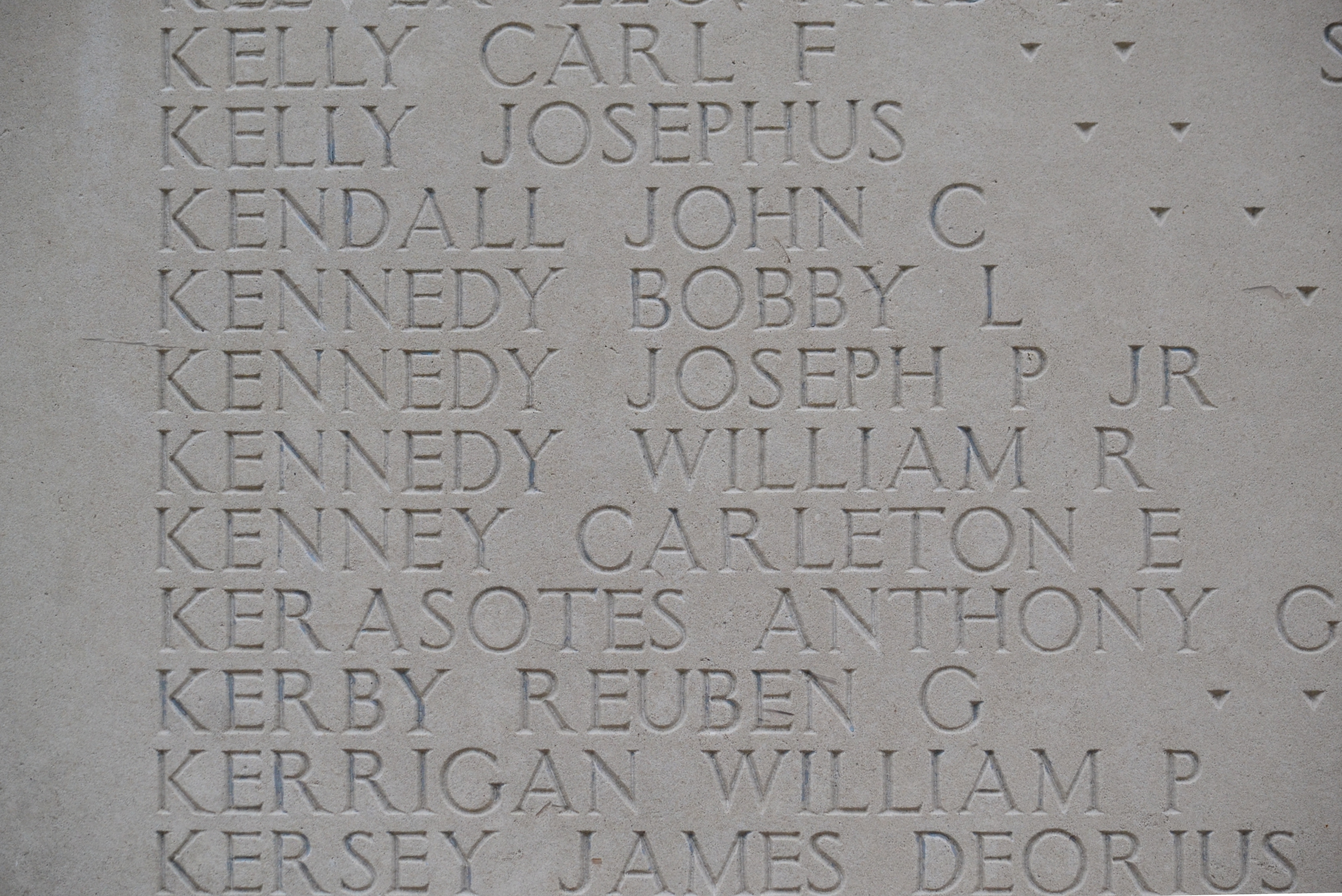
This mission was a disaster for the Royal Air Force and for Methwold in particular. The loss of life dealt a huge blow to the community both on, and around the base. In memory of these gallant young men, many of whom were never found, their names are inscribed on the Runnymede memorial, whilst those whose bodies were recovered, remain scattered in various graves across the Dutch countryside.
Trent himself, was transferred back to the UK in 1947 on a permanent commission, and from 1948 to 1959, he was attached to Training HQ No. 3 Group based at Mildenhall. During this time, he would be posted to RAF Oakington and as Commander of 214 Sqn at RAF Marham, from where he flew Vickers Valiants during the Suez crises of 1956. On the night of 1st – 2nd September 1956, he flew a Valiant non-stop from Loring Air Base in Maine to RAF Marham, a time of 6 hours and 25 minutes – the first non-stop ‘V’ bomber flight across the Atlantic*4.
After that, and for the next three years, he would command RAF Wittering before being posted to the British Defence staff in Washington as an assistant air attaché, where he remained up until his retirement in 1965. During this time, he would also take up the role of Senior Air Staff Officer, Chief Intelligence Officer (RAF) and as an aide-de-camp to Her Majesty the Queen, Queen Elizabeth II.
After retirement, Trent would return to his homeland, where he would build a home for himself and his family.
In 1983, Leonard Trent managed an emotional return visit to his former station, RAF Methwold, from where he and so many of his friends took off from on that fateful day. Just three years later he would pass away at the age of Seventy-one.
As an accomplished golfer, painter and expert flyer, Leonard Trent was proud of his nationality and of his homeland. His distinguished service record and numerous honours position him among the nation’s foremost military pilots, securing his legacy as a revered figure.
On April 26th 1944, the RAF sent 206 Lancasters and 11 Mosquitoes from No. 5 Group, along with 9 Lancasters from No. 1 Group, to attack the notorious ball bearing factories at Schweinfurt in Bavaria.
Schweinfurt, had since August 1943, struck fear into the the hearts of allied airmen, ever since the USAAF’s attack on the city resulted in a disaster in which 230 unescorted B-17s were cut to pieces by German defences. Subsequent raids, whilst not as disastrous, had also proven costly, and it was a target that Bomber Command’s Commander in Chief, Sir Arthur Harris, so vividly wanted to avoid.
The attention Schweinfurt was getting from the Allies, gave the German authorities sufficient concern to force them into spreading their ball-bearing production far and wide across Germany. This aligned with the fact that the Swiss and Swedes were supplying large quantities of ball-bearings to the Germans, led Harris to believe it was a target for the American forces to deal with, and not Bomber Command.
Norman Cyril Jackson 106 Sqn RAF Metheringham (photo via Wikipedia)
Much against his wishes, an order under the ‘Point-blank’ directive was given, and Harris sent his men to attack the factories. With smoke screens surrounding the area, it proved difficult to hit, as the attack in February proved.
In April, they were to go again, this time using a new low-level target marking technique devised by the then Wing Co. Leonard Cheshire. It would be in this mission that the remarkable actions by the crew of Lancaster ME669, and in particular Flight Engineer Sergeant Norman C. Jackson (later Warrant Officer), would become well known.
At RAF Metheringham in Lincolnshire, sixteen Lancasters completed their ground checks, started their engines and began the taxi along to the runway’s threshold. For around fifteen minutes between 21:30 and 21:45, the heavily laden aircraft took off and headed along the first long unbroken leg 130 miles into enemy held territory.
In Lancaster ‘ZN-O’ #ME669 were: F/O. F Miffin DFC (Pilot); Sgt. N Jackson (Flt. Eng.); Flt. Sgt. F. Higgins (Nav.); Flt. Sgt. M. Toft (Bomb Aim.); Flt. Sgt. E. Sandelands (W/Op); Sgt. W. Smith (M.Up. Gunner) and Flt. Sgt. N. Johnson (Rear Gun.) on the penultimate operation of their tour of duty. The plan was for two groups to attack the city from different directions, bombing on a series of markers dropped by the pathfinders.
On approach to the target the formation encountered strong headwinds and no cloud. With a new moon, they were going to be easy targets for the Nachtjägers. These winds blew markers off track, and repeated efforts by the master bomber to relay instructions to the crews failed, primarily due to faulty radio equipment.
Throughout the run-in over the city, attacks were fierce and consistent. Confused by poor messages and inaccurately placed markers, bombs fell well away from their intended targets. By now fourteen aircraft had already been lost to the fighters, many of them the ghostly Schräge Musik, upward firing fighters.
After bombing from 21,500 feet, Lancaster ‘ZN-O’ was hit several times by a night fighter, starting a fire started in the inner starboard wing section next to the upper fuel tank. Sgt. Jackson, who had been wounded in the leg and shoulder, donned his parachute and grabbed a fire extinguisher before climbing out on to the wing through an escape hatch in the fuselage roof. In doing so, his parachute was deployed into the cockpit area, where his colleagues gathered it up and gradually fed the lines through the hole allowing Jackson to gain access to the fire in the wing. Undertaking such an act on a burning aircraft at speed and altitude, was no easy task, and getting back, had he been successful, virtually impossible. The wind knocked the extinguisher out of his grip which prevented Jackson from succeeding in achieving his aim. The fire now spreading, began to burn his parachute, hands and face and fearing for his safety, his colleagues let go releasing him from the stricken bomber. Sgt. Jackson fell to Earth, his parachute partially burned, opened and allowed him to reach the ground alive, but suffering several injuries in the process.
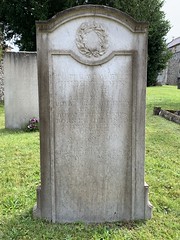
Sgt. Jackson’s Grave. He died almost 50 years to the day after his brave attempt to save teh aircraft and crew. (Photo Paul Cannon)
The 21 year old Canadian Captain, F/O. Frederick M. Miffin D.F.C., then ordered the crew to abandon the aircraft; himself and 20 year old F/Sgt, Norman H. Johnson, both failing to survive.
Sgt. Jackson’s brave attempt to save his colleagues and their aircraft earned him the Victoria Cross, his actions being published in the Fourth Supplement to the London Gazette on Tuesday 23rd October 1945.
25 year old Sgt. Jackson from London, had been with the crew since training at Wigsley, and had completed his tour of duty. He volunteered for the Schweinfurt mission so he could be with his own crew as they completed their own tour of duty, before all going to join the Pathfinders. Earlier that same day, Sgt. Jackson had received news that he was now a father too.
Sgt. Jackson spent ten months in hospital before eventually being repatriated. He received his VC at the same time as the then, Wing Commander Leonard Cheshire, would receive his. Cheshire asking for Jackson to receive his first, citing his selfless act of bravery as going far beyond anything he had achieved himself.
Sgt. Jackson’s citation reads:
This airman’s attempt to extinguish [sic] the fire and save the aircraft and crew from falling into enemy hands was an act of outstanding gallantry. To venture outside, when travelling at 200 miles an hour, at a great height and in intense cold, was an almost incredible feat. Had he succeeded in subduing the flames, there was little or no prospect of his regaining the cockpit. The spilling of his, parachute and the risk of grave damage to its canopy reduced his chances of survival to a minimum. By his ready willingness to face these dangers he set an example of self-sacrifice which will ever be remembered.
On 11th April 1944, a mix of 917 B-17s and B-24s of the 1st, 2nd and 3rd Bomb Divisions (BD) of the USAAF, departed their airfields in England to strike at a range of targets across Germany – it was mission 298. The 1st BD, made up of 341 B-17s, attacked targets at Cottibus, Dobberphel, Stettin, Trechel and Sorau. the Focke Wulf aircraft assembly plant in Germany.
One of those aircraft taking part was #42-31083 “Tenny Belle” of the 525nd BS, 379th BG, based at RAF Kimbolton (Station 117) in Cambridgeshire. The aircraft had already flown thirty-seven operations before this one, but this would sadly be her last.
After taking off from Kimbolton at 07:41, the aircraft climbed to gain altitude and to form up. Its flight would take it easterly over Norfolk and the coast.
On board the aircraft, a B-17G-1-BO “Flying Fortress”, ‘FR*A’, was: 2nd Lt. John E. Daly Jr. (pilot); 2nd Lt. Robert W. Koerber (co-pilot); 2nd Lt. Williams F. Evans (navigator); S/Sgt. Carl B. Christensen (nose gunner/bombadier); T.Sgt. Omer L. Young (Flt. Engineer/top turret gunner); T.Sgt. Adriel Langendoerfer (radio operator); S.Sgt. Harvey W. Tuber (Ball turret gunner); S.Sgt. John N. MacCallum (right waist gunner); S.Sgt. Frank J. Hearne Jr. (left waist gunner) and S.Sgt. Howard L. Polizzo (tail gunner).
This was not Daly’s first crew though, they had formed at Pyote Air Base, Texas and transferred out to the UK together. On this operation, S/Sgt. Carl B. Christensen replaced the normal bombardier 1st Lt. Joseph Jennings who was at RAF Alconbury receiving Radar training.
#42-31083 ‘Tenny Belle‘ and probably Daly’s crew (centre facing camera) after the 25th mission. (IWM UPL 31620)
Once airborne, the aircraft levelled out and began to find its place in the formation before heading off over the sea to Germany. At 09:03 and at 9,000 feet, in formation travelling at about 115 mph, the aircraft for unknown reasons, suddenly and violently lurched to the left as if the pilot had tried to steer away from another aircraft; it then lurched once again, this time to the right throwing the crew around inside the fuselage in an uncontrollable manner. The forces acting on the weary aircraft were too great though, and a fracture caused it to split into two sections.
The “Tenny Belle“, now unstable and with no aerodynamic stability whatsoever, simply fell from the sky hitting the ground with such force as to completely destroy it. In the impact, it also killed nine of the ten crewmen left onboard. The tenth, 2nd LT. Evans, managed to don his chute and escape the stricken aircraft whilst it hung in the air on the smallest amount of lift possible immediately following the accident.
According to the official crash report Form AF-14, the aircraft came down four miles west-south-west of Downham Market in the small hamlet of Barroway Drove. However, some sources say the aircraft fell at Fen Farm some six miles south-west of the town, neither can be confirmed at this stage, although due to the nature of the accident, it is possible parts were located in both areas.
There was no record of any explosions, and all engines were reported by 2nd Lt. Evans as “running very fast”. In his statement following the crash he said:
“The formation entered the clouds and we levelled off. We were in the clouds only a few minutes when the ship swerved violently to the left. I thought the pilot saw another wing-tip and was trying to avoid it. We then swerved more violently to the right. I then figured out it was out of control and thought that the plane had broken in two. I had my chute on before this. The last I saw of the Bombadier, he was trying to put his chute on. We were going straight down, and the engines were all running fast. There did not appear to be any fire in the wings. I tried to get to the escape hatch, but everything at his point is very confused and I do not know if I got out this way. I remember looking down to see of my chute was on, and noting that it was backwards. It opened with some help from me and a moment later I hit the ground. I looked around to the plane coming down, the tail part landed way behind the ship and numbers of burning pieces were falling around. There was a farmer near and I tried to walk over to him, but I was feeling pretty shaky. He got a car and took me to a hospital. I didn’t feel any explosions and no alarm was given.”
The official board of enquiry concluded that:
“The cause of the accident is undetermined and consequently, responsibility therfor[sic] cannot be established.”
Post crash, the bodies of the crew were removed and the B-17 guarded, none of the bombs aboard detonated. It was later salvaged on the 18th April 1944, but the strength of the impact had completely destroyed its fragile structure.
The normal bombadier, Joseph Jennings learnt about the loss of the crew that day, the news affected him badly, and he never talked about them or their loss afterwards.
Pilot, 2nd Lt. John Daly, (s/n: 0-805776) had flown 273 hours and 15 minutes on B-17s, gaining his pilots licence on June 30th 1943. He was only 19 years of age and thought to be one of the youngest pilots to serve in the USAAF at that time.
There have been many stories about bravery and acts of courage in all the Armed Forces involved in war. Jumping out of a burning aircraft at 18,000 ft without a parachute must come as one of those that will live on in history.
There have been a number of recorded incidents where this has occurred, and the crew member involved has lived to tell the tale. On the night of March 23rd/24th 1944, such a thing happened, and to the astonishment of both the Germans and the crew member, he survived to tell the tale.
Flt Sgt Nicholas Stephen (Nico Stephan) Alkemade was born the 10 December 1922 (believed to be North Walsham, Norfolk, England), and was just 21 years old on that eventful night. He was stationed at RAF Witchford in Cambridgeshire, England and operated as a rear gunner in a Lancaster bomber.
On the night of the 23rd March 1944, the squadron was called to report to briefing to find that their mission for that night would be Berlin, the heart of Germany. They would form part of an 811 strong force made up of Lancasters, Halifaxes and Mosquitoes. This was to be the final run over Berlin.
Later that night, Alkemade climbed into the rear turret of 115 Squadron RAF, 3 Group, Lancaster DS664 named ‘Werewolf’ and prepared himself for the coming raid which was to be his 13th mission.
Once over Oberkochen, nr, Frankfurt, Germany, the aircraft was attacked by a Luftwaffe Ju 88 night-fighters, it caught fire and began to spiral out of control.
Now fearing for his life, the aircraft burning furiously, he looked round for his parachute. Turrets being notoriously small, he was not wearing it and would have to find it from inside the fuselage and put it on before exiting the aircraft.
He found himself surrounded by fire, the heat melting his mask and his skin burning. The fuselage was by now a massive fire. It was at this point, that he noticed his parachute no longer on the rack but burning on the floor of the aircraft. In his recount later in life, he describes how he felt:
“For a brief moment I stared while it dissolved before my eyes. It was not so much a feeling of fear, or dismay, or horror, as a sensation, a sort of twisting in the stomach”.
The fire reached his turret, his clothes scorched, now began to burn. With two options, die in an inferno or jump, he rotated the turret, elbowed open the hatch and fell back, he was 18,000 feet (5,500 m) up. As he fell, he could see the stricken Lancaster explode, then the stars beneath his feet. As he gained momentum, breathing became difficult, again his account reads:
‘Funny, I thought, but if this is dying, it’s not so bad . Then the rushing air, the stars, the ground, the sky, all merged and were forgotten as unconsciousness crept over me…’
Three hours later, Alkemade opened his eyes and looked at his watch, it read 3:25. He had jumped just after midnight. cautiously, he moved each part of his body to find everything was alright, if not a little stiff.
It was at this moment he realised what he had done and that he was lying beneath pine tress in snow. It was these trees and snow that had saved his life. Cold and unable to move, he needed help. Taking out his whistle, he blew hard, and continued with alternate blows and smokes of his remaining cigarettes, until found, unfortunately for him, by a German patrol.
The Gestapo interrogated Alkemade, at first in disbelief of his story, but after examining the wreckage of his aircraft, they found the remains of his parachute and were so amazed by his escape, they (reputedly) gave him a certificate in acknowledgement of his testimony.
He was taken to Stalag Luft 3, North Compound, in Poland, and was given Prisoner number: 4175. On the night he jumped, 76 men escaped from the very same prison, an event that became known as ‘The Great Escape’.
Alkemade’s stay was initially very unpleasant, spending days in solitary confinement for being a spy. He was eventually billeted amongst other airmen in the very same hut that one of the tunnels was dug from. He, like other prisoners, was given a diary which was his only and most prized possession. In it he wrote about the boredom and monotony of prison life. He became friends with the artist Ley Kenyon, who added illustrations to his diary.
Sporadic letters from home kept his spirits up, and eventually the Allies reached the camp and he was set free.
Alkemade found out later that the Lancaster had crashed, killing the pilot Jack Newman and three other members of the crew. Both the wireless operator and Navigator survived being thrown clear on impact. The deceased are all believed to be buried in the CWGC’s Hanover War Cemetery. Alkemade was repatriated in May 1945. Post war he returned to Leicestershire, where he married Pearl with whom he had been sending letters and was employed initially in a chemical works (where he survived 3 chemical accidents) and then as a furniture salesman until his death on June 29th 1987, in Cornwall.
Nicholas Alkemade’s story, along with his whistle, is recorded in the RAF Witchford Display along with artefacts and other personal memorabilia from the crews and staff of the airfield. His diary and letters remain with his son in their Leicestershire home. Pictures from his diary were published in the ‘Leicester Mercury’ Newspaper, November 2013.
For more information about RAF Witchford see Trial 11.
The location of Both RAF Witchford and the Witchford display can be found on the Interactive map, Airfields, Museums and Memorials page.
RAF Sutton Bridge, was a small airfield on the Norfolk / Lincolnshire border a few miles from the Wash off the north Norfolk coast. Before, during and after the war it served as training camp for new pilots, training them in the art of gunnery, utilising a firing range that had been in situ since 1926.
Many airmen of the RAF passed through Sutton Bridge, many of these were Commonwealth aircrew, some from Czechoslovakia and a few from the United States.
In the church yard behind the church of St. Matthew in the village, lie almost 60 graves of those who died in the fight for freedom, they are also joined by a German airman, foe united in death.
One such airmen is that of American Airman Pilot Officer William Lee Davis s/n: 61459 (RAFVR) who joined as part of the famed ‘Eagle’ Squadron, a group of volunteer American flyers who volunteered for the RAF before the United States joined the war.
P.O. Davis was from St. Louis and graduated at Central High School, before going on to attend Washington University. He was the son of William J. Davis of 4500 Arsenal Street, and a salesman in a cork and insulation firm in the area, when he joined up at the age of 25.
He left his job, signing with the Clayton-Knight Committee, a recruitment company for the Canadian and British Air Forces operating in the United States. He was initially stationed at Love Field in Dallas, where he received four weeks of intensive training in aerobatics, gunnery and combat flying. After qualifying here, he transferred to Ottawa, where he was commissioned and then sent onto England to further his training. He was the first person from St. Louis to obtain a Commission in the Royal Air Force obtaining a deferment of his draft in doing so. When asked about joining the RAF, he told reporters that it was “a matter of sentiment and heritage” citing his English grandfather’s role as an officer in the Boar war.
P.O. Davis was no stranger to flying, having been a flyer before signing up for the RAFVR, achieving a total of 225 hours flying time, a commercial pilots licence and an advanced CAA Licence.
After a four week training course in Dallas, Davis boarded a train for Canada, stopping off briefly in St. Louis to see his father and his girlfriend, before continuing his journey. Records show that Davis didn’t catch the boat other American pilots caught, instead he travelled by Flying Boat, arriving in England on the same day the boat his compatriots landed, March 5th 1941.
He like many others was most likely sent to No.3 Personnel Reception Centre at Bournemouth, before his posting to No.56 Operational Training Unit (OTU) at Sutton Bridge. Here they completed their training and were then sent onto their respective operational squadrons.
There were something in the region of 156 American Airmen who found their way into 56 OTU, many passed through with little or only minor mishaps. For P.O. Davis though it was to be the end of his dream, in an accident that would take his life.
On March 18th, a week after his arrival at Sutton Bridge, P.O. Davis took off in Hurricane P5195 on a general map reading flight across the Lincolnshire Fens. This was only his second flight in a Hurricane, already having suffered a minor landing accident in his first. During this second flight he became lost in poor weather and low on fuel, and decided to put down on farm land at New Leake Fen near Boston. Unfortunately, the ground in the Fens was soft causing the undercarriage to dig in and flip the Hurricane on its back. In the resultant crash, P.O. Davis broke his neck killing him instantly. He was not only the first from St. Louis to die, but the first American from Sutton Bridge to die also.
A citizen of the United States, Pilot Officer William Lee Davis is buried in the Church yard of St. Matthew’s Church, Sutton Bridge, Lincolnshire, Section P, Grave 56 – a long way from home.
Staff Sgt. Archibald Mathies (U.S. Air Force file photo)*1
Born in the Scottish town of Stonehouse, South Lanarkshire, on the 3rd June 1918, Archibald (Archie) Mathies was to become a Second World War hero. He was awarded the Medal of Honour (MOH) for his actions whilst at RAF Polebrook (USAAF Station 110) in Northamptonshire, England.
It would be on the 20th February 1944, shortly after arriving at Polebrook, that he would earn this honour but his life would be dramatically cut short.
Not long after his birth in Scotland, Mathies moved with his family to the United States, to a small town in Western Pennsylvania called Finleyville, in Washington County.
After leaving school, he began work in a local coal mine. The work was hard, and the pay was low; Mathies was not inspired. Then, following the Japanese attack on Pearl Harbour, as many other brave young American men did, he joined the Army, enlisting in Pittsburgh on the 30th December 1940. Mathies would transition through a number of stations and training centres before finally completing a course in aerial gunnery on the 22nd March 1943. His last U.S. posting was to the 796th Bombardment Squadron at Alexandria, Louisiana for operational training duties flying B-17s. He would leave here on the 8th December 1943 bound for England and the European Theatre of Operations.
Mathies arrived in the U.K. eight days later. His initial assignment was with the Eighth Air Force Replacement Depot, before being attached to the 1st Replacement and Training Squadron. On the 19th January 1944, he received his first and only operational squadron posting; the 510th Bomb Squadron, 351st Bomb Group, based at RAF Polebrook, as an engineer/gunner. Promotion was swift, and on 17th February 1944, probably following his first mission, Mathies was awarded the rank of Staff Sergeant.
A few days later, on 20th February 1944, the allies began the enormous aerial campaign known as ‘Big Week’. During this short period a massive number of aircraft would attack targets deep in the heart of Nazi Germany. One of the first, (Mission 226) would see a total of 417 aircraft fly from airfields across England. From RAF Polebrook, 39 B-17s took off to attack Leipzig. In the lead planes were Maj. Leonard B. Roper (s/n O-734101 ) of the 510th BS forming the high group, and Maj. James T. Stewart (s/n O-659405) of the 508th BS, leading the low group.
Flying in the number three ship of the lower Squadron, in B-17 (42-31763) ‘Ten Horsepower‘ was: Pilot: Clarry Nelson, Co-Pilot: Roland Bartley, Navigator: Walter Truemper, Engineer / Top Turret Gunner: Archie Mathies, Bombardier: Joe Martin, Radio Operator: Joe Rex, Ball Turret Gunner: Carl Moore, Waist Gunner: Tom Sowell, Waist Gunner: Russ Robinson, and Tail Gunner: Magnus Hagbo.
B-17 “Ten Horsepower” – cropped from the photo below- (TU-A, serial number 42-31763) taken prior to its crash”2.
On approaching the target, the formation was hit hard by fighters and flak, who would attack the formation for over an hour, hitting many aircraft in the subsequent melee. Ten Horsepower, was targeted repeatedly receiving many hits from 20mm cannon shells. In these attacks the co-pilot was killed and the pilot knocked unconscious from his wounds. Fearing the bomber was doomed, the bombardier jettisoned the bombs and then bailed out, later being captured by the Germans and becoming a prisoner of war. The remaining crew remained with the B-17 which soon began a deathly spiral toward the ground.
Mathies and the navigator (Walter Truemper) would eventually take over control of the aircraft and nurse it back to England. Once over their base at RAF Polebrook, the crew were instructed to bail out but both Mathies and Truemper refused to leave the injured pilot. After deliberation, they were given permission to try to land, the remaining two crew members prepared themselves for a heavy landing.
Guided in by a fellow aviator it was going to be very difficult. The first two attempts had to be aborted, but on the third attempt, as they approached the airfield, the aircraft struck the ground, killing all three crew members onboard.
The last moments of B-17G “Ten Horsepower” (TU-A, #42-21763) piloted by Second Lieutenant Walter E Truemper and Sergeant Archibald Mathies, as it is guided by a fellow aircraft after the pilot was severely injured. Truemper and Mathies unsuccessfully attempted to land the aircraft at Polebrook and were posthumously awarded the Medal of Honour for their bravery, 20th February 1944. (IWM FRE 4724)
The crash was a severe blow for the base, both air and ground crews were devastated. On returning from the mission, five other aircraft (42-38028, 42-38005, 42-39760, 42-39853 and 42-6151). were forced to land at nearby Glatton (Conington) only a short distance away.
This was only Mathies’ second mission and sadly, his last.
For his bravery, Mathies was awarded the Medal of Honour; his name now appears on page 280 of the St. Paul’s Cathedral Roll of Honour. Also, as a dedication to him, one of the temporary lodging units at the Joint Base Anacostia-Bolling is named after him, as is the Airman Leadership School at RAF Feltwell, and the Non commissioned Officer Academy at Keesler AFB, Mississippi. In addition, the bridge on Truemper Drive crossing Military Highway at Lackland Air Force Base, Texas; the USCIS Dallas District Office and the Mathies Coal Company in Pittsburgh, Pennsylvania, are all named in his honour.
Archibald Mathies citation reads:
“For conspicuous gallantry and intrepidity at risk of life above and beyond the call of duty in action against the enemy in connection with a bombing mission over enemy-occupied Europe on 20 February 1944. The aircraft on which Sgt. Mathies was serving as engineer and ball turret gunner was attacked by a squadron of enemy fighters with the result that the copilot was killed outright, the pilot wounded and rendered unconscious, the radio operator wounded and the plane severely damaged. Nevertheless, Sgt. Mathies and other members of the crew managed to right the plane and fly it back to their home station, where they contacted the control tower and reported the situation. Sgt. Mathies and the navigator volunteered to attempt to land the plane. Other members of the crew were ordered to jump, leaving Sgt. Mathies and the navigator aboard. After observing the distressed aircraft from another plane, Sgt. Mathies’ commanding officer decided the damaged plane could not be landed by the inexperienced crew and ordered them to abandon it and parachute to safety. Demonstrating unsurpassed courage and heroism, Sgt. Mathies and the navigator replied that the pilot was still alive but could not be moved and they would not desert him. They were then told to attempt a landing. After two unsuccessful efforts, the plane crashed into an open field in a third attempt to land. Sgt. Mathies, the navigator, and the wounded pilot were killed“.*3
Mathies was truly a brave and dedicated man, who in the face of adversity, refused to leave his wounded pilot and friend. Daring to land a badly damaged aircraft, he sadly lost his life showing both great courage and determination.
The crew of ‘Ten Horsepower‘ were:
Pilot: Clarry Nelson,
Co-Pilot: Roland Bartley,
Navigator: Walter Truemper
Engineer / Top Turret Gunner: Archie Mathies
Bombardier: Joe Martin (POW)
Radio Operator: Joe Rex,
Ball Turret Gunner: Carl Moore,
Waist Gunner: Tom Sowell,
Waist Gunner: Russ Robinson,
Tail Gunner: Magnus Hagbo
There are multiple stories of heroism and daring stemming from the Second World War, each and everyone pushing man and machine beyond their boundaries. Many daring missions were flown in which crews performed and completed their task with extraordinary bravery and at great cost to both themselves, and to those on the ground.
Stories such as the ‘Dambusters’ have become famous and commemorated year on year, and yet another daring raid is barely mentioned or even considered by those outside of aviation history. The details of the raid remained secret for years after the event and even now, factual evidence is scarce or difficult to find; even the name of the operation can cause heated debate. The merits of the operation continue to be debated and many are still divided as to what the true purpose of the operation really was.
Whatever the reason behind it however, the historical fact is that the operation was a daring, low-level raid that helped many prisoners of war escape captivity and probably death, and one that was carried out in very difficult circumstances by a group of extremely brave young men.
It was of course the raid on the Amiens prison on February 18th 1944, by nineteen Mosquitoes of 140 Wing based at RAF Hunsdon.
As a new wing, it was formed at RAF Sculthorpe, and would consist of three multinational squadrons, a ‘British’, Australian and New Zealand unit, and all would be based at Hunsdon as part of the RAF’s Second Tactical Air Force (2TAF) designed to support ground troops in the forthcoming invasion of Europe.
Group Captain P C “Pick” Pickard (centre), Commander No. 140 Wing, flanked by Wing Commander I G E “Daddy” Dale, Commanding Officer of No. 21 Squadron RAF (to Pickard’s right), and Wing Commander A G “Willie” Wilson, Commanding Officer of No. 487 Squadron RNZAF, visit No. 464 Squadron RAAF at Hunsdon, prior to a daylight raid against flying-bomb sites in the Pas-de-Calais. 464’s Mosquitoes (FB Mk VIs) have been loaded with 250-lb MC bombs for the operation: HX913 ‘SB-N’ can be seen in the background (@IWM HU 81335).
The raid on Amiens was not the only low level raid carried out by the Wing however. Between 1944 and 1945, they would attack numerous ‘V’ weapons sites, along with the Gestapo headquarters at Aarhus University and the Shellhaus building in Copenhagen. Operation Carthage, another of their more famous raids, occurred whilst the wing was based at RAF Fersfield in 1945, but their most controversial raid, Ramrod 564 or ‘Operation Jericho’ as it has since become known, took place the year prior to that, whilst they were based at Hunsdon in early 1944.
There is a lot of speculation around Ramrod 564, many of the official records are missing, inaccurate or even vague. The operational record books for the squadrons involved are recorded as ‘secret‘ and contain no details other than aircraft, times and dates.
The Operation, was designed to assist in the escape of 120 French patriots, who were reportedly condemned to death for assisting the Allies in the fight against the Nazis. These prisoners included key resistance fighters who had considerable knowledge of resistance operations in France, and so it was imperative that they escape.
The plan was for Mosquitoes of 140 Wing to attack from different directions, breaching the walls of the prison and blowing up several key buildings inside the prison holding German guards and soldiers. It would require each aircraft to carry 11 second, time-delay fuses in 500lb bombs dropped at very low level.
The Operation, formulated by Air Vice Marshal Basil Embry, would be critical, even the amount of explosive itself had fine limits, and time was also of the essence. The prisoner’s executions were imminent, so the attack had to be carried out quickly thus allowing only a small window of opportunity for the operation to take place.
The exact time of day that the attack could take place was also critical, there needed to be as many of the guards as possible in the key buildings at the time of attack, and the prisoners needed to be safely gathered together out of harms way. So, a time of 12:00 pm precisely on a date between 10th and 19th February was chosen, as both the guards and prisoners would be having lunch at this time, and it would be prior to the executions being carried out.
The route would take the aircraft from Hunsdon to Littlehampton, then via appropriate lattice to Tocqueville / Senarpont / Bourdon – one mile south, Doullens / Bouzincourt – two miles west-south-west, Albert / target – turn right – St. Saveur / Senarpont / Tocqueville / Hastings and return to Hunsdon.
In the attack, 3 waves of Mosquito would be used, 6 from 487 (RNZAF) Squadron, 6 from 464 (RAAF) Squadron and 6 from 21 Squadron. In addition, to record the attack, one aircraft (a Mosquito) of the Photographic Reconnaissance Unit (PRU) was detailed to monitor and film the entire operation. Along with them were three squadrons of Typhoons (198, 174 and 245) each protecting one of the three waves. These escorts were ordered to rendezvous with the waves one mile east of Littlehampton at Zero minus 45, 42 and 32 minutes respectively.
The first wave of Mosquitoes was directed to breach the wall in at least two places, the leading three aircraft attacking the eastern wall using the main road as a lead in. The second section of three aircraft would, when ten miles out from target, break away to the right at sufficient height as to allow them to observe the leading three aircraft, and if successful, attack the northern wall on a north-south run, immediately following the explosion of the bombs of the leading section. The time of this attack Zero Hour.
The second wave was ordered to bomb the main prison buildings, the leading three aircraft attacking the south-eastern end of main building and second section of three aircraft, attacking the north-western end of the key building. Both attacks were to be carried out in a similar fashion to the first. This would follow three minutes behind the first wave at Zero +3.
The final wave was a reserve wave intended to bomb if any of the first two waves failed to hit their targets. They would follow the same patterns as the first two, one section from east and one from north, but they would only bomb if it was seen that one of the previous attacks had failed. The details of the attacks would be determined by the leader and would happen thirteen minutes (zero +13) after the initial planned attack. If they were not required, the order to return would be given by the Group Leader or substitute.
Embry elected himself to lead the attack, but this was blocked by those higher up, As a result, and much against his wishes, Embry therefore had to choose a successor. Group Captain Percy C. Pickard (D.S.O. and two bars, D.F.C.) was chosen, but even though he was known as an expert pilot and leader, Embry was not convinced of Pickard’s ability to complete the job at such low level. Despite his reservations though, Embry duly informed Pickard of the decision and preparations for the operation began in earnest.
On February 18th that year, a day after the initial planned attack and in extremely poor weather, the Nineteen Mosquitoes took off to attack, breech and destroy the walls and a key building of the Amiens prison.
During the flight out, two Mosquitoes and three Typhoons of 198 Sqn became lost in swirling snow and were forced to turn back as they had now lost contact with their main formations. The remaining crews flew on, but whilst over France a third Mosquito, flown by Flt. B. Hanafin, suffered engine problems and was also forced to turn back. On his return journey he was attacked by Flak from which he was seriously injured. Helped by his navigator the two were able to land back at RAF Ford where he was given medical treatment for his injuries.
Just three minutes behind schedule, the first wave split and the first three aircraft followed the main road toward the prison’s eastern wall at tree top height. The second set of three waited and observed. Wing. Cdr. I. Smith, 487 Sqn, went in first, dropping his bombs with 11 second fuses against the wall. The second three then followed as instructed.
“Three Mosquitoes of No 487 Squadron attacked the eastern wall at 12:03 hours, just clearing the wall on a heading of 250 degrees with 12 bombs. The leader’s bombs were seen to hit the wall five feet from the ground, while other bursts were seen adjacent to the west wall with overshoots in fields to the north. Two aircraft of no 487 Squadron attacked the northern wall at 12:03 hours just clearing the wall on a heading of 150 degrees with 12 bombs. These attacks were directed at places later reported breached by reconnaissance aircraft. One bomb seen to hit the large building, and northern side of the eastern building was also reported hit.”
The second wave then attacked the south-eastern main building and north-western end respectively. Following the explosions chaos ensued inside the prison, guards were taken by surprise and over running bombs had caused some damage inside, prisoners began to run toward the gaps but some had been injured or struggled to escape.
“Overhead view of the prison, showing the breaches made in the outer walls. Two Mosquitoes of No 464 Squadron bombed the eastern wall at 12:06 hours from 50 feet heading 150 degrees and 250 degrees with 8 x 500lb bombs. The wall appeared unbreached before the attack. Results were unobserved.
Two Mosquitoes of No 464 Squadron bombed the main building at 12:06 hours from 100 feet heading 150 and 250 degrees with 8 x 500lb bombs. The north wall appeared to be already damaged. One of these aircraft was seen to bomb and has not returned.
The breach in the Eastern wall. One Mosquito of the PRU circled the target three times between 12:03 and 12:10 hours from 400 to 500 feet using a cine film camera but carrying no bombs. He reported a large breach in the eastern centre of the north wall and considerable damage to the extension building west of main building as well as damage to the western end of main building. A number of men were seen in the courtyard near the separate building which appeared to be workshops and three men running into fields from large breach in northern wall.
The four aircraft of No 21 Squadron received VHF messages from ‘F’ of No 464 Squadron (Gp. Capt. Pickard) and PRU aircraft when between 2 and 4 miles from the target, instructing them not to bomb. Target was seen covered with smoke and they brought their bombs back.
The target was obscured by smoke, so later aircraft were instructed not to bomb. Two aircraft were missing from this operation; one was last seen circling the target and heard giving VHF messages not to bomb (Pickard) and the other after attacking the target, was seen at Freneuville at 12:10 hours at 50 feet leading his formation. It attacked a gun position and shortly afterwards dropped to starboard and was not seen again. One aircraft of No 467 Squadron was hit by light flak near Albert; starboard nacelle holed and starboard wheel collapsed on landing. One aircraft of No 21 Squadron landed at Ford – aircraft damaged. One aircraft of No 487 Squadron abandoned task south of Oisemont – pilot slightly wounded and aircraft damaged. Two aircraft of No 21 Squadron abandoned before leaving English Coast owing to technical failure.”
It is thought by some that Pickard had been shot down before giving the return order, but these reports state that it was both Pickard and the PRU Mosquito flown by Flt. Lt. Wickham, that gave 21 Sqn the “Red, Red, Red” order, sending the last wave home as their bombs were no longer needed.
After the attack, FW.190s began to swarm and various dogfights took place between them and the Typhoons, but not before they had attacked some of the fleeing Mosquitoes who also returned fire.
It was one of these FW190s flown by the ace Feldwebel Wilhelm Mayer, who severed Pickard’s tail sending the aircraft into the ground near to Saint Gratien killing both occupants.
A story goes that Pickard had left his dog ‘Ming’ at RAF Sculthorpe, their previous airfield, to be looked after whilst he was away. On the day he was shot down, 18th February 1944, the dog fell gravely ill. Pickard’s wife, Dorothy, went to get him and sensed that after seeing the state of the animal that Pickard had been killed . It took months for Ming to recover, and some years later whilst living in Rhodesia, Ming went outside looked up to the sky as he always did when Pickard was flying, heard a whistle, collapsed and died.*1
A famously brave act, the attack resulted in the death of three crew members; Gp. Capt. Percy C. Pickard, and Flt. Lt. John A. Broadley, (RNZAF), both in Mosquito HX922, ‘EG-F’, and Flt. Lt. Richard W. Samson, (RNZAF) in Mosquito MM404 ‘SB-T’. Samson’s pilot, Sqn. Ldr. A. I. McRitchie survived his crash and was taken prisoner. Two Typhoons from 198 Sqn escorting the Mosquitoes are also thought to have failed to return (the ORBs don’t confirm this). Considered a success at the time, ‘evidence’ has since come to light to suggest that the operation was ‘unnecessary’, and may have failed to achieve anything more than a successful PR role (see end note). *2
Of the 700 prisoners detained within the walls of Amiens prison that day, a total of 258 escaped. In the confusion, 102 were killed and a further 74 wounded, but the success remained secret from the public for another eight months. With so much speculation around the attack, it will no doubt remain one of the mysteries of the war, but it was without doubt, an incredibly brave and daring mission that cost the lives of many superb young men.
A podcast using eyewitness accounts from the Imperial war museum can be heard through their website.
(A better quality version is available on the Pathe News website.)
All controversy aside, the raid took place at very low level and in very poor weather, with bombs dropped against a wall with delayed fuses. There was little resistance on the flight in and Typhoons provided higher cover when it was needed, but dogfights still ensued and lives were lost.
A daring attack, the Amiens raid was not the only one where lives were lost. Airfields along with the Hazmeyer electrical equipment factory at Hengels in Belgium, were also attacked at low level. On this particular operation Mosquito MM482 was hit by intense flak setting the starboard engine on fire. As a result, the aircraft flown by Canadian Sqn. Ldr. A. W. Sugden with navigator Fl. Off. A. Bridger, was lost and both men were listed as missing. Having been with the squadron since 1942 they were considered ‘old timers’ by the others and were sorely missed.
The three squadrons of 140 Wing would later depart Hunsdon, leaving the joy of success and the turmoil of a thousand questions behind them. 464 went first on March 25th whilst 21 and 487 Sqns would both leave mid April, both moving to RAF Gravesend in Kent.
The Amiens raid has no doubt caused great controversy, and as the years pass it will probably seep into the depths of history where it’ll become ‘just another raid’. But whist the background to it remains a mystery, it was done with great valour and courage by a group of young men who believed strongly that it was a worthy and much needed attack.
Aircraft involved in the attack (all Mosquito Mk.VI):
Crews attacking the target:
No 487 Squadron
‘R’ Wg Cdr Smith, DFC (Pilot) / Flt Lt Barnes, DFM (Navigator)
‘C’ Plt Off Powell / Plt Off Stevenson
‘H’ Flt Sgt Jennings / WO Nichols
‘J’ Plt Off Fowler / WO Wilkins
‘T’ Plt Off Sparkes / Plt Off Dunlop
No 464 Squadron
‘F’ Wg Cdr Iredale, DFC / Flt Lt McCaul, DFC
‘O’ Fg Off Monghan, DFM / Fg Off Dean, DFM
‘A’ Sqn Ldr Sugden / Fg Off Bridger
‘V’ Flt Lt McPhee, DFM / Flt Lt Atkins
Missing (Killed/POW)
No 464 Squadron
‘F’ Gp Capt P C Pickard, DSO, DFC / Flt Lt J A Broadley, DSO, DFC, DFM
‘T’ Sqn Ldr A I McRitchie / Flt Lt R W Samson
Crews instructed not to attack the target:
No 21 Squadron:
‘U’ Wg Cdr Dale / Fg Off Gabites
‘O’ Flt Lt Wheeler, DFC / Fg Off Redington
‘J’ Flt Lt Benn, DFC / Fg Off Roe
‘D’ Flt Lt Taylor, DFC / Sqn Ldr Livry DFC
198 Squadron (six aircraft set off, three returned early)
174 Squadron (Eight aircraft took off and rendezvoused with Mosquitoes)
245 Squadron (Eight aircraft took off rendezvoused with Mosquitoes)
Sources and Further Reading
*1 Gunn, P.B., “Flying Lives – with a Norfolk Theme“, Peter Gunn, 2010
*2 – The Amiens raid is one that has become embedded in history and is beyond doubt an incredible and daring low-level raid that succeeded in its aim. However, official records seem to have many errors, anomalies or missing details that it is very difficult to ascertain the accuracy of these historical ‘facts’.
The ORBs for each of the four squadrons give no details other than an ‘operation to France’, some crew names and aircraft numbers. There is no record of the use of the word ‘Jericho‘ but there are two sides to this story.
Some authors including Rowland White “Mosquito” and John Laffin “Raiders – Great Exploits of the Second World War“, both cite Basil Embry as the creator of the name ‘Jericho‘ before the missions took place, whilst Robert Lyman “The Jail Busters” cites a French film, made in 1946, as the author of creator of the name. Some believe the name was created by various media outlets since then whilst others say that Embry created the name after the operation had been carried out. It is however, widely considered that it was a post-war name as the original operation was ‘Ramrod 564‘ and none of the ORBs use the name ‘Jericho‘. To further add mystery, the use of the title ‘Renovate‘ has also cited, but records in the National Archives show this as the secret VHF code word to be used by aircraft on the operation and not the Operation title.
The name aside, and more recently, one of the French Resistance fighters revealed his doubts about the operation, and considers that it may have been nothing more than a propaganda operation or a diversionary attack linked to D-Day. One book (one amongst many) on the subject has been written by author Simon Parry and historian Dr Jean-Pierre Ducellier entitled ‘The Amiens Raid – Secrets Revealed‘ and is published by Red Kite. It goes into the details of the raid and possible reasons behind it.
There have also been theories that it was an MI6 operation but due to the nature and secrecy of the mission, little evidence is publicly available to substantiate this.
Of those who lost their lives, both Pickard and Broadley are buried in St. Pierre Cemetery, Amiens, whilst Sampson is buried in the Poix-de-Picardie cemetery in the Somme region.
The Second World War was full of extraordinary operations many of which succeeded in their aim resulting in great jubilation on home shores, whilst others will always be remembered for their catastrophic fail and loss of life. In these operations, and even though the mission may have failed, those who took part went far beyond the ‘call of duty’, showing incredible bravery and self sacrifice for the better good.
One such operation took place on February 12th 1942.
Up until now, German warships had been causing havoc in the waters around Britain, sinking in excess of 100,000 tons of allied shipping since the opening days of the war; their ‘trophies’ including the aircraft carrier HMS Glorious and the battleship HMS Hood. In January 1942, three of those German warships responsible the Gneisenau, Scharnhorst (Gluckstein and Salmon as the ships were known by bomber command crews) and Prinz Eugen, all heavily armed and battle hardened, were laying in the port of Brest. Even by remaining there, they were causing the Royal Navy an immense headache, as they were diverted from other important tasks, including operations in the Middle East against German supply ships supplying Rommel, and the valuable protection of allied shipping crossing the Atlantic. The small fleet were a major thorn in the Royal Navy’s side and had to be dealt with.
Coastal Command had been closely monitoring the vessels over a period of months, but information had led to little more than that. With the aim of sinking these ships, the RAF became involved undertaking a total of 299 attacks against them whilst docked in the port. During these attacks, forty-three aircraft were lost along with 247 brave airmen. Included in these raids, were in December 1941, ten such operations by Bomber Command which resulted in the loss of some twenty aircraft and seventy airmen. On the 8th of that month, forty-seven bombers escorted by ten fighter squadrons also attacked the docks. Whilst the three ships remained intact, three enemy fighters were claimed to have been shot down but with with the loss of four Stirlings.
During this time though, the ships were indeed hit, and in the case of Scharnhorst, damaged badly, but none ever badly enough not to be beyond repair.
The decision was eventually made therefore, to move the ships, Hitler’s fear of a second front being opened in Scandinavia proving to be the deciding factor. On that decision two routes were considered, the northern route around Scotland which would take the small, but powerful fleet in range of British carriers and warships at Scapa Flow, a fight the Germans did not want to engage in. Alternatively, they could attempt a daring dash through the narrow and well defended English Channel. It was a difficult decision to make.
The presence of the ship and their likely move to safer harbours prompted William Helmore (one of those behind the Turbinlite project) to go to the Alan Muntz Company with an idea as to how to sink them. In conjunction with GEC, RAE Farnborough, Dowty and Stones of Deptford to name but a few, the idea of a radio controlled, 5 ton torpedo with a diameter of 39 inches able to fit a Lancaster bomber, was devised.
The idea was that a Mosquito would control the torpedo once it had been dropped from the Lancaster, and a mast would rise to maintain radio contact with the controlling aircraft. The torpedo would have a range of 25 miles with a warhead weighing 1 ton, limited only by the size of the Lancaster. While tests were carried out, many issues raised their heads including an air supply for the engine, (a Meteor Tank engine) which all proved too complicated and the project was eventually shelved*4.
However, following a meeting on January 12th, 1942 between many top ranking German officials including Hitler, Raeder (the C In C of the Navy), Vice-Admiral Ciliax and Adolf Galland as commander of the Luftwaffe in the Channel area, a decision was finally made, the shorter English Channel route would be the one to take and so Operation Cerberus, (the breakout) was born.
The decision raised great concerns though. Both Galland and other Luftwaffe officials knew that there were too few available fighters in the region – just some two groups and a few training units – to be able to provide the 24 hour protection the ships needed as they dashed through the straits. Night fighters were especially needed, a decision which was affirmed and granted by Major General Jeschonnek, the Luftwaffe Chief of Staff; but the numbers of aircraft available to Galland would still remain greatly inferior to those on British soil ready to attack.
So, Operation Thunderbolt (Donnerkeil ) was put in place, the air umbrella that would protect the ships as they sailed northward. Operation Cerebus (the breakout) was affirmed with February 11th chosen as ‘X’ day, and a sailing time set at 8:00pm. In the weeks leading up to the ‘dash’, German transmitting stations based at both Calais and Cherbourg, began a cat and mouse game transmitting a series of elaborate but false messages to interfere with British radar stations along the south coast. They provided a cover story, suggesting that the fleet would set sail but head toward the Pacific in support of the Japanese and not north to Scandinavia. In preparation, trial runs were made to test engines, guns and communications. The British, still monitoring their actions, began a series of raids on the port, none of which achieved any great success.
During these attacks, which had been occurring regularly since early January, several aircraft were lost including: three Manchesters from 61 Squadron; two Hampdens from 144 Sqn; three Wellingtons, one each from 12, 142 and 300 Sqns and on the 10th February, another Manchester from 61 Sqn.
To meet the anticipated challenge, Galland had some 252 fighters, including a mix of 109s, 190s and some thirty 110 night fighters at his disposal, but he argued, it was still not enough to provide the cover he wanted.
As ‘X’ day approached, the radars went wild with false readings and interference. But the British, now aware of an impending escape, were on high alert, additional Motor Torpedo Boats (MTBs) were docked at Dover and Swordfish aircraft were drafted in to RAF Manston in Kent. Some 1,100 magnetic mines were laid along the projected route and Dover command was put on standby. At 8:00pm on February 11th, the flotilla began to assemble outside of Brest harbour, just as a routine air raid was launched, and so the port was shut down. Although only one aircraft was lost, a Wellington from 150 Sqn, the raid proved no more than a nuisance, only delaying the fleet’s departure by two hours.
Now temporarily blinded by false radio measures, the British were unable to ‘see’ the mighty armada as it finally slipped out into the open waters of the Channel. Their escape had been a success.
During the night, good progress was made by the fleet and the lost time was made up quickly. Meanwhile, the skies remained quiet, the British not yet realising the ruse. The early morning remained dark, night fighters patrolled along side the fleet at wave top level, thus avoiding detection by British radar. Day fighters joined them in a relay operation that would be held below the cloud ceiling of 1,500 feet.
At 11:00 am on the 12th, the Germans intercepted a British message signalling that the fleet had been spotted. But it remained another hour before further RAF aircraft were seen, the British being wary and unsure of the message’s accuracy. Even though for months the British Command had been monitoring the fleet, those in command failed to act on valuable information, a mistake that led to a vital delay in operations.
Then, in the early hours of the afternoon, as the fleet approached the narrowest point of the Channel, British defences at Dover opened fire. A sea battle then raged between German warships and British MTBs, but for all their valiant efforts they failed to achieve their goal.
At 13:20 A group of sixteen Spitfires took off from Kenley on a Beaufort escort mission that were sent out to search for, and attack the fleet. They initially rendezvoused with twelve more Spitfires from 602 Sqn, but then failed to meet the Beauforts over Manston. The formation then continued on to the target area looking for the convoy and its escort. Soon after arriving over the Channel, 485 (NZ) Sqn’s leader, Group Captain, Francis V. Beamish DSO and Bar, DFC, AFC, spotted six destroyers, two E-Boats and two German Battle cruisers. At his altitude there was no fighter escort, the mix of Bf109s and FW190s remaining firmly below radar level at 600ft.
Seizing his chance, Beamish then attacked one of the destroyers raking it with gunfire along the length of its deck, a Spitfire’s guns were no match for the destroyer though and little damage was done. The remaining aircraft of the two squadrons then took on the enemy who were forming a low level protective umbrella, achieving a greater rate of success with several ‘kills’ being reported back at Kenley.
Now fully aware of the situation, the RAF and Navy were called into action. At RAF Manston, eighteen young men began to prepare for take off, their target, the escaping German fleet of some sixty-six surface vessels including the warships Gneisenau, Scharnhorst and Prinz Eugen, now sailing almost unopposed through the English Channel.
The six Fairy Swordfish of 825 Naval Air Squadron were ageing biplanes, they were no match for Galland’s fast and more dominant fighters, nor the defensive guns of the mighty German fleet they were hoping to attack. To pitch a handful of biplanes with torpedoes against such a heavily armed and well prepared armada, turned out to be no less than suicide.
The winter of 1942 was very cold, but the Swordfish were kept ready, engines warmed and torpedoes armed, now they could no longer wait, and instead of attacking as planned at night, they would have to attack during the day, and so the order to go was given. The crews started their engines and set off on their daring mission in what was appalling weather.
Shortly after take off, the escort arrived, merely ten Spitfires from No. 72 Squadron RAF, led by Squadron Leader Brian Kingcombe, and not the five Spitfire squadrons promised. The six Swordfish, led by Lt. Cdr. Eugene Esmonde, dived down to 50 feet and began their attack. Hoping to fly below the level of the anti-aircraft guns each of the six Swordfish flew gallantly toward their targets. Eventually, and even though they were hit and badly damaged, they pressed home their attacks, but they were out-gunned, and out performed, and just twenty minutes after the attack began, all six had fallen victim to the German guns. No torpedoes had struck home.
Of the eighteen men who took off that day, only five were to survive.
Leading the attack, Lt. Cdr. Esmonde (an ex-Imperial Airways captain) was warded the V.C. Posthumously, he had previously been awarded the Distinguished Service Order for his part in the attack on the Battleship Bismark; an award that also went to: S/Lt. B Rose, S/Lt. E Lee, S/Lt. C Kingsmill, and S/Lt. R Samples. Flying with them, L/A. D. Bunce was awarded the Conspicuous Gallantry Medal and twelve of the airmen were mentioned in dispatches.
The attack became known as ‘The Channel dash’ officially called Operation Fuller, and in honour of the brave attempt to hit the German fleet that day, a memorial was erected in Ramsgate Harbour, the names of the eighteen Swordfish crew are listed where their story is inscribed for eternity.
Operation Fuller was a disaster not only for the Royal Navy and Coastal Command who had been monitoring the fleet for many months, but also for the Royal Air Force. A force of some 100 aircraft made up from almost every Group of Bomber Command had made its way to the Channel. By the time evening had dawned, it had become clear that some sixteen aircraft from the force had been lost. The loss of life from those sixteen aircraft totalled sixty-four, with a further five being captured and incarcerated as prisoners of war.*1
Bomber Command were not without their terrible stories either. The sad loss of W/C. R MacFadden DFC and his six crew who remained in their dingy after their Wellington from 214 Sqn ditched in the cold waters of the Channel. Over a period of 72 hours all but Sgt. Murray, slowly died from the cold, he being rescued at the last minute and incarcerated by the Germans. Of all the RAF squadrons that took part that day, their losses amounted to: 49 Sqn (4 x Hampdens); 50 Sqn (1 x Hampden); 103 Sqn (1 x Wellington); 110 Sqn (1 x Blenheim); 114 Sqn (1 x Blenheim); 144 Sqn (2 x Hampdens); 214 Sqn (1 x Wellington); 419 Sqn (2 x Wellingtons); 420 Sqn (2 x Hampdens) and 455 Sqn (1 x Hampden)*2
February 12th had been a disaster, so bad that The Daily Mirror reported on February 16th 1942 under the headline “9 Lost Hours in the Channel“, that a demand had been put forward to Parliament for a complete statement on Naval strategy during the event. It also questioned the “suitability of Admiral Sir Dudley Pound”, in fulfilling his role. The paper goes onto say that a lag of some nine hours had largely been ignored by officials, that being the time between the first notice and when action was finally taken against the fleet. It also says that although the initial sighting was no earlier than 10:42 am, it took another hour before it too was responded to. The public had been mislead it believed.
The entire operation has been badly organised by those in command, with little or no cohesion nor coordination between this various forces involved. As a result, the entire operation was a catastrophe with a major loss of life and no real result. The entire operation was seen by some as akin to a “Gilbert and Sullivan” comedy*3.
However, from that disaster came stories of untold heroism, bravery and self sacrifice by a group of men that have turned this event into one of Britain’s most remarkable and incredible stories of the war.
The memorial stands in Ramsgate Harbour. The names of the 18 airmen and the Swordfish they flew.
Sources and Further reading
*1 To read more about Bomber Commands part in operation Fuller and a German film of the event, see the Pathfinders Website.
*2 Chorley, W.R., “Bomber Command Losses of the Second World War – 1942” 1994, Midland Counties publications.
*3 Bennet, D “Pathfinder“, Goodall, 1998
*4 McCloskey, K., “Airwork – A History.” The History Press, 2012
A German account of the ‘dash’ is given in “The First and the Last” by Adolf Galland published in 1955 by Meuthuen & Co.. Ltd.