As the year draws to a close, I would like to pass on my sincere thanks to all those of you who have continued to follow, read, comment and share a common interest with me here at AviationTrails.
The last year has simply flown by, and with the number of trails increasing, it has been a tremendous journey. This year has seen a few new additions with many older ones updated as new information has come to light. Many visitors have passed through, sharing their own experiences or family stories, adding that ‘little extra’ to the trails. The number of airfields I have now visited has increased to well over 120 stretching from Scotland in the north to Kent in the south, from the eastern regions to the west of England; a huge area but one in which there are still many, many more airfields and sites yet to visit.
The stories they hold have been incredible, encompassing acts of great bravery, profound loss, and a dedication to duty that surpasses any normal human endeavour. I am sure there are many more yet to come to light.
So as 2026 approaches, I would like to take the opportunity to wish you all, wherever you are, a very happy Christmas and a peaceful and prosperous New Year.
Finally, and no apologies for showing this again, in memory of my father whose experiences and love of aircraft inspired me, is one of his Christmas dinner menus, a festive feast whilst serving in 324 Wing, RAF Deversoir in the early 1950s.
It was on Wednesday 1st December 1943, that a 75 Squadron Stirling MK.III (EH880) piloted by F/S J. S. Kerr (s/n 1558163) would be diverted from RAF Mepal and instructed to land at RAF Acklington in Northumbria.
The aircraft had been on operations to plant mines in the Danish coastal waters. On the final approach it undershot striking a family farmhouse in Togston near Amble. Inside the house, Cliff House Farmhouse, was the Robson family. The five children, ranging in ages from 19 months to 9 years of age, were all killed, whilst the parents who were playing cards downstairs, escaped with varying injuries after being pulled from the rubble by helpers. All but one of the Stirling’s crew were killed, the mid upper gunner Sgt K Hook, was pulled from the burning wreckage, his burning clothes being extinguished, by the local butcher, Jim Rowell.
This crash was the greatest civilian loss of life in the district,
The crew of Stirling EH880 ‘AA-J’ were:
F/S George John Stewart Kerr, RAFVR (s/n 1558163) – Pilot.
Sgt. Donald Frank Wort, RAFVR (s/n 1585034) – Navigator.
Sgt. Ronald Smith, RAFVR (s/n 1239376) – Air Bomber.
Sgt. Derek Arthur Holt, RAFVR (s/n 1217087) – Wireless Operator.
Sgt. Leonard George Copsey, RAFVR (s/n 1691471) – Flight Engineer.
Sgt. Kenneth Gordon Hook, RAFVR (s/n 1335989) – Mid Upper Gunner.
Sgt. George William Thomas Lucas, RAFVR (s/n 1250557) – Rear Gunner.
The ‘Times’ Newspaper, published the story of 3rd December 1943:
Aircraft Crash on Farmhouse. Family of five young children killed.
Five children – all their family – of Mr and Mrs W. Robson were killed when an Aircraft crashed into Cliff House, a small dairy farm near Amble, Northumberland, on Wednesday night. The children’s ages ranged from one to nine years. They were sleeping in an upstairs room.
The mother and father, who with two friends Mr. and Mrs Rowell of Dilston [Terrace] Amble, were sitting in a downstairs room, were injured but not seriously. One of the crew of the aircraft, a gunner, was saved by Mr. Rowell.
Mr Rowell said last night: “We did not realise what had happened until the house collapsed above our heads. We managed to stand up, bruised and badly dazed, and, looking upward we saw the sky. Mrs Robson tried to make her way towards the stairs, which had been blown away. My wife called my attention to a burning object outside which was moving about. We rushed over and found it was a gunner with his clothes alight. Mr Rowell rolled the airman on the ground to extinguish the burning clothes. Although badly burned, the gunner was alive.
The children’s partly charred bodies were recovered later.
Five streets on a housing estate near to the crash site in Amble have since been named after each of the Robson children. The crew are remembered on a plaque in St. John the Divine, the official church of RAF Acklington St. John.
Trail 44 takes a look at the aviation highlights of the North Kent Coast in the small town of Herne Bay and its neighbour Reculver. It was here, on November 7th 1945, that the World Air Speed record was set in a ‘duel’ between two Gloster Meteors, as they raced across the Kent Sky.
On that day, two Meteor aircraft were prepared in which two pilots, both flying for different groups, would attempt to set a new World Air Speed record over a set course along Herne Bay’s seafront. The first aircraft was piloted by Group Captain Hugh Joseph Wilson, CBE, AFC (the Commandant of the Empire Test Pilots’ School, Cranfield); and the second by Mr. Eric Stanley Greenwood O.B.E., Gloster’s own chief test pilot. In a few hours time both men would have the chance to have their names entered in the history books of aviation by breaking through the 600mph air speed barrier.
The event was run in line with the Fédération Aéronautique Internationale‘s rules, covering in total, an 8 mile course flown at, or below, 250 feet. For the attempt, there would be four runs in total by each pilot, two east-to-west and two west-to-east.
With good but not ideal weather, Wilson’s aircraft took off from the former RAF Manston, circling over Thanet before lining his aircraft up for the run in. Following red balloon markers along the shoreline, Wilson flew along the 8 mile course at 250 feet between Reculver Point and Herne Bay Pier toward the Isle of Sheppey. Above Sheppey, (and below 1,300 ft) Wilson would turn his aircraft and line up for the next run, again at 250ft.
Initial results showed Greenwood achieving the higher speeds, and these were eagerly flashed around the world. However, after confirmation from more sophisticated timing equipment, it was later confirmed that the higher speed was in fact achieved by Wilson, whose recorded speeds were: 604mph, 608mph, 602mph and 611mph, giving an average speed of just over 606mph. Eric Greenwood’s flights were also confirmed, but slightly slower at: 599mph, 608mph, 598mph and 607mph, giving an overall average speed of 603mph. The actual confirmed and awarded speed over the four runs was 606.38mph by Wilson*1.
The event was big news around the world, a reporter for ‘The Argus*2‘ – a Melbourne newspaper – described how both pilots used only two-thirds of their permitted power, and how they both wanted permission to push the air speed even higher, but both were denied at the time.
In the following day’s report*3, Greenwood described what it was like flying at over 600 mph for the very first time.
As I shot across the course of three kilometres (one mile seven furlongs), my principal worry was to keep my eye on the light on the pier, for it was the best guiding beacon there was. On my first run I hit a bump, got a wing down, and my nose slewed off a bit, but I got back on the course. Below the sea appeared to be rushing past like an out-of-focus picture.
I could not see the Isle of Sheppey, toward which I was heading, because visibility was not all that I wanted.
At 600mph it is a matter of seconds before you are there. It came up just where I expected it. In the cockpit I was wearing a tropical helmet, grey flannel bags, a white silk shirt, and ordinary shoes. The ride was quite comfortable, and not as bumpy as some practice runs. I did not have time to pay much attention to the gauges and meters, but I could see that my air speed indicator was bobbing round the 600mph mark.
On the first run I only glanced at the altimeter on the turns, so that I should not go too high. My right hand was kept pretty busy on the stick (control column), and my left hand was. throbbing on the two throttle levers.
Greenwood went on to describe how it took four attempts to start the upgraded engines, delaying his attempt by an hour…
I had to get in and out of the cockpit four times before the engines finally started. A technical hitch delayed me for about an hour, and all the time I was getting colder and colder. At last I got away round about 11.30am.
He described in some detail the first and second runs…
On the first run I had a fleeting glance at the blurred coast, and saw quite a crowd of onlookers on the cliffs. I remembered that my wife was watching me, and I found that there was time to wonder what she was thinking. I knew that she would be more worried than I was, and it struck me that the sooner I could get the thing over the sooner her fears would be put at rest.
On my first turn toward the Isle of Sheppey I was well lined up for passing over the Eastchurch airfield, where visibility was poor for this high-speed type of flying. The horizon had completely disappeared, and I turned by looking down at the ground and hoping that, on coming out of the bank, I would be pointing at two balloons on the pier 12 miles ahead. They were not visible at first.
All this time my air speed indicator had not dropped below 560 mph, in spite of my back-throttling slightly. Then the guiding light flashed from the pier, and in a moment I saw the balloons, so I knew that I was all right for that.
On the return run of my first circuit the cockpit began to get hot. It was for all the world like a tropical-summer day. Perspiration began to collect on my forehead. I did not want it to cloud my eyes, so for the fraction of a second I took my hands off the controls and wiped the sweat off with the back of my gloved hand. I had decided not to wear goggles, as the cockpit was completely sealed. I had taken the precaution, however, of leaving my oxygen turned on, because I thought that it was just that little extra care that might prevent my getting the feeling of “Don’t fence me in.”
Normally I don’t suffer from a feeling of being cooked up in an aircraft, but the Meteor’s cockpit was so completely sealed up that I was not certain how I should feel. As all had gone well, and I had got half-way through the course I checked up my fuel content gauges to be sure that I had plenty of paraffin to complete the job.
I passed over Manston airfield on the second run rather farther east than I had hoped, so my turn took me farther out to sea than I had budgeted for. But I managed to line up again quite satisfactorily, and I opened up just as I was approaching Margate pier at a height of 800 feet. My speed was then 560 mph.
Whilst the first run was smooth, the second he said, “Shook the base of his spine”.
This second run was not so smooth, for I hit a few bumps, which shook the base of my spine. Hitting air bumps at 600 mph is like falling down stone steps—a series of nasty jars. But the biffs were not bad enough to make me back-throttle, and I passed over the line without incident, except that I felt extremely hot and clammy.
After he had completed his four attempts, Greenwood described how he had difficulty in lowering his airspeed to enable him to land safely…
At the end of my effort I came to one of the most difficult jobs of the lot. It was to lose speed after having travelled at 600 mph. I started back-throttling immediately after I had finished my final run, but I had to circuit Manston airfield three times before I got my speed down to 200mph.
The two Meteor aircraft were especially modified for the event. Both originally built as MK.III aircraft – ‘EE454’ (Britannia ) and ‘EE455’ (Yellow Peril) – they had the original engines replaced with Derwent Mk.V turbojets (a scaled-down version of the RB.41 Nene) increasing the thrust to a maximum of 4,000 lbs at sea level – for the runs though, this would be limited to 3,600 lbs each. Other modifications included: reducing and strengthening the canopy; lightening the air frames by removal of all weaponry; smoothing of all flying surfaces; sealing of trim tabs, along with shortening and reshaping of the wings – all of which would go toward making the aircraft as streamlined as possible.
EE455 ‘Yellow Peril’ was painted in an all yellow scheme (with silver outer wings) to make itself more visible for recording cameras.*4
An official application for the record was submitted to the International Aeronautical Federation for world recognition. As it was announced, Air-Marshal Sir William Coryton (former commander of 5 Group) said that: “Britain had hoped to go farther, but minor defects had developed in ‘Britannia’. There was no sign of damage to the other machine“, he went on to say.
Wilson, born at Westminster, London, England, 28th May 1908, initially received a short service commission, after which he rose through the ranks of the Royal Air Force eventually being placed on the Reserves Officers list. With the outbreak of war, Flt. Lt. Wilson was recalled and assigned as Commanding Officer to the Aerodynamic Flight, R.A.E. Farnborough. A year after promotion to the rank of Squadron Leader in 1940, he was appointed chief test pilot at the Royal Aircraft Establishment (R.A.E.) who were then testing captured enemy aircraft. He was promoted to Wing Commander, 20th August 1945, retiring on 20th June 1948 as a Group Captain.
Eric Greenwood, Gloster’s Chief Test Pilot, was credited with the first pilot to exceed 600 miles per hour in level flight, and was awarded the O.B.E. on 13th June 1946.
His career started straight from school, learning to fly at No. 5 F.T.S. at Sealand in 1928. He was then posted to 3 Sqn. at Upavon flying Hawker Woodcocks and Bristol Bulldogs before taking an instructors course, a role he continued in until the end of his commission. After leaving the R.A.F., Greenwood joined up with Lord Malcolm Douglas Hamilton (later Group Captain), performing barnstorming flying and private charter flights in Scotland.
Greenwood then flew to the far East to help set up the Malayan Air Force under the guise of the Penang Flying Club. His time here was adventurous, flying some 2,000 hours in adapted Tiger Moths. His eventual return to England saw him flying for the Armstrong Whitworth, Hawker and Gloster companies, before being sent as chief test pilot to the Air Service Training (A.S.T.) at Hamble in 1941. Here he would test modified U.S. built aircraft such as the Airocobra, until the summer of 1944 when he moved back to Gloster’s – again as test pilot.
It was whilst here at Gloster’s that Greenwood would break two world air speed records, both within two weeks of each other. Pushing a Meteor passed both the 500mph and 600mph barriers meant that the R.A.F. had a fighter that could not only match many of its counterparts but one that had taken aviation to new record speeds.
During the trials for the Meteor, Greenwood and Wilson were joined by Captain Eric ‘Winkle’ Brown, who between them tested the slimmed-down and ‘lacquered until it shone’ machine, comparing drag coefficients with standard machines. Every inch of power had to be squeezed from the engine as reheats were still in their infancy and much too dangerous to use in such trials.
To mark this historic event, two plaques were made, but never, it would seem, displayed. Reputed to have been saved from a council skip, they were initially thought to have been placed in a local cafe, after the cliffs – where they were meant to be displayed – collapsed. The plaques were however left in the council’s possession, until saved by an eagle-eyed employee. Today, they are located in the RAF Manston History Museum where they remain on public display.
One of the two plaques now on display at the RAF Manston History Museum.
To mark the place in Herne Bay where this historic event took place, an information board has been added, going some small way to paying tribute to the men and machines who set the world alight with a new World Air Speed record only a few hundred feet from where it stands.
Part of the Herne Bay Tribute to the World Air Speed Record set by Group Captain H.J. Wilson (note the incorrect speed given).
Sources and Further Reading.
*1 Guinness World Records website accessed 22/8/17.
*2 The Argus News report, Thursday November 8th 1945 (website) (Recorded readings quoted in this issue were incorrect, the correct records were given in the following day’s issue).
*3 The Argus News report, Thursday November 9th 1945 (website)
In 1942 Air Ministry Directive S.46368/D.C.A.S. turned Bomber Command’s focus to the morale of the German population and in particular its industrial workforce. Bomber Command now turned to strategic bombing, a controversial campaign that was debated for many years after, it was seen as a way to destroy the enemy’s industrial output, by attacking the very workforce that produced it.
Flt. Lt. Bill Reid VC (IWM CHP 794)
But as loses had mounted, Bomber Command had been forced to fly at night, a task that was almost impossible to satisfactorily achieve for most bomber crews who had been trained to bomb in daylight. Indeed, only some 3 in every 100 bombers were hitting within 5 miles of the aiming point at the start of the campaign.
Harris himself knew that hitting a single target consistently, at night was impossible, and so there was little choice seen other than the controversial bombing campaign.
On one of these raids, on the night of 3rd/4th November 1943, Bomber Command sent a large raid of almost 600 aircraft to Germany. In that raid was Acting Flight Lieutenant William (Bill) Reid, a Scot born in Baillieston, Glasgow, and the son of a Blacksmith .
Reid performed his duties that night in a manner that would see him earn the Victoria Cross, the highest honour possible, for taking his damaged Lancaster to the heart of Dussledorf and bombing the target even though he himself and his Flight Engineer were wounded; the navigator killed and the aircraft severely damaged and so difficult to fly.
That evening, eleven Lancasters from 61 Squadron, RAF Syerston, took off on a mission to bomb Dusseldorf. Reid’s aircraft, Lancaster LM360 was second to depart taking off at 16:59. On board with Flt. Lt. William (Bill) Reid were: Sgt. J. Norris (Flt Eng); Flt. Sgt. J. Jeffries (Nav); Sgt T. Rolton (Bomb Aimer); Flt. Sgt. J. Mann (WT/ Air Gunner); Flt. Sgt. S. Baldwin (Air Gunner) and Flt. Sgt. A. Emerson (Air Gunner).
As the aircraft crossed the Dutch coast there was a terrific bang outside the aircraft which resulted in the windscreen being shattered and partially blown out. Reid was wounded in the head, shoulders and hands, and the plane temporarily went out of control. Flak continued to burst all around the Lancaster with one further burst injuring the Flight Engineer, who was next to read, and causing further injuries to Reid himself. The port elevator had been shot away and to compensate, Reid had to pull the stick fully back just to keep the plane straight and level. Between Reid and the Flight Engineer, they maintained level flight as part of the formation of almost 600 aircraft across an 8 to 10 mile span of up to 6000 feet deep – the option of turning back was not a viable one.
Keeping the plane straight and level, Reid watched the target indicators. The bombs were dropped and the photographic evidence taken. Turning the aircraft away, the Lancaster headed for home. Reid knew that he was the only one who could fly the aircraft and even with with no elevator, virtually no instruments and at night, he was determined to make it back safely. With further attacks from night fighters on the return trip, it was not an easy journey, but they eventually made it to England. Once over the English coast they looked for a suitable airfield to land, they came across the beacons at the American base at RAF Shipdham in Norfolk, and Reid put the aircraft down. Almost immediately, the legs of the undercarriage collapsed and the aircraft hit the runway on its belly, sliding along for some 50 yards or so, before coming to a complete stop. At this point Reid realised the Navigator had died slumped in his seat behind him.
Reid, severely injured, had managed to fly the badly damaged aircraft, without oxygen and with wounded on board, for many hours from deep inside Germany, the actions of which earned the 22-year-old acting Flight Lieutenant the Victoria Cross.
His citation in the Third Supplement to the London Gazette on Tuesday 14th December 1943 covered an entire page and read:
Air Ministry, 14th December, 1943.
The KING has been graciously pleased to confer the VICTORIA CROSS on the undermentioned officer in recognition of most conspicuous bravery: —
Acting Flight Lieutenant William REID (124438), Royal Air Force Volunteer Reserve, No. 61 Squadron.
On the night of November 3rd, 1943, Flight Lieutenant Reid was pilot and captain of a Lancaster aircraft detailed to attack Dusseldorf.
Shortly after crossing the Dutch coast, the pilot’s windscreen was shattered by fire from a Messerschmitt 110. Owing to a failure in the heating circuit, the rear gunner’s hands were too cold for him to open fire immediately or to operate his microphone and so give warning of danger; but after a brief delay he managed to return the Messerschmitt’s fire and it was driven off.
During the fight with the Messerschmitt, Flight Lieutenant Reid was wounded in the head, shoulders and hands. The elevator trimming tabs of the aircraft were damaged and it became difficult to control. The rear turret, too, was badly damaged and the communications system and compasses were put out of action. Flight Lieutenant Reid ascertained that his crew were unscathed and, saying nothing about his own injuries,
he continued his mission.
Soon afterwards, the Lancaster was attacked by a Focke Wulf 190. This time, the enemy’s fire raked the bomber from stem to stern. The rear gunner replied with his only serviceable gun but the state of his turret made accurate aiming impossible. The navigator was killed and the wireless operator fatally injured. The mid-upper turret was hit and the oxygen system put out of action. Flight Lieutenant Reid was again wounded and the flight engineer, though hit in the forearm, supplied him with oxygen from a portable supply.
Flight Lieutenant Reid refused to be turned from his objective and Dusseldorf was reached some 50 minutes later. He had memorised his course to the target and had continued in such a normal manner that the bomb-aimer, who was cut off by the failure of the communications system, knew nothing of his captain’s injuries or of the casualties to his comrades. Photographs show that, when the bombs were released, the aircraft was right over the centre of the target.
Steering by the pole star and the moon, Flight Lieutenant Reid then set course for home. He was growing weak from loss of blood. The emergency oxygen supply had given out. With the windscreen shattered, the cold was intense. He lapsed into semi-consciousness. The flight engineer, with some help from the bomb-aimer, kept the
Lancaster in the air despite heavy anti-aircraft fire over the Dutch coast.
The North Sea crossing was accomplished. An airfield was sighted. The captain revived, resumed control and made ready to land. Ground mist partially obscured the runway lights. The captain was also much bothered by blood from his head wound getting into his eyes. But he made a safe landing although one leg of the damaged undercarriage collapsed when the load came on.
Wounded in two attacks, without oxygen, suffering severely from cold, his navigator dead, his wireless operator fatally wounded, his aircraft crippled and defenceless, Flight Lieutenant Reid showed superb courage and leadership in penetrating a further 200 miles into enemy territory to attack one of the most strongly defended targets in Germany, every additional mile increasing the hazards of the long and perilous journey home. His tenacity and devotion to duty were beyond praise.
Reid would go on to fly in Bomber Command being transferred to the famous 617 Sqn at Woodhall Spa after his recovery. Here he would fly with Leonard Cheshire, another VC holder, on Tallboy missions, dropping the enormous weapon onto heavily fortified or deeply buried structures.
On 31st July 1944, sixteen Lancasters and two Mosquitoes of 617 Sqn were ordered to attack the V-1 site at Rily-la-Montage, a railway tunnel used by the Germans to store the pilot-less flying bombs ‘The Doodlebug’. Here Flt. Lt. William ‘Bill’ Reid’s luck would finally run out.
He had managed so far to evade either death or capture, only to be struck down by bombs from one of his own. The Lancaster Mk.I (ME557) ‘KC-S’ he was flying with 617 Sqn, shuddered as allied bombs crashed through the Lancaster severing the control cables, fracturing the structure of the Lancaster’s body and removing one of the port engines. Uncontrollable, the aircraft then entered a spin. Reid gave the order to bail out, himself escaping through the hatch above his head. He landed heavily, breaking an arm in the process – an injury that would hinder his escape from his pursuers. Within an hour he was captured, interrogated and sent on to a POW camp. Reid and one other crewman, Flying Officer D. Luker, were the only two airmen to escape the stricken Lancaster, the remaining five all being killed in the crash.
As the allied forces moved ever closer, the much admired Reid was moved from camp to camp, ending his war at Stalag III – a POW camp made famous by ‘The Great Escape’ and ‘The Wooden Horse’.
Back at the RAF Woodhall Spa in Lincolnshire, he colleagues ‘mourned’ his capture by joking that he had escaped with all their money, money he had won in an early morning card game in the officers mess at the Petwood Hotel. *1.
Liberated in May 1945, Reid returned home and became well known in the agricultural business. He became great friends with the that other Scottish VC holder John Cruickshank a friendship that lasted a good many years.
Some time after moving to his new home in Crieff, Bill Reid sadly passed away; his death being announced on November 28th 2001. He was buried in the local cemetery at Crieff.
Sources and Further Reading.
National Archives AIR 27/578/22
National Archives AIR 27/2128/24
National Archives AIR 27/2128/23
The Third Supplement of The London Gazette Publication date: 10th December 1943; Supplement: 36285 Page: 5435
World At War Series BBC narrated by Lawrence Olivier Episode 12
*1 Sweetman, J. “Bomber Crew – Taking on the Reich“, Abacus, 2004 pg 207
The Scotsman Newspaper website, 29th November 2001.
The Royal Air Force was made up of many nationals including both those from the Commonwealth and those from across the globe.
In Bomber Command, and the Pathfinders in particular, one man stood out not just for his nationality, but for his bravery and dedication in the face of death.
That man was one Acting Major*1 Edwin Essery Swales VC, DFC based at RAF Little Staughton on the Bedfordshire / Cambridgeshire border.
Swales (fourth from right) and his crew with their Lancaster ‘M’ Mother *9
Swales was born on 3rd July 1915, the son of Harry Evelyn Swales and Olive Essery, in Inanda, Natal South Africa. He was one of four children whose father was a farmer. Whilst Edwin was young, his father, Harry, died from the influenza epidemic that claimed some 50 million lives after the First World War. Without a father, the family were unable to maintain the farm, and so they moved away to Berea in Durban.
Once of high school age, the young Edwin Swales attended Durban High School, he also joined the Scouts learning valuable skills with like minded youngsters, that would help in him in later life. After leaving school Swales landed himself his first job, working at the international branch of Barclays Bank in Durban. But with with war looming, Swales like many young men at the time, was drawn to military service, and so he joined up, posted to the Natal Mounted Rifles where he achieved the rank of Sergeant Major.
Whilst with the Mounted Rifles, Swales served in several locations including: Kenya, Abyssinia and North Africa where he fought bravely alongside his compatriots and the Eighth Army under Montgomery. He would remain with the rifles until January 1942 at which point he transferred to the South African Air Force, obtaining his wings on 26th June a year later. Two months after this milestone, he, like many others from across the commonwealth, was seconded to the Royal Air Force ensuring his position overseas.
Swales (s/n: 6101V) like many new recruits to the Royal Air Force, would undergo a tense period of retraining, eventually being posted to fly heavy bombers within Donald Bennett’s 8 Group – ‘The Pathfinders’. His first and only posting, would be at Little Staughton with 582 Sqn.
During his short time at Little Staughton, Swales would fly a number of missions piloting Avro’s delight, the four engined heavy bomber the Lancaster.
Swales took part in many operations over occupied Europe, including the ill-fated attack on Cologne on December 23rd 1944, which saw the loss of five aircraft from 582 Sqn. In total, eight aircraft from seventeen flying from both Little Staughton and Graveley were lost that day including the lead bomber flown by Sqn. Ldr. Robert Palmer who himself was awarded the Victoria Cross for his actions.
On that day, an Oboe mission that went terribly wrong, Swales heard the instruction to bomb visually releasing his bombs at 12:51hrs. Flak and fighter attacks were so ferocious, that Swales, like many others in the formation, had to take “violent evasive action” to shake off persistent and accurate attacks from fighter and ground based gunners. He was able to return his aircraft and crew safely to Little Staughton landing at 14:35*2
The action taken by Swales that day was indicative of his determination to succeed and protect both his aircraft and crew, and one that would be repeated time after time by the airman. As a result, it was seen fit to award Captain Swales the DFC for his action that night, his citation stating:
This Officer was pilot and Captain of an aircraft detailed to attack Cologne in December, 1944. When approaching the target, intense anti-aircraft fire was encountered. Despite this, a good bombing attack was executed. Soon afterwards the aircraft was attacked by five enemy aircraft. In the ensuing fights, Capt. Swales manoeuvred with great skill. As a result his gunners were able to bring effective fire to bear upon the attackers, one of which is believed to have been shot down. Throughout this spirited action Captain Swales displayed exceptional coolness and captaincy, setting a very fine example. This Officer has completed very many sorties during which he has attacked a variety of enemy targets*3
Within two months of the operation and at the time his award was being awarded, Swales would be in a similar position again. This time as Master Bomber leading the formation and directing the bombers to the target.
On that night, only ten days after the historical attack on Dresden, 367 Lancasters and 13 Mosquitoes from 1, 6 and 8 Groups were detailed to attack the city of Pforzheim to the north-west of Stuttgart. This would be the only attack on the city during the war and it would prove almost as devastating as both Dresden and Hamburg.
Flying along side Swales that night in his Lancaster III PB538 ‘N’, were seven other crewmen, including two navigators as was commonplace for Oboe fitted aircraft.
On the run in to the target, the Lancaster was badly mauled by night fighters who successfully put one engine and the rear turret guns out of action. But undeterred, Swales remained on station guiding the following bombers onto the target with the greatest of precision.
When he was finally satisfied that the attack had been carried out successfully, he left his station and turned the aircraft for home. It had been difficult to keep the Lancaster flying, but Swales had persevered in order to complete the job. But he was now easy prey for enemy fighters and inevitably more attacks came.
Soon a second engine was put out of action and flying controls were damaged further with some now completely inoperable. With a reduced speed and difficult flying conditions he headed for the allied lines, where he hoped to get his crew out safely.
All those on board made the jump to safety, leaving just Swales at the controls of the failing Lancaster. As if someone had been watching over them, just as the last man left, the Lancaster finally gave up the struggle and dived into the earth – Edwin Swales was still sat at the controls when it was found later on.
The attack on Pforzheim was considered to be very accurate, with over 1,800 bombs having been dropped in as little as twenty minutes or so. Over 17,000 people were known to have died that night in the raging fire that followed the bombing, and a post-war photo, revealed that 83% of the built up area had been destroyed by the raid *4
Following the death of Captain Swales, Air Chief Marshall Sir Arthur Harris KCB, OBE, AFC, Chief of Bomber Command, personally write to Swales’ mother saying: “On every occasion your son proved to be a fighter and a resolute captain of his crew. His devotion to duty and complete disregard for his own safety will remain an example and inspiration for all of us.”*10
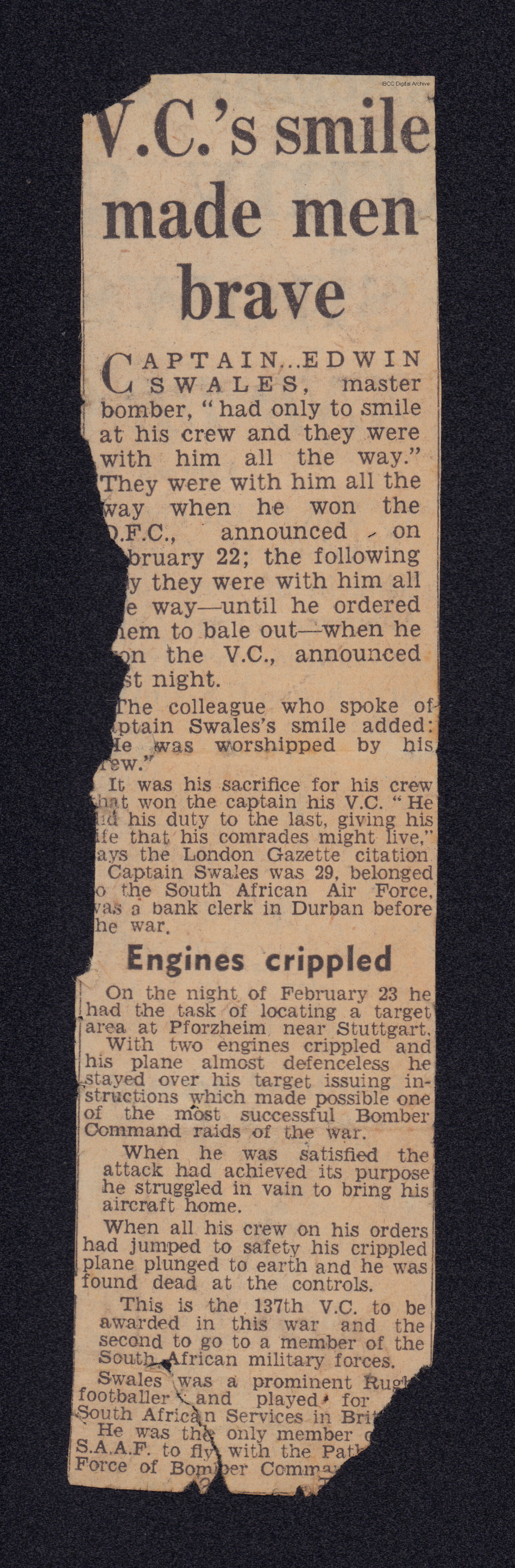
For his action, bravery and dedication to duty, 29 year old Edwin Swales, a prominent rugby player and South African “who only had to smile at his crew and they were with him all the way“*5 was awarded the Victoria Cross posthumously, the second such award to go to an airman of RAF Little Staughton, just one of three to the Pathfinders and one of only four South Africans to be awarded the Victoria Cross during the war. His citation appeared in the Fifth Supplement to The London Gazette, of Friday, the 20th of April, 1945:
Air Ministry, 24th April, 1945.
The KING has ‘been graciously pleased to confer the VICTORIA CROSS on the undermentioned officer in recognition of most conspicuous bravery:.—
Captain Swales was ” master bomber ” of a force of aircraft which attacked Pforzheim on the night of February 23rd, 1945. As ” master bomber,” he had the task of locating the target area with precision and of giving aiming instructions to the main force of bombers following in his wake.
Soon after he had reached the target area he was engaged by an enemy fighter and one of his engines was put out of action. His rear guns failed. His crippled aircraft was an easy prey to further attacks. Unperturbed, he carried on with his allotted task; clearly and precisely he issued aiming instructions to the main force. Meanwhile the enemy fighter closed the range and fired again. A second engine of Captain Swales’ aircraft was put out of action. Almost defenceless, he stayed over the target area issuing his aiming instructions until he was satisfied that the attack had achieved its purpose.
It is now known that the attack was one of the most concentrated and successful of the war.
Captain Swales did not, however, regard his mission as completed. His aircraft was damaged. Its speed had been so much reduced that it could only with difficulty be kept in the air. The blind-flying instruments were no longer working. Determined at all costs to prevent his aircraft and crew from falling into enemy hands, he set course for home. After an hour he flew into thin-layered cloud. He kept his course by skilful flying between the layers, but later heavy cloud and turbulent air conditions were met. The aircraft, ‘by now over friendly territory, ‘became more and more difficult to control; it was losing height steadily. Realising that the situation was desperate Captain Swales ordered his crew to bale out. Time was very short and it required all his exertions to keep the aircraft steady while each of his crew moved in turn to the escape hatch and parachuted to safety. Hardly had the last crew-member jumped when the aircraft plunged to earth. Captain Swales was found dead at the controls.
Intrepid in the attack, courageous in the face of danger, he did his duty to the last, giving his life that his comrades might live.*6
His body was removed from the aircraft in which he gave his life and was interned at the War Cemetery at Leopoldsburg, in Belgium, Section VIII Grave C.5.
In honour of Captain Swales, two memorial stones were laid and revealed outside his Durban High School on Armistice day 2009. One in the Memorial Courtyard of the School and the second on the Memorial Wall of the Natal Mounted Rifles also in Durban. In attendance were both his niece, Professor Edwina Ward, and Lt. Gen. Carlo Gagiano, Chief of the South African Air Force.
In 2013, Swales was also awarded the “Bomber Command” clasp to be worn on the 1939 – 1945 Star already awarded.
Edwin Swales was indeed a very brave man, who through sheer determination managed to save his crew in spite of the dangers facing him. His award was in no doubt deservingly awarded.
The story of pals Edwin Swales and Robert Palmer both of whom won VCs posthumously whilst at RAF Little Staughton.*7
The story of Captain Swales appeared in a newspaper cartoon “Heroes of the Air War”.*8
Sqn Ldr. Robert Palmer’s story appears in Heroic Tales.
Sources and further reading.
*1 the documents showing Captain Swales’ promotion to the rank of Major only reached the UK authorities after his death and as a result he was cited as being a Captain. (South African Aviation Foundation)
*2 National Archives 582 Operational Record Book AIR-27-2052-18
*3 Supplement 36954, to The London Gazette, 23rd February 1945, published 20th February 1945, page 1070
*4 Middlebrook, M., Everitt. C., “The Bomber Command War Diaries“, Midland Publishing Ltd, 1996
*5 International Bomber Command Centre National Archive website.
*6 Fifth Supplement to The London Gazette, of Friday 20th April 1945. Published on Tuesday 24th April 1945, Supplement 37049, Page 2173.
*7 “Newspaper cuttings concerning awards of Victoria Crosses,” IBCC Digital Archive, accessed November 11, 2023,
*8 “Heroes of the Air War (No. 39) Captain Swales,” IBCC Digital Archive, accessed November 11, 2023,
*9 Photo The South African Legion of Military Veterans website
On October 9th 1944 Mosquito KB261 608 (PFF) Sqn, took off with 21 other Downham Market aircraft to attack the naval port at Wilhelmshaven in Lower Saxony, Germany. Situated on the western side of the Jade Bight, a bay of the North Sea in Northern Germany, it was a major target frequently attack by allied bombers during the war.
The Mosquito, ‘D’ – Dog, a MK. XX, piloted by Flt. Lt. Reginald George Gardner (s/n 68776) with Fl. Off. Oswald Cuthbert Sweetman DFM*1 (s/n 145171) as navigator, departed Downham Market at 18:03 carrying a mix of bombs. It arrived over the target only to see 10/10ths cloud, and the target obscured. However, bombs were released successfully on red target indicators, after which crews reported seeing several flashes beneath the cloud along with large explosions lasting several seconds.
In debriefing, all crews reported a successful operation although visual confirmation was difficult due to the cloud cover which had extended to between 6 and 8,000 ft in height.
However, Mosquito KB261 never made it down. It arrived home and circled the airfield waiting for its turn to land, it showed no signs of distress or problem – all appeared well. As it entered the ‘funnel’ it suddenly – and without explanation, – dived into the ground from around 1,000 ft, crashing at 21:30.
The aircraft hit a cowshed in the nearby hamlet of Barroway Drove, to the south-west of the airfield, killing both pilot and navigator. A farm building was slightly damaged and some animals in or near the shed were also killed.
The aircraft had been fully flight tested and reported ‘serviceable’ that afternoon by the pilot Flt. Lt. Gardner, and both engines were known to be running at the time of the crash.
A report into the accident concluded it as “obscure” with no known cause, although the Station Commander witnessed the crash saying “…it would appear that while turning into the funnel the aircraft did a slipping turn resulting in rapid loss of height and final crash.”
In the Accident Report Form 765C, the pilot was noted to have called the tower on the downwind leg, but there was no report at that time, from him, as to any problems with the aircraft and all appeared to be in order.
The two crewmen were both married. Flt. Lt. Gardener was born in 1913 and married Nancy Buttle of Bearstead, Kent, where his remains are buried*2; and Fl. Off. Sweetman, born 1916, was married to Jessie James from Newcastle in 1940, he also remains buried in his home town*3.
On the following two nights, October 10th and 11th, two more 608 Squadron Mosquitoes were lost; KB404 ‘6T-T’ and KB348 ‘6T-M’.
In KB404, a Mosquito B MK. 25, both crewmen (pilot – Fl. Off. James Arthur Smith DFC RAAF, and navigator Sgt. John Burchell) emerged safely from the aircraft which crash landed in a field near to the airfield. The port engine was reported to have cut out at approximately 100 feet after take off, whereupon the pilot managed to perform a wheels up landing bringing the aircraft down safely.
In the third Mosquito, KB348, (MK.XX), the aircraft was hit by Flak over the city of Berlin and crashed at the Bornstettin Army Exercise Grounds near Potsdam at 04:02 hrs. The pilot, Fl. Off. Stanley Warren Reeder (RAFVR), and navigator Flt. Sgt. Robert John Bolton (RAAF) were both killed. Initially buried locally in Potsdam, they were, in 1946, interred in the Berlin 1939-1945 War Cemetery, Plot 4, Row K, Graves 26 and 27, where they remain today.
608 Squadron were only reformed at Downham Market on August 1st 1944, after being disbanded earlier at the end of July. They remained at Downham Market for the remainder of the war being disbanded again on 24th August 1945. In May 1946 they reformed once more only to disband for the last time on March 10th, 1957 at Thornaby whilst flying Vampires. It was at Thornaby that they were initially formed in 1930.
The last remnants of the main runway being approached by the Mosquito before they were removed.
Lancaster, a MK.III, took off from RAF Warboys, at 18:24 on September 29th 1943 on operations to Germany. It was joined by nine other Lancasters from the same squadron to bomb Bochum in Western Germany. Over the target, flak was moderate and visibility was good. Marking was in the form of skymarkers, along with red and green target indicators (TI) and bombing was reported as scattered with smoke rising to 5,000 ft.
On Lancaster EE118 that night was Flt. Sgt. Frederick H. Ray (Pilot); Sgt. David R. Booker (Bomb aimer); Fl. Off. Sydney K. Smith RCAF (Navigator); Sgt. Norman P. Winterburn (Wireless Op); Sgt. William A. Lineham (Flt. Engineer); Sgt. Frederick D. Dickens (Air Gunner) and Sgt. Arthur S. W. Orchard (rear Gunner).
The aircraft had suffered heavy flak damage, several of the instruments were not working including the compass and altimeter, and a 1,000lb bomb remained ‘hung-up’ in the bomb bay, Their return to Warboys would take them over the North Sea, across the Wash and south-east toward Warboys, but they requested landing permission at RAF Downham Market as it was closer. Permission was granted, and the ‘hung-up’ bomb was safely disposed of over the Wash.
The Memorial Plaque to Lancaster EE118.
Downham Market was at the time shrouded in thick fog and the FIDO installation recently added was not yet fully serviceable. Flt. Sgt. Ray made his approach, and with 10/10ths cloud as low as 1,000 feet, it was very difficult to make out where he was.
On his first approach, Flt. Sgt. Ray missed the runway and so headed north, and then turned in a south-west direction to make a new approach from the east. On his run in toward the final turn, the rear wheel caught the tree tops of a Slubberdike Wood, located north-west of the airfield. This slowed the aircraft down sufficiently to prevent it from climbing, and as they passed over Allotments at nearby Wimbotsham village, the port wing clipped a raised air-raid shelter near to the allotment entrance. This caused the wing tip to break off and resulted in the aircraft colliding with a telegraph pole at the end of Hop Pikel field near to Milller’s Lane which flipped the aircraft over bring it down in an orchard.
In the accident, all but the rear gunner Sgt. Orchard were killed outright, Sgt. Orchard being thrown clear from his rear turret.
The noise of the crash alerted local people who went out to see what had caused all the noise, and suspecting an air crash, they searched for wreckage. Gardens at the end of Miller’s Lane were strewn with bits of aircraft and a two young boys by the name of Gutteridge, came across Sgt. Orchard with a large branch across his legs. Fearing he had broken it, Sgt. Orchard begged them not to move it and await medical assistance in case it made the injury worse.
In the confusion that followed, Sgt. Orchard couldn’t remember if the 1,000 lb bomb had been dropped or not, so the police on the scene cleared the nearby houses sending everyone into their various bomb shelters for protection. It was not necessary however, and soon the all clear had been given and they returned to their homes.
Another young boy, 12 years old at the time, recalled how the rest of the crew were found in his garden, 39 Miller’s Lane, and how they were removed by RAF personnel during the night. Wreckage was found across the orchard and in local gardens, until RAF salvage teams took the aircraft away some 3 – 4 weeks later.
An aerial photo of Wimbotsham showing the direction the Lancaster flew on that fateful night. The scar in the orchard is clearly visible. The airfield is in the bottom right hand corner.
On the 30th September 2023, a plaque was attached to the Wimbotsham village sign to commemorate the loss of the crew nearby. The ceremony was opened by Mr. Ian Cable, Chairman of Wimbotsham Parish Council with a greeting and introduction from Reverend Canon Dr. David Karoon. After the hymn ‘O God our help in ages past’, Group Captain Frederick Wigglesworth, Station Commander RAF Marham, gave the Bible reading Isaiah 40:25:31 which was followed by a prayer of dedication led by The Rev. (Wing Commander) Eddie Wynn.
Dr. Karoon then gave a blessing of the memorial after which followed ‘The Airman’s Hymn’ sung by those gathered at the service.
Mr. Dutton gives background information on the Pathfinders with Rev. Canon Dr. Davis Karoon, The Rev (Wing Cdr) Eddie Wynn and Group Captain Frederick Wigglesworth looking on.
Following the Lords Prayer, a further dedication was given by Bill Bower, the R.A.F.A. Chairman, which preceded the Last Post and a minutes silence. The ceremony was closed with some back ground information on the Pathfinders by Tim Dutton, and the Benediction from Dr. Karoon. Lastly, the National Anthem was sung and a thanks to those involved given by Mr. Cable.
In the gathering were relatives of both Sgt. Arthur Orchard and Sgt. David Booker, the bomb aimer, along with villagers who remember the crash in 1943.
Tea, cake and a display of material from the crash and personal letters from Arthur Orchard to relatives of the crew were made available in the village hall, itself a former RAF Downham Market admin building.
The crew in Lancaster EE118 (GT-?)
Flt. Sgt. Frederick H. Ray (Pilot), s/n: 1391599, age 26
Sgt. David R. Booker (Bomb aimer), s/n: 1413457, age 20
Fl. Off. Sydney K. Smith RCAF. (Navigator), s/n: J/14174, age 21
Sgt. Norman P. Winterburn (Wireless Op), s/n: 1439760, age 21
Sgt. William A. Lineham (Flt. Engineer), s/n: 1815307, age 19
Sgt. Frederick D. Dickens (Air Gunner), s/n: 1613337, age 20
Sgt. Arthur S. W. Orchard (rear Gunner) – survived
The Lancaster, a MK.III, was built as part of the fourth production batch of 620 aircraft (the final contract of No. 6427) by A.V. Roe & Co Ltd. at Chadderton. It was delivered to 32 Maintenance Unit (MU) on 27th May 1943 transferring to 156 Sqn. on 22nd June 1943. It was struck off charge after the Wimbotsham crash on 19th October 1943.
A range of resources were used in the compiling of this post, including:
National Archives: AIR 27/1041/40
Chorley, W.H. “Bomber Command Losses of the Second World War – 1943“, Midland Counties, 1996.
Holmes, H. “Avro Lancaster – The Definitive Story“, Airlife Publishing, 1997
Personal letters and photos on display from Arthur Orchard and Derek Neal.
Part 4 of this trail saw Thurleigh reach the war’s end and the 306th rise victoriously from early disasters. But, even as the last B-17s roared over the Bedfordshire countryside, the future of Thurleigh was already stirring in whispers and blueprints. The airfield, freshly scarred by the demands of war, seemed poised on the edge of a new era—one that promised to push aircraft faster, higher, and farther than anyone had imagined. Across Britain, minds were turning toward the possibilities of jet power, supersonic flight, and technologies that could transform not just military aviation, but the very way people would travel the skies. Somewhere in these plans, Thurleigh would emerge—not just as a relic of wartime heroism, but as the stage for an ambitious experiment in Britain’s post-war aeronautical future.
Post-War Vision: Thurleigh and the Rise of RAE Bedford
In the immediate post war years, the bulk of what was left after ‘demobbing’, the 306th along with their sister squadron the 305th at Chelveston, moved abroad, the 306th to Geibelstadt, Germany as part of Project ‘Casey jones‘; to photograph 2 million square miles of Europe, Iceland and both north and west Africa. They transferred from base to base, the four squadrons being significantly reduced by the points system, until their final disbandment on Christmas Day, 1946*33.
As the B-17s of the 306th were flying their final missions from Thurleigh, forward-looking minds were already envisioning a future shaped by peace and rapid advancements in aviation. The war had more than proven aviation’s strategic power and hinted at its potential to revolutionise post-war life, particularly through fast and efficient global air travel. The development of the jet engine – pioneered in both Britain and Germany – ushered in a new era where speed and altitude were no longer limited by ‘slow’ piston engines.
With the dawn of the jet age came a fresh frontier: supersonic flight. Many wartime aircraft had already nudged the sound barrier, revealing strange and unpredictable aerodynamic behaviours; behaviours that demanded further study and investigation. This not only posed new scientific challenges, but created huge opportunities for further aviation development. As Britain looked ahead, there was a growing interest into which sites could support such serious, large-scale aeronautical research facilities.
In these closing months of the war, the government recognised that any attempt to carry out this research would require heavy investment in cutting-edge technology. In February 1945, several months before the war’s end, Sir Stafford Cripps, (the new Minister of Aircraft Production), confirmed in the House of Commons that a new national research centre would indeed be created. The question then became where?
The natural choice would have been the already established Royal Aircraft Establishment (RAE), at Farnborough, but it could not expand sufficiently in terms of either its runway, nor its infrastructure, and so an alternative had to be found.
Following a detailed national survey, Bedfordshire was then chosen as the prime location; its gentle rolling landscape and access to several wartime airfields made it an ideal choice. Part of this grand scheme was to create a new independent agency the ‘National Experimental Establishment’, but as time went on, this evolved into the National Aeronautical Establishment (NAE). With its base at Thurleigh, it would eventually be renamed, in 1955, as the Royal Aircraft Establishment Bedford (RAE Bedford).
RAF Thurleigh (as it was still known), with its long wartime runways and open surroundings, was a natural fit. Early thoughts considered it a possible location for a UK test facility to rival the Muroc Field in California’s Mojave Desert (now Edwards Air Force Base). That bold idea involved joining Thurleigh with RAF Twinwood Farm (to the south) and RAF Little Staughton (to the east) via a massive five-mile runway and taxiway, creating one vast experimental complex. However, this ambitious and frankly unrealistic vision was ultimately scaled back, and although some ground work had begun, the full development plan never materialised in this form.
With the idea ‘still on the table’, the programme was pushed ahead, but on a much smaller and by no means less ambitious scale, with both sites at Thurleigh and Twinwood Farm being developed and taking on new roles; both becoming central to Britain’s aviation future.
Development Begins: A New Thurleigh Rises
Development of the new facility was therefore split across the two sites. Firstly, on land near to Milton Ernest, close to the old Twinwood Farm airfield, a network of four powerful, ex Luftwaffe Research Station, wind tunnels were erected. Varying in size and power, each of these would test different aspects of aerodynamic behaviours under different conditions; one for example, measuring 8 feet by 8 feet, could test models in wind speeds up to Mach 5, an unprecedented achievement in post war Britain. *22
Meanwhile, Thurleigh itself was transformed into a highly advanced flight test centre. This required substantial redevelopment of the airfield: buildings were demolished, the infrastructure overhauled, and some original wartime hangars repurposed – two of these still exist in situ and in use today.
One of Thurleigh’s wartime hangars (former Aero Flight) still in use today.
Thurleigh’s new runway – measuring 3,400 metres (2.11 miles) long and 97 metres wide, was one of the largest in Europe at the time, and reflected both the size and speed of the aircraft it was going to need to accommodate. Upgraded by the company John Laing, a second runway was also extended reaching over 2,000 metres (1.2 miles) in length, each with a substantial 92 cm*23 of concrete beneath their surface. Even though full development wouldn’t be completed until 1957, the first residents moved in starting their research work as early as 1954.
The work at the new facility, spanned numerous aeronautical fields: aircraft control and handling, blind landing systems, all-weather operations, approach and landing aids, air traffic management, and military vertical take-off and landing systems, which would later culminate in the iconic Harrier jump jet. The site also supported naval aviation research and contributed significantly to the early development of Concorde, contributing to both the aerodynamic and avionic systems of the supersonic airliner.
Throughout the 1950s, the facility’s work was invaluable. The Naval Air Department (NAD) arrived at Thurleigh in mid-1954, formed by merging the Carrier Equipment Department and naval elements of the Aerodynamics Department at Farnborough. Tasked with developing launch and recovery systems for increasingly larger and heavier carrier-based aircraft such as the F-4 Phantom and Blackburn Buccaneer, the NAD’s base was on the northern side of Thurleigh airfield, alongside one of the original unmodified runways of the Second World War. It featured both flush and elevated catapults, arrester gear, a full proving base, and specialist equipment like Catapult Alignment Equipment (CALE) and Jet Blast Deflectors (JBDs). Unique among shore-based facilities, it included a prototype steam catapult system, one that would eventually become standard on naval carriers worldwide. This unique facility also caught the eyes of Britain’s neighbours, being used by the French Navy to test aircraft such as the Étendard and Alizé, highlighting its world-class research and development status.
The NAD operated at Thurleigh until 1970, when it was disbanded following the 1967 Defence White Paper, which ended the Royal Navy’s fixed-wing aircraft carrier operations. As a consequence, and with little need for fixed wing research, the naval research facility at Thurleigh closed. *24 *25
Not long after the NAD’s arrival though, in 1955, the Flight Division of the Aerodynamics Department – known as ‘Aero Flight’ joined them at Thurleigh. This division was comprised of three sections: Supersonic Flight, Subsonic Flight, and Dynamic Stability Research. They investigated aircraft stability, control, and flying qualities right across the speed spectrum. Over time, their work expanded into vertical take-off and landing systems, flight simulation, and helicopter trials. To achieve these aims, Aero Flight regularly used various aircraft models including the Gloster Meteor, Hawker Hunter, De Havilland Venom, and English Electric Canberra (WT327), (WK163), (WK163), all in the famous ‘Raspberry Ripple’ paint scheme. They also tested purpose-built experimental aircraft such as the Boulton Paul P.111; Avro 707; Short SC1 (XG900, XG905) and SB5; Hunting Jet Flap; Fairey FD2; Hawker P1127 (XP831, XP984) and Handley Page HP115 (XP115), all of which appeared regularly at Thurleigh.*26
The SC1 (XG905) at RAE Bedford
In 1957, a third unit arrived at the site: the Blind Landing Experimental Unit (BLEU) which was originally formed in 1945 to develop early aircraft blind approach systems. Initially tested on De Havilland Devon aircraft, the BLEU progressed to Canberras, going on later to equip many military aircraft, including the ‘V’ bombers, with automatic landing systems – technology now standard on civil airliners worldwide.
Trident Two G-AVFA landing at Thurleigh, March 1968 as part of the testing for the ILS ‘Triplex’ automatic landing system (FAST) *27
The 1950s and 60s, saw the pinnacle of the Cold War, with countries world Wide placed on a war footing, ready for what seemed to be yet another terrifying conflict. With the RAF’s first ‘Blue Danube’ atomic bomb being delivered to RAF Wittering in 1953, the UK was ready, and able, to retaliate should the need arise. In preparation for such an event, the ‘V’ Force bombers would be dispersed to airfields across the country ready to take off at a moments notice. Thurleigh, with its extensive runway, was earmarked to hold four such aircraft each one sitting on its pan ready for a quick and decisive launch.*28
1960s: The Search for London’s Third Airport and Thurleigh’s Role
Even with the Cold War climbing towards its pinnacle, aviation interests in Thurleigh continued to grow, and by the mid-1960s, Britain was beginning to face the growing pressures of low-cost air travel, and nowhere was this felt more than at its major airports – London Heathrow and Gatwick, which were already struggling to keep up with demand. A White Paper “The Third London Airport” published in May 1967 listed nine possible sites, including Thurleigh, but ruled out many of these due to conflicts with nearby military installations. In response, the government set up the Roskill Commission in 1968, who went on to conduct a detailed two-year investigation into a number of potential sites all capable of becoming London’s third airport.
The inquiry followed a detailed five-stage process. First, four candidate locations were shortlisted: Foulness in Essex; former RAF Nuthampstead in Hertfordshire; Wing in Buckinghamshire (Clublington) and Thurleigh in Bedfordshire.
Background information on each site was then published, followed by public hearings held near each of the shortlisted locations. These hearings provided an opportunity for local authorities, campaigners, and residents alike to express their views and raise concerns.
Reaction in Bedfordshire – both to the Thurleigh and Wing proposals – was largely unfavourable. Local residents expressed concerns, both verbally and through graffiti – “Not Thurleigh” – about noise, pressure on roads, public services, and the broader environmental impact. County Councils, including Bedfordshire, opposed the airport plans outright.
In the north of the county, those living around Thurleigh formed the Bedford Airport Resistance Association (BARA) to give local opposition a voice, while in the south, similar resistance was growing against the Wing plan. Yet, not everyone objected. A smaller local group, the Thurleigh Emergency Committee for Democratic Action (TECDA), welcomed the idea, arguing that an airport could boost jobs and bring long-term economic benefits to the area. The resultant hearings all took place during 1969.
Stage Three saw the Commission’s own Research Team gather technical data and examine submissions from expert witnesses and interested parties. This work fed into a comprehensive report, which formed the basis for further discussion in Stage Four. At this point, members of the Commission met with representatives from key organisations – including Bedfordshire County Council, BARA and TECDA – to debate the findings and test individual arguments.
The final stage was a lengthy series of formal hearings – 74 days in all – held at the Piccadilly Hotel in London. Here, all sides presented their evidence, with cross-examinations led by barristers representing the various parties. After the exhaustive process was over, the Commission recommended, by majority vote, that the new airport be built at Wing, accompanied by further plans for an additional “Airport City.” Only one member disagreed favouring Foulness as the better site.
Ultimately though, Wing was dropped and the government shifted its focus to Maplin Sands, close to Foulness. However, later in 1974, in the face of public pressures, that plan was also abandoned, and attention turned to other pre-existing sites. Luton was briefly considered, but by 1979, the decision was made: Stansted would be developed as London’s third airport, leaving Thurleigh’s long term airport development plans permanently shelved.*29
1970s: Consolidation and Systems Integration at RAE Bedford
Meanwhile at the now renamed RAE Bedford (the airfield no longer under military ownership) the 1970s brought significant organisational changes. In 1974, the various departments were merged to create the Flight Systems Department, bringing together a diverse range of expertise under the one roof. This integration fostered a comprehensive, systems-based approach to aeronautical research and development, moving beyond the previously isolated group of technical fields.
The new department was structured into three core areas: Flight Dynamics (FS1), Operational Systems (FS2), and Common Services (FS6). Collectively, these units covered flight dynamics and control, operational systems & flight management, and flight simulation technology.*30
This broader, interdisciplinary approach allowed RAE Bedford to expand its research across both military and civilian aviation sectors. Employing more modern aircraft – including the Tornado and later the Typhoon – enabled the development of sophisticated radar, tracking, landing, and handling systems. These advancements would shape aviation technology well into the coming decades.
The End of an Era and a New Beginning: Thurleigh in the 1990s and Beyond
By the early 1990s, shifts in defence policy led to a significant reduction in government-funded test flying activities. In 1994, official flying operations at Thurleigh came to an end, and the airfield was officially closed. All ongoing research activities were transferred to Boscombe Down, marking the close of a pivotal chapter in Thurleigh’s aviation history. Despite this closure though, the eastern runway continued to see occasional use by civil aircraft, preserving a faint echo of its once glorious former life.
In 1996, ownership of much of the site changed hands again, with the majority being sold to St. Modwen Properties Ltd, a company specialising in the regeneration of brownfield sites. Meanwhile, a smaller portion of the airfield remained under the control of QinetiQ, the successor to the Ministry of Defence’s Defence Evaluation and Research Agency (DERA), allowing continued military research on advanced defence systems. However, by 2008, QinetiQ too had left, and the once-bustling research complex at Thurleigh gradually fell into disrepair.*31
The Rise of The Phoenix: Thurleigh’s Comeback.
A new chapter in Thurleigh’s long book then began in 1999, when the former Formula 1 driver Jonathan Palmer and his MotorSport Vision Group (MSV), purchased a 384 acre section of the eastern side of the airfield. Palmer went on to design and develop the site into four different circuits utilising 5 miles of original airfield and newly developed track, providing a private circuit for participants to test their skills in high speed racing.*32
A year later, in 2010, marking seventy years since the start of Thurleigh’s crucial role in the Second World War, Thurleigh airfield was re-licensed by the Civil Aviation Authority (CAA) and given the new name Bedford Aerodrome, symbolising a return to aviation.
Whilst the main part of the business is owned and run by Palmer’s Group, civil aviation is permitted and the two projects run alongside each other on this former wartime airfield.
During 2025 the hard runways were out of use until further notice, however, a new grass runway was provided and its use was by arrangement with the operators permission. Helicopter flights continued as usual, so, whilst limited aviation does still continue at Thurleigh, its main operations lay elsewhere. Part of the airfield has since been converted into a business park and its disused runways store considerable quantities of vehicles ready for the open market. A large portion of the perimeter track continues to be utilised by the aforementioned car racing organisation for motor sport activities.
A former small arms building not far from Galsey Wood and the former bomb store, has been converted into a small but excellent 306th Bombardment Group Museum run by local volunteers, and the memorial which once stood in the village, has now been moved and placed outside the museum appropriately on the airfield itself.
The former small arms building is now a well run museum.
Although no longer a hub of government research, Thurleigh’s legacy now endures as a testament to British aviation history — a site that witnessed both the resilience of wartime efforts and the ambitious technological strides of the post-war jet age.
Throughout this trail we have seen how Thurleigh evolved from a wartime bomber base into a cornerstone of British aviation research and development. During the Second World War, it served as home to the USAAF’s 306th Bomb Group, from where young crews flew dangerous missions – many never to return. The cost was high, and the loss of so many lives remains a poignant part of its story. In the post-war years, the site became part of RAE Bedford, pushing the boundaries of flight technology and innovation. Though official flying ended in 1994, its legacy endures – rooted in sacrifice, resilience, and remarkable achievement.
Today, Thurleigh stands as more than an airfield – it is a testament to the daring spirit of those who dared to fly, build, and innovate. Its story is a mix of triumphs and trials, quiet reinventions, and bold leaps into the unknown – a narrative that continues to echo across its runways.
Thurleigh – 306th BG Museum.
The 306th Museum is located in a former small arms building (building 185) close to the bomb site at Galsey Woods. It can be accessed by following the perimeter track (now road) around from the main entrance to the site through a gate. There is a small amount of free parking available and access is also free.
The museum is run by volunteers, and is well stocked with photos and artefacts pertaining to the 306th and Thurleigh. It was donated by Johnathan Palmer when part of the woods were removed.
Inside are various uniforms, photographs and artefacts, both a home front display, a jeep and a ‘pub’ bar.
Its an excellent little museum and well worth the effort of visiting. More information can be found by visiting their website.
One of the displays inside the museum.
Sources and further reading (Thurleigh)
*1 Bedfordshire Archives website. Accessed 7 July 2025.
*2 Bedfordshire Archives website [ref: WW2/AR/CO2/3] Accessed 7 July 2025.
*3 Bedford Aerodrome History website. Accessed 7 July 2025.
*4 Miller, D.L. ” Eighth Air Force” Aurum 2008
*5 Miller, D.L. “ Eighth Air Force” Aurum 2008
*6 Goodrum. A., “School of Aces” Amberley Books 2019.
*7 Miller, D.L. “ Eighth Air Force” Aurum 2008
*8 Freeman. R., “The B-17 Flying Fortress Story“. Arms and Armour. 1998
*9 Freeman, R., “The Mighty Eighth“. Arms and Armour. 1989.
*10 306th BG War Diaries via 306th BG Historical Association website. Accessed 8 July 2025.
*11 MACR 15502 via 306th BG Historical Associationwebsite. Accessed 8 July 2025.
*12 MACR via 306th BG Historical Associationwebsite. Accessed 8 July 2025.
*13 Mission reports 1943 via 306th BG Historical Associationwebsite. Accessed 8 July 2025.
*14 306th Combat war Diary March 1943 via 306th BG Historical Associationwebsite. Accessed 9 July 2025.
*15 306th BG Mission Report 17th April, 1943 via 306th BG Historical Associationwebsite Accessed 9 July 2025
*16 Mission Report, October 14th 1943 via 306th BG Historical AssociationWebsite Accessed 11 July 2025
*17 306th War diaries October 1943, via 306th BG Historical AssociationWebsite Accessed 11 July 2025
*18 Bedfordshire Archives [ref: WW2/AR/CO2/3] via website Accessed July 11 2025
*19 Mission Report 24th April 1944, via 306th BG Historical Associationwebsite. Accessed 11 July 2025
*20 306th BG War Combat Diaries via 306th BG Historical Associationwebsite. Accessed 11 July 2025.
*21 306th BG Mission Report April 1945, via 306th BG Historical Associationwebsite. Accessed 18 July 2025.
*22 Farnborough Air Sciences Trust (FAST) website Accessed 19 July 2025
The Bedford aerodrome website contains extensive material on the current and some historical use of Thurleigh.
The Bedford Aeronautical Heritage Group website (now closed but accessible) contains information about the work and history of RAE Bedford. It has since been moved to the Farnborough Air Services Trust (FAST) website which also offers endless information about the services of both RAE Bedford and RAE Farnborough.
Bedfordshire and Luton Archive and Record Service has an extensive collection of Third London Airport material as part of the Bedfordshire County Council archive which includes material for all four original sites. It also has material from BARA.
PPRuNe forum has information, photos and personal information about the research at both Thurleigh and Twinwood Farm.
Airfields of Britain Conservation Trust website. Accessed 24 July 2025
Last time, in Part 3, we followed the 306th Bomb Group through their difficult arrival at Thurleigh, enduring poor conditions, training accidents, and costly missions over occupied Europe. Despite setbacks- including the loss of Captain Paul Adams’s crew – the Group adapted, honed their tactics, and began proving themselves in battle. Now, as 1943 drew on, the challenges only grow sharper: missions stretched deeper into enemy territory, German resistance stiffened, and the winter skies of northern Europe offered no mercy. For the 306th, the coming year would demand courage and endurance on a scale they had never faced before.
Another party of officials along with a squad of Brigadier Generals returned to Thurleigh on July 27th, the event being to present the Congressional Medal of Honour to Sgt. Maynard Smith who, as ball turret gunner, performed admirably on May 1st 1943. The B-17 he was in, had been attacked by three enemy aircraft setting it on fire. Three of the crew baled out leaving Lt. Smith to douse the fire enabling pilot Lt. Johnson to save the aircraft by landing it in south-west England.
As summer gave way to autumn, the toll on men became increasingly evident. The four Groups of the Eighth Air Force that had led the way from the summer of 1942 – the 91st, 303rd, 305th and 306th, were all exhausted and battle weary. Signs of stress and ‘battle fatigue’ were becoming more and more common. Heavy drinking, temporary blindness, shaking, insomnia, nausea, weight loss, horrific nightmares and violent tempers were a mere scratch on the surface of what was being witnessed. The men desperately needed rest, yet reinforcements and replacements were slow to arrive, leaving them to continue missions under increasingly perilous odds.
USAAF personnel on the control tower at Thurleigh airfield [ref: Z50/122/45] (Bedfordshire Archives website)
Return to Schweinfurt: The October 14th Massacre
When the mission curtain was drawn back on October 14th, the air in the briefing room must have felt heavy – Schweinfurt. The first trip there after the disastrous mission of August 17th, 1943, which almost caused the collapse of the Eighth Air Force, with the loss of so many aircraft.
In amongst the various crews, those who had experienced that traumatic event cursed and dropped their heads, whilst newcomers struggled to grasp the danger.
Schweinfurt lay deep int heart of the Nazi homeland, almost to the Czechoslovakian border. To get there, formations had to fly 500 miles into enemy territory, a six hour flight of which four were on oxygen and at altitude. Every step of the way was heavily defended by Flak and fighters, the odds of returning dropped like a stone.
The 306th dispatched eighteen aircraft, take off time 10:25 hrs, making a total of 320 aircraft from the 1st, 2nd and 3rd Bombardment Divisions. 196 P-47s would escort, but only just into enemy territory leaving the bombers to fend for themselves in the face of several hundred fierce and deadly accurate 88mm anti-aircraft guns.
The 368th “Eager Beavers” were fortunately for them, rostered ‘off’ that week and so did not take part. The 369th provided seven, the 368th and 423rd the remainder between them.
The mission was to go wrong from the start. Bad weather caused issues with forming up, mechanical problems prevented a full ‘maximum effort’. Groups were lost in thick cloud over England and several become lost and out of formation when they did get to their allocated station. For the 306th, they were able to put up eighteen aircraft, in the high position above the 92nd BG led by Colonel Peaslee.
Once over enemy territory three B-17s of the 306th were forced to return due to mechanical problems, then at around 1:00pm, the escorting P-47s had to leave, and immediately swarms of around 300 Luftwaffe fighters pounced on the bomber stream. Between the Rhine and the target, rockets and bombs were dropped on the bombers many exploding harmlessly in the open, but canon fire from forward attacking fighters, as many as twenty at a time, ripped into the B-17s. One crewman described the scene like a ‘parachute invasion’ with so many chutes being deployed from falling bombers.*16
By the time they had begun the bomb run, the 306th were down to just six aircraft, the 92nd eight – only marginally more than other units. Over the target, the 306th had just five bombers dropping their ordnance, ten were missing all believed shot down. Of those five, four had received heavy damage from flak, canon or rockets leaving only one untouched.
A common site at many airfields across Britain. Thurleigh ambulances await the return of their bombers. (IWM UPL 18748)
The return flight home was thankfully ‘uneventful’, the Luftwaffe fighters concentrating on those bombers still approaching or arriving over the city. But the 306th had been decimated, all but one aircraft having been shot down, returned early, damaged by flak or canon. Estimates afterwards suggest that 75% of Schweinfurt’s ball-bearing industry (which produced 50% of Germany’s total output) had been destroyed. As good as the results were thought to be, Schweinfurt had once again been a slaughter for the Thurleigh men.
The next day the 306th was stood down, there simply wasn’t enough aircraft to put up, it had been another black day indeed for those stationed at Thurleigh.
Words of Recognition, Echoes of Sacrifice
A week later Sir Charles Portal, Air Marshall said in acknowledgement to the efforts of the Eighth, “The U.S. Eighth Air Force has earned for itself during the past weeks a reputation that the Royal Air Force will never forget. The Schweinfurt raid may well go down in history as one of the decisive air actions of this war, and it may prove to have saved countless lives by depriving the enemy of a great part of his means of resistance.” *17
Into a New Year: Transition and Tension at Thurleigh
As time always does, 1943 merged into 1944 and the war rolled on. Progress in Europe was slow but behind the scenes plans were afoot for the invasion of the continent. With poor weather, flights were limited and as a result January bore witness to just a small number of losses, with almost all aircraft returning safely to base.
On the ground, training continued with a gas training exercise on the base. What was meant to be a safe exercise turned out to be anything but. Driven by the wind, gas was blown over neighbouring fields where farmer Arthur Filsell was working. The gas, needless to say, caused him severe health issues. *18
January’s record was reflected in February, with the 306th achieving a new record for missions – twelve – almost one every two days of the month. It was also the month that saw the death of Lt. Roskovitch, the first airman to achieve his mission quota of twenty-five operations previously. Throughout the month, losses were minimal, but damage from accurate and intense flak was high, with many aircraft returning with extensive damage – such was the strength of the B-17.
As the invasion plans came nearer to their fruition, new records were set again at Thurleigh. The number of operations flown increased from February’s twelve to sixteen, and as an ironic reward, the number of operations in a tour also increased, rising from twenty-five to thirty. With the Luftwaffe noted by their absence, the chances of survival were thought to be increasing.
Shattered Hopes: The Oberpfaffenhofen Disaster
However, the optimism was to bite back not long after. In April 1944, another mission took twenty-five aircraft to Oberpfaffenhoffen in southern Germany, a long route that took them across the German heartland. The twenty-five B-17s were part of a much larger formation of thirteen Combat Wings totalling 524 B-17s and 230 B-24s, that spilt to attack three targets: Leipheim, Gablingen and Oberpfaffenhoffen.
Departing at 09:00 hrs, the 306th’s group, made up of sixteen aircraft in the low group, six in the high and another six as spares, headed to Beachy Head where they formed up and departed to France at 11:00 hrs. Keeping south of Paris they headed to Stuttgart and onto Augsburg. At 12:50 the P-47 escort had to return home reaching the extent of their flying endurance. Immediately, enemy aircraft honed in on the formation strategically attacking the group leaders. A few widely spread Mustangs gave what support they could, but the shear numbers of enemy aircraft simply overwhelmed them.
By 12:35 the full might of the Luftwaffe had been unleashed, and for forty minutes they attacked continuously using a new full frontal wave consisting of between four and eleven fighters at a time. In conjunction, the enemy attacked from both the 2:00 and 11:00 positions splitting the defensive fire-power of the bombers.
Flak was ‘meagre’ but very accurate causing extensive damage to a number of aircraft and bringing one down. Fighter attacks brought down another nine.
The 306th had again been decimated. Almost half of those sent out failed to return, of those that did many had damage and / or casualties. The ‘soft’ targets of early 1944 could no longer be deemed ‘soft’.*19
The Path to Invasion: Record-Breaking in May; D-Day and Beyond
As raids intensified the Groups returned to Berlin, the 306th hitting Berlin no less than four times in May. Another new high was set in both the number of sorties flown, and with the tonnage of bombs dropped. In addition, another new record of twenty operations was set for the month. Despite this, losses were zero, whilst claiming several enemy aircraft shot down or damaged.
On D-Day, 6th June, the 306th supported ground troops as they breached the Normandy beachhead. Bombing howitzer installations inland, road junctions at Caen and Bridges over the River Orne; they encountered a great deal of heavy cloud. With many aircraft resorting to PFF equipment, results were difficult to ascertain. A change in targets mid month then saw the group sent to bomb ‘Noball‘ targets, the “Pilotless planes launching platforms” (V1) in France, but low cloud prevented bombing and all but two aircraft brought their bombs home.
By the end of the month the group were back to Berlin, bombing targets in the city. With another increase in operations, especially in support of D-Day, more records were again broken. A greater tonnage of bombs were dropped in this month than in the first eight months of their tour of operations. In addition, and despite the high records, losses were amongst the lowest in any 30 day period. Post D-Day, the limit of thirty operations was increased yet again to an incredible thirty-five. Even with the increase, many gunners were reported to be nearing the end of their tour, many not having fired at an enemy aircraft as they had been so absent from the combat zone.
A Royal Tribute: The ‘Rose of York‘ Christening
The 6th July 1944, saw a highlight with a royal visit for a special christening. The party included HRH Princess Elizabeth who was here to christen B-17 #42-102547 “Rose of York“. Joining her were King George VI, Queen Elizabeth, Lady Patricia Hambleden (Lady in waiting) and a selection of other Royal Guests and Generals including Lt. General James Doolittle.
Just prior to the dedication taking place, a formation of fifty-two B-17s flew over the airfield marking the occasion. The Princess then broke a bottle of cider over the chin turret and met each member of the crew in turn. After a tour of the airfield and lunch in the mess, the Royal party departed having made a huge impact on the personnel on the base.
King George VI, Queen Elizabeth, Princess Elizabeth and General James Doolittle, visit the 306th BG in order to christen B-17 “Rose of York” in honour of the Princess. (@IWM FRE 1155)
Accidents and Celebrations: Summer at Thurleigh
With such poor weather dominating the summer months that year, many bombs already fused and live, were brought back home to Thurleigh. These were placed in a distant revetment for safety but on the 30th July, one went off causing a chain reaction that led to twenty-four exploding, shaking the distant windows of the headquarter’s building. No one was hurt in the blast, which saw a huge column of black smoke rise high into the Thurleigh sky. A nearby B-17 was so severely damaged it had to be written off and earmarked for salvage.
A week later, another twenty-four bombs were detonated in a controlled explosion. The location of the ‘dump’, whilst being the safest option, had prevented aircraft from using the taxiway, but now they were all cleared away, the perimeter track was opened and ground movements could operate easily once more.
The 9th September marked the second anniversary of the 306th’s presence in the European Theatre of Operations. To celebrate the day, the entire group was given the day off to watch and enjoy a range of entertainment including a carnival, ball games and music performed by Glenn Miller’s band. Dances were held in the hangar and personnel had the opportunity to view a Ju88, Me109 and FW 190 that had all been captured. The only low point of the day being the sad news of the suicide of Corporal Robert Bickston of the 367th BS.
Chaff, Fog, and Tragedy: Autumn in the Air
By now, the Americans had been using ‘chaff’ for some time, a product like the RAF’s ‘Window’ which utilised strips of metal foil that caused interference and confusion on the enemy radar screens. To test this further and determine exactly what interference it did cause and which method of discharge was the best, crews of the 306th flew to Farnborough to perform four runs depositing ‘chaff’ from various points in the aircraft. These tests began on September 19th, with the first run dropping no chaff at all, thus giving a base line indication. On the second, it was discharged by the radio operator from his position in the aircraft. On the third, the discharge point was moved to the bomb bay “Razzle Dazzle style” (a more chaotic and less organised style) and on the last run, the chaff was dropped prior to the aircraft turning onto the bomb-run. Once completed, the data was assimilated and all the results examined. These proved to be “very interesting and informational“.*20
Britain’s weather had long been a challenge for flying operations, and the autumn of 1944 offered no respite. Poor visibility was a constant hazard, often contributing to accidents both in the air and on the ground. While clear skies typically reduced the risk, they were no guarantee of safety. A brief lapse in concentration could, and often did, result in disaster – as the 306th Bomb Group tragically discovered on 22 October 1944.
As the formation made its way back across the North Sea from Hannover, two B-17s from the same squadron collided mid-air. The first, B-17 #44-8099 of the 423rd Bomb Squadron, flown by 1st Lt. Harry Aylea Jr., was in the No. 1 position of the high squadron. Flying nearby in the No. 4 slot was B-17 #43-37976, nicknamed “Suzy”, piloted by Captain Joseph Mathis.
At around 12,000 feet, with a total of 19 airmen on board the two aircraft (ten and nine respectively), the lead bomber began to climb, reducing speed as it did so. Suzy, flying very close beneath, attempted to maintain position – but the gap was too tight. The aircraft collided, sending both into uncontrollable spins. As they fell from the sky, Suzy exploded.
The crash occurred over water, and an immediate air-sea rescue operation was launched to search for survivors. Of the nineteen men aboard, only one was found alive – Staff Sergeant H. Key Jr., the tail gunner from #44-8099. Two bodies were later recovered, but the rest were declared missing in action.
Meanwhile, as the surviving aircraft neared their home bases, the weather over Bedfordshire worsened rapidly. Visibility dropped, and in the poor conditions two returning formations of Chelveston’s 305th Bomb Group – approached from different directions – crossing paths directly over Thurleigh airfield. A collision then followed, with both aircraft exploding on impact and scattering wreckage across the station. Much of the debris fell onto the 367th’s dispersal area. Tragically, there were no survivors and the weather had claimed yet more victims.
Two B-17s of the 305th BG collide over Thurleigh in thick fog. October 22nd, 1944, (IWMFRE 10489)
The poor weather prevented many flights over the following weeks, and so ground talks took up a large portion of aircrew time. Despite this, fourteen missions were carried out, two visually and twelve using PFF with generally good results. To date, some 73,000 hours of flying had taken place and 160 aircraft had been lost to various causes, many along with their crews.
This poor weather continued on almost relentlessly into the last months of the year scrubbing many operations into mainland Europe. But, undaunted, 1945 arrived and 1944 was seen out in style at Thurleigh airfield. Christmas meals were served to those on base, whilst some who had managed to get airborne, had diverted to other bases forcing them to have their celebrations elsewhere. New Year likewise was celebrated with large quantities of music, food and needless to say drink. Spirits were high, and many personnel were convinced that the new year would bring an end to what now seemed to be an endless conflict.
The end of the year also signified the end of the inter-base football season. Thurleigh played three matches culminating in a 12-0 victory over fellow teams at Grafton Underwood. On the sports field as in the air, the year had ended with Thurleigh achieving good successes; four wins, two losses and three ties.
Christmas at War: The End of 1944 and the Final Push into 1945
Unbeknown to everyone, including those at Thurleigh, 1945 would indeed see the end of the war. With only five more months to go, their gut feelings and hopes of peace, were finally coming to fruition.
The beginnings of 1945 saw major movements in Europe on both the eastern and western fronts. The Russians, making huge advances into German held territory, were driving their way into Germany. From the Baltic to the Carpathian Mountains five enormous armies pushed to the banks of the Oder, a mere 40 miles from the German capital Berlin.
Battling the extreme cold weather and constant fog, the western armies were held in the Ardennes facing a strong and determined enemy who were now making a last ditch effort to break through the allied lines. But as the poor weather continued, many flights from UK bases were prevented from occurring and thus dropping much needed supplies to both those on the entrenched front line and those serving behind in hospitals and support services.
But some flights did get away; the 306th managing to play their part by flying 544 sorties in January, attacking mainly enemy communication centres along the front. With low fuel stocks and a high attrition of experienced crews, the Luftwaffe were largely unopposing, so losses for the Thurleigh crews were kept to a minimum.
With the eventual breakout of the Ardennes, the German front began to crumble. The Eighth Air Force and the 306th made a return to Berlin causing further considerable damage to the city, and as the allied forces pushed ever further into Germany, Thurleigh supported the advance with crews hitting numerous strategic targets: oil, communication lines, transportation routes, military camps and jet airfields among many others. With bordering on almost total control of the sky no aircraft were lost by the 306th.
But as the allied forces pushed toward the capital, the U-boat menace remained at large. Submarine pens located along the coast were still in operation and needed eliminating. The problem with these structures was that they were very difficult to not only hit, but to destroy as well, largely due to the incredibly thick reinforced concrete they were constructed of. The RAF and USAAF had tried countless times to destroy these buildings with little success: conventional weapons simply ‘bouncing off’ like ping pong balls.
Secret Weapons: The Disney Bomb Trials
With both the British and Americans carrying out investigations and trials into new and more powerful bombs, the possibility of destroying these bunkers moved slowly closer. It was thought, a British development, the ‘Disney bomb’, may provide the answer.
The bomb, designed by a Royal Naval Captain, Edward Terrell, was of a long thin design that could be slung beneath a heavy bomber and launched at its target from a high altitude. With added rocket propulsion, the bomb could reach speeds just short of 1,000 mph punching its way through thick concrete into the pen where it would explode destroying the contents in this case the U-Boat.
Although a British design, the USAAF trialled it between February and April 1945, with the 306th using them for the first time in an operation on March 30th against the Submarine pens near to Farge on the Vesser River. Major Witt led twelve aircraft, (including two PFF) in two groups of six. Unfortunately, 4/10th cloud cover, forced the lead group into making four passes over the target before they could get a good sighting and thus release their bombs.
Whilst the reports after the raid were good, little was gained long term from the Disney bombs as they were too difficult to accurately use against such small targets from high altitude, and so the trials ended without any major successes.
B-17 #43-38910 ‘Salvoin Sachem‘ with Disney Bomb on a Torpedo trailer. The bomb carrier can be seen between the engine and the fuselage. *21
War’s End: Honour, Reflection and the Final Missions
With both east and west fronts meeting up in April 1945, the German war machine effectively collapsed. Doenitz took over after Hitler’s death and Berlin fell into allied hands. The 306th completed fifteen sorties, but no bombings were carried out after the 19th due to potential targets being overrun by the allied forces and so risking ‘friendly fire’ incidents.
After that, the Group essentially stood down. A few leaflets flights were made by the 369th dropping newspaper, propaganda leaflets and other material over Holland, Belgium and Germany.
During May and the last days of the war, these leaflet drops became the norm along with ‘cooks’ tours over Europe. Essentially tours for ground staff, allowing them to see for themselves the damage inflicted on Nazi Germany by the combined heavy bombing of the RAF and USAAF.
When peace was declared and the war finally over, the 306th stood tall. After participating in some of the fiercest air battles of the Second World War, they had come through with great achievements. Tales of heroism were rewarded with two Medals of Honour and Purple Hearts were numerous. The 369th BS had flown an unprecedented forty-two consecutive missions without loss. As a group though, losses had been incurred, and many young and brave men had been lost in the fight against Nazi Germany. Some 177 aircraft had been shot down or lost, and over 730 men had been killed with over 800 more taken prisoner. The 306th had played their part with great courage and sacrifice.
Part 5 takes us beyond the climate of conflict and into the work of research and development. Thurleigh becomes a hub of aviation excellence, the experimentation takes over and a new owner eventually takes control.
Part 2 gave us an insight into Thurleigh’s transformation as a USAAF base bringing the American 306th Bomb Group, whose early months were marked by harsh conditions, inexperience, and heavy losses. Yet through resilience and innovation, they adapted quickly. With these lessons learned, the Group now faced the escalating intensity of 1943’s air battles over occupied Europe.
Under Siege: New Tactics, Devastation in December and Heroic Returns
Not only were the Luftwaffe now changing tactics by attacking head on, but they were also developing other methods and weapons to down these heavy bombers.
By attacking in rotation, one group being replaced by another as they refuelled and rearmed, the Luftwaffe fighters were able to keep up an almost endless attack on the formation; fresh eyes and ammunition gradually sapping the gunner’s energy.
This was one such tactic used on the 20th December 1942. After the escort of Spitfires had left and the bomber formation approached the target, they were attacked by a new group of fifty or so FW-190s. The 306th took the full force of the attack losing four aircraft with another two crash landing in England. A further twenty-nine were badly damaged, some even written off. The vulnerability of the unescorted heavy bomber had become all too apparent.
In November and December, the 306th Bomb Group continued operations against targets in France with mixed success, hampered at times by poor weather, mechanical issues, and crew illnesses. On 7th December, many aircraft returned without releasing their bombs due to heavy cloud cover, and the following day a mission over Lille saw Captain Adam’s aircraft shot down and another bomber badly damaged, with several crews breaking protocol to protect it until all returned safely. During November alone, the group was recognised with twenty-six Air Medals, a Distinguished Flying Cross for Colonel Overcracker, and two Purple Hearts for wounded airmen.
A New Chapter; Thurleigh Faces Tough Reforms
December 9th 1942 bore witness to a remarkable event in history when Thurleigh airfield was officially handed over from RAF control to the USAAF, the first such event to have taken place. The change in ownership didn’t however, immediately affect operations and the closing month of the year saw further flights into enemy territory with yet more losses. These increase in losses were met with a corresponding decline in morale.
But as Christmas approached, there was a change in sentiment with a festive Christmas diner and New Year celebrations in which a newly formed band played music well into the night. The end of the year went out with many regrets but brought high hopes for a much better and happier 1943.
The dawning of the new year then saw big changes occur at Thurleigh. In command of the Eighth Air Force was General Spaatz, who at the time was meeting with with General Eisenhower to discuss the future of the North African Air Force, leaving Ira Eaker in charge of the Eighth Air Force in Britain. His own replacement, Brigadier General Newton Longfellow, was charged with reviewing the losses being incurred by the air force, and found at Thurleigh, a lack of discipline and poor leadership.
Even though Col. Overcracker, the Commander in charge at Thurleigh, was a well liked commander by his men, there were concerns from those above that he was overly caring for his crews to the point that they were able to ‘get around’ him far too easily. This, Newton thought, was the reason why so many aircraft and crews from the Group had been lost in those early months of their war.
Newton consulted with Eaker who called upon Col. Frank Armstrong, one of the six original staff members at the inception of the 8th AF, to go to Thurleigh and make amends. This he did. he ruled the men with a tight and hard discipline turning the Bomb Group’s fortunes around, a move that was later recalled in the novel and film “Twelve o’clock High” written by one of Eaker’s other original six staff members, Cap. Beirne Lay Jr. along with Maj. Sy Bartlett one of Spaatz’s staff officers.
Armstrong would take over the 306th for a month and a half. Being assigned to the Group on 2nd January 1943. During that time, he would make dramatic changes to both the structure and the outcomes of the Group.
Baptism by Fire: Losses Continue Despite Command Changes
But change came slowly. Even as Armstrong took over, the 306th continued to lose aircraft and crews. On January 3rd, seventy-two B-17s and thirteen B-24s from the 44th, 91st, 303rd, 305th and 306th Bomb Groups were sent back to bomb the U-boat pens at St. Nazaire. After all seven of the 306th aircraft bombed the target they headed for home. The Journey in however, had been hell for the crews as flak had been both heavy, thick and accurate, with many aircraft from all groups sustaining damage.
One 306th aircraft, B-17F – #41-24470, “Sons Of Fury” had been so badly damaged that two engines were out of action and the nose with both the navigator and bombardier inside, was blown off. Separated from the rest of the formation, it was soon picked up over the sea by FW-190s and attacked yet again. Slowly losing height, it would eventually ditch in the cold waters of the Bay of Biscay. But even as it did so, the top turret continued to fire at the passing 190s, who continued to strafe the aircraft and crewmen who were now in the water, even though it was down and sinking. The heroic actions of the gunner in the turret, T/Sgt. Arizona Harris, were witnessed by a tail gunner in another 306th aircraft, who described how Harris continued to fire his weapons even as the water filled his turret until eventually, the firing stopped. His actions that day led to him receiving a DSC posthumously.
From page 50 of the wartime British Edition of “Target Germany” – 1944. The text relates what a 369th BS officer witnessed on the 3 January 1943 mission to Saint-Nazaire, when B-17 # 41-24470 went down. (IWM UPL 44487)
Meanwhile at Thurleigh, the first of Armstrong’s many changes were implemented starting with Colonel Overcracker, who on the 4th, was relieved from the organisation and posted to Headquarters. Three days later Major Coleman was relieved from his duties as Group Adjutant and reappointed as Group Executive Officer, his vacant position position being taken over by Captain Charles Day Jr.
To bolster the falling crew numbers, new crews were brought in, all arriving between the 14th and the 16th January, a move that coincided with seventeen aircraft attacking the locomotive and engineering works at Lille. Led by Major Wilson, the successful attack was marred by the tragic collision between #41-24471 “Four of a Kind” piloted by 1st Lt. Frank Jacknick and another B-17 #41-24498 piloted by 2nd Lt. Wallace Kirkpatrick, both of the 369th BS. *10, There were few survivors from the crash and those that did were taken prisoner by the Germans.
A report by a following crew*11 highlighted how Kirkpatrick’s aircraft was thought to have lost sight of the lead plane as they turned into the sun. The lead plane being unaware, carried on in a straight line. Kirkpatrick’s aircraft then crossed the lead plane at about 30o catching the tail fin with his propellers. The lead ship looped as a result breaking in half as the propellers from the second ship tore through its fuselage sending the aircraft toward the ground, such were the perils of formation flying in a war zone.
Concrete Cracks and Operational Strains
The continued onslaught against Germany led to further issues at Thurleigh airfield. A common problem on some airfields was that the weight of the heavy bombers was too much for the thin concrete tracks, and soon the substrate of both the perimeters and the runways began to fall apart. At Thurleigh, this caused numerous difficulties whilst taxiing and taking off, with tyres being repeatedly blown or damaged. The problem became so severe that engineers had to be brought in quickly and essential repairs made. *12*13
The swiftness of the early changes made by General Armstrong continued on with postings and further changes of role. On the 18th January, Major Putnam was assigned as the 306th Group Operations Officer, followed by on the next day, Major Landford who was relieved of command of the 368th and reassigned to the 11th CCRC. His departure was met with sadness from the crews as he had led them from the start and was liked by the crews. The 20th then saw Capt. Mack Mckay reassigned from the 423rd to the 368th; he would be promoted to Major at the end of February only to be relieved from his assignment and duty in early April.
A Turning Point: The 306th Strikes Back
The 23rd January was then marked by two major events. Firstly, Lt. Col. Delmer Wilson was released from his post and reassigned to the 1st Combat Wing, and secondly, seventeen aircraft of the 423rd took off on a return visit to the U-Boat base at St. Lorient – an operation that had previously caused huge problems for the Group. Led by Major Wilson of the 423rd, the attack was, this time, successful and there were no loss of aircraft, even the bombing which devastated the German barracks, was accurate.
After almost four months of operations, the icing was finally put on the cake for the 306th when the Eighth Air Force made its first venture into Germany, and Wilhelmshaven. On 27th January, 1943, Colonel Armstrong (who had led the Eighth’s first mission with pilot Major Paul Tibbets of ‘Enola Gay’ fame) and Major Putnam, led the 306th’s formation in a 367th BS aircraft. Following along in the formation were three other B-17 Groups and two B-24 Groups, it was a mighty armada heading into German airspace. General Eaker had decided that Armstrong, and the newly reformed 306th, deserved the honour of being ‘first over Germany’ after their incredible turn round in operational achievements.
Bombing through breaks in the cloud, the formation experienced only moderate flak and few enemy fighters, the Germans being caught ‘off guard’ for once. Once again, all the 306th aircraft returned home safely, greeted by a “crowd of beaming Generals and inquisitive reporters“. Of the ninety-one aircraft dispatched in total, only three were lost, none from the 306th. To top it all, at the end of that month the 306th were further rewarded with General Armstrong receiving an Air Medal, twelve crewmen receiving Purple Hearts, and a number of others receiving other awards including three Oak Leaf Clusters.
Armstrong’s strong leadership was now paying off and results were being seen from the Thurleigh group. A bad start had led to an almost perfect six mission period for the 369th BS, with no aircraft or crewman being listed as ‘missing in action’. A remarkable record considering how fierce the spring of 1943 had been.
Leadership Legacy: Armstrong’s Departure and Recognition at Vegesack
In February, Colonel Armstrong Jr. was promoted to Brigadier General, his reign at Thurleigh then came to and end – a month and a half after he had arrived. His place as Commanding Officer was then filled by the also recently promoted, Lt. Colonel Putnam.
One issue that had come to the front during this short period, was the lack of electrically heated suits for the gunners who were now suffering from serious bouts of frostbite. A shortage of navigators and bombardiers due to illness or injury was also now starting to cause problems, and requests were put in for more of each to cover those incapacitated through various health issues.
Despite this, bombing accuracy was much improved. Mechanical issues were far less frequent and more aircraft were reaching their targets than before. In mid March this improvement was recognised following an attack on the submarine works at Veggesack, when Major Wilson led twenty aircraft of the 306th BG into both heavy and accurate flak and intense fighter opposition.
When all aircraft returned the results were commended and applauded by the Prime Minister, the Marshall of the RAF, the Secretary of State for Air, the Commanding General of the USAAF, the Chief of Air Staff RAF, and the Commander in Chief Bomber Command. In response, Major General Ira Eaker wrote “To my mind the Vegesack raid is the climax; it concludes the experiment. There should no longer be the slightest vestige of doubt that our heavy bombers, with their trained crews, can overcome any enemy opposition and destroy their targets“. *14
Two days later, Lt. General Frank Andrews accompanied several generals including Eaker on a visit to Thurleigh for an inspection of the station. A group dance was held afterwards in “B” mess which continued on well into the early hours of the next morning. The month concluded with a range of congratulatory messages of praise, it would seem the 306th were now leading the way for the Eighth Air force and their fight against Nazi Germany.
By now airmen were mounting up their operational flights, getting nearer to that magical twenty-five operations. At Thurleigh, another ‘first’ would be achieved when Technical Sgt Michael Roskovitch achieved that golden figure in April 1943.
First to Twenty-Five: Sgt Roskovitch’s Milestone
Roskovich, from Pennsylvania – known as “The Mad Russian” because of his distinctive looks and matching personality – was the son of a Russian immigrant and was posted directly to the 306th BG at Thurleigh and assigned to the 423rd BS.
He achieved his ticket home on April 5th; not only was it his first tour of duty ,but the first of any 8th Air Force airmen, a significant milestone in the organisation’s history, However, instead of going home as he was entitled to do, Roskovich opted to continue on with further operations extending his service record even further. He was promoted to the rank of 2nd Lt. as a Gunnery Officer going on to complete a further eight missions before losing his life.
On 4th February the following year (1944) he was part of a crew in B-17 #42-31715 on a training flight to RAF Drem in East Lothian, Scotland. On take off from Drem, the aircraft, with four crew and two British passengers on board, suffered an engine failure in the number 1 engine. With little time to think, the pilot opted to continue the take off on three, which proved to be a disaster as the aircraft failed to gain height and crashed into a field just beyond the airfield boundary. All those on board were killed that day including Michael Roskovich.
Technical Sgt Michael Roskovitch (sitting left) of the 423rd BS, 306th BG, who achieved 25 missions on April 5th 1943, the first American to do so. (IWM UPL 20320)
Roskovitch’s remarkable April achievement was followed up the very next day by Lt. James Pollock, also of the 423rd BS, who became the first Officer to achieve his twenty-five missions. With a third that month, the magical twenty-five was indeed achievable and many more airmen in the 306th were also closing in on that coveted title.
These three landmark achievements that April were however, to be overshadowed by what was perhaps the pinnacle of disasters for the 306th. On the 17th, no less than ten aircraft were lost on one single mission.
A Day of Tragedy: The Bremen Raid, 17 April 1943
According to the mission report*15, it was a maximum effort operation with the 306th sending out twenty-six aircraft at 09:45 to attack the Focke-Wulf plant at Bremen. The troubles started some fifty miles out when one aircraft had to return due to an oxygen failure. A second then turned back with one engine out and a further causing problems. On approach to the target the weather was clear and visibility good, allowing the 50 – 100 reported enemy fighters to clearly see the formation and pick out their targets. A mix of Me 109s and FW 190s swarmed the Americans in a determined and aggressive frontal attack, stragglers being picked off by a mix of Me 110s, Me 210s and JU 88s bearing various markings. In an attempt to split the formation, a new type of weapon was used, ‘aerial bombs’ dropped from above the formation to explode in amongst the bombers. The shrapnel from exploding bombs simply adding to the incredible amount of explosives already facing the bomber crews on their long and what must have seemed slow progress to the target.
The attacks started long before the target was reached with two aircraft from the 306th going down. Approaching the city, the bombers faced flak that was both intense and accurate, many having to perform violent evasive moves to avoid being hit. Those inside the fragile B-17s being thrown about the fuselage like rag dolls. Crews reported that the resultant smoke was so intense that they couldn’t see where they were going and had to fly using their instruments instead of visually.
Once the bomb run was completed and all bombs dropped, the attackers returned and a further six bombers were seen to go down. Another two were also lost but in the chaos and mayhem that ensued, it was difficult for crews to establish just when that was. Numerous parachutes were seen, and it was too many to suggest there weren’t high casualties.
Despite all this, bombing was reported as ‘good’ with several principle buildings being set alight. Unfortunately though, no photographs were taken as the cameras were located on those aircraft that went down; of the remining ones they simply failed to function.
Of those aircraft that did return, two were so severely damaged that repairs took a further three weeks to complete. Another three were out of action for almost a week and a sixth landed away at RAF Coltishall its damage at the time unknown. The mission had been a slaughter.
Summer Challenges: The Epic ‘La Mesa Lass’
The early summer of 1943 saw extensive use of these new weapons to break up the bomber formations. Stragglers and lone aircraft being far easier to attack and bring down that those offered the protection and security of a tight formation. Not wanting to forgo this protection, the B-17s were determined to remain together as long as they could. Rockets and aerial bombing by the Luftwaffe simply made this more challenging.
It wasn’t all one sided though. For on May 21st twenty-one aircraft were dispatched to Wilelmshaven as part of a much larger force of heavy bombers. During the attack the determination of the air-gunners paid off, with one B-17 crew, that of #42-29666 (La Mesa Lass) being credited with the shooting down of eleven enemy aircraft, a record for the European Theatre.
The journey home for Lt. Robert Smith and his crew in ‘La Mesa Lass’ was one of great courage and determination. Over the target the aircraft was hit by flak knocking out two of the four engines. From there, until they were over the sea, they were relentlessly attacked by enemy fighters, as many as five at any one time, eventually losing a third engine. Now with little power and ‘down on the deck’ with fires repeatedly starting, all guns but the top turret ran out of ammunition. Shadowed by a Ju 88 waiting for the ‘kill’ co-pilot Lt. Robert McCallum climbed into the vacated turret and took aim. Giving a long burst, he became the only co-pilot in the Eighth Air Force to shoot down an enemy fighter.
Now barely flying, ‘La Mesa Lass’ was forced to ditch in the sea. The crew’s continued determination to ‘get home’ finally came to an end, and after a controlled ditching, all the crew managed to escape and climb into the dinghies where they remained for almost thirty hours before being picked up by the Royal Navy the following day.
Farewell Flight: The Death of Captain Raymond Check
On June 26th, 1943 Captain Raymond Check departed Thurleigh in ‘Chennault’s Pappy III‘ on what should have been an easy run – a milk run – to attack the German airfield in Tricqueville, France. As a farewell, Check’s old friend and commander, Lt. James Wilson, flew as pilot and the pilot, Lt. William Cassidy flew as waist gunner. Check sat in the co-pilot’s seat, his usual position in the aircraft.
Just seconds before bomb release, a canon shell ripped through the cockpit striking Check in the neck where it exploded decapitating him. A fire started in the cabin which Wilson tried putting out with his bare hands having removed his gloves just seconds earlier. With Oxygen now pouring into the cockpit it quickly became an inferno. Wilson with little usable flesh beneath his elbow and in excruciating pain, tried to control the aircraft with what was left of his limb, all the time a further crewman tried to extinguish the fire with a small fire extinguisher. With his face and hands so badly burnt there was little skin left, Wilson fought on, when suddenly another shell struck the flares igniting them, setting off another fierce fire in the same confined space.
Cassidy, on hearing the alarm bell, made his way to the cockpit to be greeted by the most horrific sight imaginable. He tried to administer morphine to Wilson before passing him to a passenger medic on board who had joined them for ‘experience’.
Cassidy sat in the pilots seat next to the decapitated body of his co-pilot trying to avoid looking at him. With help from the navigator, Lt. Milton Blanchette – also on his 25th mission – he brought the badly damaged ship home to Thurleigh landing from the downwind direction so as to avoid Check’s waiting girlfriend and wife to be, a nurse, and the welcoming group setting up a party for Check.
In a matter of moments, what should have been a gloriously happy day turned to the most gruesome of events that would no doubt affect the lives of so many people for evermore.
Captain Raymond J. Check 423rd BS, 306th BG, killed June 26, 1943 on his 25th mission (IWM UPL 26584)
Visitors in the Wake of Tragedy; but The Cracks are Showing
The following day, a pre arranged visit occurred in which the British Foreign Secretary Anthony Eden; Lt. Gen. Jacob Devers (ETO Commander); Maj. Gen. Ira Eaker (USAAF Commander); Brig. Gen. Lonfellow and Brig. Gen. Armstrong were all given a tour of the airfield. Following such a dramatic event, the visit probably did little to lighten the mood at Thurleigh that particular afternoon.
Thurleigh’s transformation into a USAAF base began in 1942 bringing the 306th Bomb Group across the Atlantic, the first American unit to take the fight to occupied Europe from British soil. Their welcome was far from easy – mud, unfinished huts, and constant shortages made daily life tough, while their earliest missions were plagued by heavy losses and accidents. Captain Paul Adams’s aircraft was lost over Lille, Captain Raymond Check was brutally killed on his last mission and others returned shot full of holes. Yet through adversity, and a complete change in command, the Group hardened quickly, adapting tactics and strengthening their Flying Fortresses. By year’s end, the men of the 306th were tested, blooded, and ready for more.

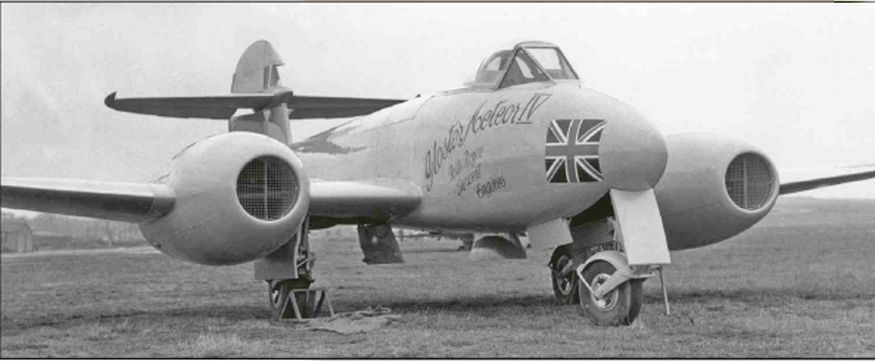
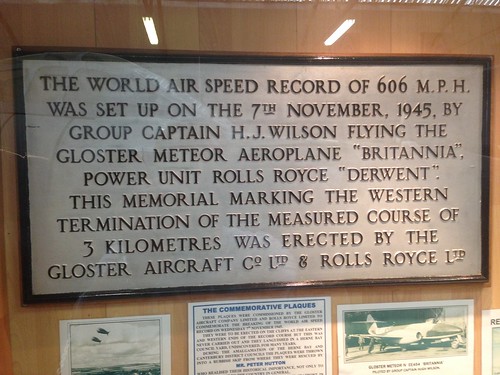

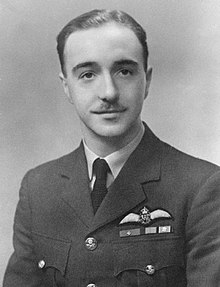

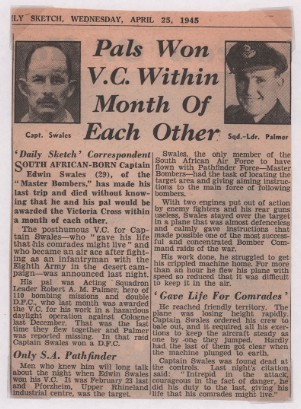
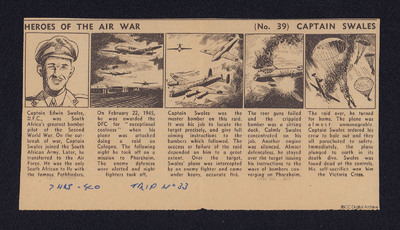


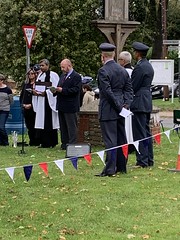


![USAAF personnel on the control tower at Thurleigh airfield [Z50-122-45]](https://bedsarchives.bedford.gov.uk/CommunityHistories/Thurleigh/ThurleighImages/USAAF%20personnel%20on%20the%20control%20tower%20at%20Thurleigh%20.jpg)


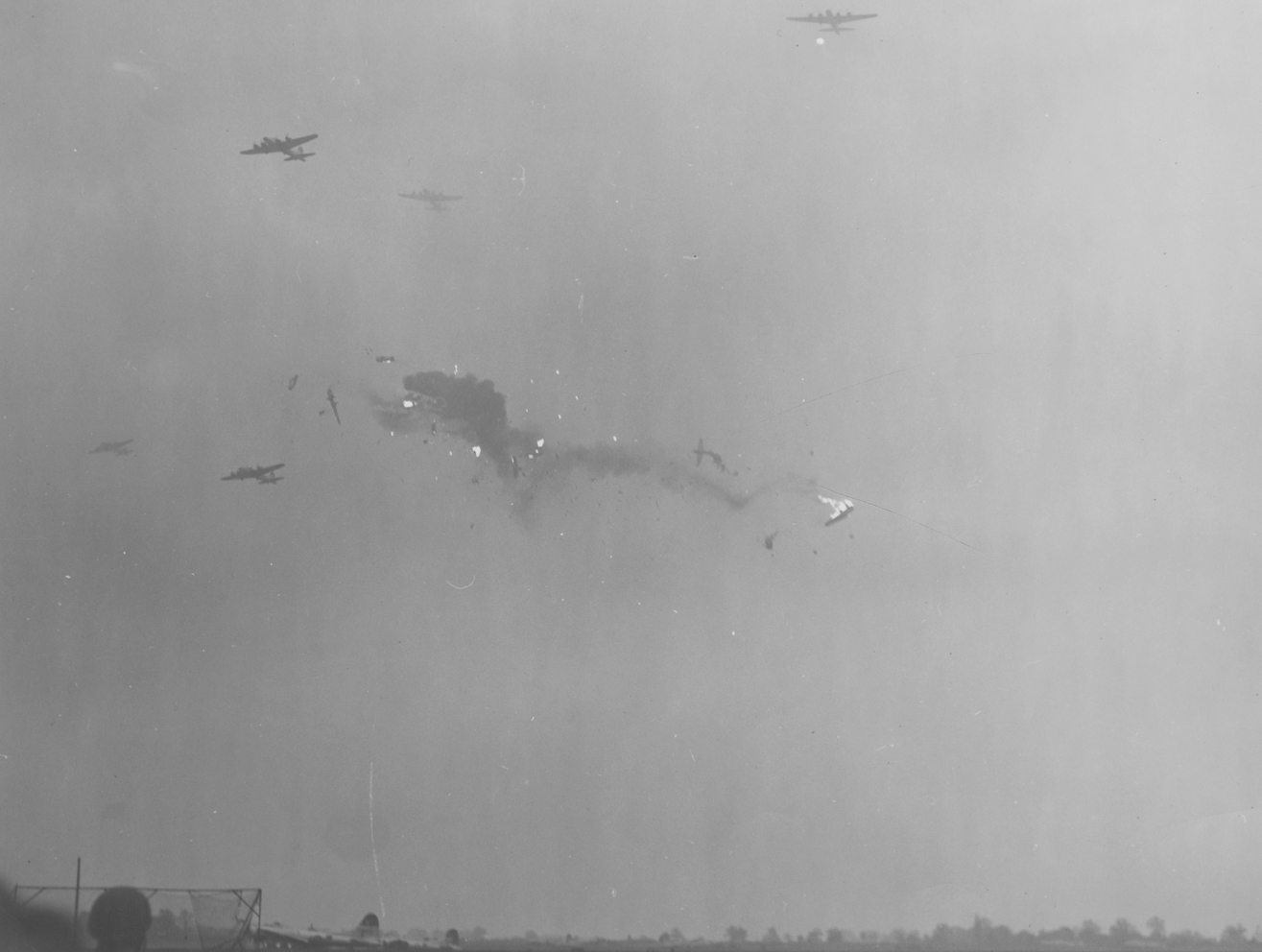
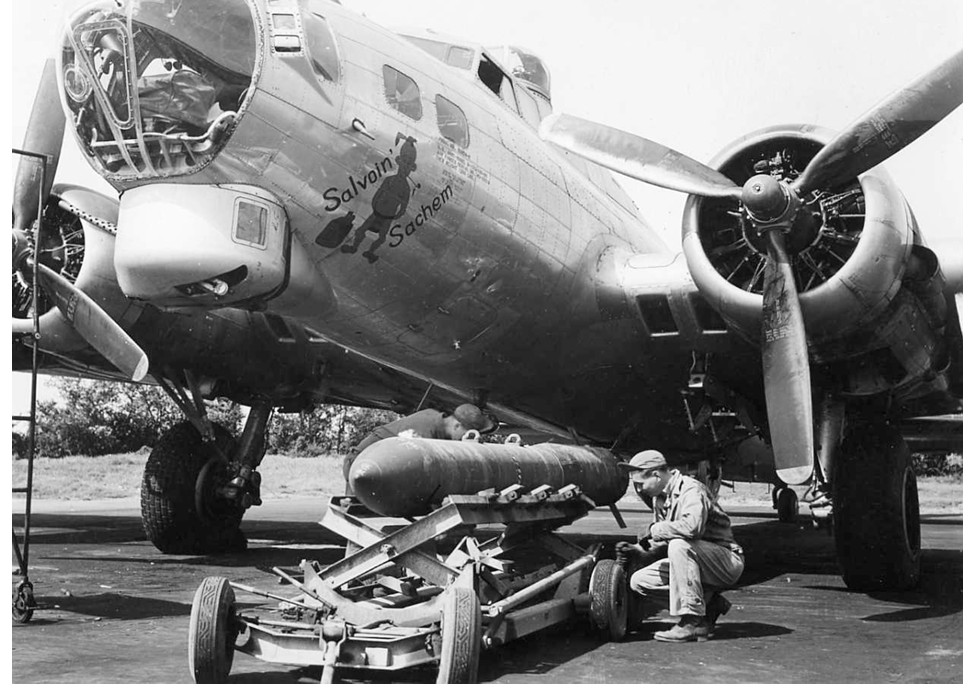
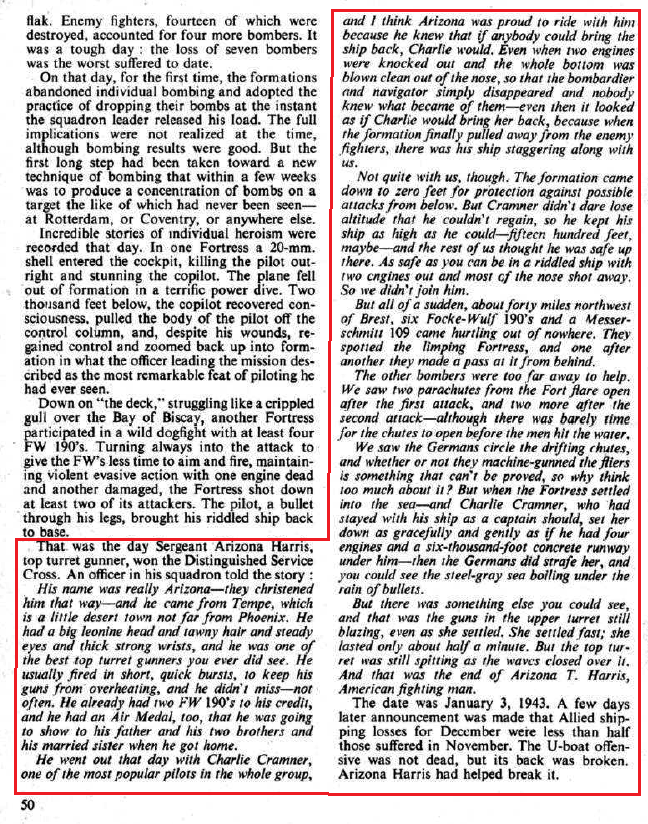

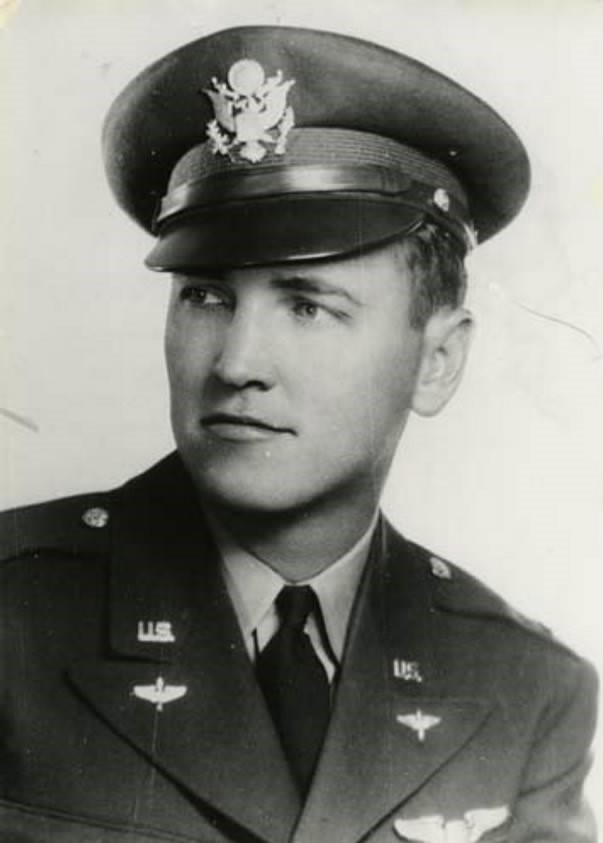
 Aviation Trails