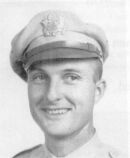
Flying Officer Leslie Manser VC. (RAFVR) 50 Squadron – Royal Air Force

Born in New Delhi in 1922, Flying Officer Leslie Thomas Manser, (66542) posthumously earned himself the Victoria Cross for an act of bravery in his Avro Manchester, over Cologne on the night of May 30th, 1942.
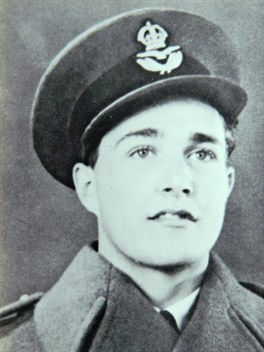
manser
Flying Officer Leslie Manser VC. (RAFVR) 50 Squadron – Royal Air Force

As a young child, he moved with his family to Radlett, Hertfordshire, England, was educated at St. Faith’s, Cambridge and Cox’s House Aldenham, Hertfordshire. Following this, he decided to join the Armed Forces. Attempts to enlist in both the Army and Royal Navy were unsuccessful, however, in August 1940, he approached the Royal Air Force and was quickly accepted.

Manser was commissioned as a pilot officer in May the following year and after further training, was posted on 27th August to 50 Sqn at RAF Swinderby, Lincolnshire, operating Hampdens.

His first experience of war, came very quickly. As a copilot, he was to join over 100 other aircraft in the Frankfurt raid only two days after his arrival. Further action saw him fly over prestigious targets such as Berlin, Hamburg and Karlsruhe before being posted twice to Finningly and then back to Swinderby, this time as an instructor.

Following a brief service with No. 420 (R.C.A.F.) Sqn, again on Hampdens,  Manser returned to 50 Sqn, this time operating from Skellingthorpe, Lincolnshire. It was here that he experienced for the first time, the ill-liked Heavy Bomber, the Avro Manchester. Manser flew a number of missions on this type including a leaflet drop over occupied Paris on April 8th. His skill as a pilot soon earned him promotion to the rank of Flying Officer just five days before his 20th birthday on May 6th 1944.

With high losses and increasing ‘failures’, bomber command was coming in for its own criticism and despite some success, Harris was making enemies at home as well as overseas. It was now that he created his master plan “The Thousand Plan” code named ‘Operation Millennium’. This would involve over 1,000 British bombers, attacking one major German city in a single night. Churchill, impressed with the idea, gave Harris full support and the wheels of Operation Millenium were put in motion. Aircraft and crews were pulled from every available source, many being taken from training units where crews were only partially trained and inexperienced.

Orders were finalised on 26th May, and an initial date for the attack set for the night of the 27/28th May, the target would be Bremen. However, continued unfavourable weather conditions made Harris’s first choice unsuitable and then at midday on the 30th May, 1942, Harris issued the order to strike, that night, against his second choice of target – Cologne.

The immense armada, which consisted of: Whitleys, Wellingtons and Hampdens, Stirlings, Halifaxes, Manchesters and Lancasters made up a force of 1,046 bomber aircraft along with an assortment of night fighters in support.

On the morning of 30th, Manser and another pilot were instructed to collect two Manchesters from Coningsby, Lincolnshire. As many of these aircraft were drawn from reserves and training squadrons, it was inevitable that many would be in poor condition. Manser’s was no exception, it had no mid upper turret and a sealed escape hatch.
50 sqn

When the order came and Manser took off, his aircraft L7301 ‘D’ Dog, an Avro Manchester Mk1, with a full bomb load of incendiaries, was now difficult to manoeuvre and he was unable to reach an altitude of more than about 7,000 ft. Hoping the main bomber force would attract the greater concentration of  flak, he decided to continue on.

They soon arrived over the target area and being lower, they were subjected to an immense barrage of anti-aircraft fire. Many of these shells struck the aircraft causing fires within the fuselage and the port engine. Careful nursing and a cool head by Manser, enabled them to eventually extinguish the fire which had now spread along the entire wing.

Struggling to maintain any height and keep the aircraft airborne, the crew threw out whatever they could to lighten the load. with little power, the aircraft lost considerable height and Manser finally ordered the crew to bail out. Knowing his crew would not survive jumping as the aircraft swung and moved awkwardly, he fought to maintain level flight for as long as possible. Refusing his own parachute over his crew’s safety, he held it just long enough for them to get out. The bomber finally crashed a few miles from the Dutch border near to Bree 13 mi (21 km) north-east of Genk in Belgium and burst into flames with Manser at the controls, he was just 20 years old. Manser’s bravery came out following debriefing of the crew members, five of the six having made it home through the resistance network.

Manser’s crew on that flight were:

Sergeant Baveystock (2nd Pilot)
Pilot Officer Horsley (Wireless Operator)
Sergeant Naylor (Rear Gunner)
Flying Officer ‘Bang On’ Barnes (Navigator / Bomb Aimer – Captured following jumping at low-level)
Sergeant King (Second Wireless Operator)
Sergeant Mills (Front Gunner)

Leslie Manser’s courage and self-sacrifice led to him being posthumously awarded the Victoria Cross. On 23rd October 1942. The citation for the VC read:

“In pressing home his attack in the face of strong opposition, in striving, against heavy odds, to bring back his aircraft and crew and, finally, when in extreme peril, thinking only of the safety of his comrades, Flying Officer Manser displayed determination and valour of the highest order.”

Other members of the crew:  Barnes, Horsley,  Baveystock, Mills and Naylor all received immediate awards of the Distinguished Flying Cross or Distinguished Flying Medal.

Today Manser’s memory lives on. A Primary School (The Leslie Manser Primary School) was opened in 1981 on what was the old RAF Skellingthorpe airfield. On 31st June 2004, a Memorial to F/Off. Leslie Manser was unveiled in  Stamprooierbroek near Molenbeersel, Kinrooi in the north-east of Belgium. He is buried at Heverlee War Cemetery Leuven, Flemish Brabant (Vlaams-Brabant), Belgium. Plot: 7.G.1.

Manser’s VC is on display in the Lord Ashcroft Gallery at the Imperial War Museum, London.

The following personal message from Sir Arthur Harris was sent to Leslie Manser’s Father:

“Sir,

Accept from me personally and on behalf of my Command and my Service, Salutations upon the signal honour, so well indeed merited, which his Majesty the King has seen fit to confer upon your gallant son. No Victoria Cross has been more gallantly earned. I cannot offer you and yours condolence in personal loss in circumstances wherein your son’s death and the manner of his passing must so far surmount, by reason of the great services he rendered this country and the last service to his crew, all considerations of personal grief. His shining example of unsurpassed courage and staunchness to death will remain an inspiration to his Service and to him an imperishable memorial.

Arthur T. Harris Air Marshal R.A.F.”
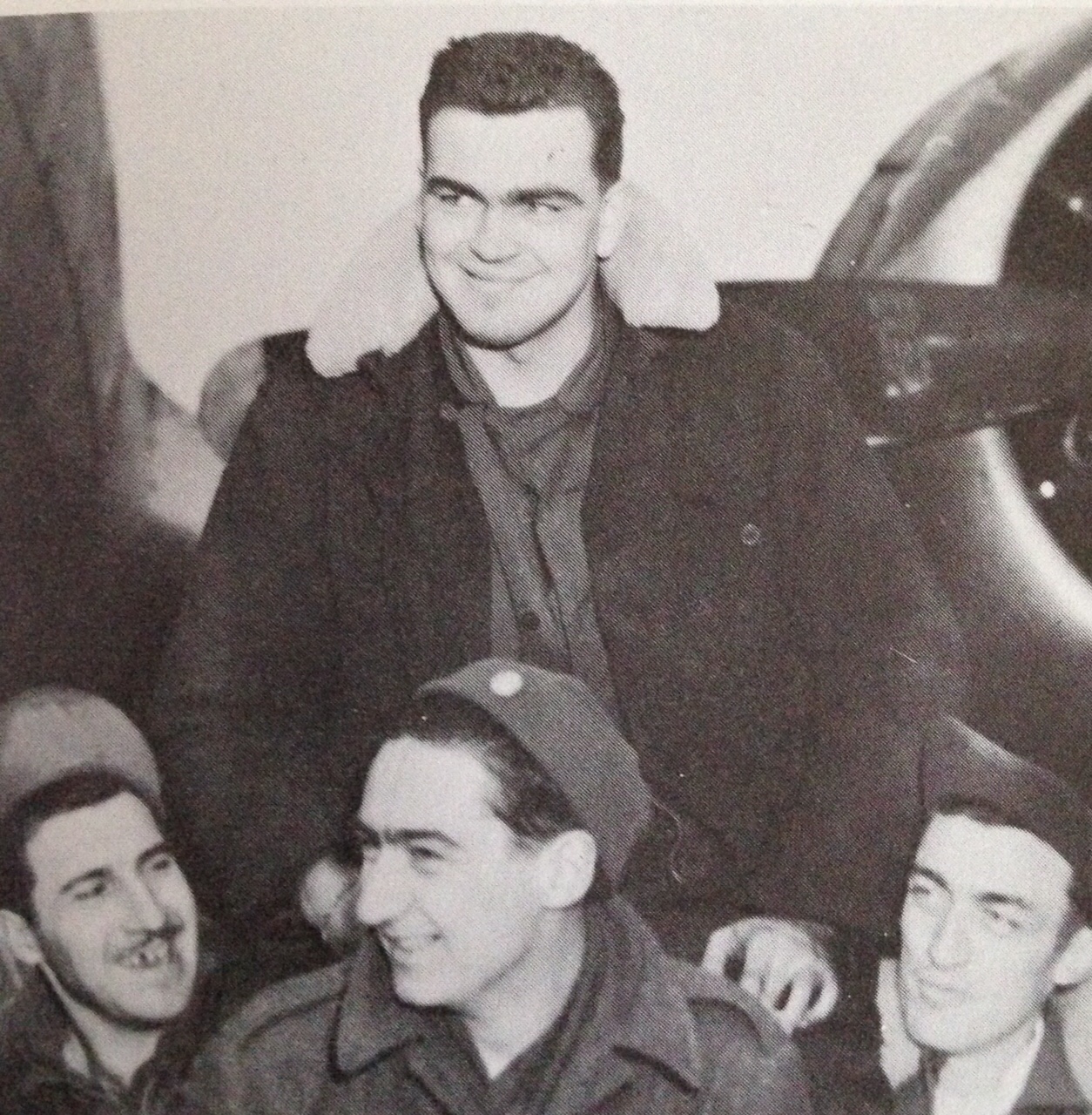
M/Sgt. Hewitt Dunn – Flew 104 missions.

RAF Framlingham (Parham) otherwise known as Station 153, achieved a remarkable record, or rather one man in particular did. His name was Hewitt Dunn, a Master Sergeant in the U.S.A.A.F and later the U.S.A.F.

Known as “Buck” he would achieve the remarkable record of completing 104 missions with the 390th Bombardment Group (Heavy) – a record that astounded many as life expectancy in a heavy bomber was short, and few survived beyond one tour of 30 missions.

Hewitt Tomlinson Dunn (s/n 13065206) was born on July 14th 1920. He progressed through school to join the Air Corps where he was assigned to the 390th Bombardment Group (Heavy), 13th Combat Wing, 3rd Air Division, Eighth Air Force, as a gunner in December 1943.

His first mission was with the 569th Bombardment Squadron in the following January. He completed his first gruelling tour of 30 missions by April that year, upon which he immediately applied for a further tour that he would complete by the summer of 1944. His attitude of ‘its not over until its won’, would see him accept a further remarkable third tour, virtually unheard of for a heavy bomber crew member.

On Friday, April 6th 1945, mission 930, an armada of aircraft of the U.S.A.A.F would strike at the marshalling yards in Leipzig, Germany. Inside B-17 #43-38663, ‘The Great McGinty‘, was Hewitt Dunn.

After the mission Dunn described how earlier at the morning briefing, he, like so many of his colleagues, had been a little ‘nervous’. Then, when the curtain was pulled back, their nervousness was justified, Leipzig – the 390th had been there before.

Many crews in that briefing would look to Dunn for signs of anguish, if he remained steady and relaxed, they knew it would be ‘easy’, if he sat forward, then it was going to be a difficult one. The atmosphere must have been tense.

Luckily, unlike other missions into the German heartland, this one turned out to be ‘just another mission’ a ‘milk run’. Much to the huge relief of those in command of the 390th, all aircraft returned safely.

On his arrival back at Framlingham, Dunn was greeted by cheering crowds, ground crews lifted him high in their air carrying him triumphantly away from his aircraft, it was a heroes welcome.

By the time the war had finished, Dunn had flown in 104 missions, he had been a tail gunner on twenty-six missions, twice a top-turret gunner, a waist gunner and the remainder as togglier (Bombardier). He had flown over Berlin nine times, he claimed a FW-190 shot down and had amassed an impressive array of medals for his bravery and actions, and all at just 24 years old.

Post war, he continued to fly as an Instructor Gunner for B-52s in the 328th Bomb Squadron, 93rd Strategic Bomb Wing, at Castle Air Force Base in California. Here he was described as “quiet and reserved” and never talked about his war experiences. He was “handsome man with black hair”, and only when he wore his dress uniform, did others realise how well decorated he was.

Dunn was considered a rock by those who knew him and perhaps immortal, but he was not, and on June 15th , 1961 after flying for a further 64 flights, he was killed. Details of his death are sketchy, but the man who had flown in more missions than any other person in the Eighth Air Force and had gone to train others in that very role, was highly decorated. He was looked up to and liked by those who knew him.

Following his death a service was held in Merced, California, his body was then taken to Arlington National Cemetery in Washington D.C. where he was finally laid to rest in grave number 3675, section 28.

For a man who achieved so much in his fighting career, little exists about him or his achievements. Maybe, by the end of the war, records were no longer needed, tales of dedication and bravery were no longer useful propaganda. Whatever the reason, Hewitt Dunn’s name should be heavily embossed in the history books of the Second World War.

hewiit-dunn

Hewitt Dunn on return from his 100th mission, April 1945 (IWM)

Hewitt Dunn’s medal tally:

– Air Force Longevity Service Award with 3 oak leaf clusters
– Air Medal with 13 oak leaf clusters (2 silver, 3 bronze)
– Air Medal with 7 oak leaf clusters (1 silver, 2 bronze)
– American Campaign Medal
– Distinguished Flying Cross with 1 oak leaf cluster
– Good Conduct Medal
– National Defence Service Medal
– Silver Star
– World War II Victory Medal
– European-African-Middle Eastern Campaign Medal with 1 bronze star
– European-African-Middle Eastern Campaign Medal with 1 silver star

Hewitt Dunn’s story is one of many featured in Heroic Tales.

Lt. Col. Leon Vance 489th BG – Medal of Honour.

Leon vance.jpgThe story of Leon Vance is one of  the saddest stories to emerge from the Second World War. He was a young American, who through his bravery and dedication, saved the lives of his colleagues and prevented their heavily stricken aircraft from crashing into populated areas of southern England. Following a mission over France, his was very severely injured, but miraculously fought on.

Leon Robert Vance, Jr. known as ‘Bob’ to his family and friends, was born in Enid, Oklahoma, on August 11th, 1916. He graduated from high school in 1933 after receiving many honours and being singled out as a high performing athlete. He went on, after University, to the prestigious Training College at West Point in 1935, staying until his graduation four years later in 1939. It was here, at West Point, he would meet and marry his wife Georgette Brown. He and Georgette would later have a daughter, after whom Vance would name his own aircraft ‘The Sharon D’.

Vance would become an aircrew instructor, and would have various postings around the United States. He became great friends with a Texan, Lieutenant Horace S. Carswell, with whom he would leave the Air Corps training program to fly combat missions in B-24 Liberators. They became great friends but would go on to fight in different theatres.

Prior to receiving his posting, Vance undertook training on Consolidated B-24s. Then, in October 1943, as a Lieutenant Colonel, he was posted to Europe with the newly formed 489th Bombardment Group (Heavy), as the Deputy Group Commander. One of the last groups to be assigned to the European theatre, they formed part of the 95th Combat Bombardment Wing (2nd Bomb Division),  Eighth Air Force, and were sent to RAF Halesworth (RAF Holton) designated Station 365 by the USAAF.

The group left their initial base at Wendover Field, Utah in April / May 1944 and their first mission would be that same month on May 30th, 1944, as part of a combined attack on communication sites, rail yards and airfields. A total of 364 B-24s were to attack the Luftwaffe bases at Oldenburg, Rotenburg and Zwischenahn, along with other targets of opportunity far to the north in the German homeland. With only 1 aircraft lost and 38 damaged, it was considered a success and a good start to the 489th’s campaign.

As the build up to Normandy developed, Vance and the 489th would be assigned to bombing targets in northern France in support of the Normandy invasion about to take place further to the south. An area the unit would concentrate on, prior to the Allied beach invasion on June 6th that year.

The day before D-day, the 489th would fly to Wimereaux, in the Pas-de-Calais region of northern France. This would be Leon Vance’s final mission.

File:846bs-b24-42-94860--halesworth.jpg

B-24H Liberator of the 489thBG, RAF Halesworth*2

The group, (Mission 392),  consisted of 423 B-17s and 203 B-24s and were to hit German coastal defences including: Le Havre, Caen, Boulogne and Cherbourg areas as  a precursor to the Normandy invasion. Some 127 P-47s and 245 P-51s would support the attacks. The 489th would assemble at 22,500 feet on the morning of June 5th, proceed to the south of Wimereaux, fly over dropping their payload, and then return to England. On the run in to the target, Vance was stationed behind the pilot and copilot.  The lead plane encountered a problem and bombs failed to jettison. Vance ordered a second run, and it was on this run that his plane, Missouri Sue, took several devastating hits.

Four of the crew members, including the pilot were killed and Vance himself was severely injured. His foot became lodged in the metal work behind the co-pilots seat. There were frantic calls over the intercom and the situation looked bad for those remaining on board. To further exacerbate the problems, one of the 500lb bombs had remained inside the bomb bay armed and in a deadly state, three of the four engines were disabled, and fuel spewed from ruptured lines inside the fuselage.

Losing height rapidly, the co-pilot put the aircraft into a dive to increase airspeed. The radio operator, placed a makeshift tourniquet around Vance’s leg, and the fourth engine was feathered.  They would then glide toward the English coast.

The aircraft was too damaged to control safely, so once over English soil, Vance ordered those who could, to bail out. He then turned the aircraft himself out to the English Channel to attempt a belly landing on the water. A dangerous operation in any aircraft, let alone a heavy bomber with an armed bomb and no power.

Still trapped by the remains of his foot, laying on the floor and using only aileron and elevators, he ensured the remaining crew left before the aircraft struck the sea. The impact caused the upper turret to collapse, effectively trapping Vance inside the cockpit. By sheer luck, an explosion occurred that threw Vance out of the sinking wreckage,  his foot now severed.  He remained in the sea searching for whom he believed to be the radio operator, until picked up by the RAF’s Air Sea Rescue units.

Vance was alive, but severely injured. He would spend a number of weeks, recuperating in hospital, writing home and gradually regaining his strength. Disappointed that his flying career was over, he looked forward to seeing his wife and young child once more. However, on a recuperation trip to London, Vance met a young boy, who innocently, and without thought, told him he wouldn’t miss his foot. The emotional, impact of this comment was devastating to Vance and he fell into depression. Then, news of his father’s death pushed him down even further.

Eventually, on July 26th, 1944 Vance was given the all clear to return home and he joined other wounded troops on-board a C-54, bound for the US. It was never to arrive there.

The aircraft disappeared somewhere between Iceland and Newfoundland. It has never been found nor has the body of Leon Vance or any of the others on board that day. Vance’s recommendations for the Medal of Honour came through in the following  January (4th), but at the request of his wife, was delayed until October 11th 1946, so his daughter could be presented the medal in her father’s name.

The citation for Leon Vance reads:

For conspicuous gallantry and intrepidity above and beyond the call of duty on 5 June 1944, when he led a Heavy Bombardment Group, in an attack against defended enemy coastal positions in the vicinity of Wimereaux, France. Approaching the target, his aircraft was hit repeatedly by antiaircraft fire which seriously crippled the ship, killed the pilot, and wounded several members of the crew, including Lt. Col. Vance, whose right foot was practically severed. In spite of his injury, and with 3 engines lost to the flak, he led his formation over the target, bombing it successfully. After applying a tourniquet to his leg with the aid of the radar operator, Lt. Col. Vance, realizing that the ship was approaching a stall altitude with the 1 remaining engine failing, struggled to a semi-upright position beside the copilot and took over control of the ship. Cutting the power and feathering the last engine he put the aircraft in glide sufficiently steep to maintain his airspeed. Gradually losing altitude, he at last reached the English coast, whereupon he ordered all members of the crew to bail out as he knew they would all safely make land. But he received a message over the interphone system which led him to believe 1 of the crew members was unable to jump due to injuries; so he made the decision to ditch the ship in the channel, thereby giving this man a chance for life. To add further to the danger of ditching the ship in his crippled condition, there was a 500-pound bomb hung up in the bomb bay. Unable to climb into the seat vacated by the copilot, since his foot, hanging on to his leg by a few tendons, had become lodged behind the copilot’s seat, he nevertheless made a successful ditching while lying on the floor using only aileron and elevators for control and the side window of the cockpit for visual reference. On coming to rest in the water the aircraft commenced to sink rapidly with Lt. Col. Vance pinned in the cockpit by the upper turret which had crashed in during the landing. As it was settling beneath the waves an explosion occurred which threw Lt. Col. Vance clear of the wreckage. After clinging to a piece of floating wreckage until he could muster enough strength to inflate his life vest he began searching for the crew member whom he believed to be aboard. Failing to find anyone he began swimming and was found approximately 50 minutes later by an Air-Sea Rescue craft. By his extraordinary flying skill and gallant leadership, despite his grave injury, Lt. Col. Vance led his formation to a successful bombing of the assigned target and returned the crew to a point where they could bail out with safety. His gallant and valorous decision to ditch the aircraft in order to give the crew member he believed to be aboard a chance for life exemplifies the highest traditions of the U.S. Armed Forces”*2

Leon Vance’s actions would be remembered. His local base in Oklahoma was renamed ‘Vance Air Force Base’ on July 9th, 1949. The gate at Tinker Air Force Base, Oklahoma was also later named after him on May 9th, 1997, and his name appears on the ‘Wall of the Missing’ at Madingley American War Cemetery in Cambridge, England.

DSC_0582

The American War Cemetery, Madingley. Leon Vance’s Name Appears on the wall of the missing (to the left of the picture).

Leon Robert Vance, Jr. (August 11th, 1916 – July 26th, 1944)

For other personal tales, see the Heroic Tales Page.

Sources.

* Photo public domain via Wikipedia

*1 “Medal of Honor recipients – website World War II”.

*2 Photo Public Domain via Wikipedia.