379th BG Memorial, June 22nd 2019

June 22nd 2019, the day of the unveiling of the memorial to the crews of two 379th Bomb Group B-17s that collided over Allhallows, Kent on June 19th 1944.

The day finally arrived, after six months of organising, emailing, badgering and beavering away, Mitch Peeke’s vision of a memorial for the crew of B-17 #44-6133 piloted by 2nd Lieutenant Armand Ramacitti, finally arrived.

A break in what had been many days of storms and heavy rain allowed the sun to shine on this, a quiet corner on the northern coast of Kent. A place which overlooks the mud flats of the Thames Estuary, with Essex and Southend beyond. A place where like minded people gathered to pay their respects to the brave crew of a B-17 that fought tirelessly in the skies of Europe during World War II.

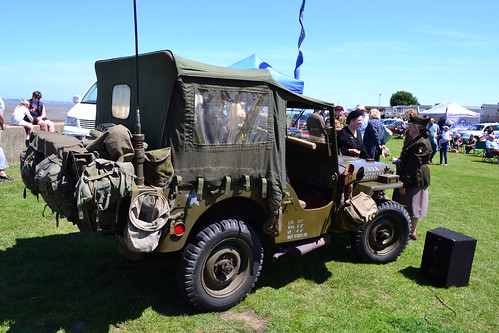
Flanked by two authentic World War II jeeps, reenactors and an Air Cadet Guard of Honour, Mitch Peeke took centre stage and reminded us why we were here. With the ‘Stars and Stripes’ flapping in the wind, Mitch told the story of the two aircraft that collided in the skies above, an accident in which eleven young men lost their lives almost 75 years ago to the day.

Allhallows Memorial 379th BG

The Thames Estuary were the B-17 came down.

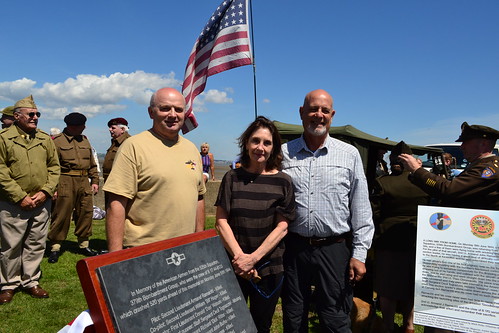
A solemn silence fell as Mitch then introduced two living relatives of that crew, Jeanne Cronis-Campbell (the daughter of Bombardier Second Lieutenant Theodore ‘Teddy‘ Chronopolis) and Noel Togazzini (nephew of Flight engineer/top turret gunner: Staff Sergeant Cecil Tognazzini), who had flown over all the way from the United States for this special occasion.

The sound of TAPS then resonated across the site, after which Jeanne and Noel lifted the flag from the plaque. The Reverend Steven Gwilt then blessed the memorial, and lead the gathered in  prayers of remembrance.

Allhallows Memorial 379th BG

Jeanne and Noel unveil the memorial.

The silence  prevailed, people’s thoughts perhaps turning to that day in 1944, and what must have been going through the minds of those young men as they battled to get out of that B-17 as it fell perilously towards Earth and a decisive fate.

Mitch then stepped forward once more, introduced the band who lightened the moment with their collection of well known 1940’s music. The band played on throughout the afternoon, the drinks flowed and friendships were forged. Just as in the 1940s, hands that had stretched across the sea were now hands together, stories and personal moments were shared, it was like meeting an old friend.

Allhallows Memorial 379th BG

The Memorial at Allhallows.

The day was more than a success, it was a celebration of life. A celebration that now sees a memorial, long since missed,  standing as close as it can to the point of impact, where all but one of the Ramacitti crew died.

My own personal thanks go to Mitch for the hard work he put in to organising the event, to both Jeanne and Noel, for sharing their stories and also to Geoff Burke for sharing stories of his own personal voyage to this point.

Most of all though, I would like to thank the crew of B-17 #44-6133, who fought so bravely for the freedom we all enjoy today.

The crew of #44-6133 were:

Pilot: Second Lieutenant Armand Ramacitti
Co-pilot: Second Lieutenant William ‘Bill’ Hager
Navigator: First Lieutenant Donald ‘Don’ Watson
Flight engineer/top turret gunner: Staff Sergeant Cecil Tognazzini
Radio Operator: Sergeant Richard ‘Dick’ Ritter
Ball turret gunner: Staff Sergeant John Burke
Waist gunner: Corporal Paul Haynes
Tail gunner: Sergeant Warren Oaks (his second mission)
Bombardier: Second Lieutenant Theodore Chronopolis

The full story of the accident can be read in Mitch’s guest post “A Long Way From Home.

Allhallows Memorial 379th BG

Mitch, Jeanne and Noel.

Allhallows Memorial 379th BG

World War II Jeep ‘Jezebel’.

Allhallows Memorial 379th BG

Allhallows Memorial 379th BG

Geoff’s print of the two B-17s signed by some surviving members of the crew and relatives. Many of these crewmen have now passed on.

Allhallows Memorial 379th BG

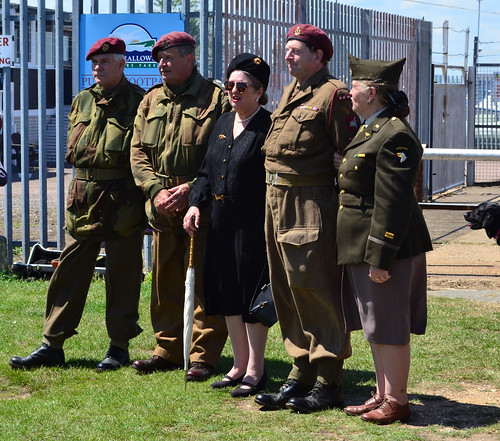
Some of the reenactors.

Lt. Jack Watson 303rd BG. – From Villain to Hero.

The end of training flights in the Second World War in the quiet and blue skies of the United States, were occasionally ‘celebrated’ with flyovers and ‘buzzing’ of the home town of family or girl friends. Whilst this unofficial activity was frowned upon, in general, a blind eye was turned by Commanding Officers of the various Groups. However, one such activity was not taken quite so lightly, and almost led to the end of a promising career before it had even started.

At RAF Molesworth (Station 107) not far from Huntingdon, Cambridgeshire, the 303rd Bomb Group (BG) had been serving the Allied offensive since mid September 1942. They had taken heavy casualties after participating in many prestige missions including the disastrous August and October raids on the ball-bearing plant at Schweinfurt. The invincibility of the heavily armed B-17 was very quickly shown to be a myth.

After a period of calm, primarily due to persistent bad weather rather than any  significant strategic military decision, the USAAF was allowed unofficial time to recuperate, rebuild and rearm. During this period, new recruits and aircraft poured into the United Kingdom via either the Northern or the Southern transit routes over the Atlantic Ocean.

On one of these aircraft was Lt. Jack Watson, a ‘green’ pilot’ who had recently completed his training, and was now on his way to fight in a war a long way from his Indianapolis home.

A fresh faced 2nd Lt. Jack Watosn who bravely brought home his burning and crippled B-17 bomber after ordering his crew to bail out. (IWM UPL 32160)

On eventual arrival at Molesworth, Lt. Watson was soon to experience for himself the horrors and reality of war. On January 11th 1944, he was part of a 291 bomber force attacking both the FW190 production factory as Oschersleben and the Junkers factory at Halberstadt, Germany. On what became one of the blackest days for the Group, eleven out of the forty aircraft dispatched were lost, an attrition rate of just over 25%, which was also the highest loss of the entire force.

On the inward flight, the weather, which had dogged much of the winter, closed in over the continent.  A recall message was sent out, the 2nd and 3rd Divisions turning for home, but it was ignored by Brigadier General Robert F. Travis, 1st Bombardment Division Commander in the lead plane – ‘The Eight Ball‘. Original orders were to bomb by visual methods but if cloud cover prevailed then pathfinder Liberators  were to mark the target.

As the weather had deteriorated, cloud being present as high as 24,000 feet, fighter cover was all but withdrawn. The bombers were now virtually on their own and much smaller in number.

Alerted early on, the Luftwaffe had managed to formate an enormous welcoming party for the now weakened force. It would be the strongest collection of Luftwaffe aircraft since the October raids, and it was waiting, eager for blood.

The first contact between the two forces was made over the shallow waters of the  Zuiderzee on the inward flight. A collection of rocket-firing fighters launched a gruesome attack on the lead section of the 303rd, an attack that lasted for several hours and took out numerous aircraft.

From the Initial point (IP) to the target, flak was light but accurate, more aircraft took hits and further damage was sustained by the formation. Those bombers that did get through managed to bomb the target, the accuracy of which was considered ‘excellent’.

On the return flight  B-17F #42-29524 ‘Meat Hound‘, piloted by Lt. Jack Watson was attacked again by waves of enemy fighters who zoned in on the bomber and its supporting formation. With many aircraft now crippled, the B-17s were easy targets for the fierce and determined Luftwaffe defenders.

Lt. Watson’s aircraft, (a B-17F-55-BO, which had previously been assigned to the 306th BG transferring to the 303rd in July 1943), was hit hard over Durgerdam. The damage looked terminal, two engines were on fire, there was substantial damage around the wing root and the left elevator had been shot completely off. With such damage, not only was the aircraft difficult to control but it was losing vital airspeed and altitude as well.

Lt Watson, gave the bail out order, holding the aircraft steady until all the crew had departed. Lt. Watson, who had by then put the aircraft on automatic pilot, was himself preparing to jump, but the thought of the cold waters below forced his retreat to the cockpit and the challenge of getting home alone.

Of those who did jump, four fell into the Ijsselmeer and sadly drowned, and another four were caught by occupying forces and sent to POW camps. The ninth, Lt. Col. Clayton David, the Co-Pilot, managed to evade capture eventually making his way back to England. Clayton’s journey took him through Holland and Belgium and on into France, where he headed south, eventually crossing the Pyrenees into Spain. From there, he reached Gibraltar eventually returning to England in May 1944, four months after he was reported as ‘Missing in Action.’ For his efforts he received the Purple Heart*1.

Lt. Watson, now alone in the crippled B-17 fought on, keeping the aircraft flying toward England. Once over home territory he brought the aircraft down through the thick cloud that had dogged so many of Britain’s airfields that winter, landing at RAF Metfield, an American Fighter airfield home at that time to the 353rd Fighter Group.

So severe was the fire on the aircraft that it took fire crews a considerable time to extinguish it. These crews were not only amazed to see just one crewman exit the aircraft, but also to find an unexploded shell sitting directly behind the pilots seat.

B-17 ‘Meat Hound‘ on the ground at Metfield, Suffolk after landing with two burning engines. The aircraft was subsequently written off and salvaged for usable parts.  (IWM UPL 32171).

On his arrival back at Molesworth, Lt Watson received a telegram sent by New York Mayor Fiorello LaGuardia, forgiving Watson for his villainous activity previously in late 1943.

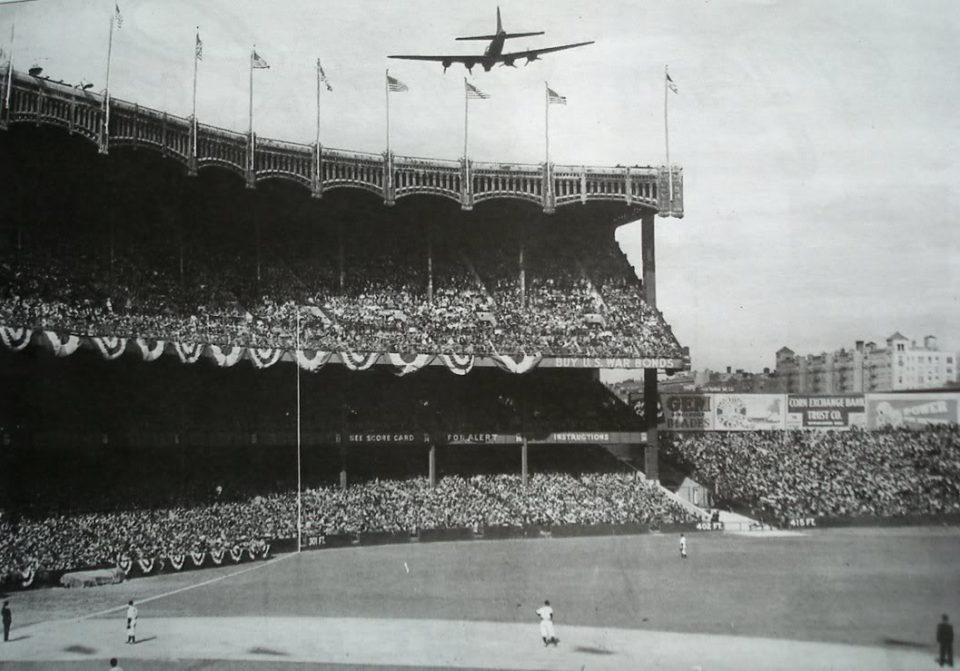
It was at this time that Watson along with three other pilots; 2nd Lts. Robert Sheets, Elmer Young, and Joseph Wheeler, buzzed the World Series game between St. Louis Cardinals and the New York Yankees at the Yankee Stadium, New York. Mayor LaGuardia was so incensed by the action at the time, that he insisted Watson and the others be disciplined, court martial proceedings being instigated as soon as the four landed in Maine*2.

However, it was not to be, the top brass needing every aircraft and crewman they could muster, sent the four on their way with a $75 fine and a stiff telling off!

Although tinged by the sad loss of his crew, the villain of the World Series’ Buzzing, had gone on to prove himself more than a worthy pilot, making history in more ways than one.

Yankee Stadium, Bronx, NY, October 5, 1943 – B-17 Flying Fortress bombers makes a surprise visit during the first game of the 1943 World Series

A Boeing B-17 ‘buzzes’ the Yankee stadium October 5th 1943. (Author unknown).*3

The crew of ‘Meat Hound‘ were:

Pilot – 2nd Lt. Jack Watson (Returned to Duty)
Co-Pilot – Lt Col. Clayton David (Evaded)
Navigator – 2nd Lt. John Leverton (POW)
Radio Operator –  Stf. Sgt. Harry Romaniec (KIA)
Bombardier – 2nd Lt. Vance Colvin (KIA)
Flight Engineer/Top Turret Gunner – Stf. Sgt. Sam Rowland (POW)
Right Waist Gunner – Sgt. William Fussner (KIA)
Left Waist Gunner – Gene Stewart (POW)
Tail Gunner – Sgt. Roman Kosinski (POW)
Ball Turret Gunner – Sgt. Fred Booth (KIA)

The B-17F, #42-29524, was delivered to Denver 31st December 1942; then assigned to the 423rd BS (306th BG) as ‘RD-D’ at Thurleigh 2nd March 1943. It was later transferred to the  358th BS (303rd BG) as ‘VK-K’ based at Molesworth on 30th July 1943.

For their efforts in this mission, the 303rd Bomb Group were awarded a Distinguished Unit Citation, the only time the entire unit achieved such an accolade.

This and other similar stories appears in Heroic tales of World War 2.

Sources and Further Reading.

Missing Air Crew Report 4269

*1 Herald-Whig Obituaries Website accessed 27/5/19

*2 303rd BG website ‘Outfield Fly’ by Hap Rocketto accessed 27/5/19

*3 Photo appeared in ‘Old-Time Baseball Photos and Essays’, blogsite. accessed 27/5/19

June 16th 1942 loss of Stirling LS-X.

On June 16th, 1942, Stirling LS-X #N6088, took off from RAF Waterbeach in Cambridgeshire, on a routine training flight. On board that day were: (Pilot) P/O. M. Scansie (RNZAF); Sgt. E. Morris; Flt/Sgt. J. Tomlinson; Sgt. D. Robinson; Sgt. J. Smith; Sgt. R. Broadbridge; Flt/Sgt. H. Johnson (RCAF) and Sgt. R. Le Blanc.

At 15:25 the aircraft, a Stirling MK.I of ‘C’ Flight 1651 Conversion Unit (CU), left Waterbeach heading north-westerly. It was to be a routine cross country navigation exercise.

Around forty-five minutes later, the aircraft was seen on fire, and falling in a spiral toward the ground with its port wing detached, outside of the outboard engine. The bomber hit the ground on the Great North Road near to Barnby Moor.

The crew flying the aircraft that day were a young crew, the pilot being 24 years of age, whilst Sgt. Ernest Morris was 19, Sgt. David Robinson – 21, Sgt. Roland Broadbridge – 20, Flt/Sgt. Harry Johnson – 26 and Sgt. R. Le Blanc. the oldest at 27 years of age.

What also made this particular accident more significant was that the Stirling, a veteran of European Operations, had flown for nearly 250 hours on twenty-two operational sorties, a remarkable achievement for a Stirling!

The Stirling would prove to be a poor bomber. Designed to Air Ministry Specification B.12/36 (the very reason it was to be poor), it had to have a reduced wingspan to enable it to fit inside the currently available hangars. This reduction gave poor lift qualities, barely able to achieve more than 17,000 feet when fully loaded. Another restrictive feature was the bomb bay design. Being sectioned it could not accommodate the larger bombs being brought into production as the war progressed, thus it underachieved compared to its stable mates the Halifax and Lancaster. The original specification set out such requirements, and so the design was flawed from the start. It did however, have good low altitude handling capabilities, but this wasn’t enough to secure its future as a long term investment in Bomber Command.

As a bomber, casualties in Stirlings were high, and toward the end of the war it was reduced to secondary operations, an area where it more than proved its worth as both a glider tug, mine layer and paratroop transport aircraft.

Apart from Sgt. Robinson, all of the crew are buried at Finningley, St. Oswalds Church. Sgt. Robinson is buried in his home town Bedlay Cemetery, Lanark.

RAF Waterbeach appears in Trail 11.

Sources and Further Reading.

The crew’s interment along with photos of Raymond Le Blanc are available on the Compagnons de la Libération du Havre website.

Chorley. W., “Bomber Command Losses Heavy Conversion Units and Miscellaneous Units 1939-1947 ” Midland Publishing, 2003.


RAF Glatton – A short lived airfield with a big history (Part 3)

In the last two parts (Part 1 and Part 2) of RAF Glatton – a short lived airfield with a big history, we see the war draw to a close and those left at Glatton begin dreaming of home. But as the year turns to 1945, there is still plenty to do and many more missions to fulfil. 

January 1945 and Glatton’s 457th continued the battle, returning to skies over Germany once more. This time they were assigned to the oil refinery at Derben, an industrial target sitting on the banks of the Elbe to the west of Berlin. A massed and concentrated attack, it saw all the 1st Air Division in operation along with both the 2nd and 3rd Air Divisions. In all 850 B-17s and B-24s were launched that winter’s day. With cloud covering large parts of the continent, targets were difficult to find, the Group had to deviate from both its primary and secondary targets, as neither could be seen for visual bombing. Instead Kassel was chosen as a target of opportunity, and the bomb run made. Again, cloud covered much of the area, but the target itself was found to be clear and so the formation followed a Pathfinder force and bombed on their markers.

Whilst Flak was light, it was considered accurate, with fourteen aircraft being damaged, but thankfully there were no 457th losses that day, and all crews returned to Glatton safely. It was during this mission that B-17 #42-38021 “Mission Maid” achieved her seventy-fifth mission, a remarkable achievement for any heavy bomber of the Second World War. In February she would be forced down onto French soil, after which she was declared ‘War Weary’ and transferred No. 5 SAD where she was modified to carry lifeboats. In July 1945 she was then transferred to the United States where she was sold for scrap metal. During her operational life ‘Mission Maid‘ was credited with the downing of eight enemy aircraft – a sad end to a glorious career.

B-17G #42-38021 “Mission Maid” ‘K’ 748th BS at Glatton *7

The cold winter of 1944 / 45 also saw the German’s last-ditch effort to defeat the allied forces on the ground. With a massed counter attack through the Ardennes forests in what became famously called the ‘Battle of the Bulge’, the Germans surrounded the town of Bastogne and the 101st Airborne. The Glatton crews supported the ground troops by attacking resupply lines behind enemy lines, including the numerous failed attempts at the Remagen Bridge.

As the Allies fought their way over the Rhine, the Glatton crews were there in support attacking other targets behind German lines.

On April 20th 1945, the 457th flew their final operational mission, attacking the marshalling yards at Seddin, to the south of Berlin. With the end of the war just around the corner there was little resistance from either ground forces or the Luftwaffe, none of the 457th aircraft taking hits or suffering any damage, it was virtually a ‘milk run’.

Following VE day, the 457th flew POWs back from Europe to England, then with no further action to undertake, the airfield was handed back to the RAF’s No. 3 Group under the control of Bomber Command operating both the Avro Lancaster and Consolidated B-24 Liberators flying out to the Middle East.

By June the war for the 457th was over. The men and machines were transferred back to the United States with the aircraft leaving Glatton between May 19th and 23rd, and the ground echelons sailing on the Queen Elizabeth from Gourock in Scotland, at the end of June. After arriving at New York there was 30 days rest before the men assembled at Sioux Falls. Here the axe fell and the 457th was no more, the four squadrons being disbanded for good and the Group removed from the Air Forces inventory. Glatton was eventually closed and the site was sold off in 1948.

IMG_0365

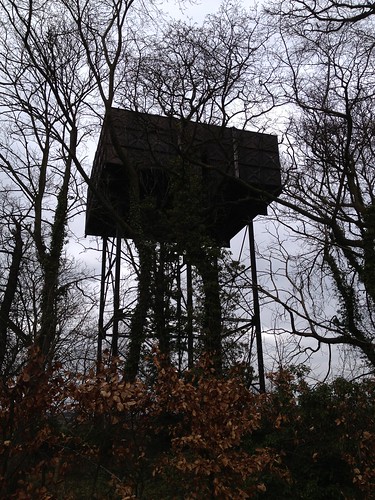
The 50ft high Braithwaite water tower is virtually the only surviving structure at Glatton. Thus stands on the edge of the former Site 7.

The 457th had been short-lived. They had taken part in many of Europe’s major battles, seen action over Normandy, the breakout at St. Lo, supported the Airborne attack on Holland and the crossing over the Rhine into Germany itself. They had bombed many of Germany’s major cities, including the heart of the German Reich, Berlin. In all, the 457th flew 236 missions, dropping 17,000 tons of bombs, and destroying 33 enemy fighters (along with 12 probable and 50 damaged). They lost a total of 83 aircraft to enemy action, with a small number being scrapped following accidents and heavy flak damage.

Glatton quickly returned to agriculture. The vast technical area was demolished, concrete tracks were dug up and buildings removed. Two of the three runways however, remained, and during the 1970s flying activity began to return once more. The main runway was resurfaced, and is now used by the Peterborough Business Airport whilst the second runway remains in its original concrete but unlicensed for any aviation activity. The third runway has been turned into the road that traverses the site, but all other hard tracks have all but gone.

The original control tower was demolished years ago but a new one has been built and flying continues in the form of microlight, helicopter and fixed wing training.

Conington aug 2014 018

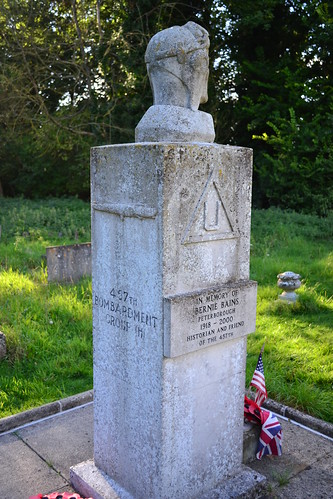
All Saints Church Memorial looking toward the airfield.

At the nearby All Saints Church in Conington, a memorial stands with the bust of a pilot looking over toward the field as if watching for lost comrades to return, a poignant and moving figure, it has gradually and very sadly begun to look rather unkempt. A further memorial has been erected adjacent to the only substantial building left, a water tower at what was the original entrance to the site next to the main A1 road. This tower now stands as a reminder of the days when B-17s would rumble over the fields on their way to occupied Europe, perhaps never to return. A small display is available in the flying school offices, a reminder to the budding flyers of today of the strong history and heritage of RAF Glatton.

From Glatton, the Trail continues on south. Here we find the second site of this trip, another American air base, that of RAF Kimbolton – home of the 379th BG.

Sources and Further Reading.

The full account can be found at Trail 6 – American Ghosts.

*1 Columbia Basin Herald, January 3rd, 2017, accessed 22/4/19.

*2 MACR 2917

*3 MACR 3197

*4 Image courtesy of 457th BG Association.

*5 Photo the 457th BG Association website.

*6 MACR 9767

*7 IWM (UPL 22067)

A website dedicated to the 457th, with diaries, stories and rare photos of Glatton is worth a visit for more information on the 457th.

379th Bomb Group Memorial update – 3 weeks to go!

A message from Mitch Peeke:

Another update for everyone, probably the final one as the event is now only three weeks away!

Everything is now pretty much “there”. We had a meeting at the Holiday Park to set out a rough timetable for the day which has now been emailed to all interested parties.

I picked up the metal supports for the plaque and storyboard yesterday. Just have to paint them now! They will be a slightly warm shade of blue, with a planished finish.

I finished mounting the plaque and the storyboard onto their respective mahogany pieces last weekend and have to admit that they look quite handsome! Three coats of Ronseal varnish brought the wood out beautifully!

The Holiday Park’s Grounds Team have now started construction of the memorial base. It will be in the form of an elongated diamond (landscape) with the plaque on the left side angled toward the crash site and the storyboard on the right angled slightly inwards toward the reader. The base will be bordered by white painted kerbstones and the whole diamond will be infilled with large plum slate chips. Once installed, the memorial will be covered with a US flag till it is unveiled.

The memorial will be unveiled jointly by Noel Tognazzini and Jeanne Cronis-Campbell; their path to the memorial flanked by an Honour Guard from TWO Squadrons of Air Cadets, whilst TAPS is being blown solo on a trumpet by the Leader of The Medway Big Band, who has been practising diligently, I am told!

After the brief unveiling and dedication ceremony, the Band will be playing the music of Glenn Miller and other relevant music for nearly two hours as a background to everything else that will be going on.

All we need now is for the English weather to smile upon us and it should be a good day and a fine tribute to those lost airmen.

Anyone wishing to make a contribution to the construction of the memorial costs can do so at: https://www.gofundme.com/ww2-aircrew-memorial  Any monies left over will be donated to the upkeep of of the B-17 ‘Sally B’, the last flying B-17 in Europe.

For those who don’t know, the original story as told by Mitch:

June 19th, 1944: Just thirteen days after the Allied D Day Invasion. The weather that day was dry, but the late afternoon sunshine over Kent in Southern England was hazy. A formation of around 30 American B17 “Flying Fortress” bombers from the 379th BG, part of “The Mighty Eighth”, were returning home across the Kent countryside, heading due North, toward their base at Kimbolton, in Huntingdonshire. They were returning from a raid on the V1 launching site at Zudausques in Northern France.

The raiders had taken some Flak, but thankfully, no German fighters had found them. They were doubtlessly busy elsewhere, trying to stem the Allied advances. But the Flak they had encountered had been accurate and had exacted a price from the 379th for their raid. Many of those B17’s were now badly damaged and flying home on three engines rather than four. More of them than not, now had “extra ventilation”, courtesy of the German Flak Gunners, and were trailing heavy smoke from those engines that remained running. However, the B17 was known to be “a good ship”. Inherently stable, it was a remarkable aircraft for its size, able to withstand a hell of a lot of battle damage and still be capable of flying. Many a pilot had been able to “nurse” one home, despite the odds. The crews all had faith in their aircraft. It was a faith that was born from hard experience in hostile skies.

The formation crossed the South coast of England at 21,000 feet. Leading the No. 2 Section was B17 Heavenly Body II, of the 525th Squadron, Captained by 1st Lieutenant Lloyd Burns. A veteran crew, this had been their 29th mission over enemy territory. Just one more mission and the crew would have completed their tour and then they’d be going home, Stateside. The D Day Invasion had of course been keeping them busy. This mission to the V1 site at Zudausques had been their second mission of the day.

Lloyd Burns was an exceptional pilot with an enviable reputation for pulling off the smoothest of landings under any circumstances. The original Heavenly Body had been written off quite recently when the brakes failed on landing. Not even Burns could prevent that aircraft from being a runaway and as the heavy B17 simply ran out of airfield space, she rolled off the end of the runway, down a small hill and straight into a pile of scrap concrete rubble. Miraculously, Burns and his entire crew walked away from that landing. They got a new aircraft and quickly named her Heavenly Body II. (In fact, there were at least 4 other US aircraft named Heavenly Body. Two B29’s, another B17 of the 401st Squadron and at least one B25, all of which had a pin-up girl as nose art). This was now their third mission in the replacement aircraft and although they’d not yet had the time to paint the name and art on the bomber’s nose, the crew had happily settled in to their new ship.

Just after the formation crossed the South coast, Lloyd Burns swapped seats with his co-pilot, 2nd Lieutenant Fred Kauffman. Fred was hoping to get a ship of his own after they completed their tour and had asked Lloyd if he could take over for the descent and landing, as he wanted more 1st pilot experience. Lloyd saw no reason not to. Now as the formation was beginning the let down toward Kimbolton, they gradually lost their height over Kent.

At nearly 18:15, the formation was almost over Allhallows and down to 17,000 feet. Ahead of them, left to right, was the Thames Estuary; even busier than usual, with all sorts of shipping, due in no small part to the D Day invasion traffic.

At 17,000 feet, the haze grew thicker. Fred Kauffman was beginning to work hard for his 1st pilot experience. He was having to fly more by instruments as the visibility forwards was down to about 1,000 yards and the horizon was beginning to disappear into the miasma, though to the airmen flying through it, it didn’t seem to be too bad at that moment.

Flying above and slightly behind Burns’ aircraft, was his Port Side Wingman. This B17  bore the serial number 44-6133, but  no name. The pilot was 2nd Lieutenant Armand Ramacitti and he was in trouble. This was his first combat mission and his B17 had been very badly damaged by the German Flak. He’d been nursing her along since leaving France behind. He’d already lost one engine, his Port elevator and a fair piece of the Starboard one had also been blown away and he had another engine on the Port side smoking heavily and running rough. Now, that engine was making an unbearably loud whining noise, looking and sounding as if it was about to seize up too. Jockeying the throttles on his remaining engines, Ramacitti was trying to compensate for the dropping power, but the flight controls were growing sloppy and with the Port elevator gone, maintaining the crippled bomber’s height was getting harder by the minute. She was beginning to give up the unequal struggle to stay in the air.

Ramacitti’s Bombardier, 2nd Lieutenant Theodore Chronopolis, saw that having surged slightly ahead of their leader, they were now dropping back, out of formation. He called Ramacitti on the intercom, warning him to pull up, as they were now dropping very close to Heavenly Body II. Ramacitti was desperately wrestling with the dying bomber’s controls, trying to claw back some height, but it was a losing battle. Without warning, 6133 side-slipped sickeningly to Starboard, literally dropping out of Ramacitti’s hands. Chronopolis frantically buckled on his parachute, as did the Navigator, for both men now knew with absolute certainty, what was coming next.

6133’s side-slip cut across the top of Burns’ aircraft at an angle of about 35 degrees. Engine bellowing, the Starboard outer prop cut into the top of Heavenly Body II‘s flight deck, right behind the Pilot’s window, killing Fred Kauffman instantly. The two aircraft momentarily locked together in a deadly embrace.

Theodore Chronopolis knew they’d hit Burns’ aircraft. All he’d heard was a very loud, sharp bang and a terrible rending sound, as the two aircraft collided. He and the Navigator went straight for the nearest escape hatch. The Flight Engineer and a couple of the Gunners were already there, but the hatch was totally jammed. Just then, 6133 rolled off Heavenly Body II‘s back and inverted. Thrown about inside the aircraft like a small toy, Theodore didn’t know what happened next. He recalled hearing another big bang, then he blacked out.

The momentum of 6133’s continuing side-slip had separated the two planes. As 6133 rolled off Heavenly Body II‘s back and then inverted, her Flak-battered Port wing now sheared off completely, which was probably the second bang that Theodore Chronopolis had heard. As the wing came off, 6133 started to spin, pointing her nose straight down and plunging headlong toward the muddy waters of the Thames Estuary below.

When Theodore came to, he was free-falling outside of the aircraft. Instinctively, he pulled the ripcord on his parachute, which thankfully deployed. As his descent rapidly slowed, he saw a B17 going down below him, its death-plunge marked by a thick trail of black smoke. Then shock set in and he blacked out again. Unbeknown to Theodore, he was the only one who’d got out of 6133 alive.

Literally moments before, on Heavenly Body II, Lloyd Burns suddenly realised that something was horribly wrong. He was about to reach over behind Fred to pull back the curtain. He wanted to see if their rookie wingman, Ramacitti, was keeping with them, when a terrible grinding noise to his left made him duck down instinctively. The daylight through the left side windows was blocked momentarily and he felt the aircraft shudder viciously. He realised in that instant that they’d been hit by another B17, which seemed to him, to be on top of them. Then as 6133 slid off the top, he looked over at Fred. Lloyd was in no doubt at all that Fred was now dead. The first thing Lloyd tried to do was to somehow stabilise the aircraft. Grabbing the controls, he found  the ailerons completely unresponsive and he got next to no feedback from the elevators. This was not surprising as the B17’s control cables ran centrally along the top of the fuselage. 6133’s prop had undoubtedly chopped through them. Heavenly Body II was still flying as she’d been trimmed, just; but for how much longer was the question.

Lloyd noticed that the Flight Engineer was at the escape hatch, trying to open it. Realising that he’d no hope of flying the plane, Lloyd quickly reached for where his parachute was stowed, but couldn’t find it. As he climbed off the flight deck, one of the crew thrust a chute into his hands and he hurriedly strapped it on; only partially as it turned out. He assisted the Engineer in forcing the escape hatch open then literally shoved him through it, as he immediately followed the Engineer himself. As his parachute opened, Lloyd realised he was only half in the harness. Hanging on for dear life, he saw a B17 going down in a steep turn with one engine smoking badly, but was unsure which of the two aircraft it was.

The Bombardier on Burns’ aircraft, Jack Gray, later recalled that the bomber’s Plexiglas nose had been all but severed and he suddenly found himself seemingly more outside of the aircraft than inside it. Jack pulled himself back in and went for his parachute.

Heavenly Body II continued flying, though steadily losing height, even though there was only the dead co-pilot at the now useless controls. Six of her crew managed to safely escape. The Ball Turret Gunner, S/Sgt William Farmer, was one of the last to leave, noting that the aircraft looked like it was coming apart. He needed no second telling to get out and fast.

The six crew members that managed to escape were: Pilot Lloyd Burns, Bombardier Jack Gray, Top Turret Gunner Leonard Gibbs, Ball Turret Gunner William Farmer, Tail Gunner Richard Andrews and Radio Operator/Gunner Leroy Monk. All but one of those six landed in the water and were rescued by fishing boats. Tail Gunner Richard Andrews came down on dry land at Canvey. The three men who didn’t make it were: Co-pilot Fred Kauffman, Navigator Edward  Sadler and Gunner Louis Schulte.

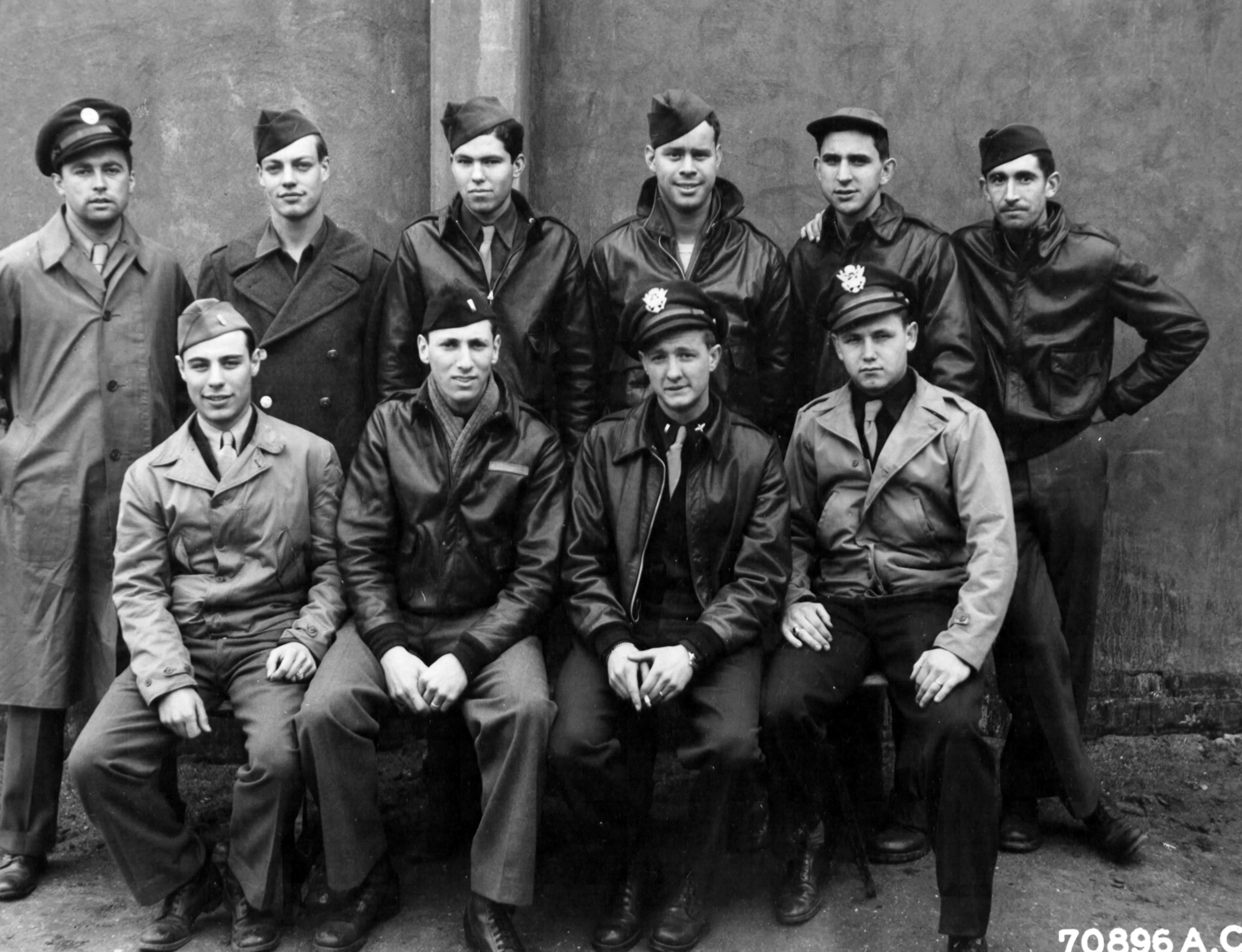
Crew of Heavenly Body II: Front Row, L to R: Edward Sadler; Fred Kauffman; Jack Gray; Lloyd Burns
Back Row, L to R; Louis Schulte; Leroy Monk; Richard Andrews; Richard Billings; William Farmer; Leonard Gibbs
Note that Richard Billings was part of the Burns crew on arrival at Kimbolton, but was the 10th man when crew size was reduced to 9, and so was not with the crew at the time of the collision. The survivors of the Burns crew are all deceased except for Richard Andrews. (Photo courtesy 379th BG Association archive,  by kind permission.)

6133 meanwhile, had gone straight down and crashed in twenty feet of water, in what was then a minefield, about half a mile or so off the west beach at Allhallows. The Estuary bottom was and still is, soft Thames mud and the main part of the wreck undoubtedly buried itself to some extent in the mud. (What remained of the wreckage was later salvaged, probably when the minefield was cleared). She had taken most of her crew with her, trapped inside.

Sole survivor Theodore Chronopolis, landed safely by parachute. He was fished out of the water by a passing  boat. The eight men of 6133’s crew who died that day were: Pilot 2nd Lt. Armand Ramacitti, Co-pilot 2nd Lt. William Hager, Navigator 2nd Lt. Donald Watson, Gunner S/Sgt. Richard Ritter, Gunner S/Sgt. Cecil Tognazzini, Gunner S/Sgt. John  Burke, Gunner Sgt. Warren Oaks and Gunner Cpl. Paul Haynes.

Meanwhile, having been abandoned by her crew, Heavenly Body II continued flying, somewhat erratically and losing height all the time. At first, she’d turned west and seemed to be heading directly toward the oil storage tanks at ShellHaven on Canvey Island. To those watching on the ground, a disaster seemed inevitable, then; still losing height, she miraculously turned east, away from the refinery, over the town, toward Canvey Point and the mudflats. It seemed as though the pilot was still trying to find somewhere safe to put her down. She then circled once over Canvey Point before she  finally nose-dived onto the mudflats, throwing an engine forward as she crashed.

To this day, those who can remember the event have always held the pilot of that aircraft in high esteem. Trouble was, the pilot was at that moment, just landing in the water off Canvey Island by parachute! Did Fred Kauffman not die in the collision after all? Had he somehow survived his injuries, regained consciousness and taken control of the shattered aircraft? Unlikely. Burns had tried to take control just after the collision and found the controls unresponsive. It is also extremely unlikely that Fred could have come round from such traumatic head injuries as he’d received when 6133’s Starboard outer prop cut through the roof and side of the Flight deck.

The answer probably has more to do with the B17’s inherent stability. With the nose section totally open and the escape hatches gone, the sheer force of the through-rushing air was probably responsible for the apparent “steering” of the aircraft. Also of course is the fact that, though a stable design, the aircraft was literally coming apart in flight. Who knows precisely how the aerodynamics were working, but one thing is certain, she was not being actively piloted.

The semi-submerged wreckage of Heavenly Body II remained on the mudflats for decades. Every so often, the tides would uncover more of it and bury other sections. The wreck was easily accessible and so subjected to many souveniring expeditions. A local historical society salvaged some of it and put it on display in a museum, until it closed. The thrown engine was salvaged fairly recently and together with some other artefacts, is now on display at another local museum. There is also a storyboard on the seafront close to the crash site at Canvey Point and a memorial plaque, dedicated to the memory of both crews. Sadly, there is nothing of the kind at Allhallows, where 6133 crashed.

Most of the bodies, including Ramacitti’s, were recovered; some at the time, some a little later, and are interred in the American Cemetery at Madingley, Cambridge; a long way from home. One body was later sent home. The body of Gunner Louis Schulte from 6133 now rests at home in a cemetery in St. Louis. Only two are still unaccounted for: Fred Kauffman, Co-pilot of Heavenly Body II and Gunner Cecil Tognazzini from 6133, both of whom are listed on the tablets of the missing at Madingley. Their last resting places are very probably in the soft Thames mud that their aircraft crashed in. They too, are a long way from home.

Post Script.

B-17  #44-6133 was a Douglas/Long Beach B-17G-45-DL Flying Fortress delivered to Tulsa airbase, Oklahoma, May 10th, 1944. It was transferred to Hunter airbase, Savannah, Georgia, on May 19th, 1944, and then onto Dow Field on May 29th, 1944. She was assigned to the 525th BS, 379th BG as ‘FR-Y’at Kimbolton Jun 8th, 1944. The crew of #44-6133 were:

Pilot: Second Lieutenant Armand Ramacitti
Co-pilot: Second Lieutenant William ‘Bill’ Hager
Navigator: First Lieutenant Donald ‘Don’ Watson
Flight engineer/top turret gunner: Staff Sergeant Cecil Tognazzini
Radio Operator: Sergeant Richard ‘Dick’ Ritter
Ball turret gunner: Staff Sergeant John Burke
Waist gunner: Corporal Paul Haynes
Tail gunner: Sergeant Warren Oaks (his second mission)
Bombardier: Second Lieutenant Theodore Chronopolis

Flight engineer/top turret gunner: Staff Sergeant Cecil Tognazzini (Photo Janet Penn, via http://www.findagrave.com)

#42-97942 was a Lockheed/Vega B-17G-40-VE Flying Fortress delivered to Denver on April 11th, 1944. She then went onto Kearney air base in Nebraska on May 4th, 1944, before transferring also to Dow Field May 23rd, 1944. She was then assigned to 525th BS,  379th BG at Kimbolton as ‘FR-K’. The crew of #42-97942 were:

Pilot: First Lieutenant Lloyd Burns (just 19 years of age)
Bombardier: Second Lieutenant Jack Gray
Flight engineer/top turret gunner: Technical Sergeant Leonard Gibbs
Radio Operator: Technical Sergeant Leroy Monk
Ball turret gunner: Staff Sergeant William ‘Bill’ Farmer
Waist gunner: Staff Sergeant Richard ‘Dick’ Andrews
Co-pilot: Second Lieutenant Fred Kauffman
Navigator: Flight Officer Edward Sadler
Tail gunner: Staff Sergeant Louis Schulte